综述

仔猪肠道水分转运通道营养调控的研究进展

  • 江家媛 , 1, 2 ,
  • 宋转 1 ,
  • 孙铝辉 2 ,
  • 易丹 , 1, *
展开
  • 1 武汉轻工大学,动物营养与饲料科学湖北省重点实验室,武汉 430023
  • 2 华中农业大学动物科学技术学院/动物医学院,武汉 430070
*易丹,教授,博士生导师,E-mail:

江家媛(1999—),女,贵州都匀人,博士研究生,从事动物营养与饲料科学研究。E-mail:

Copy editor: 陈鑫

收稿日期: 2025-03-28

  网络出版日期: 2025-11-14

基金资助

国家自然科学基金项目(32072762)

湖北省自然科学基金计划创新群体项目(2023AFA018)

Research Advances in Nutritional Regulation on Intestinal Water Transporters in Piglets

  • JIANG Jiayuan , 1, 2 ,
  • SONG Zhuan 1 ,
  • SUN Lyuhui 2 ,
  • YI Dan , 1, *
Expand
  • 1 Hubei Key Laboratory of Animal Nutrition and Feed Science, Wuhan Polytechnic University, Wuhan 430023, China
  • 2 College of Animal Science and Technology/College of Animal Medicine, Huazhong Agricultural University, Wuhan 430070, China
*professor, E-mail:

Received date: 2025-03-28

  Online published: 2025-11-14

摘要

仔猪由于胃肠道和免疫系统发育不完全,易受各种应激因素影响发生断奶应激综合征,导致腹泻等问题,其主要表型之一是水分吸收障碍。肠道液体的吸收和分泌主要通过肠上皮细胞旁途径和跨细胞途径介导,其中跨细胞途径主要受细胞膜水通道蛋白(AQPs)调控。AQPs是一类广泛存在于机体的跨膜蛋白,负责水分子、小分子溶质(如甘油)、气体和离子的跨膜转运,在细胞稳态中发挥关键作用。AQPs的异常表达会导致肠腔内液体和电解质运输紊乱,从而引发腹泻。此外,AQPs的异常表达还与水肿、癌症等疾病有关。尽管AQPs在腹泻和肠道疾病中的作用及调控机制尚未明确,但已有研究表明,营养调控AQPs可缓解多种胃肠道疾病,具有AQPs靶向疗法的潜力。本文将系统综述AQPs在腹泻及肠道疾病中的作用及其营养调控领域的最新进展,为后抗生素时代通过靶向AQPs防治仔猪腹泻的营养调控措施的开发提供参考。

本文引用格式

江家媛 , 宋转 , 孙铝辉 , 易丹 . 仔猪肠道水分转运通道营养调控的研究进展[J]. 动物营养学报, 2025 , 37(11) : 7251 -7263 . DOI: 10.12418/CJAN2025.590

Abstract

Due to the incomplete development of the gastrointestinal tract and immune system, piglets are highly susceptible to various stress factors, leading to weaning stress syndrome and problems such as diarrhea. One of the main phenotypes is water absorption disorder. The absorption and secretion of intestinal fluid are mainly mediated by the paracellular and transcellular pathways of intestinal epithelial cells, among which the transcellular pathway is mainly regulated by water channel proteins on the cell membrane. Aquaporins (AQPs) are a family of transmembrane proteins widely present in the body, responsible for the transmembrane transport of water molecules, small solutes, gases and ions, and play a key role in maintaining cellular homeostasis. Abnormal expression of AQPs can disrupt disorders in the transport of fluid and electrolytes in the intestinal lumen, thereby causing diarrhea. In addition, abnormal expression of AQPs is also associated with diseases such as edema and cancer. Although the role and regulatory mechanism of AQPs in diarrhea and intestinal diseases are not yet clear, studies have shown that nutritional regulation of AQPs can alleviate various gastrointestinal diseases and has the potential for AQPs-targeted therapy. This review systematically synthesizes recent advances in the role of AQPs in diarrhea and intestinal diseases, and their nutritional regulation, providing a reference for the development of nutritional regulation measures for preventing piglet diarrhea through targeting AQPs in the post-antibiotic era.

生猪养殖是我国畜牧业的支柱产业,年出栏量与猪肉消费量均占世界总量的50%左右,其生产稳定性直接关系国计民生。现代养猪生产中,仔猪通常在21~28日龄断奶,这一阶段因母子分离、饲粮转变及重新分群等导致仔猪生活环境剧变,加之仔猪的免疫及消化系统尚未发育成熟,易诱发断奶应激,其发病率约为50%,死亡率为15%~20%,给养猪业带来了巨大的损失[1]。因此,该阶段的饲养管理直接决定仔猪后期的生长潜能。研究表明,断奶应激可造成仔猪肠道屏障(物理屏障、化学屏障、免疫屏障以及微生物屏障)受损,引发水分代谢障碍,从而导致腹泻的发生[2-3]。水分及电解质的吸收主要发生于小肠和大肠的肠上皮细胞,通过细胞旁途径和跨细胞途径协同完成[4-5]。细胞旁途径与紧密连接蛋白有关,而跨细胞途径受细胞膜上的水通道蛋白(aquaporin,AQPs)等调控。其中,AQPs的异常表达会导致肠腔内液体和电解质运输紊乱,AQPs构象和分布的改变也会导致腹泻及肠道疾病的发生。AQPs能促进水在生物膜上的渗透性流动,在某些情况下还可以促进小分子溶质和气体[如甘油[6]、尿素[7]、过氧化氢(H2O2)[8]、二氧化碳(CO2)[9]和氨气(NH3)[10]]的运动[11]。研究表明,AQPs的表达除了与腹泻相关[12-13],还参与肠癌、肝脏再生、胎儿生长受限等病理过程[14-16]。由此可见,AQPs在机体生理过程中发挥重要作用。
抗生素常被用于防治仔猪断奶引起的腹泻。然而,由于抗生素的长期使用易导致残留、耐药性等风险,其应用已受到严格限制。在抗生素使用受限的背景下,探索非药物干预手段成为研究焦点。目前,通过营养调控措施,如降低饲粮蛋白质含量,以及添加益生菌[17]、有机酸[18-19]、植物提取物[20-21]、氨基酸[22-23]及微量矿物元素等,能够调节肠道菌群结构,改善胃肠道的健康,进而降低仔猪腹泻率和死亡率。鉴于AQPs对水分代谢的调控作用,通过营养调控手段改变其表达可能是减少仔猪腹泻的有效措施之一。例如,研究发现α-酮戊二酸可以通过上调腹泻仔猪肠道AQPs表达,同时抑制离子转运载体的表达来降低仔猪腹泻率[24]。本文综述了AQPs的相关研究进展,重点关注其在仔猪腹泻中的作用及其营养调控,以期为靶向AQPs防治仔猪腹泻的营养调控措施的开发提供参考。

1 仔猪肠道结构与功能

猪的肠道系统是从胃幽门延伸至肛门的连续消化道,是消化吸收的核心部位,同时也是重要的黏膜免疫场所。小肠肠壁由黏膜层、黏膜下层、固有肌层和浆膜层构成[25]。其中,黏膜层通过物理屏障、化学屏障、免疫屏障以及微生物屏障共同维持肠道稳态[26]。断奶应激、炎症及疾病等应激因素可通过多重机制破坏肠道稳态:1)形态学层面,肠绒毛高度降低,隐窝深度增加[27];2)黏液屏障层面,杯状细胞数量减少从而导致黏蛋白(MUC)2、黏MUC13B等分泌量下降[28];3)微生物层面,乳杆菌等有益菌丰度降低,大肠杆菌等致病菌增殖[29];4)物理屏障层面,紧密连接蛋白[如闭合蛋白(Occludin)、封闭蛋白-1(Claudin-1)]表达下调,导致病原菌易位风险升高[30]。另外,肠细胞膜分布有各种营养素的转运载体,包括葡萄糖转运体[钠-葡萄糖共转运蛋白1(SGLT1)、葡萄糖转运蛋白2(GLUT2)等)],氨基酸转运体[钠不依赖氨基酸转运蛋白(b0,+AT)、L型氨基酸转运蛋白(y+LAT1)、钠离子依赖的中性氨基酸转运蛋白2(SNAT2)、丙氨酸-丝氨酸-半胱氨酸转运载体2(ASCT2)],脂质转运体[溶质载体家族27成员1(SLC27A1)、溶质载体家族27成员4(SLC27A4)等],水分和离子转运通道[AQPs、钠氢交换因子3(NHE3)、钾内向整流通道亚家族J成员13(KCNJ13)、瞬时受体电位亚家族V成员6(TRPV6)]等,其表达水平受断奶、炎症等应激因素抑制,进而导致养分吸收障碍[31-32]。因此,通过靶向调控肠道形态修复、屏障功能重建和转运载体表达,可有效提升断奶仔猪的健康水平和生长性能。

2 AQPs概述

2.1 AQPs的结构和分类
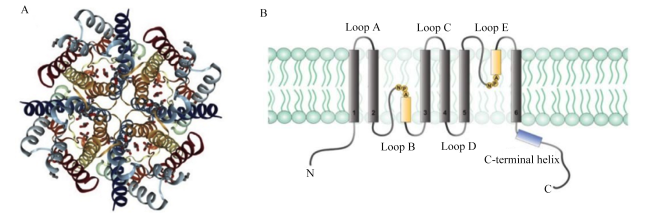
AQPs通常形成四聚体,每个单体都包含1个独立的通道,以允许水跨膜传输(图1-A)[33]。AQPs分子的一级结构由2个位于肽链两侧的重复部分构成,均拥有天冬酰胺-脯氨酸-丙氨酸(Asn-Pro-Ala,NPA)特征性序列,呈180°中心对称排列[34]。AQPs主要由6个跨膜螺旋(TM1-6)及5个连接环A~E组成。ACE环位于质膜外侧,BD环及羧基、氨基末端都位于胞内,6个跨膜结构域闭合形成1个水通道孔[35-36](图1-B)。
图1 哺乳动物AQPs的结构特征

Loops A-E:连接环A~E adapter ring A to E;C-terminal helix:C-端螺旋。

Fig.1 Structural characteristics of AQPs in mammals

在哺乳动物中的AQPs根据其渗透性分为三大类:1)传统型AQPs,在氨基酸水平上具有30%~50%的保守序列,只对水有渗透作用,包括AQP0、AQP1、AQP2、AQP4、AQP5、AQP6和AQP8;2)水-甘油通道蛋白(GLP),具有高度保守的氨基酸序列,包括AQP3、AQP7、AQP9和AQP10,除水之外,它们对甘油和尿素等中性小分子也具有通透性;3)非传统型AQPs,包括AQP11和AQP12,该类蛋白不仅可以转运水分子还可能参与其他生理功能[32]。AQPs对水和溶质的选择性过滤与芳香族/精氨酸选择性过滤器(Ar/R SF)的特殊结构有关。传统的AQPs有4个残基来形成Ar/R SF,而水-甘油通道蛋白只有3个残基。AQPs都有2个保守的NPA基序,控制带电离子通过毛孔[37-38]。但是,AQPs的渗透选择性并不局限于孔隙,而是水孔相互作用,再加上Ar/R SF基序的复杂性和空间效应,这些因素的相互作用导致了AQPs选择溶质的复杂性[39-40]

2.2 AQPs在胃肠道中的表达和分布

在不同物种中,同一组织部位AQPs表达模式存在差异。据文献报道,在人胃中至少已鉴定出10种AQPs亚型(包括AQP1、AQP2、AQP3、AQP4、AQP5、AQP7、AQP8、AQP9、AQP10和AQP11)[41],参与人体生理活动并维持细胞稳态[42]。有文献报道,在乳糜泻患者十二指肠中AQP3、AQP7、AQP10和AQP11的mRNA及蛋白表达量和免疫组化染色均显著降低[43]。研究指出,AQP8在正常增殖的人结肠上皮细胞表达,参与结肠水分的转运,对调节黏膜层的黏度增加和改变黏膜屏障功能具有重要作用[44]
在鼠类中同样也发现10种AQPs在胃肠道中表达,其中AQP1、AQP3分布于小肠和结肠内皮细胞,AQP2和AQP4在结肠中表达,AQP5、AQP7分布于十二指肠[41,45-47]AQP6在大鼠胃肠道各部位均有表达,在小肠和直肠中高表达,而在胃和盲肠和结肠中表达较少[45]。消化道上皮的AQP3可维持上皮细胞内的渗透压和细胞容积。柠檬酸杆菌感染小鼠后,肠道中AQP4和AQP8显著上调[46]AQP7、AQP8、AQP10、AQP11分布在小肠和大肠上皮细胞的顶端[41]
在猪胃肠道系统中存在8种AQPs亚型(包括AQP1、AQP3、AQP4、AQP5、AQP7、AQP8、AQP10和AQP11)的表达[24,48]。Jin等[49]首次克隆了猪AQP1的cDNA,研究发现,AQP1在猪回肠和结肠上皮细胞及内皮细胞中表达丰富,并且会受渗透压等因素影响其功能变化。Ren等[50]在仔猪小肠和结肠中发现AQP2、AQP4、AQP9的表达。进一步研究发现,He等[24]在仔猪十二指肠、空肠、回肠中均检测到AQP1、AQP3、AQP4、AQP5、AQP8、AQP10和AQP11的表达。12种AQPs(AQP0~AQP11)在人、鼠和猪消化道组织中分布如表1所示。
表1 消化道中AQPs的表达和分布

Table 1 Expression and distribution of AQPs in digestive tract[34,41-50]

亚型
Subtype
分子质量
Molecular
weight/kDa
人Human 鼠Murine 猪Pigs

Stomach
小肠
Small
intestine
大肠
Large
intestine

Stomach
小肠
Small
intestine
大肠
Large
intestine

Stomach
小肠
Small
intestine
大肠
Large
intestine
AQP0 28 - - - - - - - - -
AQP1 28 + + - + + + + + +
AQP2 29 + + + - - + - + +
AQP3 32 + + + + + + + + +
AQP4 32~34 + + - + + + - + +
AQP5 28 + - - + + - - + -
AQP6 55 - - - + + + - - -
AQP7 31 + + - - + - + + +
AQP8 28 + - + + + + + + +
AQP9 31 + + - - + + - + +
AQP10 32 + + + - + + + + +
AQP11 50 + + - - + + + + +

AQP:水通道蛋白 aquaporin。

“+”表示阳性表达,“-”表示尚未见到报道或未检测到表达。“+” indicates positive expression, and “-” indicates no report or expression has not been detected.

3 营养调控AQPs表达缓解仔猪腹泻及机制

3.1 营养调控仔猪肠道AQPs的表达

AQPs在胃肠道液体的转运和利用过程中具有重要功能,其在肠道分布、表达水平及活性的变化与胃肠道的生理功能和健康状况有着紧密联系。目前,关于营养调控仔猪肠道AQPs表达的研究还比较有限,以下对相关进展进行综述。

3.1.1 蛋白质和氨基酸

断奶仔猪生长发育和免疫调节需要大量蛋白质提供氨基酸,但其胃肠道消化功能不全,难分泌足量消化酶分解过多的蛋白质,多余的蛋白质会流入后肠被微生物发酵。肠道菌群发酵未消化的蛋白质与氨基酸是引发腹泻的关键因素,此过程会产生多种代谢物、芳香化合物、多胺和氨等。大量氨会使肠道pH升高,营造利于致病菌繁衍的微生态环境,易导致仔猪患细菌感染性腹泻。研究发现,在饲粮中添加4%大豆分离蛋白(大豆抗原蛋白)会破坏仔猪肠道形态,降低十二指肠和回肠中AQP3、肠绒毛蛋白和基质金属蛋白酶3(MMP3)及空肠中AQP10基因的表达,从而改变肠道黏膜修复和水吸收功能,增加腹泻率[51]。饲粮蛋白质的水平同样会影响仔猪肠道的AQPs的表达。研究发现,当饲粮中蛋白质水平高于或低于20%均不利于断奶仔猪小肠AQP4以及结肠中AQP2、AQP4、AQP9的正常表达,从而破坏仔猪肠道水分吸收及分泌的平衡[52]。饲喂30%蛋白质水平饲粮会降低仔猪肠道中AQP1、AQP3、AQP8、AQP10表达,同时抑制单磷酸腺苷活化的蛋白激酶(AMPK)信号通路,促进腹泻的发生和症状加重[53]。与饲喂18%、22%和24%蛋白质水平饲粮比较,发现饲喂20%蛋白质水平饲粮有利于小肠中AQP4和结肠中AQP2、AQP4、AQP9正常表达,从而维持仔猪肠道中液体吸收和分泌平衡[50]。除此之外,添加1%复合功能性氨基酸(谷氨酸∶谷氨酰胺∶甘氨酸∶精氨酸∶N-乙酰半胱氨酸=5∶2∶2∶1∶0.5),不但能够增强仔猪肠道抗氧化酶活(过氧化氢酶和超氧化物歧化酶)和紧密连接蛋白(Claudin-1、Occludin)表达,进而改善肠道形态及抗氧化能力;而且还能上调肠上皮细胞AQP3和AQP4及氨基酸转运蛋白(b0,+ATy+LAT1)的表达,与此同时调节肠道细胞因子[C-X-C趋化因子配体10C (XCL10)、C-X-C趋化因子配体11(CXCL11)、干扰素(IFN)-α、IFN-β等]的表达及肠道微孔,最终降低腹泻率[31]。同样,对于脂多糖(LPS)诱导肠道炎症的仔猪而言,谷氨酰胺可上调空肠和回肠AQP3、AQP4和AQP8基因及蛋白的表达,降低离子通道[十二指肠中上皮钠通道α/β亚基、Cl-/HC O 3 -交换器;回肠中β-上皮钠通道(β-ENaC)、Down综合征相关蛋白/棕榈酰化膜蛋白1(DRA/PAT1)和NHE3]基因及蛋白的表达,并通过激活AMPK途径[提高AMPKα1、过氧化物酶体增殖物激活受体γ共激活因子-1α(PGC-1α)和回肠AMPKα1、PGC-1α、雷帕霉素靶标2(TORC2)蛋白表达]来缓解肠道炎症,并可以促进线粒体功能(增加线粒体数量和线粒体膜电位)和细胞增殖,抑制炎症细胞因子的分泌,改善肠道健康[54]。在断奶仔猪(4周龄)饲粮中单独或联合添加谷氨酰胺和胱氨酸,均会降低肠道AQP1、AQP7、AQP9、AQP10的表达。然而,只有单独添加胱氨酸组肠道AQP3表达量升高,甘油激酶(GK)表达降低,说明胱氨酸可能有利于仔猪肠道AQP3对甘油的重吸收,在脂肪积累中发挥作用[55]

3.1.2 脂类

研究发现,0.5%的三己酸甘油酯可增加肠道AQP8、AQP10和AQP4蛋白的表达,提高腹泻仔猪小肠水转运能力,从而降低腹泻率[56]。在饲粮中补充0.6%单乳酸甘油酯可以降低回肠和空肠丙二醛(MDA)、H2O2含量,上调回肠和结肠AQP3和回肠AQP10的mRNA表达水平,通过提高肠道抗氧化能力及肠道黏膜水分/营养物质的转运改善仔猪腹泻[57]。三乳酸甘油酯(TLG)是能量补充剂,在饲粮中补充TLG,断奶仔猪血清低密度脂蛋白含量和谷氨酰转移酶活性均降低,但肠道AQP8和AQP10基因表达增加,进一步研究发现,TLG主要是通过改善肠道功能和调节肠道菌群来调节仔猪脂质代谢,从而减轻腹泻[58]

3.1.3 碳水化合物

乳糖是一种可口且易于消化的能量来源,可以缓解仔猪从母乳过渡到固体饲料时适口性等问题,在断奶仔猪的生长性能中起着至关重要的作用。研究发现,仔猪断奶后,通过乳糖发酵产生乳酸和挥发性脂肪酸、降低胃pH是提高生长性能的原因之一。另外,胃中较低的pH抑制了病原体的生长,促进了蛋白质的消化[59]。Pierce等[60]发现,当饲粮中乳糖水平从65 g/kg增加到280 g/kg,仔猪从断奶第0天到第28天平均日增重(ADG)呈线性增加,粪便pH呈线性下降。菊粉是一种寡糖,研究显示,仔猪断奶前饲喂菊粉,发现肠道AQP7、血管生成素样蛋白4(ANGPTL4)、载脂蛋白A1(APOA1)表达均下调,这些基因涉及脂质代谢,参与过氧化物酶体增殖物活化受体(PPAR)信号通路,说明给仔猪早期补充菊粉通过影响回肠中与脂质代谢相关基因表达来发挥作用[61]。膳食纤维已被证明可以降低仔猪腹泻率并增加盲肠中丙酸(PA)含量[62]。果胶作为膳食纤维的一大类,具有预防腹泻、改善肠道菌群和黏膜层、促进生长和免疫应答等作用[63]。此外,饲喂断奶仔猪麦麸,可以减少粪便中大肠杆菌数量,降低断奶后营养性腹泻发病率[64-65]。有研究发现,即使在感染大肠杆菌的断奶仔猪基础饲粮中添加氧化锌和膳食纤维也能降低腹泻发生率[66]。饲粮中豌豆纤维可以通过减少肠毒素大肠杆菌的黏连以及增加其排泄来改善仔猪肠道健康,并降低腹泻率[67]。饲喂高不溶性纤维饲粮可以通过增加肠道绒毛高度来保护断奶仔猪免受致病菌的侵害[67-68]。值得注意的是,母猪在妊娠期食用含有2.0%糯化淀粉(经糊化处理的玉米淀粉)以及瓜尔胶的混合物饲粮后,其所产仔猪的生长速度得到了提升,腹泻率降低,体重增长增加[69]。值得关注的是,刺五加(Acanthopanax senticosus)多糖能够下调与炎症介质释放相关的缺氧诱导因子-1α/环氧化酶-2(HIF-1α/COX-2)通路,并可以增加回肠绒毛高度、改善紧密连接超微结构,提高平均日采食量(ADFI),减少腹泻发生率[70]。甘草(Glycyrrhiza)多糖不仅可以提高仔猪日增重,还可以降低脾脏白细胞介素-6(IL-6)含量,减轻炎症反应,降低腹泻率[71]。饲粮中添加黄芩(Radix Scutellariae Barbatae)多糖可以降低小肠白细胞介素-2(IL-2)表达水平,增加白细胞介素-5(IL-5)和白细胞介素-4(IL-4)表达水平,促进了肠道健康和免疫功能,同时降低了仔猪腹泻[72]。黄芪多糖除了可以提高仔猪血清抗氧化酶活性和免疫力外,还可以降低腹泻率,增加结肠中微生物的数量和多样性[73]。此外,茯苓多糖和葛根素联合使用,可通过修复氧化还原平衡和减轻空肠损伤来缓解猪流行性腹泻病毒诱导的仔猪腹泻[74]。上述结果表明,饲粮碳水化合物的种类和含量与仔猪腹泻的发生率密切相关,但有关碳水化合物对AQPs影响的研究还鲜有报道。

3.1.4 其他营养调控剂

以LPS诱导的断奶仔猪腹泻模型中,外源添加1% α-酮戊二酸(AKG),一方面参与三羧酸循环介导AKG代谢,产生大量ATP,进而连接AMPK通路[增加空肠和回肠中AMPKα1、PGC-1α、沉寂信息调节因子1(SIRT1)、乙酰辅酶A羧化酶(ACC)、TORC2蛋白表达以及回肠AMPKα2表达];另一方面,AMPK/AKG轴可以反向调节能量代谢,调节上皮细胞水离子转运通道(十二指肠、空肠和回肠AQP1、AQP3、AQP4、AQP5、AQP8、AQP10和AQP11的表达与分布,且显著提高空肠和回肠AQP3、AQP4、AQP8等蛋白的表达水平)和细胞体积(降低空肠和回肠DRA/PAT1、α-ENaC、β-ENaC蛋白表达),从而保护动物免受大肠杆菌感染,维持胃肠道渗透稳态,减轻仔猪腹泻[24]。维生素的缺乏也会损害小肠的形态结构,下调消化和吸收功能相关基因的表达。在饲粮中补充20.4 mg/kg烟酸可提高断奶仔猪肠道AQP1和AQP3 mRNA和蛋白的表达,降低腹泻率;同样,体外试验发现,烟酸可提高产肠毒素大肠杆菌K88感染的小肠上皮细胞AQPs和闭锁小带蛋白-1(ZO-1)mRNA和蛋白的表达[75]。饲粮中添加小檗碱显著提高仔猪回肠黏膜AQP1、AQP3、AQP4、AQP7、AQP10以及NHE3 mRNA表达水平,抑制空肠中IL-1β以及结肠黏膜肿瘤坏死因子 -α(TNF-α)、白细胞介素-1β(IL-1β)表达水平,增加肠道中魏斯氏菌属(Weissella)、别样普雷沃菌属(Alloprevotella)、链状杆菌属(Catenibacterium)等菌群丰度,增强原发性和继发性胆汁酸生物合成和胆汁酸分泌等代谢途径,从而减轻了产肠毒素大肠杆菌K88诱导的仔猪腹泻和肠道损伤[76]。另一项研究同样发现,小檗碱可以提高断奶仔猪ADG、ADFI,显著降低腹泻指数;还提高了空肠绒毛高度/隐窝深度比,显著上调ZO-1、MUC2、AQP1、AQP8、AQP10、AQP11、钠-钾-氯共转运体1(NKCC1)和NHE3 mRNA表达水平[77]。以上研究说明无氧化锌饲粮中添加小檗碱可促进断奶仔猪生长,减少断奶应激引起的肠道损伤。饲粮中添加N-乙酰半胱氨酸可以提高LPS刺激仔猪空肠黏膜B细胞淋巴瘤-2(Bcl-2)、绒毛蛋白、AQP3、AQP10的mRNA表达,增加连接黏附分子-A(JAM-A)mRNA表达,并激活磷脂酰肌醇3-激酶/蛋白激酶B/哺乳动物雷帕霉素靶蛋白(PI3K/Akt/mTOR)、表皮生长因子受体(EGFR)、Toll样受体4/核因子-κB(TLR4/NF-κB)、AMPK和I型IFN等多种信号通路,减轻LPS对仔猪肠道和氧化还原状态的不利影响[32]。Wang等[78]还发现,N-乙酰半胱氨酸可增加空肠AQP3、AQP4、肽转运蛋白1(PepT1)、SGLT1、KCNJ13和溶质载体家族1成员1(SLC1A1)基因的表达,通过增强肠道代谢活性和吸收功能来缓解由β-伴大豆球蛋白诱导的肠道损伤及腹泻发生。饮用偏硅酸钠碱性矿泉水的断奶仔猪通过增加粪链球菌丰度抑制NF-κB,减轻断奶应激诱导的肠道炎症,改善黏膜屏障完整性,通过调节AQPs(显著提高小肠AQP1、AQP3蛋白表达量,同时显著上调十二指肠AQP1、AQP3、AQP7、AQP8等mRNA表达,显著升高AQP3平均密度),以及提高液体吸收/分泌相关蛋白的表达维持肠液稳态,并通过抑制肌球蛋白轻链激酶/磷酸化肌球蛋白轻链(MLCK/p-MLC)信号通路促进肠上皮屏障完整性,从而缓解仔猪腹泻率[79]。与产肠毒素性大肠杆菌攻毒组相比,单独或联合添加纤维和精油混合物组仔猪AQP1、AQP3、AQP8 mRNA表达均上调,肠道微生物及盲肠食糜PA含量显著升高,空肠黏膜白细胞介素-10(IL-10)含量降低,可见,纤维和精油混合物通过改善肠道屏障功能提高仔猪生长性能和减轻腹泻[80]。氧化锌常被用来缓解仔猪腹泻,有研究报道,在饲粮中补充3 000 mg/kg氧化锌可以降低断奶仔猪空肠黏膜中AQP3 mRNA的表达[81]

3.2 营养调控AQPs表达缓解仔猪腹泻的机制

研究表明,通过营养调控缓解仔猪腹泻与AQPs表达的上调相关,进一步机制研究表明,AQPs作为跨膜水转运的关键蛋白,其表达量增加可增强肠道对水分的重吸收能力。目前,有关AQPs调控仔猪腹泻的其他相关机制的研究较少,但在其他物种和疾病模型中这种营养-AQPs调控机制可为其提供参考[82]。低分子质量半乳甘露聚糖(LMGM)作为一种益生元,可以改善急性腹泻小鼠肠上皮结构;通过上调回肠、空肠和结肠组织中ZO-1、OccludinMUC-2、AQP3和AQP4的表达,增强肠道屏障、调节水分运输[83]。研究表明,大黄单宁与肠道黏膜结合会引发蛋白沉淀反应,在肠上皮细胞表面形成一层保护膜,防止水分渗出[84];大黄单宁还可以抑制MgSO4诱导的HT-29细胞中环磷酸腺苷(cAMP)依赖性蛋白激酶A催化亚基-α(PKAC-α)和磷酸化cAMP反应元件结合蛋白(p-CREB)的生成,以及结肠中AQP2、AQP3蛋白的表达,通过下调蛋白激酶A(PKA)/p-CREB信号通路,实现抗小鼠腹泻的作用[85]
与之相反,大黄素作为大黄蒽醌类主要成分,主要是通过上调PKA/p-CREB信号通路来增强AQP3的表达,促进通便[86]。前列腺素E2(PGE2)作为旁分泌因子,可以降低结肠黏膜上皮细胞中AQP3表达,从而减少结肠对水分的吸收。富含柠檬酸的成熟梅子提取物通过调节大鼠结肠中AQP3和PGE2的表达,改善了便秘症状且不会引起腹泻或耐受性[87]。增液汤(ZYD)以剂量依赖性方式增加慢传输性便秘(STC)大鼠的肠道转运率和粪中的水含量;此外,ZYD剂量依赖性地降低STC大鼠结肠组织中AQP3的表达并增加AQP9的表达;从机制上讲,ZYD降低了STC大鼠结肠组织中miR-10a-5p的水平,增加了多巴胺受体D2(Drd2)的表达,并抑制了腺苷酸环化酶(AC)/cAMP信号传导的活性;然而,miR-10a-5p过表达逆转了ZYD对便秘的改善作用;miR-10a-5p靶向Drd2并增强IEC-18细胞中的AC/cAMP信号激活并调节IEC-18细胞中AQP3和AQP9的表达;因此,ZYD减轻了STC大鼠的便秘和AQPs表达,其机制可能是通过下调miR-10a-5p水平和抑制Drd2/AC/cAMP轴来介导[88]
由于AQP1与肿瘤侵袭性相关,并且从结直肠癌发生的早期到晚期阶段持续过表达,AQP1被认为是患者生存率的不良预测生物标志物[89-90]。Chen等[88]观察到,过表达AQP1的HT20结肠癌细胞中,RhoARac显著上调,细胞前缘的极化肌动蛋白生成频率增加。类似的结果也在2种骨肉癌细胞系(U2OS和MG63)中观察到,通过shRNA下调AQP1后,RhoA的表达同样减少,这与细胞增殖的下降相关[91]。值得注意的是,研究发现,AQP1诱导的结肠癌细胞迁移和转移机制与肌动蛋白的重新定位以及RhoA和Rac的激活有关[91]。Wu等[91]通过基因富集分析(GSEA)揭示在骨肉瘤中,AQP1的上调与转化生长因子-β(TGF-β)信号通路之间存在显著关联,并且当通过shRNA降低AQP1表达时,U2OS和MG63细胞系中TGF-β1和TGF-β2的生成减少,显著抑制细胞黏附和侵袭。同样有研究报道,乙酰唑胺可以通过抑制AQP1的表达来抑制小鼠异种移植瘤的生长[92]
AQP3可以运输H2O2,通过细胞内活性氧(ROS)和Akt/mTOR通路调控自噬[93]。mTOR通路同样可以反过来调控AQP3的表达,影响癌细胞行为[94]。在Epstein-Barr病毒相关胃癌中,潜伏膜蛋白2A(LMP2A)通过诱导细胞外信号调节激酶(ERK)的磷酸化,激活DNA 甲基转移酶3a(DNMT3a)的转录,导致AQP3启动子的CpG岛甲基化,从而抑制AQP3的表达[95]。这一机制可能与通过抑制mTOR信号通路来下调AQP3的表达有关[94]。在结直肠癌中,AQP3和表皮生长因子(EGFR)在肿瘤转移中起重要作用[96]。人表皮生长因子(hEGF)以剂量和时间依赖性方式上调AQP3表达,并增强结直肠癌细胞HCT116的迁移能力,在使用CuSO4(AQP3抑制剂)可减弱HCT116细胞的迁移能力;研究还发现,hEGF诱导的AQP3过表达被PI3K/Akt抑制剂LY294002抑制,说明AQP3过表达促进结直肠癌细胞迁移[97]
AQP5作为结直肠癌的预测生物标志物,其浓度与循环中癌细胞的数量和肝转移的可能性相关。Kang等[98]研究发现,AQP5的上调通过激活Ras/ERK/视网膜母细胞瘤蛋白(Rb)信号通路,增强了结直肠癌中Rb的磷酸化,介导结直肠癌的发生。在结肠癌细胞中,AQP5基因沉默或缺失可通过抑制p38 MAPK信号通路增加化疗敏感性[99-100]。Cairicoside E(CE)是从旋花科树脂中提取的糖苷,可通过抑制上皮间质转化(EMT)来抑制结肠癌细胞的迁移,值得注意的是,在AQP5缺失的情况下,CE对EMT没有影响,表明CE对EMT的抑制作用依赖于对AQP5的抑制,研究还发现,TGF-β1诱导AQP5的翻译,而AQP5的上调增加了p-Smad2/3的水平,从而触发EMT[101]。以上不同物种、不同病理模型的研究结果共同说明,AQPs在肠道疾病发挥多种功能,包括介导肠道水分转运、调控肿瘤细胞生长和迁移,提示AQPs可能是治疗肠道疾病的潜在靶点,为仔猪腹泻防控提供了理论依据和技术借鉴。

4 小结

AQPs在仔猪肠道水分转运和物质代谢中具有重要作用,其在肠道表达的部位、类型和水平及其活性结构的改变与肠道功能、腹泻等密切相关。目前,营养调控仔猪AQPs的机制研究仍有待深入开展。将来有关仔猪肠道AQPs营养调控的研究重点应包括:1)仔猪肠道AQPs分布与表达及不同应激模型下AQPs变化规律与机理;2)营养调控肠道AQPs表达的机制与关键靶点;3)研发靶向肠道AQPs和水分平衡的新型饲料产品,有效降低仔猪腹泻率,促进生猪高效健康养殖。
[1]
TANG Q S, LAN T Y, ZHOU C Y, et al. Nutrition strategies to control post-weaning diarrhea of piglets:from the perspective of feeds[J]. Animal Nutrition, 2024,17:297-311.

[2]
易宏波. 抗菌肽CWA对断奶仔猪肠道炎症和肠道屏障功能的作用及其机制[D]. 博士学位论文. 杭州: 浙江大学, 2016.

YI H B. Effects and mechanisms of antimicrobial peptide CWA on intestinal inflammation and intestinal barrier functions in weaned piglets[D]. Ph.D. Thesis. Hangzhou: Zhejiang University, 2016. (in Chinese)

[3]
QIAO L, DOU X N, SONG X F, et al. Targeting mitochondria with antioxidant nutrients for the prevention and treatment of postweaning diarrhea in piglets[J]. Animal Nutrition, 2023,15:275-287.

[4]
SZABÓ C, KACHUNGWA LUGATA J, ORTEGA A D S V. Gut health and influencing factors in pigs[J]. Animals, 2023, 13(8):1350.

[5]
KRUG S M, SCHULZKE J D, FROMM M. Tight junction,selective permeability,and related diseases[J]. Seminars in Cell & Developmental Biology, 2014,36:166-176.

[6]
KISHIDA K, KURIYAMA H, FUNAHASHI T, et al. Aquaporin adipose,a putative glycerol channel in adipocytes[J]. Journal of Biological Chemistry, 2000, 275(27):20896-20902.

[7]
LIU L H, LUDEWIG U, GASSERT B, et al. Urea transport by nitrogen-regulated tonoplast intrinsic proteins in Arabidopsis[J]. Plant Physiology, 2003, 133(3):1220-1228.

[8]
HARA-CHIKUMA M, WATANABE S, SATOOKA H. Involvement of aquaporin-3 in epidermal growth factor receptor signaling via hydrogen peroxide transport in cancer cells[J]. Biochemical and Biophysical Research Communications, 2016, 471(4):603-609.

[9]
UEHLEIN N, LOVISOLO C, SIEFRITZ F, et al. The tobacco aquaporin NtAQP1 is a membrane CO2 pore with physiological functions[J]. Nature, 2003, 425(6959):734-737.

[10]
BERTL A, KALDENHOFF R. Function of a separate NH3-pore in aquaporin TIP2;2 from wheat[J]. FEBS Letters, 2007, 581(28):5413-5417.

[11]
LALOUX T, JUNQUEIRA B, MAISTRIAUX L C, et al. Plant and mammal aquaporins:same but different[J]. International Journal of Molecular Sciences, 2018, 19(2):521.

[12]
ESCUDERO-HERNÁNDEZ C, MÜNCH A, ØSTVIK A E, et al. The water channel aquaporin 8 is a critical regulator of intestinal fluid homeostasis in collagenous colitis[J]. Journal of Crohn's and Colitis, 2020, 14(7):962-973.

[13]
IKARASHI N, KON R, IIZASA T, et al. Inhibition of aquaporin-3 water channel in the colon induces diarrhea[J]. Biological and Pharmaceutical Bulletin, 2012, 35(6):957-962.

[14]
LIU Y K, DOU J H, TAN Q, et al. Aquaporin 9 downregulation in KRASG12V colorectal cancer and associated with increased proliferation and decreased apoptosis in cancer cells[J]. Scientific Reports, 2025, 15(1):12298.

[15]
LI B, DI G H, GE H H, et al. Aquaporin-5 facilitates liver regeneration following hepatectomy via ROS/GSDMD pathway[J]. Cellular Signalling, 2025,127:111602.

[16]
PAN S J, XU J A, CHEN B Y, et al. Sodium tanshinone ⅡA sulfonate alleviates fetal growth restriction by mediating aquaporin-3 expression in placental trophoblast cells[J]. The FASEB Journal, 2025, 39(2):e70314.

[17]
LÉPINE A F P, KONSTANTI P, BOREWICZ K, et al. Combined dietary supplementation of long chain inulin and Lactobacillus acidophilus W37 supports oral vaccination efficacy against Salmonella typhimurium in piglets[J]. Scientific Reports, 2019, 9(1):18017.

[18]
CHEN J S, SU W X, KANG B J, et al. Supplementation with α-ketoglutarate to a low-protein diet enhances amino acid synthesis in tissues and improves protein metabolism in the skeletal muscle of growing pigs[J]. Amino Acids, 2018, 50(11):1525-1537.

[19]
ZHAI H, LUO Y, REN W, et al. The effects of benzoic acid and essential oils on growth performance,nutrient digestibility,and colonic microbiota in nursery pigs[J]. Animal Feed Science and Technology, 2020,262:114426.

[20]
LI B, SCHROYEN M, LEBLOIS J, et al. Effects of inulin supplementation to piglets in the suckling period on growth performance,postileal microbial and immunological traits in the suckling period and three weeks after weaning[J]. Archives of Animal Nutrition, 2018, 72(6):425-442.

[21]
SONG Z, LI P, WU M J, et al. Multi-effects of natural plant bioactive components on intestinal health in pigs:promising feed-antibiotic alternatives?[J]. The Journal of Nutrition, 2025, 155(4):1068-1076.

[22]
HAYNES T E, LI P, LI X L, et al. L-glutamine or L-alanyl-L-glutamine prevents oxidant- or endotoxin-induced death of neonatal enterocytes[J]. Amino Acids, 2009, 37(1):131-142.

[23]
CABRERA R A, USRY J L, ARRELLANO C, et al. Effects of creep feeding and supplemental glutamine or glutamine plus glutamate (Aminogut) on pre- and post-weaning growth performance and intestinal health of piglets[J]. Journal of Animal Science and Biotechnology, 2013, 4(1):29.

[24]
HE L Q, HUANG N, LI H, et al. AMPK/α-ketoglutarate axis regulates intestinal water and ion homeostasis in young pigs[J]. Journal of Agricultural and Food Chemistry, 2017, 65(11):2287-2298.

[25]
印遇龙, 杨哲. 猪肠道发育与营养调控应用的研究进展[J]. 饲料工业, 2023, 44(2):1-6.

YIN Y L, YANG Z. Research progress of intestinal development and nutritional regulation in pigs[J]. Feed Industry, 2023, 44(2):1-6. (in Chinese)

[26]
HAN X B, HU X D, JIN W, et al. Dietary nutrition,intestinal microbiota dysbiosis and post-weaning diarrhea in piglets[J]. Animal Nutrition, 2024,17:188-207.

[27]
VERDONK J M A J, BRUININX E M A M, VAN DER MEULEN J, et al. Post-weaning feed intake level modulates gut morphology but not gut permeability in weaned piglets[J]. Livestock Science, 2007, 108(1/2/3):146-149.

[28]
YANG H S, XIONG X, WANG X C, et al. Effects of weaning on intestinal upper villus epithelial cells of piglets[J]. PLoS One, 2016, 11(3):e0150216.

[29]
BIAN G R, MA S Q, ZHU Z G, et al. Age,introduction of solid feed and weaning are more important determinants of gut bacterial succession in piglets than breed and nursing mother as revealed by a reciprocal cross-fostering model[J]. Environmental Microbiology, 2016, 18(5):1566-1577.

[30]
CAO S T, WANG C C, WU H, et al. Weaning disrupts intestinal antioxidant status,impairs intestinal barrier and mitochondrial function,and triggers mitophagy in piglets[J]. Journal of Animal Science, 2018, 96(3):1073-1083.

[31]
YI D, LI B C, HOU Y Q, et al. Dietary supplementation with an amino acid blend enhances intestinal function in piglets[J]. Amino Acids, 2018, 50(8):1089-1100.

[32]
YI D, HOU Y Q, XIAO H, et al. N-acetylcysteine improves intestinal function in lipopolysaccharides-challenged piglets through multiple signaling pathways[J]. Amino Acids, 2017, 49(12):1915-1929.

[33]
LIAO S T, GAN L, LV L, et al. The regulatory roles of aquaporins in the digestive system[J]. Genes & Diseases, 2021, 8(3):250-258.

[34]
朱翠, 白银山, 陈庄, 等. 水通道蛋白在调节肠道健康中的作用[J]. 动物营养学报, 2016, 28(4):961-967.

ZHU C, BAI Y S, CHEN Z, et al. Aquaporin:effects on intestinal health regulation[J]. Chinese Journal of Animal Nutrition, 2016, 28(4):961-967. (in Chinese)

[35]
ISHIBASHI K, HARA S, KONDO S. Aquaporin water channels in mammals[J]. Clinical and Experimental Nephrology, 2009, 13(2):107-117.

[36]
TÖRNROTH-HORSEFIELD S, CHIVASSO C, STRANDBERG H, et al. Insight into the mammalian aquaporin interactome[J]. International Journal of Molecular Sciences, 2022, 23(17):9615.

[37]
CHEN H N, ILAN B, WU Y J, et al. Charge delocalization in proton channels,Ⅰ:the aquaporin channels and proton blockage[J]. Biophysical Journal, 2007, 92(1):46-60.

[38]
KREIDA S, TÖRNROTH-HORSEFIELD S. Structural insights into aquaporin selectivity and regulation[J]. Current Opinion in Structural Biology, 2015,33:126-134.

[39]
HUB J S. DE GROOT B L.Mechanism of selectivity in aquaporins and aquaglyceroporins[J]. Proceedings of the National Academy of Sciences of the United States of America, 2008, 105(4):1198-1203.

[40]
KITCHEN P, SALMAN M M, PICKEL S U, et al. Water channel pore size determines exclusion properties but not solute selectivity[J]. Scientific Reports, 2019, 9(1):20369.

[41]
ZHU C, CHEN Z, JIANG Z Y. Expression, distribution and role of aquaporin water channels in human and animal stomach and intestines[J]. International Journal of Molecular Sciences, 2016, 17(9):1399.

[42]
郁凯琳, 朱宇杰, 吕叶辉, 等. 中枢神经系统相关水通道蛋白的研究进展[J]. 生理科学进展, 2024, 55(1):34-42.

YU K L, ZHU Y J, LV Y H, et al. Research progress on aquaporins associated with central nervous system[J]. Progress in Physiological Sciences, 2024, 55(1):34-42. (in Chinese)

[43]
LAFORENZA U, MICELI E, GASTALDI G, et al. Solute transporters and aquaporins are impaired in celiac disease[J]. Biology of the Cell, 2010, 102(8):457-467.

[44]
FISCHER H, STENLING R, RUBIO C, et al. Differential expression of aquaporin 8 in human colonic epithelial cells and colorectal tumors[J]. BMC Physiology, 2001, 1(1):1.

[45]
LAFORENZA U, GASTALDI G, POLIMENI M, et al. Aquaporin-6 is expressed along the rat gastrointestinal tract and upregulated by feeding in the small intestine[J]. BMC Physiology, 2009,9:18.

[46]
BORENSHTEIN D, FRY R C, GROFF E B, et al. Diarrhea as a cause of mortality in a mouse model of infectious colitis[J]. Genome Biology, 2008, 9(8):R122.

[47]
SAKAI H, SAGARA A, MATSUMOTO K, et al. 5-fluorouracil induces diarrhea with changes in the expression of inflammatory cytokines and aquaporins in mouse intestines[J]. PLoS One, 2013, 8(1):e54788.

[48]
HOU Y Q, WANG L, YI D, et al. N-acetylcysteine reduces inflammation in the small intestine by regulating redox,EGF and TLR4 signaling[J]. Amino Acids, 2013, 45(3):513-522.

[49]
JIN S Y, LIU Y L, XU L N, et al. Cloning and characterization of porcine aquaporin 1 water channel expressed extensively in gastrointestinal system[J]. World Journal of Gastroenterology, 2006, 12(7):1092-1097.

[50]
REN Z H, ZHANG X Y, FAN H Y, et al. Effects of different dietary protein levels on intestinal aquaporins in weaned piglets[J]. Journal of Animal Physiology and Animal Nutrition, 2023, 107(2):541-555.

[51]
梅慧敏, 周颖, 张越, 等. 大豆抗原蛋白对仔猪肠道转运通道的影响[J]. 饲料工业, 2016, 37(23):46-50.

MEI H M, ZHOU Y, ZHANG Y, et al. Effect of soybean allergenic protein on intestinal function of piglets[J]. Feed Industry, 2016, 37(23):46-50. (in Chinese)

[52]
樊皓月. 饲粮蛋白水平对断奶仔猪肠道部分水通道蛋白的影响[D]. 硕士学位论文. 雅安: 四川农业大学, 2019.

FAN H Y. Effects of dietary protein levels on intestinal aquaporins in weaned piglets[D]. Master's Thesis. Ya'an: Sichuan Agricultural University, 2019. (in Chinese)

[53]
GAO J, YIN J, XU K, et al. Protein level and infantile diarrhea in a postweaning piglet model[J]. Mediators of Inflammation, 2020,2020:1937387.

[54]
HE L Q, ZHOU X H, WU Z P, et al. Glutamine in suppression of lipopolysaccharide-induced piglet intestinal inflammation:the crosstalk between AMPK activation and mitochondrial function[J]. Animal Nutrition, 2022,10:137-147.

[55]
VIEIRA DA SILVA I, P SOARES B, PIMPÃO C, et al. Glutamine and cystine-enriched diets modulate aquaporins gene expression in the small intestine of piglets[J]. PLoS One, 2021, 16(1):e0245739.

[56]
WU T, LI K, YI D, et al. Dietary supplementation with trihexanoin enhances intestinal function of weaned piglets[J]. International Journal of Molecular Sciences, 2018, 19(10):3277.

[57]
LI H B, ZHANG Y Y, XIE J Q, et al. Dietary supplementation with mono-lactate glyceride enhances intestinal function of weaned piglets[J]. Animals, 2023, 13(8):1303.

[58]
WU T, LI K, LYU Y, et al. Trilactic glyceride regulates lipid metabolism and improves gut function in piglets[J]. Frontiers in Bioscience, 2020, 25(7):1324-1336.

[59]
PARTRIDGE G G, GILL B P. New approaches with pig weaner diets[M] WISEMANJ, GARNSWORTHYP J. Recent Developments in Pig Nutrition 3.Nottingham:Nottingham University Press,1993.

[60]
PIERCE K M, SWEENEY T, BROPHY P O, et al. Dietary manipulation post weaning to improve piglet performance and gastro-intestinal health[J]. Animal Science, 2005, 81(3):347-356.

[61]
SCHROYEN M, LI B, ARÉVALO SUREDA E, et al. Pre-weaning inulin supplementation alters the ileal transcriptome in pigs regarding lipid metabolism[J]. Veterinary Sciences, 2021, 8(10):207.

[62]
LIU B S, WANG W J, ZHU X Y, et al. Response of gut microbiota to dietary fiber and metabolic interaction with SCFAs in piglets[J]. Frontiers in Microbiology, 2018,9:2344.

[63]
DANG G Q. Unveiling regulatory mechanisms of citrus pectin on intestinal immunity in piglets[D]. Ph.D.Thesis. Liège: Université De Liège, 2023.

[64]
MOLIST F, DE SEGURA G, GASA J, et al. Effects of the insoluble and soluble dietary fibre on the physicochemical properties of digesta and the microbial activity in early weaned piglets[J]. Animal Feed Science and Technology, 2009, 149(3):346-353.

[65]
HAENEN D, ZHANG J, DA SILVA C S, et al. A diet high in resistant starch modulates microbiota composition,SCFA concentrations,and gene expression in pig intestine[J]. The Journal of Nutrition, 2013, 143(3):274-283.

[66]
FERNANDES C D, RESENDE M, RODRIGUES L M, et al. Dietary fiber and zinc additives on performance and intestinal health of Escherichia coli challenged piglets[J]. Scientia Agricola, 2019, 77(2):e20180199.

[67]
BECKE P M, VAN WIKSELAAR P G, JANSMAN A J M, et al. Pea dietary fiber for adhesion and excretion of enterotoxigenic E.coli K88 to prevent intestinal colonization[J]. Journal of Animal Science, 2009, 87(S2):172-189.

[68]
TAKSINANAN N, TARTRAKOON W, ATTAMANGKUNE S, et al. Effects of dietary fiber level in weaning pig diets on growth performance,nutrient digestibility and intestinal morphology[J]. American Journal of Animal and Veterinary Sciences, 2020, 15(1):81-88.

[69]
CHENG C S, WEI H K, XU C H, et al. Maternal soluble fiber diet during pregnancy changes the intestinal microbiota,improves growth performance,and reduces intestinal permeability in piglets[J]. Applied and Environmental Microbiology, 2018, 84(17):e01047-18.

[70]
FAN C Y, HAN J, LIU X J, et al. Modulation of hypoxia-inducible factor-1 α/cyclo-oxygenase-2 pathway associated with attenuation of intestinal mucosa inflammatory damage by Acanthopanax senticosus polysaccharides in lipopolysaccharide-challenged piglets[J]. British Journal of Nutrition, 2019, 122(6):666-675.

[71]
LI C X, ZHAO P L, SHAO Q, et al. Effects of dietary Glycyrrhiza polysaccharide on growth performance,blood parameters and immunity in weaned piglets[J]. Journal of Animal Physiology and Animal Nutrition, 2023, 107(1):136-146.

[72]
陶未来, 刘佳, 刘琼丹, 等. 术苦芩总多糖对湿热泄泻仔猪肠道菌群和免疫功能的影响[J]. 畜牧兽医学报, 2022, 53(3):913-924.

TAO W L, LIU J, LIU Q D, et al. Effects of total polysaccharides from Zhukuqin on intestinal flora and immune function in piglets with dampness-heat diarrhea[J]. Acta Veterinaria et Zootechnica Sinica, 2022, 53(3):913-924. (in Chinese)

[73]
YANG C M, HAN Q J, WANG K L, et al. Astragalus and ginseng polysaccharides improve developmental,intestinal morphological,and immune functional characters of weaned piglets[J]. Frontiers in Physiology, 2019,10:418.

[74]
LI R, SHEN M, HU J C, et al. A combination of puerarin and Poria cococs polysaccharide alleviates the excessive autophagy-caused jejunal injury by increasing serine dehydratase like (SDSL) levels in PEDV-infected piglets[J]. Journal of Functional Foods, 2024,119:106340.

[75]
LIU S L, QIU Y Q, GU F, et al. Niacin improves intestinal health through up-regulation of AQPs expression induced by GPR109A[J]. International Journal of Molecular Sciences, 2022, 23(15):8332.

[76]
ZHU C, LE M F, HE Z T, et al. Dietary berberine supplementation improves growth performance and alleviates gut injury in weaned piglets by modulating ileal microbiota and metabolites[J]. Food & Function, 2023, 14(9):4143-4162.

[77]
SUN Y W, LIU S, XU Y, et al. Protective impacts of berberine in weaned piglets fed without zinc oxide:insight of jejunal barrier function,water absorption,and gut microbiota and metabolism[J/OL]. Animal Nutrition, 2025,[2025-03-28]. https://www.sciencedirect.com/science/article/pii/S240565452500160X.

[78]
WANG H Y, LI C C, PENG M, et al. N-acetylcysteine improves intestinal function and attenuates intestinal autophagy in piglets challenged with β-conglycinin[J]. Scientific Reports, 2021, 11(1):1261.

[79]
CHEN J, XU X W, KANG J X, et al. Metasilicate-based alkaline mineral water confers diarrhea resistance in maternally separated piglets via the microbiota-gut interaction[J]. Pharmacological Research, 2023,187:106580.

[80]
LIANG C, FU R Q, CHEN D W, et al. Effects of mixed fibres and essential oils blend on growth performance and intestinal barrier function of piglets challenged with enterotoxigenic Escherichia coli K88[J]. Journal of Animal Physiology and Animal Nutrition, 2023, 107(6):1356-1367.

[81]
PENG P, DENG D, CHEN S J, et al. The effects of dietary porous zinc oxide supplementation on growth performance,inflammatory cytokines and tight junction's gene expression in early-weaned piglets[J]. Journal of Nutritional Science and Vitaminology, 2020, 66(4):311-318.

[82]
ITOH A, TSUJIKAWA T, FUJIYAMA Y, et al. Enhancement of aquaporin-3 by vasoactive intestinal polypeptide in a human colonic epithelial cell line[J]. Journal of Gastroenterology and Hepatology, 2003, 18(2):203-210.

[83]
BI J Y, FU X D, JIANG Y, et al. Low molecular weight galactomannan alleviates diarrhea induced by senna leaf in mice via intestinal barrier improvement and gut microbiota modulation[J]. Food & Function, 2025, 16(3):1016-1031.

[84]
QIN Y, WANG J B, KONG W J, et al. The diarrhoeogenic and antidiarrhoeal bidirectional effects of rhubarb and its potential mechanism[J]. Journal of Ethnopharmacology, 2011, 133(3):1096-1102.

[85]
LIU C F, ZHENG Y F, XU W, et al. Rhubarb tannins extract inhibits the expression of aquaporins 2 and 3 in magnesium sulphate-induced diarrhoea model[J]. BioMed Research International, 2014,2014:619465.

[86]
ZHENG Y F, LIU C F, LAI W F, et al. The laxative effect of emodin is attributable to increased aquaporin 3 expression in the colon of mice and HT-29 cells[J]. Fitoterapia, 2014,96:25-32.

[87]
NA J R, KIM E, NA C S, et al. Citric acid-enriched extract of ripe Prunus mume (siebold) siebold & Zucc.Induces laxative effects by regulating the expression of aquaporin 3 and prostaglandin E2 in rats with loperamide-induced constipation[J]. Journal of Medicinal Food, 2022, 25(1):12-23.

[88]
CHEN S M, LI Q, GUAN L N, et al. Zengye decoction regulated the expression of aquaporin in colon tissue of rats with constipation through miR-10a-5p targeting DRD2/AC/cAMP axis[J/OL]. Histology and Histopathology,2025,doi:10.14670/HH-18-876.

[89]
YOSHIDA T, HOJO S, SEKINE S, et al. Expression of aquaporin-1 is a poor prognostic factor for stage Ⅱ and Ⅲ colon cancer[J]. Molecular and Clinical Oncology, 2013, 1(6):953-958.

[90]
MOBASHERI A, AIRLEY R, HEWITT S M, et al. Heterogeneous expression of the aquaporin 1 (AQP1) water channel in tumors of the prostate,breast,ovary,colon and lung:a study using high density multiple human tumor tissue microarrays[J]. International Journal of Oncology, 2005, 26(5):1149-1158.

[91]
WU Z, LI S H, LIU J, et al. RNAi-mediated silencing of AQP1 expression inhibited the proliferation,invasion and tumorigenesis of osteosarcoma cells[J]. Cancer Biology & Therapy, 2015, 16(9):1332-1340.

[92]
KONG B, ZHAO S P. Acetazolamide inhibits aquaporin-1 expression and colon cancer xenograft tumor growth[J]. Hepato-Gastroenterology, 2011, 58(110/111):1502-1506.

[93]
WANG Y W, CHEN D, LIU Y, et al. AQP3-mediated H2O2 uptake inhibits LUAD autophagy by inactivating PTEN[J]. Cancer Science, 2021, 112(8):3278-3292.

[94]
YU C X, ZHANG X, WANG J Y, et al. Molecular mechanism of aquaporin 3 (AQP3) regulating by LMP2A and its crosstalk with 4E-BP1 via ERK signaling pathway in EBV-associated gastric cancer[J]. Virus Research, 2022,322:198947.

[95]
WANG J Y, LIU W, ZHANG X Y, et al. LMP2A induces DNA methylation and expression repression of AQP3 in EBV-associated gastric carcinoma[J]. Virology, 2019,534:87-95.

[96]
WANG J, FENG L, ZHU Z T, et al. Aquaporins as diagnostic and therapeutic targets in cancer:how far we are?[J]. Journal of Translational Medicine, 2015,13:96.

[97]
LI A, LU D H, ZHANG Y P, et al. Critical role of aquaporin-3 in epidermal growth factor-induced migration of colorectal carcinoma cells and its clinical significance[J]. Oncology Reports, 2013, 29(2):535-540.

[98]
KANG S K, CHAE Y K, WOO J, et al. Role of human aquaporin 5 in colorectal carcinogenesis[J]. The American Journal of Pathology, 2008, 173(2):518-525.

[99]
SHI X M, WU S C, YANG Y B, et al. AQP5 silencing suppresses p38 MAPK signaling and improves drug resistance in colon cancer cells[J]. Tumour Biology, 2014, 35(7):7035-7045.

[100]
LI Q, YANG T, LI D S, et al. Knockdown of aquaporin-5 sensitizes colorectal cancer cells to 5-fluorouracil via inhibition of the Wnt-β-catenin signaling pathway[J]. Biochemistry and Cell Biology, 2018, 96(5):572-579.

[101]
CHEN C, MA T, ZHANG C, et al. Down-regulation of aquaporin 5-mediated epithelial-mesenchymal transition and anti-metastatic effect by natural product Cairicoside E in colorectal cancer[J]. Molecular Carcinogenesis, 2017, 56(12):2692-2705.

文章导航

/