

1 材料与方法
1.1 试验材料
1.2 样品前处理
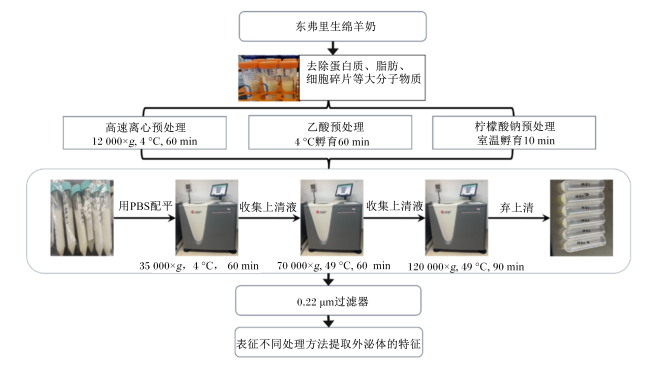
1.3 外泌体的鉴定
1.4 外泌体中RNA和蛋白质的浓度分析
1.5 数据统计分析
2 结果与分析
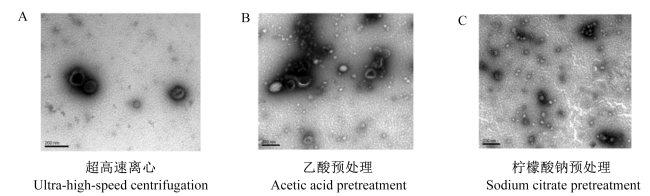
2.1 外泌体的形态
2.2 外泌体的粒径分析
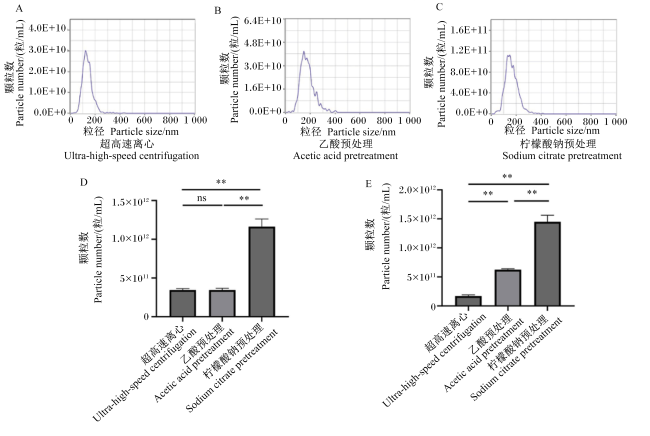
图3 纳米颗粒跟踪分析不同处理提取绵羊乳外泌体的粒径A:超高速离心处理后外泌体的粒径和颗粒数;B:乙酸预处理后外泌体的粒径和颗粒数;C:柠檬酸钠预处理后外泌体的粒径和颗粒数;D:粒径在30~150 nm的外泌体颗粒数;E:粒径>150 nm的外泌体颗粒数。**代表差异极显著(P<0.01);ns代表差异不显著(P>0.05)。 Fig.3 Nanoparticle tracking analysis of particle size of sheep milk exosomes extracted by different treatments A: The particle size and particle number of exosomes after ultra-high-speed centrifugation pretreatment; B: the particle size and particle number of exosomes after acetic acid pretreatment; C: the particle size and particle number of exosomes after sodium citrate pretreatment; D: the number of exosome particles with a particle size ranging from 30 to 150 nm; E: the number of exosome particles with a particle size larger than 150 nm.** indicates extremely significant difference (P<0.01);ns indicates no significant difference (P>0.05). |
2.3 外泌体中RNA和蛋白质的质量分析
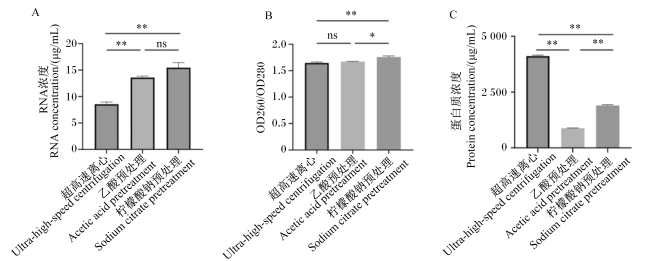
图4 不同处理提取绵羊乳外泌体中RNA及蛋白质的质量分析*代表差异显著(P<0.05);**代表差异极显著(P<0.01);ns代表差异不显著(P>0.05)。 Fig.4 Quality analysis of RNA and protein extracted from sheep milk exosomes extracted by different treatments * indicates significant difference (P<0.05);** indicates extremely significant difference (P<0.01); ns indicates no significant difference (P>0.05). |
 京公网安备 11010802041926号


