综述

山奈酚通过“菌群-代谢-免疫轴”调控动物肠道健康和生产性能的作用机制及研究进展

  • 刘翔雨 , 1 ,
  • 孙秀柱 2 ,
  • 任战军 1 ,
  • 王淑辉 , 1, *
展开
  • 1 西北农林科技大学动物科技学院, 杨凌 712100
  • 2 西北农林科技大学草业与草原学院, 杨凌 712100
* 王淑辉,副教授,E-mail:

刘翔雨(2000—),男,江苏徐州人,硕士研究生,从事秦岭野生动物保护与繁育工作。E-mail:

收稿日期: 2025-06-24

  网络出版日期: 2025-12-13

基金资助

陕西省级农业科技创新专项资金项目(20231494)

陕西省林科院科技创新计划专项(SXLK2021-0219)

Mechanism and Research Progress of Kaempferol Regulating Animal Intestinal Health and Performance through “Microbiota-Metabolism-Immunity Axis”

  • LIU Xiangyu , 1 ,
  • SUN Xiuzhu 2 ,
  • REN Zhanjun 1 ,
  • WANG Shuhui , 1, *
Expand
  • 1 College of Animal Science and Technology, Northwest A&F University, Yangling 712100, China
  • 2 College of Grassland Agriculture, Northwest A&F University, Yangling 712100, China
* associate professor, E-mail:

Received date: 2025-06-24

  Online published: 2025-12-13

摘要

山奈酚作为典型的天然黄酮类化合物,凭借其高效的抗氧化、抗炎特性,以及调节肠道菌群平衡的协同作用,已成为天然饲料添加剂领域的重要研究对象。山奈酚依赖其活性基团(2,3-共轭双键、4-酮基及3',4'-邻苯二酚结构)实现自由基清除与靶向调控功能,并经由肠道菌群介导的糖苷水解及代谢产物生成,重塑菌群结构,激活免疫信号通路,增强肠道屏障功能并抑制炎症反应,在畜禽养殖和水产养殖的疾病防控、生长性能提升、繁殖性能改善中展现出显著应用潜力。本文从“菌群-代谢-免疫轴”的多层次稳态调节角度,综合分析山奈酚的作用机制,旨在为开发高效、安全的绿色饲料添加剂提供理论依据,推动绿色健康养殖的发展。

本文引用格式

刘翔雨 , 孙秀柱 , 任战军 , 王淑辉 . 山奈酚通过“菌群-代谢-免疫轴”调控动物肠道健康和生产性能的作用机制及研究进展[J]. 动物营养学报, 2025 , 37(12) : 8133 -8143 . DOI: 10.12418/CJAN2025.663

Abstract

As a typical natural flavonoid, kaempferol has emerged as a key research focus in the field of natural feed additives due to its potent antioxidant, anti-inflammatory properties and synergistic effect in regulating intestinal microbiota balance. Kaempferol achieves free radical scavenging and targeted regulatory functions through its active groups (2,3-conjugated double bond, 4-ketone group, and 3',4'-catechol structure). Through microbiota-mediated glycoside hydrolysis and metabolite generation, it remodels microbial community structure, activates immune signaling pathways, enhances intestinal barrier function, and suppresses inflammatory responses. Kaempferol has demonstrated significant application potential in disease prevention and control, growth performance improvement, and reproductive performance enhancement in livestock, poultry and aquatic farming. This review comprehensively analyzes the mechanisms of kaempferol from the perspective of multi-level homeostatic regulation along the “microbiota-metabolism-immunity axis”, aiming to provide a theoretical foundation for the development of efficient and safe green feed additives and promote the advancement of green and healthy breeding.

随着抗生素滥用引发的病原菌耐药性问题日益严峻,其在饲料领域的应用已受到严格限制[1]。然而,禁抗之后畜禽养殖业面临着生产性能下降与患病风险升高的挑战,这推动了对安全高效抗生素替代品的研发进程[2]。山奈酚作为一种广泛存在于植物中的黄酮类化合物,具有抗氧化、抗炎、免疫调节及抗菌等多重功效[3-4],具备作为新型绿色饲料添加剂的潜力。
肠道菌群作为宿主代谢、免疫和消化生理功能的重要调节器,其稳态与动物生长性能、营养物质消化吸收及抗病能力密切相关。然而,环境胁迫、营养失衡等因素易导致肠道菌群紊乱,进而诱发炎症反应与代谢异常,严重威胁机体健康[5]。山奈酚可通过调节肠道菌群结构、增强肠道屏障功能以及抑制病原体定植等方式维持肠道稳态,但其作为饲料添加剂在动物体内的具体作用机制,尤其是对宿主-菌群互作关系的系统性影响仍有待深入阐明。本文通过解析“结构-代谢-功能”三位一体的调控网络,系统阐述山奈酚通过介导肠道菌群调控维持机体健康的潜在途径,旨在为山奈酚在畜禽生产中的应用提供参考依据。

1 山奈酚简介

1.1 山奈酚来源

山奈酚[化学名为3,5,7-三羟基-2-(4-羟基苯基)-4H-铬-4-酮,分子式为C15H10O6]是一种常见的黄酮类小分子化合物,广泛存在于多种蔬菜、水果及中草药中,主要来源于姜科植物山柰的根茎。目前,已成功从西兰花、银杏、羽衣甘蓝、茶叶、菊苣等多种植物基质中分离出山奈酚单体化合物[6]。此外,山奈酚也可通过生物合成途径,以丙二酰辅酶A和4-香豆酰辅酶A为底物,在查尔酮合酶等相关酶的催化作用下经二苯丙烷缩合反应生成[7-8]

1.2 山奈酚的构效关系

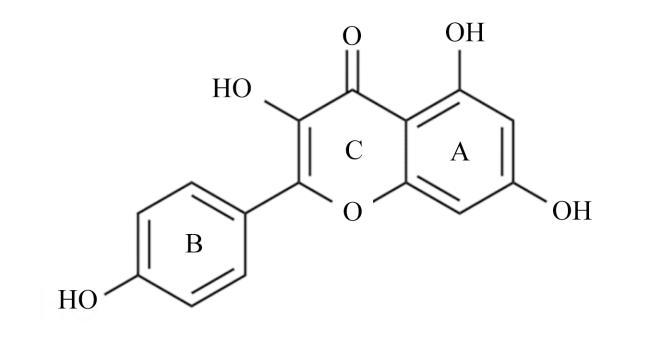
山奈酚为黄色结晶性粉末,微溶于水,溶于热乙醇、乙醚或碱溶液,熔点为276~278 ℃,相对分子质量为286.23,其分子刚性芳香骨架由2个苯酚环(A环和B环)与1个吡喃酮环(C环)构成(图1),分子内关键基团的空间排布与化学特性直接决定了其生物活性。其中,2,3-共轭双键是维持山奈酚抗氧化和抗炎活性的核心药效基团,该双键结构的饱和化会导致其抗氧化和抗炎活性丧失[9-10]。C环4-酮基通过p-π共轭效应增强2,3-双键的电子供给能力,若对该酮羰基进行化学修饰或直接移除,将导致山奈酚的生物活性显著降低[11]。3',4'-邻二羟基构成特征性邻苯二酚结构,赋予分子金属离子螯合能力和自由基清除特性[12],若对该羟基进行甲基化或糖基化修饰,会造成其相关活性明显衰减[13]
图1 山奈酚结构式

Fig.1 Structural formula of Kaempferol

1.3 山奈酚的吸收与代谢

山奈酚主要以与糖基结合的糖苷形式存在[3]。口服是山奈酚最佳的给药方式[14],摄入后多以糖苷形式被机体吸收,其吸收途径会因糖苷的极性与结构而异。部分糖苷可通过扩散作用或借助葡萄糖转运蛋白的主动转运直接被吸收,但大多数糖苷需先经小肠内的糖苷酶水解,再被肠道上皮细胞吸收。此外,未被水解的化合物(尤其是高极性糖苷)会进入结肠,在肠道菌群的代谢水解作用下转化为简单的芳香族或非芳香族有机酸等物质后被吸收[15]。作为亲脂性化合物,山奈酚的跨膜转运过程由载体介导的易化扩散与主动运输协同调控[16]。被吸收后的糖苷主要在肠道内代谢为葡糖醛酸苷和硫酸盐结合物,这些代谢物会通过ATP结合盒式转运蛋白主动外排至肝门静脉中[17],其中一部分参与体循环,另一部分则参与肠肝循环[18-19]。与此同时,未被直接吸收的糖苷会在肠道菌群的作用下发生水解,断裂糖苷键释放苷元,而后苷元的C环裂解生成2-(4-羟基苯基)丙酸、3,4-二羟基苯乙酸及间苯三酚等小分子代谢产物[19-20]。这些小分子代谢产物经肠道吸收后,可参与机体糖和脂代谢、氧化应激及炎症通路调控[21-22],最终通过粪便与尿液排出体外。

2 山奈酚的生物学功能

2.1 山奈酚的抗氧化作用

山奈酚通过多种机制发挥抗氧化作用,其分子结构中的3',4'-邻苯二酚基团能够直接清除羟基自由基(-OH)[23-24];C环上2,3-共轭双键、3-羟基与4-酮基的组合也是活性氧(reactive oxygen species,ROS)的有效清除剂,不仅能抑制黄嘌呤氧化酶(xanthine oxidase,XOD)的产生,而且能激活血红素氧合酶-1(heme oxygenase-1,HO-1)的表达,甚至还能通过螯合亚铜或亚铁作用阻止-OH的产生[25-26]。此外,山奈酚能激活内源性抗氧化酶系统,提升肺缺血再灌注损伤组织中超氧化物歧化酶(superoxide dismutase,SOD)、过氧化氢酶(catalase,CAT)和谷胱甘肽过氧化物酶(glutathione peroxidase,GSH-Px)的活性[27-28]。这些作用协同减轻氧化应激对肠道屏障的损伤,抑制脂质过氧化反应,保护肠上皮细胞完整性[29-30]
山奈酚的抗氧化作用不仅体现在对自由基和酶活性的调节上,其独特的结构还通过影响肠道菌群结构间接提升机体抗氧化能力。研究表明,山奈酚能够选择性促进杜氏菌属、异杆菌属、乳杆菌属和拟杆菌属等有益菌增殖,通过调控短链脂肪酸代谢并激活核因子E2相关因子2(nuclear factor E2-related factor 2,Nrf2)信号通路,增强抗氧化蛋白表达[31];同时,其对产酸拟杆菌和双歧杆菌的益生效应可调节胆汁酸代谢流向,增加牛磺酸结合型胆汁酸比例[32-33],进而激活法尼醇X受体(farnesoid X receptor,FXR)/Takeda G蛋白偶联受体5(Takeda G protein-coupled receptor 5,TGR5)信号轴[34],形成菌群-代谢产物-氧化还原稳态的正反馈调节机制,显著增强机体抗氧化防御能力,减轻氧化应激与炎症反应,加强结肠屏障功能。

2.2 山奈酚的抗炎作用

在炎症反应中,多种炎症介质可诱导产生肿瘤坏死因子-α(tumor necrosis factor-α,TNF-α)等促炎细胞因子。山奈酚糖苷中的C-3、C-7和C-4'基团能够直接与TNF-α结合,阻断其与肿瘤坏死因子受体1(tumor necrosis factor receptor 1,TNFR1)结合,降低细胞内TNF-α信号传导效率,有效减轻化学诱导引发的炎症反应[35]。当山奈酚进入肠道后,其糖苷键可被双歧杆菌属、拟杆菌属和肠球菌属等特定菌群水解释放出苷元,苷元的C环进一步裂解可产生2-(4-羟基苯基)丙酸、3,4-二羟基苯乙酸和间苯三酚等小分子代谢产物[19-20]。这些代谢产物被结肠上皮吸收后,能通过抑制TNF-α诱导的核因子-κB(nuclear factor-κB,NF-κB)p65亚基磷酸化修饰[36-37],减轻肠道炎症反应;其中3,4-二羟基苯乙酸还能调控丝裂原活化蛋白激酶(mitogen-activated protein kinases,MAPK)/肌球蛋白轻链激酶(myosin light chain kinase,MLCK)信号通路[22],进而改善肠道屏障功能损伤。
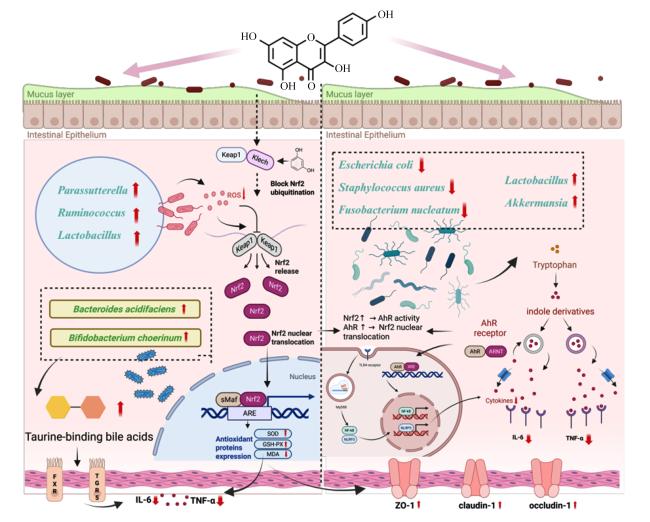
山奈酚的抗炎机制与肠道菌群的代谢重编程密切相关(图2)。Qu等[38]在结肠炎模型中发现,山奈酚可显著提高厚壁菌门/拟杆菌门比值及瘤胃球菌科和普雷沃氏菌科的相对丰度,降低志贺氏菌属的相对丰度,激活苯丙氨酸、半乳糖及精氨酸/脯氨酸代谢通路,降低血清中脂多糖(lipopolysaccharide,LPS)水平,抑制白细胞介素-1β(interleukin-1β,IL-1β)、白细胞介素-6(interleukin-6,IL-6)和TNF-α等促炎因子表达,上调白细胞介素-10(interleukin-10,IL-10)等抗炎因子表达。Zhu等[39]研究发现,山奈酚可显著降低肠道中柄杆菌属和肠球菌属的相对丰度,提升皮奥里亚罗宾逊菌、溶牙纳米合杆菌及红蝽菌UCG-002的相对丰度,抑制辅助性T细胞17(T helper 17 cell,Th17)/白细胞介素-17(interleukin-17,IL-17)信号通路表达,改善CD4/CD8阳性T淋巴细胞比值。Bian等[40]和Wang等[41]通过高脂饮食小鼠模型研究发现,山奈酚可降低肠道毛螺菌科NK4A136、罗姆布茨菌属和普拉梭菌的相对丰度,提升副萨特氏菌属、副拟杆菌属及阿克曼菌属的相对丰度,通过介导脂质储存、改善糖耐量、调控免疫细胞浸润、调节细胞因子分泌及维持肠道屏障完整性等途径,抑制Toll样受体4(Toll like receptor 4,TLR4)/NF-κB通路介导的肠道炎症反应。Li等[32]在小鼠结直肠癌研究中发现,山奈酚可通过增加阿克曼菌属、双歧杆菌科和芽孢杆菌属的相对丰度,降低脱硫弧菌属、螺杆菌属、毛螺菌属、罗氏菌属及瘤胃球菌属的相对丰度,导致胆固醇27-羟化酶(cholesterol 27-hydroxylase,CYP27A1)和胆固醇12α-羟化酶(cholesterol 12α-hydroxylase,CYP8B1)蛋白表达上调,改善胆汁酸代谢并激活FXR受体,进而抑制Wnt/β-连环蛋白信号通路(Wnt/β-catenin signaling pathway),最终抑制结直肠癌进展。在胶原诱导性关节炎小鼠模型中,山奈酚通过调节毛螺菌科、拟杆菌目S24-7、普雷沃氏菌科、丹毒丝菌科、葡萄球菌科及产碱菌科的相对丰度实现肠道菌群稳态重建,显著改变肠道中3-羟基丁酸、3-甲基-2-酮丁酸及2-羟基丁酸水平,提示其可通过调控色氨酸代谢、脂肪酸代谢及次级胆汁酸代谢等能量代谢过程发挥抗关节炎作用[42]。Yu等[43]研究表明,山奈酚通过调节葡聚糖硫酸钠(dextran sulphate sodium,DSS)诱导的慢性结肠炎模型肠道内阿克曼菌属、瘤胃球菌属、罗姆布茨菌属、颤螺旋菌属、螺杆菌属、内脏奥德氏杆菌和红蝽菌UCG-002相对丰度的变化,提升肠道内丁酸水平,下调白细胞介素-22(interleukin-22,IL-22)和TNF-α的表达,减轻慢性结肠炎症状。
图2 山奈酚介导肠道菌群缓解肠道炎症的作用机制

Mucus layer:黏液层;Intestinal epithelium:肠上皮;Keap1:Kelch样环氧氯丙烷相关蛋白1 Kelch-like ECH-associated protein 1;ROS:活性氧 reactive oxygen species;Nrf2:核因子E2相关因子2 nuclear factor E2-related factor 2;Parasutterella:副萨特氏菌属;Ruminococcus:瘤胃球菌属;Lactobacillus:乳杆菌属;Bacteroides acidifaciens:产酸拟杆菌;Bifidobacterium choerinum:豚双歧杆菌;Taurine-binding bile acids:牛磺酸结合型胆汁酸;FXR:法尼醇X受体 farnesoid X receptor;TGR5:G蛋白偶联受体5 Takeda G protein-coupled receptor 5;IL-6:白细胞介素-6 interleukin-6;TNF-α:肿瘤坏死因子-α tumor necrosis factor-α;SOD:超氧化物歧化酶 superoxide dismutase;GSH-Px:谷胱甘肽过氧化物酶 glutathione peroxidase;MDA:丙二醛 malondialdehyde;ARE:抗氧化反应元件 antioxidant response element;nuclear translocation:核转位;release:释放;Escherichia coli:大肠杆菌;Staphylococcus aureus:金黄色葡萄球菌;Fusobacterium nucleatum:具核梭杆菌;Akkermansia:阿克曼菌属;Tryptophan:色氨酸;indole derivatives:吲哚衍生物;AhR:芳香烃受体 aryl hydrocarbon receptor;receptor:受体;Cytokines:细胞因子;ZO-1:闭锁小带蛋白-1 zonula occludens-1;claudin-1:封闭蛋白-1;occludin-1:闭合蛋白-1;NF-κB:核因子-κB nuclear factor-κB;TLR4:Toll样受体4 toll-like receptor 4;Antioxidant proteins expression:抗氧化蛋白表达;Block Nrf2 ubiquitination:阻断Nrf2泛素化;sMaf:小Maf蛋白 small Maf protein;NLRP3:NOD样受体热蛋白结构域相关蛋白3 NOD-like receptor pyrin domain-containing protein 3;AhR activity:芳香烃受体活性 aryl hydrocarbon receptor activity;MyD88:髓样分化因子88 myeloid differentiation factor 88;XRE:异生反应元件 xenobiotic response element。

Fig.2 Mechanism of kaempferol-mediated intestinal microbiota to alleviate intestinal inflammation

2.3 山奈酚的抑菌作用

山奈酚的抗菌作用机制通过多重途径协同实现,具体机制因细菌种类及衍生物结构不同而呈现多样性。山奈酚因其脂溶性特质,能够迅速穿透病原菌细胞膜,通过破坏膜电位、离子稳态或抑制关键酶表达,有效抑制大肠杆菌、霍乱弧菌和粪肠球菌等病原体的生长[44-45],并选择性促进乳杆菌属等益生菌增殖[31],通过益生元效应重塑肠道微生态平衡。山奈酚还可以与细菌细胞膜上磷脂的亲水区相互作用[46],改变膜的流动性,促使幽门螺杆菌等细菌菌体蛋白外漏[47]。针对耐药菌的DNA代谢过程,山奈酚可直接靶向抑制大肠杆菌和耐甲氧西林金黄色葡萄球菌的DNA促旋酶[48-49],以及阻断金黄色葡萄球菌DNA解旋酶PriA的功能,最终干扰DNA复制与修复过程,实现抑菌效果[50]。此外,山奈酚及其衍生物可阻断3-氧酰基-[酰基载体蛋白]还原酶和烯酰基酰基载体蛋白还原酶合成,从而抑制分枝杆菌、铜绿假单胞菌和霍乱弧菌等致病菌的脂肪酸生物合成,破坏细胞包膜功能并抑制生物膜形成[51]。特定山奈酚衍生物表现出显著抗微生物活性。研究表明,山奈酚3-O-β-(200-乙酰基)、吡喃半乳糖苷与槲皮素的混合物可通过膜损伤诱导藤黄微球菌凋亡及DNA断裂[52],从而破坏细菌细胞膜完整性。山奈酚-3-O-[3-O-乙酰基-6-O-(E)-对香豆酰基]-β-D-吡喃葡萄糖苷能破坏真菌细胞膜完整性,对白色念珠菌、光滑念珠菌及热带念珠菌均有抑制作用[53]。小鼠体内试验证实,山奈酚对白色念珠菌的抑菌率高达90%[54]
在革兰氏阴性菌领域,山奈酚化合物对鲍曼不动杆菌等临床重要耐药菌株展现出显著抑制效应[55],其抗菌效果与商业抗生素相当[56-57]。经纳米晶体负载技术修饰后,其生物利用度得到显著提升,在感染伤口模型中已体现出良好的治疗效果[58]。针对革兰氏阳性菌,山奈酚对金黄色葡萄球菌及粪肠球菌具有特异性抗菌效应,其糖苷结构能有效破坏菌体生长周期[55],且特定结构修饰产物与氟喹诺酮类药物联用时可产生协同抗菌作用[49]

3 山奈酚在动物生产中的应用

3.1 山奈酚在猪生产中的应用

山奈酚作为一种天然黄酮类化合物,在猪生产中展现出多方面的生物活性,其作用机制主要涉及抗氧化、抗炎和生殖调控等多个方面。研究表明,0.1 μmol/L山奈酚可提升猪体外培养胚胎的囊胚形成率,增加囊胚细胞总数,同时降低ROS水平[59-60],通过调控氧化还原稳态为胚胎发育创造了有利的微环境。此外,0.1 μmol/L山奈酚还能修复老化卵母细胞,通过调节线粒体功能及抑制氧化应激损伤,使老化猪卵母细胞的囊胚总细胞数提高 23.5%,细胞凋亡率降低35.2%,囊胚形成率增加33.5%[61]
在肠道健康调控方面,山奈酚通过激活Nrf2信号通路诱导抗氧化酶基因表达,恢复受损肠上皮细胞的迁移能力,上调闭锁小带蛋白-1(zonula occludens-1,ZO-1)的表达,增强肠道屏障功能[30]。此外,山奈酚在猪盲肠微生物群作用下可发生脱共轭反应,在摄入后4 h内被降解[62-63],这一代谢过程产生的3-(3-羟基苯基)丙酸等抗炎代谢物对缓解仔猪尿路感染具有潜在应用价值[64]
尽管山奈酚在提高猪群生产性能和健康水平方面具有良好的应用前景,但其在猪体内的“菌群-代谢-免疫轴”调控机制仍需进一步深入探索。

3.2 山奈酚在家禽生产中的应用

山奈酚在家禽生产中通过“菌群-代谢-免疫轴”发挥多重调控作用,在饲料安全、肠道健康和免疫调节等方面展现出显著功效。研究发现,山奈酚复合黄酮能显著缓解黄曲霉毒素B1(aflatoxin B1,AFB1)诱导的家禽肝脏损伤,其作用机制在于:通过提高肠道内拟杆菌属的相对丰度并改善代谢物谱,恢复十二指肠中黏蛋白2(mucin2,MUC2)、肠三叶因子3(intestinal trefoil factor 3,ITF-3)和分泌型免疫球蛋白A(secretory immunoglobulin A,SIgA)水平;同时,还能上调封闭蛋白-1(claudin-1)、封闭蛋白-4(claudin-4)、ZO-1、闭锁小带蛋白-2(zonula occludens-2,ZO-2)的表达,并抑制Notch信号通路激活,从而有效改善肠道通透性与屏障功能[65]。在抗寄生虫感染方面,含山奈酚的草本提取物凭借其抗氧化、抗菌及抗生物膜特性,可降低球虫繁殖率,减轻肉鸡肠道病变严重程度[66]。此外,山奈酚通过调控肠道菌群还能有效抑制大肠杆菌和沙门氏菌等致病菌增殖,改善肠道代谢产物谱;并通过抑制NF-κB信号通路激活,下调肠道中IL-1βIL-6、IL-10、转化生长因子-β(transforming growth factor-β,TGF-β)、TNF-α等炎症因子的表达,同时上调肠黏膜免疫因子黏蛋白1(mucin1,MUC1)和MUC2的表达,从而对肉鸡肠道起到保护作用[67]

3.3 山奈酚在反刍动物生产中的应用

山奈酚可通过瘤胃微生物-代谢物-信号通路多维调控网络,在反刍动物的瘤胃微环境调控、健康维持和繁殖性能提升方面展现出显著功效。在瘤胃微环境调控方面,山奈酚可通过抑制细胞质膜功能、干扰细菌细胞壁合成或阻断核酸合成等特性,抑制产甲烷菌活性并产生抑制性代谢产物[68],进而减少甲烷排放,降低胃肠道痉挛、腹泻、便秘、腹胀和酸中毒发生频率。此外,含山奈酚植物提取物可促进瘤胃内理研菌科RC9肠道群和普雷沃氏菌属等菌群增殖[69],促使奶山羊瘤胃液中总挥发性脂肪酸浓度和丙酸比例升高[70],影响有机酸及其衍生物等物质的含量,并调控苯丙氨酸代谢、精氨酸和脯氨酸代谢等代谢通路[71],这对瘤胃中氨态氮的利用以及瘤胃微环境中pH平衡的维持均具有重要作用。宏基因组研究进一步证实,含山奈酚植物提取物可通过重塑瘤胃有益菌群结构靶向调控支链脂肪酸合成相关基因的表达,干预内分泌和代谢疾病、传染性疾病等代谢通路,有效维持机体健康稳态,优化脂质代谢通路,提升乳制品中n-3多不饱和脂肪酸的生物合成效率,降低肉产品的膻味物质沉积[72]
在繁殖性能方面,不同浓度山奈酚对反刍动物生殖相关细胞及胚胎发育均表现出调控作用:25 μmol/L山奈酚可显著提高牛冷冻精子解冻后的活力及显著增加顶体完整率[73];0.1 μmol/L山奈酚显著降低胚胎的ROS水平,降低促凋亡基因的表达,改善牛胚胎体外培养的发育[74];10 μmol/L山奈酚通过磷脂酰肌醇3-激酶(phosphatidylinositol 3-kinase,PI3K)/蛋白激酶B(protein kinase B,AKT)途径促进原始卵泡激活,刺激颗粒细胞增殖,并减少体外培养的绵羊窦前卵泡的DNA片段化[75]

3.4 山奈酚在水产动物生产中的应用

山奈酚通过多靶点调控机制,在水产养殖领域的疾病防控、生长促进及代谢调节等方面展现出广阔应用潜力。在病原防控方面,山奈酚通过干扰病原体毒力因子表达及生物膜形成,对哈维氏弧菌、美人鱼弧菌、副溶血性弧菌、柱状黄杆菌和海豚链球菌等水产动物致病菌具有广谱抑制作用[76-77],为鱼类柱状结肠病和链球菌病的治疗提供了新方向。同时含山奈酚的印楝叶水提取物表现出显著的抗寄生虫活性,有望成为防治水生动物水蛭侵扰的生物防治剂[78]。在免疫调节方面,含山奈酚的粗茎鳞毛蕨可通过降低嗜水气单胞菌的相对丰度抑制草鱼肠道中髓样分化因子88(myeloid differentiation factor 88,MyD88)/NF-κB通路的激活,减少IL-1βTNF-α等促炎基因表达,同时增强溶菌酶、SOD活性及免疫球蛋白M(immunoglobulin M,IgM)水平[79]。在病毒感染防控方面,山奈酚通过抑制NF-κB p65核转位和细胞外信号调节激酶(extracellular signal-regulated kinases,ERK)/MAPK信号通路磷酸化,显著降低大口黑鲈感染大口黑鲈病毒后的炎症反应,使其存活率提高53.33%[80]。在代谢调控和生长促进方面,山奈酚通过激活哺乳动物雷帕霉素靶蛋白(mammalian target of rapamycin,mTOR)/AKT信号通路促进蛋白质合成,同时上调过氧化物酶体增殖物激活受体α(peroxisome proliferator-activated receptorα,PPARα)/肉碱棕榈酰转移酶1(carnitine palmitoyltransferase 1,CPT1)通路表达抑制脂肪沉积,实现促生长、降脂肪的双重效应[81]。此外,山奈酚还能通过激活Nrf2通路增强SOD、CAT等抗氧化酶活性,降低氧化损伤,提升肌肉中甘氨酸、谷氨酸等风味氨基酸含量从而改善鱼肉品质[81]

4 小结与展望

山奈酚作为天然替抗剂的独特价值在于其结构可修饰性和代谢动态特征形成的协同优势,为破解畜牧生产中应用瓶颈提供了精准靶向“菌群-代谢-免疫轴”的突破口。然而,目前关于山奈酚在畜禽和水产动物生产中的最适添加剂量、长期使用效果及与其他添加剂的协同作用仍需进一步研究,以为其作为不同种属的饲料添加剂提供理论依据。未来研究需在分子机制层面实现深度突破,聚焦于普雷沃氏菌属和拟杆菌属等核心功能菌群,阐明代谢衍生物激活肠上皮芳香烃受体(aryl hydrocarbon receptor,AhR)的信号级联,建立“菌群代谢-宿主受体”的分子对话机制。同时,应借助单细胞空间转录组和宏基因组技术,绘制山奈酚在不同肠段的动态作用图谱,明确不同肠段免疫微环境响应的剂量效应拐点,为山奈酚作为跨种属精准饲料添加剂的开发应用奠定科学基础,助力构建绿色健康的养殖体系。此外,研究范围应拓展至兔、鹿、狐、貂、鹌鹑等特种经济动物,重点探究山奈酚通过“菌群-代谢-免疫轴”对其生长性能、毛皮质量、繁殖性能及免疫、抗氧化能力的影响,填补该领域的研究空白。最终,构建“一畜一策”的精准营养干预体系,为绿色健康养殖提供兼具科学深度与产业转化价值的系统性解决方案。
[1]
WANG H L, LONG W T, CHADWICK D, et al. Dietary acidifiers as an alternative to antibiotics for promoting pig growth performance:a systematic review and Meta-analysis[J]. Animal Feed Science and Technology, 2022, 289:115320.

DOI

[2]
WICKRAMASURIYA S S, AULT J, RITCHIE S, et al. Alternatives to antibiotic growth promoters for poultry:a bibliometric analysis of the research journals[J]. Poultry Science, 2024, 103(9):103987.

DOI

[3]
PERIFERAKIS A, PERIFERAKIS K, BADARAU I A, et al. Kaempferol:antimicrobial properties,sources,clinical,and traditional applications[J]. International Journal of Molecular Sciences, 2022, 23(23):15054.

DOI

[4]
LI S R, WANG S W, ZHANG L, et al. Research progress on pharmacokinetics,anti-inflammatory and immunomodulatory effects of kaempferol[J]. International Immunopharmacology, 2025, 152:114387.

DOI

[5]
KARAHAN F. Environmental factors affecting the gut microbiota and their consequences[J]. Nature Cell and Science, 2024, 2(3):133-140.

[6]
RAJENDRAN P, RENGARAJAN T, NANDAKUMAR N, et al. Kaempferol,a potential cytostatic and cure for inflammatory disorders[J]. European Journal of Medicinal Chemistry, 2014, 86:103-112.

DOI

[7]
WINKEL-SHIRLEY B. Flavonoid biosynthesis. A colorful model for genetics,biochemistry,cell biology,and biotechnology[J]. Plant Physiology, 2001, 126(2):485-493.

DOI

[8]
WINKEL-SHIRLEY B. Biosynthesis of flavonoids and effects of stress[J]. Current Opinion in Plant Biology, 2002, 5(3):218-223.

DOI

[9]
SIM G S, LEE B C, CHO H S, et al. Structure activity relationship of antioxidative property of flavonoids and inhibitory effect on matrix metalloproteinase activity in UVA-irradiated human dermal fibroblast[J]. Archives of Pharmacal Research, 2007, 30(3):290-298.

DOI

[10]
ZHANG Q, YANG W B, LIU J C, et al. Identification of six flavonoids as novel cellular antioxidants and their structure-activity relationship[J]. Oxidative Medicine and Cellular Longevity, 2020, 2020:4150897.

[11]
SPIEGEL M, ANDRUNIÓW T, SROKA Z. Flavones’ and flavonols’ antiradical structure-activity relationship-a quantum chemical study[J]. Antioxidants, 2020, 9(6):461.

DOI

[12]
MLADĚNKA P, MACÁKOVÁ K, FILIPSKÝ T, et al. In vitro analysis of iron chelating activity of flavonoids[J]. Journal of Inorganic Biochemistry, 2011, 105(5):693-701.

DOI

[13]
KOIRALA N, THUAN N H, GHIMIRE G P, et al. Methylation of flavonoids:chemical structures,bioactivities,progress and perspectives for biotechnological production[J]. Enzyme and Microbial Technology, 2016, 86:103-116.

DOI

[14]
BARVE A, CHEN C, HEBBAR V, et al. Metabolism,oral bioavailability and pharmacokinetics of chemopreventive kaempferol in rats[J]. Biopharmaceutics & Drug Disposition, 2009, 30(7):356-365.

[15]
ŻYŻYŃSKA-GRANICA B, GIERLIKOWSKA B, PARZONKO A, et al. The bioactivity of flavonoid glucuronides and free aglycones in the context of their absorption,Ⅱ phase metabolism and deconjugation at the inflammation site[J]. Food and Chemical Toxicology, 2020, 135:110929.

DOI

[16]
CRESPY V, MORAND C, BESSON C, et al. The splanchnic metabolism of flavonoids highly differed according to the nature of the compound[J]. American Journal of Physiology:Gastrointestinal and Liver Physiology, 2003, 284(6):G980-G988.

[17]
DABEEK W M, MARRA M V. Dietary quercetin and kaempferol:bioavailability and potential cardiovascular-related bioactivity in humans[J]. Nutrients, 2019, 11(10):2288.

DOI

[18]
SCALBERT A, MORAND C, MANACH C, et al. Absorption and metabolism of polyphenols in the gut and impact on health[J]. Biomedicine & Pharmacotherapy, 2002, 56(6):276-282.

DOI

[19]
MARÍN L, MIGUÉLEZ E M, VILLAR C J, et al. Bioavailability of dietary polyphenols and gut microbiota metabolism:antimicrobial properties[J]. BioMed Research International, 2015, 2015:905215.

[20]
WANG M Y, LU Y L, WU Q F, et al. Biotransformation and gut microbiota-mediated bioactivity of flavonols[J]. Journal of Agricultural and Food Chemistry, 2023, 71(22):8317-8331.

DOI

[21]
CHEN W B, LIU R N, ZHU X L, et al. Microbial phenolic metabolites 3-(3',4'-dihydroxyphenyl) propanoic acid and 3',4'-dihydroxyphenylacetic acid prevent obesity in mice fed with high-fat diet[J]. Food Science and Human Wellness, 2024, 13(1):327-338.

DOI

[22]
LIU M, WANG L, HUANG B J, et al. 3,4-dihydroxyphenylacetic acid ameliorates gut barrier dysfunction via regulation of MAPK-MLCK pathway in type 2 diabetes mice[J]. Life Sciences, 2022, 305:120742.

DOI

[23]
SOUCEK P, KONDROVA E, HERMANEK J, et al. New model system for testing effects of flavonoids on doxorubicin-related formation of hydroxyl radicals[J]. Anti-Cancer Drugs, 2011, 22(2):176-184.

DOI

[24]
SINGH R, SINGH B, SINGH S, et al. Anti-free radical activities of kaempferol isolated from Acacia nilotica (L.) Willd.Ex.Del[J]. Toxicology in Vitro, 2008, 22(8):1965-1970.

DOI

[25]
HONG J T, YEN J H, WANG L S, et al. Regulation of heme oxygenase-1 expression and MAPK pathways in response to kaempferol and rhamnocitrin in PC12 cells[J]. Toxicology and Applied Pharmacology, 2009, 237(1):59-68.

DOI

[26]
REN J, MENG S, LEKKA C E, et al. Complexation of flavonoids with iron:structure and optical signatures[J]. The Journal of Physical Chemistry B, 2008, 112(6):1845-1850.

DOI

[27]
何煜舟, 丁美萍, 汪云开, 等. 山萘酚对缺血再灌注脑损伤大鼠的保护作用[J]. 中华中医药学刊, 2009, 27(8):1673-1675.

HE Y Z, DING M P, WANG Y K, et al. The protective effect of kamperol on focal cerebral ischemia in rats[J]. Chinese Archives of Traditional Chinese Medicine, 2009, 27(8):1673-1675. (in Chinese)

[28]
YANG C L, YANG W K, HE Z H, et al. Kaempferol alleviates oxidative stress and apoptosis through mitochondria-dependent pathway during lung ischemia-reperfusion injury[J]. Frontiers in Pharmacology, 2021, 12:624402.

DOI

[29]
FAN J, ZHAO X H, ZHAO J R, et al. Galangin and kaempferol alleviate the indomethacin-caused cytotoxicity and barrier loss in rat intestinal epithelial (IEC-6) cells via mediating JNK/Src activation[J]. ACS Omega, 2021, 6(23):15046-15056.

DOI PMID

[30]
JIN Y H, ZHAI Z A, JIA H, et al. Kaempferol attenuates diquat-induced oxidative damage and apoptosis in intestinal porcine epithelial cells[J]. Food & Function, 2021, 12(15):6889-6899.

[31]
ZHANG S Q, TANG F, ZHOU Z, et al. Kaempferol alleviates carbon tetrachloride-induced liver fibrosis in mice by regulating intestinal short-chain fatty acids[J]. International Journal of Molecular Sciences, 2025, 26(14):6666.

DOI

[32]
LI X Y, KHAN I, HUANG G X, et al. Kaempferol acts on bile acid signaling and gut microbiota to attenuate the tumor burden in ApcMin/+mice[J]. European Journal of Pharmacology, 2022, 918:174773.

DOI

[33]
LI X Y, HUANG G X, KHAN I, et al. The prebiotic effect of kaempferol in regulating bile acid metabolism[J]. Food Science & Nutrition, 2025, 13(3):e70023.

DOI

[34]
PUSHPASS R A G, ALZOUFAIRI S, JACKSON K G, et al. Circulating bile acids as a link between the gut microbiota and cardiovascular health:impact of prebiotics,probiotics and polyphenol-rich foods[J]. Nutrition Research Reviews, 2022, 35(2):161-180.

DOI

[35]
WANG S Y, SHI X J, LI J, et al. A small molecule selected from a DNA-encoded library of natural products that binds to TNF-α and attenuates inflammation in vivo[J]. Advanced Science, 2022, 9(21):e2201258.

[36]
ZHANG R H, AI X, DUAN Y J, et al. Kaempferol ameliorates H9N2 swine influenza virus-induced acute lung injury by inactivation of TLR4/MyD88-mediated NF-κB and MAPK signaling pathways[J]. Biomedicine & Pharmacotherapy, 2017, 89:660-672.

DOI

[37]
CHU T J, YU R Y, GU Y P, et al. Kaempferol protects gut-vascular barrier from high glucose-induced disorder via NF-κB pathway[J]. Journal of Nutritional Biochemistry, 2024, 123:109496.

DOI

[38]
QU Y F, LI X Y, XU F Y, et al. Kaempferol alleviates murine experimental colitis by restoring gut microbiota and inhibiting the LPS-TLR4-NF-κB axis[J]. Frontiers in Immunology, 2021, 12:679897.

DOI

[39]
ZHU Z Q, ZHU Z Q, SHI Z Y, et al. Kaempferol remodels liver monocyte populations and treats hepatic fibrosis in mice by modulating intestinal flora and metabolic reprogramming[J]. Inflammation, 2025, 48(4):2198-2216.

DOI

[40]
BIAN Y F, LEI J Q, ZHONG J, et al. Kaempferol reduces obesity,prevents intestinal inflammation,and modulates gut microbiota in high-fat diet mice[J]. Journal of Nutritional Biochemistry, 2022, 99:108840.

DOI

[41]
WANG T Q, WU Q M, ZHAO T Q. Preventive effects of kaempferol on high-fat diet-induced obesity complications in C57BL/6 mice[J]. BioMed Research International, 2020, 2020:4532482.

DOI

[42]
AA L X, FEI F, QI Q, et al. Rebalancing of the gut flora and microbial metabolism is responsible for the anti-arthritis effect of kaempferol[J]. Acta Pharmacologica Sinica, 2020, 41(1):73-81.

DOI

[43]
YU R Y, ZHOU Q L, LIU T L, et al. Kaempferol relieves the DSS-induced chronic colitis in C57BL/6J mice,alleviates intestinal angiogenesis,and regulates colonic microflora structure[J]. Journal of Functional Foods, 2023, 107:105646.

DOI

[44]
MARTINI N D, KATERERE D R P, ELOFF J N. Biological activity of five antibacterial flavonoids from Combretum erythrophyllum (Combretaceae)[J]. Journal of Ethnopharmacology, 2004, 93(2/3):207-212.

DOI

[45]
OTSUKA N, LIU M H, SHIOTA S, et al. Anti-methicillin resistant Staphylococcus aureus (MRSA) compounds isolated from Laurus nobilis[J]. Biological and Pharmaceutical Bulletin, 2008, 31(9):1794-1797.

DOI

[46]
DAISON F A, KUMAR N, BALAKRISHNAN S, et al. Molecular dynamics studies on the bacterial membrane pore formation by small molecule antimicrobial agents[J]. Journal of Chemical Information and Modeling, 2022, 62(1):40-48.

DOI

[47]
YANG R J, LI J J, WANG J R, et al. Kaempferol inhibits the growth of Helicobacter pylori in a manner distinct from antibiotics[J]. Journal of Food Biochemistry, 2022, 46(9):e14210.

[48]
WU T, ZANG X X, HE M Y, et al. Structure-activity relationship of flavonoids on their anti-Escherichia coli activity and inhibition of DNA gyrase[J]. Journal of Agricultural and Food Chemistry, 2013, 61(34):8185-8190.

DOI

[49]
LIU M H, OTSUKA N, NOYORI K, et al. Synergistic effect of kaempferol glycosides purified from Laurus nobilis and fluoroquinolones on methicillin-resistant Staphylococcus aureus[J]. Biological and Pharmaceutical Bulletin, 2009, 32(3):489-492.

DOI

[50]
HUANG Y H, HUANG C C, CHEN C C, et al. Inhibition of Staphylococcus aureus PriA helicase by flavonol kaempferol[J]. Protein Journal, 2015, 34(3):169-172.

DOI

[51]
AL-NOUR M Y, IBRAHIM M M, ELSAMAN T. Ellagic acid,kaempferol,and quercetin from Acacia nilotica:promising combined drug with multiple mechanisms of action[J]. Current Pharmacology Reports, 2019, 5(4):255-280.

DOI

[52]
LI X M, LUO X G, SI C L, et al. Antibacterial active compounds from Hypericum ascyron L. induce bacterial cell death through apoptosis pathway[J]. European Journal of Medicinal Chemistry, 2015, 96:436-444.

DOI

[53]
CHRISTOPOULOU C, GRAIKOU K, CHINOU I. Chemosystematic value of chemical constituents from Scabiosa hymettia (Dipsacaceae)[J]. Chemistry & Biodiversity, 2008, 5(2):318-323.

DOI

[54]
YORDANOV M, DIMITROVA P, PATKAR S, et al. Inhibition of Candida albicans extracellular enzyme activity by selected natural substances and their application in Candida infection[J]. Canadian Journal of Microbiology, 2008, 54(6):435-440.

DOI

[55]
OZÇELIK B, ORHAN I, TOKER G. Antiviral and antimicrobial assessment of some selected flavonoids[J]. Zeitschrift fur Naturforschung.C,Journal of Biosciences, 2006, 61(9/10):632-638.

[56]
ŠURAN J, CEPANEC I, MAŠEK T, et al. Nonaqueous polyethylene glycol as a safer alternative to ethanolic propolis extracts with comparable antioxidant and antimicrobial activity[J]. Antioxidants, 2021, 10(6):978.

DOI

[57]
ŞEKER M E, AY E, AKTAŞ KARAÇELĪK A, et al. First determination of some phenolic compounds and antimicrobial activities of Geranium ibericum subsp.jubatum:a plant endemic to turkey[J]. Turkish Journal of Chemistry, 2021, 45(1):60-70.

DOI

[58]
ROFEAL M, EL-MALEK F A, QI X H. In vitro assessment of green polyhydroxybutyrate/chitosan blend loaded with kaempferol nanocrystals as a potential dressing for infected wounds[J]. Nanotechnology, 2021, 32(37):375102.

DOI

[59]
YAO X R, JIANG H, NANXU Y, et al. Kaempferol attenuates mitochondrial dysfunction and oxidative stress induced by H2O2 during porcine embryonic development[J]. Theriogenology, 2019, 135:174-180.

DOI

[60]
ZHAO Y H, XU Y N, LI Y H, et al. Supplementation of kaempferol to in vitro maturation medium regulates oxidative stress and enhances subsequent embryonic development in vitro[J]. Zygote, 2020, 28(1):59-64.

DOI

[61]
YAO X R, JIANG H, LI Y H, et al. Kaempferol alleviates the reduction of developmental competence during aging of porcine oocytes[J]. Animal Science Journal, 2019, 90(11):1417-1425.

DOI PMID

[62]
HEIN E M, ROSE K, VAN’T SLOT G, et al. Deconjugation and degradation of flavonol glycosides by pig cecal microbiota characterized by fluorescence in situ hybridization (FISH)[J]. Journal of Agricultural and Food Chemistry, 2008, 56(6):2281-2290.

DOI

[63]
LABIB S, HUMMEL S, RICHLING E, et al. Use of the pig caecum model to mimic the human intestinal metabolism of hispidulin and related compounds[J]. Molecular Nutrition & Food Research, 2006, 50(1):78-86.

[64]
POPOWSKI D, ZENTEK J, PIWOWARSKI J P, et al. Gut microbiota of pigs metabolizes extracts of Filipendula ulmaria and Orthosiphon aristatus-herbal remedies used in urinary tract disorders[J]. Planta Medica, 2022, 88(3/4):254-261.

DOI

[65]
TAO W L, ZHU W Y, NABI F, et al. Penthorum chinense Pursh compound flavonoids supplementation alleviates aflatoxin B1-induced liver injury via modulation of intestinal barrier and gut microbiota in broiler[J]. Ecotoxicology and Environmental Safety, 2023, 255:114805.

DOI

[66]
POP L M, VARGA E, COROIAN M, et al. Efficacy of a commercial herbal formula in chicken experimental coccidiosis[J]. Parasites & Vectors, 2019, 12(1):343.

[67]
REHMAN T. 山奈酚抗鸡肠炎沙门菌感染的作用及机制研究[D]. 硕士学位论文. 雅安: 四川农业大学,2023:24-54.

REHMAN T. Study the mechanism of kaempferol in inhibition of Salmonella enteritidis infection in-vitro and in-vivo[D]. Master’s Thesis. Ya’an: Sichuan Agricultural University,2023:24-54. (in Chinese)

[68]
OSKOUEIAN E, ABDULLAH N, OSKOUEIAN A. Effects of flavonoids on rumen fermentation activity,methane production,and microbial population[J]. BioMed Research International, 2013, 2013:349129.

[69]
包美丽. 沙葱粉对瘤胃发酵、微生物区系和肉羊生长性能的影响[D]. 硕士学位论文. 通辽: 内蒙古民族大学,2022:11-15.

BAO M L. Effects of allium mongolicum regel on rumen ermentation,rumen microflora and growth performance of mutton sheep[D]. Master’s Thesis. Tongliao: Inner Mongolia Minzu University,2022:11-15. (in Chinese)

[70]
TIAN X Z, XU Y Q, QIN J X, et al. Effects of coix seed polyphenol extract on rumen fermentation,milk production,fatty acid profile,antioxidant activity,and polyphenol content in dairy goats[J]. Journal of Dairy Science, 2025, 108(3):2407-2421.

DOI

[71]
丁赫. 基于瘤胃微生物宏基因和代谢组学解析沙葱降低羊肉中4-烷基支链脂肪酸沉积的机理[D]. 博士学位论文. 呼和浩特: 内蒙古农业大学,2021:36-110.

DING H. Elucidating the mechanism of Allium Mongolicum regel decrease the 4-alkyl branched chain fatty acids in mutton by rumen metagenomics and metabonomics[D]. Ph.D.Thesis. Hohhot: Inner Mongolia Agricultural University,2021:36-110. (in Chinese)

[72]
杜红喜. 沙葱提取物对肉羊瘤胃微生物群落和机体脂肪酸组成的调控作用及其机理研究[D]. 博士学位论文. 呼和浩特: 内蒙古农业大学,2020:53-66.

DU H X. The regulation effects of Allium Mongolicum regel extracts on rumen microbial community,fatty acid composition,and its mechanism in mutton sheep[D].Ph.D.Thesis. Hohhot: Inner Mongolia Agricultural University,2020:53-66. (in Chinese)

[73]
BAÑAS Š, TVRDÁ E, BENKO F, et al. Kaempferol as an alternative cryosupplement for bovine spermatozoa:cytoprotective and membrane-stabilizing effects[J]. International Journal of Molecular Sciences, 2024, 25(7):4129.

DOI

[74]
ZHAO B B, DING X Y, WANG X Y, et al. Supplementation with kaempferol relieves oxidative stress and enhances development of early bovine embryos in vitro[J]. Reproduction in Domestic Animals, 2022, 57(9):1007-1015.

DOI

[75]
SANTOS J M S, LINS T L B G, BARBERINO R S, et al. Kaempferol promotes primordial follicle activation through the phosphatidylinositol 3-kinase/protein kinase B signaling pathway and reduces DNA fragmentation of sheep preantral follicles cultured in vitro[J]. Molecular Reproduction and Development, 2019, 86(3):319-329.

DOI

[76]
BAUTISTA-ROSALES P U, PRADO-MURGUÍA A J, PÉREZ-RAMÍREZ I F, et al. Salpianthus macrodontus extracts,a novel source of phenolic compounds with antibacterial activity against potentially pathogenic bacteria isolated from white shrimp[J]. Molecules, 2022, 27(14):4397.

DOI

[77]
SCHRADER K K, HAMANN M T, MCCHESNEY J D, et al. Antibacterial activities of metabolites from Platanus occidentalis (American sycamore) against fish pathogenic bacteria[J]. Journal of Aquaculture Research and Development, 2015, 6(10):364.

[78]
VENMATHI MARAN B A, JOSMEH D, TAN J K, et al. Efficacy of the aqueous extract of Azadirachta indica against the marine parasitic leech and its phytochemical profiling[J]. Molecules, 2021, 26(7):1908.

DOI

[79]
CHI C, GIRI S S, JUN J W, et al. Immunomodulatory effects of a bioactive compound isolated from dryopteris crassirhizoma on the grass carp Ctenopharyngodon idella[J]. Journal of Immunology Research, 2016, 2016:3068913.

[80]
DAI C J, ZHU Y T, LI L J, et al. Kaempferol attenuated largemouth bass virus caused inflammation via inhibiting NF-κB and ERK-MAPK signaling pathways[J]. Aquaculture, 2025, 607:742626.

DOI

[81]
XU Z, YANG H, LI X Q, et al. Dietary supplementation of kaempferol improved the growth,lipid metabolism and flesh quality of juvenile grass carp (Ctenopharyngodon idellus) based on metabolomics[J]. Animal Feed Science and Technology, 2023, 295:115520.

DOI

文章导航

/