

1 卵巢衰老的核心机制
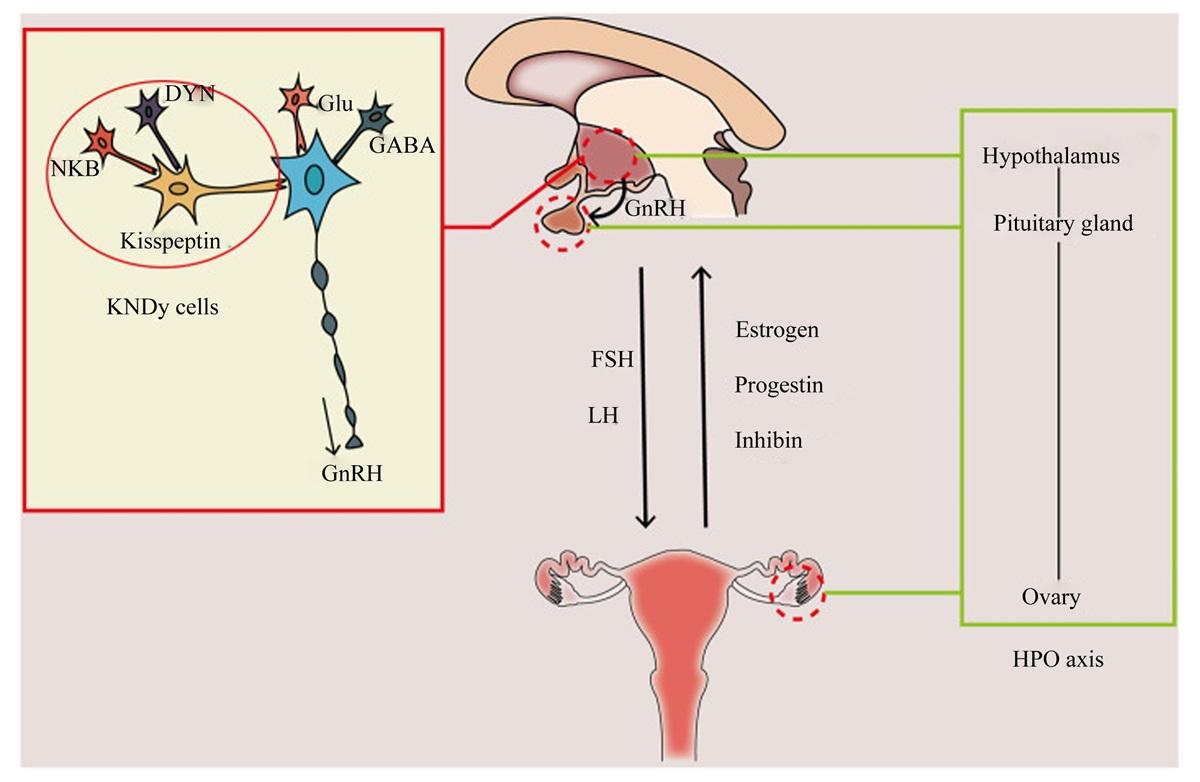
图1 大脑与卵巢通过HPO轴的相互作用DYN:强啡肽 dynorphin;NKB:神经激肽B neurokinin B;Kisspeptin:基斯肽;KNDy cells:KNDy细胞kisspeptin/neurokinin B/dynorphin cells;Glu:谷氨酸 glutamic acid;GABA:γ-氨基丁酸 gamma-aminobutyric acid;GnRH:促性腺激素释放激素 gonadotropin-releasing hormone;FSH:促卵泡激素 follicle-stimulating hormone;LH:促黄体生成素 luteinizing hormone;Estrogen:雌激素;Progestin:孕激素;Inhibin:抑制素;Hypothalamus:下丘脑;Pituitary gland:垂体;Ovary:卵巢;HPO axis:下丘脑-垂体-卵巢轴 hypothalamic-pituitary-ovarian axis。 Fig.1 Interaction between brain and ovary through HPO axis[13] |
1.1 免疫炎症与卵巢微环境改变
1.2 细胞凋亡与卵泡储备量减少
1.3 氧化应激-慢性炎症恶性循环
2 益生菌的种类及特性
表1 不同种益生菌的特性Table 1 Characteristics of different probiotics |
| 益生菌种类 Probiotic species | 抗氧化能力 Antioxidant capacity | 抗炎能力 Anti-inflammatory capacity | 核心功能总结 Summary of core functions | 参考文献 References |
|---|---|---|---|---|
| 嗜热链球菌 Streptococcus thermophilus | ★★★ | ▲▲△ | 每日灌胃D-半乳糖诱导的衰老小鼠20 mL/kg 发酵代谢产物(含1×10⁸ CFU/mL菌株),持续2个月。 可提升体内超氧化物歧化酶(SOD)活性、降低丙二醛 (MDA)水平,延长白细胞及肝脏端粒长度, 进而缓解细胞衰老 | [39] |
| 乳酸乳球菌 Lactococcus lactis | ★★☆ | ▲▲▲ | 每日灌胃小鼠1×10⁹ CFU热灭活菌株,持续75周。 通过细菌DNA激活Toll样受体9/髓样分化因子88 (TLR9/MyD88)信号通路,维持树突状细胞活性,抑制 白细胞介素-1β(IL-1β)转录,调节免疫平衡, 增强肠道黏膜免疫及抗病毒应答 | [40] |
| 戊糖片球菌 Pediococcus pentosaceus | ★★★ | ▲▲▲ | 每日灌胃小鼠1×10⁹ CFU菌株,持续4~8周。通过 分泌细菌素、胞外聚合物(EPS)等物质,清除 自由基、抑制脂质过氧化作用;还能中和脂多糖 (LPS),下调促炎因子表达,抑制致病菌生长 | [41] |
| 布拉氏酵母菌 Saccharomyces boulardii | ★★☆ | ▲▲▲ | 每日灌胃小鼠1×10⁹ CFU菌株,持续3~7 d。 降低细胞内活性氧(ROS)水平以减轻氧化损伤, 调节肠道微生物群;同时,调节肠道黏膜免疫功能, 下调免疫球蛋白E水平减轻过敏反应, 增强肠道屏障功能 | [42] |
| 马克斯克鲁维 酵母菌 Kluyveromyces marxianus | ★★☆ | ▲▲△ | 向秀丽隐杆线虫模型中添加1×10⁶ CFU/μL 菌株30 μL,持续7 d。减轻氧化应激诱导的细胞损伤, 同时降低血清白细胞介素-6(IL-6)水平,促进 有益菌增殖,以缓解肠道局部炎症 | [43] |
| 植物乳杆菌 Lactobacillus plantarum | ★★★ | ▲▲▲ | 每日灌胃小鼠1×10⁹ CFU菌株,持续4周。 通过分泌短链脂肪酸及植物乳杆菌素, 清除自由基、抑制脂质过氧化并提高抗氧化酶活性; 调节促炎[肿瘤坏死因子-α(TNF-α)、IL-6]/ 抗炎[白细胞介素-10(IL-10)]因子平衡, 减轻肠道及全身炎症 | [41] |
★★★表示抗氧化能力强,能够多途径抗氧化,可分泌抗氧化物质或激活宿主抗氧化通路,显著改善抗氧化性能指标;★★☆表示抗氧化能力中等,抗氧化途径单一,对氧化应激的改善效果温和或仅在特定场景有效;▲▲▲表示抗炎能力强,能够显著抑制炎症通路,调控促炎/抗炎因子平衡,有效缓解炎症损伤;▲▲△表示抗炎能力中等,抗炎范围局限,对系统性炎症改善有限,调控炎症指标幅度较弱。 | |
★★★ indicates strong antioxidant capacity, capable of exerting antioxidant effects through multiple pathways, secreting antioxidant substances or activating host antioxidant signaling pathways, and significantly improving antioxidant performance indicators; ★★☆ indicates moderate antioxidant capacity, with a single antioxidant pathway and mild improvement in oxidative stress, effective only under specific conditions; ▲▲▲ indicates strong anti-inflammatory capacity, capable of significantly suppressing inflammatory pathways, regulating the balance of pro-inflammatory and anti-inflammatory factors, and effectively alleviating inflammatory damage; ▲▲△ indicates moderate anti-inflammatory capacity, with a limited spectrum of anti-inflammatory action, limited efficacy against systemic inflammation, and weak modulation of inflammatory markers. |
3 益生菌抗卵巢衰老的作用机制
3.1 益生菌的调节作用
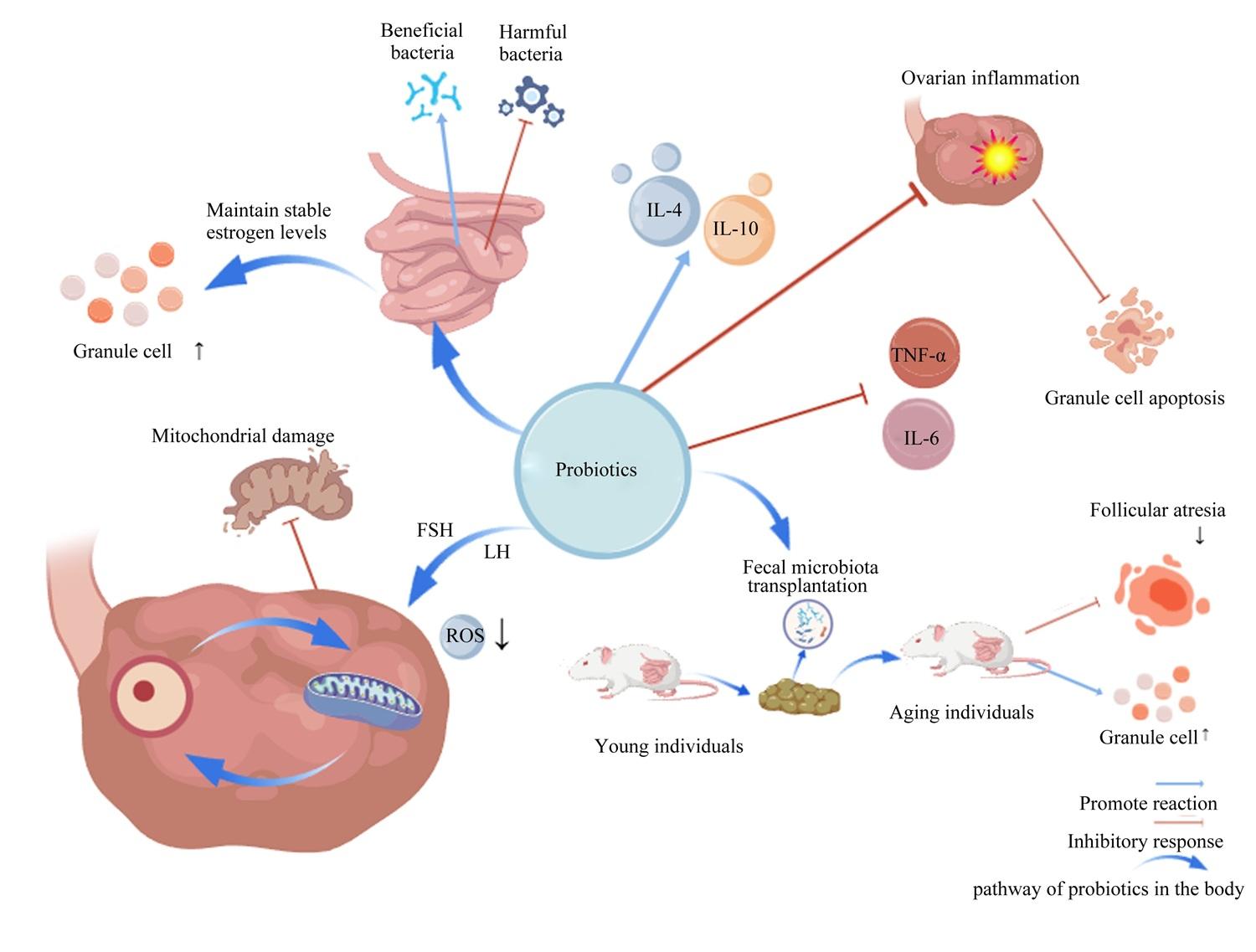
图2 益生菌在体内的作用通路Granule cell:颗粒细胞;Maintain stable estrogen levels:维持稳定雌激素水平;Beneficial bacteria:有益菌;Harmful bacteria:有害菌;Mitochondrial damage:线粒体损伤;Probiotics:益生菌;FSH:促卵泡激素 follicle-stimulating hormone;LH:促黄体生成素 luteinizing hormone;ROS:活性氧 reactive oxygen species;IL-4:白细胞介素-4 interleukin-4;IL-10:白细胞介素-10 interleukin-10;Ovarian inflammation:卵巢炎症;Granule cell apoptosis:颗粒细胞凋亡;TNF-α:肿瘤坏死因子-α tumor necrosis factor-α;IL-6:白细胞介素-6 interleukin-6;Fecal microbiota transplantation:粪便微生物移植;Young individuals:青年体;Aging individuals:老年体;Follicular atresia:卵泡闭锁;Promote reaction:促进反应;Inhibitory response:抑制反应;pathway of probiotics in the body:益生菌在体内的作用途径。 Fig.2 The action pathway of probiotics in vivo |
 京公网安备 11010802041926号


