综述

我国农作物秸秆资源分布特征与饲料化利用研究进展

  • 李双望 , 1 ,
  • 刘建新 1 ,
  • 张宏福 2 ,
  • 汪海峰 , 1, *
展开
  • 1 浙江大学动物科学学院, 杭州 310058
  • 2 中国农业科学院北京畜牧兽医研究所, 北京 100193
* 汪海峰,研究员,博士生导师,E-mail:

李双望(2001—),男,江西九江人,硕士研究生,从事生物饲料开发利用研究。E-mail:

Office editor: 张晨淼

收稿日期: 2026-02-03

  网络出版日期: 2026-09-12

基金资助

国家重点研发计划课题(2022YFD1300602)

浙江省领雁研发攻关计划项目(2026C02A1028)

Research Progress on Distribution Characteristics and Feed Utilization of Crop Straw Resources in China

  • LI Shuangwang , 1 ,
  • LIU Jianxin 1 ,
  • ZHANG Hongfu 2 ,
  • WANG Haifeng , 1, *
Expand
  • 1 College of Animal Sciences, Zhejiang University, Hangzhou 310058, China
  • 2 Institute of Animal Sciences, Chinese Academy of Agricultural Sciences, Beijing 100193, China
* professor, E-mail:

Received date: 2026-02-03

  Online published: 2026-09-12

摘要

我国是农业生产大国,农作物秸秆资源储量丰富,饲料化利用潜力突出。但秸秆资源在季节和空间上分布不均,秸秆的成熟时间差异以及地形地貌复杂限制了我国秸秆的收储与饲料化利用;此外,秸秆的营养特性以及技术限制也是阻碍饲料化利用的重要因素。物理、化学及生物处理方法均可改善秸秆的饲用价值。本文系统梳理我国秸秆资源的分布特点和饲料化利用现状,分析了秸秆饲料化发展的各类限制因素,阐述了提升秸秆饲用效果的技术途径,旨在为秸秆饲料化利用的科学发展提供参考。

本文引用格式

李双望 , 刘建新 , 张宏福 , 汪海峰 . 我国农作物秸秆资源分布特征与饲料化利用研究进展[J]. 动物营养学报, 2026 , 38(9) : 6465 -6474 . DOI: 10.12418/CJAN2026.518

Abstract

China is a major agricultural producer with abundant crop straw resources, which have potential for feed utilization. However, the distribution of straw resources in China is uneven across seasons and regions, while variations in straw maturity times and complex terrain limit the collection, storage, and utilization of straw for feed purposes. At the same time, the nutritional characteristics of straw and technical limitations are also important factors hindering their utilization as feed. Various physical, chemical, and biological treatment methods can improve the feeding value of straw. This study systematically reviews the distribution features and feed utilization status of crop straw resources in China, identifies key constraints on straw feed utilization, and expounds technical approaches to improve the feeding value of straw. It is expected to provide references for the scientific development of straw feed utilization.

我国为农业生产大国,粮食年产量稳居世界前列,农作物秸秆资源储量充足[1],2022年全国秸秆总产量86 429.01万t[2]。未被收集利用的农作物秸秆,多采取焚烧处理或露天堆放的处理方式,过程中会产生二氧化碳、氮氧化物及多环芳烃等多种大气污染物与温室气体,不仅污染生态环境、加剧气候变化,严重时还会引发各类环境灾害[3]。2008年,我国提出了秸秆“五料”化利用,分别是饲料化、肥料化、燃料化、原料化和基料化。根据数据统计,2020年饲料化、肥料化、燃料化、原料化利用和基料化的秸秆数量分别为1.11×10⁸、4.49×10⁸、0.61×10⁸、0.07×10⁸和0.05×10⁸ t,通过上述5种方式回收利用的秸秆总量,占秸秆总回收利用量的87.6%。其中,肥料化、饲料化秸秆利用量又分别占秸秆可收集资源总量的62.1%和15.4%[4]。因此秸秆肥料化和饲料化是我国秸秆资源化利用的主要方式,也是当前农作物秸秆研究的重点。
我国农作物秸秆数量巨大,将秸秆资源转化为动物饲料具备广阔的发展潜力。粗纤维是秸秆的主要成分,占秸秆干物质总量的30%~40%[5]。对秸秆进行适当的处理,能够降低秸秆的纤维素含量,促进秸秆的饲料化利用。对于一些木质素含量高的秸秆,可以利用生物或者化学方法降低其木质素含量。本文梳理了国内秸秆资源的分布现状及秸秆饲料化利用技术的研究进展,归纳了现阶段我国秸秆饲料化利用面临的各类问题与发展瓶颈,以期为我国秸秆资源饲料化利用提供参考。

1 我国秸秆资源分布现状

1.1 我国秸秆资源季节分布

我国秸秆资源在季节上分布不均匀,主要受秸秆作物种类以及成熟时间的影响,呈现出明显的季节特征。周晶等[6]采用问卷调查结合季节指数指标分析的方法,发现我国各地区秸秆收获具有明显季节性。作物收获阶段秸秆可收集资源量达到峰值,各类农作物收割时间不同,对应的秸秆产出高峰也不一样。夏季是小麦的主要收获期,小麦秸秆也随之在夏季大量产出[7]。秋季是我国大部分农作物成熟收获的季节,也是秸秆产量最高的季节[6]。春季以作物播种为主,冬季多数作物已完成采收,因此两季秸秆产量偏低。韦茂贵等[8]对2006—2011年发表的田间试验文章进行查阅整理,发现7—11月是水稻、小麦及玉米集中收获时段,秸秆产量最高。据统计,我国全年秸秆大部分集中在夏秋两季产出,仅有不足15%的农作物秸秆在春季和冬季产出[9-10]

1.2 我国秸秆资源空间分布

秸秆的产量与许多因素有关,主要包括自然条件、地形特点和播种面积等,由此造成不同区域秸秆资源储量差异显著[11]。刘俊杰等[2]对我国7个生态类型区的秸秆资源量情况进行了统计分析,发现东北区秸秆总产量为15 645.52万t,占全国秸秆资源总量18.10%;华东区秸秆总量居全国首位,为19 439.22万t,占全国秸秆资源总量的22.49%;华南区的秸秆资源总量最低,为6 688.02万t,仅占7.74%,但该区域秸秆单位面积产出最高。Qian等[12]发现我国农作物秸秆资源主要集中在华北、东北和长江中下游农业区,上述区域平坦耕地占区域总面积的78%以上,秸秆分布范围广、便于规模化收集。丛宏斌等[13]调查了我国2017年的农作物秸秆资源分布情况,发现我国秸秆资源呈现“东高西低、北高南低”的阶梯状分布特征。我国秸秆资源不仅区域储量分布不均衡,秸秆种类在各区域间也存在明显差异。以三大主粮秸秆为例,我国2022年各地区三大主粮秸秆产量如表1所示。水稻秸秆主要集中于我国南方地区,其中长江中下游地区产量最高;玉米秸秆主产区分布在华北地区与东北地区,西南地区、西北地区也有可观储量;小麦秸秆则集中分布于华北地区、长江中下游地区及西北地区。石祖梁等[14]的研究同样证实,我国水稻秸秆集中分布于南方稻区,与本文表1的分布规律基本一致;刘淑军等[15]对我国近30年来的小麦秸秆资源分布进行了研究,同样发现我国超过80%的小麦秸秆分布在华北地区和长江中下游平原。
表1 中国各地区三大主粮秸秆产量

Table 1 Straw yield of three major staple grains by region in China ×104 t

项目
Items
玉米秸秆
Corn straw
水稻秸秆
Rice straw
小麦秸秆
Wheat straw
总秸秆产量
Total straw yield
西南地区Southwest China 3 240.19 2 957.18 353.45 6 550.83
东北地区Northeast China 10 022.03 2 573.45 10.09 12 605.57
西北地区Northwest China 3 491.52 107.62 1 059.45 4 658.59
华北地区North China 12 964.84 604.81 7 313.46 20 883.11
东南地区Southeast China 686.43 1 971.60 1.09 2 659.12
长江中下游地区
Middle and lower reaches of the Yangtze River
1 766.47 9 332.33 3 266.34 14 365.14

数据来源于《中国统计年鉴2023》。

Data from China Statistical Yearbook 2023.

综上可知,我国秸秆资源空间分布不均衡,导致运输成本上升,是影响秸秆饲料化利用的一个重要因素。据统计,我国近半数秸秆资源高度集中于国土面积占比偏小的局部产区[16],资源空间分布极不均衡;而现阶段我国秸秆运输贮存配套体系尚不完善,难以实现秸秆远距离跨区域调配利用。文春波等[17]针对河南某一区域实地调查发现,当地秸秆收储量仅占秸秆可收集总量的8.3%,严重阻碍秸秆产业化发展。整体来看,完整成熟的秸秆加工产业链仍未形成,进一步限制了秸秆的饲料化利用。

2 影响秸秆饲料化利用的制约因素

2.1 秸秆营养限制

农作物秸秆和牧草都可以作为反刍动物的粗饲料来源,但是和牧草相比,农作物秸秆往往更不易被牛、羊等反刍动物消化吸收[18]。Wang等[19]比较了玉米秸秆、水稻秸秆、小麦秸秆和苜蓿干草的瘤胃降解特性,发现3类谷物秸秆的瘤胃不可降解中性洗涤纤维含量均高于苜蓿干草,粗蛋白质降解率和有效降解率则低于苜蓿干草。秸秆中的半纤维素能够连接木质素和纤维素,增强细胞壁稳定性,导致秸秆整体难以被动物消化利用[20]。其中水稻秸秆角质层和蜡质二氧化硅层较厚、木质素含量偏高[21],不仅在瘤胃中养分消化率较低,且秸秆灰分占比高,导致其质地粗糙,畜禽采食适口性不佳[22]。相比于水稻、小麦秸秆,玉米秸秆的营养价值更优,且产量也更为丰富[23]。但其营养成分单一,存在适口性差、采食量低的共性问题[24],需配合其他饲料原料使用。秸秆及其木质纤维素组成如图1所示。
图1 秸秆及其木质纤维素组成(使用BioGDP.com创建)

Cellulose:纤维素;Hemicellulose:半纤维素;Lignin:木质素。

Fig.1 Straw and its lignocellulosic composition (created with BioGDP.com)

2.2 秸秆饲料化技术障碍

我国秸秆饲料化的成套生产技术尚未成熟。原料供应的数量和质量稳定性是制约产业发展的首要难题,农作物秸秆供应数量会随着作物种类以及产量波动,不能形成一个稳定的供应源[20]。除此之外,秸秆田间收集缺乏统一规范作业流程也会造成原料品质参差不齐,国内部分区域秸秆采收留茬高度管控不一,回收秸秆易裹挟泥土杂质,影响秸秆饲料化的品质。我国现阶段仍未建立统一的秸秆饲料品质评价标准,不同公司生产的秸秆饲料质量参差不齐,品质难以保障,加之秸秆饲料相关售后保障机制存在缺失,多重问题共同制约秸秆饲料化产业规模化发展。

3 秸秆饲料化处理方法

3.1 物理处理技术

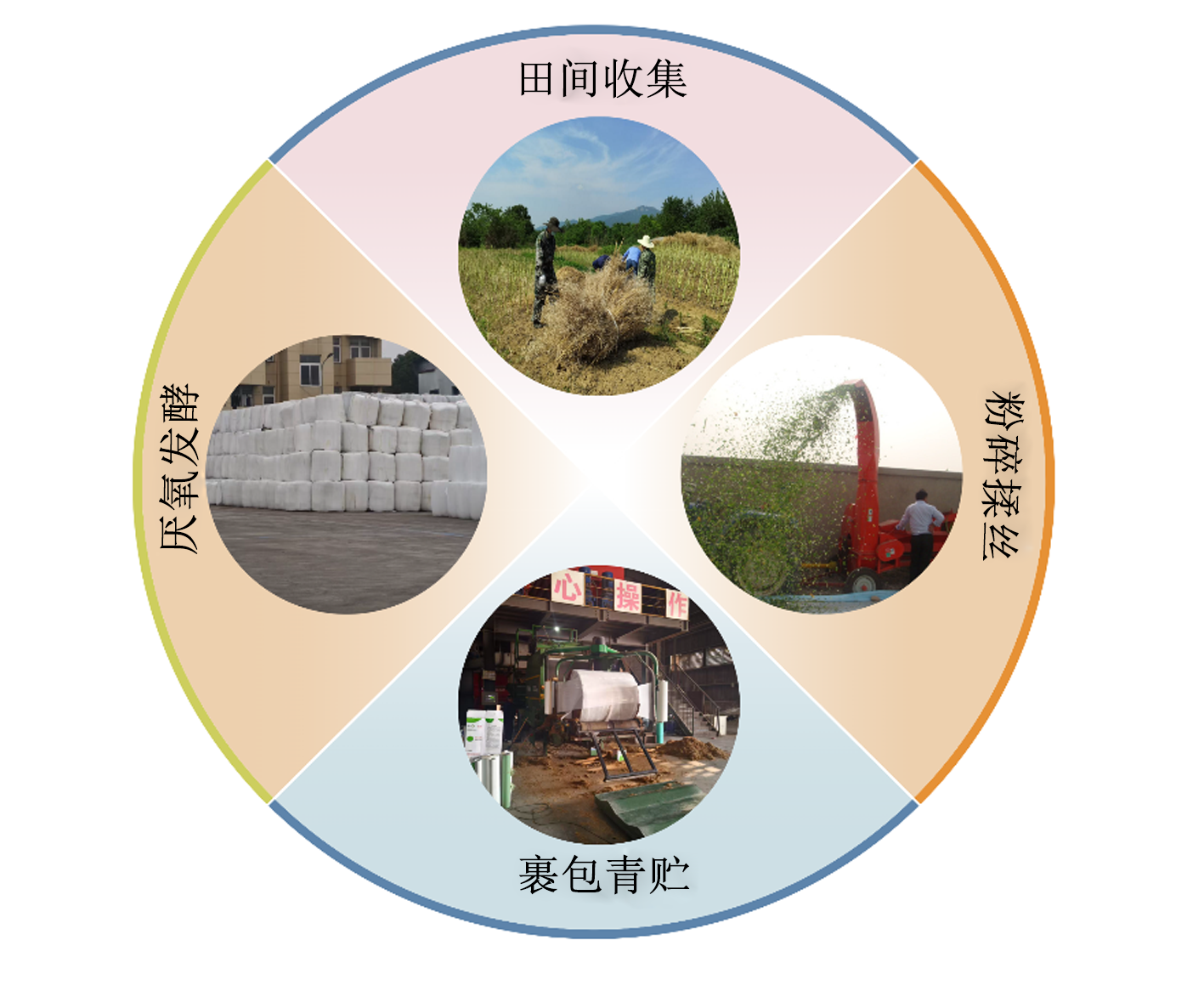
秸秆物理处理技术包括揉搓拉丝、膨化、软化等,该类方法依靠机械作用来改变秸秆的物理结构,促进秸秆的纤维物质分解,进而提升秸秆的营养价值和消化率[22]。秸秆饲料化的物理处理流程如图2所示。
图2 秸秆饲料化的物理处理流程

Fig.2 Physical treatment process for straw forage production

揉搓拉丝是常用的秸秆物理预处理方法,可通过机械作用改变秸秆的物理结构,从而提高其后续加工过程的利用效率[25]。揉搓拉丝能够破坏秸秆的表面蜡质层,增加其接触面积,充分暴露内部纤维素和半纤维素,为秸秆纤维降解创造有利条件[26]。Liu等[27]研究发现,将水稻秸秆揉搓拉丝处理后,添加稀碱处理,能够促进纤维素和木质素的降解,还能促进还原糖的产生。
秸秆膨化是指将秸秆经过一系列的物理或者化学处理,使其体积膨胀,形成多孔结构;膨化处理可破坏秸秆致密的结构,使其更易被消化吸收[28]。Cao等[29]将荞麦秸秆进行膨化处理,发现该处理可改善荞麦秸秆理化性质,降低中性洗涤纤维含量,提升荞麦秸秆的饲用价值。王红梅等[30]研究膨化预处理和菌酶协同对玉米秸秆发酵品质和营养价值的影响,发现膨化预处理可降解玉米秸秆的木质纤维素结构,释放更多的碳水化合物,从而提高营养价值。王建军[31]开展膨化玉米秸秆饲喂育肥肉羊试验,发现膨化玉米秸秆能够有效改善育肥肉羊的生产性能,且不会对料重比造成影响。
浸湿软化、蒸煮软化是秸秆软化处理的2类常用方法。蒸煮软化通过高温作用实现秸秆质地软化,浸湿软化则通过清水浸泡使秸秆吸水后达到软化效果。程志泽等[32]将辣椒秸秆软化后结合枯草芽孢杆菌进行加工,可获得最优青贮效果。李传友等[33]研究表明,经软化处理后的秸秆可显著提高反刍动物的采食量和营养物质消化率。

3.2 化学处理技术

化学处理技术包括氨化法、碱化法、酸化法等,该类方法借助化学试剂降低秸秆中的纤维素和木质素含量,以此提高秸秆饲用营养价值。
秸秆氨化是以尿素等氨源处理农作物秸秆,提高饲用价值的技术[34]。秸秆氨化处理后破坏了木质素和纤维素的连接,从而增大秸秆反应接触面积,使其更易被分解[35]。Liu等[36]研究表明,尿素氨化预处理能够提升水稻秸秆营养物质消化率。Singh等[37]采用尿素对水稻秸秆进行处理,发现处理后秸秆的粗蛋白质含量提高了9.97%。
碱化处理法主要包括氢氧化钠和氢氧化钙及其复合处理法,碱性试剂可疏松秸秆细胞壁结构,使其更易被消化[38]。Zheng等[39]使用氢氧化钠处理小麦秸秆,小麦秸秆的木质素与纤维素含量均出现下降。Rai等[40]证实氢氧化钠处理可提升秸秆结构多糖的体外干物质消化率。Han等[41]探究碱化与生物酶协同处理对小麦秸秆的作用效果,结果显示秸秆的组织结构发生显著变化,纤维素和木质素的含量均下降。
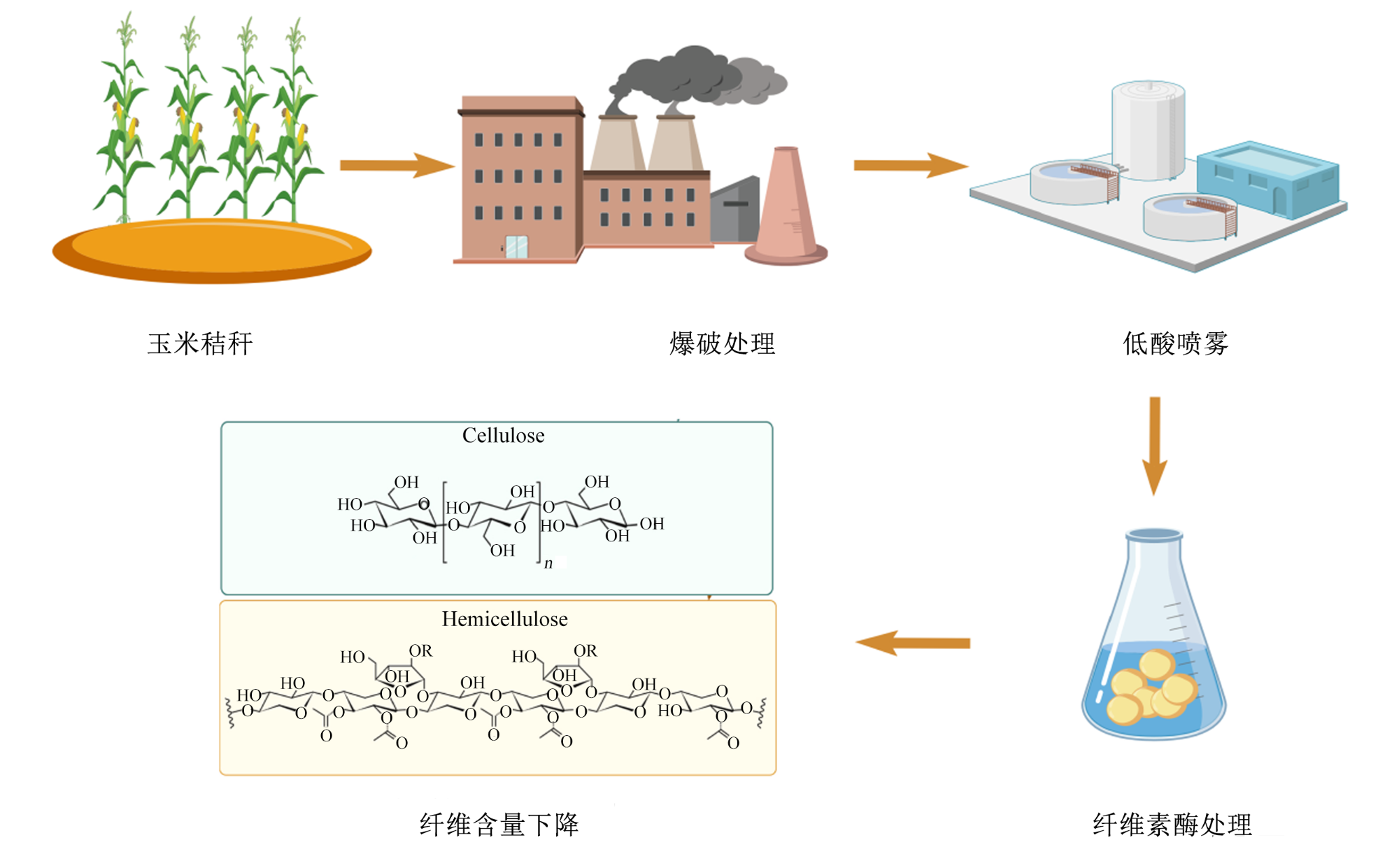
酸化处理能够有效促进秸秆中的半纤维素转化为糖类等物质,具备处理效率高、试剂与能耗成本偏低的优势,但是酸化处理对设备要求较高,且容易产生乙酸、糠醛等抑制纤维素降解的物质[42]。刘越等[43]研究证实,酸化处理后可改善玉米秸秆厌氧消化性能,提高产气量。Peng等[44]开展秸秆酸化试验,处理后秸秆纤维素含量降低,木质素原有结构被破坏。酸化处理结合酶处理降低纤维含量示意图如图3所示。
图3 酸化处理结合酶处理降低纤维含量(使用BioGDP.com创建)

Cellulose:纤维素;Hemicellulose:半纤维素。

Fig.3 Acidification treatment combined with enzyme treatment to reduce fiber content (created with BioGDP.com)

3.3 生物处理技术

生物处理技术是指利用酶或者微生物对秸秆进行微生物发酵,以此加工获得营养价值更高、适口性更好的秸秆饲料[45]。生物处理技术主要包括青贮、微生物发酵及生物酶处理等方法[46]
青贮是指在厌氧环境下,利用乳酸菌等厌氧细菌,将原料中的碳水化合物转化为乳酸等有机酸,降低原料的pH,从而抑制有害菌的生长繁殖,达到保持原料营养价值的目的;根据青贮工艺不同,可以将青贮方式分为包贮、堆贮和窖贮3种[47]。裹包青贮的流程如图4所示。Cheas等[48]在青贮玉米秸秆中接种乳酸杆菌,该处理可有效提高干物质含量,降低发酵损失,延长青贮稳定储存时间。He等[49]在青贮高粱秸秆中添加植物乳杆菌和纤维素酶,可显著提高高粱秸秆青贮的发酵品质,同时通过影响微生物群落结构和代谢途径提高青贮饲料的营养价值。
图4 裹包青贮的流程(使用BioGDP.com创建)

Fig.4 Process of bale-wrapped silage (created with BioGDP.com)

微生物发酵是采用复合菌剂处理秸秆饲料,依靠微生物分解纤维素,以改善饲用品质的处理方法[46]。经微生物发酵后的秸秆粗蛋白质含量提高,适口性得到明显改善。Zheng等[50]结合微生物菌群与汽爆工艺处理农作物秸秆,该处理能够加速秸秆木质素与纤维素的降解。Zhang等[51]采用水稻秸秆源微生物菌群处理水稻秸秆,有效促进纤维物质分解,纤维素、半纤维素、木质素降解率分别可达60.2%、76.3%、40.7%。
生物酶通常和微生物协同处理秸秆,依靠酶与微生物的协同作用加快秸秆降解,提升秸秆利用效率。Xu等[52]研究证实,复合微生物菌群与纤维素酶协同添加可提升秸秆中纤维素的降解效率。Wang等[53]在白腐真菌处理玉米秸秆时加入昆虫消化酶,玉米秸秆的木质素和纤维素降解速度加快。Chen等[54]利用产朊假丝酵母、植物乳杆菌和非淀粉多糖酶来协同处理玉米秸秆和小麦秸秆,结果表明,微生物-酶组合显著提高了2种底物的粗蛋白质含量,同时降低了酸性洗涤纤维和中性洗涤纤维含量。

4 秸秆饲料饲喂效果研究

4.1 秸秆饲料在肉牛生产中的应用

诸多研究证实,经微生物、酶制剂改良后的秸秆饲料饲喂肉牛,可有效优化瘤胃发酵功能、提升养分消化效率并改善养殖经济效益[55-57]。Xu等[55]采用纤维素酶处理玉米秸秆并饲喂肉牛,该处理可优化肉牛瘤胃发酵特性,显著提升饲粮养分消化率。Hu等[56]将益生菌与酶制剂复合发酵水稻秸秆后饲喂肉牛,结果显示肉牛瘤胃液中的乙酸和丙酸含量升高,饲料能量转化效率得以提升。Zhang等[57]将添加剂处理后的青贮玉米秸秆饲喂肉牛,该处理可改善肉牛瘤胃发酵、调控瘤胃菌群,提高养分表观消化率。周艳等[58]研究发现,菌酶协同处理玉米秸秆可提升肉牛增重、养分消化水平和养殖收益。

4.2 秸秆饲料在奶牛生产中的应用

秸秆经不同预处理或合理配比后应用于奶牛饲粮,同样能够调控采食及瘤胃消化[59-61]。Wanapat等[59]研究发现,采用5.5%尿素处理或2.2%尿素+2.2%氢氧化钙处理水稻秸秆,可显著改善荷斯坦奶牛干物质采食量和养分消化率。Su等[60]在高能量奶牛饲粮中添加小麦秸秆,结果表明该处理能够降低能量和干物质采食量,有助于维持奶牛的理想体况和生长速度。Lin等[61]以小麦秸秆替代奶牛饲粮中20%的苜蓿干草,结果显示奶牛产奶量、乳蛋白产量、乳蛋白率、乳糖产量、乳糖率、乳脂产量和乳脂率均未出现显著变化。

4.3 秸秆饲料在肉羊生产中的应用

秸秆饲料在肉羊生产中同样具备良好应用效果,合理添加可改善羔羊生长性能、肉品质并降低养殖成本[62-65]。Li等[62]研究发现,在羔羊饲粮中添加10%~15%辣椒秸秆能够改善羊肉品质,且不会对瘤胃发酵产生负面作用。Kyawt等[63]使用发酵水稻秸秆饲喂绵羊,结果显示绵羊生长性能和肉品质均得到提升,同时饲料成本下降。Hussein等[64]将尿素处理的水稻秸秆和蚕豆秸秆混合饲喂育肥羔羊,能有效提高育肥羔羊的日增重和饲料转化率。Teixeira等[65]使用秸秆同时作为羔羊饲粮与垫料,羔羊肉品质性状无显著变化,皮质醇水平显著降低。

5 小结

随着经济的发展,我国对肉蛋奶产品的需求增加,饲粮资源供给短缺的矛盾日益凸显。开发利用非常规饲料已成为畜牧业发展的研究热点。我国农作物秸秆资源储量丰厚,推进秸秆饲料化利用,既能有效缓解饲草料供给缺口,又可降低规模化养殖生产成本。2023年中央一号文件明确提出,要大力发展青贮饲料,加快推进秸秆养畜,在相关政策引导下,秸秆饲料化利用已成趋势。目前我国秸秆饲料化的方式多样,涵盖青贮、氨化、碱化、微生物发酵等多种方法,各类处理技术的核心目标均为破除秸秆木质纤维素营养限制、提升秸秆饲用营养价值。秸秆饲料化资源化绿色循环体系如图5所示。长远来看,秸秆饲料化技术将朝着高效化、绿色化发展,秸秆饲料的生产也会进一步标准化、规范化,产品形态与应用模式也将不断创新,推进秸秆资源饲料化科学利用。
图5 秸秆饲料化资源化绿色循环体系(使用BioGDP.com创建)

Fig.5 Green circulation system for straw utilization as feed resources (created with BioGDP.com)

[1]
冉继伟, 宋变兰, 田彦芳, 等. 我国作物秸秆资源时空变化特征及其影响因素分析[J]. 农业现代化研究, 2021, 42(3):418-429.

RAN J W, SONG B L, TIAN Y F, et al. Temporal and spatial patterns of crop straw resources and their influencing factors in China[J]. Research of Agricultural Modernization, 2021, 42(3):418-429. (in Chinese)

[2]
刘俊杰, 严晓斌, 张美怡, 等. 中国农作物秸秆资源产量分布及利用分析[J]. 农业资源与环境学报, 2025, 42(3):751-760.

LIU J J, YAN X B, ZHANG M Y, et al. Analysis of yield distribution and utilization of crop straw resources in China[J]. Journal of Agricultural Resources and Environment, 2025, 42(3):751-760. (in Chinese)

[3]
REN J Q, YU P X, XU X H. Straw utilization in China—status and recommendations[J]. Sustainability, 2019, 11(6):1762.

DOI

[4]
SUN N, GAO C Y, DING Y H, et al. Five-dimensional straw utilization model and its impact on carbon emission reduction in China[J]. Sustainability, 2022, 14(24):16722.

DOI

[5]
CHEN B, MOHRMANN S, LI H T, et al. Research and application progress of straw[J]. Journal of Renewable Materials, 2022, 11(2):599-623.

DOI

[6]
周晶, 吴海涛, 丁士军, 等. 秸秆资源收获季节性及其能源供应持续性分析[J]. 资源科学, 2011, 33(8):1537-1545.

ZHOU J, WU H T, DING S J, et al. Analysis of seasonal variation in crop residue harvest and sustainability of its energy supply[J]. Resources Science, 2011, 33(8):1537-1545. (in Chinese)

[7]
GAO Z P. Quantity and utilization of crop straw resources in China[J]. IOP Conference Series:Earth and Environmental Science, 2020, 598(1):012103.

DOI

[8]
韦茂贵, 王晓玉, 谢光辉. 我国不同地区主要大田作物田间秸秆成熟期[J]. 中国农业大学学报, 2012, 17(6):20-31.

WEI M G, WANG X Y, XIE G H. Maturity date of main field crop residues in different regions of China[J]. Journal of China Agricultural University, 2012, 17(6):20-31. (in Chinese)

[9]
LIU W M, LIU Y E, LIU G Z, et al. Estimation of maize straw production and appropriate straw return rate in China[J]. Agriculture Ecosystems & Environment, 2022, 328:107865.

DOI

[10]
YANG W, LI X H, ZHANG Y T. Research progress and the development trend of the utilization of crop straw biomass resources in China[J]. Frontiers in Chemistry, 2022, 10:904660.

DOI

[11]
毕于运, 王亚静, 高春雨. 中国主要秸秆资源数量及其区域分布[J]. 农机化研究, 2010, 32(3):1-7.

BI Y Y, WANG Y J, GAO C Y. Straw resource quantity and its regional distribution in China[J]. Journal of Agricultural Mechanization Research, 2010, 32(3):1-7. (in Chinese)

[12]
QIAN B H, SHAO C F, YANG F. Spatial suitability evaluation of the conversion and utilization of crop straw resources in China[J]. Environmental Impact Assessment Review, 2024, 105:107438.

DOI

[13]
丛宏斌, 姚宗路, 赵立欣, 等. 中国农作物秸秆资源分布及其产业体系与利用路径[J]. 农业工程学报, 2019, 35(22):132-140.

CONG H B, YAO Z L, ZHAO L X, et al. Distribution of crop straw resources and its industrial system and utilization path in China[J]. Transactions of the Chinese Society of Agricultural Engineering, 2019, 35(22):132-140. (in Chinese)

[14]
石祖梁, 李想, 王久臣, 等. 中国秸秆资源空间分布特征及利用模式[J]. 中国人口·资源与环境, 2018, 28(增刊1):202-205.

SHI Z L, LI X, WANG J C, et al. Spatial distribution characteristics and utilization patterns of agricultural waste resources in China[J]. China Population,Resources and Environment, 2018,28 (Suppl.1):202-205. (in Chinese)

[15]
刘淑军, 李冬初, 黄晶, 等. 近30年来我国小麦和玉米秸秆资源时空变化特征及还田减肥潜力[J]. 中国农业科学, 2023, 56(16):3140-3155.

DOI

LIU S J, LI D C, HUANG J, et al. Spatial-temporal variation characteristics of wheat and maize stalk resources and chemical fertilizer reduction potential of returning to farmland in recent 30 years in China[J]. Scientia Agricultura Sinica, 2023, 56(16):3140-3155. (in Chinese)

DOI

[16]
王亚静, 毕于运, 高春雨. 中国秸秆资源可收集利用量及其适宜性评价[J]. 中国农业科学, 2010, 43(9):1852-1859.

WANG Y J, BI Y Y, GAO C Y. Collectable amounts and suitability evaluation of straw resource in China[J]. Scientia Agricultura Sinica, 2010, 43(9):1852-1859. (in Chinese)

[17]
文春波, 钱发军, 刘鹏. 农业秸秆资源化利用现状与评价[J]. 生态经济, 2018, 34(2):147-150,157.

WEN C B, QIAN F J, LIU P. Situation and evaluation of agricultural straw resource utilization[J]. Ecological Economy, 2018, 34(2):147-150,157. (in Chinese)

[18]
MAGOWAN T J, O’CALLAGHAN J R. The roles and values of straw and nutritionally improved straw in ruminant rations[J]. Agricultural Systems, 1986, 21(3):215-225.

DOI

[19]
WANG E D, WANG J D, LV J Y, et al. Comparison of ruminal degradability,indigestible neutral detergent fiber,and total-tract digestibility of three main crop straws with alfalfa hay and corn silage[J]. Animals, 2021, 11(11):3218.

DOI

[20]
钟丽媛, 孙会增, 吴冠中, 等. 农作物秸秆饲料化利用的制约因素及其解决对策[J]. 中国畜牧杂志, 2023, 59(12):61-66.

ZHONG L Y, SUN H Z, WU G Z, et al. Restrictive factors and countermeasures for use of cereal byproducts as feeds[J]. Chinese Journal of Animal Science, 2023, 59(12):61-66. (in Chinese)

[21]
ALENGEBAWY A, RAN Y, GHIMIRE N, et al. Rice straw for energy and value-added products in China:a review[J]. Environmental Chemistry Letters, 2023, 21(5):2729-2760.

DOI

[22]
FLACHOWSKY G, KAMRA D N, ZADRAZIL F. Cereal straws as animal feed—possibilities and limitations[J]. Journal of Applied Animal Research, 2011, 16(2):105-18.

DOI

[23]
李岫峰, 王奕晟, 孙旸, 等. 我国玉米秸秆资源现状及其饲料化研究进展[J]. 饲料研究, 2022, 45(18):129-132.

LI X F, WANG Y S, SUN Y, et al. Present situation of corn straw resources in China and research progress in feed conversion[J]. Feed Research, 2022, 45(18):129-132. (in Chinese)

[24]
韩鲁佳, 闫巧娟, 刘向阳, 等. 中国农作物秸秆资源及其利用现状[J]. 农业工程学报, 2002(3):87-91.

HAN L J, YAN Q J, LIU X Y, et al. Straw resources and their utilization in China[J]. Transactions of the Chinese Society of Agricultural Engineering, 2002(3):87-91. (in Chinese)

[25]
王青青, 雷雪芹, 徐廷生, 等. 玉米秸秆揉丝微贮饲料对荷斯坦奶牛的饲用效果研究[J]. 黑龙江畜牧兽医, 2013(10):89-90.

WANG Q Q, LEI X Q, XU T S, et al. Research on the feeding effect of corn straw chopping and micro-storage feed on Holstein dairy cows[J]. Heilongjiang Animal Science and Veterinary Medicine, 2013(10):89-90. (in Chinese)

[26]
DU J, SU H, QIAN S, et al. Design optimization and performance evaluation of corn straw crushing and rubbing filament machine[J]. BioResources, 2024, 19(2):2286-2298.

DOI

[27]
LIU Y, CHAI X, CHI M, et al. Effects of a pretreatment combining rubbing with dilute alkali on the enzymatic hydrolysis-reducing sugar yield and structure of rice straw[J]. Transactions of the ASABE, 2019, 62(6):1705-1711.

DOI

[28]
高丽红, 赵鑫鹏, 周青波, 等. 秸秆膨化技术及高效应用的研究[J]. 安徽农业科学, 2024, 52(14):6-10.

GAO L H, ZHAO X P, ZHOU Q B, et al. Research on straw bulking technology and its efficient application[J]. Journal of Anhui Agricultural Sciences, 2024, 52(14):6-10. (in Chinese)

[29]
CAO X H, ZUO S S, LIN Y L, et al. Expansion improved the physical and chemical properties and in vitro rumen digestibility of buckwheat straw[J]. Animals, 2023, 14(1):29.

DOI

[30]
王红梅, 母宇辉, 宋跃君, 等. 膨化预处理对菌酶协同发酵玉米秸秆微贮饲料发酵品质和营养价值的影响[J]. 动物营养学报, 2025, 37(4):2739-2749.

DOI

WANG H M, MU Y H, SONG Y J, et al. Effects of extrusion pretreatment on fermentation quality and nutritional value of corn stalk microbial ensilage by bacteria-enzyme cooperative fermentation[J]. Chinese Journal of Animal Nutrition, 2025, 37(4):2739-2749. (in Chinese)

DOI

[31]
王建军. 玉米秸秆膨化发酵饲料对育肥羊生产性能及肉品质的影响[J]. 畜牧兽医科学(电子版), 2022(1):19-20.

WANG J J. Effects of extruded and fermented corn stalk feed on the production performance and meat quality of fattening sheep[J]. Graziery Veterinary Sciences(Electronic Version), 2022(1):19-20. (in Chinese)

[32]
程志泽, 艾比布拉·伊马木, 乃比·阿不来提, 等. 不同处理条件对辣椒秸秆青贮品质和营养价值的影响[J]. 动物营养学报, 2024, 36(8):5387-5398.

DOI

CHENG Z Z, ABIBRA I, NABI A, et al. Effects of different treatment conditions on quality and nutritional value of pepper straw silage[J]. Chinese Journal of Animal Nutrition, 2024, 36(8):5387-5398. (in Chinese)

DOI

[33]
李传友, 何润兵, 崔宗均. 麦秸饲料转化中木质纤维素软化技术研究[J]. 广东农业科学, 2014, 41(13):128-131.

LI C Y, HE R B, CUI Z J. Research on softening lignocellulose technology for converting wheat straw into feed[J]. Guangdong Agricultural Sciences, 2014, 41(13):128-131. (in Chinese)

[34]
BALAN V, MOHAMMADI M, DALE D E, et al. Advancements in ammonia-based pretreatment:key benefits and industry applications[J]. RSC Sustainability, 2025, 3(10):4228-4249.

DOI

[35]
MOUTHIER T M B, DE RINK B, VAN ERVEN G, et al. Low liquid ammonia treatment of wheat straw increased enzymatic cell wall polysaccharide degradability and decreased residual hydroxycinnamic acids[J]. Bioresource Technology, 2019, 272:288-99.

DOI PMID

[36]
LIU J X, SUSENBETH A, SÜDEKUM K H. In vitro gas production measurements to evaluate interactions between untreated and chemically treated rice straws,grass hay,and mulberry leaves[J]. Journal of Animal Science, 2002, 80(2):517-524.

DOI

[37]
SINGH J P, THAKUR T C, SRIVASTAVA R K. Laboratory studies on ammonia (urea) treatment of baled paddy straw for utilization as livestock feed[J]. Journal of Agricultural Engineering(India), 2006, 43(4):58-64.

[38]
BACHMANN M, MARTENS S D, LE BRECH Y, et al. Physicochemical characterisation of barley straw treated with sodium hydroxide or urea and its digestibility and in vitro fermentability in ruminants[J]. Scientific Reports, 2022, 12(1):20530.

DOI

[39]
ZHENG Q, ZHOU T T, WANG Y B, et al. Pretreatment of wheat straw leads to structural changes and improved enzymatic hydrolysis[J]. Scientific Reports, 2018, 8(1):1321.

DOI PMID

[40]
RAI S N, MUDGAL V D. Effect of sodium hydroxide and steam pressure treatment on the utilization of wheat straw by rumen microorganisms[J]. Biological Wastes, 1987, 21(3):203-212.

DOI

[41]
HAN L R, FENG J T, ZHANG S X, et al. Alkali pretreated of wheat straw and its enzymatic hydrolysis[J]. Brazilian Journal of Microbiology, 2012, 43(1):53-61.

DOI PMID

[42]
LV Y, ZHANG Y F, XU Y. Understanding and technological approach of acid hydrolysis processing for lignocellulose biorefinery:panorama and perspectives[J]. Biomass and Bioenergy, 2024, 183:107133.

DOI

[43]
刘越, 袁海荣, CHUFO WACHEMO A, 等. 酸化处理提高玉米秸秆厌氧消化性能及其优化研究[J]. 中国沼气, 2019, 37(4):60-66.

LIU Y, YUAN H R, CHUFO WACHEMO A, et al. Acidification pretreatment improving anaerobic digestibility of corn straw and its optimization[J]. China Biogas, 2019, 37(4):60-66. (in Chinese)

[44]
PENG J J, ABOMOHRA A E F, ELSAYED M, et al. Compositional changes of rice straw fibers after pretreatment with diluted acetic acid:towards enhanced biomethane production[J]. Journal of Cleaner Production, 2019, 230:775-782.

DOI

[45]
SHARMA H K, XU C B, QIN W S. Biological pretreatment of lignocellulosic biomass for biofuels and bioproducts:an overview[J]. Waste and Biomass Valorization, 2019, 10(2):235-251.

DOI

[46]
荣元江, 张明均, 申李, 等. 秸秆饲料化生物处理技术研究进展[J]. 黑龙江畜牧兽医, 2025(11):26-32.

RONG Y J, ZHANG M J, SHEN L, et al. Research progress on biological treatment technologies for the feed utilization of straw[J]. Heilongjiang Animal Science and Veterinary Medicine, 2025(11):26-32. (in Chinese)

[47]
白露. 饲用玉米的营养特性及其青贮技术的研究进展[J]. 养殖与饲料, 2025, 24(6):25-28.

BAI L. Progress on studying the nutritional characteristics and silage technology of forage maize[J]. Animals Breeding and Feed, 2025, 24(6):25-28. (in Chinese)

[48]
CHEAS S, SUNTARA C, CHERDTHONG A. Bioactive roles of lactic acid bacteria in enhancing corn silage quality and ruminant dietary fiber utilization:a comprehensive review[J]. Bioactive Carbohydrates and Dietary Fibre, 2025, 34:100512.

DOI

[49]
HE L C, JIANG C, DONG H, et al. Effects of cellulase or Lactobacillus plantarum on ensiling performance and bacterial community of sorghum straw[J]. BMC Microbiology, 2025, 25(1):300.

DOI

[50]
ZHENG J Y, WANG X P, ZHANG Y B. Synergistic promotion of straw anaerobic digestion by a composite microbial consortium and micro-aeration:enhancing lignocellulose decomposition and methanogenesis[J]. Chemical Engineering Journal, 2026, 528:172265.

DOI

[51]
ZHANG Z, ISLAM M S, NOMAN M, et al. Enhanced mesophilic degradation of rice straw by microbial consortium SXJG15 through coordinated enzymatic activity and community reshaping[J]. Microorganisms, 2025, 13(12):2707.

DOI

[52]
XU J H, LIU X L, WU W L, et al. Synergistic fermentation effect of cellulose-degrading complex microflora and enzymes on oat grass straw[J]. Applied Biochemistry and Biotechnology, 2026, 198(1):434-453.

DOI

[53]
WANG Y C, YANG X D, LIN Y P, et al. Studies on the degradation effect of corn straw by Asian corn borer larva (Ostrinia furnacalis) digestive enzymes combined with white rot fungus (Phanerochaetc chrysosporium)[J]. 3 Biotech, 2023, 13(9):298.

DOI

[54]
CHEN B L, LIU J C, LIU M J, et al. Synergistic effect of microorganisms and enzymes on nutritional value of corn stover and wheat straw[J]. Fermentation, 2025, 11(4):210.

DOI

[55]
XU J Z, WANG X N, NIU H X. Effects of corn straw-based fermented total mixed rations supplemented with exogenous cellulase on growth performance,digestibility,and rumen fermentation in growing beef cattle[J]. Animal Bioscience, 2025, 38(2):293-302.

DOI

[56]
HU Y Q, HE Y Y, GAO S, et al. The effect of a diet based on rice straw co-fermented with probiotics and enzymes versus a fresh corn stover-based diet on the rumen bacterial community and metabolites of beef cattle[J]. Scientific Reports, 2020, 10(1):10721.

DOI

[57]
ZHANG C M, ZOU H W, HU R, et al. Effects of replacing rice straw with corn straw silage treated with different additives on growth performance,blood parameters,and rumen microorganisms of fattening cattle[J]. Fermentation, 2025, 11(3):107.

DOI

[58]
周艳, 夏祥礼. 玉米秸秆不同处理方式对肉牛生长性能、养分表观消化率及经济效益的影响[J]. 中国饲料, 2024(18):129-132.

ZHOU Y, XIA X L. The effects of different treatments of corn straw on the growth performance,nutrient apparent digestibility,and economic benefits of beef cattle[J]. Chinese Feed, 2024(18):129-132. (in Chinese)

[59]
WANAPAT M, POLYORACH S, BOONNOP K, et al. Effects of treating rice straw with urea or urea and calcium hydroxide upon intake,digestibility,rumen fermentation and milk yield of dairy cows[J]. Livestock Science, 2009, 125(2/3):238-243.

DOI

[60]
SU H W, AKINS M S, ESSER N M, et al. Effects of feeding alfalfa stemlage or wheat straw for dietary energy dilution on nutrient intake and digestibility,growth performance,and feeding behavior of Holstein dairy heifers[J]. Journal of Dairy Science, 2017, 100(9):7106-7115.

DOI

[61]
LIN X Y, HU Z Y, LI N, et al. Effect of substituting alfalfa by wheat straw powder on rumen digestion,metabolism and production performance in lactating dairy cows[J]. Advances in Bioscience and Biotechnology, 2019, 10(8):197-217.

DOI

[62]
LI J L, TUO Y, HE L J, et al. Effects of chili straw on rumen fermentation,meat quality,amino acid and fatty acid contents,and rumen bacteria diversity in sheep[J]. Frontiers in Microbiology, 2024, 15:1525612.

DOI

[63]
KYAWT Y Y, AUNG M, XU Y, et al. Dynamic changes of rumen microbiota and serum metabolome revealed increases in meat quality and growth performances of sheep fed bio-fermented rice straw[J]. Journal of Animal Science and Biotechnology, 2024, 15(1):34.

DOI PMID

[64]
HUSSEIN A M, HASSANIEN H A M, PHILLIP Y L, et al. Effect of urea-treated rice straw, mixed with faba bean straw,on nutrient digestibility,blood metabolites and performance of growing lambs[J]. Tropical Animal Health and Production, 2024, 56(3):122.

DOI

[65]
TEIXEIRA D L, MIRANDA-DE LA LAMA G C, VILLARROEL M, et al. Effect of straw on lamb welfare,production performance and meat quality during the finishing phase of fattening[J]. Meat Science, 2012, 92(4):829-836.

DOI

文章导航

/