研究论文

miR-146b过表达对脂多糖刺激仔猪肠上皮细胞Toll样受体4基因表达和促炎因子产生的影响

  • 陶新 ,
  • 邓波 ,
  • 门小明 ,
  • 刘淑杰 ,
  • 徐子伟 , *
展开
  • 浙江省农业科学院畜牧兽医研究所,杭州 310021
* 徐子伟,研究员,博士生导师,E-mail:

陶 新(1976—),女,山东东阿人,研究员,博士,从事动物营养与健康养殖研究。E-mail:

收稿日期: 2022-06-12

  网络出版日期: 2023-01-11

基金资助

浙江省重点研发计划(2021C02007)

浙江省重点研发计划(2021C02068-3)

国家现代农业产业技术体系(CARS-35)

Effects of miR-146b Over-Expression on Toll-Like Receptor 4 Gene Expression and Generation of Pro-Inflammatory Cytokines in Intestinal Epithelial Cells of Piglets Stimulated by Lipopolysaccharide

  • TAO Xin ,
  • DENG Bo ,
  • MEN Xiaoming ,
  • LIU Shujie ,
  • XU Ziwei , *
Expand
  • Institute of Animal Husbandry and Veterinary Science, Zhejiang Academy of Agricultural Sciences, Hangzhou 310021, China
* professor, E-mail:

Received date: 2022-06-12

  Online published: 2023-01-11

摘要

本研究旨在探讨miR-146b过表达对脂多糖(LPS)刺激仔猪肠上皮细胞(IPEC-J2细胞)Toll样受体4(TLR4)基因表达和促炎因子产生的影响。首先利用LPS刺激IPEC-J2细胞,然后使用荧光定量PCR和酶联免疫吸附试验(ELISA)方法分别检测LPS刺激对IPEC-J2细胞中TLR4和促炎因子白细胞介素-1β(IL-1β)、肿瘤坏死因子-α(TNF-α)、白细胞介素-6(IL-6)、白细胞介素-8(IL-8)和干扰素-γ(IFN-γ)等的mRNA表达以及对分泌到细胞培养液中促炎因子含量的影响。在此基础上,通过miR-146b mimic细胞转染试验,探讨miR-146b过表达对LPS刺激的IPEC-J2细胞中TLR4的mRNA表达和促炎因子产生的抑制作用。结果表明:1)与未刺激处理相比,LPS刺激处理的IPEC-J2细胞中TLR4、IL-1βTNF-αIL-8和IFN-γ的mRNA相对表达量极显著升高(P<0.01),细胞培养液中TNF-α、IL-8和IFN-γ含量极显著升高(P<0.01)。2)与LPS处理相比,LPS+miR-146b mimic处理的miR-146b的相对表达量极显著升高(P<0.01),IPEC-J2细胞中TLR4、TNF-αIL-8和IFN-γ的mRNA相对表达量分别显著或极显著降低(P<0.05或P<0.01),细胞培养液中TNF-α、IL-8和IFN-γ含量极显著降低(P<0.01)。由此可见,miR-146b在LPS刺激的IPEC-J2细胞中可通过抑制促炎因子的产生发挥抗炎作用。

本文引用格式

陶新 , 邓波 , 门小明 , 刘淑杰 , 徐子伟 . miR-146b过表达对脂多糖刺激仔猪肠上皮细胞Toll样受体4基因表达和促炎因子产生的影响[J]. 动物营养学报, 2023 , 35(1) : 623 -631 . DOI: 10.3969/j.issn.1006-267x.2023.01.059

Abstract

This study was aimed to explore the effects of mir-146b over-expression on Toll-like receptor 4 (TLR4) gene expression and generation of pro-inflammatory cytokines in intestinal epithelial cells of piglets (IPEC-J2 cells) stimulated by lipopolysaccharide (LPS). Firstly, the IPEC-J2 cells were stimulated by LPS, then, the mRNA expressional of TLR4 and pro-inflammatory cytokines of interleukins-1β (IL-1β), tumor necrosis factor-α (TNF-α), interleukins-6 (IL-6), interleukins-8 (IL-8) and interferon-γ (IFN-γ) in IPEC-J2 cells stimulated by LPS and the protein contents of pro-inflammatory cytokines in cultured supernatant were detected by the methods of real-time PCR and enzyme linked immunosorbent assay (ELISA), respectively. Based on the above results, the inhibition of miR-146b over-expression on TLR4 gene expression and generation of pro-inflammatory cytokines in IPEC-J2 cells stimulated by LPS were studied by cell transfection test with miR-146b mimic. The results showed as follows: 1) compared with the non-stimulated treatment, the mRNA relative expression levels of TLR4, IL-1β, TNF-α, IL-8 and IFN-γ in IPEC-J2 cells of LPS stimulated treatment were significantly increased (P<0.01), and the protein contents of TNF-α, IL-8 and IFN-γ in cultured supernatant were significantly increased (P<0.01). 2) Compared with the LPS treatment, the miR-146b relative expression level of LPS+miR-146b mimic treatment was significantly increased (P<0.01), the mRNA relative expression levels of TLR4, TNF-α, IL-8 and IFN-γ in IPEC-J2 cells of LPS+miR-146b mimic treatment were significantly decreased (P<0.05 or P<0.01), and the protein contents of TNF-α, IL-8 and IFN-γ in cultured supernatant were significantly decreased (P<0.01). In conclusion, the miR-146b play an anti-inflammatory role by inhibiting the generation of pro-inflammatory cytokines in IPEC-J2 cells stimulated by LPS.

断奶被认为是猪一生中所经历的最严重应激事件之一。断奶应激造成的仔猪腹泻问题给养猪业造成巨大经济损失[1]。研究表明,小肠是断奶应激的主要靶点,肠黏膜受损和由此引起的炎症反应是导致仔猪腹泻的主要原因之一[2]。应激可迅速激活并启动肠黏膜先天性免疫应答以识别病原分子,从而过度激活免疫炎症通路,导致肠黏膜系统促炎因子的产生[3]。因此,筛选调控肠黏膜免疫炎症的关键因子可为断奶仔猪肠道黏膜应激损伤的靶向性治疗提供科学依据。
微小RNA(microRNAs,miRNAs)是一类长约22 nt的内源性单链非编码小分子RNA,是体内最大的一类基因表达调控因子,可调控超过1/3蛋白编码基因的表达,在应激信号通路和疾病的发生发展中起着重要作用。miRNAs具有精细调控靶基因表达特性,在肠道应激损伤、免疫炎症中发挥重要作用[4]。在人类和鼠类上的研究表明,miRNAs在一定程度上主宰了肠道上皮细胞命运[5]。肠道特异性miRNAs的差异表达在病原感染[6]、肠道黏膜免疫[7]、肠道稳态[8]、结直肠癌[9]和炎症性肠病[10]等肠道病理过程中发挥重要调控作用。
miR-146是近年来研究较为前沿、广泛和深入的miRNAs之一。它包括2个miRNAs,分别为miR-146a和miR-146b。两者成熟序列仅相差2个碱基,因此有着相似的靶标[11]。已有研究证实,动物细胞在遭遇病原菌感染时,miR-146均呈差异表达[12-14]。在人类上的研究发现,miR-146参与了多种细胞的分化、增殖和凋亡,与机体免疫调节、炎症反应和肿瘤发生发展等多种生理病理过程密切相关[15-17]。脂多糖(LPS)是在模型动物和模式细胞研究中极为常用的一种炎症诱导剂,主要通过激活Toll样受体4(Toll-like receptor 4,TLR4)介导的相关信号通路诱发机体炎症反应[18]。在LPS刺激的大鼠上皮细胞系IEC-6诱导了miR-146b的表达上调[19]。已有研究表明,miR-146可通过靶向TLR4信号通路发挥负反馈调节作用,从而减轻LPS诱发的卵巢颗粒细胞炎症反应[20]
本课题组前期在仔猪断奶后第4天的空肠组织中筛选到了多个差异表达的miRNAs,其中miR-146b不仅具有较高表达水平、呈最大差异倍数,且在断奶后第7天仍呈持续性地极显著上调表达,故引起我们的注意[21]。进一步的生物信息学分析结果表明,miR-146b可能参与了小肠黏膜的免疫调控和炎症过程[22],利用仔猪肠上皮细胞(IPEC-J2细胞)已证实TLR4是miR-146b直接作用的靶基因[23]。本研究在上述研究的基础上,进一步以LPS刺激的IPEC-J2细胞为试验材料,探讨miR-146b对LPS刺激IPEC-J2细胞中TLR4基因表达和促炎因子产生的影响,以期为仔猪断奶应激综合征的防治提供新的分子治疗靶点。

1 材料与方法

1.1 试验材料和试剂

IPEC-J2细胞由本实验室于液氮罐中长期保存。主要试剂包括:mimic对照物(mimic NC)、miR-146b mimic,购自广州锐博生物技术有限公司;来源于大肠杆菌的LPS,血清型O55∶B5,购自美国Sigma公司;DMEM培养基、10%胎牛血清(FBS)、0.25%胰蛋白酶,购自美国Gibco;脂质体(Lipofectamine 3000),购自美国Invitrogen公司;Trizol试剂,购自美国Life Technologies公司;反转录试剂盒(Prime Script RT Master Mix)、荧光定量PCR试剂盒(SYBR Green Real-time PCR Master Mix),购自日本TaKaRa公司;干扰素-γ(IFN-γ)酶联免疫吸附测定(ELISA)试剂盒,购自北京四正柏生物科技有限公司;肿瘤坏死因子-α(TNF-α)、白细胞介素-1β(IL-1β)、白细胞介素-6(IL-6)和白细胞介素-8(IL-8)ELISA试剂盒,购自英国Abcam公司。

1.2 细胞培养

将液氮保存的IPEC-J2细胞在37 ℃水浴中解冻复苏,在含有10% FBS的DMEM培养基中培养,置于37 ℃、5% CO2、饱和湿度条件下的细胞培养箱进行常规培养。达完全融合时,0.25%胰蛋白酶消化、传代。传代5次后的细胞用于LPS刺激试验和细胞转染试验。

1.3 LPS刺激试验

用DMEM培养基配制5 mg/mL的LPS储备液,使用时稀释至适宜浓度的稀释液。将IPEC-J2细胞按常规方法在24孔细胞培养板中培养至单层,调节细胞数量为1×105个/孔。当细胞铺满80%~90%的孔面积时,加入终浓度为5 μg/mL的LPS稀释液,继续培养48 h。培养结束后收集细胞及上清液待测。每个处理4个复孔。

1.4 细胞转染试验

将IPEC-J2细胞以1×10⁵个/孔的密度接种于24孔细胞培养板,待细胞生长至达60%融合时,进行细胞转染试验。采用DMEM培养基配制mimic NC和miR-146b mimic溶液,其终浓度均为50 nmol/L,根据说明书采用Lipofectamine 30000转染试剂进行瞬时转染。将24孔培养板放置在培养箱中继续培养48 h,然后加入终浓度为5 μg/mL的LPS稀释液,继续培养48 h。培养结束后收集细胞及上清液待测。每个处理4个复孔。

1.5 荧光定量PCR

利用Trizol试剂提取细胞总RNA,用Nanodrop 1000超微量分光光度计检测RNA浓度和纯度。根据试剂盒说明书利用Prime Script RT Master Mix将细胞总RNA反转录为cDNA,供合成mRNA和miRNA,反应体系均为20 μL,其中miR-146b反转录引物序列为:5'-GTCGTATCCAGTGCAGGGTCCGAGGTGCACTGGATACGACGCCT
ATG-3';U6反转录引物序列为:5'-GCTTCGGCAGCACATATACTAAAAT-3'。所得cDNA保存至-20 ℃冰箱保存备用。根据试剂盒说明书利用SYBR Green Real-time PCR Master Mix分别以上述所得的cDNA为模板,采用相应基因上、下游引物合成荧光定量PCR所需的mRNA和miRNA,反应体系均为20 μL,其中miR-146b的内参基因为U6,其他基因的内参基因为三磷酸甘油醛脱氢酶(GAPDH)。miR-146b上游引物序列为:5'-TGCGGTGAGAACTGAATTCCATAG-3';U6上游引物序列为:5'-CGCTTCACGAATTTGCGTGTCAT-3';通用下游引物序列为:5'-CAGTGCAGGGTCCGAGGT-3'。荧光定量PCR检测基因的引物序列信息见表1。荧光定量PCR试验在StepOne Plus Real-time PCR系统上运行完成。每个处理4个复孔。
表1 荧光定量PCR检测基因的引物序列信息

Table 1 Information of primer sequences for real-time PCR detected genes

基因
Genes
上游引物
Forward primer
(5'—3')
下游引物
Reverse primer
(5'—3')
基因登录号
Gene accession
number
产物大小
Product
size/bp
Toll样受体4
TLR4
GCCATCGCTGCTAACATCATC CTCATACTCAAAGATACACCATCGG NM_001113039.1 108
白细胞介素-1β
IL-1β
ATGCTGAAGGCTCTCCACCTC TTGTTGCTATCATCTCCTTGCAC NM_214055 89
干扰素-γ
INF-γ
TGGTAGCTCTGGGAAACTGAATG GGCTTTGCGCTGCATCTG NM_213948.1 79
白细胞介素-6
IL-6
GGCAAAAGGGAAAGAATCCAG CGTTCTGTGACTGCAGCTTATCC NM_214399 87
白细胞介素-8
IL-8
GCTCTCTGTGAGGCTGCAGTTC AAGGTGTGGAATGCGTATTTATGC NM_213867.1 79
肿瘤坏死因子-α
TNF-α
ACTGCACTTCGAGGTTATCGG GGCGACGGGCTTATCTGA NM_214022 118
三磷酸甘油
醛脱氢酶
GAPDH
CGTCCCTGAGACACGATGGT GCCTTGACTGTGCCGTGGAAT AF017079.1 194

1.6 ELISA检测

按照相关ELISA试剂盒说明书,收集的细胞培养上清液在3 000 r/min、4 ℃离心10 min,采用ELISA方法,用抗猪TNF-α、IFN-γ、IL-1、IL-6、IL-8单抗包被于酶标板上,使标准品和样品中的待测因子与单抗结合,加入酶标抗体,形成免疫复合物链接在板上,加入酶底物,经完全反应后加入终止液,然后在Epoch酶标仪上于450 nm处检测吸光度。每个处理4个复孔。

1.7 数据处理与分析

荧光定量PCR试验数据采用2-ΔΔCt法进行处理计算,结果以mRNA相对表达量表示。ELISA试验数据通过采用标准品绘制标准曲线计算样品中待测因子含量。所有试验数据均采用SPSS 19.0软件进行统计分析,两两比较采用独立样本t检验,多组数据采用单因素方差分析(one-way ANOVA)和Duncan氏多重比较法检验。试验数据均以平均值±标准差(mean±SD)表示,用GraphPad Prism 8.0完成图表绘制。P<0.05表示差异显著,P<0.01表示差异极显著。

2 结果与分析

2.1 LPS刺激IPEC-J2细胞中TLR4的mRNA表达及促炎因子的产生

2.1.1 TLR4和促炎因子的mRNA表达结果
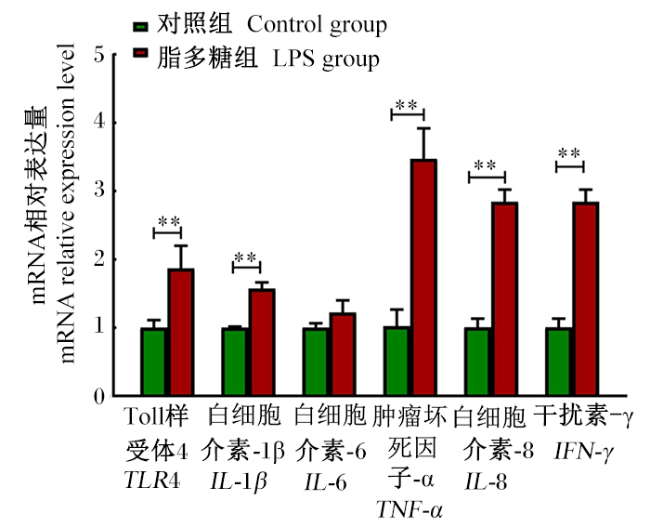
图1可知,与未刺激处理相比,LPS刺激处理IPEC-J2细胞中TLR4的mRNA相对表达量极显著增加了86.80%(P<0.01),IL-1βTNF-αIL-8和IFN-γ的mRNA相对表达量分别极显著增加了57.18%(P<0.01)、245.30%(P<0.01)、247.30%(P<0.01)和184.10%(P<0.01),IL-6的mRNA相对表达量无显著差异(P>0.05)。
图1 脂多糖刺激IPEC-J2细胞中TLR4和促炎因子的mRNA表达结果

数据柱形标注**表示差异极显著(P<0.01)。

Fig.1 Results of mRNA expression of TLR4 and pro-inflammatory cytokines in IPEC-J2 cells stimulated by LPS (n=4)

Value columns with ** mean significant difference (P<0.01).

2.1.2 促炎因子的分泌结果

表2可见,与未刺激处理相比,LPS刺激处理的细胞培养液中IL-1β和IL-6含量均无显著差异(P>0.05),TNF-α、IL-8和IFN-γ含量分别极显著增加4.383倍(P<0.01)、1.742倍(P<0.01)和2.245倍(P<0.01)。
表2 脂多糖刺激IPEC-J2细胞促炎因子的分泌结果

Table 2 Results of pro-inflammatory cytokines secretion in IPEC-J2 cells stimulated by LPS (n=4)pg/mL

项目
Items
处理Treatments
未刺激
Non-stimulated
LPS刺激
LPS stimulated
白细胞介素-1β IL-1β 425.0±19.2 409.0±30.2
白细胞介素-6 IL-6 112.5±24.7 110.9±19.9
肿瘤坏死因子-α TNF-α 100.0±9.5B 538.3±12.8A
白细胞介素-8 IL-8 1 028.7±1.6B 2 820.9±14.9A
干扰素-γ IFN-γ 52.6±1.4B 170.7±5.0A

同行数据肩标不同小写字母表示差异显著(P<0.05),不同大写字母表示差异极显著(P<0.01),相同小写字母或无字母表示差异不显著(P>0.05)。下表同。

In the same row, values with different small letter superscripts mean significant difference (P<0.05), and with different capital letter superscripts mean significant difference (P<0.01), while with the same small letter or no letter superscripts mean no significant difference (P>0.05). The same as below.

2.2 miR-146b的过表达

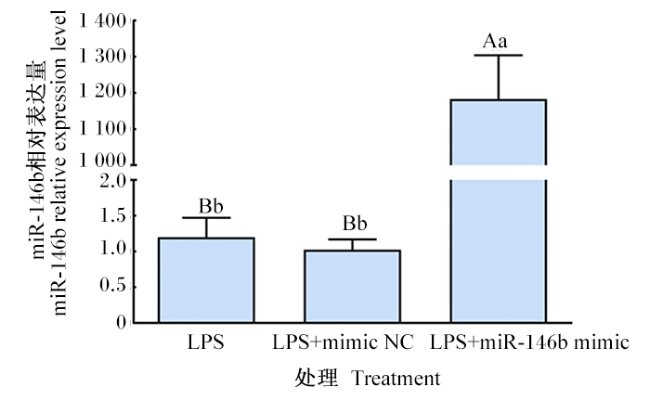
将50 nmol/L的miR-146b mimic转染至IPEC-J2细胞并经LPS刺激后,采用荧光定量PCR检测miR-146b的相对表达量,结果如图3所示。与LPS处理相比,LPS+mimic NC处理的miR-146b的相对表达量无显著差异(P>0.05),LPS+miR-146b mimic处理的miR-146b的相对表达量极显著增加了984.8倍(P<0.01)。这表明miR-146b mimic可成功转染至IPEC-J2细胞并诱导miR-146b的过表达。
图2 miR-146b在脂多糖刺激IPEC-J2细胞中的过表达

数据柱标不同小写字母表示差异显著(P<0.05),不同大写字母表示差异极显著(P<0.01),相同小写字母或无字母表示差异不显著(P>0.05)。下图同。

Fig.2 Over-expression of miR-146b in IPEC-J2 cells stimulated by LPS (n=4)

Value columns with different small letters mean significant difference (P<0.05), and with different capital letters mean significant difference (P<0.01), while with the same small letter or no letters mean no significant difference (P>0.05). The same as below.

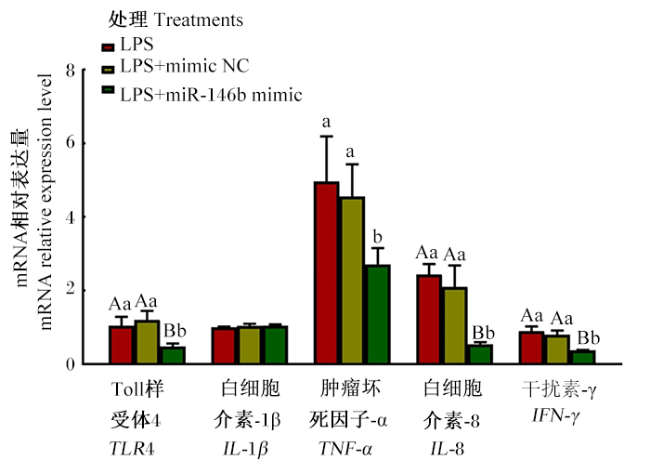
图3 miR-146b过表达对脂多糖刺激IPEC-J2细胞中TLR4和促炎因子mRNA表达的影响

Fig.3 Effects of miR-146b over-expression on mRNA expression of TLR4 and pro-inflammatory cytokines in IPEC-J2 cells stimulated by LPS

2.3 miR-146b过表达对LPS刺激IPEC-J2细胞中TLR4的mRNA表达和促炎因子产生的影响

2.3.1 miR-146b过表达对脂多糖刺激IPEC-J2细胞中TLR4和促炎因子mRNA表达的影响

鉴于LPS刺激对IPEC-J2细胞中IL-6的mRNA相对表达量无显著影响,因此主要检测了TLR4、IL-1βTNF-αIL-8和IFN-γ的mRNA相对表达量,结果如图3所示。与LPS处理相比,LPS+mimic NC处理的IPEC-J2细胞中各促炎因子的mRNA相对表达量均无显著差异(P>0.05);LPS+miR-146b mimic处理的IPEC-J2细胞中TLR4、TNF-αIL-8和IFN-γ的mRNA相对表达量分别显著或极显著降低了53.85%(P<0.01)、45.16%(P<0.05)、77.74%(P<0.01)和57.90%(P<0.01),IPEC-J2细胞中IL-1β的mRNA相对表达量无显著差异(P>0.05)。

2.3.2 miR-146b过表达对脂多糖刺激IPEC-J2细胞促炎因子分泌的影响

表3可见,与LPS处理相比,LPS+mimic NC处理的细胞培养液中TNF-α、IL-8和IFN-γ含量无显著差异(P>0.05),LPS+miR-146bmimic处理的细胞培养液中TNF-α、IL-8和IFN-γ含量分别极显著降低了23.10%(P<0.01)、25.40%(P<0.01)和19.09%(P<0.01)。
表3 miR-146b过表达对脂多糖刺激IPEC-J2细胞促炎因子分泌的影响

Table 3 Effects of miR-146b over-expression on secretion of pro-inflammatory cytokines in IPEC-J2 cells stimulated by LPS (n=4)pg/mL

项目
Items
处理Treatments
LPS LPS+mimic NC LPS+miR-146b mimic
肿瘤坏死因子-α TNF-α 556.7±16.4Aa 582.4±5.7Aa 428.1±41.6Bb
白细胞介素-8 IL-8 2 849.3±89.1Aa 2 850.5±18.0Aa 2 125.7±112.8Bb
干扰素-γ IFN-γ 173.4±1.1Aa 184.0±1.3Aa 140.3±14.7Bb

3 讨论

已有研究表明,LPS刺激可导致仔猪肠黏膜和肠上皮细胞中促炎因子TNF-α、IL-1β、IL-6和IL-8等含量增加[24-26]。在仔猪上的研究证实,LPS主要通过诱导TLR4/核转录因子-κB(NF-κB)信号通路中关键基因TLR4和多个接头蛋白基因如髓样细胞分化因子(MyD88)、白细胞介素-1受体相关激酶1(IRAK-1)和肿瘤坏死因子受体相关因子6(TRAF6)等的表达,导致肠道处于免疫应激状态[27-28]。在IPEC-J2细胞中的研究同样发现,LPS通过激活TLR4/NF-κB信号通路诱导了肠道炎症损伤[29]。这提示TLR4介导了仔猪断奶应激条件下肠道免疫炎症的重要通路,是肠道黏膜损伤和炎症反应的重要开关分子。本研究结果表明,5 μg/mL的LPS刺激IPEC-J2细胞48 h,可诱导TLR4、IL-1βTNF-αIL-8和IFN-γ的基因表达以及TNF-α、IL-8和IFN-γ的分泌,提示LPS可能通过激活TLR4介导的肠道免疫通路诱导肠上皮细胞炎症的发生。但本试验结果发现,LPS未能刺激IPEC-J2细胞IL-6的产生。这可能是与LPS刺激所用浓度以及作用时间有关。
我们前期研究已证实,TLR4是miR-146b直接作用的靶基因[23],且TLR4信号通路中的多个基因如MyD88、IRAK-1和TRAF6等均为miR-146的靶基因,miR-146可通过负反馈调节方式调控内毒素耐受性,并最终起到抗炎作用[30-32]。Kutty等[33]研究发现,在人类视网膜色素上皮细胞中miR-146a的诱导表达依赖于IL-1β,而miR-146b则依赖于IFN-γ。在人类的脂肪细胞中,促炎因子TNF-α和IL-6可显著诱导miR-146b的表达。研究人员进一步对其启动子分析发现,在miR-146b上游的950 bp长度范围内有明显的转录活性,TNF-α和IL-6可明显激活miR-146b的启动子活性,表明miR-146b可能在脂肪组织炎症及肥胖形成的复杂过程中发挥了重要调控作用[34]。在巨噬细胞中miR-146b的过表达可显著降低LPS刺激的促炎细胞因子和趋化因子的产生[35]。与上述研究结果相似,本研究结果表明,在IPEC-J2细胞中miR-146b可抑制LPS刺激的TLR4基因表达及促炎因子的产生,提示miR-146b的过表达可能通过调控与TLR4相关的分子信号通路,进一步抑制下游促炎因子的产生,从而发挥抗炎作用,最终减轻断奶仔猪肠黏膜应激炎症损伤,促进其肠道健康。
miRNAs被认为是生物学功能的一种新型调控中介,在调节机体生理功能中发挥不可替代的作用[36]。一些营养物质和植物源生物活性成分均可通过介导miRNAs在调控机体生理功能和疾病发生发展中发挥重要作用[37-39]。已有证据表明,植物多酚可通过诱导miR-146的表达在结肠成纤维细胞中发挥预防炎症和抗炎作用[40];中草药复方-补肾益髓胶囊可上调脑脊髓炎小鼠血清外泌体中miR-146的水平[41];饲粮中脂肪酸的组成可能通过调控miR-146的表达,进一步影响机体的脂质代谢[42]。因此,随着对miR-146研究的不断深入和拓展,将来有望通过在仔猪饲粮中添加靶向miR-146的调控物质或生物活性成分,促进断奶仔猪的肠道健康和生长。

4 结论

5 μg/mL的LPS刺激IPEC-J2细胞48 h可诱导TLR4、IL-1βTNF-αIL-8和IFN-γ的基因表达以及TNF-α、IL-8和IFN-γ的分泌。转染miR-146b mimic可成功诱导miR-146b的过表达。miR-146b的过表达可抑制LPS刺激IPEC-J2细胞中TLR4基因表达以及促炎因子TNF-α、IL-8和IFN-γ的产生。
[1]
CAMPBELL J M, CRENSHAW J D, POLO J. The biological stress of early weaned piglets[J]. Journal of Animal Science and Biotechnology, 2013, 4(1):19.

DOI PMID

[2]
MCLAMB B L, GIBSON A J, OVERMAN E L, et al. Early weaning stress in pigs impairs innate mucosal immune responses to enterotoxigenic E. coli challenge and exacerbates intestinal injury and clinical disease[J]. PLoS One, 2013, 8(4):e59838.

DOI

[3]
LEE I K, KYE Y C, KIM G, et al. Stress,nutrition,and intestinal immune responses in pigs—a review[J]. Asian-Australasian Journal of Animal Sciences, 2016, 29(8):1075-1082.

DOI

[4]
YU J, LIU F H, YIN P, et al. Integrating miRNA and mRNA expression profiles in response to heat stress-induced injury in rat small intestine[J]. Functional & Integrative Genomics, 2011, 11(2):203-213.

[5]
MCKENNA L B, SCHUG J, VOUREKAS A, et al. MicroRNAs control intestinal epithelial differentiation,architecture,and barrier function[J]. Gastroenterology, 2010, 139(5):1654-1664.

DOI

[6]
AL-QURAISHY S, DELIC D, SIES H, et al. Differential miRNA expression in the mouse jejunum during garlic treatment of Eimeria papillata infections[J]. Parasitology Research, 2011, 109(2):387-394.

DOI

[7]
GOTO Y, KIYONO H. Epithelial cell microRNAs in gut immunity[J]. Nature Immunology, 2011, 12(3):195-197.

DOI PMID

[8]
SINGH N, SHIRDEL E A, WALDRON L, et al. The murine caecal microRNA signature depends on the presence of the endogenous microbiota[J]. International Journal of Biological Sciences, 2012, 8(2):171-186.

PMID

[9]
SCHETTER A J, OKAYAMA H, HARRIS C C. The role of microRNAs in colorectal cancer[J]. Cancer Journal, 2012, 18(3):244-252.

DOI PMID

[10]
COSKUN M, BJERRUM J T, SEIDELIN J B, et al. MicroRNAs in inflammatory bowel disease—pathogenesis,diagnostics and therapeutics[J]. World Journal of Gastroenterology, 2012, 18(34):4629-4634.

DOI

[11]
KOZOMARA A, GRIFFITHS-JONES S. miRBase:annotating high confidence microRNAs using deep sequencing data[J]. Nucleic Acids Research, 2014, 42:D68-D73.

DOI

[12]
LARIO S, RAMÍREZ-LÁZARO M J, ARANSAY A M, et al. microRNA profiling in duodenal ulcer disease caused by Helicobacter pylori infection in a western population[J]. Clinical Microbiology and Infection, 2012, 18(8):E273-E282.

DOI

[13]
IZAR B, MANNALA G K, MRAHEIL M A, et al. microRNA response to Listeria monocytogenes infection in epithelial cells[J]. International Journal of Molecular Sciences, 2012, 13(1):1173-1185.

DOI

[14]
SPINELLI S V, DIAZ A, D'ATTILIO L, et al. Altered microRNA expression levels in mononuclear cells of patients with pulmonary and pleural tuberculosis and their relation with components of the immune response[J]. Molecular Immunology, 2013, 53(3):265-269.

DOI PMID

[15]
TESTA U, PELOSI E, CASTELLI G, et al. miR-146 and miR-155:two key modulators of immune response and tumor development[J]. Non-Coding RNA, 2017, 3(3):22.

DOI

[16]
XU J G, ZHANG Z L, CHEN Q, et al. miR-146b regulates cell proliferation and apoptosis in gastric cancer by targeting PTP1B[J]. Digestive Diseases and Sciences, 2020, 65(2):457-463.

DOI PMID

[17]
WANG Q, LI D G, HAN Y Q, et al. MicroRNA-146 protects A549 and H1975 cells from LPS-induced apoptosis and inflammation injury[J]. Journal of Biosciences, 2017, 42(4):637-645.

PMID

[18]
ZAMYATINA A, HEINE H. Corrigendum:lipopolysaccharide recognition in the crossroads of TLR4 and caspase-4/11 mediated inflammatory pathways[J]. Frontiers in Immunology, 2021, 12:649442.

DOI

[19]
TONG L, TANG C X, CAI C J, et al. Upregulation of the microRNA rno-miR-146b-5p may be involved in the development of intestinal injury through inhibition of Kruppel-like factor 4 in intestinal sepsis[J]. Bioengineered, 2020, 11(1):1334-1349.

DOI PMID

[20]
HE F P, LIU Y H, LI T, et al. MicroRNA-146 attenuates lipopolysaccharide induced ovarian dysfunction by inhibiting the TLR4/NF-κB signaling pathway[J]. Bioengineered, 2022, 13(5):11611-11623.

DOI

[21]
TAO X, XU Z W. MicroRNA transcriptome in swine small intestine during weaning stress[J]. PLoS One, 2013, 8(11):e79343.

DOI

[22]
TAO X, MEN X M, XU Z W. Bioinformatic analysis of the ssc-miR-146b upstream promoter region[J]. Animal Nutrition, 2015, 1(4):368-372.

DOI PMID

[23]
TAO X, LIU S J, MEN X M, et al. Over-expression of miR-146b and its regulatory role in intestinal epithelial cell viability,proliferation,and apoptosis in piglets[J]. Biology Direct, 2017, 12(1):27.

DOI

[24]
徐启龙, 汪洋, 李先根, 等. 脂多糖刺激对断奶仔猪空肠形态结构、炎症反应和程序性坏死信号通路相关基因表达的影响[J]. 动物营养学报, 2022, 34(4):2606-2612.

XU Q L, WANG Y, LI X G, et al. Effects of lipopolysaccharide challenge on jejunal morphology,inflammatory response and necroptosis signaling pathway related gene expression of weaned piglets[J]. Chinese Journal of Animal Nutrition, 2022, 34(4):2606-2612. (in Chinese)

[25]
ARCE C, RAMÍREZ-BOO M, LUCENA C, et al. Innate immune activation of swine intestinal epithelial cell lines (IPEC-J2 and IPI-2I) in response to LPS from Salmonella typhimurium[J]. Comparative Immunology,Microbiology and Infectious Diseases, 2010, 33(2):161-174.

DOI

[26]
杨震国, 张伟, 侯永清, 等. N-乙酰半胱氨酸对脂多糖刺激仔猪小肠黏膜免疫应激的影响[J]. 中国畜牧杂志, 2011, 47(23):34-38.

YANG Z G, ZHANG W, HOU Y Q, et al. Effects of N-acetylcysteine on intestinal mucosal immunological stress in piglets chronically challenged with lipopolysaccharide[J]. Chinese Journal of Animal Science, 2011, 47(23):34-38. (in Chinese)

[27]
LIU Y L, CHEN F, ODLE J, et al. Fish oil enhances intestinal integrity and inhibits TLR4 and NOD2 signaling pathways in weaned pigs after LPS challenge[J]. The Journal of Nutrition, 2012, 142(11):2017-2024.

DOI

[28]
CHATELAIS L, JAMIN A, GRAS-LE GUEN C, et al. The level of protein in milk formula modifies ileal sensitivity to LPS later in life in a piglet model[J]. PLoS One, 2011, 6(5):e19594.

DOI

[29]
SHIMAZU T, VILLENA J, TOHNO M, et al. Immunobiotic Lactobacillus jensenii elicits anti-inflammatory activity in porcine intestinal epithelial cells by modulating negative regulators of the toll-like receptor signaling pathway[J]. Infection and Immunity, 2012, 80(1):276-288.

DOI

[30]
LEE H M, KIM T S, JO E K. MiR-146 and miR-125 in the regulation of innate immunity and inflammation[J]. BMB Reports, 2016, 49(6):311-318.

DOI

[31]
HOU J Y, DENG Q T, DENG X W, et al. MicroRNA-146a-5p alleviates lipopolysaccharide-induced NLRP3 inflammasome injury and pro-inflammatory cytokine production via the regulation of TRAF6 and IRAK1 in human umbilical vein endothelial cells (HUVECs)[J]. Annals of Translational Medicine, 2021, 9(18):1433.

DOI PMID

[32]
VERGADI E, VAPORIDI K, TSATSANIS C. Regulation of endotoxin tolerance and compensatory anti-inflammatory response syndrome by non-coding RNAs[J]. Frontiers in Immunology, 2018, 9:2705.

DOI PMID

[33]
KUTTY R K, NAGINENI C N, SAMUEL W, et al. Differential regulation of microRNA-146a and microRNA-146b-5p in human retinal pigment epithelial cells by interleukin-1β,tumor necrosis factor-α,and interferon-γ[J]. Molecular Vision, 2013, 19:737-750.

[34]
SHI C M, ZHU L J, CHEN X H, et al. IL-6 and TNF-α induced obesity-related inflammatory response through transcriptional regulation of miR-146b[J]. Journal of Interferon & Cytokine Research, 2014, 34(5):342-348.

[35]
CURTALE G, MIROLO M, RENZI T A, et al. Negative regulation of toll-like receptor 4 signaling by IL-10-dependent microRNA-146b[J]. Proceedings of the National Academy of Sciences of the United States of America, 2013, 110(28):11499-11504.

DOI PMID

[36]
YU Y H, ZHANG J J, WANG J, et al. MicroRNAs:the novel mediators for nutrient-modulating biological functions[J]. Trends in Food Science & Technology, 2021, 114:167-175.

[37]
D’SOUZA R F, ZENG N N, FIGUEIREDO V C, et al. Dairy protein supplementation modulates the human skeletal muscle microRNA response to lower limb immobilization[J]. Molecular Nutrition & Food Research, 2018, 62(7):e1701028.

[38]
ZHANG M, LIU L, CHEN D, et al. Functional microRNA screening for dietary vitamin E regulation of abdominal fat deposition in broilers[J]. British Poultry Science, 2020, 61(4):344-349.

DOI PMID

[39]
ZHANG Q, WANG Y K, ZHANG M R, et al. Green tea polyphenols attenuate LPS-induced inflammation through upregulating microRNA-9 in murine chondrogenic ATDC5 cells[J]. Journal of Cellular Physiology, 2019, 234(12):22604-22612.

DOI PMID

[40]
NORATTO G D, KIM Y, TALCOTT S T, et al. Flavonol-rich fractions of yaupon holly leaves (Ilex vomitoria,Aquifoliaceae) induce microRNA-146a and have anti-inflammatory and chemopreventive effects in intestinal myofibroblast CCD-18Co cells[J]. Fitoterapia, 2011, 82(4):557-569.

DOI

[41]
ZHAO P Y, JI J, LIU X H, et al. Bu-Shen-Yi-Sui capsule,an herbal medicine formula,promotes remyelination by modulating the molecular signals via exosomes in mice with experimental autoimmune encephalomyelitis[J]. Oxidative Medicine and Cellular Longevity, 2020, 2020:7895293.

[42]
ØSTBYE T K K, WOLDEMARIAM N T, LUNDBERG C E, et al. Modulation of hepatic miRNA expression in Atlantic salmon (Salmo salar) by family background and dietary fatty acid composition[J]. Journal of Fish Biology, 2021, 98(4):1172-1185.

DOI

文章导航

/