综述

短链脂肪酸在肠脑轴中的作用

  • 杨雪 , 1, 2 ,
  • 高亚男 1, 2 ,
  • 王加启 1, 2 ,
  • 郑楠 , 1, 2, *
展开
  • 1 中国农业科学院北京畜牧兽医研究所,农业农村部奶及奶制品质量安全控制重点实验室,北京 100193
  • 2 中国农业科学院北京畜牧兽医研究所,农业农村部奶产品质量安全风险评估实验室(北京),北京 100193
*郑 楠,研究员,博士生导师,E-mail:

杨 雪(1996—),女,湖南怀化人,博士研究生,从事牛奶营养品质。E-mail:

收稿日期: 2022-08-22

  网络出版日期: 2023-03-16

基金资助

中国农业科学院科技创新工程(ASTIP-IAS12)

财政部和农业农村部——国家现代农业产业技术体系(CARS36)

Role of Short Chain Fatty Acids in Gut Brain Axis

  • YANG Xue , 1, 2 ,
  • GAO Yanan 1, 2 ,
  • WANG Jiaqi 1, 2 ,
  • ZHENG Nan , 1, 2, *
Expand
  • 1 Key Laboratory of Quality & Safety Control for Milk and Dairy Products of Ministry of Agriculture and Rural Affairs, Institute of Animal Sciences, Chinese Academy of Agricultural Sciences, Beijing 100193, China
  • 2 Laboratory of Quality and Safety Risk Assessment for Dairy Products of Ministry of Agriculture and Rural Affairs (Beijing), Institute of Animal Sciences, Chinese Academy of Agricultural Sciences, Beijing 100193, China
*professor, E-mail:

Received date: 2022-08-22

  Online published: 2023-03-16

摘要

短链脂肪酸(SCFA)在调节动物和人体代谢、内分泌和免疫功能中发挥了重要的作用,越来越多的研究关注到SCFA通过高度关联的肠脑轴参与调节多种神经化学途径,影响包括情感、认知和神经反应等大脑生理和行为,在机体健康中发挥关键的作用。目前,直接探索SCFA作为关键介质靶向干预对肠道和大脑功能以及肠脑轴影响的潜在机制研究较少。本综述概括了SCFA在肠-脑通讯中的作用,总结了有关SCFA直接或间接介导肠-脑相互作用的途径,旨在为SCFA开展进一步肠脑轴机制研究提供理论参考。

本文引用格式

杨雪 , 高亚男 , 王加启 , 郑楠 . 短链脂肪酸在肠脑轴中的作用[J]. 动物营养学报, 2023 , 35(3) : 1368 -1379 . DOI: 10.12418/CJAN2023.129

Abstract

Short chain fatty acid (SCFA) plays an important role in regulating the metabolism, endocrine and immune functions of animals and humans. More and more studies have focused on the involvement of SCFA in regulating a variety of neurochemical pathways through the highly correlated gut brain axis, affecting brain physiology and behavior including emotion, cognition and neural response, and playing a key role in body health. At present, there are few studies directly exploring the potential mechanism of SCFA as a key mediator targeted intervention on gut and brain functions and gut brain axis. This review summarized the role of SCFA in gut brain communication and the pathways that SCFA directly or indirectly mediates gut brain interaction, so as to provide theoretical reference for SCFA to further study the mechanism of gut brain axis.

肠脑轴是指肠道和大脑健康的相互依赖,是基于肠道和大脑之间的交流。肠脑轴由中枢神经系统(central nervous system,CNS)、肠神经系统以及自主神经系统组成,将肠道功能与大脑的认知和情绪联系起来[1]。通过复杂的神经体液途径,来自大脑的信号可以改变肠道的运动和分泌功能,同样,源自肠道的传入信号也可以调节大脑功能。短链脂肪酸(short chain fatty acid,SCFA)是具有神经活性特性的肠道代谢物[2-3],可以通过多种潜在途径影响肠脑轴,调节肠道和大脑的相关功能,包括内分泌途径、免疫调节途径、迷走神经途径以及体液途径等通讯方式[4-6]
单胃动物中的SCFA主要由外在的饲料、饮食来源以及内在肠道菌群通过发酵膳食纤维和抗性淀粉后产生[7],反刍动物中的SCFA主要由动物食入的植物性饲料在瘤胃内发酵形成。越来越多的研究表明,SCFA在包括肠道、大脑在内的多个器官中发挥关键作用[8-9]。同时,前期研究已经证实SCFA的神经活性特性及其对肠-脑信号通路的影响[9-10],由此推测SCFA可能直接或间接参与肠脑轴的通讯。但目前关于SCFA通过肠脑轴直接影响动物和人类肠道和大脑功能的直接研究还比较少。因此,本综述总结了SCFA对肠道、大脑相关功能的影响以及SCFA信号传导在肠脑轴中发挥的作用,为进一步研究其在肠脑轴机制中的作用奠定基础,同时也为其在动物和人类营养和临床上的研究与应用提供理论参考。

1 SCFA对肠道的影响

SCFA是指碳链长度为1~6个碳原子的饱和脂肪酸,包括甲酸、乙酸、丙酸、丁酸、戊酸、己酸以及存在的异构体。肠道每天会产生500~600 mmol的SCFA,其中乙酸盐、丙酸盐和丁酸盐是人体中含量最多的SCFA,大约以60:20:20的摩尔比存在于结肠中[11],其他SCFA甲酸盐、戊酸盐和己酸盐的产量较少。SCFA在结肠产生后被结肠细胞迅速吸收,主要是通过单羧酸转运蛋白1(monocarboxylate transporter,MCT1)和钠偶联单羧酸转运蛋白1(sodium-dependent monocarboxylate transporter,SMCT1)介导的主动转运。MCT1以氢离子(H+)依赖性、电中性方式转运SCFA,而SMCT1通过电生成转运SCFA。还有一小部分未解离的SCFA通过被动扩散被结肠细胞吸收,通过进入线粒体的三羧酸循环为细胞产生ATP和能量[12],而未在结肠细胞中代谢的SCFA被输送到门静脉循环。
前期体内和体外试验均证实SCFA在改善肠道健康方面发挥了重要作用(表1)。肠屏障是由上皮细胞通过细胞间的连接构成,促进营养物质的吸收,阻止有害物质和病原体突破肠黏膜和肠上皮屏障。研究表明,SCFA能够改善肠道屏障功能,例如丁酸能够通过刺激小鼠结肠中的黏蛋白生成[13]、增加紧密连接蛋白的表达水平以及激活腺苷酸活化蛋白激酶(AMPK)、诱导调节性T细胞(regulatory T cell,Treg)控制炎症来促进上皮屏障功能[14-15]。而SCFA的缺乏则会导致肠道通透性增加,从而引发炎症级联反应,诱发炎症性疾病的发生[16]。综上所述,SCFA主要通过下调炎症细胞因子分泌调节肠上皮细胞的紧密连接和完整性,促进肠道健康。此外,SCFA还可通过肠神经系统影响CNS的炎症,并与迷走神经传入相互作用调节机体健康。
表1 SCFA对肠道健康的影响

Table 1 Effects of SCFA on intestinal health

模型
Models
短链脂肪酸剂量和处理时间
Dose and treatment time of SCFA
影响
Effects
参考文献
Reference
断奶前或断奶后的仔猪
Before or after
weaning piglets
3 g/kg丁酸钠;断奶前24 d,
断奶后12 d
胃排空速度和
肠黏膜重量降低
Le等[17]
断奶仔猪
Weaned piglets
500、1 000 mg/kg
丁酸钠;21 d
改善肠道形态,近端结肠梭菌和大肠杆菌
的总活菌数降低,血清肿瘤坏死因子-α和
白细胞介素-6含量降低,肠道中核
因子-κB水平降低
Wen等[18]
断奶仔猪
Weaned piglets
1 000 mg/kg
丁酸钠;21 d
腹泻发生率降低,血清免疫球蛋白G
含量升高,空肠免疫球蛋白A+
细胞计数升高
Fang等[19]
刚断奶的仔猪
Newly weaned piglets
5 g/kg三丁酸甘
油酯;28 d
改善肠道形态,血清双糖酶
活性升高
Hou等[20]
结肠炎猪
Colitis pigs
1%三丁酸甘油酯;21 d 缓解细胞凋亡导致的肠损伤,
促进紧密连接形成,表皮生长因子
信号传导增强
Hou等[21]
C57BL/6小鼠
C57BL/6 mice
5 mmol/L三丁酸甘油酯;7 d 促进上皮屏障功能和伤口愈合 Wang等[22]
猪小肠上皮细胞
IPEC J2 cells
4 mmol/L丁酸钠;48 h 促进肠道创伤愈合的恢复 Ma等[23]
猪小肠上皮细胞
IPEC J2 cells
2、4、8、16 mmol/L丁酸;24 h 提高宿主防御肽基因表达 Zeng等[24]
全胃肠外营养喂养的
新生仔猪
Supplementation of total
parenteral nutrition piglets
短链脂肪酸(乙酸、丙酸、丁酸:
36、15、9 mmol/L);急性(4、12、
24 h)和慢性(3、7 d)
肠萎缩降低,肠细胞增殖增加,肠细胞
凋亡降低,肠道适应能力增强
Bartholome
[25]
断奶仔猪
Weaned piglets
短链脂肪酸(乙酸、丙酸、
丁酸:20.04、7.71、4.89 mmol/L;
40.08、15.41、9.78 mmol/L);7 d
改善肠道形态,降低凋亡
细胞百分比,维持肠道屏障功能
Diao等[26]
无菌仔猪
Germ-free piglets
短链脂肪酸(乙酸、丙酸、
丁酸:45、15、11 mmol/L);21 d
空肠和血清中胰高血糖素样肽-2含量
升高,回肠、结肠中白细胞介素-1β、白
细胞介素-6含量降低,肠道发育和吸
收功能增强,肠道免疫功能增强
Zhou等[27]
炎症斑马鱼仔鱼
Inflammation of
zebrafish larvae
短链脂肪酸(乙酸、丙酸、
丁酸:3、6、9 mmol/L);7 d
仔鱼的存活率升高,炎症缓解,促炎
细胞因子的表达水平降低
Morales等[28]

2 SCFA对大脑的影响

由于SCFA转运蛋白在内皮细胞上的大量表达,使得SCFA可以穿过血脑屏障(blood brain barrier,BBB)到达大脑[29]。颈动脉注射14C-SCFA后,大鼠脑内通过BBB摄取SCFA的相对顺序为丁酸、丙酸和乙酸[30]。在人脑组织中,丙酸盐和丁酸盐的平均浓度分别为18.8和17.0 pmol/mg,用正电子发射计算机断层扫描成像显示,给大鼠静脉注射11C-乙酸盐后,约3%立即被大脑吸收,结肠注射20 min后,约2%被大脑吸收[31]
尽管SCFA对CNS作用的确切机制仍不清楚,但大量体内、体外研究均表明,它们对关键的神经和行为过程产生广泛影响,并可能参与神经发育(表2);同时,SCFA可调节神经免疫,改善神经元功能,具有缓解或治疗神经退行性疾病和脑源性疾病的潜力[5,8,32-33]。SCFA与营养物质从血液循环到大脑的通道密切相关,可激活小胶质细胞,促进神经元生长和突触可塑性,在脑发育方面发挥着重要作用。SCFA能促进神经细胞的有丝分裂,提高生长速度,调节早期神经系统的发育[34],这也为SCFA如何调节动物早期神经系统发育提供了一些线索。SCFA已被证实对神经退行性疾病具有重要的保护作用,通过移植富含SCFA的盲肠粪便细菌并同时补充丁酸能有效缓解缺血性脑中风[35]。且体内、体外研究均表明,丁酸盐可诱导小胶质细胞的形态和功能改变,使其趋于稳态,并抑制脂多糖诱导的促炎因子的表达以及抑郁和躁狂症状[36-37]。同样,乙酸盐也能够调节星形胶质细胞的炎性因子的表达水平和相关信号通路,减弱大鼠神经炎症模型中神经胶质细胞的激活[38]。丁酸盐能抑制大鼠小胶质细胞、海马组织以及星形胶质细胞的炎症[39]。此外,丁酸可以促进神经元可塑性、增强记忆、恢复认知损伤,减少神经毒性、神经炎症和行为异常,且通过抑制组蛋白去乙酰化酶(histone deacetylase,HDAC)活性能缓解多种CNS疾病症状[40-41]。综上所述,SCFA可能通过调节神经发育和小胶质细胞的激活来影响试验动物的大脑功能。但还需要进一步的研究来探究SCFA神经活性作用的确切机制。
表2 SCFA对大脑功能的影响

Table 2 Effects of SCFA on brain function

模型
Models
短链脂肪酸剂量和处理时间
Dose and treatment time of SCFA
影响
Effects
参考文献
References
星形胶质细胞
Astroglia
12 mmol/L乙酸钠;
1、2、4 h
肿瘤坏死因子-α和白细胞介素-1β
表达水平降低,p38丝裂原活化蛋白激酶、
c-Jun氨基末端激酶和核因子-κB
磷酸化水平降低
Soliman等[38]
SD大鼠
SD rats
6 g/kg三乙酸甘油酯;0.5、
1、2、4、24 h
抑制组蛋白去乙酰化酶2活性,提高
脑组蛋白的乙酰化,降低神经炎症
Soliman等[42]
C57BL/6J小鼠
C57BL/6J mice
0.6 g/kg丁酸钠;28 d 提高海马和额叶皮层的组蛋白高度乙酰
化,增强学习和记忆力,发挥抗抑郁作用
Schroeder等[43]
脑萎缩小鼠和野生型小鼠
Brain atrophy mice and
wide type mice
1.2 g/kg丁酸钠;28 d 抑制组蛋白去乙酰化酶活性,改善野生
型小鼠和脑萎缩小鼠的学习和记忆力
Fischer等[44]
C57BL/6小鼠
C57BL/6 mice
1.2 g/kg丁酸钠;7 d 改变海马的基因表达,
发挥抗抑郁作用
Yamawaki等[36]
SD大鼠
SD rats
30 mg/kg丁酸;14 d 脑缺血大鼠的神经功能损伤降低,
脑梗死体积降低,脑水肿降低
Chen等[35]
人脑血管内皮细胞系
Human cerebromicrovascular
endothelial cell line
1 μmol/L丙酸;24 h 保护血脑屏障免受氧化应激 Hoyles等[45]
C57BL/6小鼠
C57BL/6 mice
短链脂肪酸(丙酸钠、丁酸钠、
乙酸钠:25、40、67.5 mmol/L);28 d
提高小胶质细胞的稳态、发育 Erny等[4]
C57BL/6J小鼠
C57BL/6J mice
短链脂肪酸(乙酸盐、丙酸盐、
丁酸盐:67.5、25、40 mmol/L);7 d
降低社会应激带来的压力,抵消社会
应激的持久性影响,发挥抗抑郁、
抗焦虑作用
Van De Wouw
[46]
老龄缺血性中风小鼠
Aged mouse of
ischemic stroke
含有短链脂肪酸的粪菌移植 降低老年中风小鼠的神经
功能缺损和炎症
Lee等[47]

3 SCFA在肠脑信号传递中的作用及其影响

肠脑轴是大脑和肠道之间的通讯系统。越来越多的证据表明,SCFA是调节肠道和大脑通讯的关键信号分子[4]。前期研究证实,SCFA可通过内分泌途径、免疫调节途径、迷走神经途径以及体液途径等影响肠脑轴,调节大脑功能。

3.1 SCFA在肠脑轴中的作用

饮食中膳食纤维的缺乏破坏了肠道屏障,减少了SCFA的产生,进一步研究SCFA受体敲除后对肠道和大脑功能的影响,结果显示SCFA受体失活介导肠功能障碍和认知障碍,这进一步证实SCFA在肠道功能和认知障碍之间起着关键作用[48]。对SCFA浓度与脑组织抗氧化能力和肠道炎症因子之间进行相关性分析,结果显示乙酸盐、丙酸盐和丁酸盐浓度均与肠道促炎细胞因子肿瘤坏死因子-α(TNF-α)含量呈显著负相关,但与抑炎细胞因子IL-10含量呈显著正相关;乙酸盐和丁酸盐浓度与脑组织总抗氧化能力呈显著正相关[49]。生理浓度的SCFA通过母体肠-后代脑轴促进动物幼体的神经发育[34]。中风后会改变肠道菌群的定植,Sadler等[50]研究表明SCFA是肠道-免疫-脑轴的介质,SCFA通过循环淋巴细胞激活小胶质细胞是中风后神经元可塑性的有效和再生调节剂,也证实SCFA是中风后肠脑轴上缺失的关键一环,因此SCFA是一种治疗中风的潜在方法。脑缺血会导致肠道菌群失调、肠道通透性增加以及肠道屏障破坏,丁酸可以通过修复渗漏的肠屏障显著降低肠漏,显著改善脑缺血脑中风[51]。新型冠状病毒(SARS-CoV-2)感染后与受体结合导致重要营养成分的转运减少、肠道功能失调、肠道血液屏障通透性增加以及全身炎症水平升高,而高纤维饮食或补充SCFA可以通过肠脑轴预防或减轻新型冠状病毒肺炎(corona virus disease 2019,COVID-19)引起的肠道和神经损伤[52]
游离脂肪酸受体2(free fatty acid receptor 2,FFAR2)和游离脂肪酸受体3(free fatty acid receptor 3,FFAR3)是SCFA的特异性受体,也是包括肠道、大脑在内的许多器官中发现的SCFA的特异性受体[53]。CNS和周围神经系统(peripheral nervous system,PNS)中均存在功能性SCFA受体FFAR2和FFAR3[8]。SCFA通过与G蛋白偶联受体(G protein coupled receptors,GPRs)的相互作用影响肠脑通讯功能,例如SCFA结合FFAR3后,通过迷走神经抑制食欲[54]。丁酸通过环腺苷酸磷酸二酯酶(cAMP)依赖性直接激活肠道糖异生基因表达,而丙酸盐作为肠道糖异生的底物,通过FFAR3介导的肠-脑神经回路间接激活肠道糖异生基因表达[55]。这些研究表明,SCFA通过结合GPRs作用于门静脉周围传入神经系统,随后向PNS和CNS区域发出信号,以诱导肠道功能的改变。此外,SCFA还可通过抑制HDAC发挥神经保护作用,HDAC的抑制会触发基因表达发生改变,影响免疫细胞的分化和功能以及上皮细胞的表观遗传调控,进而调节肠道和大脑功能[56]

3.2 SCFA影响肠脑轴的途径

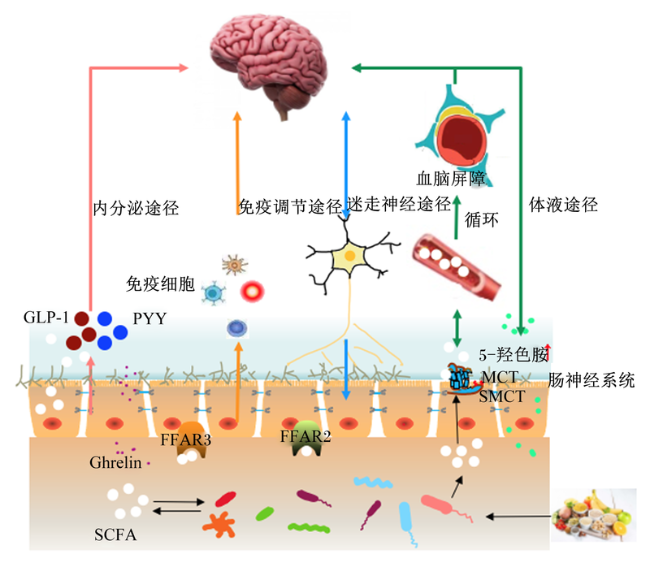
如前所示,SCFA可直接或间接作用于肠脑轴,主要通过内分泌途径、免疫调节途径、迷走神经通路以及体液途径等影响大脑功能(图1)。
图1 SCFA通过肠脑轴调节大脑功能的潜在途径

GLP-1:胰高血糖素样肽-1 glucagon-like peptide-1;PYY:肽YY peptide YY;Ghrelin:饥饿激素;FFAR2:游离脂肪酸受体2 free fatty acid receptor 2;FFAR3:游离脂肪酸受体3 free fatty acid receptor 3;MCT:单羧酸转运蛋白 monocarboxylate transporter;SMCT:钠偶联单羧酸转运蛋白 sodium-dependent monocarboxylate transporter。

Fig.1 Potential pathways of SCFA regulating brain function through gut brain axis

3.2.1 内分泌途径

结肠中的SCFA通过激活GPRs刺激肠上皮细胞释放激素,包括胰高血糖素样肽1(glucagon-like peptide 1,GLP1)、肽YY(peptide YY,PYY)、瘦素、饥饿激素(ghrelin)和胰岛素等[57-58],这一过程可能反过来通过全身循环或迷走神经传入影响大脑的信号级联。
GLP1是一种肠促胰岛素激素,其受体广泛分布于全身,包括胰腺、肠道、心脏和肺脏以及CNS和PNS,可通过体液和神经通路影响大脑功能[59]。比如,GLP1参与改善小鼠学习和记忆以及海马组织的神经保护和神经可塑性[60];通过减少动物模型中β-淀粉样斑块、抑制小胶质细胞的激活来缓解阿尔茨海默症症状[61]。Jackson等[62]指出,SCFA通过刺激GLP-1和胃肠肽的生成促进大脑健康,刺激肠道糖异生。PYY是一种厌食神经肽,可抑制胃肠道运动并降低食欲。除了肠道细胞能分泌PYY外,大脑的各个区域也能分泌和表达PYY,其中下丘脑和垂体腺中的PYY浓度最高[63]。动物研究表明,PYY影响食欲和大脑功能的机制主要是通过BBB或激活迷走神经传入途径传导至脑干,该途径可以延伸至肠壁的肌间神经丛和固有层[64]。丙酸盐诱导的GLP-1和PYY的持续增加会影响大脑的食欲调节回路,并抑制食物摄入[65]。由此推测SCFA通过刺激肠道释放GLP-1和PYY来调节大脑相关功能。此外,肠道分泌的瘦素,是一种厌食激素,主要通过激活下丘脑受体的表达调节厌食神经肽,抑制食物摄入,在能量平衡中发挥重要作用[66]。瘦素信号还影响非下丘脑区域,如皮质和海马区域,从而潜在地调节大脑结构与功能、神经元可塑性和突触功能[67]。大量研究表明,SCFA能调节瘦素的产生,通过大脑食欲调节回路维持能量平衡[68-69],但具体机制尚不清楚。与瘦素相反的是ghrelin,它是主要的促食欲激素,由ghrelin细胞产生,主要存在于胃和十二指肠,作为神经肽在CNS中发挥作用。Ghrelin主要通过迷走神经或穿过BBB作用于下丘脑,调节大脑功能[70-71]。研究表明,ghrelin调节小鼠海马的神经元和突触功能,促进学习和记忆功能,同时,ghrelin通过下丘脑-垂体-肾上腺(HPA)轴、5-羟色胺(5-hydroxytryptamine,5-HT)和交感神经系统等调节应激、抑郁和焦虑[72],大脑主要通过HPA轴调节肠道的生理变化。此外,SCFA抑制下丘脑中表达神经肽Y的促食欲神经元的活动,调节ghrelin受体触发的信号,通过肠-脑神经回路降低能量摄入和增强脂肪氧化,改善能量代谢,促进昼夜节律,控制食欲[73-74]。另外一种肠道激素是胰岛素,主要由胰腺产生,能使身体维持稳定的血糖水平,防止血糖水平过高或是过低。此外,胰岛素也是一种CNS调节肽,外周胰岛素可被大脑吸收,影响大脑功能,但其具体的机制尚未明确。

3.2.2 免疫调节途径

肠道、大脑和免疫系统三者之间存在相互作用,其中任一系统功能的失调都可能破坏神经免疫稳态并诱发神经性疾病。已有研究证实,SCFA能够调节肠道黏膜免疫应答,促进肠道黏膜功能,SCFA也可能通过影响外周免疫系统调节大脑功能。SCFA能直接影响中性粒细胞、树突状细胞、巨噬细胞和单核细胞以及T细胞等免疫细胞的分化、募集和激活,同时通过影响免疫系统以维持肠道和大脑稳态[75]。此外,到达血液和大脑的SCFA能调节系统循环中的免疫细胞功能,例如,乙酸盐通过增加p38磷酸化以及降低促炎细胞因子表达调节单核细胞炎症反应[76],单核细胞可能通过免疫调节途径影响神经结构和功能,进而影响大脑功能。口服丁酸和丙酸可促进小鼠大脑外周Treg的生成,Treg通过调节肠道促炎和抑炎之间的平衡,维持机体免疫动态平衡,在抑制炎症反应中发挥关键作用[77]。SCFA通过改善肠道屏障,或通过与免疫细胞的直接相互作用减轻全身炎症,进而减少脑内的神经炎症。由于小胶质细胞缺陷,与正常小鼠相比,无菌小鼠表现出先天免疫应答受损,当无菌小鼠通过饮水补充SCFA混合物4周后,SCFA通过促进肠道菌群定植改善大脑小胶质细胞形态,促进其成熟,为了进一步验证SCFA的关键作用,SCFA处理的FFAR2敲除小鼠仍然表现出小胶质细胞畸形[2]。此外,SCFA能改变神经免疫应答,与对照小鼠相比,喂食益生元低聚半乳糖(galacto-oligosaccharide,GOS)的小鼠在脂多糖诱导的炎症后,焦虑程度降低,可能与调节额叶皮质白细胞介素-1β(IL-1β)和5-HT受体的表达有关,其中主要是GOS发酵成的SCFA发挥了关键作用[78]
综上所述,这些结果表明SCFA作为关键介质影响中枢神经免疫功能,通过与多种免疫细胞相互作用,调节全身炎症,影响小胶质细胞结构和功能的完整性,以及与神经炎症有关的小胶质细胞激活。但目前的研究主要集中在部分动物模型上,主要是试验鼠模型,还缺乏其他畜禽研究。

3.2.3 迷走神经通路

迷走神经包含80%的传入神经纤维和20%的传出神经纤维,几乎能支配所有的消化道。迷走神经传入神经末梢位于胃肠道壁层内,黏膜传入神经终止于肠黏膜固有层内[64]。迷走神经传入与肠道菌群或肠道内容物不直接接触,主要通过肠道细菌化合物或代谢物,如肠内分泌细胞释放的5-HT和肠道激素,通过在胃肠道屏障上的扩散来间接感应信号[79]。激活迷走神经传入可调节大脑中神经递质水平[80],某些肠道菌群和代谢物也可直接或间接刺激迷走神经传入,从而影响大脑功能。SCFA作为肠道菌群的主要代谢产物,可直接激活迷走神经传入,一项对麻醉雄性大鼠进行丁酸钠(10 mmol/L)的肠腔灌注研究显示,丁酸盐能引起特征性的肠系膜传入神经反应,诱发迷走神经传入激活,且丁酸能不依赖于迷走神经传入上的胆囊收缩素受体(CCK-A),直接作用于迷走神经传入,这种现象在迷走神经切断术后消失[81]。腹腔注射乙酸盐、丙酸盐和丁酸盐(均为6 mmol/kg)后,结果显示SCFA通过迷走神经传入抑制了小鼠的食物摄入,其中丁酸盐的抑制效果最强,丙酸盐次之,乙酸盐最弱,此外,丁酸盐可以与小鼠结状神经节分离的单个神经元直接相互作用,诱导相关信号传导影响大脑功能[82]

3.2.4 体液途径

进入CNS的SCFA具有神经活性。SCFA作为参与肠脑轴信号传导的关键介质,它的缺失可能会对肠道和大脑产生重大影响。除了上述提到的3种途径外,SCFA还可通过体液途径,如BBB、5-HT、神经递质以及神经营养因子的释放等影响肠脑轴。
完整的BBB对大脑发育以及CNS稳态的维持至关重要,BBB确保了分子和营养物质被肠道吸收后从循环中可控地进入大脑。BBB通透性的增加会影响神经发生并抑制大脑中脑源性神经生长因子的产生,而SCFA能调节BBB功能,促进BBB完整性,以确保生命早期大脑的发育[15,83]。体内试验表明丙酸盐通过红细胞衍生核因子2样蛋白2(NFE2L2)信号保护小鼠BBB免受氧化应激,并保护其免受脂多糖诱导的紧密连接蛋白闭合蛋白(occludin)、封闭蛋白-5 (claudin-5)和闭锁小带蛋白-1(zonula occludens protein-1,ZO-1)的破坏。与正常小鼠相比,无菌小鼠的BBB通透性增加,丁酸盐处理后使无菌小鼠的BBB通透性降低至与正常小鼠相似的水平[83]。体外试验也证实了SCFA在BBB中的作用,丙酸处理体外模型的脑血管内皮细胞后,结果显示丙酸可抑制脂多糖诱导的通透性增加,并以CD14依赖性抑制低密度脂蛋白受体相关蛋白-1(LRP-1)的表达,通过核因子E2相关因子2(NRF2)信号通路保护BBB免受氧化应激[45]
5-HT构成了另一条可能受SCFA影响的肠-脑体液通讯途径。5-HT来源于色氨酸,在CNS和PNS中发挥神经递质的作用。大鼠结肠腔内注射生理浓度的SCFA后,肠嗜铬细胞释放5-HT刺激迷走神经感觉纤维上的5-HT受体,刺激结肠肌间神经丛释放乙酰胆碱向大脑传输信号[84]。Browning[85]研究发现,丁酸盐和丙酸盐在促进宿主5-HT生物合成、调节结肠和血清5-HT水平方面具有关键作用。SCFA可能通过调节大脑外周5-HT水平,同时5-HT可能通过免疫系统调节大脑发育或通过迷走神经传入纤维上的5-HT受体向大脑发送信号来调节大脑功能。
SCFA还可调节神经递质和神经营养因子的水平[15],如神经生长因子、脑源性神经营养因子(brain-derived neurotrophic factor,BDNF)和胶质细胞源性神经营养因子(glial cell line-derived neurotrophic factor,GDNF)等。这些神经营养因子能调节CNS和PNS中神经元和突触的生长、存活和分化,在学习以及记忆功能中发挥重要作用。丁酸盐通过提高神经营养因子的水平,对试验鼠模型与情绪相关的行为产生积极影响,同时也能促进其学习和记忆功能[86-87]。通过腹腔注射丁酸盐后,增加了小鼠海马区的BDNF水平,且增加了长期记忆形成所需基因的表达水平,使学习事件转化为长期记忆[88]。在肺炎球菌脑膜炎的小鼠模型中,丁酸通过逆转海马区BDNF和GDNF的水平预防记忆损伤[89]。丁酸钠刺激啮齿动物的BDNF表达、神经发生和神经细胞增殖,可显著促进神经细胞树突的发育以及促进长期记忆巩固[90]。先前已经证明,乙酸盐可以改变下丘脑中神经递质谷氨酸、谷氨酰胺和γ氨基丁酸的水平,并增加厌食神经肽的表达,调节食欲[31]。因此,SCFA对神经发生和神经保护的影响可能是通过增加神经递质和神经营养因子的水平来发挥作用。
SCFA可能通过维持BBB完整性、促进5-HT合成以及影响神经营养因子水平直接影响肠脑轴。但目前SCFA通过肠脑轴调节大脑功能的直接体液效应的研究仅限于体外细胞模型和部分动物模型仔猪和试验鼠的研究,SCFA是否同样能在其他畜禽CNS中达到生理浓度且发挥作用,仍有待确定。

4 小结

前人的研究证实,SCFA参与了胃肠道生理、宿主的免疫与代谢、CNS的发育以及大脑功能的调节,表明SCFA可以通过多种途径来调节肠-脑信号通讯。尽管近年来越来越多的研究使得人们对SCFA在肠脑轴中的作用有了初步的认识和理解,但对于复杂的肠脑轴之间的通讯仍然存在疑问。而且,大多数研究只是基于部分动物模型或是体外细胞模型,还需要进行更多的试验来进一步揭示SCFA在其中发挥的作用。鉴于SCFA可以通过直接和间接方式调节CNS影响行为和认知功能,因此全面解析SCFA参与复杂的肠脑轴作用机制,有助于开发治疗CNS疾病的新靶点。此外,通过SCFA对肠道和大脑功能的影响,使其具有可用作功能饮食干预的潜力,为SCFA在动物和人类营养学上的研究与应用提供理论参考。
[1]
MARGOLIS K G, CRYAN J F, MAYER E A. The microbiota-gut-brain axis:from motility to mood[J]. Gastroenterology, 2021, 160(5):1486-1501.

DOI

[2]
FUNG T C, OLSON C A, HSIAO E Y. Interactions between the microbiota,immune and nervous systems in health and disease[J]. Nature Neuroscience, 2017, 20(2):145-155.

DOI

[3]
SHERWIN E, DINAN T G, CRYAN J F. Recent developments in understanding the role of the gut microbiota in brain health and disease[J]. Annals of the New York Academy of Sciences, 2018, 1420(1):5-25.

DOI PMID

[4]
ERNY D, HRABĚ DE ANGELIS A L, JAITIN D, et al. Host microbiota constantly control maturation and function of microglia in the CNS[J]. Nature Neuroscience, 2015, 18(7):965-977.

DOI PMID

[5]
XIAO W P, SU J B, GAO X J, et al. The microbiota-gut-brain axis participates in chronic cerebral hypoperfusion by disrupting the metabolism of short-chain fatty acids[J]. Microbiome, 2022, 10(1):62.

DOI PMID

[6]
O'MAHONY S M, CLARKE G, BORRE Y E, et al. Serotonin,tryptophan metabolism and the brain-gut-microbiome axis[J]. Behavioural Brain Research, 2015, 277:32-48.

DOI

[7]
PASCALE A, MARCHESI N, MARELLI C, et al. Microbiota and metabolic diseases[J]. Endocrine, 2018, 61(3):357-371.

DOI PMID

[8]
DALILE B, VAN OUDENHOVE L, VERVLIET B, et al. The role of short-chain fatty acids in microbiota-gut-brain communication[J]. Nature Reviews Gastroenterology & Hepatology, 2019, 16(8):461-478.

[9]
STILLING R M, VAN DE WOUW M, CLARKE G, et al. The neuropharmacology of butyrate:the bread and butter of the microbiota-gut-brain axis?[J]. Neurochemistry International, 2016, 99:110-132.

DOI

[10]
CLARKE G, STILLING R M, KENNEDY P J, et al. Minireview:gut microbiota:the neglected endocrine organ[J]. Molecular Endocrinology, 2014, 28(8):1221-1238.

DOI

[11]
CUMMINGS J H, POMARE E W, BRANCH W J, et al. Short chain fatty acids in human large intestine,portal,hepatic and venous blood[J]. Gut, 1987, 28(10):1221-1227.

DOI

[12]
SCHÖNFELD P, WOJTCZAK L. Short- and medium-chain fatty acids in energy metabolism:the cellular perspective[J]. Journal of Lipid Research, 2016, 57(6):943-954.

DOI

[13]
GAUDIER E, RIVAL M, BUISINE M P, et al. Butyrate enemas upregulate Muc genes expression but decrease adherent mucus thickness in mice colon[J]. Physiological Research, 2009, 58(1):111-119.

DOI PMID

[14]
董霞, 朱研, 沈林園, 等. 短链脂肪酸对肠上皮紧密连接的作用机制研究进展[J/OL]. 动物营养学报:1-7 [2022-08-15]. http://kns.cnki.net/kcms/detail/11.5461.S.20220716.1743.008.html

DONG X, ZHU Y, SHEN L Y, et al. Research progress on mechanism of short-chain fatty acids on tight junctions of intestinal epithelium[J/OL]. Chinese Journal of Animal Nutrition:1-7 [2022-08-15]. http://kns.cnki.net/kcms/detail/11.5461.S.20220716.1743.008.htmlin Chinese)

[15]
SILVA Y P, BERNARDI A, FROZZA R L. The role of short-chain fatty acids from gut microbiota in gut-brain communication[J]. Frontiers in Endocrinology, 2020, 11:25.

DOI PMID

[16]
林杨凡, 林炫财, 孔晶晶, 等. 短链脂肪酸调控肠道健康研究进展[J]. 现代消化及介入诊疗, 2022, 27(4):520-524.

LIN Y F, LIN X C, KONG J J, et al. Research progress of short-chain fatty acids regulating intestinal health[J]. Modern Digestion & Intervention, 2022, 27(4):520-524. (in Chinese)

[17]
LE GALL M, GALLOIS M, SÈVE B, et al. Comparative effect of orally administered sodium butyrate before or after weaning on growth and several indices of gastrointestinal biology of piglets[J]. British Journal of Nutrition, 2009, 102(9):1285-1296.

DOI

[18]
WEN Z S, LU J J, ZOU X T. Effects of sodium butyrate on the intestinal morphology and DNA-binding activity of intestinal nuclear factor-κB in weanling pigs[J]. Journal of Animal and Veterinary Advances, 2012, 11(6):814-821.

DOI

[19]
FANG C L, SUN H, WU J, et al. Effects of sodium butyrate on growth performance,haematological and immunological characteristics of weanling piglets[J]. Journal of Animal Physiology and Animal Nutrition, 2014, 98(4):680-685.

DOI

[20]
HOU Y Q, LIU Y L, HU J, et al. Effects of lactitol and tributyrin on growth performance,small intestinal morphology and enzyme activity in weaned pigs[J]. Asian-Australasian Journal of Animal Sciences, 2006, 19(10):1470-1477.

DOI

[21]
HOU Y Q, WANG L, YI D, et al. Dietary supplementation with tributyrin alleviates intestinal injury in piglets challenged with intrarectal administration of acetic acid[J]. British Journal of Nutrition, 2014, 111(10):1748-1758.

DOI

[22]
WANG R X, LEE J S, CAMPBELL E L, et al. Microbiota-derived butyrate dynamically regulates intestinal homeostasis through regulation of actin-associated protein synaptopodin[J]. Proceedings of the National Academy of Sciences of the United States of America, 2020, 117(21):11648-11657.

DOI PMID

[23]
MA X, FAN P X, LI L S, et al. Butyrate promotes the recovering of intestinal wound healing through its positive effect on the tight junctions[J]. Journal of Animal Science, 2012,90 (Suppl.4):266-268.

[24]
ZENG X F, SUNKARA L T, JIANG W Y, et al. Induction of porcine host defense peptide gene expression by short-chain fatty acids and their analogs[J]. PLoS One, 2013, 8(8):e72922.

[25]
BARTHOLOME A L, ALBIN D M, BAKER D H, et al. Supplementation of total parenteral nutrition with butyrate acutely increases structural aspects of intestinal adaptation after an 80% jejunoileal resection in neonatal piglets[J]. Journal of Parenteral and Enteral Nutrition, 2004, 28(4):210-222.

PMID

[26]
DIAO H, JIAO A R, YU B, et al. Gastric infusion of short-chain fatty acids can improve intestinal barrier function in weaned piglets[J]. Genes and Nutrition, 2019, 14:4.

DOI PMID

[27]
ZHOU H, SUN J, GE L P, et al. Exogenous infusion of short-chain fatty acids can improve intestinal functions independently of the gut microbiota[J]. Journal of Animal Science, 2020, 98(12):skaa371.

DOI

[28]
MORALES FÉNERO C, AMARAL M A, XAVIER I K, et al. Short chain fatty acids (SCFAs) improves TNBS-induced colitis in zebrafish[J]. Current Research in Immunology, 2021, 2:142-154.

DOI

[29]
MITCHELL R W, ON N H, DEL BIGIO M R, et al. Fatty acid transport protein expression in human brain and potential role in fatty acid transport across human brain microvessel endothelial cells[J]. Journal of Neurochemistry, 2011, 117(4):735-746.

DOI PMID

[30]
OLDENDORF W H. Carrier-mediated blood-brain barrier transport of short-chain monocarboxylic organic acids[J]. American Journal of Physiology, 1973, 224(6):1450-1453.

DOI

[31]
FROST G, SLEETH M L, SAHURI-ARISOYLU M, et al. The short-chain fatty acid acetate reduces appetite via a central homeostatic mechanism[J]. Nature Communications, 2014, 5:3611.

DOI PMID

[32]
DINAN T G, CRYAN J F. Gut instincts:microbiota as a key regulator of brain development,ageing and neurodegeneration[J]. The Journal of Physiology, 2017, 595(2):489-503.

DOI

[33]
KELLY J R, MINUTO C, CRYAN J F, et al. Cross talk:the microbiota and neurodevelopmental disorders[J]. Frontiers in Neuroscience, 2017, 11:490.

DOI

[34]
YANG L L, MILLISCHER V, RODIN S, et al. Enteric short-chain fatty acids promote proliferation of human neural progenitor cells[J]. Journal of Neurochemistry, 2020, 154(6):635-646.

DOI PMID

[35]
CHEN R Z, XU Y, WU P, et al. Transplantation of fecal microbiota rich in short chain fatty acids and butyric acid treat cerebral ischemic stroke by regulating gut microbiota[J]. Pharmacological Research, 2019, 148:104403.

[36]
YAMAWAKI Y, YOSHIOKA N, NOZAKI K, et al. Sodium butyrate abolishes lipopolysaccharide-induced depression-like behaviors and hippocampal microglial activation in mice[J]. Brain Research, 2018, 1680:13-38.

DOI PMID

[37]
WANG P, ZHANG Y R, GONG Y, et al. Sodium butyrate triggers a functional elongation of microglial process via Akt-small RhoGTPase activation and HDACs inhibition[J]. Neurobiology of Disease, 2018, 111:12-25.

DOI PMID

[38]
SOLIMAN M L, PUIG K L, COMBS C K, et al. Acetate reduces microglia inflammatory signaling in vitro[J]. Journal of Neurochemistry, 2012, 123(4):555-567.

DOI

[39]
HUUSKONEN J, SUURONEN T, NUUTINEN T, et al. Regulation of microglial inflammatory response by sodium butyrate and short-chain fatty acids[J]. British Journal of Pharmacology, 2004, 141(5):874-880.

PMID

[40]
PATNALA R, ARUMUGAM T V, GUPTA N, et al. HDAC inhibitor sodium butyrate-mediated epigenetic regulation enhances neuroprotective function of microglia during ischemic stroke[J]. Molecular Neurobiology, 2017, 54(8):6391-6411.

DOI PMID

[41]
SHARMA S, TALIYAN R, SINGH S. Beneficial effects of sodium butyrate in 6-OHDA induced neurotoxicity and behavioral abnormalities:modulation of histone deacetylase activity[J]. Behavioural Brain Research, 2015, 291:306-314.

DOI

[42]
SOLIMAN M L, ROSENBERGER T A. Acetate supplementation increases brain histone acetylation and inhibits histone deacetylase activity and expression[J]. Molecular and Cellular Biochemistry, 2011, 352(1/2):173-180.

DOI

[43]
SCHROEDER F A, LIN C L, CRUSIO W E, et al. Antidepressant-like effects of the histone deacetylase inhibitor,sodium butyrate,in the mouse[J]. Biological Psychiatry, 2007, 62(1):55-64.

DOI

[44]
FISCHER A, SANANBENESI F, WANG X Y, et al. Recovery of learning and memory is associated with chromatin remodelling[J]. Nature, 2007, 447(7141):178-182.

DOI

[45]
HOYLES L, SNELLING T, UMLAI U K, et al. Microbiome-host systems interactions:protective effects of propionate upon the blood-brain barrier[J]. Microbiome, 2018, 6(1):55.

DOI

[46]
VAN DE WOUW M, BOEHME M, LYTE J M, et al. Short-chain fatty acids:microbial metabolites that alleviate stress-induced brain-gut axis alterations[J]. The Journal of Physiology, 2018, 596(20):4923-4944.

DOI

[47]
LEE J, D'AIGLE J, ATADJA L, et al. Gut microbiota-derived short-chain fatty acids promote poststroke recovery in aged mice[J]. Circulation Research, 2020, 127(4):453-465.

DOI PMID

[48]
SHI H L, GE X, MA X, et al. A fiber-deprived diet causes cognitive impairment and hippocampal microglia-mediated synaptic loss through the gut microbiota and metabolites[J]. Microbiome, 2021, 9(1):223.

DOI PMID

[49]
REN M H, LI H, FU Z, et al. Centenarian-sourced Lactobacillus casei combined with dietary fiber complex ameliorates brain and gut function in aged mice[J]. Nutrients, 2022, 14(2):324.

DOI

[50]
SADLER R, CRAMER J V, HEINDL S, et al. Short-chain fatty acids improve poststroke recovery via immunological mechanisms[J]. Journal of Neuroscience, 2020, 40(5):1162-1173.

DOI PMID

[51]
CHEN R Z, WU P, CAI Z, et al. Puerariae lobatae radix with Chuanxiong rhizoma for treatment of cerebral ischemic stroke by remodeling gut microbiota to regulate the brain-gut barriers[J]. Journal of Nutritional Biochemistry, 2019, 65:101-114.

DOI

[52]
SAJDEL-SULKOWSKA E M. Neuropsychiatric ramifications of COVID-19:short-chain fatty acid deficiency and disturbance of microbiota-gut-brain axis signaling[J]. BioMed Research International, 2021, 2021:7880448.

[53]
KIMURA I, ICHIMURA A, OHUE-KITANO R, et al. Free fatty acid receptors in health and disease[J]. Physiological Reviews, 2020, 100(1):171-210.

DOI PMID

[54]
BONAZ B, BAZIN T, PELLISSIER S. The vagus nerve at the interface of the microbiota-gut-brain axis[J]. Frontiers in Neuroscience, 2018, 12:49.

DOI PMID

[55]
DE VADDER F, KOVATCHEVA-DATCHARY P, GONCALVES D, et al. Microbiota-generated metabolites promote metabolic benefits via gut-brain neural circuits[J]. Cell, 2014, 156(1/2):84-96.

DOI

[56]
OBATA Y, FURUSAWA Y, HASE K. Epigenetic modifications of the immune system in health and disease[J]. Immunology and Cell Biology, 2015, 93(3):226-232.

DOI PMID

[57]
LARRAUFIE P, MARTIN-GALLAUSIAUX C, LAPAQUE N, et al. SCFAs strongly stimulate PYY production in human enteroendocrine cells[J]. Scientific Reports, 2018, 8(1):74.

DOI PMID

[58]
TOLHURST G, HEFFRON H, LAM Y S, et al. Short-chain fatty acids stimulate glucagon-like peptide-1 secretion via the G-protein-coupled receptor FFAR2[J]. Diabetes, 2012, 61(2):364-371.

DOI PMID

[59]
KRATSMAN N, GETSELTER D, ELLIOTT E. Sodium butyrate attenuates social behavior deficits and modifies the transcription of inhibitory/excitatory genes in the frontal cortex of an autism model[J]. Neuropharmacology, 2016, 102:136-145.

DOI PMID

[60]
MARKAKI I, WINTHER K, CATRINA S B, et al. Repurposing GLP1 agonists for neurodegenerative diseases[J]. International Review of Neurobiology, 2020, 155:91-112.

DOI PMID

[61]
MCCLEAN P L, PARTHSARATHY V, FAIVRE E, et al. The diabetes drug liraglutide prevents degenerative processes in a mouse model of Alzheimer's disease[J]. Journal of Neuroscience, 2011, 31(17):6587-6594.

DOI PMID

[62]
JACKSON A, FORSYTH C B, SHAIKH M, et al. Diet in Parkinson's disease:critical role for the microbiome[J]. Frontiers in Neurology, 2019, 10:1245.

DOI

[63]
MORIMOTO R, SATOH F, MURAKAMI O, et al. Expression of peptide YY in human brain and pituitary tissues[J]. Nutrition, 2008, 24(9):878-884.

DOI PMID

[64]
WAISE T M Z, DRANSE H J, LAM T K T. The metabolic role of vagal afferent innervation[J]. Nature Reviews Gastroenterology & Hepatology, 2018, 15(10):625-636.

[65]
CHAMBERS E S, VIARDOT A, PSICHAS A, et al. Effects of targeted delivery of propionate to the human colon on appetite regulation,body weight maintenance and adiposity in overweight adults[J]. Gut, 2015, 64(11):1744-1754.

DOI

[66]
FRIEDMAN J M. Leptin and the endocrine control of energy balance[J]. Nature Metabolism, 2019, 1(8):754-764.

DOI PMID

[67]
MORRISON C D. Leptin signaling in brain:a link between nutrition and cognition?[J]. Biochimica et Biophysica Acta:Molecular Basis of Disease, 2009, 1792(5):401-408.

DOI

[68]
BYRNE C S, CHAMBERS E S, MORRISON D J, et al. The role of short chain fatty acids in appetite regulation and energy homeostasis[J]. International Journal of Obesity, 2015, 39(9):1331-1338.

DOI PMID

[69]
XIONG Y M, MIYAMOTO N, SHIBATA K, et al. Short-chain fatty acids stimulate leptin production in adipocytes through the G protein-coupled receptor GPR41[J]. Proceedings of the National Academy of Sciences of the United States of America, 2004, 101(4):1045-1050.

DOI PMID

[70]
CABRAL A, DE FRANCESCO P N, PERELLO M. Brain circuits mediating the orexigenic action of peripheral ghrelin:narrow gates for a vast kingdom[J]. Frontiers in Endocrinology, 2015, 6:44.

[71]
DATE Y. Ghrelin and the vagus nerve[J]. Methods in Enzymology, 2012, 514:261-269.

DOI PMID

[72]
BALI A, JAGGI A S. An integrative review on role and mechanisms of ghrelin in stress,anxiety and depression[J]. Current Drug Targets, 2016, 17(5):495-507.

DOI

[73]
LI Z, YI C X, KATIRAEI S, et al. Butyrate reduces appetite and activates brown adipose tissue via the gut-brain neural circuit[J]. Gut, 2018, 67(7):1269-1279.

DOI PMID

[74]
TORRES-FUENTES C, GOLUBEVA A V, ZHDANOV A V, et al. Short-chain fatty acids and microbiota metabolites attenuate ghrelin receptor signaling[J]. FASEB Journal, 2019, 33(12):13546-13559.

DOI

[75]
CORRÊA-OLIVEIRA R, FACHI J L, VIEIRA A, et al. Regulation of immune cell function by short-chain fatty acids[J]. Clinical & Translational Immunology, 2016, 5(4):e73.

[76]
ARPAIA N, CAMPBELL C, FAN X Y, et al. Metabolites produced by commensal bacteria promote peripheral regulatory T-cell generation[J]. Nature, 2013, 504(7480):451-455.

DOI

[77]
ANG Z W, ER J Z, TAN N S, et al. Human and mouse monocytes display distinct signalling and cytokine profiles upon stimulation with FFAR2/FFAR3 short-chain fatty acid receptor agonists[J]. Scientific Reports, 2016, 6(1):34145.

DOI

[78]
SAVIGNAC H M, COUCH Y, STRATFORD M, et al. Prebiotic administration normalizes lipopolysaccharide (LPS)-induced anxiety and cortical 5-HT2A receptor and IL1-β levels in male mice[J]. Brain Behavior and Immunity, 2016, 52:120-131.

DOI PMID

[79]
LI Y, HAO Y, ZHU J, et al. Serotonin released from intestinal enterochromaffin cells mediates luminal non-cholecystokinin-stimulated pancreatic secretion in rats[J]. Gastroenterology, 2000, 118(6):1197-1207.

PMID

[80]
RESSLER K J, MAYBERG H S. Targeting abnormal neural circuits in mood and anxiety disorders:from the laboratory to the clinic[J]. Nature Neuroscience, 2007, 10(9):1116-1124.

DOI

[81]
LAL S, KIRKUP A J, BRUNSDEN A M, et al. Vagal afferent responses to fatty acids of different chain length in the rat[J]. American Journal of Physiology:Gastrointestinal and Liver Physiology, 2001, 281(4):G907-G915.

DOI

[82]
GOSWAMI C, IWASAKI Y, YADA T. Short-chain fatty acids suppress food intake by activating vagal afferent neurons[J]. Journal of Nutritional Biochemistry, 2018, 57:130-135.

DOI PMID

[83]
BRANISTE V, AL-ASMAKH M, KOWAL C, et al. The gut microbiota influences blood-brain barrier permeability in mice[J]. Science Translational Medicine, 2014, 6(263):263ra158.

[84]
YANO J M, YU K, DONALDSON G P, et al. Indigenous bacteria from the gut microbiota regulate host serotonin biosynthesis[J]. Cell, 2015, 161(2):264-276.

DOI PMID

[85]
BROWNING K N. Role of central vagal 5-HT3 receptors in gastrointestinal physiology and pathophysiology[J]. Frontiers in Neuroscience, 2015, 9:413.

DOI PMID

[86]
VARELA R B, VALVASSORI S S, LOPES-BORGES J, et al. Sodium butyrate and mood stabilizers block ouabain-induced hyperlocomotion and increase BDNF,NGF and GDNF levels in brain of Wistar rats[J]. Journal of Psychiatric Research, 2015, 61:114-121.

DOI

[87]
SUN J, WANG F Y, HONG G L, et al. Antidepressant-like effects of sodium butyrate and its possible mechanisms of action in mice exposed to chronic unpredictable mild stress[J]. Neuroscience Letters, 2016, 618:159-166.

DOI PMID

[88]
INTLEKOFER K A, BERCHTOLD N C, MALVAEZ M, et al. Exercise and sodium butyrate transform a subthreshold learning event into long-term memory via a brain-derived neurotrophic factor-dependent mechanism[J]. Neuropsychopharmacology, 2013, 38(10):2027-2034.

DOI PMID

[89]
BARICHELLO T, GENEROSO J S, SIMÕS L R, et al. Sodium butyrate prevents memory impairment by re-establishing BDNF and GDNF expression in experimental pneumococcal meningitis[J]. Molecular Neurobiology, 2015, 52(1):734-740.

DOI PMID

[90]
YOO D Y, KIM W, NAM S M, et al. Synergistic effects of sodium butyrate,a histone deacetylase inhibitor,on increase of neurogenesis induced by pyridoxine and increase of neural proliferation in the mouse dentate gyrus[J]. Neurochemical Research, 2011, 36(10):1850-1857.

DOI

文章导航

/