综述

原花青素通过塑造肠道菌群调节免疫应答的作用与机制研究进展

  • 苏玲玲 , 1 ,
  • 黎小银 1 ,
  • 易宏波 2 ,
  • 高彦华 , 1, *
展开
  • 1 西南民族大学畜牧兽医学院,青藏高原动物遗传资源保护与利用教育部重点实验室,动物科学国家民委重点实验室,成都 610041
  • 2 广东省农业科学院动物科学研究所,畜禽育种国家重点实验室,农业农村部华南动物营养与饲料重点实验室,广东省畜禽育种与营养研究重点实验室,广州 510640
*高彦华,讲师,硕士生导师,E-mail:

苏玲玲(1997—),女,广西河池人,硕士研究生,研究方向为动物营养与肠道健康。E-mail:

收稿日期: 2022-08-25

  网络出版日期: 2023-03-16

基金资助

中央高校基本科研业务费专项资金项目(ZYN2022106)

四川省自然科学基金项目(2023NSFSC1148)

Research Progress on Role and Mechanism of Proanthocyanidins in Regulating Immune Response by Shaping Intestinal Microbiota

  • SU Lingling , 1 ,
  • LI Xiaoyin 1 ,
  • YI Hongbo 2 ,
  • GAO Yanhua , 1, *
Expand
  • 1 Key Laboratory of Animal Science School of National Ethnic Affairs Commission of China, Key Laboratory of Qinghai-Tibet Plateau Animal Genetic Resources Conservation and Utilization, College of Animal and Veterinary Sciences, Southwest Minzu University, Chengdu 610041, China
  • 2 Guangdong Key Laboratory of Animal Breeding and Nutrition, Key Laboratory of Animal Nutrition and Feed Science in South China, Ministry of Agriculture and Rural Affairs, State Key Laboratory of Livestock and Poultry Breeding, Institute of Animal Science, Guangdong Academy of Agricultural Sciences, Guangzhou 510640, China
*lecturer, E-mail:

Received date: 2022-08-25

  Online published: 2023-03-16

摘要

原花青素是广泛存在于多种植物中的重要天然生物活性物质。近年来的研究表明,动物饲粮中添加不同来源的原花青素能够调节肠道菌群的多样性与组成,并通过菌群及其代谢产物与肠黏膜免疫系统发生相互作用,从而调节肠道免疫应答。本文综述了原花青素对菌群及其代谢产物的塑造作用,总结了原花青素对肠道免疫应答的调节及可能的作用机制,为原花青素在改善动物肠道健康方面的基础研究和生产应用提供参考依据。

本文引用格式

苏玲玲 , 黎小银 , 易宏波 , 高彦华 . 原花青素通过塑造肠道菌群调节免疫应答的作用与机制研究进展[J]. 动物营养学报, 2023 , 35(3) : 1454 -1467 . DOI: 10.12418/CJAN2023.138

Abstract

Proanthocyanidins (PACs) are important natural biologically active substances that are widely existing in various plants. Recent studies have shown that the addition of PACs from different sources in animal diets can regulate the diversity and composition of intestinal microbiota, and interact with the intestinal mucosal immune system through the microbiota and their metabolites to regulate the intestinal immune response. This paper reviewed the role of PACs played in shaping intestinal microbiota and their metabolites, and summarized the regulation of PACs on intestinal immune response and possible mechanisms, providing a reference for the basic research and application of PACs in improving animal intestinal health.

原花青素(proanthocyanidins,PACs)是由黄烷-3-醇类化合物(flavan-3-ols)单体(如儿茶素或表儿茶素)以低聚体或高聚体的形式组成,经类黄酮生物合成途径形成的黄烷醇类混合物[1],是从植物中发现的重要天然生物活性物,广泛存在于饲草、谷物和水果等植物的茎、叶、花、种子和果皮中,具有抗氧化、抑菌、免疫调节以及缓解肥胖等多种有益人类和动物机体健康的生物学活性[2]。近年来大量研究表明,PACs具有抑制病原菌生长和促进有益菌增殖的效应,从而影响肠道菌群的多样性与组成,上调特定细菌,如嗜黏蛋白阿克曼菌(Akkermansia muciniphila)的相对丰度,并通过菌群及其代谢产物,如短链脂肪酸(short-chain fatty acids,SCFAs)、胆汁酸等与肠黏膜上皮发生相互作用,维持肠道屏障完整性,调节免疫应答[3-4]。在我国饲料行业全面“禁抗”背景下,PACs具有开发成为动物肠道保健饲料添加剂的潜力。本文着重综述了PACs对肠道微生物菌群及其代谢产物的影响,并阐述了PACs通过塑造肠道菌群及其代谢产物对免疫应答的调节作用和机制方面的研究进展,为PACs在改善动物肠道健康方面的基础研究和生产应用提供参考依据。

1 PACs的结构与来源

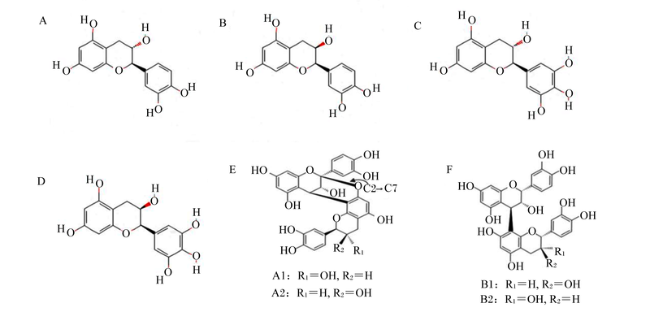
植物多酚数据库(http://phenol-explorer.eu/)收录了501种植物来源的活性多酚,其中低聚黄烷醇类多酚有29种,包括PACs、原飞燕草素和原龙葵素等[5]。PACs主要由(+)-儿茶素(图1-A)、(-)-表儿茶素(图1-B)、(+)-没食子儿茶素(图1-C)和(-)-表没食子儿茶素(图1-D)等单体以不同的聚合度缩合形成[6]。根据聚合度,PACs分为聚合度为1的单体、聚合度为2~5的低聚原花青素(oligomeric proanthocyanidins,OPC)和聚合度大于5的高聚原花青素(polymeric proanthocyanidins,PPC)[7]。二聚体的原花青素根据单体之间的立体构型和连接方式分为A型和B型[8-9]。A型原花青素(A-type proanthocyanidins,PAC-A)(图1-E)由C4—C8键和1个额外的醚键(C2—O—C7或C2—O—C5键)构成[10]。B型原花青素(B-type proanthocyanidins,PAC-B)(图1-F)则由C4—C8或C4—C6键连接[11]。PACs的生物利用率随聚合度增加而降低[9],OPC与PPC相比由于分子量更小,跨细胞膜吸收转运能力更强,因此表现出更好的抗氧化和抗炎活性[12]。PACs来源广泛,主要存在于多种植物及其副产物当中,如饲草(红豆草、紫象草)、谷物(高粱)、水果(葡萄、蓝莓、蔓越莓、苹果及牛油果等)、豆类(豌豆、蚕豆等)、中草药(桂皮、莲子)、饮品(茶叶、咖啡豆)等[8,13]。其中,葡萄籽原花青素(grape seed proanthocyanidin,GSP)的PACs种类丰富,含量最高,可达35.3 mg/g[14]
图1 PACs单体和二聚体化学结构示例

A:(+)-儿茶素 (+)-catechin;B:(-)-表儿茶素 (-)-epicatechin;C:(+)-没食子儿茶素 (+)-gallocatechin;D:(-)-表没食子儿茶素 (-)-epigallocatechin;E:A型原花青素 A-type proanthocyanidins;F:B型原花青素 B-type proanthocyanidins。

A~D引自文献[5],E和F引自文献[3]。A to D were cited from literature [5], and E and F were cited from literature [3].

Fig.1 Example of chemical structures of PACs monomer and dimer[6]

2 PACs通过对肠道菌群的重塑及其代谢产物参与调节免疫应答

PACs的酚-羟基结构使其分子具有亲水性和亲脂性,对常见病原菌具有抑菌活性[15],例如松树皮原花青素通过与金黄色葡萄球菌的细胞膜发生融合,破坏细胞膜结构或改变细胞膜通透性,抑制细菌能量代谢酶如琥珀酸脱氢酶、苹果酸脱氢酶和腺苷三磷酸酶的活性,以及损伤DNA合成等机制发挥抑菌作用[16]。也有研究表明,PACs对病原菌和益生菌的作用存在差别,例如PAC-B能抑制病原菌如产肠毒素型大肠杆菌(enterotoxigenic Escherichia coli,ETEC)的生长和生物膜的形成,而益生菌如乳杆菌(Lactobacillus)对其有较强的耐受性[17-18]。有研究总结了PACs在人消化道的吸收情况,只有约40%的PACs单体和OPC能够在小肠中被吸收,其余单体、OPC以及几乎全部的PPC都与食糜一起到达大肠[19-20]。在仔猪饲粮中添加5%葡萄皮渣的饲养试验也发现,葡萄皮渣中的PACs主要为原花青素C2(PAC-C2),而其中62.5%的PAC-C2在结肠中检出[21],这也表明PACs主要在大肠中发挥功效。因此,饲粮中的PACs对动物肠道健康的调节主要是通过选择性地抑制潜在病原菌(如产肠毒素型大肠杆菌),促进有益健康的细菌(如乳杆菌)的增殖,重塑肠道菌群的结构及代谢产物来实现。

2.1 PACs对肠道菌群的重塑调节免疫应答

高脂高糖(high fat high sucrose,HFHS)或高脂(high fat,HF)饲粮能诱发肥胖,导致肠道菌群失衡,使拟杆菌门(Bacteroidetes)、疣微菌门(Verrucomicrobia)和普拉梭菌(Faecalibacterium prausnitzii)等对健康有益的菌群丰度降低,厚壁菌门/拟杆菌门(F/B)值增加,而其中的F/B值与肥胖表型显著正相关[22]。研究表明,添加来自于葡萄、葡萄籽、荔枝、蔓越莓和蓝莓等的PACs能够缓解HFHS或HF饲粮造成的肥胖表型,如体重和体脂沉积增加、胰岛素敏感性下降、脂肪组织炎性细胞浸润,而这种缓解作用与PACs促进肠道菌群F/B值降低,增加菌群α多样性,促进菌群肠型由厚壁菌/瘤胃球菌型转变为更健康的普雷沃菌/阿克曼菌型,以及提高肠道中有益健康的细菌如嗜黏蛋白阿克曼菌的丰度有关[23-29]。嗜黏蛋白阿克曼菌属于疣微菌门,是一种革兰氏阴性厌氧菌,生活在肠道黏液层,以肠黏膜分泌的黏蛋白为主要底物,占肠道微生物总数的1%~3%[30]。在肠道中大量定植的嗜黏蛋白阿克曼菌与超重、2型糖尿病及高血压等肥胖表型和炎性肠炎呈现显著负相关[31-33],这表明嗜黏蛋白阿克曼菌对健康有益。此外,HF饲粮还能降低肠道跨膜电阻(trans-epithelial electrical resistance,TEER),增加肠黏膜通透性,并下调紧密连接蛋白的表达,损伤肠道屏障[34-35]。以GSP为例,添加GSP能够恢复HF饲粮导致的TEER下降,降低血浆脂多糖(lipopolysacchride,LPS)含量和回肠髓过氧化物酶(myeloperoxidase,MPO)活性,上调紧密连接蛋白封闭蛋白-1(claudin-1)表达,降低血浆肿瘤坏死因子-α(tumor necrosis factor-α,TNF-α)、白细胞介素-6(interleukine-6,IL-6)等促炎性细胞因子的含量,减轻肠道屏障功能障碍和代谢脓毒血症[27,34-35]。GSP对紧密连接蛋白闭锁小带蛋白-1(ZO-1)和促炎性细胞因子IL-6表达的上调也与其促进嗜黏蛋白阿克曼菌的相对丰度具有相关性[26]。而采用抗生素处理破坏肠道菌群稳态后,GSP对HF饲粮所致肥胖和肠炎的缓解作用也随之消除[27]。另外,在添加蓝莓PACs缓解HFHS饲粮引起小鼠肥胖症状的研究中发现,通过粪菌移植(fecal microbiota transplantation,FMT)技术,将添加蓝莓PACs的小鼠粪便菌群移植给无菌小鼠,有效降低了饲喂HFHS饲粮造成的过度增重和脂肪沉积,并有助于提高胰岛素敏感性[25]。以上结果说明,在HFHS饲粮背景下,PACs通过对肠道菌群的塑造以及提高嗜黏蛋白阿克曼菌等菌群的相对丰度,发挥了维持肠黏膜屏障功能和调控免疫应答的作用。
PACs也能够缓解细菌感染或化学性诱导造成的肠炎和菌群紊乱。添加水解豌豆皮、石榴皮来源的PACs能够恢复啮齿类柠檬酸杆菌(Citrobacter rodentium)感染造成的小鼠肠道菌群α多样性下降,上调疣微菌门的丰度,并通过上调肠黏膜抗菌肽胰岛再生源蛋白(regenerating islet-derived protein,Reg)3γReg3β的表达来清除啮齿类柠檬酸杆菌,降低啮齿类柠檬酸杆菌在菌群中的比例[36-37]。此外,来源于葡萄籽、草莓及绿茶的PACs能缓解葡聚糖硫酸钠盐(dextran sulfate sodium salt,DSS)诱导的化学性肠炎及肠黏膜屏障损伤,降低结肠黏膜促炎细胞因子TNF-α、白细胞介素-1β(interleukine-1β,IL-1β)的表达,并恢复DSS导致的肠道菌群F/B值和α多样性降低[38-40],其中补充GSP和绿茶PACs——表没食子儿茶素-3-没食子酸酯(epigallocatechin-3-gallate,EGCG)也上调了肠道嗜黏蛋白阿克曼菌的相对丰度[38,40]。在添加EGCG饲喂小鼠的研究中,采用FMT将来自于饲喂EGCG小鼠的粪便或无菌粪便滤液(sterile fecal filtrate,SFF)接种给无菌小鼠(EGCG-FMT),发现与接种对照粪便组和SFF组相比,EGCG-FMT组肠道嗜黏蛋白阿克曼菌的相对丰度显著上调,肠道促炎性细胞因子释放受到抑制,肠黏膜屏障损伤得以减轻[40]。以上研究结果表明,PACs主要通过塑造肠道菌群,上调嗜黏蛋白阿克曼菌的丰度,起到调节免疫应答和缓解肠炎的作用。

2.2 PACs对肠道菌群代谢产物的干预影响免疫应答

2.2.1 SCFAs、胆汁酸和吲哚

PACs在重塑肠道菌群同时干预了菌群代谢产物,包括SCFAs、胆汁酸和吲哚等。SCFAs主要包括乙酸、丙酸和丁酸,是肠道菌群最主要的代谢产物,通过降解饲粮纤维和非淀粉多糖生成[41]。研究表明,DSS诱导的肠炎引起菌群多样性降低的同时,也降低了SCFAs的生成,而添加来自于草莓、绿茶的PACs能够恢复DSS导致的SCFAs下降[39-40]。以GSP为例,在断奶仔猪饲粮中添加250 mg/kg的GSP能降低内脏脂肪细胞体积,提高结肠中丙酸、丁酸含量;使用抗生素处理消除了GSP对脂质代谢和肠道SCFAs的作用效果,并通过直接在仔猪饲粮中添加丙酸钠也能起到减少脂肪沉积的作用[42],说明GSP诱导肠道菌群产生的代谢物丙酸在改善仔猪的脂质代谢中发挥主要作用。
除此之外,GSP还能够通过调节肠道中与胆汁酸相关的菌群,改变胆汁酸库的组成,起到缓解肥胖表型的作用。肠道中的胆汁酸主要由肝脏分泌,经胆囊加工后释放进入小肠,被远端回肠的载体转运回到肝脏被再次利用,称为胆汁酸的肠肝循环,而胆汁酸主要参与甘油三酯和胆固醇的消化、吸收和代谢[43]。Tveter等[44]发现,对瘦素基因缺失性肥胖db/db小鼠饲喂添加葡萄原花青素(grape proanthocyanidin,GP)的低脂饲粮,能降低口服葡萄糖耐量试验(oral glucose tolerance test,OGTT)中血浆葡萄糖含量,改善胰岛素抵抗,并发现GP的降血糖作用主要与肠道胆汁酸代谢有关——GP增加了初级胆汁酸胆酸(cholic acid,CA)和牛磺酸(taurocholic acid,TCA)的含量,降低了血浆总次级胆汁酸以及ω-鼠胆酸(ω-muricholic acid,ω-MCA)、牛磺-ω-鼠胆酸(tauro-ω-muricholic acid,TωMCA)和牛磺去氧胆酸(taurohyodeoxycholic acid,THDCA)等次级胆汁酸的含量,并且ω-MCA、TωMCA和THDCA含量与肠道次级胆汁酸生成菌如厌氧支原体(Anaeroplasma)、瘤胃球菌(Ruminococcus)和丁酸球菌(Butyricicoccus)丰度的降低显著正相关;此项研究进一步采用小鼠回肠类器官培养模型,揭示了初级胆汁酸CA、TCA是肠道法尼醇X受体(Farnesoid X receptor,FXR)的激动剂,而次级胆汁酸ω-MCA、TωMCA和THDCA是FXR的抑制剂。因此,GP通过调节肠道胆汁酸代谢菌丰度,降低了肠道初级胆汁酸含量,增加了次级胆汁酸含量,从而抑制了肝脏FXR的转录因子活性,并通过FXR下调了肝脏脂质合成关键基因——碳水化学物响应原件结合蛋白(carbohydrate response element binding protein,Chrebp)、神经酰胺酶4(ceramide synthase 4,Cers4)和丝氨酸棕榈酰转移酶长链碱基亚基2(serine palmitoyltransferase long-chain base subunit 2,Sptlc2),以及糖原分解代谢关键基因——葡萄糖-6-磷酸酶(glucose-6-phosphatase,G6Pase)和异柠檬酸脱氢酶异四聚体络合物3A(isocitrate dehydrogenase heterotetramer complex 3A,Idh3a)的表达,有助于抑制脂肪沉积、促进糖原合成,起到稳定血糖和缓解肥胖的作用[44]
PACs也能影响肠道菌群生成的吲哚含量。添加富含PACs的鳄梨皮多酚提取物能够降低高蛋白质饲粮引起的大鼠盲肠中氨、硫化氢和支链脂肪酸含量升高,并增加盲肠中吲哚的含量[45]。吲哚是色氨酸被肠道菌群分解代谢的产物,包括吲哚乙酸、吲哚乙醇和3-吲哚丙酸;其中3-吲哚丙酸有助于提高肠黏膜上皮的TEER,降低肠道通透性,恢复LPS诱导造成紧密连接蛋白闭合蛋白-1(occludin-1)、claudin-1、ZO-1和黏蛋白(MUC)2、MUC4基因表达的下降,降低促炎性细胞因子TNF-α、IL-6和白细胞介素-8(IL-8)的生成,有助于缓解肠道屏障损伤和炎症反应[46]。以上研究表明,PACs诱导菌群生成的吲哚类产物能有助于改善机体脂质代谢,并促进肠道屏障功能和缓解炎症。

2.2.2 PACs经肠道菌群生物转化的代谢物

进入大肠中未被吸收的PACs一方面可以调节菌群的组成;另一方面也可以作为菌群发酵底物,被肠道菌群的酶促作用进行生物转化[47]。PACs被肠道菌群生物转化生成的主要代谢产物有苯基-γ-戊内酯、苯基戊酸和酚酸类物质[48]。研究发现,人食用富含PACs的苹果24 h后就能在尿液中检测到的PACs主要代谢物苯基-γ-戊内酯、戊酸和酚酸[49-50]。进一步的分析发现,PACs的代谢物苯基-γ-戊内酯主要有5-(3'-羟苯基)-γ-戊内酯-4'-硫酸盐和5-(羟苯基)-γ-戊内酯-葡萄糖苷酸2种形式,并且在食用后6~12 h就可以在尿液中检测到较高的含量[51]。Margalef等[52]研究了GSP在大鼠体内的代谢分布情况,发现GSP在摄取后2 h就能被肠道微生物菌群生成代谢物酚酸(如3-O-甲基没食子酸和苯甲酸),并在肾脏和肝脏中被检测到,这也说明PACs的代谢物在较短时间内能被肠道吸收和代谢。随着肠道菌群发酵时间的延长,PACs代谢物苯基-γ-戊内酯和戊酸能进一步被降解生成酚酸,例如在育肥猪饲粮中添加1%的GSP饲喂3和6 d后,在粪便中检测出含量较高的PACs的主要代谢物为4-羟基苯戊酸(约30 mg/kg粪便)和3-羟基苯甲酸(约3 mg/kg粪便)[53]。酚酸代谢物被吸收后在肝脏中合成葡萄糖醛酸酯、甲基或硫酸盐衍生物,并通过胆汁进入到血液或回肠[50,54-55]
PACs经菌群代谢的产物也表现出较好的生物学活性。原花青素-A2(PCA-A2)的体外菌群发酵代谢物对羟苯基乙酸、表儿茶素和3-(4-羟苯基)丙酸等,比PCA-A2的体外抗氧化活性更高[56],蔓越莓来源的PACs被鼠李糖乳杆菌(Lactobacillus rhamnosus)转化生成4-羟基苯乙酸、3-(4-羟苯基)丙酸和儿茶酚等代谢物,对HepG2肝癌细胞增殖具有更强的抑制作用[57]。PACs经菌群生物转化的代谢物5-(3'-羟苯基)-γ-戊内酯和5-(3',4'-二羟甲基)-γ-戊内酯能够有效抑制过氧化氢诱导褐色脂肪细胞的氧化应激,减少活性氧(reactive oxygen species,ROS)的生成[58]。5-(3',4'-二羟甲基)-γ-戊内酯还能够降低脂肪酸合成酶和乙酰辅酶A羧化酶的活性,降低调控脂肪沉积关键基因过氧化物酶体增殖物激活受体γ(peroxisome proliferator-activated receptor γ,PPARγ)和CCAAT/增强子结合蛋白α(CCAAT/enhancer-binding protein α,C/EBPα)的表达,从而抑制3T3-L1细胞的脂肪沉积[59]。5-(3',4'-二羟甲基)-γ-戊内酯及其硫酸盐都能够显著抑制致尿道感染大肠杆菌对膀胱上皮细胞的黏附,并且降低巨噬细胞诱导性一氧化氮合成酶(inducible nitric oxide synthase,iNOS)基因的表达和酶活,减少一氧化氮的生成,发挥抗炎作用[60]。以上主要基于体外细胞培养模型的结果,为PACs菌群转化代谢物在减少脂肪沉积、促进病原菌清除和减少肠道炎症中发挥作用提供了研究证据。

3 PACs通过肠道菌群及其代谢产物调节免疫应答的作用机制

PACs调节免疫应答的机制存在2种模式:1)PACs通过影响肠道嗜黏蛋白阿克曼菌丰度,调节免疫细胞的激活及免疫反应相关的信号通路;2)PACs调控菌群产生的代谢产物,如SCFAs、胆汁酸等,通过与对应的受体结合调节免疫应答相关的信号通路。

3.1 PACs通过肠道嗜黏蛋白阿克曼菌调节免疫应答

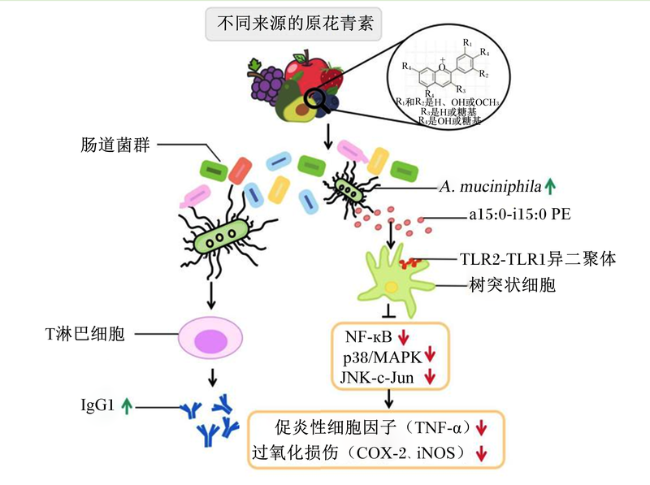
嗜黏蛋白阿克曼菌是不同生理背景下PACs均能够影响的代表性肠道共生菌[26-27,38,42,44,53,61-65](表1)。嗜黏蛋白阿克曼菌是几种为数不多的可以诱发抗原特异性T细胞应答的肠道共生菌,能够促进T细胞分泌免疫球蛋白G(immunoglobulin G,IgG)亚型IgG1,而IgG1有助于维持肠组织免疫稳态,这表明嗜黏蛋白阿克曼菌具有特异性激活肠黏膜免疫细胞的免疫原性[65]。Bae等[66]从嗜黏蛋白阿克曼菌细胞膜中鉴定出一种磷脂——二酰基磷脂酰乙醇胺(a15:0-i15:0 PE),可作为免疫原性分子调节免疫应答;通过光谱分析和构效分析,发现a15:0-i15:0 PE的免疫原性具有高度的结构特异性,其免疫信号传导需要Toll样受体(Toll-like receptor,TLR)形成一种特殊的“桥式”TLR2-TLR1异二聚体,TLR2-TLR1异二聚体能够识a15:0-i15:0 PE并进一步激活免疫应答。该研究还利用体外培养的人单核来源树突状细胞(human monocyte-derived dendritic cell,hMDDC),采用不同剂量(0.1、1和10 μg/mL)a15:0-i15:0 PE预处理不同时间(18或3 h)后再用TLR激动剂(100 ng/mL)处理3 h,以及不同剂量a15:0-i15:0 PE与TLR激动剂共处理21 h,揭示了不同a15:0-i15:0 PE处理模式的免疫激活作用差异;结果发现,a15:0-i15:0 PE在较低剂量(0.1和1 μg/mL)、长时间(18 h)预处理后,能够显著抑制TLR激动剂LPS或Pam3CSK4诱导生成的TNF-α,而这种抑制作用在高剂量(10 μg/mL)、短时间(3 h)预处理以及a15:0-i15:0 PE和TLR激动剂共处理21 h的情况下均不会出现。这表明a15:0-i15:0 PE低剂量较长时间的刺激能“钝化”免疫细胞对其他免疫原的反应。而该处理模式也最接近嗜黏蛋白阿克曼菌在肠道中的共生状态——肠道菌群中存在1%~3%的嗜黏蛋白阿克曼菌[30],并且低剂量长时间作用于肠黏膜免疫系统,提示嗜黏蛋白阿克曼菌在肠道内一定程度的富集和定植有助于机体在遭遇病原菌急性感染时缓解肠道炎症。研究表明,摄食PACs一段时间后能使肠道中定植的嗜黏蛋白阿克曼菌的丰度提高约20%[26],但占肠道总菌的比例仍然较低。因此,PACs富集的嗜黏蛋白阿克曼菌可能通过a15:0-i15:0 PE与TLR结合,抑制炎症相关通路关键转录因子如核因子-кB(NF-кB)[38-39]、p38/丝裂原活化蛋白激酶(MAPK)[67]、c-Jun氨基末端激酶(JNK)-c-Jun[68]等的磷酸化水平,从而降低促炎性细胞因子[如TNF-α)和组织损伤因子的表达[如环氧化酶-2(COX-2)、iNOS](图2)。
表1 PACs对肠道菌群及代谢产物的调节作用(以葡萄和葡萄籽来源PACs为例)

Table 1 Regulatory effects of PACs on intestinal microbiota and their metabolites (a case study on grape and grape seed source PACs)

PACs来源
PACs sources
动物种类
Animal species
研究模型
Research model
每日剂量
Daily dosage
调节作用
Regulatory effects
参考文献
References
葡萄
Grape
C57BL/6J小鼠 HFHS饲粮 1% DM 粪便和盲肠菌群的丰富度降低,多样性不变,厚壁菌门
丰度降低,疣微菌门的阿克曼菌丰度提高
[26]
葡萄籽
Grape seed
C57BL/6J小鼠 HFHS饲粮 300 mg/kg BW
500 mg/kg BW
显著改变肠道菌群结构β多样性,普雷沃菌属、ⅩⅣa梭状
芽孢杆菌属和罗氏菌属等丰度提高
[27,61]
葡萄
Grape
db/db小鼠 肥胖 1% DM 粪便和结肠菌群α多样性降低,阿克曼菌丰度提高,初级胆汁酸
合成相关菌——布劳特氏菌属和梭菌属丰度提高,次级胆汁酸代谢
合成菌——梭菌目、瘤胃球菌科和毛螺菌科丰度降低
[44]
葡萄籽
Grape seed
C57BL/6J小鼠 DSS诱导肠炎 50 mg/kg BW 上调DSS导致的F/B值降低,拟杆菌门、杜氏杆菌属和
韦荣氏球菌属丰度降低,疣微菌门和阿克曼菌属丰度提高
[38,62]
葡萄籽 Grape seed C57BL/6J小鼠 LPS诱导肠炎 250 mg/kg BW 产生羟基类固醇脱氢酶(HSD)的毛螺菌科和瘤胃球菌科
丰度提高,粪便鹅脱氧胆酸(CDCA)和石胆酸(LCA)含量提高
[61]
葡萄籽 Grape seed 断奶仔猪 饲养试验 250 mg/kg DM F/B值降低,阿克曼菌、另枝菌和拟杆菌丰度提高,
粪便丙酸和丁酸含量提高
[42]
葡萄籽 Grape seed 育肥猪 饲养试验 1% DM 毛螺菌、梭菌、乳杆菌和瘤胃球菌丰度提高 [53]
葡萄籽 Grape seed 生长猪 饲养试验 100、150和
200 mg/kg DM
结肠菌群多样性下降,
SCFAs生成菌丰度提高
[63]
葡萄籽 Grape seed 爱拔益加肉鸡 饲养试验 200、
400 mg/kg DM
GSP标志菌群有乳杆菌纲、丙型变形菌纲、β变形菌纲、
ParasutterellaErysipelatoclostridium丰度以及盲肠SCFAs
(丁酸、丙酸和异丁酸)含量提高
[64]
图2 PACs通过肠道嗜黏蛋白阿克曼菌调节免疫应答的作用机制(总结自文献[38-39,65-68])

A. muciniphila:嗜黏蛋白阿克曼菌 Akkermansia muciniphila;a15:0-i15:0 PE:二酰基磷脂酰乙醇胺 1,2-dipalmitoyl-sn-glycero-3-phosphocholine;IgG1:免疫球蛋白G1 immunoglobulin G1;NF-кB:核因子-кB nuclear factor-kappa B;p38/MAPK:p38/丝裂原活化蛋白激酶 p38/mitogen-activated protein kinase;JNK-c-Jun:c-Jun氨基末端激酶-c-Jun c-Jun N-terminal kinase-c-Jun;TNF-α:肿瘤坏死因子-α tumor necrosis factor-α;COX-2:环氧化酶-2 cyclooxygenase-2;iNOS:诱导型一氧化氮合酶 inducible nitric oxide synthase。

Fig.2 Mechanism of PACs regulating intestinal immune responses through Akkermansia muciniphila (summary from the literature [38-39,65-68])

3.2 PACs通过肠道菌群代谢产物调节免疫应答

3.2.1 SCFAs-NOD样受体热蛋白结构域相关蛋白3(NOD-like receptor thermal protein domain associated protein 3,NLRP3)途径
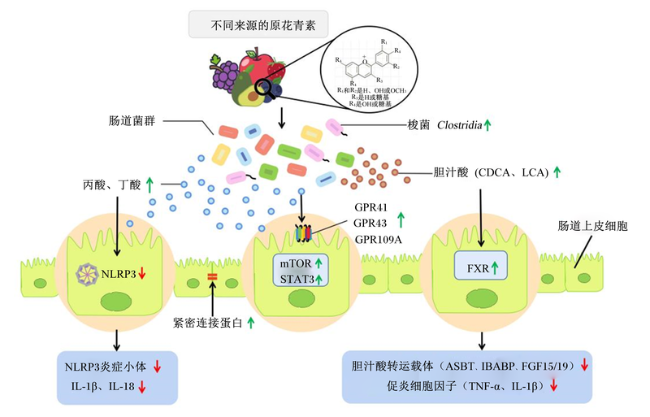
SCFAs可以作为组蛋白去乙酰化酶(histone deacetylases,HDAC)抑制剂,不仅可以抑制HDAC的活性和NLRP3炎症小体的形成,还能缓解由LPS诱导造成的肠道屏障损伤和自噬[69]。NLRP3属于NOD样受体家族,组织损伤释放的损伤相关分子模式(damage-associated molecular patterns,DAMPs)和病原感染释放的病原相关分子模式(pathogen-associated molecular patterns,PAMPs)均能够激活NLRP3,活化接头蛋白ASC及其下游的半胱氨酸天冬氨酸酶-1(Caspase-1),形成NLRP3炎症小体,促进IL-1β和白细胞介素-18(IL-18)成熟与分泌,诱发炎症反应[70-71]。下调NLRP3/Caspase-1通路有助于减轻过氧化损伤,缓解肠道炎症[72]。研究发现,GSP能够促进肠道丙酸的生成[42],抑制NLRP3的激活[38,73],提示其可以通过调节“肠道菌群-SCFAs-NLRP3”途径实现缓解肠道炎症的作用(图3)。
图3 PACs通过肠道菌群代谢产物调节免疫应答的作用机制(总结自文献[38,42,44,62,76-77,80])

CDCA:鹅脱氧胆酸 chenodeoxycholic acid;LCA:石胆酸 lithocholic acid;GPR41:G蛋白偶联受体41 G protein-coupled receptor 41;GPR43:G蛋白偶联受体43 G protein-coupled receptor 43;GPR109A:G蛋白偶联受体109A G protein-coupled receptor 109A;mTOR:哺乳动物雷帕霉素靶蛋白 mammalian target of rapamycin;STAT3:信号转导与转录活化因子3 signal transducer and activator of transcription 3;NLRP3:NOD样受体蛋白3 NOD-like receptor protein 3;FXR:法尼醇X受体 Farnesoid X receptor;IL-1β:白细胞介素-1β interleukin-1β;IL-18:白细胞介素-18 interleukin-18;ASBT:顶端钠离子依赖性胆汁酸转运载体 apical sodium-dependent bile acid transporter;IBABP:回肠胆汁酸结合蛋白 ileal bile acid binding protein;FGF15/19:成纤维生长因子15/19 fibroblast growth factor 15/19;TNF-α:肿瘤坏死因子-α tumor necrosis factor-α。

Fig.3 Mechanism of PACs regulating intestinal immune responses through microbial metabolites (summary from the literature [38,42,44,62,76-77,80])

3.2.2 SCFAs-G蛋白偶联受体(G protein-coupled receptor,GPR)途径

SCFAs还识别并结合肠道上皮细胞(intestinal epithelial cells,IEC)表面的GPR41、GPR43和GPR109A[74-75],调节IEC免疫应答。Zhao等[76]研究揭示,与野生型小鼠相比,GPR43基因缺失型小鼠IEC中Reg3γ和β防御素基因表达水平较低,而在野生型小鼠饮水中添加300 mmol/L的丁酸钠能够上调肠道抗菌肽Reg3γ和β防御素基因的表达,表明丁酸钠能通过GPR43促进IEC中抗菌肽Reg3γ和β防御素的生成;进一步通过体外培养小鼠IEC发现,丁酸钠能够提高哺乳动物雷帕霉素靶蛋白(mammalian target of rapamycin,mTOR)和信号传导与转录激活因子3(signal transducer and activator of transcription 3,STAT3)蛋白磷酸化的水平,上调Reg3γ和β防御素的表达,而敲除mTORSTAT3可削弱SCFAs对抗菌肽基因表达的诱导作用。以上结果说明,GPR43能通过进一步激活mTOR和STAT3信号途径上调IEC Reg3γ和β防御素的表达,调控肠道天然免疫应答。研究发现,PACs对GPR的表达具有促进作用,GSP有助于促进仔猪回肠与结肠丙酸和丁酸的生成,并上调肠道中GPR41的表达[77],这说明PACs也可能通过“SCFAs-GPR”途径影响肠黏膜生理功能(图3)。

3.2.3 胆汁酸-FXR途径

FXR是在肠道与肝脏中高表达的胆汁酸受体,FXR也作为核转录因子,被胆汁酸中的CA、鹅脱氧胆酸(chenodeoxycholic acid,CDCA)、脱氧胆酸(deoxycholic acid,DCA)和石胆酸(lithocholic acid,LCA)等激活,调控肝脏和肠道的脂质代谢和免疫应答[78-79]。研究发现,GSP基于FXR途径下调了肝脏脂质合成代谢关键基因类固醇反应元件结合蛋白1(steroid response element binding protein 1,SREBP1)和脂肪酸结合蛋白6(fatty acid binding protein 6,FABP6)表达,缓解肥胖或糖尿病引起的高血脂症和脂肪肝等症状[44,80]。虽然GSP不能直接作为配体激活FXR,但能使FXR天然配体CDCA的激活效应提高2倍以上[80]。GSP也能基于FXR下调回肠和Caco-2细胞中FXR靶基因顶端钠离子依赖性胆汁酸转运载体(apical sodium-dependent bile acid transporter,ASBT)、回肠胆汁酸结合蛋白(ileal bile acid binding protein,IBABP)和成纤维生长因子15/19(fibroblast growth factor 15/19,FGF15/19)的表达,抑制回肠对胆汁酸吸收与转运,调节胆汁酸稳态[44,81]
肠道菌群是PACs基于FXR调节肠免疫应答的关键环节。PACs能上调肠道胆汁酸代谢菌梭菌(Clostridia)的相对丰度[44],而梭菌参与合成DCA和LCA[82],改变肠道中胆汁酸池含量与组成,影响肠道FXR的活性。Wu等[62]研究发现,GSP通过塑造肠道菌群提高了小鼠肠道羟基类固醇脱氢酶(hydroxysteroid dehydrogenase,HSD)生成菌的丰度和次级胆汁酸CDCA和LCA的含量,并激活了回肠FXR及其下游靶基因如FGF15、ASBT和小异源二聚体伴侣受体(small heterodimer partners,SHP)的表达,抑制TNF-α和IL-1β分泌;并且通过抗生素处理、胆汁酸CDCA和LCA单独处理或肠道FXR特异性抑制剂处理发现,GSP对肠道菌群和胆汁酸生成的塑造促进了FXR活化,减轻了LPS诱导的肠炎,表明PACs能通过“肠道菌群-胆汁酸-FXR”途径调节免疫应答(图3)。

4 小结与展望

综上所述,PACs一方面通过其抑菌性正向塑造肠道菌群,如增加嗜黏蛋白阿克曼菌等以改善肠道代谢产物(如SCFAs和胆汁酸);另一方面肠道菌群利用PACs作为代谢底物进行生物转化形成小分子代谢物(如苯基-γ-戊内酯和苯基戊酸),二者都有益于促进肠道免疫稳态,促进肠道健康。PACs以其来源丰富、生物活性优良等优点,在养殖生产中也具有良好的应用效果与发展前景[83],有助于改善仔猪和肉鸡的生长性能、增强抗氧化能力和肠道免疫功能[64,84-86];PACs添加入精液稀释液中能改善精子抗氧化和运动特性,从而提高种公畜精液的质量[87-89]
未来可从3个方面继续开展研究探索:1)目前研究主要集中于葡萄和葡萄籽来源的PACs,而不同来源的PACs存在含量、组成、聚合度以及主要有效成分等的差异。需要针对性地分析PACs的含量和有效成分,标准化提取工艺参数,保证PACs产品效用的稳定性,并针对不同畜种开展最适添加种类和剂量的研究。2)由于畜禽肠道微生物菌群结构与组成的存在较大差异,PACs经过肠道菌群生成的代谢产物也存在差异,通过代谢组学技术研究PACs代谢物在动物体内的吸收、代谢动力学以及PACs的代谢表型,揭示PACs及其代谢物调节动物肠道健康的免疫学机制是重要的研究方向。3)PACs通过畜禽肠道菌群调节免疫应答作用多为相关性研究,且作用机制趋于多靶点,今后的研究中有必要采用FMT或抗生素处理等模型,揭示畜禽肠道菌群与免疫应答之间的因果关系和作用机制。
[1]
RAUF A, IMRAN M, ABU-IZNEID T, et al. Proanthocyanidins:a comprehensive review[J]. Biomedicine & Pharmacotherapy, 2019, 116:108999.

[2]
UNUSAN N. Proanthocyanidins in grape seeds:an updated review of their health benefits and potential uses in the food industry[J]. Journal of Functional Foods, 2020, 67:103861.

[3]
GONZÁLEZ-QUILEN C, RODRÍGUEZ-GALLEGO E, BELTRÁN-DEBÓN R, et al. Health-promoting properties of proanthocyanidins for intestinal dysfunction[J]. Nutrients, 2020, 12(1):130.

DOI

[4]
ANDERSEN-CIVIL A I S, ARORA P, WILLIAMS A R. Regulation of enteric infection and immunity by dietary proanthocyanidins[J]. Frontiers in Immunology, 2021, 12:637603.

[5]
NEVEU V, PEREZ-JIMÉNEZ J, VOS F, et al. Phenol-explorer:an online comprehensive database on polyphenol contents in foods[J]. Database, 2010, 2010:bap024.

[6]
RUE E A, RUSH M D, VAN BREEMEN R B. Procyanidins:a comprehensive review encompassing structure elucidation via mass spectrometry[J]. Phytochemistry Reviews, 2018, 17(1):1-16.

DOI

[7]
SMERIGLIO A, BARRECA D, BELLOCCO E, et al. Proanthocyanidins and hydrolysable tannins:occurrence,dietary intake and pharmacological effects[J]. British Journal of Pharmacology, 2017, 174(11):1244-1262.

DOI

[8]
ZHOU P Y, ZHANG L M, LI W, et al. In vitro evaluation of the anti-digestion and antioxidant effects of grape seed procyanidins according to their degrees of polymerization[J]. Journal of Functional Foods, 2018, 49:85-95.

DOI

[9]
文魁山. 葡萄籽原花青素高聚体的解聚方法与条件优化的研究[D].硕士学位论文. 杭州: 浙江大学, 2018.

WEN K S. Study on the depolymerization and optimization of grape seed polymeric proanthocyanidins[D].Master's Thesis. Hangzhou: Zhejiang University, 2018. (in Chinese)

[10]
PALADE L M, POPA M E. Polyphenol fingerprinting approaches in wine traceability and authenticity:assessment and implications of red wines[J]. Beverages, 2018, 4(4):75.

DOI

[11]
YANG H X, TUO X X, WANG L B, et al. Bioactive procyanidins from dietary sources:the relationship between bioactivity and polymerization degree[J]. Trends in Food Science & Technology, 2021, 111:114-127.

[12]
ZHANG Y, ZHOU X Z, TAO W Y, et al. Antioxidant and antiproliferative activities of proanthocyanidins from Chinese bayberry (Myrica rubra Sieb. et Zucc.) leaves[J]. Journal of Functional Foods, 2016, 27:645-654.

DOI

[13]
VALENCIA-HERNANDEZ L J, WONG-PAZ J E, ASCACIO-VALDÉS J A, et al. Procyanidins:from agro-industrial waste to food as bioactive molecules[J]. Foods, 2021, 10(12):3152.

DOI

[14]
TRAVAGLIA F, BORDIGA M, LOCATELLI M, et al. Polymeric proanthocyanidins in skins and seeds of 37 Vitis vinifera L. cultivars:a methodological comparative study[J]. Journal of Food Science, 2011, 76(5):C742-C749.

DOI

[15]
MAKAREWICZ M, DROŻDŻ I, TARKO T, et al. The interactions between polyphenols and microorganisms,especially gut microbiota[J]. Antioxidants, 2021, 10(2):188.

DOI

[16]
LI X C, HE C F, SONG L Y, et al. Antimicrobial activity and mechanism of Larch bark procyanidins against Staphylococcus aureus[J]. Acta Biochimica et Biophysica Sinica, 2017, 49(12):1058-1066.

DOI

[17]
TANG C, XIE B J, SUN Z D. Antibacterial activity and mechanism of B-type oligomeric procyanidins from lotus seedpod on enterotoxigenic Escherichia coli[J]. Journal of Functional Foods, 2017, 38(Part A):454-463.

DOI

[18]
ALEJO-ARMIJO A, GLIBOTA N, FRÍAS M P, et al. Antimicrobial and antibiofilm activities of procyanidins extracted from laurel wood against a selection of foodborne microorganisms[J]. International Journal of Food Science & Technology, 2017, 52(3):679-686.

[19]
OU K Q, GU L W. Absorption and metabolism of proanthocyanidins[J]. Journal of Functional Foods, 2014, 7:43-53.

DOI

[20]
TAO W Y, ZHANG Y, SHEN X M, et al. Rethinking the mechanism of the health benefits of proanthocyanidins:absorption,metabolism,and interaction with gut microbiota[J]. Comprehensive Reviews in Food Science and Food Safety, 2019, 18(4):971-985.

DOI

[21]
CHEDEA V S, PALADE L M, MARIN D E, et al. Intestinal absorption and antioxidant activity of grape pomace polyphenols[J]. Nutrients, 2018, 10(5):588.

DOI

[22]
TURNBAUGH P J, LEY R E, MAHOWALD M A, et al. An obesity-associated gut microbiome with increased capacity for energy harvest[J]. Nature, 2006, 444(7122):1027-1031.

DOI

[23]
ANHÊ F F, ROY D, PILON G, et al. A polyphenol-rich cranberry extract protects from diet-induced obesity,insulin resistance and intestinal inflammation in association with increased Akkermansia spp. population in the gut microbiota of mice[J]. Gut, 2015, 64(6):872-883.

DOI

[24]
RODRÍGUEZ-DAZA M C, ROQUIM M, DUDONNÉ S, et al. Berry polyphenols and fibers modulate distinct microbial metabolic functions and gut microbiota enterotype-like clustering in obese mice[J]. Frontiers in Microbiology, 2020, 11:2032.

DOI

[25]
MORISSETTE A, KROPP C, SONGPADITH J P, et al. Blueberry proanthocyanidins and anthocyanins improve metabolic health through a gut microbiota-dependent mechanism in diet-induced obese mice[J]. American Journal of Physiology:Endocrinology and Metabolism, 2020, 318(6):E965-E980.

DOI

[26]
ZHANG L, CARMODY R N, KALARIYA H M, et al. Grape proanthocyanidin-induced intestinal bloom of Akkermansia muciniphila is dependent on its baseline abundance and precedes activation of host genes related to metabolic health[J]. The Journal of Nutritional Biochemistry, 2018, 56:142-151.

DOI

[27]
LIU W, ZHAO S Q, WANG J Q, et al. Grape seed proanthocyanidin extract ameliorates inflammation and adiposity by modulating gut microbiota in high-fat diet mice[J]. Molecular Nutrition & Food Research, 2017, 61(9):1601082.

[28]
DU H P, WANG Q, LI T, et al. Grape seed proanthocyanidins reduced the overweight of C57BL/6J mice through modulating adipose thermogenesis and gut microbiota[J]. Food & Function, 2021, 12(18):8467-8477.

[29]
YANG S Y, ZHANG Y Y, LI W, et al. Gut microbiota composition affects procyanidin a2-attenuated atherosclerosis in ApoE-/- mice by modulating the bioavailability of its microbial metabolites[J]. Journal of Agricultural and Food Chemistry, 2021, 69(25):6989-6999.

DOI

[30]
DE VOS W M. Microbe profile:Akkermansia muciniphila:a conserved intestinal symbiont that acts as the gatekeeper of our mucosa[J]. Microbiology, 2017, 163(5):646-648.

DOI

[31]
SUN X L, WEN K, XU Z Z, et al. Effect of loureirin B on Crohn's disease rat model induced by TNBS via IL-6/STAT3/NF-κB signaling pathway[J]. Chinese Medicine, 2020, 15:2.

DOI PMID

[32]
DEPOMMIER C, EVERARD A, DRUART C, et al. Supplementation with Akkermansia muciniphila in overweight and obese human volunteers:a proof-of-concept exploratory study[J]. Nature Medicine, 2019, 25(7):1096-1103.

DOI

[33]
CANI P D, DEPOMMIER C, DERRIEN M, et al. Akkermansia muciniphila:paradigm for next-generation beneficial microorganisms[J]. Nature Reviews Gastroenterology & Hepatology, 2022, 19(10):625-637.

[34]
GONZÁLEZ-QUILEN C, GIL-CARDOSO K, GINÉS I, et al. Grape-seed proanthocyanidins are able to reverse intestinal dysfunction and metabolic endotoxemia induced by a cafeteria diet in Wistar rats[J]. Nutrients, 2019, 11(5):979.

DOI

[35]
GIL-CARDOSO K, GINÉS I, PINENT M, et al. The co-administration of proanthocyanidins and an obesogenic diet prevents the increase in intestinal permeability and metabolic endotoxemia derived to the diet[J]. The Journal of Nutritional Biochemistry, 2018, 62:35-42.

DOI

[36]
FORGIE A J, GAO Y H, JU T T, et al. Pea polyphenolics and hydrolysis processing alter microbial community structure and early pathogen colonization in mice[J]. The Journal of Nutritional Biochemistry, 2019, 67:101-110.

DOI

[37]
GEORGE N S, CHEUNG L, LUTHRIA D L, et al. Pomegranate peel extract alters the microbiome in mice and dysbiosis caused by Citrobacter rodentium infection[J]. Food Science & Nutrition, 2019, 7(8):2565-2576.

[38]
SHENG K L, ZHANG G H, SUN M, et al. Grape seed proanthocyanidin extract ameliorates dextran sulfate sodium-induced colitis through intestinal barrier improvement,oxidative stress reduction,and inflammatory cytokines and gut microbiota modulation[J]. Food & Function, 2020, 11(9):7817-7829.

[39]
HAN Y H, SONG M Y, GU M, et al. Dietary intake of whole strawberry inhibited colonic inflammation in dextran-sulfate-sodium-treated mice via restoring immune homeostasis and alleviating gut microbiota dysbiosis[J]. Journal of Agricultural and Food Chemistry, 2019, 67(33):9168-9177.

DOI PMID

[40]
WU Z H, HUANG S M, LI T T, et al. Gut microbiota from green tea polyphenol-dosed mice improves intestinal epithelial homeostasis and ameliorates experimental colitis[J]. Microbiome, 2021, 9(1):184.

DOI PMID

[41]
CONG J, ZHOU P, ZHANG R Y. Intestinal microbiota-derived short chain fatty acids in host health and disease[J]. Nutrients, 2022, 14(9):1977.

DOI

[42]
WU Y, MA N, SONG P X, et al. Grape seed proanthocyanidin affects lipid metabolism via changing gut microflora and enhancing propionate production in weaned pigs[J]. The Journal of Nutrition, 2019, 149(9):1523-1532.

DOI

[43]
HOFMANN A F. The enterohepatic circulation of bile acids in mammals:form and functions[J]. Frontiers in Bioscience (Landmark Edition), 2009, 14(7):2584-2598.

[44]
TVETER K M, VILLA-RODRIGUEZ J A, CABALES A J, et al. Polyphenol-induced improvements in glucose metabolism are associated with bile acid signaling to intestinal farnesoid X receptor[J]. BMJ Open Diabetes Research and Care, 2020, 8(1):e001386.

[45]
CIRES M J, NAVARRETE P, PASTENE E, et al. Effect of a proanthocyanidin-rich polyphenol extract from avocado on the production of amino acid-derived bacterial metabolites and the microbiota composition in rats fed a high-protein diet[J]. Food & Function, 2019, 10(7):4022-4035.

[46]
LI J J, ZHANG L, WU T, et al. Indole-3-propionic acid improved the intestinal barrier by enhancing epithelial barrier and mucus barrier[J]. Journal of Agricultural and Food Chemistry, 2021, 69(5):1487-1495.

DOI PMID

[47]
ZHANG L, WANG Y J, LI D X, et al. The absorption,distribution,metabolism and excretion of procyanidins[J]. Food & Function, 2016, 7(3):1273-1281.

[48]
MENA P, BRESCIANI L, BRINDANI N, et al. Phenyl-γ-valerolactones and phenylvaleric acids,the main colonic metabolites of flavan-3-ols:synthesis,analysis,bioavailability,and bioactivity[J]. Natural Product Reports, 2019, 36(5):714-752.

DOI

[49]
KOUTSOS A, ULASZEWSKA M M, TROŠT K, et al. Impact of proanthocyanidin-rich apple intake on gut microbiota composition and polyphenol metabolomic activity in healthy mildly hypercholesterolemic subjects[J]. Proceedings of the Nutrition Society, 2020, 79(OCE2):E488.

DOI

[50]
APPELDOORN M M, VINCKEN J P, AURA A M, et al. Procyanidin dimers are metabolized by human microbiota with 2-(3,4-dihydroxyphenyl)acetic acid and 5-(3,4-dihydroxyphenyl)-γ-valerolactone as the major metabolites[J]. Journal of Agricultural and Food Chemistry, 2009, 57(3):1084-1092.

DOI

[51]
ANESI A, MENA P, BUB A, et al. Quantification of urinary Phenyl-γ-valerolactones and related valeric acids in human urine on consumption of apples[J]. Metabolites, 2019, 9(11):254.

DOI

[52]
MARGALEF M, PONS Z, BRAVO F I, et al. Tissue distribution of rat flavanol metabolites at different doses[J]. The Journal of Nutritional Biochemistry, 2015, 26(10):987-995.

DOI

[53]
CHOY Y Y, QUIFER-RADA P, HOLSTEGE D M, et al. Phenolic metabolites and substantial microbiome changes in pig feces by ingesting grape seed proanthocyanidins[J]. Food & Function, 2014, 5(9):2298-2308.

[54]
SCALBERT A, WILLIAMSON G. Dietary intake and bioavailability of polyphenols[J]. The Journal of Nutrition, 2000, 130(8):2073S-2085S.

DOI

[55]
GONTHIER M P, DONOVAN J L, TEXIER O, et al. Metabolism of dietary procyanidins in rats[J]. Free Radical Biology and Medicine, 2003, 35(8):837-844.

DOI

[56]
杨光美, 李桐云, 张玉莹, 等. 原花青素A2肠道菌群代谢物及其抗氧化活性[J]. 食品科学, 2018, 39(21):155-159.

YANG G M, LI T Y, ZHANG Y Y, et al. Analysis of in vitro intestinal microbial metabolites of procyanidin A2 and evaluation of their antioxidant activity[J]. Food Science, 2018, 39(21):155-159. (in Chinese)

[57]
RUPASINGHE H P V, PARMAR I, NEIR S V. Biotransformation of cranberry proanthocyanidins to probiotic metabolites by Lactobacillus rhamnosus enhances their anticancer activity in HepG2 cells in vitro[J]. Oxidative Medicine and Cellular Longevity, 2019, 2019:4750795.

[58]
MELE L, CAROBBIO S, BRINDANI N, et al. Phenyl-γ-valerolactones,flavan-3-ol colonic metabolites,protect brown adipocytes from oxidative stress without affecting their differentiation or function[J]. Molecular Nutrition & Food Research, 2017, 61(9):1700074.

[59]
LEE Y, YANG H E, HUR G, et al. 5-(3',4'-dihydroxyphenyl)-γ-valerolactone,a metabolite of procyanidins in cacao,suppresses MDI-induced adipogenesis by regulating cell cycle progression through direct inhibition of CDK2/cyclin O[J]. Food & Function, 2019, 10(5):2958-2969.

[60]
MENA P, DE LLANO D G, BRINDANI N, et al. 5-(3',4'-dihydroxyphenyl)-γ-valerolactone and its sulphate conjugates,representative circulating metabolites of flavan-3-ols,exhibit anti-adhesive activity against uropathogenic Escherichia coli in bladder epithelial cells[J]. Journal of Functional Foods, 2017, 29:275-280.

DOI

[61]
GINÉS I, GIL-CARDOSO K, TERRA X, et al. Grape seed proanthocyanidins target the enteroendocrine system in cafeteria-diet-fed rats[J]. Molecular Nutrition & Food Research, 2019, 63(11):e1800912.

[62]
WU Y, MO R X, ZHANG M R, et al. Grape Seed proanthocyanidin alleviates intestinal inflammation through gut microbiota-bile acid crosstalk in mice[J]. Frontiers in Nutrition, 2021, 8:786682.

[63]
孙晓江, 闫慧诗, 张俊兰, 等. 葡萄籽原花青素对生长猪生长性能、结肠形态和微生物的影响[J]. 中国畜牧杂志, 2020, 56(12):139-144,152.

SUN X J, YAN H S, ZHANG J L, et al. Effects of grape seed procyanidins on growth performance,colon morphology and microorganisms in growing pigs[J]. Chinese Journal of Animal Science, 2020, 56(12):139-144,152. (in Chinese)

[64]
CAO G T, ZENG X F, LIU J S, et al. Change of serum metabolome and cecal microflora in broiler chickens supplemented with grape seed extracts[J]. Frontiers in Immunology, 2020, 11:610934.

[65]
ANSALDO E, SLAYDEN L C, CHING K L, et al. Akkermansia muciniphila induces intestinal adaptive immune responses during homeostasis[J]. Science, 2019, 364(6446):1179-1184.

DOI

[66]
BAE M, CASSILLY C D, LIU X X, et al. Akkermansia muciniphila phospholipid induces homeostatic immune responses[J]. Nature, 2022, 608(7921):168-173.

DOI

[67]
KOUDOUFIO M, FELDMAN F, AHMARANI L, et al. Intestinal protection by proanthocyanidins involves anti-oxidative and anti-inflammatory actions in association with an improvement of insulin sensitivity,lipid and glucose homeostasis[J]. Scientific Reports, 2021, 11(1):3878.

DOI

[68]
OGURA K, OGURA M, SHOJI T, et al. Oral administration of apple procyanidins ameliorates insulin resistance via suppression of pro-inflammatory cytokine expression in liver of diabetic ob/ob mice[J]. Journal of Agricultural and Food Chemistry, 2016, 64(46):8857-8865.

DOI

[69]
FENG Y H, WANG Y, WANG P, et al. Short-chain fatty acids manifest stimulative and protective effects on intestinal barrier function through the inhibition of NLRP3 inflammasome and autophagy[J]. Cellular Physiology and Biochemistry, 2018, 49(1):190-205.

DOI PMID

[70]
SONG-ZHAO G X, SRINIVASAN N, POTT J, et al. Nlrp3 activation in the intestinal epithelium protects against a mucosal pathogen[J]. Mucosal Immunology, 2014, 7(4):763-774.

DOI

[71]
MUÑOZ-PLANILLO R, KUFFA P, MARTÍNEZ-COLÓN G, et al. K+ efflux is the common trigger of NLRP3 inflammasome activation by bacterial toxins and particulate matter[J]. Immunity, 2013, 38(6):1142-1153.

DOI

[72]
CHEN J, LI L H, ZHOU Y, et al. Gambogic acid ameliorates high glucose-and palmitic acid-induced inflammatory response in ARPE-19 cells via activating Nrf2 signaling pathway:ex vivo[J]. Cell Stress and Chaperones, 2021, 26(2):367-375.

DOI

[73]
YIN W B, LI B Y, LI X L, et al. Anti-inflammatory effects of grape seed procyanidin B2 on a diabetic pancreas[J]. Food & Function, 2015, 6(9):3065-3071.

[74]
KIM M H, KANG S G, PARK J H, et al. Short-chain fatty acids activate GPR41 and GPR43 on intestinal epithelial cells to promote inflammatory responses in mice[J]. Gastroenterology, 2013, 145(2):396-406.e1-e10.

DOI PMID

[75]
MACIA L, TAN J, VIEIRA A T, et al. Metabolite-sensing receptors GPR43 and GPR109A facilitate dietary fibre-induced gut homeostasis through regulation of the inflammasome[J]. Nature Communications, 2015, 6(1):6734.

DOI

[76]
ZHAO Y, CHEN F D, WU W, et al. GPR43 mediates microbiota metabolite SCFA regulation of antimicrobial peptide expression in intestinal epithelial cells via activation of mTOR and STAT3[J]. Mucosal Immunology, 2018, 11(3):752-762.

DOI PMID

[77]
HAN M, SONG P X, HUANG C, et al. Dietary grape seed proanthocyanidins (GSPs) improve weaned intestinal microbiota and mucosal barrier using a piglet model[J]. Oncotarget, 2016, 7(49):80313-80326.

DOI PMID

[78]
SUN L L, CAI J, GONZALEZ F J. The role of Farnesoid X receptor in metabolic diseases,and gastrointestinal and liver cancer[J]. Nature Reviews Gastroenterology & Hepatology, 2021, 18(5):335-347.

[79]
XIANG J W, ZHANG Z Y, XIE H Y, et al. Effect of different bile acids on the intestine through enterohepatic circulation based on FXR[J]. Gut Microbes, 2021, 13(1):1949095.

[80]
DEL BAS J M, RICKETTS M L, VAQUÉ M, et al. Dietary procyanidins enhance transcriptional activity of bile acid-activated FXR in vitro and reduce triglyceridemia in vivo in a FXR-dependent manner[J]. Molecular Nutrition & Food Research, 2009, 53(7):805-814.

[81]
HEIDKER R M, CAIOZZI G C, RICKETTS M L. Dietary procyanidins selectively modulate intestinal farnesoid X receptor-regulated gene expression to alter enterohepatic bile acid recirculation:elucidation of a novel mechanism to reduce triglyceridemia[J]. Molecular Nutrition & Food Research, 2016, 60(4):727-736.

[82]
TIAN Y, GUI W, KOO I, et al. The microbiome modulating activity of bile acids[J]. Gut Microbes, 2020, 11(4):979-996.

DOI PMID

[83]
MAHFUZ S, SHANG Q H, PIAO X S. Phenolic compounds as natural feed additives in poultry and swine diets:a review[J]. Journal of Animal Science and Biotechnology, 2021, 12(1):48.

DOI

[84]
FANG L Y, LI M Y, ZHAO L, et al. Dietary grape seed procyanidins suppressed weaning stress by improving antioxidant enzyme activity and mRNA expression in weanling piglets[J]. Journal of Animal Physiology and Animal Nutrition, 2020, 104(4):1178-1185.

DOI PMID

[85]
HAO R R, LI Q H, ZHAO J Q, et al. Effects of grape seed procyanidins on growth performance,immune function and antioxidant capacity in weaned piglets[J]. Livestock Science, 2015, 178:237-242.

DOI

[86]
PARK I J, CHA S Y, KANG M, et al. Effect of proanthocyanidin-rich extract from Pinus radiata bark on immune response of specific-pathogen-free White Leghorn chickens[J]. Poultry Science, 2011, 90(5):977-982.

DOI

[87]
LI Q, SHAOYONG W K, LI Y, et al. Effects of oligomeric proanthocyanidins on quality of boar semen during liquid preservation at 17 ℃[J]. Animal Reproduction Science, 2018, 198:47-56.

DOI

[88]
WEN F, LI Y, FENG T Y, et al. Grape seed procyanidin extract (GSPE) improves goat sperm quality when preserved at 4 ℃[J]. Animals, 2019, 9(10):810.

DOI

[89]
WANG H T, LU P, LI Z Q, et al. Oligomeric proanthocyanidins and bamboo leaf flavonoids improve the quality of bull semen cryopreservation[J]. Molecules, 2022, 27(3):1144.

DOI

文章导航

/