综述

辣椒副产物在动物生产中应用的研究进展

  • 李进龙 , 1, 2 ,
  • 郭同军 , 1, * ,
  • 张志军 1 ,
  • 李功安 3
展开
  • 1 新疆畜牧科学院饲料研究所,乌鲁木齐 830011
  • 2 新疆农业大学动物科学学院,乌鲁木齐 830052
  • 3 新疆泰合农牧科技有限公司,巴楚 843800
*郭同军,研究员,硕士生导师,E-mail:

李进龙(1999—),男,甘肃武威人,硕士研究生,从事动物营养与饲料科学研究。E-mail:

Copy editor: 菅景颖

收稿日期: 2022-11-16

  网络出版日期: 2023-05-11

基金资助

喀什地区科技计划项目(2022KSKJ001)

新疆维吾尔自治区多浪羊品种选育推广技术体系(2022DLY-22)

Research Progress of Pepper By-Products Application in Animal Production

  • LI Jinlong , 1, 2 ,
  • GUO Tongjun , 1, * ,
  • ZHANG Zhijun 1 ,
  • LI Gongan 3
Expand
  • 1 Institute of Feed Research, Xinjiang Academy of Animal Science, Urumqi 830011, China
  • 2 College of Animal Science, Xinjiang Agricultural University, Urumqi 830052, China
  • 3 Xinjiang Taihe Agriculture and Animal Husbandry Technology Co., Ltd., Bachu 843800, China
*professor, E-mail:

Received date: 2022-11-16

  Online published: 2023-05-11

摘要

辣椒副产物主要由辣椒秸秆及辣椒粕组成,储量可观,可作为畜牧养殖饲料加以利用。本文就辣椒副产物的营养组成、主要活性物质以及其在动物生产中的饲料化应用情况进行综述,以期为辣椒副产物在畜禽饲粮中合理且安全的应用提供理论参考。

本文引用格式

李进龙 , 郭同军 , 张志军 , 李功安 . 辣椒副产物在动物生产中应用的研究进展[J]. 动物营养学报, 2023 , 35(5) : 2836 -2846 . DOI: 10.12418/CJAN2023.266

Abstract

The by-products of pepper are mainly composed of pepper straw and pepper meal, and the reserves are considerable, which can be used for livestock breeding feed. In this paper, the nutritional composition, the main active substances of pepper by-products and their feed-based applications in animal production were reviewed, in order to provide a theoretical reference for the reasonable and safe application of pepper by-products in diets of livestock and poultry.

随着我国畜牧业发展水平的快速提升,饲料供需矛盾日益突出,开发利用非常规饲料是缓解饲草料短缺的有效手段之一[1]。我国年产辣椒秸秆724.68万t,新疆年产辣椒秸秆142.36万t、辣椒粕245.42万t。因此,辣椒副产物的饲料化应用对畜牧业养殖有重要的支撑意义。辣椒副产物中营养物质含量较高,其中辣椒秸秆的粗纤维(CF)含量为28.55%~33.82%、粗蛋白质(CP)含量为14.79%~16.72%[2],辣椒粕的CP含量为15.75%[3]。此外,辣椒副产物中还含有辣椒素等生物活性物质,具有抗菌、消炎、抗氧化等作用[4-7]。辣椒粕主要为辣椒经过萃取色素或辣椒素后所得的副产物[8]。田宗祥等[9]研究表明,在生长育肥猪饲粮中添加2.0%~2.5%的辣椒粕能够提高其日增重,降低料重比,有助于提高生长育肥猪的生长性能及饲料利用率。辣椒秸秆主要由辣椒果实采摘后剩余的副产物组成,包括根、茎、叶及少量残次果实[10]。陆相龙[11]在蛋鸡饲粮中添加3%或5%的辣椒秸秆,发现能够提高蛋鸡对饲粮中粗灰分(Ash)的吸收,并且能够提高蛋壳强度、蛋重及蛋黄颜色,有助于改善蛋品质。辣椒粉是辣椒经乙醇提取辣椒油或辣椒精后的辣椒残渣[12]。Oliveira等[13]在鹌鹑饲粮中添加0.06%的辣椒粉提取物,发现能够加深其蛋黄颜色。辣椒碱和辣椒油是辣椒果实经过有机溶剂浸提所得的产物[14-15]。在猪和鸡的饲粮中分别添加75~80 mg/kg和50~200 mg/kg的辣椒碱,有助于提高生产性能和改善健康状况[16-18]。当前,有关辣椒副产物饲料化利用的研究尚不系统,其在畜禽饲粮中的适宜添加量、生物效能、是否能作为功能性饲料调控生产功能性畜产品和如何通过适当加工提高其饲料化利用率均未得到充分研究。本文旨在通过对辣椒副产物的营养成分及其在畜禽饲粮中的应用进行综述,以期为辣椒副产物在畜禽饲粮中安全高效的应用,以及辣椒秸秆和辣椒粕的饲料资源开发利用提供理论参考。

1 辣椒副产物的储量与来源

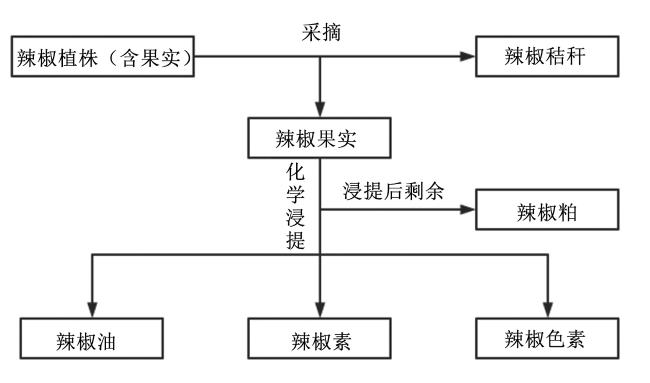
我国辣椒品种分为工业辣椒和蔬菜辣椒,其副产物具体产出流程见图1。据联合国粮食及农业组织统计,2021年我国辣椒种植面积达82.7万hm2,辣椒年生产量达2 013万t,居全球首位。新疆2020年辣椒种植面积达9.627万hm2,辣椒年产量达395.44万t,其中蔬菜辣椒播种面积达2.218万hm2,其年产量为88.67万t,工业辣椒播种面积达7.409万hm2,其年产量为306.77万t[19]。蔬菜辣椒的副产物主要为辣椒秸秆,工业辣椒的副产物主要为辣椒秸秆和辣椒粕。按生产1 t辣椒产生360 kg辣椒秸秆[20],1 t工业辣椒产生800 kg辣椒粕计算[3],我国年产辣椒秸秆724.68万t,新疆年产辣椒秸秆142.36万t,辣椒粕245.42万t,其中,新疆地区蔬菜辣椒产出副产物为31.92万t,工业辣椒产出副产物为355.86万t。由此可见,辣椒副产物作为饲料利用储量可观。
图1 辣椒副产物生产流程图

Fig.1 Flow chart of pepper by-product production

2 辣椒副产物的营养价值

辣椒副产物的整体营养价值优于小麦秸秆与玉米秸秆。辣椒秸秆的CP含量为11.16%,粗脂肪(EE)含量为1.51%,钙(Ca)含量为0.8%,磷(P)含量为0.08%[21];辣椒粕的CP含量为15.86%,EE含量为0.36%,Ca含量为0.35%,P含量为0.33%[22]。基于绵羊及奶牛饲草分级指数(GI)(表1)对比分析辣椒副产物与苜蓿、小麦秸秆和玉米秸秆营养成分含量(表2)可知,辣椒粕在绵羊饲草中为1级粗饲料,在奶牛饲草中为特级粗饲料,辣椒粉均为1级粗饲料,辣椒秸秆、辣椒茎秆及苜蓿干草(成熟期)均为4级粗饲料,玉米秸秆及小麦秸秆均为5级粗饲料。辣椒秸秆和辣椒茎秆的GI高于小麦秸秆和玉米秸秆,均接近于成熟期苜蓿干草,辣椒粕及辣椒粉的GI高于小麦秸秆、玉米秸秆及成熟期苜蓿干草。因此,从营养成分的角度出发,辣椒副产物在畜禽饲粮中有良好的利用潜力。辣椒秸秆在未进行加工处理前,适口性差,其主要原因是辣椒秸秆中含有辣椒素[2],会对哺乳动物消化道造成刺激,此外,未经加工处理的辣椒秸秆消化率低,这是因为辣椒秸秆含有较高的木质素,其与纤维素形成了酯键结构而使纤维素不能被消化道微生物附着,使微生物酶无法与纤维素的接触,从而导致纤维素消化率降低[23-24]
表1 绵羊及奶牛饲草GI分级

Table 1 Feed grass GI classification for sheep and dairy cows[25]

等级
Grades
绵羊GI
Sheep
GI
奶牛GI
Dairy cow
GI
特级 Special grade >8.08 >53.68
1级 Grade 1 5.29~8.08 33.51~53.68
2级 Grade 2 3.12~4.75 19.20~29.29
3级 Grade 3 1.79~2.76 11.13~16.44
4级 Grade 4 1.03~1.55 6.28~10.67
5级 Grade 5 <1.03 <6.28
表2 辣椒副产物、苜蓿及秸秆营养价值

Table 2 Nutritional value of pepper by-products, alfalfa and straw

类型
Types
干物质
DM/%
粗蛋
白质
CP/%
DM
粗脂肪
EE/%
DM
中性洗
涤纤维
NDF/%
DM
酸性洗
涤纤维
ADF/%
DM
木质素
ADL/%
DM

Ca/%
DM

P/%
DM
肉牛综合
净能
NEmf of
beef
cattle/
(MJ/kg
DM)1)
肉羊
代谢能
ME of mutton
sheep/
(MJ/kg
DM)2)
奶牛产奶
净能
NEL of
dairy
cows/
(MJ/kg
DM)3)
绵羊GI
GI for
sheep4)
奶牛GI
GI for
dairy
cows4)
参考文献
References
辣椒秸秆
Pepper straw
91.24 11.16 1.51 58.48 50.15 45.93 0.8 0.08 3.46 6.92 4.25 1.07 10.40 周松涛等[21]
辣椒茎秆
Pepper stalk5)
91.55 5.42 0.82 58.56 41.32 1.08 0.1 4.30 7.75 4.80 1.44 5.69 《肉羊营养需要量》[33]
辣椒粉
Paprika5)
90 15.5 11.6 38.07 24.31 0.17 0.32 6.05 10.22 6.46 5.17 51.82 曲亮等[34]
辣椒粕
Pepper meal
89 15.86 0.36 33.5 28.01 20.55 0.35 0.33 4.82 8.26 5.15 5.52 54.59 范元芳等[22]
苜蓿干草(成熟期)
Alfalfa hay
(mature stage)
88 13 1.3 59 45 38 1.18 0.19 3.60 6.98 4.29 1.23 12.02 《中国饲料成分及营
养价值表(2021年第32版)》 [35]
玉米秸秆
Maize straw
80 5 1.3 70 44 35 0.36 0.14 3.00 5.94 3.59 0.29 2.75 《中国饲料成分及
营养价值表(2021年第32版)》[35]
小麦秸秆
Wheat straw
90 4 1.9 78 52 43 0.32 0.17 3.08 6.33 3.85 0.20 1.90 《中国饲料成分及
营养价值表(2021年第32版)》[35]

1)肉牛综合净能参考《肉牛饲养标准》[36](NY/T 815—2004)及《中国饲料成分及营养价值表(2021年第32版)》[35]进行计算:肉牛综合净能(MJ/kg DM)=消化能(DE)(MJ/kg DM)×Kmf;DE(MJ/kg DM)=0.209×粗蛋白质(CP,%)+0.322×粗脂肪(EE,%)+0.084×粗纤维(CF,%)+0.002×无氮浸出物(NFE,%)2+0.046×NFE(%)-0.627;Kmf=Km×Kf×1.5/(Kf+0.5×Km);Km=0.1875×[DE/总能(GE)]+0.457 9;Kf=0.523×(DE/GE)+0.005 89;GE(MJ/kg DM)=0.239 3×CP(%)+0.397 5×EE(%)+0.200 4×CF(%)+0.168 6×NFE(%)。The NEmf of beef cattle was calculated according to the Beef Cattle Feeding Standard[36] (NY/T 815—2004) and China Feed Composition and Nutrition Value Table (32nd ed,2021)[28]: NEmf of beef cattle (MJ/kg DM)=DE (MJ/kg DM)×Kmf; DE(MJ/kg DM)=0.209×CP(%)+0.322×EE(%)+0.084×CF(%)+0.002×NFE(%)2+0.046×NFE(%)-0.627; Kmf=Km×Kf×1.5/(Kf+0.5×Km); Km=0.187 5×(DE/GE)+0.457 9; Kf=0.523×(DE/GE)+0.005 89; GE (MJ/kg DM)=0.239 3×CP(%)+0.397 5×EE(%)+0.200 4×CF(%)+0.168 6×NFE(%).

2)肉羊代谢能参考《肉羊饲养标准》[37](NY/T 816—2004)进行计算:肉羊代谢能(MJ/kg DM)=DE(MJ/kg DM)×0.82。The ME of mutton sheep was calculated according to the Mutton Sheep Feeding Standard[37] (NY/T 816—2004): ME of mutton sheep (MJ/kg DM)=DE(MJ/kg DM)×0.82.

3)奶牛产奶净能参考《奶牛饲养标准》[38](NY/T 34—2004)进行计算:奶牛产奶净能(MJ/kg DM)=0.550 1×DE(MJ/kg DM)-0.395 8。The NEL of dairy cows was calculated according to the Dairy Cow Feeding Standard[38] (NY/T 34—2004): NEL of dairy cows (MJ/kg DM)=0.550 1×DE(MJ/kg DM)-0.395 8.

4)粗饲料分级指数(GI)参考《饲草营养品质评定 GI法》[25](GB/T 23387—2009)进行计算:绵羊GI=代谢能(ME)×干物质随意采食量(VDMI)×CP/中性洗涤纤维(NDF),其中VDMI=29.75×BW0.75/(NDF×1 000),体重(BW)规定以40 kg计算;奶牛GI=NEL×VDMI×CP/NDF,其中VDMI=1.2×BW/NDF,BW规定以600 kg计算。The roughage grading index (GI) was calculated by referring to the Evaluation of Forage Nutritional Quality-Grading Index (GI) Method[25] (GB/T 23387—2009): GI for sheep=metabolizable energy (ME)×voluntary dry material intake (VDMI)×CP/neutral detergent fiber (NDF), inside VDMI=29.75×BW0.75/(NDF×1 000), BW was specified at 40 kg; GI for dairy cows=NEL×VDMI×CP/NDF, inside VDMI=1.2×BW/NDF, BW was specified at 600 kg.

5)辣椒茎秆肉牛综合净能中所使用的CF含量及辣椒粉中NDF、酸性洗涤纤维(ADF)含量采用马绍楠等[39]的研究中的公式进行计算:CF(CFNVT)=-2.512+0.838×ADF;NDF(CFNVT)=7.682+1.250×ADF;ADF(CFNVT)=4.157+1.132×CF。The CF content used in the NEmf of chili stalk for beef cattle and the contents of NDF and acid detergent fiber (ADF) found in chili powder were calculated by the formula in the study of Ma, et al[39]: CF(CFNVT)=-2.512+0.838×ADF; NDF(CFNVT)=7.682+1.250×ADF; ADF(CFNVT)=4.157+1.132×CF.

3 辣椒副产物中的生物活性物质

辣椒副产物中含有辣椒碱、类黄酮和类胡萝卜素等多种活性物质,其主要功能活性物质为辣椒碱[26-27],辣椒秸秆中辣椒碱含量为56~171 μg/g[2],辣椒粕中辣椒碱含量约为1 300 μg/g[15]

3.1 辣椒碱

辣椒碱化学名称为8-甲基-N-香草基-6-壬烯酰胺,是一种天然植物碱,具有抗菌、消炎及抗氧化等作用[5-7]。Vicente等[28]在使用辣椒碱饲喂蛋鸡的研究中发现,36 mg/kg的辣椒碱能够降低肠炎沙门氏菌对器官的侵袭,其主要是通过对多药耐药转运蛋白基因(multi-drug resistance transporter genes)、生物膜合成基因(membrane biosynthesis genes)、应激蛋白编码基因(stress protein encoding genes)等基因表达调控,破坏细菌细胞膜完成的[29]。辣椒碱是一种酚类化合物,主要通过与自由基结合实现抗氧化[30]。袁杨斌等[31]发现,添加300 mg/kg的辣椒碱能够显著提高肉鸭肌肉中超氧化物歧化酶(superoxide dismutase,SOD)的活性,其主要的机理可能是辣椒碱能够提高谷胱甘肽过氧化物酶(glutathione peroxidase,GPx)基因的表达,通过其表达产物来恢复SOD的活性,从而达到抗氧化的效果[32]
Long等[16]在断奶仔猪的研究中发现,饲粮中添加80 mg/kg辣椒碱能够提高其免疫性能,其中显著提高白细胞介素-10(interleukin-10,IL-10)的含量,降低干扰素-γ(interferon-γ,IFN-γ)及白细胞介素-6(interleukin-6,IL-6)的含量,其抗炎机制可能与核转录因子-κB(nuclear factor-kappa B,NF-κB)信号通路有关,辣椒碱能够通过提高IL-10 mRNA的表达量,降低白细胞介素-1β(interleukin-1β,IL-1β)及NF-κB的mRNA表达量,也有可能是辣椒碱抑制Toll样受体4(Toll-like receptor 4,TLR4)基因表达水平的上调,减轻脂多糖(lipopolysaccharides,LPS)引起的炎症作用[6,40]。此外,添加辣椒碱还能够调控瘤胃内微生物组成,提高畜禽的生产性能。有研究表明,在肉鸡饲粮中添加辣椒碱能够提高其日增重,降低料重比[41-42]。李辉等[43]在生长猪饲粮中添加2~3 mg/kg的辣椒碱,发现其平均日采食量及平均日增重均显著提高。在奶牛饲粮中添加辣椒碱能够降低瘤胃拟杆菌门、普雷沃氏菌属相对丰度,提高布氏弧菌、厚壁菌门的相对丰度,提高奶牛干物质采食量和产奶量[43-46]

3.2 类黄酮

类黄酮是一种具有多酚结构的植物次生代谢物,其基本结构由具有不同取代模式的C6-C3-C6环组成,具有抗氧化、抗炎和抗菌等作用[47],辣椒中类黄酮物质主要为檞皮素和木犀草素[48-49]。类黄酮结构中含有-OH构型,其是清除活性氧(ROS)和活性氮(RNS)的决定性因素,能够为羟基、过氧亚硝酸盐自由基提供氢和电子,稳定它们并产生相对稳定的类黄酮自由基[50]。Cho等[51]研究显示,500 μg/mL的辣椒叶类黄酮提取物能够很好地清除细胞产生的1,1-二苯基-2-苦基苯肼(1,1-diphenyl-2-picrylhydrazyl,DPPH)自由基,且能够显著降低细胞中ROS活性;此外,200和500 μg/mL的辣椒叶类黄酮提取物能够显著降低细胞中一氧化氮(nitric oxide,NO)、IL-6及肿瘤坏死因子-α(tumor necrosis factor-α,TNF-α)的含量,其主要是通过抑制LPS对巨噬细胞的刺激,从而降低炎症介质NO的产生,从而达到抗炎的作用。Rahim[52]研究发现,10%的辣椒叶类黄酮提取物对金黄色葡萄球菌具有很强的抑菌活性,其主要通过破坏病原体细胞膜的完整性和新陈代谢,从而来抑制病原体的生长[53]

3.3 类胡萝卜素

类胡萝卜素是由异戊二烯单元组成的四萜类天然黄色色素,其具有抗氧化、抗炎作用,此外,由于类胡萝卜素是视黄醇的前提物质,因此其还可作为光保护剂[54-55]。Vasileios等[56]研究指出,辣椒中含有多种类胡萝卜素,含量为25~90 g/kg,其中35%以上为辣椒红色素。类胡萝卜素的“核心”结构元素是由一系列共轭C=C键组成的多烯骨架,能够向自由基提供氢和电子,稳定自由基并产生相对稳定的类胡萝卜素自由基,类胡萝卜素还可作为单线态氧淬灭剂,使单线态氧中激发能量转移至类胡萝卜素,从而达到抗氧化的目的[57-58]。范三红等[59]在高血脂小鼠饲粮中添加2.5~7.5 mg/kg的辣椒红色素,发现能够显著提高小鼠肝组织中GPx、SOD及过氧化氢酶(catalase,CAT)活性。Hernández-Ortega等[60]在小鼠饲粮中添加5 mg/kg辣椒红色素,发现其能够显著降低小鼠爪水肿的发生,其水肿的发生主要是组胺的释放引起,类胡萝卜素可阻断NF-κB向细胞核的易位,且能够与NF-κB途径相互作用,从而抑制炎症细胞因子的下游产生[61],降低组胺的产生,从而达到抗炎的目的。此外,Li等[62]在蛋鸡饲粮中添加9.6 mg/kg辣椒红色素,发现其能够加深蛋黄颜色,且试验组蛋重有升高的趋势。

4 辣椒副产物在动物生产中的应用及其作用机制

4.1 辣椒粕

当前,辣椒粕主要作为蛋白质饲料和诱饲剂用于调控动物采食量或作为潜在抗生素替代物加以利用。田宗祥等[9,63]给育肥猪饲粮中添加1.5%~3%的辣椒粕,发现添加2.5%的去籽辣椒粕能够提高其采食量,随着辣椒粕添加比例的提高,育肥猪日增重、肉料比及屠宰率也随之升高,添加比例在2%~2.5%时效果最佳。Thiamhirunsopit等[64]在给高放养密度下肉鸡饲粮中添加辣椒粕时发现,添加辣椒粕能够提高肉鸡的生长性能及抗氧化性能,显著提高饲料利用率及平均日增重,降低血清中丙二醛(malondialdehyde,MDA)的含量,添加水平在78.9 g/kg时效果最好,有作为抗生素替代品的潜力。赵芸君等[65]在育肥肉牛饲粮配制专利中提出,肉牛饲粮中添加辣椒粕可提高其采食量、日增重及肉料比,能够预防疾病的发生。赵芸君等[66]在“一种提高羊肉胴体品质和肉羊生产性能的生产方法及其肉羊日粮配制方法”专利中表明,饲粮中添加3%~6%的辣椒粕能够提高肉羊采食量、日增重,并能够改善肉品质及健康水平。徐敬龙[67]在“一种牛羊发酵饲料及其制备方法的”专利中提到,饲粮中添加3%~8%的辣椒粕能够有效提高鲁西牛及绵羊的料重比及平均体增重,有助于提高其生产性能。辣椒粕能提高饲料利用率,改善动物的生产性能的作用机制可能是由于辣椒粕中含有一定量的辣椒碱,其能够提高动物空肠寡肽转运蛋白1(oligopeptide transporter 1,PepT1)和B0系统中性氨基酸转运载体(system B0 neutral amino-acid transporter,B0AT)mRNA表达量,进而促使肠道对营养物质的吸收[68];其主要抗氧化机制可能是辣椒粕中含有的辣椒碱或多酚类化合物能够与Fe2+螯合,清除Fe2+催化产生的ROS自由基,降低脂质过氧化产生的MDA[69]

4.2 辣椒秸秆

辣椒秸秆主要作为粗饲料在动物饲粮中加以利用,同时因辣椒秸秆含有辣椒碱及多酚类物质,因此,适量添加辣椒秸秆能够有效降低机体炎症,改善其肠道菌群结构及动物健康状况,促进动物的生长。周松涛等[21]在獭兔饲粮中添加15%的辣椒秸秆,发现獭兔能够很好利用辣椒秸秆中的营养成分,其中对辣椒秸秆中CP、中性洗涤纤维(NDF)、EE、Ca和P的表观消化率分别为62.47%、32.55%、77.50%、64.37%和22.48%。张志和[70]在“一种速成羊全日混合颗粒饲料及其制备方法”的专利中提到,肉羊饲粮中添加5%的辣椒秸秆能够显著降低料重比,有效提高肉羊的日增重及饲料利用率。杨恋等[71]在“一种含发酵辣椒秸秆的饲料”的专利中提到,在肉鸡饲粮中添加2%的辣椒秸秆能够提高其血清中SOD及GSH-Px活性,降低MDA含量,并显著降低其盲肠拟杆菌属相对丰度,显著提高柔嫩梭菌属相对丰度。杨雄[72]在“一种利用辣椒茎叶制备饲料的方法”的专利中提到,在生长育肥猪饲粮中添加5%的辣椒茎叶发酵饲料能够提高平均日增重,降低腹泻率。苏远芳[73]在“一种含辣椒叶的饲料添加剂及其应用”的专利中提到,在断奶仔猪饲粮中添加10%的辣椒叶能够提高其平均日增重,较未添加组相比提高20%,发病率降低83.3%。赵三存[74]在“一种提高仔猪夏季机体抗氧化能力的饲喂方法”的专利中提到,在仔猪饲粮中添加8%辣椒叶能够有效提高其血清中GSH-Px、SOD活性及总抗氧化能力(total antioxidant capacity,T-AOC),降低MDA含量,能够有效提高仔猪的生长效率。辣椒秸秆的主要抗氧化机制可能是辣椒秸秆中含有一定量的辣椒素,其能够提高SOD活性,抑制脂质的过氧化反应,SOD可清除自由基,阻断其产生过氧化脂质(lipid peroxide,LPO)的链式反应,降低LPO的生成,从而降低MDA的含量[75]。腹泻率降低的机制可能是由于辣椒秸秆中的辣椒素能够促进肠道乳酸杆菌数量,抑制有害菌的繁殖,从而改善动物肠道健康状况[76]

4.3 其他辣椒副产物

辣椒粉及辣椒油主要作为调色剂和抗冷应激制剂,用于改善动物生长发育。有研究表明,鹅饲粮中添加3~6 g辣椒粉能够提高采食量和抗寒能力,加深蛋黄颜色,降低发病率及死淘率[77]。Fan等[78]在生长猪饲粮中添加辣椒粉与大豆油的混合物,发现能够降低T-AOC、低密度胆固醇和总胆固醇的含量,且能够提高其对营养物质的消化率。区秋儒等[79]给“麒麟”鸡饲粮中添加0.05%~0.3%的辣椒粉,发现能够促进糖代谢与脂代谢,显著降低料重比,提高平均日增重,降低血清中MDA含量,有助于提高肉鸡生长性能及改善其健康状况。彭伟等[80]在“一种改善鸡蛋蛋黄颜色的饲料添加剂及其制备方法和应用”的专利中提到,在蛋鸡饲粮中添加0.4%的辣椒粉能够显著提高产蛋率、蛋壳厚度及蛋黄颜色,降低破蛋率,有助于提高蛋品质;但饲粮中添加0.5%的辣椒粉对京粉蛋鸡产蛋率无显著影响。Cardozo等[81-82]在肉牛饲粮中添加辣椒油,降低了瘤胃中大肽的含量,提高了小肽及氨基酸的含量,表明辣椒油能够刺激肽分解,增强微生物蛋白的合成,并能够改善肉牛对营养物质的利用。Afolabi等[83]在肉鸡饲粮中添加0.2%的辣椒粉,发现其能够改善肉鸡生长性能,且能够提高肉鸡免疫性能。辣椒粉能够加深蛋黄颜色主要是由于其含有叶黄素这种类胡萝卜素,能够通过血液进入机体转化为棕油酸二醋沉积在蛋中[84]。糖脂代谢水平上升可能是由于辣椒素能够使肝脏中X受体(liver X receptor,LXR)和胰岛素促进因子-1(pancreatic duodenal homeobox-1,PDX-1)的mRNA水平上调,进而使葡萄糖-6-磷酸酶(glucose-6-phosphatase G-6-pase)的mRNA与蛋白表达水平下调,葡萄糖激酶(glucokinase,GK)和葡萄糖转运蛋白-2(glucose transporter-2,GLUT-2)的mRNA及蛋白表达水平上调,从而使肝糖原合成增加,过量的葡萄糖转化为甘油三酯进入血液中代谢[85]

5 辣椒副产物饲料化应用前景展望

辣椒副产物作为一种来源稳定且储量可观的非常规饲料,在辣椒种植主产区其具有较高的饲料化利用价值。然而,当前对辣椒副产物的研究还不够系统,如目前辣椒副产物中活性物质的研究主要集中在辣椒碱对动物机体的影响,对其他辣椒生物活性物质的作用及这些生物活性物质间的协同作用机制尚不清楚,辣椒副产物是否可以作为功能性饲料调控生产功能性畜产品还有待研究。此外,辣椒副产物在动物饲粮的适宜添加量还有待深入,尤其是储量较大的辣椒秸秆,其在反刍动物饲粮中的适宜添加量亟需解决。再者,如何通过增值化加工方式,改善辣椒秸秆等辣椒副产物的适口性和消化率也需要进一步研究。随着我国畜牧业发展规模与饲料供给矛盾的日益突出,实现年产970万t辣椒副产物的科学、安全和高效利用对辣椒主产区的畜牧业发展具有重要的支撑意义。
[1]
刘爱民, 贾盼娜, 王立新, 等. 我国饲 (草) 料供求及未来需求预测和对策研究[J]. 中国工程科学, 2018, 20(5):39-44.

LIU A M, JIA P N, WANG L X, et al. Supply and demand analysis,future demand forecast,and countermeasure studies for forage materials in China[J]. Strategic Study of CAE, 2018, 20(5):39-44. (in Chinese)

[2]
陆相龙, 董青, 邵涛, 等. 辣椒秸秆辣椒素和营养成分含量测定[J]. 中国草食动物科学, 2012, 32(5):24-27.

LU X L, DONG Q, SHAO T, et al. Determination of capsaicin content and nutrients in pepper straw[J]. China Herbivore Science, 2012, 32(5):24-27. (in Chinese)

[3]
赵静, 王燕. 辣椒粕分离蛋白酶解工艺条件的优化[J]. 食品与机械, 2016, 32(1):162-166.

ZHAO J, WANG Y. Optimization on enzymatic hydrolysis processing from pepper meal protein isolate[J]. Food & Machinery, 2016, 32(1):162-166. (in Chinese)

[4]
LU M W, CHEN C Y, LAN Y Q, et al. Capsaicin-the major bioactive ingredient of chili peppers:bio-efficacy and delivery systems[J]. Food & Function, 2020, 11(4):2848-2860.

[5]
袁杨斌, 刘强, 陈瑞, 等. 辣椒碱体外抑菌及抗氧化能力评价[J]. 饲料研究, 2021, 44(3):48-52.

YUAN Y B, LIU Q, CHEN R, et al. Evaluation of antibacterial and antioxidant activities of capsaicin in vitro[J]. Feed Research, 2021, 44(3):48-52. (in Chinese)

[6]
赵康博, 单舒萱, 李敬双, 等. 辣椒碱体外抗炎活性的研究[J]. 饲料研究, 2021, 44(12):71-75.

ZHAO K B, SHAN S X, LI J S, et al. Anti-inflammatory activity in vitro of capsaicin[J]. Feed Research, 2021, 44(12):71-75. (in Chinese)

[7]
刘安, 王振, 刘林峰, 等. 辣椒碱体外抗氧化作用研究[J]. 食品与机械, 2015, 31(6):179-181.

LIU A, WANG Z, LIU L F, et al. Antioxidant activity of capsaicin in vitro[J]. Food & Machinery, 2015, 31(6):179-181. (in Chinese)

[8]
王东海, 铁鑫, 赵芸君, 等. 新疆辣椒粕在畜牧养殖业的应用分析及前景展望[J]. 草食家畜, 2015(4):35-39.

WANG D H, TIE X, ZHAO Y J, et al. Xinjiang capsicum residues application analysis and prospect in animal husbandry[J]. Grass-Feeding Livestock, 2015(4):35-39. (in Chinese)

[9]
田宗祥, 张玲清, 郭志明, 等. 饲料用去籽辣椒粕对60 kg-90 kg猪生产性能的影响[J]. 畜牧与兽医, 2012, 44(7):107-108.

TIAN Z X, ZHANG L Q, GUO Z M, et al. Effect of diet with seedless pepper meal on the performance of 60 kg to 90 kg pigs[J]. Animal Husbandry & Veterinary Medicine, 2012, 44(7):107-108. (in Chinese)

[10]
叶英林, 陈娟, 张西露, 等. 国内辣椒秸秆废弃物资源化利用研究进展[J]. 长江蔬菜, 2020(24):48-52.

YE Y L, CHEN J, ZHANG X L, et al. Status and prospects of pepper straw waste utilization in China[J]. Journal of Changjiang Vegetables, 2020(24):48-52. (in Chinese)

[11]
陆相龙. 辣椒秸秆成分及其饲喂产蛋鸡效果研究[D].硕士学位论文. 南京: 南京农业大学, 2013.

LU X L. Ingredients analysis of pepper straw and feeding effect estimation in laying hens[D].Master’s Thesis. Nanjing: Nanjing Agricultural University, 2013. (in Chinese)

[12]
张艳艳, 赵国先, 冯焯, 等. 辣椒副产物综合开发利用前景分析[J]. 饲料博览, 2015(9):30-32.

ZHANG Y Y, ZHAO G X, FENG Z, et al. Prospect analysis of comprehensive exploitation and utilization of the byproducts of chili[J]. Feed Review, 2015(9):30-32. (in Chinese)

[13]
OLIVEIRA H C, DE OLIVEIRA M C, ARANTES U M, et al. Paprika and/or marigold extracts improve productivity and yolk color in egg-laying quails[J]. Ciência Animal Brasileira, 2020, 21:e-53048.

[14]
胡瑶, 蒋筑阳, 章楚君, 等. 常见植物油水解工艺研究进展[J]. 广州化工, 2018, 46(12):16-18,20.

HU Y, JIANG Z Y, ZHANG C J, et al. Research progress on hydrolysis technology of common vegetable oil[J]. Guangzhou Chemical Industry, 2018, 46(12):16-18,20. (in Chinese)

[15]
李晗, 邵超, 王新颖, 等. 超临界CO2萃取辣椒副产物中的辣椒碱[J]. 现代食品, 2019(15):186-189.

LI H, SHAO C, WANG X Y, et al. Extraction of capsaicin from pepper by-product by supercritical CO2[J]. Modern Food, 2019(15):186-189. (in Chinese)

[16]
LONG S F, LIU S J, WANG J, et al. Natural capsicum extract replacing chlortetracycline enhances performance via improving digestive enzyme activities,antioxidant capacity,anti-inflammatory function,and gut health in weaned pigs[J]. Animal Nutrition, 2021, 7(2):305-314.

DOI

[17]
顾云锋, 周岩民, 陶正国, 等. 辣椒碱对蛋鸡生产性能、蛋品质以及抗氧化能力的影响[J]. 湖北农业科学, 2020, 59(12):124-128.

GU Y F, ZHOU Y M, TAO Z G, et al. Effects of capsaicin on production performance,egg quality and antioxidant capacity of laying hens[J]. Hubei Agricultural Sciences, 2020, 59(12):124-128. (in Chinese)

[18]
于谦. 辣椒碱对天露黄鸡的影响[J]. 中国畜牧业, 2022(6):55-56.

YU Q. Effect of capsaine on Tianlu yellow chicken[J]. China Animal Industry, 2022(6):55-56. (in Chinese)

[19]
新疆维吾尔自治区统计局, 国家统计局新疆调查总队.新疆统计年鉴-2021[M]. 北京: 中国统计出版社, 2021:321-334.

Statistics Bureau of Xinjiang Uygur Autonomous Region,Xinjiang Survey Corps of the National Bureau of Statistics. Xinjiang statistical yearbook-2021[M]. Beijing: China Statistics Press, 2021:321-334. (in Chinese)

[20]
毕金华, 陈广银, 陈乐, 等. 辣椒秸秆不同部位化学组分及厌氧发酵产沼气潜力[J]. 中国环境科学, 2016, 36(7):2073-2078.

BI J H, CHEN G Y, CHEN L, et al. Chemical composition of different parts of chili stalks and their biogas production potentials during anaerobic fermentation[J]. China Environmental Science, 2016, 36(7):2073-2078. (in Chinese)

[21]
周松涛, 戴冉, 杨冠宇, 等. 辣椒秸秆对生长獭兔的营养价值评定[C]// 中国畜牧兽医学会养兔学分会成立大会暨第一届学术交流大会论文集. 合肥: 中国畜牧兽医学会, 2015:52.

ZHOU S T, DAI R, YANG G Y, et al. Nutritional value assessment of pepper straw on growing otter rabbits[C]// Proceedings of the Inaugural Meeting and the First Academic Exchange Conference of the Rabbit Branch of China Animal Husbandry and Veterinary Association. Hefei: Chinese Association of Animal Science and Veterinary Medicine, 2015:52. (in Chinese)

[22]
范元芳, 杨彧渊, 夏添, 等. 辣椒粕的生产现状及其在畜禽生产上的研究进展[J]. 中国畜牧杂志, 2016, 52(15):90-94.

FAN Y F, YANG Y Y, XIA T, et al. Production status of chili meal and its research progress in livestock production[J]. Chinese Journal of Animal Science, 2016, 52(15):90-94. (in Chinese)

[23]
MENON V, RAO M L. Trends in bioconversion of lignocellulose:biofuels,platform chemicals & biorefinery concept[J]. Progress in Energy and Combustion Science, 2012, 38(4):522-550.

DOI

[24]
郑娟善, 丁考仁青, 李新圃, 等. 瘤胃微生物在木质纤维素价值化利用的研究进展[J]. 草业学报, 2021, 30(9):182-192.

DOI

ZHENG J S, DING K R Q, LI X P, et al. Research progress on rumen microorganisms in the utilization of lignocellulose as an energy resource[J]. Acta Prataculturae Sinica, 2021, 30(9):182-192. (in Chinese)

[25]
中华人民共和国国家质量监督检验检疫总局, 中国国家标准化管理委员会. 饲草营养品质评定 GI法:GB/T 23387—2009[S]. 北京: 中国标准出版社, 2009.

General Administration of Quality Supervision,Inspection and Quarantine of the People’s Republic of China, Standardization Administration of the People’s Republic of China. Evaluation of forage nutritional quality-grading index (GI) method:GB/T 23387—2009[S]. 北京: Standards Press of China, 2009. (in Chinese)

[26]
邱爱东, 苟琳, 肖红梅, 等. 辣椒叶醇提物的体外抗氧化活性[J]. 食品研究与开发, 2013, 34(13):5-7.

QIU A D, GOU L, XIAO H M, et al. Antioxidant activities of ethanol extracts from chili pepper leaves (in vitro)[J]. Food Research and Development, 2013, 34(13):5-7. (in Chinese)

[27]
李勇, 黄昀, 陈娜, 等. 超声辅助提取辣椒叶中多酚的工艺研究[J]. 食品工业科技, 2012, 33(13):216-219.

LI Y, HUANG Y, CHEN N, et al. Study on ultrasound-assisted extraction of polyphenols from Capsicum annuum leaves[J]. Science and Technology of Food Industry, 2012, 33(13):216-219. (in Chinese)

[28]
VICENTE J L, LOPEZ C, AVILA E, et al. Effect of dietary natural capsaicin on experimental Salmonella enteritidis infection and yolk pigmentation in laying hens[J]. International Journal of Poultry Science, 2007, 6:393-396.

DOI

[29]
KURITA S, KITAGAWA E, KIM C H, et al. Studies on the antimicrobial mechanisms of capsaicin using yeast DNA microarray[J]. Bioscience,Biotechnology,and Biochemistry, 2002, 66(3):532-536.

DOI

[30]
曹玉华. 辣椒不同溶剂提取物对大豆油的抗氧化作用[J]. 中国油脂, 2008(11):35-37.

CAO Y H. Antioxidative effect of solvent extract of capsicum on soybean oil[J]. China Oils and Fats, 2008(11):35-37. (in Chinese)

[31]
袁杨斌, 刘强, 陈瑞, 等. 辣椒碱对樱桃谷肉鸭生长性能、肉品质和抗氧化功能的影响[J]. 中国家禽, 2021, 43(7):69-75.

YUAN Y B, LIU Q, CHEN R, et al. Effects of capsaicin on growth performance,meat quality and antioxidant function of cherry valley duck[J]. China Poultry, 2021, 43(7):69-75. (in Chinese)

[32]
KIM M R, LEE K N, YON J M, et al. Capsaicin prevents ethanol-induced teratogenicity in cultured mouse whole embryos[J]. Reproductive Toxicology, 2008, 26(3/4):292-297.

DOI

[33]
中华人民共和国农业农村部. 肉羊营养需要量:NY/T 816—2021[S]. 北京: 中国农业出版社, 2022.

Ministry of Agriculture and Rural Affairs of the People’s Republic of China. Nutrient requirements of meat-type sheep and goat:NY/T 816—2021[S]. 北京: China Agriculture Press, 2022. (in Chinese)

[34]
曲亮, 徐小林, 王克华, 等. 辣椒粉对苏禽绿壳蛋鸡产蛋性能、蛋品质、血清脂质和蛋黄胆固醇含量的影响[J]. 动物营养学报, 2014, 26(5):1340-1346.

DOI

QU L, XU X L, WANG K H, et al. Effects of paprika powder on laying performance,egg quality,serum lipid indices and yolk cholesterol content of Suqin green-shelled laying hens[J]. Chinese Journal of Animal Nutrition, 2014, 26(5):1340-1346. (in Chinese)

[35]
佚名. 中国饲料成分及营养价值表(2021年第32版)(续)[J]. 中国饲料, 2021(24):66-71.

ANON. China feed composition and nutrition value table (32nd edition,2021) (continued)[J]. China Feed, 2021(24):66-71. (in Chinese)

[36]
中华人民共和国农业部. 肉牛饲养标准:NY/T 815—2004[S]. 北京: 中国农业出版社, 2004.

Ministry of Agriculture of the PRC. Feeding standard of beef cattle:NY/T 815—2004[S]. 北京: China Agriculture Press, 2004. (in Chinese)

[37]
中华人民共和国农业部. 肉羊饲养标准:NY/T 816—2004[S]. 北京: 中国农业出版社, 2004.

Ministry of Agriculture of the PRC. Feeding standard of meat-producing sheep and goats:NY/T 816—2004[S]. 北京: China Agriculture Press, 2004. (in Chinese)

[38]
中华人民共和国农业部. 奶牛饲养标准:NY/T 34—2004[S]. 北京: 中国农业出版社, 2004.

Ministry of Agriculture of the PRC. Feeding standard of dairy cattle:NY/T 34—2004[S]. 北京: China Agriculture Press, 2004. (in Chinese)

[39]
马绍楠, 许贵善, 崔凯, 等. 反刍动物常用饲料中CF、NDF、ADF的关联性分析[J]. 饲料工业, 2018, 39(21):52-59.

MA S N, XU G S, CUI K, et al. Correlation analysis of CF,NDF and ADF in ruminant feedstuffs[J]. Feed Industry, 2018, 39(21):52-59. (in Chinese)

[40]
ZHAO X Y, DONG B Q, FRIESEN M, et al. Capsaicin attenuates lipopolysaccharide-induced inflammation and barrier dysfunction in intestinal porcine epithelial cell line-J2[J]. Frontiers in Physiology, 2021, 12:715469.

DOI

[41]
范秋丽, 李辉, 蒋守群, 等. 辣椒碱、姜辣素、大蒜素以及精油对肉鸡生长性能、胴体性能、抗氧化和免疫功能的影响[J]. 饲料工业, 2021, 42(2):7-12.

FAN Q L, LI H, JIANG S Q, et al. Effect of capsaicin,gingerol,allicin,and essential oil on growth performance,carcass performance,antioxidant and immune function of broiler chickens[J]. Feed Industry, 2021, 42(2):7-12. (in Chinese)

[42]
LIU S J, WANG J, HE T F, et al. Effects of natural capsicum extract on growth performance,nutrient utilization,antioxidant status,immune function,and meat quality in broilers[J]. Poultry Science, 2021, 100(9):101301.

DOI

[43]
李辉, 李大刚, 陶正国, 等. 辣椒碱对生长猪生产性能的影响[J]. 广东饲料, 2020, 29(6):26-28.

LI H, LI D G, TAO Z G, et al. Effects of capsaicin on growth performance of growing pigs[J]. Guangdong Feed, 2020, 29(6):26-28. (in Chinese)

[44]
朱靖, 林红, 裴明财, 等. 辣椒碱对泌乳前期奶牛产奶性能、血清生化指标、瘤胃微生物及代谢组的影响[J]. 动物营养学报, 2021, 33(11):6290-6299.

DOI

ZHU J, LIN H, PEI M C, et al. Effects of capsaicin on milk performance,serum biochemical indices,rumen microorganism and metabonomic in early lactation dairy cows[J]. Chinese Journal of Animal Nutrition, 2021, 33(11):6290-6299. (in Chinese)

[45]
CASTILLO-LOPEZ E, RIVERA-CHACON R, RICCI S, et al. Short-term screening of multiple phytogenic compounds for their potential to modulate chewing behavior,ruminal fermentation profile,and pH in cattle fed grain-rich diets[J]. Journal of Dairy Science, 2021, 104(4):4271-4289.

DOI

[46]
OH J, GIALLONGO F, FREDERICK T, et al. Effects of dietary Capsicum oleoresin on productivity and immune responses in lactating dairy cows[J]. Journal of Dairy Science, 2015, 98(9):6327-6339.

DOI

[47]
PANCHE A N, DIWAN A D, CHANDRA S R. Flavonoids:an overview[J]. Journal of Nutritional Science, 2016, 5:e47.

DOI

[48]
VAN ZONNEVELD M, RAMIREZ M, WILLIAMS D E, et al. Screening genetic resources of capsicum peppers in their primary center of diversity in Bolivia and Peru[J]. PLoS One, 2015, 10(9):e0134663.

DOI

[49]
MECKELMANN S W, JANSEN C, RIEGEL D W, et al. Phytochemicals in native Peruvian Capsicum pubescens (Rocoto)[J]. European Food Research and Technology, 2015, 241(6):817-825.

DOI

[50]
KARAK P. Biological activities of flavonoids:an overview[J]. International Journal of Pharmaceutical Sciences and Research, 2019, 10(4):1567-1574.

[51]
CHO S Y, KIM H W, LEE M K, et al. Antioxidant and anti-inflammatory activities in relation to the flavonoids composition of pepper (Capsicum annuum L.)[J]. Antioxidants, 2020, 9(10):986.

DOI

[52]
RAHIM A R. Aktivitas antibakteri fraksi daun cabe rawit (Capsicum frutescens L.) terhadap bakteri Staphylococcus aureus[J]. Pharmacoscript, 2020, 3(2):134-142.

DOI

[53]
KONG L X, YANG C T, DONG L F, et al. Rumen fermentation characteristics in pre- and post-weaning calves upon feeding with mulberry leaf flavonoids and Candida tropicalis individually or in combination as a supplement[J]. Animals, 2019, 9(11):990.

DOI

[54]
BÖHM V. Carotenoids[J]. Antioxidants, 2019, 8(11):516.

DOI

[55]
MAOKA T. Carotenoids as natural functional pigments[J]. Journal of Natural Medicines, 2020, 74(1):1-16.

DOI PMID

[56]
VASILEIOS B, GIOVANNA A, MAOADE L B, et al. Safety and efficacy of saponified paprika extract,containing capsanthin as main carotenoid source,for poultry for fattening and laying (except turkeys)[J]. EFSA Journal, 2020, 18(2):e06023.

[57]
RIBEIRO D, FREITAS M, SILVA A M S, et al. Antioxidant and pro-oxidant activities of carotenoids and their oxidation products[J]. Food and Chemical Toxicology, 2018, 120:681-699.

DOI PMID

[58]
YOUNG A J, LOWE G L. Carotenoids-antioxidant properties[J]. Antioxidants, 2018, 7(2):28.

DOI

[59]
范三红, 王娇娇, 李佳妮, 等. 辣椒红色素和辣椒碱体内抗氧化活性及降血脂功能[J]. 食品科学, 2021, 42(5):201-207.

FAN S H, WANG J J, LI J N, et al. In vivo antioxidant activity and hypolipidemic effect of capsanthin and capsaicin[J]. Food Science, 2021, 42(5):201-207. (in Chinese)

[60]
HERNÁNDEZ-ORTEGA M, ORTIZ-MORENO A, HERNÁNDEZ-NAVARRO M D, et al. Antioxidant,antinociceptive,and anti-inflammatory effects of carotenoids extracted from dried pepper (Capsicum annuum L.)[J]. Journal of Biomedicine and Biotechnology, 2012, 2012:524019.

[61]
KAULMANN A, BOHN T. Carotenoids,inflammation,and oxidative stress-implications of cellular signaling pathways and relation to chronic disease prevention[J]. Nutrition Research, 2014, 34(11):907-929.

DOI

[62]
LI H Q, JIN L J, WU F F, et al. Effect of red pepper (Capsicum frutescens) powder or red pepper pigment on the performance and egg yolk color of laying hens[J]. Asian-Australasian Journal of Animal Sciences, 2012, 25(11):1605-1610.

DOI PMID

[63]
田宗祥, 张玲清, 关红民, 等. 饲料用去籽辣椒粕对育肥猪胴体品质及风味的影响[J]. 国外畜牧学(猪与禽), 2012, 32(2):63-64.

TIAN Z X, ZHANG L Q, GUAN H M, et al. Effect of feed seedless pepper meal on carcass quality and flavor of finishing pigs[J]. Animal Science Abroad(Pigs and Poultry), 2012, 32(2):63-64. (in Chinese)

[64]
THIAMHIRUNSOPIT K, PHISALAPHONG C, BOONKIRD S, et al. Effect of chili meal (Capsicum frutescens Linn.) on growth performance,stress index,lipid peroxidation and ileal nutrient digestibility in broilers reared under high stocking density condition[J]. Animal Feed Science and Technology, 2014, 192:90-100.

DOI

[65]
赵芸君, 李学森. 一种抗低温潮湿气候条件的育肥肉牛日粮配制方法:CN201010238938.9[P].2010-12-01.

ZHAO Y J, LI X S. A diet preparation method for fattening beef cattle against low temperature and humid climate conditions:CN201010238938.9[P].2010-12-01. (in Chinese)

[66]
赵芸君, 王力俭, 蒋晓梅, 等. 一种提高羊肉胴体品质和肉羊生产性能的生产方法及其肉羊日粮配制方法:CN201610381762.X[P].2017-12-12.

ZHAO Y J, WANG L J, JIANG X M, et al. A production method to improve the carcass quality and production performance of mutton sheep and its grain preparation method of mutton sheep:CN201610381762.X[P].2017-12-12. (in Chinese)

[67]
徐敬龙. 一种牛羊发酵饲料及其制备方法:CN201910648269.3[P].2019-09-17.

XU J L. A fermented feed for cattle and sheep and its preparation method:CN201910648269.3[P].2019-09-17. (in Chinese)

[68]
范秋丽, 谭淑君, 李辉, 等. 辣椒碱对818肉鸡生长性能、血浆生化指标以及肠道健康的影响[J/OL]. 动物营养学报, 2022:1-10.

FAN Q L, TAN S J, LI H, et al. Effects of capsaicin on growth performance,plasma biochemical indices and intestine health of 818 chickens[J/OL]. Chinese Journal of Animal Nutrition, 2022:1-10. http://kns.cnki.net/kcms/detail/11.5461.S.20221222.1216.017.html. (in Chinese)

[69]
OBOH G, PUNTEL R L, ROCHA J B T. Hot pepper (Capsicum annuum,Tepin and Capsicum chinese,Habanero) prevents Fe2+-induced lipid peroxidation in brain-in vitro[J]. Food Chemistry, 2007, 102(1):178-185.

DOI

[70]
张志和. 一种速成羊全日混合颗粒饲料及其制备方法:CN202210119298.2[P].2022-04-22.

ZHANG Z H. A whole-day mixed pellet feed for accelerated sheep and its preparation method:CN202210119298.2[P].2022-04-22. (in Chinese)

[71]
杨恋, 姚红艳, 欧德渊, 等. 一种含发酵辣椒秸秆的饲料:CN202110774938.9[P].2021-10-19.

YANG L, YAO H Y, OU D Y, et al. A feed containing fermented pepper straw:CN202110774938.9[P].2021-10-19. (in Chinese)

[72]
杨雄. 一种利用辣椒茎叶制备饲料的方法:CN201510878953.2[P].2016-05-04.

YANG X. A method for preparing feed using stems and leaves of pepper:CN201510878953.2[P].2016-05-04. (in Chinese)

[73]
苏远芳. 一种含辣椒叶的饲料添加剂及其应用:CN201510290346.4[P].2015-08-12.

SU Y F. A feed additive containing Pepper leaves and its application:CN201510290346.4[P].2015-08-12. (in Chinese)

[74]
赵三存. 一种提高仔猪夏季机体抗氧化能力的饲喂方法:CN201710987661.1[P].2018-03-23.

ZHAO S C. A feeding method to improve the antioxidant capacity of piglets in summer:CN201710987661.1[P].2018-03-23. (in Chinese)

[75]
颜永刚, 王玉, 李博, 等. 太白洋参抗老年性痴呆有效部位药理筛选[C]// 第四届中国中药商品学术大会暨中药鉴定学科教学改革与教材建设研讨会论文集. 北京: 中国商品学会, 2015:121-124.

YAN Y G, WANG Y, LI B, et al. Pharmacological screening of effective sites of Taibai American ginseng against senile dementia[C]// Collection of the Fourth China Chinese Medicine Commodity Conference and Seminar on Teaching Reform and Teaching Material Construction of Chinese Medicine Appraisal. Beijing: China Society of Commodity Science, 2015:121-124. (in Chinese)

[76]
MANZANILLA E G, PÉREZ J F, MARTÍN M, et al. Dietary protein modifies effect of plant extracts in the intestinal ecosystem of the pig at weaning[J]. Journal of Animal Science, 2009, 87(6):2029-2037.

DOI PMID

[77]
东至县雨庭畜禽有限公司. 畜牧业用鹅饲料的配比方法:CN201710364359.0[P].2017-09-19.

East to County Yuting Livestock and Poultry Co.,Ltd. Proportioning method of goose feed for animal husbandry:CN201710364359.0[P].2017-09-19. (in Chinese)

[78]
FAN Y F, YANG Y Y, YANG P, et al. Available energy content,nutrients digestibility of chili meal and effects on performance of growing pigs[J]. Animal Feed Science and Technology, 2017, 229:97-105.

DOI

[79]
区秋儒, 李彩容, 王雪娇, 等. 辣椒粉对1-42日龄“麒麟”鸡生产性能及血清生化指标的影响[J]. 广东饲料, 2020(5):31-35.

QU Q R, LI C R, WANG X J, et al. Effects of cayenne pepper powder on performance and serum biochemical indices of “Qilin”chickens aged from 1 to 42 days[J]. Guangdong Feed, 2020(5):31-35. (in Chinese)

[80]
彭伟, 张复生, 文舸, 等. 一种改善鸡蛋蛋黄颜色的饲料添加剂及其制备方法和应用:CN201710683923.5[P].2017-10-24.

PENG W, ZHANG F S, WEN G, et al. A feed additive for improving egg yolk color and its preparation method and application:CN201710683923.5[P].2017-10-24. (in Chinese)

[81]
CARDOZO P W, CALSAMIGLIA S, FERRET A, et al. Screening for the effects of natural plant extracts at different pH on in vitro rumen microbial fermentation of a high-concentrate diet for beef cattle[J]. Journal of Animal Science, 2005, 83(11):2572-2579.

DOI

[82]
CARDOZO P W, CALSAMIGLIA S, FERRET A, et al. Effects of alfalfa extract,anise,capsicum,and a mixture of cinnamaldehyde and eugenol on ruminal fermentation and protein degradation in beef heifers fed a high-concentrate diet[J]. Journal of Animal Science, 2006, 84(10):2801-2808.

DOI

[83]
AFOLABI K D, NDELEKWUTE E K, ALABI O M, et al. Hot red pepper (Capsicum annum L.) meal enhanced the immunity,performance and economy of broilers fed in phases[J]. Journal of Biology,Agriculture and Healthcare, 2017, 7(8):1-7.

[84]
吴孝兵, 姚军虎. 禽体及蛋黄着色研究进展与应用[J]. 养禽与禽病防治, 2002(6):28-30.

WU X B, YAO J H. Progress and application of poultry body and egg yolk coloring[J]. Poultry Husbandry and Disease Control, 2002(6):28-30. (in Chinese)

[85]
ZHANG S Q, MA X H, ZHANG L, et al. Capsaicin reduces blood glucose by increasing insulin levels and glycogen content better than capsiate in streptozotocin-induced diabetic rats[J]. Journal of Agricultural and Food Chemistry, 2017, 65(11):2323-2330.

DOI PMID

文章导航

/