研究论文

液态鲜味剂对犬采食与健康的影响

  • 江皓天 , 1 ,
  • 张家郡 1 ,
  • 李治学 2 ,
  • 冀少波 3 ,
  • 唐爱民 3 ,
  • 刘树栋 , 1, * ,
  • 陈宝江 , 1, *
展开
  • 1 河北农业大学动物科技学院,保定 071000
  • 2 乐达(广州)香味剂有限公司,广州 510000
  • 3 华兴宠物食品公司,邢台 054000
*刘树栋,讲师,硕士生导师,E-mail: ;
陈宝江,教授,博士生导师,E-mail:

江皓天(2000—),男,河北唐山人,硕士研究生,研究方向为动物营养与饲料科学。E-mail:

收稿日期: 2022-12-21

  网络出版日期: 2023-06-08

基金资助

基于乐达鲜味剂在宠物食品用新型调味产品开发项目(311004001)

Effects of Liquid Umami Enhancer on Feeding and Health of Dogs

  • JIANG Haotian , 1 ,
  • ZHANG Jiajun 1 ,
  • LI Zhixue 2 ,
  • JI Shaobo 3 ,
  • TANG Aimin 3 ,
  • LIU Shudong , 1, * ,
  • CHEN Baojiang , 1, *
Expand
  • 1 College of Animal Science and Technology, Agricultural University of Hebei, Baoding 071000, China
  • 2 Lucta (Guangzhou) Flavors Co., Ltd., Guangzhou 510000, China
  • 3 Huaxing Pet Food Co., Ltd., Xingtai 054000, China
*LIU Shudong, lecturer, E-mail: ;
CHEN Baojiang, professor, E-mail:

Received date: 2022-12-21

  Online published: 2023-06-08

摘要

本试验在确定犬粮中液态鲜味剂适宜添加剂量的基础上研究液态鲜味剂对犬采食与健康的影响。采用双盆双盲法进行适口性试验:选取11只健康状况良好、体重接近的5月龄贵宾犬(泰迪),随机分为3个处理,分别为4、4、3只,以不添加液态鲜味剂的犬粮作为对照犬粮,在对照犬粮中分别添加500、1 000、2 000 g/t液态鲜味剂制成3种试验犬粮,试验采用3×3拉丁方试验设计,共进行3期,每期预试期5 d,正试期5 d。采用适口性试验确定的适宜添加剂量进行耐口性试验:选用9只健康状况良好、体重接近的3月龄中华田园犬,随机分为2组,对照组(4只)和试验组(5只)分别饲喂对照犬粮和添加适宜剂量的液态鲜味剂的试验犬粮,预试期3 d,正试期30 d(试验前期:第1~15天,试验后期:第16~30天)。适口性试验结果显示:犬对添加了500、1 000、2 000 g/t液态鲜味剂的试验犬粮的采食量、采食时间和采食率均显著高于未添加液态鲜味剂的对照犬粮(P<0.05),确定适宜添加剂量为500 g/t。耐口性试验结果显示:试验前期,液态鲜味剂对犬的平均日采食量没有显著影响(P>0.05),但延长了平均日采食时间(P>0.05);试验后期,液态鲜味剂对犬的平均日采食量有提高趋势(P=0.09),并延长了平均日采食时间(P>0.05);与对照组相比,试验组犬血清中胰岛素含量在第15天差异不显著(P>0.05),在第30天显著降低(P<0.05);在第15和30天,试验组犬血清中神经肽、饥饿素、食欲素含量高于对照组,胆囊收缩素和瘦素含量低于对照组,其中瘦素含量差异显著(P<0.05)。液态鲜味剂对犬血清中谷丙转氨酶、谷草转氨酶、碱性磷酸酶活性与尿素、总胆固醇、甘油三酯、极低密度脂蛋白含量均无显著影响(P>0.05)。综上所述,犬粮中添加液态鲜味剂可以显著提升犬粮的适口性和耐口性,本试验条件下的适宜剂量为500 g/t;液体鲜味剂主要是通过抑制瘦素的分泌提升犬的采食积极性,且长期饲喂不会影响犬只健康。

本文引用格式

江皓天 , 张家郡 , 李治学 , 冀少波 , 唐爱民 , 刘树栋 , 陈宝江 . 液态鲜味剂对犬采食与健康的影响[J]. 动物营养学报, 2023 , 35(6) : 3921 -3931 . DOI: 10.12418/CJAN2023.364

Abstract

The aim of this experiment was conducted to investigate the effects of liquid umami enhancer on feeding and healthy of dogs on the basis of determining the appropriate dosage of liquid umami enhancer in the dog food. Palatability test was carried out by double-basin and double-blind method: eleven 5-month-old health poodles (Teddy) with similar body weight were randomly divided into three treatments, and there were 4, 4, 3 dogs in three treatments, respectively. Dog food without liquid umami enhancer was used as control dog food, and three test dog foods were prepared by adding liquid umami enhancer to the control dog food. A 3×3 Latin square experimental design was used in the experiment, with 3 phases, each phase lasted for 5 days of pre-test and 5 days of formal test. According to the palatability test results, the appropriate dosage of liquid umami enhancer was selected for tolerability test: nine 3-month-old health Chinese rural dogs with similar body weight were randomly divided into two groups and fed with control dog food (control group, 4 dogs) and test dog food which added appropriate dosage of liquid umami enhancer (test group, 5 dogs), respectively. The pre-test was 3 days, and the formal test period was 30 days (the early period: days 1 to 15; the later period: days 16 to 30). The results of palatability test showed that the feed intake, feeding time and feeding rate of dogs to the test dog foods added 500, 1 000 and 2 000 g/t liquid umami enhancer were significantly higher than the control dog food without liquid umami enhancer (P<0.05), and the appropriate dosage was 500 g/t. The results of tolerability test showed that, during the early period, the liquid umami enhancer did not significantly affect the average daily feed intake of dogs, but increase the average daily feeding time (P>0.05); during the later period, the liquid umami enhancer had a tendency to increase the average daily feed intake of dogs, and increased the average daily feeding time (P>0.05). Compared with the control group, serum insulin content of dogs in the test group did not differ significantly on day 15 (P>0.05), but it was significantly decreased on day 30 (P<0.05); the contents of serum neuropeptide, hunger hormone and appetite hormone in the test group were higher and the contents of serum cholecystokinin and leptin were lower than those in the control group, and the difference in leptin content was significant (P<0.05). The liquid umami enhancer had no significant effects in the activities of alanine aminotransferase, aspartate aminotransferase, alkaline phosphatase, and the contents of urea, total cholesterol, triglycerides and very low density lipoprotein in serum of dogs (P>0.05). In conclusion, adding liquid umami enhancer into the dog food can significantly improve the palatability and tolerability of dog food, and the appropriate dosage is 500 g/t in the present experiment; umami enhancer can enhance the feeding initiative of dogs mainly by inhibiting the secretion of leptin, and long-term feeding will not affect the health of dogs.

随着生活水平不断提高、人口及家庭结构的改变,我国宠物的饲养量日渐增加,宠物饲养逐渐成为一种“潮流”和“时尚”,由此,宠物所带动的相关产业也迅速扩大发展。宠物食品(主粮、零食、保健品等)对宠物的生长及健康至关重要。对于宠物主来讲,在选择宠物粮时,除了考虑营养价值外,还会格外在意宠物粮的适口性(即宠物喜不喜欢吃),因此,宠物粮的适口性就成为评价产品优劣的重要指标[1-2]。影响宠物对宠物粮采食的因素有很多,如宠物本身的健康状况、年龄及宠物粮的原料组成、加工工艺、添加剂应用等[3]。宠物粮中诱食增鲜类添加剂的开发应用越来越受到重视,甚至成为很多生产商提高产品竞争力的重要技术手段。
鲜味剂是一种具有提鲜功能的食品风味增强剂[4],在食品加工行业有着广泛的应用。目前鲜味剂的种类主要包含氨基酸类、有机酸类、核苷酸类及复合鲜味剂等。王晶等[5]研究表明,断奶仔猪饲喂含0.2 g/kg复合鲜味剂和0.2 g/kg植物提取甜味剂的饲粮后,生长性能得到了改善,且上述鲜味剂与甜味剂组合还显著提高了血清中饥饿素含量。魏超昆[6]和Fu等[7]研究表明,鲜味剂中某些成分发生美拉德反应,可以对食物风味产生积极影响,但一些美拉德产物同时会降低蛋白质的消化率和某些微量元素的吸收,长期食用高剂量鲜味剂甚至会增加心血管疾病、糖尿病等疾病的患病几率。因此,实际应用中确定鲜味剂的适宜剂量及其对宠物健康是否具有影响具有重要意义。目前,对于鲜味剂应用研究多集中于畜禽,且多为幼龄阶段,在宠物上的应用鲜有报道。本试验以犬作为研究动物,探究不同添加剂量的液态鲜味剂对犬粮适口性的影响及其适宜添加剂量,并通过检测健康和采食相关生理生化指标评价液体鲜味剂对犬健康的影响以及其调控采食的作用机理,以期为鲜味剂在犬粮中的合理应用提供理论依据。

1 材料与方法

1.1 试验材料

本试验所用鲜味剂主要成分:10%的饲用香味物质,65%的植物水解蛋白、酵母抽提物、美拉德反应物、核苷酸,25%的稀释剂及少量载体二氧化硅、氯化钠、葡萄糖。

1.2 试验犬粮的制备

取制粒膨化后的全价犬粮(河北华兴宠物食品有限公司生产,其组成及营养水平见表1)2 000 kg,分成4份,每份500 kg。将犬粮置于混料机中,喷涂40 kg的动物性油脂,充分混匀。之后分别将0(对照犬粮)、250、500、1 000 g的液态鲜味剂充分溶于15 kg温水中,将液态鲜味剂分别包裹在4份犬粮外表,充分混匀,干燥后装袋备用。
表1 全价犬粮组成及营养水平(风干基础)

Table 1 Composition and nutrient levels of complete dog food (air-dry basis)%

项目 Items 含量 Content
原料 Ingredients
大米 Rice 20.0
玉米 Corn 15.5
小麦 Wheat 10.0
鸡肉粉 Chicken meal 10.0
猪肉粉 Pork meal 10.2
玉米蛋白粉 Corn gluten meal 15.5
肉骨粉 Meat bone meal 6.2
甜菜粕 Beet pulp 2.0
食盐 NaCl 0.2
碳酸氢钙 Ca(HCO3)2 1.4
预混料 Premix1) 1.0
动物脂肪 Animal fat 8.0
合计 Total 100.0
营养水平 Nutrient levels2)
粗蛋白质 CP 31.20
粗脂肪 EE 12.82
总能 GE/(MJ/kg) 19.95
钙 Ca 1.05
磷 P 0.85
粗灰分 Ash 5.48

1)预混料为每千克犬粮提供The premix provided the following per kg of the dog food:Fe 390 mg,Mn 27 mg,Cu 16 mg,Zn 110 mg,I 4.53 mg,Se 0.65 mg,VA 35 500 IU,VD 32 660 IU,VE 59.8 IU,VK 0.728 mg,VB1 7.88 mg,VB2 12.9 mg,泛酸 pantothenic acid 47 mg,烟酸 nicotinic acid 67.6 mg,吡哆醇 pyridoxine 12.3 mg,生物素 biotin 0.14 mg,叶酸 folic acid 0.8 mg。

2)营养水平为测定值。Nutrient levels were measured values.

1.3 试验设计

1.3.1 适口性试验

采用双盆双盲法进行适口性试验,即对照犬粮分别与添加了500、1 000、2 000 g/t液态鲜味剂的试验犬粮组合,每次饲喂时,一盆为对照犬粮,另外一盆为试验犬粮,且饲喂者不清楚2个食盆之间犬粮差异。选取健康状况良好、体重为(4.61±0.27) kg的5月龄贵宾犬(泰迪)11只,随机分为3个处理,分别为4、4、3只,采用3×3拉丁方试验设计,试验共分为3期,每期预试期5 d,正试期5 d。具体试验方案如表2所示。
表2 试验方案

Table 2 Testing program

项目
Items
1 期
Phase 1
2期
Phase 2
3期
Phase 3
处理1 Treatment 1 A B C
处理2 Treatment 2 B C A
处理3 Treatment 3 C A B

A:对照犬粮+1号试验犬粮(添加500 g/t液态鲜味剂);B:对照犬粮+2号试验犬粮 (添加1 000 g/t液态鲜味剂);C:对照犬粮+3号试验犬粮(添加2 000 g/t液态鲜味剂)。

A: control dog food +No.1 test dog food (added 500 g/t liquid umami enhancer); B: control dog food +No.2 test dog food (added 1 000 g/t liquid umami enhancer); C: control dog food+No.3 test dog food (added 2 000 g/t liquid umami enhancer).

试验期间自由饮水,按照正常免疫程序,给每只犬进行免疫,每天08:00和17:00各饲喂1次,分别在2个食盆中添加相同重量对照犬粮和相应的试验犬粮。饲喂前将2个食盆多次交换位置让犬嗅闻,2个食盆要间隔一定距离,犬自由采食。犬只超过10 min不再进食的情况下结束本次饲喂。每次进食结束40 min后进行户外自由活动,每次不少于60 min。

1.3.2 耐口性试验

根据适口性试验结果,综合考虑采食量、采食偏好、采食时间及成本等因素,选取适宜的液态鲜味剂添加剂量进行耐口性试验。
选取健康状况良好,体重为(3.52±0.26) kg的同窝次3月龄中华田园犬9只,随机分为2组,即对照组(4只)和试验组(5只),对照组饲喂对照犬粮,试验组饲喂试验犬粮(添加适宜剂量的液态鲜味剂)。2组犬分别预饲对照犬粮3 d,正试期为30 d(试验前期:第1~15天,试验后期:第16~30天)。试验期间自由饮水,按照正常免疫程序给每只犬进行免疫,每天08:00和17:00各饲喂1次,试验前期每次添加60 g犬粮,试验后期每次添加80 g犬粮。犬只超过10 min不再进食的情况下结束本次饲喂。每次进食结束40 min后进行户外自由活动,每次不少于60 min。

1.3.3 指标测定

饲喂前后准确称量盆中对照犬粮和试验犬粮的重量,并记录每只犬每天每种犬粮的采食量和采食时间。采食量:犬每次采食前后食盆内犬粮的重量差。采食时间:犬开始吃试验犬粮或者对照犬粮时开始计时,当犬暂停采食时也同时停止计时,直至犬不再进行采食为止,分别记录采食对照犬粮和试验粮的时间。根据如下公式计算采食率:
采食率(%)=[实际采食量/(对照犬粮供给量+试验犬粮供给量)]×100。
耐口性试验第1、15、30天,在犬采食后20 min进行血液采集,随后分离出血清,将血清放在-80 ℃的冰箱冻存,备用。使用全自动生化分析仪检测定血清中谷丙转氨酶、谷草转氨酶、碱性磷酸酶活性与胰岛素、葡萄糖、尿素、总胆固醇、甘油三酯、极低密度脂蛋白含量。使用南京建成生物工程研究所所提供的试剂盒测定血清中犬食欲素、神经肽、饥饿素、胆囊收缩素、瘦素含量,测定方法严格按照说明书进行操作。

1.4 数据统计与分析

试验数据利用Excel 2020进行整理和初步处理后,采用SPSS 20.0软件进行单因素方差分析(one-way ANOVA)和LSD多重比较,数据以平均值±标准差表示,P<0.05表示差异显著,0.05<P<0.10表示有差异显著的趋势。

2 结果与分析

2.1 适口性试验结果

2.1.1 液态鲜味剂对贵宾犬采食量的影响

表3可知,犬对添加了不同剂量液态鲜味剂的试验犬粮的采食量均显著高于未添加液态鲜味剂的对照犬粮(P<0.05)。
表3 液态鲜味剂对贵宾犬采食量的影响

Table 3 Effects of liquid umami enhancer on feed intake of poodle dogsg/d

项目 Items 对照犬粮 Control dog food 试验犬粮 Test dog food PP-value
低剂量 Low dose (500 g/t) 90.99±18.05b 156.04±21.83a 0.035
中剂量 Medium dose (1 000 g/t) 90.34±16.93b 157.40±24.15a 0.044
高剂量 High dose (2 000 g/t) 76.19±20.66b 187.76±28.93a 0.001

同行数据肩标无字母或相同字母表示差异不显著(P>0.05),不同小写字母表示差异显著(P<0.05),不同大写字母表示差异极显著(P<0.01)。下表同。

In the same row, values with no letter or the same letter superscripts mean no significant difference (P>0.05), while with different small letter superscripts mean significant difference (P<0.05), and with different capital letter superscripts mean significant difference (P<0.01). The same as below.

2.1.2 液态鲜味剂对贵宾犬采食时间的影响

表4可知,与未添加液态鲜味剂的对照犬粮相比,犬对添加了不同剂量液态鲜味剂的试验犬粮的采食时间均显著延长(P<0.05)。
表4 液态鲜味剂对贵宾犬采食时间的影响

Table 4 Effects of liquid umami enhancer on feeding time of poodle dogss/d

项目 Items 对照犬粮 Control dog food 试验犬粮 Test dog food PP-value
低剂量 Low dose (500 g/t) 132.13±29.55b 291.33±36.66a 0.038
中剂量 Medium dose (1 000 g/t) 91.67±20.70b 285.19±43.15a 0.023
高剂量 High dose (2 000 g/t) 157.00±52.37b 187.76±28.93a 0.041

2.1.3 液态鲜味剂对贵宾犬采食偏好的影响

表5可知,犬对添加了不同剂量液态鲜味剂的试验犬粮的采食率均显著高于未添加液态鲜味剂的对照犬粮(P<0.05)。
表5 液态鲜味剂对贵宾犬采食率的影响

Table 5 Effects of liquid umami enhancer on predilection rate of poodle dogs%

项目 Items 对照犬粮 Control dog food 试验犬粮 Test dog food PP-value
低剂量 Low dose (500 g/t) 38.15±5.37b 61.85±5.37a 0.001
中剂量 Medium dose (1 000 g/t) 38.22±7.89b 61.78±7.89a 0.048
高剂量 High dose (2 000 g/t) 32.72±8.39b 67.28±8.39a 0.001
综合考虑采食量、采食时间、采食偏好及成本等因素,选取添加低剂量(500 g/t)液态鲜味剂进行耐口性试验及采食调控机理研究。

2.2 耐口性试验结果

2.2.1 液态鲜味剂对中华田园犬采食的影响

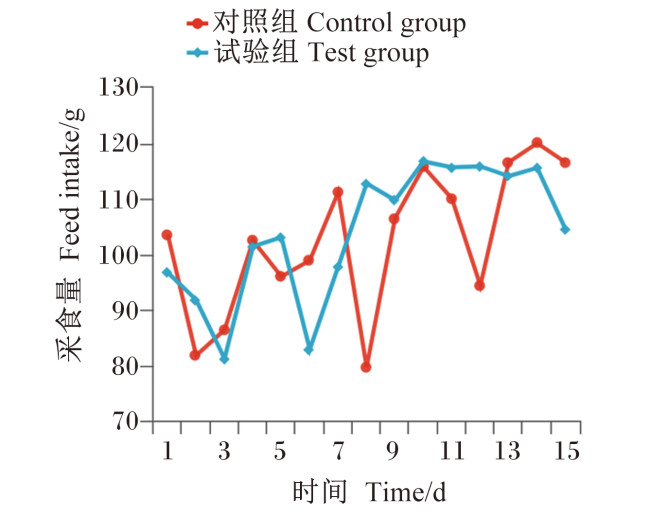
表6可知,在试验前期(第1~15天),犬粮中添加液态鲜味剂对犬的平均日采食量没有显著影响(P>0.05),延长了平均日采食时间,但差异未达显著水平(P>0.05)。
表6 液态鲜味剂中华田园犬采食的影响(第1~15天)

Table 6 Effects of liquid umami enhancer on feed intake of Chinese rural dogs (days 1 to 15)

项目 Items 对照组 Control group 试验组 Test group PP-value
平均日采食量 ADFI/g 98.08±7.49 98.71±5.11 0.940
平均日采食时间 ADFT/s 424.94±67.94 585.09±101.23 0.312
图1可知,在试验前期(第1~15天),试验组与对照组犬的采食均是无规律的。
图1 中华田园犬每天的采食量(第1~15天)

Fig.1 Daily feed intake of Chinese pastoral dogs (days 1 to 15)

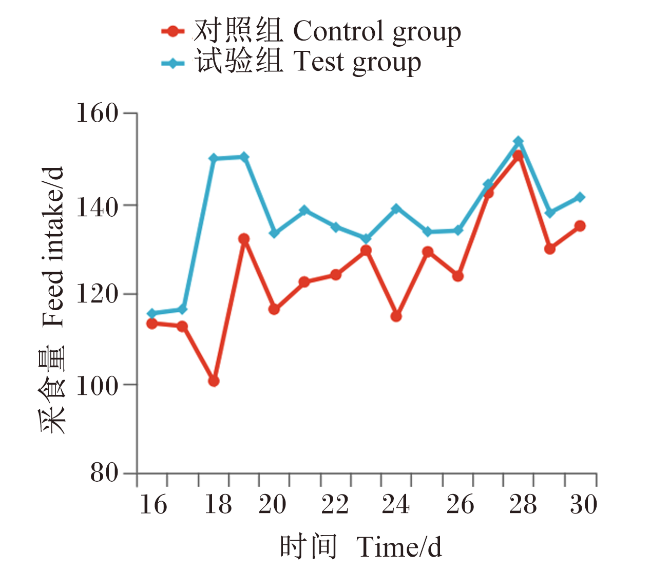
表7可知,在试验后期(第16~30天),犬粮中添加液态鲜味剂对犬的平均日采食量有提高趋势(P=0.09),并延长了平均日采食时间,但差异未达显著水平(P>0.05)。
表7 液天鲜味剂对中华田园犬采食的影响(第16~30天)

Table 7 Effects of liquid umami enhancer on feed intake of Chinese rural dogs (days 16 to 30)

项目 Items 对照组 Control group 试验组 Test group PP-value
平均日采食量 ADFI/g 120.47±10.65 142.06±5.21 0.093
平均日采食时间 ADFT/s 414.77±55.544 703.10±145.24 0.202
图2可知,在试验后期(第16~30天),试验组犬每天的采食量均高于对照组。
图2 中华田园犬每天的采食量(第16~30天)

Fig.2 Daily feed intake of Chinese pastoral dogs (days 16 to 30)

2.2.2 液态鲜味剂对中华田园犬血清采食调控因子含量的影响

表8可知,与对照组相比,液态鲜味剂短期内对犬血清中胰岛素含量(第15天)没有产生显著影响(P>0.05),但长期作用显著降低了血清中胰岛素含量(第30天)(P<0.05);液态鲜味剂对犬血清葡萄糖含量无显著影响(P>0.05);液态鲜味剂对犬血清促食因子(神经肽、饥饿素、食欲素)含量无显著影响(P>0.05),但在第30天时试验组均高于对照组;试验组犬血清中抑食因子胆囊收缩素含量低于对照组(P>0.05);液态鲜味剂对犬血清中抑食因子瘦素含量有显著影响(P<0.05),在第15和30天时试验组均显著低于对照组(P<0.05)。
表8 液态鲜味剂对中华田园犬血清采食调控因子含量的影响

Table 8 Effects of liquid umami enhancer on serum feeding regulatory factor contents of Chinese rural dogs

项目
Items
时间
Time
对照组
Control group
试验组
Test group
P
P-value
胰岛素
INS/(pmol/L)
第1天 Day 1 3.27±0.96 3.38±1.01 0.682
第15天 Day 15 3.03±1.63 2.78±1.48 0.568
第30天 Day 30 3.48±0.37a 1.94±0.34b 0.034
葡萄糖
Glu/(mmol/L)
第1天 Day 1 5.23±0.79 5.15±0.53 0.931
第15天 Day 15 4.90±0.66 5.57±0.24 0.320
第30天 Day 30 3.58±0.26 3.10±0.42 0.344
犬食欲素
OX/(pg/mL)
第1天 Day 1 96.30±1.78 98.46±1.74 0.213
第15天 Day 15 87.25±1.86 88.34±1.33 0.948
第30天 Day 30 89.80±2.14 93.34±2.50 0.312
神经肽
NP/(ng/L)
第1天 Day 1 82.18±1.49 82.89±1.52 0.743
第15天 Day 15 81.94±2.50 82.34±1.36 0.691
第30天 Day 30 80.99±2.37 83.98±2.16 0.364
饥饿素
GHRL/(ng/L)
第1天 Day 1 2 026.78±69.85 1 963.16±41.97 0.421
第15天 Day 15 2 101.36±46.19 2 014.04±65.23 0.291
第30天 Day 30 2 106.69±52.64 2 141.35±38.52 0.223
胆囊收缩素
CCK/(ng/L)
第1天 Day 1 510.94±17.45 505.23±8.13 0.529
第15天 Day 15 499.57±8.98 483.67±9.53 0.254
第30天 Day 30 523.40±7.22 511.52±13.66 0.479
瘦素
LP/(μg/L)
第1天 Day 1 4.40±0.06 4.53±0.08 0.061
第15天 Day 15 4.73±0.09a 4.41±0.10b 0.033
第30天 Day 30 4.92±0.22a 4.62±0.11b 0.039

2.2.3 液态鲜味剂对中华田园犬血清生化指标的影响

表9可知,长期饲喂添加了液态鲜味剂的犬粮,试验组犬体内血清的谷丙转氨酶、谷草转氨酶、碱性磷酸酶活性以及尿素、总胆固醇、甘油三酯和极低密度脂蛋白含量无显著变化(P>0.05)。
表9 液态鲜味剂对中华田园犬血清生化指标的影响

Table 9 Effects of liquid umami enhancer on serum biochemical indices of Chinese pastoral dogs

项目
Items
时间
Time
对照组
Control group
试验组
Test group
P
P-value
谷丙转氨酶
ALT/(U/L)
第1天 Day 1 33.33±3.21 33.00±1.73 0.882
第15天 Day 15 34.50±2.89 33.60±5.94 0.791
第30天 Day 30 32.25±2.99 32.60±3.05 0.868
谷草转氨酶
AST/(U/L)
第1天 Day 1 34.00±4.00 35.20±1.92 0.578
第15天 Day 15 37.00±2.45 37.40±1.95 0.792
第30天 Day 30 34.50±4.43 35.80±2.95 0.613
碱性磷酸酶
AKP/(U/L)
第1天 Day 1 96.33±6.43 96.00±2.00 0.936
第15天 Day 15 105.25±25.46 101.00±16.17 0.768
第30天 Day 30 105.00±23.22 101.80±20.87 0.834
尿素
UN/(mmol/L)
第1天 Day 1 4.70±0.53 4.42±0.83 0.625
第15天 Day 15 5.80±0.70 5.94±0.73 0.543
第30天 Day 30 5.28±0.33 6.10±0.93 0.138
总胆固醇
TC/(mmol/L)
第1天 Day 1 4.77±0.14 4.65±0.43 0.668
第15天 Day 15 5.27±0.60 5.07±0.77 0.686
第30天 Day 30 5.32±0.40 5.05±0.09 0.177
甘油三酯
TG/(mmol/L)
第1天 Day 1 0.52±0.07 0.57±0.14 0.605
第15天 Day 15 1.06±0.23 0.84±0.21 0.249
第30天 Day 30 0.94±0.37 1.13±0.32 0.428
极低密度脂蛋白
VLDL/(mmol/L)
第1天 Day 1 0.11±0.03 0.11±0.03 0.746
第15天 Day 15 0.19±0.06 0.20±0.09 0.795
第30天 Day 30 0.19±0.76 0.23±0.06 0.435

3 讨论

3.1 液态鲜味剂对犬粮适口性的影响

鲜味剂分为液态添加方式和固态添加方式2种,其中液态添加方式在解决固态添加方式所带来的风味保存性差、容易吸潮、犬粮不易混合均匀等问题的同时,还具有口感自然、黏度小等优点[8]。本试验所用液态鲜味剂中的植物水解蛋白、酵母抽提物、美拉德反应物、核苷酸等主要成分,可以通过其自身特有的结构实现鲜味作用。一些植物水解蛋白在水解酶作用下,特异性切断肽键或酰胺键,谷氨酸、天冬氨酸等游离氨基酸含量增加,当这些氨基酸与还原糖发生美拉德反应后,可以显著提高整体的鲜味感觉[9-11];并且,酵母抽提物中大量的复合呈味氨基酸与核苷酸相互作用后能将鲜味成倍增大[12-13],例如,当5’-核苷酸存在时,鲜味受容蛋白被激活产生变构效应,谷氨酸钠等鲜味氨基酸更易与鲜味受容蛋白结合,鲜味的相乘效果使得鲜味成倍增加[14-16]。本研究结果显示,犬对添加了不同剂量液态鲜味剂的试验犬粮的采食量、采食时间和采食率均显著高于未添加液态鲜味剂的对照犬粮。这表明在犬粮中添加液态鲜味剂可以促进犬采食,其原因可能是本试验所用的液态鲜味剂能激活鲜味受体,使机体产生鲜味感觉,通过刺激动物嗅觉与味觉来改善犬粮的适口性,从而促进动物的食欲[17-18]。尚帅[19]研究发现,犬类对苦味很敏感,而本试验所用液态鲜味剂组分多样,颗粒内增香,还可能与苦味受体结合,起到苦味阻断作用,阻断犬对不良口味的感知。在本试验条件下,综合考虑,液态鲜味剂适宜添加剂量为500 g/t。

3.2 液态鲜味剂对犬粮耐口性的影响

3.2.1 液态鲜味剂对中华田园犬采食及采食调控因子的影响

耐口性(长期采食状态)是反映饲料诱食性的综合指标。本研究结果显示,中华田园犬长期(30 d)饲喂添加液态鲜味剂犬粮后,试验第16~30天每天的采食量均高于对照组。幼年期的中华田园犬处于生长发育的高峰期,对能量、蛋白质、脂肪、微量元素等的需求量很大[20]。在单盆短期(15 d)饲喂条件下,相比于食物本身的风味,幼年期犬只可能更注重于对于营养物质的摄入,试验前期采食无规律可能是因为受自身营养需要影响。但本试验所添加的液体鲜味剂主要由植物水解蛋白、酵母提取物等成分组成,不仅能为犬粮增香,而且能够促进肠道发育、改善肠道菌群,提高生长性能[21-24],长期(30 d)饲喂添加液态鲜味剂的犬粮后,犬只肠道内环境可能得以改善,采食量提高。动物采食主要由中枢神经系统的下丘脑、中脑及大脑皮质的多条分子信号通路(神经肽、食欲素等)和外周体液系统的胰岛素、脂肪分泌型激素(瘦素等)以及胃肠激素(饥饿素、胆囊收缩素等)调控[25-27]。本研究发现,长期(30 d)饲喂添加500 g/t液态鲜味剂的犬粮后,试验组犬血清中胰岛素和瘦素含量较对照组显著下降。这可能是采食信号通过迷走神经传导到下丘脑中枢系统,中枢整合信号刺激厌食素神经元,降低食欲素神经元活性[28-29],进而下调抑食因子瘦素分泌,导致中华田园犬仍表现出采食积极性,同时,体内葡萄糖的消耗加速,血清胰岛素含量下降。这表明长期饲喂中华田园犬添加液态鲜味剂的犬粮后,犬只采食后仍保持采食积极性,不会产生厌食情绪。

3.2.2 液态鲜味剂对中华田园犬健康的影响

血清生化指标是反映动物机体健康状况、代谢平衡的重要指标[30]。本研究结果显示,中华田园犬长期饲喂添加液态鲜味剂的犬粮后,血清谷丙转氨酶、谷草转氨酶活性以及尿素、总胆固醇含量等生化指标均无显著变化。血清转氨酶和碱性磷酸酶活性变化可以反映肝脏损伤情况[31];血清尿素含量变化可以反映机体肾脏功能是否异常[32-33];血清转氨酶活性和尿素含量变化还可以反映机体氨基酸代谢是否失调[34];血清碱性磷酸酶活性可以反映机体钙、磷代谢情况[35];总胆固醇、甘油三酯和低密度脂蛋白含量可以反映机体脂代谢情况[36-39]。常炯炯等[40]研究表明,当动物摄入过多的鲜味剂后,会造成体内氨基酸、钙、磷等代谢失调,严重的会造成体内肾脏、肝脏等器官损伤。本试验结果显示,长时间采食添加500 g/t液态鲜味剂的犬粮,中华田园犬机体相应血清生化指标未发生显著变化,表明中华田园犬采食该剂量的液态鲜味剂,机体肝脏、肾脏等器官功能正常,代谢稳定,不会对犬只的健康产生不利影响。

4 结论

综上所述,犬粮中添加液态鲜味剂可以提升犬粮的适口性和耐口性,液态鲜味剂主要是通过抑制抑食因子瘦素的分泌提升犬的采食积极性,长期饲喂不会造成犬器官损伤和代谢异常;液态鲜味剂在犬粮中的适宜添加剂量为500 g/t。
[1]
SAMANT S S, CRANDALL P G, JARMA ARROYO S E, et al. Dry pet food flavor enhancers and their impact on palatability:a review[J]. Foods, 2021, 10(11):2599.

DOI

[2]
BASQUE C, CAMBOU S, PERON F, et al. Food preference and olfactory discrimination tests:a complementary approach to understand the drivers of hedonic responses in dogs[J]. Journal of Sensory Studies, 2019, 34(2):e12483.

DOI

[3]
ALEGRÍA-MORÁN R A, GUZMÁN-PINO S A, EGAÑA J I, et al. Food preferences in cats:effect of dietary composition and intrinsic variables on diet selection[J]. Animals, 2019, 9(6):372.

DOI

[4]
单铭伟, 李方方, 李孟良, 等. 断奶仔猪饲粮中玉米蛋白粉配合鲜味剂替代肠膜蛋白粉的研究[J]. 动物营养学报, 2021, 33(1):150-164.

DOI

SHAN M W, LI F F, LI M L, et al. A study on dietary corn gluten meal with umami enhancer instead of dried porcine soluble of weaned piglets[J]. Chinese Journal of Animal Nutrition, 2021, 33(1):150-164. (in Chinese)

[5]
王晶, 李方方, 张瑞阳, 等. 复合鲜味剂和植物提取甜味剂共同添加对断奶仔猪偏食性、生长性能及血清生化指标的影响[J]. 动物营养学报, 2019, 31(9):4278-4285.

DOI

WANG J, LI F F, ZHANG R Y, et al. Effects of compound supplement of flavor enhancer and sweeteners extracted from plants on fodder preference,growth performance and serum biochemical indexes of weaned piglets[J]. Chinese Journal of Animal Nutrition, 2019, 31(9):4278-4285. (in Chinese)

[6]
魏超昆. 亚麻籽源肉味美拉德反应产物的风味形成机理及安全评价[D]. 博士学位论文. 合肥: 合肥工业大学, 2020.

WEI C K. Flavor formation mechanism,and safety evaluation of flaxseed derived meaty Maillard reaction products[D].Ph.D.Thesis. Hefei: Hefei University of Technology, 2020. (in Chinese)

[7]
FU Y, ZHANG Y H, SOLADOYE O P, et al. Maillard reaction products derived from food protein-derived peptides:insights into flavor and bioactivity[J]. Critical Reviews in Food Science and Nutrition, 2020, 60(20):3429-3442.

DOI

[8]
张洁, 郝武斌, 冯珍泉, 等. 液态复合调味料核心成分的应用分析[J]. 中国调味品, 2016, 41(12):147-151.

ZHANG J, HAO W B, FENG Z Q, et al. The application analysis of core components in liquid compound seasoning[J]. China Condiment, 2016, 41(12):147-151. (in Chinese)

[9]
WANG L H, XU B C, LI L L, et al. Enhancement of umami taste of hydrolyzed protein from wheat gluten by β-cyclodextrin[J]. Journal of the Science of Food and Agriculture, 2016, 96(13):4499-4504.

DOI PMID

[10]
徐珊珊. 小麦面筋蛋白美拉德肽的制备及风味特性研究[D]. 硕士学位论文. 无锡: 江南大学, 2018.

XU S S. Preparation and flavor characteristics of Maillard peptides derived from wheat gluten[D]. Master’s Thesis. Wuxi: Jiangnan University, 2018. (in Chinese)

[11]
严方. 豌豆蛋白美拉德肽制备及其呈味特性研究[D]. 硕士学位论文. 无锡: 江南大学, 2021.

YAN F. Preparation of pea protein Maillard peptides and their flavor characteristics[D]. Master’s Thesis. Wuxi: Jiangnan University, 2021. (in Chinese)

[12]
张茜, 熊善柏, 黄琪琳, 等. 酵母抽提物替代味精的主料配方优化及其对传统鱼糕品质的影响[J]. 中国调味品, 2021, 46(11):12-17,26.

ZHANG Q, XIONG S B, HUANG Q L, et al. Formula optimization of main ingredients of yeast extract instead of monosodium glutamate and its effect on the quality of traditional fish cake[J]. China Condiment, 2021, 46(11):12-17,26. (in Chinese)

[13]
何丹. 天然植物提取物替代亚硝酸盐对传统肉制品产品特性的影响研究[D]. 硕士学位论文. 成都: 成都大学, 2020.

HE D. Effect of natural plant extracts used as nitrite substitute on the characteristics of traditional meat products[D]. Master’s Thesis. Chengdu: Chengdu University, 2020. (in Chinese)

[14]
毕继才, 杨震, 林泽原, 等. 谷胱甘肽对鲜味的增味特性研究[J]. 中国调味品, 2022, 47(7):10-13.

BI J C, YANG Z, LIN Z Y, et al. Study on the effect of glutathione on flavor enhancement properties of umami[J]. China Condiment, 2022, 47(7):10-13. (in Chinese)

[15]
刘源, 王文利, 张丹妮. 食品鲜味研究进展[J]. 中国食品学报, 2017, 17(9):1-10.

LIU Y, WANG W L, ZHANG D N. Research progress of umami in food[J]. Journal of Chinese Institute of Food Science and Technology, 2017, 17(9):1-10. (in Chinese)

[16]
马杰. 琥珀酸二钠呈鲜特性初探[D]. 硕士学位论文. 上海: 上海交通大学, 2020.

MA J. Preliminary study on the umami characteristics of disodium succinate[D]. Master’s Thesis. Shanghai: Shanghai Jiaotong University, 2020. (in Chinese)

[17]
殷明, 陈茂深, 徐菲菲, 等. 影响犬粮适口性关键因素的鉴定[J]. 江苏农业科学, 2020, 48(19):190-199.

YIN M, CHEN M S, XU F F, et al. Identification of key factors affecting palatability of dog food[J]. Jiangsu Agricultural Sciences, 2020, 48(19):190-199. (in Chinese)

[18]
曹秋梅, 丁丽敏, 付小雨, 等. 蛋白质水解物在宠物食品中的应用及研究进展[J]. 动物营养学报, 2022, 34(9):5561-5569.

DOI

CAO Q M, DING L M, FU X Y, et al. Application and research progress of protein hydrolysates in pet food[J]. Chinese Journal of Animal Nutrition, 2022, 34(9):5561-5569. (in Chinese)

DOI

[19]
尚帅. 犬科动物苦味受体基因(T2Rs)家族的系统发育研究[D]. 硕士学位论文. 曲阜: 曲阜师范大学, 2015.

SHANG S. Phylogenetic study of bitter bitterness receptor gene (T2Rs) family in canines[D]. Master’s Thesis. Qufu: Qufu Normal University, 2015. (in Chinese)

[20]
贾球锋, 白喜云. 浅谈幼犬的营养与免疫力[J]. 中国畜禽种业, 2021, 17(12):157-158.

JIA Q F, BAI X Y. Discussion on nutrition and immunity of puppies[J]. The Chinese Livestock and Poultry Breeding, 2021, 17(12):157-158. (in Chinese)

[21]
杜蓥蓥, 王小辉, 蔡旭滨, 等. 2种植物提取物复合物对断奶仔猪生长性能以及肠道形态结构、免疫功能和胰岛素样生长因子-Ⅰ含量的影响[J]. 动物营养学报, 2022, 34(2):830-838.

DOI

DU Y Y, WANG X H, CAI X B, et al. Effects of two plant extract compounds on growth performance and intestinal morphology,immune function and insulin-like growth factor-Ⅰ content of weaned piglets[J]. Chinese Journal of Animal Nutrition, 2022, 34(2):830-838. (in Chinese)

[22]
耿爽, 耿春银, 杨濛, 等. 两种无抗制剂对育肥猪生长性能及肠道健康的影响[J]. 中国畜牧兽医, 2021, 48(4):1240-1250.

GENG S, GENG C Y, YANG M, et al. The influence of two different kinds of antibiotic-free addictive on growth and intestinal health of growing pigs[J]. China Animal Husbandry & Veterinary Medicine, 2021, 48(4):1240-1250. (in Chinese)

[23]
SUN Z Z, LIU Y, WEI Z L, et al. The effects of dietary compound plant extracts on growth performance,liver and intestine health,and immune related genes expression in hybrid grouper (Epinephelus lanceolatus ♂×Epinephelus fuscoguttatus ♀)[J]. Fish & Shellfish Immunology, 2021, 119:11-18.

[24]
LEUNG H, PATTERSON R, BARTA J R, et al. Nucleotide-rich yeast extract fed to broiler chickens challenged with Eimeria:impact on growth performance,jejunal histomorphology,immune system,and apparent retention of dietary components and caloric efficiency[J]. Poultry Science, 2019, 98(10):4375-4383.

DOI

[25]
吴汉宇, 王丽娜. 下丘脑-垂体-肾上腺轴参与动物采食调控的研究进展[J]. 中国畜牧兽医, 2019, 46(8):2281-2287.

WU H Y, WANG L N. Research advances on effects of hypothalamic-pituitary-adrenal axis in animal feeding regulation[J]. China Animal Husbandry & Veterinary Medicine, 2019, 46(8):2281-2287. (in Chinese)

[26]
郭海, 姚巧玲. 胰岛素在中枢和外周调控机体食欲机制的研究进展[J]. 医学综述, 2022, 28(9):1771-1775.

GUO H, YAO Q L. Research progress in mechanism of insulin in central and peripheral regulation of appetite[J]. Medical Recapitulate, 2022, 28(9):1771-1775. (in Chinese)

[27]
刘磊. 糖皮质激素在应激家禽食欲调控中的作用机制[D]. 博士学位论文. 泰安: 山东农业大学, 2014.

LIU L. Mechanism of glucocorticoids regulating appetite in stressed poultry[D]. Ph.D.Thesis. Tai’an: Shandong Agricultural University, 2014. (in Chinese)

[28]
HARRIS R B S. Consuming sucrose solution promotes leptin resistance and site specifically modifies hypothalamic leptin signaling in rats[J]. American Journal of Physiology.Regulatory,Integrative and Comparative Physiology, 2021, 320(2):R182-R194.

[29]
PAYAHOO L, OSTADRAHIMI A, FARRIN N, et al. Effects of n-3 polyunsaturated fatty acid supplementation on serum leptin levels,appetite sensations,and intake of energy and macronutrients in obese people:a randomized clinical trial[J]. Journal of Dietary Supplements, 2018, 15(5):596-605.

DOI

[30]
耿顺菊, 张家图, 赵丽红, 等. 低蛋白质饲粮对大午金凤商品代蛋雏鸡血清生化及免疫机能的影响[J]. 聊城大学学报(自然科学版), 2022, 35(5):79-84.

GENG S J, ZHANG J T, ZHAO L H, et al. Effect of low protein diets on serum biochemistry and immune function in commercial laying hens of Dawu golden phoenix during the brooding period[J]. Journal of Liaocheng University (Natural Science Edition), 2022, 35(5):79-84. (in Chinese)

[31]
JALILI V, POORAHMADI Z, HASANPOUR ARDEKANIZADEH N, et al. The association between obesity with serum levels of liver enzymes,alanine aminotransferase,aspartate aminotransferase,alkaline phosphatase and gamma-glutamyl transferase in adult women[J]. Endocrinology,Diabetes & Metabolism, 2022, 5(6):e367.

[32]
贾聪俊. 牦牛生长性状和血清生化指标全基因组关联分析及拷贝数变异图谱构建[D]. 博士学位论文. 杨凌: 西北农林科技大学, 2020.

JIA C J. Genome-wide association study for growth and serum biochemical parameters and construction of CNV map in yak[D]. Ph.D.Thesis. Yangling: Northwest A & F University, 2020. (in Chinese)

[33]
VANHOLDER R, GRYP T, GLORIEUX G. Urea and chronic kidney disease:the comeback of the century? (in uraemia research)[J]. Nephrology Dialysis Transplantation, 2018, 33(1):4-12.

DOI

[34]
马菊红. 高精料日粮对山羊肝脏糖脂代谢的影响及其机制研究[D]. 硕士学位论文. 杨凌: 西北农林科技大学, 2017.

MA J H. Effects of high-concentrate diet on hepatic glucose and lipid metabolism and its mechanism in dairy goats[D]. Master’s Thesis. Yangling: Northwest A & F University, 2017. (in Chinese)

[35]
VIMALRAJ S. Alkaline phosphatase:structure,expression and its function in bone mineralization[J]. Gene, 2020, 754:144855.

DOI

[36]
谢雨婷. 樟树籽仁油改善营养性肥胖小鼠甘油三酯代谢及降低血清胆固醇的作用与机制[D]. 硕士学位论文. 南昌: 南昌大学, 2019.

XIE Y T. Effects and mechanisms of Cinnamomum camphora seed kernel oil on ameliorating triglyceride metabolism and lowering serum cholesterol in nutritional obese mice[D]. Master’s Thesis. Nanchang: Nanchang University, 2019. (in Chinese)

[37]
顾小江. 总胆固醇、甘油三酯、血糖指标与肥胖症的相关性研究[D]. 硕士学位论文. 苏州: 苏州大学, 2020.

GU X J. Study on the correlation between total cholesterol,triglyceride,blood glucose and obesity[D]. Master’s Thesis. Suzhou: Soochow University, 2020. (in Chinese)

[38]
SZAREK M, BITTNER V A, AYLWARD P, et al. Lipoprotein(a) lowering by alirocumab reduces the total burden of cardiovascular events independent of low-density lipoprotein cholesterol lowering:ODYSSEY OUTCOMES trial[J]. European Heart Journal, 2020, 41(44):4245-4255.

DOI

[39]
LI J, LI L, GUO D M, et al. Triglyceride metabolism and angiopoietin-like proteins in lipoprotein lipase regulation[J]. Clinica Chimica Acta, 2020, 503:19-34.

DOI PMID

[40]
常炯炯, 李善雅文, 雍凌, 等. 我国食品添加剂联合使用情况及累积风险评估[J]. 中国食品卫生杂志, 2021, 33(2):206-214.

CHANG J J, LI S Y W, YONG L, et al. Combined use of food additives in China and its cumulative risk assessment[J]. Chinese Journal of Food Hygiene, 2021, 33(2):206-214. (in Chinese)

文章导航

/