综述

饲粮纤维结构及其发酵产物对单胃动物肠道健康的调控机制和应用现状

  • 李敬 , 1 ,
  • 高歌 1 ,
  • 李平 2 ,
  • 李习龙 , 1, 3, *
展开
  • 1 中国农业科学院饲料研究所,农业部饲料生物技术重点开放实验室,北京 100081
  • 2 广东省农业科学院动物科学研究所,广州 510640
  • 3 张家口市畜牧技术推广站,张家口 075000
*李习龙,研究员,博士生导师,E-mail:

李 敬(1987—),女,河南新乡人,博士,从事猪饲料与营养调控研究。E-mail:

Copy editor: 田艳明

收稿日期: 2023-11-02

  网络出版日期: 2024-04-15

基金资助

河北省重点研发项目(V1616832834119)

Regulation Mechanism and Application of Dietary Fiber Structure and Fermentation Products on Intestinal Health of Monogastric Animals

  • LI Jing , 1 ,
  • GAO Ge 1 ,
  • LI Ping 2 ,
  • LI Xilong , 1, 3
Expand
  • 1 Key Laboratory of Feed Biotechnology, Ministry of Agriculture, Institute of Feed Research, Chinese Academy of Agricultural Sciences, Beijing 100081, China
  • 2 Institute of Animal Science, Guangdong Academy of Agricultural Sciences, Guangzhou 510640, China
  • 3 Zhangjiakou Animal Husbandry Technology Promotion Station, Zhangjiakou 075000, China
*professor, E-mail:

Received date: 2023-11-02

  Online published: 2024-04-15

摘要

饲粮纤维作为动物后段肠道微生物群最重要的食物来源,维护着微生物群的平衡和稳态,其代谢产物短链脂肪酸(SCFAs)对改善动物能量代谢、肠道屏障功能、免疫系统、炎症反应和肠激素分泌等都具有非常重要的调控作用。然而,饲粮中纤维的结构特点以及不同饲料原料中纤维的组成和发酵特性差异较大,也导致纤维性饲粮原料在动物生产中的应用存在巨大的变异性。因此,本文对饲粮纤维结构及其发酵特性进行了深入探讨,并综述了饲料纤维组分在动物肠道的消化过程,发酵产物对动物肠道健康的调控机制,以及饲粮纤维在单胃动物中的应用现状,以期为重新审视纤维结构及其转运机制、探索饲粮纤维的潜在营养价值和制定单胃动物纤维营养的应用措施提供参考。

本文引用格式

李敬 , 高歌 , 李平 , 李习龙 . 饲粮纤维结构及其发酵产物对单胃动物肠道健康的调控机制和应用现状[J]. 动物营养学报, 2024 , 36(4) : 2057 -2066 . DOI: 10.12418/CJAN2024.179

Abstract

Dietary fiber, as the most important food source of the intestinal microbiota, maintains the balance and homeostasis of the microbiota. Its metabolites, short-chain fatty acids (SCFAs), play a very important role in improving energy metabolism, intestinal barrier function, immune system, inflammatory response and intestinal hormone secretion. However, the structural characteristics of dietary fiber and the composition and fermentation characteristics of fiber in different feed materials are quite different, which also leads to great variability in the application of fibrous feed materials in animal production. Therefore, the structure and fermentation characteristics of dietary fiber were discussed in this paper, and the digestive process of dietary fiber components in animal intestines, the regulation mechanism of fermentation products on animal intestinal health, and the application status of dietary fiber in single-stomach animals were reviewed, aiming to provide reference for re-examining the fiber structure and its transport mechanism, and explore the potential nutritional value of dietary fiber and formulating the application measures of fiber nutrition in monogastric animals.

近年来大量研究发现,饲粮纤维结构及其含量与动物健康和生产性能密切相关,影响着畜禽的肠道结构发育、消化酶活性、肠道黏膜屏障、肠道菌群环境、机体免疫、内分泌以及神经系统的功能[1-3]。然而,饲粮纤维结构的复杂性使其既具有抗营养特性,同时也具有改善动物肠道健康的促营养特性,如肠道微生物能利用饲粮中的纤维组分发酵产生短链脂肪酸(SCFAs),它既是营养物质,又能调控宿主的代谢[4]。目前,纤维的概念主要基于粗纤维(CF)、酸性洗涤纤维(ADF)以及中性洗涤纤维(NDF)等方法的检测,单胃动物饲粮中纤维的含量不能反映纤维的营养作用,尤其低估可溶性纤维的营养作用[5]。研究表明,原料的纤维结构及其发酵特性、评估饲粮中的可溶性纤维和不溶性纤维比例、纤维组成成分及其聚合程度等,可进一步了解膳食纤维对单胃动物的营养作用。因此,本文综述了饲粮纤维结构及其调控机制对动物肠道健康和营养物质代谢的影响,为研究纤维营养及其在单胃动物中的应用提供参考。

1 饲粮纤维结构及其发酵特性

1.1 饲粮纤维的定义

饲粮纤维既有化学的定义,又有生理学的定义。从化学的角度来看,饲粮纤维是指所有非淀粉多糖(NSP)和木质素之和[6]。非淀粉多糖指的是除淀粉外的多糖结构物质,由多个单糖通过糖苷键连接形成的特殊碳骨架组成的大分子聚合物;该组分包含了高聚合度、中等聚合度以及低聚合度碳骨架结构,同时也包含了单一的线性结构,或侧链由一种或多种单糖组成的分支结构[7-8]。从生理学的角度来看,饲粮纤维是指植物的可食用部分或类似碳水化合物(包括多聚糖、低聚糖、木质素和伴生植物物质)在小肠内不易被消化和吸收,而在大肠中可以完全或部分发酵的物质[7]

1.2 植物性饲料原料的纤维结构

植物性饲料原料中纤维主要来自于植物细胞壁结构,由纤维素、半纤维素、果胶以及木质素组成,其中纤维素、半纤维素和果胶统称为非淀粉多糖(NSP)。通常,非淀粉多糖的溶解特性与其侧链的分支程度成正比,侧链的分支程度越高,其溶解特性越强[9]。此外,半纤维素又可划分为阿拉伯木聚糖(arabinoxylan或AX)、β-葡聚糖(β-glucan)、木葡聚糖(xyloglucan)、甘露聚糖(mannan)、半乳聚糖(galactan)以及果聚糖(fructosan)[10]。很多研究发现,不同饲料原料中纤维组分结构和含量存在显著性的差异,这也影响了其发酵特性。例如,AX普遍存在于植物性原料中,尤其在谷物原料中含量最高。AX通常以木聚糖为主链,阿拉伯糖作为取代基形成侧链结构。谷物类型不同,AX的分子质量、结构特征、取代程度以及生物活性都存在较大差异;其中,在常见谷物AX中阿拉伯糖和木糖的比值(通常表示AX取代程度)由高到低依次为高粱(1.23)、玉米(0.74)、小麦(0.62)、大麦(0.48)和燕麦(0.22)[11-12]。有研究显示,AX的取代程度与食糜黏性呈显著负相关,阿拉伯糖取代基越低,其水结合能力越强,这意味着麦类谷物中有更高的可溶性AX含量,这也是影响肠道食糜粘性的主要因素[13-14]
此外,β-葡聚糖在大麦和燕麦胚乳中含量最高,通常由β-1,3糖苷键相连的β-葡聚糖是可溶的,而由β-1,4糖苷键相连的β-葡聚糖是不可溶的,这也与纤维素的结构成分密切相关[15]。木葡聚糖是由β-1,4糖苷键连接的D-葡聚糖构成骨架结构,侧链主要由木糖取代,通常木葡聚糖结合到纤维素微纤维的表面,并将其连接在一起,普遍存在于植物细胞壁中,且在初生细胞壁中含量最高[16-17]。甘露聚糖在高等植物和海藻中以结构性和储存性多糖的形式存在,由β-1,4糖苷键连接的D-甘露糖组成,侧链上多由半乳糖或葡萄糖取代,形成半乳甘露聚糖、葡甘露聚糖和半乳葡甘露聚糖[18]。半乳聚糖根据其立体化学性质,可分为琼脂和卡拉胶[19];广泛存在于许多植物细胞壁以及海洋藻类中,其中在植物细胞壁中结构主要为鼠李半乳糖醛酸Ⅰ(RGⅠ)和阿拉伯半乳聚糖等,而在红藻中半乳聚糖结构则主要为硫酸化半乳聚糖[20]。果聚糖是以β-1,2或β-2,6糖苷键连接的D-果糖分子为主链结构,是一种重要的储存性多糖,存在于谷物和开花植物中,如小麦、大麦、菊苣、菊芋、郁金香和洋葱等,其特征为低聚合度多糖(5~50个糖苷键),因此,其作为功能性多糖广泛用于调节肠道健康和免疫机能[19,21]

1.3 饲粮纤维的发酵特性

根据后肠微生物群的发酵能力,饲粮纤维可划分为快速发酵纤维、慢发酵纤维和不发酵纤维。纤维的发酵特性与其溶解性息息相关,纤维的溶解性越强,发酵速度越快[22]。长链的水溶性纤维容易被微生物分泌的纤维降解酶水解,并进一步降解为小分子低聚糖和SCFAs,如水溶性阿拉伯木聚糖、β-葡聚糖和果聚糖等。然而,这些长链的可溶性纤维具有较强的黏性,容易增加前端肠道中食糜黏性,影响营养物质的消化吸收,因此,在单胃动物饲粮中使用NSP降解酶以消除纤维的抗营养作用和改善动物生产性能,已成为重要的配合饲粮的措施[23-24]。同时,聚合程度较低或结构简单的不溶性纤维也可以到达后肠被微生物群利用,如不溶性木聚糖、β-葡聚糖、甘露聚糖和半乳聚糖等。然而,聚合程度较高或结构更为复杂的不溶性纤维通常具有较低的发酵特性,如木质素、纤维素以及部分果胶等[25]

2 饲粮纤维在单胃动物中的代谢机制

2.1 饲粮纤维在肠道中的代谢产物

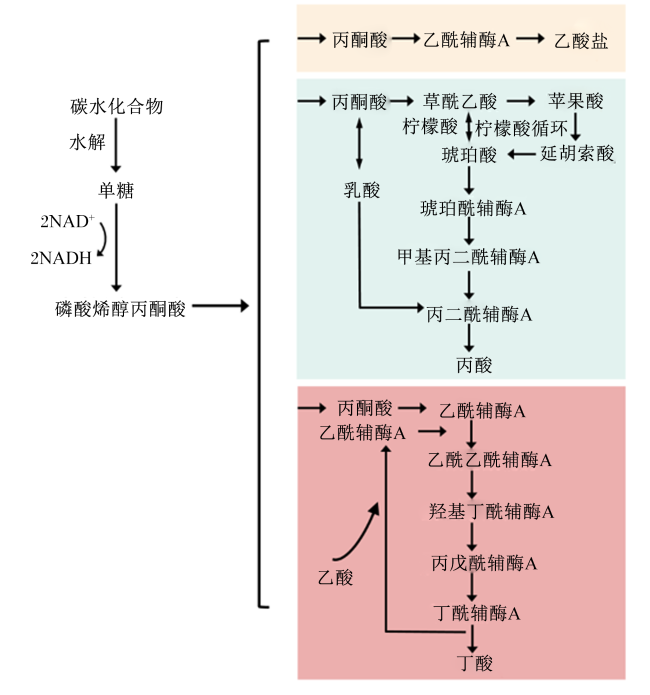
大量研究显示,饲粮中添加纤维类饲料原料可以显著促进畜禽后肠中SCFAs的生成,其具体代谢途径如图1[28]所示。
图1 产生乙酸盐、丙酸盐和丁酸盐的碳水化合物代谢途径示意图

NAD+:烟酰胺腺嘌呤二核苷酸 nicotinamide adenine dinucleotide;NADH:还原型烟酰胺腺嘌呤二核苷酸 reduced nicotinamide adenine dinucleotide。

Fig.1 Schematic diagram of carbohydrate fermentation pathways producing acetate, propionate and butyrate[28]

当饲粮纤维进入后肠道时,肠道微生物群会激发自身的产酶机制,分泌大量的碳水化合物酶类,使结构复杂的多糖物质(如纤维素、阿拉伯木聚糖、β-葡聚糖和葡甘露聚糖等)在这些活性酶的作用下进一步水解,并释放出可发酵的单糖,如阿拉伯糖、木糖、甘露糖、葡萄糖以及半乳糖等[26]。这些单糖会在微生物细胞内参与糖酵解过程,在多种代谢酶的作用下,转化为磷酸烯醇式丙酮酸,并在丙酮酸激酶催化下进一步生成丙酮酸。丙酮酸作为代谢过程中重要的中间产物,在产乙酸菌的作用下通过乙酰辅酶A途径直接生成乙酸;也可以在丙酸生成菌的作用下通过琥珀酸途径转化为丙酸;或在产丁酸菌的作用下通过乙酰辅酶A和丁酰辅酶A等途径将丙酮酸转化为丁酸,或将代谢产物乙酸进一步转化为丁酸,整个过程均在细菌的细胞质基质中完成(图1)[27-28]

2.2 不同饲粮纤维结构在肠道中的代谢特点

不同饲粮纤维结构降解为寡糖或单糖后,其底物转运机制和肠道菌群的代谢产物种类和含量均存在差异;即使相同细菌在摄食不同底物时,其代谢产物也不同[29-30]。有研究显示,在肉鸡饲粮中添加低聚木糖(XOS)可以显著增加结肠中乳酸杆菌和盲肠中梭状芽孢杆菌簇ⅩⅣa(Clostridium cluster ⅩⅣa)数量,并提高丁酸盐的生成[31]。饲喂小鼠岩藻糖或低聚果糖(FOS)能够显著增加盲肠中拟杆菌门的相对丰度,并增加丙酸盐和琥珀酸盐的浓度,其中普通拟杆菌(Bacteroides vulgatus)和多形拟杆菌(Bacteroides thetaiotaomicron)等拟杆菌能够利用直接FOS生成丙酸盐[32-33]。然而,当FOS作为产丁酸菌食葡糖罗斯氏菌(Roseburia inulinivorans)和普氏栖粪杆菌(Faecalibacterium prausnitzii)的生长基质时,其代谢产物则主要为丁酸盐[34]。此外,Scott等[35]发现,肠道产丁酸菌食葡糖罗斯氏菌能够将底物葡萄糖、淀粉或菊粉转化为丁酸盐,而当利用岩藻糖生长时,则通过丙二醇途径形成丙酸盐;在另一项研究中发现,利用不同底物[淀粉、菊粉、FOS、低聚半乳糖(GOS)和XOS]体外培养双歧杆菌(Bifidobacteria)、瘤胃球菌科(Ruminococcaceae)、食葡糖罗斯氏菌A2-194和普氏栖粪杆菌等特定菌群时,菌群丰度及其代谢产物,包括丁酸盐、乙酸盐和乳酸等含量也存在较大差异[36]。这些结果再次证明,纤维结构的复杂性会影响肠道菌群环境及其代谢产物的生成,这也为进一步探究纤维发酵和代谢机制提供了理论依据。

3 纤维代谢产物对肠道健康的调控机制

3.1 调控葡萄糖代谢和能量稳态

目前,大量研究已证实SCFAs作为肠上皮细胞重要的能量来源,可以作用于G蛋白偶联受体(GPR)、促进肠细胞中酶活性以及通过血液循环转运至多种组织以调控宿主葡萄糖代谢和能量稳态[32,37-39]。其中,GPR家族中GPR41[又称游离脂肪酸受体3(FFAR3)]、GPR43[又称游离脂肪酸受体2(FFAR2)]以及GPR109A是研究最为广泛的SCFAs受体。有研究显示,SCFAs通过介导GPR43和GPR41参与胰岛素信号和葡萄糖代谢通路,进而调节宿主胃肠道和脂肪组织的能量稳态[40-43]。此外,GPR109A作为丁酸盐的特异性受体可以改善肥胖小鼠葡萄糖代谢和抑制脂肪积累[44]。De Vadder等[45]发现,丁酸盐和丙酸盐也可以通过增加肠细胞内糖异生基因表达,提高空肠和结肠中葡萄糖-6-磷酸酶(G6pase)活性,促进葡萄糖生成,从而调控葡萄糖代谢以及能量供应[32]

3.2 改善肠道功能

肠道菌群稳态和肠道屏障功能对改善动物肠道健康具有至关重要的作用。有研究显示,增加可发酵纤维底物能够使单胃动物后肠道微生物从共生菌群向纤维降解菌群转变,增加SCFAs的生成,降低肠道中pH,增强肠黏膜细胞的β-氧化过程,消耗肠腔内氧气,改善肠道厌氧环境,促进纤维降解菌群增殖(如普氏栖粪杆菌、嗜黏蛋白阿克曼氏菌、双歧杆菌和乳酸杆菌等)并产生特异性抗菌化合物,进而抑制大肠杆菌、沙门氏菌以及产气荚膜梭菌等有害菌群的增殖[46-47]
SCFAs也被证实可以调控肠上皮细胞的增殖和分化,促进肠道细胞完整性,提高肠道屏障功能,尤其丁酸盐在此过程中发挥着重要的作用。有研究显示,丁酸盐通过增加Caco-2细胞单层中单磷酸腺苷活化蛋白激酶(AMPK)活性,加强紧密连接蛋白,进而改善肠道屏障功能[48]。在断奶仔猪饲粮中,添加FOS可以通过增加丁酸盐含量,激活核因子E2相关因子2(Nrf2)信号通路,增加紧密连接蛋白的表达,改善结肠黏膜屏障,降低仔猪腹泻的发生[49]。此外,丁酸盐可以增加封闭蛋白-1(claudin-1)和闭锁小带蛋白-1(ZO-1)的表达以及闭合蛋白的重新分布,抑制巨噬细胞活化和促炎性因子生成,维持肠道细胞完整性和肠道黏膜功能[50];也可以通过促进肠上皮细胞黏蛋白2(MUC2)的合成,调节肠道屏障功能[51]。另有研究认为,丁酸盐能够通过激活外周血单核细胞(PBMC)和免疫细胞表型,抑制细胞因子释放,阻止细胞因子诱导的上皮细胞通透性,保护肠道屏障完整性和肠道稳态[52]

3.3 调节免疫系统,降低炎症反应

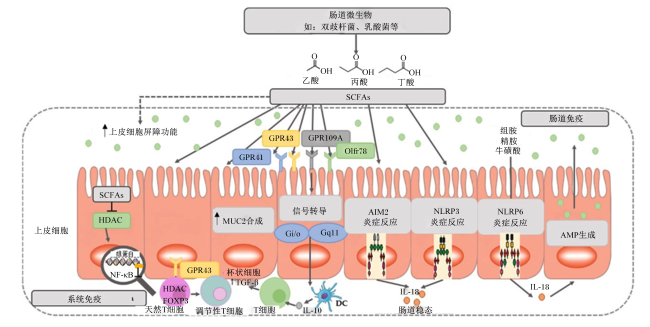
近年来,由肠道微生物代谢生成的SCFAs已被证实能够通过结合特定的GPR或激活核因子-κB(NF-κB)信号通路发挥抗炎作用,调节宿主免疫功能,降低肠道疾病的发生。据报道,SCFAs可以通过激活GPR41、GPR43以及GPR109A信号传导通路,促进先天淋巴细胞和T淋巴细胞分泌白细胞介素(IL)-22和IL-10,诱导先天T细胞分化为调节性T(Treg)细胞,抑制组蛋白脱乙酰酶活性,促进肠上皮细胞、巨噬细胞和树突状细胞的抗炎特性,抑制促炎细胞因子IL-6、IL-17、IL-8以及肿瘤坏死因子-α(TNF-α)等浓度;同时,也可以抑制组蛋白脱乙酰酶(HDAC)活性,促进AIM2、NOD样受体(NLRP)3和NLRP6炎性小体的形成以及IL-18的分泌,增加肠道抗菌肽的生成,调节肠道和机体免疫系统,减轻肠道炎症反应,维持肠道稳态[53-55](图2)。此外,也有研究表明,丙酸盐能够直接激活GPR41表达缓解过敏性炎症;而乙酸盐、丙酸盐和丁酸盐均可以介导GPR43信号通路调节肠上皮细胞和巨噬细胞中NLRP3炎性小体的形成、IL-18的分泌以及中性粒细胞募集等,降低炎症反应[56-58]。研究发现,GPR109A由丁酸盐进行介导,通过促进结肠巨噬细胞的抗炎特性,诱导Treg细胞分化,抑制促炎性酶[诱导型一氧化氮合酶(iNOS)和环氧化酶-2(COX-2)]活性和细胞因子表达(TNF-α、IL-1β和IL-6),增加IL-10生成等发挥抗炎作用[44,59-60]
图2 纤维代谢产物调控肠道免疫的机制

SCFAs: 短链脂肪酸 short chain fatty acids;GPR:G蛋白偶联受体 G-protein coupled receptor;HDAC:组蛋白脱乙酰酶 histone deacetylase;NF-κB:核因子-κB;FOXP3:叉头框P3 Forkhead box P3;MUC2:黏蛋白2 mucin 2;TGF-β:转化生长因子-β transforming growth factor-β;NLRP:NOD样受体 NOD-like receptor;IL:白细胞介素 interleukin;DC:树突状细胞 dendritic cell;AMP:抗菌肽 antimicrobial peptide。

Fig.2 Mechanism of fiber metabolites in regulation of intestinal immunity[55]

另有研究显示,丁酸盐也可以通过NF-κB信号通路抑制HDAC以及NF-κB活性,降低炎症因子TNF-α和IL-6水平;或通过抑制干扰素-γ的产生或上调氧化物酶体增殖物激活受体γ(PPARγ)以发挥抗炎作用[61-62]。在应激条件下,添加非淀粉多糖酶、寡糖或激发性益生元饲喂幼龄动物,均可以通过促进后肠中纤维发酵以及SCFAs生成,增加血清中免疫球蛋白(Ig)A和IgG分泌,降低血清中促炎因子水平,提高机体免疫能力,缓解应激和炎症反应[63-64]

3.4 调节激素分泌

很多研究显示,饲喂动物富含纤维的饲粮通过促进SCFAs的产生以增加肠内分泌细胞的数量,促进肠内分泌细胞分泌胰高血糖素样肽(GLP)-1、GLP-2以及酪酪肽(PYY)等激素,以参与调控动物摄食、胃排空、肠道蠕动、肠道屏障形成和炎症反应等多种生理和代谢过程[65]。据报道,SCFAs能够通过GPR41/GPR43信号通路介导肠内分泌细胞分泌GLP-1,调节胰岛素分泌、葡萄糖代谢和肠道排空时间[66]。其中,丁酸盐可以介导肠内分泌细胞释放GLP-2,增加血液中GLP-2浓度[67]。目前,GLP-2已被证实能够增加促进肠上皮细胞增殖和发育,改善肠道形态,调节隐窝细胞增殖和绒毛凋亡,进而增加碳水化合物、氨基酸和脂质的吸收能力,加强上皮刷状缘消化酶和营养转运蛋白活性等作用[68-69]。另有研究发现,丙酸盐和丁酸盐也可以通过激活GPR41/GPR43诱导PYY的分泌,进而调控动物摄食、肠道蠕动和胃排空速率70-71]

4 饲粮纤维在单胃动物生产中的应用现状

4.1 猪

目前,饲粮纤维在猪生产中的应用非常普遍,尤其在妊娠和泌乳母猪阶段,如在母猪饲粮中添加高比例的麸皮、次粉、大豆皮或甜菜粕等,以缓解母猪便秘,增加后肠纤维发酵,改善母猪繁殖性能。有研究显示,在母猪饲粮中添加高比例饲粮纤维可以提高妊娠母猪的窝产仔数,断奶仔猪重以及泌乳期采食量等,同时改善母猪生产过程中的能量状态以及断奶到发情的间隔时间[72]。此外,增加妊娠母猪可溶性纤维含量可以提高母猪的窝产仔重和断奶仔猪数,并提高妊娠母猪血液中SCFAs的含量和胰岛素敏感性,缓解氧化应激,改善母猪生产性能[73-74]。在断奶仔猪、生长猪和育肥猪中添加纤维类物质可以促进肠道发育,改善肠道健康,提高猪只的生长性能和肉品质[75]

4.2 肉鸡

近年来,越来越多的研究发现,在肉鸡饲粮中添加燕麦壳、稻壳、葵花籽壳或麸皮等纤维类原料,可以改善早期肉鸡肌胃和腺胃的发育,增加绒毛高度与隐窝深度的比值,改善营养物质消化吸收和肉鸡生长性能[76]。此外,也有研究发现,在早期肉鸡饲粮中添加高比例的可溶性纤维(如甜菜粕),会对肉鸡十二指肠和回肠绒毛高度产生负效应,增加食糜黏性,降低肉鸡生长性能[77]。然而,随着肉鸡日龄的增加,肉鸡利用可溶性纤维的能力越强,21日龄肉鸡饲粮中添加甜菜粕可以提高肉鸡增重,降低后期料重比[78]。中等或低等聚合度的可溶性纤维片段,如菊粉和寡糖类物质,可以避免食糜黏性的增加,促进后肠微生物发酵,改善肉鸡肠道黏膜屏障和免疫机能,进而改善肉鸡生长性能[47]

4.3 蛋鸡

在蛋鸡生产中,饲粮能量对蛋鸡的生产性能有着重要的影响。通常,低能量密度饲粮会导致蛋鸡无法获得足够的能量来满足产蛋需要,从而影响产蛋性能。有研究显示,在蛋鸡饲粮中额外补充寡糖类物质,如菊粉、甘露寡糖、木寡糖和果寡糖等,可以增加盲肠中SCFAs的生成,提高产蛋率,改善蛋品质,降低蛋黄胆固醇含量,并抑制盲肠中大肠感菌和沙门氏菌等有害菌群的生长[79-81]。此外,在蛋鸡育成期(8~18周龄)添加不溶性纤维(如苜蓿草粉、葵花籽粕和橄榄饼等)可以改善蛋鸡胃肠道发育,增加肌胃和盲肠重量,以及改善随后的产蛋性能。在蛋鸡早期(孵化至5周龄)饲粮中补充2%或4%谷物秸秆、葵花籽壳和甜菜粕可以增加日增重和采食量,改善能量利用率[82]。然而,也有研究显示,添加4%的谷物秸秆对蛋鸡(17~46周龄)胃肠道发育和产蛋性能无显著影响,且添加4%的甜菜粕会降低蛋鸡产蛋率和蛋鸡体重[83]。因此,饲粮纤维的种类以及添加水平对不同阶段蛋鸡的应用效果可能存在较大差异,这也再次表明了饲粮纤维的结构及其应用效果受动物种类和日龄等因素影响。

5 小结与展望

综上可知,饲粮的纤维结构及其肠道菌群代谢产物对单胃动物的生产性能和肠道健康都具有重要的调控作用。随着对饲粮纤维的认知不断深入,纤维结构的复杂性、应用特性,及其发酵产物SCFAs在宿主体内的代谢机制已逐渐被认知。然而,饲粮中植物性原料的纤维组成、结构、功能,纤维与单胃动物及其肠道微生物群的互作,新开发纤维类原料的营养价值,不同加工处理方式对饲粮纤维结构和功能的影响以及在动物生产中的应用潜力等,仍需进一步的研究和探索。
[1]
MAHMOOD T, GUO Y M. Dietary fiber and chicken microbiome interaction:where will it lead to?[J]. Animal Nutrition, 2020, 6(1):1-8.

DOI

[2]
DING S J, CHENG Y T, AZAD M A K, et al. Dietary fiber alters immunity and intestinal barrier function of different breeds of growing pigs[J]. Frontiers in Immunology, 2023, 14:1104837.

DOI

[3]
杨玉芬, 卢德勋, 许梓荣. 日粮纤维对仔猪生长性能和消化生理功能的影响[J]. 动物营养学报, 2009, 21(6):816-821.

YANG Y F, LU D X, XU Z R. Effect of dietary fiber on growth performance and digestive physiology function of pigs[J]. Chinese Journal of Animal Nutrition, 2009, 21(6):816-821. (in Chinese)

[4]
DE VRIES S. Fiber in poultry nutrition:bonus or burden?[C]// 20th European Symposium on Poultry Nutrition. Prague: Czech Republic, 2015:ESPN 2015.

[5]
NGUYEN N, JACOBS M, LI J T, et al. Technical note:concentrations of soluble,insoluble,and total dietary fiber in feed ingredients determined using method AOAC 991.43 are not different from values determined using method AOAC 2011.43 with the AnkomTDF dietary fiber analyzer[J]. Journal of Animal Science, 2019, 97(9):3972-3983.

DOI

[6]
刘惠芳, 周安国. 母猪日粮纤维的营养研究进展[J]. 动物营养学报, 2006(S1):334-340.

LIU H F, ZHOU A G. Nutritional research advances in dietary fiber of sows[J]. Chinese Journal of Animal Nutriton, 2006(S1):334-340. (in Chinese)

[7]
MCCLEARY B V. Two issues in dietary fiber measurement[J]. Cereal Foods World, 2001, 46(4):164-165.

[8]
ASP N G. Dietary fibre-definition,chemistry and analytical determination[J]. Molecular Aspects of Medicine, 1987, 9(1):17-29.

PMID

[9]
SETHY K, MOHANTY P P, AGARAWAL J, et al. An overview of non starch polysaccharide[J]. Journal of Animal Nutrition and Physiology, 2015, 1:36074953.

[10]
CHOCT M. Feed non-starch polysaccharides:chemical structures and nutritional significance[J]. Feed Milling International, 1997, 6:13-26.

[11]
KNUDSEN K E B. Fiber and nonstarch polysaccharide content and variation in common crops used in broiler diets[J]. Poultry Science, 2014, 93(9):2380-2393.

DOI PMID

[12]
PANG J X, ZHANG Y, TONG X Y, et al. Recent developments in molecular characterization,bioactivity,and application of arabinoxylans from different sources[J]. Polymers, 2023, 15(1):225.

DOI

[13]
DERVILLY-PINEL G, TRAN V, SAULNIER L. Investigation of the distribution of arabinose residues on the xylan backbone of water-soluble arabinoxylans from wheat flour[J]. Carbohydrate Polymers, 2004, 55(2):171-177.

DOI

[14]
RAVN J L, MARTENS H J, PETTERSSON D, et al. A commercial GH 11 xylanase mediates xylan solubilisation and degradation in wheat,rye and barley as demonstrated by microscopy techniques and wet chemistry methods[J]. Animal Feed Science and Technology, 2016, 219:216-225.

DOI

[15]
MUDGIL D. Chapter 3-the interatcion between isoluble and sloluble fiber[C]// SAMAAN R A.Dietary fiber for the prevention of cardiovascular disease:fiber’s interaction between gut micoflora, sugar metabolism, weight control and cardiovascular health. New York, Academic Press, 2017:35-59.

[16]
NISHINARI K, TAKEMASA M, ZHANG H, et al. 2.19-storage plant polysaccharides:xyloglucans,galactomannans,glucomannans[J]. Comprehensive Glycoscience, 2007, 2:613-652.

[17]
FRY S C. Chapter 10-oligosaccharins as regulators of plant growth[J]. New Comprehensive Biochemistry, 1999, 33:247-265.

[18]
MOREIRA L R S, FILHO E X F. An overview of mannan structure and mannan-degrading enzyme systems[J]. Applied Microbiology and Biotechnology, 2008, 79(2):165-178.

DOI PMID

[19]
PIERRE G, DELATTRE C, LAROCHE C, et al. Galactans and its applications[J/OL]. Polysaccharides, 2014:1-37.(2014-01-01) [2023-09-11]. https://link.springer.com/referenceworkentry/10.1007/978-3-319-03751-6_69-1

[20]
CIANCIA M, MATULEWICZ M C, TUVIKENE R. Structural diversity in galactans from red seaweeds and its influence on rheological properties[J]. Frontiers in Plant Science, 2020, 11:559986.

DOI

[21]
PESHEV D, VAN DEN ENDE W. Fructans:prebiotics and immunomodulators[J]. Journal of Functional Foods, 2014, 8:348-357.

DOI

[22]
MUDGIL D, BARAK S. Composition,properties and health benefits of indigestible carbohydrate polymers as dietary fiber:a review[J]. International Journal of Biological Macromolecules, 2013, 61:1-6.

DOI

[23]
AFTAB U, BEDFORD M R. The use of NSP enzymes in poultry nutrition:myths and realities[J]. World’s Poultry Science Journal, 2018, 74(2):277-286.

DOI

[24]
叶楠. 不同木聚糖水平饲粮添加木聚糖酶对断奶仔猪生产性能和肠道微生物的影响[D].硕士学位论文. 雅安: 四川农业大学, 2011.

YE N. Effects of dietary xylan levels and xylanase supplementation on growth performance and intestinal flora of weaned piglets[D].Master’s Thesis. Ya’an: Sichuan Agricultural University, 2011. (in Chinese)

[25]
PUSTJENS A M, DE VRIES S, SCHOLS H A, et al. Understanding carbohydrate structures fermented or resistant to fermentation in broilers fed rapeseed (Brassica napus) meal to evaluate the effect of acid treatment and enzyme addition[J]. Poultry Science, 2014, 93(4):926-934.

DOI PMID

[26]
GAN L P, WANG J R, GUO Y M. Polysaccharides influence human health via microbiota-dependent and-independent pathways[J]. Frontiers in Nutrition, 2022, 9:1030063.

DOI

[27]
OLIPHANT K, ALLEN-VERCOE E. Macronutrient metabolism by the human gut microbiome:major fermentation by-products and their impact on host health[J]. Microbiome, 2019, 7(1):91.

DOI

[28]
ZHANG D, JIAN Y P, ZHANG Y N, et al. Short-chain fatty acids in diseases[J]. Cell Communication and Signaling, 2023, 21(1):212.

DOI PMID

[29]
DE VUYST L, LEROY F. Cross-feeding between Bifidobacteria and butyrate-producing colon bacteria explains Bifdobacterial competitiveness,butyrate production,and gas production[J]. International Journal of Food Microbiology, 2011, 149(1):73-80.

DOI

[30]
HOLSCHER H D. Dietary fiber and prebiotics and the gastrointestinal microbiota[J]. Gut Microbes, 2017, 8(2):172-184.

DOI PMID

[31]
DE MAESSCHALCK C, EECKHAUT V, MAERTENS L, et al. Effects of xylo-oligosaccharides on broiler chicken performance and microbiota[J]. Applied and Environmental Microbiology, 2015, 81(17):5880-5888.

DOI PMID

[32]
DE VADDER F, KOVATCHEVA-DATCHARY P, ZITOUN C, et al. Microbiota-produced succinate improves glucose homeostasis via intestinal gluconeogenesis[J]. Cell Metabolism, 2016, 24(1):151-157.

DOI PMID

[33]
REICHARDT N, DUNCAN S H, YOUNG P, et al. Phylogenetic distribution of three pathways for propionate production within the human gut microbiota[J]. The ISME Journal, 2014, 8(6):1323-1335.

DOI

[34]
TANNO H, FUJII T, HIRANO K, et al. Characterization of fructooligosaccharide metabolism and fructooligosaccharide-degrading enzymes in human commensal butyrate producers[J]. Gut Microbes, 2021, 13(1):1-20.

[35]
SCOTT K P, MARTIN J C, CAMPBELL G, et al. Whole-genome transcription profiling reveals genes up-regulated by growth on fucose in the human gut bacterium “Roseburia inulinivorans”[J]. Journal of Bacteriology, 2006, 188(12):4340-4349.

DOI

[36]
SCOTT K P, MARTIN J C, DUNCAN S H, et al. Prebiotic stimulation of human colonic butyrate-producing bacteria and bifidobacteria,in vitro[J]. FEMS Microbiology Ecology, 2014, 87(1):30-40.

DOI

[37]
MARTIN-GALLAUSIAUX C, MARINELLI L, BLOTTIÈRE H M, et al. SCFA:mechanisms and functional importance in the gut[J]. The Proceedings of the Nutrition Society, 2021, 80(1):37-49.

DOI

[38]
AMIRI P, HOSSEINI S A, GHAFFARI S, et al. Role of butyrate,a gut microbiota derived metabolite,in cardiovascular diseases:a comprehensive narrative review[J]. Frontiers in Pharmacology, 2022, 12:837509.

DOI

[39]
CANI P D, AMAR J, IGLESIAS M A, et al. Metabolic endotoxemia initiates obesity and insulin resistance[J]. Diabetes, 2007, 56(7):1761-1772.

DOI PMID

[40]
KIMURA I, OZAWA K, INOUE D, et al. The gut microbiota suppresses insulin-mediated fat accumulation via the short-chain fatty acid receptor GPR43[J]. Nature Communications, 2013, 4:1829.

DOI PMID

[41]
ANDRIAMIHAJA M, CHAUMONTET C, TOME D, et al. Butyrate metabolism in human colon carcinoma cells:implications concerning its growth-inhibitory effect[J]. Journal of Cellular Physiology, 2009, 218(1):58-65.

DOI

[42]
HAMER H M, JONKERS D, VENEMA K, et al. Review article:the role of butyrate on colonic function[J]. Alimentary Pharmacology & Therapeutics, 2008, 27(2):104-119.

[43]
KIMURA I, INOUE D, HIRANO K, et al. The SCFA receptor GPR43 and energy metabolism[J]. Frontiers in Endocrinology, 2014, 5:85.

DOI PMID

[44]
SATO F T, YAP Y A, CRISMA A R, et al. Tributyrin attenuates metabolic and inflammatory changes associated with obesity through a GPR109A-dependent mechanism[J]. Cells, 2020, 9(9):2007.

DOI

[45]
DE VADDER F, KOVATCHEVA-DATCHARY P, GONCALVES D, et al. Microbiota-generated metabolites promote metabolic benefits via gut-brain neural circuits[J]. Cell, 2014, 156(1/2):84-96.

DOI

[46]
MORRISON D J, PRESTON T. Formation of short chain fatty acids by the gut microbiota and their impact on human metabolism[J]. Gut Microbes, 2016, 7(3):189-200.

DOI PMID

[47]
SINGH A K, KIM W K. Effects of dietary fiber on nutrients utilization and gut health of poultry:a review of challenges and opportunities[J]. Animals, 2021, 11(1):181.

DOI

[48]
PENG L Y, LI Z R, GREEN R S, et al. Butyrate enhances the intestinal barrier by facilitating tight junction assembly via activation of AMP-activated protein kinase in Caco-2 cell monolayers[J]. The Journal of Nutrition, 2009, 139(9):1619-1625.

DOI

[49]
ZHANG Z Y, ZHANG G, ZHANG S, et al. Fructooligosaccharide reduces weanling pig diarrhea in conjunction with improving intestinal antioxidase activity and tight junction protein expression[J]. Nutrients, 2022, 14(3):512.

DOI

[50]
WANG H B, WANG P Y, WANG X, et al. Butyrate enhances intestinal epithelial barrier function via up-regulation of tight junction protein claudin-1 transcription[J]. Digestive Diseases and Sciences, 2012, 57(12):3126-3135.

DOI

[51]
HATAYAMA H, IWASHITA J, KUWAJIMA A, et al. The short chain fatty acid,butyrate,stimulates MUC2 mucin production in the human colon cancer cell line,LS174T[J]. Biochemical and Biophysical Research Communications, 2007, 356(3):599-603.

DOI

[52]
KORSTEN S G P J, VROMANS H, GARSSEN J, et al. Butyrate protects barrier integrity and suppresses immune activation in a caco-2/PBMC co-culture model while HDAC inhibition mimics butyrate in restoring cytokine-induced barrier disruption[J]. Nutrients, 2023, 15(12):2760.

DOI

[53]
HOSSEINKHANI F, HEINKEN A, THIELE I, et al. The contribution of gut bacterial metabolites in the human immune signaling pathway of non-communicable diseases[J]. Gut Microbes, 2021, 13(1):1-22.

DOI PMID

[54]
NAKAMURA Y K, METEA C, LLORENÇ V, et al. A diet rich in fermentable fiber promotes robust changes in the intestinal microbiota,mitigates intestinal permeability,and attenuates autoimmune uveitis[J]. Scientific Reports, 2023, 13(1):10806.

DOI

[55]
MARKOWIAK-KOPEĆ P, ŚLIŻEWSKA K. The effect of probiotics on the production of short-chain fatty acids by human intestinal microbiome[J]. Nutrients, 2020, 12(4):1107.

DOI

[56]
MACIA L, TAN J, VIEIRA A T, et al. Metabolite-sensing receptors GPR43 and GPR109A facilitate dietary fibre-induced gut homeostasis through regulation of the inflammasome[J]. Nature Communications, 2015, 6:6734.

DOI PMID

[57]
VIEIRA A T, MACIA L, GALVÃO I, et al. A role for gut microbiota and the metabolite-sensing receptor GPR43 in a murine model of gout[J]. Arthritis & Rheumatology, 2015, 67(6):1646-1656.

[58]
ANG Z W, DING J L. GPR41 and GPR43 in obesity and inflammation-protective or causative?[J]. Frontiers in Immunology, 2016, 7:28.

[59]
FU S P, WANG J F, XUE W J, et al. Anti-inflammatory effects of BHBA in both in vivo and in vitro Parkinson’s disease models are mediated by GPR109A-dependent mechanisms[J]. Journal of Neuroinflammation, 2015, 12:9.

DOI

[60]
XIAO S, JING S, JIAKUI S, et al. Butyrate ameliorates intestinal epithelial barrier injury via enhancing Foxp3+regulatory T-cell function in severe acute pancreatitis model[J]. Turkish Journal of Gastroenterology, 2022, 33(8):710-719.

DOI

[61]
KUMAR J, RANI K, DATT C. Molecular link between dietary fibre,gut microbiota and health[J]. Molecular Biology Reports, 2020, 47(8):6229-6237.

DOI

[62]
MANCO M, PUTIGNANI L, BOTTAZZO G F, et al. Gut microbiota,lipopolysaccharides,and innate immunity in the pathogenesis of obesity and cardiovascular risk[J]. Endocrine Reviews, 2010, 31(6):817-844.

DOI

[63]
CHEN W N, YIN C G, LI J, et al. Stimbiotics supplementation promotes growth performance by improving plasma immunoglobulin and IGF-1 levels and regulating gut microbiota composition in weaned piglets[J]. Biology, 2023, 12(3):441.

DOI

[64]
PENGRATTANACHOT N, THONGNAK L, LUNGKAPHIN A. The impact of prebiotic fructooligosaccharides on gut dysbiosis and inflammation in obesity and diabetes related kidney disease[J]. Food & Function, 2022, 13(11):5925-5945.

[65]
CANI P D, EVERARD A, DUPARC T. Gut microbiota,enteroendocrine functions and metabolism[J]. Current Opinion in Pharmacology, 2013, 13(6):935-940.

DOI

[66]
TOLHURST G, HEFFRON H, LAM Y S, et al. Short-chain fatty acids stimulate glucagon-like peptide-1 secretion via the G-protein-coupled receptor FFAR2[J]. Diabetes, 2012, 61(2):364-371.

DOI PMID

[67]
GUILLOTEAU P, MARTIN L, EECKHAUT V, et al. From the gut to the peripheral tissues:the multiple effects of butyrate[J]. Nutrition Research Reviews, 2010, 23(2):366-384.

DOI

[68]
HU X F, GUO Y M, HUANG B Y, et al. The effect of glucagon-like peptide 2 injection on performance,small intestinal morphology,and nutrient transporter expression of stressed broiler chickens[J]. Poultry Science, 2010, 89(9):1967-1974.

DOI

[69]
DUBÉ P E, BRUBAKER P L. Frontiers in glucagon-like peptide-2:multiple actions,multiple mediators[J]. American Journal of Physiology-Endocrinology and Metabolism, 2007, 293(2):E460-E465.

[70]
SAMUEL B S, SHAITO A, MOTOIKE T, et al. Effects of the gut microbiota on host adiposity are modulated by the short-chain fatty-acid binding G protein-coupled receptor,Gpr41[J]. Proceedings of the National Academy of Sciences of the United States of America, 2008, 105(43):16767-16772.

[71]
LARRAUFIE P, MARTIN-GALLAUSIAUX C, LAPAQUE N, et al. SCFAs strongly stimulate PYY production in human enteroendocrine cells[J]. Scientific Reports, 2018, 8(1):74.

DOI PMID

[72]
GUILLEMET R, HAMARD A, QUESNEL H, et al. Dietary fibre for gestating sows:effects on parturition progress,behaviour,litter and sow performance[J]. Animal, 2007, 1(6):872-880.

DOI

[73]
LI Y, ZHANG L J, LIU H Y, et al. Effects of the ratio of insoluble fiber to soluble fiber in gestation diets on sow performance and offspring intestinal development[J]. Animals, 2019, 9(7):422.

DOI

[74]
TAN C Q, WEI H K, AO J T, et al. Inclusion of Konjac flour in the gestation diet changes the gut microbiota,alleviates oxidative stress,and improves insulin sensitivity in sows[J]. Applied and Environmental Microbiology, 2016, 82(19):5899-5909.

DOI

[75]
LI H, YIN J, TAN B, et al. Physiological function and application of dietary fiber in pig nutrition:a review[J]. Animal Nutrition, 2021, 7(2):259-267.

DOI

[76]
JHA R, MISHRA P. Dietary fiber in poultry nutrition and their effects on nutrient utilization,performance,gut health,and on the environment:a review[J]. Journal of Animal Science and Biotechnology, 2021, 12(1):51.

DOI

[77]
SADEGHI A, TOGHYANI M, GHEISARI A. Effect of various fiber types and choice feeding of fiber on performance,gut development,humoral immunity,and fiber preference in broiler chicks[J]. Poultry Science, 2015, 94(11):2734-2743.

DOI

[78]
BOAZAR E, SALARI S, ERFANIMAJD N, et al. Effect of mash and pellet diets containing different sources of fiber on the growth performance and cecal microbial population of broiler chickens[J]. Journal of Livestock Science and Technologies, 2021, 9(1):9-22.

[79]
KIM C H, SHIN K S, WOO K C, et al. Effect of dietary oligosaccharides on the performance,intestinal microflora and serum immunoglobulin contents in laying hens[J]. Korean Journal of Poultry Science, 2009, 36(2):125-131.

DOI

[80]
PARK S O, PARK B S. Effect of feeding inulin oligosaccharides on cecum bacteria,egg quality and egg production in laying hens[J]. African Journal of Biotechnology, 2012, 11(39):9516-9521.

DOI

[81]
ADLI D N, SADARMAN S, IRAWAN A, et al. Effects of oligosaccharides on performance,egg quality,nutrient digestibility,antioxidant status,and immunity of laying hens:a Meta-analysis[J]. Italian Journal of Animal Science, 2023, 22(1):594-604.

DOI

[82]
GUZMÁN P, SALDAÑA B, MANDALAWI H A, et al. Productive performance of brown-egg laying pullets from hatching to 5 weeks of age as affected by fiber inclusion,feed form,and energy concentration of the diet[J]. Poultry Science, 2015, 94(2):249-261.

DOI

[83]
GUZMÁN P, SALDAÑA B, BOUALI O, et al. Effect of level of fiber of the rearing phase diets on egg production,digestive tract traits,and body measurements of brown egg-laying hens fed diets differing in energy concentration[J]. Poultry Science, 2016, 95(8):1836-1847.

DOI

文章导航

/