研究论文

不同剩余采食量对德新肉用细毛羊生长性能、血清生化指标、肝脏及十二指肠黏膜抗氧化能力的影响

  • 王子庭 , 1, 2 ,
  • 张志军 , 2, * ,
  • 王许 3 ,
  • 吴伟伟 3 ,
  • 吕雪峰 4 ,
  • 邢巍婷 4 ,
  • 马艳 2 ,
  • 庹勇 2 ,
  • 郑文新 , 5, *
展开
  • 1 新疆农业大学动物科学学院,乌鲁木齐 830052
  • 2 新疆畜牧科学院饲料研究所,乌鲁木齐 830011
  • 3 新疆畜牧科学院畜牧所,乌鲁木齐 830011
  • 4 新疆畜牧科学院质量标准研究所,乌鲁木齐 830011
  • 5 新疆畜牧科学院,乌鲁木齐 830011
*张志军,副研究员,硕士生导师,E-mail: ;
郑文新,研究员,硕士生导师,E-mail:

王子庭(1999—),男,河南周口人,硕士研究生,从事反刍动物营养与饲料研究。E-mail:

Copy editor: 陈鑫

收稿日期: 2024-04-12

  网络出版日期: 2024-10-14

基金资助

“天山英才”计划-科技创新领军人才(团队)(20221100619)

国家重点研发计划项目(2021YFD1300905)

饲草料标准化加工技术集成(2022B02003-4)

新型微生态粗饲料效果评价与高效应用场景下关键技术研究(2022B02042-4)

Effects of Different Residual Feed Intake on Growth Performance, Serum Biochemical Indexes, and Antioxidant Indexes in Live and Duodenal Mucosa of Dexin Meat-Type Fine Wool Sheep

  • WANG Ziting , 1, 2 ,
  • ZHANG Zhijun , 2, * ,
  • WANG Xu 3 ,
  • WU Weiwei 3 ,
  • LYU Xuefeng 4 ,
  • XING Weiting 4 ,
  • MA Yan 2 ,
  • TUO Yong 2 ,
  • ZHENG Wenxin , 5, *
Expand
  • 1 College of Animal Science, Xinjiang Agricultural University, Urumqi 830052, China
  • 2 Institute of Feed Research, Xinjiang Academy of Animal Science, Urumqi 830011, China
  • 3 Xinjiang Academy of Animal Science, Institute of Animal Husbandry, Urumqi 830011, China
  • 4 Quality and Standards Research Institute, Xinjiang Academy of Animal Science, Urumqi 830011, China
  • 5 Xinjiang Academy of Animal Science, Urumqi 830011, China
*ZHANG Zhijun, associate professor, E-mail: ;
ZHENG Wenxin, professor, E-mail:

Received date: 2024-04-12

  Online published: 2024-10-14

摘要

本试验旨在研究高、中、低剩余采食量(RFI)对新疆德新肉用细毛羊生长性能、血清生化指标、肝脏和十二指肠黏膜抗氧化指标的影响。选用50只70日龄德新肉用细毛羊公羔作为试验群体,单栏饲喂114 d,其中预试期14 d,正试期100 d。根据线性回归方程筛选出RFI区间最小值和最大值分别为-0.31和+0.10 kg/d,并按照RFI>平均值+0.5标准差(SD)、平均值+0.5SD≥RFI≥平均值-0.5SD和RFI<平均值-0.5SD分为高RFI组(H-RFI组,11只)、中RFI组(M-RFI组,18只)和低RFI组(L-RFI组,13只)。试验期每20 d测定平均日增重及平均日采食量;试验期第100天,羊只屠宰后称量内脏重,测量消化道长度,并对血清中甲状腺激素、促甲状腺激素、瘦素、生长激素及肝脏和十二指肠黏膜抗氧化指标进行测定。结果表明:1)H-RFI组平均日采食量和RFI极显著高于L-RFI组和M-RFI组(P<0.01),料重比极显著高于L-RFI组和M-RFI组(P=0.01)。各组间羊只平均日增重、中期代谢体重无显著差异(P>0.05)。2)L-RFI组心脏重、脾脏重、肾脏重显著高于H-RFI组(P<0.05),头重、蹄重、肺脏重、肝脏重极显著高于H-RFI组(P≤0.01)。M-RFI组空肠重显著高于H-RFI组(P<0.05)。3)L-RFI组血清生长激素含量显著低于H-RFI组(P=0.05),血清甲状腺激素和瘦素含量极显著低于M-RFI组和H-RFI组(P<0.01)。4)肝脏抗氧化指标中,L-RFI组总蛋白(TP)含量极显著低于M-RFI组和H-RFI组(P<0.01),丙二醛(MDA)含量显著高于M-RFI组(P<0.05),谷胱甘肽过氧化物酶(GSH-Px)活性和总抗氧化能力(T-AOC)显著高于H-RFI组(P<0.05),L-RFI组和M-RFI组过氧化物歧化酶(SOD)活性显著高于H-RFI组(P=0.05)。十二指肠黏膜抗氧化指标中,M-RFI组TP含量极显著高于L-RFI组和H-RFI组(P=0.01),L-RFI组GSH-Px活性显著低于M-RFI组(P<0.05),M-RFI组过氧化氢酶(CAT)活性显著高于H-RFI组(P<0.05),M-RFI组T-AOC显著高于L-RFI组和H-RFI组(P<0.05)。由此可见,选择L-RFI的德新公羔可以有效减少饲粮消耗,并对羊只生长性能无显著影响,对德新肉用细毛羊选种选育具有较好的提升效果。

本文引用格式

王子庭 , 张志军 , 王许 , 吴伟伟 , 吕雪峰 , 邢巍婷 , 马艳 , 庹勇 , 郑文新 . 不同剩余采食量对德新肉用细毛羊生长性能、血清生化指标、肝脏及十二指肠黏膜抗氧化能力的影响[J]. 动物营养学报, 2024 , 36(10) : 6549 -6559 . DOI: 10.12418/CJAN2024.556

Abstract

The aim of this experiment was to investigate the effects of high, medium and low residual feed intake (RFI) on growth performance, serum biochemical indexes and antioxidant indexes of liver and duodenal mucosa of Dexin meat-type fine wool sheep. Fifty 70-day-old Dexin fine wool male lambs were selected as the experimental group and fed in a single column for 114 days, including 14 days in the pre-trial period and 100 days in the experimental period. According to the linear regression equation, the minimum and maximum values of the RFI interval were screened out to be -0.31 and +0.10 kg/d, respectively, and were divided into high RFI group (H-RFI group) according to RFI>mean+0.5 standard deviation (SD), mean +0.5SD≥RFI≥ mean -0.5SD and RFI< mean-0.5SD, respectively. 11 sheep), medium RFI group (M-RFI group, 18 sheep) and low RFI group (L-RFI group, 13 sheep). The average daily gain and average daily feed intake were measured every 20 days during the experiment. On the 100th day of the experiment period, the visceral weight of the sheep was weighed, the length of digestive tract was measured, and the serum contents of thyroid hormone, thyrotropin, leptin, growth hormone and antioxidant indexes of liver and duodenal mucosa were measured. The results showed as follows: 1) the average daily feed intake and RFI in H-RFI group were significantly higher than those in L-RFI and M-RFI groups (P<0.01), and the ratio of feed to gain in H-RFI group was significantly higher than that in L-RFI and M-RFI groups (P=0.01). There were no significant differences in average daily gain and medium-term metabolic weight among all groups (P>0.05). 2) In the L-RFI group, the heart weight, spleen weight and kidney weight were significantly higher than those in the H-RFI group (P<0.05), and the head weight, hoof weight, lung weight and liver weight was significantly higher than that in the H-RFI group (P≤0.01). The duodenal weight in the M-RFI group was significantly higher than that in the H-RFI group (P<0.05). 3) The serum growth hormone content in L-RFI group was significantly lower than that in H-RFI group (P=0.05), and the serum thyroid hormone and leptin contents in L-RFI group were significantly lower than those in M-RFI group and H-RFI group (P<0.01). 4) Among the liver antioxidant indexes, the total protein (TP) content in L-RFI group was significantly lower than that in M-RFI group and H-RFI group (P<0.01), and the malondialdehyde (MDA) content in L-RFI group was significantly higher than that in M-RFI group (P<0.05). The glutathione peroxidase (GSH-Px) activity and total antioxidant capacity (T-AOC) in L-RFI group were significantly higher than those in H-RFI group (P<0.05), and the peroxidase dismutase (SOD) activity in L-RFI and M-RFI groups was significantly higher than that in H-RFI group (P=0.05). Among the antioxidant indexes of duodenal mucosa, TP content in M-RFI group was significantly higher than that in L-RFI group and H-RFI group (P=0.01), GSH-Px activity in L-RFI group was significantly lower than that in M-RFI group (P<0.05), and catalase (CAT) activity in M-RFI group was significantly higher than that in H-RFI group (P<0.05). T-AOC in M-RFI group was significantly higher than that in L-RFI group and H-RFI group (P<0.05). In conclusion, the selection of L-RFI can effectively reduce the dietary consumption of Dexin male lamb, and has no significant effect on the growth performance of sheep, and has a better effect on breeding selection and breeding of Dexin meat-type fine wool sheep for meat.

随着养殖业的规模化、集成化,饲料消耗已成为羊产业主要的养殖成本,占总成本的65%~70%[1]。提高羊只的饲料利用率已成为当下养殖人员的迫切需求。相较于传统的饲料转化率(FCR),剩余采食量(RFI)被认为是一种更准确、更灵活的评估方法,并能减少羊只对环境的污染[2]。RFI是指动物个体实际采食量和根据其自身体型及生产性能所预期采食量之间的差值。低RFI则表明动物个体具有更少的饲粮消耗和更低的环境污染能力,并对个体体重、平均日增重和体型不产生显著影响[3]。1963年Koch等[4]首次提出RFI定义,并在肉牛生产中进行试验验证,2003年Basarab等[5]研究表明RFI是家畜实际采食量与根据其维持、生产、体型大小及生长速度所计算的预期采食量之间的差值,可以有效评价动物个体的饲料利用率和代谢水平,具有FCR不可比拟的选育优势,可以消除采食量高和增重高的个体与采食量低和增重低的个体FCR相近的干扰因素。2008年Herd等[3]对RFI的生理基础进行研究,并将RFI与分子遗传学相结合。通过近40年来的研究,RFI对于动物的应用机理逐渐清晰,Redden等[6]研究表明,RFI对母羊的初重、末重及平均日增重无显著影响,随着RFI的提高,母羊的干物质采食量增加。Kelly等[7]研究结果显示,低RFI的肉牛血液中瘦素含量更低,且瘦素含量与RFI呈正相关性。Sharma等[8]关于穆拉水牛的研究中指出,低RFI的穆拉水牛血液中生长激素含量更高,且甲状腺激素含量更低。德新肉用细毛羊是经多年培育成功的新品种,通过评估其RFI与羊只的生长性能、血清生化指标、体组成和抗氧化指标的相关性,可为筛选具有高生长性能、低饲粮消耗的细毛羊个体提供重要表型依据,也可为建立核心群提供参考。因此,本试验以育肥期德新肉毛兼用型细毛羊为研究对象,研究不同RFI个体间的差异,分析评估肉用细毛羊RFI与生长性能、血清生化指标、体组成和肝脏及十二指肠黏膜抗氧化指标差异相关性,为德新肉用细毛羊优选优育提供依据。

1 材料与方法

1.1 试验动物与试验期
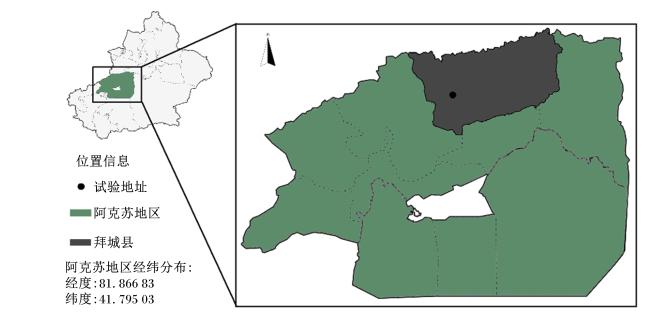
本试验所有动物程序均经新疆动物科学院饲料研究所协议管理与审查委员会批准(No.2 20230620)。
试验于新疆拜城县种羊场进行(图1),自拜城县种羊场购买50只70日龄德新肉用细毛羊公羔,预试期前进行驱虫2次,正式试验前对羊只进行称重[(30.77±3.17) kg],剔除异常个体。试验期共114 d,其中预试期14 d,正试期100 d,每20 d进行称重及体尺测量,试验期第100天进行屠宰。
图1 试验地点及经纬度

Fig.1 Test site and latitude and longitude

1.2 试验饲粮

基础饲粮为颗粒料,其组成及营养水平见表1。饲粮的干物质(DM)含量参考GB/T 6435—2014进行测定,粗蛋白质(CP)含量参考GB/T 6432—2018进行测定,粗脂肪(EE)含量参考GB/T 6433—2006进行测定,粗灰分(Ash)含量参考GB/T 6438—2007进行测定,钙(Ca)含量参考GB/T 13885—2017进行测定,磷(P)含量参考GB/T 6437—2018进行测定,中性洗涤纤维(NDF)含量参考GB/T 20806—2022进行测定,酸性洗涤纤维(ADF)含量参考NY/T 1459—2022进行测定。
表1 基础饲粮组成及营养水平(风干基础)

Table 1 Composition and nutrient levels of the basal diet (air-dry basis)%

项目 Items 含量 Content
原料 Ingredients
玉米秸秆 Corn stover 13.40
苜蓿草粉 Alfalfa powder 14.35
豆粕 Soybean meal 11.48
棉籽粕 Cottonseed meal 12.44
玉米 Corn 38.00
面粉 Flour 6.70
石粉 Limestone 1.00
碳酸氢钙 Ca(HCO3)2 0.19
碳酸氢钠 NaHCO3 0.77
食盐 NaCl 1.00
预混料 Premix1) 0.67
合计 Total 100.00
营养水平 Nutrient levels2)
干物质 DM 87.10
粗蛋白质 CP 16.17
粗脂肪 EE 1.83
粗灰分 Ash 11.65
中性洗涤纤维 NDF 36.89
酸性洗涤纤维 ADF 29.85
钙 Ca 0.69
磷 P 0.39
代谢能 ME/(MJ/kg) 15.71

1)每千克预混料含有 One kilogram of premix contained the following: VA 150 000 IU,VD3 56 500 IU,VE 8 000 IU,Se (as sodium selenite)14 mg,I (as potassium iodide)80 mg,Cu (as copper sulfate)290 mg,Mn (as manganese sulfate)1 925 mg,Zn (as zinc oxide) 2 050 mg,Co (as cobalt sulfate)24 mg。

2)代谢能为计算值[9],其他为测定值。ME was a calculated value[9], while the others were measured values.

1.3 试验管理

试验前对圈舍进行彻底消毒并对入圈试验羊做好耳号标记。预试期开始前,采用肌肉注射和饲喂驱虫药相结合的方式对试验动物进行驱虫。每日09:00对羊只饲喂槽中剩料进行称取,记录每只德新公羔前1 d采食量,每日10:00和18:00分2次定时进行单笼饲喂,保证羊只自由采食和饮水,为保证单笼食槽里具备充足饲粮,每日18:00进行食槽巡查并进行补饲,保证每只羊的剩料量>15%。

1.4 测定指标及方法

1.4.1 生长性能

正试期开始后,每日记录每只试验羊只的当日采食量,每20 d进行称重,试验期第100天计算的平均日采食量、平均日增重和料重比。通过100 d的统计分析得出每阶段德新羊生长性能状况。

1.4.2 RFI的计算及分组

使用SPSS 26.0对试验羊只干物质采食量、平均日增重和平均中期代谢体重进行线性分析,构建线性模型,计算试验羊只RFI,模型如下:

Yi=β0+β1(ADGi)+β2MBWi+ei

式中:ADGi为个体i的平均日增重,由公式ADGi=(FBWi-IBWi)/N计算得出,FBWi为个体i的试验末期体重,IBWi为个体i的试验初始体重,N是试验天数;MBWi为个体i的中期代谢体重,由公式MBWi=[1/2×(FBWi+IBWi)]0.75计算得出;β0为回归截距;β1、β2为固定值;ei为羊只i的RFI。
按照RFI的平均值和标准差(SD)将试验羊群分别归入高RFI组(H-RFI组,RFI>平均值+0.5SD,11只)、中RFI组(M-RFI组,平均值+0.5SD≥RFI≥平均值-0.5SD,18只)和低RFI组(L-RFI组, RFI<平均值-0.5SD,13只)。

1.4.3 血清生化指标

试验期第100天,通过颈静脉穿刺采集50只羔羊血样,每只羊采集血液10 mL,1 509.3×g离心15 min,将血清分装于1.5 mL的Eppendorf管中,-20 ℃冷冻保存。试验测定血清甲状腺激素、瘦素、促甲状腺释放激素和生长激素含量,具体测定步骤均参考南京建成生物工程研究所试剂盒说明书。

1.4.4 体组织和抗氧化指标

试验期第100天后,禁食24 h后,在屠宰场进行屠宰,屠宰采用大抹脖方法,30 min内测定头重、蹄重、毛皮重、心脏重、肝脏重、脾脏重、肺脏重、肾脏重、睾丸重,胃肠道分离后清洗内容物并测量胃肠道重量和肠道长度。
采集肝脏及十二指肠黏膜样品放置于液氮中速冻,委托南京建成生物工程研究所进行检测,通过比色法对总蛋白(TP)、丙二醛(MDA)含量,超氧化物歧化酶(SOD)、谷胱甘肽过氧化物酶(GSH-Px)、过氧化氢酶(CAT)活性及总抗氧化能力(T-AOC)进行测定。

1.5 数据统计与分析

数据使用SPSS 26.0进行单因素方差分析(one-way ANOVA),并采用Duncan氏法进行多重比较分析,P>0.05表示差异不显著,P≤0.05表示差异显著,P≤0.01表示差异极显著。

2 结果

2.1 不同RFI德新公羔生长性能和饲料效率差异

表2可知,H-RFI组德新公羔平均日采食量和RFI极显著高于L-RFI组和M-RFI组(P<0.01),料重比极显著高于L-RFI组和M-RFI组(P=0.01)。各组间平均日增重、中期代谢体重无显著差异(P>0.05)。
表2 不同RFI德新公羔生长性能和饲料效率

Table 2 Growth performance and feed efficiency of Dexin male lambs with different RFI

项目
Items
组别 Groups SEM P
P-value
L-RFI M-RFI H-RFI
动物数量 Number of animals 13 18 11
平均日采食量 ADFI/(kg/d) 1.61Aa 1.68Aa 1.83Bb 0.02 <0.01
平均日增重 ADG/(kg/d) 0.31 0.32 0.33 0.01 0.73
中期代谢体重 Mid-term metabolic weight/kg 15.13 14.77 15.24 0.16 0.47
初始体重 Initial weight/kg 31.16 29.96 31.18 0.50 0.52
终末体重 Final weight/kg 43.73 42.62 44.41 0.62 0.51
料重比 F/G 5.03Aa 5.16Aa 5.54Bb 0.07 0.01
剩余采食量 RFI -0.13Aa 0.00Bb 0.11Cc 0.01 <0.01

同行数据肩标无字母或相同字母表示差异不显著(P>0.05),不同小写字母表示差异显著(P≤0.05),不同大写字母表示差异极显著(P≤0.01)。下表同。

In the same row, values with no letter or the same letter superscripts mean no significant difference (P>0.05), while with different small letter superscripts mean significant difference (P≤0.05), and with different capital letter superscripts mean extremely significant difference (P≤0.01). The same as below.

2.2 不同RFI德新公羔体组织差异

表3可知,L-RFI组德新公羔心脏重、脾脏重、肾脏重显著高于H-RFI组(P<0.05),头重、蹄重、肝脏重、肺脏重极显著高于H-RFI组(P≤0.01)。M-RFI组空肠重显著高于H-RFI组(P<0.05)。
表3 不同RFI德新公羔体组织差异

Table 3 Differences in tissues of Dexin male lambs with different RFI

项目
Items
组别 Group SEM P
P-value
L-RFI M-RFI H-RFI
动物数量 Number of animals 13 18 11
头重 Head weight/kg 2.53Bb 2.40ABab 2.24Aa 0.04 0.01
蹄重 Hoof weight/kg 1.21Bb 1.11Bb 1.00Aa 0.02 0.01
毛皮重 Fur weight/kg 5.56 5.13 4.74 0.18 0.23
心脏重 Heart weight/g 285.16b 243.80ab 224.72a 9.84 0.04
肝脏重 Liver weight/g 929.49Bb 802.38Aa 713.35Aa 5.84 <0.01
肺脏重 Lung weight/g 755.26Bb 672.63Aa 615.36Aa 18.05 <0.01
脾脏重 Spleen weight/g 87.47b 86.31b 71.53a 2.77 0.04
肾脏重 Kidney weight/g 150.02b 132.32a 130.77a 3.37 0.03
睾丸重 Testicle weight/g 288.46 280.89 247.06 7.90 0.12
瘤胃重 Rumen weight/g 847.06 802.43 726.48 40.97 0.55
网胃重 Abomasum weight/g 86.60 89.15 80.95 4.55 0.67
瓣胃重 Reticulum weight/g 69.36 88.77 72.70 5.62 0.31
皱胃重 Omasum weight/g 163.84 181.62 165.03 6.73 0.49
十二指肠长 Length of duodenum/cm 34.47 32.78 29.72 1.24 0.43
十二指肠重 Duodenum weight/g 18.69 15.62 14.42 1.23 0.41
回肠长 Ileum length/cm 25.78 26.17 26.50 0.54 0.89
回肠重 Ileum weight/g 14.90 15.78 14.05 0.52 0.44
结肠长 Colon length/cm 61.80 67.67 65.20 3.16 0.76
结肠重 Colon weight/g 85.68 90.03 76.52 5.45 0.64
空肠长 Small intestine length/cm 2 428.60 2 521.17 2 362.00 48.55 0.43
空肠重 Small intestine weight/g 593.92ab 639.92b 514.83a 19.84 0.03

2.3 不同RFI德新公羔血清生化指标差异

表4可知,L-RFI组血清生长激素含量显著低于H-RFI组(P=0.05),甲状腺激素和瘦素含量极显著低于M-RFI组和H-RFI组(P<0.01)。
表4 不同RFI德新公羔血清生化指标差异

Table 4 Differences in serum biochemical indexes of Dexin male lambs with different RFI

项目
Items
组别 Groups SEM P
P-value
L-RFI M-RFI H-RFI
动物数量 Number of animals 13 18 11
生长激素 GH/(ng/mL) 1.79a 2.09ab 1.96b 0.05 0.05
促甲状腺激素 TSH/(mIU/L) 3.31 3.56 3.55 0.09 0.46
甲状腺激素 T4/(ng/mL) 90.97Aa 119.48Bb 132.59Bb 5.01 <0.01
瘦素 LEP/(ng/mL) 3.21Aa 3.99Bb 4.40Bb 0.12 <0.01

2.4 不同RFI德新公羔抗氧化指标差异

表5可知,肝脏抗氧化指标中,L-RFI组总蛋白含量极显著低于M-RFI组和H-RFI组(P<0.01),MDA含量显著高于M-RFI组(P<0.05),GSH-Px活性和T-AOC显著高于H-RFI组(P<0.05),L-RFI组和M-RFI组SOD活性显著高于H-RFI组(P=0.05)。
表5 不同RFI德新公羔肝脏抗氧化指标差异

Table 5 Differences in liver antioxidant indexes of Dexin lamb with different RFI

项目
Items
组别 Groups SEM P
P-value
L-RFI M-RFI H-RFI
动物数量 Number of animals 13 18 11
总蛋白 Total protein/(mg/mL) 7.43Aa 8.56Bb 8.95Bb 0.21 <0.01
超氧化物歧化酶 SOD/(U/mg prot) 1 068.88b 956.49b 939.65a 24.30 0.05
丙二醛 MDA/(nmol/mg prot) 0.47b 0.36a 0.44ab 0.02 0.03
谷胱甘肽过氧化物酶 GSH-Px/(U/mg prot) 191.32b 173.78ab 160.52a 4.71 0.02
过氧化氢酶 CAT/(U/mg prot) 40.97 37.96 38.13 0.72 0.17
总抗氧化能力 T-AOC/(mmol/g prot) 0.09b 0.08ab 0.08a 0.00 0.03
表6可知,十二指肠黏膜抗氧化指标中,M-RFI组总蛋白含量极显著高于L-RFI组和H-RFI组(P=0.01),L-RFI组GSH-Px活性显著低于M-RFI组(P<0.05),M-RFI组CAT活性显著高于H-RFI组(P<0.05),M-RFI组T-AOC显著高于L-RFI组和H-RFI组(P<0.05)。
表6 不同RFI德新公羔十二指肠黏膜抗氧化指标差异

Table 6 Differences in antioxidant indexes of duodenal mucosa of Dexin male lambs with different RFI

项目
Items
组别 Groups SEM P
P-value
L-RFI M-RFI H-RFI
动物数量 Number of animals 13 18 11
总蛋白 Total protein(mg/mL) 1.14Aa 1.48Bb 0.91Aa 0.09 0.01
超氧化物歧化酶 SOD/(U/mg prot) 684.73 669.90 581.53 19.27 0.08
丙二醛 MDA/(nmol/mg prot) 0.77 0.89 0.98 0.08 0.66
谷胱甘肽过氧化物酶 GSH-Px/(U/mg prot) 90.58a 146.76b 107.22ab 11.29 0.03
过氧化氢酶 CAT/(U/mg prot) 12.90ab 14.40b 8.62a 1.08 0.04
总抗氧化能力 T-AOC/(mmol/g prot) 0.11a 0.14b 0.12a 0.01 0.03

3 讨论

3.1 不同RFI德新公羔生长性能和饲料效率的差异

目前研究中,研究人员普遍发现RFI对动物个体的体尺及平均日增重无显著影响,只存在采食量差异。Knott等[10]通过构建不同预测模型对肉羊RFI与其生长性能进行评估,结果显示,RFI与采食量之间存在高度相关性,与不同时期平均日增重、初重、末重等无显著相关性。唐红玉[11]研究结果表明,RFI对绵羊的初重、末重无显著影响,但L-RFI组绵羊采食量比H-RFI组低31.5%。张小雪[12]和Zhang等[13]对于湖羊的研究结果中,H-RFI组与L-RFI组初重、末重及平均日增重均无显著差异,而平均日采食量存在极显著差异,与本试验结果较为一致,RFI对德新公羔平均日增重无显著影响,而与采食量具备极显著相关性,L-RFI组羊只较H-RFI组节省饲粮0.22 kg/d。在牛、猪RFI研究中,Arthur等[14]认为低RFI可以有效降低肉牛的生产成本,只与动物的饲料效率有关,并且认为低RFI牛只后代在相同生产水平下也会消耗更少的饲粮。Hoque等[15]认为在牛和猪的生产中RFI与饲料转化效率具有较强的遗传相关性,选择低RFI的牛和猪可以有效提高生产经济效益和胴体性状。

3.2 不同RFI德新公羔体组成的差异

反刍动物的胃肠道和肝脏是蛋白质合成与降解、底物循环和能量代谢的重要场所。Mcbride等[16]的研究中指出,反刍动物胃肠道及肝脏的生化过程对肉品、牛奶及羊毛生产影响较大。羊只皱胃中含有较高的酶和菌体蛋白,对食糜中的蛋白质进行消化吸收,皱胃则可吸收来自瓣胃分解产生的挥发性脂肪酸(VFA),并与VFA中的碳原子数目有关[17-19]。Zhang等[20]研究发现,L-RFI组湖羊瘤胃、肝脏、肺脏、肾脏重较H-RFI组更低,十二指肠肠道更短,与本试验结果不同。Meyer等[21]试验结果中不同RFI的生长羔羊瘤胃、网胃、瓣胃重无显著差异,L-RFI组生长羔羊脾脏重高于H-RFI组。这与本试验结果较为一致,L-RFI组德新公羔脾脏重显著高于H-RFI组,瘤胃、网胃、瓣胃重无显著差异。这表明不同RFI内脏差异可能与品种及羊只主要生产方向有关,具体原因尚不明确。肠道是反刍动物营养物质消化吸收的重要场所,肠道的长度与食糜在肠道中的停留时间密切相关。王俊奎等[22]关于不同RFI的滩羊研究结果表明,H-RFI组肠道长度比L-RFI组平均长230.96 cm,结肠长度显著高于L-RFI组。而莫负涛[23]在不同RFI的湖羊研究中表明,L-RFI组十二指肠长度显著高于M-RFI组和H-RFI组,盲肠长度显著低于M-RFI组。而本试验结果显示,M-RFI组空肠重显著高于H-RFI组,L-RFI组十二指肠长较H-RFI组提高了15.98%,空肠长提高了3%,与上述试验结果有不同之处。

3.3 不同RFI德新公羔血清生化指标的差异

生长激素在绵羊生产中被证明与产奶量有关,并与羊奶中的蛋白质含量、酪蛋白含量、乳脂率和乳糖率有关[24]。瘦素是由167个氨基酸组成的4螺旋束结构蛋白,瘦素含量与全身的脂肪量成正比,主要调节机体采食信号、加速新陈代谢和脂肪细胞分解[25-26]。甲状腺激素是甲状腺的主要分泌产物,在维持细胞正常生长、分化代谢中起主要作用[27-28]。促甲状腺激素由下丘脑释放,通过促甲状腺激素释放激素(TRH)-受体-2连接的G-蛋白-蛋白激酶C(PKC)途径发挥作用,刺激垂体前叶促甲状腺素合成和释放甲状腺激素,在细胞凋亡、增殖、分化过程中起到特殊作用[29]。Zhang等[20]关于湖羊的研究结果显示,H-RFI组血清甲状腺激素含量显著高于L-RFI组,与本试验结果H-RFI组德新公羔血清甲状腺激素含量显著高于L-RFI组较为一致。李伟等[30]关于安格斯肉牛的研究中,L-RFI组血清瘦素含量显著高于H-RFI组,而本试验研究中,H-RFI组德新公羔血清中瘦素含量极显著高于L-RFI组,这可能与德新肉用细毛羊产毛性能相关,具体差异原因仍需进一步研究。Richardson等[31]关于安格斯牛的结果表明,血清瘦素含量与RFI呈正相关,RFI越高,瘦素含量越高,与本试验结果较为一致。Kelly等[32]有关不同RFI犊牛的结果显示,L-RFI组的犊牛血清甲状腺激素含量低于H-RFI组,这与本试验结果中L-RFI组德新公羔血清甲状腺激素显著低于H-RFI组较为一致。

3.4 不同RFI德新公羔肝脏及十二指肠黏膜抗氧化能力的差异

氧化应激是由于活性氧(ROS)形成超过细胞氧化能力时的不平衡状态,目前已成为畜禽养殖生产中关注的主要问题[33]。超氧化物歧化酶是自然界已知最有效的抗氧化剂之一,是细胞防御氧化应激和抵御ROS介导损伤的重要组成部分[34-35],超氧化物歧化酶也具备抗炎、预防癌细胞扩散等作用,对动物机体健康具有重要作用[36]。丙二醛是细胞内多不饱和脂肪酸过氧化的最终产物之一,自由基的增加会导致丙二醛产生过量,是机体氧化应激的标志产物[37]。谷胱甘肽过氧化物酶是一种含硒蛋白,可还原脂质或非脂质氢过氧化物,同时氧化谷胱甘肽,目前研究指出谷胱甘肽过氧化物酶可以在抗氧化过程中诱导细胞正常分化,并歧化超氧化物歧化酶产生的过氧化氢(H2O2)[38]。过氧化氢酶在H2O2的适应性反应中起到辅助谷胱甘肽过氧化物酶的作用,过氧化氢酶中含有血红素作为辅基,在催化过程中发挥电子信息传递的作用[39]
最新研究表明,十二指肠黏膜在动物机体中具备氧气(O2)、一氧化氮(NO)、硫化氢(H2S)微循环、去除有毒物质、促进祖细胞分化和防止细胞早期凋亡的保护作用[40]。肝脏是动物机体重要的免疫器官,ROS主要通过细胞色素P450酶在线粒体和肝细胞内质网中产生,肝细胞中的蛋白质、脂质和DNA会受到ROS的主要影响而产生病变,通过检测抗氧化指标可以有效判断肝脏损伤程度[41]。Casal等[42]在不同RFI对公牛肝脏抗氧化性研究中显示,L-RFI组公牛谷胱甘肽过氧化物酶活性显著高于H-RFI组,超氧化物歧化酶活性极显著高于H-RFI组。Russell等[43]在肉牛研究中指出,高饲料效率的肉牛血清中超氧化物歧化酶和谷胱甘肽过氧化物酶活性更高,与本试验结果较为一致。Louveau等[44]最新研究指出,低RFI猪的抗氧化过程中的基因和蛋白质表达提高,饲料效率可能与抗氧化过程有关。在本试验结果中,L-RFI组羊只十二指肠黏膜的谷胱甘肽过氧化物酶活性显著低于M-RFI组,M-RFI组羊只十二指肠黏膜过氧化氢酶活性显著高于H-RFI组,间接证明RFI的高低与动物机体抗氧化能力密切相关。但目前有关十二指肠黏膜抗氧化能力对RFI的影响研究较少,具体影响机制尚不明确。

4 结论

本研究结果显示,在相同的饲养条件下,低RFI羊可以有效减少饲料消耗,并不会对生长性能产生显著影响,抗氧化能力较H-RFI羊具有提高趋势。这表明RFI在德新肉用细毛羊选种育种过程具有一定的优势。
[1]
ALENDE M, PORDOMINGO A J, ANDRAE J G, et al. Residual feed intake in cattle:physiological basis.A review[J]. Revista Argentina de Producción Animal, 2016, 36(2):49-56.

[2]
HENDRIKS J, SCHOLTZ M M, NESER F W C. Possible reasons for differences in residual feed intake:an overview[J]. South African Journal of Animal Science, 2013, 43(5):107-110.

[3]
HERD R M, ARTHUR P F. Physiological basis for residual feed intake[J]. Journal of Animal Science, 2009, 87(14):E64-E71.

[4]
KOCH R M, SWIGER L A, CHAMBERS D, et al. Efficiency of feed use in beef cattle[J]. Journal of Animal Science, 1963, 22(2):486-494.

[5]
BASARAB J A, PRICE M A, AALHUS J L, et al. Residual feed intake and body composition in young growing cattle[J]. Canadian Journal of Animal Science, 2003, 83(2):189-204.

[6]
REDDEN R R, SURBER L M M, GROVE A V, et al. Growth efficiency of ewe lambs classified into residual feed intake groups and pen fed a restricted amount of feed[J]. Small Ruminant Research, 2013, 114(2/3):214-219.

[7]
KELLY A K, MCGEE M, CREWS D H J, et al. Effect of divergence in residual feed intake on feeding behavior,blood metabolic variables, and body composition traits in growing beef heifers[J]. Journal of Animal Science, 2010, 88(1):109-123.

[8]
SHARMA V K, KUNDU S S, PRUSTY S, et al. Nutrient utilization,growth performance and blood metabolism of Mula buffalo calves (Bubalus bubalis) selected for different residual feed intake[J]. Archives of Animal Nutrition, 2016, 70(6):455-469.

[9]
中华人民共和国农业部. 肉羊饲养标准:NY/T 816—2004[S]. 北京: 中国农业出版社, 2004.

Ministry of Agriculture of the PRC. Feeding standard of meat-producing sheep and goats:NY/T 816—2004[S]. Beijing: China Agriculture Press, 2004. (in Chinese)

[10]
KNOTT S A, CUMMINS L J, DUNSHEA F R, et al. The use of different models for the estimation of residual feed intake (RFI) as a measure of feed efficiency in meat sheep[J]. Animal Feed Science and Technology, 2008, 143(1/2/3/4):242-255.

[11]
唐红玉. 剩余采食量对绵羊生长性能、胴体特性及肉品质的影响[D]. 硕士学位论文. 杨凌: 西北农林科技大学, 2024.

TANG H Y. Effect of residual feed intake on sheep growth performance,carcass traits and meat quality[D]. Master’s Thesis. Yangling: Northwest A&F University, 2024. (in Chinese)

[12]
张小雪. 不同剩余采食量羔羊生产性能和瘤胃微生物区系及肝脏转录组研究[D]. 博士学位论文. 兰州: 兰州大学, 2019.

ZHANG X X. Study on production performance,rumen microflora and liver transcriptome of lambs with different residual feed intake[D]. Ph.D.Thesis. Lanzhou: Lanzhou University, 2019. (in Chinese)

[13]
ZHANG Y K, ZHANG X X, LI F D, et al. Characterization of the rumen microbiota and its relationship with residual feed intake in sheep[J]. Animal, 2021, 15(3):100161.

[14]
ARTHUR J P F, HERD R M. Residual feed intake in beef cattle[J]. Revista Brasileira de Zootecnia, 2008,37:269-279.

[15]
HOQUE M A, SUZUKI K. Genetics of residual feed intake in cattle and pigs:a review[J]. Asian-Australian Journal of Animal Science, 2009, 22(5):747-755.

[16]
MCBRIDE B W, KELLY J M. Energy cost of absorption and metabolism in the ruminant gastrointestinal tract and liver:a review[J]. Journal of Animal Science, 1990, 68(9):2997-3010.

[17]
MASSON M J, PHILLIPSON A T. The composition of the digesta leaving the abomasum of sheep[J]. The Journal of Physiology, 1952, 116(1):98-111.

[18]
WILLIAMS V J, HUTCHINGS T R, ARCHER K A. Absorption of volatile fatty acids from the reticulo-rumen and abomasum of sheep[J]. Australian Journal of Biological Sciences, 1968, 21(1):89-96.

PMID

[19]
万发春, 宋阳, 兰欣怡, 等. 反刍动物全消化道营养调控理论探讨[J]. 动物营养学报, 2023, 35(5):2721-2728.

DOI

WAN F C, SONG Y, LAN X Y, et al. Discussion on nutrition regulation theory of total digestive tract in ruminants[J]. Chinese Journal of Animal Nutrition, 2023, 35(5):2721-2728. (in Chinese)

DOI

[20]
ZHANG X X, WANG W M, MO F T, et al. Association of residual feed intake with growth and slaughtering performance,blood metabolism,and body composition in growing lambs[J]. Scientific Reports, 2017, 7(1):12681.

[21]
MEYER A M, VRASPIR R A, ELLISON M J, et al. The relationship of residual feed intake and visceral organ size in growing lambs fed a concentrate- or forage-based diet[J]. Livestock Science, 2015,176:85-90.

[22]
王俊奎, 陶金忠, 和东迁, 等. 极高、极低剩余采食量滩羊屠宰性能及内脏器官重量差异分析[J]. 中国草食动物科学, 2021, 41(4):27-31.

WANG J K, TAO J Z, HE D Q, et al. Analysis on difference of slaughter performance and weight of internal organs of Tan sheep with extremely high and extremely low residual feed intake[J]. China Herbivore Science, 2021, 41(4):27-31. (in Chinese)

[23]
莫负涛. 不同RFI育肥羔羊生产性能和体组成及消化代谢研究[D]. 硕士学位论文. 兰州: 甘肃农业大学, 2016.

MO F T. Study on production performance,body composition traits,digestion metabolism in sheep with different RFI[D]. Master’s Thesis. Lanzhou: Gansu Agricultural University, 2016. (in Chinese)

[24]
DETTORI M L, PAZZOLA M, PIRA E, et al. The sheep growth hormone gene polymorphism and its effects on milk traits[J]. Journal of Dairy Research, 2015, 82(2):169-176.

DOI PMID

[25]
ADAMS T E, EPA V C, GARRETT T P, et al. Structure and function of the type 1 insulin-like growth factor receptor[J]. Cellular and Molecular Life Sciences, 2000, 57(7):1050-1093.

DOI PMID

[26]
麦麦提依明·麦麦提力. 瘦素、生长激素释放肽及脂联素与阿勒泰羊脂肪沉积的研究[D]. 硕士学位论文. 乌鲁木齐.新疆农业大学, 2022.

MAIMAITILI M M T Y M. Study on the relationship between leptin,ghrelin and adiponectin fat deposition in Altay sheep[D]. Master’s Thesis. Urumqi: Xinjiang Agricultural University. (in Chinese).

[27]
PASCUAL A, ARANDA A A. Thyroid hormone receptors,cell growth and differentiation[J]. Biochimica et Biophysica Acta, 2013, 1830(7):3908-3916.

[28]
YEN P M. Physiological and molecular basis of thyroid hormone action[J]. Physiological Reviews, 2001, 81(3):1097-1142.

DOI PMID

[29]
SARAPURA V D, SAMUEL M H. Thyroid-stimulating hormone[M]//MELMED S. The pituitary.New York: Academic Press,2017:163-201.

[30]
李伟, 李想, 叶柏平, 等. 肥育安格斯阉牛血清瘦素与剩余采食量、生长性能和脂代谢指标的表型关系[J]. 动物营养学报, 2023, 35(11):7260-7269.

DOI

LI W, LI X, YE B P, et al. Phenotypic relationships between serum leptin and residual feed intake,growth performance and lipid metabolism indices of fattening Angus steers[J]. Chinese Journal of Animal Nutrition, 2023, 35(11):7260-7269. (in Chinese)

[31]
RICHARDSON E C, HERD R M, ARCHER J A, et al. Metabolic differences in Angus steers divergently selected for residual feed intake[J]. Australian Journal of Experimental Agriculture, 2004, 44(5):441-452.

[32]
KELLY A K, MCGEE M, CREWS D H J, et al. Repeatability of feed efficiency,carcass ultrasound,feeding behavior,and blood metabolic variables in finishing heifers divergently selected for residual feed intake[J]. Journal of Animal Science, 2010, 88(10):3214-3225.

[33]
LEE M T, LIN W C, YU B, et al. Antioxidant capacity of phytochemicals and their potential effects on oxidative status in animals-a review[J]. Asian-Australasian Journal of Animal Sciences, 2017, 30(3):299-308.

[34]
BAFANA A, DUTT S, KUMAR A, et al. The basic and applied aspects of superoxide dismutase[J]. Journal of Molecular Catalysis B:Enzymatic, 2011, 68(2):129-138.

[35]
YOUNUS H. Therapeutic potentials of superoxide dismutase[J]. International Journal of Health Sciences, 2018, 12(3):88-93.

[36]
NOOR R, MITTAL S, IQBAL J. Superoxide dismutase-applications and relevance to human diseases[J]. Medical Science Monitor, 2002, 8(9):RA210-RA215.

[37]
GAWEŁ S, WARDAS M, NIEDWOROK E, et al. Malondialdehyde(MDA) as a lipid peroxidation marker[J]. Wiadomosci Lekarskie (Warsaw,Poland:1960), 2004, 57(9/10):453-455.

[38]
KAYNAR H, MERAL M, TURHAN H, et al. Glutathione peroxidase,glutathione-S-transferase,catalase,xanthine oxidase,Cu-Zn superoxide dismutase activities,total glutathione,nitric oxide,and malondialdehyde levels in erythrocytes of patients with small cell and non-small cell lung cancer[J]. Cancer Letters, 2005, 227(2):133-139.

[39]
SEPASI TEHRANI H, MOOSAVI-MOVAHEDI A A. Catalase and its mysteries[J]. Progress in Biophysics & Molecular Biology, 2018,140:5-12.

[40]
YANDRAPU H, SAROSIEK J. Protective factors of the gastric and duodenal mucosa:an overview[J]. Current Gastroenterology Reports, 2015, 17(6):24.

[41]
CICHOŻ-LACH H, MICHALAK A. Oxidative stress as a crucial factor in liver diseases[J]. World Journal of Gastroenterology, 2014, 20(25):8082-8091.

[42]
CASAL A, GARCIA-ROCHE M, NAVAJAS E A, et al. Differential hepatic oxidative status in steers with divergent residual feed intake phenotype[J]. Animal, 2020, 14(1):78-85.

DOI PMID

[43]
RUSSELL J R, SEXTEN W J, KERLEY M S, et al. Relationship between antioxidant capacity, oxidative stress, and feed efficiency in beef steers[J]. Journal of Animal Science, 2016, 94(7):2942-2953.

DOI PMID

[44]
LOUVEAU I, VINCENT A, TACHER S, et al. Increased expressions of genes and proteins involved in mitochondrial oxidation and antioxidant pathway in adipose tissue of pigs selected for a low residual feed intake[J]. Journal of Animal Science, 2016, 94(12):5042-5054.

DOI PMID

文章导航

/