研究论文

基于网络药理学和分子对接探究罗汉果提取物抗炎作用机制

  • 张进 ,
  • 武慧宁 ,
  • 赵林露 ,
  • 郭梦如 ,
  • 何洁仪 ,
  • 刘晓曦 , *
展开
  • 广东海洋大学滨海农业学院动物医学系,湛江 524000
*刘晓曦,副教授,硕士生导师,E-mail:

张 进(1997—),男,贵州遵义人,硕士研究生,动物营养与饲料科学专业。E-mail:

Copy editor: 菅景颖

收稿日期: 2024-08-05

  网络出版日期: 2025-02-16

基金资助

国家自然科学基金青年科学基金(31902314)

广东海洋大学南海学者计划(002029002005)

To Explore Anti-Inflammatory Mechanism of Momordica grosvenori Extract Based on Network Pharmacology and Molecular Docking

  • ZHANG Jin ,
  • WU Huining ,
  • ZHAO Linlu ,
  • GUO Mengru ,
  • HE Jieyi ,
  • LIU Xiaoxi , *
Expand
  • Department of Veterinary Medicine, College of Coastal Agricultural Sciences, Guangdong Ocean University, Zhanjiang 524000, China
*associate professor, E-mail:

Received date: 2024-08-05

  Online published: 2025-02-16

摘要

本试验旨在探究罗汉果提取物对动物炎症的调控作用及潜在分子机制。首先进行小鼠试验,将18只C57/BL6小鼠随机分为3组,每组6只。CON组和LPS组饲喂正常饲粮,SGE组在饲喂正常饲粮的基础上灌胃罗汉果提取物(100 mg/kg BW)14 d;在第15天,CON组小鼠不做处理,LPS组和SGE组小鼠腹腔注射脂多糖(LPS)(5 mg/kg BW)建立炎症模型。LPS注射6 h后处死全部小鼠采样,检测小鼠血清中免疫球蛋白G(IgG)和免疫球蛋白M(IgM)含量以及空肠和脾脏中炎性因子的表达情况。接着,通过中药系统药理学与分析平台数据库(TCMSP)筛选罗汉果提取物的主要有效成分及作用靶点,通过GeneCards、DisGeNET和OMIM数据库收集炎症的靶点;采用靶点数据构建蛋白质-蛋白质相互作用(PPI)网络图,并进行GO功能和KEGG通路富集分析。最后,通过PyMOL和AutodockTools软件将度值排名前5的核心靶点与有效成分进行分子对接,验证关键有效成分与核心靶点的结合活性。结果表明:1)灌胃罗汉果提取物显著或极显著升高了LPS诱导的炎症模型小鼠血清中IgG和IgM含量(P<0.05或P<0.01),显著或极显著降低了空肠中肿瘤坏死因子-α(TNF-α)和白细胞介素-1β(IL-1β)和脾脏中白细胞介素-6(IL-6)的mRNA表达量(P<0.05或P<0.01),并显著增加了脾脏中抗炎因子白细胞介素-10(IL-10)的mRNA表达量(P<0.05)。2)网络药理学分析显示,罗汉果提取物抗炎有效成分有3个:山奈酚、川芎哚和酒渣碱;筛选出度值前5的核心靶点为丝/苏氨酸蛋白激酶1(AKT1)、半胱氨酸天冬氨酸蛋白酶3(CASP3)、表皮生长因子受体(EGFR)、基质金属蛋白酶9(MMP9)和前列腺素内过氧化物合酶2(PTGS2);GO功能富集分析获得了324个生物过程、54个细胞组分以及99个分子功能;KEGG通路富集分析得到105条相关信号通路,主要涉及磷脂酰肌醇3激酶-蛋白激酶B(PI3K-AKT)信号通路、白细胞介素-17(IL-17)信号通路和肿瘤坏死因子(TNF)信号通路。3)分子对接结果显示,核心靶点与有效成分结合自由能均小于0 kJ/mol,表明罗汉果提取物有效成分与核心靶点能自发结合。综上所述,本研究筛选出了罗汉果提取物发挥抗炎作用的主要活性成分及作用靶点,并探究了其分子机制,可为后续罗汉果提取物的应用与开发提供理论依据。

本文引用格式

张进 , 武慧宁 , 赵林露 , 郭梦如 , 何洁仪 , 刘晓曦 . 基于网络药理学和分子对接探究罗汉果提取物抗炎作用机制[J]. 动物营养学报, 2025 , 37(2) : 1325 -1339 . DOI: 10.12418/CJAN2025.114

Abstract

The objective of this study was to examine the regulatory impact and potential molecular mechanism of Siraitia grosvenorii extract on inflammation in animals. First, the mice test was carried. Eighteen C57/BL6 mice were divided into 3 groups, with 6 mice in each group. Mice in CON group and LPS group were fed a normal diet, and mice in PSE group were given Siraitia grosvenorii extract (100 mg/kg BW) intragastrically on the basis of feeding the normal diet for 14 days. On the 15th day, mice in the CON group were not treated, and those in the LPS group and PSE group were injected intraperitoneally with LPS (5 mg/kg BW) to establish an inflammatory model. Six hours after LPS injection, all mice were sacrificed for sampling, and the contents of immunoglobulin G (IgG) and immunoglobulin M (IgM) in serum and the expression of inflammatory factors in jejunum and spleen were determined. Subsequently, the principal effective constituents and targets of Siraitia grosvenorii extract were identified through a screening process conducted using the Traditional Chinese Medicine Systems Pharmacology and Analysis Platform Database (TCMSP). Additionally, the targets associated with inflammation were collated through GeneCards, DisGeNET and OMIM databases. A protein-protein interaction (PPI) network diagram was constructed using the target data, and GO function and KEGG pathway enrichment analysis were performed. Subsequently, PyMOL and AutodockTools software were employed to undertake molecular docking between the five most prominent core targets and the effective constituents, thereby corroborating the binding efficacy of the pivotal effective constituents with the core targets. The results showed as follows: 1) the administration of Siraitia grosvenorii extract could significantly or extremely significantly increase the contents of serum IgG and IgM of mice with LPS-induced inflammation (P<0.05 or P<0.01). Furthermore, it could significantly or extremely significantly reduce the mRNA expression levels of tumor necrosis factor-α (TNF-α), interleukin-1β (IL-1β) in jejunum and interleukin-6 (IL-6) in spleen (P<0.05 or P<0.01), and it also could significantly increase the mRNA expression levels of interleukin-10 (IL-10) in spleen (P<0.05). 2) A network pharmacological analysis revealed the presence of three anti-inflammatory effective constituents in Siraitia grosvenorii extract, namely kaempferol, chuanxiongole and rosmarinic acid. The top five core targets were identified as serine threonine protein kinase 1 (AKT1), cysteine aspartic protease 3 (CASP3), epidermal growth factor receptor (EGFR), matrix metalloproteinase 9 (MMP9) and prostaglandin endoperoxide synthase 2 (PTGS2). A total of 324 biological processes, 54 cell components and 99 molecular functions were identified through the GO functional enrichment analysis. A total of 105 related signaling pathways were identified through the KEGG pathway enrichment analysis, with the phosphatidylinositol 3 kinase-protein kinase B (PI3K-Akt) signaling pathway, interleukin-17 (IL-17) signaling pathway and tumor necrosis factor (TNF) signaling pathway representing the most prominent among them. 3) The results of the molecular docking demonstrated that the binding free energy of the core targets and the effective constituents was less than 0 kJ/mol, indicating that the Siraitia grosvenorii extract was capable of spontaneous binding to the core target. In summary, this study screens the effective constituents and targets of Siraitia grosvenorii extract in the context of inflammation, and investigates its underlying molecular mechanisms. This research provides a theoretical foundation for the subsequent application and advancement of Siraitia grosvenorii extract.

动物胃肠道具有调节营养吸收等多种生理功能[1],肠道健康对动物生长发育至关重要。在畜禽生产中,细菌、病毒、过敏原和毒素等多种致病因素会诱导肠道炎症或损伤,从而给畜禽健康带来极大危害[2]。长期以来,针对动物肠道炎症主要采用抗生素和生物制剂等手段进行治疗,但抗生素的滥用以及动物源性耐药菌可能会对人类健康造成多种潜在危害。农业农村部第194号公告要求,2020年1月1日,退出除中药外的所有促生长类药物饲料添加剂品种。因此,寻找一种安全、有效、可替代的治疗方式极为重要。
目前,植物提取物因具有来源广泛、安全性高、副作用小等特点被广泛应用[3]。有研究表明,植物提取物可通过调节肠道微生物结构缓解肠道炎症[4]。但是,植物提取物具有多成分、多靶点等特点,用传统的方式研究其活性成分存在一定的困难。网络药理学融合了系统生物学、蛋白质组学和药理学等多学科的特点,有助于分析和解决植物提取物复杂性和多组分的难题[5-6]。网络药理学可以根据疾病与中药活性成分、靶点、信号通路之间的复杂联系构建网络模型,通过计算分析和试验相结合的方法,来识别新的作用靶点,预测药物疗效和潜在的副作用,并设计更有效和更安全的治疗干预措施[7]。利用网络药理学分析阐述植物提取物的作用机制与信号通路已成了一种常见的手段。分子对接是一种基于已知配体和受体结构的计算化学工具,用于模拟生物活性成分与核心靶点之间的结合和相互作用[8]
罗汉果(Siraitia grosvenorii)是葫芦科罗汉果属攀缘草本植物的果实,主产地为广西、广东、江西、湖南、贵州等地[9],是一种药食同源中药材,其化学成分主要是三萜皂苷等,主要被开发为甜味剂使用[10]。罗汉果提取物(Siraitia grosvenorii extract,SGE)含有多糖类、黄酮类、氨基酸和木脂素等多种活性成分,具有抗炎、护肝、缓解肺部损伤等作用[11]。在畜禽生产中,罗汉果可以恢复猪卵母细胞线粒体功能[12];罗汉果渣能提高广西麻鸡的屠宰性能,缓解其营养性贫血[13]。本课题组前期研究发现,罗汉果提取物具有调节小鼠巨噬细胞极化的作用[14],但罗汉果提取物中改善炎症的主要有效成分及分子机制尚不清楚。基于此,本文通过脂多糖(LPS)诱导小鼠建立炎症模型,探究罗汉果提取物对动物炎症的调控作用,并用网络药理学分析以及分子对接技术探究罗汉果提取物主要有效成分及分子机制,以期为研究罗汉果提取物防治动物肠炎提供坚实的理论基础。

1 材料与方法

1.1 小鼠试验

1.1.1 伦理声明

本研究中的动物试验方案经广东海洋大学动物实验伦理委员会审核批准,批准号12315。

1.1.2 试验材料

罗汉果提取物100 g(提取物比例10∶1);白细胞介素-6(IL-6)、白细胞介素-10(IL-10)、白细胞介素-1β(IL-1β)和肿瘤坏死因子-α(TNF-α)引物由上海生工生物股份有限公司合成;免疫球蛋白G(IgG)和免疫球蛋白M(IgM)检测试剂盒购于江苏酶免实业有限公司;LPS购于Sigma公司。

1.1.3 试验动物分组

试验选取18只4~5周龄雄性C57/BL6小鼠用于建立炎症模型。小鼠购买自广州福鼠阁生物科技有限公司,购买后于室温[(26±1) ℃]、相对湿度70%~80%的动物房饲养7 d,自由采食及饮水。待其适应新的饲养环境后,随机分为3组,分别为CON组、LPS组、SGE组,每组6只。第1~14天,CON组、LPS组、SGE组均饲以正常饲粮,自由饮水,SGE组每日灌胃罗汉果提取物(100 mg/kg BW);第15天,CON组不做处理,LPS组和SGE组腹腔注射LPS(5 mg/kg BW),建立炎症模型,LPS注射6 h后处死全部小鼠采样。试验期间记录小鼠的采食量和体重变化。

1.1.4 空肠和脾脏中炎症因子mRNA表达量以及血清免疫指标测定

采用实时荧光定量PCR法检测小鼠空肠和脾脏中IL-6、IL-10、IL-1βTNF-α的mRNA表达量;酶联免疫吸附测定法检测血清中IgG和IgM的含量,试验步骤根据试剂盒说明书进行操作。

1.1.5 数据统计与分析

采用GraphPad Prism 9.0.2统计软件进行数据分析,以单因素方差分析和秩和检验确定差异的显著性。结果以“平均值±标准误”表示,P<0.05表示差异显著,P<0.01表示差异极显著。

1.2 罗汉果提取物活性成分和作用靶点筛选

在中药系统药理学数据库与分析平台(TCMSP)(https://old.tcmsp-e.com/tcmsp.php)中,以“罗汉果”作为关键词进行搜索,获得的罗汉果提取物活性成分以口服生物利用度(OB)≥30%、类药性(DL)≥0.18作为条件再次进行筛选并导出筛选结果。在PUBCHEM数据库(https://pubchem.ncbi.nlm.nih.gov/)中获取到对应的SMILES号,通过SMILES号在SwissTargetADME数据库(http://www.swissadme.ch/index.php)中以GI absorption 结果为High,同时Druglikeness 中的Lipinski 、Ghose 、Veber 、Egan 、Muegge预测结果中有2个或2个以上为Yes作为筛选条件,最终获得罗汉果提取物的有效成分。在SwissTargetPrediction数据库(http://www.swisstargetprediction.ch/)输入有效成分并获得对应靶点,利用Uniprot数据库获取其靶点的规范名称。

1.3 炎症靶点获取与筛选

将“inflammation”作为搜索词,从GeneCards(https://www.genecards.org/)、OMIM(https://www.omim.org/)以及DisGeNET数据库(https://www.disgenet.org/)中获得炎症相关的疾病靶点,整理并删除重复基因,获得炎症靶点。

1.4 罗汉果提取物-炎症交集靶点确定

将罗汉果提取物有效成分的作用靶点与炎症靶点导入Venny2.1.0(https://bioinfogp.cnb.csic.es/tools/venny/)获得交集靶点。

1.5 交集靶点靶蛋白相互作用网络构建

将交集靶点输入STRING数据库(https://cn.string-db.org/)中,取置信度为0.4得到蛋白质-蛋白质相互作用(PPI)网络图,下载为tsv格式,用Cytoscape 3.10.1软件绘制更清晰的PPI网络图,并利用CytoNCA插件进行网络拓扑分析,通过Degree、Betweenness(BC)以及Closeness(CC)筛选出前5个靶点作为关键核心靶点。

1.6 GO功能与KEGG通路富集分析

将交集靶点数据输入David数据平台(https://david.ncifcrf.gov/tools.jsp),以P<0.05为条件进行GO功能与KEGG通路富集分析,并利用微生信平台(https://www.bioinformatics.com.cn/)对GO功能分析排名前10的条目和KEGG通路富集分析排名前20通路进行可视化处理并作图。

1.7 分子对接

在TCMSP中按Chemical name搜索活性成分找到Download structure,下载得到活性成分小分子的mol2格式文件。将文件导入AutodockTools软件将小分子进行加氢、设置为配体、选择扭转键等处理,最后保存为pdbqt格式的文件。
在PDB数据库(https://www.rcsb.org/)中以X-RAY DIFFRACTION为筛选条件,筛选X-ray对应A值较小(分辨率<3)较为纯净的蛋白,并下载核心靶点的pdb文件。然后利用PyMol和AutodockTools软件将筛选的蛋白进行去水、加氢、设置为受体等处理,最后保存为pdbqt格式。在AutodockTools软件选择Grid,导入相应的受体与配体的pdbqt文件,选择对接方式为半柔性对接,用GridBox包含住受体,保存为gpf格式。运行AtuoGrid,设置GENETIC为50,其他参数设为默认值,结果保存为dpf格式。接下来运行Atuodock,运行结束后重新打开软件进行分析,将结合能最好的构象作为最佳构象并保存为pdbqt格式。最后利用PyMol软件进行可视化处理。

2 结果与分析

2.1 罗汉果提取物对小鼠炎症的作用

2.1.1 罗汉果提取物对小鼠体重和采食量的影响
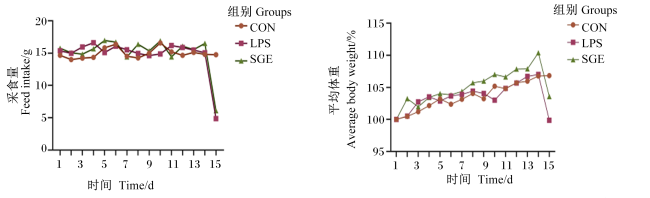
图1所示,灌胃第8~14天,SGE组小鼠的平均体重均高于CON组和LPS组,表明罗汉果提取物促进了小鼠的生长;在试验第15天,对LPS组和SGE组小鼠腹腔注射LPS后,采食量和平均体重出现快速下降。
图1 罗汉果提取物对LPS诱导炎症模型小鼠体重和采食量的影响

Fig.1 Effects of Siraitia grosvenorii extract on body weight and feed intake of LPS-induced inflammatory model mice

2.1.2 罗汉果提取物对小鼠血清免疫指标的影响

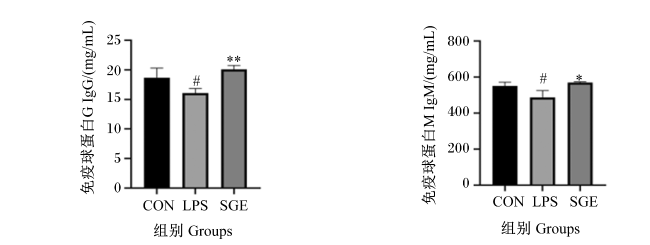
图2所示,与CON组相比,LPS组小鼠血清中IgG和IgM的含量显著降低(P<0.05);与LPS组相比,SGE组小鼠血清中IgG含量极显著升高(P<0.01),IgM含量显著升高(P<0.05)。上述结果表明,罗汉果提取物可以改善LPS引起的小鼠免疫失衡。
图2 罗汉果提取物对LPS诱导炎症模型小鼠血清免疫指标的影响

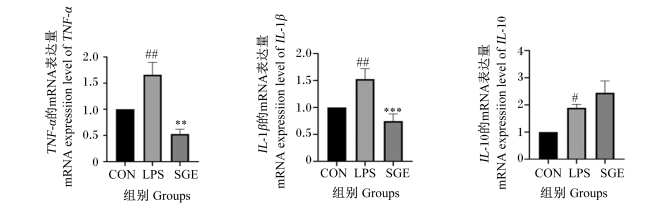
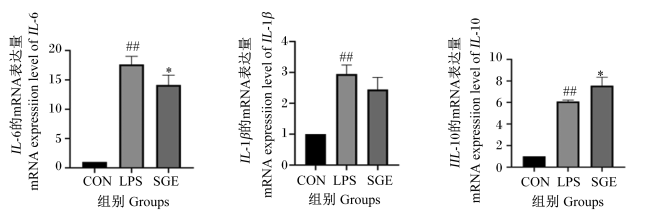
LPS组数据柱标注“#”和“##”表示与CON组相比差异显著(P<0.05);SGE组数据柱标注“*”和“**”分别表示与LPS组相比差异显著(P<0.05)和极显著(P<0.01)。图3图4同。

Fig.2 Effects of Siraitia grosvenorii extract on serum immune indexes of LPS-induced inflammatory model mice

Data columns of LPS group labeled “#” and “##” indicated significant (P<0.05) and extremely significant difference (P<0.01) compared with the CON group (P<0.05), respectively; data columns of SGE group labeled “*” and “**” indicated significant (P<0.05) and extremely significant difference (P<0.01) compared with the LPS group, respectively. The same as Fig.3 and Fig.4.

2.1.3 罗汉果提取物对小鼠空肠中炎症因子表达的影响

图3所示,与CON组相比,LPS组小鼠空肠中促炎因子TNF-αIL-1β的mRNA表达量极显著升高(P<0.01),抗炎因子IL-10的mRNA表达量显著升高(P<0.05);与LPS组相比,SGE组小鼠空肠中TNF-αIL-1β的mRNA表达量均极显著降低(P<0.01),IL-10的mRNA表达量有所升高(P>0.05)。
图3 罗汉果提取物对LPS诱导炎症模型小鼠空肠中炎症因子表达的影响

Fig.3 Effects of Siraitia grosvenorii extract on expression of inflammatory factors in jejunum of LPS-induced inflammatory model mice

2.1.4 罗汉果提取物对小鼠脾脏中炎症因子的影响

图4所示,与CON组相比,LPS组小鼠脾脏中促炎因子IL-6和IL-1β的mRNA表达量极显著升高(P<0.01),抗炎因子IL-10的mRNA表达量也极显著升高(P<0.01);与LPS组相比,SGE组小鼠脾脏中IL-6的mRNA表达量显著降低(P<0.05),IL-10的mRNA表达量显著升高(P<0.05)。
图4 罗汉果提取物对LPS诱导炎症模型小鼠脾脏中炎症因子表达的影响

Fig.4 Effects of Siraitia grosvenorii extract on expression of inflammatory factors in spleen of LPS-induced inflammatory model mice

2.2 罗汉果提取物有效成分和靶点筛选

在TCMSP中,以OB≥30%、DL≥0.18为标准共获得11种活性成分,见表1。在SwissTargetADME数据库中以GI absorption 结果为High,同时Druglikeness 中的Lipinski 、Ghose 、Veber 、Egan 、Muegge预测结果中有2个或2个以上为Yes作为筛选条件后,最终获得罗汉果提取物的3种有效成分,分别是川芎哚、山奈酚和酒渣碱。3种有效成分靶点去重后共获得罗汉果提取物有效成分靶点174个,见图5
表1 罗汉果提取物的活性成分

Table 1 Active ingredients of Siraitia grosvenorii extract

TCMSP编号
TCMSP No.
化合物名称
Chemical compound names
口服生物利用度
OB/%
类药性
DL
MOL010070 11-罗汉果苷ⅡA1 11-oxomogroside ⅡA1 37.63 0.22
MOL010072 11-罗汉果苷ⅡE 11-oxomogroside ⅡE 32.77 0.21
MOL010105 (S)-2-甲基丁基-4-(4-癸氧基亚苄基氨基)
(S)-2-methylbutyl-4-(4-decyloxybenzylideneamino)
45.01 0.71
MOL010131 罗汉果二醇苯甲酸酯Mogroester 41.69 0.31
MOL001494 甘露醇Mandenol 42.00 0.19
MOL001506 角鲨烯Supraene 33.55 0.42
MOL001749 邻苯二甲酸二辛酯ZINC03860434 43.59 0.35
MOL002140 川芎哚Perlolyrine 65.95 0.27
MOL000358 β-谷甾醇Beta-sitosterol 36.91 0.75
MOL000422 山奈酚Kaempferol 41.88 0.24
MOL009295 酒渣碱Flazin 94.28 0.39
图5 罗汉果提取物有效成分靶点图

Fig.5 Diagram of effective component targets of Siraitia grosvenorii extract

2.3 炎症靶点筛选结果

从GeneCards、OMIM、DisGeNET数据库中分别获得炎症相关的疾病靶点1 938、9、468个。整理并删除重复基因,共获得炎症靶点2 055个。

2.4 罗汉果提取物-炎症交集靶点确定

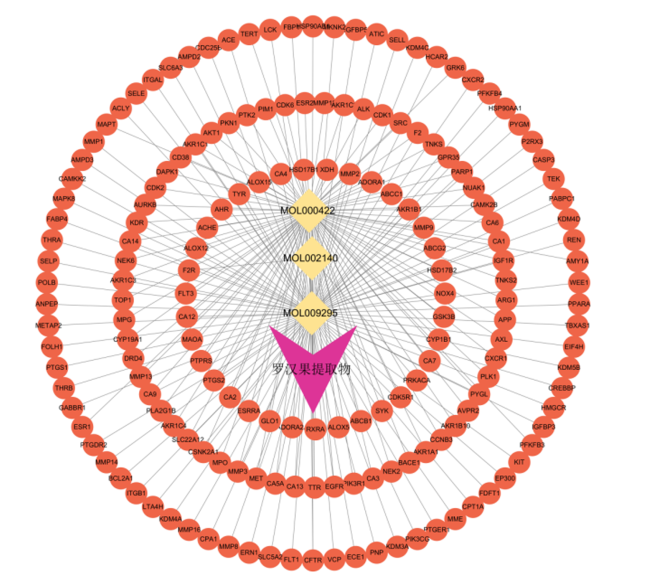
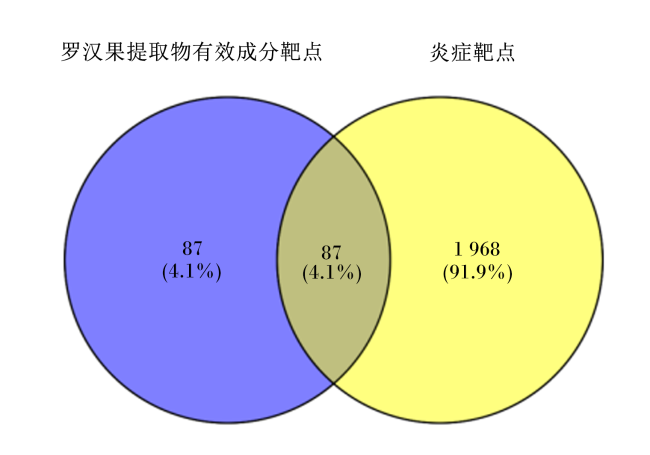
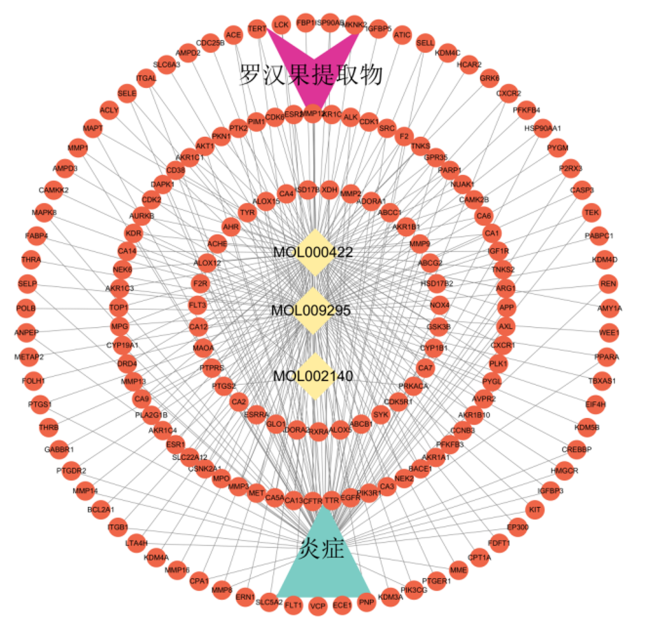
将174个罗汉果提取物有效成分靶点与2 055个炎症靶点导入Venny 2.1.0网站,获得交集靶点87个,得到罗汉果提取物有效成分靶点-炎症靶点韦恩图,见图6。将罗汉果提取物、有效成分、炎症以及靶点导入Cytoscape 3.10.1软件作出罗汉果提取物-有效成分-炎症靶点网络图,见图7
图6 罗汉果提取物有效成分靶点-炎症靶点韦恩图

Fig.6 Venn diagram of effective component targets of Siraitia grosvenorii extract and inflammatory targets

图7 罗汉果提取物-有效成分-炎症靶点图

Fig.7 Diagram of Siraitia grosvenorii extract-active ingredient-inflammatory targets

2.5 PPI网络构建

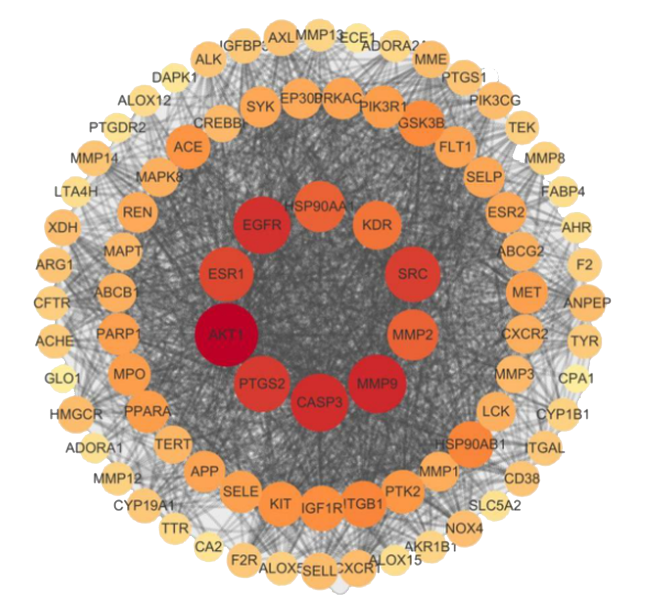
将87个交集靶点导入STRING数据库,以“Homo sapiens”作为条件,获得PPI网络图,见图8。结果获得87个节点,866条边,平均节点度值为19.9,PPI富集P值小于1.0×10⁻¹⁶。将PPI网络图保存为tsv文件,并导入Cytoscape 3.10.1软件并利用CytoNCA插件进行网络拓扑分析,通过Degree、Betweenness(BC)以及Closeness(CC)3个条件筛选出的前5个核心靶点为丝/苏氨酸蛋白激酶1(AKT1)、基质金属蛋白酶9(MMP9)、半胱氨酸天冬氨酸蛋白酶3(CASP3)、表皮生长因子受体(EGFR)以及前列腺素内过氧化物合成酶2(PTGS2)。
图8 罗汉果提取物与炎症交集靶点PPI网络图

Fig.8 PPI network diagram of intersection targets of Siraitia grosvenorii extract and inflammation

2.6 GO功能和KEGG通路富集分析

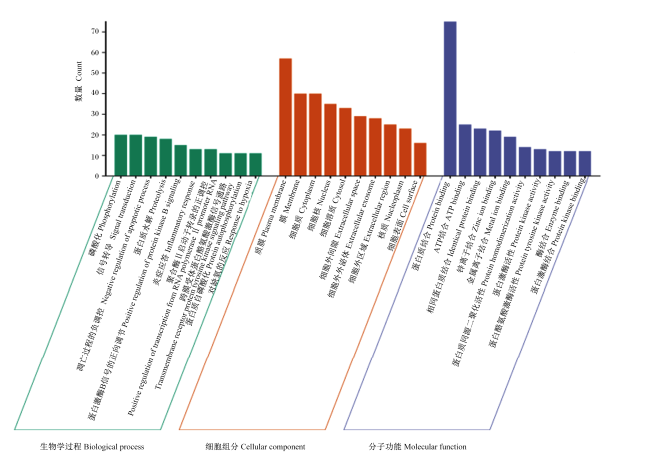
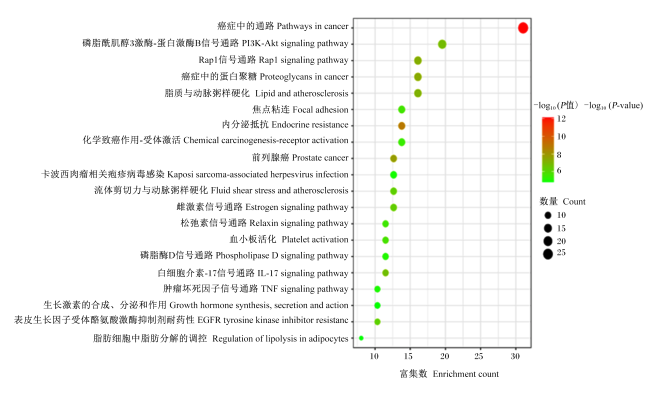
将交集靶点利用David数据库进行GO功能和KEGG通路富集分析。GO功能富集分析结果显示:生物学过程(biological process)共有324条目,排在前10的是磷酸化(phosphorylation)、信号转导(signal transduction)、凋亡过程的负调控(negative regulation of apoptotic process)、蛋白质水解(proteolysis)、蛋白激酶B信号的正向调节(positive regulation of protein kinase B signaling)、炎症应答(inflammatory response)、聚合酶Ⅱ启动子转录的正调控(positive regulation of transcription from RNA polymerase Ⅱ promoter RNA)、跨膜受体蛋白酪氨酸激酶信号通路(transmembrane receptor protein tyrosine kinase signaling pathway)、蛋白质自磷酸化(protein autophosphorylation)以及对缺氧的反应(response to hypoxia);细胞组分(cellular component)共有54条目,排在前10的是质膜(plasma membrane)、膜(membrane)、细胞质(cytoplasm)、细胞核(nucleus)、细胞溶质(cytosol)、细胞外间隙(extracellular space)、细胞外外泌体(extracellular exosome)、细胞外区域(extracellular region)、核质(nucleoplasm)以及细胞表面(cell surface);分子功能(molecular function)共有99条目,排在前10的是蛋白质结合(protein binding)、ATP结合(ATP binding)、相同蛋白质结合(identical protein binding)、锌离子结合(zinc ion binding)、金属离子结合(metal ion binding)、蛋白质同源二聚化活性(protein homodimerization activity)、蛋白激酶活性(protein kinase activity)、蛋白酪氨酸激酶活性(protein tyrosine kinase activity)、酶结合(enzyme binding)以及蛋白激酶结合(protein kinase binding)(图9)。KEGG通路富集分析中P<0.05的通路共105条,排名在前20的是癌症中的通路(pathways in cancer)、内分泌抵抗(endocrine resistance)、前列腺癌(Prostate cancer)、癌症中的蛋白聚糖(proteoglycans in cancer)、Rap1信号通路(Rap1 signaling pathway)、脂质与动脉粥样硬化(lipid and atherosclerosis)、磷脂酰肌醇3激酶-蛋白激酶B信号通路(PI3K-Akt signaling pathway)、白细胞介素-17信号通路(IL-17 signaling pathway)、雌激素信号通路(estrogen signaling pathway)、流体剪切力和动脉粥样硬化(fluid shear stress and atherosclerosis)、表皮生长因子受体酪氨酸激酶抑制剂耐药性(EGFR tyrosine kinase inhibitor resistance)、血小板活化(platelet activation)、焦点粘连(focal adhesion)、松弛素信号通路(relaxin signaling pathway)、化学致癌作用-受体激活(chemical carcinogenesis-receptor activation)、磷脂酶D信号通路(phospholipase D signaling pathway)、肿瘤坏死因子信号通路(TNF signaling pathway)、卡波西肉瘤相关疱疹病毒感染(Kaposi sarcoma-associated herpesvirus infection)、生长激素的合成、分泌和作用(growth hormone synthesis, secretion and action)以及脂肪细胞中脂肪分解的调控(regulation of lipolysis in adipocytes)(图10)。
图9 罗汉果提取物与炎症交集靶点的GO功能富集分析

Fig.9 GO functional enrichment analysis of intersection targets of Siraitia grosvenorii extract and inflammation

图10 罗汉果提取物与炎症交集靶点的KEGG通路富集分析

Fig.10 KEGG pathway enrichment analysis of intersection targets of Siraitia grosvenorii extract and inflammation

2.7 分子对接

山奈酚、酒渣碱、川芎哚分别与核心靶点对接后,分子对接结果(表2)显示山奈酚和川芎哚与核心靶点的结合自由能均小于-20.92 kJ/mol,酒渣碱与MMP9的结合自由能小于0 kJ/mol但大于-20.92 kJ/mol。
表2 有效成分与核心靶点分子对接结果

Table 2 Results of molecular docking of core targets and effective constituents

项目
Items
核心靶点
Core targets
结合自由能
Binding free energy/(kJ/mol)
山奈酚Kaempferol AKT1
CasP3
MMP9
PTGS2
EGFR
-24.39
-23.26
-34.02
-30.00
-30.29
酒渣碱Flazin AKT1
CasP3
MMP9
PTGS2
EGFR
-24.72
-23.10
-20.75
-32.38
-23.47
川芎哚Perlolyrine AKT1
CasP3
MMP9
PTGS2
EGFR
-29.87
-30.21
-33.30
-24.81
-21.34
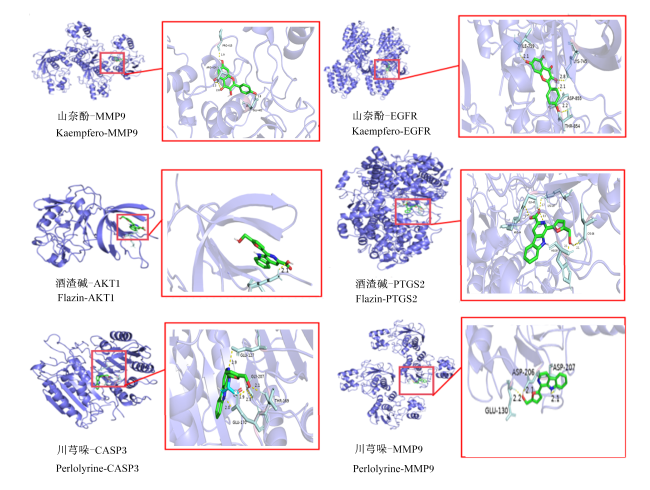
将3种有效成分与排名前5的核心靶点AKT1、MMP9、CASP3、EGFR、PTGS2进行分子对接验证,每种成分选取结合能力最好的2组进行展示,结果见图11。山奈酚与MMP9的结合位点有3个,分别是脯氨酸-415(PRO-415)、精氨酸-424(ARG-424)以及谷氨酸-402(GLU-402);山奈酚与EGFR的结合位点分别是异亮氨酸-759(ILE-759)、赖氨酸-745(LYS-745)、天冬氨酸-855(ASP-855)和苏氨酸-854(THR-854)。酒渣碱与AKT1的结合位点是赖氨酸-143(LYS-143);酒渣碱与PTGS2的结合位点是甘氨酸-45(GLY-45)、精氨酸-44(ARG-44)、赖氨酸-137(LYS-137)、组氨酸-39(HIS-39)和半胱氨酸-36(CYS-36)。川芎哚与CASP3的结合位点是谷氨酸-127(GLU-127)、谷氨酸-170(GLU-170)、甘氨酸-207(GLY-207)和苏氨酸-169(THR-169);川芎哚与MMP9的结合位点是谷氨酸-130(GLU-130)、天冬氨酸-206(ASP-206)和天冬氨酸-207(ASP-207)。
图11 有效成分与核心靶点对接的最佳构象相互作用示意图

Fig.11 Schematic diagram of optimal conformational interaction of effective constituents docking with core targets

3 讨论

3.1 罗汉果提取物通过肠-脾轴改善LPS诱导的小鼠炎症

前人发现,在LPS诱导小鼠后,脾脏中炎症因子IL-6和TNF-α的表达会升高,在此过程中肠道微生物群-脾轴发挥了重要作用[15]。此外,脾脏还可以通过微生物群-肠轴调节机体的免疫稳态和肠道微生物的组成[16]。由以上研究结果可知,脾脏与肠道的功能密切相关,肠-脾轴在机体肠炎中发挥了重要作用。炎症和免疫之间的共同协作也维持了机体内环境的稳定。炎症反应能够激活机体的先天性免疫应答,而免疫应答被激活后又可以缓解炎症的发生[17]。Neurath[18]指出,机体免疫失衡后,肠道炎症就会发生,病原体会破坏肠道屏障,严重时会发生溃疡性结肠炎。
本研究中,相比于CON组,腹腔注射LPS显著升高了小鼠空肠和脾脏中TNF-αIL-1βIL-6和IL-10在mRNA水平的表达,脾脏中炎性因子的表达量高于空肠中,说明LPS诱发了小鼠空肠和脾脏的炎症反应,且脾脏的炎症反应程度高于空肠。相比于CON组,腹腔注射LPS显著降低了小鼠外周血血清中IgG和IgM的含量,造成机体先天性免疫功能下降。本课题组前期研究表明,LPS刺激会破坏小鼠的肠黏膜屏障,造成肠道炎症,进而发生全身性炎症反应[19],与本研究结果与此一致。相比于LPS组,灌胃罗汉果提取物显著或极显著降低LPS诱导炎症模型小鼠空肠中促炎因子TNF-αIL-1β的mRNA表达量,显著降低了脾脏中促炎因子IL-6的mRNA表达量,并显著增加了脾脏中抗炎因子IL-10的mRNA表达量,同时极显著或显著升高了血清中IgG和IgM的含量,这表明罗汉果提取物缓解了小鼠肠道和脾脏的炎症反应,并通过肠-脾轴有效改善了LPS诱导的全身炎症,这可能也是SGE组小鼠平均体重升高的潜在因素。

3.2 罗汉果提取物关键活性成分分析

本研究用网络药理学和分子对接技术深入分析了罗汉果提取物的活性成分及其改善肠道炎症的潜在作用机制。在TCMSP中通过设置OB、DL和胃肠道吸收性等条件,在11种罗汉果提取物活性成分中筛选到山奈酚、酒渣碱和川芎哚等3种有效成分。山奈酚是一种天然类黄酮,大量存在于蔬菜和水果中,具有出色的抗氧化和抗炎潜力[20-21]。山奈酚可通过降低肠血管屏障通透性和炎症因子的途径改善大鼠肠道微血管内皮细胞的炎症反应[22],也可以通过抗炎和抗氧化作用改善LPS诱导的肺部病理损伤[23]。川芎哚是一种生物碱化合物,具有促进血液循环、抗血小板和抗血栓形成的特点[24]。酒渣碱属于β-咔啉类化合物,通过降低活性氧水平、降低线粒体依赖性凋亡基因表达和增加抗氧化基因表达来保护肾小管上皮细胞免受氧化应激诱导的细胞死亡[25]。此外,有研究发现酒渣碱可通过下调AKT蛋白表达抑制人胃癌SGC-7901细胞增殖,诱导凋亡[26]。这与本研究中网络药理学分析结果相符。在筛选到的3种有效成分中,因山奈酚已证实具有抗炎抗氧化作用,因此它可能是罗汉果提取物中发挥抗肠炎作用的主要成分。

3.3 罗汉果提取物抗炎关键靶点分析

本研究共筛选出罗汉果提取物治疗炎症的AKT1、CASP3、MMP9、EGFR和PTGS2等5个核心靶点。AKT1是一种丝/苏氨酸激酶,不仅可以通过各种细胞外刺激激活PI3K/AKT信号通路介导炎症反应[27],还可以阻断TLR4和NF-κB途径缓解炎症[28]。此外,Liu等[29]发现小檗碱靶向AKT1蛋白抑制巨细胞M1极化,防治DSS诱导的结肠炎。MMP9属于基质金属蛋白酶家族,通常被视为炎症介质[30]。有研究表明,正常结肠黏膜中没有MMP9蛋白表达,但在实验性结肠炎期间MMP9表达显著增加,当MMP9被敲除时结肠炎小鼠炎症和黏膜损伤显著减少了,因此抑制MMP9有益于治疗结肠炎[31]。EGFR属于跨膜受体酪氨酸激酶家族,当其与配体结合后激活并形成二聚体,可以激活多种下游信号通路,调节细胞生长、增殖和分化,在生长和自我修复中发挥重要作用[32-33]。已有研究发现,EGFR参与了银杏素、刺梨以及益生菌源的可溶性蛋白改善结肠炎的过程[34-36]。目前,关于CASP3在肠炎中的作用研究较少,但CASP3在苦参碱抗炎的过程中发挥重要作用[37],敲低CASP3还抑制了IL-1β诱导的炎症、细胞凋亡和细胞外基质降解[38],CASP3还能通过调控细胞凋亡机制参与慢性阻塞性肺疾病的发生[39]。PTGS2参与慢性自发性荨麻疹的免疫反应和炎症[40]。Zhu等[41]研究发现,槲皮素可以通过靶向PTGS2,调节肠道菌群和脂质代谢平衡,抑制神经元铁死亡,促进T细胞的免疫反应,从而缓解乳腺癌相关抑郁症的疾病症状。由以上研究结果可知,5个核心靶点均可在炎症中发挥关键作用,这也进一步证实了本研究预测结果的准确性。
通常把结合自由能用来评价成分与疾病靶点之间的结合能力,当结合自由能小于0 kJ/mol时,二者可以自由结合,结合自由能越小,二者亲和力越强。通常认为结合自由能小于-20.92 kJ/mol代表有效成分与疾病靶点的亲和力较好。关于山奈酚、川芎哚以及酒渣碱通过前5个核心蛋白对抗肠炎的研究还未见报道,但是分子对接结果显示罗汉果提取物的有效成分与核心靶点具有很强的结合活性,这为后续山奈酚、川芎哚以及酒渣碱对抗肠炎的机制研究提供了理论支持。

3.4 罗汉果提取物-炎症GO功能和KEGG关键通路分析

GO功能富集分析表明,罗汉果提取物发挥抗炎作用主要参与的生物学过程为磷酸化、信号转导、炎症应答等,参与的细胞组分为质膜、细胞质以及细胞表面等,参与的分子功能涉及蛋白质结合、ATP结合以及蛋白激酶结合等。KEGG通路富集分析显示,罗汉果提取物主要通过磷脂酰肌醇3激酶-蛋白激酶B(PI3K-AKT)信号通路、白细胞介素-17(IL-17)信号通路和肿瘤坏死因子(TNF)信号通路等调控炎症。PI3K-AKT信号通路是一种经典的细胞内信号通路,可响应细胞外信号并促进新陈代谢,在细胞死亡、存活和增殖的调节中起关键作用[42-44]。已有研究表明,100 mg/kg BW黄芪甲苷Ⅳ、120 mg/kg BW陈皮多糖以及12 g/kg BW白头翁汤可以通过抑制PI3K-AKT信号通路下调促炎因子的表达与上调抗炎因子的表达,缓解溃疡性结肠炎[45-47],本研究采用的罗汉果提取物剂量为100 mg/kg BW,这与黄芪甲苷和陈皮多糖2种单个化合物剂量相当。IL-17信号通路是炎症反应的上游信号通路,IL-17信号通路的激活导致TNF-α、IL-1β和IL-6的产生[48]。TNF信号通路是炎症反应中最重要的通路之一。IL-17信号通路和TNF信号通路的激活都可以激活p38、丝裂原活化蛋白激酶(MAPK)、胞外信号调节激酶(ERK)和核因子-κB(NF-κB)信号通路,从而导致炎症因子和趋化因子产生来促进炎症[49-51]。综上所述,本研究所富集到的3条重要通路均可通过引起TNF-α、IL-6等炎症因子的变化来影响炎症的发展进程。
因为小鼠与哺乳动物的生理相似性、生物安全性以及成本低等因素,小鼠模型是当前科学研究的理想模型,所以本试验选择小鼠作为试验动物。但罗汉果提取物对PI3K-AKT信号通路、IL-17信号通路和TNF信号通路中关键蛋白的调控作用以及对畜禽炎症的影响机制有待进一步研究。本研究揭示了罗汉果提取物的多成分、多靶点和多途径的抗炎作用机制,为后续罗汉果提取物的应用与开发提供了理论依据。

4 结论

罗汉果提取物可通过肠-脾轴发挥抗炎作用,其分子机制可能是罗汉果提取物含有的山奈酚等有效活性成分通过结合AKT1、CASP3、MMP9、EGFR和PTGS2等5个核心靶点,阻断PI3K-AKT信号通路、IL-17信号通路和TNF信号通路来实现的。
[1]
BANY BAKAR R, REIMANN F, GRIBBLE F M. The intestine as an endocrine organ and the role of gut hormones in metabolic regulation[J]. Nature Reviews Gastroenterology & Hepatology, 2023, 20(12):784-796.

[2]
MALOY K J, POWRIE F. Intestinal homeostasis and its breakdown in inflammatory bowel disease[J]. Nature, 2011, 474(7351):298-306.

[3]
WANG M W, HUANG H J, HU Y P, et al. Effects of dietary supplementation with herbal extract mixture on growth performance,organ weight and intestinal morphology in weaning piglets[J]. Journal of Animal Physiology and Animal Nutrition, 2020, 104(5):1462-1470.

[4]
曾建腾, 范志聪, 张永亮. 植物提取物改善畜禽肠道菌群结构的研究进展[J]. 现代畜牧兽医, 2023(8):70-74.

ZENG J T, FAN Z C, ZHANG Y L. Research progress of plant extracts improving intestinal flora structure of livestock and poultry[J]. Modern Journal of Animal Husbandry and Veterinary Medicine, 2023(8):70-74. (in Chinese)

[5]
刘晓曦, 刘明江, 尹朋, 等. 中兽药网络药理学研究进展[J]. 畜牧兽医学报, 2014, 45(6):859-862.

LIU X X, LIU M J, YIN P, et al. A review on the traditional Chinese veterinary medicine network pharmacology[J]. Acta Veterinaria et Zootechnica Sinica, 2014, 45(6):859-862. (in Chinese)

[6]
丁浩轩, 赵阳, 冯杰. 基于网络药理学探讨植物提取物在饲料添加剂领域的研究进展[J]. 动物营养学报, 2021, 33(6):3065-3071.

DOI

DING H X, ZHAO Y, FENG J. Research progress on discussion of plant extracts in field of feed additives based on network pharmacology[J]. Chinese Journal of Animal Nutrition, 2021, 33(6):3065-3071. (in Chinese)

[7]
ZHANG Y G, WANG Y J, XIN E D, et al. Network pharmacology and experimental verification reveal the mechanism of Hedysari Radix and Curcumae Rhizoma with the optimal compatibility ratio against colitis-associated colorectal cancer[J]. Journal of Ethnopharmacology, 2024, 322:117555.

[8]
DAI S, WU R, FU K, et al. Exploring the effect and mechanism of cucurbitacin B on cholestatic liver injury based on network pharmacology and experimental verification[J]. Journal of Ethnopharmacology, 2024, 322:117584.

[9]
CHEN N, CAO W C, YUAN Y Y, et al. Recent advancements in mogrosides:a review on biological activities,synthetic biology,and applications in the food industry[J]. Food Chemistry, 2024, 449:139277.

[10]
王苗苗, 娄华勇, 张妮, 等. 罗汉果化学成分及药理研究进展[J]. 贵州中医药大学学报, 2021, 43(5):80-84.

WANG M M, LOU H Y, ZHANG N, et al. Research progress on chemical constituents and pharmacological activities of Siraitia grosvenorii swingle[J]. Journal of Guizhou University of Traditional Chinese Medicine, 2021, 43(5):80-84. (in Chinese)

[11]
方秀云, 韦玉璐, 卢凤来, 等. 干燥处理对罗汉果抗炎活性及功能成分的影响[J/OL]. 食品与发酵工业,1-10[2024-05-06].https://doi.org/10.13995/j.cnki.11-1802/ts.039013.

FANG X Y, WEI Y L, LU F L, et alEffects of drying methods on anti-inflammatory activity and functional components of Siraitia grosvenorii[J/OL]. Food and Fermentation Industries,1-10[2024-05-06].https://doi.org/10.13995/j.cnki.11-1802/ts.039013. (in Chinese)

[12]
潘晨. 罗汉果甜甙Ⅴ在调节猪卵母细胞氧化应激中的作用研究[D]. 硕士学位论文. 南宁: 广西大学, 2022:002347.

PAN C. Effect of mogroside Ⅴ in modulating oxidative stress in porcine oocyte[D]. Master’s Thesis. Nanning: Guangxi University, 2022:002347. (in Chinese)

[13]
肖正中, 滕少花, 周俊华, 等. 日粮添加罗汉果渣在广西麻鸡生产中的应用效果研究[J]. 中国饲料, 2023(13):158-161.

XIAO Z Z, TENG S H, ZHOU J H, et al. Study on application of Siraitia grosvenorii residue added into diets in Guangxi Ma chicken[J]. China Feed, 2023(13):158-161. (in Chinese)

[14]
WU H N, GUO M R, ZHAO L L, et al. Siraitia grosvenorii extract protects lipopolysaccharide-induced intestinal inflammation in mice via promoting M2 macrophage polarization[J]. Pharmaceuticals, 2024, 17(8):1023.

[15]
ZHANG Y J, XIE B, CHEN X Y, et al. A key role of gut microbiota-vagus nerve/spleen axis in sleep deprivation-mediated aggravation of systemic inflammation after LPS administration[J]. Life Sciences, 2021, 265:118736.

[16]
WEI Y, CHANG L J, ISHIMA T, et al. Abnormalities of the composition of the gut microbiota and short-chain fatty acids in mice after splenectomy[J]. Brain Behavior & Immunity Health, 2021, 11:100198.

[17]
魏伟. 炎症免疫反应软调节[J]. 中国药理学通报, 2016, 32(3):297-303.

WEI W. Soft regulation of inflammatory immune responses[J]. Chinese Pharmacological Bulletin, 2016, 32(3):297-303. (in Chinese)

[18]
NEURATH M F. Targeting immune cell circuits and trafficking in inflammatory bowel disease[J]. Nature Immunology, 2019, 20(8):970-979.

DOI PMID

[19]
LIANG M, SUN X, GUO M, et al. Baicalin methyl ester prevents the LPS-induced mice intestinal barrier damage in vivo and in vitro via P65/TNF-alpha/MLCK/ZO-1 signal pathway[J]. Biomedicine & Pharmacotherapy, 2024, 180:117417.

[20]
SILVA DOS SANTOS J, GONÇALVES CIRINO J P, DE OLIVEIRA CARVALHO P, et al. The pharmacological action of kaempferol in central nervous system diseases:a review[J]. Frontiers in Pharmacology, 2020, 11:565700.

[21]
ALRUMAIHI F, ALMATROODI S A, ALHARBI H O A, et al. Pharmacological potential of kaempferol,a flavonoid in the management of pathogenesis via modulation of inflammation and other biological activities[J]. Molecules, 2024, 29(9):2007.

[22]
YU R Y, ZHONG J, ZHOU Q, et al. Kaempferol prevents angiogenesis of rat intestinal microvascular endothelial cells induced by LPS and TNF-α via inhibiting VEGF/Akt/p38 signaling pathways and maintaining gut-vascular barrier integrity[J]. Chemico-Biological Interactions, 2022, 366:110135.

[23]
ABDULAAL W H, OMAR U M, ZEYADI M, et al. Protective effect of kaempferol glucoside against lipopolysaccharide-caused acute lung injury via targeting Nrf2/NF-κB/NLRP3/GSDMD:Integrating experimental and computational studies[J]. Saudi Pharmaceutical Journal :SPJ :the Official Publication of the Saudi Pharmaceutical Society, 2024, 32(6):102073.

[24]
刘秀梅. 川芎生地药对作用机制的系统药理学研究[D]. 硕士学位论文. 大连: 大连理工大学, 2019.

LIU X M. Systems pharmacology study on the mechanism of action of Chuanxiong-Shengdi herb pair[D]. Master’s Thesis. Dalian: Dalian University of Technology, 2019. (in Chinese)

[25]
WU X Z, HO H J, EGUCHI M, et al. Flazin improves mitochondrial dynamics in renal tubular epithelial cells under oxidative stress[J]. Food Bioscience, 2023, 56:103378.

[26]
曾凡业, 樊玉祥, 张洪亮, 等. β-咔啉类生物碱对人胃癌SGC-7901细胞增殖、凋亡及PTEN/Akt表达的影响[J]. 临床肿瘤学杂志, 2016, 21(2):126-129.

ZEN F Y, FAN Y X, ZHANG H L, et al. Effect of β-carboline alkaloid on proliferation,apoptosis and expression levels of PTEN/Akt in human gastric cancer SGC-7901 cells[J]. Chinese Clinical Oncology, 2016, 21(2):126-129. (in Chinese).

[27]
YOU X L, ZHAO M L, LIU Y R, et al. Hypericum perforatum L. protects against renal function decline in ovariectomy rat model by regulating expressions of NOS3 and AKT1 in AGE-RAGE pathway[J]. Phytomedicine, 2024, 123:155160.

[28]
YUFANG W, MINGFANG L, NAN H, et al. Quercetin-targeted AKT1 regulates the Raf/MEK/ERK signaling pathway to protect against doxorubicin-induced nephropathy in mice[J]. Tissue & Cell, 2023,85:102229.

[29]
LIU Y X, LIU X, HUA W W, et al. Berberine inhibits macrophage M1 polarization via AKT1/SOCS1/NF-κB signaling pathway to protect against DSS-induced colitis[J]. International Immunopharmacology, 2018, 57:121-131.

DOI PMID

[30]
CHEN Q S, JIN M, YANG F, et al. Matrix metalloproteinases:inflammatory regulators of cell behaviors in vascular formation and remodeling[J]. Mediators of Inflammation, 2013, 2013:928315.

[31]
GARG P, VIJAY-KUMAR M, WANG L X, et al. Matrix metalloproteinase-9-mediated tissue injury overrides the protective effect of matrix metalloproteinase-2 during colitis[J]. American Journal of Physiology Gastrointestinal and Liver Physiology, 2009, 296(2):G175-G184.

[32]
TALUKDAR S, EMDAD L, DAS S K, et al. EGFR:an essential receptor tyrosine kinase-regulator of cancer stem cells[J]. Advances in Cancer Research, 2020, 147:161-188.

[33]
CHEN Z, CUI N, ZHAO J S, et al. Expressions of ZNF436,beta-catenin,EGFR,and CMTM5 in breast cancer and their clinical significances[J]. European Journal of Histochemistry, 2021, 65(1):3173.

[34]
GENG Z J, ZUO L G, LI J, et al. Ginkgetin improved experimental colitis by inhibiting intestinal epithelial cell apoptosis through EGFR/PI3K/AKT signaling[J]. Federation of American Societies for Experimental Biology, 2024, 38(14):e23817.

[35]
KANG Y H, ZHOU T, WU S X, et al. Effects of Rosa roxburghii Tratt on ulcerative colitis:an integrated analysis of network pharmacology and experimental validation[J]. The American Journal of Chinese Medicine, 2023, 51(6):1477-1499.

[36]
YAN F, CAO H W, COVER T L, et al. Colon-specific delivery of a probiotic-derived soluble protein ameliorates intestinal inflammation in mice through an EGFR-dependent mechanism[J]. The Journal of Clinical Investigation, 2011, 121(6):2242-2253.

[37]
赵梓轩, 杨嘉睿, 蒋林树, 等. 基于网络药理学和分子对接探讨苦参碱在奶牛生产中的抗炎作用机制[J]. 动物营养学报, 2022, 34(12):7872-7885.

DOI

ZHAO Z X, YANG J R, JIANG L S, et al. Integrating network pharmacology and molecular docking to explorer mechanism of anti-inflammation of matrine in dairy cow production[J]. Chinese Journal of Animal Nutrition, 2022, 34(12):7872-7885. (in Chinese)

DOI

[38]
LV H, LIU P, HU H, et al. MiR-98-5p plays suppressive effects on IL-1beta-induced chondrocyte injury associated with osteoarthritis by targeting CASP3[J]. Journal of Orthopaedic Surgery and Research, 2024, 19(1):239.

[39]
PANDEY K C, DE S, MISHRA P K. Role of proteases in chronic obstructive pulmonary disease[J]. Frontiers in Pharmacology, 2017, 8:512.

DOI PMID

[40]
CHEN Y, JIAN X, ZHU L, et al. PTGS2:A potential immune regulator and therapeutic target for chronic spontaneous urticaria[J]. Life Sciences, 2024, 344:122582.

[41]
ZHU Q, HAN Y S, HE Y, et al. Quercetin inhibits neuronal ferroptosis and promotes immune response by targeting lipid metabolism-related gene PTGS2 to alleviate breast cancer-related depression[J]. Phytomedicine, 2024, 130:155560.

[42]
BURKE J E. Structural basis for regulation of phosphoinositide kinases and their involvement in human disease[J]. Molecular Cell, 2018, 71(5):653-673.

DOI PMID

[43]
MANNING B D, TOKER A. AKT/PKB signaling:navigating the network[J]. Cell, 2017, 169(3):381-405.

[44]
MCNAMARA C R, DEGTEREV A. Small-molecule inhibitors of the PI3K signaling network[J]. Future Medicinal Chemistry, 2011, 3(5):549-565.

DOI PMID

[45]
ZHANG X H, ZHANG F, LI Y, et al. Blockade of PI3K/AKT signaling pathway by astragaloside Ⅳ attenuates ulcerative colitis via improving the intestinal epithelial barrier[J]. Journal of Translational Medicine, 2024, 22(1):406.

[46]
LI Z, LI C G, CHEN B Z, et al. Parabacteroides goldsteinii enriched by Pericarpium Citri ReticulataeChachiensis’ polysaccharides improves colitis via the inhibition of lipopolysaccharide-involved PI3K-Akt signaling pathway[J]. International Journal of Biological Macromolecules, 2024, 277(Pt 1):133726.

[47]
WANG X W, XU L J, WANG T, et al. Pulsatilla decoction alleviates colitis by enhancing autophagy and regulating PI3K-Akt-mTORC1 signaling pathway[J]. Molecular Medicine Reports, 2022, 25(3):108.

[48]
CHANG S H, DONG C. Signaling of interleukin-17 family cytokines in immunity and inflammation[J]. Cellular Signalling, 2011, 23(7):1069-1075.

DOI PMID

[49]
WEI L L, XIONG H F, LI W, et al. Upregulation of IL-6 expression in human salivary gland cell line by IL-17 via activation of p38 MAPK,ERK,PI3K/Akt,and NF-κB pathways[J]. Journal of Oral Pathology & Medicine, 2018, 47(9):847-855.

[50]
JIN W, DONG C. IL-17 cytokines in immunity and inflammation[J]. Emerging Microbes & Infections, 2013, 2(9):e60.

[51]
PEDERSEN J, COSKUN M, SOENDERGAARD C, et al. Inflammatory pathways of importance for management of inflammatory bowel disease[J]. World Journal of Gastroenterology, 2014, 20(1):64-77.

DOI PMID

文章导航

/