综述

色氨酸代谢与肠道微生物互作调控肠道健康的机制研究进展

  • 刘宇炎 , 1, 2 ,
  • 李铁军 2 ,
  • 印遇龙 2 ,
  • 何流琴 , 1, 2, *
展开
  • 1 湖南师范大学生命科学学院,动物肠道功能与调控湖南省重点实验室,长沙 410081
  • 2 中国科学院亚热带农业生态研究所,畜禽养殖污染控制与资源化技术国家工程实验室,动物营养生理与代谢过程湖南省重点实验室,长沙 410125
* 何流琴,教授,博士生导师,E-mail:

刘宇炎(2000—),男,湖南岳阳人,硕士研究生,从事氨基酸与生猪健康研究。E-mail:

Copy editor: 陈鑫

收稿日期: 2024-08-29

  网络出版日期: 2025-04-15

基金资助

国家自然科学基金(U23A20233)

国家自然科学基金(32172755)

国家自然科学基金(32130099)

湖南省科技创新“领军人才”项目(2023RC1054)

湖南省重点研发项目(2022NK2023)

湖南省重大基础研究项目(2024JC0007)

Advances in Research on Mechanism of Tryptophan Metabolism-Intestinal Microbes Interaction in Regulating Intestinal Health

  • LIU Yuyan , 1, 2 ,
  • LI Tiejun 2 ,
  • YIN Yulong 2 ,
  • HE Liuqin , 1, 2, *
Expand
  • 1 Hunan Province Key Laboratory of Animal Intestinal Function and Regulation, College of Life Sciences, Hunan Normal University, Changsha 410081, China
  • 2 Key Laboratory of Animal Nutritional Physiology and Metabolic Processes of Hunan Province, National Engineering Laboratory of Pollution Control and Resource Technology for Livestock and Poultry Breeding, Institute of Subtropical Agriculture, Chinese Academy of Sciences, Changsha 410125, China
* professor, E-mail:

Received date: 2024-08-29

  Online published: 2025-04-15

摘要

色氨酸作为一种必需氨基酸,可以通过肠道微生物群和组织细胞中的多种代谢途径转化成具有不同生物活性的代谢产物,包括吲哚衍生物、5-羟色胺和犬尿氨酸等。研究表明,色氨酸及其代谢产物在维持肠道微生态平衡、调节宿主免疫应答和肠道屏障功能等方面发挥着关键作用,而肠道微生物代谢产生的色氨酸及其代谢产物,也可作为细胞间重要信号分子与宿主肠道上皮细胞进行相互调节,进而影响肠道健康。因此,本文围绕色氨酸代谢-肠道微生物的关系,重点综述了色氨酸代谢-肠道微生物之间的互作和调控肠道健康的分子机制以及其在肠道相关疾病中的潜在作用,以期为肠道微生物和色氨酸及其代谢物预防和治疗胃肠道疾病提供参考。

本文引用格式

刘宇炎 , 李铁军 , 印遇龙 , 何流琴 . 色氨酸代谢与肠道微生物互作调控肠道健康的机制研究进展[J]. 动物营养学报, 2025 , 37(4) : 2157 -2167 . DOI: 10.12418/CJAN2025.183

Abstract

Tryptophan, as an essential amino acid, can be converted into various biologically active metabolites through diverse metabolic pathways within the intestinal microbiota and tissue cells, including indole derivatives, serotonin, and kynurenine. Studies have demonstrated that tryptophan and these metabolites play crucial roles in maintaining intestinal microbiota balance, regulating host immune responses, and enhancing intestinal barrier function. Additionally, tryptophan and its metabolites produced by the metabolism of intestinal microbiota can act as essential intercellular signaling molecules, interacting with host intestinal epithelial cells to regulate and influence gut health. Therefore, this article centers on the relationship between tryptophan metabolism and intestinal microbiota, delving into the molecular mechanisms of tryptophan metabolism-intestinal microbes interaction in regulating intestinal health and its potential role in gut-related diseases.The ultimate goal is to provide novel insights and methodologies for the prevention and treatment of gastrointestinal disorders utilizing intestinal microbiota, tryptophan, and its metabolites.

在传统意义上,色氨酸被认为是一种必需氨基酸,在维持细胞生长发育、协调机体代谢等生物过程中发挥着重要的作用[1]。色氨酸能减轻急性热应激引起的肉鸡抗氧化状态和线粒体功能损害[2] 。除此之外,色氨酸微生物代谢物能平衡小鼠的黏膜反应性,提供对真菌白色念珠菌的定植抵抗力和保护黏膜免受炎症干扰[3]
近年来,对色氨酸代谢与肠道菌群互作调节肠道健康的研究备受关注。芳烃受体(aryl hydrocarbon receptor,AHR)是一种配体激活的转录因子,色氨酸及其微生物代谢物能通过激活AHR对免疫反应具有调节作用[4]。研究表明,通过白细胞介素(interleukin,IL)-22的AHR信号传导抑制小鼠胃肠道炎症与结肠炎[5]。调节T细胞中的AHR信号转导可能对肠道免疫稳态很重要[6]。一方面,肠道微生物通过酶的作用参与色氨酸代谢产生多种活性代谢物;另一方面,这些经由肠道微生物产生的色氨酸代谢物又反过来影响微生物的组成和功能,从而构建了一个复杂的互作网络,这一网络对于维护肠道稳态和健康至关重要[7-8]。研究报道,肠道处于长期炎症或氧化应激时会增加导致肠癌发生的几率。肠道菌群的失调与肠道结直肠癌密切相关[9]。外源添加或补充色氨酸能预防和治疗肠癌[10]。且限制细胞犬尿氨酸或其下游靶标可能减少原癌基因骨髓细胞瘤病毒癌基因依赖性癌细胞的增殖[11]。Ma等[12]研究表明,色氨酸能缓解由长期光污染产生的肉鸡肠道炎症。也有研究报道,在断奶仔猪基础饲粮中补充色氨酸,能够显著促进仔猪生长性能,改善肠道消化及其免疫功能[13]
尽管色氨酸与肠道微生物代谢的互作调控肠道健康的机制已取得了一定的研究进展,但是仍有许多细节和潜在机制仍需探索。因此,本文旨在综述当前关于色氨酸代谢与肠道微生物互作调控肠道健康的研究进展,并探讨其中的关键机制和潜在应用,以期为肠道健康的研究和临床实践提供参考。

1 色氨酸来源与代谢

色氨酸是唯一具有吲哚结构的氨基酸,在动物体内无法合成主要来自摄入外源性富含色氨酸的食物。在动物摄入色氨酸后,其在机体中主要分为2部分进行代谢,包括宿主内源性代谢和微生物介导代谢。宿主代谢途径可分为犬尿氨酸代谢途径(kynurenine pathway,KP)及5-羟色胺(5-hydroxytryptamine,5-HT)代谢途径[14],摄入体内的色氨酸大约95%经KP降解为犬尿氨酸、犬尿烯酸(kynruenic acid,KA)、喹啉酸(quinolinic acid,QA)、吡啶酸(pyridine acid,PyA)和烟酰胺腺嘌呤二核苷酸(nicotinamide adenine dinucleotide,NAD)[15-16];而其中的1%~2%色氨酸则通过血清素途径在色氨酸羟化酶(tryptophan hydroxylase,TPH)的作用下生成5-羟色氨酸,并在5-羟色氨酸脱羧酶(5-hydroxytryptophan decarboxylase,5-HTPDC)的作用下继续转化为5-HT[17]。摄入的色氨酸有4%~6%在肠道内是通过微生物介导的色氨酸代谢途径进行代谢,例如,芽孢梭菌将色氨酸转化为色胺、吲哚乳酸(indolelactic acid,ILA)和吲哚丙酸(indole-3-propionic acid,IPA)[18-19]。不同的肠道微生物具有不同的催化酶,而微生物之间也可以协同产生色氨酸代谢产物。例如,巴氏梭菌和双歧杆菌产生吲哚丙酮酸和吲哚乙酸[20]。吲哚由具有色氨酸酶的革兰氏阳性和革兰氏阴性细菌产生,含色氨酸酶基因的共生菌将色氨酸转化为吲哚[21]。总之,色氨酸及其代谢产物在维持肠道健康中均发挥着至关重要的作用,且这些常驻微生物在宿主肠道内进行色氨酸代谢的贡献也不应忽视。

2 色氨酸代谢与肠道微生物的互作关系

2.1 肠道微生物对色氨酸代谢的影响

色氨酸存在于大部分食物中,可被肠道微生物转化为各种衍生物。研究表明,肠道菌群能影响色氨酸的吲哚代谢途径,如梭状芽孢杆菌和罗伊氏乳杆菌能将色氨酸转化为色胺、吲哚丙酮酸等,后者可进一步生成吲哚乙酸等吲哚衍生物[22-23];而拟杆菌属、大肠杆菌和梭菌属中的色氨酸酶也能催化色氨酸转化为吲哚[24-25]。肠道菌群的色氨酸代谢可独立或协同进行,包括色胺、吲哚-3-甲醛和吲哚-3-乳酸的形成,这些产物转化过程是由不同的肠道微生物如梭状芽孢杆菌、乳杆菌属和双歧杆菌属等完成的[26]。肠道微生物色氨酸分解代谢物能影响宿主健康,这些代谢物被认为通过与芳烃受体结合来激活免疫系统,增强肠上皮屏障,刺激胃肠道蠕动以及肠道激素的分泌,在体循环中发挥抗炎、抗氧化或毒性作用,并调节肠道微生物组成[23]。有研究发现,色氨酸代谢酶吲哚胺2,3-双加氧酶1(indeleamine-2,3-dioxygenase 1,IDO1)能调节AHR,从而增加分泌细胞的分化并改变黏液相关的微生物群组成,进一步维持肠道稳态[27]。肠道菌群代谢产生的丁酸盐,能够负向调节肠上皮细胞中的IDO活性,从而间接调节色氨酸的代谢[28]。也有研究发现,约氏乳杆菌可能通过产生过氧化氢抑制IDO的活性进而降低大鼠犬尿氨酸水平[29]

2.2 色氨酸对肠道微生物的调节作用

色氨酸进入宿主体内能通过减少吲哚和7-苄氧基吲哚调控基因agrA/sarA的表达和抑制毒素基因如α-溶血素基因hla、肠毒素seb以及蛋白酶基因splA/sspA的表达来降低金黄色葡萄球菌的毒性[30-31];在饲粮中通过添加色氨酸代谢物IPA可以改善高脂饲粮喂养条件下导致的大鼠肠道厚壁菌门与拟杆菌门的比例增加,同时抑制拟杆菌属和链球菌属丰度增加,还降低副沙门氏菌属的数量,增加颤杆菌属和嗅杆菌的丰度[32]。拟杆菌属与链球菌属均对维持肠道稳态具有重要的作用[33-34]。在保护宿主免受肠道病原体侵袭方面,吲哚可能是特征最明显的色氨酸代谢物,其能够影响生物膜形成和毒性,也可作为一种细胞间信号分子调节微生物群落组成。芳香醇在真菌中被认为是群体感应分子,对金黄色葡萄球菌、肠沙门菌具有一定的抑制作用[35]。但也有研究表明,吲哚能上调肠出血性大肠埃希杆菌Ⅲ型分泌蛋白EspAEspB表达,并刺激肠出血性大肠埃希杆菌在人体细胞上形成A/E病变的能力[36]。另一种色氨酸代谢物,如吲哚-3-乙腈(3-indoleacetonitrile,IAN)和7-羟基吲哚,已被证明可抑制肠出血性大肠杆菌生物膜的形成,从而降低其毒力[37-38]。总之,色氨酸代谢物对不同病原体具有多种调控效应,但目前还不清楚个别色氨酸代谢物可抑制或促进病原体毒力,需要进一步探究。

3 肠道微生物-色氨酸代谢-宿主免疫互作调控机制

肠道微生物与色氨酸之间存在着复杂的调控关系,微生物能通过色氨酸来调节肠道黏膜、氧化应激以及细胞增殖,从而对宿主免疫产生一定影响。如图1所示,肠道微生物-色氨酸代谢-宿主免疫进行互作调控。
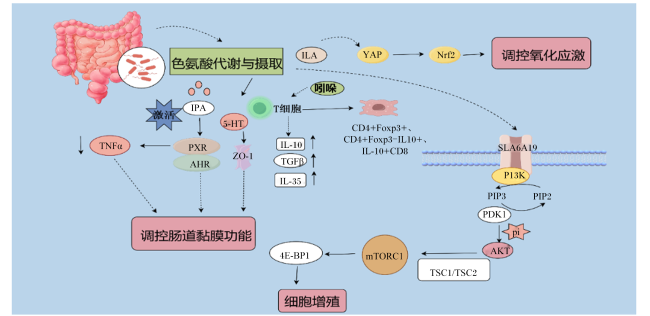
图1 肠道微生物-色氨酸代谢-宿主免疫互作

TNFα:肿瘤坏死因子α tumor necrosis factor-alpha;TGFβ:转化生长因子β transforming growth factor beta;IL-35:白细胞介素-35 interleukin-35;IL-10:白细胞介素-10 interleukin-10;ILA:吲哚-3-乳酸 indole-3-lactic acid;YAP:肠道蛋白Yes相关蛋白 yes-associated protein;Nrf2:核因子红细胞2相关因子2 nuclear factor-erythroid 2 related factor 2;IPA:吲哚丙酸 indolepropionic acid;PXR:孕烷X受体 pregnane X receptor;AHR:芳烃受体 aryl hydrocarbon receptor; 5-HT:5-羟色胺 5-hydroxytryptamine;TSC1/TSC2:结节性硬化蛋白复合体1/2 tuberous sclerosis complex 1/2;mTORC1:哺乳动物雷帕霉素靶蛋白复合体1 mammalian target of rapamycin complex 1;4E-BP1:真核翻译起始因子4E结合蛋白1 eukaryotic translation initiation factor 4E-binding protein 1。

Fig.1 Intestinal microbes-tryptophan metabolism-host immune interactions

3.1 色氨酸代谢物吲哚衍生物与肠道屏障功能

吲哚等色氨酸代谢物能够通过对AHR的激活来缓解肠道屏障功能损伤[39],例如,吲哚-3-醛能够激活脂多糖(LPL)通过AHR分泌IL-22,然后诱导信号传导及转录激活蛋白3(signal transducer and activator of transcription,STAT3)磷酸化加速肠上皮细胞增殖,从而改善肠黏膜受损区域[40]。另外,吲哚-3-甲醛改善了结肠炎小鼠肠道屏障功能障碍和炎症反应,平衡氨基酸代谢,抑制Toll样受体(TLR)4/核因子-κB(NF-κB)/P38丝裂原活化蛋白激酶信号通路的激活,从而保护结肠炎小鼠,并且能缓解志贺菌感染的肠道炎症[41]。吲哚衍生物等通过AHR机制维护肠道顶端连接与肌动蛋白调节蛋白完整性,防止葡聚糖硫酸钠(dextran sulfate sodium,DSS)诱导的结肠炎通透性增加[42]。戊糖乳杆菌能影响血清中吲哚丙酮酸与泛酸水平,从而缓解DSS诱导的小鼠溃疡性结肠炎[43]。当AHR受体激活时能诱导人1型调节性T细胞样和Foxp3+调节性T细胞[44]。罗伊氏乳杆菌与色氨酸一起可以将上皮内CD4 T细胞重编程为免疫调节T细胞[45]。色氨酸分解代谢物决定免疫反应,例如通过与AHR结合,其大量存在于黏膜表面,当激活时可增强肠上皮屏障功能以及调节免疫反应[46]。有研究表明,IPA及其前体对人肠上皮细胞的增殖、分化和屏障功能特性有明显贡献[47]。当AHR激活时能通过Rac1泛素化依赖性机制发挥免疫调节作用,该机制减弱了丝氨酸/苏氨酸蛋白激酶B信号传导,从而能减轻炎症反应[48]。色氨酸还能通过与孕烷X受体(pregnane X receptor,PXR)结合调节胃肠屏障功能[49]。例如,鼠李糖乳杆菌MN-431可以通过代谢色氨酸刺激PXR/NF-κB信号传导和激活PXR受体来减少小肠黏膜损伤[50]

3.2 5-HT代谢物褪黑素与肠道屏障功能

5-HT途径是肠道中色氨酸代谢的核心信号途径之一,该途径产生的5-HT在调节肠黏膜屏障功能中发挥重要作用[51]。作为5-HT代谢产物褪黑素能调节结肠组织中的脂联素表达,褪黑素和脂联素能协同增强对睡眠剥夺结肠炎小鼠的抗炎作用[52]。褪黑素可逆转睡眠剥夺诱导的小鼠肠黏膜损伤,并改善结肠中微生物群的黏膜损伤和生态失调,睡眠剥夺诱导的肠道屏障功能障碍与氧化应激抑制褪黑素的产生和NF-κB通路的激活相关[53]。剥夺睡眠3 d会导致小鼠肠黏膜损伤,但在结肠炎发生前使用褪黑激素治疗可显著降低炎症反应并减少结肠损伤[54]。褪黑素消除了十二烷基硫酸钠(sodium dodecyl sulfate,SDS)诱导的大鼠肠道通透性增加[55]。使用褪黑素治疗可减少血清中的TNF-α含量,可减少三硝基苯磺酸诱导的大鼠结肠炎的细菌易位和凋亡,并显著减轻结肠损伤[56]。褪黑素还能通过降低IL-1β的作用来降低人上皮细胞旁通透性,并增强IL-10的抗炎作用[57],进而达到保护肠道屏障功能的作用。此外,褪黑素作为一种抗氧化剂,在炎症性肠病的炎症反应中展现出其独特的分子作用机制,可在不同的病理生理条件下调节促炎和抗炎细胞因子[58]。因此,色氨酸在动物体内经多途径代谢,其代谢产物调控肠道屏障功能,保障肠道健康并促进生长。

3.3 色氨酸及其代谢物与应激反应

应激是动物在环境改变或受到来自内外界因素刺激时产生的特异性或非特异性反应[59]。应激的发生会诱导动物肠道功能紊乱、肠道黏膜受损、肠道菌群改变等,从而引起肠道应激损伤[60]。在饲粮中补充0.15%色氨酸能够缓解敌草快引起的仔猪生长性能降低、肠道屏障损伤、氧化还原失衡和线粒体功能障碍,表明处于应激状态下的仔猪可能需要更多的色氨酸来维持肠道完整性和最佳生长性能[61]。在机体发生应激反应时,色氨酸代谢途径紊乱,主要表现为5-HT和犬尿氨酸信号通路发生改变[62]。在重度抑郁症发作的患者中,观察到血液中的色氨酸和5-HT水平明显低于健康人群。摄入更多的膳食色氨酸会导致抑郁症状减少和焦虑减轻。在慢性内科疾病患者中,使用免疫激活剂后观察到的抑郁风险增加可能是由犬尿氨酸途径介导的[63]。值得注意的是,通过补充色氨酸可以显著降低神经炎症的程度,这一点在慢性不可预知应激小鼠模型上也得到了同样的验证,表现为TNF-α、IL-6、IL-1β和TLR4等炎症标记物的水平下降[64]
色氨酸能通过烟酰胺的代谢过程来增强大脑的能量代谢[65]。肠道色氨酸代谢具有调节大脑和胃肠道功能障碍治疗的潜力[66]。这进一步证实了色氨酸及其代谢产物在神经递质平衡中的重要性。补充色氨酸还被发现能够提高机体对抗应激和焦虑的能力。这种提升可能与下丘脑中5-HT含量的增加有关,因为5-HT是一种重要的神经递质,与情绪调节密切相关[67-68]。断奶应激仔猪补充色氨酸可促进下丘脑色氨酸转化为5-HT,降低皮质酮水平[69]。这反映了色氨酸在调节应激反应中的潜在作用。微生物代谢色氨酸的衍生物吲哚-3-乳酸可以减轻肠道组织损伤和炎症,通过调节肠道蛋白Yes相关蛋白(Yes-associated protein,YAP)促进肠道干细胞的增殖和分化,并通过调节核因子红细胞2相关因子2(nuclear factor-erythroid 2 related factor 2,Nrf2)减轻体内和体外的氧化应激反应[70]。饲粮补充色氨酸能降低肉鸡应激时5-HTTPH表达,改善肠道屏障功能[71]。同时,色氨酸抑制NF-κB炎症通路,缓解LPS肠道Caco-2细胞应激损伤,保护并修复肠道紧密连接[72]。总之,色氨酸在动物应激反应中起关键作用,未来研究可探讨色氨酸与肠道微生物的相互作用,以及如何通过调节微生物群落来优化色氨酸的应激缓解效果。

3.4 色氨酸及其代谢物与细胞增殖和凋亡

肠上皮细胞凋亡是肠黏膜屏障功能障碍的主要表现之一,与各种胃肠道疾病的发病机制相关,尽管目前已证实色氨酸能够改善肠道完整性及功能,但有关色氨酸及其代谢物对肠细胞凋亡的有益作用及其潜在机制在很大程度上仍需深入研究。经脂质过氧化的代谢产物4-羟基-2-壬烯醛(4-hydroxyl-2-nonenal,HNE)处理后的猪肠细胞表现为凋亡蛋白(包括Bax和裂解的含半胱氨酸的天冬氨酸蛋白水解酶-3)上调,紧密连接蛋白减少,而添加色氨酸代谢物N-乙酰羟色胺(N-acetyl-5-hydroxytryptamine,NAS)能明显减弱这些现象[73]。色氨酸调控细胞增殖通过哺乳动物雷帕霉素靶蛋白信号通路,当色氨酸通过溶质载体家族6成员19转运体后能导致细胞内色氨酸含量升高,其能激活磷脂酰肌醇3激酶(phosphatidylinositol 3-hydroxy kinase,PI3K)催化磷脂酰肌醇-4,5-二磷酸(phosphatidylinositol-4,5-bisphosphate,PIP2)转化为磷脂酰肌醇-4,5-三磷酸(phosphatidylinositol-4, 5-triphosphate,PIP3),使结合3-磷酸肌醇依赖性蛋白激酶1(3-phosphoinositidedependent protein kinase 1,PDK1)之后其能够磷酸化丝氨酸/苏氨酸蛋白激酶,间接通过结节性硬化蛋白复合体1/2(tuberous sclerosis complex 1/2,TSC1/2)或直接磷酸化脯氨酸富集蛋白(prolinerich Akt substrate 40 kDa,PRAS40),解除对哺乳动物雷帕霉素靶蛋白复合体1(mTORC1)的抑制,激活mTORC1通路;随后,mTORC1下游的真核起始因子4E结合蛋白1(eIF4E-binding protein,4E-BP1)被磷酸化激活,启动翻译,编码促细胞周期蛋白,促进细胞增殖[74-76]
5-HT作为色氨酸代谢产物,也能促进细胞增殖。5-HT通过瞬时受体电位通道(transient receptor potential channels,TRPC)促进肺动脉平滑肌细胞增殖[77]。5-HTR是G蛋白偶联受体,5-HT与5-HTR结合后,提升二脂酰甘油和三磷酸肌醇水平,激活蛋白激酶C (protein kinase,PKC)促蛋白磷酸化,诱导细胞增殖[78]。此外,5-HT经血清素再摄取转运蛋白(serotonin reuptake transporter protein,SERT)进入细胞,激活细胞外调节蛋白激酶(extracellular regulated protein kinase,ERK)、Rho激酶(Rho-associated kinase,ROCK)等,促进ERK入核并增强GATA结合蛋白4(GATA binding protein 4,GATA4)表达,促进细胞增殖[79]

4 肠道微生物-色氨酸代谢调控轴对肠道疾病潜在影响以及在畜禽生产中的应用

肠道微生物群在宿主肠道健康中起关键作用,其影响已广泛涉及多种肠道免疫性疾病,如肠易激综合征(IBS)、肠道综合征、结肠癌以及其他消化道癌症等多种疾病。色氨酸代谢物在调节免疫疾病中扮演重要角色,肠道微生物群的组成会影响其水平,进而能深刻影响宿主的肠道免疫状态[80]。IBS是常见的慢性消化道疾病,其症状与肠道微生物群的多样性和组成变化密切相关。犬尿氨酸/色氨酸比率与IBS症状呈正相关,可能与干扰素-γ激活和IDO氧化有关[81]。IBS症状的严重性及5-HT含量变化与微生物区系平衡具有相关性,IBS患者小肠5-HT含量低,但有微生物产物如细菌产物短链脂肪酸可促进结肠5-HT产生[82]。ZBP-89对小鼠抵抗细菌感染至关重要,它促进丁酸盐诱导TPH1基因表达和5-HT产生。ZBP-89在上皮细胞中减少会增加感染鼠伤寒杆菌后患结肠炎和败血症的风险,原因是5-HT和抗菌肽分泌减少[83]。吲哚-3-乳酸有可能通过调节上皮-巨噬细胞相互作用来调节肠道稳态[84]。炎症性肠病(inflammation bowel disease,IBD)患者色氨酸代谢显著异常,且肠道菌群可能通过影响色氨酸代谢途径来减缓相关症状[85]。此外,IBD患者血浆中犬尿氨酸和犬尿喹啉酸水平升高[86]。色氨酸消耗能影响结肠调节性T细胞的数量和对结肠炎的易感性[87]。克罗恩病患者和IBD动物模型中肠道黏膜的5-HT水平升高,提示其在IBD肠道炎症中的重要作用[88]。尽管IBD的确切原因尚不清楚,但一致的认为IBD导致肠道细菌多样性降低、厚壁菌门数量减少和变形菌门数量增加[89]。研究发现,色氨酸缺乏症可能导致IBD的发展或加重疾病活动[90]。色氨酸能调节肠道5-HT含量从而缓解DSS诱导的肠道炎症。临床研究也表明,在克罗恩病患者中,犬尿氨酸与色氨酸比率作为炎性标志物,与疾病活动、红细胞沉降率等呈正相关,其能反映肠黏膜免疫活跃状况[91]。因此推测,色氨酸及其代谢物可能为IBD的治疗提供新途径,同时针对影响色氨酸代谢的肠道菌群的药物研发,也可能是治疗IBD的新方向[92-94]
色氨酸在提高畜禽生长性能等方面发挥重要的作用,已成为养殖业中不可或缺的饲料添加剂。颜莹莉[95]研究表明,饲粮中添加0.2%色氨酸可通过提高断奶仔猪十二指肠的绒毛高度、肌层厚度及紧密连接蛋白表达水平来改善肠道形态学结构,促进肠道紧密连接结构完整性,从而维持肠道屏障功能。在断奶仔猪感染肠毒性大肠杆菌后,饲粮中补充色氨酸可补偿其体重损失和提高生长性能[96]。Liang等[97]研究发现,添加0.2%和0.4%色氨酸饲喂断奶仔猪能改变肠道微生物的组成和多样性,增加普雷沃氏菌属、罗氏菌属和琥珀酸弧菌属的数量,减少盲肠中的梭状芽孢杆菌属和机会性致病菌的数量,从而维持断奶仔猪肠道免疫功能。也有研究报道,饲粮中补充适量色氨酸的肉鸡免疫反应与抗氧化状态与基础饲粮组相比有所提高[98]。饲粮中的色氨酸能提高蛋鸡食欲从而对采食量产生积极影响[99]。此外,研究发现,饲粮中添加0.248%的色氨酸能显著提高肉仔鸡肠道总分泌型免疫球蛋白A和血清总免疫球蛋白A含量,并由此认为色氨酸可提高机体体液免疫及肠道免疫力[100]。有试验表明,随着饲粮中色氨酸含量的提高(0.144 0%、0.162 0%、0.118 0%、0.119 8%、0.216 0%、0.234 0%、0.252 0%),色氨酸对雄性肉鸡的采食量和日增重有显著剂量依赖性影响,随着添加量的增加,采食量与日增重增加[101]。色氨酸在动物生产上具有重要性。通过合理添加色氨酸可以提高动物的生长性能、增强免疫功能、改善消化功能和调节采食行为等,从而提高动物的生产性能和经济效益。

5 小结

近年来,对色氨酸代谢、肠道微生物群与宿主免疫间相互作用的认知显著加深。色氨酸及其代谢物如犬尿氨酸、5-HT和褪黑素等对肠道微生物组成、功能以及宿主与微生物组的交互作用产生重要影响。肠道微生物群也影响着宿主对色氨酸的吸收与代谢进而调节生理与免疫反应。因此,深入研究色氨酸代谢的调控机制,关键在于构建并解析肠道微生物、色氨酸代谢与宿主肠道健康、细胞凋亡增殖、免疫之间错综复杂的交互网络。未来的研究应聚焦于揭示这一复杂系统中各组成部分之间的互作机理,以期更全面地了解肠道微生态,并为理解相关肠道疾病的发生与发展提供新的视角和策略。特别是色氨酸代谢-肠道微生物互作在畜禽养殖过程中可通过增强屏障功能、调节免疫反应、平衡微生物群进而促进其生长发育,未来可开发含色氨酸及其代谢产物及相关益生菌的新型饲料添加剂,多效维护肠道健康,提升畜禽生产性能与健康,减少兽药使用,促进畜牧业绿色可持续发展。
[1]
YAO K, FANG J, YIN Y L, et al. Tryptophan metabolism in animals:important roles in nutrition and health[J]. Frontiers in Bioscience (Scholar Edition), 2011, 3(1):286-297.

[2]
OUYANG J, ZHOU H, LI Q, et al. Tryptophan alleviates acute heat stress-induced impairment of antioxidant status and mitochondrial function in broilers[J]. Frontiers in Veterinary Science, 2022,9:863156.

[3]
ZELANTE T R A, IANNITTI R G, CUNHA C, et al. Tryptophan catabolites from microbiota engage aryl hydrocarbon receptor and balance mucosal reactivity via interleukin-22[J]. Immunity, 2013, 39(2):372-385.

DOI PMID

[4]
GUTIÉRREZ-VÁZQUEZ C, QUINTANA F J. Regulation of the immune response by the aryl hydrocarbon receptor[J]. Immunity, 2018, 48(1):19-33.

[5]
MONTELEONE I, RIZZO A, SARRA M, et al. Aryl hydrocarbon receptor-induced signals up-regulate IL-22 production and inhibit inflammation in the gastrointestinal tract[J]. Gastroenterology, 2011, 141(1):237-248.e1.

DOI PMID

[6]
YE J, QIU J, BOSTICK J W, et al. The aryl hydrocarbon receptor preferentially marks and promotes gut regulatory T cells[J]. Cell Reports, 2017, 21(8):2277-2290.

DOI PMID

[7]
CHOERA T, ZELANTE T R A, ROMANI L, et al. A multifaceted role of tryptophan metabolism and indoleamine 2,3-dioxygenase activity in Aspergillus fumigatus-host interactions[J]. Frontiers in Immunology, 2017,8:1996.

[8]
CLARKE G, STILLING R M, KENNEDY P J, et al. Minireview:gut microbiota:the neglected endocrine organ[J]. Molecular Endocrinology, 2014, 28(8):1221-1238.

[9]
CHENG Y W, LING Z X, LI L J. The intestinal microbiota and colorectal cancer[J]. Frontiers in Immunology, 2020,11:615056.

[10]
SANTHANAM S, ALVARADO D M, CIORBA M A. Therapeutic targeting of inflammation and tryptophan metabolism in colon and gastrointestinal cancer[J]. Translational Research, 2016, 167(1):67-79.

DOI PMID

[11]
VENKATESWARAN N, LAFITA-NAVARRO M C, HAO Y H, et al. MYC promotes tryptophan uptake and metabolism by the kynurenine pathway in colon cancer[J]. Genes & Development, 2019, 33(17/18):1236-1251.

[12]
MA D D, ZHANG S S, ZHANG M H, et al. Dietary tryptophan alleviates intestinal inflammation caused by long photoperiod via gut microbiota derived tryptophan metabolites-NLRP3 pathway in broiler chickens[J]. Poultry Science, 2024, 103(4):103509.

[13]
RAO Z B, LI J L, SHI B S, et al. Dietary tryptophan levels impact growth performance and intestinal microbial ecology in weaned piglets via tryptophan metabolites and intestinal antimicrobial peptides[J]. Animals, 2021, 11(3):817.

[14]
DEHHAGHI M, KAZEMI SHARIAT PANAHI H, GUILLEMIN G J. Microorganisms,tryptophan metabolism,and kynurenine pathway:a complex interconnected loop influencing human health status[J]. International Journal of Tryptophan Research, 2019,12:1-10.

[15]
XUE C, LI G L, ZHENG Q X, et al. Tryptophan metabolism in health and disease[J]. Cell Metabolism, 2023, 35(8):1304-1326.

[16]
JENKINS T A, NGUYEN J C D, POLGLAZE K E, et al. Influence of tryptophan and serotonin on mood and cognition with a possible role of the gut-brain axis[J]. Nutrients, 2016, 8(1):56.

[17]
LIU N, SUN S Q, WANG P J, et al. The mechanism of secretion and metabolism of gut-derived 5-hydroxytryptamine[J]. International Journal of Molecular Sciences, 2021, 22(15):7931.

[18]
WILLIAMS B B, VAN BENSCHOTEN A H, CIMERMANCIC P, et al. Discovery and characterization of gut microbiota decarboxylases that can produce the neurotransmitter tryptamine[J]. Cell Host & Microbe, 2014, 16(4):495-503.

[19]
DODD D, SPITZER M H, VAN TREUREN W, et al. A gut bacterial pathway metabolizes aromatic amino acids into nine circulating metabolites[J]. Nature, 2017, 551(7682):648-652.

[20]
RUSSELL W R, DUNCAN S H, SCOBBIE L, et al. Major phenylpropanoid-derived metabolites in the human gut can arise from microbial fermentation of protein[J]. Moecular Nutrition Food Research, 2013, 57(3):523-535.

[21]
SHIMADA Y S E, KINOSHITA M, HARADA K, et al. Commensal bacteria-dependent indole production enhances epithelial barrier function in the colon[J]. PLoS One, 2013, 8(11):e80604.

[22]
LEE J H, LEE J T. Indole as an intercellular signal in microbial communities[J]. FEMS Microbiology Reviews, 2010, 34(4):426-444.

[23]
ROAGER H M, LICHT T R. Microbial tryptophan catabolites in health and disease[J]. Nature Communications, 2018, 9(1):3294.

DOI PMID

[24]
LI G, YOUNG K D. Indole production by the tryptophanase TnaA in Escherichia coli is determined by the amount of exogenous tryptophan[J]. Microbiology, 2013, 159(Pt 2):402-410.

[25]
WATANABE T, SNELL E E. Reversibility of the tryptophanase reaction:synthesis of tryptophan from indole,pyruvate,and ammonia[J]. Proceedings of the National Academy of Sciences of the United States of America, 1972, 69(5):1086-1090.

[26]
HOU Y, LI J, YING S. Tryptophan metabolism and gut microbiota:a novel regulatory axis integrating the microbiome,immunity,and cancer[J]. Metabolites, 2023, 13(11):1166.

[27]
ALVARADO D M, CHEN B, ITICOVICI M, et al. Epithelial indoleamine 2,3-dioxygenase 1 modulates aryl hydrocarbon receptor and notch signaling to increase differentiation of secretory cells and alter mucus-associated microbiota[J]. Gastroenterology, 2019, 157(4):1093-1108.

DOI PMID

[28]
MARTIN-GALLAUSIAUX C, LARRAUFIE P, JARRY A, et al. Butyrate produced by commensal bacteria down-regulates indolamine 2,3-dioxygenase 1 (IDO-1) expression via a dual mechanism in human intestinal epithelial cells[J]. Frontiers in Immunology, 2018,9:2838.

[29]
VALLADARES R, BOJILOVA L, POTTS A H, et al. Lactobacillus johnsonii inhibits indoleamine 2,3-dioxygenase and alters tryptophan metabolite levels in BioBreeding rats[J]. The FASEB Journal, 2013, 27(4):1711-1720.

[30]
CHANG P V. Chemical mechanisms of colonization resistance by the gut microbial metabolome[J]. ACS Chemical Biology, 2020, 15(5):1119-1126.

DOI PMID

[31]
LEE J H, CHO H S, KIM Y, et al. Indole and 7-benzyloxyindole attenuate the virulence of Staphylococcus aureus[J]. Applied Microbiol Biotechnol, 2013,97:4543-4552.

[32]
ZHAO Z H, XIN F Z, XUE Y Q, et al. Indole-3-propionic acid inhibits gut dysbiosis and endotoxin leakage to attenuate steatohepatitis in rats[J]. Experimental & Molecular Medicine, 2019, 51(9):1-14.

[33]
ZAFAR H, SAIER M H J. Gut Bacteroides species in health and disease[J]. Gut Microbes, 2021, 13(1):1-20.

[34]
WLODARSKA M, LUO C W, KOLDE R, et al. Indoleacrylic acid produced by commensal Peptostreptococcus species suppresses inflammation[J]. Cell Host & Microbe, 2017, 22(1):25-37.e6.

[35]
CHEN H, FINK G R. Feedback control of morphogenesis in fungi by aromatic alcohols[J]. Genes & Development, 2006, 20(9):1150-1161.

[36]
HIRAKAWA H, KODAMA T, TAKUMI-KOBAYASHI A, et al. Secreted indole serves as a signal for expression of type Ⅲ secretion system translocators in enterohaemorrhagic Escherichia coli O157:H7[J]. Microbiology, 2009, 155(Pt 2):541-550.

[37]
LEE J H, CHO M H, LEE J T. 3-indolylacetonitrile decreases Escherichia coli O157:H7 biofilm formation and Pseudomonas aeruginosa virulence[J]. Environmental Microbiology, 2011, 13(1):62-73.

[38]
LEE J T, BANSAL T, JAYARAMAN A, et al. Enterohemorrhagic Escherichia coli biofilms are inhibited by 7-hydroxyindole and stimulated by isatin[J]. Applied and Environmental Microbiology, 2007, 73(13):4100-4109.

[39]
LAMAS B, RICHARD M L, LEDUCQ V, et al. CARD9 impacts colitis by altering gut microbiota metabolism of tryptophan into aryl hydrocarbon receptor ligands[J]. Nature Medicine, 2016, 22(6):598-605.

DOI PMID

[40]
HOU Q H, YE L L, LIU H F, et al. Lactobacillus accelerates ISCs regeneration to protect the integrity of intestinal mucosa through activation of STAT3 signaling pathway induced by LPLs secretion of IL-22[J]. Cell Death and Differentiation, 2018, 25(9):1657-1670.

[41]
陈泳焰, 吴小小, 杨欢. 吲哚-3-甲醛对志贺菌感染的保护作用及其机制研究[J]. 微生物学报, 2022, 62(10):4019-4029.

CHEN Y Y, WU X X, YANG H. Indole-3-carboxaldehyde protects mouse from Shigella infection[J]. Acta Microbiologica Sinica, 2022, 62(10):4019-4029. (in Chinese)

[42]
SCOTT S A, FU J J, CHANG P V. Microbial tryptophan metabolites regulate gut barrier function via the aryl hydrocarbon receptor[J]. Proceedings of the National Academy of Sciences of the United States of America, 2020, 117(32):19376-19387.

DOI PMID

[43]
MA Y, HU C, YAN W X, et al. Lactobacillus pentosus increases the abundance of Akkermansia and affects the serum metabolome to alleviate DSS-induced colitis in a murine model[J]. Frontiers in Cell and Developmental Biology, 2020,8:591408.

[44]
GANDHI R, KUMAR D, BURNS E J, et al. Activation of the aryl hydrocarbon receptor induces human type 1 regulatory T cell-like and Foxp3+ regulatory T cells[J]. Nature Immunology, 2010, 11(9):846-853.

[45]
CERVANTES-BARRAGAN L, CHAI J N, TIANERO M D, et al. Lactobacillus reuteri induces gut intraepithelial CD4+CD8αα+ T cells[J]. Science, 2017, 357(6353):806-810.

[46]
GASALY N, DE VOS P, HERMOSO M A. Impact of bacterial metabolites on gut barrier function and host immunity:a focus on bacterial metabolism and its relevance for intestinal inflammation[J]. Frontiers in Immunology, 2021,12:658354.

[47]
ISMAEL S, RODRIGUES C, SANTOS G M, et al. IPA and its precursors differently modulate the proliferation,differentiation,and integrity of intestinal epithelial cells[J]. Nutrition Research and Practice, 2023, 17(4):616-630.

[48]
GOUDOT C, COILLARD A, VILLANI A C, et al. Aryl hydrocarbon receptor controls monocyte differentiation into dendritic cells versus macrophages[J]. Immunity, 2017, 47(3):582-596.e6.

DOI PMID

[49]
KODAMA S, NEGISHI M. Pregnane X receptor PXR activates the GADD45β gene,eliciting the p38 MAPK signal and cell migration[J]. Journal of Biological Chemistry, 2011, 286(5):3570-3578.

[50]
NIU H Y, ZHOU X H, GONG P M, et al. Effect of Lactobacillus rhamnosus MN-431 producing indole derivatives on complementary feeding-induced diarrhea rat pups through the enhancement of the intestinal barrier function[J]. Molecular Nutrition & Food Research, 2022, 66(2):e2100619.

[51]
LATORRE E, LAYUNTA E, GRASA L, et al. Intestinal serotonin transporter inhibition by Toll-like receptor 2 activation.A feedback modulation[J]. PLoS One, 2016, 11(12):e0169303.

[52]
KIM T K, PARK Y S, BAIK H W, et al. Melatonin modulates adiponectin expression on murine colitis with sleep deprivation[J]. World Gastroenterol, 2016, 22(33):7559-7568.

[53]
GAO T, WANG Z X, DONG Y L, et al. Role of melatonin in sleep deprivation-induced intestinal barrier dysfunction in mice[J]. Journal of Pineal Research, 2019, 67(1):e12574.

[54]
PARK Y S, CHUNG S H, LEE S K, et al. Melatonin improves experimental colitis with sleep deprivation[J]. International Journal of Molecular Medicine, 2015, 35(4):979-986.

[55]
PETERS K, DAHLGREN D, LENNERNAS H, et al. Melatonin-activated receptor signaling pathways mediate protective effects on surfactant-induced increase in jejunal mucosal permeability in rats[J]. International Molecular Sciences, 2021, 22(19):10762.

[56]
AKCAN A, KUCUK C, SOZUER E, et al. Melatonin reduces bacterial translocation and apoptosis in trinitrobenzene sulphonic acid-induced colitis of rats[J]. World Journal of Gastroenterology:WJG, 2008, 14(6):918-924.

[57]
MANNINO G, CARADONNA F, CRUCIATA I, et al. Melatonin reduces inflammatory response in human intestinal epithelial cells stimulated by interleukin-1β[J]. Journal of Pineal Research, 2019, 67(3):e12598.

[58]
FAVERO G, FRANCESCHETTI L, BONOMINI F, et al. Melatonin as an anti-inflammatory agent modulating inflammasome activation[J]. International Journal of Endocrinology, 2017,2017:1835195.

[59]
MOLINA-TORRES G, RODRIGUEZ-ARRASTIA M, ROMAN P, et al. Stress and the gut microbiota-brain axis[J]. Behavioural Pharmacology, 2019, 30(2/3):187-200.

[60]
JÄRBRINK-SEHGAL E, ANDREASSON A. The gut microbiota and mental health in adults[J]. Current Opinion in Neurobiology, 2020,62:102-114.

[61]
LIU J B, ZHANG Y, LI Y, et al. L-tryptophan enhances intestinal integrity in diquat-challenged piglets associated with improvement of redox status and mitochondrial function[J]. Animals, 2019, 9(5):266.

[62]
MIURA H, OZAKI N, SAWADA M, et al. A Link between stress and depression:shifts in the balance between the kynurenine and serotonin pathways of tryptophan metabolism and the etiology and pathophysiology of depression[J]. Stress, 2008, 11(3):198-209.

[63]
HUNT C, MACEDO E CORDEIRO T, SUCHTING R, et al. Effect of immune activation on the kynurenine pathway and depression symptoms—a systematic review and meta-analysis[J]. Neuroscience and Biobehavioral Reviews, 2020,118:514-523.

[64]
WANG D N, WU J B, ZHU P L, et al. Tryptophan-rich diet ameliorates chronic unpredictable mild stress induced depression-and anxiety-like behavior in mice:the potential involvement of gut-brain axis[J]. Food Research International, 2022,157:111289.

[65]
DEHHAGHI M, PANAHI H, KAVYANI B, et al. The role of kynurenine pathway and NAD+ metabolism in myalgic encephalomyelitis/chronic fatigue syndrome[J]. Aging and Disease, 2022, 13(3):698-711.

[66]
GAO K, MU C L, FARZI A, et al. Tryptophan metabolism:a link between the gut microbiota and brain[J]. Advances in Nutrition, 2020, 11(3):709-723.

[67]
AGUS A, PLANCHAIS J, SOKOL H. Gut microbiota regulation of tryptophan metabolism in health and disease[J]. Cell Host & Microbe, 2018, 23(6):716-724.

[68]
HAAVIK J, BLAU N, THÖNY B. Mutations in human monoamine-related neurotransmitter pathway genes[J]. Human Mutation, 2008, 29(7):891-902.

DOI PMID

[69]
KOOPMANS S J, GUZIK A C, VAN DER MEULEN J, et al. Effects of supplemental L-tryptophan on serotonin,cortisol,intestinal integrity,and behavior in weanling piglets[J]. Journal of Animal Science, 2006, 84(4):963-971.

[70]
ZHANG F L, CHEN X W, WANG Y F, et al. Microbiota-derived tryptophan metabolites indole-3-lactic acid is associated with intestinal ischemia/reperfusion injury via positive regulation of YAP and Nrf2[J]. Journal of Translational Medicine, 2023, 21(1):264.

[71]
YUE Y S, GUO Y M, YANG Y. Effects of dietary L-tryptophan supplementation on intestinal response to chronic unpredictable stress in broilers[J]. Amino Acids, 2017, 49(7):1227-1236.

[72]
CHEN M D, LIU Y Y, XIONG S B, et al. Dietary L-tryptophan alleviated LPS-induced intestinal barrier injury by regulating tight junctions in a Caco-2 cell monolayer model[J]. Food & Function, 2019, 10(5):2390-2398.

[73]
LIANG H W, LIU N, WANG R J, et al. N-acetyl serotonin alleviates oxidative damage by activating nuclear factor erythroid 2-related factor 2 signaling in porcine enterocytes[J]. Antioxidants (Basel,Switzerland), 2020, 9(4):303.

[74]
李木子, 张豫川, 阿依木古丽·阿不都热依木, 等. 色氨酸及其代谢物对细胞增殖的影响[J]. 中国细胞生物学学报, 2023, 45(7):1104-1115.

LI M Z, ZHANG Y C, ABUDUREYIMU A, et al. Effects of tryptophan and its metabolites on cell proliferation[J]. Chinese Journal of Cell Biology, 2023, 45(7):1104-1115. (in Chinese)

[75]
DOWLING R J O, TOPISIROVIC I, ALAIN T, et al. mTORC1-mediated cell proliferation,but not cell growth,controlled by the 4E-BPs[J]. Science, 2010, 328(5982):1172-1176.

[76]
WANG H, JI Y, WU G Y, et al. L-tryptophan activates mammalian target of rapamycin and enhances expression of tight junction proteins in intestinal porcine epithelial cells[J]. The Journal of Nutrition, 2015, 145(6):1156-1162.

[77]
JUNLI H, HONGYAN T, YA L, et al. 5-HT promotes pulmonary arterial smooth muscle cell proliferation through the TRPC channel[J]. Cellular and Molecular Biology, 2018, 64(13):89-96.

PMID

[78]
FOUQUET G, COMAN T, HERMINE O, et al. Serotonin,hematopoiesis and stem cells[J]. Pharmacological Research, 2019,140:67-74.

[79]
DEMPSIE Y, MACLEAN M R. Role of the serotonin transporter in pulmonary arterial hypertension[J]. Expert Review of Clinical Pharmacology, 2008, 1(6):749-757.

DOI PMID

[80]
GAO J, XU K, LIU H N, et al. Impact of the gut microbiota on intestinal immunity mediated by tryptophan metabolism[J]. Frontiers in Cellular and Infection Microbiology, 2018,8:13.

[81]
FITZGERALD P, CASSIDY EUGENE M, CLARKE G, et al. Tryptophan catabolism in females with irritable bowel syndrome:relationship to interferon-gamma,severity of symptoms and psychiatric co-morbidity[J]. Neurogastroenterology and Motility, 2008, 20(12):1291-1297.

[82]
REIGSTAD C S, SALMONSON C E, RAINEY J F Ⅲ, et al. Gut microbes promote colonic serotonin production through an effect of short-chain fatty acids on enterochromaffin cells[J]. The FASEB Journal, 2015, 29(4):1395-1403.

[83]
ESSIEN B E, GRASBERGER H, ROMAIN R D, et al. ZBP-89 regulates expression of tryptophan hydroxylase Ⅰ and mucosal defense against Salmonella typhimurium in mice[J]. Gastroenterology, 2013, 144(7):1466-1477.e9.

[84]
YU K Y, LI Q Q, SUN X, et al. Bacterial indole-3-lactic acid affects epithelium-macrophage crosstalk to regulate intestinal homeostasis[J]. Proceedings of the National Academy of Sciences of the United States of America, 2023, 120(45):e2309032120.

[85]
JIANG L, HAO Y, HAN D, et al. Gut microbiota dysbiosis deteriorates immunoregulatory effects of tryptophan via colonic indole and LBP/HTR2B-mediated macrophage function[J]. The ISME Journal, 2024 ;18(1):wrae166.

[86]
FORREST C M, GOULD S R, DARLINGTON L G, et al. Levels of purine,kynurenine and lipid peroxidation products in patients with inflammatory bowel disease[J]. Advances in Experimental Medicine and Biology, 2003,527:395-400.

[87]
VAN N T, ZHANG K R, WIGMORE R M, et al. Dietary L-tryptophan consumption determines the number of colonic regulatory T cells and susceptibility to colitis via GPR15[J]. Nature Communications, 2023, 14(1):7363.

[88]
LEVIN A D, VAN DEN BRINK G R. Selective inhibition of mucosal serotonin as treatment for IBD?[J]. Gut, 2014, 63(6):866-867.

DOI PMID

[89]
MATSUOKA K, KANAI T. The gut microbiota and inflammatory bowel disease[J]. Seminars in Immunopathology, 2015, 37(1):47-55.

DOI PMID

[90]
NIKOLAUS S, SCHULTE B, AL-MASSAD N, et al. Increased tryptophan metabolism is associated with activity of inflammatory bowel diseases[J]. Gastroenterology, 2017, 153(6):1504-1516.e2.

DOI PMID

[91]
GUPTA N K, THAKER A I, KANURI N, et al. Serum analysis of tryptophan catabolism pathway:correlation with Crohn’s disease activity[J]. Inflammatory Bowel Diseases, 2012, 18(7):1214-1220.

[92]
HASHIMOTO T, PERLOT T, REHMAN A, et al. ACE2 links amino acid malnutrition to microbial ecology and intestinal inflammation[J]. Nature, 2012, 487(7408):477-481.

[93]
WANG B, SUN S Q, LIU M Y, et al. Dietary L-tryptophan regulates colonic serotonin homeostasis in mice with dextran sodium sulfate-induced colitis[J]. The Journal of Nutrition, 2020, 150(7):1966-1976.

[94]
KIM C J, KOVACS-NOLAN J A, YANG C, et al. L-tryptophan exhibits therapeutic function in a porcine model of dextran sodium sulfate (DSS)-induced colitis[J]. The Journal of Nutritional Biochemistry, 2010, 21(6):468-475.

[95]
颜莹莉. 色氨酸缓解脂多糖诱导断奶仔猪肠道损伤的作用研究硕士学位论文[D]. 硕士学位论文. 广州: 华南农业大学, 2018.

YAN Y L. Dietary tryptophan supplementation ameliorates intestinal injury in lipopolysaccharide-challenged piglets[D]. Master’s Thesis. Guangzhou: South China Agricultural University, 2018. (in Chinese)

[96]
CAPOZZALO M M, KIM J C, HTOO J K, et al. Effect of increasing the dietary tryptophan to lysine ratio on plasma levels of tryptophan,kynurenine and urea and on production traits in weaner pigs experimentally infected with an enterotoxigenic strain of Escherichia coli[J]. Archives of Animal Nutrition, 2015, 69(1):17-29.

[97]
LIANG H W, DAI Z L, KOU J, et al. Dietary L-tryptophan supplementation enhances the intestinal mucosal barrier function in weaned piglets:implication of tryptophan-metabolizing microbiota[J]. International Journal of Molecular Sciences, 2018, 20(1):20.

[98]
MUND M D, RIAZ M, MIRZA M A, et al. Effect of dietary tryptophan supplementation on growth performance,immune response and anti-oxidant status of broiler chickens from 7 to 21 days[J]. Veterinary Medicine and Science, 2020, 6(1):48-53.

[99]
PEGANOVA S, EDER K. Interactions of various supplies of isoleucine,valine,leucine and tryptophan on the performance of laying hens[J]. Poultry Science, 2003, 82(1):100-105.

[100]
王波, 闵芝智, 王永伟, 等. 1-21日龄雌性肉仔鸡表观回肠可消化色氨酸需要量评定[J]. 动物营养学报, 2012, 24(9):1664-1673.

DOI

WANG B, MIN Z Z, WANG Y W, et al. Apparent ileal digestible tryptophan requirement of female broilers aged 1 to 21 days[J]. Chinese Journal of Animal Nutrition, 2012, 24(9):1664-1673. (in Chinese)

[101]
WANG B, MIN Z Z, YUAN J M. Apparent ileal digestible tryptophan requirements of 22- to 42-day-old broiler chicks[J]. Journal of Applied Poultry Research, 2016, 25(1):54-61.

文章导航

/