研究论文

饮水中添加复合酸化剂对饮水pH、病源微生物及肉鸡生长性能、肠道发育的影响

  • 廖世永 , 1 ,
  • 沈一茹 1 ,
  • 黄彪 2 ,
  • 任炯 2 ,
  • 胡艳 1 ,
  • 施寿荣 , 1, *
展开
  • 1 江苏省家禽科学研究所,扬州 225125
  • 2 无锡华诺威动物保健品有限公司,无锡 214101
* 施寿荣,研究员,博士生导师,E-mail:

廖世永(1999—),女,贵州仁怀人,硕士研究生,研究方向为家禽营养与饲料。E-mail:

Copy editor: 武海龙

收稿日期: 2024-11-17

  网络出版日期: 2025-07-12

基金资助

扬州市科技计划项目-创新能力建设计划项目-市级重点实验室(YZ2024242)

现代农业产业技术体系建设专项资金(CARS-41-G01)

Effects of Adding Compound Acidifiers to Drinking Water on pH, Pathogenic Microorganisms in Drinking Water and Growth Performance, Intestinal Development of Broilers

  • LIAO Shiyong , 1 ,
  • SHEN Yiru 1 ,
  • HUANG Biao 2 ,
  • REN Jiong 2 ,
  • HU Yan 1 ,
  • SHI Shourong , 1, *
Expand
  • 1 Jiangsu Institute of Poultry Sciences, Yangzhou 225125, China
  • 2 Wuxi Huanovi Animal Health Products Co., Ltd., Wuxi 214101, China
* professor, E-mail:

Received date: 2024-11-17

  Online published: 2025-07-12

摘要

本试验旨在研究饮水中添加复合酸化剂对饮水pH、病源微生物及肉鸡生长性能、肠道发育的影响。选择1日龄健康、体重相近的雄性爱拔益加(AA)肉鸡360只,随机分为3个组,每组8个重复,每个重复15只。3组均饲喂基础饲粮,对照组正常饮水,试验组在正常饮水中分别添加0.10%和0.15%复合酸化剂。试验期42 d,按照1~21日龄、22~42日龄2阶段饲养。结果表明:1)与对照组相比,复合酸化剂能够降低饮水pH,减少中大肠杆菌和沙门氏菌数量。2)与对照组相比,饮水中添加0.15%复合酸化剂显著降低了1~21日龄平均日增重和平均日采食量、22~42日龄料重比以及1~42日龄平均日采食量(P<0.05),对42日龄体重和1~42日龄料重比无显著影响(P>0.05)。3)与对照组相比,饮水中添加0.10%复合酸化剂显著降低了回肠胰蛋白酶活性(P<0.05)。4)饮水中添加复合酸化剂对肠道相对长度、相对重量及形态均无显著影响(P>0.05)。综上所述,饮水中添加复合酸化剂能减少饮水中大肠杆菌和沙门氏菌数量,在不影响出栏重的情况下,减少肉鸡采食量,降低料重比。本试验条件下,饮水中复合酸化剂的适宜添加量为0.15%。

本文引用格式

廖世永 , 沈一茹 , 黄彪 , 任炯 , 胡艳 , 施寿荣 . 饮水中添加复合酸化剂对饮水pH、病源微生物及肉鸡生长性能、肠道发育的影响[J]. 动物营养学报, 2025 , 37(7) : 4432 -4443 . DOI: 10.12418/CJAN2025.363

Abstract

The purpose of this experiment was to study the effects of adding compound acidifiers to drinking water on pH, pathogenic microorganisms in drinking water and growth performance, intestinal development of broilers. A total of 360 one-day-old healthy male Arbor Acres (AA) broilers with similar body weight were randomly divided into 3 groups with 8 replicates per group and 15 broilers per replicate. Broilers in the three groups were all fed with a basal diet, the control group drank the normal water, and the experimental groups added 0.10% and 0.15% compound acidifiers to the normal water, respectively. The experiment lasted for 42 days, and the broilers were raised in two stages: 1 to 21 days of age and 22 to 42 days of age. The results showed as follows :1) compared with the control group, the compound acidifiers could reduce the pH in drinking water, and could reduce the numbers of Escherichia coli and Salmonella in drinking water. 2) Compared with the control group, adding 0.15% compound acidifiers to drinking water significantly reduced the average daily gain and average daily feed intake during 1 to 21 days, feed to gain ratio during 22 to 42 days and average daily feed intake during 1 to 42 days (P<0.05), and had no significant effects on body weight at 42 days of age and feed to gain ratio during 1 to 42 days (P>0.05). 3) Compared with the control group, adding 0.10% compound acidifiers to drinking water significantly reduced the activity of trypsin in ileum (P<0.05). 4) Adding compound acidifiers to drinking water had no significant effects on intestinal relative length, relative weight and morphology (P>0.05). In summary, adding compound acidifiers to drinking water can reduce the numbers of Escherichia coli and Salmonella in drinking water, reduce the feed intake of broilers without affecting the market weight, and reduce the feed to gain ratio. Under the conditions of this experiment, the suitable addition amount of compound acidifiers to drinking water is 0.15%.

白羽肉鸡因其生长周期快、肉质稳定的特点,深受养殖户喜爱,其养殖业也在我国发展迅速,成为消费比重第二的肉类。为了进一步减少白羽肉鸡的饲养成本,降低其料重比成为养殖企业不断追求的目标。由于白羽肉鸡育种的高度发展,从遗传角度降低其料重比已较困难,目前多从营养角度对其出栏重或采食量进行干预。国内外研究表明,植物提取物[1]、益生菌[2]、酶制剂[3]和酸化剂[4]等添加剂能够提高肉鸡出栏重,降低料重比,改善生长性能。酸化剂是一种高效、无污染、无残留的天然保健型饲料添加剂,能够改善肠道健康,提高营养物质消化率,促进矿物质吸收,从而改善肉鸡生长性能[5-7]。Hamid等[8]研究表明,在饮水中添加复合酸化剂(由甲酸、甲酸铵、丙酸和丙酸铵组成)能够将饮水pH从7.8降至4.2,提高肉鸡出栏重,降低料重比,减少肠道有害菌数量,改善肠道健康。Hesabi Nameghi等[9]在肉鸡饮水中添加0.025%、0.050%、0.075%和0.200%的复合酸化剂后发现,饮水中添加0.050%复合酸化能够显著降低肉鸡的平均日采食量和料重比,降低肠道pH,改善肠道形态。目前国内外研究中,饮水型酸化剂添加量一般在0.02%~3.00%,随着添加量的增加,饮水pH会逐渐降低,大多在3.0~5.0[10-11]。鉴于饮水中逐级添加高剂量的酸化剂,可能会对肉鸡的采食量产生影响,并进一步影响肉鸡生长性能和肠道发育。因此,本试验旨在研究饮水中添加不同浓度的复合酸化剂对肉鸡生长性能和肠道发育的影响,同时探究复合酸化剂对饮水pH和病源微生物的影响,以期为酸化剂在肉鸡上的进一步应用提供理论支持。

1 材料与方法

1.1 伦理声明

本研究获得了江苏省家禽科学研究所实验动物中心伦理委员会的批准(许可证号:CNP20220323)。

1.2 试验材料

复合酸化剂主要成分为甲酸和丙酸,其中甲酸含量≥40%,丙酸含量≥4%。

1.3 试验设计

试验采用完全随机设计,选择体重相近的1日龄健康爱拔益加(AA)雄性白羽肉鸡360只,随机分为3个组,每组8个重复,每个重复15只。3组均饲喂基础饲粮,对照组正常饮水(饮用自来水),试验组在正常饮水中分别添加0.10%和0.15%的复合酸化剂。根据《肉鸡饲养管理手册》估算每阶段肉鸡饮水量,每天精确配制足量含复合酸化剂的自来水后混匀倒入水箱,对照组自来水不做任何处理直接倒入水箱,水箱长×宽×高=32 cm×22 cm×28 cm,饮用水经水箱流入水线,肉鸡采用带杯乳头式饮水器饮水。试验期42 d,按照1~21日龄、22~42日龄2阶段饲养。
试验选用玉米-豆粕型基础饲粮,参照NRC(1994)鸡的营养需要、我国《鸡饲养标准》(NY/T 33—2004)、《中国饲料成分及营养价值表(2023年第34版)》,按照1~21日龄、22~42日龄2阶段进行配制,基础饲粮组成及营养水平见表1
表1 基础饲粮组成及营养水平(风干基础)

Table 1 Composition and nutrient levels of basal diets (air-dry basis)%

项目
Items
含量 Content
1~21日龄
1 to 21
days of age
22~42日龄
22 to 42
days of age
原料 Ingredients
玉米 Corn 55.24 59.37
豆粕 Soybean meal 36.92 31.90
豆油 Soybean oil 3.50 5.00
石粉 Limestone 1.12 1.23
磷酸氢钙 CaHPO4 2.10 1.50
DL-蛋氨酸 DL-Met 0.28 0.27
L-赖氨酸 L-Lys (98.0%) 0.22 0.11
氯化钠 NaCl 0.30 0.30
预混料 Premix1) 0.23 0.23
氯化胆碱
Choline chloride (70%)
0.09 0.09
合计 Total 100.00 100.00
营养水平 Nutrient levels2)
代谢能 ME/(MJ/kg) 12.34 12.97
粗蛋白质 CP 21.00 19.00
钙 Ca 1.00 0.90
总磷 TP 0.67 0.56
有效磷 AP 0.45 0.35
可消化赖氨酸 D-Lys 1.20 1.00
可消化蛋氨酸+可消化半胱氨酸
D-Met+D-Cys
0.85 0.80
可消化苏氨酸 D-Thr 0.66 0.60
可消化色氨酸 D-Trp 0.22 0.20

1)预混料为每千克饲粮提供 Premix provided the following per kilogram of diets:VA 8 000 IU,VD3 1 000 IU,VE 20 IU,VK3 0.50 mg,VB1 2.00 mg,VB2 8.00 mg,VB6 3.50 mg,VB12 10.00 μg,烟酸 nicotinic acid 35.00 mg,泛酸钙 calcium pantothenate 10.00 mg,叶酸 folic acid 0.55 mg,生物素 biotin 0.18 mg,Fe 80.00 mg,Cu 8.00 mg,Mn 100.00 mg,Zn 80.00 mg,I 0.70 mg,Se 0.30 mg。
2)代谢能、有效磷和可消化氨基酸为计算值,其他为测定值。ME, AP and digestible amino acids were calculated values, while the others were measured values.

1.4 饲养管理

试验在江苏省家禽科学研究所试验基地进行,采用地面平养鸡舍,试验季节为秋季。进雏前1周,将鸡舍及设备进行严格清洗和消毒。在饲喂期的前3 d,温度控制在34 ℃左右,随后每2 d降低1 ℃,直至温度降至23 ℃左右。饲养期间,肉鸡自由采食、自由饮水。按常规程序进行疾病免疫、卫生清理和消毒,饲养管理程序按《肉鸡饲养管理手册》执行。

1.5 检测指标与方法

1.5.1 饲粮营养成分

收集不同批次配制的基础饲粮,用抽样锥随意从不同袋中分别取样,混合为待测样品,用于营养成分测定。饲粮中粗蛋白质、钙和总磷含量分别参照GB/T 6432—2018、GB/T 6436—2018和GB/T 6437—2018中方法进行测定。代谢能及有效磷、可消化氨基酸含量参照《中国饲料成分及营养价值表(2023年第34版)》计算。

1.5.2 饮水pH

每周采集各组水箱水样,每组采集3个样品,使用pH计测定水样pH,取平均值。

1.5.3 饮水病源微生物数量

参照GB/T 5750.2—2023,每周在各组水箱的进水、出水和末梢饮水处采集0.5 L水样,分别参照GB/T 18869—2019和GB/T 13091—2018检测各处样品中大肠杆菌和沙门氏菌数量,取平均值。将水样原液制成10-1的均匀稀释液,再进行倍比稀释,制成10-2、10-3、10-4均匀稀释液。吸取50 L原液以及10-2、10-4均匀稀释液分别涂于麦康凯培养基和DHL培养基,于37 ℃恒温培养箱中分别培养24和48 h取出,统计菌落数量。

1.5.4 生长性能

记录鸡的摄食和死亡情况,统计各组鸡的死亡数,计算死亡率。分别在1、21和42日龄称量各重复鸡的体重,计算各组在1~21日龄、22~42日龄和1~42日龄的平均日增重。分别在21和42日龄时,对每个重复退料,得出每个重复在1~21日龄、22~42日龄的耗料量,计算各组在1~21日龄、22~42日龄和1~42日龄阶段的平均日采食量。相关指标计算公式如下:
死亡率=(死亡鸡只数/总鸡只数)×100;
平均日增重=(末重-初重)/试验天数;
平均日采食量=总采食量/试验天数;
料重比=平均日采食量/平均日增重;
欧洲效益指数=[(成活率×体重)/(饲料转化率×出栏日龄)]×10 000[12]

1.5.5 肠道pH

试验结束后,每个重复挑选1只接近平均体重的试验鸡,屠宰后分离肠道,将肠道沿肠壁剪开,用载玻片将食糜轻轻刮取到离心管中,使用pH计分别测定十二指肠、空肠和回肠内容物pH。

1.5.6 肠道消化酶活性

42日龄肉鸡屠宰后分别收集空肠中段和回肠中段内容物,用液氮迅速冷冻,在-80 ℃冷冻保存,测定前使用生理盐水10倍稀释匀浆,离心,取上清液,测定内容物淀粉酶、胰蛋白酶和糜蛋白酶活性,试剂盒均购自南京建成生物工程研究所。

1.5.7 肠道长度和重量

42日龄时,屠宰并分离肉鸡肠道,将肠道一端固定在用蒸馏水润湿的玻璃板上,轻拉另一端成直线,待肠道恢复形状、不再缩回时,量取十二指肠、空肠和回肠的长度,随后将肠壁剪开,使用载玻片将食糜轻轻刮除并称重。肠道相对长度和相对重量计算公式如下[13]:
肠道相对长度=肠道长度/活鸡重;
肠道相对重量=肠道重量/活鸡重。

1.5.8 肠道形态

取42日龄肉鸡空肠和回肠中段1 cm,置入4%甲醛溶液中固定,用于制作石蜡切片。肠道切片使用苏木精-伊红(HE)染色法,使用显微镜观察,每张切片观察并量取10根有代表性的绒毛,量取不同肠段绒毛高度和隐窝深度,计算绒隐比,计算公式如下:
绒隐比=绒毛高度/隐窝深度。

1.6 数据处理与统计分析

运用Excel 2021整理试验数据,利用SPSS 26.0软件进行分析,采用单因素方差分析(one-way ANOVA)和Duncan氏法检验组间差异性,以P<0.05为差异显著,0.05<P<0.10为有差异趋势,结果以平均值和均值标准误(SEM)表示。

2 结果

2.1 复合酸化剂对饮水pH的影响

表2可知,复合酸化剂能够降低饮水pH,添加0.15%复合酸化剂组的饮水pH在3.30~3.50,添加0.15%复合酸化剂组的饮水pH在3.11~3.50。
表2 复合酸化剂对饮水pH的影响

Table 2 Effects of compound acidifiers on pH in drinking water

项目
Items
复合酸化剂添加量 Compound acidifiers addition amount/%
0(对照组 Control group) 0.10 0.15
7日龄 7 days of age 7.71 3.40 3.30
14日龄 14 days of age 7.58 3.50 3.50
21日龄 21 days of age 7.68 3.35 3.11
28日龄 28 days of age 7.96 3.39 3.24
35日龄 35 days of age 7.96 3.42 3.26
42日龄 42 days of age 7.88 3.30 3.14

2.2 复合酸化剂对饮水中大肠杆菌和沙门氏菌数量的影响

表3可知,对照组的饮水在肉鸡21和35日龄时检出大肠杆菌,数量分别为7.2×10²和5.4×10² CFU/mL;在肉鸡21日龄时检出沙门氏菌,数量为1.5×102 CFU/mL。添加0.10%和0.15%复合酸化剂组的饮水中全期未检出大肠杆菌和沙门氏菌。
表3 复合酸化剂对饮水中大肠杆菌和沙门氏菌数量的影响

Table 3 Effects of compound acidifiers on numbers of Escherichia coli and Salmonella in drinking waterCFU/mL

项目
Items
复合酸化剂添加量 Compound acidifiers addition amount/%
0(对照组 Control group) 0.10 0.15
大肠杆菌
Escherichia coli
沙门氏菌
Salmonella
大肠杆菌
Escherichia coli
沙门氏菌
Salmonella
大肠杆菌
Escherichia coli
沙门氏菌
Salmonella
7日龄 7 days of age
14日龄 14 days of age
21日龄 21 days of age 7.2×10² 1.5×10²
28日龄 28 days of age
35日龄 35 days of age 5.4×10²
42日龄 42 days of age

—:未检出 not detected。

2.3 饮水中添加复合酸化剂对肉鸡生长性能的影响

表4可知,与对照组相比,饮水中添加0.15%复合酸化剂显著降低了肉鸡21日龄体重以及1~21日龄平均日增重和平均日采食量(P<0.05);饮水中添加复合酸化剂对1~21日龄料重比无显著影响(P>0.05)。与对照组相比,饮水中添加0.15%复合酸化剂显著降低了肉鸡22~42日龄料重比(P<0.05);饮水中添加复合酸化剂对42日龄体重和22~42日龄平均日增重无显著影响(P>0.05)。与对照组相比,饮水中添加0.15%复合酸化剂显著降低了肉鸡1~42日龄平均日采食量(P<0.05);饮水中添加复合酸化剂对1~42日龄平均日增重、料重比、死淘率和欧洲效益指数无显著影响(P>0.05)。
表4 饮水中添加复合酸化剂对肉鸡生长性能的影响

Table 4 Effects of adding compound acidifiers to drinking water on growth performance of broilers

项目
Items
日龄
Days of
age
复合酸化剂添加量
Compound acidifiers addition amount/%
SEM P
P-value
0(对照组
Control group)
0.10 0.15


体重 BW/g
1 43.93 44.14 44.25 0.113 0.510
21 1 118.09b 1 100.00b 1 030.18a 11.275 <0.001
42 3 313.38 3 272.37 3 256.57 31.770 0.778


平均日增重 ADG/g
1~21 51.15b 50.27b 46.95a 0.538 <0.001
22~42 104.54 107.52 104.70 0.950 0.372
1~42 77.85 76.86 76.48 0.757 0.775


平均日采食量 ADFI/g
1~21 63.71b 62.57b 59.12a 0.591 0.001
22~42 176.49ab 180.56b 173.01a 1.179 0.022
1~42 119.28b 121.56b 116.07a 0.753 0.003


料重比 F/G
1~21 1.25 1.25 1.26 0.004 0.512
22~42 1.69b 1.65ab 1.63a 0.010 0.049
1~42 1.53 1.53 1.52 0.005 0.460
死亡率 Mortality/% 1~42 5.83 3.33 5.83 0.011 0.563
欧洲效益指数 EPI 1~42 483.11 500.31 488.31 7.573 0.659

同行数据肩标不同小写字母表示差异显著(P<0.05),相同或无字母表示差异不显著(P>0.05)。下表同。

In the same row, values with different small letter superscripts mean significant difference (P<0.05), while with the same or no letter superscripts mean no significant difference (P>0.05). The same as below.

2.4 饮水中添加复合酸化剂对肉鸡肠道pH的影响

表5可知,饮水中添加复合酸化剂对十二指肠、回肠和盲肠pH均无显著影响(P>0.05)。与对照组相比,饮水中添加0.15%复合酸化剂有降低空肠pH的趋势(P=0.093)。
表5 饮水中添加复合酸化剂对肉鸡肠道pH的影响

Table 5 Effects of adding compound acidifiers to drinking water on intestinal pH of broilers

项目
Items
复合酸化剂添加量 Compound acidifiers addition amount/% SEM P
P-value
0(对照组 Control group) 0.10 0.15
十二指肠 Duodenum 5.91 6.04 6.05 0.070 0.686
空肠 Jejunum 6.08 6.20 5.86 0.068 0.093
回肠 Ileum 5.89 5.90 5.35 0.146 0.216
盲肠 Cecum 6.38 6.44 6.60 0.059 0.320

2.5 饮水中添加复合酸化剂对肉鸡肠道消化酶活性的影响

表6可知,与对照组相比,饮水中添加0.10%复合酸化剂显著降低了回肠胰蛋白酶活性(P<0.05),饮水中添加0.15%复合酸化剂有提高回肠糜蛋白酶活性的趋势(P=0.068)。饮水中添加复合酸化剂对空肠淀粉酶、胰蛋白酶和糜蛋白酶活性和回肠淀粉酶活性均无显著影响(P>0.05)。
表6 饮水中添加复合酸化剂对肉鸡肠道消化酶活性的影响

Table 6 Effects of adding compound acidifiers to drinking water on intestinal digestive enzyme activities of broilersU/mg prot

项目
Items
复合酸化剂添加量 Compound acidifiers addition amount/% SEM P
P-value
0(对照组 Control group) 0.10 0.15
空肠 Jejunum
淀粉酶 Amylase 103.45 97.80 108.72 16.581 0.967
胰蛋白酶 Trypsin 124.81 162.54 190.76 30.148 0.700
糜蛋白酶 Chymotrypsin 10.47 7.57 11.03 1.313 0.524
回肠 Ileum
淀粉酶 Amylase 10.85 15.04 11.42 1.770 0.963
胰蛋白酶 Trypsin 718.85b 328.07a 528.05ab 63.063 0.027
糜蛋白酶 Chymotrypsin 8.98 9.67 27.37 3.776 0.068

2.6 饮水中添加复合酸化剂对肉鸡肠道相对长度和相对重量的影响

表7可知,饮水中添加复合酸化剂对十二指肠、空肠和回肠的相对长度和相对重量均无显著影响(P>0.05)。
表7 饮水中添加复合酸化剂对肉鸡肠道相对长度和相对重量的影响

Table 7 Effects of adding compound acidifiers to drinking water on intestinal relative length and relative weight of broilers

项目
Items
复合酸化剂添加量 Compound acidifiers addition amount/% SEM P
P-value
0(对照组 Control group) 0.10 0.15
十二指肠相对长度
Relative length of duodenum/(cm/kg)
9.15 9.23 8.89 0.279 0.884
空肠相对长度
Relative length of jejunum/(cm/kg)
22.58 22.58 24.15 0.540 0.425
回肠相对长度
Relative length of ileum/(cm/kg)
25.69 25.45 25.77 0.580 0.976
十二指肠相对重量
Relative weight of duodenum/(g/kg)
7.93 7.65 7.22 0.356 0.729
空肠相对重量
Relative weight of jejunum/(g/kg)
16.55 21.28 21.86 1.418 0.254
回肠相对重量
Relative weight of ileum/(g/kg)
16.96 15.24 16.44 0.704 0.628

2.7 饮水中添加复合酸化剂对肉鸡肠道形态的影响

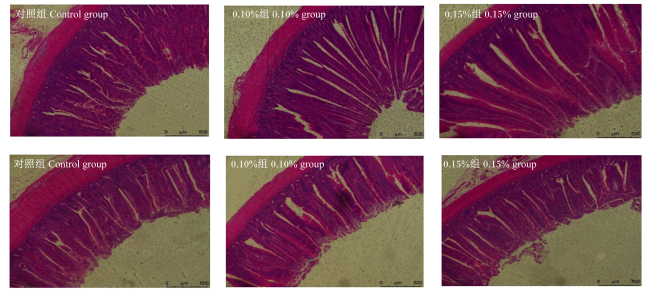
图1表8可知,饮水中添加复合酸化剂对空肠和回肠绒毛高度、隐窝深度和绒隐比均无显著影响(P>0.05)。
图1 饮水中添加复合酸化剂对肉鸡肠道形态的影响

上图为空肠形态,下图为回肠形态。

Fig.1 Effects of adding compound acidifiers to drinking water on intestinal morphology of broilers

The above figure is the morphology of jejunum, and the below figure is the morphology of ileum.

表8 饮水中添加复合酸化剂对肉鸡肠道形态的影响

Table 8 Effects of adding compound acidifiers to drinking water on intestinal morphology of broilers

项目
Items
复合酸化剂添加量 Compound acidifiers addition amount/% SEM P
P-value
0(对照组 Control group) 0.10 0.15
空肠 Jejunum
绒毛高度 Villus height/μm 1 368.68 1 475.28 1 351.80 47.049 0.547
隐窝深度 Crypt depth/μm 191.22 196.74 184.61 8.876 0.865
绒隐比 V/C 6.32 7.93 7.46 0.319 0.111
回肠 Ileum
绒毛高度 Villus height/μm 775.99 927.71 707.19 37.784 0.058
回肠隐窝深度 Crypt depth/μm 151.89 177.44 151.10 7.304 0.290
绒隐比 V/C 5.20 5.28 4.72 0.187 0.444

3 讨论

3.1 饮水中添加复合酸化剂对饮水pH和病源微生物数量的影响

酸化剂抑菌的作用机理主要有2方面:一是在水溶液中氢离子(H+)解离,降低有害菌生存环境的pH,抑制有害菌的生长;二是破坏有害菌细胞壁的完整性,抑制有害菌DNA的复制,从而达到抑菌效果[14]。李明举等[15]体外抑菌试验表明,复合酸化剂能抑制大肠杆菌和沙门氏菌生长,最低抑菌浓度为0.20%。雷燕等[16]研究富马酸、柠檬酸、磷酸、苯甲酸、甲酸、乳酸等单一酸化剂以及复合酸化剂的体外抑菌效果发现,单一酸化剂对大肠杆菌和葡萄球菌均具有抑制作用,其中柠檬酸对葡萄球菌的抑制效果最佳,并且复合酸化剂的抑菌效果优于单一酸化剂。文伟等[17]研究表明,不同类型的酸化剂对大肠杆菌、沙门氏菌和葡萄球菌的抑菌效果差异显著,抑菌效果为沙门氏菌>大肠杆菌>葡萄球菌。研究表明,在卫生条件一致情况下,肉鸡饮水中也经常检出大肠杆菌和沙门氏菌等微生物[18],大肠杆菌检出量为大于500 CFU/mL[19]。大肠杆菌和沙门氏菌感染会引起鸡肠道炎症等疾病,还会随鸡肉传播给人类,饮水中添加适量酸化剂对饮用水微生物具有清除作用[20]。本研究发现,饮水中添加复合酸化剂可减少水箱中大肠杆菌和沙门氏菌数量。大肠杆菌和沙门氏菌生长的适宜pH分别为6.0~8.0和6.8~7.2。本试验中,添加复合酸化剂将饮水的pH降低到3.6以下,从而减少了大肠杆菌和沙门氏菌数量。

3.2 饮水中添加复合酸化剂对肉鸡生长性能的影响

自从2020年7月我国全面禁止在畜禽饲料中添加抗生素以来,家禽一直面临肠道菌群不平衡引起的各种问题,如小肠上皮变薄、粪便含水量增加、饲粮消化率降低、粪便中可见未消化的残留物等,这推动了开发和利用替抗添加剂的研究[21]。研究表明,酸化剂可以作为促进肉鸡生长性能的添加剂,且复合酸化剂比单一酸化剂效果更好[22]。任方奎等[23]在肉鸡饮水中添加由甲酸和甲酸铵组成的复合型液体酸化剂,能显著提高肉鸡的生长性能,降低肉鸡的腹泻发生率。Waghmare等[24]在肉鸡饮水中添加由乳酸、甲酸、柠檬酸和丁酸复合而成的酸化剂,能够显著提高1~42日龄肉鸡平均日增重,降低1~21日龄和1~42日龄肉鸡料重比。本试验结果表明,饮水中添加0.15%复合酸化剂能够显著降低22~42日龄肉鸡料重比,对1~21日龄、1~42日龄料重比无显著影响,这与上述报道一致。本试验所用复合酸化剂由甲酸和丙酸复合组成。研究表明,甲酸除了具有降低肉鸡胃肠道pH的功能外,还能抑制病原菌的生长,提高生长性能,促进蛋白质消化吸收[25]。周嘉鑫等[26]在饮水中添加不同浓度的甲酸占比60%、木质素磺酸占比40%的复合酸化剂,发现能够显著提高肉鸡1~21日龄平均日增重,改善空肠结构形态,促进空肠紧密连接蛋白的表达,提高肉鸡的生长性能。本研究结果发现,饮水中添加由甲酸和丙酸组成的复合酸化剂显著降低了1~42日龄肉鸡平均日采食量,但对42日龄体重、平均日增重、料重比、死亡率和欧洲效益指数等无显著影响。这可能是由于复合酸化剂促进了肉鸡对营养物质的消化吸收[27],才能在维持肉鸡体重和平均日增重情况下,降低1~42日龄肉鸡平均日采食量,从而降低饲粮成本。

3.3 饮水中添加复合酸化剂对肉鸡肠道pH的影响

有机酸是具有羧基结构的有机物质[28],有机酸进入家禽体内后作为弱酸释放的质子可以降低胃肠道的pH[29]。郭鹏等[30]在饲粮中添加复合酸化剂,发现其能够降低肉鸡嗉囊、腺胃、肌胃和十二指肠的pH,对空肠、回肠和盲肠pH无显著影响,并且长期添加复合酸化剂对肠道pH的影响不如短期效果明显。肖芹等[31]在肉鸡饲粮中添甲酸、磷酸和富马酸复合酸化剂,能够显著降低肉鸡苏嗉囊、十二指肠、空肠和回肠的pH,且与酸化剂添加量呈一次线性关系。本研究发现,饮水中添加复合酸化剂对肉鸡十二指肠、回肠和盲肠的pH无显著影响。Paul等[32]研究表明,酸化剂添加对肉鸡胃肠道pH无显著影响,这与本研究结果一致。酸化剂引起的胃肠道pH降低,主要发生在上段肠道[33],例如嗉囊、腺胃、肌胃和十二指肠,因为酸化剂可能会在上肠道被完全吸收,导致进入下肠道时的浓度较低,进而未能显著影响十二指肠、空肠和回肠pH。并且肠道pH不仅由外部因素(如饲粮、饮水和添加剂)决定,还受到肠道内分泌、代谢和物理化学过程的调节,酸化剂的添加也可能被肠道内的其他调节机制(如胃酸的分泌、碱性物质的分泌等)所抵消,从而使得pH无显著变化[34]

3.4 饮水中添加复合酸化剂对肉鸡肠道消化酶活性的影响

消化酶由胰腺分泌,主要在小肠中发挥作用。消化酶活性对营养物质的消化吸收至关重要,是衡量肠道消化吸收能力的重要指标。研究表明,酸化剂能够提高蛋白酶和淀粉酶活性[35]。Wu等[36]研究报道,饲粮中添加酸化剂能够提高21日龄肉鸡空肠糜蛋白酶活性,对空肠淀粉酶、脂肪酶和胰蛋白酶活性无显著影响。郭志有等[37]研究表明,饮水中添加0.10%酸化剂能够显著提高肉鸡腺胃、肌胃、十二指肠和空肠蛋白酶活性。金旭等[38]研究发现,饲粮添加酸化剂(主要成分为苯甲酸和富马酸)能够显著提高42日龄肉鸡空肠脂肪酶活性。本研究结果表明,饮水中添加0.10%复合酸化剂显著降低了回肠胰蛋白酶活性,具有提高肉鸡回肠糜蛋白酶活性的趋势,与以上结果不一致。消化酶活性受肠道pH直接影响,消化酶在适宜pH条件下才能够发挥作用[39]。本试验中,复合酸化剂对肠道pH无显著影响,可能肠道pH并不是本试验中影响消化酶活性的主要原因。并且肉鸡饲粮中不可避免的存在一些饲料原料中含有的抗营养因子如胰蛋白酶抑制因子等[39-40],这可能是影响本试验回肠胰蛋白酶活性的原因之一。此外,消化酶活性还与肉鸡肠道内离子浓度、激素调节和肠道微生物群等有关[41],具体原因有待进一步研究。

3.5 饮水中添加复合酸化剂对肉鸡肠道相对长度和相对重量以及肠道形态的影响

饲粮中营养物质的消化吸收主要在肠道中进行,肠道发育对家禽的消化吸收能力以及生长发育具有直接影响。本研究结果表明,饮水中添加复合酸化剂对肉鸡十二指肠、空肠和回肠的相对长度和相对重量均无显著影响。赵旭等[42]研究发现,饲粮分别添加吸附磷酸、微囊化磷酸、吸附磷酸乳酸、富马酸、甲酸和柠檬酸对肉鸡各肠段相对长度和相对重量均无显著影响,与本研究结果一致。小肠绒毛高度、隐窝深度和绒隐比是评价肠道消化吸收功能的重要指标。绒毛边缘可以分泌多种消化酶,绒毛越长,动物的吸收能力越强。隐窝深度决定肠绒毛有丝分裂生成上皮细胞的速度,隐窝变浅,表明细胞成熟率上升,分泌功能增强。绒隐比可综合反映小肠消化吸收功能状况,其值升高,肠道上皮细胞数量增加,肠道吸收面积增大,进而提高营养物质的吸收利用率。本研究结果发现,饮水中添加复合酸化剂对肉鸡空肠和回肠的绒毛高度、隐窝深度和绒隐比均无显著影响。Hernández等[43]研究表明,在饲粮中添加酸化剂对小肠绒毛高度、隐窝深度和绒隐比均无显著影响,这与本研究结果一致。王晓亮等[44]研究发现,饲粮添加复合酸化剂显著降低了21日龄肉鸡空肠隐窝深度。Mohammadagheri等[45]研究报道,有机酸能显著提高十二指肠的绒毛高度和绒隐比,显著降低十二指肠隐窝深度。Guo等[46]研究表明,在饮水中添加0.15%和0.20%酸化剂提高了21日龄肉鸡十二指肠的绒毛高度和绒隐比,对42日龄肉鸡绒毛高度、隐窝深度和绒隐比无显著影响。酸化剂对肉鸡绒毛高度、隐窝深度和绒隐比的影响效果不同,可能与酸化剂的组成成分、添加方式和添加量有关。
以上结果表明,饮水中添加较高浓度的复合酸化剂,可以降低肉鸡早期的采食量,但由于复合酸化剂对肠道发育的促进和对饮水中有害菌的抑制作用,促进肉鸡对营养物质的吸收,抵消了其采食量降低的负面影响,最终未影响肉鸡出栏重。后续试验可通过提高添加量或改变酸化剂种类,探索肉鸡对酸化剂的耐受情况,为进一步降低肉鸡饲养成本提供理论依据。

4 结论

饮水中添加复合酸化剂通过降低饮水的pH,减少饮水中大肠杆菌和沙门氏菌数量,在不影响出栏重的情况下,可减少肉鸡采食量,降低料重比。本试验条件下,饮水中复合酸化剂的适宜添加量为0.15%。
[1]
LIU X B, JI Y R, MIAO Z G, et al. Effects of baicalin and chlorogenic acid on growth performance,slaughter performance,antioxidant capacity,immune function and intestinal health of broilers[J]. Poultry Science, 2024, 103(11):104251.

[2]
孙海哨, 周超, 钱小丽. 复合益生菌对肉鸡生长性能、免疫功能及经济效益的影响[J]. 中国饲料, 2024(18):57-60.

SUN H S, ZHOU C, QIAN X L. The effects of composite probiotics on the growth performance,immune function,and economic benefits of broiler chickens[J]. China Feed, 2024(18):57-60. (in Chinese)

[3]
WALKER H, VARTIAINEN S, APAJALAHTI J, et al. The effect of including a mixed-enzyme product in broiler diets on performance,metabolizable energy,phosphorus and calcium retention[J]. Animals, 2024, 14(2):328.

[4]
QIU K, CHEN Z M, ZHENG A, et al. Augmentation of performance,carcass trait,biochemical profile and lipid metabolism concerning the use of organic acidifier in broiler chickens[J]. Agriculture, 2023, 13(9):1765.

[5]
FIKRY A M, ATTIA A I, ISMAIL I E, et al. Dietary citric acid enhances growth performance,nutrient digestibility,intestinal microbiota,antioxidant status,and immunity of Japanese quails[J]. Poultry Science, 2021, 100(9):101326.

[6]
YANG X, XIN H L, YANG C B, et al. Impact of essential oils and organic acids on the growth performance,digestive functions and immunity of broiler chickens[J]. Animal Nutrition, 2018, 4(4):388-393.

[7]
PEARLIN B V, MUTHUVEL S, GOVIDASAMY P, et al. Role of acidifiers in livestock nutrition and health:a review[J]. Journal of Animal Physiology and Animal Nutrition, 2020, 104(2):558-569.

[8]
HAMID H, SHI H Q, MA G Y, et al. Influence of acidified drinking water on growth performance and gastrointestinal function of broilers[J]. Poultry Science, 2018, 97(10):3601-3609.

DOI PMID

[9]
HESABI NAMEGHI A, NASARI NEJAD A, AFKHAMI M. Comparison of manufactured acidifier based citric acid with commercial sample in drinking water on performance,serum biochemical parameters,pH and intestinal morphology of broiler chickens[J]. Research on Animal Production, 2023, 14(39):1-9.

[10]
郭钰君. 饮水酸化剂的体外筛选及其对肉鸡生产性能、胫骨质量以及肠道健康的影响[D].硕士学位论文. 郑州: 河南农业大学, 2022.

GUO Y J. In vitro screening of drinking acidifier and its effects on growth performance,tibia quality and gut health of broilers[D].Master’s Thesis. Zhengzhou: Henan Agricultural University, 2022. (in Chinese)

[11]
ZHANG H Y, GUO Y J, WANG Z Y, et al. Acidification of drinking water improved tibia mass of broilers through the alterations of intestinal barrier and microbiota[J]. Anim Biosci, 2022, 35(6):902-915.

[12]
AHMADI-SEFAT A A, TAHERPOUR K, GHASEMI H A, et al. Effects of an emulsifier blend supplementation on growth performance,nutrient digestibility,intestinal morphology,and muscle fatty acid profile of broiler chickens fed with different levels of energy and protein[J]. Poultry Science, 2022, 101(11):102145.

[13]
AKRAM M Z, EVERAERT N, DUNISŁAWSKA A. In ovo sodium butyrate administration differentially impacts growth performance, intestinal barrier function,immune response,and gut microbiota characteristics in low and high hatch-weight broilers[J]. Journal of Animal Science and Biotechnology, 2024, 15(1):165.

[14]
马嘉瑜, 朴香淑. 酸化剂改善畜禽生长和肠道健康的研究进展[J]. 中国畜牧杂志, 2021, 57(8):1-10.

MA J Y, PIAO X S. Recent advances in acidifiers on growth performance and intestinal health of livestock and poultry[J]. Chinese Journal of Animal Science, 2021, 57(8):1-10. (in Chinese)

[15]
李明举, 杨小台, 赵玮, 等. 复合酸化剂对大肠杆菌和沙门菌的体外抑菌效果探讨[J]. 国外畜牧学(猪与禽), 2024, 44(1):80-83.

LI M J, YANG X T, ZHAO W, et al. Study on the in vitro antibacterial effect of composite acidifier on Escherichia coli and Salmonella[J]. Animal Science Abroad (Pigs and Poultry), 2024, 44(1):80-83. (in Chinese)

[16]
雷燕, 李瀚林, 曾凡坤, 等. 不同单一酸化剂及复合酸化剂体外抑菌能力比较研究[J]. 现代畜牧兽医, 2021(7):28-31.

LEI Y, LI H L, ZENG F K, et al. Comparative in vitro study on antibacterial activity of different single acidifiers and compound acidifiers[J]. Modern Journal of Animal Husbandry and Veterinary Medicine, 2021(7):28-31. (in Chinese)

[17]
文伟, 陆信芳, 胡友军, 等. 不同类型酸化剂体外抑菌能力比较研究[J]. 饲料博览, 2024(1):71-75.

WEN W, LU X F, HU Y J, et al. Comparative study on in vitro bacteriostatic ability of different types of acidifiers[J]. Feed Review, 2024(1):71-75. (in Chinese)

[18]
MAES S, VACKIER T, NGUYEN HUU S, et al. Occurrence and characterisation of biofilms in drinking water systems of broiler houses[J]. BMC Microbiology, 2019, 19(1):77.

DOI PMID

[19]
JAFARI R A, FAZLARA A, GOVAHI M. An investigation into Salmonella and fecal coliform contamination of drinking water in broiler farms in Iran[J]. International Journal of Poultry Science, 2006, 5(5):27-42.

[20]
DI MARTINO G, PICCIRILLO A, GIACOMELLI M, et al. Microbiological,chemical and physical quality of drinking water for commercial turkeys:a cross-sectional study[J]. Poultry Science, 2018, 97(8):2880-2886.

[21]
HUYGHEBAERT G, DUCATELLE R, VAN IMMERSEEL F. An update on alternatives to antimicrobial growth promoters for broilers[J]. The Veterinary Journal, 2011, 187(2):182-188.

DOI PMID

[22]
POLYCARPO G V, ANDRETTA I, KIPPER M, et al. Meta-analytic study of organic acids as an alternative performance-enhancing feed additive to antibiotics for broiler chickens[J]. Poultry Science, 2017, 96(10):3645-3653.

DOI PMID

[23]
任方奎, 张桂芝, 张燕平, 等. 液体酸化剂的评估及其对肉鸡生长性能的影响[J]. 饲料研究, 2021, 44(1):49-52.

REN F K, ZHANG G Z, ZHANG Y P, et al. Evaluation of liquid acidifier and effect of liquid acidifier on growth performance of broilers[J]. Feed Research, 2021, 44(1):49-52. (in Chinese)

[24]
WAGHMARE S, GUPTA M, BAHIRAM K B, et al. Effects of organic acid blends on the growth performance,intestinal morphology,microbiota,and serum lipid parameters of broiler chickens[J]. Poultry Science, 2025, 104(1):104546.

[25]
NDELEKWUTE E K, AFOLABI K D, UZEGBU H O, et al. Effect of dietary formic acid as replacement of streptomycin on growth and nutrient digestibility in broiler[J]. Bangladesh Journal of Animal Science, 2015, 44(1):69-74.

[26]
周嘉鑫, 黄义强, 林智鑫, 等. 甲酸与木质磺酸混合物对黄羽肉鸡生产性能的影响[J]. 福建农林大学学报(自然科学版), 2020, 49(3):360-365.

ZHOU J X, HUANG Y Q, LIN Z X, et al. The effect of mixture of formic acid and lignosulfonic acid on the production performance of yellow broilers[J]. Journal of Fujian Agriculture and Forestry University (Natural Science Edition), 2020, 49(3):360-365. (in Chinese)

[27]
PALAMIDI I, PARASKEUAS V, THEODOROU G, et al. Effects of dietary acidifier supplementation on broiler growth performance,digestive and immune function indices[J]. Animal Production Science, 2016, 57(2):271-281.

[28]
EBEID T A, AL-HOMIDAN I H. Organic acids and their potential role for modulating the gastrointestinal tract,antioxidative status,immune response,and performance in poultry[J]. World’s Poultry Science Journal, 2022, 78(1):83-101.

[29]
RATHNAYAKE D, MUN H S, DILAWAR M A, et al. Time for a paradigm shift in animal nutrition metabolic pathway:dietary inclusion of organic acids on the production parameters,nutrient digestibility,and meat quality traits of swine and broilers[J]. Life, 2021, 11(6):476.

[30]
郭鹏, 卢建, 李军, 等. 复合酸化剂对肉仔鸡消化道pH值和消化酶活性的影响[J]. 饲料工业, 2011, 32(11):32-35.

GUO P, LU J, LI J, et al. Influence of complex acidification agent on gut pH and digestive enzyme activity of broilers[J]. Feed Industry, 2011, 32(11):32-35. (in Chinese)

[31]
肖芹, 常玲玲, 沈一茹, 等. 磷酸对肉鸡消化道pH值、消化酶活性和蛋白消化率的影响[J]. 中国家禽, 2016, 38(4):23-28.

XIAO Q, CHANG L L, SHEN Y R, et al. Effects of dietary phosphoric acid on pH,enzymatic activity of digestive tract and protein digestibility in broilers[J]. China Poultry, 2016, 38(4):23-28. (in Chinese)

[32]
PAUL S K, GOBINDA H, MONDAL M K, et al. Effect of organic acid salt on the performance and gut health of broiler chicken[J]. Journal of Poultry Science, 2007, 44(4):389-395.

[33]
BYRD J A, HARGIS B M, CALDWELL D J, et al. Effect of lactic acid administration in the drinking water during preslaughter feed withdrawal on Salmonella and Campylobacter contamination of broilers[J]. Poultry Science, 2001, 80(3):278-283.

[34]
T TUGNOLI B, GIOVAGNONI G, PIVA A, et al. From acidifiers to intestinal health enhancers:how organic acids can improve growth efficiency of pigs[J]. Animals, 2020, 10(1):134.

[35]
REDA F M, ISMAIL I E, ATTIA A I, et al. Use of fumaric acid as a feed additive in quail’s nutrition: its effect on growth rate,carcass,nutrient digestibility,digestive enzymes,blood metabolites,and intestinal microbiota[J]. Poultry Science, 2021, 100(12):101493.

[36]
WU Y Q, YIN X N, WANG Y L, et al. Effect of 2-hydroxy-4-(methylthio) butanoic acid and acidifier on the performance,chyme pH,and microbiota of broilers[J]. Animal Science Journal, 2020, 91(1):e13409.

[37]
郭志有, 郑立森, 李舫, 等. 饲粮与饮水添加酸化剂在肉鸡生产中使用效果研究[J]. 中国饲料, 2021(17):21-26.

GUO Z Y, ZHENG L S, LI F, et al. Research on the effect of adding acidifier in diet and drinking water in broiler production[J]. China Feed, 2021(17):21-26. (in Chinese)

[38]
金旭, 吴琼, 李祯, 等. 益生菌与酸化剂联用对肉鸡生长性能、抗氧化能力和肠道健康的影响[J]. 动物营养学报, 2023, 35(12):7759-7773.

DOI

JIN X, WU Q, LI Z, et al. Effects of probiotics combined with acidifiers on growth performance,antioxidant capacity and intestinal health of broilers[J]. Chinese Journal of Animal Nutrition, 2023, 35(12):7759-7773. (in Chinese)

DOI

[39]
张余慧, 袁丹丹, 程晓芳, 等. 泰和乌骨鸡消化道中淀粉酶、脂肪酶、胰蛋白酶活性的研究[J]. 黑龙江畜牧兽医, 2018(10):208-211.

ZHANG Y H, YUAN D D, CHENG X F, et al. Study on the activities of amylase, lipase and trypsin in the digestive tract of taihe black-bone chicken[J]. Heilongjiang Animal Science and Veterinary Medicine, 2018(10):208-211. (in Chinese)

[40]
王耀, 吴佳蓓, 王珍玉, 等. 大豆胰蛋白酶抑制因子的危害及其检测研究进展[J]. 饲料工业, 2019, 40(13):61-64.

WANG Y, WU J B, WANG Z Y, et al. The harm of soybean trypsin inhibitor and its detection research progress[J]. Feed Industry, 2019, 40(13):61-64. (in Chinese)

[41]
RAVINDRAN V, ABDOLLAHI M R. Nutrition and digestive physiology of the broiler chick:state of the art and outlook[J]. Animals, 2021, 11(10):2795.

[42]
赵旭, 沈一茹, 陈杰, 等. 不同种类酸化剂对肉鸡肠道发育、消化酶活性以及微生物数量的影响[J]. 动物营养学报, 2015, 27(11):3509-3515.

DOI

ZHAO X, SHEN Y R, CHEN J, et al. Effects of different kinds of acidifier on intestinal development,digestive enzyme activities and microbiota number of broiler chickens[J]. Chinese Journal of Animal Nutrition, 2015, 27(11):3509-3515. (in Chinese)

[43]
HERNÁNDEZ F, GARCÍA V, MADRID J, et al. Effect of formic acid on performance,digestibility,intestinal histomorphology and plasma metabolite levels of broiler chickens[J]. British Poultry Science, 2006, 47(1):50-56.

[44]
王晓亮, 张伟, 张庆丽, 等. 复合酸化剂对肉鸡生长性能、血清生化指标、抗氧化能力和肠道结构的影响[J]. 饲料研究, 2022, 45(14):41-46.

WANG X L, ZHANG W, ZHANG Q L, et al. Effect of compound acidifier on growth performance,serum biochemical indexes antioxidant capacity and intestinal morphology of broilers[J]. Feed Research, 2022, 45(14):41-46. (in Chinese)

[45]
MOHAMMADAGHERI N, NAJAFI R, NAJAFI G. Effects of dietary supplementation of organic acids and phytase on performance and intestinal histomorphology of broilers[J]. Veterinary Research Forum, 2016, 7(3):189-195.

PMID

[46]
GUO Y J, WANG Z Y, WANG Y S, et al. Impact of drinking water supplemented 2-hydroxy-4-methylthiobutyric acid in combination with acidifier on performance,intestinal development,and microflora in broilers[J]. Poultry Science, 2022, 101(3):101661.

文章导航

/