研究论文

岩藻多糖对肉鸡生长性能、免疫功能、肠道屏障功能和盲肠微生物群落的影响

  • 宋玙绮 , 1, 2 ,
  • 伏春燕 1, 3 ,
  • 阎佩佩 1 ,
  • 李霞 1 ,
  • 张亨 1, 3 ,
  • 商延 1, 3 ,
  • 付冠华 2 ,
  • 李桂明 1, 3 ,
  • 高庆涛 , 1, 3, * ,
  • 石天虹 1, 3 ,
  • 刘雪兰 1, 3
展开
  • 1 山东省农业科学院家禽研究所, 济南 250100
  • 2 河北工程大学生命科学与食品工程学院, 邯郸 056038
  • 3 山东省主要畜禽育种重点实验室, 济南 250100
*高庆涛,助理研究员,E-mail:

宋玙绮(2000—),女,河南焦作人,硕士研究生,研究方向为家禽营养与健康。E-mail:

收稿日期: 2025-08-22

  网络出版日期: 2026-03-16

基金资助

国家自然科学基金青年科学基金项目(32502935)

山东省农业科学院科技创新工程(CXGC2025F10)

山东省重点研发计划项目(2024TZXD029)

济南市“高校20条”项目(202228037)

Effects of Fucoidan on Growth Performance, Immune Function, Intestinal Barrier Function and Cecal Microbiota of Broilers

  • SONG Yuqi , 1, 2 ,
  • FU Chunyan 1, 3 ,
  • YAN Peipei 1 ,
  • LI Xia 1 ,
  • ZHANG Heng 1, 3 ,
  • SHANG Yan 1, 3 ,
  • FU Guanhua 2 ,
  • LI Guiming 1, 3 ,
  • GAO Qingtao , 1, 3, * ,
  • SHI Tianhong 1, 3 ,
  • LIU Xuelan 1, 3
Expand
  • 1 Poultry Institute, Shandong Academy of Agricultural Sciences, Ji’nan 250100, China
  • 2 College of Life Sciences and Food Engineering, Hebei University of Engineering, Handan 056038, China
  • 3 Shandong Provincial Key Laboratory of Livestock and Poultry Breeding, Ji’nan 250100, China
*assistant professor, E-mail:

Received date: 2025-08-22

  Online published: 2026-03-16

摘要

本试验旨在研究饲粮添加不同水平岩藻多糖(FUC)对肉鸡生长性能、免疫功能、肠道屏障功能和盲肠微生物群落的影响。选取320只体重相近的1日龄雄性爱拔益加(AA)肉鸡,随机分为4组,每组8个重复,每个重复10只鸡。对照组饲喂基础饲粮,试验组分别饲喂在基础饲粮的基础上添加125、250和500 mg/kg FUC的试验饲粮。试验期42 d。结果表明:1)与对照组相比,饲粮添加250 mg/kg FUC显著提高肉鸡末重和平均日增重(P<0.05),饲粮添加125和250 mg/kg FUC显著降低料重比(P<0.05);2)与对照组相比,饲粮添加250 mg/kg FUC有提高胸腺指数的趋势(P=0.074);3)与对照组相比,饲粮添加125和250 mg/kg FUC显著降低血清D-乳酸含量(P<0.05),显著提高血清白细胞介素-10含量(P<0.05);4)与对照组相比,饲粮添加250和500 mg/kg FUC显著提高空肠闭锁小带蛋白-1(ZO-1)mRNA相对表达量(P<0.05),饲粮添加250 mg/kg FUC显著降低空肠白细胞介素-1β(IL-1β)mRNA相对表达量(P<0.05);5)与对照组相比,饲粮添加250 mg/kg FUC显著提高盲肠乙酸和丁酸含量(P<0.05),饲粮添加500 mg/kg FUC显著提高盲肠丁酸含量(P<0.05);6)与对照组相比,饲粮添加125和250 mg/kg FUC显著提高盲肠傅尼埃菌属(Fournierella)相对丰度(P<0.05),饲粮添加250和500 mg/kg FUC显著降低盲肠弯曲杆菌属(Campylobacter)相对丰度(P<0.05)。综上所述,饲粮添加250 mg/kg FUC能够通过调节肉鸡盲肠微生物群落组成、增强肠道屏障功能、减轻局部炎症反应和促进短链脂肪酸生成等多重途径,有效改善肠道健康,从而提高其生长性能。

本文引用格式

宋玙绮 , 伏春燕 , 阎佩佩 , 李霞 , 张亨 , 商延 , 付冠华 , 李桂明 , 高庆涛 , 石天虹 , 刘雪兰 . 岩藻多糖对肉鸡生长性能、免疫功能、肠道屏障功能和盲肠微生物群落的影响[J]. 动物营养学报, 2026 , 38(3) : 1887 -1899 . DOI: 10.12418/CJAN2026.152

Abstract

This experiment was conducted to investigate the effects of different dietary supplementation levels of fucoidan (FUC) on growth performance, immune function, intestinal barrier function and cecal microbiota of broilers. A total of 320 one-day-old male Arbor Acres (AA) broilers with similar body weight were randomly divided into 4 groups, with 8 replicates in each group and 10 chickens in each replicate. The control group was fed a basal diet, while the experimental groups were fed the basal diets supplemented with 125, 250 and 500 mg/kg FUC, respectively. The experiment lasted for 42 days. The results showed as follows: 1) compared with the control group, dietary supplementation of 250 mg/kg FUC significantly increased the final body weight and average daily gain of broilers (P<0.05), and dietary supplementation of 125 and 250 mg/kg FUC significantly reduced the feed to gain ratio (P<0.05). 2) Compared with the control group, dietary supplementation of 250 mg/kg FUC tended to increase the thymus index (P=0.074). 3) Compared with the control group, dietary supplementation of 125 and 250 mg/kg FUC significantly decreased the serum D-lactate content (P<0.05), and significantly increased the serum interleukin-10 content (P<0.05). 4) Compared with the control group, dietary supplementation of 250 and 500 mg/kg FUC significantly upregulated the jejunal zonula occludens-1 (ZO-1) mRNA relative expression level (P<0.05), and dietary supplementation of 250 mg/kg FUC significantly downregulated the jejunal interleukin-1β (IL-1β) mRNA relative expression level (P<0.05). 5) Compared with the control group, dietary supplementation of 250 mg/kg FUC significantly increased the contents of acetate and butyrate in cecum (P<0.05), whereas dietary supplementation of 500 mg/kg FUC significantly improved the butyrate content in cecum only (P<0.05). 6) Compared with the control group, dietary supplementation of 125 and 250 mg/kg FUC significantly increased the Fournierella relative abundance in cecum (P<0.05), and dietary supplementation of 250 and 500 mg/kg FUC significantly decreased the Campylobacter relative abundance in cecum (P<0.05). In conclusion, dietary supplementation of 250 mg/kg FUC can effectively improve the intestinal health through multiple pathways such as regulating the cecal microbiota composition of broilers, enhancing intestinal barrier function, reducing local inflammatory responses, and promoting the production of short-chain fatty acids, thereby enhancing their growth performance.

2024年我国肉鸡鸡肉总产量达2 464余万t[1],在保障优质动物蛋白质供给方面发挥了重要作用。持续提高肉鸡饲料转化效率、生长性能及产品质量是肉鸡产业的核心目标。肠道作为营养物质消化吸收的主要场所,也是机体重要的免疫屏障,其健康状态直接影响肉鸡的养分利用效率、免疫能力和整体健康水平。因此,维护肠道健康是提升肉鸡生长性能和养殖效益的关键基础。随着饲料“禁抗”政策的实施,寻求安全、有效的替抗策略以维持动物肠道健康已成为研究热点。海藻多糖因其来源广泛、安全性高且生物活性多样,如抗炎[2]、抗氧化[3]和免疫调节[4]等,在维护动物肠道健康方面展现出显著潜力。研究表明,海藻多糖能够有效增强免疫功能、提升抗氧化能力以及改善肠道屏障功能[5-7],从而对生长性能产生积极影响。此外,海藻多糖还可调节肠道菌群。例如,海藻多糖可提高肉鸡盲肠拟杆菌属(Bacteroides)相对丰度,降低粪杆菌属(Faecalibacterium)相对丰度,增强微生物活性并提高短链脂肪酸(SCFAs)含量[8];另有研究证实,在热应激条件下,海藻多糖可通过调节黄羽肉鸡盲肠微生物群落来增强肠道屏障功能[9]
岩藻多糖(fucoidan,FUC)是一种主要来源于褐藻细胞壁的海藻多糖,富含L-岩藻糖和硫酸酯基团[4],其独特的结构赋予其显著的生物活性。目前,关于FUC对肉鸡影响的研究多以生长性能等表型为主,对于其调控家禽肠道菌群及其代谢,从而促进肠道健康和饲料利用效率提高的研究尚不充分。为此,本试验旨在研究饲粮添加不同水平FUC对爱拔益加(AA)肉鸡生长性能、免疫功能、肠道屏障功能和盲肠微生物群落的影响,为FUC在肉鸡饲粮中的科学应用提供参考。

1 材料与方法

1.1 试验材料

FUC为市售产品,采用水提法从泡叶藻中提取,并经除杂、纯化制备而成。经测定,FUC重均分子质量(Mw)为26.23 ku,主要单糖为岩藻糖,含量为32.5%,硫酸基含量为22.7%。

1.2 试验设计和饲养管理

本试验经山东省农业科学院动物伦理委员会批准,批准编号为SAAS-2024-G23。
采用单因素试验设计,选用320只体重相近、健康状况一致的1日龄雄性AA肉鸡,随机分为4组,每组8个重复,每个重复10只鸡。对照组饲喂基础饲粮,试验组分别饲喂在基础饲粮的基础上添加125、250和500 mg/kg FUC的试验饲粮。试验期42 d,分为前期(1~21日龄)和后期(22~42日龄)2个阶段。参照《鸡饲养标准》(NY/T 33—2004)配制玉米-豆粕型基础饲粮,其组成及营养水平见表1。饲粮粗蛋白质(CP)含量参照GB/T 6432—2018中方法进行测定,钙(Ca)含量参照GB/T 6436—2018中方法进行测定,总磷(TP)含量参照GB/T 6437—2018中方法进行测定;代谢能(ME)和有效磷含量参考《中国饲料成分及营养价值表(2022年第33版)》[10]计算得出。
饲养试验在山东省禽类饲料添加剂中试基地进行,饲养前对试验鸡舍和设备进行清洗和消毒。试验肉鸡采用立体笼养,试验第1~7天鸡舍温度为34 ℃,第8~21天逐渐降低到26 ℃,第22~42天保持温度为22~24 ℃;试验第1天光照24 h,之后每天光照16 h、黑暗8 h。整个试验期间,肉鸡自由采食和饮水。
表1 基础饲粮组成及营养水平(饲喂基础)

Table 1 Composition and nutrient levels of basal diets (as-fed basis)

项目
Items
1~21日龄
1 to 21
days of age
22~42日龄
22 to 42
days of age
原料 Ingredients
玉米 Corn 56.70 61.28
豆粕 Soybean meal 34.75 30.10
大豆油 Soybean oil 4.00 4.80
石粉 Limestone 1.00 0.70
食盐 NaCl 0.30 0.30
磷酸氢钙 CaHPO4 1.80 1.50
DL-蛋氨酸 DL-Met (98%) 0.20 0.12
L-赖氨酸 L-Lys (99%) 0.10 0.05
苏氨酸 Thr 0.05 0.05
氯化胆碱 Choline chloride 0.10 0.10
预混料 Premix1) 1.00 1.00
合计 Total 100.00 100.00
营养水平 Nutrient levels2)
代谢能 ME/(MJ/kg) 12.55 13.01
粗蛋白质 CP 20.59 18.81
钙 Ca 0.90 0.71
总磷 TP 0.69 0.62
有效磷 AP 0.41 0.35

1)预混料为每千克饲粮提供 The premix provided the following per kg of diets:VA 15 000 IU,VD3 3 450 IU,VE 22.5 IU,VK 2.25 mg,VB1 2.7 mg,VB2 8.4 mg,VB6 4.86 mg,VB12 0.03 mg,烟酸 nicotinic acid 44.55 mg,叶酸 folic acid 1.47 mg,生物素 biotin 0.18 mg,泛酸 pantothenic acid 16.56 mg,Cu 8.5 mg,Fe 102 mg,Zn 72.76 mg,Mn 97.34 mg,I 0.48 mg,Se 0.3 mg。

2)代谢能和有效磷为计算值,其余营养水平为实测值。ME and AP were calculated values, while the other nutrient levels were measured values.

1.3 样品采集

试验第42天,从每个重复中选取1只接近该组平均体重的肉鸡(提前禁饲12 h)进行翅静脉采血5 mL,待血清析出后,在4 ℃、2 000×g条件下离心10 min,分离血清样品,于-20 ℃保存,待测血清免疫指标。肉鸡采血称重后屠宰,分离免疫器官(脾脏、肝脏、胸腺和法氏囊)并称重,计算免疫器官指数:免疫器官指数(%)=100×免疫器官重/活体重。取空肠中段刮取黏膜组织,液氮冷冻后于-80 ℃保存,用于肠道屏障功能及炎症相关基因表达分析。收集盲肠内容物,液氮冷冻,然后转移至-80 ℃保存,用于分析微生物群落和SCFAs含量。

1.4 测定指标及方法

1.4.1 生长性能

以重复为单位,分别于试验开始和结束时对肉鸡进行空腹称重,试验期间记录耗料量,计算平均日增重(ADG)、平均日采食量(ADFI)和料重比(F/G)。

1.4.2 血清免疫指标

血清二胺氧化酶(DAO)活性以及D-乳酸(D-LA)、白细胞介素-6(IL-6)、白细胞介素-10(IL-10)、白细胞介素-1β(IL-1β)和肿瘤坏死因子-α(TNF-α)含量均采用酶联免疫吸附试验(ELISA)试剂盒(武汉基因美生物科技有限公司)测定,按操作说明规范操作。反应终止后,采用全自动酶标仪(AMR-100,杭州奥盛仪器有限公司)在450 nm波长下测定各孔吸光度(OD)值。根据标准品浓度梯度绘制标准曲线,计算血清样本中各指标。

1.4.3 空肠紧密连接蛋白和炎性因子基因表达

采用BioFlux Simply P总RNA提取试剂盒提取空肠黏膜中总RNA;采用反转录试剂盒(Evo M-MLV RT Mix Kit with gDNA Clean for qPCR Ver.2,湖南艾科瑞生物工程有限公司)将总RNA反转录成cDNA;采用实时荧光定量PCR(RT-qPCR)技术测定闭合蛋白(Occludin)、密封蛋白-1(Claudin-1)、闭锁小带蛋白-1(ZO-1)、TNF-αIL-6和IL-1β的mRNA相对表达量,引物序列见表2
表2 PCR所需引物序列

Table 2 Primer sequences used for PCR

基因
Genes
登录号
Accession number
引物序列
Primer sequences (5'—3')
密封蛋白-1
Claudin-1
NM_001013611.2 F:GTGTGTTTGTTGCTGTGA
R:ACTCTGTTGCCATACCAT
闭合蛋白
Occludin
NM_204918.1 F:CCAGCGGTTACTACTACA
R:CAGGATGACGATGAGGAA
闭锁小带蛋白-1
ZO-1
XM_015278975.2 F:GAGCTCACAAGCTACGCAAA
R:ACTTGTAGCACCATCTGCCT
肿瘤坏死因子-α
TNF-α
NM_204267 F:CCCAGTTCAGATGAGTTGCCCTTC
R:GCCACCACACGACAGCCAAG
白细胞介素-6
IL-6
NM_204628.2 F:GAAATCCCTCCTCGCCAATCTG
R:CCTCACGGTCTTCTCCATAAACG
白细胞介素-1β
IL-1β
NM_204524.2 F:GAAGTGCTTCGTGCTGGAGT
R:TCTGGCATCTGCCCAGTTC
β-肌动蛋白
β-actin
NM_205518.1 F:GAACCCCAAAGCCAACAG
R:GGGCGTAGCCTTCATAGA

1.4.4 盲肠SCFAs含量

称取0.3 g盲肠内容物于离心管中,加入1.5 mL超纯水,涡旋振荡混匀,4 ℃过夜,离心取上清液。在沉淀中加入1.0 mL超纯水,再次涡旋振荡混匀并离心,收集上清液与第1次收集的上清液合并。按1∶9(体积比)的比例将25%(质量体积分数)偏磷酸加入合并后的提取液中,充分混匀后再次离心。上清液通过0.45 μm滤膜过滤,加入进样瓶,采用Agilent 7890N气相色谱仪测定SCFAs含量。

1.4.5 盲肠微生物群落分析

盲肠微生物群落16S rDNA测序由上海美吉生物医药科技有限公司完成。采用DNA试剂盒(Qiagen,美国)提取盲肠内容物中的微生物基因组总DNA,并对提取的DNA进行纯化。对纯化后的DNA进行纯度和浓度检测,合格样本用于宏基因组测序。基于Illumina MiSeq平台,对样品16S rDNA的V3~V4高变区进行高通量测序,获得的序列经质控和过滤后,在97%相似度水平下进行操作分类单元(OTU)聚类分析。采用美吉云平台(https://cloud.majorbio.com)进行微生物分析,α多样性分析采用Kruskal-Wallis秩和检验;β多样性分析基于未加权UniFrac距离,采用主坐标分析(PCoA)、偏最小二乘判别分析(PLS-DA)进行可视化,并采用相似性分析(ANOSIM)检验组间群落结构差异的显著性。采用线性判别分析(LDA)效应大小(LEfSe)分析对各试验组与对照组之间差异微生物进行鉴定,差异显著性判定标准为P<0.05且LDA得分>2.0。

1.5 数据处理和统计分析

试验数据采用Excel 2019进行初步整理,然后采用SPSS 26.0软件进行单因素方差分析,并采用Duncan氏法进行多重比较;以P<0.05作为差异显著的判断标准,0.05<P<0.10表示差异有显著趋势,结果数据采用“平均值±标准差”形式表示。

2 结果与分析

2.1 饲粮添加不同水平FUC对肉鸡生长性能的影响

表3可知,与对照组相比,饲粮添加250 mg/kg FUC显著提高肉鸡末重和ADG(P<0.05);同时,饲粮添加125和250 mg/kg FUC显著降低F/G(P<0.05)。
表3 饲粮添加不同水平FUC对肉鸡生长性能的影响

Table 3 Effects of different dietary supplementation levels of FUC on growth performance of broilers

项目
Items
对照组
Control group
FUC添加水平
FUC supplemental levels/(mg/kg)
P
P-value
125 250 500
初重 IBW/g 45.50±1.10 45.56±1.37 46.08±0.58 46.33±1.29 0.516
末重 FBW/g 2 321.27±99.12b 2 370.96±95.52ab 2 457.92±104.82a 2 285.65±95.28b 0.034
平均日增重 ADG/g 54.18±2.35b 55.37±2.27ab 57.42±2.49a 53.32±2.25b 0.033
平均日采食量 ADFI/g 88.04±3.44 85.50±2.47 87.21±3.27 82.97±4.74 0.087
料重比 F/G 1.63±0.07a 1.55±0.03b 1.52±0.04b 1.56±0.04a 0.044

同行数据肩标无字母或相同字母表示差异不显著(P>0.05),不同字母表示差异显著(P<0.05)。下表同。

In the same row, values with no letter or the same letter superscripts mean no significant difference (P>0.05), while with different letter superscripts mean significant difference (P<0.05). The same as below.

2.2 饲粮添加不同水平FUC对肉鸡免疫器官指数的影响

表4可知,与对照组相比,饲粮添加250 mg/kg FUC有提高肉鸡胸腺指数的趋势(P=0.074);饲粮添加不同水平FUC对法氏囊指数、脾脏指数和肝脏指数均无显著影响(P>0.05)。
表4 饲粮添加不同水平FUC对肉鸡免疫器官指数的影响

Table 4 Effects of different dietary supplementation levels of FUC on immune organ indices of broilers

项目
Items
对照组
Control group
FUC添加水平
FUC supplemental levels/(mg/kg)
P
P-value
125 250 500
法氏囊指数
Bursa of Fabricius index
0.26±0.05 0.28±0.02 0.26±0.05 0.27±0.06 0.874
脾脏指数 Spleen index 0.12±0.02 0.15±0.03 0.15±0.03 0.14±0.04 0.328
肝脏指数 Liver index 2.05±0.14 2.19±0.38 2.08±0.24 2.12±0.12 0.698
胸腺指数 Thymic index 0.49±0.02 0.57±0.11 0.58±0.07 0.48±0.03 0.074

2.3 饲粮添加不同水平FUC对肉鸡血清免疫指标的影响

表5可知,与对照组相比,饲粮添加125和250 mg/kg FUC显著降低肉鸡血清D-LA含量(P<0.05),显著提高血清IL-10含量(P<0.05);饲粮添加不同水平FUC对血清DAO活性以及IL-6、IL-1β和TNF-α含量均无显著影响(P>0.05)。
表5 饲粮添加不同水平FUC对肉鸡血清免疫指标的影响

Table 5 Effects of different dietary supplementation levels of FUC on serum immune indices of broilers

项目
Items
对照组
Control group
FUC添加水平
FUC supplemental levels/(mg/kg)
P
P-value
125 250 500
D-乳酸 D-LA/(ng/mL) 47.69±6.00a 41.80±3.92bc 40.31±3.76c 46.82±3.52ab 0.021
二胺氧化酶 DAO/(ng/mL) 17.15±1.04 16.25±1.82 15.15±1.69 16.14±2.15 0.336
白细胞介素-10 IL-10/(pg/mL) 82.41±5.46b 91.53±4.21a 91.93±7.77a 83.27±5.01b 0.021
白细胞介素-6 IL-6/(pg/mL) 84.03±7.00 77.59±7.04 80.93±2.22 78.70±7.09 0.343
白细胞介素-1β IL-1β/(pg/mL) 84.14±8.47 87.68±6.15 80.92±7.25 88.78±5.35 0.255
肿瘤坏死因子-α
TNF-α/(pg/mL)
85.38±4.65 78.42±5.87 77.24±8.88 79.11±9.29 0.216

2.4 饲粮添加不同水平FUC对肉鸡盲肠SCFAs含量的影响

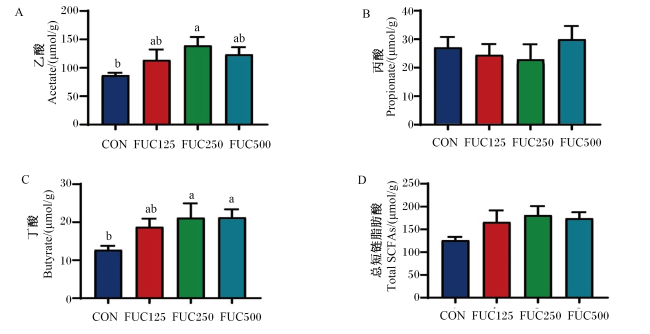
图1所示,与对照组相比,饲粮添加250 mg/kg FUC显著提高肉鸡盲肠乙酸和丁酸含量(P<0.05),饲粮添加500 mg/kg FUC显著提高盲肠丁酸含量(P<0.05);饲粮添加不同水平FUC对盲肠丙酸和总SCFAs含量无显著影响(P>0.05)。
图1 饲粮添加不同水平FUC对肉鸡盲肠SCFAs含量的影响

CON:对照组;FUC125:125 mg/kg FUC添加组;FUC250:250 mg/kg FUC添加组;FUC500:500 mg/kg FUC添加组。下图同。CON: control group; FUC125: 125 mg/kg FUC supplemental group; FUC250: 250 mg/kg FUC supplemental group; FUC500: 500 mg/kg FUC supplemental group. The same as below.

数据柱标注不同字母表示差异显著(P<0.05)。图2同。

Fig.1 Effects of different dietary supplementation levels of FUC on SCFAs contents in cecum of broilers

Value columns with different letters mean significant difference (P<0.05). The same as Fig.2.

2.5 饲粮添加不同水平FUC对肉鸡空肠紧密连接蛋白和炎性因子基因表达的影响
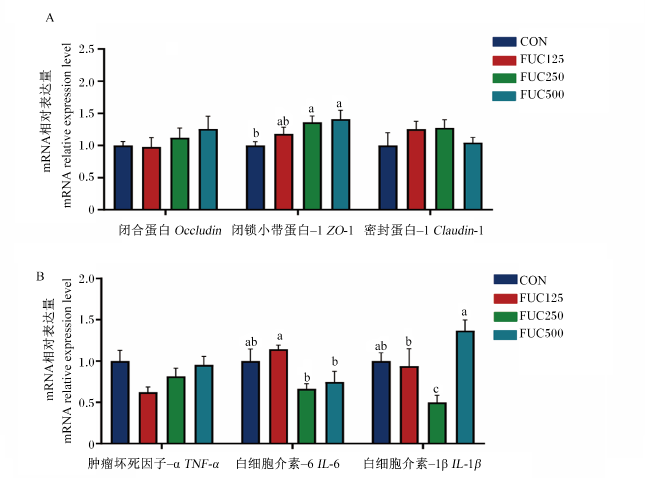
图2所示,与对照组相比,饲粮添加250和500 mg/kg FUC显著提高肉鸡空肠ZO-1 mRNA相对表达量(P<0.05);饲粮添加250和500 mg/kg FUC有降低空肠IL-6 mRNA相对表达量的趋势(P>0.05);饲粮添加250 mg/kg FUC显著降低空肠IL-1β mRNA相对表达量(P<0.05);饲粮添加不同水平FUC对空肠紧密连接蛋白OccludinClaudin-1以及TNF-α mRNA相对表达量无显著影响(P>0.05)。
图2 饲粮添加不同水平FUC对肉鸡空肠紧密连接蛋白(A)和炎性因子(B)基因表达的影响

Fig.2 Effects of different dietary supplementation levels of FUC on gene expression of tight junction proteins (A) and inflammatory factors (B) in jejunum of broilers

2.6 饲粮添加不同水平FUC对肉鸡盲肠微生物群落的影响

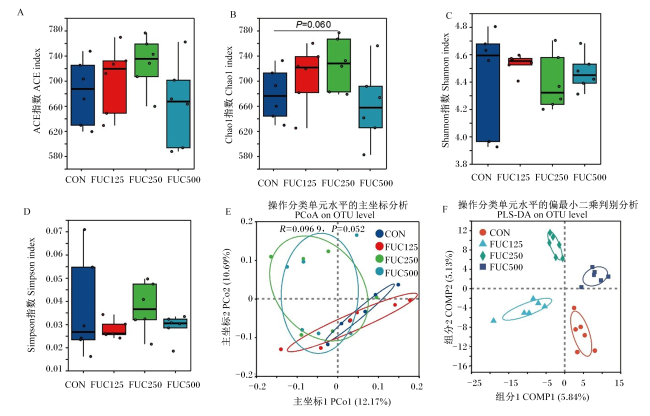
图3所示,α多样性分析结果表明,与对照组相比,饲粮添加250 mg/kg FUC有提高肉鸡盲肠微生物群落Chao1指数的趋势(P=0.060);各组间盲肠微生物群落ACE指数、Shannon指数和Simpson指数均无显著差异(P>0.05)。PCoA结果表明,250和500 mg/kg FUC添加组盲肠微生物群落组成与对照组存在区别(P=0.052);PLS-DA结果也表明,各组间盲肠微生物群落存在明显分离。多样性分析结果表明,饲粮添加250 mg/kg FUC可以提高肉鸡盲肠微生物群落丰富度,并改变盲肠微生物群落组成结构。
图3 饲粮添加不同水平FUC对肉鸡盲肠微生物群落多样性的影响

Fig.3 Effects of different dietary supplementation levels of FUC on cecal microbiota diversity of broilers

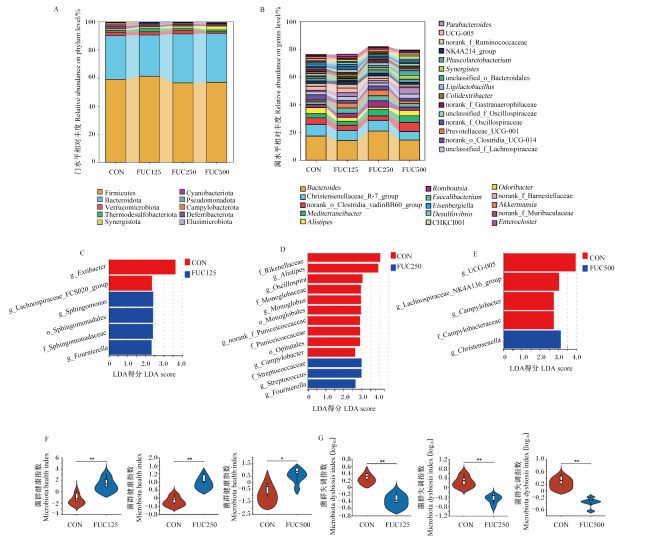
图4所示,物种组成分析结果表明,在门水平上,肉鸡盲肠微生物群落相对丰度较高的菌门为厚壁菌门(Firmicutes)和拟杆菌门(Bacteroidota)(图4-A),占比达90%以上;在属水平上,相对丰度排名前5的菌属为拟杆菌属、克里斯滕森菌科R-7群(Christensenellaceae_R-7_group)、未定级梭菌纲vadinBB60群(norank_o_Clostridia_vadinBB60_group)、地中海杆菌属(Mediterraneibacter)和另枝菌属(Alistipes)(图4-B)。
图4 饲粮添加不同水平FUC对肉鸡盲肠微生物群落组成、差异菌群和菌群健康的影响

Firmicutes:厚壁菌门;Bacteroidota:拟杆菌门;Verrucomicrobiota:疣微菌门;Thermodesulfobacteriota:热脱硫杆菌门;Synergistota:互养菌门;Cyanobacteriota:蓝细菌门;Pseudomonadota:假单胞菌门;Campylobacterota:弯曲杆菌门;Deferribacterota:脱铁杆菌门;Elusimicrobiota:迷踪菌门;Bacteroides:拟杆菌属;Christensenellaceae_R-7_group:克里斯滕森菌科R-7群;norank_o_Clostridia_vadinBB60_group:未定级梭菌纲vadinBB60群;Mediterraneibacter:地中海杆菌属;Alistipes:另枝菌属;Romboutsia:罗姆布茨菌属;Faecalibacterium:粪杆菌属;Eisenbergiella:艾森伯格菌属;Desulfovibrio:脱硫弧菌属;Odoribacter:气味杆菌属;norank_f_Barnesiellaceae:未定级巴恩斯氏菌科;Akkermansia:阿克曼氏菌属;norank_f_Muribaculaceae:未定级鼠杆菌科;Enterocloster:肠梭菌属;Parabacteroides:副拟杆菌属;norank_f_Ruminococcaceae:未定级瘤胃球菌科;NK4A214_group:NK4A214群;Phascolarctobacterium:考拉杆菌属;Synergistes:互养菌属;unclassified_o_Bacteroidales:未分类拟杆菌目;Ligilactobacillus:联合乳杆菌属;norank_f_Gastranaerophilaceae:未定级胃厌氧菌科;unclassified_f_Oscillospiraceae:未分类颤螺菌科;norank_f_Oscillospiraceae:未定级颤螺菌科;Prevotellaceae_UCG-001:普雷沃氏菌科UCG-001;norank_o_Clostridia_UCG-014:未分类梭菌纲UCG-014;unclassified_f_Lachnospiraceae:未分类毛螺菌科;Extibacter:外杆菌属;Lachnospiraceae_FCS020_group:毛螺菌科FCS020群;Sphingomonas:鞘氨醇单胞菌属;Sphingomonadales:鞘氨醇单胞菌目;Sphingomonadaceae:鞘氨醇单胞菌科;Fournierella:傅尼埃菌属;Rikenellaceae:理研菌科;Oscillospira:颤螺菌属;Monoglobaceae:单球藻菌科;Monoglobus:单球藻菌属;Monoglobales:单球藻菌目;norank_f_Puniceicoccaceae:未定级紫红球菌科;Puniceicoccaceae:紫红球菌科;Opitutales:丰佑菌目;Campylobacter:弯曲杆菌属;Streptococcaceae:链球菌科;Streptococcus:链球菌属;Lachnospiraceae_NK4A136_group:毛螺菌科NK4A136群;Campylobacteraceae:弯曲杆菌科;Christensenella:克里斯滕森菌属。

*表示差异显著(P<0.05),**表示差异极显著(P<0.01)。* indicated significant difference (P<0.05), and ** indicated extremely significant difference (P<0.01).

Fig.4 Effects of different dietary supplementation levels of FUC on cecal microbiota composition, differential microbiota and microbiota health of broilers

LEfSe分析结果表明,在属水平上,与对照组相比,饲粮添加125 mg/kg FUC显著提高肉鸡盲肠鞘氨醇单胞菌属(Sphingomonas)和傅尼埃菌属(Fournierella)相对丰度(P<0.05),显著降低外杆菌属(Extibacter)和毛螺菌科FCS020群(Lachnospiraceae_FCS020_group)相对丰度(P<0.05)(图4-C);饲粮添加250 mg/kg FUC显著提高链球菌属(Streptococcus)和傅尼埃菌属相对丰度(P<0.05),显著降低另枝菌属、颤螺菌属(Oscillospira)、单球藻菌属(Monoglobus)、未定级紫红球菌科(norank_f_Puniceicoccaceae)和弯曲杆菌属(Campylobacter)相对丰度(P<0.05)(图4-D);饲粮添加500 mg/kg FUC显著提高克里斯滕森菌属(Christensenella)相对丰度(P<0.05),显著降低UCG-005、毛螺菌科NK4A136群(Lachnospiraceae_NK4A136_group)和弯曲杆菌属相对丰度(P<0.05)(图4-E)。
肠道菌群表征分析结果表明,饲粮添加不同水平FUC显著提高肉鸡盲肠菌群健康指数(P<0.05)(图4-F),显著降低菌群失调指数(P<0.05)(图4-G)。

3 讨论

3.1 饲粮添加不同水平FUC对肉鸡生长性能的影响

研究表明,海藻多糖能够通过调节肠道健康和整体生理状态,提高肉鸡生长性能[6,11]。例如,饲粮添加400 mg/kg浒苔多糖显著提高肉鸡ADG[8,12]。本研究发现,饲粮添加250 mg/kg FUC显著提高肉鸡末重和ADG,并显著降低F/G,这与肉鸡饲粮添加海带多糖和FUC提高ADFI、ADG并降低F/G的研究结果[13]一致。值得注意的是,FUC在断奶仔猪中虽未显著影响生长性能,但降低了腹泻率并增强了肠道抗氧化能力[14],提示功能性多糖可能通过维护肠道稳态间接促进生长。本研究结果进一步支持FUC通过改善肠道健康促进肉鸡生长的观点。

3.2 饲粮添加不同水平FUC对肉鸡免疫功能和肠道屏障功能的影响

免疫器官指数作为评估家禽免疫系统发育和功能状态的重要形态学指标[15-16],其变化反映机体免疫功能。研究表明,浒苔多糖虽能减轻热应激肉鸡法氏囊组织损伤和细胞凋亡,但未显著改变法氏囊指数[17]。在免疫抑制小鼠模型中,褐藻多糖显著提高了胸腺和脾脏指数[18]。本试验中,与对照组相比,250 mg/kg FUC添加组肉鸡胸腺指数呈现升高趋势。海藻多糖的免疫调节活性(如激活巨噬细胞、自然杀伤细胞及调节细胞因子分泌)与其硫酸化程度、分子质量及单糖组成密切相关[19]。因此,饲粮添加FUC可能具有提高肉鸡免疫功能的作用。
血清D-LA含量和DAO活性是评估肠道通透性和黏膜屏障完整性的敏感指标。肠黏膜屏障功能受损会导致血清DAO活性和D-LA含量提高[20-21]。本研究中,饲粮添加125和250 mg/kg FUC显著降低肉鸡血清D-LA含量,这与蒲公英提取物降低蛋鸡血清D-LA含量的结果[22]一致,提示FUC有助于维护肠道屏障完整性。
细胞因子在免疫调节中发挥核心作用,促炎因子(如IL-1β、IL-6、TNF-α)与抗炎因子(如IL-10)的动态平衡至关重要。研究显示,FUC能够显著降低小鼠血清促炎因子含量,如IL-1β、IL-6、TNF-α和干扰素-γ(IFN-γ);同时显著提高抗炎因子含量,如IL-10和转化生长因子-β(TGF-β)[23]。本研究中,与对照组相比,125和250 mg/kg FUC添加组血清IL-10含量显著提高,血清D-LA含量显著降低,表明FUC可能通过增强免疫调节能力和改善肠道屏障功能,提升肉鸡整体健康水平。
肠上皮紧密连接蛋白[如密封蛋白(Claudin)、Occludin、ZO-1]是维持肠道物理屏障和通透性的关键结构[24],其功能破坏与多种肠道疾病相关。研究表明,苦荞叶果胶类多糖可上调葡聚糖硫酸钠(DSS)模型大鼠结肠组织中ZO-1和Occludin的表达,修复肠黏膜屏障损伤[25]。此外,海藻多糖还可调节免疫应答,改善肠道免疫功能[26-27]。研究表明,FUC在膳食纤维缺乏小鼠中,通过抑制核因子-κB(NF-κB)信号通路活化,降低结肠中IL-1β和TNF-α表达,提高IL-10表达,同时提高ZO-1、ClaudinOccludin表达[2]。褐藻寡糖通过激活丝裂原活化蛋白激酶磷酸化并抑制NF-κB活化,下调结肠IL-1βIL-6和TNF-α表达以减轻炎症[28]。在肠道损伤小鼠模型的研究中也发现,FUC能够抑制IL-1βIL-6、TNF-αIFN-γ等促炎因子的表达,上调抗炎因子IL-10的表达[29-30]。本试验发现,饲粮添加250 mg/kg FUC降低肉鸡空肠IL-6和IL-1β mRNA相对表达量,并显著提高ZO-1 mRNA相对表达量。这些结果表明,FUC能够减轻肠道局部炎症反应并增强空肠黏膜屏障功能。

3.3 饲粮添加不同水平FUC对肉鸡盲肠微生物群落和SCFAs含量的影响

肠道菌群结构及其与宿主互作的稳态是维持宿主健康的基础,菌群失调与多种炎症性疾病相关[31]。研究表明,海藻多糖通过改变微生物群落结构影响肠道黏膜免疫和宿主代谢[32-33]。体外研究表明,海藻硫酸多糖可富集拟杆菌门、乳杆菌属(Lactobacillus)、双歧杆菌属(Bifidobacterium)、嗜黏蛋白阿克曼氏菌(Akkermansia muciniphila)及产SCFAs菌普雷沃氏菌属(Prevotella)、粪杆菌属,同时抑制潜在致病菌脱硫弧菌属(Desulfovibrio)、大肠杆菌(Escherichia coli),降低厚壁菌门/拟杆菌门值,并提高乙酸和丙酸产量[34]。傅尼埃菌属有利于肠道菌群代谢物SCFAs的产生[35]。本研究发现,饲粮添加125和250 mg/kg FUC显著提高肉鸡盲肠傅尼埃菌属相对丰度。毛螺菌科(Lachnospiraceae)相对丰度升高与人类炎症性肠病密切相关[36],本研究中FUC对毛螺菌科相对丰度的潜在下调作用可能有助于改善肠道炎症。弯曲杆菌属是一种肠道潜在致病菌,禽类带菌率最高[37]。本研究中,饲粮添加250和500 mg/kg FUC显著降低了肉鸡盲肠弯曲杆菌属相对丰度。克里斯滕森菌属能发酵碳水化合物产生乙酸和丁酸[38],本试验中500 mg/kg FUC添加组克里斯滕森菌属相对丰度显著高于对照组。肠道内较高含量的SCFAs能够降低肠道pH,营造酸性环境,抑制有害菌的生长;同时,SCFAs能为肠上皮细胞提供能量,促进黏膜细胞增殖分化以增强屏障功能,并通过抑制组蛋白去乙酰化酶或激活G蛋白偶联受体调节免疫细胞功能,降低促炎因子(IL-6、IL-1βTNF-α)表达[39-41]。研究发现,饲粮添加4%海藻酸钠显著提高肉鸡盲肠乙酸、丙酸和丁酸含量,并降低盲肠pH[42]。此外,随着海藻酸钠添加量从0提高到3%,肉鸡盲肠食糜中SCFAs含量呈剂量依赖性提高[43]。本研究同样观察到饲喂添加250 mg/kg FUC饲粮的肉鸡盲肠内容物中乙酸和丁酸含量显著提高,这可能与FUC促进傅尼埃菌属、克里斯滕森菌属等产SCFAs菌的生长密切相关。

4 结论

饲粮添加250 mg/kg FUC能够通过调节肉鸡盲肠微生物群落组成、增强肠道屏障功能、减轻局部炎症反应和促进SCFAs生成等多重途径,有效改善肠道健康,从而提高其生长性能。
[1]
辛翔飞, 郑麦青, 文杰, 等. 2024年我国肉鸡产业形势分析、问题挑战与对策建议[J]. 中国畜牧杂志, 2025, 61(3):377-382.

XIN X F, ZHENG M Q, WEN J, et al. Analysis of China’s broiler industry status in 2024:challenges and countermeasures[J]. Chinese Journal of Animal Science, 2025, 61(3):377-382. (in Chinese)

[2]
JIA J H, ZHENG W Y, ZHANG C X, et al. Fucoidan from Scytosiphon lomentaria protects against destruction of intestinal barrier,inflammation and lipid abnormality by modulating the gut microbiota in dietary fibers-deficient mice[J]. International Journal of Biological Macromolecules, 2023, 224:556-567.

DOI

[3]
DEGHRIGUE M, CHERIF D, LAJILI S, et al. Structural characterizations and bioactivities of fucoidans from Dyctyopteris membranaceae and Padina pavonica with in silico investigations[J]. International Journal of Biological Macromolecules, 2025, 307(Pt 3):142133.

DOI

[4]
OTERO P, CARPENA M, GARCIA-OLIVEIRA P, et al. Seaweed polysaccharides:emerging extraction technologies,chemical modifications and bioactive properties[J]. Critical Reviews in Food Science and Nutrition, 2023, 63(13):1901-1929.

DOI

[5]
GAO F, DU Y Q, LIU H Y, et al. Maternal supplementation with konjac glucomannan and κ-carrageenan promotes sow performance and benefits the gut barrier in offspring[J]. Animal Nutrition, 2024, 19(4):272-286.

DOI

[6]
AKINYEMI F, ADEWOLE D. Effects of brown seaweed products on growth performance,plasma biochemistry,immune response,and antioxidant capacity of broiler chickens challenged with heat stress[J]. Poultry Science, 2022, 101(12):102215.

DOI

[7]
LIU W C, ZHU Y R, ZHAO Z H, et al. Effects of dietary supplementation of algae-derived polysaccharides on morphology,tight junctions,antioxidant capacity and immune response of duodenum in broilers under heat stress[J]. Animals, 2021, 11(8):2279.

DOI

[8]
WASSIE T, LU Z, DUAN X Y, et al. Dietary enteromorpha polysaccharide enhances intestinal immune response,integrity,and caecal microbial activity of broiler chickens[J]. Frontiers in Nutrition, 2021, 8:783819.

DOI

[9]
LIU W C, LIU H M, WANG Y Y, et al. Effects of enteromorpha prolifera polysaccharides on growth performance,intestinal barrier function and cecal microbiota in yellow-feathered broilers under heat stress[J]. Journal of Animal Science and Biotechnology, 2023, 14(1):132.

DOI

[10]
中国农业科学院北京畜牧兽医研究所, 动物营养学国家重点实验室, 中国饲料数据库情报网中心, 国家农业科学数据中心(动物科学). 中国饲料成分及营养价值表(2022年第33版)制订说明[J]. 中国饲料, 2022(23):109-119.

Institute of Animal Sciences of Chinese Academy of Agricultural Sciences, State Key Laboratory of Animal Nutrition, China Feed Database Information Network Center, National Agricultural Science Data Center (Animal Science). Compilation instructions for Tables of Feed Composition and Nutritive Values in China (33rd edition,2022)[J]. China Feed, 2022(23):109-119. (in Chinese)

[11]
BLUE C E C, SUAREZ M G, NACER-KHODJA E, et al. Positive impact of dietary marine sulfated polysaccharides derived from macroalgae during a necrotic enteritis challenge[J]. Poultry Science, 2024, 103(12):104502.

DOI

[12]
WASSIE T, CHENG B, ZHOU T T, et al. Enteromorpha polysaccharide and yeast glycoprotein mixture improves growth,antioxidant activity,serum lipid profile and regulates lipid metabolism in broiler chickens[J]. Poultry Science, 2022, 101(10):102064.

DOI

[13]
SWEENEY T, MEREDITH H, VIGORS S, et al. Extracts of laminarin and laminarin/fucoidan from the marine macroalgal species Laminaria digitata improved growth rate and intestinal structure in young chicks,but does not influence Campylobacter jejuni colonisation[J]. Animal Feed Science and Technology, 2017, 232:71-79.

DOI

[14]
姜国圆, 沈铭, 万波扬, 等. 岩藻多糖与益生菌对断奶仔猪生长、血清生化、粪便短链脂肪酸和微生物的影响[J]. 中国畜牧杂志, 2024, 60(5):247-254.

JIANG G Y, SHEN M, WAN B Y, et al. Effects of fucoidan and probiotics on growth performance,serum biochemistry,fecal short-chain fatty acids,and microbiota in weaned piglets[J]. Chinese Journal of Animal Science, 2024, 60(5):247-254. (in Chinese)

[15]
ZHANG L Y, LIU Y, XIE C Y, et al. Effects of enzymes originating from Trichoderma reesei on the performance,organ index,serum biochemical indices,and intestinal health homeostasis of broiler chicken[J]. Frontiers in Veterinary Science, 2025, 12:1550463.

DOI

[16]
王艳红, 吴昊, 自先念, 等. 家鸡免疫调控机制的多组学研究进展[J/OL]. 中国家禽, 2025:1-10(2025-06-26)[2025-07-01]. https://link.cnki.net/urlid/32.1222.S.20250626.1004.007.

WANG Y H, WU H, ZI X N, et al. Advances in multi-omics research on the immune regulatory mechanisms of domestic chickens[J/OL]. China Poultry, 2025:1-10(2025-06-26)[2025-07-01]. https://link.cnki.net/urlid/32.1222.S.20250626.1004.007. (in Chinese)

[17]
LIU W C, OU B H, LIANG Z L, et al. Algae-derived polysaccharides supplementation ameliorates heat stress-induced impairment of bursa of Fabricius via modulating NF-κB signaling pathway in broilers[J]. Poultry Science, 2021, 100(8):101139.

DOI

[18]
TANG Y P, PU Q Y, ZHAO Q L, et al. Effects of fucoidan isolated from Laminaria japonica on immune response and gut microbiota in cyclophosphamide-treated mice[J]. Frontiers in Immunology, 2022, 13:916618.

DOI

[19]
HUANG L X, SHEN M Y, MORRIS G A, et al. Sulfated polysaccharides:immunomodulation and signaling mechanisms[J]. Trends in Food Science & Technology, 2019, 92:1-11.

[20]
TAN Z W, OU Y W, CAI W W, et al. Advances in the clinical application of histamine and diamine oxidase (DAO) activity:a review[J]. Catalysts, 2023, 13(1):48.

DOI

[21]
ZHANG Q, GAO X, WU J X, et al. The correlation between endotoxin,D-lactate,and diamine oxidase with endoscopic activity in inflammatory bowel disease[J]. Disease Markers, 2022, 2022:9171436.

[22]
张孝清. 蒲公英提取物对产蛋后期蛋鸡生产性能、蛋品质、免疫指标、血清及肠道炎症相关因子基因表达的影响[J]. 中国家禽, 2025, 47(9):38-44.

ZHANG X Q. Effect of dandelion extract on production performance,egg quality,immune indexes,gene expression of serum and intestinal inflammation-related factors of laying hens in late laying period[J]. China Poultry, 2025, 47(9):38-44. (in Chinese)

[23]
LI J K, VEERAPERUMAL S, AWEYA J J, et al. Fucoidan modulates gut microbiota and immunity in Peyer’s patches against inflammatory bowel disease[J]. Carbohydrate Polymers, 2024, 342:122421.

DOI

[24]
MA J Y, PIAO X S, MAHFUZ S, et al. The interaction among gut microbes,the intestinal barrier and short chain fatty acids[J]. Animal Nutrition, 2022, 9:159-174.

DOI

[25]
雷静. 苦荞叶果胶类多糖的提取优化、结构表征及其改善DSS诱导肠黏膜屏障损伤的作用研究[D].硕士学位论文. 成都: 成都大学, 2024.

LEI J. Extraction optimization and structural characterization of pectic polysaccharides from Tartary buckwheat leaves and their effects on ameliorating DSS-induced intestinal mucosal barrier damage in mice[D].Master’s Thesis. Chengdu: Chengdu University, 2024. (in Chinese)

[26]
WANG Q, WANG X F, XING T, et al. The combined impact of xylo-oligosaccharides and gamma-irradiated Astragalus polysaccharides on the immune response,antioxidant capacity,and intestinal microbiota composition of broilers[J]. Poultry Science, 2022, 101(9):101996.

DOI

[27]
XUE H R, SONG W, WANG Z L, et al. Ulva prolifera polysaccharide-manganese alleviates inflammation and regulates microbiota composition in dextran sulfate sodium-induced colitis mice[J]. Frontiers in Microbiology, 2022, 13:916552.

DOI

[28]
ZHANG Y, GUO C C, LI Y R, et al. Alginate oligosaccharides ameliorate DSS-induced colitis through modulation of AMPK/NF-κB pathway and intestinal microbiota[J]. Nutrients, 2022, 14(14):2864.

DOI

[29]
WANG L L, AI C Q, WEN C R, et al. Fucoidan isolated from Ascophyllum nodosum alleviates gut microbiota dysbiosis and colonic inflammation in antibiotic-treated mice[J]. Food & Function, 2020, 11(6):5595-5606.

[30]
LUO J M, WANG Z, FAN B, et al. A comparative study of the effects of different fucoidans on cefoperazone-induced gut microbiota disturbance and intestinal inflammation[J]. Food & Function, 2021, 12(19):9087-9097.

[31]
ROSS F C, PATANGIA D, GRIMAUD G, et al. The interplay between diet and the gut microbiome:implications for health and disease[J]. Nature Reviews Microbiology, 2024, 22(11):671-686.

DOI

[32]
LIN Q M, ZHONG L, ZENG M, et al. Seaweed polysaccharides as potential prebiotics:rationale,factors,prebiotic activity manifestations,gut health mechanisms and extraintestinal impacts[J]. Trends in Food Science & Technology, 2025, 163:105202.

[33]
SUN Y, ZHANG Z P, CHENG L, et al. Polysaccharides confer benefits in immune regulation and multiple sclerosis by interacting with gut microbiota[J]. Food Research International, 2021, 149:110675.

DOI

[34]
ZHU Z J, HAN Y H, DING Y, et al. Health effects of dietary sulfated polysaccharides from seafoods and their interaction with gut microbiota[J]. Comprehensive Reviews in Food Science and Food Safety, 2021, 20(3):2882-2913.

DOI PMID

[35]
TOGO A H, DURAND G, KHELAIFIA S, et al. Fournierella massiliensis gen.nov.,sp.nov.,a new human-associated member of the family Ruminococcaceae[J]. International Journal of Systematic and Evolutionary Microbiology, 2017, 67(5):1393-1399.

DOI

[36]
LI S Y, WANG Z L, YANG Y, et al. Lachnospiraceae shift in the microbial community of mice faecal sample effects on water immersion restraint stress[J]. AMB Express, 2017, 7(1):82.

DOI PMID

[37]
OLSON E G, MICCICHE A C, ROTHROCK M J Jr, et al. Application of bacteriophages to limit Campylobacter in poultry production[J]. Frontiers in Microbiology, 2021, 12:458721.

DOI

[38]
BUI T P N, DE VOS W M. Next-generation therapeutic bacteria for treatment of obesity,diabetes,and other endocrine diseases[J]. Best Practice & Research:Clinical Endocrinology & Metabolism, 2021, 35(3):101504.

[39]
LIU P Y, WANG Y B, YANG G, et al. The role of short-chain fatty acids in intestinal barrier function,inflammation,oxidative stress,and colonic carcinogenesis[J]. Pharmacological Research, 2021, 165:105420.

DOI

[40]
CHANG P V, HAO L M, OFFERMANNS S, et al. The microbial metabolite butyrate regulates intestinal macrophage function via histone deacetylase inhibition[J]. Proceedings of the National Academy of Sciences of the United States of America, 2014, 111(6):2247-2252.

DOI PMID

[41]
YAO Y, CAI X Y, FEI W D, et al. The role of short-chain fatty acids in immunity,inflammation and metabolism[J]. Critical Reviews in Food Science and Nutrition, 2022, 62(1):1-12.

DOI

[42]
宋献艺, 张凯, 杨春雷, 等. 日粮中添加海藻酸钠对蛋鸡盲肠挥发性脂肪酸含量、pH值及菌群多样性的影响[J]. 黑龙江畜牧兽医, 2022(12):88-92,132.

SONG X Y, ZHANG K, YANG C L, et al. Effects of adding sodium alginate to the diet on volatile fatty acid content,pH value and microflora diversity in cecum of laying hens[J].Heilongjiang Animal Science and Veterinary Medicine,2022(12):88-92,132. (in Chinese)

[43]
齐艳君, 朱绍辉, 刘淑艳, 等. 日粮中添加海藻酸钠对爱拔益加肉鸡生长性能、免疫性能、短链脂肪酸含量及pH的影响[J]. 中国畜牧杂志, 2025, 61(5):287-292.

QI Y J, ZHU S H, LIU S Y, et al. Effects of dietary sodium alginate supplementation on growth performance,immune function,short-chain fatty acid content,and pH in arbor acres broilers[J]. Chinese Journal of Animal Science, 2025, 61(5):287-292. (in Chinese)

文章导航

/