综述

绿原酸对畜禽肠道黏膜屏障功能的影响及作用机制

  • 王一涵 ,
  • 王博 ,
  • 毛亚莉 ,
  • 张瑞阳 , *
展开
  • 沈阳农业大学动物科学与医学学院, 沈阳 110866
*张瑞阳,讲师,硕士生导师,E-mail:

王一涵(2001—),女,辽宁锦州人,硕士研究生,从事动物营养与饲料研究。E-mail:

Office editor: 靳爽

收稿日期: 2025-09-09

  网络出版日期: 2026-04-14

基金资助

辽宁省教育厅基本科研项目(JYTQN2023305)

Effects and Mechanisms of Chlorogenic Acid on Intestinal Mucosal Barrier Function in Livestock and Poultry

  • WANG Yihan ,
  • WANG Bo ,
  • MAO Yali ,
  • ZHANG Ruiyang , *
Expand
  • College of Animal Science and Veterinary Medicine, Shenyang Agricultural University, Shenyang 110866, China
*lecturer, E-mail:

Received date: 2025-09-09

  Online published: 2026-04-14

摘要

畜禽肠道黏膜屏障是机体重要的选择性动态防御系统,可有效阻断外源致病因子的入侵,其结构与功能完整性直接影响畜禽的生产性能与健康水平,是现代化健康养殖的核心调控要素之一。绿原酸(CGA)是一种广泛存在于植物中的天然酚酸类化合物,兼具抗炎、抗氧化等多种生物学功能,可通过强化肠道黏膜屏障功能维持机体内环境稳态,目前已作为绿色饲料添加剂应用于畜禽生产。本文系统综述了CGA的理化性质、其在消化道内吸收与体内代谢特征,以及其对畜禽肠道黏膜屏障的调控机制,以期为CGA在畜禽健康养殖中的科学应用提供参考。

本文引用格式

王一涵 , 王博 , 毛亚莉 , 张瑞阳 . 绿原酸对畜禽肠道黏膜屏障功能的影响及作用机制[J]. 动物营养学报, 2026 , 38(4) : 2437 -2447 . DOI: 10.12418/CJAN2026.195

Abstract

The intestinal mucosal barrier in livestock and poultry serves as a pivotal selective and dynamic defensive interface, effectively blocking the invasion of exogenous pathogenic factors. The structural and functional integrity of this barrier directly governs animal health and production efficiency, thereby establishing it as a core element in modern healthy farming practices. Chlorogenic acid (CGA) is a natural phenolic acid compound widely found in plants, which has multiple biological functions such as anti-inflammatory and antioxidant properties. It can maintain the homeostasis of the organism’s internal environment by enhancing the intestinal mucosal barrier function, and has been currently applied as a green feed additive in livestock and poultry production. This paper systematically reviews the physicochemical properties, digestive absorption and in vivo metabolic characteristics of CGA, as well as its regulatory mechanisms on the intestinal mucosal barrier of livestock and poultry, aiming to provide a reference for the scientific application of CGA in healthy breeding of livestock and poultry.

肠道是动物机体消化与免疫的双重核心器官,其独特的黏膜屏障是具有选择性的动态防御体系,主要由免疫屏障、机械屏障、化学屏障和生物屏障协同构建。该屏障通过维持肠道上皮完整性、协调免疫应答等机制[1],影响畜禽的代谢效率与抗病能力,因而成为调控机体健康状态的关键靶点。在集约化养殖模式下,畜禽因高密度饲养面临多重应激压力。在此背景下,维持肠道黏膜屏障的结构与功能完整,已成为保障畜禽生产性能、加强疫病防控的重要基础。采取有效的营养调控措施维护肠道屏障完整性及正常功能,不仅是推动养殖业健康发展的关键基石,同时对控制成本、提升效益具有核心意义。在当前限抗背景下,绿原酸(chlorogenic acid,CGA)作为一种天然安全的植物多酚类化合物,凭借其在促进动物生长、提升肉、蛋品质等方面的功效[2-3],已在畜牧业中得到初步应用,显示出作为绿色饲料添加剂的良好潜力。尽管CGA在畜禽健康领域备受关注,但其调控肠道黏膜屏障的具体作用机制尚未完全阐明,仍存在关键缺口。目前的研究不仅缺乏对核心信号通路的深入解析,更在具体作用靶点与功效结论上存在争议,极大地制约了其在养殖实践中的科学及精准应用。因此,本文基于国内外相关研究,系统综述了CGA的理化性质、其在消化道内吸收与体内代谢规律,以及其对畜禽肠道黏膜屏障的调控机制,旨在为GGA在畜禽生产中维护肠道屏障完整性方面的应用提供参考。

1 CGA的理化性质

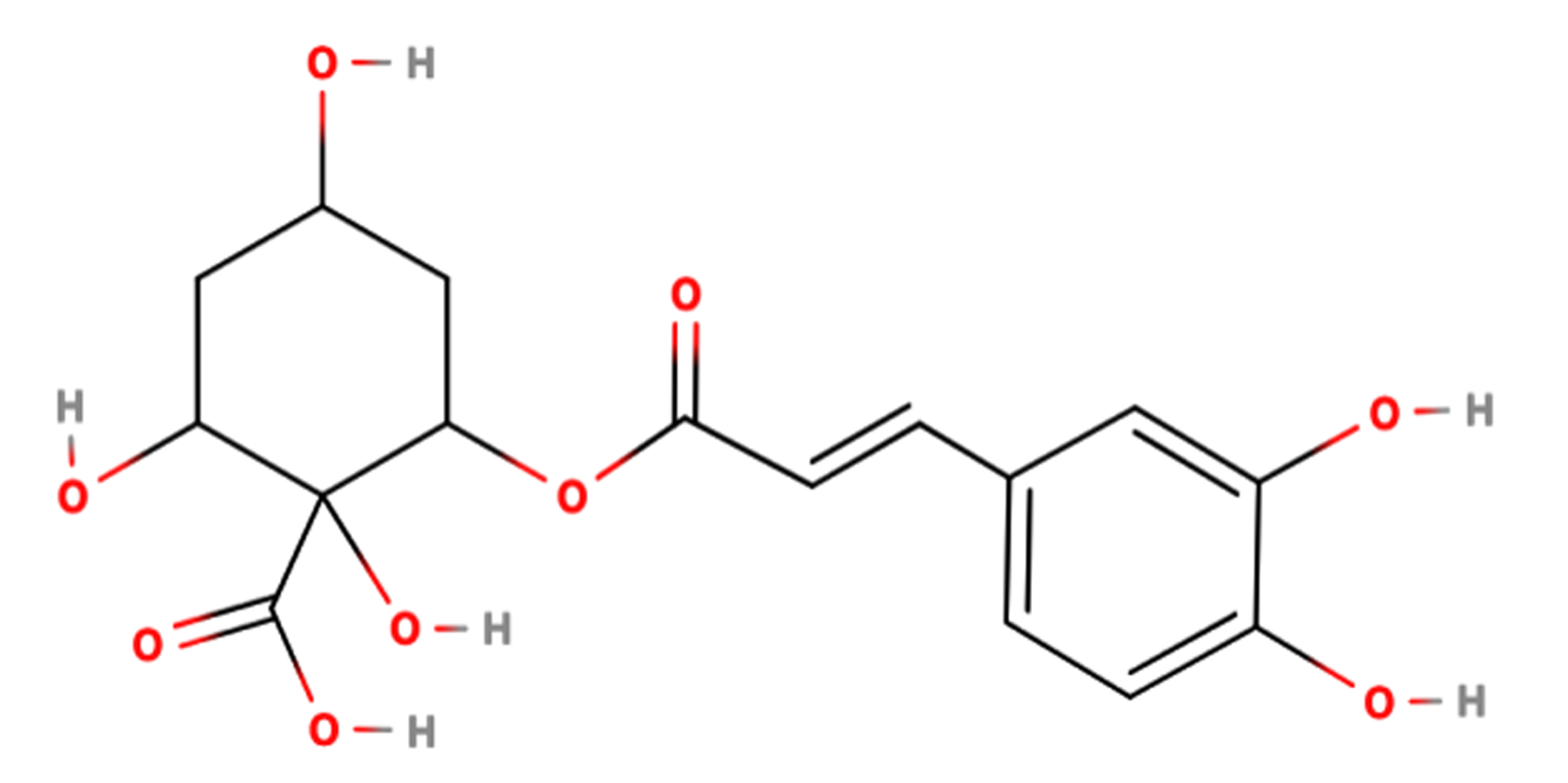
CGA又称5-O-咖啡酰奎宁酸,是一种天然酚酸类化合物,广泛存在于蒲公英等植物中。因具备抗炎、抗菌及抗氧化等多重生物学活性[4],其被公认为是安全、绿色的替抗添加剂,具有重要的开发与应用价值。CGA的化学结构式如图1所示。由于分子中含有酯键、不饱和双键及多元酚结构,CGA的稳定性相对有限。研究表明,采用β-环糊精包合技术或将其制备为纳米脂质体等方式,均可显著提高其热稳定性与化学稳定性[5-6]。近年来,多项研究证实,CGA在促进畜禽生长、改善生产与繁殖性能、提升畜产品品质及维护肠道健康等方面均展现出显著成效[7-8]。但CGA的作用效果与其纯度及饲粮中的添加剂量密切相关。目前畜牧业中使用的CGA纯度一般在98%左右。值得关注的是,CGA在低剂量时通常呈现抗氧化活性,而在高剂量时可能表现出促氧化效应,从而对机体产生负面影响[9]。另有研究发现,肉鸡在特定生长阶段接受高剂量(1 000 mg/kg)CGA时,其肠道组织内部分抗氧化指标并未发生显著变化,且效果逊于低剂量组(250和500 mg/kg),提示CGA可能存在剂量效应阈值[10]
图1 CGA的一般结构

Fig.1 General structure of CGA

2 CGA在畜禽消化道内吸收及体内代谢特征

CGA进入消化道后,约1/3可在胃和小肠被吸收,部分进入血液循环,其余则在大肠中完成进一步吸收,其生物转化过程主要受肠道菌群组成、酶活性等因素调节。尽管不同个体中CGA的降解顺序可能存在差异,但通常均经历酯键水解、氢化还原和脱羟基等反应,最终代谢物基本一致,主要包括苯丙酸、间香豆酸及马尿酸等小分子物质[11]。此外,受多种生理因素影响,CGA在胃、小肠和大肠中的吸收与代谢机制呈现出消化道不同区段的特异性。
CGA被机体摄入后,可穿越胃的强酸性环境进入小肠,并通过UDP-葡萄糖醛酸转移酶进行催化,发生葡糖醛酸化,生成CGA-葡糖醛酸苷。药代动力学研究表明,空肠中约96.5%的CGA以该形式被吸收[12]。同时,小肠内的酯酶和糖苷酶(主要是刷状缘膜上的β-葡萄糖苷酶)可水解CGA内酯键,将其分解为咖啡酸和奎尼酸[13]。咖啡酸的吸收呈现双路径机制:一部分直接吸收,另一部分经甲基化代谢途径生成异阿魏酸和阿魏酸,且这3种酚酸类化合物均可进一步参与磺酰化及葡糖醛酸化结合反应[14]
畜禽摄入的CGA约70%可进入大肠,经肠道菌群的糖苷键水解、脱甲基化及氧化还原等反应,转化为多种代谢产物[11]。例如,大肠杆菌与双歧杆菌等微生物产生的酯酶可水解CGA生成奎尼酸与咖啡酸[15]。CGA可经儿茶酚-O-甲基转移酶催化甲基化生成5-阿魏酰奎尼酸,后者通过进一步降解并在还原酶和去甲基化酶作用下最终形成3-(4'-羟苯基)丙酸,该产物继续脱羧生成4-羟基苯乙酸,最终氧化为4-羟基苯甲酸[14]。此外,咖啡酸作为CGA的关键代谢物,在大肠中可经脱羟基生成间香豆酸,或氢化为二氢咖啡酸。二氢咖啡酸既可经C-4位脱羟基和脱甲基反应依次转化为3-(3'-羟苯基)丙酸和3-羟基苯甲酸,也可通过辅酶A介导脱甲基、脱亚甲基、脱羧及C-4位脱羟基等步骤,最终生成3-羟基苯甲酸[16]。Adamson等[17]研究表明,大肠微生物可催化CGA水解产物奎尼酸芳构化生成苯甲酸。在脱羟基酶作用下,3-(4'-羟苯基)丙酸和3-(3'-羟苯基)丙酸再经脱羧逐步生成苯甲酸[16]。该物质在肝脏、肾脏中与甘氨酸反应生成马尿酸,当肠道微生物被抑制或通过注射给药时,上述芳构化反应被阻断,此时马尿酸的合成则需依赖外源性苯甲酸[17]。未结合的苯甲酸可与咖啡酸经细菌作用发生还原反应,生成次级代谢物[18]。另有研究发现,CGA还可通过重构肠道菌群以富集克雷伯氏菌属,并与其协同提高血清脱氧胆酸水平,从而增强结肠法尼醇X受体(farnesoid X receptor,FXR)的表达[19],最终通过“肠道菌群-胆汁酸-FXR”轴发挥代谢促进作用。

3 CGA对畜禽肠道黏膜屏障的影响及作用机制

肠道黏膜屏障能有效抵挡有害物质和病原微生物的入侵。当屏障功能受损时,病原体及其代谢产物可侵入循环系统,诱发全身性炎症反应等病理过程[20]。因此,维持肠道黏膜屏障结构与功能的完整性对保障畜禽肠道健康至关重要。研究表明,CGA可通过抑制Toll样受体4(Toll-like receptor 4,TLR4)/核因子-κB(nuclear factor-κB,NF-κB)信号通路和激活核因子E2相关因子2(nuclear factor erythroid 2-related factor 2,Nrf2),并协同增强肠道免疫应答、调节菌群代谢产物及维持微生态系统稳定等多重机制,有效缓解仔猪的肠道炎症和氧化应激[8]。这些作用共同促进了黏膜屏障结构与功能的动态平衡,从而有助于保障畜禽肠道屏障完整性。

3.1 免疫屏障

肠道免疫屏障是由肠黏膜淋巴组织、细胞因子、防御分子及黏膜抗体共同构成的防御体系。其核心功能建立在机体对外源性病原与自身抗原的特异性识别基础上,可启动适应性免疫应答,并依靠调节性T细胞与抗炎因子维持免疫稳态,从而防止过度炎症或免疫耐受失衡[21]。CGA能够通过协同调节细胞免疫与激活体液免疫的双重机制,增强肠道免疫屏障功能。

3.1.1 CGA对细胞免疫的影响

肠上皮细胞(intestinal epithelial cell,IEC)是维持肠道稳态的核心调节单元,能够通过建立免疫耐受微环境调控共生菌群的定植与互作[22]。在炎症状态下,促炎因子[如肿瘤坏死因子-α(tumor necrosis factor-α,TNF-α)]可破坏IEC结构,导致屏障功能紊乱并加剧炎症反应,进而促进各种炎症性肠病的持续存在与发展[23]。CGA能够通过双向调节促炎-抗炎因子平衡,强化肠道细胞免疫能力,实现免疫屏障功能的修复。
在断奶仔猪研究中发现,饲粮中添加1 000 mg/kg CGA可下调仔猪空肠及回肠中TNF-α、白细胞介素-6(interleukin-6,IL-6)及白细胞介素-1β(interleukin-1β,IL-1β)的mRNA表达量,同时使仔猪空肠和十二指肠中类胰蛋白酶阳性肥大细胞的数量降低,从而减轻由炎症反应造成的肠道损伤[24]。在肉鸡研究中发现,脂多糖(lipopolysaccharide,LPS)刺激可提高其小肠中促炎因子的mRNA表达量,而CGA补充剂能阻断该反应的进行,同时促进白细胞介素-10(interleukin-10,IL-10)的产生,最终起到提高肠道免疫力的作用[25]
据报道,CGA还可通过TLR4/NF-κB、蛋白激酶B(protein kinase B,Akt)/Wnt/β-连环蛋白(β-catenin)及丝裂原活化蛋白激酶(mitogen-activated protein kinase,MAPK)等信号通路阻碍促炎因子的合成和表达,进而强化肠道免疫屏障功能[26]。TLR4/NF-κB信号通路是调节细胞炎症反应的经典途径,活化的TLR4可激活NF-κB信号通路,进而上调炎性因子基因的表达[27]。研究发现,饲粮中添加200 mg/kg CGA可下调仔猪空肠和回肠细胞内炎症因子mRNA表达量及TLR4、衔接蛋白分子髓性分化因子88(myeloid differentiation factor 88,MyD88)蛋白表达量和NF-κB磷酸化丰度,抑制TLR4/NF-κB信号通路的激活,从而缓解肠道炎症[8]。研究发现,促炎因子可能通过中断IEC中的Wnt信号传导,进而直接调控Wnt/β-catenin信号通路[28]。补饲500 mg/kg CGA可下调肉鸡空肠中髓过氧化物酶活性及炎症因子表达,提高Akt和糖原合成激酶-3β磷酸化水平,促使β-catenin正常核转位,以激活Akt/Wnt/β-catenin信号通路,最终逆转LPS刺激造成的肠道损伤[29]。MAPK已被证实在转录和翻译水平上参与炎症介质合成的调节,这使其成为抗炎治疗的潜在靶标[30]。姚宏等[31]通过Cytoscape分析发现,MAPK3为CGA减轻鸡肠炎反应的核心靶点,推测CGA可能通过抑制MAPK信号通路激活,增强肠道免疫屏障功能。此外,白细胞介素-22(interleukin-22,IL-22)主要由芳香烃受体(aryl hydrocarbon receptor,AHR)介导,且可通过激活信号转导和转录激活因子3(signal transducer and activator of transcription 3,STAT3)信号通路来维持肠道屏障稳态[32]。饲粮中添加400、600和800 mg/kg CGA可上调蛋鸡十二指肠、空肠和回肠中AHRIL-22和STAT3的mRNA表达量,通过激活AHR/IL-22/STAT3信号途径以增强肠道免疫屏障功能[33]。Lv等[34]研究发现,饲粮中添加500 mg/kg CGA还可通过减少mtDNA泄漏及抑制环磷酸鸟苷-磷酸腺苷酸合成酶(cyclic GMP-AMP synthase,cGAS)-干扰素基因刺激物(stimulator of interferon gene,STING)信号通路,实现改善肉鸡肠道免疫力的作用。

3.1.2 CGA对体液免疫的影响

免疫球蛋白是肠道体液免疫的核心效应分子,能够通过抑制病原微生物定植和激活补体系统等机制增强肠道免疫屏障功能[35]。而CGA可促进免疫球蛋白的合成与分泌,从而有助于保护肠道黏膜免疫屏障结构完整性。
在断奶仔猪和蛋鸡的研究中均发现,饲粮中添加200、600和800 mg/kg CGA均可上调二者血清、空肠和回肠中免疫球蛋白G(immunoglobulin G,IgG)及分泌型免疫球蛋白A(secretory immunoglobulin A,sIgA)水平,提高回肠中免疫球蛋白A(immunoglobulin A,IgA)的mRNA表达量,从而发挥肠道保护作用[8,33]。此外,β-防御素是畜禽机体内重要的抗菌肽,主要由肠道中的潘氏细胞、中性粒细胞和上皮细胞产生,其可通过破坏细菌细胞膜的通透性起到免疫调节功能[36]。Zhang等[8]研究发现,饲粮中添加200 mg/kg CGA可增加仔猪空肠及回肠中β-防御素的mRNA表达量,从而提高肠道免疫能力,进一步证明CGA是防御肽基因的有效调节因子。
Nrf2/血红素加氧酶-1(heme oxygenase-1,HO-1)信号通路及其代谢物也可调节体液免疫,从而减少自身抗体的产生[37]。研究表明,CGA可通过抑制磷脂酰肌醇3-激酶(phosphatidylinositol 3-kinase,PI3K)/Akt信号通路提高敌草快攻击细胞中磷酸化Nrf2和HO-1的蛋白丰度,间接抑制核因子-κB抑制因子α(inhibitory subunit of nuclear factor-kappa B alpha,IκBα)/NF-κB信号通路的激活,缓解猪小肠上皮细胞(IPEC-J2细胞)炎症[38]。有报道指出,内质网应激(endoplasmic reticulum stress,ERS)是调控肠炎的新靶点[39];且体液免疫过程与NF-κB信号通路密切相关。在LPS诱导的肉鸡免疫应激模型中,饲粮添加500、750 mg/kg CGA可上调血清及空肠中IgA和免疫球蛋白M(immunoglobulin M,IgM)水平,并通过抑制NF-κB信号通路及ERS相关基因的表达,减轻肠道损伤[40]
综上所述,CGA具有明显的抗炎与免疫调节作用。一方面,CGA可通过下调促炎因子、上调抗炎因子的mRNA表达量,减少肥大细胞数量,并调控TLR4/NF-κB、Akt/Wnt/β-catenin、MAPK及AHR/IL-22/STAT3等细胞免疫相关信号通路,从而减轻肠道炎症损伤;另一方面,CGA可提高免疫球蛋白与β-防御素水平及mRNA表达量,抑制PI3K/Akt和IκBα/NF-κB等信号通路活性,降低ERS相关基因表达量,从而增强肠道免疫防御能力。

3.2 机械屏障

肠道机械屏障是由IEC、细胞间连接结构和肠黏膜共同构成的单细胞层,其主要功能为有效分隔肠腔内容物与机体内环境。其中,紧密连接(tight junctions,TJs)作为细胞间连接复合物,能在相邻细胞之间提供接触或紧密结合,在调控细胞旁通透性和维持上皮屏障完整性方面发挥关键作用[41]。CGA可通过促进TJs蛋白表达、调节IEC凋亡等途径,维护肠道机械屏障的完整性。

3.2.1 CGA对肠道TJs蛋白表达的影响

肠上皮TJs是由闭锁小带蛋白(zonula occluden,ZO)、闭合蛋白(Occludin)及密封蛋白(Claudin)家族等构成的动态调节结构,通过控制肠道管腔与浆膜侧之间的选择性细胞旁通透性,介导宿主与外部环境的相互作用[42]。CGA能够通过调节TJs相关蛋白的基因表达来增强机械屏障功能。
Chen等[43]研究发现,在断奶仔猪饲粮中添加1 000 mg/kg CGA可上调其十二指肠和空肠中TJs蛋白的mRNA表达量,进而抑制敌草快诱导的肠道通透性升高。寡肽转运蛋白(peptide transporter,PEPT)和葡萄糖转运蛋白(glucose transporter,GLUT)均已被证实是营养物质跨上皮转运的核心载体[44]。研究显示,40 μg/mL CGA可逆转脱氧雪腐镰刀菌烯醇(deoxynivalenol,DON)诱导IPEC-J2细胞的TJs蛋白mRNA表达抑制,同时上调PEPT1和GLUT2的mRNA表达量,从而在改善营养吸收与屏障功能方面发挥双重作用[45]。高密度饲养会严重影响家禽肠道健康,Liu等[46]在肉鸡饲粮中添加0.15% CGA后,发现空肠中Claudin-1、Claudin-2、OccludinZO-1的mRNA表达量显著提高,肠道屏障功能得到改善。
自噬是一种由多细胞应激触发的分解代谢程序,可通过精准清除受损细胞器维持细胞内稳态与细胞器结构完整性,是机体抵御各类细胞损伤的重要防御途径[47]。万凡[48]在细胞试验中发现,CGA可通过下调P62表达,上调TJs蛋白和自噬相关基因的mRNA表达量,从而激活自噬途径,进而保护IPEC-J2细胞完整性。另外,小肠黏膜中的二胺氧化酶(diamine oxidase,DAO)和肠道细菌的发酵产物D-乳酸(D-lactic acid,DLA)是评估肠道屏障通透性的重要生物标志物,当黏膜受损时可穿过“渗漏”的肠道屏障[49]。研究发现,Akt/Wnt/β-catenin通路通过表观遗传修饰(Akt甲基化)和转录调控[β-catenin对尾型同源盒蛋白1(CDX1)的转录激活]等多层次机制,精确调控TJs蛋白合成[50-51]。在肉鸡饲粮中添加500 mg/kg CGA能够降低血清中DAO活性、DLA及内毒素水平,提高空肠中Claudin-3和ZO-1的mRNA表达量,并通过激活Akt/Wnt/β-catenin信号通路及抑制TLR4/NF-κB通路活化,降低肠道TJs通透性,从而逆转LPS刺激造成的肠道损伤[29]

3.2.2 CGA对IEC凋亡的影响

肠上皮组织是肠道内壁的关键屏障层,主要由密集排列的单层柱状IEC构成[52]。IEC作为机械屏障的核心调控单元,对维持肠道稳态具有重要作用[53]。CGA能够通过抑制IEC凋亡及其相关信号通路,增强机械屏障功能,从而有助于预防疾病的发生。研究证实,肠道黏膜形态受损与IEC的凋亡密切相关[54]。补饲1 000 mg/kg CGA可缓解敌草快诱导的仔猪空肠绒毛萎缩和隐窝增生,抑制IEC凋亡,进而增强肠道屏障结构完整性[43]。内质网是蛋白质折叠与修饰的关键场所,当ERS持续存在时,细胞未折叠蛋白质反应会从保护性应答转为促凋亡信号[55]。Liu等[40]研究发现,LPS诱导肉鸡空肠产生的炎症反应,可通过识别蛋白激酶R样内质网激酶(protein kinase R like endoplasmic reticulum kinase,PERK)传感器,上调C/EBP同源蛋白(C/EBP homologous protein,CHOP)与葡萄糖调节蛋白78kD(glucose regulated protein 78kD,GRP78)的表达,导致肠黏膜发生ERS并触发细胞凋亡;而在饲粮中添加500或750 mg/kg CGA可有效抑制上述过程。此外,Akt/Wnt/β-catenin信号通路是抑制IEC凋亡的关键通路之一[56]。Zha等[29]在肉鸡研究中发现,饲粮中添加500 mg/kg CGA能够降低空肠上皮细胞色素c水平,使增殖和凋亡基因[如半胱氨酸天冬氨酸特异性蛋白酶-9(Caspase-9)、B细胞淋巴瘤-2(B-cell lymphoma-2,Bcl-2)]的表达趋于正常,通过激活Akt/Wnt/β-catenin信号通路,抑制IEC凋亡,最终起到增强机械屏障功能的作用。
综上所述,CGA可通过多重机制维护肠道机械屏障功能与完整性。一方面,CGA可通过提高自噬基因与转运蛋白的mRNA表达量,降低DAO活性和DLA水平,激活自噬及Akt/Wnt/β-catenin信号通路并抑制TLR4/NF-κB信号通路,从而促进TJs蛋白的表达;另一方面,CGA可通过修复肠黏膜受损形态,抑制ERS,降低细胞色素c水平及促凋亡基因表达量,激活Akt/Wnt/β-catenin信号通路等方式,共同维持屏障结构完整,最终有效保护畜禽肠道健康。

3.3 化学屏障

肠道化学屏障是胃肠系统的重要组成部分,主要由黏液层、消化酶及抗菌肽等构成,可有效防御病原体与毒素等有害物质的入侵,并与其余屏障系统协同发挥作用[1]。据报道,胆汁酸(bile acid,BA)在强化肠道化学屏障功能方面具有关键作用[57]。饲粮中添加1 000 mg/kg富含CGA的杜仲叶提取物可促进仔猪结肠食糜中BA的合成与分泌,增强其代谢水平,从而维持肠道健康[48]。此外,评估肠道消化能力的核心在于消化酶,该类酶可通过水解大分子营养物质介导肠道养分吸收过程[58]。研究发现,在断奶仔猪饲粮中添加1 000 mg/kg CGA可增强空肠和回肠中麦芽糖酶及空肠中蔗糖酶和碱性磷酸酶的活性,进而提升仔猪消化吸收能力,强化肠道化学屏障功能[59]。黏蛋白(mucin,MUC)2作为IEC分泌的核心黏液蛋白,是肠道化学屏障的基石,对保障肠道屏障功能至关重要[60]。研究表明,在蛋鸡饲粮中添加600和800 mg/kg CGA可上调其十二指肠内MUC2的mRNA表达量,进而起到保护蛋鸡肠道健康的作用;而添加400 mg/kg CGA时未观察到显著效应[33]。此外,短链脂肪酸(short chain fatty acids,SCFAs)是IEC的重要能量来源,可通过多种机制调控IEC的功能,影响肠道蠕动、增强肠道屏障功能并调节宿主代谢[61]。Liu等[62]研究发现,饲粮中添加500 mg/kg CGA可提升肉鸡盲肠中SCFAs水平,增强肠道化学屏障功能。
综上所述,CGA可通过促进BA合成、提升消化酶活性、增加MUC2的mRNA表达量及提高SCFAs水平等多种途径来保护肠道黏膜化学屏障,从而维持畜禽肠道健康。

3.4 生物屏障

肠道生物屏障是由肠道微生物群落(包括细菌、真菌等)及其代谢产物共同构成的防御体系[63]。CGA可通过调节畜禽肠道菌群结构,维持微生态稳定,从而降低肠道疾病发生率,增强生物屏障功能。
厚壁菌门是肠道的核心菌群之一,其通过与其他菌门竞争与协作,共同维持健康的微生物群落结构,且该菌门丰度下降与肠道疾病(如腹泻)状态密切相关[64]。Zhang等[8]在仔猪饲粮中添加200 mg/kg CGA,发现肠道厚壁菌门的相对丰度显著上调,主要体现在乳杆菌属(如罗伊氏乳杆菌和桥体乳杆菌)的富集上,最终对改善仔猪生物屏障功能及缓解肠炎产生积极作用。另有研究证实,罗伊氏乳杆菌与肠道中猪β-防御素2(porcine β-defensin 2,pBD2)、猪β-防御素3(porcine β-defensin 3,pBD3)、猪β-防御素114(porcine β-defensin 114,pBD114)和猪β-防御素129(porcine β-defensin 129,pBD129)的分泌相关[65]。此外,Yang等[63]研究表明,产SCFAs菌与胆酸合成相关联。在仔猪研究中发现,LPS刺激可降低其结肠中普雷沃氏菌科NK3B31群(Prevotellaceae_NK3B31_group)等有益菌的丰度,并增加理研菌科RC9肠道群(Rikenellaceae_RC9_gut_group)等有害菌的丰度,而饲粮中添加1 000 mg/kg富含CGA的杜仲叶提取物后可逆转菌群失调状态,同时提高SCFAs(如丁酸)、石胆酸和次级胆汁酸水平,从而改善屏障功能[48]。FXR是一种由BA激活的核受体,在肠道中高度表达,参与调控肠道屏障完整性[66]。研究发现,饲粮中添加1 000 mg/kg CGA可增加肉鸡回肠厚壁菌门中产SCFAs菌等有益菌的丰度,同时降低产硫化氢菌等有害菌的丰度,表明CGA可通过激活肉鸡回肠中胆酸-FXR信号通路及抑制NF-κB信号通路,缓解LPS刺激造成的肠道损伤[67]。另外,CGA与常见替抗添加剂联用可产生协同增效作用。例如,CGA与复合益生菌共同使用,能显著提高肉鸡回肠中乳酸菌属和瘤胃球菌属的相对丰度,增强菌群共生关系,从而进一步优化肠道微生态健康[68]
综上所述,CGA一方面可通过提高肠道中SCFAs及次级胆汁酸水平,经菌群-代谢轴促进有益菌定植、抑制有害菌增殖;另一方面可通过激活胆酸-FXR信号通路并抑制NF-κB信号通路,或与替抗添加剂协同作用,从而维持微生态平衡,增强畜禽肠道生物屏障的稳固性。

4 小结与展望

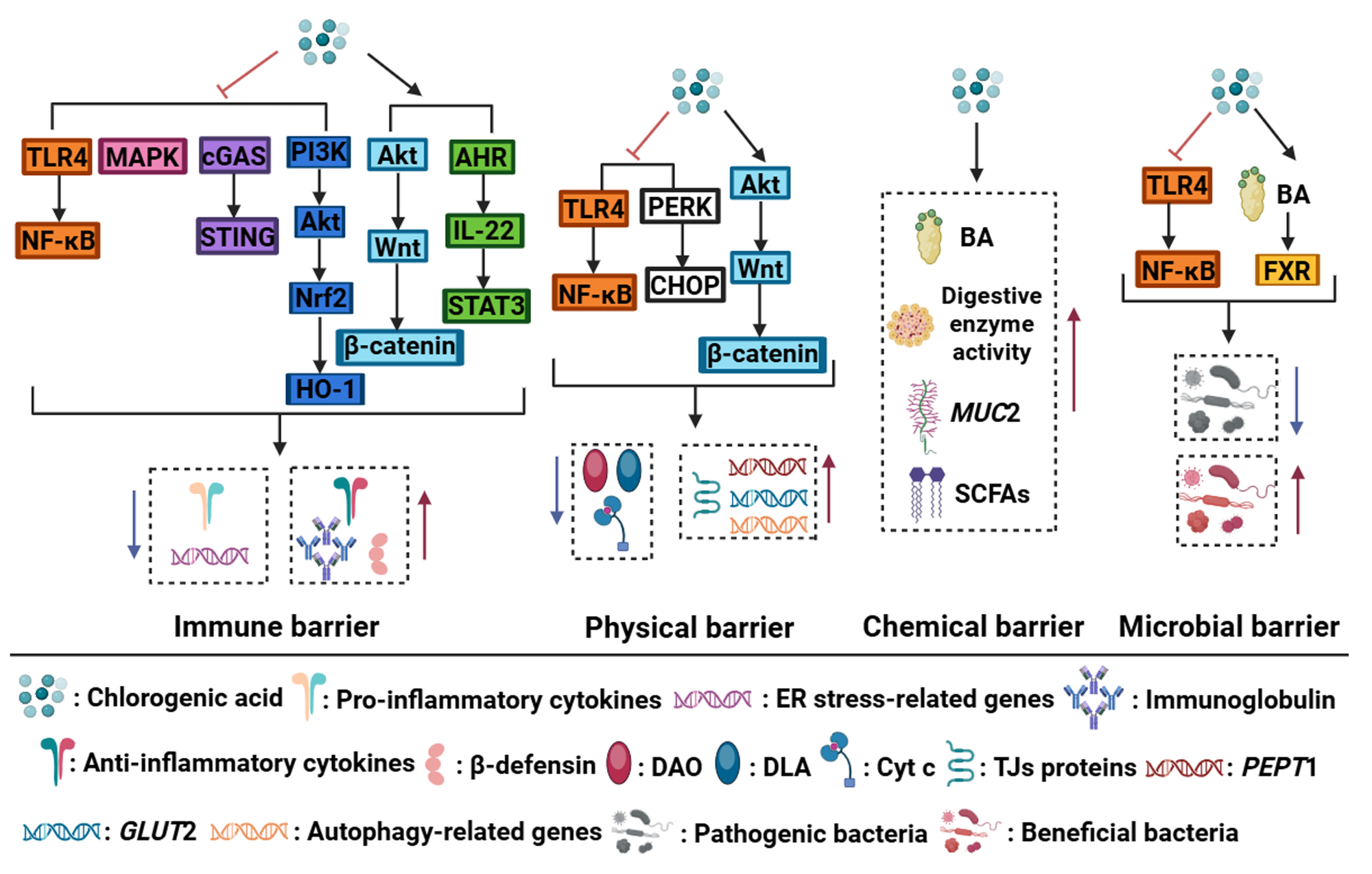
CGA可通过免疫调节、菌群代谢调控等多重机制(图2)巩固肠道屏障功能、维持畜禽肠道稳态,其在畜牧业中的推荐应用剂量通常为200~1 000 mg/kg。
图2 CGA调节肠道黏膜屏障的机制

NF-κB:核因子-κB nuclear factor-κB;TLR4:Toll样受体4 Toll like receptor 4;MAPK:丝裂原活化蛋白激酶 mitogen-activated protein kinase;cGAS:环磷酸鸟苷-磷酸腺苷酸合成酶 cyclic GMP-AMP synthase;STING:干扰素基因刺激物 stimulator of interferon gene;PI3K:磷脂酰肌醇3-激酶 phosphatidylinositol 3-kinase;Akt:蛋白激酶B protein kinase B;Nrf2:核因子E2相关因子2 nuclear factor erythroid 2-related factor 2;HO-1:血红素加氧酶-1 heme oxygenase-1;β-catenin:β-连环蛋白;AHR:芳香烃受体 aryl hydrocarbon receptor;IL-22:白细胞介素-22 interleukin-22;STAT3:信号转导和转录激活因子3 signal transducer and activator of transcription 3;PERK:蛋白激酶R样内质网激酶 protein kinase R like endoplasmic reticulum kinase;CHOP:C/EBP同源蛋白 C/EBP homologous protein;BA:胆汁酸 bile acid;Digestive enzyme activity:消化酶活性;MUC2:黏蛋白2 mucin 2;SCFAs:短链脂肪酸 short chain fatty acids;FXR:法尼醇X受体 farnesoid X receptor;Immune barrier:免疫屏障;Physical barrier:机械屏障;Chemical barrier:化学屏障;Microbial barrier:微生物屏障;Chlorogenic acid:绿原酸;Pro-inflammatory cytokines:促炎因子;ER stress-related genes:内质网应激相关基因;Immunoglobulin:免疫球蛋白;Anti-inflammatory cytokines:抗炎因子;β-defensin:β-防御素;DAO:二胺氧化酶 diamine oxidase;DLA:D-乳酸 D-lactic acid;Cyt c:细胞色素c cytochrome c;TJs proteins:紧密连接蛋白;PEPT1:寡肽转运蛋白1 peptide transporter 1;GLUT2:葡萄糖转运蛋白2 glucose transporter2;Autophagy-related genes:自噬相关基因;Pathogenic bacteria:致病菌;Beneficial bacteria:有益菌。

Fig.2 Mechanism of CGA regulating intestinal mucosal barrier

然而,关于长期或多代连续使用CGA对畜禽生产性能、器官指数及耐药基因组等方面的影响,目前仍缺乏系统评估,亟待后续研究深入探讨。因此,为保障应用安全并提升效益,未来研究亟需聚焦以下方向:建立严格的CGA原料甄选体系,规范原料纯度、使用剂量及使用时长的控制标准;防范CGA与饲料中其他毒素的协同暴露风险;研发匹配畜禽不同生长阶段与健康需求的动态添加技术,为精准营养调控的实施提供有力支撑。
[1]
REN Z H, GUO C Y, YU S M, et al. Progress in mycotoxins affecting intestinal mucosal barrier function[J]. International Journal of Molecular Sciences, 2019, 20(11):2777.

DOI

[2]
ZHAO H T, LI Z, SUN Y, et al. Supplementation of chlorogenic acid alleviates the effects of H2O2-induced oxidative stress on laying performance,egg quality,antioxidant capacity,hepatic inflammation,mitochondrial dysfunction,and lipid accumulation in laying hens[J]. Antioxidants, 2024, 13(11):1303.

DOI

[3]
WANG W L, WEN C Y, GUO Q P, et al. Dietary supplementation with chlorogenic acid derived from Lonicera macranthoides Hand-Mazz improves meat quality and muscle fiber characteristics of finishing pigs via enhancement of antioxidant capacity[J]. Frontiers in Physiology, 2021, 12:650084.

DOI

[4]
XU P, XU X B, FOTINA H, et al. Anti-inflammatory effects of chlorogenic acid from Taraxacum officinale on LTA-stimulated bovine mammary epithelial cells via the TLR2/NF-κB pathway[J]. PLoS One, 2023, 18(3):e0282343.

DOI

[5]
武雪芬. β-环糊精对绿原酸的稳定作用研究[J]. 中药材, 2003, 26(4):279-280.

WU X F. Study on stability of β-cyclodextrin to chlorogenic acid[J]. Journal of Chinese Medicinal Materials, 2003, 26(4):279-280. (in Chinese)

[6]
扈瑞瑞. 烟草绿原酸纳米脂质体的制备工艺及其特性研究[D]. 硕士学位论文. 北京: 中国农业科学院, 2017.

HU R R. Preparation of tobacco chlorogenic acid nanoliposome and its characteristic analysis[D]. Master’s Thesis. Beijing: Chinese Academy of Agricultural Sciences, 2017. (in Chinese)

[7]
BI R C, YANG M X, LIU X Z, et al. Effects of chlorogenic acid on productive and reproductive performances,egg quality,antioxidant functions,and intestinal microenvironment in aged breeder laying hens[J]. Poultry Science, 2024, 103(9):104060.

DOI

[8]
ZHANG B B, TIAN M, WU J, et al. Chlorogenic acid enhances the intestinal health of weaned piglets by inhibiting the TLR4/NF-κB pathway and activating the Nrf2 pathway[J]. International Journal of Molecular Sciences, 2024, 25(18):9954.

DOI

[9]
都文渊. 高剂量绿原酸及其中药注射剂引微循环障碍的机制研究[D]. 博士学位论文. 北京: 北京中医药大学, 2013.

DU W Y. Mechanism of high-dose chlorogenic acid and its Chinese herbal injection-induced microcirculation disturbance[D]. Ph.D.Thesis. Beijing: Beijing University of Chinese Medicine, 2013. (in Chinese)

[10]
郑家宽. 饲喂绿原酸对肉鸡生产性能、肠道抗氧化性能及肠道菌群的影响[D]. 硕士学位论文. 泰安: 山东农业大学, 2022.

ZHENG J K. Effects of feeding chlorogenic acid on performance,intestinal antioxidative capacity and intestinal microflora of broiler chickens[D]. Master’s Thesis. Tai’an: Shandong Agricultural University, 2022. (in Chinese)

[11]
TOMAS-BARBERAN F, GARCÍA-VILLALBA R, QUARTIERI A, et al. In vitro transformation of chlorogenic acid by human gut microbiota[J]. Molecular Nutrition & Food Research, 2014, 58(5):1122-1131.

[12]
SPENCER J P, CHOWRIMOOTOO G, CHOUDHURY R, et al. The small intestine can both absorb and glucuronidate luminal flavonoids[J]. FEBS Letters, 1999, 458(2):224-230.

DOI PMID

[13]
LAMPE J W, CHANG J L. Interindividual differences in phytochemical metabolism and disposition[J]. Seminars in Cancer Biology, 2007, 17(5):347-353.

PMID

[14]
DEL RIO D, STALMACH A, CALANI L, et al. Bioavailability of coffee chlorogenic acids and green tea flavan-3-ols[J]. Nutrients, 2010, 2(8):820-833.

DOI PMID

[15]
COUTEAU D, MCCARTNEY A L, GIBSON G R, et al. Isolation and characterization of human colonic bacteria able to hydrolyse chlorogenic acid[J]. Journal of Applied Microbiology, 2001, 90(6):873-881.

PMID

[16]
LUDWIG I A, PAZ DE PEÑA M, CONCEPCIÓN C, et al. Catabolism of coffee chlorogenic acids by human colonic microbiota[J]. BioFactors, 2013, 39(6):623-632.

DOI PMID

[17]
ADAMSON R H, BRIDGES J W, EVANS M E, et al. Species differences in the aromatization of quinic acid in vivo and the role of gut bacteria[J]. The Biochemical Journal, 1970, 116(3):437-443.

DOI

[18]
GONTHIER M P, REMESY C, SCALBERT A, et al. Microbial metabolism of caffeic acid and its esters chlorogenic and caftaric acids by human faecal microbiota in vitro[J]. Biomedicine & Pharmacotherapy, 2006, 60(9):536-540.

DOI

[19]
ZHU Q, ZHU Y Y, LIU Y T, et al. Moderation of gut microbiota and bile acid metabolism by chlorogenic acid improves high-fructose-induced salt-sensitive hypertension in mice[J]. Food & Function, 2022, 13(13):6987-6999.

[20]
DE JONG P R. GONZÁLEZ-NAVAJAS J M, JANSEN N J G. The digestive tract as the origin of systemic inflammation[J]. Critical Care, 2016, 20(1):279.

PMID

[21]
LI X, MAO M Y, ZHANG Y N, et al. Succinate modulates intestinal barrier function and inflammation response in pigs[J]. Biomolecules, 2019, 9(9):486.

DOI

[22]
PETERSON L W, ARTIS D. Intestinal epithelial cells:regulators of barrier function and immune homeostasis[J]. Nature Reviews Immunology, 2014, 14(3):141-153.

DOI

[23]
NEURATH M F. Strategies for targeting cytokines in inflammatory bowel disease[J]. Nature Reviews Immunology, 2024, 24(8):559-576.

DOI PMID

[24]
CHEN J L, YU B, CHEN D W, et al. Chlorogenic acid improves intestinal barrier functions by suppressing mucosa inflammation and improving antioxidant capacity in weaned pigs[J]. The Journal of Nutritional Biochemistry, 2018, 59:84-92.

DOI

[25]
TAN H Q, ZHEN W R, BAI D Y, et al. Effects of dietary chlorogenic acid on intestinal barrier function and the inflammatory response in broilers during lipopolysaccharide-induced immune stress[J]. Poultry Science, 2023, 102(5):102623.

DOI

[26]
YAHFOUFI N, ALSADI N, JAMBI M, et al. The immunomodulatory and anti-inflammatory role of polyphenols[J]. Nutrients, 2018, 10(11):1618.

DOI

[27]
CUI L, FENG L, ZHANG Z H, et al. The anti-inflammation effect of baicalin on experimental colitis through inhibiting TLR4/NF-κB pathway activation[J]. International Immunopharmacology, 2014, 23(1):294-303.

DOI PMID

[28]
NAVA P, KOCH S, LAUKOETTER M G, et al. Interferon-γ regulates intestinal epithelial homeostasis through converging β-catenin signaling pathways[J]. Immunity, 2010, 32(3):392-402.

DOI

[29]
ZHA P P, LIU W H, ZHOU Y M, et al. Protective effects of chlorogenic acid on the intestinal barrier of broiler chickens:an immunological stress model study[J]. Poultry Science, 2024, 103(8):103949.

DOI

[30]
KAMINSKA B. MAPK signalling pathways as molecular targets for anti-inflammatory therapy-from molecular mechanisms to therapeutic benefits[J]. Biochimica et Biophysica Acta, 2005, 1754(1/2):253-262.

[31]
姚宏, 施寿荣, 赵茹茜. 基于网络药理学和分子对接探究绿原酸缓解鸡肠道炎症的作用机制[J]. 中国农业科学, 2025, 58(3):600-616.

DOI

YAO H, SHI S R, ZHAO R Q. The potential and mechanism of chlorogenic acid to alleviate intestinal inflammation in chickens based on network pharmacology and molecular docking[J]. Scientia Agricultura Sinica, 2025, 58(3):600-616. (in Chinese)

DOI

[32]
HOU Q H, YE L L, LIU H F, et al. Lactobacillus accelerates ISCs regeneration to protect the integrity of intestinal mucosa through activation of STAT3 signaling pathway induced by LPLs secretion of IL-22[J]. Cell Death and Differentiation, 2018, 25(9):1657-1670.

DOI

[33]
SUN Y, LI Z, YAN M, et al. Responses of intestinal antioxidant capacity,morphology,barrier function,immunity,and microbial diversity to chlorogenic acid in late-peak laying hens[J]. Animals, 2024, 14(20):2957.

DOI

[34]
LV H M, CHEN P, WANG Y, et al. Chlorogenic acid protects against intestinal inflammation and injury by inactivating the mtDNA-cGAS-STING signaling pathway in broilers under necrotic enteritis challenge[J]. Poultry Science, 2024, 103(2):103274.

DOI

[35]
杨季. 橙皮苷对肉鸡生长性能、抗氧化、免疫及肠道菌群的影响[D]. 硕士学位论文. 哈尔滨: 东北农业大学, 2021.

YANG J. Effects of hesperidin on performance,antioxidation,immunity and intestinal flora of broilers[D]. Master’s Thesis.Harbin: Northeast Agricultural University, 2021. (in Chinese)

[36]
SUGIARTO H, YU P L. Avian antimicrobial peptides:the defense role of β-defensins[J]. Biochemical and Biophysical Research Communications, 2004, 323(3):721-727.

DOI

[37]
ZHANG A Q, SUZUKI T, ADACHI S, et al. Distinct regulations of HO-1 gene expression for stress response and substrate induction[J]. Molecular and Cellular Biology, 2021, 41(11):e0023621.

DOI

[38]
CHEN J L, LUO Y H, LI Y, et al. Chlorogenic acid attenuates oxidative stress-induced intestinal epithelium injury by co-regulating the PI3K/Akt and IκBα/NF-κB signaling[J]. Antioxidants, 2021, 10(12):1915.

DOI

[39]
EUGENE S P, REDDY V S, TRINATH J. Endoplasmic reticulum stress and intestinal inflammation:a perilous union[J]. Frontiers in Immunology, 2020, 11:543022.

DOI

[40]
LIU H W, MENG H L, DU M M, et al. Chlorogenic acid ameliorates intestinal inflammation by inhibiting NF-κB and endoplasmic reticulum stress in lipopolysaccharide-challenged broilers[J]. Poultry Science, 2024, 103(5):103586.

DOI

[41]
CHEN S S, ZHANG C, HE B H, et al. The role of lncRNAs in regulating the intestinal mucosal mechanical barrier[J]. BioMed Research International, 2021, 2021(1):2294942.

DOI

[42]
GONZÁLEZ-MARISCAL L, BETANZOS A, NAVA P, et al. Tight junction proteins[J]. Progress in Biophysics and Molecular Biology, 2003, 81(1):1-44.

DOI

[43]
CHEN J L, CHEN D W, YU B, et al. Chlorogenic acid attenuates oxidative stress-induced intestinal mucosa disruption in weaned pigs[J]. Frontiers in Veterinary Science, 2022, 9:806253.

DOI

[44]
CHEN L Q, HOU B H, LALONDE S, et al. Sugar transporters for intercellular exchange and nutrition of pathogens[J]. Nature, 2010, 468(7323):527-532.

DOI

[45]
尹清强, 许小向, 常娟, 等. 绿原酸化合物在制备治疗由DON引起炎症的药物中应用:CN201911221469.7[P].2019-12-03.

YIN Q Q, XU X X, CHANG J, et al. Application of chlorogenic acid compounds in the preparation of medications for treating inflammation induced by deoxynivalenol:CN201911221469.7[P].2019-12-03. (in Chinese)

[46]
LIU Y H, ZHANG Y, BAI D Y, et al. Dietary supplementation with chlorogenic acid enhances antioxidant capacity,which promotes growth,jejunum barrier function,and cecum microbiota in broilers under high stocking density stress[J]. Animals, 2023, 13(2):303.

DOI

[47]
LAMARK T, JOHANSEN T. Mechanisms of selective autophagy[J]. Annual Review of Cell and Developmental Biology, 2021, 37:143-169.

DOI PMID

[48]
万凡. 杜仲叶提取物和绿原酸调控仔猪肠道炎症的机制研究[D]. 博士学位论文. 兰州: 兰州大学, 2023.

WAN F. The mechanism study of extract Eucommia ulmoides Oliver leaf and chlorogenic acid in regulating intestinal inflammation of piglets[D]. Ph.D.Thesis. Lanzhou: Lanzhou University, 2023. (in Chinese)

[49]
CAI J R, CHEN H, WENG M L, et al. Diagnostic and clinical significance of serum levels of D-lactate and diamine oxidase in patients with Crohn’s disease[J]. Gastroenterology Research and Practice, 2019, 2019(1):8536952.

[50]
CAI C J, ZHENG Y N, SUN B, et al. Zinc alleviates gut barrier dysfunction by promoting the methylation of AKT[J]. Advanced Science, 2025, 12(33):e08280.

DOI

[51]
LICKERT H, DOMON C, HULS G, et al. Wnt/β-catenin signaling regulates the expression of the homeobox gene Cdx1 in embryonic intestine[J]. Development, 2000, 127(17):3805-3813.

DOI

[52]
BRANDTZAEG P. Gate-keeper function of the intestinal epithelium[J]. Beneficial Microbes, 2013, 4(1):67-82.

DOI PMID

[53]
ALLAIRE J M, CROWLEY S M, LAW H T, et al. The intestinal epithelium:central coordinator of mucosal immunity[J]. Trends in Immunology, 2018, 39(9):677-696.

DOI

[54]
WILLIAMS J M, DUCKWORTH C A, WATSON A J M, et al. A mouse model of pathological small intestinal epithelial cell apoptosis and shedding induced by systemic administration of lipopolysaccharide[J]. Disease Models & Mechanisms, 2013, 6(6):1388-1399.

[55]
WALTER P, RON D. The unfolded protein response:from stress pathway to homeostatic regulation[J]. Science, 2011, 334(6059):1081-1086.

DOI

[56]
GOTO M, SUEMATSU Y, NUNES A C F, et al. Ferric citrate attenuates cardiac hypertrophy and fibrosis in a rat model of chronic kidney disease[J]. Iranian Journal of Kidney Diseases, 2019, 13(2):98-104.

PMID

[57]
XIE A J, MAI C T, ZHU Y Z, et al. Bile acids as regulatory molecules and potential targets in metabolic diseases[J]. Life Sciences, 2021, 287:120152.

DOI

[58]
ASENSIO-GRAU A, PEINADO I, HEREDIA A, et al. In vitro study of cheese digestion:effect of type of cheese and intestinal conditions on macronutrients digestibility[J]. LWT, 2019, 113:108278.

DOI

[59]
CHEN J L, LI Y, YU B, et al. Dietary chlorogenic acid improves growth performance of weaned pigs through maintaining antioxidant capacity and intestinal digestion and absorption function[J]. Journal of Animal Science, 2018, 96(3):1108-1118.

DOI PMID

[60]
MOEHLE C, ACKERMANN N, LANGMANN T, et al. Aberrant intestinal expression and allelic variants of mucin genes associated with inflammatory bowel disease[J]. Journal of Molecular Medicine, 2006, 84(12):1055-1066.

DOI

[61]
MARTIN-GALLAUSIAUX C, MARINELLI L, BLOTTIÈRE H M, et al. SCFA:mechanisms and functional importance in the gut[J]. Proceedings of the Nutrition Society, 2021, 80(1):37-49.

DOI

[62]
LIU H W, LI X M, ZHANG K, et al. Integrated multi-omics reveals the beneficial role of chlorogenic acid in improving the growth performance and immune function of immunologically stressed broilers[J]. Animal Nutrition, 2023, 14:383-402.

DOI PMID

[63]
YANG J T, QIN K L, SUN Y P, et al. Microbiota-accessible fiber activates short-chain fatty acid and bile acid metabolism to improve intestinal mucus barrier in broiler chickens[J]. Microbiology Spectrum, 2023, 12(1):e02065-23.

[64]
KIM H, CHAE Y, CHO J H, et al. Understanding the diversity and roles of the canine gut microbiome[J]. Journal of Animal Science and Biotechnology, 2025, 16(1):95.

DOI PMID

[65]
LIU H B, HOU C L, WANG G, et al. Lactobacillus reuteri I5007 modulates intestinal host defense peptide expression in the model of IPEC-J2 cells and neonatal piglets[J]. Nutrients, 2017, 9(6):559.

DOI

[66]
ADORINI L, TRAUNER M. FXR agonists in NASH treatment[J]. Journal of Hepatology, 2023, 79(5):1317-1331.

DOI

[67]
WANG Z W, ZHEN W R, ZHANG Y, et al. Chlorogenic acid alters ileal microbiota and metabolites in broiler chickens under immune stress[J]. Microbiology Spectrum, 2025, 13(8):e03312-24.

[68]
扶佳欢, 高铭坤, 李鹏, 等. 日粮中添加绿原酸增强复合益生菌对肉鸡肠道健康的影响[J]. 中国畜牧杂志, 2023, 59(1):208-216.

FU J H, GAO M K, LI P, et al. Dietary chlorogenic acid enhances the beneficial effects of compound probiotics on intestinal health of broilers[J]. Chinese Journal of Animal Science, 2023, 59(1):208-216. (in Chinese)

文章导航

/