研究论文

早期持续饲喂地衣芽孢杆菌对断奶应激期犊牛生长性能、免疫功能及肠道健康的影响

  • 刘小女 , 1 ,
  • 孔晓丽 1 ,
  • 任文义 1 ,
  • 刘淼 1 ,
  • 王森 1 ,
  • 范雨 1 ,
  • 刘敏 2 ,
  • 马玉林 1 ,
  • 张力莉 1 ,
  • 徐晓锋 , 1, *
展开
  • 1 宁夏大学动物科技学院, 银川 750021
  • 2 宁夏兴垦牧业有限公司, 银川 750021
*徐晓锋,教授,博士生导师,E-mail:

刘小女(1999—),女,河南洛阳人,硕士研究生,从事反刍动物营养与饲料科学研究。E-mail:

Office editor: 靳爽

收稿日期: 2025-10-22

  网络出版日期: 2026-05-14

基金资助

基于奶牛“母子一体化”精准营养关键技术研究与饲养技术示范项目(2024BBF01006)

宁夏回族自治区重点研发重大项目

Effects of Early Continuous Feeding of Bacillus licheniformis on Growth Performance, Immune Function and Intestinal Health of Calves during Weaning Stress Period

  • LIU Xiaonv , 1 ,
  • KONG Xiaoli 1 ,
  • REN Wenyi 1 ,
  • LIU Miao 1 ,
  • WANG Sen 1 ,
  • FAN Yu 1 ,
  • LIU Min 2 ,
  • MA Yulin 1 ,
  • ZHANG Lili 1 ,
  • XU Xiaofeng , 1, *
Expand
  • 1 College of Animal Science and Technology, Ningxia University, Yinchuan 750021, China
  • 2 Ningxia Prosperous Land Animal Husbandry Co., Ltd., Yinchuan 750021, China
*professor, E-mail:

Received date: 2025-10-22

  Online published: 2026-05-14

摘要

本试验旨在探究早期持续饲喂地衣芽孢杆菌对断奶应激期犊牛生长性能、免疫功能及肠道健康的影响。选取24头健康、体重[(38.00±3.00) kg]相近的新生荷斯坦犊牛,随机分为2组,每组12头。对照组(CK组)饲喂基础饲粮,地衣芽孢杆菌组(BL组)饲喂基础饲粮+1 g/d地衣芽孢杆菌(活菌数1×1012 CFU/g)。犊牛于70日龄断奶,饲养试验自犊牛出生起持续至断奶后14 d,共计84 d。分别于断奶当天、断奶后第7天和断奶后第14天晨饲前采集血液样品测定相关指标,于断奶后第7天采集粪便样品分析肠道菌群结构。结果表明:1)与CK组相比,BL组平均日增重(ADG)显著提高(P<0.05),断奶后14 d的腹泻指数显著降低(P<0.05)。2)与CK组相比,BL组断奶当天和断奶后第7天血浆二胺氧化酶(DAO)和D-乳酸(D-LA)含量显著降低(P<0.05),断奶当天、断奶后第7天和断奶后第14天血浆白细胞介素-1β(IL-1β)含量显著降低(P<0.05),且断奶后第7天血浆白细胞介素-2(IL-2)和免疫球蛋白G(IgG)含量显著提高(P<0.05)。3)断奶后第7天,在门水平上,2组犊牛肠道菌群优势菌门为芽孢杆菌门(Bacillota)和拟杆菌门(Bacteroidota),BL组芽孢杆菌门相对丰度较CK组有所提高;在属水平上,2组犊牛肠道菌群优势菌属为拟杆菌属(Bacteroides)、UCG-005和密螺旋体属(Treponema),BL组瘤胃球菌属(Ruminococcus)相对丰度较CK组有所提高。4)线性判别分析效应大小(LEfSe)分析结果显示,BL组肠道中瘤胃球菌属、丁酸弧菌属(Butyribacter)、硫杆菌属(Thiobacillus)等显著富集(P<0.05);CK组肠道中纤维杆菌属(Fibrobacter)、阿克曼氏菌属(Akkermansia)、真杆菌属(Eubacterium)等显著富集(P<0.05)。由此可见,早期持续饲喂地衣芽孢杆菌可提升断奶应激期犊牛的生长性能,提高ADG并降低腹泻指数;同时增强机体免疫功能,改善肠道屏障功能,还能显著富集肠道内有益菌属,优化菌群结构。

本文引用格式

刘小女 , 孔晓丽 , 任文义 , 刘淼 , 王森 , 范雨 , 刘敏 , 马玉林 , 张力莉 , 徐晓锋 . 早期持续饲喂地衣芽孢杆菌对断奶应激期犊牛生长性能、免疫功能及肠道健康的影响[J]. 动物营养学报, 2026 , 38(5) : 3494 -3507 . DOI: 10.12418/CJAN2026.279

Abstract

This study was conducted to investigate the effects of early continuous feeding of Bacillus licheniformis on growth performance, immune function and intestinal health of calves during weaning stress period. A total of 24 healthy newborn Holstein calves with similar body weight [(38.00±3.00) kg] were randomly divided into two groups with 12 calves in each group. Calves in the control group (CK group) were fed a basal diet, while those in the Bacillus licheniformis group (BL group) were fed the basal diet+1 g/d Bacillus licheniformis (with viable count of 1×10¹² CFU/g). All calves were weaned at 70 days of age, and the feeding trial lasted for 84 days from birth to 14 days post-weaning. Blood samples were collected before morning feeding on the weaning day, the 7th day and the 14th day post-weaning to determine the relevant indices, and fecal samples were collected on the 7th day post-weaning to analyze the intestinal microbial community structure. The results showed as follows: 1) compared with the CK group, the average daily gain (ADG) of calves in the BL group was significantly increased (P<0.05), and the diarrhea index on the 14th day post-weaning was significantly decreased (P<0.05). 2) Compared with the CK group, the plasma diamine oxidase (DAO) and D-lactic acid (D-LA) contents in the BL group were significantly decreased on the weaning day and the 7th day post-weaning (P<0.05); the plasma interleukin-1β (IL-1β) content was significantly decreased on the weaning day, the 7th day and the 14th day post-weaning (P<0.05); and the plasma interleukin-2 (IL-2) and immunoglobulin G (IgG) contents were significantly increased on the 7th day post-weaning (P<0.05). 3) On the 7th day post-weaning, at the phylum level, the dominant phyla of intestinal microflora in both groups were Bacillota and Bacteroidota, and the relative abundance of Bacillota in the BL group was higher than that in the CK group. At the genus level, the dominant genera of intestinal microflora in both groups were Bacteroides, UCG-005 and Treponema, and the relative abundance of Ruminococcus in the BL group was higher than that in the CK group. 4) The results of linear discriminant analysis effect size (LEfSe) showed that genera such as Ruminococcus, Butyribacter and Thiobacillus were significantly enriched in the BL group (P<0.05), whereas Fibrobacter, Akkermansia and Eubacterium were significantly enriched in the CK group (P<0.05). In conclusion, early continuous feeding of Bacillus licheniformis can improve the growth performance of calves during the weaning stress period by increasing ADG and reducing diarrhea index; it can also enhance the immune function, improve the intestinal barrier function, significantly enrich the beneficial intestinal genera and optimize the intestinal microbiota structure of calves.

断奶应激期是指犊牛断奶后的1~2周。在此期间,由于消化系统与免疫功能尚不完善,饲粮组成的改变会使犊牛产生强烈的生理应激,进而诱发肠道炎症反应并导致腹泻,不仅对犊牛健康构成威胁,还可能给牧场造成严重的经济损失[1-2]。研究表明,犊牛在断奶阶段发生腹泻往往会造成长期负面影响,如繁殖性能下降、平均日增重(ADG)降低等[3]。因此,缓解断奶应激对犊牛的不利影响,是当前畜牧业发展中亟待解决的问题。
益生菌作为被广泛使用的膳食补充剂,其核心价值在于能够以活的微生物形态,通过调节肠道菌群平衡来促进机体健康。研究发现,益生菌不仅可以有效降低幼龄反刍动物的腹泻发生率,还可以刺激免疫系统发育,提升机体免疫力[4-5]。当以适当剂量摄入时,益生菌能够调节宿主代谢,抑制病原菌定植,并增强肠道屏障功能[6]。地衣芽孢杆菌是一种常用的益生菌,可产生消化酶、溶菌酶、细菌素、抗菌肽等多种生物活性物质,能够通过提高饲料消化率[7],刺激免疫系统发育[8]、增强肠黏膜屏障功能[9]、抑制病原菌定植、促进潜在有益微生物增殖、维持肠道菌群平衡等方式改善动物生长性能,因此在畜牧业中得到广泛应用[10]。已有研究证实,在断奶前仔猪饲粮中添加地衣芽孢杆菌,可降低其断奶期的腹泻率[11];在断奶肉牛中,地衣芽孢杆菌能够维持肠道屏障完整性,缓解脂多糖(lipopolysaccharides,LPS)引发的炎症反应[12]。此外,地衣芽孢杆菌在蛋鸡[13]、肉鸡[14]等单胃动物中的应用也较为广泛,但在幼龄反刍动物中的相关研究较少。基于此,本试验拟在犊牛出生至断奶后14 d内持续饲喂地衣芽孢杆菌,探究其对断奶应激期犊牛生长性能、免疫功能及肠道健康的影响,以期为地衣芽孢杆菌在断奶犊牛中的应用提供理论依据。

1 材料与方法

1.1 试验材料

试验所用荷斯坦犊牛由宁夏某牧业有限公司提供;地衣芽孢杆菌(活菌数1×10¹² CFU/g)购自山东某生物工程有限公司。断奶前、后所用颗粒料均购自宁夏某饲料有限公司,其组成及营养水平见表1
表1 颗粒料组成及营养水平(干物质基础)

Table 1 Composition and nutrient levels of pellet diets (DM basis)%

项目
Items
含量 Content
断奶前
Pre-weaning
断奶后
Post-weaning
原料 Ingredients
玉米 Corn 27.50 33.00
豆粕 Soybean meal 26.00 13.00
小麦麸 Wheat bran 18.00 7.00
干酒糟及其可溶物 DDGS 8.00
大豆皮 Soybean hulls 15.50
棉籽粕 Cottonseed meal (46%) 7.30
玉米胚芽粕 Corn germ meal 4.00
低脂干酒糟及其可溶物
Low-fat DDGS
11.00
玉米皮 Corn bran 15.20
小麦次粉 Wheat middlings 3.00
预混料 Premix1) 5.00 6.50
合计 Total 100.00 100.00
营养水平 Nutrient levels2)
粗蛋白质 CP 22.25 20.46
中性洗涤纤维 NDF 24.60 45.73
酸性洗涤纤维 ADF 12.60 11.48
粗脂肪 EE 3.50 3.85
粗灰分 Ash 5.36 2.03
钙 Ca 0.98 0.90
磷 P 0.52 0.52
代谢能 ME/(MJ/kg) 11.00 10.40

1)断奶前预混料为每千克颗粒料提供 The premix provided the following per kg of pre-weaning pellet diet:VA 12 000 IU,VD3 5 000 IU,VE 40 IU,Fe 64 mg,Cu 11 mg,Mn 42 mg,Zn 60 mg,Se 0.3 mg,I 0.8 mg,Co 0.2 mg。断奶后预混料为每千克颗粒料提供 The premix provided the following per kg of post-weaning pellet diet:VA 15 600 IU,VD3 6 500 IU,VE 52 IU,Fe 83.2 mg,Cu 14.3 mg,Mn 54.6 mg,Zn 78 mg,Se 0.39 mg,I 1.04 mg,Co 0.26 mg。

2)代谢能为依据NRC(2001)所得计算值,其余为实测值。ME was a calculated value according to NRC (2001),while the others were measured values.

1.2 试验设计

动物试验程序经宁夏大学实验动物伦理委员会批准,批准号为NXU-2024-145。选取24头体重[(38.00±3.00) kg]相近、胎次相同的新生荷斯坦犊牛,随机分为2组,每组12头。对照组(CK组)饲喂基础饲粮,地衣芽孢杆菌组(BL组)饲喂基础饲粮+1 g/d地衣芽孢杆菌。犊牛于70日龄断奶,饲养试验自犊牛出生起持续至断奶后14 d,共计84 d。

1.3 饲养管理

试验犊牛于犊牛岛单栏饲养,试验开始前对犊牛岛进行清洁和消毒。犊牛出生以后,从产房转至犊牛岛并在1 h之内灌服4 L初乳,以获得足够被动免疫,24 h后开始饲喂常乳。常乳采用奶量先增后减的饲喂程序(每天06:30和16:00各饲喂1次):2~6日龄,每次2.5 L;7~11日龄,每次3 L;12~16日龄,每次3.5 L;17~21日龄,每次4 L;22~26日龄,每次4.5 L;27~31日龄,每次5 L;32~36日龄,每次5.5 L;37~41日龄,每次6 L;42~46日龄,每次6.5 L;47~66日龄,每次6 L;67日龄,每次5 L;68日龄,每次4 L;69日龄,每次2 L。犊牛4日龄开始补饲断奶前颗粒料,70日龄断奶,断奶后继续单栏饲养至84日龄。断奶后饲粮组成及营养水平见表2。试验全程自由采食和饮水。
表2 断奶后饲粮组成及营养水平(干物质基础)

Table 2 Composition and nutrient levels of the post-weaning diet (DM basis)%

项目 Items 含量 Content
原料 Ingredients
燕麦草 Oat hay 5.10
压片玉米 Steam-flaked corn 4.10
断奶后颗粒料 Post-weaning pellet diet 90.80
合计 Total 100.00
营养水平 Nutrient levels
粗蛋白质 CP 18.67
中性洗涤纤维 NDF 49.76
酸性洗涤纤维 ADF 15.19
粗脂肪 EE 3.00
粗灰分 Ash 9.60
钙 Ca 0.90
磷 P 0.47
代谢能 ME/(MJ/kg) 10.42

营养水平中代谢能为依据NRC(2001)所得计算值,其余为实测值。

In the nutrient levels, ME was a calculated value according to NRC (2001),while the others were measured values.

1.4 样品采集

分别于断奶当天(D0)、断奶后第7天(D7)及断奶后第14天(D14)晨饲前,采集犊牛颈静脉血于肝素钠抗凝管中,经1 000×g离心15 min后,将上清液分装至2 mL冻存管,于-80 ℃冰箱中保存备用。断奶后第7天,采用直肠采粪法收集犊牛粪便样品,装入2 mL冻存管并于-80 ℃冰箱保存,用于后续16S rDNA扩增子测序分析。断奶后每7 d采用四分法采集1次饲粮样品;试验结束前3 d,再次通过直肠采粪法采集犊牛粪便样品,使用10%硫酸进行固氮处理。饲粮和粪便样品置于65 ℃烘箱烘至恒重,粉碎后保存,用于测定营养物质表观消化率。

1.5 指标测定

1.5.1 生长性能

于犊牛断奶当天及断奶后第14天晨饲前进行空腹称重,分别记为断奶体重和终末体重,计算断奶后犊牛ADG;断奶后每天08:00精准称量料桶中的颗粒料量,次日同时间称量剩料量,记录每天实际采食量,计算断奶后犊牛平均日采食量(ADFI)及料重比(F/G)。

1.5.2 饲粮营养成分及营养物质表观消化率

干物质(DM)、粗蛋白质(CP)、粗脂肪(EE)、粗灰分(Ash)、钙(Ca)和磷(P)含量分别参照GB/T 6435—2014、GB/T 6432—2018、GB/T 6433—2025、GB/T 6438—2007、GB/T 6436—2018和GB/T 6437—2018的方法进行测定,中性洗涤纤维(NDF)和酸性洗涤纤维(ADF)含量参照Van Soest等[15]的方法进行测定。饲粮和粪便中盐酸不溶灰分(AIA)含量参照GB/T 23742—2009的方法进行测定。以AIA作为内源指示剂计算营养物质表观消化率,计算公式如下:

某营养物质表观消化率(%)=100×[1-

(饲粮中AIA含量/粪便中AIA含量)×(粪便中

该营养物质含量/饲粮中该营养物质含量)]。

1.5.3 腹泻指数和腹泻率

于断奶前14 d(56~69日龄)和断奶后14 d(70~84日龄),每天早晨观察每头犊牛的粪便情况,按照Magalhães等[16]概述的方法进行粪便评分,并将其作为判定腹泻的标准。具体评分细则如下:粪便形状正常但不硬,落地后略有变形,记为1分;粪便变软、堆积,形状难以维持,记为2分;粪便呈软膏状稠度,易于扩散,记为3分;粪便呈水样,出现固液分离,记为4分。评分≥3分即判定为腹泻,统计腹泻犊牛的头数与腹泻天数,以计算腹泻率与腹泻指数[17]。犊牛的腹泻率与腹泻指数计算公式如下:

腹泻率(%)=(试验期间每天腹泻犊牛头数/试验犊牛总数)×100;

腹泻指数=∑粪便评分/(犊牛数量×试验天数)。

1.5.4 血浆指标

采用江苏晶美生物科技有限公司生产的酶联免疫吸附试验(ELISA)试剂盒测定血浆肠道屏障指标二胺氧化酶(DAO)和D-乳酸(D-LA)含量,以及免疫指标白细胞介素-2(IL-2)、白细胞介素-10(IL-10)、白细胞介素-1β(IL-1β)、免疫球蛋白A(IgA)和免疫球蛋白G(IgG)含量。

1.5.5 肠道菌群

对断奶第7天的粪便样品开展16S rDNA测序分析。样本经基因组DNA提取后,采用带barcode的特异性引物扩增16S rDNA的V3~V4区,引物序列为341F:CCTACGGGNGGCWGCAG;806R:GGACTACHVGGGTATCTAAT。16S rDNA测序数据的分析均在广州基迪奥云平台完成。

1.6 数据统计分析

试验数据经Excel 2019初步整理后,采用SPSS 27.0软件进行分析,通过Shapiro-Wilk检验验证数据正态性,利用独立样本t检验进行组间差异分析。结果以平均值和均值标准误(SEM)表示,P<0.05为差异显著,0.05≤P<0.10为差异有显著趋势。

2 结果与分析

2.1 地衣芽孢杆菌对断奶应激期犊牛生长性能的影响

表3可知,与CK组相比,BL组ADG显著提高(P<0.05),但断奶体重、终末体重、ADFI和F/G均无显著差异(P>0.05)。
表3 地衣芽孢杆菌对断奶应激期犊牛生长性能的影响

Table 3 Effects of Bacillus licheniformis on growth performance of calves during weaning stress period

项目
Items
组别 Groups 均值标准误
SEM
P
P-value
CK BL
断奶体重 Weaning body weight/kg 98.18 99.44 1.483 0.709
终末体重 Final body weight/kg 105.45 111.67 1.919 0.149
平均日增重 ADG/(kg/d) 0.62 0.91 0.054 <0.001
平均日采食量 ADFI/(kg/d) 1.53 2.01 0.149 0.101
料重比 F/G 2.47 2.21 0.091 0.308

2.2 地衣芽孢杆菌对断奶应激期犊牛营养物质表观消化率的影响

表4可知,与CK组相比,BL组DM和EE表观消化率显著降低(P<0.05),CP、NDF和ADF表观消化率无显著差异(P>0.05)。
表4 地衣芽孢杆菌对断奶应激期犊牛营养物质表观消化率的影响

Table 4 Effects of Bacillus licheniformis on nutrient apparent digestibility of calves during weaning stress period%

项目
Items
组别 Groups 均值标准误
SEM
P
P-value
CK BL
干物质 DM 80.71 80.05 0.070 <0.001
粗蛋白质 CP 83.90 82.49 0.603 0.250
中性洗涤纤维 NDF 73.58 72.33 1.024 0.566
酸性洗涤纤维 ADF 63.20 66.74 1.899 0.376
粗脂肪 EE 93.21 90.65 0.565 0.034

2.3 地衣芽孢杆菌对断奶应激期犊牛腹泻率和腹泻指数的影响

表5可知,56~69日龄时,与CK组相比,BL组腹泻率和腹泻指数均无显著差异(P>0.05);70~84日龄时,与CK组相比,BL组腹泻指数显著降低(P<0.05),腹泻率有降低的趋势(P=0.056)。
表5 地衣芽孢杆菌对断奶应激期犊牛腹泻率和腹泻指数的影响

Table 5 Effects of Bacillus licheniformis on diarrhea rate and diarrhea index of calves during weaning stress period

项目
Items
组别 Groups 均值标准误
SEM
P
P-value
CK BL
56~69日龄 56 to 69 days of age
腹泻率 Diarrhea rate/% 10.72 8.57 1.829 0.568
腹泻指数 Diarrhea index 1.47 1.39 0.046 0.409
70~84日龄 70 to 84 days of age
腹泻率 Diarrhea rate/% 11.91 4.17 2.033 0.056
腹泻指数 Diarrhea index 1.43 1.23 0.047 0.029

2.4 地衣芽孢杆菌对断奶应激期犊牛血浆肠道屏障指标的影响

表6可知,断奶当天和断奶后第7天,与CK组相比,BL组血浆DAO和D-LA含量显著降低(P<0.05)。断奶后第14天,与CK组相比,BL组血浆DAO含量有降低的趋势(P=0.081),血浆D-LA含量无显著差异(P>0.05)。
表6 地衣芽孢杆菌对断奶应激期犊牛血浆肠道屏障指标的影响

Table 6 Effects of Bacillus licheniformis on plasma intestinal barrier indices of calves during weaning stress period

项目
Items
组别 Groups 均值标准误
SEM
P
P-value
CK BL
D0
二胺氧化酶 DAO/(ng/mL) 12.17 10.07 0.427 0.013
D-乳酸 D-LA/(nmol/L) 52.80 43.79 1.675 <0.001
D7
二胺氧化酶 DAO/(ng/mL) 7.42 6.50 0.222 0.026
D-乳酸 D-LA/(nmol/L) 54.41 50.70 0.930 0.036
D14
二胺氧化酶 DAO/(ng/mL) 5.98 5.25 0.194 0.081
D-乳酸 D-LA/(nmol/L) 49.18 49.62 1.088 0.854

D0、D7和D14分别表示断奶当天、断奶后第7天和断奶后第14天。表7同。

D0, D7 and D14 represented the day of weaning, the 7th day post-weaning and the 14th day post-weaning, respectively. The same as Table 7.

2.5 地衣芽孢杆菌对断奶应激期犊牛血浆免疫指标的影响

表7可知,断奶当天,与CK组相比,BL组血浆IL-1β和IgA含量显著降低(P<0.05),血浆IL-2、IL-10和IgG含量无显著差异(P>0.05)。断奶后第7天,与CK组相比,BL组血浆IL-1β含量显著降低(P<0.05),血浆IL-2和IgG含量显著提高(P<0.05),但血浆IL-10和IgA含量无显著差异(P>0.05)。断奶后第14天,BL组血浆IL-1β含量显著低于CK组(P<0.05),2组间其余指标均无显著差异(P>0.05)。
表7 地衣芽孢杆菌对断奶应激期犊牛血浆免疫指标的影响

Table 7 Effects of Bacillus licheniformis on plasma immune indices of calves during weaning stress period

项目
Items
组别 Groups 均值标准误
SEM
P
P-value
CK BL
D0
白细胞介素-1β IL-1β/(pg/mL) 476.75 429.69 10.200 0.009
白细胞介素-2 IL-2/(pg/mL) 274.21 272.46 3.515 0.819
白细胞介素-10 IL-10/(pg/mL) 134.98 129.56 2.008 0.192
免疫球蛋白A IgA/(μg/mL) 1 223.58 1 134.53 22.375 0.037
免疫球蛋白G IgG/(mg/mL) 45.41 44.16 0.925 0.533
D7
白细胞介素-1β IL-1β/(pg/mL) 870.88 692.88 30.347 <0.001
白细胞介素-2 IL-2/(pg/mL) 625.61 729.12 21.604 0.006
白细胞介素-10 IL-10/(pg/mL) 113.55 104.66 3.191 0.176
免疫球蛋白A IgA/(μg/mL) 1 473.81 1 422.95 28.988 0.412
免疫球蛋白G IgG/(mg/mL) 45.46 50.17 1.098 0.020
D14
白细胞介素-1β IL-1β/(pg/mL) 754.93 604.31 25.943 <0.001
白细胞介素-2 IL-2/(pg/mL) 582.27 571.25 11.278 0.741
白细胞介素-10 IL-10/(pg/mL) 103.07 100.30 1.569 0.100
免疫球蛋白A IgA/(μg/mL) 1 253.85 1 237.31 22.956 0.653
免疫球蛋白G IgG/(mg/mL) 39.20 42.62 1.035 0.410

2.6 地衣芽孢杆菌对断奶应激期犊牛肠道菌群的影响

2.6.1 肠道菌群稀释曲线
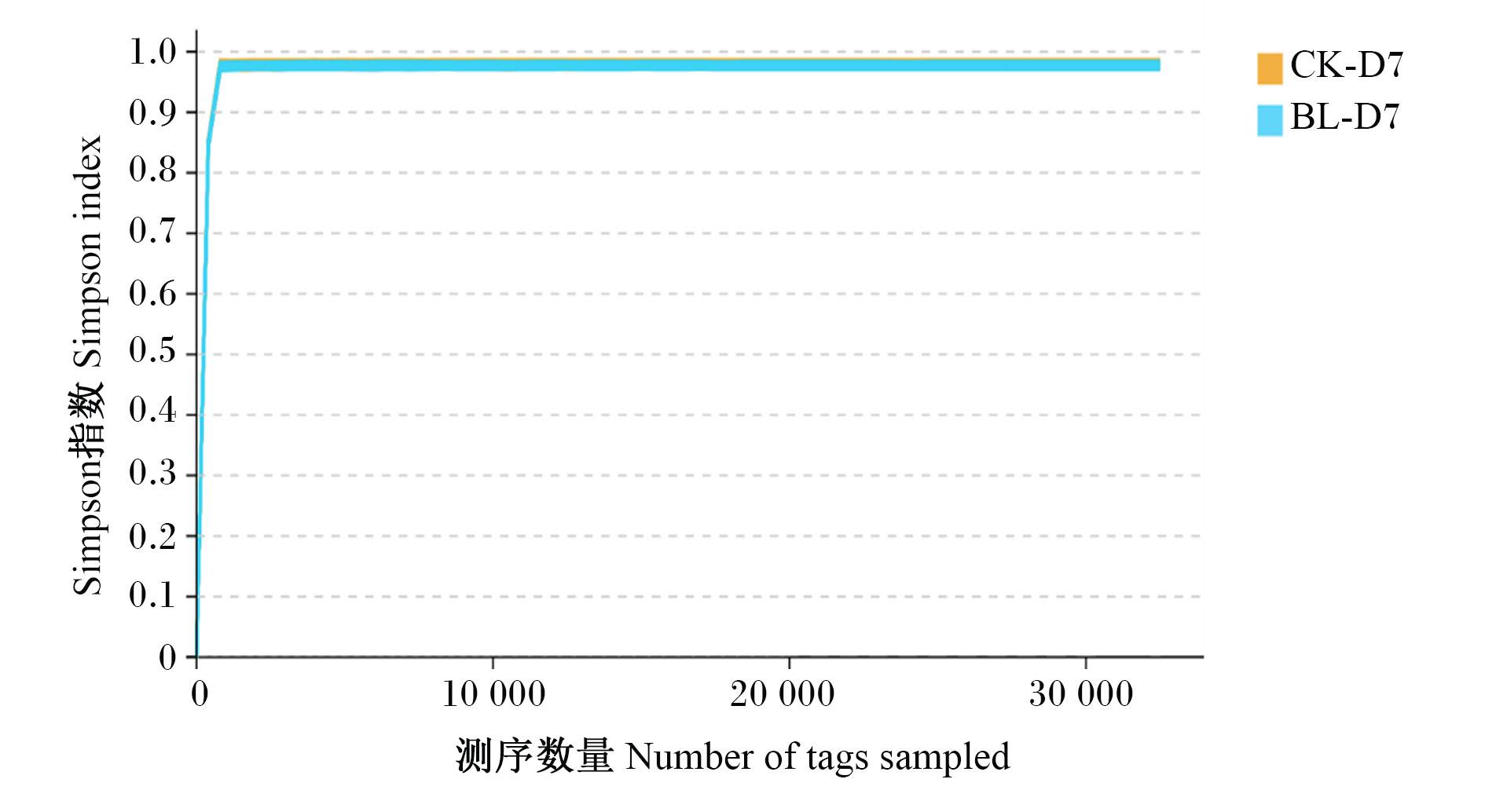
图1所示,测序曲线逐渐趋于平坦,说明测序数据量合理且可满足后续分析需求。
图1 肠道菌群稀释曲线

CK-D7和BL-D7分别表示断奶后第7天的CK组和BL组样本。下图同。

Fig.1 Dilution curves of intestinal microbiota

CK-D7 and BL-D7 represented the samples from the CK and BL groups on the 7th day post-weaning, respectively. The same as below.

2.6.2 α多样性分析

表8可知,与CK组相比,BL组肠道菌群ACE、Chao1和Shannon指数显著降低(P<0.05),Simpson指数无显著差异(P>0.05)。
表8 地衣芽孢杆菌对断奶应激期犊牛肠道菌群α多样性的影响

Table 8 Effects of Bacillus licheniformis on intestinal microbiota α diversity of calves during weaning stress period

项目
Items
组别 Groups 均值标准误
SEM
P
P-value
CK BL
ACE指数 ACE index 2 584.36 1 830.59 147.393 0.010
Chao1指数 Chao1 index 2 495.45 1 783.68 138.000 0.009
Shannon指数 Shannon index 7.51 7.11 0.092 0.025
Simpson指数 Simpson index 0.98 0.98 0.001 0.346

2.6.3 β多样性分析

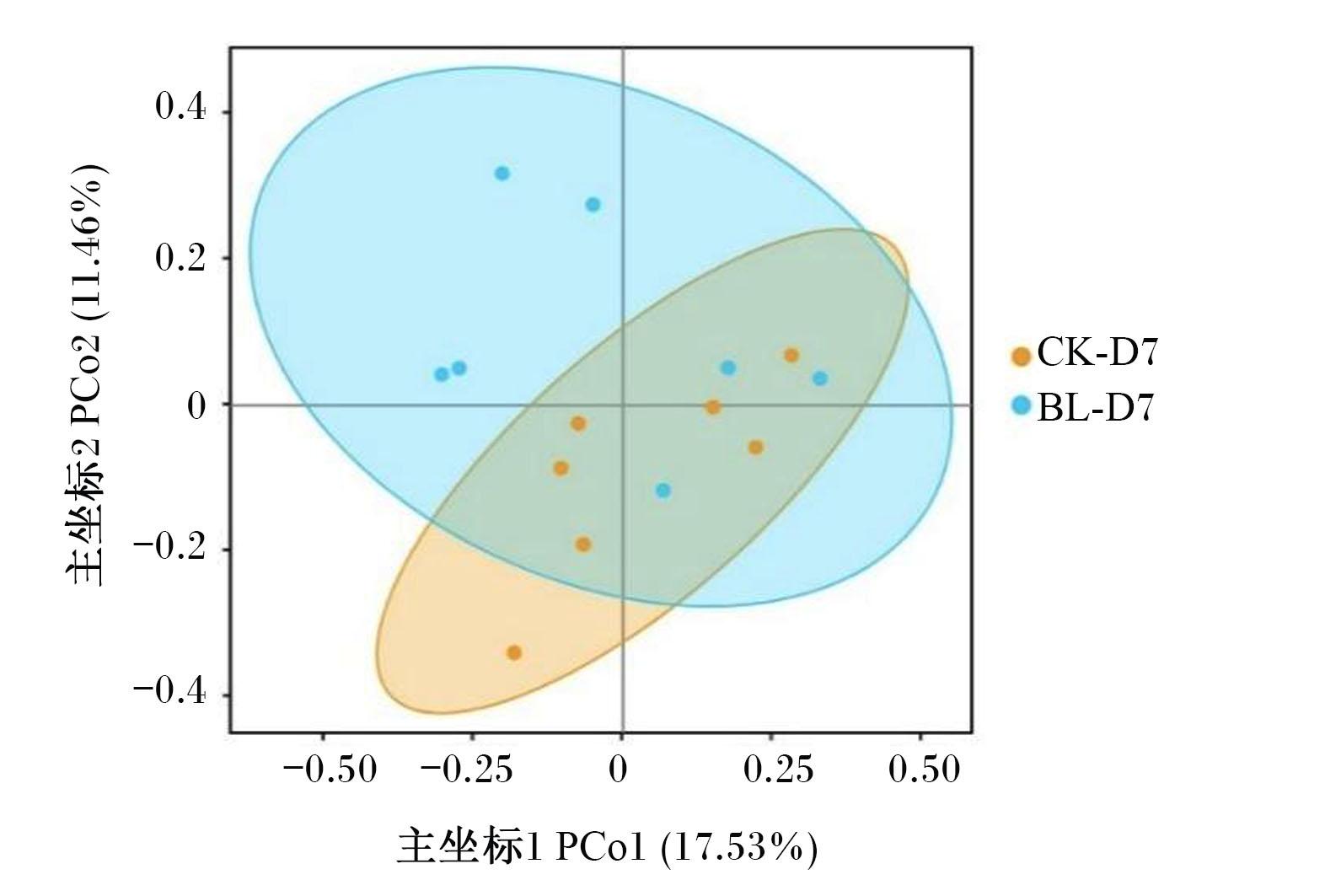
主坐标分析(PCoA)结果(图2)显示,主坐标1(PCo1)和主坐标2(PCo2)对肠道微生物群落差异的贡献率分别为17.53%和11.46%。2组样本存在大面积重叠,表明断奶后第7天CK组与BL组的肠道微生物群落结构无明显差异。
图2 主坐标分析

Fig.2 Principal coordinate analysis

2.6.4 肠道菌群组成

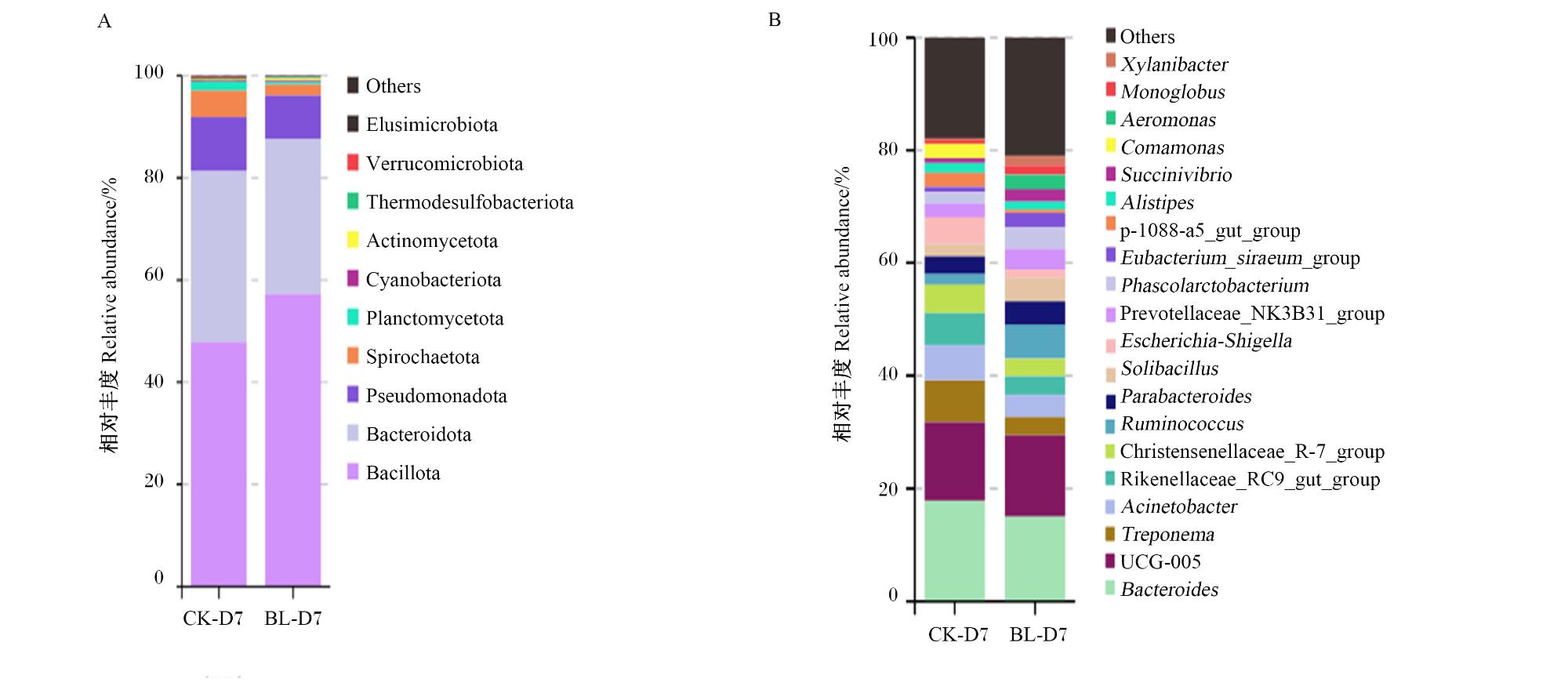
图3-A所示,断奶后第7天犊牛肠道菌群中相对丰度排名前3的菌门为芽孢杆菌门(Bacillota)、拟杆菌门(Bacteroidota)和假单胞菌门(Pseudomonadota),其次为螺旋体菌门(Spirochaetota)、浮霉菌门(Planctomycetota)等。组间对比可见,BL组芽孢杆菌门相对丰度较CK组有所提高,而CK组假单胞菌门和浮霉菌门相对丰度则高于BL组。如图3-B所示,断奶后第7天犊牛肠道菌群中相对丰度排名前3的菌属为拟杆菌属(Bacteroides)、UCG-005和密螺旋体属(Treponema),其次为不动杆菌属(Acinetobacter)、理研菌科RC9肠道群(Rikenellaceae_RC9_gut_group)、克里斯滕森氏菌科R-7群(Christensenellaceae_R-7_group)、瘤胃球菌属(Ruminococcus)、副拟杆菌属(Parabacteroides)、土源芽孢杆菌属(Solibacillus)和大肠杆菌-志贺氏菌属(Escherichia-Shigella)等。与CK组相比,BL组UCG-005、瘤胃球菌属、普雷沃氏菌科NK3B31群(Prevotellaceae_NK3B31_group)和琥珀酸弧菌属(Succinivibrio)相对丰度均提高,大肠杆菌-志贺氏菌属相对丰度下降。
图3 断奶后第7天犊牛肠道菌群门水平(A)与属水平(B)组成

Bacillota:芽孢杆菌门;Bacteroidota:拟杆菌门;Pseudomonadota:假单胞菌门;Spirochaetota:螺旋体门;Planctomycetota:浮霉菌门;Cyanobacteriota:蓝细菌门;Actinomycetota:放线菌门;Thermodesulfobacteriota:嗜热脱硫细菌门;Verrucomicrobiota:疣微菌门;Elusimicrobiota:迷踪菌门;Bacteroides:拟杆菌属;Treponema:密螺旋体属;Acinetobacter:不动杆菌属;Rikenellaceae_RC9_gut_group:理研菌科RC9肠道群;Christensenellaceae_R-7_group:克里斯滕森菌科R-7群;Ruminococcus:瘤胃球菌属;Parabacteroides:副拟杆菌属;Solibacillus:土源芽孢杆菌属;Escherichia-Shigella:大肠杆菌-志贺氏菌属;Prevotellaceae_NK3B31_group:普雷沃氏菌科NK3B31群;Phascolarctobacterium:考拉杆菌属;Eubacterium_siraeum_group:西雷姆真杆菌群;Alistipes:另枝菌属;Succinivibrio:琥珀酸弧菌属;Comamonas:丛毛单胞菌属;Aeromonas:气单胞菌属;Monoglobus:摩根氏菌属;Xylanibacter:木糖杆菌属;Others:其他。

Fig.3 Composition of intestinal microbiota at phylum level (A) and genus level (B) on the 7th day post-weaning

2.6.5 肠道菌群差异物种分析

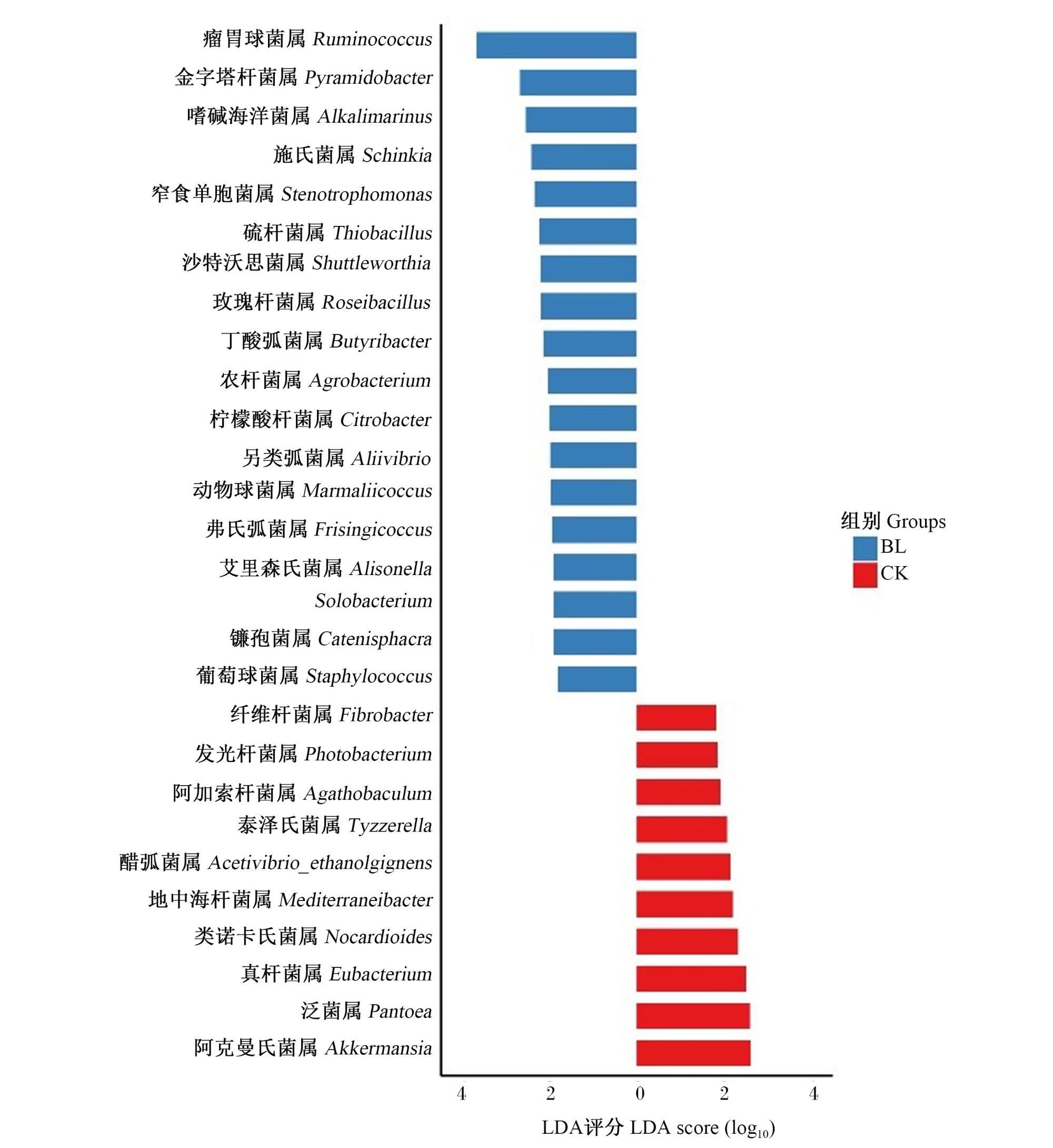
采用线性判别分析(LDA)效应大小(LEfSe)分析探究饲喂地衣芽孢杆菌对犊牛肠道差异富集菌群的影响,以LDA评分≥2为筛选阈值,共鉴定出28个具有判别意义的菌属。由图4可知,BL组有18个菌属呈显著富集特征(P<0.05),包括瘤胃球菌属、丁酸弧菌属(Butyribacter)、硫杆菌属(Thiobacillus)等;CK组有10个菌属呈显著富集特征(P<0.05),包括纤维杆菌属(Fibrobacter)、阿克曼氏菌属(Akkermansia)、真杆菌属(Eubacterium)等。
图4 LDA评分直方图

Fig.4 Histogram of LDA score

3 讨论

3.1 早期持续饲喂地衣芽孢杆菌对断奶犊牛生长性能与营养物质表观消化率的影响

生长性能是评估犊牛发育的关键指标,通常通过ADG、ADFI和F/G等指标进行评估[18]。本试验结果显示,饲喂1 g/d地衣芽孢杆菌(活菌数1×1012 CFU/g)可显著提高断奶犊牛的ADG。该结果与Ma等[19]的研究结论一致,其研究发现补饲0.5 g/d地衣芽孢杆菌(活菌数1×1012 CFU/g)能显著提升断奶应激期犊牛的ADG。此外,与单独饲喂代乳品相比,在代乳品中添加0.15 g/kg地衣芽孢杆菌(活菌数2×1010 CFU/g)可改善放牧牦牛的生长性能,提高2月龄牦牛的ADG[20]。研究表明,在断奶和育肥阶段的饲粮中补充地衣芽孢杆菌衍生蛋白酶,能提高断奶仔猪和育肥猪的干物质消化率[21]。而本研究中观察到BL组DM和EE表观消化率较CK组显著降低,与前人研究结果不一致。地衣芽孢杆菌在犊牛中的作用效果可能与添加量、添加时长及犊牛日龄等因素有关,因此其在犊牛养殖中的适宜添加时间与剂量仍需进一步研究。

3.2 早期持续饲喂地衣芽孢杆菌对断奶犊牛腹泻率和腹泻指数的影响

腹泻是损害哺乳犊牛健康的关键因素,也是造成其死亡的主要原因。已有研究证实,益生菌可调节肠道菌群平衡、产生抗菌物质、抑制致病菌增殖并促进有益微生物群的建立,从而降低犊牛腹泻发生率[22]。Liu等[23]研究发现,对犊牛进行早期益生菌干预可有效预防腹泻发生,其通过促进胃肠道发育和维护肠道屏障功能,改善犊牛健康状况并降低死亡率。此外,有研究表明,饲粮中添加枯草芽孢杆菌对仔猪腹泻具有明显治疗效果,可缓解由高蛋白质饲粮引发的断奶仔猪腹泻[24]。Qin等[25]研究发现,枯草芽孢杆菌能通过减少炎症因子分泌、改善结肠微生物组成,缓解大肠杆菌K88诱导的断奶仔猪腹泻。类似地,地衣芽孢杆菌也被证实能降低断奶仔猪的腹泻发生率[26],本研究结果与之相符,即饲喂地衣芽孢杆菌后犊牛腹泻率和腹泻指数均有所下降。

3.3 早期持续饲喂地衣芽孢杆菌对断奶犊牛肠道屏障功能的影响

肠道作为机体最大的免疫器官,在维持正常免疫防御功能方面起着至关重要的作用,能够保护宿主免受有害微生物和毒素的侵害。肠道屏障是肠道发挥免疫防御功能的第1道防线,当肠道受损时,DAO和D-LA会通过损伤的肠黏膜进入血液循环,因此这2种物质常被用作评估肠道通透性和屏障完整性的标志物[27-28]。研究表明,补饲益生菌可通过影响肠道屏障完整性来增强肠道健康,从而保障动物健康[29]。Zhang等[30]研究发现,在产气荚膜梭菌诱导的坏死性肠炎肉鸡饲粮中添加地衣芽孢杆菌,可降低血清中DAO和D-LA含量。另有研究表明,地衣芽孢杆菌中的新型碱性蛋白酶能显著降低肉鸡血浆代谢物中的D-LA含量[31],其机制可能在于地衣芽孢杆菌产生的碱性蛋白酶通过改善肠道菌群组成,并借助其有益代谢物,实现对肠道健康的积极调控[32]。本研究结果表明,饲喂地衣芽孢杆菌可以降低断奶当天和断奶后第7天血浆DAO和D-LA含量,说明地衣芽孢杆菌对肠道屏障具有保护作用。

3.4 早期持续饲喂地衣芽孢杆菌对断奶犊牛免疫功能的影响

IgG和IgA是保护动物免受感染的主要免疫球蛋白,可以反映机体免疫状态[33-34]。益生菌可通过增加免疫球蛋白分泌和增强巨噬细胞活性来刺激免疫系统,同时通过在肠道中定植竞争性抑制有害菌,从而减轻炎症反应[35]。司华哲等[8]研究发现,饲粮中添加地衣芽孢杆菌可显著提高黑毛驴血清IgG含量。彭文文等[36]研究发现,在被大肠杆菌攻毒感染的黄羽肉鸡饲粮中添加地衣芽孢杆菌,可以降低血清IL-1β和肿瘤坏死因子-α(TNF-α)含量,增强机体免疫应答功能。本研究结果表明,饲喂地衣芽孢杆菌显著提高了断奶后第7天犊牛血浆IgG含量,说明地衣芽孢杆菌可以增强断奶犊牛的机体免疫功能,有助于缓解断奶应激。细胞因子是激活先天宿主防御系统及调节适应性免疫反应的关键介质。研究发现,过量的促炎细胞因子可能会降低采食量并增加能量消耗,从而影响动物的生长性能[37]。Wu等[38]研究发现,芽孢杆菌细胞壁的主要成分肽聚糖可显著抑制RAW-264.7细胞下游核因子-κB(NF-κB)信号通路的激活,降低IL-1βTNF-α的mRNA表达与释放。Yu等[26]报道,在断奶仔猪饲粮中添加500 mg/kg地衣芽孢杆菌(活菌数1×109 CFU/g)可以提高血清IL-10含量,降低血清IL-1β含量。秦宋柯等[14]在黄羽肉鸡的研究中也发现,饲粮中添加1 000 mg/kg地衣芽孢杆菌(活菌数1×109 CFU/g)可以显著降低血清IL-1β含量。本研究结果表明,饲喂地衣芽孢杆菌可以降低断奶当天、断奶后第7天和断奶后第14天血浆促炎因子IL-1β含量,显著提高断奶后第7天血浆IL-2含量,但对其他细胞因子无显著影响,说明地衣芽孢杆菌可以缓解因断奶造成的黏膜免疫屏障受损。此外,饲喂地衣芽孢杆菌可使犊牛肠道菌群显著富集产丁酸的丁酸弧菌属和瘤胃球菌属。丁酸有助于外周循环中叉头框蛋白P3阳性调节性T细胞(Foxp3+ Treg细胞)的扩增[39],进而促进IL-2等白细胞介素的表达,并诱导免疫耐受和免疫抑制[40]。因此,地衣芽孢杆菌对断奶犊牛肠道健康的调节可能体现在2方面:一方面是通过降低血浆中DAO和D-LA含量,减少肠黏膜损伤,保护肠道物理屏障的完整性;另一方面是通过提高血浆IgG含量,降低血浆IL-1β含量,增强机体免疫功能。

3.5 早期持续饲喂地衣芽孢杆菌对断奶犊牛肠道菌群的影响

肠道菌群与肠黏膜屏障密不可分,作为肠黏膜屏障的一部分,菌群在防御病原菌入侵和维持免疫功能中发挥着关键作用。α多样性指数可以体现肠道菌群的丰富度和多样性。Li等[41]研究发现,在断奶仔猪饲粮中添加地衣芽孢杆菌对肠道菌群Shannon、Simpson和Chao1等α多样性指数无显著影响。但在本试验中,饲喂地衣芽孢杆菌后犊牛肠道菌群ACE、Chao1和Shannon指数显著降低,这可能是由于反刍动物与单胃动物的肠道菌群定植特征存在差异[42];此外,α多样性的下降可能与地衣芽孢杆菌竞争性抑制其他菌群定植有关[43]。芽孢杆菌门和拟杆菌门是反刍动物肠道中占主导地位的菌群,为宿主提供重要的能量来源[44]。研究表明,芽孢杆菌门发酵产生的短链脂肪酸多于拟杆菌门,且芽孢杆菌门丰度每增加20%,可额外提供约628 kJ的能量[45]。因此,芽孢杆菌门是更适配反刍动物消化生理的功能性菌门。本研究发现,饲喂地衣芽孢杆菌可以提高犊牛肠道菌群中芽孢杆菌门的相对丰度,提示地衣芽孢杆菌对断奶犊牛生长性能的促进作用,可能与其提高芽孢杆菌门相对丰度、为断奶犊牛提供了更多能量有关。本研究还发现,BL组犊牛肠道菌群显著富集了产丁酸和分解纤维素的菌属,包括丁酸弧菌属和瘤胃球菌属等。丁酸作为肠上皮细胞的首要能量来源,可通过去极化作用破坏病原菌并表达其抗菌活性,从而破坏病原菌的营养合成及能量代谢[46]。断奶后犊牛的饲粮发生变化,粗饲料比例不断提高。瘤胃球菌属是碳水化合物分解代谢最有效的菌属之一,以摄入的纤维素为底物,产生挥发性脂肪酸,为宿主提供能量[47]。此外,研究表明地衣芽孢杆菌可以抑制大肠杆菌和沙门氏菌等病原微生物的生长[48]。生物膜的形成始于病原微生物黏附至肠壁,这一过程与病原微生物的运动性有关,而地衣芽孢杆菌不仅可以防止大肠杆菌和沙门氏菌生物膜的形成,还可破坏已形成的成熟生物膜,同时通过抑制Ⅱ型细菌群体感应系统来抑制鼠伤寒沙门氏菌的运动性,最终抑制病原微生物的定植[49-50]。本研究中,饲喂地衣芽孢杆菌降低了犊牛肠道菌群中大肠杆菌-志贺氏菌属的相对丰度,可能是因为地衣芽孢杆菌阻止了其生物膜的形成或抑制了其运动性。这与Han等[51]在肉鸡饲粮中添加地衣芽孢杆菌可降低大肠杆菌-志贺氏菌属相对丰度的研究结果一致。上述研究结果提示,地衣芽孢杆菌在调节断奶犊牛能量代谢、抑制病原菌生长等方面具有潜在作用。

4 结论

饲喂1 g/d地衣芽孢杆菌(活菌数1×1012 CFU/g)可显著提高断奶应激期犊牛的ADG,并降低腹泻率与腹泻指数;同时,还可显著降低断奶后第7天血浆中DAO、D-LA及IL-1β含量,降低断奶后第14天血浆DAO和IL-1β含量,有效改善断奶犊牛的免疫功能与肠道健康。此外,饲喂1 g/d地衣芽孢杆菌(活菌数1×1012 CFU/g)还能够降低肠道菌群中大肠杆菌-志贺氏菌属的相对丰度,并显著富集瘤胃球菌属、丁酸弧菌属等有益菌群,可在一定程度上优化犊牛的肠道菌群结构。
[1]
KIM E T, LEE H G, KIM D H, et al. Hydrolyzed yeast supplementation in calf starter promotes innate immune responses in Holstein calves under weaning stress condition[J]. Animals, 2020, 10(9):1468.

DOI

[2]
GONZÁLEZ L A, CARVALHO J G S, KUINCHTNER B C, et al. Plasma metabolomics reveals major changes in carbohydrate,lipid,and protein metabolism of abruptly weaned beef calves[J]. Scientific Reports, 2023, 13(1):8176.

DOI

[3]
ABUELO A, CULLENS F, BRESTER J L. Effect of preweaning disease on the reproductive performance and first-lactation milk production of heifers in a large dairy herd[J]. Journal of Dairy Science, 2021, 104(6):7008-7017.

DOI PMID

[4]
KAYASAKI F, OKAGAWA T, KONNAI S, et al. Direct evidence of the preventive effect of milk replacer-based probiotic feeding in calves against severe diarrhea[J]. Veterinary Microbiology, 2021, 254:108976.

DOI

[5]
LIU B, WANG C J, HUASAI S, et al. Compound probiotics improve the diarrhea rate and intestinal microbiota of newborn calves[J]. Animals, 2022, 12(3):322.

DOI

[6]
LI L, WANG M, CHEN J K, et al. Preventive effects of Bacillus licheniformis on heat stroke in rats by sustaining intestinal barrier function and modulating gut microbiota[J]. Frontiers in Microbiology, 2021, 12:630841.

DOI

[7]
程传腾, 邹郑欣, 王一强, 等. 芽孢杆菌对断奶前荷斯坦犊牛生长性能、营养物质表观消化率、血清指标和腹泻率的影响[J]. 动物营养学报, 2024, 36(9):5805-5816.

DOI

CHENG C T, ZOU Z X, WANG Y Q, et al. Effects of Bacillus on growth performance,nutrient apparent digestibility,serum indices and diarrhea rate of pre-weaned Holstein calves[J]. Chinese Journal of Animal Nutrition, 2024, 36(9):5805-5816. (in Chinese)

[8]
司华哲, 冯培祥, 王卓, 等. 饲粮添加地衣芽孢杆菌对4-7月龄黑毛驴生长性能、血清生化指标及直肠菌群多样性的影响[J]. 动物营养学报, 2021, 33(2):999-1007.

DOI

SI H Z, FENG P X, WANG Z, et al. Effects of dietary Bacillus licheniformis on growth performance,serum biochemical indexes and rectum content bacteria diversity of black donkeys aged from 4 to 7 months[J]. Chinese Journal of Animal Nutrition, 2021, 33(2):999-1007. (in Chinese)

[9]
ZHOU M J, ZENG D, NI X Q, et al. Effects of Bacillus licheniformis on the growth performance and expression of lipid metabolism-related genes in broiler chickens challenged with Clostridium perfringens-induced necrotic enteritis[J]. Lipids in Health and Disease, 2016, 15(1):48.

DOI

[10]
ZHAO Y, ZENG D, WANG H S, et al. Dietary probiotic Bacillus licheniformis H2 enhanced growth performance,morphology of small intestine and liver,and antioxidant capacity of broiler chickens against Clostridium perfringens-induced subclinical necrotic enteritis[J]. Probiotics and Antimicrobial Proteins, 2020, 12(3):883-895.

DOI

[11]
YUE S S, LI Z T, HU F L, et al. Curing piglets from diarrhea and preparation of a healthy microbiome with Bacillus treatment for industrial animal breeding[J]. Scientific Reports, 2020, 10(1):19476.

DOI

[12]
IDOWU M D, TAIWO G, PECH CERVANTES A, et al. Effects of a multicomponent microbial feed additive containing prebiotics and probiotics on health,immune status,metabolism,and performance of newly weaned beef steers during a 35-d receiving period[J]. Translational Animal Science, 2022, 6(2):txac053.

[13]
LEI K, LI Y L, YU D Y, et al. Influence of dietary inclusion of Bacillus licheniformis on laying performance,egg quality,antioxidant enzyme activities,and intestinal barrier function of laying hens[J]. Poultry Science, 2013, 92(9):2389-2395.

DOI

[14]
秦宋柯, 崔振川, 李慧, 等. 地衣芽孢杆菌对黄羽肉鸡生长性能、免疫和抗氧化功能以及肠道菌群的影响[J]. 动物营养学报, 2023, 35(2):865-873.

DOI

QIN S K, CUI Z C, LI H, et al. Effects of Bacillus licheniformis on growth performance,immune and antioxidant functions and intestinal microbiota of yellow-feathered broilers[J]. Chinese Journal of Animal Nutrition, 2023, 35(2):865-873. (in Chinese)

[15]
VAN SOEST P J, ROBERTSON J B, LEWIS B A. Methods for dietary fiber,neutral detergent fiber,and nonstarch polysaccharides in relation to animal nutrition[J]. Journal of Dairy Science, 1991, 74(10):3583-3597.

DOI

[16]
MAGALHÃES V J A, SUSCA F, LIMA F S, et al. Effect of feeding yeast culture on performance,health,and immunocompetence of dairy calves[J]. Journal of Dairy Science, 2008, 91(4):1497-1509.

DOI

[17]
MCGUIRK S M. Disease management of dairy calves and heifers[J]. Veterinary Clinics of North America:Food Animal Practice, 2008, 24(1):139-153.

DOI

[18]
YANG X B, WANG J H, CHENG J B, et al. Relationship between sheep feces scores and gastrointestinal microorganisms and their effects on growth traits and blood indicators[J]. Frontiers in Microbiology, 2024, 15:1348873.

DOI

[19]
MA Y L, MA Y B, YANG S M, et al. Impact of Bacillus licheniformis supplementation on growth performance,health status,and oxidative stress in male dairy calves during the weaning transition period[J]. Animal Feed Science and Technology, 2025, 326:116368.

DOI

[20]
ZHOU J, ZHAO K Q, SHAO L S, et al. Effects of Bacillus licheniformis and combination of probiotics and enzymes as supplements on growth performance and serum parameters in early-weaned grazing yak calves[J]. Animals, 2023, 13(5):785.

DOI

[21]
CHENG L, KIM I H. Effects of dietary supplementation with Bacillus licheniformis derived-protease on growth performance,nutrient digestibility and fecal microbial shedding in post-weaned growing pigs[J]. Journal of Applied Animal Research, 2019, 47(1):322-325.

DOI

[22]
FRIZZO L S, ZBRUN M V, SOTO L P, et al. Effects of probiotics on growth performance in young calves:a Meta-analysis of randomized controlled trials[J]. Animal Feed Science and Technology, 2011, 169(3/4):147-156.

DOI

[23]
LIU H Y, ROOS S, JONSSON H, et al. Effects of Lactobacillus johnsonii and Lactobacillus reuteri on gut barrier function and heat shock proteins in intestinal porcine epithelial cells[J]. Physiological Reports, 2015, 3(4):e12355.

DOI

[24]
LIU Y, CAO L, YU C H, et al. Dietary supplementation with Bacillus subtilis PB6 alleviates diarrhea and improves growth performance and immune function in weaned piglets fed a high-protein diet[J]. Frontiers in Veterinary Science, 2025, 12:1525354.

DOI

[25]
QIN J W, LIU Y, CAO M M, et al. Bacillus subtilis MZ-01 alleviates diarrhea caused by ETEC K88 by reducing inflammation and promoting intestinal health[J]. Journal of Applied Microbiology, 2025, 136(2):lxaf018.

[26]
YU X R, CUI Z C, QIN S K, et al. Effects of Bacillus licheniformis on growth performance,diarrhea incidence,antioxidant capacity,immune function,and fecal microflora in weaned piglets[J]. Animals, 2022, 12(13):1609.

DOI

[27]
HE L N, WANG C J, SIMUJIDE H, et al. Effect of early pathogenic Escherichia coli infection on the intestinal barrier and immune function in newborn calves[J]. Frontiers in Cellular and Infection Microbiology, 2022, 12:818276.

DOI

[28]
KUANG J H, HUANG Y Y, HU J S, et al. Exopolysaccharides from Bacillus amyloliquefaciens DMBA-K4 ameliorate dextran sodium sulfate-induced colitis via gut microbiota modulation[J]. Journal of Functional Foods, 2020, 75:104212.

DOI

[29]
YU Y Y, LU J, OLIPHANT K, et al. Maternal administration of probiotics promotes gut development in mouse offsprings[J]. PLoS One, 2020, 15(8):e0237182.

DOI

[30]
ZHANG R Q, QIN S K, YANG C M, et al. The protective effects of Bacillus licheniformis against inflammatory responses and intestinal barrier damage in broilers with necrotic enteritis induced by Clostridium perfringens[J]. Journal of the Science of Food and Agriculture, 2023, 103(14):6958-6965.

DOI

[31]
YI W Z, LIU Y J, FU S J, et al. Dietary novel alkaline protease from Bacillus licheniformis improves broiler meat nutritional value and modulates intestinal microbiota and metabolites[J]. Animal Microbiome, 2024, 6(1):1.

DOI

[32]
WANG T H, LING H Y, ZHANG W, et al. Protease or Clostridium butyricum addition to a low-protein diet improves broiler growth performance[J]. Applied Microbiology and Biotechnology, 2022, 106(23):7917-7931.

DOI

[33]
PANAHI Z, KIA V, MOGHIMAN M, et al. A fast and straightforward method for the purification of anti-immunoglobulin G (IgG) for coombs wright assay[J]. Journal of Medical Microbiology and Infectious Diseases, 2020, 8(4):155-160.

DOI

[34]
TAN J, CHO H, PHOLCHAREE T, et al. Functional human IgA targets a conserved site on malaria sporozoites[J]. Science Translational Medicine, 2021, 13(599):eabg2344.

[35]
UYENO Y, SHIGEMORI S, SHIMOSATO T. Effect of probiotics/prebiotics on cattle health and productivity[J]. Microbes and Environments, 2015, 30(2):126-132.

DOI PMID

[36]
彭文文, 张美婷, 徐灏铖, 等. 地衣芽孢杆菌对大肠杆菌攻毒感染肉鸡免疫、抗氧化性能和肠道健康的影响[J]. 畜牧兽医学报, 2025, 56(7):3344-3356.

DOI

PENG W W, ZHANG M T, XU H C, et al. Effects of Bacillus licheniformis on immunity,antioxidant performance and intestinal health of broilers challenged with Escherichia coli[J]. Chinese Journal of Animal and Veterinary Sciences, 2025, 56(7):3344-3356. (in Chinese)

[37]
KLASING K C. Nutritional aspects of leukocytic cytokines[J]. The Journal of Nutrition, 1988, 118(12):1436-1446.

DOI

[38]
WU Z, PAN D D, GUO Y X, et al. Structure and anti-inflammatory capacity of peptidoglycan from Lactobacillus acidophilus in RAW-264.7 cells[J]. Carbohydrate Polymers, 2013, 96(2):466-473.

DOI

[39]
SCHWARZ A, PHILIPPSEN R, SCHWARZ T. Induction of regulatory T cells and correction of cytokine disbalance by short-chain fatty acids:implications for psoriasis therapy[J]. Journal of Investigative Dermatology, 2021, 141(1):95-104.e2.

DOI

[40]
TANAKA A, SAKAGUCHI S. Regulatory T cells in cancer immunotherapy[J]. Cell Research, 2017, 27(1):109-118.

DOI PMID

[41]
LI J X, TIAN C, FENG S F, et al. Modulation of gut microbial community and metabolism by Bacillus licheniformis HD173 promotes the growth of nursery piglets model[J]. Nutrients, 2024, 16(10):1497.

DOI

[42]
TARDIOLO G, LA FAUCI D, RIGGIO V, et al. Gut microbiota of ruminants and monogastric livestock:an overview[J]. Animals, 2025, 15(5):758.

DOI

[43]
FU Y M, HU S S, WANG J K, et al. Competitive growth of Bacillus subtilis biofilms[J]. International Biodeterioration & Biodegradation, 2025, 199:106027.

[44]
MAO H L, JI W W, YUN Y, et al. Influence of probiotic supplementation on the growth performance,plasma variables,and ruminal bacterial community of growth-retarded lamb[J]. Frontiers in Microbiology, 2023, 14:1216534.

DOI

[45]
JUMPERTZ R, LE D S, TURNBAUGH P J, et al. Energy-balance studies reveal associations between gut microbes,caloric load,and nutrient absorption in humans[J]. The American Journal of Clinical Nutrition, 2011, 94(1):58-65.

DOI

[46]
WAGHMARE S, GUPTA M, BAHIRAM K B, et al. Effects of organic acid blends on the growth performance,intestinal morphology,microbiota,and serum lipid parameters of broiler chickens[J]. Poultry Science, 2025, 104(1):104546.

DOI

[47]
WU Y L, JIAO C, DIAO Q Y, et al. Effect of dietary and age changes on ruminal microbial diversity in Holstein calves[J]. Microorganisms, 2023, 12(1):12.

DOI

[48]
PALKOVICSNÉ PÉZSA N, KOVÁCS D, RÁCZ B, et al. Effects of Bacillus licheniformis and Bacillus subtilis on gut barrier function,proinflammatory response,ROS production and pathogen inhibition properties in IPEC-J2-Escherichia coli/Salmonella typhimurium co-culture[J]. Microorganisms, 2022, 10(5):936.

DOI

[49]
PENG W W, XU H C, ZHANG M T, et al. The effects of Bacillus licheniformis on the growth,biofilm,motility and quorum sensing of Salmonella typhimurium[J]. Microorganisms, 2025, 13(7):1540.

DOI

[50]
RIVARDO F, TURNER R J, ALLEGRONE G, et al. Anti-adhesion activity of two biosurfactants produced by Bacillus spp. prevents biofilm formation of human bacterial pathogens[J]. Applied Microbiology and Biotechnology, 2009, 83(3):541-553.

DOI

[51]
HAN Y S, XU X, WANG J X, et al. Dietary Bacillus licheniformis shapes the foregut microbiota,improving nutrient digestibility and intestinal health in broiler chickens[J]. Frontiers in Microbiology, 2023, 14:1113072.

DOI

文章导航

/