

1 材料与方法
1.1 辣木叶活性成分及其潜在作用靶点的筛选
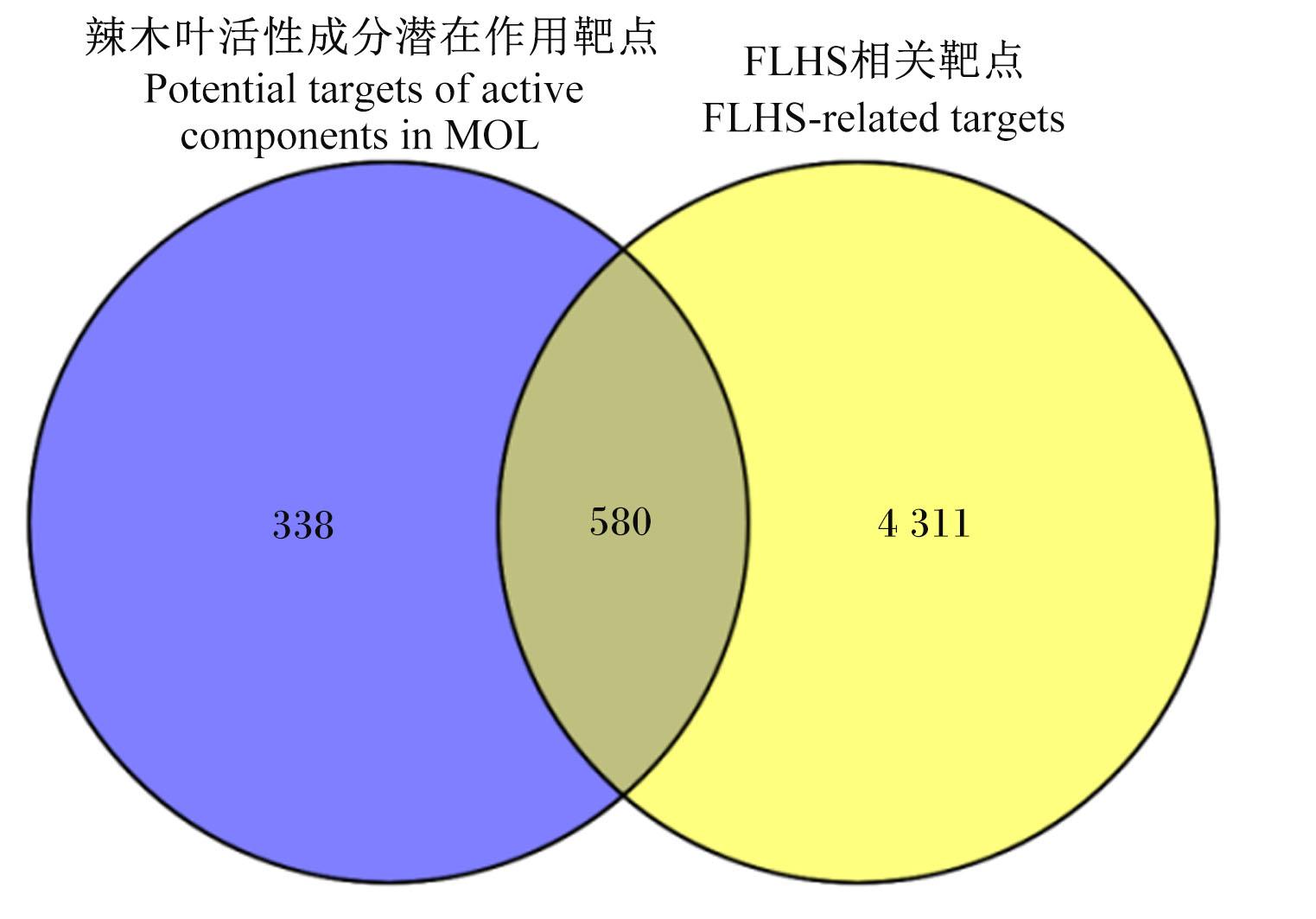
1.2 辣木叶缓解FLHS的作用靶点的确定
1.3 蛋白质-蛋白质相互作用(PPI)网络的构建及核心靶点的筛选
1.4 关键作用靶点的KEGG通路和GO功能富集分析
1.5 辣木叶活性成分干预FLHS核心靶点的分子对接验证
1.6 动物试验验证辣木叶对蛋鸡FLHS的缓解效果及作用机制
1.6.1 试验设计
表1 基础饲粮与高能量低蛋白质饲粮组成及营养水平(风干基础)Table 1 Composition and nutrient levels of basal diet and high-energy low-protein diet (air-dry basis)% |
| 项目 Items | 基础饲粮 Basal diet | 高能量低 蛋白质饲粮 High-energy low-protein diet |
|---|---|---|
| 原料 Ingredients | ||
| 玉米 Corn | 64.50 | 69.70 |
| 豆粕 Soybean meal | 24.00 | 14.58 |
| 玉米油 Corn oil | 4.22 | |
| 石粉 Limestone | 8.00 | 8.00 |
| 磷酸氢钙 CaHPO4 | 1.20 | 1.20 |
| 食盐 NaCl | 0.30 | 0.30 |
| 预混料 Premix1) | 2.00 | 2.00 |
| 合计 Total | 100.00 | 100.00 |
| 营养水平 Nutrient levels2) | ||
| 代谢能 ME/(MJ/kg) | 11.21 | 12.97 |
| 粗蛋白质 CP | 15.86 | 12.00 |
| 钙 Ca | 3.43 | 3.61 |
| 有效磷 AP | 0.51 | 0.46 |
| 精氨酸 Arg | 1.03 | 0.74 |
| 蛋氨酸 Met | 0.38 | 0.36 |
| 赖氨酸 Lys | 0.93 | 0.69 |
| 缬氨酸 Val | 0.77 | 0.58 |
| 蛋氨酸+半胱氨酸 Met+Cys | 0.67 | 0.56 |
1)预混料为每千克饲粮提供 The premix provided the following per kg of diets:Cu 2.50 mg,Fe 20.00 mg,Zn 17.50 mg,Mn 15.00 mg,KI 4.00 mg,Na2SeO3 6.00 mg,CoCl2·6H2O 2.50 mg,Cr 2.00 mg,NaCl 200.00 mg,植酸酶 phytase 10.00 mg,激肽酶 kininase 7.50 mg,抗氧化剂 antioxidant 2.00 mg,甜菜碱 betaine 15.00 mg,胆碱 choline 50.00 mg,蛋氨酸 Met 50.00 mg,沸石粉 zeolite powder 76.00 mg。 | |
2)粗蛋白质(GB/T 18868—2024)、钙(GB/T 6436—2018)为参照对应国标方法所得测定值,其余为参照《鸡饲养标准》(NY/T 33—2004)所得计算值。CP (GB/T 18868—2024) and Ca (GB/T 6436—2018) were determined using the corresponding national standard methods, while the others were calculated in accordance with the Feeding Standard of Chicken (NY/T 33—2004). |
1.6.2 检测指标与方法
1.6.2.1 血清中谷草转氨酶(AST)和谷丙转氨酶(ALT)活性
1.6.2.2 肝脏组织病理变化
1.6.2.3 肝脏中脂质含量
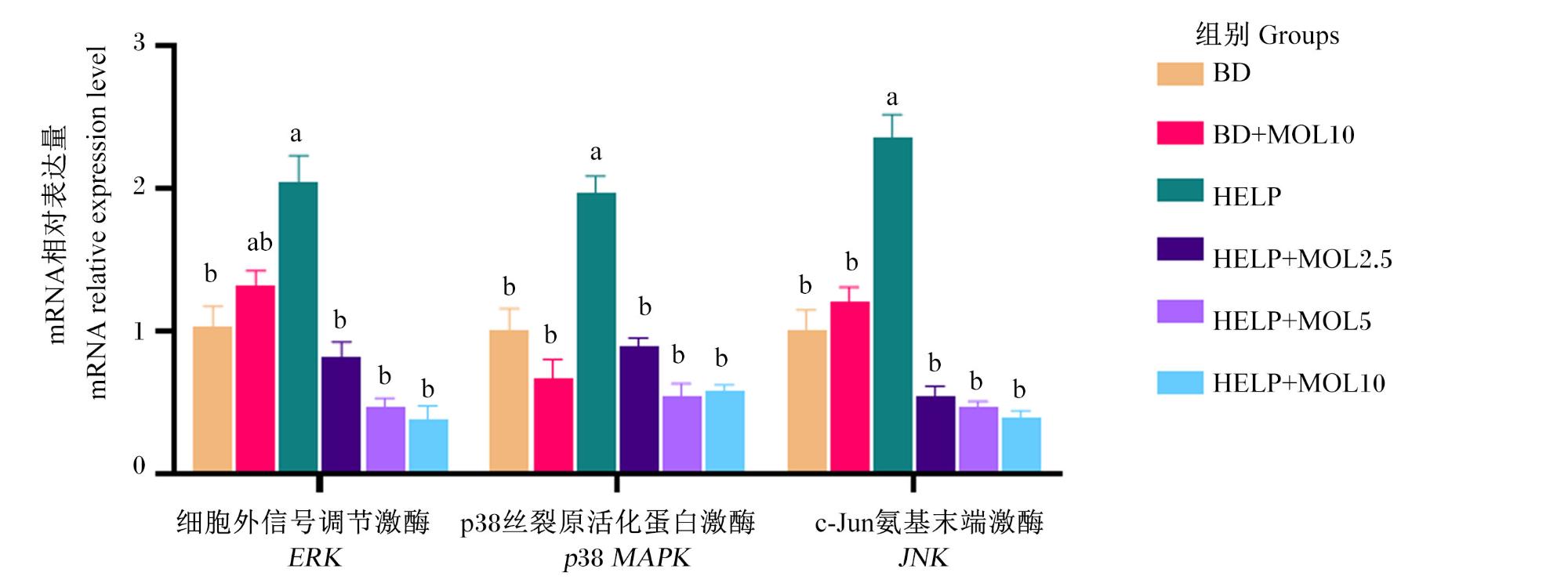
1.6.2.4 肝脏中丝裂原活化蛋白激酶(MAPK)信号通路关键基因的mRNA相对表达量
表2 引物序列Table 2 Primer sequences |
| 基因名称 Gene names | 引物序列 Primer sequences (5'—3') |
|---|---|
| 甘油醛-3-磷酸脱氢酶 GAPDH | F:TGCTGCCCAGAACATCATCC R:ACGGCAGGTCAGGTCAACAA |
| p38丝裂原活化蛋白激酶 p38 MAPK | F:GCATCCATCTTCGTCGTCAT R:TCATCTACAGCAACCCAGAGG |
| 细胞外信号调节激酶 ERK | F:TGGTACAGGGCTCCTGAAAT R:GGAAAGATGGGTCTGTTGGA |
| c-Jun氨基末端激酶 JNK | F:CAGCAGTGAACAGCAGCGAGAG R:CAGCGTCTGATCCGTGGACATG |
1.6.3 数据统计分析
2 结果与分析
2.1 辣木叶缓解FLHS的作用靶点的确定
2.2 辣木叶缓解FLHS的PPI网络的构建及核心靶点的筛选
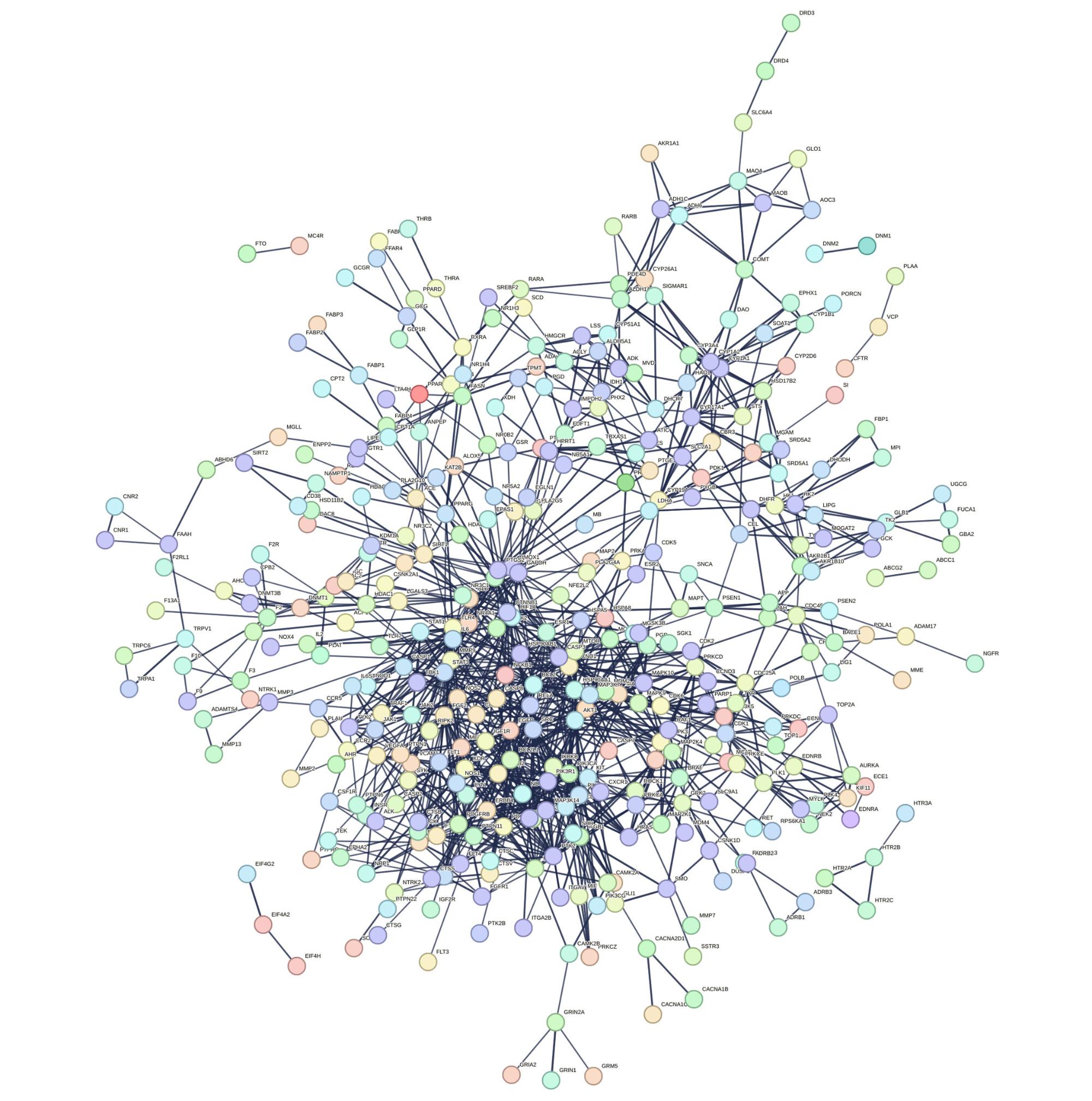
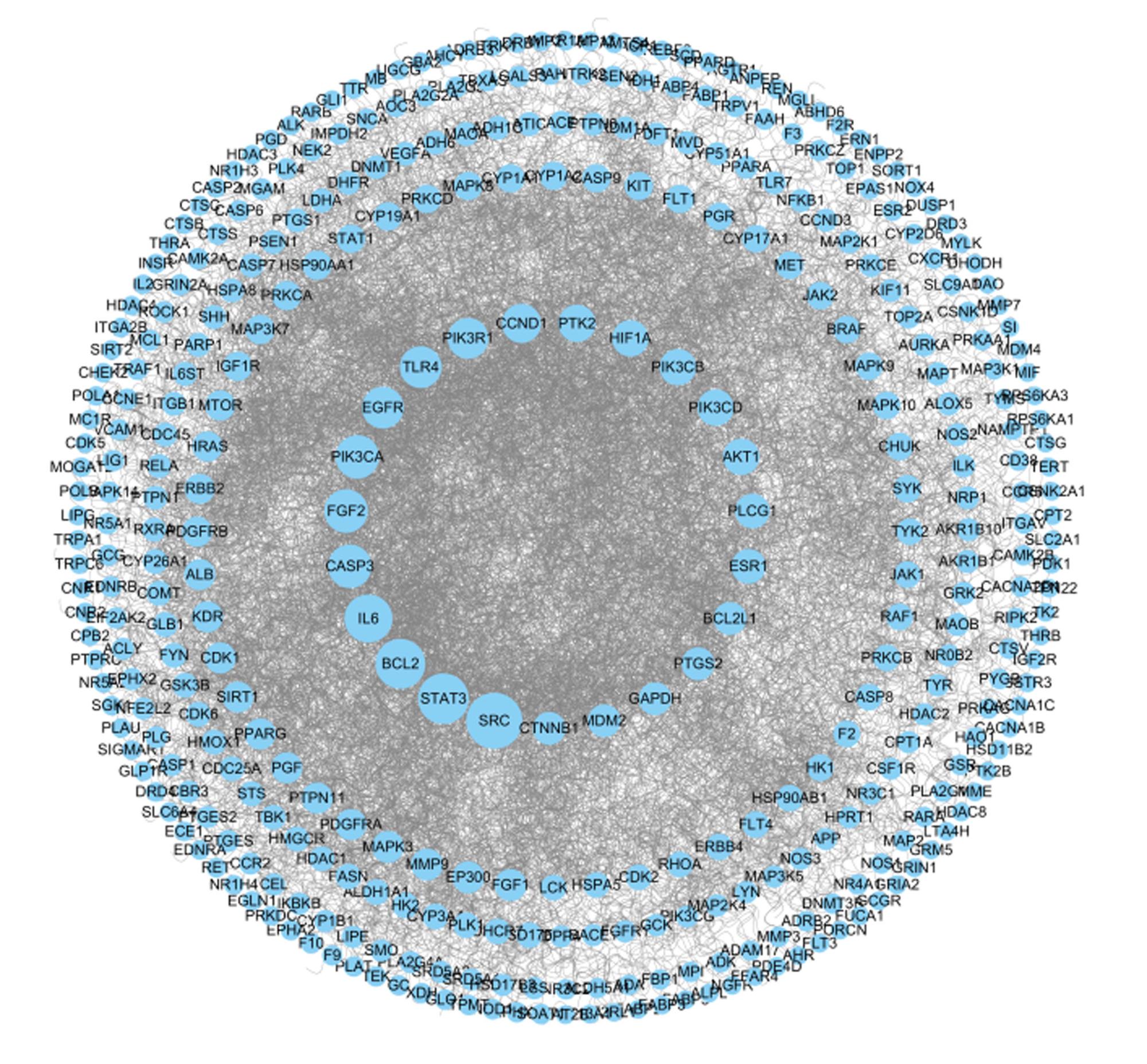
图3 辣木叶活性成分-FLHS关键作用靶点PPI网络图限于篇幅,仅列出度值排名前6的靶点名称Due to space limitations, only the names of the top 6 targets ranked by degree value are listed。SRC:Src非受体酪氨酸激酶 Src non-receptor tyrosine kinase;STAT3:信号转导和转录激活因子3 signal transducer and activator of transcription 3;BCL2:B细胞淋巴瘤/白血病-2蛋白 B-cell leukemia/lymphoma 2;IL6:白细胞介素6 interleukin 6;CASP3:半胱天冬酶3 cysteine-aspartic protease 3;FGF2:成纤维细胞生长因子2 fibroblast growth factor 2 。 Fig.3 PPI network diagram of key targets for MOL active ingredients-FLHS |
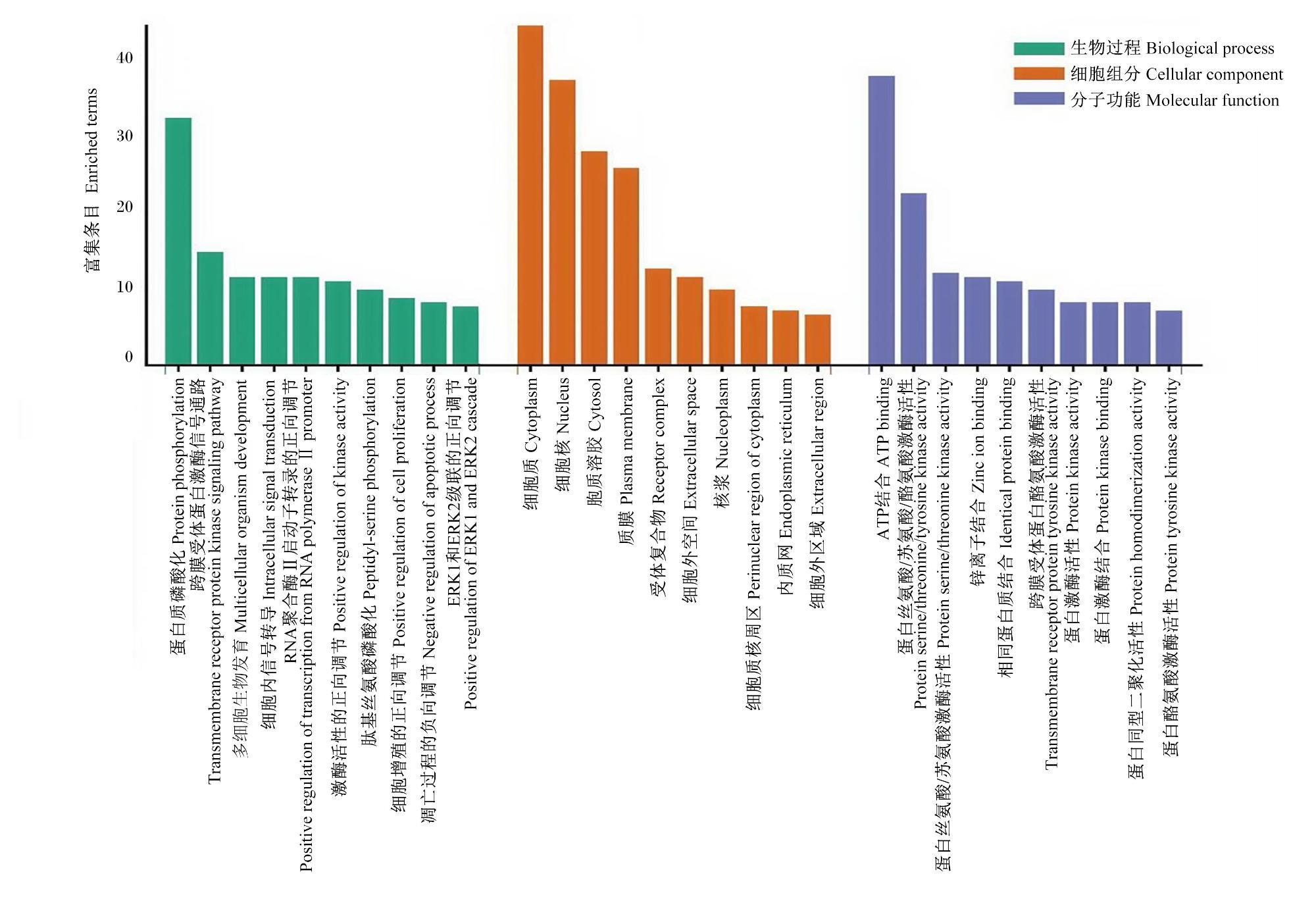
2.3 辣木叶缓解FLHS关键作用靶点的KEGG通路与GO功能富集分析
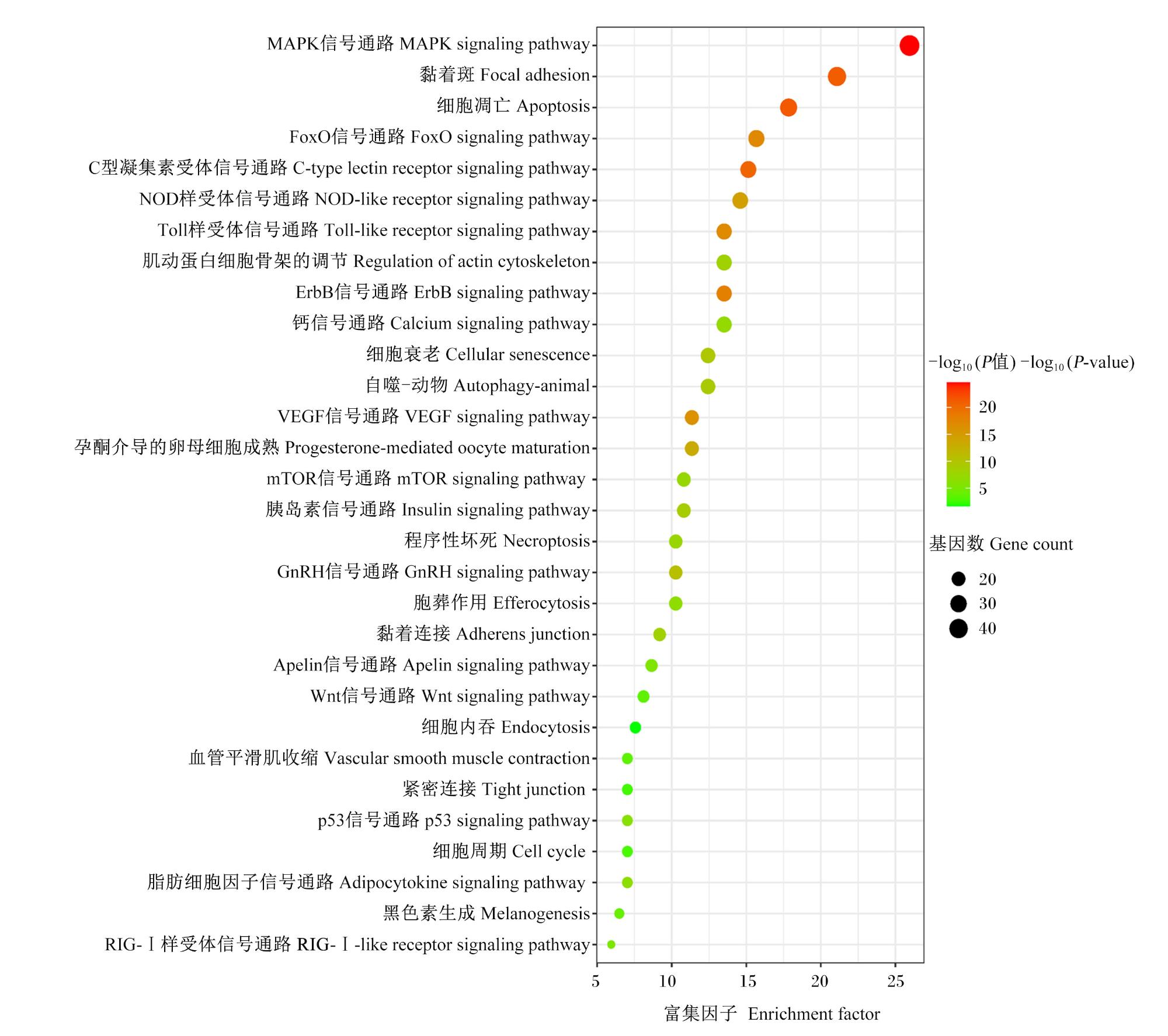
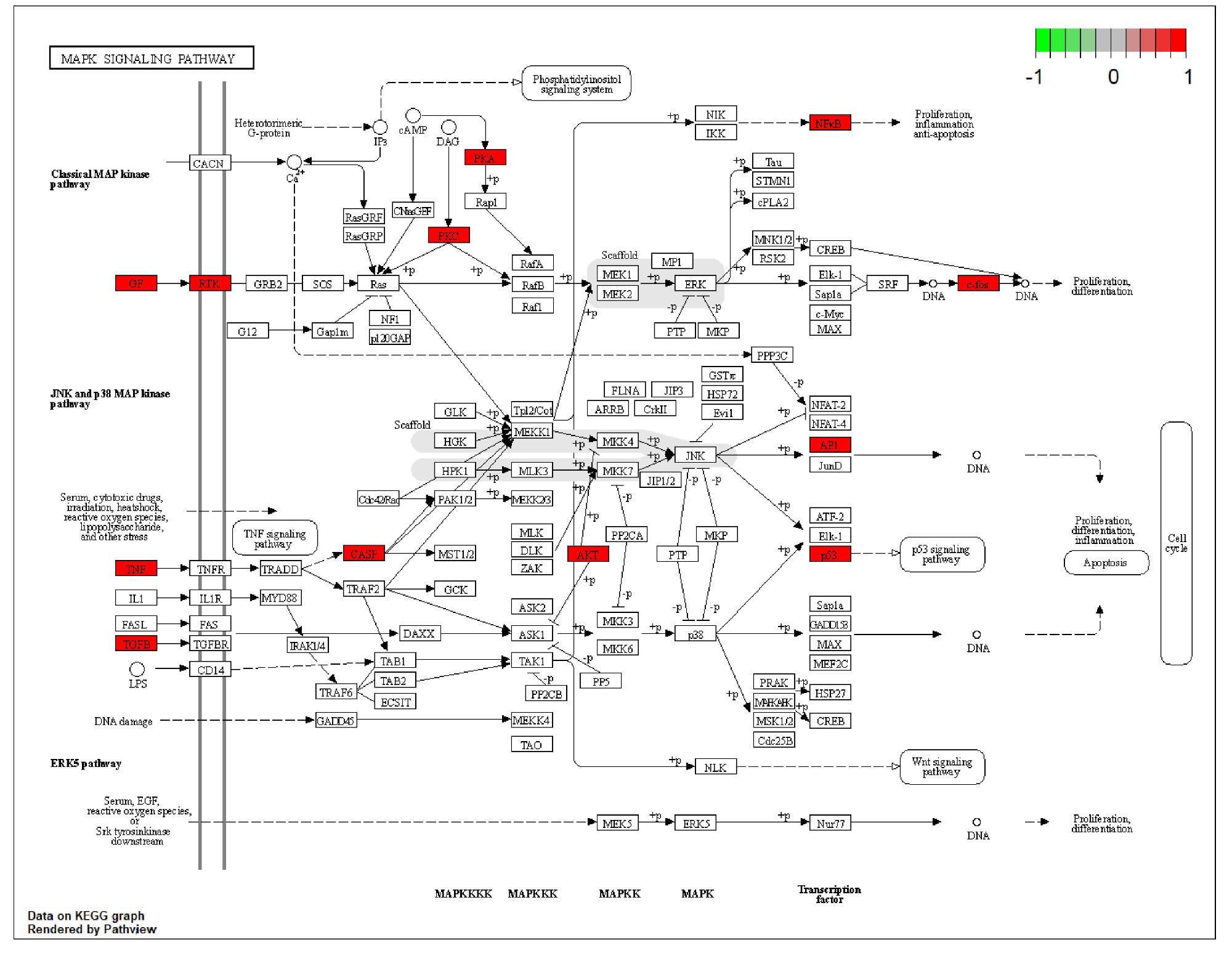
图5 关键作用靶点调控MAPK信号通路的机制图中红色框标注的是辣木叶作用于MAPK信号通路的核心靶点,其中文名称及英文全称如下The red boxes in the figure indicated the core targets of MOL acting on the MAPK signaling pathway, and their Chinese names and full English names were as follows。GF:生长因子 growth factor;RTK:受体酪氨酸激酶 receptor tyrosine kinase;PKA:蛋白激酶A protein kinase A;Ras:大鼠肉瘤癌基因 rat sarcoma;CASP:半胱天冬氨酸蛋白酶 cysteine-aspartic protease;AP1:激活蛋白 1 activator protein 1;JUN:原癌基因Jun proto-oncogene Jun;p53:肿瘤蛋白p53 tumor protein p53;TGFβ:转化生长因子β transforming growth factor beta;TNF:肿瘤坏死因子 tumor necrosis factor;FASL:Fas配体Fas ligand;FAS:Fas细胞表面死亡受体 Fas cell surface death receptor;TNFR:肿瘤坏死因子受体 tumor necrosis factor receptor。 Fig.5 Mechanisms of key targets regulating MAPK signaling pathway |
2.4 辣木叶活性成分与核心靶点的分子对接结果
表3 辣木叶活性成分异槲皮苷与核心靶点蛋白的分子对接结果Table 3 Results of molecular docking for active ingredient isoquercitrin from MOL with core target proteinskcal/mol |
| 活性成分 Active ingredient | 结合自由能 Combined free energy | ||
|---|---|---|---|
| Src非受体酪氨酸激酶 SRC | 信号转导和转录激活因子3 STAT3 | B细胞淋巴瘤/白血病-2蛋白 BCL2 | |
| 异槲皮苷 Isoquercitrin | -5.8 | -6.0 | -6.6 |
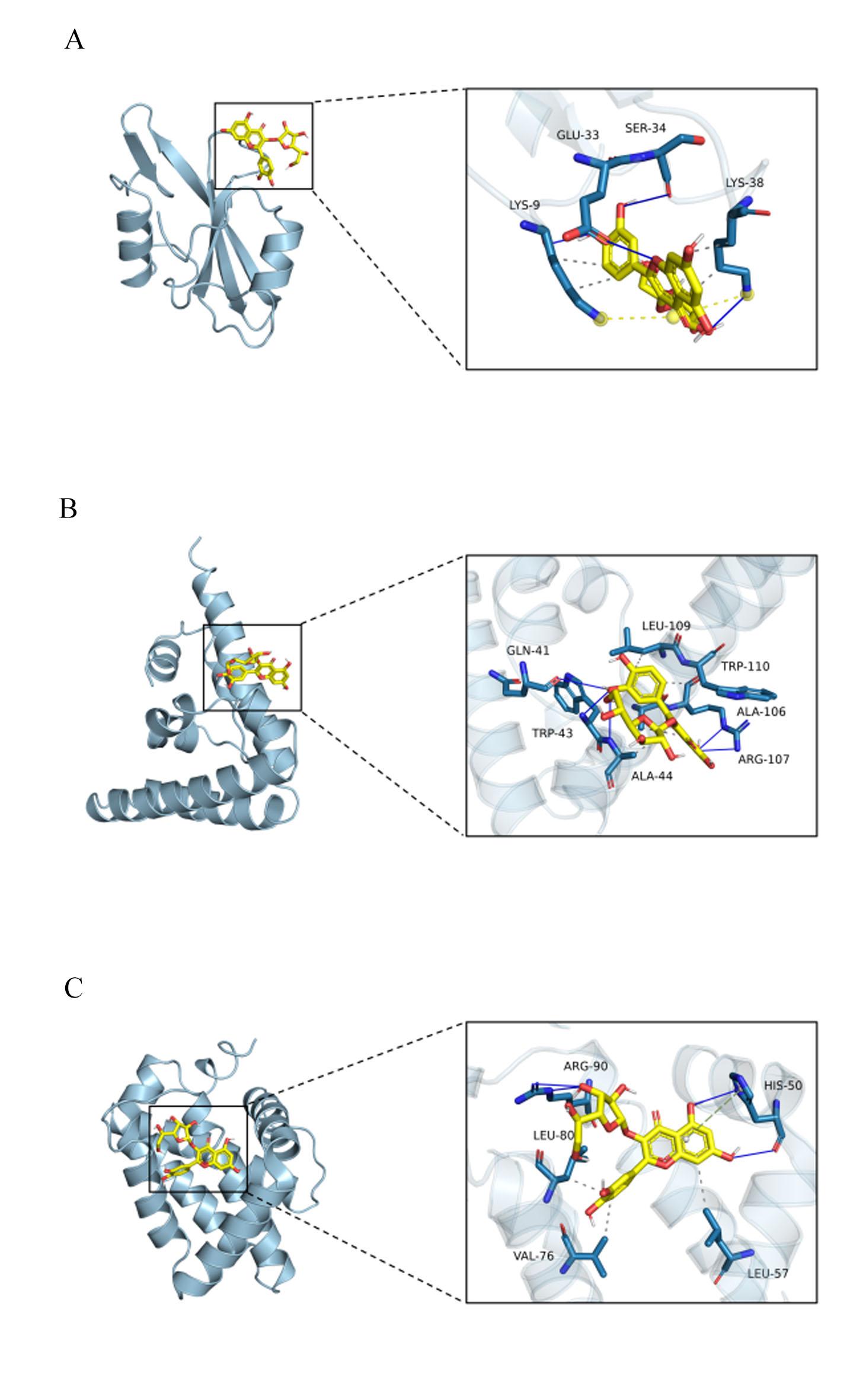
图7 异槲皮苷与核心靶点蛋白最佳构象相互作用模式图图A表示异槲皮苷与SRC的分子对接结果;图B表示异槲皮苷与STAT3的分子对接结果;图C表示异槲皮苷与BCL2的分子对接结果。 Fig.7 Schematic diagrams of optimal conformational interaction between isoquercitrin and core target proteins Figure A shows the molecular docking result between isoquercitrin and SRC; figure B shows the molecular docking result between isoquercitrin and STAT3; figure C shows the molecular docking result between isoquercitrin and the BCL2. |
2.5 辣木叶缓解蛋鸡FLHS的动物试验结果
2.5.1 辣木叶对饲喂高能量低蛋白质饲粮蛋鸡肝脏组织病理变化的影响
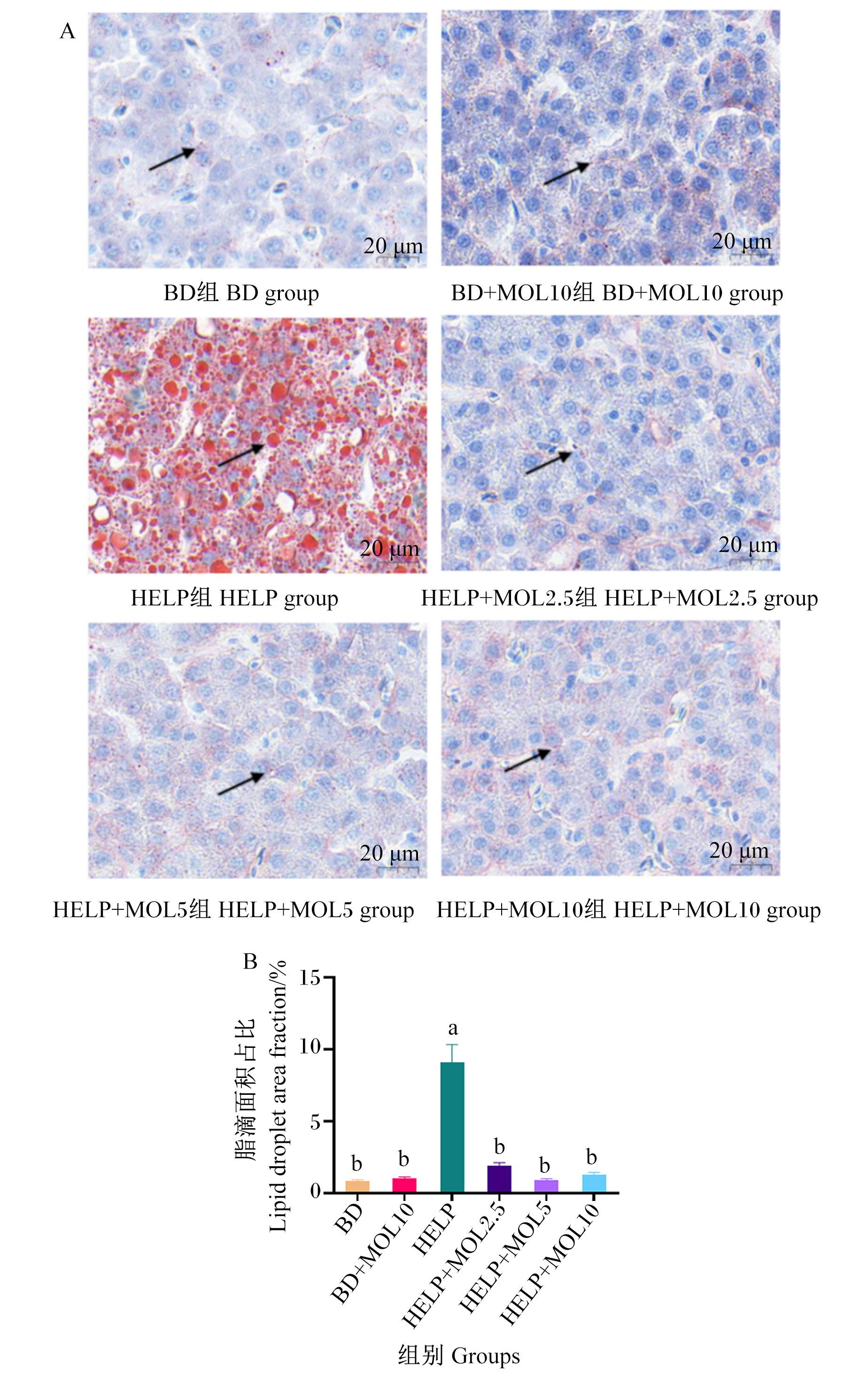
图8 各组蛋鸡肝脏组织病理变化情况图A为肝脏组织的油红O染色切片,图中箭头指示的是脂滴;图B表示肝脏组织中脂滴面积占细胞总面积的比例。数据柱标注相同字母表示差异不显著(P>0.05),不同字母表示差异显著(P<0.05)。图9同。 Fig.8 Pathological changes in liver tissue of laying hens from each group Figure A shows oil red O-stained sections of liver tissue, with the arrows indicating lipid droplets; figure B represents the percentage of lipid droplet area to total cell area in the liver tissue. Data bars with the same letter are not significantly different (P>0.05), while those with different letters are significantly different (P<0.05). The same as Fig.9. |
2.5.2 辣木叶对饲喂高能量低蛋白质饲粮蛋鸡血清中AST和ALT活性的影响
表4 各组蛋鸡血清中AST和ALT活性Table 4 Serum AST and ALT activities of laying hens from each groupU/L |
| 项目 Items | 组别 Groups | |||||||||||
|---|---|---|---|---|---|---|---|---|---|---|---|---|
| BD | BD+ MOL10 | HELP | HELP+ MOL2.5 | HELP+ MOL5 | HELP+ MOL10 | |||||||
| 谷丙转氨酶ALT | 11.20 ±0.41b | 13.41 ±1.10ab | 16.43 ±0.52a | 12.22 ±1.78bc | 8.56 ±2.06c | 9.96 ±0.77c | ||||||
| 谷草转氨酶AST | 136.88 ±1.41b | 140.22 ±12.99b | 201.68 ±8.69a | 129.03 ±15.82b | 129.42 ±9.10b | 140.57 ±3.30b | ||||||
同行数据肩标相同字母表示差异不显著(P>0.05),不同小写字母表示差异显著(P<0.05)。下表同。 | |
In the same row, values with the same letter superscripts mean no significant difference (P>0.05), while with different small letter superscripts mean significant difference (P<0.05). The same as below. |
2.5.3 辣木叶对饲喂高能量低蛋白质饲粮蛋鸡肝脏中脂质含量的影响
表5 各组蛋鸡肝脏中脂质含量Table 5 Lipid contents in liver of laying hens from each groupμmol/L |
| 项目 Items | 组别 Groups | |||||
|---|---|---|---|---|---|---|
| BD | BD+ MOL10 | HELP | HELP+ MOL2.5 | HELP+ MOL5 | HELP+ MOL10 | |
| 甘油三酯 TG | 11.30±0.90bc | 8.89±0.46c | 21.88±0.48a | 14.52±0.74b | 8.78±1.70c | 8.25±1.72c |
| 总胆固醇 TC | 5.17±0.48b | 4.88±1.49b | 6.78±1.01a | 6.24±0.41ab | 5.45±0.86b | 4.86±0.66b |
 京公网安备 11010802041926号


