综述

影响肉牛肌内脂肪沉积的关键基因及营养干预研究进展

  • 胡蝶 ,
  • 许兰娇 ,
  • 瞿明仁 ,
  • 梁欢 , *
展开
  • 江西农业大学动物营养与饲料江西省重点实验室, 南昌 330045
* 梁 欢,副研究员,E-mail:

胡 蝶(1998—),女,湖北广水人,博士研究生,从事反刍动物营养调控相关研究。E-mail:

Office editor: 武海龙

收稿日期: 2025-11-13

  网络出版日期: 2026-07-14

基金资助

国家自然科学基金(32460849)

赣鄱俊才主要学科学术和技术带头人培养项目(20243BCE51114)

江西省自然科学基金(20232BAB205066)

财政部和农业农村部国家现代农业产业技术体系资助(CARS-37)

江西省重点研发计划项目(20232BBF60022)

Research Progress on Key Genes and Nutritional Interventions Influencing Intramuscular Fat Deposition in Beef Cattle

  • HU Die ,
  • XU Lanjiao ,
  • QU Mingren ,
  • LIANG Huan , *
Expand
  • Jiangxi Key Laboratory of Animal Nutrition and Feed, Jiangxi Agricultural University, Nanchang 330045, China
* associate professor, E-mail:

Received date: 2025-11-13

  Online published: 2026-07-14

摘要

肌内脂肪(IMF)含量是决定牛肉品质的重要因素,是决定牛肉风味和口感的关键,也是当前我国肉牛产业提质增效的瓶颈。本文综述了影响肉牛IMF沉积的关键基因,探讨了营养干预手段改善肉牛IMF沉积的研究进展,以期为通过精准营养调控提升肉牛IMF沉积提供参考。

本文引用格式

胡蝶 , 许兰娇 , 瞿明仁 , 梁欢 . 影响肉牛肌内脂肪沉积的关键基因及营养干预研究进展[J]. 动物营养学报, 2026 , 38(7) : 4757 -4768 . DOI: 10.12418/CJAN2026.381

Abstract

Intramuscular fat (IMF) content is a critical factor determining beef quality, playing a pivotal role in flavor and texture of beef, and it also represents a bottleneck in enhancing the efficiency and quality of China’s beef cattle industry. This review summarizes key genes influencing intramuscular fat deposition in beef cattle and explores advances in nutritional interventions aimed at improving IMF. The findings aim to provide a theoretical foundation and novel insights for future precision nutrition strategies to enhance intramuscular fat deposition in beef cattle.

随着生活水平提高,消费者对牛肉品质的要求日益提升。然而,我国牛肉品质总体偏低,产品结构不合理,中高档牛肉供给不足,主要依赖进口。据统计,目前我国中高档牛肉每年消费量约为50多万t,产值超过1 500亿元,其中大约超八成依靠进口[1]。此外,我国每年进口的牛肉中,有65%的牛肉以高于进口价格4~10倍的零售价格被缺口巨大的中高档市场消费[2]。因此,提升牛肉品质已成为目前我国肉牛产业的迫切需求。
牛肉品质的关键指标,如肉色、嫩度、风味、多汁性和系水力,主要取决于肌纤维发育、肌内脂肪(intramuscular fat,IMF)沉积以及肌肉组织的糖代谢类型。其中,IMF沉积是影响牛肉品质的核心因素,直接决定大理石花纹评分、嫩度及风味[3],进而影响消费者的接受度和市场价值。IMF含量的增加在细胞水平表现为脂肪细胞的增殖(脂肪细胞数目增多)和分化(脂肪细胞面积增大,甘油三酯积累增多)。目前,通过研究肉牛脂肪沉积过程中的关键基因,揭示肉牛通过IMF细胞增殖和分化改善肉品质的分子调控机理是关注焦点,也是肉牛分子营养学研究中亟待解决的科学问题。IMF沉积受遗传、营养和环境等因素的综合调控,如何通过精准营养措施优化IMF沉积已成为动物营养学的研究热点。因此,本文系统梳理调控肉牛IMF沉积的关键基因,并在此基础上全面阐述调整饲粮能量水平、脂肪酸组成、氨基酸供给及添加功能性添加剂等营养干预手段对改善牛肉品质的研究进展,以期为今后通过精准营养调控提升肉牛IMF沉积提供参考。

1 IMF与牛肉品质的关系
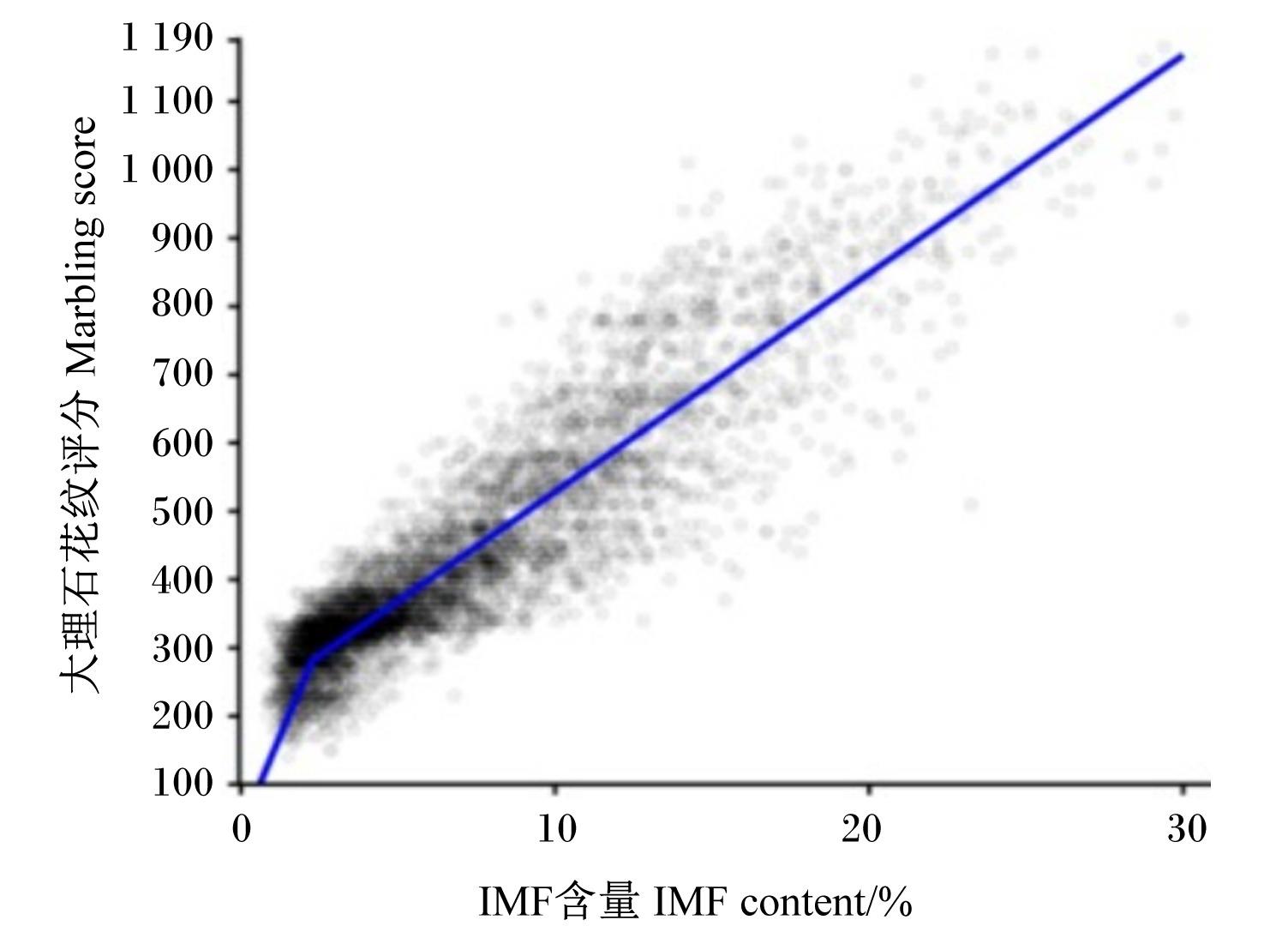
IMF主要存在于肌束和肌纤维之间,其含量直接决定大理石花纹评分,是影响肉品质的核心经济性状[3],IMF与大理石花纹评分的关系如图1所示。IMF可在肌束和肌纤维之间形成均匀细密的大理石花纹,适度的IMF含量可提高肌肉的系水力、嫩度和多汁性[4-6];IMF含量较高的牛肉在食用时的“多汁性评分”较高,且这种差异在烹饪后更为明显[7-8]。IMF富含磷脂和中性脂,其脂肪酸组成不仅降低了蒸煮损失,还赋予了牛肉独特的肉香和脂香[9-10]。因此,适度提高IMF含量已成为提升高档牛肉市场竞争力与养殖效益的关键途径。
图1 IMF含量与大理石花纹评分的关系

Fig.1 Relationship between IMF content and marbling score[11]

2 调控IMF沉积的关键基因

遗传因素是决定IMF沉积潜能的根本内因,通过调控前体脂肪细胞的分化、脂质的合成与分解代谢等关键生物学进程,从遗传层面上设定了个体IMF沉积的理论上限。随着分子生物学技术的发展,基因组学研究表明,一系列关键基因和信号通路在IMF沉积的遗传调控网络中扮演着核心角色。

2.1 脂质代谢与脂肪细胞分化的相关基因

2.1.1 过氧化物酶体增殖物激活受体γ(PPARγ)

PPARγ作为核激素受体超家族成员,是调控脂肪细胞分化和脂质代谢的核心转录因子,在IMF沉积中发挥关键作用。PPARγ一方面直接结合脂蛋白脂酶(LPL)、脂肪酸结合蛋白(FABP)4、脂滴包被蛋白1(PLIN1)启动子区过氧化物酶体增殖物反应元件(PPRE)上调其表达,另一方面与CCAAT/增强子结合蛋白(C/EBP)家族形成协同正反馈,从而共同促进脂肪细胞分化与脂质成熟[12-13]。在韩牛中,PPARγ被鉴定为与IMF含量显著相关的基因之一,其与FABP4构成的基因对在共表达网络中显示出最强的相关性[14]。干扰PPARγ表达则显著抑制脂肪细胞分化标志物表达,并降低脂质蓄积能力[15]
PPARγ基因可产生PPARγ外显子来源的环状RNA(circPPARγs),如circPPARγ1、circPPARγ2和circPPARγ3。这些RNA在牛中功能保守,通过促进肌内前脂肪细胞成脂分化并抑制其增殖,正向调控IMF沉积。其中,circPPARγ1直接与PPARγ蛋白互作,抑制脂解关键酶——激素敏感脂肪酶(HSL)的转录,从而减少脂肪分解并促进脂质积累[16]。此外,PPARγ基因存在多种剪接变体。Wang等[17]研究发现,PPARγ-X17和PPARγ-X21可以通过调控多种脂肪酸合成相关基因的表达,影响脂肪酸合成,进而参与IMF的“质”与“量”调控。

2.1.2 FABP4

FABP4作为细胞内的脂质分子伴侣,在IMF沉积中发挥着多方面的核心调控作用。一方面,FABP4通过结合长链脂肪酸并促进其向脂滴的定向转运,直接参与脂滴的形成与扩大,该过程常与脂肪酸转位酶(CD36)协同,共同增强脂肪酸的摄取与储存效率;另一方面,FABP4还通过激活PPARγ等信号通路,间接调控脂质代谢,显著上调脂肪酸合成酶(FASN)、乙酰辅酶A羧化酶(ACC)等脂质合成关键基因的表达,从而增强脂肪酸的从头合成能力。有研究充分支持了这一双重机制:芥酸可通过激活PPARγ-FABP4/CD36信号轴,显著诱导牛肌内前脂肪细胞的脂质沉积[12],印证了FABP4在脂质代谢调控网络中的重要地位。
FABP4基因的遗传多态性与肉牛IMF含量密切相关。在韩牛中,外显子Ⅲ的错义突变g.3631G>A与更高的大理石花纹评分显著相关,而单倍型可同时提升胴体重和IMF含量[18]。类似地,弗莱维赫牛中FABP4基因多态性与IMF含量及脂肪酸组成相关,特定单倍型对肉豆蔻酸(C14∶0)、棕榈酸(C16∶0)等饱和脂肪酸含量的影响显著[19]。同样,Michal等[20]研究发现,FABP4的单核苷酸多态性(single nucleotide polymorphism,SNP)显著影响“和牛×利穆赞”F2杂交后代的雪花纹和皮下脂肪厚度。跨品种研究也证实了FABP4的重要性,如Barendse等[21]在7个牛品种中鉴定出FABP4的1个剪接SNP位点(g.2502C>G),该位点与IMF含量显著相关。

2.1.3 C/EBPα

C/EBPα是脂肪细胞分化过程中的关键转录因子。它可通过直接结合靶基因启动子调控脂质代谢相关基因的表达,影响脂解过程与脂质动态平衡[22]。更重要的是,C/EBPα与PPARγ协同作用,共同诱导脂肪细胞分化标志基因的表达,驱动前体脂肪细胞向成熟脂肪细胞转化,直接促进IMF沉积[23-25]。在棕榈油酸(C16∶1)诱导的牛骨骼肌卫星细胞分化模型中,C/EBPα表达上调显著增加脂滴积累和甘油三酯含量,证实其对脂肪生成的直接促进作用[26]
C/EBPα与Wnt/β-连环蛋白(β-catenin)信号通路存在拮抗关系,共同调控IMF含量。在韩牛模型中,去势处理下调Wnt信号通路基因的表达,同时上调C/EBPαPPARγ的表达,导致IMF含量显著增加;C/EBPα表达水平与IMF含量呈显著正相关[27]。相反,脂肪生成负调控因子成纤维细胞生长因子10(FGF10)可通过抑制C/EBPα的表达,降低脂滴形成和甘油三酯积累,其过表达会导致PPARγ和C/EBPα蛋白表达水平下降,该结果进一步验证了C/EBPα在脂肪生成网络中的枢纽地位[28]

2.1.4 固醇调节元件结合蛋白(SREBP)

SREBP1是SREBP家族中的一个转录因子,它在脂肪酸和胆固醇生物合成中具有核心调控作用[29]。SREBP1的剪接异构体SREBP1c被认为是脂质从头合成的“主调控因子”[30-31]。SREBP1c通过调控脂肪酸合成酶(FASN)、ACC和硬脂酰-辅酶A去饱和酶(SCD)等关键酶的表达,促进脂肪酸和甘油三酯的合成,从而推动IMF沉积。在肉牛中,SREBP1基因的多态性与脂肪酸组成和脂肪大理石花纹评分相关[32]。例如,其内含子5中的1个84 bp插入/缺失多态性存在于多个牛品种中[33],这种多态性可能影响SREBP1的表达或功能,进而影响IMF沉积。但是,目前关于SREBP1在IMF沉积中的直接证据多来源于猪、羊及家禽等模型[34-37],针对肉牛的专门研究相对缺乏。然而,有研究提示了其保守机制:在山羊肌肉前脂肪细胞,通过FGF10的小干扰RNA(siRNA)抑制SREBP1的表达后,脂质合成关键基因表达水平显著下降,导致肌内前脂肪细胞分化受阻,脂滴积累减少[38]。由此可合理推断,SREBP1在肉牛IMF沉积中同样扮演着重要角色。

2.2 脂肪酸合成与修饰相关基因

脂肪酸的从头合成、链延长及去饱和反应决定了IMF的“量”与“质”。在肉牛中, FASNSCD、脂肪酸延伸酶(ELOVL)和脂肪酸去饱和酶2(FADS2)被公认为是调控脂肪酸谱的核心基因。

2.2.1 FASN

FASN是催化长链脂肪酸从头合成的限速酶,直接调控饱和脂肪酸(SFA)与单不饱和脂肪酸(MUFA)的生成,这些脂肪酸是IMF的主要成分。研究表明,FASN基因存在多个SNP位点,这些位点与IMF相关性状具有显著关联。例如,日本黑牛启动子区g.841G>C SNP位点与C14∶0、C16∶0和油酸(C18∶1)含量显著相关[39];秦川牛的g.13192T>C和g.13232C>T SNP位点分别与眼肌面积增大和IMF含量增加相关[40]。值得注意的是,FASN基因的关键SNP位点如g.16024A>G在秦川牛、弗莱维赫牛、日本黑牛等多个群体中均稳定影响IMF性状,显示出良好的跨品种普适性,可作为分子标记用于肉牛育种[19,39-42]

2.2.2 SCD

SCD通过催化SFA转化为MUFA,显著提升IMF中MUFA比例。这一过程直接增加脂滴积累,SCD表达水平与牛肉大理石花纹评分呈显著正相关[43-44]。作为脂肪酸代谢中的限速酶,SCD主要作用于棕榈酰-辅酶A和硬脂酰-辅酶A,分别生成C16∶1和C18∶1[45-46],在决定脂肪酸组成中发挥核心作用。SCD的表达水平与活性存在显著的品种差异。研究发现,日本黑牛SCD的表达水平高于荷斯坦牛,这与前者通常具有更高IMF含量和更好肉品质的特点相符[47],表明SCD基因表达的品种特异性可能是造成品种间肉品质差异的原因之一。在遗传调控层面,SCD基因的5'调控区和3'非翻译区(3'UTR)的SNP被证实为脂肪性状的关键分子标记:在中国西门塔尔牛中,启动子邻近区4个SNP显著影响背膘厚与肌肉C18∶1、亚油酸(C18∶2)含量[48];青海牦牛g.6614C>A和g.6660C>T变异可增大胸围、体重并优化脂肪沉积[49];日本和牛杂交群与加拿大肉牛亦证实,5'-侧翼SNP直接关联大理石花纹评分及MUFA/SFA比例[50]。这些多态性可能通过影响SCD的表达水平或活性来改变IMF的脂肪酸构成[51]

2.2.3 ELOVL

ELOVL家族成员,尤其是ELOVL6,在肉牛IMF沉积中发挥核心作用。作为催化脂肪酸碳链延长的核心催化酶,ELOVL6通过调控脂肪酸的组成与结构,直接影响IMF的理化性质与代谢特征[52]。研究表明,ELOVL6能够通过正调控PPARγ的表达以激活脂肪生成程序,同时抑制FABP4的表达,从而优化脂肪酸在细胞内的转运效率,形成协同调控网络[52-53]
伴随着IMF含量随时间的递增,ELOVL6等脂质生成基因的表达也显著增强,表明ELOVL6的表达水平与IMF沉积能力密切相关[54]。日本黑牛的IMF含量及ELOVL6的表达水平均显著高于秦川牛和南阳牛,这一差异从分子层面揭示了不同肉牛品种间脂肪沉积能力差异的形成机制,表明ELOVL6在品种特异性脂肪沉积调控中具有重要作用[55]

2.2.4 FADS2

FADS2主要通过参与多不饱和脂肪酸(PUFA)的生物合成途径来影响脂肪酸的组成和含量[56]。作为一种多功能酶,FADS2能够催化Δ6、Δ4和Δ8去饱和反应,将短链PUFA转化为对IMF含量和品质至关重要的长链PUFA[57]FADS2的表达水平和基因多态性已被证明与肉牛IMF组成密切相关。例如,在日本黑牛中,FADS2基因的SNP与IMF的脂肪酸组成存在关联[58],表明其遗传变异可能影响肉牛IMF的质量性状。

3 促进IMF沉积的营养干预措施

3.1 饲粮能量水平与来源

饲粮能量水平是调控肉牛IMF沉积的核心因素。提高饲粮能量水平,尤其是增加可发酵碳水化合物如淀粉的含量,能够有效促进IMF沉积[59-60]。其机制在于高能量水平饲粮一方面增加了瘤胃丙酸的产量,另一方面提供了更多的瘤胃淀粉,使其在小肠消化后为机体提供充足的葡萄糖。尽管乙酸是反刍动物皮下脂肪合成的主要碳源,但研究表明,葡萄糖是IMF从头合成的更优底物[61-62]。充足的葡萄糖供应能够激活脂肪生成相关的基因和信号通路。例如,生长期肉牛饲喂高淀粉饲粮可显著上调肌内前脂肪细胞中PPARγ等转录因子的表达,从而促进间充质干细胞向脂肪细胞分化[63]
在肉牛养殖中,不同饲粮能量来源对IMF沉积的效果存在差异。有研究发现,与以青贮玉米为主要碳水化合物来源的对照组相比,饲喂玉米或大麦为基础的高淀粉饲粮能更有效地提高湘西黄牛的IMF含量,改善肉色并降低剪切力[64]。这一差异源于IMF细胞独特的代谢特征——显著依赖葡萄糖供能。不同于皮下脂肪细胞主要利用乙酸合成脂质,IMF细胞中ATP-柠檬酸裂解酶活性更高,使其能够更高效地利用葡萄糖代谢产生的柠檬酸进行脂肪酸从头合成[62,65]。这也从代谢层面解释了为什么长期饲喂高谷物饲粮是形成理想大理石花纹肌肉的必要营养条件。

3.2 脂肪酸营养

饲粮脂肪不仅是重要的能量来源,其种类与脂肪酸组成也直接影响IMF的沉积及脂肪酸构成,进而决定牛肉的风味和营养价值。瘤胃微生物的生物氢化作用会将饲粮中大部分不饱和脂肪酸(UFA)转化为SFA,这限制了PUFA在肌肉中的沉积[66]。因此,使用瘤胃保护性脂肪(rumen-protected fat,RPF)或调控瘤胃发酵成为关键的营养干预措施。研究表明,C18∶1能与PPARγ结合并激活其转录活性,进而上调C/EBPαSCD1的表达[67-68]。由于SCD1负责将硬脂酸(C18∶0)转化为C18∶1,这形成了一个正反馈循环:C18∶1促进SCD1表达,进而产生更多C18∶1进一步激活PPARγ。因此,饲喂富含C18∶1前体或能提高SCD1活性的饲粮,是分子营养层面的促脂肪措施。值得注意的是,瘤胃中产生的trans-10,cis-12共轭亚油酸(CLA)异构体是强效的抗脂肪生成剂。该异构体能显著下调PPARγSREBP1c的表达,导致脂肪细胞去脂化,从而抑制乳脂肪生成[69-70]
有研究系统比较了不同脂肪酸配比的瘤胃旁路脂肪补充剂对安格斯公牛IMF沉积的影响,结果表明,与不添加脂肪的对照组相比,添加富含C16∶0和C18∶0的饱和脂肪酸补充剂可通过提高采食量、上调脂质调控基因(如SCD1、PPARγFABP4)的表达及增加肌肉总脂肪酸沉积,从而有效促进肉牛增重和IMF沉积,获得更优的生长性能和肉品质[71]

3.3 氨基酸营养

氨基酸是蛋白质合成的基础,对肌肉生长和整体代谢至关重要。在肉牛饲粮中,赖氨酸(Lys)和蛋氨酸(Met)通常被认为是第一和第二限制性氨基酸[72]。鉴于瘤胃微生物对游离氨基酸的降解作用,使用瘤胃保护性氨基酸(rumen-protected amino acids,RPAA)是提高其生物利用度的有效手段。研究表明,在育肥牦牛饲粮中补充不同水平的瘤胃保护性赖氨酸(rumen-protected lysine,RPL)和瘤胃保护性蛋氨酸(rumen-protected methionine,RPM),虽能显著提高平均日增重和饲料效率,并改善多项肉品质指标,但对大理石花纹评分无显著影响,说明其主要作用在于促进肌肉蛋白质沉积而非脂肪沉积[73]。但是,补充RPM可以线性增加育肥牛的眼肌面积[72],进一步印证其对肌肉生长的积极影响。值得注意的是,低赖氨酸水平被发现可上调牛血管基质细胞中PPARγ的关键激活因子——锌指蛋白423(ZFP423)的表达,从而促进脂肪生成[74]。这表明适度的氨基酸限制可能通过上调ZFP423的表达,引导间充质干细胞向脂肪细胞分化,而非完全朝向肌肉发育。该发现对传统“全价蛋白质”育肥理念提出了新的思考,为通过氨基酸精准调控肉牛体组成提供了潜在的理论依据。

3.4 维生素与微量元素

3.4.1 维生素A(视黄醇)

维生素A及其活性代谢物视黄酸(retinoic acid,RA)是目前研究最为深入的脂肪分化调控因子之一,其作用呈现显著的时空特异性。据报道,在犊牛出生及1月龄时补充维生素A,可激活PPARγ和C/EBPα等转录因子,上调FASNSCDFABP4等脂质合成关键基因的表达,从而提高断奶体重和后期IMF含量(如超声测定的IMF含量从4.0%升至4.9%)[75-76]。这一效应可归因于RA信号在早期发育阶段对血管生成和脂肪祖细胞增殖的促进作用[77]。相反,在肉牛育肥阶段限制β-胡萝卜素和维生素A的摄入,可通过降低RA受体活性,使IMF脂肪细胞数量增加22%,总IMF沉积量提升46%[78-79]。其分子机制在于:RA在脂肪前体细胞中通过结合RA受体,直接抑制C/EBPαPPARγ的转录[80-81]。因此,在育肥后期限制维生素A摄入,能够解除RA对这2个关键基因的表观遗传抑制,从而允许脂肪细胞充分分化与脂质积累,最终促进大理石花纹的形成。综上所述,维生素A在牛生长发育的不同阶段对脂肪沉积具有双向调节作用。在育肥后期适度限制其摄入,可作为促进大理石花纹形成的有效营养调控策略。

3.4.2 其他维生素

与维生素A类似,高水平的维生素D也被证明能抑制前脂肪细胞的分化[62,82],并抑制3T3 L1细胞中PPARγ基因的表达[83]。然而,关于维生素D对肉牛IMF沉积影响的体内研究相对有限。体外细胞试验表明,维生素D3对牛IMF生成具有阶段特异性调控作用:在细胞生长及分化早期通过抑制增殖与关键转录因子表达而延缓成脂进程;而在分化晚期则通过上调PPARγFABP4的表达促进脂质积累与脂肪细胞成熟,呈现早期抑制、晚期促进的双重调节特征[84]。此外,有研究指出,限制维生素D并未显著影响安格斯杂交公牛的IMF沉积,但补充维生素D反而降低了安格斯杂交公牛的体脂含量[85],其具体机制尚需进一步探究。
体外研究表明,维生素C能促进体外牛前脂肪细胞的分化,提示在育肥后期补充瘤胃保护性维生素C可能有助于加速大理石花纹的形成[86-87]。目前,关于维生素E的研究多集中于其抗氧化功能,旨在防止脂质氧化、延长货架期[88-89],其对肉牛IMF沉积的直接调控作用尚不明确。

3.4.3 微量元素

部分微量元素在脂肪沉积中扮演重要角色。锌因其具有胰岛素模拟作用并能促进体外脂肪细胞分化而备受关注,可能通过增加脂肪生成活性来增加大理石花纹的形成[86-87]。具体机制涉及锌通过抑制蛋白激酶B(Akt)/哺乳动物雷帕霉素靶蛋白(mTOR)信号通路,诱导关键生脂转录因子PPARγ的表达,进而促进前脂肪细胞向成熟脂肪细胞分化,增加脂肪生成活性,最终改善肉牛的大理石花纹评分等[90]。铬作为脂质和碳水化合物代谢的关键辅助因子,补充铬可能通过调节脂肪细胞分化来改善IMF,尽管部分研究未观察到其对胴体性状的显著影响[87]。此外,较低铁含量可下调FASNFABP4等脂质生成基因的表达[91]
铜与锌在脂肪酸代谢中存在拮抗作用,该作用主要由金属硫蛋白(metallothionein,MT)介导。高锌饲粮能强烈诱导MT合成,而MT对锌的亲和力高于铜,导致铜滞留在肠上皮细胞中并随其更新被排出,从而系统性降低铜的吸收效率[92-93]。在此机制下,高锌可上调ZFP423和FASN的表达,增强胰岛素信号通路,促进脂肪生成;同时,由此引起的边缘性缺铜状态可解除铜对SREBP1c和Wnt信号通路的抑制,进一步激活脂质合成通路。这种“高锌-边缘铜”的代谢环境有助于FASNSCDELOVL6等脂肪合成基因的高效表达,从而在育肥后期促进大理石花纹的形成,这也解释了为何该阶段饲粮中常添加高水平锌[94-95]

3.5 功能性添加剂

多项研究报道了功能性添加剂对促进肉牛IMF沉积的潜力。例如,饲粮中添加葛根素可通过上调FABP3、FABP7、SCD等脂质代谢基因的表达来增强肉牛IMF沉积[96];烟酸补充可将育肥公牛的IMF含量从9.03%显著提高至17.14%,大理石花纹评分从4.30提高至8.08[97];大豆素可显著增加育肥公牛的IMF含量[98];CLA在显著增加IMF含量的同时,能减少皮下脂肪沉积[99]
体外研究表明,芥酸可通过增强PPARγFABP4和CD36的表达,促进牛肌内前脂肪细胞内脂滴的形成[12]。然而,并非所有添加剂均能产生显著效果。例如,白藜芦醇在体外可通过激活去乙酰化酶(SIRT1)和腺苷酸激活蛋白激酶(AMPK),抑制脂肪生成,一方面,SIRT1去乙酰化PPARγ,降低其转录活性;另一方面,AMPK磷酸化ACC和SREBP1c,阻断脂质合成途径[100-101]。在体内试验中,部分植物源性添加剂的效应亦不显著。研究显示,在饲粮中添加牛至油、蓖麻油和腰果油混合物虽然改善了安格斯×内洛尔杂交公牛的生长性能,但对肉质特征无显著影响[102];同样,在小母牛饲粮中添加丁香和迷迭香精油以及胶囊活性成分,也未对脂肪厚度和大理石花纹评分产生显著影响[103]

4 小结

IMF含量是决定牛肉大理石花纹评分与食用品质的核心因素,直接影响产业效益和市场竞争力,也是推动我国肉牛产业优质高效发展与品牌化转型亟待突破的关键瓶颈。营养干预措施通过调控脂质代谢相关基因的表达与信号通路,在前体脂肪细胞分化、脂肪酸摄取与合成以及脂肪沉积与分解平衡等环节发挥重要作用,从而有效提升IMF含量。然而,目前仍面临一些挑战:针对不同遗传背景肉牛的营养素精准供给方案尚待完善;许多营养素调控脂肪沉积的深层分子机制与表观遗传调控网络仍需系统阐释。未来研究应着力于构建基于多组学整合分析的营养-基因互作研究体系,并建立营养素效能快速评估平台,从而为肉牛IMF沉积的精准营养调控提供坚实的理论依据与创新解决方案。
[1]
崔丽, 余瑶, 王春植, 等.国产雪花牛肉, 星火待燎原[N]. 农民日报,2023-03-31(008).

CUI L, YU Y, WANG C Z, et al. Domestic snowflake beef,a single spark can start a prairie fire[N]. Farmers’ Daily,2023-03-31(008). (in Chinese)

[2]
宣苏哲. 国家肉牛牦牛产业技术体系首席科学家曹兵海:加大中高档牛肉供给是方向[J]. 农产品市场周刊, 2017(5):34-35.

XUAN S Z. Cao Binghai,chief scientist of the national beef and yak industry technology system:increasing the supply of mid-to-high-end beef is the direction[J]. Agricultural Products Market Weekly, 2017(5):34-35. (in Chinese)

[3]
王思伟, 彭朋, 刘婷婷, 等. 调控肉牛肌内脂肪沉积的分子机制研究进展[J]. 黑龙江畜牧兽医, 2024(14):23-31,124.

WANG S W, PENG P, LIU T T, et al. Research progress on molecular mechanisms regulating intramuscular fat deposition in beef cattle[J]. Heilongjiang Animal Science and Veterinary Medicine, 2024(14):23-31,124. (in Chinese)

[4]
LIU S, HUANG J, WANG X, et al. Transcription factors regulate adipocyte differentiation in beef cattle[J]. Animal Genetics, 2020, 51(3):351-357.

DOI PMID

[5]
ZHANG X Y, LIU C Y, KONG Y Y, et al. Effects of intramuscular fat on meat quality and its regulation mechanism in Tan sheep[J]. Frontiers in Nutrition, 2022,9:908355.

[6]
HOCQUETTE J F, GONDRET F, BAÉZA E, et al. Intramuscular fat content in meat-producing animals:development,genetic and nutritional control,and identification of putative markers[J]. Animal, 2010, 4(2):303-319.

DOI

[7]
PARK B Y, HWANG I H, CHO S H, et al. Effect of carcass suspension and cooking method on the palatability of three beef muscles as assessed by Korean and Australian consumers[J]. Australian Journal of Experimental Agriculture, 2008, 48(11):1396-1404.

DOI

[8]
MA Z, WANG X, CHEN L, et al. Multi-omics analysis reveals flavor differences in Xinjiang brown beef with varying intramuscular fat contents[J]. Food Chemistry:Molecular Sciences, 2024,9:100220.

[9]
ZHOU J W, ZHANG Y, WU J J, et al. Proteomic and lipidomic analyses reveal saturated fatty acids,phosphatidylinositol,phosphatidylserine,and associated proteins contributing to intramuscular fat deposition[J]. Journal of Proteomics, 2021,241:104235.

[10]
王寒凝, 祁智, 李雪玲, 等. 肌内脂肪沉积的营养调控与分子机制[J]. 动物营养学报, 2020, 32(7):2947-2958.

DOI

WANG H N, QI Z, LI X L, et al. Nutritional regulation and molecular mechanism of intramuscular fat deposition[J]. Chinese Journal of Animal Nutrition, 2020, 32(7):2947-2958. (in Chinese)

[11]
STEWART S M, GARDNER G E, TARR G. Using chemical intramuscular fat percentage to predict visual marbling scores in Australian beef carcasses[J]. Meat Science, 2024,217:109573.

[12]
YU H W, GUO J T, LI B Z, et al. Erucic acid promotes intramuscular fat deposition through the PPARγ-FABP4/CD36 pathway[J]. International Journal of Biological Macromolecules, 2025,298:140121.

[13]
高玉红, 冯雪, 汪书哲, 等. 黄牛circCAP2在前体脂肪细胞分化过程中的功能研究[J]. 农业生物技术学报, 2023, 31(7):1441-1449.

GAO Y H, FENG X, WANG S Z, et al. Function of circCAP2 in the differentiation of cattle (Bos taurus) preadipocytes[J]. Journal of Agricultural Biotechnology, 2023, 31(7):1441-1449. (in Chinese)

[14]
LIM D, CHAI H H, LEE S H, et al. Gene expression patterns associated with peroxisome proliferator-activated receptor (PPAR) signaling in the longissimus dorsi of hanwoo (Korean cattle)[J]. Asian-Australasian Journal of Animal Sciences, 2015, 28(8):1075-1083.

DOI

[15]
YU S C, WANG J F, LIU H B, et al. CircGLIS3 inhibits intramuscular adipogenesis and alleviates skeletal muscle fat infiltration[J]. Journal of Cachexia,Sarcopenia and Muscle, 2025, 16(4):e70009.

DOI

[16]
ZHU R R, FENG Y, YANG X T, et al. Functionally conserved PPARG exonic circRNAs enhance intramuscular fat deposition by regulating PPARG and HSL[J]. International Journal of Biological Macromolecules, 2024, 257(Pt 2):128613.

DOI

[17]
WANG S W, REN H H, QIN C B, et al. A characterization and functional analysis of peroxisome proliferator-activated receptor gamma splicing variants in the buffalo mammary gland[J]. Genes, 2024, 15(6):779.

DOI

[18]
LEE S H, VAN DER WERF J H J, LEE S H, et al. Genetic polymorphisms of the bovine fatty acid binding protein 4 gene are significantly associated with marbling and carcass weight in Hanwoo (Korean cattle)[J]. Animal Genetics, 2010, 41(4):442-444.

DOI PMID

[19]
BARTOÑ L, BUREŠ D, KOTT T, et al. Associations of polymorphisms in bovine DGAT1,FABP4,FASN,and PPARGC1A genes with intramuscular fat content and the fatty acid composition of muscle and subcutaneous fat in Fleckvieh bulls[J]. Meat Science, 2016,114:18-23.

[20]
MICHAL J J, ZHANG Z W, GASKINS C T, et al. The bovine fatty acid binding protein 4 gene is significantly associated with marbling and subcutaneous fat depth in Wagyu×Limousin F2 crosses[J]. Animal Genetics, 2006, 37(4):400-402.

DOI

[21]
BARENDSE W, BUNCH R J, THOMAS M B, et al. A splice site single nucleotide polymorphism of the fatty acid binding protein 4 gene appears to be associated with intramuscular fat deposition in longissimus muscle in Australian cattle[J]. Animal Genetics, 2009, 40(5):770-773.

DOI PMID

[22]
WANG X Y, KHAN R, RAZA S H A, et al. Molecular characterization of ABHD5 gene promoter in intramuscular preadipocytes of Qinchuan cattle:roles of Evi1 and C/EBPα[J]. Gene, 2019,690:38-47.

[23]
SIERSBAEK R, NIELSEN R, MANDRUP S. PPARgamma in adipocyte differentiation and metabolism—novel insights from genome-wide studies[J]. FEBS Letters, 2010, 584(15):3242-3249.

DOI

[24]
MADSEN M S, SIERSBÆK R, BOERGESEN M, et al. Peroxisome proliferator-activated receptor γ and C/EBPα synergistically activate key metabolic adipocyte genes by assisted loading[J]. Molecular and Cellular Biology, 2014, 34(6):939-954.

DOI PMID

[25]
ROSEN E D, HSU C H, WANG X Z, et al. C/EBPα induces adipogenesis through PPARγ:a unified pathway[J]. Genes & Development, 2002, 16(1):22-26.

DOI

[26]
ZHANG J F, LI Q, NOGOY K M C, et al. Effect of palmitoleic acid on the differentiation of bovine skeletal muscle satellite cells[J]. Journal of Animal Science and Technology, 2021, 63(4):919-933.

DOI PMID

[27]
JEONG J Y, KIM J S, NGUYEN T H, et al. Wnt/β-catenin signaling and adipogenic genes are associated with intramuscular fat content in the longissimus dorsi muscle of Korean cattle[J]. Animal Genetics, 2013, 44(6):627-635.

DOI PMID

[28]
KASTER N, KHAN R, AHMAD I, et al. RNA-Seq explores the functional role of the fibroblast growth factor 10 gene in bovine adipocytes differentiation[J]. Animal Bioscience, 2024, 37(5):929-943.

DOI

[29]
SHEN S, SHEN M Y, KUANG L R, et al. SIRT1/SREBPs-mediated regulation of lipid metabolism[J]. Pharmacological Research, 2024,199:107037.

[30]
SHIMANO H. SREBPs:novel aspects of SREBPs in the regulation of lipid synthesis[J]. The FEBS Journal, 2009, 276(3):615.

DOI

[31]
YE J, DEBOSE-BOYD R A. Regulation of cholesterol and fatty acid synthesis[J]. Cold Spring Harbor Perspectives in Biology, 2011, 3(7):a004754.

[32]
LEE Y, OH D, LEE J, et al. Novel single nucleotide polymorphisms of bovine SREBP1 gene is association with fatty acid composition and marbling score in commercial Korean cattle (Hanwoo)[J]. Molecular Biology Reports, 2013, 40(1):247-254.

DOI

[33]
ANWAR S, PUTRA W P B, KHAERUNNISA I, et al. The 84-bp indel polymorphism of the sterol regulatory element-binding protein 1 (SREBP1) gene in several cattle breeds in Indonesia[J]. Indonesian Journal of Animal and Veterinary Sciences, 2023, 28(2):102-111.

[34]
LIU Y, YIN S G, TANG J Y, et al. Hydroxy selenomethionine improves meat quality through optimal skeletal metabolism and functions of selenoproteins of pigs under chronic heat stress[J]. Antioxidants, 2021, 10(10):1558.

DOI

[35]
QUBI W Q, ZHENG J Y, WANG Y L, et al. Goat miR-92a-3p targets APOL6 gene to regulate the differentiation of intramuscular precursor adipocytes[J]. Genes, 2023, 15(1):57.

DOI

[36]
QIU L Y, WANG J P, PIETRO C, et al. Effect of epigallo-catechin-3-gallate on lipid metabolism related gene expression and yolk fatty acid profiles of laying hens exposed to vanadium[J]. Biological Trace Element Research, 2019, 190(2):501-508.

DOI PMID

[37]
LV G, ZENG Q F, DING X M, et al. Effects of age and diet forms on growth-development patterns,serum metabolism indicators,and parameters of body fat deposition in cherry valley ducks[J]. Animal Bioscience, 2022, 35(2):247-259.

DOI

[38]
XU Q, LIN S, WANG Y, et al. Fibroblast growth factor 10 (FGF10) promotes the adipogenesis of intramuscular preadipocytes in goat[J]. Molecular Biology Reports, 2018, 45(6):1881-1888.

DOI PMID

[39]
HAYAKAWA K, SAKAMOTO T, ISHII A, et al. The g. 841G>C SNP of FASN gene is associated with fatty acid composition in beef cattle[J]. Animal Science Journal, 2015, 86(8):737-746.

DOI

[40]
RAZA S H A, GUI L S, KHAN R, et al. Association between FASN gene polymorphisms ultrasound carcass traits and intramuscular fat in Qinchuan cattle[J]. Gene, 2018,645:55-59.

[41]
GAO Y Y, CHENG G, CHENG Z X, et al. Association of variants in FABP4,FASN,SCD,SREBP1 and TCAP genes with intramuscular fat,carcass traits and body size in Chinese Qinchuan cattle[J]. Meat Science, 2022,192:108882.

[42]
YOKOTA S, SUGITA H, ARDIYANTI A, et al. Contributions of FASN and SCD gene polymorphisms on fatty acid composition in muscle from Japanese black cattle[J]. Animal Genetics, 2012, 43(6):790-792.

DOI

[43]
ZHANG Y, ZHENG Y, WANG X Y, et al. Bovine stearoyl-CoA desaturase 1 promotes adipogenesis by activating the PPARγ receptor[J]. Journal of Agricultural and Food Chemistry, 2020, 68(43):12058-12066.

DOI

[44]
IGAL R A. Stearoyl CoA desaturase-1:new insights into a central regulator of cancer metabolism[J]. Biochimica et Biophysica Acta, 2016, 1861(12 Pt A):1865-1880.

[45]
PATON C M, NTAMBI J M. Biochemical and physiological function of stearoyl-CoA desaturase[J]. American Journal of Physiology:Endocrinology and Metabolism, 2009, 297(1):E28-E37.

[46]
KAMAL S, SALEEM A, REHMAN S, et al. Protein engineering:regulatory perspectives of stearoyl CoA desaturase[J]. International Journal of Biological Macromolecules, 2018,114:692-699.

[47]
TANIGUCHI M, MANNEN H, OYAMA K, et al. Differences in stearoyl-CoA desaturase mRNA levels between Japanese black and Holstein cattle[J]. Livestock Production Science, 2004, 87(2/3):215-220.

DOI

[48]
LIU R M, FANG X B, LU X, et al. Polymorphisms of the SCD1 gene and its association analysis with carcass,meat quality,adipogenic traits,fatty acid composition,and milk production traits in cattle[J]. Animals, 2024, 14(12):1759.

DOI

[49]
祁增源, 高占红, 周建强, 等. 青海高原型牦牛SCD基因SNP及单倍型与生长性状的关联性分析[J]. 农业生物技术学报, 2022, 30(7):1314-1320.

QI Z Y, GAO Z H, ZHOU J Q, et al. Correlation analysis of SNP and haplotypes of SCD gene with growth traits in Qinghai plateau yak (Bos grunniens)[J]. Journal of Agricultural Biotechnology, 2022, 30(7):1314-1320. (in Chinese)

[50]
ZALEWSKA M, PUPPEL K, SAKOWSKI T. Associations between gene polymorphisms and selected meat traits in cattle—a review[J]. Animal Bioscience, 2021, 34(9):1425-1438.

DOI

[51]
JIANG Z H, MICHAL J J, TOBEY D J, et al. Significant associations of stearoyl-CoA desaturase (SCD1) gene with fat deposition and composition in skeletal muscle[J]. International Journal of Biological Sciences, 2008, 4(6):345-351.

PMID

[52]
JUNJVLIEKE Z, MEI C G, KHAN R, et al. Transcriptional regulation of bovine elongation of very long chain fatty acids protein 6 in lipid metabolism and adipocyte proliferation[J]. Journal of Cellular Biochemistry, 2019, 120(8):13932-13943.

DOI PMID

[53]
FAN X Y, ZHU W, QIU L H, et al. Elongase of very long chain fatty acids 6 (ELOVL6) promotes lipid synthesis in buffalo mammary epithelial cells[J]. Journal of Animal Physiology and Animal Nutrition, 2022, 106(1):1-11.

DOI

[54]
DUCKETT S K, GREENE M A. Identification of microRNA transcriptome involved in bovine intramuscular fat deposition[J]. Frontiers in Veterinary Science, 2022,9:883295.

[55]
YU H W, YU S C, GUO J T, et al. Comprehensive analysis of transcriptome and metabolome reveals regulatory mechanism of intramuscular fat content in beef cattle[J]. Journal of Agricultural and Food Chemistry, 2024, 72(6):2911-2924.

DOI PMID

[56]
XIE H R, WANG J J, ZHAO Q Y. Identification of potential metabolic biomarkers and immune cell infiltration for metabolic associated steatohepatitis by bioinformatics analysis and machine learning[J]. Scientific Reports, 2025, 15(1):16596.

DOI

[57]
WANG Z, PARK H G, WANG D H, et al. Fatty acid desaturase 2 (FADS2) but not FADS1 desaturates branched chain and odd chain saturated fatty acids[J]. Biochimica et Biophysica Acta:Molecular and Cell Biology of Lipids, 2020, 1865(3):158572.

[58]
TAKAHASHI H, HAYASHI M, USHIZAWA K, et al. Association of bovine fatty acid desaturase 2 gene single-nucleotide polymorphisms with intramuscular fatty acid composition in Japanese black steers[J]. Open Journal of Animal Sciences, 2016, 6(2):105-115.

DOI

[59]
PENG Q H, WANG Z S, TAN C, et al. Effects of different pomace and pulp dietary energy density on growth performance and intramuscular fat deposition relating mRNA expression in beef cattle[J]. Journal of Food Agriculture and Environment, 2012, 10(1):404-407.

[60]
ABEBE B K, WANG J F, GUO J T, et al. A review of emerging technologies,nutritional practices,and management strategies to improve intramuscular fat composition in beef cattle[J]. Animal Biotechnology, 2024, 35(1):2388704.

DOI

[61]
MOISÁ S J, SHIKE D W, FAULKNER D B, et al. Central role of the PPARγ gene network in coordinating beef cattle intramuscular adipogenesis in response to weaning age and nutrition[J]. Gene Regulation and Systems Biology, 2014,8:17-32.

[62]
TAN Z D, JIANG H L. Molecular and cellular mechanisms of intramuscular fat development and growth in cattle[J]. International Journal of Molecular Sciences, 2024, 25(5):2520.

DOI

[63]
王光辉, 杨连玉, 宫世平, 等. 肉牛肌内脂肪的沉积机制及其营养调控的研究进展[J]. 中国畜牧杂志, 2021, 57(6):25-30.

WANG G H, YANG L Y, GONG S P, et al. The mechanism of intramuscular fat deposition and nutritional factors affecting its deposition in beef muscle[J]. Chinese Journal of Animal Science, 2021, 57(6):25-30. (in Chinese)

[64]
SU M C, CHEN D, ZHOU J, et al. Effects of different dietary carbohydrate sources on the meat quality and flavor substances of Xiangxi yellow cattle[J]. Animals, 2022, 12(9):1136.

DOI

[65]
SMITH S B, BLACKMON T L, SAWYER J E, et al. Glucose and acetate metabolism in bovine intramuscular and subcutaneous adipose tissues from steers infused with glucose,propionate,or acetate[J]. Journal of Animal Science, 2018, 96(3):921-929.

[66]
VAHMANI P, ROLLAND D C, MAPIYE C, et al. Increasing desirable polyunsaturated fatty acid concentrations in fresh beef intramuscular fat[J]. CAB Reviews, 2017,12:1-17.

[67]
LI X Z, YAN Y, ZHANG J F, et al. Oleic acid in the absence of a PPARγ agonist increases adipogenic gene expression in bovine muscle satellite cells1[J]. Journal of Animal Science, 2019, 97(10):4114-4123.

DOI PMID

[68]
SUN B, SUN J F, LI Q, et al. Study on the effect of oleic acid-induced lipogenic differentiation of skeletal muscle satellite cells in Yanbian cattle and related mechanisms[J]. Animals, 2023, 13(23):3618.

DOI

[69]
BAUMGARD L H, CORL B A, DWYER D A, et al. Identification of the conjugated linoleic acid isomer that inhibits milk fat synthesis[J]. American Journal of Physiology:Regulatory, Integrative and Comparative Physiology, 2000, 278(1):R179-R184.

[70]
BAUMGARD L H, MATITASHVILI E, CORL B A, et al. Trans-10,cis-12 conjugated linoleic acid decreases lipogenic rates and expression of genes involved in milk lipid synthesis in dairy cows[J]. Journal of Dairy Science, 2002, 85(9):2155-2163.

DOI

[71]
BAI H X, ZHANG M M, ZHAO Y F, et al. Altering the ratio of palmitic,stearic, and oleic acids in dietary fat affects nutrient digestibility,plasma metabolites,growth performance,carcass,meat quality,and lipid metabolism gene expression of angus bulls[J]. Meat Science, 2023,199:109138.

[72]
BAGGERMAN J O, THOMPSON A J, JENNINGS M A, et al. Effects of encapsulated methionine on skeletal muscle growth and development and subsequent feedlot performance and carcass characteristics in beef steers[J]. Animals, 2021, 11(6):1627.

DOI

[73]
MA Z Y, ZHAO Z W, WANG H C, et al. Effect of supplementary levels of rumen-protected lysine and methionine on growth performance,carcass traits,and meat quality in feedlot yaks (Bos grunniens)[J]. Animals, 2021, 11(12):3384.

DOI

[74]
DELA CRUZ J F, PACUNLA K W M, HWANG S G. Low lysine stimulates adipogenesis through ZFP423 upregulation in bovine stromal vascular cells[J]. Journal of Animal Science and Technology, 2022, 64(6):1173-1183.

DOI PMID

[75]
HARRIS C L, WANG B, DEAVILA J M, et al. Vitamin A administration at birth promotes calf growth and intramuscular fat development in angus beef cattle[J]. Journal of Animal Science and Biotechnology, 2018, 9(1):55.

DOI

[76]
BALDASSINI W A, RAMÍREZ-ZAMUDIO G D, DUARTE M S, et al. Early-life vitamin A supplementation modulates the skeletal muscle transcriptome and intramuscular fat deposition in feedlot-finished beef steers[J]. Journal of Animal Science, 2025,103:skaf248.

[77]
MACIEL F C, MACHADO NETO O R, DUARTE M S, et al. Effect of vitamin A injection at birth on intramuscular fat development and meat quality in beef cattle[J]. Meat Science, 2022,184:108676.

[78]
KRUK Z A, BOTTEMA M J, REYES-VELIZ L, et al. Vitamin A and marbling attributes:intramuscular fat hyperplasia effects in cattle[J]. Meat Science, 2018,137:139-146.

[79]
LI W, WANG F, SUN F, et al. Effects of vitamin A on intramuscular fat development in beef cattle:a Meta-analysis[J]. Frontiers in Veterinary Science, 2023,10:1105754.

[80]
PARK S J, BEAK S H, JUNG D J S, et al. Genetic,management,and nutritional factors affecting intramuscular fat deposition in beef cattle—a review[J]. Asian-Australasian Journal of Animal Sciences, 2018, 31(7):1043-1061.

DOI

[81]
XUE J C, SCHWARZ E J, CHAWLA A, et al. Distinct stages in adipogenesis revealed by retinoid inhibition of differentiation after induction of PPARγ[J]. Molecular and Cellular Biology, 1996, 16(4):1567-1575.

DOI

[82]
PYATT N A, BERGER L L. Review:potential effects of vitamins A and D on marbling deposition in beef cattle[J]. The Professional Animal Scientist, 2005, 21(3):174-181.

DOI

[83]
HIDA Y, KAWADA T, KAYAHASHI S, et al. Counteraction of retinoic acid and 1,25-dihydroxyvitamin D3 on up-regulation of adipocyte differentiation with PPARγ ligand,an antidiabetic thiazolidinedione,in 3T3-L1 cells[J]. Life Sciences, 1998, 62(14):PL205-PL211.

[84]
LEE J H, KIM W S, JIN X C, et al. Vitamin D3 inhibits proliferation and the early stage of adipogenic differentiation but promotes gene expression and lipid accumulation during the late stage of adipogenic differentiation in intramuscular adipose cells of Korean native cattle[J]. Journal of Animal Science, 2025,103:skaf259.

[85]
PICKWORTH C L, LOERCH S C, FLUHARTY F L. Restriction of vitamin A and D in beef cattle finishing diets on feedlot performance and adipose accretion[J]. Journal of Animal Science, 2012, 90(6):1866-1878.

DOI PMID

[86]
YANO H, TANAKA S, TORLI S S, et al. Some factors to regulate adipocyte differentiation in beef cattle in relation to intramuscular fat accumulation[J]. Asian-Australasian Journal of Animal Sciences, 2000, 25(2):169-172.

[87]
KAWACHI H. Micronutrients affecting adipogenesis in beef cattle[J]. Animal Science Journal, 2006, 77(5):463-471.

DOI

[88]
YANG A, BREWSTER M J, LANARI M C, et al. Oxidation of lipids in sarcoplasmic reticulum of muscles from pasture-and grain-fed cattle with or without vitamin E supplementation[J]. Journal of Food Lipids, 2003, 10(3):179-191.

DOI

[89]
FAUSTMAN C, CASSENS R G, SCHAEFER D M, et al. Improvement of pigment and lipid stability in Holstein steer beef by dietary supplementation with vitamin E[J]. Journal of Food Science, 1989, 54(4):858-862.

DOI

[90]
OH Y S, CHOI C B. Effects of zinc on lipogenesis of bovine intramuscular adipocytes[J]. Asian-Australasian Journal of Animal Sciences, 2004, 17(10):1378-1382.

DOI

[91]
DA SILVA DINIZ W J, COUTINHO L L, TIZIOTO P C, et al. Iron content affects lipogenic gene expression in the muscle of Nelore beef cattle[J]. PLoS One, 2016, 11(8):e0161160.

DOI

[92]
KREŻEL A, MARET W. The bioinorganic chemistry of mammalian metallothioneins[J]. Chemical Reviews, 2021, 121(23):14594-14648.

DOI PMID

[93]
BREMNER I, BEATTIE J H. Copper and zinc metabolism in health and disease:speciation and interactions[J]. The Proceedings of the Nutrition Society, 1995, 54(2):489-499.

DOI

[94]
FU Y, YANG J, CHEN J, et al. The role and molecular mechanisms of copper in regulating animal lipid metabolism[J]. Journal of Animal and Feed Sciences, 2024, 33(4):401-415.

DOI

[95]
RODRÍGUEZ-MAYA M A, DOMÍNGUEZ-VARA I A, TRUJILLO-GUTIÉRREZ D, et al. Growth performance parameters,carcass traits,and meat quality of lambs supplemented with zinc methionine and (or) zinc oxide in feedlot system[J]. Canadian Journal of Animal Science, 2019, 99(3):585-595.

DOI

[96]
CHEN H, PENG T, SHANG H L, et al. RNA-Seq analysis reveals the potential molecular mechanisms of puerarin on intramuscular fat deposition in heat-stressed beef cattle[J]. Frontiers in Nutrition, 2022,9:817557.

[97]
YANG Z Q, BAO L B, ZHAO X H, et al. Nicotinic acid supplementation in diet favored intramuscular fat deposition and lipid metabolism in finishing steers[J]. Experimental Biology and Medicine, 2016, 241(11):1195-1201.

DOI

[98]
LIANG H, FU K, LI L, et al. Daidzein changes production performance,meat quality,and transcriptome of muscle in heat-stressed Jinjiang cattle[J]. Animals, 2025, 15(18):2650.

DOI

[99]
ZHANG H B, DONG X W, WANG Z S, et al. Dietary conjugated linoleic acids increase intramuscular fat deposition and decrease subcutaneous fat deposition in yellow breed×Simmental cattle[J]. Animal Science Journal, 2016, 87(4):517-524.

DOI

[100]
LIU X M, ZHAO H B, JIN Q, et al. Resveratrol induces apoptosis and inhibits adipogenesis by stimulating the SIRT1-AMPKα-FOXO1 signaling pathway in bovine intramuscular adipocytes[J]. Molecular and Cellular Biochemistry, 2018, 439(1/2):213-223.

DOI

[101]
FLOYD Z E, WANG Z Q, KILROY G, et al. Modulation of peroxisome proliferator-activated receptor gamma stability and transcriptional activity in adipocytes by resveratrol[J]. Metabolism-Clinical and Experimental, 2008, 57(Suppl.1):S32-S38.

[102]
FUGITA C A, DO PRADO R M, VALERO M V, et al. Effect of the inclusion of natural additives on animal performance and meat quality of crossbred bulls (Angus×Nellore) finished in feedlot[J]. Animal Production Science, 2018, 58(11):2076-2083.

DOI

[103]
DE OLIVEIRA MONTESCHIO J, DE SOUZA K A, VITAL A C P, et al. Clove and rosemary essential oils and encapsuled active principles (eugenol,thymol and vanillin blend) on meat quality of feedlot-finished heifers[J]. Meat Science, 2017,130:50-57.

文章导航

/