综述

中草药调控动物免疫应激的作用与机制研究进展

  • 李佳莹 , 1 ,
  • 乌仁图雅 2 ,
  • 金晓 , 1, *
展开
  • 1 内蒙古农业大学动物科学学院, 呼和浩特 010018
  • 2 鄂尔多斯市蒙医医院, 鄂尔多斯 017010
* 金 晓,副教授,博士生导师,E-mail:

李佳莹(2000—),女,内蒙古通辽人,硕士研究生,研究方向为动物营养与环境。E-mail:

Office editor: 菅景颖

收稿日期: 2025-12-24

  网络出版日期: 2026-07-13

基金资助

鄂尔多斯市蒙医医院储备项目“蒙药额日敦-7汤抗白假丝酵母作用研究”(RH2200001374)

鄂尔多斯市科技计划项目“蒙药都日博利吉-3胶囊的研制及初步药效学研究”(2022YY009)

Research Progress on Effects and Mechanisms of Chinese Herbal Medicines in Modulating Immune Stress of Animals

  • LI Jiaying , 1 ,
  • Wurentuya 2 ,
  • JIN Xiao , 1, *
Expand
  • 1 College of Animal Science, Inner Mongolia Agricultural University, Hohhot 010018, China
  • 2 Ordos Mongolian Hospital, Ordos 017010, China
* associate professor, E-mail:

Received date: 2025-12-24

  Online published: 2026-07-13

摘要

中草药饲料添加剂作为天然、绿色的免疫调节剂,在缓解动物免疫应激方面展现出重要应用价值。免疫应激可引发机体过度炎症反应或免疫抑制,严重损害畜禽健康,进而制约其生产性能的充分发挥。中草药富含多糖、黄酮、生物碱等多种活性成分,能够通过抑制促炎因子释放、调控巨噬细胞极化、促进免疫器官发育及增强抗体水平等途径,发挥抗炎与免疫增强的双向调节作用,其机制主要涉及调控Toll样受体4/核因子-κB(TLR4/NF-κB)等关键信号通路。本文系统综述了中草药中活性成分在抗炎与免疫增强方面的作用及其分子机制,以期为开发高效、安全的中草药饲料添加剂提供理论依据。

本文引用格式

李佳莹 , 乌仁图雅 , 金晓 . 中草药调控动物免疫应激的作用与机制研究进展[J]. 动物营养学报, 2026 , 38(7) : 4879 -4892 . DOI: 10.12418/CJAN2026.391

Abstract

As natural and green immunomodulators, Chinese herbal medicine feed additives demonstrate significant application value in alleviating immune stress in animals. Immune stress can trigger excessive inflammatory responses or immunosuppression in the body, severely damaging the health of livestock and poultry, and thereby restricting the full expression of their productive performance. Chinese herbal medicines are rich in various active components such as polysaccharides, flavonoids and alkaloids. They exert a bidirectional immunomodulatory effect, manifesting as both anti-inflammatory and immune-enhancing actions, through mechanisms including inhibiting the release of pro-inflammatory cytokines, regulating macrophage polarization, promoting the development of immune organs, and enhancing antibody levels. These effects are primarily mediated by key signaling pathways such as the Toll-like receptor 4/nuclear factor-kappa B (TLR4/NF-κB) pathway. This article systematically reviewed the effects and molecular mechanisms of active components in Chinese herbal medicines on anti-inflammation and immune enhancement, aiming to provide a theoretical basis for the development of efficient and safe Chinese herbal medicine feed additives.

应激是指动物机体在面临内外环境威胁(即应激原)时,为恢复稳态而激活的一系列非特异性神经内分泌反应,其核心生理机制为下丘脑-垂体-肾上腺轴激活所介导的糖皮质激素(如皮质醇或皮质酮)的释放[1]。应激原涵盖多种管理与环境因素,包括高饲养密度、断奶、免疫接种、捕获、运输,以及暴露于氨气、极端温湿度、噪声和高浓度病原体等[2]。免疫应激则是机体在病原体感染、创伤等刺激下产生的一种过度免疫反应,其本质在于免疫稳态的失衡[3]。免疫应激的严重程度取决于刺激原的持续时间、刺激强度以及动物的生理状态。过度的免疫应激会导致生长性能下降、繁殖性能受损、免疫力与抗病能力减弱、器官功能障碍,严重时甚至危及动物生命,给畜牧业造成巨大的经济损失[4]
中草药凭借其天然性、低残留和副作用小等独特优势,已成为抗生素之后新型绿色植物源性饲料添加剂的代表[5]。我国使用中草药作为饲料添加剂的历史悠久,《神农本草经》《本草纲目》《活兽慈舟》等典籍均记载了多种中草药方剂[6]。中草药添加剂不仅具备抗菌、抗病毒、抗炎等药理作用,还能通过增强动物自身免疫力,减少疾病发生[7-8]。相较于抗生素,中草药不易导致耐药性病原菌的产生,具有更高的安全性。通过缓解免疫应激、增强免疫功能,中草药添加剂可用于预防和治疗常见动物疾病,从而推动畜牧业向健康、绿色、高质量方向发展。本文将系统综述中草药的主要活性成分、中草药在畜禽过度炎症期与免疫抑制期的调控作用,以及其通过干预Toll样受体4(Toll-like receptor 4,TLR4)/核因子-κB(nuclear factor-κB,NF-κB)核心信号通路发挥抗炎与免疫调节作用的分子机制,以期为高效中草药饲料添加剂的研发提供理论支撑。

1 中草药的主要活性成分

中草药对动物免疫应激的调控作用主要依赖于其含有的多种活性成分。这些活性成分的化学结构与理化性质直接决定了其药理功能,是实现抗炎、免疫增强等双向调节作用的核心物质基础。中草药含有多糖类、黄酮类、萜类、生物碱类、酚类等多种生物活性成分,这些成分可作为有效的免疫调节剂、生长促进剂和抗病增强剂,在改善动物健康、提升生产性能方面发挥显著功效[9]

1.1 多糖类

多糖类化合物是由10个以上单糖通过糖苷键连接而成的天然高分子聚合物,常用(C6H10O5)n表示(其中n为聚合度)。依据来源不同,多糖主要分为植物源性多糖、微生物源性多糖以及动物源性多糖三大类,是自然界中分布最广泛的生物大分子之一[10]。作为中草药的主要活性成分之一,多糖的存在形式具有物种特异性,在动物体内主要以糖原的形式存在,而在植物细胞中主要以纤维素、肽聚糖和淀粉的形式存在[11]。中草药多糖因复杂的结构组成而具有多样的生物学功能与理化性质,研究表明其具有免疫调节[12]、抗氧化[13]、抗病毒[14]、抗肿瘤[15]等多种生物学功能。

1.2 黄酮类

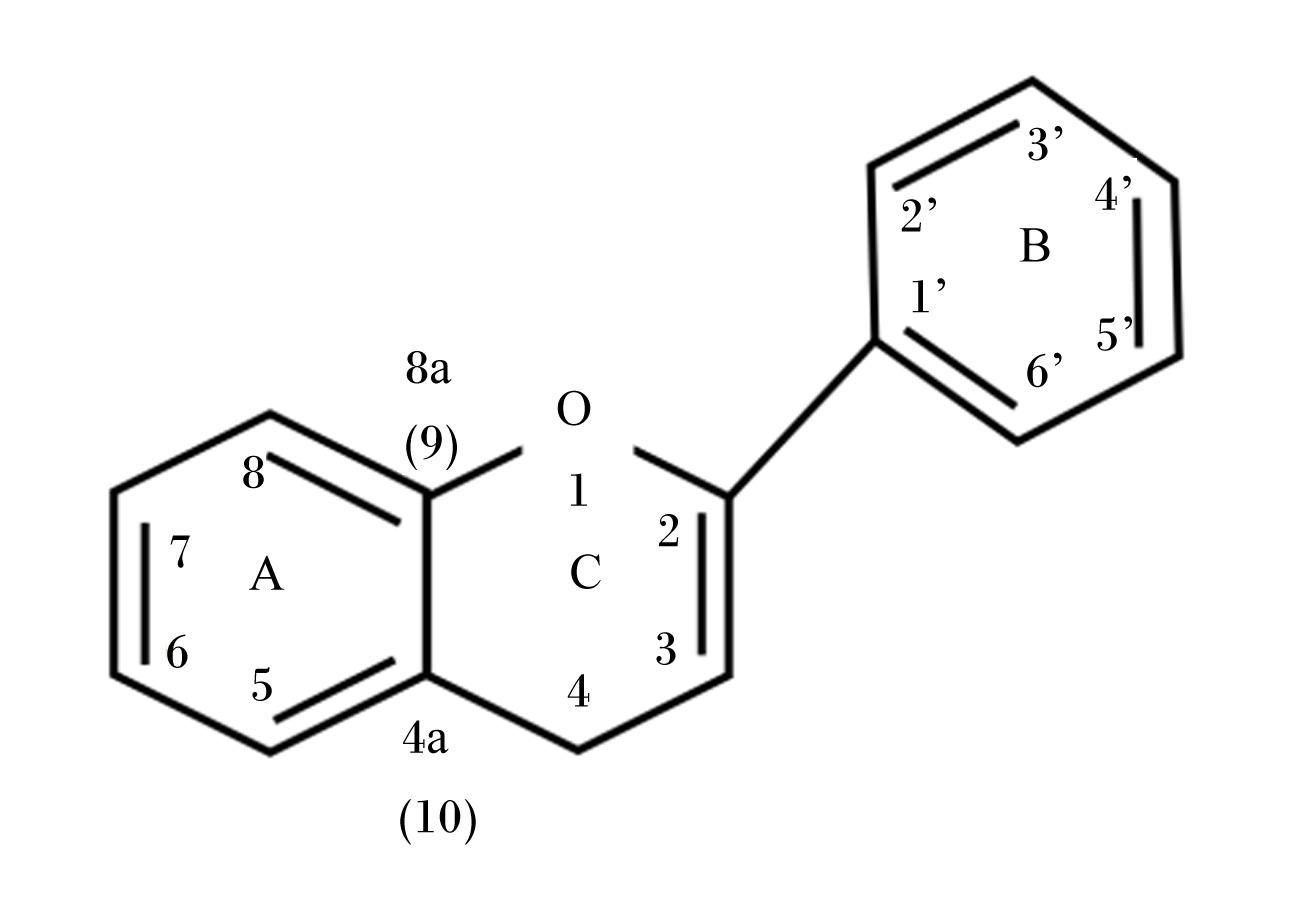
黄酮类化合物是一类具有C6-C3-C6基本骨架的天然化合物,其结构由2个芳香环通过1个含氧杂环连接而成[16](图1)。作为植物次生代谢的重要产物,这类化合物广泛存在于蔬菜、水果、谷物、茶叶、花卉及多种中草药中。根据含氧杂环的氧化程度、是否成环及取代基(如羟基、甲基、糖苷键等)的差异,黄酮类化合物可分为类黄酮、黄酮、黄酮醇、异黄酮类和花青素等[17]。这些结构上的多样性,使黄酮类化合物具有广泛的生物学功能,其核心功能主要体现在抗氧化[18]、抗炎与免疫调节[19-20]等方面。
图1 黄酮类化合物的化学结构

A和B是芳香环,C是含氧杂环。

Fig.1 Chemical structure of flavonoids[21]

A and B are aromatic rings, and C is an oxygen-containing heterocyclic ring.

1.3 萜类

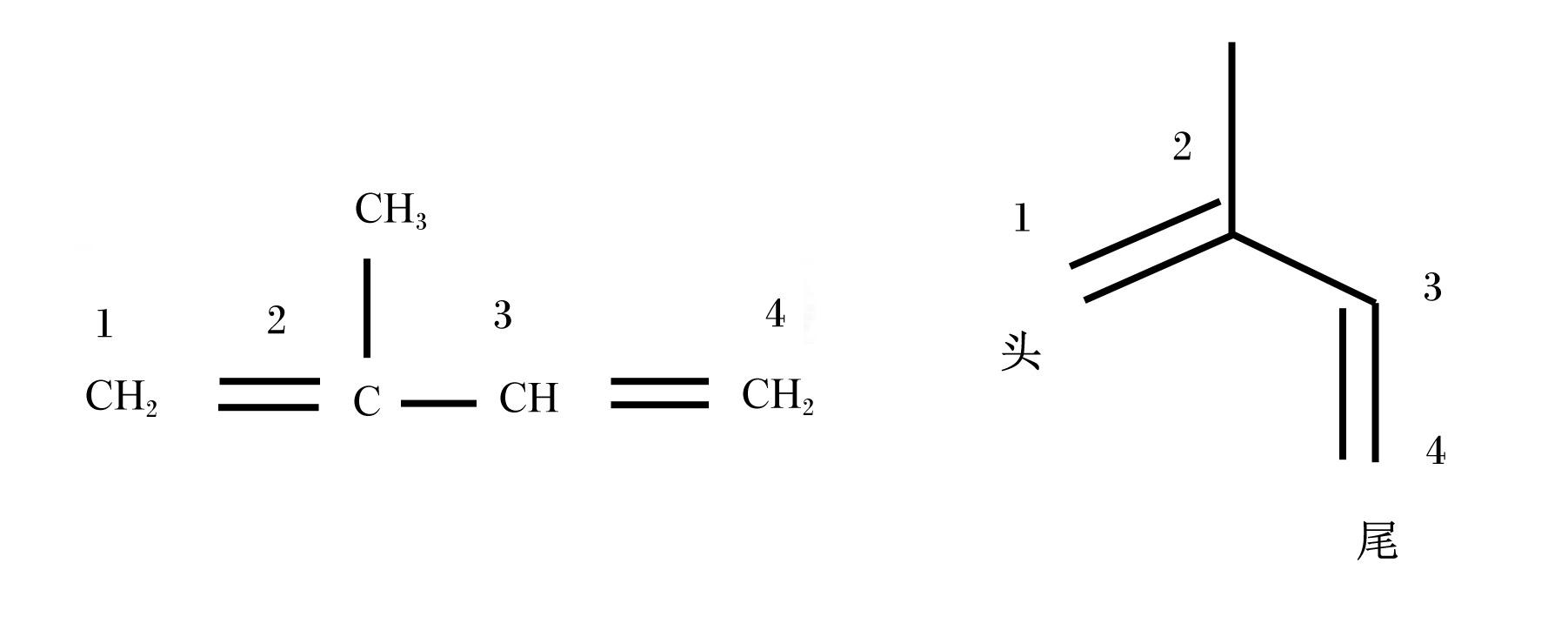
萜类化合物是一类结构多样的天然产物,其基本骨架由异戊二烯单位(C5H8)通过不同方式连接构成(图2)。目前,已发现的萜类化合物超过10万种,覆盖植物界70%以上的次生代谢产物,广泛布于各类药用植物中[22]。根据所含异戊二烯单位的数量可分为单萜、倍半萜、二萜、三萜等多个类别,其中倍半萜、二萜和三萜因脂溶性适中、生理活性显著,成为中草药调控动物生理功能的核心活性成分[23],具有抗疟疾、抗炎、抗菌等作用[24-25]。例如,从黄花蒿中提取出的青蒿素,是典型的倍半萜化合物,其抗疟疾作用已得到广泛证实[26]
图2 萜类化合物的化学结构

Fig.2 Chemical structure of terpenoids[22]

1.4 生物碱类

生物碱是一类广泛存在于自然界(尤其是高等植物中)的次级代谢产物,其化学结构通常具有环状骨架并含有1个或多个碱性氮原子,在植物的种子、根、茎、叶等组织中含量丰富[27]。根据核心化学结构的不同,生物碱可分为异喹啉类、吲哚类、喹诺里西啶类(亦称双稠哌啶类)、有机胺类等多种类型[28]。例如,来源于黄连的小檗碱与黄连碱,以及来源于苦参的苦参碱,均为具有抗炎、免疫调节及抗肿瘤等药理活性的代表性生物碱[29-31]

1.5 酚类

酚类化合物是植物次级代谢产物,主要存在于水果、蔬菜、绿茶和全谷物中[32]。根据羟基数量和结构可分为单酚和多酚两大类,而从化学结构上可分为酚酸类、黄酮类、二苯乙烯类和木脂素类四大类[33]。酚类化合物的结构多样性是其发挥广泛生物活性的关键,主要包括抗氧化、抗炎和代谢调节等作用,这些作用是其在慢性疾病预防中潜在应用价值的基础[34]

2 中草药对免疫应激的调控作用

2.1 中草药调控炎症反应

在免疫应激初期或面对强烈刺激时,机体常表现为过度炎症反应,大量能量及营养物质被优先用于合成炎症介质和激活免疫细胞,导致用于生长的营养供给受阻[35]。中草药可通过抑制过度炎症反应来维持免疫平衡,其作用机制涵盖抑制促炎因子释放、调节抗炎因子分泌以及调控免疫细胞(如巨噬细胞)极化等多个层面。中草药中的多糖类、黄酮类、生物碱类等活性成分已被证实具有抗炎作用。研究发现,从人参中提取的人参多糖能显著缓解脂多糖(lipopolysaccharide,LPS)诱导的血清中白细胞介素-1β(interleukin-1β,IL-1β)和肿瘤坏死因子-α(tumor necrosis factor-α,TNF-α)水平升高,降低促炎细胞因子分泌,从而抑制过度炎症反应,缓解LPS诱导的断奶仔猪免疫应激,提高其生长性能[36]。从黄芪中分离的黄芪多糖可显著抑制巨噬细胞中IL-1β、白细胞介素-6(interleukin-6,IL-6)和TNF-α的mRNA过度表达,进而缓解LPS诱导的细胞因子过度产生与免疫过度激活,防止组织损伤[37]。此外,从苦参中分离的黄酮类化合物苦参二氢黄酮M(sophoraflavanone M,SFM)可显著抑制LPS诱导的小鼠原代腹膜巨噬细胞中炎症介质一氧化氮(nitric oxide,NO)、IL-6和TNF-α的产生[38],表明SFM能在转录和翻译水平下调炎症介质的表达,从而发挥抗炎作用。综上所述,中草药可通过抑制促炎因子的分泌,有效缓解免疫应激。
中草药还通过调控巨噬细胞极化,在免疫应激中发挥抗炎作用。巨噬细胞作为先天免疫的主要效应细胞,在免疫应激中通过表型极化参与炎症调控[39]。在LPS和干扰素-γ(interferon-γ,IFN-γ)等信号刺激下,巨噬细胞极化为促炎的M1型,通过分泌促炎因子,启动炎症反应和病原体清除[40]。而在白细胞介素-4(interleukin-4,IL-4)等细胞因子的诱导下,巨噬细胞则可极化为抗炎的M2表型,促进炎症消退和组织修复[41-42]。源自黄连的生物碱类化合物小檗碱可以使LPS诱导的巨噬细胞中促炎M1巨噬细胞标志物IL-6、IFN-γ、TNF-α、IL-1β的分泌量降低,同时提高抗炎M2巨噬细胞标志物白细胞介素-10(interleukin-10,IL-10)、IL-4的分泌量,表明小檗碱可以调控巨噬细胞由促炎的M1表型转变为抗炎的M2表型,发挥抗炎作用[43]。类似的,同为生物碱类的苦参碱能有效抑制LPS诱导的小鼠肠道巨噬细胞促炎细胞因子IL-6、IL-1β和TNF-α的产生,同时促进抗炎细胞因子IL-10的产生,从而抑制巨噬细胞M1型极化并促进M2型极化,缓解过度炎症,进而恢复机体免疫平衡,这体现了中草药从促炎与抗炎两个方向进行调控的能力[44]。多糖类化合物已被证实对巨噬细胞具有双向免疫调节作用。从栀子中提取的栀子多糖在炎症过度激活的状态下,可以通过抑制巨噬细胞中NOIL-1βIL-6和TNF-α mRNA的表达,发挥抗炎作用,从而缓解由过度炎症引发的免疫应激[45];而在非炎症条件下,栀子多糖表现出免疫刺激作用,通过改善吞噬活性、促进NO合成以及增强促炎细胞因子IL-1βIL-6和TNF-α的mRNA的表达,提高免疫系统活性[46]。综上所述,中草药可以调控巨噬细胞表型的极化,进而调控机体免疫功能,缓解免疫应激。
复方中草药通过多味药材的配伍组合,可发挥活性成分的协同增效作用,调控过度炎症反应。在沙门氏菌感染的雏鸡模型中添加益生菌发酵中草药混合物(由黄芪、三七、甘草、鹰嘴豆组成),可使雏鸡盲肠中IL-4 mRNA表达水平升高81.01%,TNF-αIFN-γ mRNA表达水平分别显著降低38.86%和39.83%,并显著提高了体重、平均日增重(average daily gain,ADG)和平均日采食量(average daily feed intake,ADFI)[47]。这一结果充分体现了复方中草药多成分协同作用的优势,多种中草药活性成分共同调节免疫相关基因的表达,实现了对炎症反应的有效调控,进而提高雏鸡的生长性能。另有研究表明,由白头翁、黄连、秦皮、黄柏、大青叶、白芍、五味子、乌梅组成的复方不仅能广泛抑制沙门氏菌诱导的肉鸡回肠中促炎因子TNF-α、IL-1β、IL-6和IFN-γ水平的升高,还能显著提高抗炎因子IL-10的水平,改善肉鸡的ADG和ADFI[48]。综合上述研究结果表明,无论是单味药的活性成分还是复方配伍,中草药均能通过抑制促炎反应、促进抗炎平衡,有效调控免疫应激初期的过度炎症,从而改善动物的生长性能。

2.2 中草药增强免疫功能

免疫应激是一个动态发展的过程,初期以过度炎症反应为核心特征,而当应激持续存在或强度过高时,机体免疫功能会逐渐从过度激活转为免疫抑制,表现为免疫器官发育受阻、抗体水平下降等[49]。中草药除了在炎症期发挥抗炎作用外,还能在免疫抑制期通过促进免疫器官发育、激活免疫细胞等途径,实现免疫功能的修复与增强。免疫器官是免疫细胞发生、分化与成熟的场所,其发育水平(常通过免疫器官指数评估)直接决定了机体抵抗病原体的能力[50-51]。胸腺作为T淋巴细胞发育和成熟的关键场所,其良好发育为有效的细胞免疫奠定了基础,在免疫应激时能更好地应对病原体的挑战[52]。脾脏作为机体最大的外周免疫器官,是T淋巴细胞和B淋巴细胞驻留和发生免疫应答的主要场所。淋巴细胞增殖能力是衡量动物免疫状态的重要指标。T淋巴细胞作为细胞免疫的主要参与者,可以通过分泌细胞因子识别和呈递抗原,调节免疫反应[53]。B淋巴细胞通过产生抗体介导体液免疫[54]。中草药促进其发育有助于在免疫应激下维持高效的免疫功能[55]。研究表明,环磷酰胺可使肉鸡处于免疫抑制状态,导致免疫器官萎缩和功能受损。黄芪多糖可以促进肉鸡的T淋巴细胞、B淋巴细胞增殖,提高胸腺指数和脾脏指数,并提高血液中抗体免疫球蛋白M(immunoglobulin M,IgM)和免疫球蛋白G(immunoglobulin G,IgG)的水平,表明其具有免疫调节作用[56]。从三七中提取的萜类化合物三七皂苷可以通过提高免疫抑制条件下小鼠肝脏、脾脏、胸腺指数,调控T淋巴细胞CD4+/CD8+平衡,增加淋巴细胞、单核细胞、中性粒细胞和白细胞的数量,改善免疫抑制小鼠的免疫功能,从而发挥免疫调节作用[57]。皂树皂苷可以提高断奶仔猪血清中IgG水平,缓解断奶应激,提高断奶仔猪的免疫功能[58]。在饲粮中添加黄酮类化合物槲皮素可提高LPS刺激生长猪血液中白细胞和淋巴细胞数量及IgG水平,增强机体免疫功能[59]。中草药通过其多种活性成分作用能够有效逆转免疫抑制状态,从器官结构、细胞功能到体液免疫各层面协同增强机体免疫功能。
在免疫应激状态下,中草药可以缓解免疫器官的损伤,提高免疫功能。研究表明,饲喂由黄芪、党参、陈皮、香附、白芍、山药、乌梅、甘草等组成的复方中草药发酵饲料,能有效缓解LPS诱导的黄羽肉鸡胸腺指数和法氏囊指数降低,显著提高血清中免疫球蛋白A(immunoglobulin A,IgA)、IgM和免疫球蛋白Y(immunoglobulin Y,IgY)水平,降低料重比(feed/gain ratio,F/G),表明该复方中草药发酵饲料可缓解LPS导致的免疫器官萎缩,保护免疫器官,从而增强机体免疫功能,提高黄羽肉鸡的生长性能[60]。在热应激条件下,由山楂、藿香、黄芪等10味中药组成的复方中草药可使肉羊血清中IgG水平提高9.56%,IgA水平提高10.60%,并提高了肉羊的ADG和ADFI,表明该复方中草药能缓解热应激导致的免疫抑制,进而提高肉羊的生长性能[61]。饲粮中添加由黄芪、板蓝根、淫羊藿等制成的发酵中药也能显著提高热应激肉鸡血清中IgG水平、ADG和ADFI,降低F/G,进一步证实中草药可在应激条件下通过维持体液免疫稳定提高生长性能[62]。此外,饲粮中添加穿心莲、无花果、大青叶、马齿苋、金银花组成的复方中草药有效提高了腹泻仔猪血清中IgA、IgG、IgM水平,从而提高机体体液免疫水平,增强机体免疫力,促进机体恢复健康[63]。除应激条件外,中草药在非应激条件下同样表现出良好的免疫增强作用。在奶牛饲粮中添加由黄芪、人参、白术、熟地黄、菟丝子、王不留行组成的复方中草药,可提高血清中IgG和IgM水平,表明该复方中草药能够有效促进B淋巴细胞的活化,进而增强免疫球蛋白的分泌[64]。在肉鸡饲粮中添加由马齿苋、苦参等组成的复方中草药,可显著提高肉鸡脾脏指数和胸腺指数、ADG,显著降低F/G[65]。值得注意的是,中草药对黏膜免疫具有特异性增强作用,由苦参、广藿香、马齿苋、伏龙肝、金丝马尾连组成的复方中草药还能显著提升黄羽肉鸡空肠黏膜部位的分泌型免疫球蛋白A(sIgA)、IgG水平和ADG,降低F/G[51]。sIgA是黏膜免疫屏障的关键效应分子,这表明中草药不仅能增强系统性体液免疫,更能特异性地强化肠道黏膜屏障,以抵御消化道病原体入侵,提高动物的生产性能。综合上述研究结果得出,中草药通过提升抗体水平、促进免疫器官发育、强化黏膜屏障缓解免疫应激,增强免疫功能,为动物健康提供重要保障,进而提高动物的生产性能。
综上所述,中草药在动物体内可通过抑制促炎因子分泌、调节免疫细胞极化、促进免疫器官发育及提升抗体水平等多条路径,调控免疫应激,最终提高动物的生产性能。为了阐明这些宏观功效的分子基础,现有研究主要从中草药活性成分调控细胞内关键信号通路作用机制进行探索。其中,TLR4/NF-κB信号通路作为介导炎症与免疫反应的核心调控机制而得到了广泛关注。

3 中草药通过TLR4/NF-κB信号通路调控免疫应激的作用机制

炎症小体反应是连接先天免疫与适应性免疫的关键桥梁,也是免疫调节的核心环节[66]。在复杂的炎症信号网络中,NF-κB信号通路被认为是炎症反应的一个关键调控因子,其中TLR4/NF-κB信号通路更是与免疫应激引发的炎症反应紧密相关。其经典通路主要依赖髓样分化因子88(myeloid differentiation primary response 88,MyD88)衔接蛋白响应刺激,进而调控TNF-αIL-1βIL-6等多种促炎细胞因子的表达[67-68]。中草药的主要活性成分正是通过靶向干预TLR4/NF-κB信号通路,从而调节炎症反应,显示出良好的抗炎与免疫调节潜力(表1)。下文将围绕TLR4/NF-κB信号通路,从上游受体激活抑制与下游核转录调控2个方面,详细探讨中草药的具体作用机制及免疫调节功能。
表1 中草药的主要活性成分及其生物学功能

Table 1 Main active components of Chinese herbal medicines and their biological functions

活性成分
Active components
代表物质
Representative of
substances
免疫调节作用机制
Mechanisms of
immunomodulatory effect
参考文献
References
多糖类
Polysaccharides
黄芪多糖、灵芝多糖 激活巨噬细胞、促进抗体产生、保护免疫器官、
调控Toll样受体4(TLR4)/核因子-κB(NF-κB)
信号通路、抑制细胞因子分泌
[12,69-71]
黄酮类
Flavonoids
槲皮素、山柰酚 抑制炎症介质和细胞因子分泌、调控NF-κB
信号通路,发挥抗炎作用
[19-20,72]
生物碱类
Alkaloids
苦参碱、小檗碱 调控巨噬细胞极化及T细胞平衡,通过TLR4/
NF-κB信号通路发挥抗炎作用
[73-75]
萜类
Terpenoids
土木香内酯、三萜皂苷 抑制炎症介质产生、增强免疫细胞活性及
抗体分泌、调节TLR4/NF-κB信号通路
[76-78]
酚类
Phenols
绿原酸、白藜芦醇 调节T淋巴细胞分化和巨噬细胞极化,抑制
细胞因子分泌,抑制NF-κB信号通路
[79-81]

3.1 抑制上游TLR4的活化与表达

TLR4是连接先天免疫与适应性免疫的核心中介,在炎症信号通路中位于起始环节[82]。TLR4作为关键模式识别受体,可特异性识别LPS等配体,并在髓样分化蛋白-2(myeloid differentiation protein-2,MD-2)的辅助下形成激活性的TLR4/LPS/MD-2复合物,从而启动下游信号传导[83]。中草药中的活性成分可通过双重机制从源头阻断TLR4介导的信号传导,一方面,竞争性干扰TLR4/LPS/MD-2复合物的组装与配体识别。已有研究显示,黄酮类化合物艾纳香素[84]和萜类化合物人参皂苷[85]可特异性抑制TLR4/LPS/MD-2复合物的形成,阻断LPS与巨噬细胞表面TLR4的结合,从而抑制TLR4/NF-κB信号通路的上游信号传导,抑制下游炎症级联反应的启动。另一方面,在转录或翻译水平下调TLR4的表达。Zhang等[86]研究发现,生物碱类成分氧化苦参碱可显著抑制巨噬细胞中TLR4的表达,通过下调TLR4/NF-κB信号通路的关键节点分子的表达,缓解LPS诱导的炎性细胞因子分泌。多糖类化合物枸杞多糖同样可抑制TLR4及其下游NF-κB信号通路的关键节点分子,缓解LPS诱导的巨噬细胞炎症反应[87]。Wang等[36]通过动物试验进一步验证了这一机制,LPS攻毒可显著上调断奶仔猪空肠组织中TLR4、MyD88和NF-κB的表达,而饲粮中添加黄芪多糖或人参多糖有效逆转了上述分子的过度表达,进而缓解机体免疫应激。黄酮类成分槲皮素则能显著降低LPS诱导的牛肠上皮细胞中TLR4的表达,通过抑制TLR4介导的NF-κB信号传导,减少炎症因子释放[88]。综上所述,中草药中的活性成分可通过受体水平的竞争性结合、复合物组装干扰或受体表达调控等方式,在TLR4/NF-κB炎症信号转导的起始阶段有效抑制TLR4的激活,为阻断下游炎症信号级联传导奠定基础。

3.2 阻断下游核因子-κB抑制蛋白激酶(inhibitor of nuclear factor-κB kinase,IKK)/核因子-κB抑制蛋白α(inhibitor of nuclear factor-κB α,IκBα)/NF-κB核转位
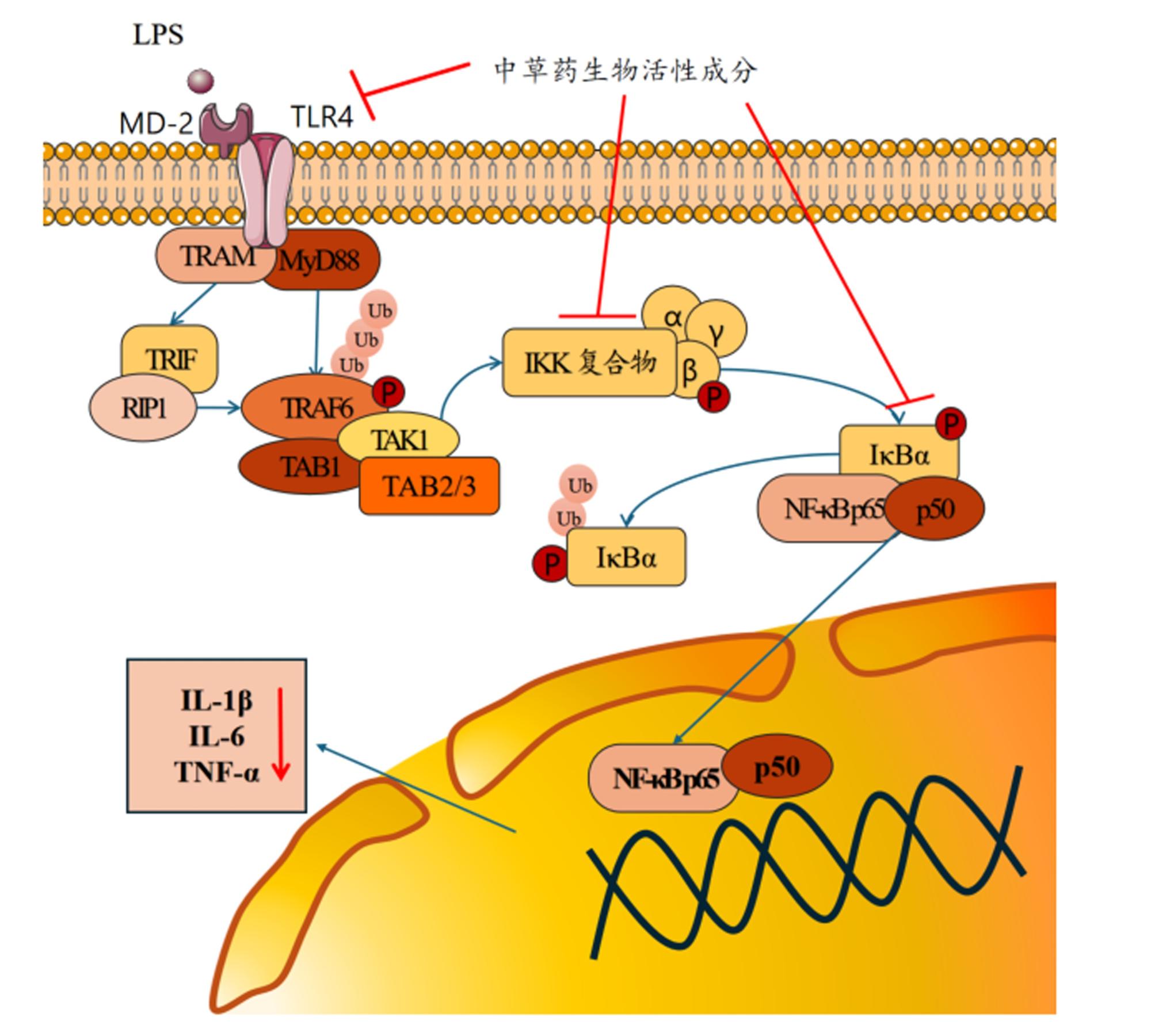
中草药活性成分可通过抑制TLR4的活化与表达,从源头阻断TLR4/NF-κB信号通路的启动。在该通路的下游传导过程中,IKK/IκBα/NF-κB核转位是炎症信号放大的关键节点,中草药活性成分也可通过干预这一环节,进一步阻断促炎因子的转录与表达。研究表明,中草药天然产物在经TLR4复合物激活后,主要依赖MyD88依赖性通路传导信号:募集衔接蛋白MyD88,激活肿瘤坏死因子受体相关因子6(tumor necrosis factor receptor associated factor 6,TRAF6)并诱导其泛素化[89];招募转化生长因子β激活激酶1(transforming growth factor-β-activated kinase 1,TAK1)及其调节亚基TAK1结合蛋白1(TAK1 binding protein 1,TAB1),形成功能性复合物,最终介导IKK复合体(IKKα、IKKβ、IKKγ)的激活,活化的IKK复合体可催化IκBα磷酸化,进而触发其泛素化降解[90-91]。此外,含TIR结构域的适配子诱导干扰素-β(TIR domain-containing adapter inducing interferon-β,TRIF)依赖性信号通路[依赖衔接蛋白TRIF与TRIF相关接头分子(TRIF-related adapter molecule,TRAM)]也可通过受体相互作用蛋白1(receptor-interacting protein 1,RIP1)激活TRAF6/TAK1信号轴,最终同样汇聚于IKK/IκBα调控节点[92-93]
IκBα的降解是NF-κB活化及核转位的关键前提。多种中草药活性成分可直接或间接抑制IKK/IκBα调控节点发挥作用。研究发现,萜类化合物木香烃内酯显著抑制LPS诱导的IKK磷酸化,从通路起始环节阻断IκBα降解和NF-κB活化,进而减少促炎细胞因子的转录与表达[94];从土木香中分离出的酚类化合物土木香内酯则通过下调LPS诱导的TLR4、MyD88等上游分子过度表达,间接抑制IKKα的激活与磷酸化IκBα(p-IκBα)的生成,同时上调IκBα的表达,从而抑制p65从细胞质向细胞核的移位,缓解炎症反应的发生[76]。栀子苷同样属于萜类活性成分,其可通过下调LPS诱导的TLR4、MyD88蛋白表达,削弱上游信号对IKK复合物的激活作用,间接阻遏亚基核因子-κB p65(NF-κB p65)的核易位,实现对NF-κB活化的抑制[24]
在静息状态下,NF-κB的经典亚基p65与核因子-κB p50(NF-κB p50)形成异二聚体,并被IκBα滞留于细胞质中,IκBα通过遮蔽p65-p50异二聚体的核定位序列,阻止其入核与DNA结合[95]。当IκBα发生降解后,p65-p50异二聚体得以暴露核定位序列并易位至细胞核,与靶基因启动子/增强子区的κB位点结合,启动IL-1β、TNF-α、IL-6等促炎介质的转录表达[96-97]。因此,维持IκBα的功能稳定性是阻断NF-κB活化的关键环节,也是中草药活性成分发挥抗炎作用的重要靶点。研究表明,多种中草药活性成分可通过不同机制维持IκBα的功能稳定性,从而发挥抗炎作用。黄酮类化合物艾纳香素可直接降低LPS刺激下巨噬细胞中IκBα和NF-κB p65的磷酸化水平,抑制IκBα的泛素化降解进程,从而阻断NF-κB p65核转位及后续炎症因子的转录激活[84]。在肠道血管内皮细胞中,黄酮类化合物山奈酚通过下调TLR4表达以干预上游信号接收,并直接抑制IκBα与p65的磷酸化,协同阻断LPS诱导的NF-κB活化,发挥抗炎作用[20]。白花蛇舌草总黄酮也可通过抑制巨噬细胞中IκBα磷酸化,显著抑制LPS诱导的NF-κB活化,进而抑制TNF-αIL-6和IL-1β等细胞因子的表达[98]。Lu等[73]研究发现,生物碱类化合物氧化苦参碱通过翻译后修饰途径稳定IκBα蛋白,在不影响IκBα mRNA转录水平的前提下显著提高其蛋白表达水平,进而抑制NF-κB p65核转位和IL-1β表达。萜类化合物栀子苷则可降低LPS诱导的TLR4和MyD88蛋白表达水平的升高,间接阻遏p65的活化[24]。酚类化合物姜黄素同样能下调巨噬细胞中IκBα和NF-κB p65亚基的磷酸化水平,有效抑制p65核易位,减少促炎因子转录[79]。多糖类化合物则表现出独特的双向调节能力:在生理状态下可强化巨噬细胞等免疫细胞的防御功能,而在免疫应激时通过NF-κB信号通路干预过度炎症反应。黄芪多糖在生理状态下可适度激活NF-κB p65,上调TNF-αIL-6的基因表达,增强巨噬细胞的免疫活性;而在LPS诱导的炎症状态下,黄芪多糖则能抑制这些通路的过度活化,显示出基于机体免疫状态的特异性调节能力[99-100]。当归多糖同样通过抑制LPS诱导的IκBα及p65磷酸化,阻断奶牛爪状真皮细胞中NF-κB信号通路的激活,从而保护爪皮细胞免受LPS引起的炎症损伤[101]。上述研究共同揭示了中草药活性成分通过靶向NF-κB信号通路中IκBα稳定性这一核心节点,实现高效抗炎作用的分子机制。
中草药活性成分可通过调节TLR4/NF-κB信号通路中的多个关键靶点(图3),包括TLR4、IKK复合物、IκBα及NF-κB p65,在转录水平有效抑制炎症信号的过度传导,从而缓解免疫应激所引发的过度炎症反应,维持机体免疫稳态。此外,现有研究表明,NF-κB信号通路并非独立发挥作用,与其他通路之间存在相互作用的调控关系。未来研究需进一步揭示中草药活性成分在上述复杂信号网络中的作用节点与整合机制,全面地阐释其免疫调节功能。
图3 中草药活性成分调控TLR4/NF-κB信号通路图

LPS:脂多糖 lipopolysaccharide;MD-2:髓样分化蛋白-2 myeloid differentiation protein-2;TLR4:Toll样受体4 Toll-like receptor 4;TRAM:TRIF相关接头分子 TRIF-related adapter molecule;MyD88:髓样分化因子88 myeloid differentiation primary response protein 88;TRIF:含TIR结构域的适配子诱导干扰素-β TIR domain-containing adapter inducing interferon-β;RIP1:受体相互作用蛋白1 receptor-interacting protein 1;TRAF6:肿瘤坏死因子受体相关因子6 tumor necrosis factor receptor associated factor 6;TAK1:转化生长因子β激活激酶1 transforming growth factor-β-activated kinase 1;TAB1:TAK1结合蛋白1 TAK1 binding protein 1;TAB2/3:TAK1结合蛋白2/3 TAK1 binding protein 2/3;IKK:核因子-κB抑制蛋白激酶 inhibitor of nuclear factor-κB kinase;IκBα:核因子-κB抑制蛋白α inhibitor of nuclear factor-κB α;NF-κB p65:核因子-κB p65亚基 nuclear factor-κB p65 subunit;IL-1β:白细胞介素-1β interleukin-1β;IL-6:白细胞介素-6 interleukin-6;TNF-α:肿瘤坏死因子-α tumor necrosis factor-α;Ub:泛素化 ubiquitination;P:磷酸化phosphorylation。

Fig.3 Diagram of TLR4/NF-κB signaling pathway by active components in Chinese herbal medicines

4 小结

中草药饲料添加剂凭借其多活性成分的协同作用,能够对动物免疫应激实施高效的阶段性调控:在过度炎症期,主要通过抑制TLR4/NF-κB信号通路,下调促炎因子表达并调控巨噬细胞极化,发挥抗炎作用;在免疫抑制期,则通过促进免疫器官发育、提升抗体水平、激活淋巴细胞,增强机体免疫功能,进而提高生长性能。尽管如此,当前研究仍面临诸多挑战:中草药化学成分复杂,其体内代谢途径、活性成分间的相互作用机制及确切分子靶标尚未完全阐明;针对不同动物物种、生理阶段及养殖环境的精准应用方案研究仍显不足;此外,行业缺乏统一的质量标准,药材原料的质量波动直接影响产品效果的稳定性和可靠性。未来应着力运用代谢组学、蛋白质组学等多组学技术,系统解析中草药活性成分的体内吸收、代谢及排泄过程,明确多成分间协同作用的分子网络机制;同时,应加强基于动物品种、生理阶段及应激类型的精准配方与投喂方案研究,建立科学完善的评价体系。这将为中草药饲料添加剂的规范化与高效化应用提供坚实支撑,推动畜牧业向绿色、安全、可持续的方向发展。
[1]
NIU X T, DING Y X, CHEN S W, et al. Effect of immune stress on growth performance and immune functions of livestock:mechanisms and prevention[J]. Animals, 2022, 12(7):909.

DOI

[2]
MARTÍNEZ-MIRÓ S, TECLES F, RAMÓN M, et al. Causes,consequences and biomarkers of stress in swine:an update[J]. BMC Veterinary Research, 2016, 12(1):171.

DOI

[3]
邢媛媛, 陈宇, 郑彦楷, 等. 多糖类化合物对动物应激缓解作用的研究进展[J]. 动物营养学报, 2025, 37(4):2110-2118.

DOI

XING Y Y, CHEN Y, ZHENG Y K, et al. Research progress on role of polysaccharide compounds in alleviating animal stress[J]. Chinese Journal of Animal Nutrition, 2025, 37(4):2110-2118. (in Chinese)

DOI

[4]
LIU K X, ZHEN W R, BAI D Y, et al. Lipopolysaccharide-induced immune stress negatively regulates broiler chicken growth via the COX-2-PGE2-EP4 signaling pathway[J]. Frontiers in Immunology, 2023, 14:1193798.

DOI

[5]
孙晓慧, 裴占阳, 杜林, 等. 中草药饲料添加剂在肉鸡生产中的应用研究进展[J]. 现代畜牧兽医, 2024(7):62-65.

SUN X H, PEI Z Y, DU L, et al. Research progress on the application of Chinese herbal medicine feed additives in broiler production[J]. Modern Journal of Animal Husbandry and Veterinary Medicine, 2024(7):62-65. (in Chinese)

[6]
陈书礼. 复方中草药添加剂对产蛋后期蛋鸡生产性能、蛋品质和肠道健康的影响[D]. 硕士学位论文. 杨凌: 西北农林科技大学, 2024.

CHEN S L. Effects of compound Chinese herbal medicine additives on production performance,egg quality and intestinal health of laying hens in the late laying period[D]. Master’s Thesis. Yangling: Northwest A&F University, 2024. (in Chinese)

[7]
刘维平, 徐誉彰, 周颖, 等. 中草药水提物复配剂对滩羊公羔屠宰性能、生产性能和免疫力的影响[J]. 中国畜牧杂志, 2025, 61(7):305-312.

LIU W P, XU Y Z, ZHOU Y, et al. The effects of a compound preparation of aqueous extracts from Chinese herbal medicines on the slaughter performance,production performance and immunity of male lambs of the desert sheep breed[J]. Chinese Journal of Animal Science, 2025, 61(7):305-312. (in Chinese)

[8]
曹日亮, 白海, 胡广英. 复方中草药对育肥猪生长性能、肉品质、免疫力及抗氧化能力的影响[J]. 饲料研究, 2024, 47(24):21-25.

CAO R L, BAI H, HU G Y. Effects of compound traditional Chinese herbal medicine on growth performance,meat quality,immunity,and antioxidant capacity in finishing pigs[J]. Feed Research, 2024, 47(24):21-25. (in Chinese)

[9]
王志强. 中草药添加剂在养鸡生产中的应用[J]. 家禽科学, 2025, 47(7):113-116.

WANG Z Q. Application of herbal compounds as functional additives in chicken production[J]. China Poultry Science, 2025, 47(7):113-116. (in Chinese)

[10]
罗颖, 韩萍, 涂亮星, 等. 中药多糖的提取工艺及在递药系统的应用研究进展[J]. 广东药科大学学报, 2025, 41(6):180-190.

LUO Y, HAN P, TU L X, et al. Research progress on extraction technologies and drug delivery applications of traditional Chinese medicine polysaccharides[J]. Journal of Guangdong Pharmaceutical University, 2025, 41(6):180-190. (in Chinese)

[11]
ZHOU S Y, HUANG G L. Preparation,structure and activity of polysaccharide phosphate esters[J]. Biomedicine & Pharmacotherapy, 2021, 144:112332.

DOI

[12]
LI C X, LIU Y, ZHANG Y Z, et al. Astragalus polysaccharide:a review of its immunomodulatory effect[J]. Archives of Pharmacal Research, 2022, 45(6):367-389.

DOI

[13]
WANG J, HAN J Z, LU Z X, et al. Preliminary structure,antioxidant and immunostimulatory activities of a polysaccharide fraction from Artemisia selengensis Turcz[J]. International Journal of Biological Macromolecules, 2020, 143:842-849.

DOI

[14]
HUAN C C, YANG F, ZHANG W B, et al. Antiviral activity and antioxidant activity of Cistanche deserticola polysaccharides against pseudorabies viruses[J]. International Journal of Biological Macromolecules, 2025, 321(Pt 2):146326.

DOI

[15]
CONTRERAS-RAMIREZ K, LÓPEZ-LEGARDA X, TABARES-GUEVARA J H, et al. Anti-tumor and immunomodulatory activity of Ganoderma parvulum-derived polysaccharides[J]. Bioscience Reports, 2025, 45(10):597-613.

DOI

[16]
沈喆安, 侯英泽, 赵耀焜, 等. 中草药中黄酮类化合物的提取工艺及药理作用研究进展[J]. 微量元素与健康研究, 2023, 40(6):66-68.

SHEN Z A, HOU Y Z, ZHAO Y K, et al. Research progress on extraction technology and pharmacological action of flavonoids in Chinese herbal medicine[J]. Studies of Trace Elements and Health, 2023, 40(6):66-68. (in Chinese)

[17]
辛桂瑜, 冯斯雅, 梁曼婷, 等. 黄酮类化合物的生物学功能及在鸡养殖中的应用研究进展[J]. 饲料工业, 2025, 46(23):60-65.

XIN G Y, FENG S Y, LIANG M T, et al. Research progress on biological functions of flavonoids and their applications in chicken farming[J]. Feed Industry, 2025, 46(23):60-65. (in Chinese)

[18]
GUO S W, MA J X, XING Y Y, et al. Artemisia annua L. aqueous extract as an alternative to antibiotics improving growth performance and antioxidant function in broilers[J]. Italian Journal of Animal Science, 2020, 19(1):399-409.

DOI

[19]
LI Y, YAO J Y, HAN C Y, et al. Quercetin,inflammation and immunity[J]. Nutrients, 2016, 8(3):167.

DOI

[20]
BIAN Y F, LIU P, ZHONG J, et al. Kaempferol inhibits multiple pathways involved in the secretion of inflammatory mediators from LPS-induced rat intestinal microvascular endothelial cells[J]. Molecular Medicine Reports, 2019, 19(3):1958-1964.

[21]
CHIORCEA-PAQUIM A M. Electrochemistry of flavonoids:a comprehensive review[J]. International Journal of Molecular Sciences, 2023, 24(21):15667.

DOI

[22]
苏雯清, 杨晓男, 梁凌玲, 等. 萜类化学成分的药理作用研究进展[J]. 右江民族医学院学报, 2025, 47(4):678-683.

SU W Q, YANG X N, LIANG L L, et al. Terpenoids:pharmacological effects and research progress[J]. Journal of Youjiang Medical University for Nationalities, 2025, 47(4):678-683. (in Chinese)

[23]
SIDDIQUI T, KHAN M U, SHARMA V, et al. Terpenoids in essential oils:chemistry,classification,and potential impact on human health and industry[J]. Phytomedicine Plus, 2024, 4(2):100549.

DOI

[24]
FU H, ZHU H. Geniposidic acid protects lipopolysaccharide-induced acute lung injury via the TLR4/MyD88 signaling pathway in vitro and in vivo[J]. Immunopharmacology and Immunotoxicology, 2022, 44(6):984-992.

DOI

[25]
KUDUMELA R G, MAZIMBA O, MASOKO P, et al. Isolation and characterisation of sesquiterpene lactones from Schkuhria pinnata and their antibacterial and anti-inflammatory activities[J]. South African Journal of Botany, 2019, 126:340-344.

DOI

[26]
郭源辉, 刘婕, 刘传鑫, 等. 黄花蒿的化学成分与药理作用研究进展及质量标志物的预测分析[J]. 世界科学技术-中医药现代化, 2023, 25(4):1309-1332.

GUO Y H, LIU J, LIU C X, et al. Advances in chemical constituents and pharmacological effects of Artemisia annua and prediction of quality markers[J]. Modernization of Traditional Chinese Medicine and Materia Medica-World Science and Technology, 2023, 25(4):1309-1332. (in Chinese)

[27]
BHAMBHANI S, KONDHARE K R, GIRI A P. Diversity in chemical structures and biological properties of plant alkaloids[J]. Molecules, 2021, 26(11):3374.

DOI

[28]
杨元娇, 陈金鹏, 刘毅, 等. 生物碱治疗2型糖尿病药理作用的研究进展[J]. 天津中医药大学学报, 2025, 44(5):472-480.

YANG Y J, CHEN J P, LIU Y, et al. Research progress on the pharmacological effects of alkaloids in the treatment of type 2 diabetes mellitus[J]. Journal of Tianjin University of Traditional Chinese Medicine, 2025, 44(5):472-480. (in Chinese)

[29]
LI J L, WEI S J, MARABADA D, et al. Research progress of natural matrine compounds and synthetic matrine derivatives[J]. Molecules, 2023, 28(15):5780.

DOI

[30]
HSU C Y, PALLATHADKA H, GUPTA J, et al. Berberine and berberine nanoformulations in cancer therapy:focusing on lung cancer[J]. Phytotherapy Research, 2024, 38(8):4336-4350.

DOI

[31]
SUN P H, WANG Z Y, MA Y C, et al. Advance in identified targets of berberine[J]. Frontiers in Pharmacology, 2025, 16:1500511.

DOI

[32]
SINGLA R K, DUBEY A K, GARG A, et al. Natural polyphenols:chemical classification,definition of classes,subcategories,and structures[J]. Journal of AOAC International, 2019, 102(5):1397-1400.

DOI

[33]
欧凯玉, 逄建龙, 张一敏, 等. 天然酚类化合物的抑菌作用及在肉与肉制品中的应用研究进展[J]. 食品科学, 2023, 44(9):358-366.

OU K Y, PANG J L, ZHANG Y M, et al. A review of the antimicrobial activity of natural phenolic compounds and their applications in meat and meat products[J]. Food Science, 2023, 44(9):358-366. (in Chinese)

DOI

[34]
李艺普, 邵玉新, 张博, 等. 植物多酚的生物学功能及其在家禽中的应用研究[J]. 中国畜牧兽医, 2025, 52(11):5217-5225.

LI Y P, SHAO Y X, ZHANG B, et al. Study on biological functions of plant-derived polyphenols and their application in poultry[J]. China Animal Husbandry & Veterinary Medicine, 2025, 52(11):5217-5225. (in Chinese)

[35]
VISWANATHAN K, DAUGHERTY C, DHABHAR F S. Stress as an endogenous adjuvant:augmentation of the immunization phase of cell-mediated immunity[J]. International Immunology, 2005, 17(8):1059-1069.

DOI

[36]
WANG K L, ZHANG H R, HAN Q J, et al. Effects of Astragalus and ginseng polysaccharides on growth performance,immune function and intestinal barrier in weaned piglets challenged with lipopolysaccharide[J]. Journal of Animal Physiology and Animal Nutrition, 2020, 104(4):1096-1105.

DOI

[37]
刘倩, 李大鹏, 张宏, 等. 黄芪多糖降低脂多糖对鸡巨噬细胞促炎细胞因子和TLRs mRNA转录水平影响的效应分析[J]. 畜牧兽医学报, 2022, 53(9):3251-3261.

DOI

LIU Q, LI D P, ZHANG H, et al. Immunoregulation effect of Astragalus polysaccharide on lipopolysaccharide injuryed HD11 cells and the effect on TLRs mRNA expression[J]. Acta Veterinaria et Zootechnica Sinica, 2022, 53(9):3251-3261. (in Chinese)

[38]
HAN Y X, ZHANG X Y, KANG Y, et al. Sophoraflavanone M,a prenylated flavonoid from Sophora flavescens ait.,suppresses pro-inflammatory mediators through both NF-κB and JNK/AP-1 signaling pathways in LPS-primed macrophages[J]. European Journal of Pharmacology, 2021, 907:174246.

DOI

[39]
CHEN S Y, ZENG J S, LI R, et al. Traditional Chinese medicine in regulating macrophage polarization in immune response of inflammatory diseases[J]. Journal of Ethnopharmacology, 2024, 325:117838.

DOI

[40]
YANG L, ZHANG Y M, GUO M N, et al. Matrine attenuates lung injury by modulating macrophage polarization and suppressing apoptosis[J]. The Journal of Surgical Research, 2023, 281:264-274.

DOI

[41]
HE Y, GAO Y, ZHANG Q, et al. IL-4 switches microglia/macrophage M1/M2 polarization and alleviates neurological damage by modulating the JAK1/STAT6 pathway following ICH[J]. Neuroscience, 2020, 437:161-171.

DOI PMID

[42]
MURRAY P J. Macrophage polarization[J]. Annual Review of Physiology, 2017, 79:541-566.

DOI PMID

[43]
SUN J, ZENG Q H, WU Z M, et al. Berberine inhibits NLRP3 inflammasome activation and proinflammatory macrophage M1 polarization to accelerate peripheral nerve regeneration[J]. Neurotherapeutics, 2024, 21(4):e00347.

DOI

[44]
MAO N N, YU Y M, LU X Q, et al. Preventive effects of matrine on LPS-induced inflammation in RAW 264.7 cells and intestinal damage in mice through the TLR4/NF-κB/MAPK pathway[J]. International Immunopharmacology, 2024, 143(Pt 2):113432.

DOI

[45]
LIN P D, YUE W, XIANG H, et al. Investigating the effects of gardenia polysaccharides on LPS-induced immune injury in mice and exploring the molecular mechanisms underlying its regulatory effect on the immune function of macrophages[J]. Foods, 2025, 14(20):3455.

DOI

[46]
LIN P D, CHEN L F, HUANG X J, et al. Structural characteristics of polysaccharide GP2a in Gardenia jasminoides and its immunomodulatory effect on macrophages[J]. International Journal of Molecular Sciences, 2022, 23(19):11279.

DOI

[47]
WANG Y M, LI J Y, XIE Y H, et al. Effects of a probiotic-fermented herbal blend on the growth performance,intestinal flora and immune function of chicks infected with Salmonella pullorum[J]. Poultry Science, 2021, 100(7):101196.

DOI

[48]
ZOU C Z, XING X, LI S X, et al. Effects of a combined Chinese herbal medicine on growth performance,intestinal barrier function,immune response,and cecal microflora in broilers infected with Salmonella enteritidis[J]. Animals, 2024, 14(18):2670.

DOI

[49]
DESTREZ A, BOISSY A, GUILLOTEAU L, et al. Effects of a chronic stress treatment on vaccinal response in lambs[J]. Animal, 2017, 11(5):872-880.

DOI PMID

[50]
刘思莹, 杨侃侃, 苏顺达, 等. 中药复方多糖对肉鸡生长性能、免疫调节及肠道菌群的影响[J]. 饲料研究, 2024, 47(19):59-64.

LIU S Y, YANG K K, SU S D, et al. Effects of traditional Chinese medicine compound polysaccharides on growth performance,immune regulation,and intestinal flora of broilers[J]. Feed Research, 2024, 47(19):59-64. (in Chinese)

[51]
LIU M J, ZHOU J, LI Y, et al. Effects of dietary polyherbal mixtures on growth performance,antioxidant capacity,immune function and jejunal health of yellow-feathered broilers[J]. Poultry Science, 2023, 102(7):102714.

DOI

[52]
HAN J X, ZÚÑIGA-PFLÜCKER J C. A 2020 view of thymus stromal cells in T cell development[J]. The Journal of Immunology, 2021, 206(2):249-256.

DOI

[53]
AGUILERA N S, AUERBACH A. T-cell lymphoproliferative processes in the spleen[J]. Seminars in Diagnostic Pathology, 2020, 37(1):47-56.

DOI PMID

[54]
FAN Y P, LU Y, WANG D Y, et al. Effect of epimedium polysaccharide-propolis flavone immunopotentiator on immunosuppression induced by cyclophosphamide in chickens[J]. Cellular Immunology, 2013, 281(1):37-43.

DOI PMID

[55]
SHAN C H, GUO J J, SUN X S, et al. Effects of fermented Chinese herbal medicines on milk performance and immune function in late-lactation cows under heat stress conditions[J]. Journal of Animal Science, 2018, 96(10):4444-4457.

[56]
LI S, REN L N, ZHU X D, et al. Immunomodulatory effect of γ-irradiated Astragalus polysaccharides on immunosuppressed broilers[J]. Animal Science Journal, 2019, 90(1):117-127.

DOI

[57]
YANG T H, YU Z Y, LI X T, et al. Effects of rare saponin combinations of Panax notoginseng on immune function in immunocompromised mice[J]. Natural Product Communications, 2025, 20(7):1-13.

[58]
ILSLEY S E, MILLER H M, KAMEL C. Effects of dietary Quillaja saponin and curcumin on the performance and immune status of weaned piglets[J]. Journal of Animal Science, 2005, 83(1):82-88.

DOI

[59]
PARK J H, SURESHKUMAR S, KIM I H. Influences of dietary flavonoid (quercetin) supplementation on growth performance and immune response of growing pigs challenged with Escherichia coli lipopolysaccharide[J]. Journal of animal science and technology, 2020, 62(5):605-613.

DOI

[60]
马艳华, 赵桂玲, 冯杰, 等. 中药养胃粉发酵饲料对脂多糖应激黄羽肉鸡免疫功能、肠道挥发性脂肪酸和微生物区系的影响[J]. 动物营养学报, 2023, 35(6):3631-3643.

DOI

MA Y H, ZHAO G L, FENG J, et al. Effects of fermented stomach-nourishing traditional Chinese medicine powder on immune function,intestinal volatile fatty acids and microflora of yellow-feathered broilers challenged with lipopolysaccharide[J]. Chinese Journal of Animal Nutrition, 2023, 35(6):3631-3643. (in Chinese)

[61]
郎利敏, 张青娴, 王亚洲, 等. 复方中草药对热应激肉羊生理指标、生长性能及血清生化指标的影响[J]. 中国饲料, 2025(5):89-95.

LANG L M, ZHANG Q X, WANG Y Z, et al. Effects of compound Chinese medicine on physiological indicators,growth performance,and serum biochemical indicators of meat sheep under heat stress conditions[J]. China Feed, 2025(5):89-95. (in Chinese)

[62]
李欣泽, 郝贺, 卓春柳, 等. 发酵中药对热应激肉鸡生长性能、免疫与抗氧化功能及肌肉氨基酸含量的影响[J]. 中国畜牧杂志, 2021, 57(5):215-220.

LI X Z, HAO H, ZHUO C L, et al. The effects of fermented traditional Chinese medicine on growth performance,immune and antioxidant function and muscle amino acid content of heat-stressed broilers[J]. Chinese Journal of Animal Science, 2021, 57(5):215-220. (in Chinese)

[63]
瞿健萍, 赵福庆, 杨荣芳, 等. 穿心莲中药复方对患猪流行性腹泻仔猪免疫功能的影响[J]. 黑龙江畜牧兽医, 2025(5):23-28.

QU J P, ZHAO F Q, YANG R F, et al. Effects of traditional Chinese medicine Andrographis paniculata compound on the immune function of piglets with porcine epidemic diarrhea[J]. Heilongjiang Animal Science and Veterinary Medicine, 2025(5):23-28. (in Chinese)

[64]
张喆, 韩雪松, 韩佳浩, 等. 复方中草药对围产期奶牛血清生化指标、免疫及抗氧化功能的影响[J]. 饲料研究, 2025, 48(20):27-31.

ZHANG Z, HAN X S, HAN J H, et al. Effects of compound Chinese herbal medicine on serum biochemical indexes,immune,and antioxidant function in perinatal dairy cows[J]. Feed Research, 2025, 48(20):27-31. (in Chinese)

[65]
刘梦杰, 周静, 李越, 等. 马齿苋、苦参、伏龙肝复方中草药添加剂对肉鸡生长性能、抗氧化能力、免疫功能和肠道形态及屏障功能的影响[J]. 动物营养学报, 2023, 35(6):3644-3658.

DOI

LIU M J, ZHOU J, LI Y, et al. Effects of Portolaca oleracea L.,Sophorae flavescentis,Terra Flava Usta compound Chinese herbal medicine additive on growth performance,antioxidant ability,immune function,intestinal morphology and barrier function of broilers[J]. Chinese Journal of Animal Nutrition, 2023, 35(6):3644-3658. (in Chinese)

[66]
ZHANG H L, GAO J, TANG Y J, et al. Inflammasomes cross-talk with lymphocytes to connect the innate and adaptive immune response[J]. Journal of Advanced Research, 2023, 54:181-193.

DOI

[67]
ZHANG K, JIAO X F, LI J X, et al. Rhein inhibits lipopolysaccharide-induced intestinal injury during sepsis by blocking the Toll-like receptor 4 nuclear factor-κB pathway[J]. Molecular Medicine Reports, 2015, 12(3):4415-4421.

DOI PMID

[68]
MAO H M, ZHAO X C, SUN S C. NF-κB in inflammation and cancer[J]. Cellular & Molecular Immunology, 2025, 22(8):811-839.

[69]
SHI D C, XU X H, WANG J, et al. Synergistic anti-inflammatory effects of Ganoderma lucidum polysaccharide and ganoderic acid A on LPS-induced RAW264.7 cells by inhibition of TLR4/NF-κB activation[J]. International Journal of Biological Macromolecules, 2025, 309(Pt 2):143074.

DOI

[70]
LIU G, ZHANG J, KAN Q X, et al. Extraction,structural characterization,and immunomodulatory activity of a high molecular weight polysaccharide from Ganoderma lucidum[J]. Frontiers in Nutrition, 2022, 9:846080.

DOI

[71]
XING Y Y, ZHENG Y K, YANG S, et al. Artemisia ordosica polysaccharide alleviated lipopolysaccharide-induced oxidative stress of broilers via Nrf2/Keap1 and TLR4/NF-κB pathway[J]. Ecotoxicology and Environmental Safety, 2021, 223:112566.

DOI

[72]
SÁNCHEZ HERRERA T E, SALGADO TELLO I P, MUSTAFA M A, et al. Kaempferol:unveiling its anti-inflammatory properties for therapeutic innovation[J]. Cytokine, 2025, 186:156846.

DOI

[73]
LU M L, ZHANG Q, CHEN K, et al. The regulatory effect of oxymatrine on the TLR4/MyD88/NF-κB signaling pathway in lipopolysaccharide-induced MS1 cells[J]. Phytomedicine, 2017, 36:153-159.

DOI PMID

[74]
MAO N N, YU Y M, HE J, et al. Matrine ameliorates DSS-induced colitis by suppressing inflammation,modulating oxidative stress and remodeling the gut microbiota[J]. International Journal of Molecular Sciences, 2024, 25(12):6613.

DOI

[75]
WANG Y, ZHANG Z T, DU M, et al. Berberine alleviates ETEC-induced intestinal inflammation and oxidative stress damage by optimizing intestinal microbial composition in a weaned piglet model[J]. Frontiers in Immunology, 2024, 15:1460127.

DOI

[76]
MAO J X, YI M, WANG R, et al. Protective effects of costunolide against D-galactosamine and lipopolysaccharide-induced acute liver injury in mice[J]. Frontiers in Pharmacology, 2018, 9:1469.

DOI PMID

[77]
KIM D Y, CHOI B Y. Costunolide-a bioactive sesquiterpene lactone with diverse therapeutic potential[J]. International Journal of Molecular Sciences, 2019, 20(12):2926.

DOI

[78]
SHEN L H, LUO H, FAN L, et al. Potential immunoregulatory mechanism of plant saponins:a review[J]. Molecules, 2024, 29(1):113.

DOI

[79]
KONG F Q, YE B Z, CAO J T, et al. Curcumin represses NLRP3 inflammasome activation via TLR4/MyD88/NF-κB and P2X7R signaling in PMA-induced macrophages[J]. Frontiers in Pharmacology, 2016, 7:369.

PMID

[80]
AL-KHAYRI J M, MASCARENHAS R, HARISH H M, et al. Stilbenes,a versatile class of natural metabolites for inflammation-an overview[J]. Molecules, 2023, 28(9):3786.

DOI

[81]
KUSHWAHA R, ALUGOJU P, ANTHIKAPALLI N V A, et al. Bioactive compounds in the modulation of oxidative stress in monocytes and macrophages[J]. Scientific Reports, 2025, 15(1):32012.

DOI

[82]
CIESIELSKA A, MATYJEK M, KWIATKOWSKA K. TLR4 and CD14 trafficking and its influence on LPS-induced pro-inflammatory signaling[J]. Cellular and Molecular Life Sciences, 2021, 78(4):1233-1261.

DOI PMID

[83]
FU Y Y, KIM H, LEE D S, et al. Structural insight into TLR4/MD-2 activation by synthetic LPS mimetics with distinct binding modes[J]. Nature Communications, 2025, 16(1):4164.

DOI

[84]
PENG J C, QI W J, WANG H Y, et al. Blumeatin inhibits LPS-induced inflammation of TLR4/NF-κB signaling pathway via targeting TLR4/MD-2[J]. Journal of Asian Natural Products Research, 2025, 27(10):1496-1509.

DOI

[85]
PAN S J, PENG L Y, YI Q, et al. Ginsenoside Rh2 alleviates LPS-induced inflammatory responses by binding to TLR4/MD-2 and blocking TLR4 dimerization[J]. International Journal of Molecular Sciences, 2024, 25(17):9546.

DOI

[86]
ZHANG Y, YAN R H, HU Y E. Oxymatrine inhibits lipopolysaccharide-induced inflammation by down-regulating Toll-like receptor 4/nuclear factor-kappa B in macrophages[J]. Canadian Journal of Physiology and Pharmacology, 2015, 93(4):253-260.

DOI PMID

[87]
LIU Z C, YU W W, ZHOU H C, et al. Lycium barbarum polysaccharides ameliorate LPS-induced inflammation of RAW264.7 cells and modify the behavioral score of peritonitis mice[J]. Journal of Food Biochemistry, 2021, 45(10):e13889.

[88]
GONG X X, HUANG Y H, MA Q B, et al. Quercetin alleviates lipopolysaccharide-induced cell damage and inflammation via regulation of the TLR4/NF-κB pathway in bovine intestinal epithelial cells[J]. Current Issues in Molecular Biology, 2022, 44(11):5234-5246.

DOI PMID

[89]
LUO Y, ZHANG G C, HU C, et al. The role of natural products from herbal medicine in TLR4 signaling for colorectal cancer treatment[J]. Molecules, 2024, 29(12):2727.

DOI

[90]
FITZGERALD K A, KAGAN J C. Toll-like receptors and the control of immunity[J]. Cell, 2020, 180(6):1044-1066.

DOI PMID

[91]
PARK B S, LEE J O. Recognition of lipopolysaccharide pattern by TLR4 complexes[J]. Experimental & Molecular Medicine, 2013, 45(12):e66.

[92]
ZANONI I, OSTUNI R, MAREK L R, et al. CD14 controls the LPS-induced endocytosis of Toll-like receptor 4[J]. Cell, 2011, 147(4):868-880.

DOI PMID

[93]
WEISS J, BARKER J. Diverse pro-inflammatory endotoxin recognition systems of mammalian innate immunity[J]. F1000Research, 2018, 7:516.

DOI

[94]
ZHU X N, BAI B, GE X T, et al. Costunolide attenuates LPS-induced inflammation and lung injury through inhibiting IKK/NF-κB signaling[J]. Naunyn-Schmiedeberg’s Archives of Pharmacology, 2024, 397(3):1601-1610.

DOI

[95]
ZHAO Y, WU J C, LIU X L, et al. Decoding nature:multi-target anti-inflammatory mechanisms of natural products in the TLR4/NF-κB pathway[J]. Frontiers in Pharmacology, 2024, 15:1467193.

DOI

[96]
WERTZ I E, DIXIT V M. Signaling to NF-kappaB:regulation by ubiquitination[J]. Cold Spring Harbor Perspectives in Biology, 2010, 2(3):a003350.

[97]
HAYDEN M S, GHOSH S. Shared principles in NF-kappaB signaling[J]. Cell, 2008, 132(3):344-362.

DOI PMID

[98]
CHEN Y L, LIN Y Y, LI Y C, et al. Total flavonoids of Hedyotis diffusa willd inhibit inflammatory responses in LPS-activated macrophages via suppression of the NF-κB and MAPK signaling pathways[J]. Experimental and Therapeutic Medicine, 2016, 11(3):1116-1122.

DOI

[99]
FENG S B, DING H Y, LIU L H, et al. Astragalus polysaccharide enhances the immune function of RAW264.7 macrophages via the NF-κB p65/MAPK signaling pathway[J]. Experimental and Therapeutic Medicine, 2021, 21(1):20.

DOI

[100]
DONG N, LI X R, XUE C Y, et al. Astragalus polysaccharides alleviates LPS-induced inflammation via the NF-κB/MAPK signaling pathway[J]. Journal of Cellular Physiology, 2020, 235(7/8):5525-5540.

DOI

[101]
TIAN M Y, LI K, LIU R N, et al. Angelica polysaccharide attenuates LPS-induced inflammation response of primary dairy cow claw dermal cells via NF-κB and MAPK signaling pathways[J]. BMC Veterinary Research, 2021, 17(1):248.

DOI PMID

文章导航

/