综述

植物多酚对猪肉品质的影响及其调控机制

  • 黄明海 , 1 ,
  • 李袁飞 2 ,
  • 梅华迪 1 ,
  • 贺建华 , 1, *
展开
  • 1 湖南农业大学动物科学技术学院,长沙 410128
  • 2 南昌师范学院生物技术研究院,家禽遗传改良江西省重点实验室,南昌 330000
* 贺建华,教授,博士生导师,E-mail:

黄明海(2000—),男,河南信阳人,硕士研究生,从事单胃动物生态健康养殖研究工作。E-mail:

Copy editor: 武海龙

收稿日期: 2024-06-26

  网络出版日期: 2025-01-10

基金资助

湖南省重点研发计划(2021NK2010)

江西省教育厅科学技术研究项目(GJJ191140)

Effects and Regulatory Mechanisms of Plant Polyphenols on Pork Quality

  • HUANG Minghai , 1 ,
  • LI Yuanfei 2 ,
  • MEI Huadi 1 ,
  • HE Jianhua , 1, *
Expand
  • 1 College of Animal Science and Technology, Hunan Agricultural University, Changsha 410128, China
  • 2 Jiangxi Provincial Key Laboratory of Poultry Genetic Improvement, Institute of Biological Technology, Nanchang Normal University, Nanchang 330000, China
* professor, E-mail:

Received date: 2024-06-26

  Online published: 2025-01-10

摘要

随着生活水平和健康意识的不断提高,消费者越来越重视猪肉的感官品质和营养价值。因此,提高猪肉品质是未来养猪业可持续发展的重点方向。大量研究表明,植物多酚作为一种植物次生代谢物,在提高猪肉感官品质和营养价值方面有着重大潜力。本文主要阐述了植物多酚的分类及其对猪肉品质的影响,并从抗氧化、肌纤维类型转化、氨基酸代谢、脂质代谢等方面来探讨植物多酚对改善猪肉品质的可能调控机制,以期为植物多酚助力优质猪肉生产提供参考。

本文引用格式

黄明海 , 李袁飞 , 梅华迪 , 贺建华 . 植物多酚对猪肉品质的影响及其调控机制[J]. 动物营养学报, 2025 , 37(1) : 60 -74 . DOI: 10.12418/CJAN2025.006

Abstract

Recently, consumers have attached greater importance to pork with high sensory quality and nutritional value, and health benefits due to the continuous improvement of living standards and health awareness. Therefore, improving the pork quality is the key direction for the future sustainable development of pig farming. Numerous studies have shown that plant polyphenols, a type of natural bioactive compound, play a positive role in improving the sensory quality and nutritional value of pork. This review summarizes the classification of plant polyphenols and their effects on pork quality, and explores the possible regulatory mechanisms through which plant polyphenols improve pork quality from various aspects, like antioxidant, muscle fiber type conversion, amino acid metabolism, lipid metabolism, etc, aiming to provide a reference for contributing to the production of high-quality pork by plant polyphenols.

我国是全球最大的猪肉生产和消费大国。据国家统计局数据,2022年我国猪肉总产量为5 541万t,全年消费总量为5 800万t,分别占全球比例的48%和51%左右[1-2]。同时,猪肉也是我国居民消费最多的肉类,占主要畜禽肉类产量的60%以上。由于现代化养殖模式对高生长率、高瘦肉率商品猪的不断追求,导致猪肉品质和营养价值大幅下降。然而,随着生活水平的提高,消费者对更加绿色、安全、美味和更富有营养价值的猪肉需求量逐渐增加。因此,在追求高产量的同时,如何生产优质猪肉已成为我国生猪养殖业重点关注的问题。
猪肉品质受遗传、营养、环境、屠宰、加工等多重因素的影响,其中营养是最为关键的因素之一[3]。众多研究表明,植物多酚作为一种天然饲料添加剂,对猪营养状态以及健康有着重要影响,在提高生产性能、增强抗炎和抗氧化能力、改善肠道健康等方面发挥着重要作用[4-6]。此外,植物多酚因其出色的抗氧化能力,可提高猪肉的氧化稳定性,从而有助于改善猪肉品质,并且植物多酚对猪肉品质的改善还涉及对脂质代谢、肌纤维类型转化等途径的调控[7-8]。本文就植物多酚的分类及其对猪肉品质的影响进行了综述,并从抗氧化、肌纤维类型转化、氨基酸代谢、脂质代谢等层面探讨了植物多酚对改善猪肉品质的可能调控机制,以期为植物多酚助力优质猪肉生产提供参考。

1 植物多酚概述

植物多酚作为一种天然活性物质,其结构由1个或多个含有至少1个羟基取代基的芳香环组成[9]。自然界中已鉴定出的植物多酚超过8 000种,根据其分子结构的不同主要分为四大类:黄酮类、二苯乙烯类、木脂素类和酚酸类[10-11]
黄酮类化合物是植物多酚中最丰富的一类,广泛分布于蔬菜、水果、谷物和茶中,它们由2个苯环(A环和B环)的碳骨架组成,并通过线性三碳链连接,与A环形成闭合的吡喃环(C环),具有共同的二苯基丙烷结构[12]。黄酮类化合物可根据C环的取代含量、杂环的氧化程度和B环的位置进一步分为7个主要亚类,包括黄酮、黄烷醇、异黄酮、花青素、黄酮醇、黄烷酮和查耳酮[13-14]
二苯乙烯是一类以1,2-二苯基乙烯为骨架的苯丙烷类化合物,广泛存在于植物界的葡萄科、豆科和松科等植物中[15-16]。二苯乙烯具有2种异构体形式,即E-1,2-二苯乙烯(反式构型)和Z-1,2-二苯乙烯(顺式构型),其中前者是植物中最常见的形式,比如白藜芦醇(3,4',5-三羟基-反式-二苯乙烯)[17-18]
木脂素是由2个苯丙素单元(C6-C3)通过β-β'键或8-8'键相连而形成的一类天然化合物,其结构特征是具有2,3-二苄基丁烷结构[19-20]。木脂素类化合物一般分为简单木脂素类、单环氧木脂素类、木脂素内酯类、环木脂素类、双环氧木脂素类、联苯型木脂素、联苯环辛烯类木脂素等[21]。亚麻籽是已知的木脂素最丰富的来源,其木脂素含量是谷物、水果、蔬菜以及其他油料种子的75~800倍[22]。其中,开环异落叶松树脂酚二葡萄糖苷是亚麻籽中含量最高的木脂素[23]
酚酸是一种非黄酮类化合物,也含有酚羟基和羧基,按其碳骨架结构的不同,主要分为羟基苯甲酸衍生物(C1-C6)和羟基肉桂酸衍生物(C3-C6)两大类[24-25]。其中,阿魏酸、咖啡酸、对香豆酸和芥子酸是最常见的4种羟基肉桂酸,而对羟基苯甲酸、原儿茶酸、香草酸和丁香酸是最常见的4种羟基苯甲酸[26]。在自然界中,酸酚酸类化合物广泛分布于金银花、蒲公英、灯盏花、鼠尾草、当归、川穹等植物中[27]

2 植物多酚对猪肉品质的影响

猪肉的营养价值主要由肉的化学组成决定,并且肉化学组成还是肉类必不可少的风味前体以及味道来源。而肉色、pH、嫩度、剪切力等物理指标直接影响猪肉的感官评定。据报道,在育肥猪的饲粮中添加不同种类的植物多酚,可降低肌肉蒸煮损失、滴水损失、剪切力,提高肌肉pH24 h,改善肌肉嫩度,提高猪肉的红度(a*)值,降低黄度(b*)值[28-38]。并且植物多酚还能够通过改变肌内脂肪(intramuscular fat,IMF)的含量来改善猪肉品质[34]。此外,植物多酚可降低猪肉饱和脂肪酸(saturated fatty acid,SFA)含量及n-6/n-3多不饱和脂肪酸(polyunsaturated fatty acid,PUFA)比例,提高PUFA含量,改善猪肉脂肪酸组成,同时提高猪肉游离氨基酸和肌苷酸(inosine monophos-phate,IMP)含量,进而提升猪肉的营养价值和风味[29,35,37-39]。总之,饲粮中添加适量的植物多酚对猪肉的滴水损失、肉色、嫩度等肉质性状都有改善作用,并且增加了猪肉的营养价值、感官品质和风味,这有利于改善猪肉品质。植物多酚对猪肉品质的影响见表1
表1 植物多酚对猪肉品质的影响

Table 1 Effects of plant polyphenols on pork quality

植物多酚
Plant
polyphenols
多酚种类
Categories of
polyphenol
饲喂阶段
Feeding
stage
饲喂时间
Feeding
Time/d
添加量
Addition
amount
研究结果
Results of
research
参考文献
Reference
黄酮
Flavone
二氢杨梅素
Dihydromyricetin
(26.95±
0.26) kg
105 100、300
和500 mg/kg
剪切力↓,粗蛋白质、
酪氨酸含量↑,红度值↑
[28]
葡萄籽原花青素
Grape seed
procyanidin
(30.85±
3.12) kg
90 150、200
和250 mg/kg
pH24 h↑,蒸煮损失↓,
粗蛋白质、MUFA和PUFA含
量↑,SFA含量、n-6/n-3 PUFA↓
[29]
山竹子素
Garcinol
79.4 kg 52 200、400和
600 mg/kg
pH24 h↑,红度值↑,黄度值↓,
滴水损失↓,剪切力↓,
肌红蛋白含量↑
[33]
大豆苷元
Daidzein
(22.27±
3.25) kg
96 12.5、37.5
和62.5 mg/kg
肌内脂肪含量↑,滴水
损失↓,剪切力↓
[34]
酚酸
Phenolic acid
姜黄素
Curcumin
26日龄 90 200 mg/kg 滴水损失↓,
红度值↑
[31]
绿原酸
Chlorogenic acid
(26.69±
0.37) kg
100 20、50和
100 mg/kg
pH24 h↑,肌苷和次黄嘌呤含量↓,
粗脂肪、总氨基酸和风味
氨基酸、肌糖原含量↑
[35]
二苯乙烯
Stilbene
白藜芦醇
Resveratrol
78.1 kg 49 300和
600 mg/kg
剪切力↓,滴水损失↓,
pH24 h↑,粗蛋白质和
肌红蛋白含量↑
[36]
木脂素
Lignan
厚朴酚
Magnolol
25.31 kg 30 400 mg/kg 谷氨酸和酪氨酸含量↑ [39]
其他多酚
Other
polyphenols
水解单宁
Hydrolysable
tannin
80 kg 40 10、20、
30和40 g/kg
亚油酸、n-6 PUFA、总
PUFA含量↑,滴水损失↓
[37]
苹果多酚
Apple
polyphenols
(71.25±
2.40) kg
49 400和
800 mg/kg
亮度和黄度值↓,二十二碳六烯酸、
n-3 PUFA、PUFA含量↑,肌苷酸、
粗蛋白质、必需氨基酸、风味氨基
酸和总氨基酸含量↑
[38]

↑:增加 increase;↓:降低 decrease。MUFA:单不饱和脂肪酸 monounsaturated fatty acid;PUFA:多不饱和脂肪酸 polyunsaturated fatty acid;SFA:饱和脂肪酸 saturated fatty acid。

3 植物多酚改善猪肉品质的可能机制

3.1 提高抗氧化能力

机体氧化与抗氧化状态的失衡会生成大量自由基,如活性氧自由基(reactive oxygen species,ROS),进而导致氧化应激的出现。过量的ROS会导致DNA、蛋白质、脂质等细胞生物大分子的损伤,造成脂质氧化和肌红蛋白氧化,进而导致肉的腐败和变色[40-41]。而维护抗氧化稳态不仅可提高猪肉的氧化稳定性,延缓猪肉的腐败,而且还可改善猪肉嫩度、滴水损失以及肉色等肉质性状[42-43]

3.1.1 直接清除自由基

植物多酚对自由基的直接清除与其本身的化学结构密切相关。绿原酸因含有5个活性羟基和1个羧基,易与自由基发生反应,其通过提供具有抗氧化作用的氢自由基,来消除羟基自由基与超氧阴离子[44]。另有研究表明,莲花黄酮类化合物可通过提供电子和氢原子,直接捕获1,1-二苯基-2-三硝基苯肼(1,1-diphenyl-2-picrylhydrazyl,DPPH)和2,2-联氮-二(3-乙基-苯并噻唑-6-磺酸)二铵盐[ABTS]自由基,从而改善机体抗氧化状态[45]。据报道,芦丁可通过中和DPPH、ABTS自由基等,抑制自由基链式反应,继而有效清除自由基[46]。此外,某些金属(如铜、铁)因其所具有的氧化还原活性能够催化羟基自由基的产生,一些黄酮类化合物(如黄芩素、槲皮素、杨梅黄酮)以及某些非类黄酮化合物(如没食子酸、原儿茶酸)可以螯合铁和铜离子,从而阻断羟基自由基的生成[47]。总的来说,黄酮类化合物的抗氧化活性主要由其核心结构上官能团的排列以及羟基的构型和总数所决定,而作为非黄酮类化合物的酚酸,其抗氧化活性与其苯环上的羟基数量密切相关[48-50]

3.1.2 调控氧化酶和抗氧化酶活性

植物多酚还可通过调控酶促抗氧化系统和抑制自由基产生相关酶的活性与表达,从而改善机体抗氧化状态[51]。内源性ROS的产生涉及一些细胞内酶,如黄嘌呤氧化酶(xanthine oxidase,XOR)、烟酰胺腺嘌呤二核苷酸磷酸氧化酶(nicotinamide adenine dinucleotide phosphate oxidase,NOX)、环氧化酶(cyclic oxidase,COX)和脂氧化酶(lipoxidase,LOX)等。这些酶广泛分布于线粒体、内质网、细胞膜和胞质溶胶中[52]。研究表明,茶多酚可以抑制XOR、NOX、COX和LOX的活性,进而减少ROS的产生[53-56]。同时,槲皮素自身的酚羟基可与乙酰胆碱酯酶(acetylcholinesterase,AChE)和丁酰胆碱酯酶(butyrylcholinesterase,BChE)活性部位的重要氨基酸残基结合,抑制AChE和BchE的活化,从而抑制丙二醛(malondialdehyde,MDA)的生成,加快ROS的清除,进而改善机体抗氧化状态[57]。在对生长育肥猪的研究中发现,饲粮中添加葡萄籽原花青素(150、200和250 mg/kg)和山竹子素(200、400和600 mg/kg)可显著提高育肥猪背最长肌(longissimus dorsi,LD)中谷胱甘肽过氧化物酶(glutathione peroxidase,GSH-Px)、过氧化氢酶(catalase,CAT)活性以及总抗氧化能力(total antioxidant capacity,T-AOC),并降低MDA含量,继而增强猪LD的氧化稳定性[29,33]。此外,妊娠母猪饲粮中添加300 mg/kg白藜芦醇可提高其后代仔猪胸最长肌(longissimus thoracis,LT)中超氧化物歧化酶(superoxide dismutase,SOD)活性,并降低MDA含量[58]

3.1.3 激活抗氧化相关信号通路

植物多酚除了直接调控氧化酶与抗氧化酶活性外,还可以通过调控一系列抗氧化信号通路,激活抗氧化防御系统,增强机体抗氧化能力,改善猪肉氧化稳定性。核转录因子红系2相关因子2(nuclear factor erythroid 2-related factor 2,Nrf2)是调节抗氧化基因表达的最重要转录因子[59]。在生长育肥猪中的研究发现,饲粮中添加100和200 mg/kg的葡萄籽原花青素提取物饲喂30 d后,提高了LD中Nrf2及其下游靶基因mRNA的表达水平[60]。类似地,饲粮中添加二氢杨梅素(100、300和500 mg/kg)、姜黄素(200 mg/kg)和绿原酸(20、50和100 mg/kg)也可通过激活Nrf2信号通路来改善育肥猪肌肉的氧化稳定性[31,35,61]。另有研究表明,在母猪妊娠期与哺乳期的饲粮中添加300 mg/kg白藜芦醇可通过介导胎盘中沉默信息调节因子1(sirtuin 1,Sirt1)的活化来激活Nrf2信号通路,调控其下游抗氧化相关基因和蛋白的表达,继而提高仔猪的抗氧化能力[62-63]。叉头盒蛋白O(forkhead box protein O,FOXO)作为促进ROS产生的负调节因子,参与机体氧化应激的调控,其活性也受到Sirt1信号通路的调节[64-65]。研究表明,姜黄素(6.25、12.5和25 μmol/L)可通过激活Sirt1/FOXO1信号通路,上调Sirt1的mRNA表达水平,促使FOXO1去乙酰化,增强锰超氧化物歧化酶(Mn-SOD)和CAT的活性,清除ROS,降低MDA含量,从而有效缓解玉米赤霉烯酮对猪肾上皮细胞的氧化损伤作用[66]

3.1.4 其他抗氧化途径

除上述通路外,植物多酚还可通过与其他抗氧化剂产生协同作用,并维持线粒体与内质网结构和功能的完整性,从而发挥抗氧化作用。研究发现,在低α-生育酚的饲粮中添加槲皮素[10 mg/(kg BW·d)]可以提高生长猪机体组织中α-生育酚含量[67]。α-生育酚是动物饮食中最为常见的抗氧化维生素,能够维持机体抗氧化稳态[68]。并且与单独使用α-生育酚、抗坏血酸等抗氧化维生素相比,植物多酚,如茶多酚和α-生育酚或抗坏血酸等联合使用具有更强的抗氧化活性[69]。由此可见,植物多酚不仅可以提高组织中抗氧化维生素含量,还可以与其产生协同作用。线粒体作为细胞ROS产生的主要来源,其产生的ROS约占细胞ROS总数的90%[70]。因此,确保线粒体结构和功能的完整性,防止线粒体功能障碍,对机体的抗氧化稳态至关重要。研究表明,槲皮素可通过上调过氧化物酶体增殖物激活受体γ共激活因子-1α(peroxisome proliferators-activated receptor γ coactivator 1 alpha,PGC-1α)及其下游靶点核呼吸因子1(nuclear respiratory factor 1,NRF1)、Nrf2、线粒体转录因子A(mitochondrial transcription factor A,TFAM)的mRNA表达水平,促进线粒体生物发生,从而缓解铝诱导的小鼠氧化应激[71]。Cheng等[72]研究发现,在宫内发育迟缓猪的饲粮中添加300 mg/kg白藜芦醇,增加了Sirt1、PGC-1αNRF1、TAFM的mRNA表达水平,减少了线粒体ROS的产生,继而改善宫内发育迟缓所引起的猪线粒体功能障碍与氧化应激。另有研究显示,鞣花酸、木樨草素等天然多酚可以通过调节肌浆网/内质网钙ATP酶(sarco/endoplasmic reticulum calcium ATPase,SERCA)的活性,从而维持细胞内钙离子(Ca2+)稳态,缓解内质网应激,进而减少ROS的产生[73-74]
综上所述,植物多酚主要通过以下途径发挥其抗氧化作用:1)提供氢原子或电子,中止自由基链式反应;2)螯合金属离子;3)降低氧化酶的活性和提高抗氧化酶的活性;4)调控抗氧化相关信号通路,如Nrf2和Sirt1/FOXO信号通路;5)与抗氧化维生素的协同作用;6)维持线粒体与内质网功能和结构的完整性,减少ROS的产生。

3.2 调节肌纤维类型转化与代谢

3.2.1 调节肌纤维类型转化

肌肉纤维类型的组成决定了肌肉组织整体生化和功能特性,影响着猪肉的肉色、系水力、pH、嫩度等肉质性状[75]。哺乳动物骨骼肌有4种不同的肌肉纤维类型,分别为慢收缩氧化肌球蛋白重链(myosin heavy chain,MyHC)Ⅰ型、快速收缩氧化MyHCⅡa型、快速收缩氧化糖酵解MyHCⅡx型和快速收缩氧化MyHCⅡb型[76]。MyHCⅡb型纤维占比高的猪肉,屠宰后代谢率增加,造成肌肉pH下降速率和滴水损失增加,最终导致肉质变差[77]。而MyHCⅠ型和MyHCⅡa型纤维占比高的肉,对屠宰后的猪肉的pH、系水力和嫩度等肉质性状均具有积极影响[78-79]。此外,MyHCⅠ、MyHCaMyHCx的mRNA表达水平与肉色、pH、大理石花纹和IMF等肉质性状呈正相关,与剪切力呈负相关[80]
研究发现,植物多酚可通过上调MyHCⅠ、MyHCa的mRNA表达水平,下调MyHCb的mRNA表达水平,从而增加猪肉MyHCⅠ型和MyHCⅡa型纤维占比,降低MyHCⅡb型纤维占比,最终促进猪肉由酵解型肌肉纤维向氧化型肌肉纤维的转变[81-87]。植物多酚对肌纤维类型的调控与腺苷酸活化蛋白激酶(AMP-activated protein kinase,AMPK)信号通路和Ca2+/钙调磷酸酶(calcineurin,CaN)/T细胞核因子(nuclear factor of activated T cells,NFAT)信号通路密切相关。有研究表明,饲粮添加阿魏酸(4 500 mg/kg)和白藜芦醇(150和300 mg/kg)可通过激活Sirt1-AMPK-PGC-1α信号通路,从而促进断奶仔猪肌纤维类型由酵解型向氧化型的转变[81,84]。植物多酚还可通过介导其他受体来激活AMPK信号通路。在生长育肥猪上的研究发现,饲粮中分别添加75和150 mg/kg鞣花酸可通过促进磷酸化肝激酶B1(phospho-liver kinase B1,P-LKB1)的蛋白过表达,继而激活AMPK/Sirt1/PGC-1α信号通路,最终增加LT中慢肌纤维百分比,降低快肌纤维百分比[83]。Huang等[82]在生长育肥猪上的研究发现,饲粮中添加400 mg/kg白藜芦醇可以通过介导脂联素受体1(adiponectin receptor protein 1,AdipoQ1)的活化,激活AMPK/PGC-1α信号通路,进而增加LT中氧化型肌纤维百分比。另有一项研究发现,葡萄籽原花青素提取物可以增加小鼠肌肉和C2C12肌管细胞中慢肌纤维占比,其可能机制与其上调钙/钙调蛋白依赖性蛋白激酶激酶β(calcium calmodulin-dependent protein kinase kinase β,CaMKKβ)、NRF1、Sirt1、AMPK和PGC-1α的蛋白表达有关[88]。此外,饲粮添加250 mg/kg百里香酚可通过激活Ca2+/CaN/NFAT信号通路,继而增加大鼠腓肠肌中MyHCⅠ和MyHCa的mRNA表达水平,降低MyHCb的mRNA表达水平,进而调控大鼠腓肠肌纤维类型由酵解型肌纤维向氧化型肌纤维的转变[89]

3.2.2 调节肌肉代谢

植物多酚在改变肌纤维类型的同时,对肌肉的代谢形式也有影响。糖酵解与有氧氧化是肌肉能量代谢的2种形式,对屠宰后肌肉质量有着重要影响[90-92]。屠宰后糖酵解时间的延长会促进肌肉中氢离子(H+)和乳酸的积累,从而降低肌肉pH,导致白肌肉(PSE肉)的产生[93]。因此,降低猪肌肉糖酵解潜力,有助于延缓猪肉pH的下降,减少PSE肉的发生。研究发现,饲粮中添加300和600 mg/kg的白藜芦醇会降低育肥猪肌肉中乳酸、葡萄糖和葡萄糖-6-P含量以及编码乳酸脱氢酶相关基因的mRNA表达水平及其对应酶的活性,从而降低肌肉的糖酵解潜力[36]。饲粮中添加山竹子素(200、400和600 mg/kg)也能降低育肥猪肌肉中乳酸、葡萄糖、葡萄糖-6-P的含量以及乳酸脱氢酶的活性,并降低肌肉糖酵解电位[33]
综上所述,植物多酚通过激活AMPK信号通路以及Ca2+/CaN/NFAT信号通路,促进酵解型肌纤维向氧化型肌纤维转变,同时降低肌肉糖酵解潜力,继而调控猪肉系水力、肉色等肉质性状,并减少PSE肉的产生,最终改善猪肉品质。

3.3 调节肌肉氨基酸组成和提高IMP含量

3.3.1 调节肌肉氨基酸组成

氨基酸不仅是蛋白质的重要成分,而且还参与肉风味的形成,其含量和组成是评价肉类食品营养价值的重要指标[94]。在生长育肥猪上的研究发现,饲粮中添加800 mg/kg的苹果多酚,增加了育肥猪LD中组氨酸、谷氨酸、总氨基酸以及风味氨基酸含量,并提高了必需氨基酸与非必需氨基酸之比[38]。饲粮中添加厚朴酚(400 mg/kg)可增加生长猪背部肌肉中谷氨酸和酪氨酸含量[39]。此外,Han等[95]研究发现,富含多酚的杜仲叶提取物(2 g/kg)能够增加育肥猪LD中必需氨基酸和总氨基酸含量。这些研究表明,植物多酚有助于改善猪肉的营养价值和风味,其原因可能与多酚可促进肠道对氨基酸的吸收以及促进骨骼肌中氨基酸的累积有关。动物消化道对游离氨基酸的吸收离不开特异性转运蛋白的介导[96]。研究发现,在育肥猪饲粮中添加400 mg/kg绿原酸可通过促进蛋白激酶B(protein kinase B,Akt)的蛋白质磷酸化,激活肌肉中的哺乳动物雷帕霉素靶蛋白(mammalian target of rapamycin,mTOR)-核糖体蛋白S6激酶1(ribosomal protein S6 kinase 1,S6K1)-真核翻译起始因子4E结合蛋白1(4E-binding protein 1,4EBP1)信号通路,从而增强钠耦合中性氨基酸转运蛋白2(sodium-coupled neutral amino acid transporter 2,SNAT2)的mRNA表达水平,改善猪肉游离氨基酸谱,增强肌肉蛋白质生物合成[97]

3.3.2 提高肌肉IMP含量

IMP作为肉中的一种风味物质,其增加鲜味的能力比谷氨酰胺强50倍以上,并且对酸味和苦味有抑制作用[98]。因此,除了一些风味氨基酸以外,肌肉中IMP含量也可作为评价肉质鲜味的重要衡量指标[99]。研究发现,在育肥猪的饲粮中添加1.5 g/kg的柚皮苷可以显著增加猪肌肉中IMP含量[100]。另有一项研究表明,在育肥猪饲粮中添加400 mg/kg的绿原酸也可增加股二头肌和LD中的IMP含量[101]。Xie等[35]研究发现,饲粮中添加绿原酸(25、50和100 mg/kg)并没有增加育肥猪LT中IMP含量,但添加100 mg/kg的绿原酸可通过增加次黄嘌呤磷酸核糖转移酶1(hypoxanthine phosphoribosyl transferase 1,HPRT1)的mRNA表达水平,降低5'-核苷酸酶(5'-nucleotidase,NT5C)的mRNA表达水平,进而降低LT中IMP代谢产生的苦味物质次黄嘌呤和肌苷含量,最终改善猪肉的风味。
由此可见,植物多酚可通过激活mTOR信号通路,调节相关氨基酸转运蛋白的表达,促进循环氨基酸的摄取,并促进肌肉中氨基酸的积累,进而提高猪肉营养价值和风味;而对IMP的提高更多集中在促进IMP的合成,抑制IMP的分解,但相关的调控机制不够明确,还需进一步研究。

3.4 调节脂质代谢

IMF可以提升肉的色泽、嫩度、多汁性、系水力和风味,是评价肉品质的重要指标之一[102]。而IMF中脂肪酸组成是决定肉类风味以及营养价值的关键之一[103]。现今,PUFA含量高和n-6/n-3 PUFA比例低的肉类产品,因其所具有的高营养价值以及促进健康的特性而被消费者青睐[104-105]。因此,调节IMF含量与IMF中脂肪酸组成对猪肉品质的改善以及促进人类健康具有重要意义。

3.4.1 调控IMF沉积和脂肪酸组成的关键基因

肌肉中脂质的积累取决于对循环脂质摄取、脂肪酸从头合成、脂肪酸氧化以及脂肪分解的调控。研究发现,在育肥猪饲粮中添加500 mg/kg的熊果酸可增加比目鱼肌中脂肪酸转运蛋白1(fatty acid transport protein 1,FATP1)的mRNA表达水平,促进肌细胞对游离脂肪酸的摄取[106]。Zhang等[107]研究发现,在育肥猪饲粮中添加葡萄籽原花青素(150、200和250 mg/kg)可上调脂肪酸转运酶(fatty acid translocase,CD36)的mRNA表达水平,促进脂肪酸的跨膜转运。另有研究显示,在饲粮中添加绿原酸(50 mg/kg)或姜黄素(250 mg/kg)可通过增加育肥猪肌肉中乙酰辅酶A羧化酶1(acetyl-CoA carboxylase 1,ACC1)和甾醇调节元件结合蛋白(sterol-regulatory element binding protein,SREBP)的mRNA表达水平,来促进脂质合成,进而提高肌肉中IMF含量[35,108]。此外,在育肥猪的饲粮中添加62.5 mg/kg的大豆苷元,可上调LT中脂肪酸合成酶(fatty acid synthetase,FAS)和ACC1的mRNA表达水平,并下调激素敏感脂肪酶(hormone-sensitive triglyceride lipase,HSL)的mRNA表达水平,继而促进肌肉中脂肪合成,抑制脂肪分解,最终增加肌肉中脂肪的积累[34]
研究表明,饲粮中添加葡萄籽原花青素提取物(150、200和250 mg/kg)、苹果多酚(400和800 mg/kg)等植物多酚,能够增加育肥猪肌肉中PUFA和MUFA含量,降低SFA含量与n-6/n-3 PUFA比例,继而改变猪肉脂肪酸组成,提高猪肉的营养价值和风味[29,38]。脂肪酸要转化为长链多不饱和脂肪酸(long chain-polyunsaturated fatty acid,LC-PUFA)需经过脂肪酸碳链的延长和去饱和[109],该过程受到脂肪酸去饱和酶(fatty acid desaturases,FADS)和超长链脂肪酸延长酶(elongase of very long chain fatty acids,ELOVLs)等酶的调控[110]。研究发现,在育肥猪饲粮中添加迷迭香酸(500 mg/kg)能够增加比目鱼肌中SREBP-1c的mRNA表达水平[106],而SREBP-1c过表达会提高编码FADS1和FADS2的基因的mRNA表达水平[111-112],这提示多酚有助于肌肉合成PUFA。Kühn等[113]研究发现,白藜芦醇(40 μmol/L)可显著上调HepG2细胞中FADS1和FADS2的mRNA表达水平,从而参与n-3 PUFA的合成。

3.4.2 调节脂质代谢相关信号通路

植物多酚还可通过调控相关信号通路的活化,改善肌肉中的脂质代谢过程。研究发现,在育肥猪饲粮中添加桑叶黄酮(200、400、800和1 600 mg/kg)可通过激活过氧化物酶体增殖物激活受体γ(peroxisome proliferators-activated receptor γ,PPARγ)-肝X受体α(liver X receptor α,LXRα)-ATP结合盒A亚家族成员1(ATP binding cassette subfamily A member 1,ABCA1)信号通路,上调ACCαFAS的mRNA表达水平,从而促进肌肉中脂肪的合成[114]。此外,绿原酸、黄芩苷等植物多酚可促进mTOR信号通路的活化[97,115]。而mTOR信号通路的活化除了促进蛋白质合成外,还可参与脂质代谢过程,如通过调控SREBP、肉碱棕榈酰转移酶1(carnitine palmitoyl transferase 1,CPT1)等脂质代谢相关基因的表达水平,继而增加脂质合成,抑制脂肪分解[116]。这表明植物多酚可能潜在通过激活mTOR信号通路来促进肌肉中脂肪积累,但植物多酚是否通过激活mTOR信号通路来促进猪肌肉中脂肪积累仍未见报道,还需要进一步的研究证明。

3.4.3 调节肠道微生物组成

近年来研究发现,肠道菌群在调节宿主脂质代谢方面具有关键作用[117]。Zhang等[106]研究发现,在育肥猪饲粮中添加迷迭香酸(500 mg/kg)能够增加比目鱼肌中FASPPARγSREBP-1c的mRNA表达水平,上调盲肠厚壁菌门中g-UCG-005的相对丰度,促进肌肉中脂质沉积。进一步研究发现,肌肉中FASPPARγSREBP-1c的mRNA表达水平与g-UCG-005的相对丰度显著相关,这提示迷迭香酸可能通过调控育肥猪肠道菌群的组成来促进其肌肉脂质沉积。在断奶仔猪上的研究表明,饲粮中添加400 mg/kg的甜菊渣提取物增加了肠道中普雷沃氏菌属(Prevotella)的相对丰度[118],而Prevotella可促进杜洛克猪肌肉组织的脂肪沉积[119]

3.4.4 调控miRNA表达

miRNA是核苷酸的非编码单链RNA,可与mRNA的3'非翻译编码区(3'UTR)内的互补位点结合来调节基因表达,可调节包括脂质代谢在内的多个生理过程[120-121]。研究发现,饲粮中添加白藜芦醇(600 mg/kg)可通过增加育肥猪LD中ssc-miR-181assc-miR-21和ssc-miR-370的mRNA表达水平,抑制ssc-miR-27a的表达,从而上调PPARγ及其下游相关脂肪合成基因的表达,下调CPT1和过氧化物酶体增殖物激活受体α(peroxisome proliferators-activated receptor α,PPARα)的表达,进而增加肌肉中脂质合成,抑制脂肪酸氧化,最终增加IMF含量[122]
以上结果表明,植物多酚通过直接或间接调控脂质代谢FASCPT1、PPARαSREBP等相关基因的表达,促进循环脂质的摄取以及脂肪酸的合成,抑制脂肪分解和脂肪酸氧化,并通过调节脂肪酸的去饱和与延长相关酶的表达,改善肌肉中脂肪酸的组成,最终提高猪肉品质。

4 小结与展望

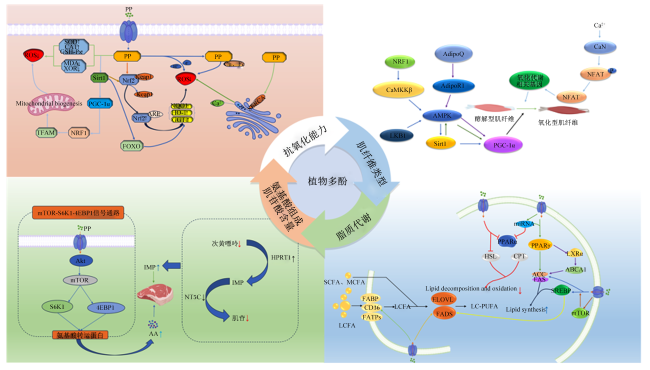
我国猪肉产品消费需求已从“数量安全型”逐渐提升为“品质优良型”,植物多酚因其来源广泛以及独特的生物学功能,成为改善猪肉品质的重要手段。饲粮中添加适宜水平的植物多酚可通过提高猪肉的氧化稳定性、促进肌纤维类型转变、调节氨基酸和脂肪酸组成、促进IMF和IMP的累积等途径,对猪肉感官品质、营养价值、风味等肉质性状产生积极影响(图1)。在现有的研究基础上,除了木脂素类多酚研究较少外,其他大类植物多酚改善猪肉品质的作用机制大同小异,尤其是在提高猪肉氧化稳定性上;并且黄酮类、酚酸类和二苯乙烯类多酚都能够通过激活AMPK信号通路,促进酵解型肌纤维向氧化性肌纤维的转变。而在调节猪肉氨基酸组成与IMP含量上,酚酸类化合物中的绿原酸更显优势。此外,相较于其他多酚,黄酮类化合物在调节猪肉脂肪酸组成与IMF含量的作用机制上更显全面。并且在市场价格上,黄酮类多酚(如葡萄籽原花青素)其价格远低于白藜芦醇,而其作用效果仅略差于白藜芦醇。因此,综合考虑,在改善猪肉品质上,黄酮类化合物更有性价比。
图1 植物多酚改善猪肉品质的可能调控机制

PP:植物多酚 plant polyphenols;ROS:活性氧自由基 reactive oxygen species;GSH-Px:谷胱甘肽过氧化物glutathione peroxidase;CAT:过氧化氢酶 catalase;SOD:超氧化物歧化酶 superoxide dismutase;MDA:丙二醛 malondialdehyde;Nrf2:核转录因子红系2相关因子2 nuclear factor erythroid 2-related factor 2;Keap1:Kelch样环氧氯丙烷相关蛋白-1 Kelch-like ECH-associated protein 1;ARE:抗氧化反应元件 antioxidant response elements;NQO1:醌氧化还原酶1 quinone oxidoreductase 1;HO-1:血红素加氧酶-1 heme oxygenase-1;GGT1:谷氨酰转肽酶1 glutamyl transpeptidase 1;Sirt1:沉默信息调节因子1 sirtuin 1;FOXO:叉头盒蛋白O forkhead box protein O;PGC-1α:过氧化物酶体增殖物激活受体γ共激活因子-1α peroxisome proliferators-activated receptor γ coactivator 1 alpha;NRF1:核呼吸因子1 nuclear respiratory factor 1;TFAM:线粒体转录因子A mitochondrial transcription factor A;SERCA:肌浆网/内质网钙ATP酶 sarco/endoplasmic reticulum calcium ATPase;AMPK:腺苷酸活化蛋白激酶 AMP-activated protein kinase;AdipoQ:脂联素 adiponectin;AdipoR1:脂联素受体1 adiponectin receptor protein 1;LKB1:肝激酶B1 liver kinase B1;CaMKKβ:钙/钙调蛋白依赖性蛋白激酶激酶β calmodulin-dependent protein kinase kinase β;CaN:钙调磷酸酶 calcineurin;NFAT:T细胞核因子 nuclear factor of activated T cells;mTOR:哺乳动物雷帕霉素靶蛋白 mammalian target of rapamycin;Akt:蛋白激酶B protein kinase B;S6K1:核糖体蛋白S6激酶1 ribosomal protein S6 kinase 1;4EBP1:4E结合蛋白1 4E-binding protein 1;IMP:肌苷酸 inosine monophosphate;AA:氨基酸 amino acid;HPRT1:次黄嘌呤磷酸核糖转移酶1 hypoxanthine phosphoribosyl transferase 1;NT5C:5'-核苷酸酶 5'-nucleotidase;SCFA:短链脂肪酸 short-chain fatty acid;MCFA:中链脂肪酸 medium chain fatty acid;LCFA:长链脂肪酸 long chain fatty acid;LC-PUFA:长链多不饱和脂肪酸 long chain-polyunsaturated fatty acid;FABP:脂肪酸结合蛋白 fatty acid binding protein;FATPs:脂肪酸转运蛋白家族 fatty acid transport proteins;CD36:脂肪酸转运酶 fatty acid translocase;ELOVL:超长链脂肪酸延长酶 elongase of very long chain fatty acids;FADS:脂肪酸去饱和酶 fatty acid desaturases;miRNA:微小RNA microRNA;PPARα:过氧化物酶体增殖物激活受体α peroxisome proliferators-activated receptor α;PPARγ:过氧化物酶体增殖物激活受体γ peroxisome proliferators-activated receptor γ;ACC:乙酰辅酶A羧化酶 acetyl-CoA carboxylase;FAS:脂肪酸合成酶 fatty acid synthetase;HSL:激素敏感脂肪酶 hormone-sensitive triglyceride lipase;CPT:肉碱脂酰转移酶 carnitine palmitoyl transferase;SREBP:甾醇调节元件结合蛋白 sterol-regulatory element binding protein;LXRα:肝X受体α liver x receptor α;ABCA1:ATP结合盒A亚家族成员1 ATP binding cassette subfamily A member 1。

Fig.1 Possible regulation mechanisms of plant polyphenols for improving pork quality

植物多酚在动物体内的生物利用度低,且大多具有苦味与涩味,往往为了确保其功效而增加添加量,这不仅造成浪费,增加养殖成本,对饲粮适口性也有一定影响。植物多酚的添加涉及猪的各个生理阶段,但在不同品种猪不同生理阶段添加剂量和作用效果具有差异,未能系统性的归纳出每种多酚最适添加量以及添加时间与周期。此外,植物多酚对猪肉品质影响的有关研究多集中在抗氧化、肌纤维类型转化和脂质代谢上,对调控猪肉氨基酸组成和促进IMP积累的相关研究较少,其具体的作用靶点和机制有待深入研究。因此,未来应对以下进行深入探究:1)开发植物多酚利用新技术,如通过生物偶联、载体修饰、共晶等技术手段,提高植物多酚生物利用度;2)确定每种植物多酚在不同品种猪的不同生理阶段的最适添加量以及添加时间与周期;3)深入研究植物多酚在猪肌肉中的作用靶点和机制,尤其是调控氨基酸代谢和IMP积累方面,并探索其在不同肌肉组织作用效果差异性原因,进一步完善植物多酚改善猪肉品质作用机制;4)进一步探究植物多酚及其代谢产物与肠道菌群间的互作关系以及两者的互作关系对猪肉品质的影响。
[1]
刘小红, 陈瑶生. 2022年生猪产业发展状况、未来发展趋势与建议[J]. 中国畜牧杂志, 2023, 59(3):264-268.

LIU X H, CHEN Y S. Development status,future development trend and suggestions of pig industry in 2022[J]. Chinese Journal of Animal Science, 2023, 59(3):264-268. (in Chinese)

[2]
张海峰, 陈南, 刘珊, 等. 我国猪肉产品进出口贸易不均衡成因分析[J]. 中国畜牧杂志, 2023, 59(12):347-350.

ZHANG H F, CHEN N, LIU S, et al. Analysis on the causes of unbalanced import and export trade of pork products in China[J]. Chinese Journal of Animal Science, 2023, 59(12):347-350. (in Chinese)

[3]
ROSENVOLD K, ANDERSEN H J. Factors of significance for pork quality—a review[J]. Meat Science, 2003, 64(3):219-237.

[4]
VERHELST R, SCHROYEN M, BUYS N, et al. Dietary polyphenols reduce diarrhea in enterotoxigenic Escherichia coli (ETEC) infected post-weaning piglets[J]. Livestock Science, 2014,160:138-140.

[5]
FIESEL A, GESSNER D K, MOST E, et al. Effects of dietary polyphenol-rich plant products from grape or hop on pro-inflammatory gene expression in the intestine,nutrient digestibility and faecal microbiota of weaned pigs[J]. BMC Veterinary Research, 2014,10:196.

[6]
CHRISTAKI E, GIANNENAS I, BONOS E, et al. Innovative uses of aromatic plants as natural supplements in nutrition[M]//FLOROU-PANER P,CHRISTAKI E,GIANNENAS I. Feed additives. Amsterdam: Elsevier Inc.,2020:19-34.

[7]
MAHFUZ S, SHANG Q H, PIAO X S. Phenolic compounds as natural feed additives in poultry and swine diets:a review[J]. Journal of Animal Science and Biotechnology, 2021, 12(1):48.

[8]
DŽINIĆ N, PUVAĞA N, TASIĆ T, et al. How meat quality and sensory perception is influenced by feeding poultry plant extracts[J]. World’s Poultry Science Journal, 2015, 71(4):673-682.

[9]
ZHANG H, TSAO R. Dietary polyphenols,oxidative stress and antioxidant and anti-inflammatory effects[J]. Current Opinion in Food Science, 2016,8:33-42.

[10]
MANACH C, SCALBERT A, MORAND C, et al. Polyphenols:food sources and bioavailability[J]. The American Journal of Clinical Nutrition, 2004, 79(5):727-747.

[11]
DI LORENZO C, COLOMBO F, BIELLA S, et al. Polyphenols and human health:the role of bioavailability[J]. Nutrients, 2021, 13(1):273.

[12]
LOSADA-BARREIRO S, BRAVO-DÍAZ C. Free radicals and polyphenols:the redox chemistry of neurodegenerative diseases[J]. European Journal of Medicinal Chemistry, 2017,133:379-402.

[13]
BEŠLO D, GOLUBIĆ N, RASTIJA V, et al. Antioxidant activity,metabolism,and bioavailability of polyphenols in the diet of animals[J]. Antioxidants, 2023, 12(6):1141.

[14]
WANG S H, DU Q Y, MENG X L, et al. Natural polyphenols:a potential prevention and treatment strategy for metabolic syndrome[J]. Food & Function, 2022, 13(19):9734-9753.

[15]
CHONG J, POUTARAUD A, HUGUENEY P. Metabolism and roles of stilbenes in plants[J]. Plant Science, 2009, 177(3):143-155.

[16]
SUPRUN A R, DUBROVINA A S, ALEYNOVA O A, et al. The bark of the spruce picea jezoensis is a rich source of stilbenes[J]. Metabolites, 2021, 11(11):714.

[17]
GIACOMINI E, RUPIANI S, GUIDOTTI L, et al. The use of stilbene scaffold in medicinal chemistry and multi-target drug design[J]. Current Medicinal Chemistry, 2016, 23(23):2439-2489.

[18]
TEKA T, ZHANG L L, GE X Y, et al. Stilbenes:source plants,chemistry,biosynthesis,pharmacology,application and problems related to their clinical application—a comprehensive review[J]. Phytochemistry, 2022,197:113128.

[19]
吴倩, 王思成, 盛文兵, 等. 天然来源的降木脂素类化合物及其生物活性研究进展[J]. 中草药, 2021, 52(5):1522-1535.

WU Q, WANG S C, SHENG W B, et al. Advances on natural sources norlignan compounds and their biological activities[J]. Chinese Traditional and Herbal Drugs, 2021, 52(5):1522-1535. (in Chinese)

[20]
CUI Q H, DU R K, LIU M M, et al. Lignans and their derivatives from plants as antivirals[J]. Molecules, 2020, 25(1):183.

[21]
陶凯奇, 王红, 周宗宝, 等. 木脂素类化合物的结构及生物活性研究进展[J]. 中南药学, 2017, 15(1):70-74.

TAO K Q, WANG H, ZHOU Z B, et al. Structure and biological activities of lignans[J]. Central South Pharmacy, 2017, 15(1):70-74. (in Chinese)

[22]
HERCHI W, ARRÁEZ-ROMÁN D, TRABELSI H, et al. Phenolic compounds in flaxseed:a review of their properties and analytical methods.An overview of the last decade[J]. Journal of oleo Science, 2014, 63(1):7-14.

[23]
JOHNSSON P, KAMAL-ELDIN A, LUNDGREN L N, et al. HPLC method for analysis of secoisolariciresinol diglucoside in flaxseeds[J]. Journal of Agricultural and Food Chemistry, 2000, 48(11):5216-5219.

PMID

[24]
石梦瑶, 赵薇, 杨安全, 等. 酚酸类化合物在化妆品中的原料制备与应用[J]. 精细化工, 2024, 41(2):245-256,276.

SHI M Y, ZAHO W, YANG A Q, et al. Preparation and application of phenolic acid compounds as raw materials in cosmetics[J]. Fine Chemicals, 2024, 41(2):245-256,276. (in Chinese)

[25]
CHEN J, HUANG Z Y, CAO X H, et al. Plant-derived polyphenols in sow nutrition:an update[J]. Animal Nutrition, 2023,12:96-107.

[26]
KUMAR N, GOEL N. Phenolic acids:natural versatile molecules with promising therapeutic applications[J]. Biotechnology Reports (Amsterdam,Netherlands), 2019,24:e00370.

[27]
CHEN Z J, ZHANG C, GAO F, et al. A systematic review on the rhizome of Ligusticum chuanxiong Hort. (Chuanxiong)[J]. Food and Chemical Toxicology, 2018,119:309-325.

[28]
GUO Z Y, CHEN X L, HUANG Z Q, et al. Dihydromyricetin improves meat quality and promotes skeletal muscle fiber type transformations via AMPK signaling in growing-finishing pigs[J]. Food & Function, 2022, 13(6):3649-3659.

[29]
张悦, 任勇, 邓超, 等. 葡萄籽原花青素对生长育肥猪肉品质、抗氧化性能和脂肪酸组成的影响[J]. 中国畜牧杂志, 2022, 58(5):221-228.

ZHANG Y, REN Y, DENG C, et al. Effects of grape seed procyanidins on meat quality,antioxidant properties and fatty acid composition of growing-finishing pigs[J]. Chinese Journal of Animal Science, 2022, 58(5):221-228. (in Chinese)

[30]
PAYNE R L, BIDNER T D, SOUTHERN L L, et al. Effects of dietary soy isoflavones on growth,carcass traits,and meat quality in growing-finishing pigs[J]. Journal of Animal Science, 2001, 79(5):1230-1239.

[31]
ZHANG L G, ZHANG J Q, YAN E F, et al. Dietary supplemented curcumin improves meat quality and antioxidant status of intrauterine growth retardation growing pigs via Nrf2 signal pathway[J]. Animals, 2020, 10(3):539.

[32]
CHENG K, YU C Y, LI Z H, et al. Resveratrol improves meat quality,muscular antioxidant capacity,lipid metabolism and fiber type composition of intrauterine growth retarded pigs[J]. Meat Science, 2020,170:108237.

[33]
WANG T X, LI J, SHAO Y F, et al. The effect of dietary garcinol supplementation on oxidative stability,muscle postmortem glycolysis and meat quality in pigs[J]. Meat Science, 2020,161:107998.

[34]
SUN Z W, LI D F, LI Y, et al. Effects of dietary daidzein supplementation on growth performance,carcass characteristics,and meat quality in growing-finishing pigs[J]. Animal Feed Science and Technology, 2020,268:114591.

[35]
XIE K H, SUN Y X, DENG L L, et al. Effects of dietary chlorogenic acid supplementation on growth performance,meat quality,and muscle flavor substances in finishing pigs[J]. Foods, 2023, 12(16):3047.

[36]
ZHANG C, LUO J Q, YU B, et al. Dietary resveratrol supplementation improves meat quality of finishing pigs through changing muscle fiber characteristics and antioxidative status[J]. Meat Science, 2015,102:15-21.

[37]
BAHELKA I, BUĞKO O, FL’AK P. Can hydrolysable tannins in diet of entire male pigs affect carcass,pork quality traits,amino and fatty acid profiles,and boar taint,skatole and androstenone levels?[J]. Animals, 2021, 11(3):896.

[38]
XU X J, CHEN X L, CHEN D W, et al. Effects of dietary apple polyphenol supplementation on carcass traits,meat quality,muscle amino acid and fatty acid composition in finishing pigs[J]. Food & Function, 2019, 10(11):7426-7434.

[39]
LIU Y C, LI Y F, YU M, et al. Magnolol supplementation alters serum parameters,immune homeostasis,amino acid profiles,and gene expression of amino acid transporters in growing pigs[J]. International Journal of Molecular Sciences, 2023, 24(18):13952.

[40]
STAGOS D. Antioxidant activity of polyphenolic plant extracts[J]. Antioxidants, 2019, 9(1):19.

[41]
FAUSTMAN C, SUN Q, MANCINI R, et al. Myoglobin and lipid oxidation interactions:mechanistic bases and control[J]. Meat Science, 2010, 86(1):86-94.

[42]
BOLER D D, GABRIEL S R, YANG H, et al. Effect of different dietary levels of natural-source vitamin E in grow-finish pigs on pork quality and shelf life[J]. Meat Science, 2009, 83(4):723-730.

DOI PMID

[43]
SHAH M A, BOSCO S J D, MIR S A. Plant extracts as natural antioxidants in meat and meat products[J]. Meat Science, 2014, 98(1):21-33.

DOI PMID

[44]
MIAO M S, XIANG L L. Pharmacological action and potential targets of chlorogenic acid[J]. Advances in Pharmacology, 2020,87:71-88.

[45]
CHEN G L, FAN M X, WU J L, et al. Antioxidant and anti-inflammatory properties of flavonoids from lotus plumule[J]. Food Chemistry, 2019,277:706-712.

[46]
YANG J X, GUO J, YUAN J F. In vitro antioxidant properties of rutin[J]. LWT-Food Science and Technology, 2008, 41(6):1060-1066.

[47]
SANDOVAL-ACUÑA C, FERREIRA J, SPEISKY H. Polyphenols and mitochondria: an update on their increasingly emerging ROS-scavenging independent actions[J]. Archives of Biochemistry and Biophysics, 2014,559:75-90.

[48]
CSEPREGI K, NEUGART S, SCHREINER M, et al. Comparative evaluation of total antioxidant capacities of plant polyphenols[J]. Molecules, 2016, 21(2):208.

[49]
UTRERA M, ESTÉVEZ M. Analysis of tryptophan oxidation by fluorescence spectroscopy:effect of metal-catalyzed oxidation and selected phenolic compounds[J]. Food Chemistry, 2012, 135(1):88-93.

[50]
PROCHÁZKOVÁ D, BOUŠOVÁ I, WILHELMOVÁ N. Antioxidant and prooxidant properties of flavonoids[J]. Fitoterapia, 2011, 82(4):513-523.

DOI PMID

[51]
ANNUNZIATA G, JIMENEZ-GARCÍA M, TEJADA S, et al. Grape polyphenols ameliorate muscle decline reducing oxidative stress and oxidative damage in aged rats[J]. Nutrients, 2020, 12(5):1280.

[52]
RINNERTHALER M, BISCHOF J, STREUBEL M K, et al. Oxidative stress in aging human skin[J]. Biomolecules, 2015, 5(2):545-589.

DOI PMID

[53]
RASHIDINEJAD A, BIRCH E J, EVERETT D W. Green tea catechins suppress xanthine oxidase activity in dairy products:an improved HPLC analysis[J]. Journal of Food Composition and Analysis, 2016,48:120-127.

[54]
ZUO X Z, TIAN C, ZHAO N N, et al. Tea polyphenols alleviate high fat and high glucose-induced endothelial hyperpermeability by attenuating ROS production via NADPH oxidase pathway[J]. BMC Research Notes, 2014,7:120.

[55]
HTAY H H, MACNAUGHTON L, KAPOOR M, et al. Functional behavior of tea polyphenols in cardiovascular disease[M]//JAIN N K,RAHMAN F,BAKER P. Economic crisis in tea industry. Houston: Studium Press LLC,2008:256-273.

[56]
FREI B, HIGDON J V. Antioxidant activity of tea polyphenols in vivo:evidence from animal studies[J]. The Journal of Nutrition, 2003, 133(10):3275S-3284S.

[57]
ADEMOSUN A O, OBOH G, BELLO F, et al. Antioxidative properties and effect of quercetin and its glycosylated form (rutin) on acetylcholinesterase and butyrylcholinesterase activities[J]. Journal of Evidence-based Complementary & Alternative Medicine, 2016, 21(4):NP11-NP17.

[58]
MENG Q W, SUN S S, BAI Y S, et al. Effects of dietary resveratrol supplementation in sows on antioxidative status,myofiber characteristic and meat quality of offspring[J]. Meat Science, 2020,167:108176.

[59]
ZHOU Y P, JIANG Z L, LU H Y, et al. Recent advances of natural polyphenols activators for Keap1-Nrf2 signaling pathway[J]. Chemistry & Biodiversity, 2019, 16(11):e1900400.

[60]
FENG Y D, CHEN X L, CHEN D W, et al. Dietary grape seed proanthocyanidin extract supplementation improves antioxidant capacity and lipid metabolism in finishing pigs[J]. Animal Biotechnology, 2023, 34(8):4021-4031.

[61]
GUO Z Y, CHEN X L, HUANG Z Q, et al. Dietary dihydromyricetin supplementation enhances antioxidant capacity and improves lipid metabolism in finishing pigs[J]. Food & Function, 2021, 12(15):6925-6935.

[62]
MENG Q W, GUO T, LI G Q, et al. Dietary resveratrol improves antioxidant status of sows and piglets and regulates antioxidant gene expression in placenta by Keap1-Nrf2 pathway and Sirt1[J]. Journal of Animal Science and Biotechnology, 2018, 9(3):639-651.

[63]
LI S Q, ZHAO G J, CHEN L W, et al. Resveratrol protects mice from paraquat-induced lung injury:the important role of SIRT1 and NRF2 antioxidant pathways[J]. Molecular Medicine Reports, 2016, 13(2):1833-1838.

[64]
NUNN A V W, GUY G W, BELL J D. Endocannabinoids, FOXO and the metabolic syndrome:redox,function and tipping point—the view from two systems[J]. Immunobiology, 2010, 215(8):617-628.

[65]
HUANG H J, TINDALL D J. Dynamic FoxO transcription factors[J]. Journal of Cell Science, 2007, 120(Pt 15):2479-2487.

DOI PMID

[66]
崔红杰, 卢春亭, 潘丽琴, 等. 姜黄素通过SIRT1/FOX01通路缓解玉米赤霉烯酮诱导的猪肾上皮细胞氧化损伤[J]. 中国农业科学, 2023, 56(5):1007-1018.

DOI

CUI H J, LU C T, PAN L Q, et al. Curcumin alleviates zearalenone-induced oxidative damage in porcine renal epithelial cells via SIRT1/FOXO1 pathway[J]. Scientia Agricultura Sinica, 2023, 56(5):1007-1018. (in Chinese)

DOI

[67]
LUEHRING M, BLANK R, WOLFFRAM S. Vitamin E-sparing and vitamin E-independent antioxidative effects of the flavonol quercetin in growing pigs[J]. Animal Feed Science and Technology, 2011, 169(3/4):199-207.

[68]
CORTINAS L, BARROETA A, VILLAVERDE C, et al. Influence of the dietary polyunsaturation level on chicken meat quality:lipid oxidation[J]. Poultry Science, 2005, 84(1):48-55.

[69]
DAI F, CHEN W F, ZHOU B. Antioxidant synergism of green tea polyphenols with α-tocopherol and L-ascorbic acid in SDS micelles[J]. Biochimie, 2008, 90(10):1499-1505.

[70]
FERRARA L, JOKSIMOVIC M, D’ANGELO S. Modulation of mitochondrial biogenesis:action of physical activity and phytochemicals[J]. Journal of Physical Education and Sport, 2021, 21(1):425-433.

[71]
SHARMA D R, SUNKARIA A, WANI W Y, et al. Quercetin protects against aluminium induced oxidative stress and promotes mitochondrial biogenesis via activation of the PGC-1α signaling pathway[J]. Neurotoxicology, 2015,51:116-137.

[72]
CHENG K, JIA P L, JI S L, et al. Improvement of the hepatic lipid status in intrauterine growth retarded pigs by resveratrol is related to the inhibition of mitochondrial dysfunction,oxidative stress and inflammation[J]. Food & Function, 2021, 12(1):278-290.

[73]
HU W J, XU T D, WU P, et al. Luteolin improves cardiac dysfunction in heart failure rats by regulating sarcoplasmic reticulum Ca2+-ATPase 2a[J]. Scientific Reports, 2017, 7(1):41017.

[74]
COLL K E, JOHNSON R G,Jr, MCKENNA E. Relationship between phospholamban and nucleotide activation of cardiac sarcoplasmic reticulum Ca2+ adenosinetriphosphatase[J]. Biochemistry, 1999, 38(8):2444-2451.

[75]
MATARNEH S K, SILVA S L, GERRARD D E. New insights in muscle biology that alter meat quality[J]. Annual Review of Animal Biosciences, 2021,9:355-377.

[76]
SCHIAFFINO S, REGGIANI C. Molecular diversity of myofibrillar proteins:gene regulation and functional significance[J]. Physiological Reviews, 1996, 76(2):371-423.

[77]
RYU Y C, KIM B C. The relationship between muscle fiber characteristics, postmortem metabolic rate,and meat quality of pig longissimus dorsi muscle[J]. Meat Science, 2005, 71(2):351-357.

[78]
JOO S T, KIM G D, HWANG Y H, et al. Control of fresh meat quality through manipulation of muscle fiber characteristics[J]. Meat Science, 2013, 95(4):828-836.

DOI PMID

[79]
KIM G D, JEONG J Y, HUR S J, et al. The relationship between meat color (CIE L* and a*),myoglobin content,and their influence on muscle fiber characteristics and pork quality[J]. Food Science of Animal Resources, 2010, 30(4):626-633.

[80]
HU H M, WANG J Y, ZHU R S, et al. Effect of myosin heavy chain composition of muscles on meat quality in Laiwu pigs and Duroc[J]. Science in China Series C:Life Sciences, 2008, 51(2):127-132.

[81]
ZENG Z Y, CHEN X L, HUANG Z Q, et al. Effects of dietary resveratrol supplementation on growth performance and muscle fiber type transformation in weaned piglets[J]. Animal Feed Science and Technology, 2020,265:114499.

[82]
HUANG Y N, XIA Q, CUI Y Y, et al. Resveratrol increase the proportion of oxidative muscle fiber through the adipoR1-AMPK-PGC-1α pathway in pigs[J]. Journal of Functional Foods, 2020,73:104090.

[83]
LI H W, CHEN X L, CHEN D W, et al. Ellagic acid alters muscle fiber-type composition and promotes mitochondrial biogenesis through the AMPK signaling pathway in healthy pigs[J]. Journal of Agricultural and Food Chemistry, 2022, 70(31):9779-9789.

DOI PMID

[84]
WANG Y X, CHEN X L, HUANG Z Q, et al. Effects of dietary ferulic acid supplementation on growth performance and skeletal muscle fiber type conversion in weaned piglets[J]. Journal of the Science of Food and Agriculture, 2021, 101(12):5116-5123.

DOI PMID

[85]
CHEN X L, JIA G, LIU G M, et al. Effects of apple polyphenols on myofiber-type transformation in Longissimus dorsi muscle of finishing pigs[J]. Animal Biotechnology, 2021, 32(2):246-253.

[86]
XU M, CHEN X L, HUANG Z Q, et al. Effects of dietary grape seed proanthocyanidin extract supplementation on meat quality,muscle fiber characteristics and antioxidant capacity of finishing pigs[J]. Food Chemistry, 2022,367:130781.

[87]
LUO P, LUO L, ZHAO W J, et al. Dietary thymol supplementation promotes skeletal muscle fibre type switch in Longissimus dorsi of finishing pigs[J]. Journal of Animal Physiology and Animal Nutrition, 2020, 104(2):570-578.

[88]
XU M, CHEN X L, HUANG Z Q, et al. Grape seed proanthocyanidin extract promotes skeletal muscle fiber type transformation via AMPK signaling pathway[J]. The Journal of Nutritional Biochemistry, 2020,84:108462.

[89]
LUO P, WANG L N, LUO L, et al. Ca2+-calcineurin-NFAT pathway mediates the effect of thymol on oxidative metabolism and fiber-type switch in skeletal muscle[J]. Food & Function, 2019, 10(8):5166-5173.

[90]
BRISKEY E J. Etiological status and associated studies of pale,soft,exudative porcine musculature[J]. Advances in Food Research, 1964,13:89-178.

[91]
MONIN G, SELLIER P. Pork of low technological quality with a normal rate of muscle pH fall in the immediate post-mortem period:the case of the Hampshire breed[J]. Meat Science, 1985, 13(1):49-63.

[92]
ROSSI R, PASTORELLI G, CANNATA S, et al. Effect of long term dietary supplementation with plant extract on carcass characteristics meat quality and oxidative stability in pork[J]. Meat Science, 2013, 95(3):542-548.

DOI PMID

[93]
WANG X F, LI J L, CONG J H, et al. Preslaughter transport effect on broiler meat quality and post-mortem glycolysis metabolism of muscles with different fiber types[J]. Journal of Agricultural and Food Chemistry, 2017, 65(47):10310-10316.

DOI PMID

[94]
MA X Y, YU M, LIU Z C, et al. Effect of amino acids and their derivatives on meat quality of finishing pigs[J]. Journal of Food Science and Technology, 2020, 57(2):404-412.

DOI PMID

[95]
HAN M M, YIN Y J, GONG S M, et al. Effects of dietary Eucommia ulmoides leaf extract supplementation on growth performance,meat quality,antioxidant capacity,and lipid metabolism of finishing pigs[J]. Antioxidants, 2024, 13(3):320.

[96]
BRÖER S. Amino acid transport across mammalian intestinal and renal epithelia[J]. Physiological Reviews, 2008, 88(1):249-286.

DOI PMID

[97]
WANG W L, LI F N, DUAN Y H, et al. Effects of dietary chlorogenic acid supplementation derived from lonicera macranthoides hand-mazz on growth performance,free amino acid profile,and muscle protein synthesis in a finishing pig model[J]. Oxidative Medicine and Cellular Longevity, 2022,2022:6316611.

[98]
JIANG X P, LIU G Q, XIONG Y Z, et al. Phenotypic and genetic parameters for inosine acid in relation to carcass and meat quality traits in pigs[J]. Asian-Australasian Journal of Animal Sciences, 2003, 16(2):257-260.

[99]
永锋, 刘博, 韩蕊, 等. 饲粮纤维对猪生产性能和肉品质影响的研究进展[J]. 动物营养学报, 2022, 34(11):6851-6859.

DOI

YONG F, LIU B, HAN R, et al. Research progress on effects of dietary fiber on performance and meat quality in pigs[J]. Chinese Journal of Animal Nutrition, 2022, 34(11):6851-6859. (in Chinese)

DOI

[100]
WANG Q, WANG J, QI R L, et al. Naringin supplementation affects performance,carcass traits,meat quality and oxidative stability of finishing pigs[J]. South African Journal of Animal Science, 2020, 50(1):78-87.

[101]
WANG W L, WEN C Y, GUO Q P, et al. Dietary supplementation with chlorogenic acid derived from Lonicera macranthoides Hand-Mazz improves meat quality and muscle fiber characteristics of finishing pigs via enhancement of antioxidant capacity[J]. Frontiers in Physiology, 2021,12:650084.

[102]
FRANK D, JOO S T, WARNER R. Consumer acceptability of intramuscular fat[J]. Korean Journal for Food Science of Animal Resources, 2016, 36(6):699-708.

DOI PMID

[103]
KOUBA M, MOUROT J. A review of nutritional effects on fat composition of animal products with special emphasis on n-3 polyunsaturated fatty acids[J]. Biochimie, 2011, 93(1):13-17.

DOI PMID

[104]
KILAR J, KASPRZYK A. Fatty acids and nutraceutical properties of lipids in fallow deer (Dama dama) meat produced in organic and conventional farming systems[J]. Foods, 2021, 10(10):2290.

[105]
AHMED S T, ISLAM M M, BOSTAMI A B M R, et al. Meat composition,fatty acid profile and oxidative stability of meat from broilers supplemented with pomegranate (Punica granatum L.) by-products[J]. Food Chemistry, 2015,188:481-488.

[106]
ZHANG Q J, GONG J T, XIANG H K, et al. Effects of main active components of rosemary on growth performance,meat quality and lipid metabolism in finishing pigs[J]. Animal Nutrition, 2023,15:341-349.

[107]
ZHANG Y, ZHAI Y, WEI X X, et al. Effects of grape seed procyanidins on the lipid metabolism of growing-finishing pigs based on transcriptomics and metabolomics analyses[J]. Meat Science, 2024,213:109504.

[108]
陈雨诗, 刘禹熙, 杨童寓丹, 等. 饲粮中添加姜黄素和二十二碳六烯酸对育肥猪生长性能、胴体性状、肉品质及血清生化、抗氧化和免疫指标的影响[J]. 动物营养学报, 2024, 36(3):1537-1548.

DOI

CHEN Y S, LIU Y X, YANG TONG Y D, et al. Effects of dietary curcumin and docosahexaenoic acid on growth performance,carcass traits,meat quality and serum biochemical,antioxidant and immune indexes of finishing pigs[J]. Chinese Journal of Animal Nutrition, 2024, 36(3):1537-1548. (in Chinese)

[109]
GONZALEZ-SOTO M, MUTCH D M. Diet regulation of long-chain PUFA synthesis:role of macronutrients,micronutrients,and polyphenols on Δ-5/Δ-6 desaturases and elongases 2/5[J]. Advances in Nutrition, 2021, 12(3):980-994.

[110]
CASTRO L F C, TOCHER D R, MONROIG O. Long-chain polyunsaturated fatty acid biosynthesis in chordates:insights into the evolution of Fads and Elovl gene repertoire[J]. Progress in Lipid Research, 2016,62:25-40.

[111]
PATTERSON E, WALL R, FITZGERALD G F, et al. Health implications of high dietary omega-6 polyunsaturated fatty acids[J]. Journal of Nutrition and Metabolism, 2012, 2012(1):539426.

[112]
MATSUZAKA T, SHIMANO H, YAHAGI N, et al. Dual regulation of mouse Δ5- and Δ6-desaturase gene expression by SREBP-1 and PPARα[J]. Journal of Lipid Research, 2002, 43(1):107-114.

[113]
KÜHN G, PALLAUF K, SCHULZ C, et al. Resveratrol modulates desaturase expression and fatty acid composition of cultured hepatocytes[J]. Frontiers in Nutrition, 2018,5:106.

[114]
LIU Y, XIAO Y, XIE J, et al. Dietary supplementation with flavonoids from mulberry leaves improves growth performance and meat quality,and alters lipid metabolism of skeletal muscle in a Chinese hybrid pig[J]. Animal Feed Science and Technology, 2022,285:115211.

[115]
LIAO P, LI Y H, LI M J, et al. Baicalin alleviates deoxynivalenol-induced intestinal inflammation and oxidative stress damage by inhibiting NF-κB and increasing mTOR signaling pathways in piglets[J]. Food and Chemical Toxicology, 2020,140:111326.

[116]
TANG S L, XIE J J, WU W D, et al. High ammonia exposure regulates lipid metabolism in the pig skeletal muscle via mTOR pathway[J]. Science of the Total Environment, 2020,740:139917.

[117]
LIU B N, LIU X T, LIANG Z H, et al. Gut microbiota in obesity[J]. World Journal of Gastroenterology, 2021, 27(25):3837-3850.

[118]
LIU S, XIONG Y X, CAO S T, et al. Dietary stevia residue extract supplementation improves antioxidant capacity and intestinal microbial composition of weaned piglets[J]. Antioxidants, 2022, 11(10):2016.

[119]
CHEN C Y, FANG S M, WEI H, et al. Prevotella copri increases fat accumulation in pigs fed with formula diets[J]. Microbiome, 2021, 9(1):175.

[120]
OTTON R, BOLIN A P, FERREIRA L T, et al. Polyphenol-rich green tea extract improves adipose tissue metabolism by down-regulating miR-335 expression and mitigating insulin resistance and inflammation[J]. The Journal of Nutritional Biochemistry, 2018,57:170-179.

[121]
LAGOS-QUINTANA M, RAUHUT R, LENDECKEL W, et al. Identification of novel genes coding for small expressed RNAs[J]. Science, 2001, 294(5543):853-858.

[122]
ZHANG H Z, CHEN D W, HE J, et al. Long-term dietary resveratrol supplementation decreased serum lipids levels,improved intramuscular fat content,and changed the expression of several lipid metabolism-related miRNAs and genes in growing-finishing pigs1[J]. Journal of Animal Science, 2019, 97(4):1745-1756.

文章导航

/