REVIEW

Biological Functions and Toxic Effects of Selenium on Aquaculture Animals and Research Advances of Its Mechanism

  • ZHANG Shujuan ,
  • SHAO Mingli ,
  • CHEN Xuyang ,
  • LI Mingzhu , *
Expand
  • College of Agriculture, Ludong University, Yantai 264025, China
*associate professor, E-mail:

Received date: 2022-10-10

  Online published: 2023-05-11

Abstract

Selenium (Se) is an essential trace element for aquaculture animals, which plays an important role in maintaining normal growth, enhancing immune and antioxidant functions. However, the range of suitable Se inclusion in the diet is very narrow and excess Se will result in a variety of toxic effects in animals. In this paper, we reviewed the biological functions of Se in aquaculture animals and the toxic effects caused by excess Se and its related mechanisms. Moreover, the optimal requirements of Se in different forms in the diet for various aquaculture animals were also summarized in the paper. The aim of this paper is to provide a reference for nutritional studies of Se in aquaculture animals as well as for the accurate use of Se additives in production.

Cite this article

ZHANG Shujuan , SHAO Mingli , CHEN Xuyang , LI Mingzhu . Biological Functions and Toxic Effects of Selenium on Aquaculture Animals and Research Advances of Its Mechanism[J]. Chinese Journal of Animal Nutrition, 2023 , 35(5) : 2815 -2827 . DOI: 10.12418/CJAN2023.264

硒(selenium,Se)是水产养殖动物健康生长和繁殖所必需的微量元素,在生物体内行使着重要的生理生化功能。20世纪40年代以前,硒因其毒性而被关注。直到1957年,有科学家指出硒能够起到保护动物肝脏的作用[1],它才开始作为一种营养元素而被人们关注。研究发现,低浓度的硒具有增强免疫和抗氧化性能,促进动物生长和发育等有益的生理作用[2]。但高浓度的硒会引起动物氧化应激、发育迟缓、死亡率增加和组织损伤等现象[3]。硒缺乏与过量之间的阈值范围很小[4],因此,研究水产养殖动物的硒需求量是非常有必要的。本文综述了硒对水产养殖动物的生物学功能、硒需求量以及过量硒造成的毒性效应及潜在机理,以期为今后硒在水产养殖业的深入研究和在配合饲料中的合理补充提供科学依据。

1 硒对水产养殖动物的生物学功能

硒作为一种必需的微量元素,是水产养殖动物饲料中常用的一种营养型添加剂。多项研究表明硒对水产养殖动物的生长、免疫和抗氧化等方面具有重要的调节作用。

1.1 生长性能

饲料中补充适量的硒可提高水产养殖动物的生长性能。例如,饲料中补充适量的硒显著促进了尼罗罗非鱼(Oreochromis niloticus)[5]和虹鳟(Oncorhynchus mykiss)[6]的生长并提高了饲料转化效率。硒能够通过硒代半胱氨酸和硒代蛋氨酸(selenomethionine,Se-Met)的形式参与形成多种硒蛋白(硒酶),在生物体内发挥其生物学作用[7-8]。有研究表明硒主要通过影响脱碘酶(一种硒蛋白)的合成来调节鱼类生长[9]。脱碘酶在生物体内可催化甲状腺激素的非活性形式四碘甲状腺原氨酸(tetraiodothyronine,T4)转化为甲状腺激素的活性形式三碘甲状腺原氨酸(triiodothyronine,T3)[10]。而血清T3浓度升高会提高垂体细胞中生长激素信使RNA的水平,促进鱼体内生长激素的合成[11-12],从而提高鱼体的生长[13]。此外,还有研究表明硒蛋白W(selenoprotein W,Sel W)也参与鱼类的生长调节[14],但具体调节机制尚不明确。

1.2 抗氧化能力

机体应对活性氧(reactive oxygen species,ROS)自由基的第1道防线是通过抗氧化酶来实现的,包括超氧化物歧化酶(superoxide dismutase,SOD)、谷胱甘肽过氧化物酶(glutathione peroxidase,GPx)和过氧化氢酶(catalase,CAT)。其中,硒是GPx的重要组成部分[10]。GPx能够特异地催化谷胱甘肽还原机体内有毒的过氧化物反应,清除过氧化物,减少膜的氧化损伤,从而起到抗氧化作用[15-16]
大量研究表明饲料中添加硒对水产养殖动物的抗氧化能力有积极作用。例如,在黄颡鱼(Pelteobagrus fulvidraco)饲料中适量添加亚硒酸钠(sodium selenite,Na2SeO3)能够提高其体内GPx活性,降低体内ROS的生成[17];在虹鳟的研究中发现,补充适量有机硒能够显著提高机体内GPx、CAT和SOD活性,并降低肝脏丙二醛(malondialdehyde,MDA)浓度[18];在草鱼(Ctenopharyngodon idellus)幼鱼饲料中添加1.12 mg/kg Na2SeO3能显著降低肝脏中MDA含量,并提高SOD和GPx的活性[19]。在无脊椎动物的研究中发现,饲料中补充硒可提高皱纹盘鲍(Haliotis discus hannai)[20]和日本沼虾(Macrobrachium nipponense)[16]体内血清中GPx和溶菌酶(lysozyme,LZM)的活性,从而提高其抗氧化能力。

1.3 免疫与抗病能力

许多研究表明,饲料中适当补充硒可影响水产养殖动物的免疫相关参数并改善机体的免疫与抗病能力。饲料中补充硒可增加大西洋白姑鱼(Argyrosomus regius)血清中免疫球蛋白含量,提高LZM和髓过氧化物酶(myeloperoxidase,MPO)的活性和呼吸爆发作用[21]。补充硒可以诱导细鳞鲳(Piaractus mesopotamicus)免疫系统中免疫物质(单核细胞和LZM)的产生,从而提高其机体免疫力[22]。在草鱼幼鱼饲料中添加1.12 mg/kg的硒(Na2SeO3)能显著提高血清中碱性磷酸酶(alkaline phosphatase,AKP)的活性和白蛋白(albumin,ALB)的含量[19]。饲料中适宜水平的硒可提高皱纹盘鲍体内LZM、AKP和酸性磷酸酶(acid phosphatase,ACP)等免疫相关酶的活性[20],以及中华绒螯蟹(Eriocheir sinensis)血清和肝脏中GPx的活性[23]。Pacitti等[24]研究发现,对虹鳟进行体外或体内攻毒后,硒蛋白——硫氧还蛋白还原酶(thioredoxin reductase,TrxR)的表达量会显著升高,他们推测TrxR似乎是硒调节先天免疫的关键介质,在鱼类先天免疫调节中发挥重要作用。但关于TrxR调节免疫方面的报道较少,其在水产养殖动物免疫方面的作用有待进一步探索。
硒还可以通过诱导抗病毒因子的表达来提高水产养殖动物抗菌和抗病毒感染的能力。当机体遭受病毒感染时,硒能够诱导机体产生抗病毒防御素来提高自身的抗病力。研究发现,用Toll样受体3(TLR3)激动剂多聚胞苷酸[polyinosinic-polycytidylic acid,Poly(I:C)]刺激虹鳟时,补充4 mg/kg有机硒(Sel-Plex®)会增加抗病毒防御素(尤其是γ-干扰素)的表达,同时提高参与细胞介导免疫反应的下游分子的表达[25]。补充硒可提高罗氏沼虾(Macrobrachium rosenbergii)酚氧化酶(polyphenol oxidase,PO)的活性以及血细胞吞噬活性,增强其抗真菌感染的能力[26];补充硒可提高鲤鱼和斑马鱼体内干扰素水平,提高抗鲤春病毒血症病毒的能力[27];补充硒还可增加马龙螯虾(Cherax cainii)总血细胞和颗粒细胞的数量,增强其抗拟态弧菌(Vibrio mimicus)感染的能力[28]

2 水产养殖动物的硒需求量总结

硒作为一种微量元素,是水产养殖动物正常生长发育所必需的[29]。目前已有许多学者以生长或生理生化状态为评价指标,对水产养殖动物的硒需求量进行了研究,不同种类的水产养殖动物对硒的需求量差异很大。比如,大西洋白姑鱼的硒需求量是4 mg/kg[酵母硒(selenium yeast,Se-yeast)][30],而同等规格的团头鲂仅需添加0.108 mg/kg的硒(Se-yeast)就能达到最佳生长状态[31]。本文对不同水产养殖动物的硒需求量进行了总结,详见表1,从表中可以看出,水产养殖鱼类对饲料中硒的需求量为0.09~20.26 mg/kg(不计物种及发育阶段、不计硒源),水产养殖贝类和甲壳类对饲料中硒的需求量为0.15~20.00 mg/kg(不计物种及发育阶段、不计硒源)。
表1 不同水产养殖动物的硒需求量

Table 1 Selenium requirements of different aquaculture animals

序号
Number
动物种类
Animal
species
硒源
Selenium
source
规格
Animal size
试验周期
Experimental
period
硒需求量
Selenium
requirement
参考文献
References
1 虹鳟
Oncorhynchus mykiss
Na2SeO3 约1.3 g 20周 0.15~0.38 mg/kg Hilton等[32]
Sel-Plex® (33.47±0.15) g 8周 3 mg/kg Hunt等[18]
2 大西洋鲑鱼
Salmo salar
Se-Met
Na2SeO3
(147±4) g 12周 1~2 mg/kg
3 mg/kg
Berntssen等[33]
Na2SeO3
Se-Met
(216±27) g 9周 0.4 mg/kg
0.4 mg/kg
Antony Jesu
Prabhu等[34]


3


点带石斑鱼
Epinephelus malabaricus
Se-Met (12.20±0.14) g 8周 0.7 mg/kg Lin等[35]
Na2SeO3 0.90 mg/kg
Lin等[36]
Se-Met (24.45±0.73) g 8周 0.98 mg/kg
4 欧洲海鲈
Dicentrarchus labrax
Se-NPs (20.53±0.10) g 90 d 0.5~1.0 mg/kg Abd El-Kader等[37]
5 大黄鱼
Larimichthys croceus
Na2SeO3 (9.14±0.09) g 10周 0.178 mg/kg 曹娟娟等[38]


6


金头鲷
Sparus aurata
Se-yeast 100 μg(干重),
5.1 mm
30 d 11.65 mg/kg Saleh等[39]
Na2SeO3 (12.6±1.4) g 42 d 0.94 mg/kg Domínguez等[40]
OH-Se-Met (6.20±0.04) g 63 d 0.2 mg/kg Mechlaoui等[41]


7


团头鲂
Megalobrama amblycephala
Na2SeO3 (16.00±0.50) g 8周 0.96 mg/kg Hao等[42]
Se-yeast (3.15±0.15) g 60 d 0.108 mg/kg Guo等[31]
Se-yeast (55.90±2.60) g 60 d 0.108 mg/kg Long等[43]

8

银鲑
Oncorhynchus kisutch
Na2SeO3 (0.38±0.01) g 12周 0.39~0.43 mg/kg Du等[44]
Na2SeO3 4~5 g 36周 8.6 mg/kg Felton等[45]

9

红鲷
Pagrus major
Se-NPs (4.04±0.02) g 45 d 1~2 mg/kg Dawood等[46]
Se-NPs (4.04±0.02) g 45 d 1 mg/kg Dawood等[47]
10 黑鲷
Acanthopagrus schlegelii
Se-P (13.00±0.20) g 8周 0.86 mg/kg Wang等[48]

11

军曹鱼
Rachycentron canadum L.
Se-Met (6.27±0.03) g 10周 0.788~0.793 mg/kg Liu等[49]
Se-yeast (13.65±0.40) g 8周 2.32 mg/kg Pham等[50]
Na2SeO3 约70 g 15周 0.25 mg/kg Gatlin等[51]
斑点叉尾鮰 Na2SeO3 1.7 g 63 d 0.17~0.28 mg/kg
12 Ictalurus punctatus Se-Met 1.7 g 63 d 0.09~0.12 mg/kg Wang等[52]
Se-yeast 1.7 g 63 d 0.11~0.12 mg/kg
13 大西洋白姑鱼
Argyrosomus regius
Se-yeast (3.20±0.17) g 9周 4 mg/kg Khalil等[30]
14 浅色黄姑鱼
Nibea coibor
Na2SeO3 (11.34±0.12) g 8周 0.74 mg/kg Lin等[53]

15

鲈鱼
Na2SeO3 (12.30±0.04) g 60 d 0.81 mg/kg 郭正富等[54]
Lateolabrax japonicus NaSeSO3 (214.5±1.0) g 70 d 0.63~0.75 mg/kg 谈枫等[55]
16 大口黑鲈
Micropterus salmoides
Na2SeO3 (4.95±0.03) g 8周 1.60~1.85 mg/kg Zhu等[56]


17


异育银鲫
Se-Met (2.70±0.02) g 100 d 1.18 mg/kg Han等[57]

Carassius auratus gibelio
Se-Met (76.20±0.05) g 12周 0.73 mg/kg Zhu等[58]
Na2SeO3 (11.20±0.03) g 8周 0.83 mg/kg Liu等[19]

草鱼
Se-yeast (18.32±1.74) g 60 d 2 mg/kg 曹辉[59]


18

Ctenopharyngodon idellus
Se-yeast (226.48±0.68) g 94 d 0.546~0.604 mg/kg Zheng等[60]
Se-NPs 11.85 g 10周 0.3~0.6 mg/kg Liu等[61]


19

鲤鱼
Se-NPs 约10 g 8周 1 mg/kg Ashouri等[62]
Cyprinus carpio Na2SeO3 (17.21±1.73) g,
(11.11±0.46) cm
8周 0.50 mg/kg 林帅超等[63]
20 尖齿胡鲶
Clarias gariepinus
Sel-Plex® (68.7±2.3) g 12周 0.3 g/kg Abdel-Tawwab等[64]
21 欧洲鳇
Huso huso
Se-Met (3.5±2.0) g 8周 11.56~20.26 mg/kg Arshad等[65]


22
Se-Met (1.85±0.10) g 10周 1.06~2.06 mg/kg Lee等[5]
尼罗罗非鱼 Se-Met (3.00±0.01) g 8周 0.57 mg/kg Ning等[66]
Oreochromis niloticus Se-NPs (15.73±0.05) g 90 d 1.23 mg/kg Rathore等[67]
23 黄颡鱼
Pelteobagrus fulvidraco
Na2SeO3
Se-yeast
(2.12±0.01) g 56 d 0.25 mg/kg
0.3 mg/kg
胡俊茹等[68]
24 黄尾鰤
Seriola lalandi
Se-yeast (18.66±0.10) g 10周 5.56 mg/kg Le等[69]
25 金鱼
Carassius auratus
Se-NPs
Se-Met
4.54 g 9周 0.6 mg/kg Jahanbakhshi等[70]
26 大鳞副泥鳅
Paramisgurnus dabryanus
NaHSeO3 (6.26±0.05) g 60 d 0.48~0.50 mg/kg Hao等[71]
27 中国对虾
Penaeus chinensis
Na2SeO3 5.0~6.5 cm 4周 20 mg/kg Tian等[72]
28 日本沼虾
Macrobrachium nipponense
Se-yeast (0.133±0.003) g 8周 1.07 mg/kg Kong等[16]

29
凡纳滨对虾 Se-yeast
Se-Met
(0.41±0.01) g 56 d 0.3 mg/kg 李小霞等[73]
Litopenaeus vannamei OH-Se-Met (0.90±0.05) g 8周 0.431~0.454 mg/kg Wang等[74]

30
中华绒螯蟹 Se-NPs (4.5±0.4) g 90 d 0.2 mg/kg 侍苗苗等[75]
Eriocheir sinensis Se-yeast (0.27±0.01) g 6周 0.4~0.6 mg/kg 田文静等[23]


31
Na2SeO3 (3.17±0.01) g 60 d 1.31 mg/kg Guo等[76]
皱纹盘鲍 Na2SeO3 (0.68±0.00) g 24周 1.408 mg/kg Wang等[20]
Haliotis discus hannai Sel-Plex® (1.57±0.01) g,
(1.46±0.01) cm
100 d 0.32~0.44 mg/kg Kong等[77]

Na2SeO3:亚硒酸钠 sodium selenite;Se-NPs:纳米硒selenium nanoparticle;Se-Met:硒代蛋氨酸selenomethionine;Se-yeast:酵母硒 selenium yest;Na2SeO3·5H2O:五水亚硒酸钠 sodium selenite pentahydrate;OH-Se-Met:羟蛋氨基硒hydroxyl methionine selenium;Se-P:硒多糖selenium polysaccharide;NaHSeO3:亚硒酸氢钠 sodium selenite。

相同水产养殖动物对不同硒源的硒需求量存在差异。例如,相同规格的大西洋鲑(Salmo salar)对无机硒的需求量为3 mg/kg(Na2SeO3),而对有机硒(Se-Met)的需求量则仅为1~2 mg/kg[32]。斑点叉尾鮰(Ictalurus punctatus)对无机硒的需求量为0.17~0.28 mg/kg(Na2SeO3),而对有机硒的需求量则为0.09~0.12 mg/kg(Se-Met和Se-yeast)[52]。在无脊椎动物中也发现类似现象,体重为3.17和0.68 g的皱纹盘鲍幼鲍对无机硒(Na2SeO3)的需求量分别为1.31[76]和1.408 mg/kg[20],而体重为1.57 g的皱纹盘鲍幼鲍对有机硒(Sel-Plex®)的需求量则为0.32~0.44 mg/kg[77]。由上述可知,水产养殖动物对有机形式的硒吸收利用度更好、需求量的值也更低。纳米硒(selenium nanoparticle,Se-NPs)是通过纳米技术,将硒转化为更具可利用性的纳米颗粒,是硒补充的一种新形式。最近在金鱼中的研究中发现,金鱼饲料中以Se-NPs或Se-Met的形式分别添加0.6 mg/kg硒时均能显著提高鱼体的特定生长率和饲料转化率,并增强其黏膜免疫能力,且Se-NPs的效果要优于Se-Met[70]
总之,硒的需求量差异与水产养殖动物的发育阶段、养殖水体环境、硒来源以及饲料中其他营养素(比如维生素E)的水平等多种因素有关[9,78-79]

3 高硒对水产养殖动物的毒性作用

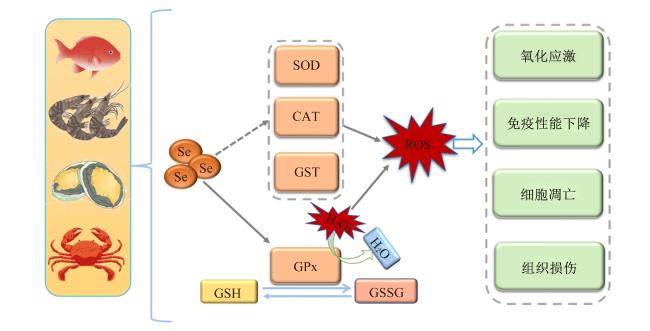
大量研究表明,动物体内硒的最佳水平和毒性水平之间的阈值很窄。当硒添加量超过机体稳态需要量时,就会损害动物的健康并诱发毒性[5,80]。水产养殖动物硒中毒的主要表现有生长不良和存活率降低。此外,硒过量还会引发氧化应激、脂质代谢紊乱、组织损伤和脊柱变形等毒性效应[81]。硒对水产脊椎动物和无脊椎动物造成的主要毒性作用机制基本一致,主要通过影响一些免疫及抗氧化关键酶的活性诱发动物氧化应激,详见图1
图1 过量硒对水产养殖动物的毒性机理

Se:硒 selenium;SOD:超氧化物歧化酶 superoxide dismutase;CAT:过氧化氢酶 catalase;GST:谷胱甘肽S转移酶 glutathione S-transferase;GPx:谷胱甘肽过氧化物酶 glutathione peroxidase;GSH:谷胱甘肽 glutathione;GSSG:氧化型谷胱甘肽 oxidized glutathione;ROS:活性氧 reactive oxygen species。

Fig.1 Toxicity mechanism of excessive selenium on aquaculture animals

3.1 高硒对水产养殖脊椎动物的毒性作用

养殖鱼类硒中毒的症状主要包括生长抑制、摄食量降低、生殖性能下降、脂质代谢紊乱、骨骼畸形以及免疫功能下降等[82-83]。饲料中添加4.6 mg/kg的硒(Se-Met)会引起虹鳟生长减缓[84];添加9.6 mg/kg的有机硒(Se-Met)或9 mg/kg的无机硒(Na2SeO3)分别会导致大鳞大马哈鱼(Oncorhynchus tshawytscha)幼鱼和虹鳟幼鱼的死亡率增加[85]。饲料中添加20 mg/kg的无机硒(Na2SeO3)会对杂交条纹鲈产生明显的毒性作用,包括体增重减少、饲料效率降低、采食量降低以及死亡率升高[86]。饲料中硒水平超过15 mg/kg(Na2SeO3)会导致斑点叉尾鮰生长迟缓[51]。饲料中硒水平在11.1~13.6 mg/kg(Na2SeO3)时,银鲑(Oncorhynchus kisutch)死亡率显著升高[45]。高硒还会降低青鳉(Oryzias latipes)的胚胎孵化率[87]、降低草鱼血清中SOD和AKP的活性以及ALB含量[19]。金头鲷(Sparus aurata)摄食含有1.70 mg/kg硒(Na2SeO3)的饲料会出现生长减慢、血清中CAT表达水平增加的现象[41]。青鳉在含有100 μg/L硒(Se-NPs、Na2SeO3)的水体中暴露10 d后,其肝脏SOD的活性发生显著下降[88];乌鳢(Channa argus)暴露于含50 μg/L以上硒(Na2SeO3)的水体环境中,其体内抗炎因子[LZM、免疫球蛋白M(immunoglobulin M,IgM)和补体3(complement 3,C3)]活性或含量以及促炎因子[肿瘤坏死因子-α(tumor necrosis factor-α,TNF-α)、白细胞介素-1β(interleukin-1β,IL-1β)和白细胞介素-8(interleukin-8,IL-8)]的表达水平显著升高,表明高硒会引发鱼体过度免疫损伤[89]。此外,高剂量的硒还能影响虹鳟和大西洋鲑脂质代谢相关基因表达,进而引起体内脂质代谢紊乱[82,90];还能通过改变鳕鱼(Gadus morhua L.)[91]和斑马鱼[92]骨骼矿化的离子形式引起骨骼变形[93]
肝脏和肾脏是硒沉积和解毒的主要器官,也是硒中毒的敏感器官。摄入过量的硒除了影响水产养殖动物的生长和免疫性能之外,还会造成动物体组织损伤。饲料中过量的无机硒(0.62 mg/kg,Na2SeO3)可导致大鳞副泥鳅(Paramisgurnus dabryyanus)肝脏组织超微结构病变,血清ALB含量降低、转氨酶活性升高[71]。饲料中添加20.5或41.7 mg/kg的有机硒(Se-Met)会引起高首鲟(Acipenser transmontanus)肝脏细胞空泡变性和坏死等组织病变[94]。饲料中无机硒水平高于1.7 mg/kg时,金头鲷发生肝脏水肿变性[40]。饲料中添加20.87 mg/kg有机硒(Se-Met)时黄尾鰤(Seriola lalandi)出现肝细胞萎缩,并且伴有显著的脾巨噬细胞聚集现象[95]。饲料中添加57.6 mg/kg的有机硒(Se-yeast)会引起大鳞裂尾鱼(Pogonichthys macrolepidotus)肝脏组织损伤,表现为胞质蛋白油滴、脂肪泡萎缩等[96]
在斑马鱼中发现,过量硒会抑制生长激素/胰岛素样生长因子和下丘脑-垂体-性腺系统,对斑马鱼的生长和繁殖均产生抑制作用[92]。高硒还能影响虹鳟生长相关信号通路及Notch信号通路的功能,对生长产生不利影响[90]。黄颡鱼硒中毒后体内钙离子(Ca2+)浓度升高且热休克蛋白70(heat shock protein 70,HSP70)表达量升高,推测Ca2+可能被硒激活,并在硒诱导的氧化应激和细胞凋亡中起主要作用[17]。滕振雷[97]发现,饲料中硒过量可能会抑制蛋白激酶B(protein kinase B,Akt)-雷帕霉素靶蛋白(target of rapamycin,TOR)通路的活性,激活自噬相关基因高度表达,进而激活腺苷酸激活蛋白激酶(AMP-activated protein kinase,AMPK)通路,导致虹鳟肌肉蛋白质的自噬和生长抑制。虽然高硒对水产养殖动物的毒性作用得到了普遍证实,但其中内在的分子机制还未完全解析清楚,今后应该加强高硒引起水产养殖动物硒中毒的内在分子机制研究。

3.2 高硒对水产养殖无脊椎动物的毒性作用

目前关于硒在水产无脊椎动物(虾类、蟹类、贝类)方面的研究较少,对于硒过量摄入造成的毒性效应及其机理鲜有报道。现有研究发现,硒对于水产无脊椎动物的毒性作用主要集中于抑制生长和诱发氧化应激导致的不良反应。
饲料中添加过量硒(1.17 mg/kg,Se-yeast)会抑制日本沼虾的生长,降低血清GPx、SOD、PO和LZM的活性,显著降低血清总抗氧化能力(total antioxidant capacity,T-AOC)[16]。罗氏沼虾摄入含1.5 mg/kg硒纳米粒子(GBGS-SeNPs,48~87 nm)的高硒饲料后,其生长受到显著抑制,其体内的消化酶活性显著降低,虾体中矿物元素(Ca、Cu、Fe、K、Mg、Na和Zn,以离子含量计]和肌肉中必需氨基酸等含量均显著下降[98]。Yu等[99]研究发现,在凡纳滨对虾(Litopenaeus Vannamei )饲料中补充过量硒会下调PTEN诱导激酶1(PTEN-induced putative kinase 1,PINK1)的基因表达,进而抑制谷胱甘肽(glutathione,GSH)合成并降低抗氧化能力,最终导致线粒体功能障碍和氧化应激,引发内质网应激和肝胰腺组织损伤。高硒降低中华绒螯蟹的抗氧化能力(血清中GPx和SOD活性下降),但不会对生长产生抑制[100]。饲料中添加0.6 mg/kg的有机硒(Se-yeast)会显著降低皱纹盘鲍的存活率、增重率以及贝壳生长率[77];添加9.16 mg/kg的无机硒(Na2SeO3)会抑制皱纹盘鲍的生长,降低血清中PO、SOD和LZM的活性[20]

4 小结与展望

综上所述,硒不仅参与动物的生长免疫调控,而且在维持动物正常的形态和生殖发育中也起到重要作用。水产养殖动物对硒的适宜需求范围较窄。过量硒对水产动物的毒性作用主要是通过氧化应激实现的,因此,硒在饲料中的合理利用显得尤为重要。关于水产养殖动物的硒营养学研究,未来可以在以下几个方面深入探索。

4.1 开展不同水产养殖动物的有机硒精准需求研究

之前研究水产养殖动物的硒需求量的试验使用的硒源主要是Na2SeO3。随着有机硒在饲料中的使用,一些重要养殖鱼类的有机硒需求量研究得到关注。但是,关于其他养殖动物,比如贝类和甲壳类的有机硒需求量的研究关注度不高。2017年公布的《中华人民共和国农业部公告 第2625号》规定的硒的推荐添加量为0.10~0.30 mg/kg,在配合饲料中的最高限量是0.50 mg/kg。而从目前的研究总结看,很多水产养殖动物对硒的需求量超过了农业农村部规定的最高限量(表2)。硒需求量的研究受到动物种类、动物发育阶段、养殖环境等多方面的影响。因此,需要加强有机硒在不同水产养殖动物中的精准营养研究,更有针对性的在养殖过程中指导用量,避免过量添加。
表2 水产养殖动物对不同形式硒的大致需求量范围

Table 2 Approximate requirement ranges of aquaculture animals for different forms of selenium mg/kg

硒源
Selenium sources
硒的需求量范围
Requirement range of selenium
备注
Note
亚硒酸钠Na2SeO3 0.15~1.85 不计物种及发育阶段,除去
差距过大值,取主要
集中范围
酵母硒Se-yeast 0.10~1.07
硒代蛋氨酸Se-Met 0.12~1.18
纳米硒Se-NPs 0.20~1.23
Sel-Plex® 0.32~0.44

4.2 加强硒蛋白在硒调控水产养殖动物机体代谢方面的深入研究

硒对水产养殖动物的生长和生理功能的调控作用主要是通过硒蛋白来实现的。比如,脱碘酶和硒蛋白W能够参与调控动物生长。GPx是生物体内重要的抗氧化因子,且GPx4被报道与细胞铁死亡密切相关。最近一些研究发现硒蛋白还参与硒对脂质代谢的相关调控。目前已发现的硒蛋白有25种,其功能尚未完全揭示。今后可加强硒蛋白在适宜硒水平引起的促健康或过量硒水平引起的毒性作用中调控机制的研究,揭示硒蛋白在硒影响水产养殖动物动物机体代谢调控中的具体作用。

4.3 开展过量硒引起水产养殖动物机体的典型毒性现象及机理研究

生产上,通过饲料中添加Na2SeO3或者有机硒来满足水产养殖动物对硒的需求。然而很多饲料原料也富含硒,比如鱼粉、菜籽粕和羽毛粉等,这就会造成最终的配合饲料中总硒水平会超过动物的营养需求,引起毒性作用。然而,目前对于不同水产养殖动物过量硒引起的典型毒性现象及机理研究并没有得到关注。生产上即便出现典型的毒性现象,也无法及时察觉并进行调整。因此,应加强过量硒对不同水产养殖动物的影响及致病机理方面的研究,理论上丰富硒毒性效应的研究结果,给生产上提供诊断依据。

4.4 建立动物机体特异性响应过量硒的分子评价体系

动物体中,分子水平上的敏感变化总是早于表观现象的出现。比如,生长表现变差是因为与生长相关的基因表达、蛋白质功能和信号通路等长时间受到影响或破坏,最终引起的表观现象。观察到这个现象需要一定的时间,往往在生产上会造成一定的损失。因此,筛选可快速响应过量硒的特异性分子指标并建立综合性的硒毒性效应评价体系,可在短时间内最大程度的减少生产损失。
[1]
SCHWARZ K, FOLTZ C M. Selenium as an integral part of factor 3 against dietary necrotic liver degeneration[J]. Nutrition Reviews, 1978, 36(11):338-340.

DOI

[2]
李若铭, 孔祎頔, 王桂芹. 微量元素硒的生物学功能及其对水产动物的影响的研究进展[J]. 饲料工业, 2021, 42(6):9-14.

LI R M, KONG Y D, WANG G Q. The biological function of trace element selenium and its influence on aquatic animals[J]. Feed Industry, 2021, 42(6):9-14. (in Chinese)

[3]
WANG L, SAGADA G, WANG R L, et al. Different forms of selenium supplementation in fish feed:the bioavailability,nutritional functions,and potential toxicity[J]. Aquaculture, 2022, 549:737819.

DOI

[4]
LALL S P, KAUSHIK S J. Nutrition and metabolism of minerals in fish[J]. Animals, 2021, 11(9):2711.

DOI

[5]
LEE S, NAMBI R W, WON S, et al. Dietary selenium requirement and toxicity levels in juvenile Nile tilapia,Oreochromis niloticus[J]. Aquaculture, 2016, 464:153-158.

DOI

[6]
RIDER S A, DAVIES S J, JHA A N, et al. Supra-nutritional dietary intake of selenite and selenium yeast in normal and stressed rainbow trout (Oncorhynchus mykiss):implications on selenium status and health responses[J]. Aquaculture, 2009, 295(3/4):282-291.

DOI

[7]
KRYUKOV G V, CASTELLANO S, NOVOSELOV S V, et al. Characterization of mammalian selenoproteomes[J]. Science, 2003, 300(5624):1439-1443.

DOI PMID

[8]
FAN T W M, TEH S J, HINTON D E, et al. Selenium biotransformations into proteinaceous forms by foodweb organisms of selenium-laden drainage waters in California[J]. Aquatic Toxicology, 2002, 57(1/2):65-84.

DOI

[9]
KHAN K U, ZUBERI A, FERNANDES J B K, et al. An overview of the ongoing insights in selenium research and its role in fish nutrition and fish health[J]. Fish Physiology and Biochemistry, 2017, 43(6):1689-1705.

DOI PMID

[10]
PAPP L V, LU J, HOLMGREN A, et al. From selenium to selenoproteins:synthesis,identity,and their role in human health[J]. Antioxidants & Redox Signaling, 2007, 9(7):775-806.

[11]
MOAV B, MCKEOWN B A. Thyroid hormone increases transcription of growth hormone mRNA in rainbow trout pituitary[J]. Hormone and Metabolic Research, 1992, 24(1):10-14.

PMID

[12]
FARCHI-PISANTY O, HACKETT P B,Jr, MOAV B. Regulation of fish growth hormone transcription[J]. Molecular Marine Biology and Biotechnology, 1995, 4(3):215-223.

[13]
MA P, HU Z Y, LI L, et al. Dietary selenium promotes the growth performance through growth hormone-insulin-like growth factor and hypothalamic-pituitary-thyroid axes in grass carp (Ctenopharyngodon idella)[J]. Fish Physiology and Biochemistry, 2021, 47(4):1313-1327.

DOI PMID

[14]
WANG L, ZHANG X Z, WU L, et al. Expression of selenoprotein genes in muscle is crucial for the growth of rainbow trout (Oncorhynchus mykiss) fed diets supplemented with selenium yeast[J]. Aquaculture, 2018, 492:82-90.

DOI

[15]
唐蕾, 傅明骏, 赵超, 等. 斑节对虾含硒谷胱甘肽过氧化物酶基因全长克隆及表达分析[J]. 水产学报, 2016, 40(11):1664-1673.

TANG L, FU M J, ZHAO C, et al. Full-length cDNA cloning and expression analysis of selenium-dependent glutathione peroxidase from Penaeus monodon[J]. Journal of Fisheries of China, 2016, 40(11):1664-1673. (in Chinese)

[16]
KONG Y Q, DING Z L, ZHANG Y X, et al. Dietary selenium requirement of juvenile oriental river prawn Macrobrachium nipponense[J]. Aquaculture, 2017, 476:72-78.

DOI

[17]
HU J R, HUANG Y H, WANG G X, et al. Deficient and excess dietary selenium levels affect growth performance,blood cells apoptosis and liver HSP70 expression in juvenile yellow catfish Pelteobagrus fulvidraco[J]. Fish Physiology and Biochemistry, 2016, 42(1):249-261.

DOI

[18]
HUNT A O, BERKOZ M, OZKAN F, et al. Effects of organic selenium on growth,muscle composition,and antioxidant system in rainbow trout[J]. The Israeli Journal of Aquaculture-Bamidgeh, 2011, 562:1-10.

[19]
LIU L W, LIANG X F, LI J, et al. Effects of dietary selenium on growth performance and oxidative stress in juvenile grass carp Ctenopharyngodon idellus[J]. Aquaculture Nutrition, 2018, 24(4):1296-1303.

DOI

[20]
WANG W F, MAI K S, ZHANG W B, et al. Dietary selenium requirement and its toxicity in juvenile abalone Haliotis discus hannai Ino[J]. Aquaculture, 2012, 330/333:42-46.

DOI

[21]
MANSOUR A T E, GODA A A, OMAR E A, et al. Dietary supplementation of organic selenium improves growth,survival,antioxidant and immune status of meagre,Argyrosomus regius,juveniles[J]. Fish & Shellfish Immunology, 2017, 68:516-524.

[22]
BILLER-TAKAHASHI J D, TAKAHASHI L S, MINGATTO F E, et al. The immune system is limited by oxidative stress:dietary selenium promotes optimal antioxidative status and greatest immune defense in pacu Piaractus mesopotamicus[J]. Fish & Shellfish Immunology, 2015, 47(1):360-367.

[23]
田文静, 李二超, 陈立侨, 等. 酵母硒对中华绒螯蟹幼蟹生长、体组成分及抗氧化能力的影响[J]. 中国水产科学, 2014, 21(1):92-100.

TIAN W J, LI E C, CHEN L Q, et al. Growth,body composition and anti-oxidative status of juvenile Chinese mitten crabs,Eriocheir sinensis fed different dietary selenium levels[J]. Journal of Fishery Sciences of China, 2014, 21(1):92-100. (in Chinese)

[24]
PACITTI D, WANG T, MARTIN S A M, et al. Insights into the fish thioredoxin system:expression profile of thioredoxin and thioredoxin reductase in rainbow trout (Oncorhynchus mykiss) during infection and in vitro stimulation[J]. Developmental and Comparative Immunology, 2014, 42(2):261-277.

DOI

[25]
PACITTI D, LAWAN M M, FELDMANN J, et al. Impact of selenium supplementation on fish antiviral responses:a whole transcriptomic analysis in rainbow trout (Oncorhynchus mykiss) fed supranutritional levels of Sel-Plex®[J]. BMC Genomics, 2016, 17:116.

DOI

[26]
CHIU S T, HSIEH S L, YEH S P, et al. The increase of immunity and disease resistance of the giant freshwater prawn,Macrobrachium rosenbergii by feeding with selenium enriched-diet[J]. Fish & Shellfish Immunology, 2010, 29(4):623-629.

[27]
TIAN J B, ZHANG Y, ZHU R, et al. Red elemental selenium (Se0) improves the immunoactivities of EPC cells,crucian carp and zebrafish against spring viraemia of carp virus[J]. Journal of Fish Biology, 2021, 98(1):208-218.

DOI

[28]
NUGROHO R A, FOTEDAR R. Dietary organic selenium improves growth,survival and resistance to Vibrio mimicus in cultured marron,Cherax cainii (Austin,2002)[J]. Fish & Shellfish Immunology, 2013, 35(1):79-85.

[29]
李少觐. 硒添加水平对鲤鱼生长性能、硒沉积及抗氧化的影响[J]. 中国饲料, 2019(20):92-96.

LI S J. Effects of selenium supplementation on growth performance,selenium deposition and antioxidant activity of carp[J]. China Feed, 2019(20):92-96. (in Chinese)

[30]
KHALIL H S, MANSOUR A T, GODA A M A, et al. Effect of selenium yeast supplementation on growth performance,feed utilization,lipid profile,liver and intestine histological changes,and economic benefit in meagre,Argyrosomus regius,fingerlings[J]. Aquaculture, 2019, 501:135-143.

DOI

[31]
GUO H H, LIN W, HOU J, et al. The protective roles of dietary selenium yeast and tea polyphenols on growth performance and ammonia tolerance of juvenile Wuchang bream (Megalobrama amblycephala)[J]. Frontiers in Physiology, 2018, 9:1371.

DOI

[32]
HILTON J W, HODSON P V, SLINGER S J. The requirement and toxicity of selenium in rainbow trout (Salmo gairdneri)[J]. The Journal of Nutrition, 1980, 110(12):2527-2535.

DOI

[33]
BERNTSSEN M H G, BETANCOR M, CABALLERO M J, et al. Safe limits of selenomethionine and selenite supplementation to plant-based Atlantic salmon feeds[J]. Aquaculture, 2018, 495:617-630.

DOI

[34]
ANTONY JESU PRABHU P, HOLEN E, ESPE M, et al. Dietary selenium required to achieve body homeostasis and attenuate pro-inflammatory responses in Atlantic salmon post-smolt exceeds the present EU legal limit[J]. Aquaculture, 2020, 526:735413.

DOI

[35]
LIN Y H, SHIAU S Y. Dietary selenium requirements of juvenile grouper,Epinephelus malabaricus[J]. Aquaculture, 2005, 250(1/2):356-363.

DOI

[36]
LIN Y H. Effects of dietary organic and inorganic selenium on the growth,selenium concentration and meat quality of juvenile grouper Epinephelus malabaricus[J]. Aquaculture, 2014, 430:114-119.

DOI

[37]
ABD EL-KADER M F, FATH EL-BAB A F, ABD-ELGHANY M F, et al. Selenium nanoparticles act potentially on the growth performance,hemato-biochemical indices,antioxidative,and immune-related genes of European seabass (Dicentrarchus labrax)[J]. Biological Trace Element Research, 2021, 199(8):3126-3134.

DOI PMID

[38]
曹娟娟, 张文兵, 徐玮, 等. 大黄鱼幼鱼对饲料硒的需求量[J]. 水生生物学报, 2015, 39(2):241-249.

CAO J J, ZHANG W B, XU W, et al. Dietary selenium requirement of juvenile large yellow croaker Larimichthys croceus[J]. Acta Hydrobiologica Sinica, 2015, 39(2):241-249. (in Chinese)

[39]
SALEH R, BETANCOR M B, ROO J, et al. Selenium levels in early weaning diets for gilthead seabream larvae[J]. Aquaculture, 2014, 426/427:256-263.

DOI

[40]
DOMÍNGUEZ D, SEHNINE Z, CASTRO P, et al. Optimum selenium levels in diets high in plant-based feedstuffs for gilthead seabream (Sparus aurata) fingerlings[J]. Aquaculture Nutrition, 2020, 26(2):579-589.

DOI

[41]
MECHLAOUI M, DOMINGUEZ D, ROBAINA L, et al. Effects of different dietary selenium sources on growth performance,liver and muscle composition,antioxidant status,stress response and expression of related genes in gilthead seabream (Sparus aurata)[J]. Aquaculture, 2019, 507:251-259.

DOI

[42]
HAO J Y, LIN Y, PAN W J, et al. Dietary selenium enhances the growth and anti-oxidant capacity of juvenile blunt snout bream (Megalobrama amblycephala)[J]. Fish & Shellfish Immunology, 2020, 101:115-125.

[43]
LONG M, LIN W, HOU J, et al. Dietary supplementation with selenium yeast and tea polyphenols improve growth performance and nitrite tolerance of Wuchang bream (Megalobrama amblycephala)[J]. Fish & Shellfish Immunology, 2017, 68:74-83.

[44]
DU L C, YU H R, LI L Y, et al. Dietary selenium requirement of coho salmon (Oncorhynchus kisutch W.) alevins[J]. Aquaculture International, 2021, 29(5):2291-2304.

DOI

[45]
FELTON S P, LANDOLT M L, GRACE R, et al. Effects of selenium dietary enhancement on hatchery-reared coho salmon,Oncorhynchus kisutch (Walbaum),when compared with wild coho:hepatic enzymes and seawater adaptation evaluated[J]. Aquaculture Research, 1996, 27(2):135-142.

DOI

[46]
DAWOOD M A O, KOSHIO S, ZAINELDIN A I, et al. Dietary supplementation of selenium nanoparticles modulated systemic and mucosal immune status and stress resistance of Red Sea bream (Pagrus major)[J]. Fish Physiology and Biochemistry, 2019, 45(1):219-230.

DOI PMID

[47]
DAWOOD M A O, KOSHIO S, ZAINELDIN A I, et al. An evaluation of dietary selenium nanoparticles for Red Sea bream (Pagrus major) aquaculture:growth,tissue bioaccumulation,and antioxidative responses[J]. Environmental Science and Pollution Research, 2019, 26(30):30876-30884.

DOI

[48]
WANG L, XIAO J X, HUA Y, et al. Effects of dietary selenium polysaccharide on growth performance,oxidative stress and tissue selenium accumulation of juvenile Black Sea bream,Acanthopagrus schlegelii[J]. Aquaculture, 2019, 503:389-395.

DOI

[49]
LIU K, WANG X J, AI Q H, et al. Dietary selenium requirement for juvenile cobia,Rachycentron canadum L.[J]. Aquaculture Research, 2010, 41(10):e594-e601.

[50]
PHAM H D, SIDDIK M A B, FOTEDAR R, et al. Total bioavailable organic selenium in fishmeal-based diet influences growth and physiology of juvenile cobia Rachycentron canadum (Linnaeus,1766)[J]. Biological Trace Element Research, 2019, 190(2):541-549.

DOI

[51]
GATLIN D M 3RD, WILSON R P. Dietary selenium requirement of fingerling channel catfish[J]. The Journal of Nutrition, 1984, 114(3):627-633.

DOI

[52]
WANG C, LOVELL R T. Organic selenium sources,selenomethionine and selenoyeast,have higher bioavailability than an inorganic selenium source,sodium selenite,in diets for channel catfish (Ictalurus punctatus)[J]. Aquaculture, 1997, 152(1/2/3/4):223-234.

DOI

[53]
LIN F, ZHANG H R, YU J, et al. Effects of dietary selenium on growth performance,antioxidative status and tissue selenium deposition of juvenile Chu’s croaker (Nibea coibor)[J]. Aquaculture, 2021, 536:736439.

DOI

[54]
郭正富, 李军, 杨小琴. 不同硒水平对鲈鱼生长性能及抗氧化能力的影响[J]. 中国饲料, 2018(6):88-92.

GUO Z F, LI J, YANG X Q. Effects of dietary selenium content on growth performance and antioxidant capacity of juvenile Japanese seabass (Lateolabrax japonicus)[J]. China Feed, 2018(6):88-92. (in Chinese)

[55]
谈枫, 梁萌青, 郑珂珂, 等. 鲈鱼 (Lateolabrax japonicus) 养殖中期对饲料硒的需求量[J]. 渔业科学进展, 2015, 36(3):93-100.

TAN F, LIANG M Q, ZHENG K K, et al. The requirement of dietary selenium at the middle growth stage of Japanese seabass (Lateolabrax japonicus)[J]. Progress in Fishery Sciences, 2015, 36(3):93-100. (in Chinese)

[56]
ZHU Y, CHEN Y J, LIU Y J, et al. Effect of dietary selenium level on growth performance,body composition and hepatic glutathione peroxidase activities of largemouth bass Micropterus salmoide[J]. Aquaculture Research, 2012, 43(11):1660-1668.

DOI

[57]
HAN D, XIE S, LIU M, et al. The effects of dietary selenium on growth performances,oxidative stress and tissue selenium concentration of gibel carp (Carassius auratus gibelio)[J]. Aquaculture Nutrition, 2011, 17(3):e741-e749.

DOI

[58]
ZHU L, HAN D, ZHU X M, et al. Dietary selenium requirement for on-growing gibel carp (Carassius auratus gibelio var. CAS Ⅲ)[J]. Aquaculture Research, 2017, 48(6):2841-2851.

DOI

[59]
曹辉. 饲料中添加酵母硒对草鱼生长性能的影响[J]. 江西水产科技, 2022(2):30-32.

CAO H. Effect of yeast selenium on growth performance of grass carp[J]. Jiangxi Fishery Sciences and Technology, 2022(2):30-32. (in Chinese)

[60]
ZHENG L, FENG L, JIANG W D, et al. Selenium deficiency impaired immune function of the immune organs in young grass carp (Ctenopharyngodon idella)[J]. Fish & Shellfish Immunology, 2018, 77:53-70.

[61]
LIU G H, YU H B, WANG C, et al. Nano‑selenium supplements in high-fat diets relieve hepatopancreas injury and improve survival of grass carp Ctenopharyngodon idella by reducing lipid deposition[J]. Aquaculture, 2021, 538:736580.

DOI

[62]
ASHOURI S, KEYVANSHOKOOH S, SALATI A P, et al. Effects of different levels of dietary selenium nanoparticles on growth performance,muscle composition,blood biochemical profiles and antioxidant status of common carp (Cyprinus carpio)[J]. Aquaculture, 2015, 446:25-29.

DOI

[63]
林帅超, 白银龙, 熊建利. 饲料中添加不同含量的硒对黄河鲤鱼幼鱼生长性能和血液参数的影响[J]. 湖北农业科学, 2022, 61(4):121-126.

LIN S C, BAI Y L, XIONG J L. Effects of dietary selenium on growth performance and blood parameters of juvenile Yellow River carp[J]. Hubei Agricultural Sciences, 2022, 61(4):121-126. (in Chinese)

[64]
ABDEL-TAWWAB M, MOUSA M A A, ABBASS F E. Growth performance and physiological response of African catfish,Clarias gariepinus (B.) fed organic selenium prior to the exposure to environmental copper toxicity[J]. Aquaculture, 2007, 272(1/2/3/4):335-345.

DOI

[65]
ARSHAD U, TAKAMI G A, SADEGHI M, et al. Influence of dietary L-selenomethionine exposure on growth and survival of juvenile Huso huso[J]. Journal of Applied Ichthyology, 2011, 27(2):761-765.

DOI

[66]
NING L J, TAN Y W, WANG W X, et al. Optimum selenium requirement of juvenile Nile tilapia,Oreochromis niloticus[J]. Aquaculture Nutrition, 2020, 26(2):528-535.

DOI

[67]
RATHORE S S, MURTHY H S, GIRISHA S K, et al. Supplementation of nano-selenium in fish diet:impact on selenium assimilation and immune-regulated selenoproteome expression in monosex Nile tilapia (Oreochromis niloticus)[J]. Comparative Biochemistry and Physiology Part C:Toxicology & Pharmacology, 2021, 240:108907.

DOI

[68]
胡俊茹, 王国霞, 孙育平, 等. 亚硒酸钠和酵母硒对黄颡鱼幼鱼生长性能、抗氧化能力及抗低温应激的影响[J]. 水产学报, 2019, 43(11):2394-2404.

HU J R, WANG G X, SUN Y P, et al. Effects of dietary sodium selenite and selenoyeast on growth performance,antioxidant responses and low temperature stress resistance of juvenile yellow catfish (Pelteobagrus fulvidraco)[J]. Journal of Fisheries of China, 2019, 43(11):2394-2404. (in Chinese)

[69]
LE K T, FOTEDAR R. Dietary selenium requirement of yellowtail kingfish (Seriola lalandi)[J]. Agricultural Sciences, 2013, 4(6A):68-75.

DOI

[70]
JAHANBAKHSHI A, POURMOZAFFAR S, ADESHINA I, et al. Selenium nanoparticle and selenomethionine as feed additives:effects on growth performance,hepatic enzymes’ activity,mucosal immune parameters,liver histology,and appetite-related gene transcript in goldfish (Carassius auratus)[J]. Fish Physiology and Biochemistry, 2021, 47(2):639-652.

DOI

[71]
HAO X F, LING Q F, HONG F S. Effects of dietary selenium on the pathological changes and oxidative stress in loach (Paramisgurnus dabryanus)[J]. Fish Physiology and Biochemistry, 2014, 40(5):1313-1323.

DOI PMID

[72]
TIAN Y C, LIU F Y. Selenium requirement of shrimp Penaeus chinensis[J]. Chinese Journal of Oceanology and Limnology, 1993, 11(3):249-253.

DOI

[73]
李小霞, 陈锋, 潘庆, 等. 硒源对凡纳滨对虾生长、体组成和抗氧化能力的影响[J]. 水产科学, 2016, 35(3):199-203.

LI X X, CHEN F, PAN Q, et al. Effects of dietary selenium sources on growth,body composition and antioxidant performance of juvenile pacific white leg shrimp Litopenaeus vannamei[J]. Fisheries Science, 2016, 35(3):199-203. (in Chinese)

[74]
WANG L, LI X L, LU K L, et al. Dietary hydroxyl methionine selenium supplementation enhances growth performance,antioxidant ability and nitrite tolerance of Litopenaeus vannamei[J]. Aquaculture, 2021, 537:736513.

DOI

[75]
侍苗苗, 秦粉菊, 袁林喜, 等. 纳米硒对中华绒螯蟹生长性能、硒含量和营养组成的影响[J]. 饲料工业, 2015, 36(10):21-25.

SHI M M, QIN F J, YUAN L X, et al. Effects of nano-Se on growth performance,selenium content and nutrient composition of Chinese mitten crabs (Eriocheir sinensis)[J]. Feed Industry, 2015, 36(10):21-25. (in Chinese)

[76]
GUO Y L, LEI Y J, XU W, et al. Protective effects of dietary selenium on abalone Haliotis discus hannai against the toxicity of waterborne cadmium[J]. Aquaculture Research, 2018, 49(10):3237-3244.

DOI

[77]
KONG Y Y, LI S Q, LIU M F, et al. Effect of dietary organic selenium on survival,growth,antioxidation,immunity and gene expressions of selenoproteins in abalone Haliotis discus hannai[J]. Aquaculture Research, 2019, 50(3):847-855.

DOI

[78]
ANTONY JESU PRABHU P, SCHRAMA J W, KAUSHIK S J. Mineral requirements of fish:a systematic review[J]. Reviews in Aquaculture, 2016, 8(2):172-219.

DOI

[79]
王宏伟, 杨丽坤, 赵建华, 等. 对硫磷胁迫下不同硒源对中华米虾超氧化物歧化酶和过氧化氢酶活性的影响[J]. 上海水产大学学报, 2008, 17(2):238-241.

WANG H W, YANG L K, ZHAO J H, et al. Effects of dietary selenium supplementation on the activities of two antioxidant enzymes in Caridina denticulata sinensis exposed to ambient parathion[J]. Journal of Shanghai Fisheries University, 2008, 17(2):238-241. (in Chinese)

[80]
CHOI Y J, KIM N N, SHIN H S, et al. Effects of waterborne selenium exposure on the antioxidant and immunological activity in the goldfish,Carassius auratus[J]. Molecular & Cellular Toxicology, 2013, 9(4):365-373.

[81]
KHALIL H S, MAULU S, VERDEGEM M, et al. Embracing nanotechnology for selenium application in aquafeeds[J]. Reviews in Aquaculture, 2023, 15(1):112-129.

DOI

[82]
BERNTSSEN M H G, SUNDAL T K, OLSVIK P A, et al. Sensitivity and toxic mode of action of dietary organic and inorganic selenium in Atlantic salmon (Salmo salar)[J]. Aquatic Toxicology, 2017, 192:116-126.

DOI PMID

[83]
HARDY R W, ORAM L L, MÖLLER G. Effects of dietary selenomethionine on cutthroat trout (Oncorhynchus clarki bouvieri) growth and reproductive performance over a life cycle[J]. Archives of Environmental Contamination and Toxicology, 2010, 58(1):237-245.

DOI PMID

[84]
VIDAL D, BAY S M, SCHLENK D. Effects of dietary selenomethionine on larval rainbow trout (Oncorhynchus mykiss)[J]. Archives of Environmental Contamination and Toxicology, 2005, 49(1):71-75.

PMID

[85]
HAMILTON S J. Review of selenium toxicity in the aquatic food chain[J]. Science of the Total Environment, 2004, 326(1/2/3):1-31.

DOI

[86]
JARAMILLO F Jr, PENG L, GATLIN III D M, et al. Selenium nutrition of hybrid striped bass (Morone chrysops×M. saxatilis) bioavailability,toxicity and interaction with vitamin E[J]. Aquaculture Nutrition, 2009, 15(2):160-165.

DOI

[87]
CHERNICK M, WARE M, ALBRIGHT E, et al. Parental dietary seleno-L-methionine exposure and resultant offspring developmental toxicity[J]. Aquatic Toxicology, 2016, 170:187-198.

DOI PMID

[88]
LI H C, ZHANG J S, WANG T, et al. Elemental selenium particles at nano-size (nano-Se) are more toxic to Medaka (Oryzias latipes) as a consequence of hyper-accumulation of selenium:a comparison with sodium selenite[J]. Aquatic Toxicology, 2008, 89(4):251-256.

DOI

[89]
LI M Y, GUO W Q, GUO G L, et al. Effect of sub-chronic exposure to selenium and Allium mongolicum Regel flavonoids on Channa argus:bioaccumulation,oxidative stress,immune responses and immune-related signaling molecules[J]. Fish & Shellfish Immunology, 2019, 91:122-129.

[90]
KNIGHT R, MARLATT V L, BAKER J A, et al. Dietary selenium disrupts hepatic triglyceride stores and transcriptional networks associated with growth and Notch signaling in juvenile rainbow trout[J]. Aquatic Toxicology, 2016, 180:103-114.

DOI PMID

[91]
PENGLASE S, NORDGREEN A, VAN DER MEEREN T, et al. Increasing the level of selenium in rotifers (Brachionus plicatilis‘Cayman’) enhances the mRNA expression and activity of glutathione peroxidase in cod (Gadus morhua L.) larvae[J]. Aquaculture, 2010, 306(1/2/3/4):259-269.

DOI

[92]
MO A J, DANG Y, WANG J H, et al. Sex differences,growth,reproduction and zinc ion homeostasis of zebrafish after chronic dietary L-selenomethionine exposure[J]. Chemosphere, 2020, 259:127455.

DOI

[93]
LALL S P, LEWIS-MCCREA L M. Role of nutrients in skeletal metabolism and pathology in fish—an overview[J]. Aquaculture, 2007, 267(1/2/3/4):3-19.

DOI

[94]
TASHJIAN D H, TEH S J, SOGOMONYAN A, et al. Bioaccumulation and chronic toxicity of dietary L-selenomethionine in juvenile white sturgeon (Acipenser transmontanus)[J]. Aquatic Toxicology, 2006, 79(4):401-409.

DOI

[95]
LE K T, FOTEDAR R. Toxic effects of excessive levels of dietary selenium in juvenile yellowtail kingfish (Seriola lalandi)[J]. Aquaculture, 2014, 433:229-234.

DOI

[96]
TEH S J, DENG X, DENG D F, et al. Chronic effects of dietary selenium on juvenile Sacramento splittail (Pogonichthys macrolepidotus)[J]. Environmental Science & Technology, 2004, 38(22):6085-6093.

DOI

[97]
滕振雷. 日粮硒水平对三倍体虹鳟肌肉蛋白质自噬性降解的影响及机制研究[D].硕士学位论文. 武汉: 华中农业大学, 2021.

TENG Z L. Effects and regulatory mechanisms of dietary selenium level on autophagic degradation of triploid rainbow trout muscle protein[D].Master’s Thesis. Wuhan: Huazhong Agricultural University, 2021. (in Chinese)

[98]
SATGURUNATHAN T, BHAVAN P S, KALPANA R, et al. Influence of garlic (Allium sativum) clove-based selenium nanoparticles on status of nutritional,biochemical,enzymological,and gene expressions in the freshwater prawn Macrobrachium rosenbergii (De man,1879)[J/OL]. Biological Trace Element Research:1-22[2022-10-01].https://doi.10.1007/s12011-022-03300-9.

DOI

[99]
YU Q R, FU Z Q, HUANG M X, et al. Growth,physiological,biochemical, and molecular responses of Pacific white shrimp Litopenaeus vannamei fed different levels of dietary selenium[J]. Aquaculture, 2021, 535:736393.

DOI

[100]
WANG X D, SHEN Z H, WANG C L, et al. Dietary supplementation of selenium yeast enhances the antioxidant capacity and immune response of juvenile Eriocheir sinensis under nitrite stress[J]. Fish & Shellfish Immunology, 2019, 87:22-31.

Outlines

/