RESEARCH PAPER

Effects of Different Feeding Programs on Growth and Gonad Development, Sensory Quality and Nutritional Quality of Sea Urchin (Strongylocentrotus intermedius)

  • HE Qiuyuqing ,
  • DI Weixiao ,
  • GOU Dan ,
  • GONG Panke ,
  • TANG Lu ,
  • CHANG Yaqing ,
  • DING Jun ,
  • ZUO Rantao , *
Expand
  • Key Laboratory of Mariculture and Stock Enhancement in North China’s Sea, Ministry of Agriculture and Rural Affairs, College of Fisheries and Life Science, Dalian Ocean University, Dalian 116023, China
* associate professor, E-mail:

Received date: 2023-01-04

  Online published: 2023-07-11

Abstract

This experiment was conducted to study the effects of different feeding programs on growth and gonad development, sensory quality and nutritional quality of sea urchin (Strongylocentrotus intermedius). Experiment 1: a feed group (fed with formula feed) and a kelp group (fed with kelp) were set up with 6 sea urchins in each group, and all of them were fed continuously for 85 days. Experiment 2: a feed group and a kelp group were set up with 6 sea urchins in each group, in which the feed group was fed with formula feed for the first 85 days and the kelp for the following 78 days, and the kelp group was continuously fed with kelp for 163 days. The results showed as follows: 1) at the end of experiment 1 and experiment 2, the weight gain rate of sea urchins in the kelp group was significantly higher than that in the feed group (P<0.05). Compared with experiment 1, the weight gain rate of sea urchins in the feed group and the weight gain rate and digestive tract index of sea urchins in the kelp group in experiment 2 were significantly increased (P<0.05). 2) At the end of experiment 1, the gonad index of sea urchins in the kelp group was significantly lower than that in the feed group (P<0.05). At the end of experiment 1 and experiment 2, the redness (a*) and yellowness (b*) values of sea urchin gonads in the feed group were significantly lower than those in the kelp group (P<0.05), and the brightness (L*) value was significantly higher than that in the kelp group (P<0.05). Compared with experiment 1, the L*, a*, and b* values of sea urchin gonads in feed and kelp groups in experiment 2 were significantly increased (P<0.05). 3) At the end of experiment 1, the hardness of sea urchin gonads in the feed group was significantly lower than that in the kelp group (P<0.05); at the end of experiment 2, the adhesiveness and cohesiveness of sea urchin gonads in the feed group were significantly higher than that in the kelp group (P<0.05). Compared with experiment 1, the cohesiveness, springiness, adhesiveness and chewiness of sea urchin gonads in the feed group and the springiness of sea urchin gonads in the kelp group in experiment 2 were significantly increased (P<0.05). 4) At the end of experiment 1, the non-essential amino acid (NEAA) and sweet amino acid contents of sea urchin gonads in the feed group were significantly higher than those in the kelp group (P<0.05); at the end of experiment 2, the essential amino acid (EAA) content of sea urchin gonads in the feed group was significantly higher than that in the kelp group (P<0.05). Compared with experiment 1, the EAA, total amino acid (TAA), NEAA and bitter amino acid contents of sea urchin gonads in the kelp group in experiment 2 were significantly increased (P<0.05). 5) At the end of experiment 1 and experiment 2, the eicosapentaenoic acid (EPA) content and n-3/n-6 polyunsaturated fatty acid (PUFA) of sea urchin gonads in the feed group were significantly lower than those in the kelp group (P<0.05), and the docosahexaenoic acid (DHA) content was significantly higher than that in the kelp group (P<0.05). Compared with experiment 1, the EPA, ∑n-3 PUFA contents and n-3/n-6 PUFA of sea urchin gonads in feed and kelp groups in experiment 2 were significantly increased (P<0.05), and the arachidonic acid (ARA) content of sea urchin gonads in the feed group was significantly increased (P<0.05). In conclusion, feeding formula feed can increase the gonad index of sea urchins, but decrease the growth and gonad sensory quality of sea urchins. Compared with the whole process of feeding formula feed, the feeding program of compound feed-kelp relay can improve the color, texture and essential fatty acid content of sea urchin gonads.

Cite this article

HE Qiuyuqing , DI Weixiao , GOU Dan , GONG Panke , TANG Lu , CHANG Yaqing , DING Jun , ZUO Rantao . Effects of Different Feeding Programs on Growth and Gonad Development, Sensory Quality and Nutritional Quality of Sea Urchin (Strongylocentrotus intermedius)[J]. Chinese Journal of Animal Nutrition, 2023 , 35(7) : 4507 -4519 . DOI: 10.12418/CJAN2023.419

中间球海胆(Strongylocentrotus intermedius)又称虾夷马粪海胆,原产于日本北海道和俄罗斯远东沿海地区,因其性腺色泽好、味道鲜美、营养丰富而广受消费者喜爱[1],现已成为我国主要海胆养殖品种之一。目前,我国海胆养殖产量已达13 590 t,养殖面积为9 515 h m 2 [ 2 ],从而很大程度上满足了海胆的市场需求,缓解了对野生海胆资源捕捞的压力[3]。传统的海胆养殖主要投喂海带(Laminaria japonica)和裙带菜(Undaria pinnatifida)等大型藻类作为海胆的食物[4],但大型藻类存在不易储存、质量不稳定等缺点,这严重制约了海胆养殖业的发展。因此,许多学者尝试向海胆投喂营养全面的配合饲料,以期解决大型藻类季节性短缺造成的食物匮乏问题[5]
性腺是海胆唯一可食用部分,性腺的肥满度和感官品质直接影响着海胆的经济价值[6]。目前,使用营养全面的配合饲料喂养海胆可以促进海胆性腺发育已经在绿海胆[7](Lytechinus variegatus)、红海胆[8](Strongylocentrotus franciscanus)、中间球海胆[9]等多种海胆养殖中得到证实。有关中间球海胆多个营养需求量参数如蛋白质、脂肪、n-3长链多不饱和脂肪酸(LC-PUFA)、二十碳四烯酸(ARA)等也已被确定[5,10-12]。但是,使用配合饲料喂养的海胆性腺感官品质如色泽和质地欠佳[6,13-14]。相比之下,使用大型藻类喂养的海胆性腺颜色更加靓丽,质地更为坚挺,味道更加鲜甜,但缺点是性腺发育缓慢,养殖周期较长。在黄颡鱼(Pelteobagrus vachelli)[15]、大西洋鲑(Salmo salar)[16]的研究中发现,在其上市前投喂营养成分更丰富的配合饲料可以改善营养品质;向紫海胆(Paracentrotus lividus)投喂莴苣(Lactuca sativa)显著改善了海胆性腺的颜色,使其更接近标准颜色中的芒果橙色[17];将香蕉皮投喂给中间球海胆可以增加海胆性腺的甜味[18]。以上研究说明,通过配合饲料与天然食物相结合的投喂模式,或许可以在缩短养殖周期的同时得到较高品质的产品。因此,本试验探讨了不同投喂模式对中间球海胆生长、性腺发育、感官和营养品质的影响,以期达到投喂配合饲料使海胆性腺快速发育后再使用海带改善性腺品质的目的。

1 材料与方法

1.1 试验饲料

以豆粕和酪蛋白为主要蛋白质源,以棕榈油为主要脂肪源,在此基础上添加大豆磷脂、小麦粉、玉米淀粉、胆固醇等原料配制中间球海胆配合饲料,配合饲料组成及营养水平见表1。配制之前将所有固体原料粉碎并过80目筛。然后按照配方表将每种饲料原料的细粉先在密封袋中混合,然后转移至容器中将其与油脂混合均匀,最后加水充分混合。将混合好的饲料放入双螺旋制粒机(DESTS1280,济南鼎润机械设备有限公司)制成直径约2 mm、长度约1.5 cm的饲料。随后将压制好的饲料平铺在托盘上,40 ℃烘干,待其冷却至室温,用密封袋封装,于-20 ℃保存备用。海带在每次投喂之前取适量海带干制品用海水泡开后备用。
表1 配合饲料组成及营养水平(干物质基础)

Table 1 Composition and nutrient levels of the formula feed (DM basis)

项目Items 含量Content
原料Ingredients/%
豆粕
Soybean meal (CP 51.56%,EE 0.9%)
10.00
酪蛋白Casein 12.00
谷朊粉
Gluten (CP 68.99%,EE 2.8%)
10.00
小麦粉
Wheat meal (CP 13.88%,EE 0.6%)
20.71
麦麸
Wheat bran (CP 19.85%,EE 4.0%)
20.00
玉米淀粉Corn starch 16.00
棕榈油Palm oil 3.20
大豆磷脂Soyabean lecithin 0.80
胆固醇Cholesterol 1.00
维生素预混料Vitamin premix1) 2.00
矿物质预混料Mineral premix2) 2.00
丙酸钙Calcium propionate 0.18
乙氧基喹啉Ethoxyquin 0.01
氯化胆碱Choline chloride (58%) 0.10
磷酸二氢钙Ca(H2PO4)2 (95%) 2.00
合计Total 100.00
营养水平Nutrient levels/(g/kg)3)
粗蛋白质CP 26.22
粗脂肪EE 6.53

1)维生素预混料为每千克饲料提供 Vitamin premix provided the following per kg of the diet:VD 5 mg,VK 10 mg,VB12 10 mg,VB6 20 mg,VB1 25 mg,VA 32 mg,VB2 45 mg,VE 240 mg,VC 2 000 mg,叶酸 folic acid 20 mg,泛酸 pantothenic acid 60 mg,生物素 biotin 60 mg,烟酸 nicotinic acid 200 mg,肌醇 inositol 800 mg,微晶纤维素(载体) microcrystalline cellulose (carrier) 16.47 g。

2)矿物质预混料为每千克饲料提供 Mineral premix provided the following per kg of the diet:CuSO4·5H2O 10 mg,ZnSO4·H2O 50 mg,FeSO4·H2O 80 mg,MnSO4·H2O 45 mg,CoCl2·6H2O (1%) 50 mg,NaSeSO3·5H2O (1%) 20 mg,Ca(IO3)2·6H2O (1%) 60 mg。

2)计算值 Calculated values。

1.2 试验设计和饲养管理

饲养试验于2021年9月开始。试验所用中间球海胆购自大连当地养殖场,在饲养试验之前,选取健康无病、大小相近的海胆饲养在1 000 L的水槽中,驯养20 d后,将24只大小相近的海胆[初始体重(6.20±0.70) g]随机分配到24个圆柱形漂浮网笼(直径10 cm,高度20 cm)中,每个网笼随机放养1只海胆。试验1:设置饲料组(投喂配合饲料)和海带组(投喂海带),每组6只海胆,持续投喂85 d。试验2:设置饲料组和海带组,每组6只海胆,其中饲料组前85 d投喂配合饲料,后78 d投喂海带;海带组持续投喂海带163 d。每个网笼底部放置一个玻璃培养皿(直径10 cm),以防饲料和粪便从笼子缝隙中掉落。每天14:00对海胆进行投喂,每隔1 d将培养皿及水槽底部的残饵和粪便吸出并换水1/3。饲养试验期间,水温5~11 ℃,盐度约为30‰,溶解氧维持在7 mg/L以上。每天监测海水中的氨氮和亚硝酸盐浓度,并使其保持在0.1 mg/L以下。

1.3 样品采集

每次饲养试验结束时,对海胆饥饿24 h后进行取样。记录体重、壳高和壳径,然后对海胆进行解剖,取海胆消化道称重计算消化道指数,取性腺称重后将其分为3部分:一部分放入在多聚甲醛固定液中,用于组织学分析;一部分用于质构检测和颜色测定;一部分于-80 ℃保存,用于氨基酸和脂肪酸含量检测。

1.4 组织学分析

性腺切片采用Santos等[19]的方法制作。性腺样品在多聚甲醛中浸泡24 h以上,取出后切成合适大小,放入自动脱水机机(RM2016,Leica公司,德国)中脱水,然后用石蜡将性腺包埋。接着用切片机将其切成厚度4 μm的薄片,选取位置最佳、组织最完整的切片进行苏木精-伊红(HE)染色,最后封片。制作好的切片在40×光学显微镜(Leica公司,德国)下观察。
根据Byrne[20]的方法,将生殖腺配子体发育阶段分为6个时期。Ⅰ期:初级配子和营养性吞噬细胞逐渐恢复(恢复期);Ⅱ期:大量初生配子和营养性吞噬细胞出现(生长期);Ⅲ期:营养性吞噬细胞数量减少,配子数量逐渐增加(早期);Ⅳ期:营养吞噬细胞较少,成熟配子聚集(成熟期);Ⅴ期:营养吞噬细胞耗竭且配子松散(产卵期);Ⅵ期:生殖腺内无配子(耗尽期)。

1.5 颜色鉴别

取海胆性腺样品将其压碎至无气泡的均匀密度后,利用色差(CMA145,Konica Minolta公司,日本)测量亮度(L*)、红度(a*)和黄度(b*)值。根据Mcbride等[8]的方法,利用标准浅橙黄色(L*=68.9、a*=28.7、b*=60.4)和标准浅黄色(L*=74.6、a*=28.7、b*=66.1)计算每个性腺颜色与标准颜色之间的总色差(ΔE)值。ΔE值越小,表示越接近标准颜色。

1.6 品质结构分析

使用质地分析仪(TMS-Pro,FTC公司,美国)测定性腺的质地[21]。选取圆柱形探头(直径20 mm)后将样品放置于压缩台,每个性腺样品以60 mm/min的速度被挤压2次,探头将其压缩到原来高度的50%。硬度定义为试样第1次压缩时的最大峰值,黏附性定义为使圆柱形探头与样品分离所必需的功,弹性定义为试样第1次压缩后可恢复的程度,内聚性定义为样品内部的黏附力,胶着性定义为半固态样品的黏度特性(硬度×内聚性),咀嚼性定义为咀嚼固体样品所需的功(弹性×胶着性)。

1.7 营养成分分析

氨基酸含量的测定:首先在硝基下用盐酸水解样品,当所有蛋白质被水解形成游离氨基酸后,吹氮气使液体干燥;然后在干燥后加入1 mL HCl(0.02 mol/L);最后用氨基酸分析仪(L-8900,日立公司,日本)对氨基酸的绝对含量进行定量。
脂肪酸含量的测定:采用Zuo等[10]的方法,样品中的所有脂肪酸被完全甲酯化后,将正十九酸甲酯(19∶0)与各样品中的脂肪酸甲酯按固定浓度混合。用气相色谱质谱联用仪(Trace 1310ISQ,Thermo Fisher Scientific公司,美国)检测脂肪酸谱。进样器和检测器设置为290 ℃,然后,温度按以下步骤升高:80~200 ℃(10 ℃/min)、200~250 ℃(5 ℃/min)和250~270 ℃(2 ℃/min)。根据内标的峰面积和已知量对脂肪酸进行定量。

1.8 计算公式和统计分析

相关指标计算公式如下:
存活率(%)=100×Nf/Ni ;
增重率(%)=100×(Wf-Wi)/Wi ;
性腺指数(%)=100×Wg/Wf ;
消化道指数(%)=100×Wd/Wf ;
ΔE=SQRT[(L*- L s *)2+(a*- a s *)2+(b*- b s *)2]。
式中:Ni为海胆的初始数量;Nf为海胆的最终数量;Wi为每只海胆的初始体重;Wf为每只海胆的最终体重;WgWd分别为每只海胆性腺和消化道的最终湿重; L s *为标准颜色的亮度( L s *=68.9或74.6); a s *为标准颜色的红度( a s *=28.7), b s *为标准颜色的黄度( b s *=60.4或66.1),L*、a*和b*分别为性腺样本的亮度、红度和黄度值。
所有试验数据采用SPSS 26.0软件进行分析,采用独立样本t检验对不同饲料组间及不同试验间数据进行分析,P<0.05表示有显著差异。数据统计结果以平均值±标准误表示。

2 结果

2.1 不同投喂模式对中间球海胆生长和发育的影响

表2可知,2个试验的海胆均未见死亡个体。试验1结束时,海带组海胆的终末体重和增重率显著高于饲料组(P<0.05);试验2结束时,海带组海胆的终末体重和增重率显著高于饲料组(P<0.05)。试验1结束时,饲料组海胆的消化道指数显著高于海带组(P<0.05);试验2结束时,饲料组海胆的消化道指数略高于海带组(P>0.05)。与试验1相比,试验2饲料组海胆的终末体重、增重率及海带组海胆的终末体重、增重率、消化道指数均显著提高(P<0.05)。
表2 不同投喂模式对中间球海胆生长和发育的影响

Table 2 Effects of different feeding programs on growth and development of sea urchins

项目
Items
试验1 Experiment 1 试验2 Experiment 2
饲料组Feed group 海带组Kelp group 饲料组Feed group 海带组Kelp group
存活率Survival rate/% 100±0 100±0 100±0 100±0
初始体重Initial body weight/g 6.14±0.40 6.07±0.74 6.34±0.43 6.28±0.77
终末体重Final body weight/g 14.04±3.04Aa 18.28±1.52Ab 20.41±3.06Ba 26.78±4.51Bb
增重率Weight gain rate/% 127.0±37.2Aa 202.6±17.4Ab 220.5±29.8Ba 325.4±38.6Bb
性腺指数Gonad index/% 10.06±4.75a 5.10±2.17b 8.25±3.31 5.92±1.66
消化道指数
Digestive tract index/%
3.80±0.45a 2.78±0.64Ab 4.68±1.20 4.32±0.72B

同行数据肩标不同大写字母表示同一饲料组在不同试验之间差异显著(P<0.05),肩标不同小写字母表示同一试验中不同饲料组之间差异显著(P<0.05)。下表同。

In the same row, values with different capital letter superscripts mean significant difference between different experiments in the same feed group (P<0.05), values with different small letter superscripts mean significant difference between different feed groups in the same experiment (P<0.05). The same as below.

2.2 不同投喂模式对中间球海胆性腺发育的影响

2.2.1 性腺指数

表2可知,试验1结束时,海带组海胆的性腺指数显著低于饲料组(P<0.05);试验2结束时,海带组海胆的性腺指数与饲料组没有显著性差异(P>0.05)。

2.2.2 性腺切片

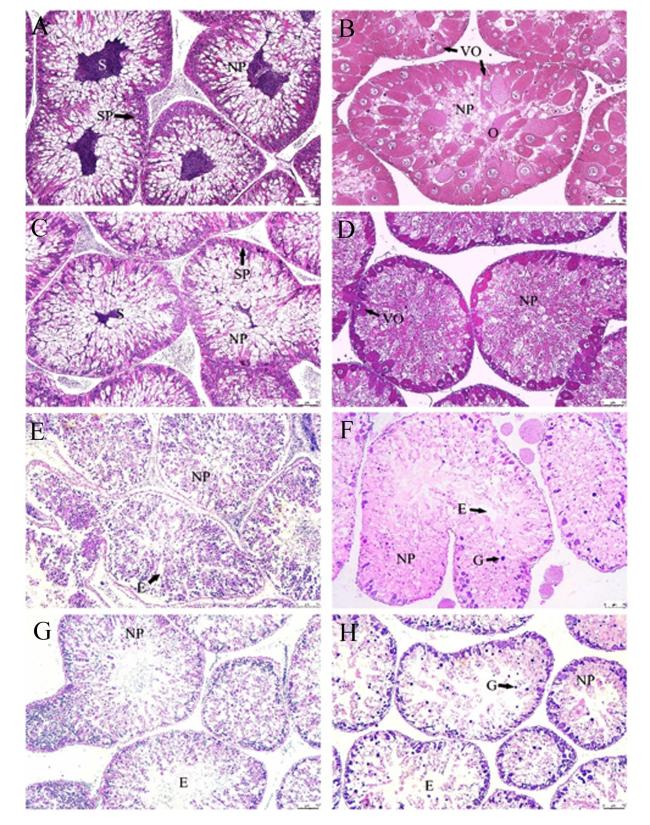
图1可见,试验1结束时,饲料组雌性和雄性海胆性腺均同步发育至Ⅲ期,而海带组雄性海胆性腺发育至Ⅲ期,雌性海胆性腺仅发育至Ⅱ期;试验2结束时,饲料组和海带组雌性和雄性海胆性腺发育同步,均发育至Ⅵ期。
图1 不同投喂模式对中间球海胆性腺发育的影响

A:试验1,饲料组Ⅲ期(雄性);B:试验1,饲料组Ⅲ期(雌性);C:试验1,海带组Ⅲ期(雄性);D:试验1,海带组Ⅱ期(雌性);E:试验2,饲料组Ⅵ期(雄性);F:试验2,饲料组Ⅵ期(雌性);G:试验2,海带组,Ⅵ期(雄性);H:试验2,海带组,第Ⅵ阶段(雌性)。

NP:营养吞噬细胞;SP:精母细胞;S:精子;VO:卵母细胞;O:卵子;E:空腔;G:卵母细胞裂解产物。

Fig.1 Effects of different feeding programs on gonad development of sea urchins (40×)

A: experiment 1, feed group, stage Ⅲ (male); B: experiment 1, feed group, stage Ⅲ (female); C: experiment 1, kelp group, stage Ⅲ (male); D: experiment 1, kelp group, stage Ⅱ (female); E: experiment 2, feed group, stage Ⅵ (male); F: experiment 2, feed group, stage Ⅵ (female); G: experiment 2, kelp group, stage Ⅵ (male); H: experiment 2, kelp group, stage Ⅵ (female).

NP: nutrient phagocyte; SP: spermatocytes; S: sperm; VO: oocytes; O: ovum; E: cavity; G: oocyte lysate product.

2.3 不同投喂模式对中间球海胆性腺感官品质的影响

2.3.1 性腺颜色

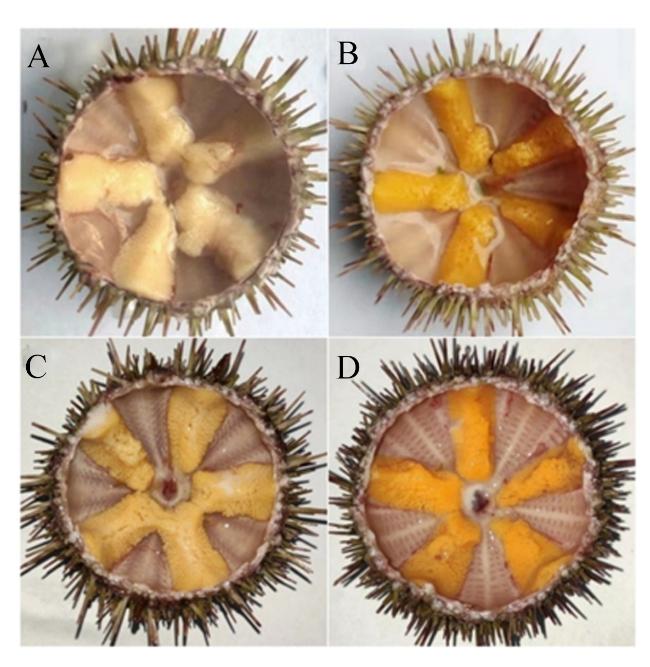
表3图2可知,试验1结束时,饲料组海胆性腺的a*、b*值均显著低于海带组(P<0.05),而L*、ΔE1、ΔE2值均显著高于海带组(P<0.05);试验2结束时,饲料组海胆性腺的a*、b*值均显著低于海带组(P<0.05),而L*、ΔE1、ΔE2值均显著高于海带组(P<0.05)。与试验1相比,试验2饲料组和海带组海胆性腺的L*、a*、b*值均显著提高(P<0.05),ΔE1与ΔE2值均显著下降(P<0.05)。
表3 不同投喂模式对中间球海胆性腺颜色的影响

Table 3 Effects of different feeding programs on gonad color of sea urchins

项目
Items
试验1 Experiment 1 试验2 Experiment 2
饲料组Feed group 海带组Kelp group 饲料组Feed group 海带组Kelp group
亮度L* 62.26±2.80Aa 57.10±0.62Ab 76.65±4.66Ba 69.78±4.03Bb
红度a* 7.38±0.90Aa 19.93±3.43Ab 13.06±4.00Ba 26.77±2.70Bb
黄度b* 21.50±2.74Aa 37.27±2.38Ab 39.61±5.48Ba 50.15±5.17Bb
ΔE1 44.93±2.74Aa 27.52±3.17Ab 27.35±7.34Ba 12.18±1.41Bb
ΔE2 51.02±2.79Aa 34.96±2.94Ab 31.16±6.55Ba 17.47±4.53Bb

ΔE1:性腺颜色与标准浅橙黄色的差值 difference value between gonad color and standard light orange yellow。ΔE2:性腺颜色与标准浅黄色的差值 difference value between gonad color and standard light yellow。

图2 中间球海胆幼胆性腺照片

A:试验1,饲料组;B:试验1,海带组;C:试验2,饲料组;D:试验2,海带组。

Fig.2 Photographs of gonads of sea urchins

A: experiment 1, feed group; B: experiment 1, kelp group; C: experiment 2, feed group; D: experiment 2, kelp group.

2.3.2 性腺质地

表4可知,试验1结束时,饲料组海胆性腺的硬度显著低于海带组(P<0.05);试验2结束时,饲料组海胆性腺的黏附性和内聚性均显著高于海带组(P<0.05)。与试验1相比,试验2饲料组海胆性腺的内聚性、弹性、胶着性、咀嚼性及海带组海胆性腺的弹性均显著提高(P<0.05)。
表4 不同投喂模式对中间球海胆性腺质地的影响

Table 4 Effects of different feeding programs on gonad texture profile of sea urchin

项目
Items
试验1 Experiment 1 试验2 Experiment 2
饲料组Feed group 海带组Kelp group 饲料组Feed group 海带组Kelp group
硬度Hardness/N 0.73±0.06a 0.90±0.11b 0.83±0.14 0.89±0.16
黏附性Adhesiveness/N·mm 0.33±0.24 0.21±0.17 0.36±0.21a 0.07±0.14b
内聚性Cohesiveness 0.26±0.06A 0.24±0.06 0.31±0.03Ba 0.24±0.05b
弹性Springiness/mm 0.16±0.02A 0.15±0.03A 0.20±0.02B 0.20±0.04B
胶着性Gumminess/N 0.19±0.05A 0.22±0.08 0.26±0.05B 0.22±0.06
咀嚼性Chewiness/mJ 0.03±0.01A 0.04±0.02 0.05±0.01B 0.04±0.02

2.4 不同投喂模式对中间球海胆性腺营养组成的影响

2.4.1 常规营养成分

表5可知,试验1结束时,饲料组海胆性腺的水分含量显著高于海带组(P<0.05),粗蛋白质和粗脂肪含量无显著差异(P>0.05);试验2结束时,饲料组与海带组海胆性腺的水分、粗蛋白质和粗脂肪含量均无显著差异(P>0.05)。与试验1相比,试验2海带组海胆性腺的粗蛋白质含量显著提高(P<0.05)。
表5 不同投喂模式对中间球海胆性腺常规营养成分的影响(湿物质基础)

Table 5 Effects of different feeding programs on gonad conventional nutrients of sea urchin (WM basis) %

项目
Items
试验1 Experiment 1 试验2 Experiment 2
饲料组Feed group 海带组Kelp group 饲料组Feed group 海带组Kelp group
水分Moisture 81.04±0.21a 77.68±1.48b 78.26±1.77 74.98±1.23
粗蛋白质CP 9.92±0.72 11.21±0.72A 12.12±1.44 13.58±1.03B
粗脂肪EE 4.87±1.29 4.51±0.87 4.04±1.41 4.10±0.80

2.4.2 氨基酸组成

表6可知,试验1结束时,饲料组海胆性腺的非必需氨基酸(NEAA)和甜味氨基酸含量显著高于海带组(P<0.05),必需氨基酸(EAA)、总氨基酸(TAA)、苦味氨基酸、鲜味氨基酸含量均略高于海带组(P>0.05);试验2结束时,饲料组海胆性腺的EAA含量显著高于海带组(P<0.05),TAA、NEAA、苦味氨基酸、甜味氨基酸和鲜味氨基酸含量均略高于海带组(P>0.05)。与试验1相比,试验2海带组海胆性腺的EAA、TAA、NEAA和苦味氨基酸含量均显著提高(P<0.05)。
表6 不同投喂模式对中间球海胆性腺氨基酸组成的影响(湿物质基础)

Table 6 Effects of different feeding programs on gonad amino acid composition of sea urchin (WM basis)

氨基酸
Amino acids
试验1 Experiment 1 试验2 Experiment 2
饲料组Feed group 海带组Kelp group 饲料组Feed group 海带组Kelp group
天冬氨酸Asp/(g/kg) 3.53±0.62 2.07±0.83 3.78±0.63 3.05±0.16
苏氨酸Thr/(g/kg) 3.23±0.58 1.95±0.69A 3.83±0.38a 3.15±0.15Bb
丝氨酸Ser/(g/kg) 4.79±1.45a 2.27±0.61Ab 4.57±0.52 3.79±0.04B
谷氨酸Glu/(g/kg) 5.14±0.81 3.58±0.91 5.10±0.59 4.50±0.25
甘氨酸Gly/(g/kg) 9.36±0.12A 8.55±1.43 10.20±1.37B 8.29±0.41
丙氨酸Ala/(g/kg) 4.19±0.81a 2.61±0.41b 3.97±0.41 3.44±0.10
半胱氨酸Cys/(g/kg) 0.22±0.04 0.16±0.06 0.22±0.07 0.20±0.11
缬氨酸Val/(g/kg) 2.08±0.46 1.13±0.41A 2.50±0.19 2.28±0.11B
蛋氨酸Met/(g/kg) 0.91±0.22 0.55±0.35A 1.33±0.19 1.13±0.04B
异亮氨酸Ile/(g/kg) 2.29±0.63 1.41±0.60 2.79±0.27a 2.28±0.09b
亮氨酸Leu/(g/kg) 3.8±0.78a 2.17±0.65Ab 4.44±0.29a 3.83±0.11Bb
酪氨酸Tyr/(g/kg) 1.50±0.48 0.81±0.34A 2.01±0.22 1.83±0.12B
苯丙氨酸Phe/(g/kg) 1.79±0.32 1.23±0.34 2.05±0.33 1.67±0.20
赖氨酸Lys/(g/kg) 2.39±0.62 1.89±0.54A 3.50±0.73 3.61±0.07B
组氨酸His/(g/kg) 1.86±0.62 0.79±0.37 1.86±0.43 1.34±0.16
精氨酸Arg/(g/kg) 2.52±0.58 2.21±0.31A 3.74±0.64 3.94±0.17B
脯氨酸Pro/(g/kg) 2.93±0.43 2.31±0.29A 2.90±0.31 2.78±0.04B
必需氨基酸EAA/(g/kg) 18.37±3.51 11.13±3.89A 22.30±1.23a 19.29±0.60Bb
总氨基酸TAA/(g/kg) 52.54±7.47 35.69±7.48A 58.79±5.13 51.11±1.30B
非必需氨基酸NEAA/(g/kg) 34.18±4.34a 24.56±3.75Ab 36.49±3.92 31.82±0.71B
苦味氨基酸Total bitter AA/(g/kg) 19.37±3.55 12.35±3.78A 24.43±1.61 22.11±0.53B
甜味氨基酸Total sweet AA/(g/kg) 24.51±2.95a 17.69±2.46b 25.47±2.81 21.45±0.47
鲜味氨基酸
Total umami AA/(g/kg)
8.67±1.25 5.66±1.73 8.88±1.19 7.55±0.37
必需氨基酸/总氨基酸EAA/TAA 0.35±0.03 0.31±0.05 0.38±0.01 0.38±0.00

2.4.3 脂肪酸组成

表7可知,试验1结束时,饲料组海胆性腺的二十碳五烯酸(EPA)含量和n-3/n-6多不饱和脂肪酸(PUFA)显著低于海带组(P<0.05),二十二碳六烯酸(DHA)含量和DHA/EPA显著高于海带组(P<0.05);试验2结束时,饲料组海胆性腺的EPA、∑n-3 PUFA含量和n-3/n-6 PUFA均显著低于海带组(P<0.05),DHA含量及ARA/EPA、DHA/EPA显著高于海带组(P<0.05)。与试验1相比,试验2饲料组和海带组海胆性腺的EPA、∑n-3 PUFA含量和n-3/n-6 PUFA均显著提高(P<0.05),饲料组海胆性腺的ARA含量显著提高(P<0.05),海带组海胆性腺的ARA/EPA显著降低(P<0.05)。
表7 不同投喂模式对中间球海胆性腺脂肪酸组成的影响(湿物质基础)

Table 7 Effects of different feeding programs on gonad fatty acid composition of sea urchins (WM basis)

脂肪酸
Fatty acids
试验1 Experiment 1 试验2 Experiment 2
饲料组Feed group 海带组Kelp group 饲料组Feed group 海带组Kelp group
C14∶0/(g/kg) 0.41±0.19 0.53±0.32 0.49±0.19 0.44±0.10
C16∶0/(g/kg) 1.90±0.64 1.42±0.51 1.94±0.75 1.48±0.29
C20∶0/(g/kg) 0.03±0.00 0.04±0.01 0.05±0.02 0.05±0.00
∑SFA/(g/kg) 2.34±0.82 1.98±0.85 2.48±0.95 1.97±0.39
C14∶1/(g/kg) 0.03±0.02 0.02±0.02 0.02±0.01 0.03±0.02
C16∶1/(g/kg) 0.14±0.10 0.26±0.13 0.36±0.17 0.31±0.11
C18∶1/(g/kg) 1.54±0.56a 0.45±0.30b 1.19±0.49 0.40±0.04
C20∶1/(g/kg) 0.51±0.19 0.46±0.17 0.55±0.07 0.47±0.01
∑MUFA/(g/kg) 2.33±0.62 1.18±0.62 2.12±0.73 1.22±0.16
C18∶3n-3/(g/kg) 0.08±0.01 0.05±0.03 0.10±0.04 0.09±0.01
C20∶5n-3(EPA)/(g/kg) 0.09±0.04Aa 0.30±0.08Ab 0.33±0.04Ba 0.48±0.05Bb
C22∶6n-3(DHA)/(g/kg) 0.02±0.00a 0b 0.01±0.01a 0b
∑n-3 PUFA/(g/kg) 0.20±0.04A 0.34±0.11A 0.44±0.05Ba 0.56±0.05Bb
C18∶2n-6/(g/kg) 1.78±0.38a 0.20±0.11b 1.35±0.52 0.21±0.01
C20∶4n-6(ARA)/(g/kg) 0.73±0.16A 0.81±0.23 1.26±0.27B 1.11±0.10
∑n-6 PUFA/(g/kg) 2.51±0.53 1.01±0.33 2.61±0.76 1.32±0.09
n-3/n-6 PUFA 0.08±0.02Aa 0.34±0.02Ab 0.18±0.05Ba 0.42±0.02Bb
ARA/EPA 8.99±4.69 2.71±0.05A 3.87±0.81a 2.33±0.16Bb
DHA/EPA 0.25±0.13a 0b 0.04±0.02a 0b

SFA:饱和脂肪酸 saturated fatty acid;MUFA:单不饱和脂肪酸 monounsaturated fatty acid;EPA:二十碳五烯酸 eicosapentaenoic acid;DHA:二十二碳六烯酸 docosahexaenoic acid;PUFA:多不饱和脂肪酸 polyunsaturated fatty acid;ARA:二十碳四烯酸 arachidonic acid。

3 讨论

蛋白质是大多数水生动物饮食中最必要和昂贵的营养物质之一。提供足够的膳食蛋白质会减少饲料摄入量[22]和增加生长速率[23]。试验1结束时,海带组海胆的增重率大于饲料组,这与前人的研究结果[11,24]相似。尽管海带中蛋白质等营养物质的含量不及配合饲料,但其促生长性能却往往优于配合饲料,一方面可能是由于海带中含有丰富的纤维素,而投喂海带的海胆肠道纤维素酶含量显著高于投喂饲料的海胆[11],因此海胆对纤维素有更高的利用率;另一方面是海带中含有某些促生长物质,当喂食藻类食物或补充有20%(重量)藻类的配方饲料时,幼年白棘三列海胆(Tripneustes gratilla)生长更快[22]。本试验配合饲料中未添加藻粉,这可能是导致饲料组海胆增重率较低的原因。试验1结束时,饲料组海胆的性腺指数显著高于海带组,这与之前的研究结果[5,22,25]相似,相比于海带,高蛋白质水平的配合饲料可以增加海胆性腺的产量。脂肪水平和种类也是影响海胆性腺发育的重要因素。González-Durán等[26]向北方球海胆(Strongylocentrotus droebachiensis)投喂缺乏n-3和n-6 PUFA的饲料后,海胆出现生长不良状况。有研究表明,食物中的磷脂是影响海胆性腺发育和质量的重要营养素[27]。本试验中使用的配合饲料较海带相比具有更高的脂肪含量,并添加了0.8%的大豆磷脂,这可能是饲料组海胆性腺指数高于海带组的原因。
性腺感官品质(如质地、颜色和味道)已经成为评估海胆市场价值的一个越来越重要的指标[25]。亮黄色、黄橙色和芒果橙色是最受消费者喜欢的颜色,而淡白色或棕褐色则不被市场认可[28]。在本研究的2个试验中,海带组海胆性腺的L*值较低,a*和b*值均高于饲料组,表明海带组海胆性腺较饲料组更红、更黄,而饲料组海胆性腺色泽更白亮。ΔE值表示与标准颜色的色差,本研究的2个试验中,海带组ΔE值均显著低于饲料组,这表明一直以海带为食的海胆性腺颜色更接近标准颜色,更具有商业价值,这与其他几种海胆的研究结果[13,22,29]相似。与海藻喂养的海胆相比,本研究所用配合饲料养殖的海胆性腺指数虽高,但色泽较浅,这可能是由于饲料中未添加虾青素导致。
试验2结束后,饲料组海胆性腺较试验1的ΔE1、ΔE2值显著减小,说明投喂饲料后接力投喂海带可以提升海胆性腺颜色。海胆性腺的独特颜色是其组织中类胡萝卜素积累的结果[30]。虽然海胆不能从头合成类胡萝卜素,但它们通过在肠道中氧化β-胡萝卜素生成海胆酮,并将其储存在性腺中[31-32]。海胆酮占性腺类胡萝卜素总量的85%,其他色素如β-和α-胡萝卜素、叶黄素等仅有少量积累[33-34]。本试验使用的配合饲料未添加任何海藻粉及色素,这可能是导致试验1饲料组海胆性腺颜色发白的原因。而海带中丰富的色素可能是试验2中饲料组海胆性腺颜色得到提升的关键。Shpigel等[35]向紫海胆投喂不同时长组合的配合饲料与石莼,发现使用配合饲料投喂8周,再投喂4周的藻类食物,可以使海胆产出理想的性腺颜色和最佳的性腺指数。
硬度是一个重要的质构指标[36],因为高质量的性腺在加工过程中需要保持其完整性。以往的研究表明性腺的硬度可能与含水量、性腺生长速度相关[8,14,27,37]。本研究的2个试验中,饲料组海胆性腺指数均高于海带组,且饲料组海胆性腺水分含量均高于海带组,较高的水分含量会导致性腺硬度下降[37],这也可能是导致饲料组海胆性腺硬度较小的原因。试验1结束时,饲料组海胆性腺的硬度显著低于海带组,且水分含量显著高于海带组。试验2结束时,饲料组海胆性腺的硬度和水分含量与海带组无显著差异,说明饲料组海胆在经历78 d的海带投喂后,性腺硬度逐渐恢复至野生状态。此外,饲料组海胆性腺的其他质地指标如内聚性、弹性、胶着性、咀嚼性在经历78 d的海带投喂后均显著升高。
氨基酸组成和含量是评价食品营养价值的重要指标[38]。人们将氨基酸按照其反映出的味道分为3类:苦味氨基酸、甜味氨基酸、鲜味氨基酸。其中,苏氨酸、丝氨酸、甘氨酸、丙氨酸、脯氨酸属于甜味氨基酸;天冬氨酸、谷氨酸属于鲜味氨基酸;蛋氨酸、异亮氨酸、亮氨酸、酪氨酸、苯丙氨酸、赖氨酸、组氨酸、精氨酸属于苦味氨基酸[39]。试验1结束时,饲料组海胆性腺的NEAA含量显著高于海带组,EAA和TAA含量也高于海带组,但差异不显著,这可能与配合饲料中较高的蛋白质含量有关。试验2结束时,饲料组海胆性腺的EAA含量显著高于海带组。Takagi等[40]研究表明,海带中含有大量的游离氨基酸,推测饲料组海胆在摄食海带后将其所需的游离氨基酸转化为必需氨基酸,导致海胆性腺的EAA含量增加。在经历试验2投喂海带后,海带组海胆性腺的EAA、TAA、NEAA含量均显著增加,这可能是与海胆生长阶段有关。
试验1结束时,饲料组海胆性腺的C18∶1含量显著高于海带组,这可能与饲料中较高的脂肪含量有关。在经历试验2海带的投喂后,饲料组海胆性腺的C18∶1含量明显下降,也可以印证这一点。海带多不饱和脂肪酸以C18和C20 PUFA为主,其中EPA和ARA为海带等褐藻的标志性多不饱和脂肪酸[41-42]。试验1结束时,饲料组海胆性腺的EPA含量显著低于海带组,在喂食海带后海胆性腺的EPA含量增加,海带组EPA含量始终高于饲料组,且试验2显著高于试验1,可能是因为生长所需;饲料组海胆性腺的ARA含量在经历海带投喂后也显著增加。大量的n-6 PUFA会增加慢性炎症性疾病、心血管疾病、肥胖症、关节炎和阿尔茨海默病的可能,而较高的n-3/n-6 PUFA在降低人类前列腺癌的患病率方面具有重要作用[43]。2个试验中,海带组海胆性腺的n-3/n-6 PUFA均高于饲料组,但饲料组海胆在经历海带投喂后,性腺的n-3/n-6 PUFA显著增加,虽然仍然显著低于海带组,但这表明向投喂饲料的海胆接力投喂海带,可以有效改变海胆性腺的n-3/n-6 PUFA,提升性腺的营养品质。

4 结论

投喂配合饲料虽然提高了海胆的性腺指数,但降低了海胆的生长和性腺感官品质。与全程投喂配合饲料相比,使用配合饲料-海带接力的投喂模式可提升海胆性腺的颜色、质地和必需脂肪酸含量。
[1]
常亚青, 丁君, 宋坚, 等. 海参、海胆生物学研究与养殖[M]. 北京: 海洋出版社, 2004.

CHANG Y Q, DING J, SONG J, et al. Biological studies and aquaculture of sea cucumbers and sea urchins[M]. Beijing: China Ocean Press, 2004. (in Chinese)

[2]
农业农村部渔业渔政管理局, 全国水产技术推广总站,中国水产学会.中国渔业统计年鉴-2022[M]. 北京: 中国农业出版社, 2022.

Fisheries and Fisheries Administration of the Ministry of Agriculture and Rural Affairs,National Fisheries Technology Extension Center, China Society of Fisheries.China fisheries statistical yearbook 2022[M]. Beijing: China Agriculture Press, 2022. (in Chinese)

[3]
ZHANG W J, LV Z M, LI C H, et al. Transcriptome profiling reveals key roles of phagosome and NOD-like receptor pathway in spotting diseased Strongylocentrotus intermedius[J]. Fish & Shellfish Immunology, 2019, 84:521-531.

[4]
CARRIER T J, EDDY S D, REDMOND S. Solar-dried kelp as potential feed in sea urchin aquaculture[J]. Aquaculture International, 2017, 25(1):355-366.

DOI

[5]
ZUO R T, HOU S Q, WU F X, et al. Higher dietary protein increases growth performance,anti-oxidative enzymes activity and transcription of heat shock protein 70 in the juvenile sea urchin (Strongylocentrotus intermedius) under a heat stress[J]. Aquaculture and Fisheries, 2017, 2(1):18-23.

DOI

[6]
PEARCE C M, DAGGETT T L, ROBINSON S M C. Effect of binder type and concentration on prepared feed stability and gonad yield and quality of the green sea urchin,Strongylocentrotus droebachiensis[J]. Aquaculture, 2002, 205(3/4):301-323.

DOI

[7]
HEFLIN L E, GIBBS V K, POWELL M L, et al. Effect of dietary protein and carbohydrate levels on weight gain and gonad production in the sea urchin Lytechinus variegatus[J]. Aquaculture, 2012, 358/359:253-261.

DOI

[8]
MCBRIDE S C, PRICE R J, TOM P D, et al. Comparison of gonad quality factors:color,hardness and resilience,of Strongylocentrotus franciscanus between sea urchins fed prepared feed or algal diets and sea urchins harvested from the Northern California fishery[J]. Aquaculture, 2004, 233(1/2/3/4):405-422.

DOI

[9]
LAWRENCE J M, CHANG Y Q, CAO X B, et al. Potential for production of uni by Strongylocentrotus intermedius using dry formulated feeds[J]. Journal of the World Aquaculture Society, 2011, 42(2):253-260.

DOI

[10]
ZUO R T, LI M, DING J, et al. Higher dietary arachidonic acid levels improved the growth performance,gonad development,nutritional value,and antioxidant enzyme activities of adult sea urchin (Strongylocentrotus intermedius)[J]. Journal of Ocean University of China, 2018, 17(4):932-940.

DOI

[11]
LI M, ZHANG F, DING J, et al. Effects of lipid sources on the growth performance,gonad development,fatty acid profile and transcription of related genes in juvenile sea urchin (Strongylocentrotus intermedius)[J]. Aquaculture Nutrition, 2021, 27(1):28-38.

DOI

[12]
LV D L, ZHANG F, DING J, et al. Effects of dietary n-3 LC-PUFA on the growth performance,gonad development,fatty acid profile,transcription of related genes and intestinal microflora in adult sea urchin (Strongylocentrotus intermedius)[J]. Aquaculture Research, 2021, 52(4):1431-1441.

DOI

[13]
ONOMU A J, VINE N G, CYRUS M D, et al. The effect of fresh seaweed and a formulated diet supplemented with seaweed on the growth and gonad quality of the collector sea urchin,Tripneustes gratilla,under farm conditions[J]. Aquaculture Research, 2020, 51(10):4087-4102.

DOI

[14]
ZHANG F, NING Y C, YUAN R, et al. Effects of soya lecithin addition on the growth,antioxidant capacity,gonad development and nutritional quality of adult sea urchin (Strongylocentrotus intermedius)[J]. Aquaculture Reports, 2022, 22:100990.

DOI

[15]
邵婷, 覃川杰, 袁登越, 等. 再投喂鱼油对瓦氏黄颡鱼肌肉脂肪酸组成的影响[J]. 水生生物学报, 2017, 41(1):139-145.

SHAO T, QIN C J, YUAN D Y, et al. Restoration of flesh fatty acid composition in darkbarbel catfish (Pelteobagrus vachelli) using a finishing fish oil diet[J]. Acta Hydrobiologica Sinica, 2017, 41(1):139-145. (in Chinese)

[16]
BELL J G, MCGHEE F, CAMPBELL P J, et al. Rapeseed oil as an alternative to marine fish oil in diets of post-smolt Atlantic salmon (Salmo salar):changes in flesh fatty acid composition and effectiveness of subsequent fish oil“wash out”[J]. Aquaculture, 2003, 218(1/2/3/4):515-528.

DOI

[17]
VIZZINI S, MICCICHÈ L, VACCARO A, et al. Use of fresh vegetable discards as sea urchin diet:effect on gonad index and quality[J]. Aquaculture International, 2015, 23(1):127-139.

DOI

[18]
LUO S B, ZHAO C, CHANG Y Q, et al. Banana peel provides a new insight into improving gonad flavor in the sea urchin Strongylocentrotus intermedius[J]. Aquaculture International, 2014, 22(2):833-841.

DOI

[19]
SANTOS P M, ALBANO P, RAPOSO A, et al. The effect of temperature on somatic and gonadal development of the sea urchin Paracentrotus lividus (Lamarck,1816)[J]. Aquaculture, 2020, 528:735487.

DOI

[20]
BYRNE M. Annual reproductive cycles of the commercial sea urchin Paracentrotus lividus from an exposed intertidal and a sheltered subtidal habitat on the west coast of Ireland[J]. Marine Biology, 1990, 104(2):275-289.

DOI

[21]
MARTÍNEZ-PITA I, GARCÍA F J, PITA M L. Males and females gonad fatty acids of the sea urchins Paracentrotus lividus and Arbacia lixula (Echinodermata)[J]. Helgoland Marine Research, 2010, 64(2):135-142.

DOI

[22]
DAGGETT T L, PEARCE C M, TINGLEY M, et al. Effect of prepared and macroalgal diets and seed stock source on somatic growth of juvenile green sea urchins (Strongylocentrotus droebachiensis)[J]. Aquaculture, 2005, 244(1/2/3/4):263-281.

DOI

[23]
HAMMER B W, HAMMER H S, WATTS S A, et al. The effects of dietary protein concentration on feeding and growth of small Lytechinus variegatus (Echinodermata:Echinoidea)[J]. Marine Biology, 2004, 145(6):1143-1157.

DOI

[24]
CYRUS M D, BOLTON J J, MACEY B M. The role of the green seaweed Ulva as a dietary supplement for full life-cycle grow-out of Tripneustes gratilla[J]. Aquaculture, 2015, 446:187-197.

DOI

[25]
NING Y C, ZHANG F, TANG L, et al. Effects of dietary lipid sources on the growth,gonad development,nutritional and organoleptic quality,transcription of fatty acid synthesis related genes and antioxidant capacity during cold storage in adult sea urchin (Strongylocentrotus intermedius)[J]. Aquaculture, 2022, 548(Part 2):737688.

DOI

[26]
GONZÁLEZ-DURÁN E, CASTELL J D, ROBINSON S M C, et al. Effects of dietary lipids on the fatty acid composition and lipid metabolism of the green sea urchin Strongylocentrotus droebachiensis[J]. Aquaculture, 2008, 276(1/2/3/4):120-129.

DOI

[27]
GIBBS V K, WATTS S A, LAWRENCE A L, et al. Dietary phospholipids affect growth and production of juvenile sea urchin Lytechinus variegatus[J]. Aquaculture, 2009, 292(1/2):95-103.

DOI

[28]
CHEN Y C, CHEN T Y, CHIOU T K, et al. Seasonal variation on general composition,free amino acids and fatty acids in the gonad of Taiwan’s sea urchin Tripneustes gratilla[J]. Journal of Marine Science and Technology, 2013, 21(6):723-732.

[29]
ASIA F B, VILLAMOR J G C, FAYLOGNA J C. The effect of prepared diet on the somatic and gonad growth performance of the sea urchin Tripneustes gratilla (Linnaeus,1758)[J]. E-International Scientific Research Journal, 2012, 5(3):214-227.

[30]
KELLY M S, SYMONDS R C. Chapter 11-carotenoids in sea urchins[J]. Developments in Aquaculture and Fisheries Science, 2013, 38:171-177.

[31]
TSUSHIMA M, KAWAKAMI T, MATSUNO T. Metabolism of carotenoids in sea-urchin Pseudocentrotus depressus[J]. Comparative Biochemistry and Physiology Part B:Comparative Biochemistry, 1993, 106(3):737-741.

DOI

[32]
SYMONDS R C, KELLY M S, CARIS-VEYRAT C, et al. Carotenoids in the sea urchin Paracentrotus lividus:occurrence of 9’-cis-echinenone as the dominant carotenoid in gonad colour determination[J]. Comparative Biochemistry and Physiology Part B:Biochemistry and Molecular Biology, 2007, 148(4):432-444.

DOI

[33]
BORISOVETS E E, ZADOROZHNY P A, KALININA M V, et al. Changes of major carotenoids in gonads of sea urchins (Strongylocentrotus intermedius and S. nudus) at maturation[J]. Comparative Biochemistry and Physiology Part B:Biochemistry and Molecular Biology, 2002, 132(4):779-790.

DOI

[34]
LIYANA-PATHIRANA C, SHAHIDI F, WHITTICK A, et al. Lipid and lipid soluble components of gonads of green sea urchin (Strongylocentrotus droebachiensis)[J]. Journal of Food Lipids, 2002, 9(2):105-126.

DOI

[35]
SHPIGEL M, MCBRIDE S C, MARCIANO S, et al. Improving gonad colour and somatic index in the European sea urchin Paracentrotus lividus[J]. Aquaculture, 2005, 245(1/2/3/4):101-109.

DOI

[36]
MCLAUGHLIN G, KELLY M. Effect of artificial diets containing carotenoid-rich microalgae on gonad growth and colour in the sea urchin Psammechinus miliaris (Gmelin)[J]. Journal of Shellfish Research, 2001, 20(1):377-382.

[37]
PEARCE C M, DAGGETT T L, ROBINSON S M C. Effect of urchin size and diet on gonad yield and quality in the green sea urchin (Strongylocentrotus droebachiensis)[J]. Aquaculture, 2004, 233(1/2/3/4):337-367.

DOI

[38]
DONG Z G, ZHANG M, WEI S F, et al. Effect of farming patterns on the nutrient composition and farming environment of loach,Paramisgurnus dabryanus[J]. Aquaculture, 2018, 497:214-219.

DOI

[39]
CUESTA-GOMEZ D M, LAZO J P, SÁNCHEZ-SAAVEDRA M D P. Effects of dietary fish oil and soya bean lecithin on gonad index,colour and biochemical composition of the purple sea urchin,Strongylocentrotus purpuratus (Stimpson 1857)[J]. Aquaculture Research, 2020, 51(8):3384-3402.

DOI

[40]
TAKAGI S, MURATA Y, INOMATA E, et al. Pronounced effects of the basal frond portion of the kelp Saccharina japonica on gonad qualities of the sea urchin Mesocentrotus nudus from a barren[J]. Aquaculture, 2020, 516:734623.

DOI

[41]
李宪璀, 范晓, 韩丽君, 等. 中国黄、渤海常见大型海藻的脂肪酸组成[J]. 海洋与湖沼, 2002, 33(2):215-224.

LI X C, FAN X, HAN L J, et al. Fatty acids of common marine macrophytes from the yellow and Bohai seas[J]. Oceanologia et Limnologia Sinica, 2002, 33(2):215-224. (in Chinese)

[42]
许强, 高菲, 杨红生. 海带组织降解过程中定殖微型生物群落的特征[J]. 水产学报, 2010, 34(12):1853-1859.

XU Q, GAO F, YANG H S. Micro organism colonization in different decomposing phases of kelp (Laminaria japonica)[J]. Journal of Fisheries of China, 2010, 34(12):1853-1859. (in Chinese)

[43]
WILLIAMS C D, WHITLEY B M, HOYO C, et al. A high ratio of dietary n-6/n-3 polyunsaturated fatty acids is associated with increased risk of prostate cancer[J]. Nutrition Research, 2011, 31(1):1-8.

DOI PMID

Outlines

/