REVIEW

Research Progress on Effects of Oregano Oil and Its Bioactive Components on Intestinal Health of Poultry

  • CHEN Yujuan , 1 ,
  • SHANG Xiuguo , 1, * ,
  • CHEN Wei 2 ,
  • ZHENG Chuntian 2
Expand
  • 1 Foshan University, Foshan 528225, China
  • 2 Guangdong Key Laboratory of Livestock Breeding and Nutrition Research, Key Laboratory of Animal Nutrition and Feed Science in South China, Ministry of Agriculture and Rural Affairs, State Key Laboratory of Livestock and Poultry Breeding, Institute of Animal Science, Guangdong Academy of Agricultural Sciences, Guangzhou 510640, China
* associate professor, E-mail:

Received date: 2023-06-12

  Online published: 2023-12-11

Abstract

Oregano oil is a natural plant essential oil extracted from oregano, which has biological functions such as sterilization, oxidation resistance, and immunity enhancement. It can improve the morphology of poultry’s intestinal tissues, maintain the integrity of intestinal barrier, regulate the balance of intestinal microflora, and enhance immunity, etc., so as to keep the intestinal environment in a good stable state and promote the normal growth of poultry. This paper will focus on the active ingredients and physical and chemical characteristics of oregano oil, and explain its protective effect and mechanism on the intestinal morphology, intestinal microbes, intestinal barrier and intestinal mucosa of poultry, so as to promote the research progress of oregano oil in poultry production and provide theoretical reference for its rational application in poultry production.

Cite this article

CHEN Yujuan , SHANG Xiuguo , CHEN Wei , ZHENG Chuntian . Research Progress on Effects of Oregano Oil and Its Bioactive Components on Intestinal Health of Poultry[J]. Chinese Journal of Animal Nutrition, 2023 , 35(12) : 7552 -7560 . DOI: 10.12418/CJAN2023.685

随着饲料行业的全面禁抗,寻求安全高效的绿色添加剂是家禽业的研究热点之一。牛至油作为绿色植物提取物,富含香芹酚、百里酚等活性成分,具有杀菌、抑菌及抗氧化等作用,能够维持家禽肠道菌群的平衡、提高营养物质的消化吸收率、增强动物的免疫力、促进动物生长。本文将围绕牛至的活性成分及其理化特性,阐述其对家禽的肠道形态、肠道内微生物菌群状况、肠道屏障、肠道黏膜的影响及其作用机制,旨在为牛至油在家禽生产中的应用提供参考。

1 牛至油的主要活性成分

牛至是唇形科、牛至属、芳香草本植物,主要分布于亚洲、北非洲以及北美洲,作为一味传统的中药,牛至具备清热、化湿、祛暑、解表、理气等功效,可用于治疗急慢性肠炎、伤风感冒、痢疾等疾患。
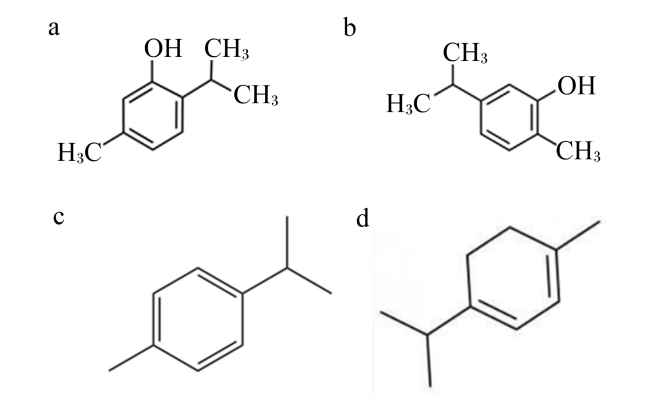
牛至油是从野生牛至中提取的酯类,为淡黄色油状液体,保留了牛至中大部分营养与药用成分,具有芳香味[1]。理化成分分析表明:牛至油中含有酚类、萜烯类及其衍生物、脂肪酸类、黄酮、甾醇等30多种化学成分,其中芹酚、百里酚、伞花烃和萜品烯分别占65%~75%、5%~8%、3%~5%和3%~5%,其化学成分的分子结构和理化特性见表1
表1 牛至油主要化学成分的分子结构和理化特性

Table 1 Molecular structure and physicochemical properties of main chemical components of oregano oil

项目
Items
百里酚
Thymol
香芹酚
Carvacrol
伞花烃
Cymene
萜品烯
Terpinene
分子式
Molecular formula
C10H14O C10H14O C10H14 C10H16
中文名
Chinese name
2-异丙基-5-甲基酚 2-甲基-5-(1-
甲基乙基)苯酚
2-异丙基甲苯、
3-异丙基甲苯、
4-异丙基甲苯
1-甲基-4-异丙
基环己二烯
形态
Form
无色晶体或
无色结晶粉末
无色至淡黄色
稠厚油状液体
无色透明液体 无色液体
生理功能
Physiological
function
抗氧化、抗炎、抗菌、
抗高脂血症、镇痛、抗痉挛、
抗真菌、防腐、抗肿瘤[4]
抗细菌、抗真菌[5]、抗病
[6]、抗氧化、调节免疫反
[7]、抗炎[8]、抗癌[9]
抗氧化、抗伤害性、
抗炎、抗焦虑、抗癌、
抗菌[10]
抗氧化[11]、抗炎[12]
抑菌[13]
牛至油的抗菌作用主要得益于其中的2种化合物——香芹酚(抵抗病原微生物和感染的最主要成分)[2]和百里香酚[3],其化学结构式见图1
图1 百里酚(a)、香芹酚(b)、伞花烃(c)和萜品烯(d)的化学结构式

Fig.1 Chemical structural formulas of thymol (a), carvacrol (b), cymene (c) and terpinene (d)

2 牛至油的生理功能及其机制

2.1 抗菌作用及其机制

牛至油中抗菌活性最强的活性成分是香芹酚。大量的研究表明,牛至油具有杀灭大肠杆菌、沙门氏菌等作用[14]。其抗菌机制目前尚无定论,综合已发表的文献,认为可能通过以下4种机制达到杀菌的效果。
1)破坏细菌的细胞壁,使细菌细胞壁上的蛋白质变性和凝固,破坏细胞壁的结构,并增加其对氢离子和钾离子的通透性,使细胞内容物外泄,阻止电子传递、蛋白质转位、磷酸化反应等,导致细胞无法进行化学渗透,引起细菌死亡[15]
2)破坏细胞膜的结构,影响细胞膜的通透性。Di Pasqua等[16]试验结果表明,香芹酚可通过氢键与细胞膜上的磷脂成分发生反应,使细胞膜崩解,导致细胞成分的泄露,对大肠杆菌、金黄色葡萄球菌等细菌有很强的抑制作用。Cui等[17]表明,牛至油会影响细胞膜的通透性,对细胞膜造成不可逆的损伤,还可以通过减少三羧酸循环的代谢产物和关键酶来抑制金黄色葡萄球菌的呼吸代谢,并抑制重要致病因子杀白细胞素(panton-valentine leukocidin,PVL)的表达,从而减少PVL毒素的产生。
3)破坏细胞核内的DNA,通过与DNA的嵌合,改变DNA的结构,导致DNA拓扑异构酶催化DNA链的切割和再连接,从而影响DNA复制、转录和翻译[17]。Wang等[18]试验表明,香芹酚能与金黄色葡萄球菌的DNA结合形成小沟,轻微打乱DNA二级结构,诱导DNA分子聚集。
4)阻止鞭毛蛋白的合成与发育,使细菌失去运动和摄食能力。王雅莹[19]研究发现,香芹酚显著下调荧光假单胞菌的菌体鞭毛合成基因表达。Burt等[20]研究表明,用含香芹酚的培养基来培养大肠杆菌后,细菌的鞭毛合成数量减少。

2.2 抗氧化作用及其机制

正常情况下,动物体内自由基的产量很少,但动物在患病、应激和特殊生理条件下,机体内会产生大量自由基,当自由基如超氧自由基($\mathrm{O}_2^{-}$·)、过氧化氢(H2O2)和羟基自由基(OH·)过度积累,就会导致组织损伤和许多细胞功能的丧失[21],引发的连锁反应会对动物机体造成严重伤害。大量研究文献证实,牛至油具有很好的抗氧化作用[22],其发挥抗氧化作用的成分主要是多酚类化合物和萜类物质(γ-萜品烯和β-异丙甲苯)[23]。目前认为,其抗氧化作用的机理主要有4项:
1)牛至油中多酚类化合物含有酚羟基,多酚羟基通过脱氢反应来清除烷氧自由基,产生较稳定的苯氧基自由基,终止自由基链式反应,达到清除自由基的效果。李娜等[23]研究发现,牛至油对1,1-二苯基-2-三硝基苯肼(DPPH)自由基和2,2-联氮-二(3-乙基-苯并噻唑-6-磺酸)二铵盐(ABTS)自由基均有较强的清除能力。Nagoor Meeran等[24]研究表明,50 μmol/L百里酚在体外对超氧阴离子自由基的清除率为86.4%。
2)牛至油中的萜类是一种具有异戊二稀骨架的化合物,其中含有大量的烯键,具有较强的还原性,能与自由基发生反应,保护细胞膜和线粒体膜中的不饱和脂肪酸,防止被氧化,维持了膜的完整性和功能[25]
3)牛至油中的百里酚可以增强内源性酶和非酶抗氧化剂的活性,达到抗氧化作用。Youdim等[26]研究发现,小鼠饲粮中添加百里酚能使大脑中超氧化物歧化酶(superoxide dismutase,SOD)和谷胱甘肽过氧化物酶(glutathione peroxidase,GSH-Px)活性显著增高。
4)与金属离子的螯合,防止金属离子对油脂的破坏[27]

2.3 抗病毒作用及其机制

大量研究证实,牛至油具有显著的抗病毒作用[28]。一般抗病毒药物主要通过抑制病毒吸附和进入、减少病毒RNA和蛋白质合成、促进被病毒侵入的细胞凋亡和自噬、调节各种病毒相关蛋白以及通路等作用来防止病毒对机体产生危害,因此大部分抗病毒药物主要对包膜病毒有效[29]。牛至油及其活性成分可通过以下2种途径来抑制病毒:
1)阻止病毒吸附宿主细胞。研究表明,香芹酚能够结合病毒的衣壳,阻止病毒吸附到宿主细胞上,抑制病毒传染,甚至使病毒衣壳失去完整性,来灭活病毒。Gilling等[30]研究表明,香芹酚可直接作用于非包膜小鼠诺如病毒的衣壳,有效灭活小鼠诺如病毒。已有研究发现,牛至对单纯疱疹病毒Ⅰ型和人类呼吸道合胞病毒具有抗病毒活性,而香芹酚显著抑制轮状病毒[31-32]。也有研究得出相反结论,Sökmen等[33]研究发现,牛至油对A型流感病毒的活性没有显著影响。这可能是由于牛至油及其酚类成分对于非包膜病毒作用更加显著,而A型流感病毒属于包膜病毒,病毒衣壳表面的脂质膜可能阻止香芹酚对衣壳的作用[34]
2)抑制病毒的复制。香芹酚可以抑制病毒复制的关键调控蛋白表达,并减少病毒mRNA帽的形成,从而抑制病毒的复制。Wang等[35]研究发现,香芹酚通过抑制HSV-2增殖过程和HSV-2诱导的肿瘤坏死因子-α(tumor necrosis factor-α,TNF-α)水平升高,通过细胞内受体相互作用蛋白3(receptor-interacting protein kinase 3,RIP3)介导的程序性细胞坏死途径降低RIP3和受体相互作用蛋白3(receptor-interacting protein kinase 3,RIP3)蛋白表达,表现出显著的抗病毒活性。Zheng等[36]试验结果显示,香芹酚有效抑制了甲型流感病毒在小鼠肺脏组织中的复制。

2.4 抗炎症反应、提高免疫力及其机制

炎症反应是具有血管系统的活体组织对损伤因子所发生的,由多种细胞、多种因子参与的复杂防御反应。在炎症过程中,免疫系统细胞会释放介质,如白细胞介素或TNF-α,激活存在于伤害性输入传递中的高级神经元以及初级伤害感受器[21]。免疫是指动物机体对自身和非自身的识别,并清除非自身的大分子物质(抗原性物质),从而保持机体内外环境平衡的一种生理学反应。通过提高营养水平和改善机体内环境(抗炎、抗氧化),能够提高动物机体的免疫力,而牛至油增强机体免疫力的机制主要是通过提高巨噬细胞的吞噬作用来达到的。牛至油抗炎并提高机体免疫力的机制主要有以下2点:
1)阻止炎症反应的特征性变化。Marchand等[37]研究发现,添加香芹酚能抑制单核细胞和中性粒细胞的迁移,降低TNF-α的水平,而炎症反应特征性的变化之一是渗出液中纤维蛋白原过剩造成的渗出液凝固、组织细胞肿胀、粒细胞和单核细胞迁移到炎症部位,因此抑制它们的迁移具有抗炎作用。Du等[38]在感染产气荚膜梭菌的肉鸡饲粮中添加60、120和240 mg/kg 植物精油(含25%百里酚和25%香芹酚),减轻其肉鸡肠道病变,改善了肠道组织形态,减少了炎症反应,并增强了特异性免疫反应。
2)降低与炎症反应有关的酶和因子。牛至油所含的酚类物质能抑制白细胞介素-8(IL-8)、白细胞介素-1β(IL-1β)和TNF-α的产生和过度表达,并通过抑制单核细胞中Toll样受体(Toll-like receptors,TLR)2基因介导的核因子-κB(nuclear factor kappa-B,NF-κB)信号传导来发挥其抗炎作用[39]。林清华等[40]研究发现,一定剂量的牛至油能增强小鼠的细胞免疫和体液免疫功能,增强小鼠腹腔巨噬细胞作用,增强机体的抗感染能力。Lillehoj等[41]研究表明,饲喂5 mg/kg香芹酚、3 mg/kg肉桂醛和2 mg/kg辣椒油树脂混合物的肉鸡肠道病变显著减少,促炎细胞因子基因表达显著降低,免疫力显著提高。Rashidian等[42]研究发现,饲粮中添加1%和2%牛至使斑马鱼血清中的溶菌酶活性显著增加,溶菌酶是机体非特异性免疫因子之一,能够溶解革兰氏阳性菌和革兰氏阴性菌,并增加吞噬作用[43],还负责激活其他重要的防御分子,包括补体系统和吞噬细胞[44]。Moraes等[45]研究发现,香芹酚还能通过降低诱导型一氧化氮合酶(iNOS)的水平,降低巨噬细胞中的免疫效应分子一氧化氮(NO)的含量,有研究表明,iNOS在健康状态下不表达,而是在免疫或微生物刺激细胞后的炎症条件下表达[46],当机体内毒素或T细胞激活巨噬细胞和多形核白细胞时,能产生大量的iNOS和超氧化物阴离子自由基,从而合成大量的NO和H2O2,这在杀伤入侵的细菌、真菌等微生物和肿瘤细胞、有机异物及在炎症损伤方面起着十分重要的作用;香芹酚对巨噬细胞产生的NO具有抑制活性,可能是因为它对过氧化物酶体增殖物激活受体(peroxisome proliferators-activated receptors,PPAR)的作用,一旦激活,就会抑制NF-κB的转录,降低iNOS水平[45],因此香芹酚具有抗过度伤害的作用。

3 牛至油对家禽肠道健康的作用

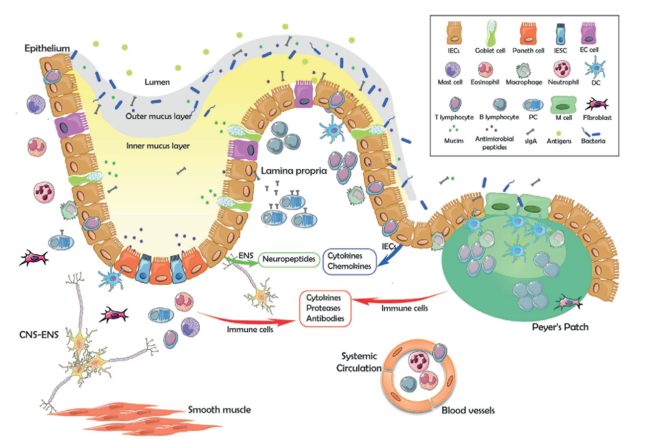
肠道不仅是动物机体营养物质消化吸收的重要场所,也是最大的免疫器官,在维持正常免疫防御功能中发挥着极其重要的作用。肠黏膜屏障包括化学屏障、生物屏障、机械屏障和免疫屏障,是肠道自身具有的保护功能,可以防止各种有害因子的侵害[47]。肠黏膜屏障的结构和组成如图2所示。
图2 肠黏膜屏障的结构和组成

CNS-ENS:中枢神经系统-肠神经系统 central nervous system - enteric nervous system;Epithelium:上皮;Lumen:肠腔;Outer mucus layer:外黏液层;Inner mucus layer:内黏液层;Smooth muscle:平滑肌;Lamina propria:固有层;ENS:肠神经系统 enteric nervous system;Neuropeptides:神经肽;Cytokines:细胞因子;Chemokines:趋化因子;Immune cells:免疫细胞;Proteases:蛋白酶;Antibodies:抗体;Systemic Circulation:体循环;Blood vessels:血管;Peyer’s Patch:派尔集合淋巴结;IECs:肠上皮细胞 enterocyte;Goblet cell:杯状细胞;Paneth cell:潘氏细胞;IESC:肠上皮干细胞 intestinal epithelial stem cells;EC cell:肠嗜铬细胞;Mast cell:肥大细胞;Eosinophil:嗜酸性粒细胞;Macrophage:巨噬细胞;Neutrophil:中性粒细胞;DC:树突细胞 dendritic cell;T lymphocyte:T淋巴细胞;B lymphocyte:B淋巴细胞;PC:浆细胞 plasmocyte;Flbroblast:成纤维细胞;M cell:M细胞;Mucins:黏蛋白;Antimicrobial peptides:抗菌肽;sIgA:分泌型免疫球蛋白A secretory immunoglobulin A;Antigens:抗原;Bacteria:细菌。

Fig.2 Structure and composition of intestinal mucosal barrier[48]

3.1 对家禽肠道菌群的影响

肠道菌群的作用包括帮助肠道消化营养物质、调节免疫系统和抵抗病原体等。生物信息学分析表明,饲粮中的牛至油影响了动物肠道微生物群的功能,如氨基糖和核苷酸糖代谢、膜转运、增强肠道屏障功能、减少肠道致病菌的数量、提高上皮细胞的再生能力,从而增加机体对营养物质的吸收[48-49]
Ruan等[50]试验结果表明,饲粮添加150~300 mg/kg牛至油能减轻黄羽肉鸡肠道局部氧化应激,促进天然抗体的产生,并调节肠道微生物群的结构。Bauer等[51]在肉鸡饲粮中添加1%或2%的牛至粉(牛至研磨成的粉末),降低了肉鸡空肠中变形杆菌、克雷伯氏菌、葡萄球菌和双歧杆菌的丰度。相反,He等[14]研究发现,在饲粮中添加100 mg/kg牛至油显著增加了蛋鸡肠道双歧杆菌和乳酸杆菌的数量,而肠道大肠杆菌和沙门氏菌的数量显著下降。Abouelezz等[52]研究显示,饲粮添加150或300 mg/kg牛至油均能降低樱桃谷生长鸭盲肠中大肠杆菌和总需氧菌的数量。Gao等[53]研究发现,同时添加200 mg/kg牛至精油和20 mg/kg肉桂醛,增加了放线菌的相对丰度,并降低了产蛋后期母鸡盲肠中脱硫弧菌的相对丰度。

3.2 对肠道形态的影响

肠道物理屏障的完整性多以十二指肠、空肠、回肠的形态指标来反映。小肠的黏膜吸收表面有许多向肠腔突出的皱襞,皱襞上还有伸向肠腔的绒毛,是吸收营养物质的主要部位,并具备电解质转运机制,其存在可使小肠的吸收面积增加10倍左右[46];绒毛根部的上皮下隐至固有层形成管状的小肠腺,即肠隐窝,隐窝基底部有未分化细胞,可分化为上皮细胞、柱状吸收细胞、杯状细胞和肠嗜铬细胞,因此,隐窝深度决定肠绒毛生成细胞的速度,反映细胞生成率,而隐窝变浅,表明细胞成熟率上升,分泌功能增强。因此,肠绒毛高度的增加与肠道消化和吸收功能的增强呈正相关;肠道绒毛高度和隐窝深度能够影响肠道健康。牛至油中的百里酚可通过影响内源性消化酶的分泌对肠道形态产生积极影响。Ibrahim等[54]研究发现,饲粮含1%百里酚纳米乳能维持肉鸡肠黏膜屏障紧密连接的完整性。江小帆等[55]研究表明,饲粮添加牛至油能显著降低芦花鸡空肠、回肠的隐窝深度,并增加十二指肠绒毛高度。Ramirez等[56]研究发现,添加0.015%牛至油使蛋鸡肠道绒毛的宽度和高度增加,而He等[14]研究发现,添加100 mg/kg牛至油使蛋鸡十二指肠绒毛高度和绒毛高度/隐窝深度显著增加。Ding等[57]研究报道,添加100 mg/kg牛至油使35日龄肉鸭空肠的隐窝深度降低,绒毛长度/隐窝深度升高,血清和肝脏中的丙二醛浓度降低,空肠总抗氧化能力和血清超氧化物歧化酶活性增加。Farouk等[58]研究表明,添加150 mg/kg牛至油,鹌鹑的肠绒毛的壁厚、长度和深度都增加了。这说明适量的牛至油能促进肠道的消化和吸收功能。

3.3 对肠道消化酶活性的影响

肠腔内消化活动是通过胰腺外分泌细胞分泌消化酶入小肠腔进行的,这些消化酶主要包括胰蛋白酶、糜蛋白酶、脂肪酶等,通过破坏微生物的细胞壁而对其产生毒性作用,从而清除大部分微生物,参与构成肠黏膜屏障的化学屏障[49]。牛至油特有的芳香物质能改变肠道内容物的黏稠度,激活消化酶的活性,从而促进营养物质的消化和吸收,提高增重和饲料利用率[59]。Hashemipour等[60]研究发现,饲粮添加百里酚和香芹酚对24日龄肉鸡脂肪酶和胰蛋白酶活性有显著提高,对42日龄肉鸡消化酶活性没有显著影响;李红英等[61]研究表明,饲粮添加150和200 mg/kg植物精油(含百里酚、肉桂醛)显著提高了山麻鸭空肠的糜蛋白酶活性,且空肠黏膜脂肪酶活性有提高趋势。

3.4 对肠道免疫力的影响

免疫系统分为非特异性免疫和特异性免疫,而连接这2种免疫的桥梁是TLR,当微生物突破机体的物理屏障时,TLR可以识别它们并激活机体产生免疫细胞应答。牛至油及所含的活性成分可以提高肠道的免疫力,有利于保护肠黏膜的免疫屏障。Diao等[62]发现,百里酚增加了猪盲肠食糜中丁酸浓度,而丁酸不仅是肠黏膜代谢的重要能量来源,还是促进大肠细胞生长的关键因子[46],因此对肠道免疫具有重要意义;刘娇等[63]在饲粮中添加含200 mg/kg植物精油,其中额外添加的植物精油主要成分为81.89%香芹酚、5.1%χ-萜品醇、3.76%伞花烃和2.42%百里酚,可以通过抑制病原侵染对促炎信号通路的激活,降低肉鸭空肠TLR4以及细胞因子含量。

4 小结

现有研究已证明了牛至油通过维持肠道屏障完整和菌群相对平衡、提高肠道免疫功能和对营养物质的消化吸收等多方面保护家禽肠道健康和保持肠道内环境稳定,从而提高家禽的生产性能,有利于家禽养殖业的发展和经济效益的提高。然而,牛至油在家禽生产中的利用现状仍存在局限性,例如,挥发性较强、易被氧化、适口性较差、难以批量生产;关于其具体作用机制还需要进一步研究证实,此外,在鸭、鹌鹑、鸽等常见禽类上的研究较少,应不断深入研究,以期为牛至油作为饲料抗生素替代添加剂在家禽业中应用提供科学理论依据。
[1]
张传凯, 全英凯, 刘怡帆, 等. 牛至油对夏季荷斯坦牛产奶性能和乳体细胞数的影响[J]. 家畜生态学报, 2023, 44(4):37-40.

ZHANG C K, QUAN Y K, LIU Y F, et al. Effects of oregano oil on milk production and somatic cell number of dairy cows in summer[J]. Journal of Domestic Animal Ecology, 2023, 44(4):37-40. (in Chinese)

[2]
ABDEL-LATIF M A, ABD EL-HACK M E, SWELUM A A, et al. Single and combined effects of Clostridium butyricum and Saccharomyces cerevisiae on growth indices,intestinal health,and immunity of broilers[J]. Animals, 2018, 8(10):184.

DOI

[3]
ATTIA Y A, BAKHASHWAIN A A, BERTU N K. Thyme oil (Thyme vulgaris L.) as a natural growth promoter for broiler chickens reared under hot climate[J]. Italian Journal of Animal Science, 2017, 16(2):275-282.

DOI

[4]
GHOLAMI-AHANGARAN M, AHMADI-DASTGERDI A, KARIMI-DEHKORDI M. Thymol and carvacrol;as antibiotic alternative in green healthy poultry production[J]. Plant Biotechnology Persa, 2020, 2(1):22-25.

DOI

[5]
CHAVAN P S, TUPE S G. Antifungal activity and mechanism of action of carvacrol and thymol against vineyard and wine spoilage yeasts[J]. Food Control, 2014, 46:115-120.

DOI

[6]
SÁNCHEZ C, AZNAR R, SÁNCHEZ G. The effect of carvacrol on enteric viruses[J]. International Journal of Food Microbiology, 2015, 192:72-76.

DOI PMID

[7]
KHAZDAIR M R, GHORANI V, ALAVINEZHAD A, et al. Pharmacological effects of Zataria multiflora Boiss L. and its constituents focus on their anti-inflammatory,antioxidant,and immunomodulatory effects[J]. Fundamental & Clinical Pharmacology, 2018, 32(1):26-50.

[8]
FITSIOU E, ANESTOPOULOS I, CHLICHLIA K, et al. Antioxidant and antiproliferative properties of the essential oils of Satureja thymbra and Satureja parnassica and their major constituents[J]. Anticancer Research, 2016, 36(11):5757-5763.

DOI

[9]
ÖZKAN A, ERDOĞAN A. A comparative evaluation of antioxidant and anticancer activity of essential oil from Origanum onites (Lamiaceae) and its two major phenolic components[J]. Turkish Journal of Biology, 2011, 35(6):735-742.

[10]
MARCHESE A, ARCIOLA C R, BARBIERI R, et al. Update on monoterpenes as antimicrobial agents:a particular focus on p-cymene[J]. Materials, 2017, 10(8):947.

DOI

[11]
QUIROGA P R, NEPOTE V, BAUMGARTNER M T. Contribution of organic acids to α-terpinene antioxidant activity[J]. Food Chemistry, 2019, 277:267-272.

DOI PMID

[12]
DE OLIVEIRA RAMALHO T R, DE OLIVEIRA M T P, DE ARAUJO LIMA A L, et al. Gamma-terpinene modulates acute inflammatory response in mice[J]. Planta Medica, 2015, 81(14):1248-1254.

DOI PMID

[13]
SOUSA L G V, CASTRO J, CAVALEIRO C, et al. Synergistic effects of carvacrol,α-terpinene,γ-terpinene,ρ-cymene and linalool against Gardnerella species[J]. Science Reports, 2022, 12(1):4417.

[14]
HE X J, HAO D D, LIU C H, et al. Effect of supplemental oregano essential oils in diets on production performance and relatively intestinal parameters of laying hens[J]. American Journal of Molecular Biology, 2017, 7(1):73-85.

DOI

[15]
DIAZ-SANCHEZ S, D’SOUZA D, BISWAS D, et al. Botanical alternatives to antibiotics for use in organic poultry production[J]. Poultry Science, 2015, 94(6):1419-1430.

DOI

[16]
DI PASQUA R, BETTS G, HOSKINS N, et al. Membrane toxicity of antimicrobial compounds from essential oils[J]. Journal of Agricultural and Food Chemistry, 2007, 55(12):4863-4870.

DOI PMID

[17]
CUI H Y, ZHANG C H, LI C Z, et al. Antibacterial mechanism of oregano essential oil[J]. Industrial Crops and Products, 2019, 139:111498.

DOI

[18]
WANG L H, WANG M S, ZENG X A, et al. Membrane destruction and DNA binding of Staphylococcus aureus cells induced by carvacrol and its combined effect with a pulsed electric field[J]. Journal of Agricultural and Food Chemistry, 2016, 64(32):6355-6363.

DOI

[19]
王雅莹. 基于群体感应研究香芹酚对鱼源荧光假单胞菌单/混生物被膜的抑制作用[D]. 硕士学位论文. 杭州: 浙江工商大学, 2020.

WANG Y Y. Inhibition of carvacrol against the mono/dual-biofilm of Pseudomonas fluorescens based on quorum sensing[D]. Master’s Thesis. Hangzhou: Zhejiang Gongshang University, 2020. (in Chinese)

[20]
BURT S A, VAN DER ZEE R, KOETS A P, et al. Carvacrol induces heat shock protein 60 and inhibits synthesis of flagellin in Escherichia coli O157:H7[J]. Applied and Environmental Microbiology, 2007, 73(14):4484-4490.

DOI

[21]
ALAGAWANY M, ABD EL-HACK M E, FARAG M R, et al. Biological effects and modes of action of carvacrol in animal and poultry production and health-a review[J]. Advances in Animal and Veterinary Sciences, 2015, 3(2s):73-84.

DOI

[22]
RODRIGUEZ-GARCIA I, SILVA-ESPINOZA B A, ORTEGA-RAMIREZ L A, et al. Oregano essential oil as an antimicrobial and antioxidant additive in food products[J]. Critical Reviews in Food Science and Nutrition, 2016, 56(10):1717-1727.

DOI

[23]
李娜, 武晓英, 赵文婧, 等. 牛至精油成分分析及其抗氧化性和抑菌活性研究[J]. 中国调味品, 2020, 45(9):29-33,54.

LI N, WU X Y, ZHAO W J, et al. Composition analysis of oregano essential oils and their antioxidant activity and antibacterial activity[J]. China Condiment, 2020, 45(9):29-33,54. (in Chinese)

[24]
NAGOOR MEERAN M F, JAGADEESH G S, SELVARAJ P. Thymol attenuates altered lipid metabolism in β-adrenergic agonist induced myocardial infarcted rats by inhibiting tachycardia,altered electrocardiogram,apoptosis and cardiac hypertrophy[J]. Journal of Functional Foods, 2015, 14:51-62.

DOI

[25]
赵海伊. 牛至精油的制备及体外抗氧化活性和抑菌作用的研究[D]. 硕士学位论文. 重庆: 西南大学, 2012.

ZHAO H Y. Study on the antioxidant and antibacterial effects of origanum essential oil in vitro[D]. Master’s Thesis. Chongqing: Southwest University, 2012. (in Chinese)

[26]
YOUDIM K A, DEANS S G. Effect of thyme oil and thymol dietary supplementation on the antioxidant status and fatty acid composition of the ageing rat brain[J]. British Journal of Nutrition, 2000, 83(1):87-93.

PMID

[27]
KISHWAR F, MAHMOOD I, MAHMOOD T, et al. Thymol,an active constituent of Nigella sativa,could reduce toxicity of some trace metals (Fe(Ⅲ),Cr(Ⅵ),Cu(Ⅱ),V(Ⅳ) and Co(Ⅱ))[J]. The European Research Journal, 2013, 1(6):1110-1125.

[28]
罗彩霞. 几种植物精油体外抗病毒活性的研究[D]. 硕士学位论文. 兰州: 兰州交通大学, 2015.

LUO C X. Study on the antiviral activity of some essential oils[D]. Master’s Thesis. Lanzhou: Lanzhou Jiaotong University, 2015. (in Chinese)

[29]
张瑜, 何华名, 何聪芬. 植物精油抗病毒研究概况[J]. 中国野生植物资源, 2021, 40(7):48-54.

ZHANG Y, HE H M, HE C F. An overview of anti-virus of plant essential oil[J]. Chinese Wild Plant Resources, 2021, 40(7):48-54. (in Chinese)

[30]
GILLING D H, KITAJIMA M, TORREY J R, et al. Antiviral efficacy and mechanisms of action of oregano essential oil and its primary component carvacrol against murine norovirus[J]. Journal of Applied Microbiology, 2014, 116(5):1149-1163.

DOI PMID

[31]
BERNSTEIN D I. The changing epidemiology of rotavirus gastroenteritis.Introduction[J]. The Pediatric Infectious Disease Journal, 2009,28(3 Suppl):S49.

[32]
PILAU M R, ALVES S H, WEIBLEN R, et al. Antiviral activity of the Lippia graveolens (Mexican oregano) essential oil and its main compound carvacrol against human and animal viruses[J]. Brazilian Journal of Microbiology, 2011, 42(4):1616-1624.

DOI

[33]
SÖKMEN M, SERKEDJIEVA J, DAFERERA D, et al. In vitro antioxidant,antimicrobial,and antiviral activities of the essential oil and various extracts from herbal parts and callus cultures of Origanum acutidens[J]. Journal of Agricultural and Food Chemistry, 2004, 52(11):3309-3312.

DOI

[34]
PETERSEN M, SIMMONDS M S J. Rosmarinic acid[J]. Phytochemistry, 2003, 62(2):121-125.

DOI PMID

[35]
WANG L, WANG D, WU X G, et al. Antiviral mechanism of carvacrol on HSV-2 infectivity through inhibition of RIP3-mediated programmed cell necrosis pathway and ubiquitin-proteasome system in BSC-1 cells[J]. BMC Infectious Diseases, 2020, 20(1):832.

DOI PMID

[36]
ZHENG K, WU S Z, LV Y W, et al. Carvacrol inhibits the excessive immune response induced by influenza virus A via suppressing viral replication and TLR/RLR pattern recognition[J]. Journal of Ethnopharmacology, 2021, 268:113555.

DOI

[37]
MARCHAND F, PERRETTI M, MCMAHON S B. Role of the immune system in chronic pain[J]. Nature Reviews Neuroscience, 2005, 6(7):521-532.

DOI PMID

[38]
DU E C, WANG W W, GAN L P, et al. Effects of thymol and carvacrol supplementation on intestinal integrity and immune responses of broiler chickens challenged with Clostridium perfringens[J]. Journal of Animal Science and Biotechnology, 2016, 7:19.

DOI

[39]
CHUANG L T, TSAI T H, LIEN T J, et al. Ethanolic extract of Origanum vulgare suppresses Propionibacterium acnes-induced inflammatory responses in human monocyte and mouse ear edema models[J]. Molecules, 2018, 23(8):1987.

DOI

[40]
林清华, 张楚富, 刘焱文. 牛至挥发油对小鼠特异性免疫功能的影响[J]. 应用与环境生物学报, 1997(4):389-391.

LIN Q H, ZHANG C F, LIU Y W. Effects of volatile oil of Origanum vulgare L. on specific immunological functions in mice[J]. Chinese Journal of Applied and Environmental Biology, 1997(4):389-391. (in Chinese)

[41]
LILLEHOJ H S, KIM D K, BRAVO D M, et al. Effects of dietary plant-derived phytonutrients on the genome-wide profiles and coccidiosis resistance in the broiler chickens[J]. BMC Proceedings, 2011,5 (Suppl.4):S34.

[42]
RASHIDIAN G, BOLDAJI J T, RAINIS S, et al. Oregano (Origanum vulgare) extract enhances zebrafish (Danio rerio) growth performance,serum and mucus innate immune responses and resistance against Aeromonas hydrophila challenge[J]. Animals, 2021, 11(2):299.

DOI

[43]
YADAV S, SINGH A, KANT R, et al. TLR4 activation by lysozyme induces pain without inflammation[J]. Frontiers in Immunology, 2023, 14:1065226.

DOI

[44]
STARLING S. Innate immunity:a new way out for lysozyme[J]. Nature Reviews Gastroenterology & Hepatology, 2017, 14(10):567.

[45]
MORAES L A, PIQUERAS L, BISHOP-BAILEY D. Peroxisome proliferator-activated receptors and inflammation[J]. Pharmacology & Therapeutics, 2006, 110(3):371-385.

[46]
LIND M, HAYES A, CAPRNDA M, et al. Inducible nitric oxide synthase:good or bad?[J]. Biomedicine & Pharmacotherapy, 2017, 93:370-375.

DOI

[47]
赵茹茜. 动物生理学[M]. 6版. 北京: 中国农业出版社, 2020.

ZHAO R Q. Animal physiology[M]. 6th ed. Beijing: China Agriculture Press, 2020. (in Chinese)

[48]
CHOI K Y, LEE T K, SUL W J. Metagenomic analysis of chicken gut microbiota for improving metabolism and health of chickens-a review[J]. Asian-Australasian Journal of Animal Sciences, 2015, 28(9):1217-1225.

DOI

[49]
ZENG Z K, ZHANG S, WANG H L, et al. Essential oil and aromatic plants as feed additives in non-ruminant nutrition:a review[J]. Journal of Animal Science and Biotechnology, 2015, 6(1):7.

DOI

[50]
RUAN D, FAN Q L, FOUAD A M, et al. Effects of dietary oregano essential oil supplementation on growth performance,intestinal antioxidative capacity,immunity,and intestinal microbiota in yellow-feathered chickens[J]. Journal of Animal Science, 2021, 99(2):skab033.

DOI

[51]
BAUER B W, RADOVANOVIC A, WILLSON N L, et al. Oregano:a potential prophylactic treatment for the intestinal microbiota[J]. Heliyon, 2019, 5(10):e02625.

DOI

[52]
ABOUELEZZ K, ABOU-HADIED M, YUAN J, et al. Nutritional impacts of dietary oregano and Enviva essential oils on the performance,gut microbiota and blood biochemicals of growing ducks[J]. Animal, 2019, 13(10):2216-2222.

DOI

[53]
GAO F, ZHANG L, LI H, et al. Dietary oregano essential oil supplementation influences production performance and gut microbiota in late-phase laying hens fed wheat-based diets[J]. Animals (Basel), 2022, 12(21):3007.

[54]
IBRAHIM D, ABDELFATTAH-HASSAN A, BADAWI M, et al. Thymol nanoemulsion promoted broiler chicken’s growth,gastrointestinal barrier and bacterial community and conferred protection against Salmonella typhimurium[J]. Scientific Reports, 2021, 11(1):7742.

DOI

[55]
江小帆, 吴涛, 魏玉明, 等. 饲粮中添加牛至精油对芦花鸡生长性能、屠宰性能、器官指数和肠道形态的影响[J]. 浙江农业学报, 2022, 34(1):41-49.

DOI

JIANG X F, WU T, WEI Y M, et al. Effects of dietary oregano essential oil on growth performance,slaughter performance,or- gan indexes and intestinal morphology of Luhua chickens[J]. Acta Agriculturae Zhejiangensis, 2022, 34(1):41-49. (in Chinese)

[56]
RAMIREZ S Y, PEÑUELA-SIERRA L M, OSPINA M A. Effects of oregano (Lippia origanoides) essential oil supplementation on the performance,egg quality,and intestinal morphometry of Isa Brown laying hens[J]. Veterinary World, 2021, 14(3):595-602.

DOI

[57]
DING X M, WU X P, ZHANG K Y, et al. Dietary supplement of essential oil from oregano affects growth performance,nutrient utilization,intestinal morphology and antioxidant ability in Pekin ducks[J]. Journal of Animal Physiology and Animal Nutrition, 2020, 104(4):1067-1074.

DOI

[58]
FAROUK S M, YUSUF M S, EL NABTITI A A S, et al. Effect of oregano essential oil supplementation on performance,biochemical,hematological parameters and intestinal histomorphometry of Japanese quail (Coturnix coturnix japonica)[J]. Veterinary Research Forum, 2020, 11(3):219-227.

[59]
蒲俊宁. 苯甲酸、凝结芽孢杆菌和牛至油对断奶仔猪生长性能和肠道健康的影响[D]. 硕士学位论文. 雅安: 四川农业大学, 2017.

PU J N. Effects of benzoic acid,bacillus coagulans and oregano oil on growth performance and gut health in weaned piglets[D]. Master’s Thesis. Ya’an: Sichuan Agricultural University, 2017. (in Chinese)

[60]
HASHEMIPOUR H, KERMANSHAHI H, GOLIAN A, et al. Effect of thymol and carvacrol feed supplementation on performance,antioxidant enzyme activities,fatty acid composition,digestive enzyme activities,and immune response in broiler chickens[J]. Poultry Science, 2013, 92(8):2059-2069.

DOI

[61]
李红英, 黄小红, 黄恩福, 等. 植物精油对山麻鸭产蛋性能、蛋品质和消化酶活性的影响[J]. 饲料研究, 2020, 43(7):44-47.

LI H Y, HUANG X H, HUANG E F, et al. Effect of essential oils on performance,egg quality and digestive enzyme activity of Shan partridge duck[J]. Feed Research, 2020, 43(7):44-47. (in Chinese)

[62]
DIAO H, ZHENG P, YU B, et al. Effects of benzoic acid and thymol on growth performance and gut characteristics of weaned piglets[J]. Asian-Australasian Journal of Animal Sciences, 2015, 28(6):827-839.

DOI PMID

[63]
刘娇, 常文环, AHMED P S, 等. 植物精油对大肠杆菌攻毒肉鸭生长性能、血清生化指标和免疫功能的影响[J]. 动物营养学报, 2020, 32(8):3670-3680.

DOI

LIU J, CHANG W H, AHMED P S, et al. Effects of plant essential oil on growth performance,serum biochemical indexes and immune function of ducks challenged by Escherichia coli[J]. Chinese Journal of Animal Nutrition, 2020, 32(8):3670-3680. (in Chinese)

Outlines

/