REVIEW

Biological Functions of Berberine and Its Application in Animal Production

  • HU Wei , 1 ,
  • FANG Manxin 1, 2, 3 ,
  • LIU Ben 1, 2, 3 ,
  • FAN Qingcan 1
Expand
  • 1 College of Life Science and Resources and Environment, Yichun University, Yichun 336000, China
  • 2 Jiangxi Lvke Agriculture and Animal Husbandry Technology Co., Ltd., Yichun 336000, China
  • 3 Engineering Technology Research Center of Jiangxi Universities and Colleges for Selenium Agriculture, Yichun 336000, China

HU Wei, lecturer, E-mail:

Received date: 2023-07-18

  Online published: 2024-01-12

Abstract

Berberine (BBR) is a common quinoline alkaloid extracted from natural medicinal plants. BBR can be metabolized into a variety of products with biological functions in the intestine, which can promote the repair of damaged intestinal structure, improve the integrity of intestinal mucosal barrier, regulate the structure of intestinal flora, increase the abundance of intestinal beneficial bacteria, and improve the intestinal environment. BBR can improve the body’s immunity by inhibiting the expression of some pro-inflammatory cytokines, and enhance the body’s antioxidant capacity by increasing the activity of antioxidant enzymes, reducing the content of malondialdehyde (MDA), activating adenosine 5'-monophosphate (AMP)-activated protein kinase (AMPK) signaling pathway and nuclear factor E2-related factor 2 (Nrf2) signaling pathway. BBR can activate ribosomal protein L5 (RPL5)-tumor suppressor factor 53 (p53)-murine double minute 2 (Mdm2) signaling pathway to induce nucleolar stress. In addition, BBR can also regulate lipid metabolism, reduce the accumulation of fat, and protect the normal structure and physiological function of organ tissues such as liver. In this paper, the biological functions of BBR on animal intestinal structure, intestinal flora, immunity, antioxidant and anti-apoptotic ability, induction of nucleolar stress and its application in the production of poultry, pigs, ruminants and other animals were reviewed, in order to provide reference and theoretical basis for the development and rational application of BBR in animal production.

Cite this article

HU Wei , FANG Manxin , LIU Ben , FAN Qingcan . Biological Functions of Berberine and Its Application in Animal Production[J]. Chinese Journal of Animal Nutrition, 2024 , 36(1) : 12 -24 . DOI: 10.12418/CJAN2024.002

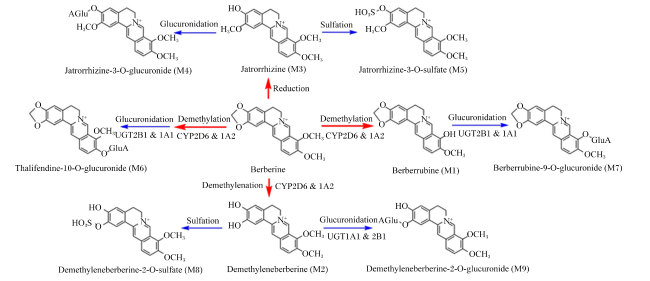
小檗碱(berberine,BBR)是一种天然的五环异喹啉类生物碱,可从诸如小檗属、黄连属和白毛茛科等一些常见的天然药用植物中进行提取[1]。研究发现,BBR具有调节肠道功能[2]、改善动物生长繁殖性能[3-4]、提高机体免疫力和抗氧化能力[5-6]、诱导核仁应激[7]等多重生物学功能,因此,BBR在动物实际生产中具有较大的应用空间。作为一种常见的生物碱,BBR已被证明具有多种药理活性,BBR进入动物机体后会经历多重药物代谢过程,根据BBR药代动力学研究结果显示,BBR代谢产物可分为Ⅰ相代谢产物和Ⅱ相代谢产物,且BBR的口服生物利用度较低[8-9]。随着研究的进一步深入,人们发现BBR的Ⅰ相代谢产物和Ⅱ相代谢产物在BBR相关生物学功能发挥中具有重要作用[10-13]。当前研究较多的主要包括3种Ⅰ相代谢产物(M1~M3)和6种Ⅱ相代谢产物(M4~M9),其名称和化学结构如图1所示。其中Ⅰ相代谢产物中,小檗红碱(berberrubine)具有调节血糖、血脂代谢和恢复肠道微生物菌群等作用[14],去亚甲基小檗碱(demethyleneberberine)具有抗炎、保肝和治疗神经退行性疾病等作用[15-17],药根碱(jatrorrhizine)具有调节肠道菌群、治疗溃疡性结肠炎以及缓解心肌梗死引起的细胞凋亡和纤维化等作用[13,18]。机体内大部分Ⅰ相代谢产物可通过葡萄糖醛酸化(glucuronidation)或硫酸盐化(sulfation)作用被快速代谢为Ⅱ相代谢产物[19],研究发现,人的正常肝细胞系L-O2经小檗红碱-9-O-β-D-葡萄糖苷酸(berberrubine-9-O-β-D-glucuronide)处理后,葡萄糖消耗量显著增加,同时肝糖原的合成显著提高,证明其具有较好的降血糖作用[20]。Ⅱ相代谢产物在血浆中浓度较高,其药代动力学特征在大鼠中也得到了初步揭示,推测Ⅱ相代谢产物与相应的Ⅰ相代谢产物具有相似的功能[19,21],关于Ⅱ相代谢产物相关功能的研究目前开展较少。大量研究表明,BBR可对代谢紊乱、神经退行性疾病、消化系统疾病、癌症和心血管疾病等疾病具有一定的治疗效果[14,17,22-24]。BBR在畜禽实际生产中具有广阔的应用前景,本文就近年来国内外对BBR的生物学功能研究现状及其在动物生产中的应用研究进展进行总结,以期为BBR在畜禽实际生产中的推广应用提供理论依据和参考。
图1 小檗碱及其9种代谢物(M1~M9)的化学结构

Jatrorrhizine-3-O-glucuronide:药根碱-3-O-葡萄糖苷酸;Jatrorrhizine:药根碱;Jatrorrhizine-3-O-sulfate:药根碱-3-O-硫酸盐;Thalifendine-10-O-glucuronide:芬氏唐松草定碱-10-O-葡萄糖苷酸;Berberine:小檗碱;Berberrubine:小檗红碱;Berberrubine-9-O-glucuronide:小檗红碱-10-O-葡萄糖苷酸;Demethyleneberberine-2-O-sulfate:去亚甲基小檗碱-2-O-硫酸盐;Demethyleneberberine:去亚甲基小檗碱;Demethyleneberberine-2-O-glucuronide:去亚甲基小檗碱-2-O-葡萄糖苷酸;UGT:尿苷二磷酸葡萄糖醛酸基转移酶 uridine diphosphate glucuronosyltransferase;CYP:细胞色素P450 cytochrome P450;Glucuronidation:葡萄糖醛酸化;Sulfation:硫酸盐化;Demethylation:去甲基化;Demethylenation:去亚甲基化;Reduction:还原。

Fig.1 Chemical structures of berberine and its nine metabolites (M1 to M9)[19]

1 BBR的提取与加工

将黄连(Coptis chinensis Franch)的干燥根茎粉碎成粉末状,转移至索氏提取器中,再将75%乙醇加入蒸馏瓶中,在80 ℃水浴条件下进行回流提取,连续回流提取至几乎无色,然后对提取液进行减压处理以回收乙醇,析出物用热水进行溶解并趁热过滤,再向滤液中加入10%(W/V)固体工业食盐,静置片刻,待沉淀完全后,滴加浓盐酸至pH为8.0~8.5,80 ℃水浴条件下保温30 min,静置,抽滤,于小于60 ℃条件下对沉淀进行干燥,称重后加入30倍量的蒸馏水溶解,加热至沸腾后趁热抽滤,滤液冷藏过夜,析出的沉淀于60 ℃条件下进行干燥,获得BBR,该方法提取的BBR纯度可达79.01%[25-27]。此外,BBR还可通过酸水提取法、石灰乳提取法及乙醇超声提取法等方法进行提取,相比较而言,乙醇超声提取法提取的BBR纯度可达85.21%,但设备投资和维护费用也较高,而乙醇回流提取法除了较为环保外,其投入费用也较低,但其提取产品纯度还有待进一步提高[26-27]。提取获得的BBR根据市场不同需求和不同应用场景,可被加工成不同剂型及含有其他不同组分的产品。

2 BBR的生物学功能

2.1 保护肠道形态结构

肠道是机体消化系统的重要组成部分,是吸收营养物质的主要部位,肠黏膜屏障是肠道与外界环境之间的第1道屏障,同时也是机体内环境的重要保护屏障,可有效减少病原体的侵入和毒性物质的吸收[28]。研究表明,小鼠经葡聚糖硫酸钠(DSS)处理后,结肠长度明显缩短,结肠黏膜中隐窝细胞和杯状细胞明显减少,肠腺结构受到明显破坏,黏膜出现溃疡,大量炎性细胞浸润,肠黏膜屏障受到破坏,引起溃疡性结肠炎的发生[22,29-30]。进一步研究发现,溃疡性结肠炎小鼠经BBR治疗后,结肠发生的上述损伤能够得以缓解,组织的病理学损伤程度明显降低,保护了肠黏膜屏障的完整性[22,30]。此外,BBR还能有效缓解DSS引起的小鼠结肠黏膜增厚及隐窝上皮结构破坏现象,恢复或增强肠道的物理屏障功能[31]。闭锁小带蛋白(zonula occludens,ZO)-1、闭合蛋白(Occludin)和E-钙黏蛋白(E-cadherin)是上皮细胞的重要标志分子,同时也是维持肠黏膜完整性的主要调控分子,ZO-1、Occludin和E-cadherin表达的上调是改善肠黏膜上皮细胞紧密连接的标志[32-33]。研究发现,结肠炎模型小鼠经灌胃给药BBR后,ZO-1、Occludin和E-cadherin在结肠黏膜上皮中的表达明显增强,有效提高了肠黏膜的屏障作用,对肠道内稳态的维持具有重要作用[30,34]。BBR对肠道形态结构的保护作用在家禽[35]、猪[36]、猫[37]及水产动物[38]中也得到了进一步的证实。

2.2 调节肠道菌群

据文献报道,人体肠道细菌总数高达1014个,是人体组织细胞总数的10~20倍[39]。肠道菌群不仅能帮助宿主收集能量和调节胆汁酸代谢,还能提高宿主抵抗系统性病毒感染的能力,调节药物的药代动力学等[40-42]。Ⅱ型糖尿病模型大鼠经BBR灌胃处理后,可显著降低拟杆菌门(Bacteroidetes)丰度及Bacteroidetes/厚壁菌门(Firmicutes)的比率,降低糖尿病各类并发症的发生率和改善肠道脂质代谢紊乱的症状[43]。高脂饮食可引起肠道菌群整体结构的变化,对动物机体健康产生不利影响,研究发现,BBR可对高脂饮食大鼠肠道菌群结构的变化产生明显的改善作用,多种与短链脂肪酸合成相关的细菌[如支原体菌属(Allobaculum)、拟杆菌属(Bacteroides)、布劳特氏菌属(Blautia)、丁酸球菌属(Butyricoccus)和考拉杆菌属(Phascolarctobacterium)等]丰度显著增加,对肥胖代谢紊乱相关疾病的治疗具有一定的作用[44]。饲粮中添加BBR也可有效提高肉鸡肠道中Bacteroides丰度[45]。结直肠癌模型小鼠经BBR治疗处理后,肠道菌群的整体丰度明显降低,而罗斯氏菌属(Roseburia)、真杆菌属(Eubacterium)、瘤胃球菌科(Ruminococcaceae)和Firmicutes等有益菌的丰度显著升高,进而抑制促炎基因和致癌因子的表达,最终达到抑制肠道癌变的作用[46]。断奶仔猪经BBR处理后,其肠道中梭菌目(Clostridiales)丰度明显降低,而魏斯氏菌属(Weissella)、拟普雷沃菌属(Alloprevotella)和链型杆菌属(Catenibacterium)丰度明显增加[47]。此外,BBR对水产动物的肠道菌群组成也具有一定的调节作用,抑制肠道菌群紊乱[48]。BBR还可通过调节肠道菌群结构而抑制三甲胺(TMA)和三甲胺-N-氧化物(TMAO)的产生,进而减轻胆碱诱导的动脉粥样硬化对小鼠机体的损害[49]。以上研究结果表明,BBR可通过对机体肠道菌群结构的调节,提高肠道有益菌的丰度,进而达到促进机体健康的目的。

2.3 免疫功能调控

BBR经肠道菌群氧化后可转化为氧化小檗碱(oxyberberine,OBB),OBB是BBR发挥一些生物学功能的主要参与者,OBB可通过下调Toll样受体4(TLR4)和髓样分化因子88(MyD88)的表达抑制核转录因子-κB抑制蛋白α(IκBα)的磷酸化,进而抑制核转录因子-κB(NF-κB)p65由细胞质转移至细胞核,通过抑制TLR4-MyD88-NF-κB信号通路相关调控功能的发挥,最终达到抗炎和抑制细胞死亡的作用[31,50-51]。口服BBR可有效降低5-氟尿嘧啶(5-FU)对小鼠小肠黏膜的损伤,显著降低肠组织中肿瘤坏死因子-α(TNF-α)、白细胞介素(IL)-8、IL-6等促炎细胞因子含量和提高IL-10等抗炎细胞因子含量,缓解5-FU对小肠黏膜的损伤[50]。棕榈酸和脂多糖(LPS)可诱导小鼠RAW264.7巨噬细胞系和原代肝细胞发生炎症反应,经BBR处理后可显著下调TNF-αIL-6、IL-1β和单核细胞趋化蛋白(MCP)-1等促炎细胞因子的表达水平,抑制炎症反应的发生[52]。鸭疫里氏杆菌(Riemerella anatipestifer)感染的鸭经BBR处理后,IL-17AIL-17F、IL-6和IL-1β等促炎细胞因子的表达水平显著下调,而干扰素(IFN)-γIL-10等抗炎细胞因子的表达水平显著上调,提高感染鸭的抗炎能力和存活率[53]。BBR预处理可有效抑制DSS引起的小鼠结肠组织中环氧合酶-2(COX-2)、TNF-αIL-1βIL-6等促炎细胞因子的表达水平上调趋势,同时参与炎症过程的关键通路蛋白磷酸化信号转导与转录激活因子3(p-STAT3)、磷酸化氨基未端蛋白激酶(p-JNK)和细胞周期调节分子β-连环蛋白(β-catenin)、细胞性骨髓细胞瘤病毒癌基因(c-Myc)、细胞周期蛋白D1(CylinD1)的表达水平也较低,抑制DSS对蛋白酪氨酸激酶2(JAK2)-信号转导与转录激活因子3(STAT3)信号通路的激活作用,抑制炎症反应的发生[34,54]。Zhang等[55]在研究BBR对糖尿病大鼠伤口愈合的影响中发现,BBR可通过抑制IL-17信号通路来促进Ⅱ型糖尿病大鼠的伤口愈合。Bai等[56]在研究BBR对兔外伤性泪小管断裂(CL)外科修复术后伤口愈合的影响中也发现,BBR可通过其抗炎和抗纤维化作用减少CL手术修复后的局部纤维化,促进伤口的愈合。此外,BBR的处理也可有效提高猪[57]、牛[58]、猫[37]及水产动物[48]的抗炎能力,提高机体应对不利因素影响时的免疫水平。BBR能够对机体免疫功能进行调节,提高机体的非特异性免疫,但所涉及的动物种类较少,关于BBR对不同动物机体免疫功能调控的具体机制还有待进一步研究。

2.4 抗氧化和抗凋亡能力调控

长期高脂饮食会引起机体内脂质代谢紊乱和活性氧(ROS)过度产生,导致机体内氧化还原稳态受到破坏,过氧化氢酶(CAT)、超氧化物歧化酶(SOD)等抗氧化酶活性被明显抑制,而脂质过氧化产生的有毒物质丙二醛(MDA)含量升高,进而在细胞和分子水平上引起氧化应激(oxidative stress)和细胞损伤的发生,对动物机体造成一定程度的损害[59-60]。氧化应激可进一步引起组织器官细胞凋亡(apoptosis)和自噬(autophagy)的发生,抑制机体组织器官正常生理功能的发挥[60]。研究发现,BBR可有效缓解脂质沉积引起的氧化应激和细胞凋亡对斑马鱼(Danio rerio)肝细胞的损伤[61]。饲粮中添加BBR可有效提高围产期奶山羊机体的抗氧化酶活性,缓解氧化应激对围产期奶山羊的损害[62]。氧化应激是心肌缺血/再灌注(I/R)损伤的典型特征,心肌细胞经氧糖剥夺/复氧(OGD/R)处理后,谷胱甘肽过氧化物酶(GSH-Px)、SOD等抗氧化酶的产生受到明显抑制,MDA含量显著升高,抗凋亡分子B-细胞淋巴瘤-2(Bcl-2)的表达水平显著下调,促凋亡分子B-细胞淋巴瘤-2相关X蛋白(Bax)和半胱氨酸蛋白酶3(Caspase3)的表达水平显著上调,引起心肌细胞氧化应激和凋亡的发生,经BBR处理后,上述指标均恢复正常,说明BBR具有增强细胞抗氧化和抗凋亡能力的作用,对心肌细胞的I/R损伤具有一定的缓解作用[6,63]。腺苷酸活化蛋白激酶(AMPK)信号通路的激活可有效提高细胞的抗氧化能力,此外,核因子E2相关因子2(Nrf2)也是细胞氧化还原平衡的主要调节因子,Nrf2信号通路是一条经典的抗氧化信号通路,可对包括氧化应激在内的多种细胞应激反应进行调节[64-65]。大量研究表明,BBR可有效激活Nrf2信号通路和AMPK信号通路,保护组织细胞免受氧化损伤[66-68]。BBR可明显提升组织细胞的抗氧化和抗凋亡能力,但其抗氧化和抗凋亡的具体调控机制还有待深入研究。

2.5 诱导核仁应激

核仁是细胞核内一种特殊的无膜结构,核糖体生物合成过程中的许多关键步骤均在核仁内进行,当核仁形态和功能发生改变,核糖体生物合成过程出现错误时便会引起核仁应激的发生[69-70]。大量研究表明,临床常用的一些化疗药物[例如放线菌素D(Act D)、CX5461、奥沙利铂(oxaliplatin)等]常可做为核仁应激诱导剂,引起核仁应激标志分子核仁磷酸蛋白1(NPM1)、核糖体蛋白(RPs)由核仁转移至核质,抑制肿瘤抑制因子53(p53)的泛素化降解过程,进而导致p53在核质中大量累积,最终引起细胞周期阻滞和细胞凋亡的发生[71-74]。目前,关于核仁应激对肿瘤细胞生长影响的研究有较多开展,有研究发现,Act D可诱导结肠癌细胞发生核仁应激,进而诱导细胞凋亡[75]。另有研究表明,核仁应激还可有效诱导小鼠和人子宫内膜接受态的建立和蜕膜化的发生,为胚胎着床创造有利条件[71,76]。Sakaguchi等[7]近期研究发现,BBR作用于人乳腺癌细胞(MCF7细胞)后,可引起细胞周期阻滞,核糖体蛋白L5(RPL5)由核仁转移至核质并与鼠双微体2(Mdm2)结合,抑制p53的泛素化降解过程,p53及其下游分子p21的表达水平显著上调,说明BBR可通过激活RPL5-p53-Mdm2信号通路诱导人乳腺细胞发生核仁应激。核仁应激的抗肿瘤作用已得到广泛研究,但在促进胚胎着床方面的研究目前还仅停留在小鼠模型和人细胞系层面,这可能与核仁应激诱导剂主要为毒副作用较大的化疗药物有关,而低毒性的BBR能够诱导细胞发生核仁应激这一新分子机制的发现可为后期开展关于核仁应激促进其他动物胚胎着床方面的研究提供新的方向。

3 BBR在动物生产中的应用

3.1 BBR在家禽生产中的应用

氟苯尼考是一种广谱合成抗生素,可有效控制多种细菌的感染,细胞色素P450(CYP)3A在其代谢过程中起着重要的调节作用[77-78]。研究发现,50 mg/kg BBR经连续7 d上午灌胃后能够诱导鸡肝脏组织和空肠组织中CYP3A37表达水平的显著下调,显著提高氟苯尼考在肉鸡体内的药物生物利用度和峰值浓度(Cmax),进而提高氟苯尼考对肉鸡细菌感染的治疗效果[79]。研究表明,饲粮中添加600 mg/kg BBR可有效改善黄曲霉毒素B1(AFB1)和赭曲霉毒素A(OTA)污染的饲粮对肉鸡生产性能、肝脏功能和抗氧化能力的损伤,此外,饲粮中添加250 mg/kg的BBR即可对肉鸡肠道菌群组成进行有效调节,提高肉鸡的生产性能[3,45]。柔嫩艾美耳球虫(Eimeria tenella)感染可引起鸡肝脏和血清中铜(Cu)和锌(Zn)含量降低,体重减轻,饲料转化率提高,研究发现,饮水中含有300 mg/L的BBR能显著上调鸡小肠组织中锌离子转运体1(ZnT1)、铜离子转运体1(CTR1)和二价金属离子转运体1(DMT1)的表达水平,挽救鸡感染Eimeria tenella引起的铜、锌失衡,提高鸡的生产性能[80]。此外,对鸭灌胃200 mg/kg BBR后可通过下调炎症细胞因子的表达水平来缓解Riemerella anatipestifer感染对鸭的损害,提高鸭的成活率[53]。饲粮中添加1 g/kg BBR可增加不同年龄鸡的肠绒毛长度,降低隐窝深度及CD3+ T淋巴细胞的浸润,增加空肠至结肠段有益菌的丰度,提高机体的抗炎及抗氧化能力[35],这与Yang等[81]在肉鸡中的研究结论相似。此外,鸡成肌细胞经10 μmol/L的BBR-肌源性寡脱氧核苷酸iSN04复合物处理后,能够促进成肌细胞向肌小管(myotube)进行分化,上调生肌相关基因的表达[82],可为BBR作为饲料添加剂的开发利用提供一定的理论参考。综上所述,BBR可有效提高氟苯尼考等抗生素类药物对鸡细菌感染的治疗效果,改善肠道形态结构,优化肠道菌群结构组成,调节体内铜、锌等微量元素的含量,增强机体免疫和抗氧化能力等,说明BBR对某些因素引起的禽类生产性能异常具有一定的改善作用。

3.2 BBR在猪生产中的应用

断奶应激能够引起仔猪腹泻及肠道损伤,饲粮中添加10 mg/kg BBR与10 mg/kg鞣花酸(ellagic acid,EA)可有效提高断奶仔猪肠绒毛高度与隐窝深度的比值,减少凋亡细胞数,改善肠道形态及肠黏膜屏障,同时还能优化肠道菌群组成,提高机体抗氧化能力[36]。Zhu等[47]研究发现,断奶仔猪感染产肠毒素大肠杆菌(enterotoxigenic Escherichia coli,ETEC)后,平均日增重量(ADG)明显降低,料重比(F/G)明显升高,大部分仔猪出现腹泻症状,饲粮中添加250 mg/kg BBR可有效改善ETEC对断奶仔猪的上述损害,同时TNF-αIL-1β的表达水平显著下调,IL-10的表达水平显著上调,机体免疫力得到有效提高,此外,肠道有益菌丰度得到明显改善。猪肠上皮细胞经5 μg/mL LPS作用后,TNF-αIL-1βIL-6的表达水平显著上调,且NF-κB信号通路相关蛋白的表达水平明显升高,而150 μg/mL BBR预处理后可改善LPS对肠上皮细胞的损伤,这也进一步说明BBR可有效预防和治疗大肠杆菌(Escherichia coli)引起的断奶仔猪腹泻[57]。研究发现,经0.5或1.0 μg/mL BBR处理后的副猪嗜血杆菌(Haemophilus parasuis)对猪肾细胞PK-15的黏附率和侵入率均显著降低,生物信息学分析显示BBR可通过影响外膜蛋白、转铁蛋白和能量代谢的方式来抑制Haemophilus parasuis的生长,对Haemophilus parasuis感染具有一定的治疗作用[83]。在一项关于BBR对猪体外受精胚胎发育影响的研究中发现,0.1 μg/mL BBR能够显著提高2细胞期、4细胞期、8细胞期胚胎及囊胚的发育率[84],这与Dai等[4]的研究结果一致。脂肪分解与肥胖及胰岛素抵抗密切相关,20或40 μmol/L BBR处理猪脂肪细胞后,可有效激活AMPK信号通路,进而诱导猪脂肪细胞进行脂肪分解,且不会引起胰岛素抵抗的发生[85],此外,0.1 μg/mL BBR还可通过激活miR-192的表达促进猪卵母细胞的脂质代谢,从而改善猪卵母细胞的体外成熟情况[4]。综合以上研究结果发现,BBR可有效改善断奶仔猪的肠道健康,增强机体免疫力和抗细菌感染的能力,促进脂质代谢,优化体外胚胎的发育与成熟,对猪的生产性能具有一定的改善作用。

3.3 BBR在反刍动物生产中的应用

BBR常作为抗氧化和抗菌试验的标准品而被广泛应用,在一项关于山羊肝脏脂质过氧化检测试验中发现,0.509~1.110 μg/mL的BBR具有较强的抗脂质过氧化作用[86]。研究显示,在奶山羊围产期饲粮中添加50或100 mg/kg的BBR,产羔当天与产羔后干物质采食量(DMI)明显增加,体况评分(BCS)与产奶量明显提高,产后7~14 d与产羔当天相比,血浆葡萄糖和胰岛素含量明显降低,生长激素和皮质醇含量有所降低,而胰岛素样生长因子(IGF)-1含量明显升高,胰岛素清除率也较高[87],说明BBR具有改善产后奶山羊葡萄糖和胰岛素以及调节动物生长轴的作用。此外,饲粮中添加50或100 mg/kg BBR还能够显著提高围产期奶山羊血浆总抗氧化能力(T-AOC)及GSH-Px、SOD和CAT等抗氧化酶活性,MDA含量和对氧磷酶(PON)活性明显降低,结合珠蛋白(haptoglobin,HP)、铜蓝蛋白(ceruloplasmin,CER)和胆红素(bilirubin)含量在分娩前后有所降低[62],说明饲粮中添加BBR可提高山羊在围产期的抗氧化能力和免疫功能,改善产后生产性能,对缓解山羊围产期氧化应激和炎症反应具有一定的作用。同时,饲粮中添加50或100 mg/kg BBR还具有改善围产期奶山羊因能量负平衡(negative energy balance,NEB)而引起的胰岛素抵抗(IR)和脂肪代谢紊乱,维持机体内环境稳态[88]。研究发现,BBR对山羊胃肠道线虫(GIN)卵的孵化抑制率可达90%以上,且BBR的半数效应剂量(EC50)为0.49 mg/mL,1.0 mg/mL的BBR对幼虫的抑制率高达98.17%[89],说明BBR对山羊GIN具有一定的驱虫潜能。高水平游离脂肪酸(non-esterified fatty acid,NEFA)和IR可引起围产期奶牛脂肪肝的发生,而线粒体功能异常是引起IR发生的主要原因,10或20 μmol/L BBR处理牛肝细胞可通过增加细胞中过氧化物酶体增殖物激活受体-γ共激活因子(PGC)-1α的表达改善NEFA损伤的线粒体呼吸链功能和胰岛素信号,为奶牛脂肪肝的防治提供了一种潜在的新策略[90]。研究发现,50、70或100 μmol/L的BBR可通过抑制TLR4介导的NF-κB和MAPK信号通路来抑制4 μg/mL LPS诱导的荷斯坦犊牛瘤胃上皮细胞炎症细胞因子的表达,提高机体免疫力[58]。综上所述,BBR可有效提高反刍动物的抗氧化能力,提高机体的免疫力,帮助机体驱除GIN及防治脂肪肝,维持机体内环境稳态,改善反刍动物的生产性能,但具体相关调控机制还有待进一步研究。

3.4 BBR在其他动物生产中的应用

犬连续7 d每日口服50 mg/kg的BBR后,其肠道菌群组成会发生明显变化,其中产丁酸盐和硝基还原酶的细菌丰度明显增加[8]。患有炎症性肠病(IBD)的猫经连续14 d每日口服80 mg/kg的BBR治疗后,结肠黏膜上皮细胞形态完整,杯状细胞数量恢复,腺体结构完全被修复,肠黏膜屏障完整性及肠道菌群稳态得以恢复,此外,血清中TNF-αIL-1βIL-6的表达水平显著降低,提高机体的抗炎能力,同时抗氧化能力也得到提高[37]。高碳水化合物饲料(HCD)可引起水产养殖鱼类代谢紊乱的肠道损伤,研究发现,饲料中添加50 mg/kg的BBR可有效改善大口黑鲈(Micropterus salmoides)的脏体比(VSI)和肝体比(HSI),而不影响其生长性能和成活率,显著抑制HCD引起的肠道细胞凋亡,修复肠道组织的损伤和肠黏膜屏障的完整性,抑制促炎细胞因子的表达,提高机体免疫力,通过激活AMPK和抑制胆固醇调节元件结合蛋白1(SREBP1)在肠道中的表达来降低HCD引起的大口黑鲈肠道脂肪过度生成,促进脂肪的分解,恢复肠道健康[38]。高脂饲料中添加50 mg/kg的BBR可下调黑鲷(Acanthopagrus schlegelii)脂肪生成基因表达和上调脂肪分解基因表达,进而降低肝脏脂肪的累积,而BBR在肌肉中的调控机制与肝脏相反,进而可增加肌肉脂肪的含量[91]。Zhou等[92]在武昌鱼(Megalobrama amblycephala)中的研究结果也表明高脂饲料中添加50或100 mg/kg的BBR可显著降低肝脏中脂肪的累积。高脂饲料还能够对青鱼(Mylopharyngodon piceus)产生一定的氧化损伤,高脂饲料中添加98.26或196.21 mg/kg的BBR可有效提高多种抗氧化酶活性,保护机体免受氧化应激的损伤[93],通过抑制脂肪合成和促进脂肪分解来减轻肝脏代谢负担,从而增加外周组织对脂肪的摄取[94]。此外,饲料中添加50 mg/kg的BBR还具有减轻HCD或高脂饲料对武昌鱼肠黏膜屏障损伤的作用,提高其生长性能[95]。饲料中添加100或400 mg/kg的BBR可有效降低铜离子(Cu2+)诱导的肠道氧化应激对淡水石斑鱼(Acrossocheilus fasciatus)的损伤,通过对一些炎症反应因子表达水平的调节,抑制肠道中炎症反应的发生,降低了Firmicutes/拟杆菌门(Bacteroidota)的比例,抑制了假单胞菌属(Pseudomonas)、柠檬酸杆菌属(Citrobacter)和不动杆菌属(Acinetobacter)等特定致病菌的生长,同时提高了玫瑰单胞菌属(Roseomonas)和雷氏菌属(Reyranella)等潜在益生菌的丰度,对肠道菌群紊乱具有明显的保护作用[48]。癫痫发作能够引起炎症反应的发生,100 μmol/L的BBR处理后可显著抑制戊四唑(PTZ)诱导斑马鱼癫痫发作而引起的TNF-αIL-1βIL-6等促炎细胞因子表达水平的上调,抑制巨噬细胞和中性粒细胞的募集,保护斑马鱼免受癫痫发作的影响[96]。BBR能够有效驱除金鱼体表寄生的小瓜虫(Ichthyophthirius multifiliis),15 mg/L的BBR对小瓜虫的致死率可达99.3%,该浓度远远低于BBR对金鱼96 h的半数致死浓度(LC50)528.44 mg/L,因而对金鱼并不产生毒性作用[97]。综上所述,BBR可改善其他动物肠道组织结构及肠道菌群的组成,保护肠黏膜屏障的完整性,减轻炎症反应的发生,提高机体抗氧化能力,驱除体表寄生虫,提高机体对不利因素的抗性以维持正常生长性能,但在水产动物中研究较多,而BBR在其他动物中的应用效果及作用机制还需进一步开展相关研究。

4 小结与展望

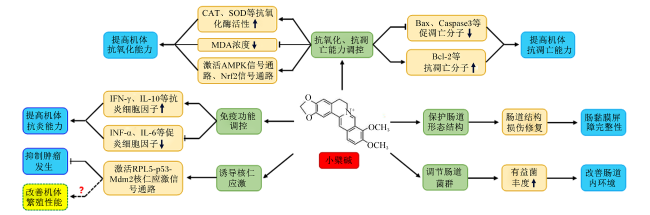
综上所述,BBR及其代谢产物对动物生产性能具有明显的保护和促进作用,通过对某些信号通路及相关因子的调控可有效提高机体抗氧化、抗凋亡、抗菌及抗炎能力,增强机体免疫力,通过对肠道组织结构及肠道菌群组成的修复及调控,保护肠道黏膜屏障的完整性、维持机体内环境稳态等;此外,BBR还具有诱导细胞发生核仁应激的功能,具体如图2所示。但目前关于BBR调控动物生产性能的具体作用机制尚未得到较为充分的阐明,开展相关研究所涉及的动物种类较为有限,且过程中所涉及的酶、激素和相关调节基因之间的具体调控路径还需进一步研究。此外,诱导核仁应激是BBR新发现的生物学功能,关于核仁应激对动物生产性能调控的研究是当前研究的热点,因此,关于BBR诱导的核仁应激对动物生产性能的调控机制需进行深入研究。
图2 小檗碱生物学功能总结

CAT:过氧化氢酶 catalase;SOD:超氧化物歧化酶 superoxide dismutase;MDA:丙二醛 malondialdehyde;AMPK:腺苷酸活化蛋白激酶 AMP-activated protein kinase;Nrf2:核因子E2相关因子2 nuclear factor E2-related factor 2;IFN-γ:干扰素-γ interferon-γ;IL-10:白细胞介素-10 interleukin-10;TNF-α:肿瘤坏死因子-α tumor necrosis factor-α;IL-6:白细胞介素-10 interleukin-10;RPL5-P53-Mdm2:核糖体蛋白L5-肿瘤抑制因子53-鼠双微体2 ribosomal protein L5-tumor suppressor factor 53- murine double minute 2;Bax:B-细胞淋巴瘤-2相关X蛋白 B-cell lymphoma-2-associated X protein;Caspase3:半胱氨酸蛋白酶3 cysteinyl aspartate specific proteinase 3;Bcl-2:B-细胞淋巴瘤-2 B-cell lymphoma-2; ↑:升高 increase;↓:降低 decrease。

Fig.2 Summary of biological functions of BBR[6-7,30-31,43-44,46,52-53,63,71]

致谢

感谢美国辛辛那提儿童医院医学中心生殖科学中心发育生物学部顾小伟博士对文稿所提的宝贵意见。

[1]
HABTEMARIAM S. Berberine pharmacology and the gut microbiota:a hidden therapeutic link[J]. Pharmacological Research, 2020, 155:104722.

DOI

[2]
MA S R, TONG Q, LIN Y, et al. Berberine treats atherosclerosis via a vitamine-like effect down-regulating Choline-TMA-TMAO production pathway in gut microbiota[J]. Signal Transduction and Targeted Therapy, 2022, 7(1):207.

DOI

[3]
MALEKINEZHAD P, ELLESTAD L E, AFZALI N, et al. Evaluation of berberine efficacy in reducing the effects of aflatoxin B1 and ochratoxin A added to male broiler rations[J]. Poultry Science, 2021, 100(2):797-809.

DOI

[4]
DAI J G, HUANG X M, ZHANG C, et al. Berberine regulates lipid metabolism via miR-192 in porcine oocytes matured in vitro[J]. Veterinary Medicine and Science, 2021, 7(3):950-959.

DOI

[5]
LUO Z C, LI Z H, LIANG Z, et al. Berberine increases stromal production of Wnt molecules and activates Lgr5+ stem cells to promote epithelial restitution in experimental colitis[J]. BMC Biology, 2022, 20(1):287.

DOI

[6]
JIA X J, SHAO W, TIAN S Q. Berberine alleviates myocardial ischemia-reperfusion injury by inhibiting inflammatory response and oxidative stress:the key function of miR-26b-5p-mediated PTGS2/MAPK signal transduction[J]. Pharmaceutical Biology, 2022, 60(1):652-663.

DOI

[7]
SAKAGUCHI M, KITAGUCHI D, MORINAMI S, et al. Berberine-induced nucleolar stress response in a human breast cancer cell line[J]. Biochemical and Biophysical Research Communications, 2020, 528(1):227-233.

DOI PMID

[8]
FENG R, ZHAO Z X, MA S R, et al. Gut Microbiota-regulated pharmacokinetics of berberine and active metabolites in beagle dogs after oral administration[J]. Frontiers in Pharmacology, 2018, 9:214.

DOI PMID

[9]
WANG K, CHAI L W, FENG X C, et al. Metabolites identification of berberine in rats using ultra-high performance liquid chromatography/quadrupole time-of-flight mass spectrometry[J]. Journal of Pharmaceutical and Biomedical Analysis, 2017, 139:73-86.

DOI PMID

[10]
ZHAO Y X, LIU P, ZHANG Y Q, et al. Demethyleneberberine blocked the maturation of IL-1β in inflammation by inhibiting TLR4-mitochondria signaling[J]. International Immunopharmacology, 2022, 113(Pt A):109319.

DOI

[11]
ZHANG M, LI Q X, ZHOU C S, et al. Demethyleneberberine attenuates concanavalin A-induced autoimmune hepatitis in mice through inhibition of NF-κB and MAPK signaling[J]. International Immunopharmacology, 2020, 80:106137.

DOI

[12]
LIN G S, YU Q X, XU L Q, et al. Berberrubine attenuates potassium oxonate- and hypoxanthine-induced hyperuricemia by regulating urate transporters and JAK2/STAT3 signaling pathway[J]. European Journal of Pharmacology, 2021, 912:174592.

DOI

[13]
ZHANG J L, ZHANG M N, WANG H G, et al. Jatrorrhizine alleviates ulcerative colitis via regulating gut microbiota and NOS2 expression[J]. Gut Pathogens, 2022, 14(1):41.

DOI PMID

[14]
YANG S, CAO S J, LI C Y, et al. Berberrubine,a main metabolite of berberine,alleviates non-alcoholic fatty liver disease via modulating glucose and lipid metabolism and restoring gut microbiota[J]. Frontiers in Pharmacology, 2022, 13:913378.

DOI

[15]
ZHAO Y X, LIU P, LUAN H F, et al. Demethyleneberberine alleviated the inflammatory response by targeting MD-2 to inhibit the TLR4 signaling[J]. Frontiers in Immunology, 2023, 14:1130404.

DOI

[16]
QIANG X Y, XU L L, ZHANG M, et al. Demethyleneberberine attenuates non-alcoholic fatty liver disease with activation of AMPK and inhibition of oxidative stress[J]. Biochemical and Biophysical Research Communications, 2016, 472(4):603-609.

DOI PMID

[17]
GUPTA S, KHAN A, VISHWAS S, et al. Demethyleneberberine:a possible treatment for Huntington’s disease[J]. Medical Hypotheses, 2021, 153:110639.

DOI

[18]
HAO M X, JIAO K L. Jatrorrhizine reduces myocardial infarction-induced apoptosis and fibrosis through inhibiting p53 and TGF-β1/Smad2/3 pathways in mice[J]. Acta Cirurgica Brasileira, 2022, 37(7):e370705.

DOI

[19]
FENG X C, WANG K, CAO S J, et al. Pharmacokinetics and excretion of berberine and its nine metabolites in rats[J]. Frontiers in Pharmacology, 2021, 11:594852.

DOI

[20]
YANG N, SUN R B, CHEN X L, et al. In vitro assessment of the glucose-lowering effects of berberrubine-9-O-β-D-glucuronide,an active metabolite of berberrubine[J]. Acta Pharmacologica Sinica, 2017, 38(3):351-361.

DOI

[21]
ZUO F, NAKAMURA N, AKAO T, et al. Pharmacokinetics of berberine and its main metabolites in conventional and pseudo germ-free rats determined by liquid chromatography/ion trap mass spectrometry[J]. Drug Metabolism and Disposition, 2006, 34(12):2064-2072.

DOI PMID

[22]
DONG Y L, FAN H, ZHANG Z, et al. Berberine ameliorates DSS-induced intestinal mucosal barrier dysfunction through microbiota-dependence and Wnt/β-catenin pathway[J]. International Journal of Biological Sciences, 2022, 18(4):1381-1397.

DOI PMID

[23]
SUN Q, YANG H, LIU M L, et al. Berberine suppresses colorectal cancer by regulation of Hedgehog signaling pathway activity and gut microbiota[J]. Phytomedicine, 2022, 103:154227.

DOI

[24]
ZHAO J V, YEUNG W F, CHAN Y H, et al. Effect of berberine on cardiovascular disease risk factors:a mechanistic randomized controlled trial[J]. Nutrients, 2021, 13(8):2550.

DOI

[25]
张小斌, 雷艳妮, 陈书存. 不同提取条件对黄连中小檗碱含量的影响[J]. 陕西农业科学, 2021, 67(11):52-56.

ZHANG X B, LEI Y N, CHEN S C. Effect of different extraction conditions on berberine content in Rhizoma coptidis[J]. Shaanxi Journal of Agricultural Sciences, 2021, 67(11):52-56. (in Chinese)

[26]
崔方, 刘小花, 王艳, 等. 将小檗碱的提取分离实验打造成综合性实验[J]. 实验室科学, 2017, 20(3):16-19.

CUI F, LIU X H, WANG Y, et al. Make the berberine extraction and separation experiment into comprehensive experiment[J]. Laboratory Science, 2017, 20(3):16-19. (in Chinese)

[27]
赵柳英, 蔡凤莲, 莫亚军, 等. 黄连中盐酸小檗碱不同提取工艺的比较研究[J]. 湖南文理学院学报(自然科学版), 2013, 25(4):21-23,28.

ZHAO L Y, CAI F L, MO Y J, et al. Comparative study of different extraction technologies of berberine hydrochloride in Coptis chinensis[J]. Journal of Hunan University of Arts and Science (Natural Science Edition), 2013, 25(4):21-23,28. (in Chinese)

[28]
CHEN Y J, PU W G, MASWIKITI E P, et al. Intestinal congestion and reperfusion injury:damage caused to the intestinal tract and distal organs[J]. Bioscience Reports, 2021, 41(9):BSR20211560.

[29]
WANG J, ZHANG C L, GUO C M, et al. Chitosan ameliorates DSS-induced ulcerative colitis mice by enhancing intestinal barrier function and improving microflora[J]. International Journal of Molecular Sciences, 2019, 20(22):5751.

DOI

[30]
LI H, FAN C, LU H M, et al. Protective role of berberine on ulcerative colitis through modulating enteric glial cells-intestinal epithelial cells-immune cells interactions[J]. Acta Pharmaceutica Sinica B, 2020, 10(3):447-461.

DOI PMID

[31]
LI C L, AI G X, WANG Y F, et al. Oxyberberine,a novel gut microbiota-mediated metabolite of berberine,possesses superior anti-colitis effect:impact on intestinal epithelial barrier,gut microbiota profile and TLR4-MyD88-NF-κB pathway[J]. Pharmacological Research, 2020, 152:104603.

DOI

[32]
ZOU X, WANG Y, WANG Y H, et al. Paeoniflorin alleviates abnormalities in rats with functional dyspepsia by stimulating the release of acetylcholine[J]. Drug Design,Development and Therapy, 2020, 14:5623-5632.

DOI

[33]
XI M J, ZHAO P, LI F, et al. MicroRNA-16 inhibits the TLR4/NF-κB pathway and maintains tight junction integrity in irritable bowel syndrome with diarrhea[J]. The Journal of Biological Chemistry, 2022, 298(11):102461.

DOI

[34]
DENG J Q, ZHAO L L, YUAN X Y, et al. Pre-administration of berberine exerts chemopreventive effects in AOM/DSS-induced colitis-associated carcinogenesis mice via modulating inflammation and intestinal microbiota[J]. Nutrients, 2022, 14(4):726.

DOI

[35]
DEHAU T, CHERLET M, CROUBELS S, et al. A high dose of dietary berberine improves gut wall morphology,despite an expansion of enterobacteriaceae and a reduction in beneficial microbiota in broiler chickens[J]. mSystems, 2023, 8(1):e0123922.

[36]
QIN W X, YU Z D, LI Z C, et al. Dietary berberine and ellagic acid supplementation improve growth performance and intestinal damage by regulating the structural function of gut microbiota and SCFAs in weaned piglets[J]. Microorganisms, 2023, 11(5):1254.

DOI

[37]
CAO J W, CHEN M Y, XU R, et al. Therapeutic mechanisms of berberine to improve the intestinal barrier function via modulating gut microbiota,TLR4/NF-κB/MTORC pathway and autophagy in cats[J]. Frontiers in Microbiology, 2022, 13:961885.

DOI

[38]
GONG Y L, LU Q S, LIU Y L, et al. Dietary berberine alleviates high carbohydrate diet-induced intestinal damages and improves lipid metabolism in largemouth bass (Micropterus salmoides)[J]. Frontiers in Nutrition, 2022, 9:1010859.

DOI

[39]
SUAU A, BONNET R, SUTREN M, et al. Direct analysis of genes encoding 16S rRNA from complex communities reveals many novel molecular species within the human gut[J]. Applied and Environmental Microbiology, 1999, 65(11):4799-4807.

DOI PMID

[40]
LI M C, WANG S L, LI Y T, et al. Gut microbiota-bile acid crosstalk contributes to the rebound weight gain after calorie restriction in mice[J]. Nature Communications, 2022, 13(1):2060.

DOI PMID

[41]
ERTTMANN S F, SWACHA P, AUNG K M, et al. The gut microbiota prime systemic antiviral immunity via the cGAS-STING-IFN-I axis[J]. Immunity, 2022, 55(5):847-861.e10.

DOI PMID

[42]
ZHANG J H, ZHANG J M, WANG R. Gut microbiota modulates drug pharmacokinetics[J]. Drug Metabolism Reviews, 2018, 50(3):357-368.

DOI PMID

[43]
ZHAO J D, LI Y, SUN M, et al. Effect of berberine on hyperglycaemia and gut microbiota composition in type 2 diabetic Goto-Kakizaki rats[J]. World Journal of Gastroenterology, 2021, 27(8):708-724.

DOI

[44]
ZHANG X, ZHAO Y F, XU J, et al. Modulation of gut microbiota by berberine and metformin during the treatment of high-fat diet-induced obesity in rats[J]. Scientific Reports, 2015, 5(1):14405.

DOI

[45]
ZHU C, HUANG K Y, BAI Y S, et al. Dietary supplementation with berberine improves growth performance and modulates the composition and function of cecal microbiota in yellow-feathered broilers[J]. Poultry Science, 2021, 100(2):1034-1048.

DOI PMID

[46]
CHEN H T, YE C X, CAI B Y, et al. Berberine inhibits intestinal carcinogenesis by suppressing intestinal pro-inflammatory genes and oncogenic factors through modulating gut microbiota[J]. BMC Cancer, 2022, 22(1):566.

DOI PMID

[47]
ZHU C, LE M F, HE Z T, et al. Dietary berberine supplementation improves growth performance and alleviates gut injury in weaned piglets by modulating ileal microbiota and metabolites[J]. Food & Function, 2023, 14(9):4143-4162.

[48]
WANG L, WANG C Y, HUANG C C, et al. Dietary berberine against intestinal oxidative stress,inflammation response,and microbiota disturbance caused by chronic copper exposure in freshwater grouper (Acrossocheilus fasciatus)[J]. Fish & Shellfish Immunology, 2023, 139:108910.

[49]
LI X X, SU C Y, JIANG Z B, et al. Berberine attenuates choline-induced atherosclerosis by inhibiting trimethylamine and trimethylamine-N-oxide production via manipulating the gut microbiome[J]. NPJ Biofilms and Microbiomes, 2021, 7(1):36.

DOI PMID

[50]
HUANG R L, AI G X, ZHONG L J, et al. Protective effects of oxyberberine in 5-fluorouracil-induced intestinal mucositis in the mice model[J]. Evidence-Based Complementary and Alternative Medicine, 2022, 2022:1238358.

[51]
RONG Z J, HUANG Y L, CAI H H, et al. Gut microbiota disorders promote inflammation and aggravate spinal cord injury through the TLR4/MyD88 signaling pathway[J]. Frontiers in Nutrition, 2021, 8:702659.

DOI

[52]
WANG Y Y, ZHOU X Q, ZHAO D, et al. Berberine inhibits free fatty acid and LPS-induced inflammation via modulating ER stress response in macrophages and hepatocytes[J]. PLoS One, 2020, 15(5):e0232630.

DOI

[53]
FERNANDEZ C P, AFRIN F, FLORES R A, et al. Downregulation of inflammatory cytokines by berberine attenuates Riemerella anatipestifer infection in ducks[J]. Developmental and Comparative Immunology, 2017, 77:121-127.

DOI

[54]
LI X Y, XU S, ZHANG Y H, et al. Berberine depresses inflammation and adjusts smooth muscle to ameliorate ulcerative colitis of cats by regulating gut microbiota[J]. Microbiology Spectrum, 2022, 10(6):e0320722.

DOI

[55]
ZHANG J J, ZHOU R, DENG L J, et al. Huangbai liniment and berberine promoted wound healing in high-fat diet/streptozotocin-induced diabetic rats[J]. Biomedicine & Pharmacotherapy, 2022, 150:112948.

DOI

[56]
BAI F, TAO H, WANG P, et al. Berberine hydrochloride inhibits inflammation and fibrosis after canalicular laceration repair in rabbits[J]. Life Sciences, 2020, 261:118479.

DOI

[57]
ZHANG Z, LI X Y, LI C L, et al. Effect of berberine on LPS-induced expression of NF-κB/MAPK signalling pathway and related inflammatory cytokines in porcine intestinal epithelial cells[J]. Innate Immunity, 2020, 26(7):627-634.

DOI

[58]
ZHAO C X, WANG Y Z, YUAN X, et al. Berberine inhibits lipopolysaccharide-induced expression of inflammatory cytokines by suppressing TLR4-mediated NF-κB and MAPK signaling pathways in rumen epithelial cells of Holstein calves[J]. Journal of Dairy Research, 2019, 86(2):171-176.

DOI

[59]
TRINDADE DE PAULA M, POETINI SILVA M R, MACHADO ARAUJO S, et al. High-fat diet induces oxidative stress and MPK2 and HSP83 gene expression in Drosophila melanogaster[J]. Oxidative Medicine and Cellular Longevity, 2016, 2016:4018157.

[60]
JAGANJAC M, MILKOVIC L, ZARKOVIC N, et al. Oxidative stress and regeneration[J]. Free Radical Biology & Medicine, 2022, 181:154-165.

DOI

[61]
ZHANG M J, LIU J, YU C B, et al. Berberine regulation of cellular oxidative stress,apoptosis and autophagy by modulation of m6A mRNA methylation through targeting the Camk1db/ERK pathway in zebrafish-hepatocytes[J]. Antioxidants, 2022, 11(12):2370.

DOI

[62]
GHAVIPANJE N, FATHI NASRI M H, FARHANGFAR S H, et al. Pre- and post-partum berberine supplementation in dairy goats as a novel strategy to mitigate oxidative stress and inflammation[J]. Frontiers in Veterinary Science, 2021, 8:743455.

DOI

[63]
ZHENG H Y, LAN J, LI J M, et al. Therapeutic effect of berberine on renal ischemia-reperfusion injury in rats and its effect on Bax and Bcl-2[J]. Experimental and Therapeutic Medicine, 2018, 16(3):2008-2012.

DOI PMID

[64]
YU J, WANG W N, MATEI N, et al. Ezetimibe attenuates oxidative stress and neuroinflammation via the AMPK/Nrf2/TXNIP pathway after MCAO in rats[J]. Oxidative Medicine and Cellular Longevity, 2020, 2020:4717258.

[65]
SADRKHANLOO M, ENTEZARI M, OROUEI S, et al. Targeting Nrf2 in ischemia-reperfusion alleviation:from signaling networks to therapeutic targeting[J]. Life Sciences, 2022, 300:120561.

DOI

[66]
HASSANEIN E H M, KAMEL E O, ALI F E M, et al. Berberine and/or zinc protect against methotrexate-induced intestinal damage:role of GSK-3β/NRF2 and JAK1/STAT-3 signaling pathways[J]. Life Sciences, 2021, 281:119754.

DOI

[67]
WANG N Q, TIAN Y, YAN F, et al. Berberine protects against chronic cerebral hypoperfusion-induced cognitive impairment and hippocampal damage via regulation of the ERK/Nrf2 pathway[J]. Journal of Chemical Neuroanatomy, 2022, 123:102119.

DOI

[68]
KHATER S I, ALMANAA T N, FATTAH D M A, et al. Liposome-encapsulated berberine alleviates liver injury in type 2 diabetes via promoting AMPK/mTOR-mediated autophagy and reducing ER stress:morphometric and immunohistochemical scoring[J]. Antioxidants, 2023, 12(6):1220.

DOI

[69]
AUBERT M, O’DONOHUE M F, LEBARON S, et al. Pre-ribosomal RNA processing in human cells:from mechanisms to congenital diseases[J]. Biomolecules, 2018, 8(4):123.

DOI

[70]
LAFITA-NAVARRO M C, CONACCI-SORRELL M. nucleolar stress:from development to cancer[J]. Seminars in Cells & Developmental Biology, 2023, 136:64-74.

[71]
HU W, LIANG Y X, LUO J M, et al. Nucleolar stress regulation of endometrial receptivity in mouse models and human cell lines[J]. Cell Death & Disease, 2019, 10(11):831.

[72]
DANNHEISIG D P, BÄCHLE J, TASIC J, et al. The Wnt/β-catenin pathway is activated as a novel nucleolar stress response[J]. Journal of Molecular Biology, 2021, 433(2):166719.

DOI

[73]
SUTTON E C, MCDEVITT C E, PROCHNAU J Y, et al. Nucleolar stress induction by oxaliplatin and derivatives[J]. Journal of the American Chemical Society, 2019, 141(46):18411-18415.

DOI PMID

[74]
HAN T, TONG J, WANG M X, et al. Olaparib induces RPL5/RPL11-dependent p53 activation via nucleolar stress[J]. Frontiers in Oncology, 2022, 12:821366.

DOI

[75]
PECORARO A, CAROTENUTO P, FRANCO B, et al. Role of uL3 in the crosstalk between nucleolar stress and autophagy in colon cancer cells[J]. International Journal of Molecular Sciences, 2020, 21(6):2143.

DOI

[76]
LIANG Y X, HU W, JIN Z Y, et al. Nucleolar stress regulates stromal-epithelial transition via NPM1 during decidualization[J]. Reproduction, 2020, 160(4):491-500.

DOI

[77]
PÉREZ R, PALMA C, DRÁPELA C, et al. Pharmacokinetics of florfenicol after intravenous administration in Escherichia coli lipopolysaccharide-induced endotoxaemic sheep[J]. Journal of Veterinary Pharmacology and Therapeutics, 2015, 38(2):144-149.

DOI

[78]
WANG G Y, ZHENG H H, ZHANG K Y, et al. The roles of cytochrome P450 and P-glycoprotein in the pharmacokinetics of florfenicol in chickens[J]. Iranian Journal of Veterinary Research, 2018, 19(1):9-14.

PMID

[79]
LI S C, WANG B, ZHANG M, et al. Effects of berberine on the pharmacokinetics of florfenicol and levels of cytochrome P450 3A37,multidrug resistance 1,and chicken xenobiotic-sensing orphan nuclear receptor mRNA expression in broilers[J]. Veterinary Medicine and Science, 2022, 8(2):619-625.

DOI

[80]
HUANG Z W, ZHANG X Y, ZHU Q, et al. Effect of berberine on copper and zinc levels in chickens infected with Eimeria tenella[J]. Molecular and Biochemical Parasitology, 2022, 249:111478.

DOI

[81]
YANG L, LIU G, LIANG X R, et al. Effects of berberine on the growth performance,antioxidative capacity and immune response to lipopolysaccharide challenge in broilers[J]. Animal Science Journal, 2019, 90(9):1229-1238.

DOI

[82]
NIHASHI Y, SHINJI S, UMEZAWA K, et al. Myogenetic oligodeoxynucleotide complexed with berberine promotes differentiation of chicken myoblasts[J]. Animal Science Journal, 2021, 92(1):e13597.

DOI

[83]
JIA Y, HAO C Q, YANG Q, et al. Inhibition of Haemophilus parasuis by berberine and proteomic studies of its mechanism of action[J]. Research in Veterinary Science, 2021, 138:62-68.

DOI

[84]
WANG J L, ZHANG C, LIU B, et al. Function of berberine on porcine in vitro fertilization embryo development and differential expression analysis of microRNAs[J]. Reproduction in Domestic Animals, 2019, 54(3):520-530.

DOI

[85]
YANG Y Q, LU R S, GAO F F, et al. Berberine induces lipolysis in porcine adipocytes by activating the AMP-activated protein kinase pathway[J]. Molecular Medicine Reports, 2020, 21(6):2603-2614.

[86]
PANDEY G, KHATOON S, PANDEY M M, et al. Altitudinal variation of berberine,total phenolics and flavonoid content in Thalictrum foliolosum and their correlation with antimicrobial and antioxidant activities[J]. Journal of Ayurveda and Integrative Medicine, 2018, 9(3):169-176.

DOI

[87]
GHAVIPANJE N, FATHI NASRI M H, FARHANGFAR S H, et al. Berberine supplementation modulates the somatotropic axis and ameliorates glucose tolerance in dairy goats during late gestation and early lactation[J]. BMC Veterinary Research, 2022, 18(1):357.

DOI PMID

[88]
GHAVIPANJE N, FATHI NASRI M H, FARHANGFAR S H, et al. Regulation of nutritional metabolism in transition dairy goats:energy balance,liver activity,and insulin resistance in response to berberine supplementation[J]. Animals, 2021, 11(8):2236.

DOI

[89]
DA SILVA G D, DE LIMA H G, DE SOUSA N B, et al. In vitro anthelmintic evaluation of three alkaloids against gastrointestinal nematodes of goats[J]. Veterinary Parasitology, 2021, 296:109505.

DOI

[90]
SHI Z, LI X B, PENG Z C, et al. Berberine protects against NEFA-induced impairment of mitochondrial respiratory chain function and insulin signaling in bovine hepatocytes[J]. International Journal of Molecular Sciences, 2018, 19(6):1691.

DOI

[91]
WANG L, XU B Y, SAGADA G, et al. Dietary berberine regulates lipid metabolism in muscle and liver of black sea bream (Acanthopagrus schlegelii) fed normal or high-lipid diets[J]. British Journal of Nutrition, 2021, 125(5):481-493.

DOI

[92]
ZHOU W H, RAHIMNEJAD S, LU K L, et al. Effects of berberine on growth,liver histology,and expression of lipid-related genes in blunt snout bream (Megalobrama amblycephala) fed high-fat diets[J]. Fish Physiology and Biochemistry, 2019, 45(1):83-91.

DOI

[93]
MING J H, WANG T, WANG T H, et al. Effects of dietary berberine on growth performance,lipid metabolism,antioxidant capacity and lipometabolism-related genes expression of AMPK signaling pathway in juvenile black carp (Mylopharyngodon piceus) fed high-fat diets[J/OL]. Fish Physiology and Biochemistry [2022-11-23].https://doi.org/10.1007/s10695-022-01143-8.

[94]
HE C, JIA X Y, ZHANG L, et al. Dietary berberine can ameliorate glucose metabolism disorder of Megalobrama amblycephala exposed to a high-carbohydrate diet[J]. Fish Physiology and Biochemistry, 2021, 47(2):499-513.

DOI

[95]
YU C B, ZHANG J, QIN Q, et al. Berberine improved intestinal barrier function by modulating the intestinal microbiota in blunt snout bream (Megalobrama amblycephala) under dietary high-fat and high-carbohydrate stress[J]. Fish & Shellfish Immunology, 2020, 102:336-349.

[96]
ZHANG B Y, WANG L Z, JI X N, et al. Anti-inflammation associated protective mechanism of berberine and its derivatives on attenuating pentylenetetrazole-induced seizures in zebrafish[J]. Journal of Neuroimmune Pharmacology, 2020, 15(2):309-325.

DOI PMID

[97]
HUANG K, HU G R, WANG R Q, et al. In vitro assessment of berberine against Ichthyophthirius multifiliis in goldfish[J]. Pathogens, 2022, 11(10):1207.

DOI

Outlines

/