REVIEW

Biological Functions of Rosmarinic Acid and Its Application in Livestock and Poultry Production

  • LI Xiaopeng , 1, 2 ,
  • LIU Yunlong 1 ,
  • JIANG Linshu 2 ,
  • TU Yan , 1, *
Expand
  • 1 Key Laboratory of Feed Biotechnology, Ministry of Agriculture and Rural Affairs, Feed Research Institute, Chinese Academy of Agricultural Sciences, Beijing 100081, China
  • 2 Beijing Key Laboratory of Dairy Cow Nutrition, College of Animal Science and Technology, Beijing Agricultural University, Beijing 102206, China
* professor, E-mail:

Received date: 2023-09-04

  Online published: 2024-02-01

Abstract

Since the implementation of the ban on antibiotics in feed, the search for green, safe and efficient antibiotic alternatives has become an important part of the development of animal husbandry, among which plant extracts have great potential. Rosmarinic acid is a natural phenolic acid compound widely distributed in plants. It has many biological functions such as antioxidant, anti-inflammatory, and antibacterial. It has certain potential for the prevention and treatment of animal diseases. This article analyzed and organized the literature, introduced the physical and chemical properties and absorption metabolism of rosmarinic acid, reviewed its antioxidant, anti-inflammatory, antibacterial and other biological functions and potential mechanism of action, and suggested that rosmarinic acid played a role in maintaining the stability of oxidative stress, inflammatory response and immune tripartite effects in animals. However, the current research on rosmarinic acid mainly focuses on model animals, and the research on livestock and poultry is not deep enough. In the future, more in-depth and comprehensive research on rosmarinic acid’s role in livestock and poultry should be carried out.

Cite this article

LI Xiaopeng , LIU Yunlong , JIANG Linshu , TU Yan . Biological Functions of Rosmarinic Acid and Its Application in Livestock and Poultry Production[J]. Chinese Journal of Animal Nutrition, 2024 , 36(2) : 769 -778 . DOI: 10.12418/CJAN2024.070

在饲料禁抗的大背景下[1],寻找绿色、安全和高效的抗生素替代品成为畜牧业发展的重要环节,植物提取物由于天然、无毒和生物学功能广泛等特点备受关注[2]。迷迭香酸是一种从紫草科、唇形科和葫芦科等植物中提取出来的天然酚酸类化合物[3],尤以紫草科和唇形科植物中含量较高,具有广泛的药用价值和食用价值。研究表明,迷迭香酸具有抗氧化、抗炎和抗菌等作用[4],且抗氧化能力强于绿原酸、咖啡酸和肉桂酸等多种酚酸类化合物[5]。在一些动物试验中,迷迭香酸表现出对畜禽抗氧化能力、机体健康以及生长性能的改善作用,对动物疾病的预防和治疗有一定潜力[6]。但目前的研究主要集中于模型动物上,在畜禽方面的研究较少。近年来,现代分子生物学技术和分析技术的发展促进了天然植物中生物活性物质作用途径的研究[7],本文通过介绍迷迭香酸理化性质与在机体内的吸收代谢,解析迷迭香酸结构和与功能关系,综述迷迭香酸发挥抗氧化、抗炎和抗菌等生物学功能的相关作用途径以及在畜禽生产中的应用前景,旨在为迷迭香酸在新型饲料添加剂上的开发利用提供参考依据,推动植物功能组分在畜禽生产中的应用。

1 迷迭香酸的理化性质与吸收代谢

1.1 迷迭香酸的理化性质
迷迭香酸于1958年由意大利2位化学家Scarpati和Orientes首次分离得到,并因其从迷迭香中分离提取而得名[8]。迷迭香酸在唇形科和紫草科植物中含量较高,但是在不同季节以及植物的不同部位,迷迭香酸的含量有所差别,通常花中含量高于叶片[9]
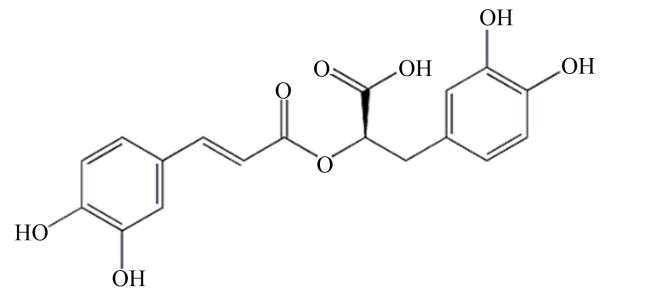
迷迭香酸在植物体内由咖啡酸和3,4-二羟基苯基乳酸缩合而成,化学名称为[R(E)]α-[[4-二羟基苯基)-1-氧代-2-丙烯基]氧基]-3,4-二羟基苯丙酸,化学式为C18H16O8,易溶于水、甲醇及乙醇的水溶液,不溶于无水乙醇、乙醚等有机溶剂,具有迷迭香特殊草本气味[10],其结构式如图1[11]所示。迷迭香酸具有较好的稳定性,pH和温度这2个条件对其稳定性的影响很小,但光照和钙离子(Ca2+)、镁离子(Mg2+)这2种金属离子对其稳定性危害较大,这一特性很大程度上限制了其在生物体内的利用率[12]
图1 迷迭香酸的化学结构式

Fig.1 Chemical structure formula of rosmarinic acid[11]

常见的迷迭香酸提取方法包括煎煮法、溶剂提取法、超声波提取法和超临界萃取法等,有研究采用离子液体作为溶剂提取紫苏种子中的迷迭香酸,在离子液体浓度为5%、提取时间为50 s、微波刺激功率为350 W时,迷迭香酸得率为4.0 mg/g,但离子液体成本较高且具有生物不可降解性[13]。亚临界水提法是利用水的极性变化萃取化合物,具有溶剂残留少、节能,绿色环保的特点。闫林林等[14]利用亚临界水提法,在提取温度为163 ℃、提取时间为30 min、液料比为41 mL/g时,紫苏籽粕中迷迭香酸得率为4.91 mg/g。刘根才等[15]利用超声提取法,在乙醇体积分数为39%、料液比为1:9、超声时间为63 min的条件下,紫苏叶中迷迭香酸提取率达到0.61%。

1.2 迷迭香酸的吸收代谢

一般来说,胃的环境会极大地影响机体对所摄入酚类化合物的吸收,相比之下,肠道的环境对其消化影响较小。迷迭香酸通过食道进入体内后,在胃肠道的吸收率小于其摄入量的1%[16],其需要首先经过肠道微生物群代谢[17],由微生物酯酶将其降解为结构较为简单的酚酸[18],随后经过硫酸酯化、甲基化、葡萄糖结合和葡萄糖醛酸等多条途径代谢为其他产物,最后通过肠细胞的细胞旁途径进行吸收[19]。迷迭香酸裂解后产生的咖啡酸片段会代谢为阿魏酸[20],可发生羟基的进一步硫酸化和甲氧基化,也可经过羟基化、二羟基化和甲氧基化生成2,3,4-三甲氧基肉桂酸以及间香豆酸[21],3,4-二羟基苯基乳酸会代谢产生苯乙酸[22]、原儿茶酸[23],原儿茶酸进一步代谢为对羟基苯甲酸或香草酸等[24]。迷迭香酸及其代谢产物被吸收后在肾脏中含量最高,其次是肺脏、脾脏和肝脏[25],在骨骼和肌肉中也能少量被检测到[26]。迷迭香酸大部分代谢物在摄入后6 h内会被排出,主要途径是经肾脏随同尿液排泄以及经肝脏随同胆汁排泄[26-27],在尿液中可以检测到咖啡酸、阿魏酸、2,3,4-三甲氧基肉桂酸、间香豆酸、对羟基苯甲酸和香草酸以游离和共轭的形式存在[23]

2 迷迭香酸的生物学功能及作用机制

2.1 抗氧化功能及作用机制

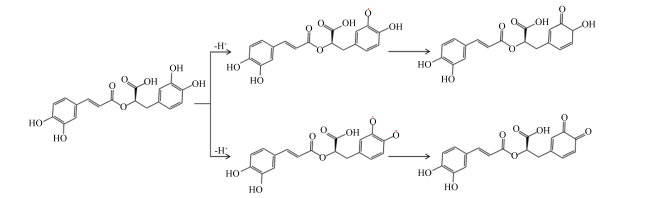
迷迭香酸结构中的邻二酚羟基使其具有良好的抗氧化作用,在体内可以通过脱氢的方式清除自由基。Sevgi等[5]在评估迷迭香酸、咖啡酸和绿原酸等十种不同酚酸的抗氧化和DNA损伤保护能力时发现,0.1 mg/mL的迷迭香酸对2,2-二苯基-1-苦基肼(2,2-diphenyl-1-picrylhydrazyl,DPPH)自由基的清除能力最高,达到91.50%。在清除自由基的过程中,邻位羟基上的氢原子不断脱离使其形成半醌或醌的结构,从而达到抗氧化的作用[28],清除过程如图2[29]所示。氢离子脱离后可形成很强的分子内氢键使得反应更容易发生,迷迭香酸结构中C3位的共轭双键可以分散电子云,对其抗氧化作用也有增强效果[30]
图2 迷迭香酸清除自由基的过程

Fig.2 Process of scavenging free radicals by rosmarinic acid[29]

迷迭香酸可以通过清除活性氧(reactive oxygen species,ROS)和增加抗氧化分子实现抗氧化作用。Fernando等[31]研究发现,在过氧化氢(H2O2)处理的人角质细胞中,2.5 μmol/L的迷迭香酸清除了细胞内60%的ROS,其通过调节细胞抗氧化系统,减轻了H2O2诱导的氧化损伤。细胞色素P450 2E1(cytochrome P450 2E1,CYP2E1)会激活细胞内质网产生ROS,因此对其抑制可能有助于减轻ROS诱导的损伤。Hasanein等[32]通过对乙酰氨基酚诱导的大鼠氧化损伤和肝毒性试验表明,口服迷迭香酸(100 mg/kg)可抑制肝脏CYP2E1活性,同时通过提高谷胱甘肽(glutathione,GSH)含量和增强谷胱甘肽转移酶活性来降低促氧化剂含量和增强抗氧化能力。此外,在研究不同浓度(20、40和80 μmol/L)迷迭香酸对脂多糖(lipopolysaccharide,LPS)诱导的外周血单核细胞氧化损伤和炎症的影响时发现,迷迭香酸通过抑制脂质过氧化以及一氧化氮生成来减少氧化应激,并且可以增强谷胱甘肽过氧化物酶(glutathione peroxidase,GPX)和超氧化物歧化酶(superoxide dismutase,SOD)活性[33]。核因子E2相关因子2(nuclear factor E2-related factor 2,Nrf2)作为转录因子在抗氧化应激系统中起到关键作用,可以调节多种抗氧化酶基因的表达.在重铬酸钾刺激大鼠模型试验中,观察到迷迭香酸(25 mg/kg)灌胃60 d对大鼠有保护作用,其通过上调Nrf2信号通路减轻了肝脏和肾脏组织的氧化损伤,并且与模型组相比,迷迭香酸处理使得GSH含量显著升高,氧化产物丙二醛(malondialdehyde,MDA)含量显著降低[34]。在猪的饲喂试验中也有同样的发现,在猪饲粮中添加20 mg/kg迷迭香酸和300 mg/kg橙皮苷饲喂90 d后发现,迷迭香酸和橙皮苷组合显著提高了猪盲肠的总抗氧化能力及SOD活性,并且增强了Nrf2的mRNA相对表达量[35]。另外,用氧化锌(zinc oxide,ZnO)/壳聚糖纳米颗粒包裹迷迭香酸,处理甲基苯丙胺(methamphetamine,MA)诱导氧化应激损伤的斑马鱼后,发现15 mg迷迭香酸能有效抑制胱天蛋白酶3(Caspase-3,CASP3)mRNA水平的升高,显著降低了MA诱导的氧化应激损伤[36]。综上所述,迷迭香酸可以通过清除ROS、增加抗氧化因子、降低促氧化化合物水平以及调节信号通路等途径来减少氧化应激的产生,其自身化学结构是发挥抗氧化活性的主要原因。

2.2 抗炎功能及作用机制

迷迭香酸在炎症部位发生补体激活时表现出优异的抗炎活性,它能够与活性补体物质C3b共价结合从而抑制补体活性,继而抑制炎症反应[37]。核因子-κB(nuclear factor kappa-B,NF-κB)的激活会诱导多种促炎细胞因子以及酶生成,迷迭香酸可以通过抑制受体识别和信号转导、磷酸化活化以及促炎细胞因子基因的转录等途径抑制NF-κB来发挥其抗炎活性(图3)[38-40]。Toll样受体4(Toll-like receptor 4,TLR4)是一种细胞膜受体,作为Toll样受体和模式识别受体的一部分可诱导NF-κB活化引发炎症反应[41]。Ma等[37]分别用5、10和20 μg/mL的迷迭香酸处理大鼠肾上腺嗜铬细胞瘤细胞系细胞24 h后发现,迷迭香酸通过抑制TLR4/NF-κB信号通路,降低肿瘤坏死因子-α(tumor necrosis factor-α,TNF-α)、白细胞介素-6(interleukin-6,IL-6)和白细胞介素-1β(interleukin-1β,IL-1β)表达,从而降低LPS诱导的炎症反应。NF-κB的活化首先需要其进行磷酸化过程[42],在LPS诱导的小鼠急性肺损伤模型中,迷迭香酸、绿原酸和异嗪皮啶的混合物可以抑制细胞中NF-κB的磷酸化,从而降低炎症反应,同时还可以降低一氧化氮和促炎因子含量[38]。高迁移率族蛋白B1(high mobility group box-1 protein,HMGB1)是一种位于细胞核中的蛋白质,主要协调基因转录,可以激活促炎细胞因子基因表达[43]。Lin等[39]研究发现,大鼠口服给药2 g/kg迷迭香酸4周后,抑制了HMGB1/TLR4轴信号通路,降低了NF-κB的激活和促炎细胞因子的产生,从而缓解了大鼠的肝脏炎症。
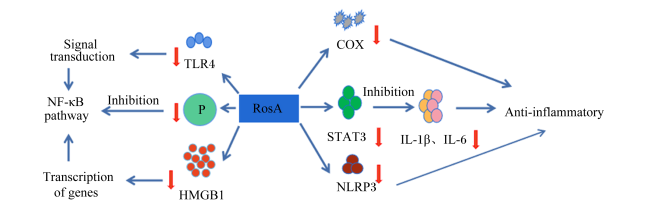
图3 迷迭香酸的抗炎调控机制

RosA:迷迭香酸 rosmarinic acid;TLR4:Toll样受体4 Toll-like receptor 4;Signal transduction:信号转导;NF-κB pathway:核因子-κB通路 nuclear factor kappa-B pathway;P;磷酸化 phosphorylation;Inhibition:抑制;HMGB1:高迁移率族蛋白B1 high mobility group box-1 protein;Transcription of genes:基因转录;COX:环氧化酶 cyclooxygenase;STAT3:信号转导和转录激活因子3 signal transducer and activator of transcription 3;IL-1β:白细胞介素-1β interleukin-1β;IL-6:白细胞介素-6 interleukin-6;Anti-inflammatory:抗炎;NLRP3:NOD样受体热蛋白结构域相关蛋白3 NOD-like receptor thermal protein domain associated protein 3。

Fig.3 Anti-inflammatory regulatory mechanisms of rosmarinic acid[38-40]

迷迭香酸还可以作用于不同的酶以达到抗炎目的,其主要介质是环氧化酶。50 mg/(kg·d)迷迭香酸对大鼠连续作用60 d后,能够通过抑制环氧化酶表达和降低前列腺素含量,显著抑制脂质过氧化水平和炎症反应[44]。通过大鼠体内试验发现,60 mg/kg的迷迭香酸可显著降低大鼠结肠炎的严重程度,其作用机制与信号转导和转录激活因子3(signal transducer and activator of transcription 3,STAT3)有关,通过抑制STAT3的激活可减少小鼠结肠中IL-1β、IL-6的产生以及环氧化酶的表达,从而达到抑制细胞炎症的目的[45]。迷迭香酸也可以通过抑制炎性小体的激活来发挥抗炎活性,NOD样受体热蛋白结构域相关蛋白3(NOD-like receptor thermal protein domain associated protein 3,NLRP3)与凋亡相关斑点样蛋白、半胱天冬酶-1前体组合成的NLRP3炎性小体复合物会被迷迭香酸抑制,使用100 mg/kg的迷迭香酸对瑞士白化小鼠灌胃2 d后发现,迷迭香酸通过阻断半胱氨酸蛋白酶-1及其下游信号分子IL-1β抑制了NLRP3信号通路的激活,NF-κB的活化和环氧化酶蛋白的表达也被抑制,有效预防了NLRP3参与的急性肾损伤[46]。此外,由于体内氧化应激与炎症反应是互相影响的,Nrf2作为在细胞抗氧化反应和炎症反应中都起到重要调节作用的关键转录因子[47],迷迭香酸对其调控不止起到抗氧化作用,对炎症反应也有较高的缓解效果,通过抗氧化作用影响机体炎症平衡也是迷迭香酸发挥作用的一条重要途径。

2.3 抗菌功能及作用机制

迷迭香酸在多项研究中表现出良好的抗菌活性,抑制细胞能量供应以及破坏细胞结构完整性是其对细菌作用的主要途径。烯醇化酶是细菌体内一种参与糖代谢的关键糖酵解金属酶,主要负责催化糖酵解过程中的2-磷酸甘油酸转化为磷酸烯醇式丙酮酸,为后续氧化磷酸化提供底物支持,是糖酵解过程中的重要蛋白[48]。分子对接结果表明,迷迭香酸可以通过金属-受体的相互作用与烯醇化酶的Mg2+结合,迷迭香酸的苯环也可以与氨基酸形成氢键抑制烯醇化酶的表达,影响细菌正常代谢和糖酵解,导致细菌生理活动的能量供应不足,从而抑制其生长[49]。Ivanov等[50]研究发现,迷迭香酸可以通过破坏细胞膜完整性及降低线粒体活性抑制真菌活性,0.1 mg/mL的迷迭香酸处理念珠菌后,由于细胞膜的通透性发生了改变,结晶紫的吸收率由15.8%上升到39.6%,线粒体的活性也降低了50%以上。迷迭香酸对动物细菌性腹泻的主要病原菌大肠杆菌和沙门氏菌均有抑制作用,特别是大肠杆菌,可以通过破坏其细胞结构导致内容物质流出,阻碍其生长繁殖,同时抑制细胞磷脂双分子层中钠离子(Na+)/钾离子(K+)-ATP酶的活性,导致Na+/K+平衡被破坏,迷迭香酸对大肠杆菌最低抑菌浓度和最低杀菌浓度分别为0.8和0.9 mg/mL[51]。此外,迷迭香酸还可以上调蛋白激酶1(putative kinase 1,PINK1)的mRNA和蛋白表达,促进泛素连接酶E3从细胞质汇集到线粒体并磷酸化,增强PINK1和泛素连接酶E3的相互作用及其在巨噬细胞的共定位,通过增强PINK1介导的线粒体自噬达到提高巨噬细胞抗菌免疫活性的目的[52]

2.4 其他功能及作用机制

大量试验证明,迷迭香酸有抗肿瘤、降血糖、保护神经和护肝的作用。迷迭香酸毒副作用较化疗药物小,具有调节炎症和血管生成相关细胞因子分泌的作用,同时通过抑制异种移植微环境中NF-κB p65的表达,可以有效抑制肿瘤生长[53]。此外,迷迭香酸可以降低刺猬(hedgehog,Hh)信号通路相关基因和胶质瘤相关癌基因同源物1的表达,下调抗凋亡基因B细胞淋巴瘤-2(B-cell lymphoma-2,Bcl-2)表达,上调促凋亡基因B细胞淋巴瘤-2相关X因子(Bcl-2-associated X protein,Bax)表达,通过抑制乳腺癌干细胞的活力和迁移发挥抗癌作用[54]。迷迭香酸对糖尿病大鼠有显著降糖作用,120 mg/kg的迷迭香酸可以改善大鼠的葡萄糖利用和胰岛素敏感性,而且作用效果具有剂量依赖性,其作用机制与肝脏中磷酸烯醇式丙酮酸羧基酶表达的降低和骨骼肌中葡萄糖转运蛋白-4表达的提高有关[55]。另外有研究证明,迷迭香酸可以通过降低黑质铁水平和调节Bcl-2/Bax基因表达的比例,缓解氧化性神经毒素6-羟基多巴胺引起的细胞计数和纹状体多巴胺含量严重降低,保护黑质多巴胺神经元免受6-羟基多巴胺的毒性作用[56]。在一些研究中,迷迭香酸表现出显著的肝保护能力,10 mg/kg迷迭香酸可显著减轻肝纤维化大鼠的纤维化程度,改善白蛋白、球蛋白、丙氨酸转氨酶及谷氨酸转氨酶等生化指标,下调肝脏转化生长因子-β1(transforming growth factor-β1,TGF-β1)和结缔组织生长因子表达[57];20 mg/kg迷迭香酸除下调肝脏TGF-β1表达外,还可减轻肝胶原沉积,改善肝外胆汁淤积引起的肝脏炎症[58]

3 迷迭香酸及酚酸类化合物在畜禽生产中的应用

随着禁止在畜禽饲料中使用抗生素、畜禽产业迅速发展以及人们对动物产品的需求不断增加,开发更加绿色、安全的抗生素替代品成为畜牧业面临的关键问题之一。植物提取物由于出色的抗氧化、抗炎以及抑菌等生物学功能,被视为一种创新且高效的饲料添加剂,在畜禽生产领域得以应用。植物提取物的应用可以显著提升动物的生产性能、免疫能力和产品品质,展现出非常可观的应用前景。迷迭香酸作为一种优质的天然植物提取物功能组分,可以作为高效绿色的植物添加剂应用于畜牧生产中,但目前直接作用于畜禽生产的研究较少。

3.1 迷迭香酸在畜禽生产中的应用

迷迭香酸作为饲料添加剂时可以发挥其良好的抗氧化特性,对动物的抗氧化能力有一定提升效果。在育肥猪饲粮中添加200 mg/kg迷迭香酸可显著提高血清中免疫球蛋白含量,以及提高血清、肝脏和肌肉中抗氧化酶的活性,降低MDA含量,增强机体的免疫和抗氧化能力,并且迷迭香酸能够上调皮质脂肪和肝脏组织中脂肪分解相关基因的表达,下调脂肪合成相关基因的表达,进而改善脂肪代谢缓解脂肪沉积[59]。在白羽肉鸡的试验中也有同样的结果,30 mg/kg的迷迭香酸可使白羽肉鸡胸肌中抗氧化基因Nrf2的mRNA表达量显著升高,MDA含量显著下降,使得白羽肉鸡抗氧化能力有所提高[60]。迷迭香酸的抗菌特性发挥在动物机体内,可以通过对动物肠道菌群的调节以及对病原微生物的抑制,对动物生产性能起到改善作用。雷铭康等[61]研究发现,饲粮中添加500 mg/kg迷迭香酸可以改善攻毒断奶仔猪的结肠结构形态,调节结肠菌群组成,并且提高结肠食糜中类细菌代谢产物的含量,有助于维持结肠屏障功能,缓解断奶仔猪腹泻。在肉鸡饲粮中分别添加40、80和160 mg/kg迷迭香酸发现,160 mg/kg的迷迭香酸能够显著降低堆型艾美耳球虫攻毒肉鸡粪便中卵囊数量、21日龄肝脏指数以及血清谷丙转氨酶活性,显著提高15~21日龄平均日增重,有效缓解堆型艾美耳球虫感染引起的肉鸡生长缓慢,并且提高其免疫性能[62]

3.2 酚酸类化合物在畜禽生产中的应用

酚酸类化合物是一类主要含有氢原子、羧基和酚基的化合物,已在动物生产上验证了具有多种生物学功能,除了抗氧化、抗炎及抑菌作用外,其对动物的消化道菌群、生产性能和机体健康等也表现出一定的改善作用。在断奶仔猪饲粮中添加1 000 mg/kg的绿原酸,显著提高了空肠和回肠黏膜二胺氧化酶活性,空肠黏膜转化生长因子α含量有所升高,对肠上皮屏障功能产生了有益作用,同时饲粮中添加绿原酸会刺激细菌产生更多的短链脂肪酸,调节肠道pH,从而促进益生菌的生长[63]。张全宇[64]研究发现,在断奶前期犊牛饲粮中添加1 g/kg的没食子酸,显著提高了犊牛的开食料采食量、平均日增重和营养物质消化率,对犊牛生长性能具有改善作用;此外,添加没食子酸对瘤胃细菌群落有一定调节作用,提高了参与糖代谢的产乙酸糖发酵菌(Saccharofermentans)相对丰度,增强了瘤胃糖代谢能力。在蛋鸡饲粮中分别添加10、15 mg/kg的钒以及600、1 000 mg/kg的茶多酚,饲喂8周后,饲喂茶多酚使得肝脏谷胱甘肽转移酶和GPX活性显著提高,提高了蛋鸡肝脏抗氧化应激能力,并且茶多酚可防止钒对蛋鸡造成的蛋清质量下降以及蛋壳颜色漂白[65]。在仔猪饲粮中添加0.1%由香芹酚、肉桂醛和百里香酚组成的复合精油,饲喂42 d后仔猪平均日增重显著提高,同时复合精油改善了仔猪肠道屏障功能和肠道炎症,提高了紧密连接蛋白mRNA表达量以及消化酶活性,对仔猪生产性能产生了诸多有益影响[66]
综上所述,迷迭香酸对动物机体炎症、氧化应激以及病原微生物繁殖等可以发挥改善作用,而且作为酚酸类化合物在调节动物消化道微生物、机体健康及生产性能等方面具备很大的潜力,将来可以进行更加深入的研究来充分发挥其价值。

4 小结与展望

迷迭香酸具有多种生物学功能,不仅可以通过脱氢消除机体内异常增加的活性氧,调节抗氧化物水平以及抗氧化信号通路减少机体氧化应激的发生,还可以通过多条途径抑制NF-κB信号通路,作用于不同的信号因子发挥抗炎作用,抑制细菌增殖以及保护肝脏,有利于机体健康。迷迭香酸在维持动物氧化应激-炎症反应-免疫三方联动效应稳定上体现出一定潜力,但到目前为止,迷迭香酸畜禽上的研究还较少,在不同动物体内发挥生理功能的分子机制以及在不同动物上的适宜添加量还有待进一步探究。此外,迷迭香酸在理化性质上还有易受Ca2+、Mg2+影响的特点,这为其在畜禽上的研究增加了许多困难和挑战,今后可以围绕分子对接、高通量筛序及结构性修饰等方面展开对迷迭香酸的研究[67]。迷迭香酸在动物体内的代谢产物种类繁多,深入且全面地掌握其作用途径和机理与代谢产物的关系有利于迷迭香酸的开发以及精准饲喂。
[1]
顾芳, 胡平, 蔡德敏, 等. 畜禽健康养殖中抗生素应用及其替代品研究进展[J]. 动物营养学报, 2023, 35(10):6247-6256.

DOI

GU F, HU P, CAI D M, et al. Advances in application of antibiotics and their substitutes in healthy animal husbandry[J]. Chinese Journal of Animal Nutrition, 2023, 35(10):6247-6256. (in Chinese)

DOI

[2]
SAKARIKOU C, KOSTOGLOU D, SIMÕES M, et al. Exploitation of plant extracts and phytochemicals against resistant Salmonella spp. in biofilms[J]. Food Research International, 2020, 128:108806.

DOI

[3]
OLIVEIRA G D A R, DE OLIVEIRA A E, DA CONCEIÇÃO E C, et al. Multiresponse optimization of an extraction procedure of carnosol and rosmarinic and carnosic acids from rosemary[J]. Food Chemistry, 2016, 211:465-473.

DOI PMID

[4]
LIANG Z M, WU L Q, DENG X, et al. The antioxidant rosmarinic acid ameliorates oxidative lung damage in experimental allergic asthma via modulation of NADPH oxidases and antioxidant enzymes[J]. Inflammation, 2020, 43(5):1902-1912.

DOI PMID

[5]
SEVGI K, TEPE B, SARIKURKCU C. Antioxidant and DNA damage protection potentials of selected phenolic acids[J]. Food and Chemical Toxicology, 2015, 77:12-21.

DOI PMID

[6]
吴丽飞, 高伟, 赵鹏宇, 等. 迷迭香提取物对肉鸡生长性能、血清抗氧化指标、肠道形态和肠道菌群的影响[J]. 动物营养学报, 2023, 35(8):5036-5048.

DOI

WU L F, GAO W, ZHAO P Y, et al. Effects of rosemary extract on growth performance,serum antioxidant indices,intestinal morphology and intestinal flora of broilers[J]. Chinese Journal of Animal Nutrition, 2023, 35(8):5036-5048. (in Chinese)

[7]
MUROTA K, NAKAMURA Y, UEHARA M. Flavonoid metabolism:the interaction of metabolites and gut microbiota[J]. Bioscience,Biotechnology,and Biochemistry, 2018, 82(4):600-610.

DOI

[8]
SCARPATI M L, ORIENTE G. Isolamento e costituzione dell’acido rosmarinico (dal rosmarinus off.)[J]. Ricerca Scientifica, 1958, 28:2329-2333.

[9]
DEL BAÑO M J, LORENTE J, CASTILLO J, et al. Phenolic diterpenes,flavones,and rosmarinic acid distribution during the development of leaves,flowers,stems,and roots of Rosmarinus officinalis. Antioxidant activity[J]. Journal of Agricultural and Food Chemistry, 2003, 51(15):4247-4253.

DOI

[10]
GHASEMZADEH RAHBARDAR M, HOSSEINZADEH H. Effects of rosmarinic acid on nervous system disorders:an updated review[J]. Naunyn-Schmiedeberg’s Archives of Pharmacology, 2020, 393(10):1779-1795.

DOI

[11]
BABAEI M, BORJA ZAMFIR G M, CHEN X, et al. Metabolic engineering of Saccharomyces cerevisiae for rosmarinic acid production[J]. ACS Synthetic Biology, 2020, 9(8):1978-1988.

DOI

[12]
ZORIĆ Z, MARKIĆ J, PEDISIĆ S, et al. Stability of rosmarinic acid in aqueous extracts from different lamiaceae species after in vitro digestion with human gastrointestinal enzymes[J]. Food Technology and Biotechnology, 2016, 54(1):97-102.

[13]
LI W J, FAN Y C, ZHANG S L, et al. Extraction of rosmarinic acid from perilla seeds using green protic Ionic liquids[J]. Microchemical Journal, 2021, 170:106667.

DOI

[14]
闫林林, 王艳辉, 张佳婵, 等. 紫苏籽粕迷迭香酸的亚临界水提取工艺优化及其抗氧化活性[J]. 食品工业科技, 2023, 44(17):176-185.

YAN L L, WANG Y H, ZHANG J C, et al. Optimization of subcritical water extraction of rosmarinic acid from perilla (Perilla frutescens L.) seed meal and its antioxidant activity[J]. Science and Technology of Food Industry, 2023, 44(17):176-185. (in Chinese)

[15]
刘根才, 华杰. 响应曲面法优选紫苏叶中迷迭香酸超声提取工艺[J]. 中国药业, 2022, 31(6):65-68.

LIU G C, HUA J. Optimization of extraction process of rosmarinic acid from perillae folium by response surface methodology[J]. China Pharmaceuticals, 2022, 31(6):65-68. (in Chinese)

[16]
HASE T, SHISHIDO S, YAMAMOTO S, et al. Rosmarinic acid suppresses Alzheimer’s disease development by reducing amyloid β aggregation by increasing monoamine secretion[J]. Scientific Reports, 2019, 9(1):8711.

DOI

[17]
VELDERRAIN-RODRÍGUEZ G R, PALAFOX-CARLOS H, WALL-MEDRANO A, et al. Phenolic compounds:their journey after intake[J]. Food & Function, 2014, 5(2):189-197.

[18]
KONISHI Y, KOBAYASHI S. Transepithelial transport of rosmarinic acid in intestinal Caco-2 cell monolayers[J]. Bioscience,Biotechnology,and Biochemistry, 2005, 69(3):583-591.

DOI

[19]
DOMÍNGUEZ-AVILA J A, WALL-MEDRANO A, VELDERRAIN-RODRÍGUEZ G R, et al. Gastrointestinal interactions,absorption,splanchnic metabolism and pharmacokinetics of orally ingested phenolic compounds[J]. Food & Function, 2017, 8(1):15-38.

[20]
NOGUCHI-SHINOHARA M, ONO K, HAMAGUCHI T, et al. Pharmacokinetics,safety and tolerability of melissa officinalis extract which contained rosmarinic acid in healthy individuals:a randomized controlled trial[J]. PLoS One, 2015, 10(5):e0126422.

DOI

[21]
BABA S, OSAKABE N, NATSUME M, et al. Absorption,metabolism,degradation and urinary excretion of rosmarinic acid after intake of Perilla frutescens extract in humans[J]. European Journal of Nutrition, 2005, 44(1):1-9.

DOI

[22]
MOSELE J I, MARTÍN-PELÁEZ S, MACIÀ A, et al. Study of the catabolism of thyme phenols combining in vitro fermentation and human intervention[J]. Journal of Agricultural and Food Chemistry, 2014, 62(45):10954-10961.

DOI

[23]
NURMI A, NURMI T, MURSU J, et al. Ingestion of oregano extract increases excretion of urinary phenolic metabolites in humans[J]. Journal of Agricultural and Food Chemistry, 2006, 54(18):6916-6923.

PMID

[24]
NIEMAN K M, SANOSHY K D, BRESCIANI L, et al. Tolerance,bioavailability,and potential cognitive health implications of a distinct aqueous spearmint extract[J]. Functional Foods in Health and Disease, 2015, 5(5):165-187.

DOI

[25]
CHEN J F, BAO X, LIN C L, et al. Pharmacokinetics of rosmarinic acid in rats and tissue distribution in mice[J]. Latin American Journal of Pharmacy, 2019, 38(5):985-990.

[26]
NUNES S, MADUREIRA A R, CAMPOS D, et al. Therapeutic and nutraceutical potential of rosmarinic acid-cytoprotective properties and pharmacokinetic profile[J]. Critical Reviews in Food Science and Nutrition, 2017, 57(9):1799-1806.

DOI PMID

[27]
ZHANG J, WEN Q, QIAN K, et al. Metabolic profile of rosmarinic acid from Java tea (Orthosiphon stamineus) by ultra-high-performance liquid chromatography coupled to quadrupole-time-of-flight tandem mass spectrometry with a three-step data mining strategy[J]. Biomedical Chromatography, 2019, 33(9):e4599.

DOI

[28]
苏平, 王根女, 吴丹, 等. 迷迭香酸的生理活性功能及其来源研究进展[J]. 食品与发酵工业, 2008, 34(12):135-138.

SU P, WANG G N, WU D, et al. Progress in rosmarinic acid biological activities and its sources[J]. Food and Fermentation Industries, 2008, 34(12):135-138. (in Chinese)

[29]
SU J, JIA F Y, LU J J, et al. Characterization of the metabolites of rosmarinic acid in human liver microsomes using liquid chromatography combined with electrospray ionization tandem mass spectrometry[J]. Biomedical Chromatography, 2020, 34(4):e4806.

DOI

[30]
龙苗苗, 程贤, 赵振东, 等. 迷迭香酸药理作用及其递送系统的研究进展[J]. 中草药, 2023, 54(11):3715-3724.

LONG M M, CHENG X, ZHAO Z D, et al. Research progress on pharmacological effect and delivery system of rosmarinic acid[J]. Chinese Traditional and Herbal Drugs, 2023, 54(11):3715-3724. (in Chinese)

[31]
FERNANDO P M D J, PIAO M J, KANG K A, et al. Rosmarinic acid attenuates cell damage against UVB radiation-induced oxidative stress via enhancing antioxidant effects in human HaCaT cells[J]. Biomolecules & Therapeutics, 2016, 24(1):75-84.

[32]
HASANEIN P, SHARIFI M. Effects of rosmarinic acid on acetaminophen-induced hepatotoxicity in male Wistar rats[J]. Pharmaceutical Biology, 2017, 55(1):1809-1816.

DOI PMID

[33]
SADEGHI A, BASTIN A R, GHAHREMANI H, et al. The effects of rosmarinic acid on oxidative stress parameters and inflammatory cytokines in lipopolysaccharide-induced peripheral blood mononuclear cells[J]. Molecular Biology Reports, 2020, 47(5):3557-3566.

DOI PMID

[34]
KHALAF A A, HASSANEN E I, IBRAHIM M A, et al. Rosmarinic acid attenuates chromium-induced hepatic and renal oxidative damage and DNA damage in rats[J]. Journal of Biochemical and Molecular Toxicology, 2020, 34(11):e22579.

DOI

[35]
赵文轩, 吴建民, 党苗苗, 等. 橙皮苷与迷迭香酸组合对育肥猪盲肠肠道形态、抗氧化功能、菌群结构及屏障功能的影响[J/OL]. 微生物学报:1-15[2023-09-02]. https://doi.org/10.13343/j.cnki.wsxb.20230225.

ZHAO W X, WU J M, DANG M M, et al. Combination of hesperidin and rosmarinic acid affects cecal morphology,antioxidant function,microbiota structure,and barrier function of finishing pigs[J/OL]. Acta Microbiologica Sinica:1-15[2023-09-02]. https://doi.org/10.13343/j.cnki.wsxb.20230225. (in Chinese)

[36]
NIKSHENAS SHAHRESTANI V, HADDADI M, SAMZADEH KERMANI A R. Behavioral and molecular analysis of antioxidative potential of rosmarinic acid against methamphetamine-induced augmentation of Casp3a mRNA in the zebrafish brain[J]. Basic and Clinical Neuroscience, 2021, 12(2):243-254.

[37]
MA Z J, LU Y B, YANG F G, et al. Rosmarinic acid exerts a neuroprotective effect on spinal cord injury by suppressing oxidative stress and inflammation via modulating the Nrf2/HO-1 and TLR4/NF-κB pathways[J]. Toxicology and Applied Pharmacology, 2020, 397:115014.

DOI

[38]
LIU C P, LIU J X, GU J Y, et al. Combination effect of three main constituents from Sarcandra glabra inhibits oxidative stress in the mice following acute lung injury:a role of MAPK-NF-κB pathway[J]. Frontiers in Pharmacology, 2020, 11:580064.

DOI

[39]
LIN S Y, WANG Y Y, CHEN W Y, et al. Hepatoprotective activities of rosmarinic acid against extrahepatic cholestasis in rats[J]. Food and Chemical Toxicology, 2017, 108(Part A):214-223.

DOI

[40]
GHASEMIAN M, OWLIA S, OWLIA M B. Review of anti-inflammatory herbal medicines[J]. Advances in Pharmacological Sciences, 2016, 2016:9130979.

[41]
LV R X, DU L L, LIU X Y, et al. Rosmarinic acid attenuates inflammatory responses through inhibiting HMGB1/TLR4/NF-κB signaling pathway in a mouse model of Parkinson’s disease[J]. Life Sciences, 2019, 223:158-165.

DOI

[42]
WANG W J, CHENG M H, LIN J H, et al. Effect of a rosmarinic acid supplemented hemodialysis fluid on inflammation of human vascular endothelial cells[J]. Brazilian Journal of Medical and Biological Research, 2017, 50(12):e6145.

DOI

[43]
FUJITA K, MOTOKI K, TAGAWA K, et al. HMGB1,a pathogenic molecule that induces neurite degeneration via TLR4-MARCKS,is a potential therapeutic target for Alzheimer’s disease[J]. Scientific Reports, 2016, 6:31895.

DOI

[44]
KANTAR GOK D, OZTURK N, ER H K, et al. Effects of rosmarinic acid on cognitive and biochemical alterations in ovariectomized rats treated with D-galactose[J]. Folia Histochemica et Cytobiologica, 2015, 53(4):283-293.

DOI

[45]
JIN B R, CHUNG K S, CHEON S Y, et al. Rosmarinic acid suppresses colonic inflammation in dextran sulphate sodium (DSS)-induced mice via dual inhibition of NF-κB and STAT3 activation[J]. Scientific Reports, 2017, 7:46252.

DOI

[46]
AKHTER J, KHAN J, BAGHEL M, et al. NLRP3 inflammasome in rosmarinic acid-afforded attenuation of acute kidney injury in mice[J]. Scientific Reports, 2022, 12(1):1313.

DOI PMID

[47]
SIVANDZADE F, PRASAD S, BHALERAO A, et al. NRF2 and NF-κB interplay in cerebrovascular and neurodegenerative disorders:molecular mechanisms and possible therapeutic approaches[J]. Redox Biology, 2019, 21:101059.

DOI

[48]
LI H, HUANG Y, WANG J W, et al. Molecular and biochemical characterization of enolase from Dermanyssus gallinae[J]. Gene, 2020, 756:144911.

DOI

[49]
XU Y D, GUO Y J, MAO H R, et al. Integration of transcriptomics and proteomics to elucidate inhibitory effect and mechanism of rosmarinic acid from Perilla frutescens (L.) Britt. in treating Trichophyton mentagrophytes[J]. Chinese Medicine, 2023, 18(1):67.

DOI

[50]
IVANOV M, KOSTIĆ M, STOJKOVIĆ D, et al. Rosmarinic acid-modes of antimicrobial and antibiofilm activities of a common plant polyphenol[J]. South African Journal of Botany, 2022, 146:521-527.

DOI

[51]
ZHANG J H, CUI X, ZHANG M, et al. The antibacterial mechanism of perilla rosmarinic acid[J]. Biotechnology and Applied Biochemistry, 2022, 69(4):1757-1764.

DOI

[52]
程成, 沙舟, 陈想, 等. 迷迭香酸通过上调PINK1/Parkin介导的线粒体自噬增强巨噬细胞抗菌免疫的机制研究[J]. 中国中药杂志, 2022, 47(23):6450-6456.

CHENG C, SHA Z, CHEN X, et al. Rosmarinic acid bolsters antibacterial immunity activity of macrophages by up-regulating PINK1/Parkin-mediated mitophagy[J]. China Journal of Chinese Materia Medica, 2022, 47(23):6450-6456.

[53]
CAO W, HU C, WU L L, et al. Rosmarinic acid inhibits inflammation and angiogenesis of hepatocellular carcinoma by suppression of NF-κB signaling in H22 tumor-bearing mice[J]. Journal of Pharmacological Sciences, 2016, 132(2):131-137.

DOI PMID

[54]
LI H, ZHANG Y F, CHEN H H, et al. Rosmarinic acid inhibits stem-like breast cancer through hedgehog and Bcl-2/Bax signaling pathways[J]. Pharmacognosy Magazine, 2019, 15(65):600-606.

DOI

[55]
RUNTUWENE J, CHENG K C, ASAKAWA A, et al. Rosmarinic acid ameliorates hyperglycemia and insulin sensitivity in diabetic rats,potentially by modulating the expression of PEPCK and GLUT4[J]. Drug Design,Development and Therapy, 2016, 10:2193-2202.

DOI

[56]
WANG J Y, XU H M, JIANG H, et al. Neurorescue effect of rosmarinic acid on 6-hydroxydopamine-lesioned nigral dopamine neurons in rat model of Parkinson’s disease[J]. Journal of Molecular Neuroscience, 2012, 47(1):113-119.

DOI

[57]
LI G S, JIANG W L, TIAN J W, et al. In vitro and in vivo antifibrotic effects of rosmarinic acid on experimental liver fibrosis[J]. Phytomedicine, 2010, 17(3/4):282-288.

DOI

[58]
DOMITROVIĆ R, ŠKODA M, VASILJEV MARCHESI V, et al. Rosmarinic acid ameliorates acute liver damage and fibrogenesis in carbon tetrachloride-intoxicated mice[J]. Food and Chemical Toxicology, 2013, 51:370-378.

DOI PMID

[59]
台瑞青. 迷迭香酸对育肥猪抗氧化水平与脂肪代谢的影响[D].硕士学位论文. 杨凌: 西北农林科技大学, 2022.

TAI R Q. Effects of rosmarinic acid on antioxidant level and fat metabolism in finishing pigs[D].Master’s Thesis. Yangling: Northwest A&F University, 2022. (in Chinese)

[60]
陈露, 赵道远, 吴建民, 等. 橙皮苷和迷迭香酸对白羽肉鸡生长性能、肉品质及抗氧化功能的影响[J]. 南京农业大学学报, 2023, 46(4):756-763.

CHEN L, ZHAO D Y, WU J M, et al. Combination effects of hesperidin and rosmarinic acid on growth performance,meat quality and antioxidant function in broilers[J]. Journal of Nanjing Agricultural University, 2023, 46(4):756-763. (in Chinese)

[61]
雷铭康, 李润林, 李盼盼, 等. 饲粮添加迷迭香酸对产肠毒素大肠杆菌K88攻毒断奶仔猪结肠菌群组成、屏障功能及炎症反应的影响[J]. 动物营养学报, 2022, 34(8):4944-4958.

DOI

LEI M K, LI R L, LI P P, et al. Effects of dietary rosmarinic acid on colonic microbiota composition,barrier function and inflammatory response in weaned piglets challenged with enterotoxigenic Escherichia coli K88[J]. Chinese Journal of Animal Nutrition, 2022, 34(8):4944-4958. (in Chinese)

[62]
酉加民, 杨茜梓, 宫嘉泰, 等. 迷迭香酸对堆型艾美耳球虫攻毒肉鸡生长性能、免疫机能及炎症反应的影响[J]. 动物营养学报, 2023, 35(9):5696-5707.

DOI

YOU J M, YANG Q Z, GONG J T, et al. Effects of rosmarinic acid on growth performance,immune function and inflammatory response of broilers challenged with Eimeria acervulina[J]. Chinese Journal of Animal Nutrition, 2023, 35(9):5696-5707. (in Chinese)

[63]
CHEN J L, YU B, CHEN D W, et al. Changes of porcine gut microbiota in response to dietary chlorogenic acid supplementation[J]. Applied Microbiology and Biotechnology, 2019, 103(19):8157-8168.

DOI PMID

[64]
张全宇. 没食子酸对断奶前犊牛生长性能的影响[D].硕士学位论文. 哈尔滨: 东北农业大学, 2022.

ZHANG Q Y. Effects of gallic acid on growth performance of preweaned dairy calves[D].Master’s Thesis. Harbin: Northeast Agricultural University, 2022. (in Chinese)

[65]
YUAN Z H, ZHANG K Y, DING X M, et al. Effect of tea polyphenols on production performance,egg quality,and hepatic antioxidant status of laying hens in vanadium-containing diets[J]. Poultry Science, 2016, 95(7):1709-1717.

DOI

[66]
ZHAO B C, WANG T H, CHEN J, et al. Effects of dietary supplementation with a carvacrol-cinnamaldehyde-thymol blend on growth performance and intestinal health of nursery pigs[J]. Porcine Health Management, 2023, 9(1):24.

DOI

[67]
GUAN H Q, LUO W B, BAO B H, et al. A comprehensive review of rosmarinic acid:from phytochemistry to pharmacology and its new insight[J]. Molecules, 2022, 27(10):3292.

DOI

Outlines

/