REVIEW

Bioactivity of Hydrolyzable Tannins and Their Application in Ruminant Production

  • BAI Jinni , 1 ,
  • ZHANG Wenjing 1 ,
  • LU Na 2 ,
  • GUO Kaijun , 1, *
Expand
  • 1 College of Animal Science and Technology, Beijing University of Agriculture, Beijing 102206, China
  • 2 Beijing Jingwa Agricultural Science and Technology Innovation Center, Beijing 100081, China
*professor, E-mail:

Received date: 2023-09-14

  Online published: 2024-03-13

Abstract

Hydrolyzable tannins are plant secondary metabolites from a wide range of sources, with broad-spectrum antibacterial, antioxidant, anti-inflammatory and other biological activities. Most of the current studies focus on the application of hydrolyzable tannins to monogastric animals, but there are many gaps in ruminants. This paper reviews the bioactive characteristics of hydrolyzable tannins and their applications in promoting ruminant growth and development, regulating rumen microflora, reducing methane production and improving production performance are reviewed, in order to provide a theoretical basis for the addition of hydrolyzed tannins as a potential antibiotic substitute in feeds.

Cite this article

BAI Jinni , ZHANG Wenjing , LU Na , GUO Kaijun . Bioactivity of Hydrolyzable Tannins and Their Application in Ruminant Production[J]. Chinese Journal of Animal Nutrition, 2024 , 36(3) : 1426 -1435 . DOI: 10.12418/CJAN2024.126

随着我国进入饲料“禁抗”时代,寻求绿色安全的“替抗”饲料添加剂迫在眉睫。单宁又叫植物多酚,是一种具有多元酚结构、含量仅次于木质素的天然植物次生代谢物,广泛存在于蔬菜、水果、谷物等植物的根、皮、茎、叶中[1]。单宁根据结构特征一般分为水解单宁和缩合单宁。缩合单宁是以黄烷醇为单体形成的聚合物,分子质量为500~20 000 u,结构组成相对复杂,在强酸强碱条件下可水解[2]。缩合单宁在自然界中广泛存在,但较大的分子结构和特定的降解条件使其难以被动物有效利用。水解单宁的生物活性相对更强,在医药、化工、食品等领域应用广泛。
近年来,水解单宁作为一种安全有效的饲料添加剂在畜牧养殖行业中备受关注。水解单宁是由没食子酸或鞣花酸与糖醇及其衍生物组成的多聚体,分子质量在500~3 000 u,主要存在于多种乔木(栗木、橡木)的树皮与果实中[3]。水解单宁具有抗氧化、抗炎、抗微生物等多种生物活性,能够改善畜禽免疫水平,且不易引起动物耐药性的产生[4]。饲粮中添加适量水解单宁可以促进反刍动物对蛋白质的吸收,增加有益脂肪酸的合成,减少甲烷等温室气体的产生,并提高产奶性能和产肉性能[3-4]。本文基于水解单宁的化学结构,介绍了水解单宁的生物活性,总结了水解单宁在反刍动物生产应用方面的研究进展,以期为水解单宁的添加剂开发和应用提供科学指导。

1 水解单宁的化学结构及降解途径

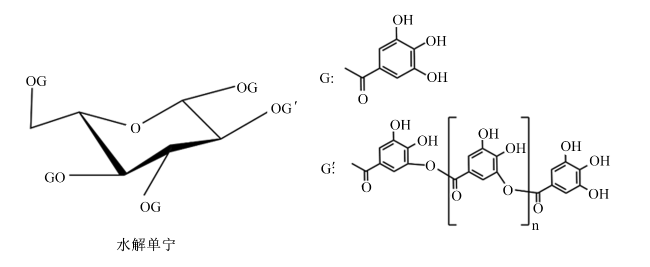
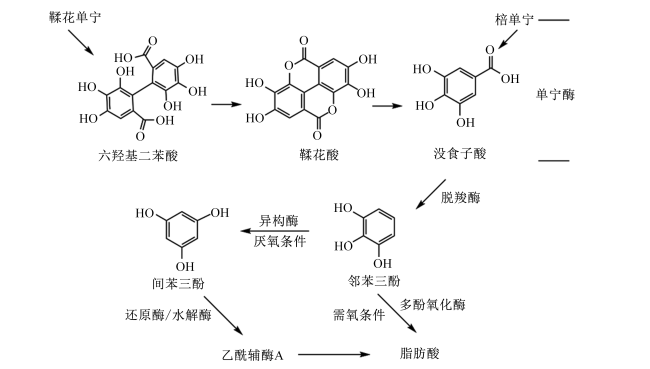
水解单宁大多是以葡萄糖基为中心的多元醇与周围多个酚羧酸通过酯键连接形成(图1)[5]。根据水解后酚羧酸的差异,将水解单宁分为棓单宁与鞣花单宁两大类[6]。棓单宁又称为五倍子单宁,水解后主要产物为没食子酸,多存在于金缕梅、五倍子和槭树中[7]。鞣花单宁水解后产生鞣花酸,主要存在于栗木、橡树以及各种坚果内[8]。水解单宁降解的关键是由微生物(细菌、真菌和酵母菌)分泌的多种酶(单宁酶、脱羧酶和多酚氧化酶)形成的酶促体系[9]。水解单宁降解过程中,经多酚氧化酶催化的步骤受到环境氧含量的影响[9]。在反刍动物瘤胃内,多酚氧化酶被还原酶或水解酶替代,最终降解为乙酰辅酶A(acetyl-CoA)合成乙酸、丙酸等脂肪酸(图2)。
图1 水解单宁的化学结构

Fig.1 Structure of hydrolyzable tannins[5]

图2 水解单宁降解过程

Fig.2 Degradation process of hydrolyzable tannins[10]

2 水解单宁的生物活性及其作用机制

2.1 肠道收敛作用

当pH为3.5~7.0时,水解单宁可以和蛋白质通过疏水键或氢键缩合,形成稳定的单宁-蛋白质复合物,这一特性是单宁具有肠道收敛作用的主要原因,对于维持动物肠道健康和缓解幼龄动物腹泻有重要作用[11]。单宁发挥肠道收敛作用的方式包括:1)结合并凝固肠道黏膜蛋白,引起肠道黏膜表面皱缩,减少炎性内容物渗出和肠道蠕动频率,并加强机体对水分的吸收[12-13]。2)阻断与腹泻有关离子转运通道的形成,调节肠道上皮细胞代谢。Borisova等[14]研究发现,漆树提取物中的水解单宁可以和藻类细胞表面带正电荷的蛋白基团发生静电吸附,阻断钙依赖性氯离子通道,降低肠腔内渗透压,缓解渗透性腹泻。3)借助疏水基团与病原微生物表面蛋白结合,阻断致病菌渗入肠道,减轻细胞炎症反应[6]

2.2 抗氧化机制

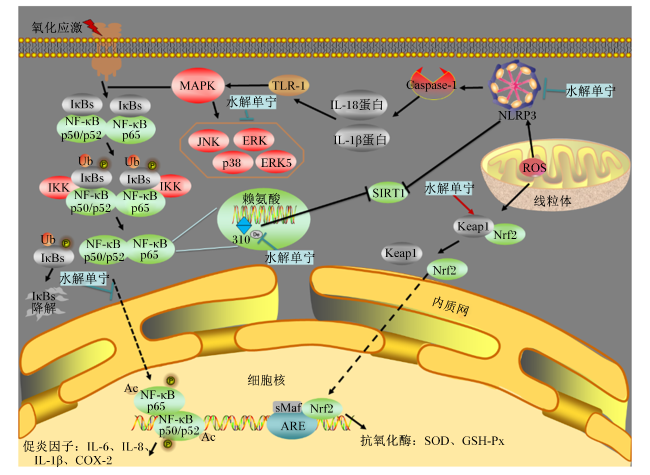
单宁分子外周的酚羟基通过释放氢原子和抢夺电子2种方式消除活性氧(reactive oxygen species,ROS)[15]。一般来说,水解单宁的抗氧化能力与其酚羟基数量存在正相关性[16]。此外,单宁可以和铁、铜等金属离子螯合,减少氧离子( O 2 -)自由基的产生[15]。水解单宁发挥抗氧化作用的关键是激活核因子E2相关因子2(nuclear factor erythroid-2 related factor 2,Nrf2)信号通路(图3)[17]。当机体受到氧化应激时,水解单宁阻断Nrf2泛素化,促进Nrf2易位核内与抗氧化反应元件(antioxidant response element,ARE)结合,诱导一系列保护性基因表达,如血红素加氧酶-1(heme oxygenase-1,HO-1)、超氧化物歧化酶(superoxide dismutase,SOD)和谷胱甘肽(glutathione,GSH),进而诱导细胞表达出更多抗氧化酶,下调ROS的产生,恢复机体稳态[18-20]
图3 水解单宁调控抗氧化和抗炎相关信号通路

IκBs:核因子-κB抑制蛋白 nuclear factor-κB inhibitor proteins;NF-κB:核因子-κB nuclear factor kappa-B;MAPK:丝裂原活化蛋白激酶 mitogen-activated protein kinase;TLR-1:Toll样受体-1 toll-like receptor-1;Caspase-1:半胱氨酸蛋白酶1 cysteinyl aspartate specific proteinase-1;NLRP3:核苷酸结合寡聚化结构域样受体蛋白3 nucleotide-binding oligomerization domain-like receptor protein 3;ROS:活性氧 reactive oxygen species;IL-18:白细胞介素-18 interleukin-18;IL-1β:白细胞介素-1β interleukin-1β;IKK:核因子-κB抑制蛋白激酶 nuclear factor-κB inhibitor protein kinase;JNK:c-Jun氨基末端激酶 c-Jun N-terminal kinase;ERK:细胞外调节蛋白激酶 extracellular regulated protein kinases;SIRT1:激活沉默信息调节因子2相关酶1 silent mating type information regulation 2 homolog 1;Keap1:Kelch样ECH关联蛋白1 Kelch like ECH associated protein 1;Nrf2:核因子E2相关因子2 nuclear factor erythroid-2 related factor 2;sMaf:特异性巨噬细胞武装因子 specific macrophage arming factor;ARE 抗氧化反应元件 antioxidant response element;IL-6:白细胞介素-6 interleukin-6;COX-2:cyclooxygenase-2 环氧化酶-2;SOD:超氧化物歧化酶 superoxide dismutase;GSH-Px:谷胱甘肽过氧化物酶 glutathione peroxidase;Ac:乙酰化 acetylation;De:脱乙酰化 deacetylation;P:磷酸化 phosphorylation;Ub:泛素化 ubiquitination。

Fig.3 Hydrolyzable tannins regulate antioxidant and anti-inflammatory related signaling pathways[17]

2.3 抗炎机制

水解单宁主要依靠阻断核因子-κB(nuclear factor kappa-B,NF-κB)和丝裂原活化蛋白激酶(mitogen-activated protein kinase,MAPK)2条与炎症相关的信号通路以及激活沉默信息调节因子2相关酶1(silent mating type information regulation 2 homolog 1,SIRT1)信号通路发挥抗炎作用(图3)[17]。机体受到炎症刺激时,核苷酸结合寡聚化结构域样受体蛋白3(nucleotide-binding oligomerization domain-like receptor protein 3,NLRP3)产生炎症小体,并按顺序激活位于上游MAPK信号通路的三级激酶[21]。研究表明,水解单宁通过下调c-Jun氨基末端激酶(c-Jun N-terminal kinase,JNK)、细胞外调节蛋白激酶(extracellular regulated protein kinases,ERK)、p38和ERK5这4种MAPK亚族的磷酸化水平,阻断MAPK信号通路的激活[22]。当炎症信号传至下游,与核因子-κB抑制蛋白(nuclear factor-κB inhibitor protein,IκB)被核因子-κB抑制蛋白激酶(nuclear factor-κB inhibitor protein kinase,IKK)磷酸化修饰,NF-κB得到释放,水解单宁阻断NF-κB易位至细胞核内,抑制促炎因子的表达,缓解机体炎症[21-23]
SIRT1信号通路是一种和NF-κB信号通路存在拮抗关系的信号通路,同样位于NF-κB信号通路上游。SIRT1可以直接抑制NF-κB入核过程的关键步骤,即Rel A(p65)亚基上的赖氨酸-310(K310)位点去乙酰化,间接阻断NF-κB信号通路[24]。Chen等[25]研究发现,尿石素A可以通过上调SIRT1、下调p53蛋白表达水平,激活SIRT1信号通路,发挥神经保护作用。目前,有关水解单宁对细胞信号通路影响的研究以检测通路下游基因及蛋白的表达量变化为主,对于水解单宁在信号通路中发挥作用的完整机制尚不明确,今后还需更多深入研究。

2.4 抗微生物作用

水解单宁分子结构中大量没食子酰基可以抑制革兰氏阴性菌脂多糖(LPS)外膜和宿主细胞表面受体识别结合引发炎症反应的过程[26]。研究发现,五倍子单宁酸对金黄色葡萄球菌和藤黄微球菌生长繁殖的抑制作用很强,最小抑菌浓度分别为0.39和0.09 mg/mL[27-28]。水解单宁抑菌机理主要包括以下几种:1)破坏细菌细胞壁和细胞膜完整性。水解单宁可以通过去极化或者超极化作用,改变细胞膜两侧电位,破坏细胞膜结构[29]。此外,水解单宁可以与铁离子形成螯合物,破坏细胞壁完整性[30]。2)抢夺微生物代谢必需养分。水解单宁与细菌所需养分结合,抑制细菌正常代谢进程和与生命活动相关的酶活性[31]。水解单宁对真菌和病毒同样存在较好的抑制效果。研究发现,鞣花酸可以调控与真菌细胞膜麦角甾醇合成有关的信号通路,有效抑制白色念球菌繁殖[32]。没食子酸可以阻断病毒进入细胞,预防丙型肝炎病毒(hepatitis C virus,HCV)和人类免疫缺陷病毒(human immunodeficiency virus,HIV)感染[33-34]。水解单宁对细菌、真菌、病毒等多种病原微生物具有抑制作用,有望作为饲料添加剂应用于畜禽养殖。

3 水解单宁在反刍动物生产中的应用

3.1 对反刍动物生长性能及养分消化率的影响

单宁对反刍动物生长性能的作用效果受到单宁的来源产地、成分组成、添加剂量、饲喂动物种类等多方面因素的影响,其中,添加剂量尤为关键[35]。饲粮中添加低浓度单宁可以促进反刍动物生长发育和对养分的消化吸收,而添加高浓度单宁则表现为抗营养作用[36]。使用水解单宁作为饲料添加剂时,要考虑单宁的这种双向作用,调整适宜的添加剂量。水解单宁有利于反刍动物的早期生长发育,张全宇等[36]研究发现,在荷斯坦新生犊牛开食料中添加0.1%的没食子酸,可以提高犊牛平均日增重(ADG)。近年来,有关水解单宁在反刍动物饲粮中添加剂量的研究不断深入[37]。Aboagye等[38]在断奶肉牛饲粮中添加不同比例的栗木单宁,结果表明,在第10~13周的饲喂阶段内,随着饲粮中栗木单宁比例由0.25%提高到1.50%,肉牛ADG增加了0.297 kg。综上所述,适当提高饲粮中水解单宁比例不会对反刍动物生长性能产生负面影响。

3.2 对反刍动物养分吸收利用的影响

3.2.1 对蛋白质利用的影响

水解单宁主要通过2种方式促进反刍动物对氮的吸收利用:1)单宁和饲粮中蛋白质结合,以单宁-蛋白质复合物形式通过瘤胃,增加过瘤胃蛋白质含量,减少瘤胃微生物对饲粮蛋白质的分解[11]。单宁-蛋白质复合物进入皱胃及肠道后,在多种酶的作用下逐步降解,提高动物对蛋白质的利用率[39]。2)单宁能够附着在蛋白质分解菌表面,降低瘤胃中蛋白质分解菌的相对丰度,减少瘤胃可降解蛋白质比例,促进动物肠道对蛋白质的吸收利用,但这种菌群抑制作用不会影响瘤胃菌群种类[40]。此外,研究表明,水解单宁可以降低泌乳中期奶牛奶中尿素氮(MUN)和尿中尿素氮(UUN)含量,影响反刍动物氮代谢过程[41]

3.2.2 对碳水化合物利用的影响

已有大量研究表明,水解单宁对反刍动物瘤胃内的碳水化合物降解具有负面影响。水解单宁分泌的胞外酶与反刍动物瘤胃内纤维降解菌的细胞壁结合,会破坏细菌细胞膜完整结构,抑制细菌分泌纤维降解酶活性,减少细菌生长繁殖的必需底物含量,降低瘤胃内纤维分解菌的相对丰度。这种抑制作用可能在不同菌种间的作用效果存在差异,如Sharifi等[42]研究了石榴皮提取物对育肥羔羊瘤胃微生物的影响,发现随着饲粮中单宁水平的升高,产琥珀酸丝状杆菌(Fibrobacter succinogenes)的数量显著减少,而黄色瘤胃球菌(Ruminococcus flavus)的数量不受影响。不同来源的单宁组合能够缓解水解单宁对瘤胃降解碳水化合物菌群的抑制作用。Chen等[43]在苜蓿青贮中添加坚木单宁和栗木单宁的混合物,提高了瘤胃嗜淀粉瘤胃杆菌(Ruminobacer amylophilus)和栖瘤胃普雷沃氏菌(Prevotella ruminicola)的相对丰度。水解单宁可以调节瘤胃菌群结构,但瘤胃复杂而动态的菌群变化会影响水解单宁的作用效果。

3.2.3 对脂质利用的影响

水解单宁可以调节瘤胃微生物群落,阻碍细菌生物氢化(BH)的过程,增加不饱和脂肪酸等有益脂肪酸的累积,减少饱和脂肪酸的产生,对反刍动物的生产性能产生积极作用[44]。Buccioni等[45]在奶绵羊饲粮中添加2%的栗木单宁,借助变性梯度凝胶电泳(PCR-DGGE)分析方法,发现栗木单宁可以抑制丁酸弧菌属的产生,正向调节瘤胃细菌脂质代谢,增加亚油酸(C18∶2 cis-9,cis-12,LA)、亚麻酸(C18∶3 cis-9,cis-12,cis-15,LNA)、异油酸(C18∶1 trans-11,VA)等有益脂肪酸前体的产生,促进奶绵羊乳腺组织乳脂合成。但也有研究发现,添加4%的栗木和塔拉单宁混合提取物会对羔羊脂肪酸代谢产生负面影响,相比于无单宁饲粮的对照组,饲粮添加单宁显著降低了羔羊瘤胃、肝脏及羊肉中反式油酸(C18∶1 trans-10)含量[46]。此项结果与以往研究出入较大,这可能与幼龄反刍动物瘤胃发育尚不健全有关。

3.3 对反刍动物瘤胃发酵及甲烷产生的影响

反刍动物瘤胃环境复杂,添加水解单宁后,瘤胃发酵指标的变化受到多种因素的影响(表1)。Prapaiwong等[47]在奶牛饲粮中添加3.15、6.30和9.45 g/d的栗木单宁,发现补充单宁不会影响正常范围内瘤胃pH、氨态氮(NH3-N)浓度以及乙酸/丙酸。随着单宁添加比例的增加,总挥发性脂肪酸(total volatile fatty acids,TVFA)浓度线性增加。这是由于补充单宁增加了奶牛精饲料摄入比例,增加了挥发性脂肪酸(volatile fatty acids,VFA)的产生。Bhatta等[48]探究5种植物来源的水解单宁对体外瘤胃发酵和甲烷产量的影响,发现高添加比例单宁会减少体外pH及TVFA、NH3-N浓度,增加丙酸浓度,但对甲烷产量的抑制作用没有减弱。添加水解单宁后,瘤胃NH3-N浓度普遍降低,是由于水解单宁提高了反刍动物氮的留存率。畜牧业的高速发展伴随着大量温室气体的产生和排放,其中,甲烷约占温室气体排放总量的14%,但产生的温室效应潜能值是二氧化碳的28倍[49]。因此,解决反刍动物甲烷排放问题刻不容缓。水解单宁对纤维分解菌生长繁殖的抑制作用降低了瘤胃乙酸含量,减少了经乙酸发酵途径合成的甲烷产量。同时,水解单宁可以直接降低产甲烷菌(主要是古细菌)的相对丰度,并且抑制与产甲烷菌共生的瘤胃原虫的生长繁殖,改变菌群结构,调节瘤胃微生物区系。Abarghuei等[39]在奶牛饲粮中添加石榴皮提取物,发现随着单宁浓度的增加,奶牛瘤胃中几种优势纤毛虫,如均毛虫属(Isotricha)、绒毛虫属(Dasytricha)和两腰虫属(Diplodinium)的数量显著降低。添加水解单宁后,反刍动物瘤胃内原虫数量减少,产甲烷菌可利用的氢来源减少,达到甲烷减排的效果。
表1 水解单宁对反刍动物瘤胃发酵的影响

Table 1 Effects of hydrolyzable tannins on rumen fermentation of ruminants

项目
Items
添加量
Addition/
%
方法
Method
瘤胃发酵参数 Rumen fermentation parameters 参考文献
Reference
pH 总挥发性
脂肪酸
TVFA
乙酸/
丙酸
A/P
氨态氮
NH3-N
甲烷
CH4
坚木单宁、栗木单宁
Quebracho tannins and
chestnut tannins(2∶1)
0.45 体内法
(奶牛)
= = = - Aguerre等[50]
0.90 = = = -
1.80 = = = -
板栗总苞多酚
Chestnut involucre
polyphenols
0.10 体内法
(肉牛)
= = = = Wang等[51]
0.20 = =
0.30 = =
0.40 = = = =
0.50 = = = =
栗木单宁
Chestnut tannins
0.62 体内法
(绵羊)
= = = = Liu等[8]
1.86 = = =
五倍子单宁
Chinese gallotannins
1.50 体外法 = = - = Zhang等[7]
3.00 = = - =
6.00 = = -
栗木单宁
Chestnut tannins
2.00 体外法 = = = = Battelli等[52]
4.00 = = = =
6.00 = = = =
8.00 = = = =

↑:升高 increase;↓:下降 decrease;=:无影响 no effect;-:未检测 not detected。

3.4 对反刍动物机体健康及生产性能的影响

3.4.1 免疫机能及肠道健康

水解单宁可以增加反刍动物对ROS和炎症的抵抗力,提高免疫机能。Liu等[53]在围产期奶牛饲粮中补充1.97%栗木单宁,可降低肝细胞膜损伤程度,保护甲状腺,提高三碘甲状腺原氨酸(T3)和甲状腺素(T4)的合成,有助于预防产前奶牛甲状腺激素不足引起体脂动员过度造成的多种产后代谢疾病。Mastrogiovanni等[54]研究发现,添加石榴皮可以降低由过氧化氢或LPS诱导引起的胞内ROS和丙二醛(malondialdehyde,MDA)含量和促炎细胞因子的表达量,证实了石榴皮提取物的抗氧化和抗炎双重作用。此外,水解单宁的收敛作用可以保护新生反刍动物肠道健康发育。He等[55]研究发现,没食子酸介导NF-κB信号通路调节后肠道共生菌群相对丰度,缓解肠聚集性大肠杆菌引起的犊牛腹泻和结肠炎,有利于新生犊牛肠道免疫的迅速建立。水解单宁对肠道内抗氧化和抗炎信号通路的局部调节有助于维持反刍动物肠道健康。

3.4.2 产奶性能和产肉性能

单宁的抗氧化和抗炎作用能够提高反刍动物的生产性能。Argov-Argaman等[56]在母羊饲粮中添加浓缩石榴皮提取物(CPE),发现饲喂CPE的母羊产奶量以及乳中脂肪、蛋白质和乳糖含量均高于对照组;与对照组相比,CPE组的牛奶饱和脂肪酸含量更高,总多不饱和脂肪酸和单不饱和脂肪酸含量更低;添加CPE提高了奶牛的抗氧化能力,这种抗氧化作用传递至乳中,提高了羊乳的稳定性和营养价值。Liu等[57]将不同比例栗木单宁(0.5%、1.0%)添加到热应激羔羊饲粮中,提高了热应激羔羊肉的黄度(b*)、亮度(L*)值以及血清和肝脏中抗氧化酶SOD、谷胱甘肽过氧化物酶(glutathione peroxidase,GSH-Px)活性,降低热应激羔羊肌肉、血清和肝脏中MDA含量,改善了热应激羔羊的肉品质和抗氧化能力。

4 小结

水解单宁具有良好的抗氧化、抗炎等多种生物学功能,且广谱抗菌、来源广泛。不同来源单宁对动物的影响差异较大,不易引起细菌产生耐药性。此外,水解单宁还可以调控反刍动物瘤胃微生物区系,提高养分吸收率,在不影响生产性能的前提下,减少甲烷排放,是一种很有前景的饲料添加剂。目前水解单宁在反刍动物中的合理饲喂方案和添加剂量仍难有定论,对于水解单宁在动物体内代谢过程及其调控反刍动物瘤胃菌群的机制仍不明晰,解决这些问题有助于水解单宁添加剂的开发和应用。
[1]
OROIAN M, ESCRICHE I. Antioxidants:characterization,natural sources,extraction and analysis[J]. Food Research International, 2015, 74:10-36.

DOI

[2]
AERTS R J, BARRY T N, MCNABB W C. Polyphenols and agriculture:beneficial effects of proanthocyanidins in forages[J]. Agriculture,Ecosystems & Environment, 1999, 75(1/2):1-12.

DOI

[3]
ABOAGYE I A, BEAUCHEMIN K A. Potential of molecular weight and structure of tannins to reduce methane emissions from ruminants:a review[J]. Animals, 2019, 9(11):856.

DOI

[4]
ZHANG W W, QI S Z, XUE X F, et al. Understanding the gastrointestinal protective effects of polyphenols using foodomics-based approaches[J]. Frontiers in Immunology, 2021, 12:671150.

DOI

[5]
BUZZINI P, ARAPITSAS P, GORETTI M, et al. Antimicrobial and antiviral activity of hydrolysable tannins[J]. Mini Reviews in Medicinal Chemistry, 2008, 8(12):1179-1187.

DOI

[6]
瞿畅. 棓单宁类化合物抗单纯疱疹病毒1型的作用及其构效关系研究[D]. 硕士学位论文. 广州: 暨南大学, 2010.

QU C. Anti-HSV-1 activity of gallic tannins and the quantitative structure-activity relationship study[D]. Master’s Thesis. Guangzhou: Jinan University, 2010. (in Chinese)

[7]
ZHANG F Y, LI B H, BAN Z B, et al. Evaluation of origanum oil,hydrolysable tannins and tea saponin in mitigating ruminant methane:in vitro and in vivo methods[J]. Journal of Animal Physiology and Animal Nutrition, 2021, 105(4):630-638.

DOI

[8]
LIU H, VADDELLA V, ZHOU D. Effects of chestnut tannins and coconut oil on growth performance,methane emission,ruminal fermentation,and microbial populations in sheep[J]. Journal of Dairy Science, 2011, 94(12):6069-6077.

DOI

[9]
LI M S, KAI Y, QIANG H, et al. Biodegradation of gallotannins and ellagitannins[J]. Journal of Basic Microbiology, 2006, 46(1):68-84.

PMID

[10]
胡文斌, 邹佩, 李红歌, 等. 单宁及其微生物降解途径研究进展[J]. 江西科学, 2015, 33(1):85-89,132.

HU W B, ZOU P, LI H G, et al. Research and development of tanninsin and its pathway of microbial degradation[J]. Jiangxi Science, 2015, 33(1):85-89,132. (in Chinese)

[11]
ENGSTRÖM M T, SUN X W, SUBER M P, et al. The oxidative activity of ellagitannins dictates their tendency to form highly stabilized complexes with bovine serum albumin at increased pH[J]. Journal of Agricultural and Food Chemistry, 2016, 64(47):8994-9003.

PMID

[12]
BILIĆ-ŠOBOT D, KUBALE V, ŠKRLEP M, et al. Effect of hydrolysable tannins on intestinal morphology,proliferation and apoptosis in entire male pigs[J]. Archives of Animal Nutrition, 2016, 70(5):378-388.

DOI

[13]
CAI L, LI Y P, WEI Z X, et al. Effects of dietary gallic acid on growth performance,diarrhea incidence,intestinal morphology,plasma antioxidant indices,and immune response in weaned piglets[J]. Animal Feed Science and Technology, 2020, 261:114391.

DOI

[14]
BORISOVA M P, KATAEV A A, SIVOZHELEZOV V S. Action of tannin on cellular membranes:novel insights from concerted studies on lipid bilayers and native cells[J]. Biochimica et Biophysica Acta:Biomembranes, 2019, 1861(6):1103-1111.

DOI

[15]
符莎露, 吴甜甜, 吴春华, 等. 植物多酚的抗氧化和抗菌机理及其在食品中的应用[J]. 食品工业, 2016, 37(6):242-246.

FU S L, WU T T, WU C H, et al. Antioxidation and antibacterial mechanisms of plant polyphenols and application in food industry[J]. The Food Industry, 2016, 37(6):242-246. (in Chinese)

[16]
ESPÍN J C, GONZÁLEZ-BARRIO R, CERDÁ B, et al. Iberian pig as a model to clarify obscure points in the bioavailability and metabolism of ellagitannins in humans[J]. Journal of Agricultural and Food Chemistry, 2007, 55(25):10476-10485.

PMID

[17]
WU M, LUO Q Y, NIE R X, et al. Potential implications of polyphenols on aging considering oxidative stress,inflammation,autophagy,and gut microbiota[J]. Critical Reviews in Food Science and Nutrition, 2021, 61(13):2175-2193.

DOI

[18]
TONG Y X, LIN Y, DI B, et al. Effect of hydrolyzed gallotannin on growth performance,immune function,and antioxidant capacity of yellow-feather broilers[J]. Animals, 2022, 12(21):2971.

DOI

[19]
XIAO Y X, HUANG R, WANG N, et al. Ellagic acid alleviates oxidative stress by mediating Nrf2 signaling pathways and protects against paraquat-induced intestinal injury in piglets[J]. Antioxidants, 2022, 11(2):252.

DOI

[20]
ABBASALIPOUR H, HAJIZADEH MOGHADDAM A, RANJBAR M. Sumac and gallic acid-loaded nanophytosomes ameliorate hippocampal oxidative stress via regulation of Nrf2/Keap1 pathway in autistic rats[J]. Journal of Biochemical and Molecular Toxicology, 2022, 36(6):e23035.

DOI

[21]
EKAMBARAM S P, ARULDHAS J, SRINIVASAN A, et al. Modulation of NF-κB and MAPK signalling pathways by hydrolysable tannin fraction from Terminalia chebula fruits contributes to its anti-inflammatory action in RAW 264.7 cells[J]. Journal of Pharmacy and Pharmacology, 2022, 74(5):718-729.

DOI

[22]
DU L, LI J K, ZHANG X T, et al. Pomegranate peel polyphenols inhibits inflammation in LPS-induced RAW264.7 macrophages via the suppression of MAPKs activation[J]. Journal of Functional Foods, 2018, 43:62-69.

DOI

[23]
GONG Z, HUANG J Y, XU B, et al. Urolithin A attenuates memory impairment and neuroinflammation in APP/PS1 mice[J]. Journal of Neuroinflammation, 2019, 16(1):62.

DOI PMID

[24]
REZADOOST M H, KUMLEH H H, FARHADPOUR M, et al. In vitro antiproliferative activity of Parrotia persica exclusive gallotannin[J]. Medicinal Chemistry Research, 2023, 32(2):205-217.

DOI

[25]
CHEN P, CHEN F C, LEI J X, et al. Activation of the miR-34a-mediated SIRT1/mTOR signaling pathway by urolithin A attenuates D-galactose-induced brain aging in mice[J]. Neurotherapeutics, 2019, 16(4):1269-1282.

DOI

[26]
ANDERSON R C, VODOVNIK M, MIN B R, et al. Bactericidal effect of hydrolysable and condensed tannin extracts on Campylobacter jejuni in vitro[J]. Folia Microbiologica, 2012, 57(4):253-258.

DOI

[27]
郑正男, 谭俊杰, 吴帅, 等. 单宁酸的体外抑菌作用及其影响因素[J]. 广东工业大学学报, 2015, 32(4):46-51.

ZHENG Z N, TAN J J, WU S, et al. Antimicrobial activity of tannic acid in vitro and its influencing factors[J]. Journal of Guangdong University of Technology, 2015, 32(4):46-51. (in Chinese)

[28]
ELIZONDO A M, MERCADO E C, RABINOVITZ B C, et al. Effect of tannins on the in vitro growth of Clostridium perfringens[J]. Veterinary Microbiology, 2010, 145(3/4):308-314.

DOI

[29]
FEI P, ALI M A, GONG S Y, et al. Antimicrobial activity and mechanism of action of olive oil polyphenols extract against Cronobacter sakazakii[J]. Food Control, 2018, 94:289-294.

DOI

[30]
杨沁南. 鸡肉中大肠杆菌生物膜的污染情况及石榴皮单宁对大肠杆菌生物膜的干预作用[D]. 硕士学位论文. 杨凌: 西北农林科技大学, 2016.

YANG Q N. Biofilm formation of Escherichia coli isolated from retail chicken and tannin-rich fraction from pomegranate rind inhibits biofilm formation in Escherichia coli[D]. Master’s Thesis. Yangling: Northwest A & F University, 2016. (in Chinese)

[31]
DI PASQUA R, MAMONE G, FERRANTI P, et al. Changes in the proteome of Salmonella enterica serovar Thompson as stress adaptation to sublethal concentrations of thymol[J]. Proteomics, 2010, 10(5):1040-1049.

DOI

[32]
阿米娜·阿不拉, 斯拉甫·艾白, 古力娜·达吾提, 等. 鞣花酸体外抗真菌活性及对小鼠白色念珠菌感染模型的治疗作用研究[J]. 中国药理学通报, 2016, 32(3):399-403.

ABULA A M N, AIBAI S L F, DAWUTI G L N, et al. Therapeutic effect of ellagic acid on Candida albicans infect mice models and its antifungal activity in vitro[J]. Chinese Pharmacological Bulletin, 2016, 32(3):399-403. (in Chinese)

[33]
HSU W C, CHANG S P, LIN L C, et al. Limonium sinense and gallic acid suppress hepatitis C virus infection by blocking early viral entry[J]. Antiviral Research, 2015, 118:139-147.

DOI

[34]
NAKASHIMA H, MURAKAMI T, YAMAMOTO N, et al. Inhibition of human immunodeficiency viral replication by tannins and related compounds[J]. Antiviral Research, 1992, 18(1):91-103.

PMID

[35]
GONZÁLEZ-BARRIO R, TRUCHADO P, GARCÍA-VILLALBA R, et al. Metabolism of oak leaf ellagitannins and urolithin production in beef cattle[J]. Journal of Agricultural and Food Chemistry, 2012, 60(12):3068-3077.

DOI

[36]
张全宇, 徐宏建, 王丽华, 等. 没食子酸对断奶前犊牛生长性能及血浆生化、抗氧化和免疫指标的影响[J]. 动物营养学报, 2022, 34(4):2496-2503.

DOI

ZHANG Q Y, XU H J, WANG L H, et al. Effects of Gallic acid on growth performance and plasma biochemical,antioxidant and immune indices of pre-weaning calves[J]. Chinese Journal of Animal Nutrition, 2022, 34(4):2496-2503. (in Chinese)

[37]
ZHANG J, XU X F, CAO Z J, et al. Effect of different tannin sources on nutrient intake,digestibility,performance,nitrogen utilization,and blood parameters in dairy cows[J]. Animals, 2019, 9(8):507.

DOI

[38]
ABOAGYE I A, OBA M, CASTILLO A R, et al. Effects of hydrolyzable tannin with or without condensed tannin on methane emissions,nitrogen use,and performance of beef cattle fed a high-forage diet[J]. Journal of Animal Science, 2018, 96(12):5276-5286.

[39]
ABARGHUEI M J, ROUZBEHAN Y, SALEM A Z M, et al. Effects of pomegranate peel extract on ruminal and post-ruminal in vitro degradation of rumen inoculum of the dairy cow[J]. Animal Biotechnology, 2021, 32(3):366-374.

DOI

[40]
牟春堂, 郝小燕, 刘笑梅, 等. 葡多酚对绵羊瘤胃体外发酵参数及微生物区系的影响[J]. 动物营养学报, 2020, 32(1):302-309.

DOI

MU C T, HAO X Y, LIU X M, et al. Effects of grape polyphenols on in vitro rumen fermentation parameters and microflora of sheep[J]. Chinese Journal of Animal Nutrition, 2020, 32(1):302-309. (in Chinese)

[41]
AGUERRE M J, DUVAL B, POWELL J M, et al. Effects of feeding a quebracho-chestnut tannin extract on lactating cow performance and nitrogen utilization efficiency[J]. Journal of Dairy Science, 2020, 103(3):2264-2271.

DOI PMID

[42]
SHARIFI A, CHAJI M, VAKILI A. Effect of treating recycled poultry bedding with tannin extracted from pomegranate peel on rumen fermentation parameters and cellulolytic bacterial population in Arabian fattening lambs[J]. Veterinary Research Forum, 2019, 10(2):145-152.

DOI PMID

[43]
CHEN L, BAO X Y, GUO G, et al. Effects of hydrolysable tannin with or without condensed tannin on alfalfa silage fermentation characteristics and in vitro ruminal methane production,fermentation patterns,and microbiota[J]. Animals, 2021, 11(7):1967.

DOI

[44]
郭荟, 毛金菊, 王园, 等. 植物多酚对反刍动物瘤胃脂肪酸氢化及微生物组成影响的研究进展[J]. 饲料研究, 2023, 46(6):112-116.

GUO H, MAO J J, WANG Y, et al. Research progress on effect of plant polyphenols on fatty acid hydrogenation and microbial composition in rumen of ruminants[J]. Feed Research, 2023, 46(6):112-116. (in Chinese)

[45]
BUCCIONI A, PALLARA G, PASTORELLI R, et al. Effect of dietary chestnut or quebracho tannin supplementation on microbial community and fatty acid profile in the rumen of dairy ewes[J]. BioMed Research International, 2017, 2017:4969076.

[46]
VALENTI B, CAMPIDONICO L, NATALELLO A, et al. Fatty acid metabolism in lambs supplemented with different condensed and hydrolysable tannin extracts[J]. PLoS One, 2021, 16(10):e0258265.

[47]
PRAPAIWONG T, SRAKAEW W, POOLTHAJIT S, et al. Effects of chestnut hydrolysable tannin on intake,digestibility,rumen fermentation,milk production and somatic cell count in crossbred dairy cows[J]. Veterinary Sciences, 2023, 10(4):269.

DOI

[48]
BHATTA R, UYENO Y, TAJIMA K, et al. Difference in the nature of tannins on in vitro ruminal methane and volatile fatty acid production and on methanogenic archaea and protozoal populations[J]. Journal of Dairy Science, 2009, 92(11):5512-5522.

DOI

[49]
MIZRAHI I, WALLACE R J, MORAÏS S. The rumen microbiome:balancing food security and environmental impacts[J]. Nature Reviews Microbiology, 2021, 19(9):553-566.

DOI

[50]
AGUERRE M J, CAPOZZOLO M C, LENCIONI P, et al. Effect of quebracho-chestnut tannin extracts at 2 dietary crude protein levels on performance,rumen fermentation,and nitrogen partitioning in dairy cows[J]. Journal of Dairy Science, 2016, 99(6):4476-4486.

DOI

[51]
WANG Y C, YU S J, LI Y, et al. Pilot study of the effects of polyphenols from chestnut involucre on methane production,volatile fatty acids,and ammonia concentration during in vitro rumen fermentation[J]. Animals, 2021, 11(1):108.

DOI

[52]
BATTELLI M, COLOMBINI S, PARMA P, et al. In vitro effects of different levels of quebracho and chestnut tannins on rumen methane production,fermentation parameters,and microbiota[J]. Frontiers in Veterinary Science, 2023, 10:1178288.

DOI

[53]
LIU H W, ZHOU D W, LI K. Effects of chestnut tannins on performance and antioxidative status of transition dairy cows[J]. Journal of Dairy Science, 2013, 96(9):5901-5907.

DOI PMID

[54]
MASTROGIOVANNI F, BERNINI R, BASIRICÒ L, et al. Antioxidant and anti-inflammatory effects of pomegranate peel extracts on bovine mammary epithelial cells BME-UV1[J]. Natural Product Research, 2020, 34(10):1465-1469.

DOI PMID

[55]
HE Z Y, MA Y L, CHEN X, et al. Protective effects of intestinal gallic acid in neonatal dairy calves against extended-spectrum β-lactamase producing enteroaggregative Escherichia coli infection:modulating intestinal homeostasis and colitis[J]. Frontiers in Nutrition, 2022, 9:864080.

DOI

[56]
ARGOV-ARGAMAN N, COHEN-ZINDER M, LEIBOVICH H, et al. Dietary pomegranate peel improves milk quality of lactating ewes:emphasis on milk fat globule membrane properties and antioxidative traits[J]. Food Chemistry, 2020, 313:125822.

DOI

[57]
LIU H W, LI K, LV M B, et al. Effects of chestnut tannins on the meat quality,welfare,and antioxidant status of heat-stressed lambs[J]. Meat Science, 2016, 116:236-242.

DOI

Outlines

/