REVIEW

Biological Function and Feeding Prospects of Honokiol

  • YANG Kang , 1, 2 ,
  • YU Miao 2 ,
  • YIN Fuquan 1 ,
  • MA Xianyong , 2
Expand
  • 1 College of Coastal Agricultural Sciences, Guangdong Ocean University, Zhanjiang 524088, China
  • 2 Guangdong Engineering and Technology Research Center for Quality and Safety Control and Evaluation of Livestock and Poultry Meat, Guangdong Key Laboratory of Livestock and Poultry Breeding and Nutrition, State Key Laboratory of Livestock and Poultry Breeding, South China Key Laboratory of Animal Nutrition and Feed, Ministry of Agriculture and Rural Affairs, Institute of Animal Science, Guangdong Academy of Agricultural Sciences, Guangzhou 510640, China
*professor, E-mail:

Received date: 2023-11-02

  Online published: 2024-04-15

Abstract

Honokiol is a natural medicinal extract with various physiological functions, including antioxidant, anti-inflammatory, anti-cancer, and antimicrobial properties. It is the main active component responsible for the pharmacological effects of magnolia officinalis. Animal experiments had shown potential benefits in improving productivity, reproductive performance, and resistance to cadmium toxicity. Therefore, honokiol, as a novel feed additive, holds promising prospects. This review summarizes the absorption and metabolism, physiological functions, mechanisms of action of honokiol within the body, and its applications in animal production. Aims to provide insights into the potential use of honokiol as a green feed additive in livestock and poultry production.

Cite this article

YANG Kang , YU Miao , YIN Fuquan , MA Xianyong . Biological Function and Feeding Prospects of Honokiol[J]. Chinese Journal of Animal Nutrition, 2024 , 36(4) : 2163 -2174 . DOI: 10.12418/CJAN2024.188

在饲用抗生素被全面禁用的背景下,研究和开发各种高效、低成本替抗产品的需求越来越迫切。中药提取物凭借其来源广、毒副作用小以及突出的抗氧化、抗炎和抗应激等特点成为替抗产品的潜在候选物。作为中药厚朴中提取出的生物活性多酚,和厚朴酚因具有抗氧化、抗炎、抗癌、抗菌等多种药理活性而备受关注[1]。随着提取工艺的日趋完善,和厚朴酚在医药和饲料等领域的应用日益广泛;在医药领域,和厚朴酚具有止痛、神经保护、抗焦虑和抗血栓等功效,是一种重要的中药提取物[1-2];在饲料领域,和厚朴酚可作为畜禽的饲料添加剂,对于提高动物的生长性能和免疫力有积极作用[3]。因此,本文通过对和厚朴酚的生物学功能进行阐述,并展望其在畜禽饲粮中的应用前景,以期为和厚朴酚在畜禽生产中的合理应用提供理论依据。

1 和厚朴酚的理化特性

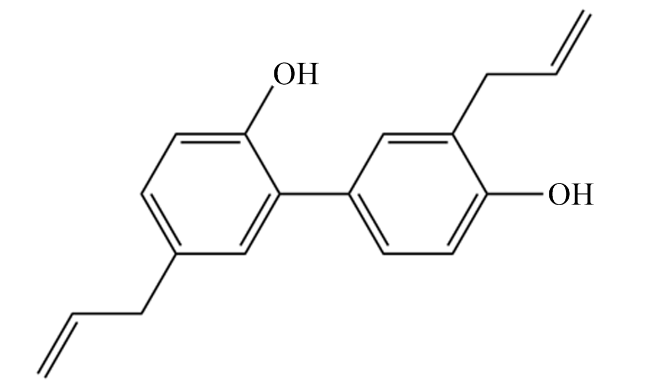
和厚朴酚是一种存在于厚朴、大花玉兰和百花玉兰等木兰科植物中的多酚类生物活性物质,与厚朴酚互为同分异构体,其化学名为3',5-二-2-丙烯基-1,1'-联苯-2,4'-二酚,分子式为C18H18O2,分子结构如图1所示。和厚朴酚的熔点约为87 ℃,属于疏水的联苯酚类化合物,其水溶性较差,但易溶于乙醇、苯、氯仿和乙醚。和厚朴酚的性质相对稳定,其聚合物在常温下为一种棕褐色粉末,但是单体为无色鳞片状晶体。和厚朴酚还可发生多种显色反应,其在甲醇溶液中与三氯化铁作用后,可生成蓝黑色沉淀;在氯仿溶液中与氯化铁作用后呈蓝色沉淀;与间苯三酚盐酸溶液作用则呈现为红色[4]
图1 和厚朴酚分子结构

Fig.1 Molecular structure of honokiol

2 和厚朴酚在动物体内的吸收和代谢

和厚朴酚进入动物消化道后,未被吸收的部分以原型的形式经胃肠道直接排出体外[5];被机体吸收的部分则在机体内迅速分布并代谢[6]。在大鼠上的研究表明,和厚朴酚及其代谢产物(即与葡萄糖醛酸化与硫酸化和单葡糖苷酸结合的产物)在肝脏中的浓度最高,其次是肾脏,而在大脑中只存在和厚朴酚,表明其代谢产物不能穿越血脑屏障[7]。在人和动物肝脏内,和厚朴酚在尿苷二磷酸葡萄糖醛酸基转移酶、肠上皮细胞磺基转移酶、细胞色素P450同工酶(cytochrome P450 proteins,CYP)和儿茶酚氧位甲基转移酶等的作用下,经历Ⅰ和Ⅱ期代谢,形成二聚化、甲基化、乙酰化、羟基化、硫酸化、氨基酸结合和葡萄糖醛酸化的厚朴酚[8-10]。其中,在大鼠和人类肝脏中经葡萄糖醛酸化与硫酸化分别形成的单葡萄苷和厚朴酚与和厚朴酚单硫酸盐为主要代谢产物[11-12]。和厚朴酚及其代谢产物从肝脏中经体循环到各组织器官中吸收利用,最终经肾脏通过尿液排出[5,13]。然而,动物肝脏对和厚朴酚的肝提取率和清除率较高,导致和厚朴酚的消除半衰期较短,生物利用度较低[11,14-15]。采用纳米胶束[16]、纳米悬浮液[17]、固体分散体[18]、包涵体复合物[19]、果胶纳米颗粒[20]、多孔淀粉载体[21]和卵磷脂基混合聚合物胶束[22]可有效提高和厚朴酚的生物学利用度。

3 和厚朴酚的生理功能及作用机制

3.1 抗氧化功能

3.1.1 清除自由基

自由基是带有未成对电子的分子或离子,通常由机体正常代谢和外源性来源(如致癌化合物和电离辐射)产生,当其累积过多会对生物机体内DNA和其他生物分子造成损伤,被认为是许多疾病和衰老的原因之一[23-24]。和厚朴酚包含特殊的邻苯二酚结构,因此具有良好的抗氧化性能,其清除超氧阴离子自由基效率是维生素E类似物奎诺二甲基丙烯酸酯(trolox)的20倍,与抗坏血酸相似[25]。另有研究发现,和厚朴酚不仅对过氧硝酸根离子(ONOO-)和单线态氧(1O2)具有较强的清除作用,同时对偶氮二异丁脒盐酸盐诱导的DNA氧化损伤具有较强的保护作用[26]。Liou等[27]在大鼠脑缺血再灌流模型中发现,和厚朴酚可使中性粒细胞中活性氧(reactive oxygen species,ROS)酶——还原型烟酰胺腺嘌呤二核苷酸磷酸(NADPH)的活性降低40%。Zhai等[28]在小鼠脂肪性肝炎模型中发现,和厚朴酚可通过降低肝脏细胞色素CYP2E1和CP4A活性,减少ROS含量,从而保护肝脏免受自由基损伤。综上所述,和厚朴酚对自由基具有良好的清除作用,是缓解机体氧化损伤的重要机制。

3.1.2 调节抗氧化酶和氧化酶活性

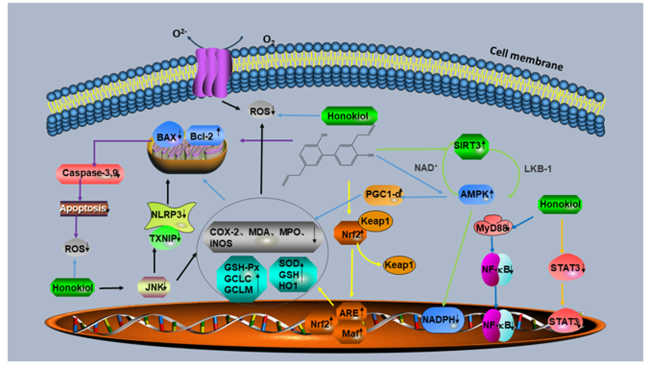
除清除自由基外,和厚朴酚还可通过增强抗氧化酶系统的表达,进而保护机体免受氧化损伤。Guo等[29]在血管性痴呆大鼠模型中的研究显示,和厚朴酚可通过降低大脑海马区组织中丙二醛(malondialdehyde,MDA)含量,提高谷胱甘肽过氧化物酶(glutathione peroxidase,GSH-Px)和超氧化物歧化酶(superoxide dismutase,SOD)的活性,从而发挥抗氧化作用。在斑马鱼胚胎中的研究发现,和厚朴酚可通过提高斑马鱼胚胎中SOD1、SOD2、过氧化氢酶(catalase,CAT)和血红素加氧酶1(heme oxygenase 1,HO1)的基因表达,来减少ROS生成,进而提高斑马鱼的抗氧化能力[30]。Chiang等[31]对大鼠骨骼肌损伤模型的试验中发现,和厚朴酚可显著下调大鼠血清中聚合酶链反应酶(poly-ADP-ribose-polymerase,PARP)的蛋白表达量,降低肌肉脂质中MDA、髓过氧化物酶的蛋白表达量,并抑制肌肉中环氧合酶-2(cyclooxygenase-2,COX-2)和一氧化氮合酶的基因与蛋白表达量,从而有效地保护大鼠骨骼肌免受氧化应激造成的损伤。
Kelch样环氧氯丙烷相关蛋白1(Kelch-like ECH-associated protein 1,Keap1)-核因子E2相关因子2(nuclear factor erythroid 2-related factor 2,Nrf2)途径是一个重要的信号通路,当机体发生氧化损伤时,Nrf2从Keap1上解离,随后进入细胞核内与抗氧化反应元件结合,启动各类抗氧化基因和蛋白的表达,从而恢复细胞内氧化还原的动态平衡[32]。和厚朴酚可通过促进Nrf2移位到细胞核,从而提高HO1、谷胱甘肽合成酶修饰亚单位(modifier subunit of glutamate cysteine ligase,GCLM)和谷胱甘肽合成酶催化亚单位(catalytic subunit of glutamate cysteine ligase catalytic,GCLC)的基因表达量,增强谷胱甘肽(glutathione,GSH)、NAD(P)H:醌氧化还原酶1[NAD(P)H:quinone oxidoreductase 1,NQO1]和SOD的活性,减少MDA和ROS的含量,抑制含半胱氨酸的天冬氨酸蛋白水解酶(caspase)-3的活性,以缓解蛋白质及脂质过氧化造成的细胞凋亡[33-34]。此外,和厚朴酚还可通过下调Toll样受体2(Toll-like receptors2,TLR2)/髓样分化因子88(myeloid differentiation factor 88,MyD88)/核因子-κB(nuclear factor kappa-B,NF-κB)通路的活化和信号转导与转录激活因子3的磷酸化,激活去乙酰化酶和单磷酸腺苷活化蛋白激酶[adenosine 5'-monophosphate (AMP)-activated protein kinase,AMPK]等信号转导途径,进而控制ROS的产生,发挥和厚朴酚的抗氧化作用[35-38]
线粒体是细胞产生ROS的主要场所,当线粒体发生功能障碍时会引起ROS的过度生成,导致细胞氧化损伤的发生[39]。一方面,和厚朴酚可通过激活去乙酰化酶3(sirtuin 3,SIRT3)来调节肝激酶B1(liver kinase B1,LKB1)/AMPK信号转导途径,进而诱导过氧化物酶体增殖物激活受体γ辅助因子-1α(peroxisome proliferator activated receptor gamma coactivator-1 alpha,PGC-1α)的基因表达,提高肝脏中GSH含量和SOD2活性,最终促进小鼠线粒体的生物发生,逆转线粒体功能障碍[40];另一方面,和厚朴酚通过增加手术麻醉后小鼠海马区组织中SIRT3的蛋白表达,降低SOD2的乙酰化、MDA和ROS含量,升高线粒体膜电位,从而保护氧化应激下的线粒体功能[41]。有研究表明,和厚朴酚还可通过抑制硫氧化蛋白互作蛋白(thioredoxin interacting protein,TXNIP)/NOD样受体热蛋白结构域相关蛋白3(NOD-like receptor thermal protein domain associated protein 3,NLRP3)炎症小体的活化和c-Jun氨基末端激酶(c-Jun N-terminal kinase,JNK)的磷酸化,继而提高谷胱甘肽过氧化物酶(glutathione peroxidase,GPX)1和SOD的活性,减少MDA和ROS含量,抑制caspase-3、caspase-9和Bcl-2相关蛋白X(Bcl-2-associated protein X,BAX)的蛋白表达量,最终保护小鼠髓核细胞免受氧化应激和凋亡[42]
以上结果表明,和厚朴酚可通过清除自由基,调控Nrf2、NF-κB、AMPK等信号转导途径,提高抗氧化酶活性和降低氧化酶活性,进而起到保护机体或细胞免受氧化应激的作用。和厚朴酚抗氧化机理示意图见图2
图2 和厚朴酚抗氧化机理示意图

Honokiol:和厚朴酚;Cell membrane:细胞膜;Apoptosis:细胞凋亡;Caspase:半胱氨酸天冬氨酸酶;Bcl-2:B淋巴细胞瘤-2 B-cell lymphoma-2;BAX:Bcl-2相关蛋白X Bcl-2-associated protein X;ROS:活性氧 reactive oxygen species;JNK:c-Jun氨基末端激酶 c-Jun N-terminal kinase;TXNIP:硫氧化蛋白互作蛋白 thioredoxin interacting protein;NLRP3:NOD样受体热蛋白结构域相关蛋白3 NOD-like receptor thermal protein domain associated protein 3;COX-2:环氧合酶-2 cyclooxygenase-2;MDA:丙二醛 malondialdehyde;MPO:髓过氧化物酶 myeloperoxidase;iNOS:诱导型一氧化氮合酶 inducible nitric oxide synthase;GSH-Px:谷胱甘肽过氧化物酶 glutathione peroxidase;GCLM:谷胱甘肽合成酶修饰亚单位 modifier subunit of glutamate cysteine ligase;GCLC:谷胱甘肽合成酶催化亚单位 catalytic subunit of glutamate cysteine ligase catalytic;SOD:超氧化物歧化酶 superoxide dismutase;Keap1:Kelch样环氧氯丙烷相关蛋白 1 Kelch-like ECH-associated protein 1;Nrf2:活化的核因子E2相关因子2 nuclear factor erythroid 2-related factor 2;ARE:抗氧化反应元件 antioxidant response element;NADPH:还原型烟酰胺腺嘌呤二核苷酸磷酸 nicotinamide adenine dinucleotide phosphate;NF-κB:核因子-κB nuclear factor kappa-B;MyD88:髓样分化因子88 myeloid differentiation factor 88;STAT3:信号转导与转录激活因子3 signal transducer and activator of transcription 3;SIRT 3:去乙酰化酶 3 sirtuin 3;AMPK:单磷酸腺苷活化蛋白激酶 AMP-activated protein kinase;LKB1:肝激酶B1 liver kinase B1;PGC-1α:过氧化物酶体增殖物激活受体γ辅助因子-1α human peroxisome proliferator activated receptor gamma coactivator-1 alpha。

Fig.2 Schematic antioxidation mechanism diagram of honokiol[29-42]

3.2 抗炎功能

和厚朴酚可通过激活和抑制多种信号通路,调节炎症相关因子的转录和生成,从而改善机体炎症反应。在RAW264.7巨噬细胞中的研究发现,和厚朴酚可通过抑制TLR4/NF-κB和磷脂酰肌醇3-激酶(phosphoinositide 3-kinase,PI3K)/蛋白激酶B信号通路的激活,来降低肿瘤坏死因子-α(TNF-α)、COX-2、白细胞介素(interleukin,IL)-12和单核细胞趋化蛋白1的mRNA表达水平,减少IL-1β、IL-6和干扰素-γ(IFN-γ)含量,最终抑制脂多糖(lipopolysaccharide,LPS)诱导的细胞炎症[43-44]。在人单核细胞系THP8中的研究发现,和厚朴酚可通过抑制丝裂原活化蛋白激酶激酶-1(mitogen-activated protein kinase kinase-1, MEKK-1)/NF-κB途径的激活,继而抑制痤疮丙酸杆菌(Propionibacterium acnes)诱导的IL-8、TNF-α和COX-2含量升高,防止机体炎症反应的进一步恶化[45]。在LPS诱导的鼠巨噬细胞炎症模型中的研究发现,和厚朴酚可通过抑制蛋白激酶C α型、丝裂原活化蛋白激酶和NF-κB的信号传导,同时干扰LPS与簇状分化抗原14(cluster of differentiation 14,CD14)/TLR4的结合,继而抑制LPS诱导的TNF-α和一氧化氮(NO)的表达[46]。血管细胞黏附分子-1(VCAM-1)是一种免疫球蛋白超家族的膜蛋白,在内皮细胞表面表达,其可通过与白细胞表面的整合素分子结合,介导白细胞的黏附和渗透,进而产生重要的促炎作用[47]。据报道,和厚朴酚可通过抑制IκBα的多泛素化和降解来阻断NF-κB的激活,从而抑制VCAM1诱导的单核细胞黏附,减少炎症细胞的浸润,发挥抗炎功能[48]。另有研究表明,和厚朴酚还可通过抑制TLR2/MyD88/NF-κB通路的激活,从而减少TNF-αIL-1βIL-6和IL-8的基因表达水平,来改善脂磷酸壁诱导的RAW264.7细胞炎症[49]
和厚朴酚还可通过抑制NLRP3炎症小体的激活来增强机体免疫力,而NLRP3炎性小体是一种细胞内的蛋白复合物,在免疫应答和炎症调节中发挥重要作用[50]。Cai等[51]在LPS诱导的小鼠脓毒症模型中发现,和厚朴酚可通过降低转运到细胞和溶酶体内的L-亮氨酸含量来阻断哺乳动物雷帕霉素靶蛋白(mammalian target of rapamycin,mTOR)C1途径,触发溶质载体家族3成员2(solute carrier family 3 member 2,SLC3A2)的降解,从而抑制NLRP3炎症小体的活化,减少IL-1β和caspase-1的活性,最终改善机体炎症。还有研究发现,和厚朴酚通过抑制NLRP3炎性小体的激活和增强自噬蛋白LC3的激活,从而降低TNF-αIL-1β的mRNA和蛋白表达水平,减轻小鼠急性肝脏损伤[52]。此外,和厚朴酚具有促进T细胞增殖[53]、将LPS诱导的TH1反应转变为TH2反应[54]、抑制中性粒细胞、淋巴细胞和嗜酸性粒细胞的浸润[55-56]、抑制血清中免疫球蛋白E(immunoglobulin E,IgE)产生[57]等作用,表明和厚朴酚还可增强机体细胞免疫和体液免疫,从而起到抗炎功效。
综上可知,和厚朴酚具有良好的抗炎和免疫调节活性。一方面,和厚朴酚通过调节炎症相关通路的激活来调控相关细胞因子的产生和表达;另一方面,和厚朴酚可通过抑制炎症小体的激活,同时促进T淋巴细胞的增殖,抑制白细胞的黏附和聚集等发挥抗炎作用。

3.3 抗癌功能

和厚朴酚在癌症研究中表现出良好的抗癌作用。大量研究表明,和厚朴酚可通过多种途径有效抑制胰腺癌、乳腺癌、肺癌、胃癌、结肠癌、皮肤癌和宫颈癌等癌细胞的迁徙、入侵和增殖[58-70]。体外研究表明,和厚朴酚可通过活化SMAD2/3通路或抑制Wnt/β-catenin信号通路来抑制胰腺癌细胞的侵袭、迁移和上皮间质转化进程,进而预防胰腺癌[58-59];和厚朴酚也可通过减少血管内皮生长因子和抗凋亡蛋白B淋巴细胞瘤-2(B-cell lymphoma-2,Bcl-2)、Bcl-xl的蛋白表达量,增加促凋亡蛋白BAX和Bcl-2关联死亡启动子(Bcl-2 associated death promoter,Bad)蛋白表达量,来促进胰腺癌细胞的凋亡,继而治疗胰腺癌[60-61]。此外,和厚朴酚还可干扰乳腺癌的发生和发展,它通过抑制细胞周期依赖性激酶2、细胞周期依赖性激酶4、细胞周期蛋白D1、细胞周期蛋白E、C-干扰素诱导的肿瘤蛋白和磷酸化视网膜母细胞瘤蛋白的蛋白表达量,减弱PI3K/AKT/mTOR的信号传导,来促使细胞周期停滞在G0/G1期,从而抑制癌细胞增殖,发挥其抗癌作用[62-63];还可通过抑制磷脂酶D和癌基因Ras的活化,增强LKB1和AMPK的磷酸化和活性,从而抑制乳腺肿瘤的发生和侵袭能力[64-65]。另有研究表明,和厚朴酚可分别通过上调内质网应激诱导的凋亡信号分子或诱导钙蛋酶-Ⅱ介导94 kDa葡萄糖调节蛋白(94-kDa glucose-regulated protein,GRP94)裂解,进而引起肺癌细胞或胃癌细胞的凋亡[66-67]。和厚朴酚还可抑制结肠癌细胞的侵袭、迁移和黏附,其机制可能是通过降低GPX4的活性并诱导铁离子(Fe2+)的累积,从而触发结肠癌细胞的铁死亡进程,导致细胞膜的脂质过氧化和死亡[68]。还有研究表明,和厚朴酚可通过上调caspase-3、caspase-8、caspase-9、PARP和肿瘤抑制蛋白p53的蛋白表达量,来诱导小鼠皮肤癌细胞的DNA片段化和凋亡,并使癌细胞的肿瘤多样性降低45%,最终起到抗癌作用[69]。除上述途径外,和厚朴酚还通过上调血小板反应蛋白2(thrombospondin 2,THBS2)的蛋白表达量,同时抑制黏着斑激酶(focal adhesion kinas,FAK)信号通路的活化,最终抑制宫颈癌细胞的增殖和迁移[70]
综上所述,和厚朴酚主要通过激活SMAD2/3、LKB1/AMPK、PI3K/AKT/mTOR和Wnt/β-catenin等信号通路,来促进癌细胞内促凋亡蛋白的活化,最终抑制各种恶性肿瘤的发展。

3.4 抑菌作用

和厚朴酚可通过多种途径来抑制致病菌增殖,进而发挥抑菌作用。体外研究发现,和厚朴酚可通过抑制群体感应、减少毒力因子的产生、破坏菌体细胞膜和核酸生成,进而抑制铜绿假单胞菌(Pseudomonas aeruginosa)、幽门螺杆菌(Helicobocton pyloni)、嗜水气单胞菌(Aeromonas hydrophila)、金黄色葡萄球菌(Staphylococcus aureus)、大肠埃希菌(Escherichia coli)、烟曲真菌(Aspergillus flavus)、李斯特杆菌(Listeria monocytogenes)和白假丝酵母菌(Candida albicans)等致病菌的生长[71-80]。一方面,和厚朴酚可通过抑制细菌毒力相关因子的表达,来降低Aeromonas hydrophilaHelicobocton pyloniListeria monocytogenesStaphylococcus aureus的致病性,继而发挥抗菌作用[71-75];另一方面,和厚朴酚可通过抑制生物膜形成,以发挥对Staphylococcus aureusEscherichia coli的抑制作用[75-76]。同时,和厚朴酚还可通过破坏细菌菌体细胞膜的结构,导致细胞菌体细胞内容物流出细胞外,从而对Aspergillus flavusCandida albicans起到抗菌作用[77-78]。此外,和厚朴酚还可通过降低细菌群体感应,来抑制Pseudomonas aeruginosa增殖[79];通过阻碍核酸合成,进而抑制Candida albicans的分裂增殖[80]

4 和厚朴酚在畜禽生产中的应用

和厚朴酚具有促进生长、调节营养物质代谢、改善蛋品质、增强机体抗氧化应激和免疫性能等作用效果,是一种极具药用和饲用潜力的中草药提取物,可以作为饲粮添加剂来提高家禽的生长性能。程迪等[81]在肉仔鸡上的研究表明,饲粮中添加200 mg/kg厚朴总酚可显著提高肉仔鸡的生长性能和成活率,其中免疫器官指数、平均日增重和平均日采食量显著提高,料重比显著下降。在黄羽肉鸡上的研究表明,添加150 mg/kg厚朴总酚后,其生长性能、肉品质、抗氧化功能均优于基础饲粮组和抗生素组,并且随着添加水平的提高,料重比和平均日增重呈二次曲线显著改善[82]。Chen等[83]报道称,在受沙门氏菌(Salmonella pullorum)感染的肉鸡饲粮中添加300 mg/kg和厚朴酚后,其平均日增重、血清球蛋白含量和肠绒毛高度显著增加,料重比、脾脏和法氏囊重量显著下降,这表明和厚朴酚可通过增强肉鸡的免疫力来促进其生长性能。
在三黄鸡和日本鹌鹑中的研究表明,和厚朴酚可通过缓解机体氧化应激,自噬功能障碍和蛋白质折叠反应,促进机体内微量元素正常的代谢以及减少镉在机体内的蓄积和细胞凋亡等途径,从而治疗镉中毒导致的肾脏[84-85]和肝脏损伤[86-87],最终改善机体生长性能。血管生长素因子6(angiopoietin-like 6,Angptl6)是一种肝脏来源的分泌蛋白,可通过增加能量消耗来预防食源性肥胖[88-89]。马沛等[90]研究表明,和厚朴酚对山羊肝细胞中Angptl6基因的表达有促进作用,这表明和厚朴酚具有改善山羊脂代谢的作用,但其具体作用机制还有待进一步研究。
此外,在蛋鸡中的研究发现,饲粮中添加300 mg/kg和厚朴酚可增加蛋鸡产蛋率,改善鸡蛋的蛋白质量、蛋黄颜色和哈氏单位[91]。体外研究中发现,和厚朴酚可通过提高Sirt3蛋白活性,促进SOD2去乙酰化和增强抗氧化酶活性,以提高热应激状态下猪卵母细胞的成熟率和囊胚率[92];通过抑制内质网应激,来抑制LPS诱导的牛子宫内膜上皮细胞的炎症反应和凋亡[93],提示和厚朴酚可减轻机体氧化应激反应,从而起到改善生殖系统功能的作用。
以上结果表明,和厚朴酚可改善动物的生长性能和免疫力,但对猪和反刍动物的体内研究还相对较少,因此应进一步加大在猪和反刍动物上的研究,为和厚朴酚在生产中的进一步应用奠定基础。

5 小结

综上所述,和厚朴酚具有多种生物学功能,同时具有提高畜禽的生产性能和免疫力的作用,在无抗养殖背景下具有良好的应用前景。但目前和厚朴酚在畜禽生产上的研究相对较少,特别是在猪和反刍动物上的研究匮乏。此外,在以往的研究中,和厚朴酚的应用仅局限在短期内添加,且其适宜添加量尚不清楚。因此,未来有关和厚朴酚在畜禽生产上的研究可以从以下几个方面开展:1)进一步研究和厚朴酚在猪和反刍动物养殖中的作用;2)选择和厚朴酚的适宜添加量;3)确定和厚朴酚的最佳使用期等,为和厚朴酚在畜禽生产上的开发和应用提供依据。
[1]
RAUF A, OLATUNDE A, IMRAN M, et al. Honokiol:a review of its pharmacological potential and therapeutic insights[J]. Phytomedicine, 2021, 90:153647.

DOI

[2]
曹蓉, 谢堃, 侯德兴, 等. 厚朴总酚抗氧化作用及其机制研究进展[J]. 中国畜牧兽医, 2016, 43(9):2395-2400.

DOI

CAO R, XIE K, HOU D X, et al. Research advance on antioxidant function roles and its mechanism of total phenols from magnolia officinalis[J]. Chinese Animal Husbandry and Veterinary Medicine, 2016, 43(9):2395-2400. (in Chinese)

[3]
WOODBURY A, YU S P, WEI L, et al. Neuro-modulating effects of honokiol:a review[J]. Frontiers in Neurology, 2013, 4:130.

[4]
孟美竹. 和厚朴酚抑制白色念珠菌的作用机制[D].硕士学位论文. 大连: 辽宁师范大学, 2017.

MENG M Z. Mechanism of action of honokiol in inhibiting Candida albicans[D].Master’s Thesis. Dalian: Liaoning Normal University, 2017. (in Chinese)

[5]
袁成, 梁爱君, 曾林, 等. 厚朴酚与和厚朴酚在大鼠体内的药代动力学[J]. 解放军药学学报, 2003, 19(4):258-261.

YUAN C, LIANG A J, ZENG L, et al. Pharmacokinetics profile of magnolol and honokiol in wistar rats[J]. Journal of Pharmaceutical Sciences of the People’s Liberation Army, 2003, 19(4):258-261. (in Chinese)

[6]
TSAI T H, CHOU C J, CHENG F C, et al. Pharmacokinetics of honokiol after intravenous administration in rats assessed using high-performance liquid chromatography[J]. Journal of Chromatography B:Biomedical Applications, 1994, 655(1):41-45.

DOI

[7]
WANG J J, MIAO X L, CHEN J Y, et al. The pharmacokinetics and tissue distribution of honokiol and its metabolites in rats[J]. European Journal of Drug Metabolism and Pharmacokinetics, 2016, 41(5):587-594.

DOI

[8]
JEONG H U, KIM J H, KONG T Y, et al. Comparative metabolism of honokiol in mouse,rat,dog,monkey,and human hepatocytes[J]. Archives of Pharmacal Research, 2016, 39(4):516-530.

DOI

[9]
DONG Y F, TANG M H, SONG H, et al. Characterization of metabolic profile of honokiol in rat feces using liquid chromatography coupled with quadrupole time-of-flight tandem mass spectrometry and (13) C stable isotope labeling[J]. Journal of Chromatography B:Analytical Technologies in the Biomedical and Life Sciences, 2014, 953/954:20-29.

DOI

[10]
JEONG H U, KONG T Y, KWON S S, et al. Effect of honokiol on cytochrome P450 and UDP-glucuronosyltransferase enzyme activities in human liver microsomes[J]. Molecules, 2013, 18(9):10681-10693.

DOI

[11]
BÖHMDORFER M, MAIER-SALAMON A, TAFERNER B, et al. In vitro metabolism and disposition of honokiol in rat and human livers[J]. Journal of Pharmaceutical Sciences, 2011, 100(8):3506-3516.

DOI

[12]
LAI H J, TANG M H, LIU J, et al. Identification of honokiol metabolites in rats by the method of stable isotope cluster technique and ultra-high performance liquid chromatography/quadrupole-time-of-flight mass spectrometry[J]. Journal of Chromatography B:Analytical Technologies in the Biomedical and Life Sciences, 2013, 931:157-163.

DOI

[13]
王莲华, 盖玉梅, 袁成, 等. 厚朴酚与和厚朴酚药代动力学的实验研究[J]. 实用医药杂志, 2004, 21(2):137-139.

WANG L H, GAI Y M, YUAN C, et al. Pharmacokinetics profile of magnolol and honokiol:an experimental study in wistar rats[J]. Practical Journal of Medicine & Pharmacy, 2004, 21(2):137-139. (in Chinese)

[14]
LIN J M, PRAKASHA GOWDA A S, SHARMA A K, et al. In vitro growth inhibition of human cancer cells by novel honokiol analogs[J]. Bioorganic & Medicinal Chemistry, 2012, 20(10):3202-3211.

DOI

[15]
CHEN F, WANG T, WU Y F, et al. Honokiol:a potent chemotherapy candidate for human colorectal carcinoma[J]. World Journal of Gastroenterology:WJG, 2004, 10(23):3459-3463.

DOI

[16]
GODUGU C, DODDAPANENI R, SINGH M. Honokiol nanomicellar formulation produced increased oral bioavailability and anticancer effects in triple negative breast cancer (TNBC)[J]. Colloids and Surfaces B:Biointerfaces, 2017, 153:208-219.

DOI

[17]
HAN M H, YU X, GUO Y F, et al. Honokiol nanosuspensions:preparation,increased oral bioavailability and dramatically enhanced biodistribution in the cardio-cerebro-vascular system[J]. Colloids and Surfaces B:Biointerfaces, 2014, 116:114-120.

DOI

[18]
WANG L, WU W W, WANG L L, et al. Highly water-soluble solid dispersions of honokiol:preparation,solubility,and bioavailability studies and anti-tumor activity evaluation[J]. Pharmaceutics, 2019, 11(11):573.

DOI

[19]
XU C B, TANG Y L, HU W J, et al. Investigation of inclusion complex of honokiol with sulfobutyl ether-β-cyclodextrin[J]. Carbohydrate Polymers, 2014, 113:9-15.

DOI PMID

[20]
ZHANG Y X, CHEN T, YUAN P, et al. Encapsulation of honokiol into self-assembled pectin nanoparticles for drug delivery to HepG2 cells[J]. Carbohydrate Polymers, 2015, 133:31-38.

DOI PMID

[21]
WU W W, XU H Y. Construction,characterization,and bioavailability evaluation of honokiol-loaded porous starch by melting method without any solvent[J]. Drug Delivery, 2021, 28(1):2574-2581.

DOI

[22]
LIN H L, CHENG W T, CHEN L C, et al. Honokiol/Magnolol-loaded self-assembling lecithin-based mixed polymeric micelles (lb MPMs) for improving solubility to enhance oral bioavailability[J]. International Journal of Nanomedicine, 2021, 16:651-665.

DOI

[23]
DIZDAROGLU M, JARUGA P, BIRINCIOGLU M, et al. Free radical-induced damage to DNA:mechanisms and measurement[J]. Free Radical Biology & Medicine, 2002, 32(11):1102-1115.

DOI

[24]
CHEESEMAN K H, SLATER T F. An introduction to free radical biochemistry[J]. British Medical Bulletin, 1993, 49(3):481-493.

DOI PMID

[25]
DIKALOV S, LOSIK T, ARBISER J L. Honokiol is a potent scavenger of superoxide and peroxyl radicals[J]. Biochemical Pharmacology, 2008, 76(5):589-596.

DOI PMID

[26]
ZHAO C, LIU Z Q. Comparison of antioxidant abilities of magnolol and honokiol to scavenge radicals and to protect DNA[J]. Biochimie, 2011, 93(10):1755-1760.

DOI PMID

[27]
LIOU K T, SHEN Y C, CHEN C F, et al. The anti-inflammatory effect of honokiol on neutrophils:mechanisms in the inhibition of reactive oxygen species production[J]. European Journal of Pharmacology, 2003, 475(1/2/3):19-27.

DOI

[28]
ZHAI T, XU W, LIU Y Y, et al. Honokiol alleviates methionine-choline deficient diet-induced hepatic steatosis and oxidative stress in C57BL/6 mice by regulating CFLAR-JNK pathway[J]. Oxidative Medicine and Cellular Longevity, 2020, 2020:2313641.

[29]
GUO S, XU J J, WEI N, et al. Honokiol attenuates the memory impairments,oxidative stress,neuroinflammation,and GSK-3β activation in vascular dementia rats[J]. Journal of Alzheimer’s Disease:JAD, 2019, 71(1):97-108.

[30]
LI H, ZHANG Q Q, LI W F, et al. Role of Nrf2 in the antioxidation and oxidative stress induced developmental toxicity of honokiol in zebrafish[J]. Toxicology and Applied Pharmacology, 2019, 373:48-61.

DOI PMID

[31]
CHIANG J, SHEN Y C, WANG Y H, et al. Honokiol protects rats against eccentric exercise-induced skeletal muscle damage by inhibiting NF-kappaB induced oxidative stress and inflammation[J]. European Journal of Pharmacology, 2009, 610(1/2/3):119-127.

DOI

[32]
HE F, RU X L, WEN T. NRF2,a transcription factor for stress response and beyond[J]. International Journal of Molecular Sciences, 2020, 21(13):4777.

DOI

[33]
HOU Y N, PENG S J, LI X M, et al. Honokiol alleviates oxidative stress-induced neurotoxicity via activation of Nrf2[J]. ACS Chemical Neuroscience, 2018, 9(12):3108-3116.

DOI PMID

[34]
LI C G, NI C L, YANG M, et al. Honokiol protects pancreatic β cell against high glucose and intermittent hypoxia-induced injury by activating Nrf2/ARE pathway in vitro and in vivo[J]. Biomedicine & Pharmacotherapy, 2018, 97:1229-1237.

DOI

[35]
XIA S L, LIN H L, LIU H, et al. Honokiol attenuates sepsis-associated acute kidney injury via the inhibition of oxidative stress and inflammation[J]. Inflammation, 2019, 42(3):826-834.

DOI PMID

[36]
ZHANG B, ZHAI M G, LI B Y, et al. Honokiol ameliorates myocardial ischemia/reperfusion injury in type 1 diabetic rats by reducing oxidative stress and apoptosis through activating the SIRT1-Nrf2 signaling pathway[J]. Oxidative Medicine and Cellular Longevity, 2018, 2018:3159801.

[37]
CABALLERO E P, MARIZ-PONTE N, RIGAZIO C S, et al. Honokiol attenuates oxidative stress-dependent heart dysfunction in chronic chagas disease by targeting AMPK/NFE2L2/SIRT3 signaling pathway[J]. Free Radical Biology and Medicine, 2020, 156:113-124.

DOI

[38]
YU Y W, LI M X, SU N, et al. Honokiol protects against renal ischemia/reperfusion injury via the suppression of oxidative stress,iNOS,inflammation and STAT3 in rats[J]. Molecular Medicine Reports, 2016, 13(2):1353-1360.

DOI

[39]
CRISTOFANO M D, FERRAMOSCA A, GIACOMO M D, et al. Mechanisms underlying the hormetic effect of conjugated linoleic acid:focus on Nrf2,mitochondria and NADPH oxidases[J]. Free Radical Biology & Medicine, 2021, 167:276-286.

DOI

[40]
LIU J X, SHEN S N, TONG Q, et al. Honokiol protects hepatocytes from oxidative injury through mitochondrial deacetylase SIRT3[J]. European Journal of Pharmacology, 2018, 834:176-187.

DOI

[41]
YE J S, CHEN L, LU Y Y, et al. SIRT3 activator honokiol ameliorates surgery/anesthesia-induced cognitive decline in mice through anti-oxidative stress and anti-inflammatory in hippocampus[J]. CNS Neuroscience & Therapeutics, 2019, 25(3):355-366.

[42]
TANG P, GU J M, XIE Z A, et al. Honokiol alleviates the degeneration of intervertebral disc via suppressing the activation of TXNIP-NLRP3 inflammasome signal pathway[J]. Free Radical Biology & Medicine, 2018, 120:368-379.

DOI

[43]
WANG N, KONG R, HAN W, et al. Honokiol alleviates ulcerative colitis by targeting PPAR-γ-TLR4-NF-κB signaling and suppressing gasdermin-D-mediated pyroptosis in vivo and in vitro[J]. International Immunopharmacology, 2022, 111:109058.

DOI

[44]
KIM B H, CHO J Y. Anti-inflammatory effect of honokiol is mediated by PI3K/Akt pathway suppression1[J]. Acta Pharmacologica Sinica, 2008, 29(1):113-122.

DOI PMID

[45]
LEE J, JUNG E, PARK J, et al. Anti-inflammatory effects of magnolol and honokiol are mediated through inhibition of the downstream pathway of MEKK-1 in NF-κB activation signaling[J]. Planta Medica, 2005, 71(4):338-343.

DOI

[46]
CHAO L K, LIAO P C, HO C L, et al. Anti-inflammatory bioactivities of honokiol through inhibition of protein kinase C,mitogen-activated protein kinase,and the NF-κB pathway to reduce LPS-induced TNFalpha and NO expression[J]. Journal of Agricultural and Food Chemistry, 2010, 58(6):3472-3478.

DOI

[47]
TRONCOSO M F, ORTIZ-QUINTERO J, GARRIDO-MORENO V, et al. VCAM-1 as a predictor biomarker in cardiovascular disease[J]. Biochimica et Biophysica Acta.Molecular Basis of Disease, 2021, 1867(9):166170.

[48]
CHEN P J, WANG Y L, KUO L M, et al. Honokiol suppresses TNF-α-induced neutrophil adhesion on cerebral endothelial cells by disrupting polyubiquitination and degradation of IκBα[J]. Scientific Reports, 2016, 6:26554.

DOI

[49]
梁紫微. 和厚朴酚抗金黄色葡萄球菌磷壁酸诱导的氧化损伤与炎症反应研究[D].硕士学位论文. 长春: 吉林大学, 2019.

LIANG Z W. Honokiol inhibits the oxidative damage and inflammatory response induced by staphylococcus aureus lipid teichoic acid[D].Master’s Thesis. Changchun: Jilin University, 2019. (in Chinese)

[50]
HUANG Y, XU W, ZHOU R B. NLRP3 inflammasome activation and cell death[J]. Cellular & Molecular Immunology, 2021, 18(9):2114-2127.

[51]
CAI X Y, JIANG X Q, ZHAO M, et al. Identification of the target protein and molecular mechanism of honokiol in anti-inflammatory action[J]. Phytomedicine, 2023, 109:154617.

DOI

[52]
李琛, 戴晨希, 阚建英. 和厚朴酚对D-氨基半乳糖/脂多糖诱导的急性肝损伤大鼠NLRP3炎症通路及肝细胞自噬的影响[J]. 热带医学杂志, 2021, 21(2):148-151,174.

LI C, DAI C X, KAN J Y. Effects of honokiol on the NLRP3 inflammatory pathway and autophagy of hepatocytes in rats with acute liver injury induced by D-galactosamine/lipopolysaccharide[J]. Journal of Tropical Medicine, 2021, 21(2):148-151,174. (in Chinese)

[53]
MUNROE M E, ARBISER J L, BISHOP G A. Honokiol,a natural plant product,inhibits inflammatory signals and alleviates inflammatory arthritis[J]. The Journal of Immunology, 2007, 179(2):753-763.

DOI

[54]
LI C Y, CHAO L K, WANG S C, et al. Honokiol inhibits LPS-induced maturation and inflammatory response of human monocyte-derived dendritic cells[J]. Journal of Cellular Physiology, 2011, 226(9):2338-2349.

DOI

[55]
刘楠, 李纳, 朱琳, 等. 和厚朴酚通过PI3K/Akt信号通路对哮喘小鼠的作用及其对TLR2、TLR4表达的影响[J]. 中草药, 2019, 50(6):1407-1412.

LIU N, LI N, ZHU L, et al. Effect of honokiol on PI3K/Akt signaling pathway in asthmatic mice and its effect on TLR2 and TLR4 expression[J]. Chinese Herbal Medicine, 2019, 50(6):1407-1412. (in Chinese)

[56]
LIU J, ZHANG C M, LIU Z, et al. Honokiol downregulates Kruppel-like factor 4 expression,attenuates inflammation,and reduces histopathology after spinal cord injury in rats[J]. Spine, 2015, 40(6):363-368.

DOI

[57]
HONG T, MIN H, HUI Z, et al. Oral administration of honokiol attenuates airway inflammation in asthmatic mouse model[J]. Pakistan Journal of Pharmaceutical Sciences, 2018, 31(4):1279-1284.

PMID

[58]
李杰, 秦涛, 武帅, 等. 和厚朴酚通过SMAD2/3通路抑制胰腺癌KPC小鼠肿瘤生长及其原代细胞的侵袭和迁移[J]. 现代肿瘤医学, 2022, 30(13):2326-2331.

LI J, QIN T, WU S, et al. Honokiol suppresses the tumor growth and invasion and migration of KPC mice and pri-mary cells via inhibiting SMAD2/3 pathway[J]. Journal of Modern Oncology, 2022, 30(13):2326-2331. (in Chinese)

[59]
杨庆龙. 和厚朴酚对胰腺癌细胞株SW1990迁移与侵袭的抑制作用及机制的实验研究[D].硕士学位论文. 苏州: 苏州大学, 2017.

YANG Q L. Experimental study on the inhibitory effect and mechanism of honokiol on the migration and invasion of pancreatic cancer cell line SW1990[D].Master’s Thesis. Suzhou: Soochow University, 2017. (in Chinese)

[60]
ARORA S, BHARDWAJ A, SRIVASTAVA S K, et al. Honokiol arrests cell cycle,induces apoptosis,and potentiates the cytotoxic effect of gemcitabine in human pancreatic cancer cells[J]. PLoS One, 2011, 6(6):e21573.

DOI

[61]
邓俊芳. 和厚朴酚抗胰腺癌作用及其机制的实验研究[D].博士学位论文. 杭州: 浙江大学, 2008.

DENG J F. Experimental study of the effect of antitumorand the molecular mechanism of honokiol[D].Ph.D.Thesis. Hangzhou: Zhejiang University, 2008. (in Chinese)

[62]
PARK E J, MIN H Y, CHUNG H J, et al. Down-regulation of c-Src/EGFR-mediated signaling activation is involved in the honokiol-induced cell cycle arrest and apoptosis in MDA-MB-231 human breast cancer cells[J]. Cancer Letters, 2009, 277(2):133-140.

DOI

[63]
LIU H Y, ZANG C B, EMDE A, et al. Anti-tumor effect of honokiol alone and in combination with other anti-cancer agents in breast cancer[J]. European Journal of Pharmacology, 2008, 591(1/2/3):43-51.

DOI

[64]
GARCIA A, ZHENG Y, ZHAO C, et al. Honokiol suppresses survival signals mediated by Ras-dependent phospholipase D activity in human cancer cells[J]. Clinical Cancer Research, 2008, 14(13):4267-4274.

DOI PMID

[65]
NAGALINGAM A, ARBISER J L, BONNER M Y, et al. Honokiol activates AMP-activated protein kinase in breast cancer cells via an LKB1-dependent pathway and inhibits breast carcinogenesis[J]. Breast Cancer Research, 2012, 14(1):R35.

[66]
ZHU J F, XU S N, GAO W L, et al. Honokiol induces endoplasmic reticulum stress-mediated apoptosis in human lung cancer cells[J]. Life Sciences, 2019, 221:204-211.

DOI PMID

[67]
SHEU M L, LIU S H, LAN K H. Honokiol induces calpain-mediated glucose-regulated protein-94 cleavage and apoptosis in human gastric cancer cells and reduces tumor growth[J]. PLoS One, 2007, 2(10):e1096.

DOI PMID

[68]
GUO C, LIU P, DENG G L, et al. Honokiol induces ferroptosis in colon cancer cells by regulating GPX4 activity[J]. American Journal of Cancer Research, 2021, 11(6):3039-3054.

PMID

[69]
CHILAMPALLI S, ZHANG X Y, FAHMY H, et al. Chemopreventive effects of honokiol on UVB-induced skin cancer development[J]. Anticancer Research, 2010, 30(3):777-783.

PMID

[70]
陈佳权, 赵欢, 武晓萌, 等. 和厚朴酚抑制宫颈癌细胞增殖、迁移和侵袭的机制[J]. 中成药, 2021, 43(1):214-218.

CHEN J Q, ZHAO H, WU X M, et al. Mechanism of honokiol inhibiting the proliferation,migration and invasion of cervical cancer cells[J]. Chinese Traditional Patent Medicine, 2021, 43(1):214-218. (in Chinese)

[71]
董靖, 胥宁, 刘永涛, 等. 和厚朴酚对嗜水气单胞菌气溶素表达的抑制作用[J]. 水生生物学报, 2020, 44(3):541-545.

DONG J, XU N, LIU Y T, et al. The inhibitory effect of honokiol on aerolysin secretion by aeromonas hydrophila[J]. Acta Hydrobiologica Sinica, 2020, 44(3):541-545. (in Chinese)

[72]
刘丹, 廖顺花, 王莉新, 等. 和厚朴酚对幽门螺杆菌生长和空泡毒素A表达及活性的影响[J]. 微生物学通报, 2013, 40(9):1657-1663.

LIU D, LIAO S H, WANG L X, et al. Effects of honokiol on the growth of Helicobacter pylori and the expression and activity of vacuolating toxin A[J]. Bulletin of Microbiology, 2013, 40(9):1657-1663. (in Chinese)

[73]
MENG R Z, ZHAO Z W, GUO N, et al. Effect of honokiol on exotoxin proteins listeriolysin O and p60 secreted by Listeria monocytogenes[J]. Journal of Medical Microbiology, 2015, 64(12):1474-1480.

DOI

[74]
刘宗慧. 和厚朴酚抑制金黄色葡萄球菌α-溶血素介导的NLRP3炎性小体的机制研究[D].硕士学位论文. 长春: 吉林大学, 2018.

LIU Z H. Honokiol attenuates NLRP3 inflammasome via inhibition of α-hemolysin secreted by Staphylococcus aureus[D].Master’s Thesis. Changchun: Jilin University, 2018. (in Chinese)

[75]
李文莉. 和厚朴酚抗浮游态和生物被膜态金黄色葡萄球菌活性研究[D].硕士学位论文. 长春: 吉林大学, 2015.

LI W L. Study on the activity of honokiol against planktonic and biofilm of Staphylococcus aureus[D].Master’s Thesis. Changchun: Jilin University, 2015. (in Chinese)

[76]
张凯, 陈菲, 谷劲松, 等. 和厚朴酚对大肠埃希氏菌生物被膜形成的抑制机制[J]. 微生物学报, 2022, 62(7):2521-2529.

ZHANG K, CHEN F, GU J S, et al. Mechanism of honokiol in inhibiting Escherichia coli biofilm formation[J]. Acta Microbiologica Sinica, 2022, 62(7):2521-2529. (in Chinese)

[77]
JIANG L L, ZHANG M J, MENG M Z, et al. Honokiol kills Candida albicans through ROS accumulation and cell membrane destruction[J]. Acta Microbiol Sin, 2018, 58(3):511-519.

[78]
战璐. 和厚朴酚在真菌性角膜炎中的治疗作用[D].硕士学位论文. 青岛: 青岛大学, 2020.

ZHAN L. Therapeutic applications of honokiol on aspergillus fumigatus keratitis[D].Master’s Thesis. Qingdao: Qingdao University, 2020. (in Chinese)

[79]
董满园, 宋阳, 郑红达, 等. 中药厚朴中群体感应抑制剂的分离与活性评价[J]. 现代生物医学进展, 2016, 16(5):820-824.

DONG M Y, SONG Y, ZHENG H D, et al. Isolation and activity evaluation of quorum-sensing inhibitors from magnolia officinalis[J]. Progress in Modern Biomedicine, 2016, 16(5):820-824. (in Chinese)

[80]
陈慧卿. 和厚朴酚对真菌活性影响的研究[D].硕士学位论文. 大连: 大连医科大学, 2020.

CHEN H Q. Study on the effect of honokiol on fungal activity[D].Master’s Thesis. Dalian: Dalian Medical University, 2020. (in Chinese)

[81]
程迪, 王佳丽, 周子涛, 等. 厚朴总酚对肉仔鸡生长性能、免疫功能及抗氧化能力的影响[J]. 饲料研究, 2015(15):1-4,38.

CHENG D, WANG J L, ZHOU Z T, et al. Effects of magnolols on growth performance,immune function and antioxidant capacity of broilers[J]. Feed Research, 2015(15):1-4,38. (in Chinese)

[82]
曹蓉. 厚朴总酚对黄羽肉鸡生产性能、抗氧化及肠道功能的影响[D].硕士学位论文. 长沙: 湖南农业大学, 2017.

CAO R. Effects of total phenols of magnolia officinalis on production performance,antioxidant capacity,and intestinal function in yellow feathered broiler chickens[D].Master’s Thesis. Changsha: Hunan Agricultural University, 2017. (in Chinese)

[83]
CHEN F, ZHANG H, DU E C, et al. Supplemental magnolol or honokiol attenuates adverse effects in broilers infected with Salmonella pullorum by modulating mucosal gene expression and the gut microbiota[J]. Journal of Animal Science and Biotechnology, 2021, 12(1):87.

DOI

[84]
黄小倩, 原俊朝, 刘金河, 等. 和厚朴酚对镉致鸡肾脏损伤的保护作用[J]. 中国畜牧兽医, 2023, 50(3):1007-1015.

DOI

HUANG X Q, YUAN J C, LIU J H, et al. Protective effect of honokiol on cadmium-induced renal injury in chickens[J]. China Animal Husbandry & Veterinary Medicine, 2023, 50(3):1007-1015. (in Chinese)

[85]
ZHANG K L, DONG W X, LI J H, et al. Honokiol antagonizes cadmium-induced nephrotoxicity in quail by alleviating autophagy dysfunction,apoptosis and mitochondrial UPR inhibition with its antioxidant properties[J]. Life, 2022, 12(10):1574.

DOI

[86]
原俊朝. 镉致肝细胞微管系统的损伤及和厚朴酚的保护作用[D].博士学位论文. 扬州: 扬州大学, 2023.

YUAN J C. Cadmium induced hepatocytes microtubule system damage and the protective effect of honokiol[D].Ph.D.Thesis. Yangzhou: Yangzhou University, 2023. (in Chinese)

[87]
YUAN J Z, HUANG X Q, GU J H, et al. Honokiol reduces cadmium-induced oxidative injury and endosomal/lysosomal vacuolation via protecting mitochondrial function in quail (Coturnix japonica) liver tissues[J]. The Science of the Total Environment, 2023, 857(Pt.3):159626.

[88]
OIKE Y, AKAO M, YASUNAGA K, et al. Angiopoietin-related growth factor antagonizes obesity and insulin resistance[J]. Nature Medicine, 2005, 11(4):400-408.

DOI PMID

[89]
QADDOUMI M G, ALANBAEI M, HAMMAD M M, et al. Investigating the role of myeloperoxidase and angiopoietin-like protein 6 in obesity and diabetes[J]. Scientific Reports, 2020, 10(1):6170.

DOI PMID

[90]
马沛. 白藜芦醇、和厚朴酚、黄芩苷对羊肝原代细胞Angptl6 mRNA表达影响[D].硕士学位论文. 长沙: 湖南农业大学, 2011.

MA P. Effects of resveratrol,honokiol and baicalin on Angptl6 mRNA expression in primary sheep liver cells[D].Master’s Thesis. Changsha: Hunan Agricultural University, 2011. (in Chinese)

[91]
CHEN F, ZHANG H, ZHAO N, et al. Effects of magnolol and honokiol blend on performance,egg quality,hepatic lipid metabolism,and intestinal morphology of hens at late laying cycle[J]. Animal, 2022, 16(6):100532.

DOI

[92]
金小虎, 石学颖, 孙良振, 等. 和厚朴酚对猪热应激卵母细胞体外成熟的影响[J]. 中国兽医学报, 2022, 42(1):149-153,182.

JIN X H, SHI X Y, SUN L Z, et al. Effects of honokiol on in vitro maturation of porcine oocytes under heat stress[J]. Chinese Journal of Veterinary Science, 2022, 42(1):149-153,182. (in Chinese)

[93]
CHEN W S, WU J L, ZHAN S S, et al. Honokiol inhibits endoplasmic reticulum stress-associated lipopolysaccharide-induced inflammation and apoptosis in bovine endometrial epithelial cells[J]. Experimental and Therapeutic Medicine, 2021, 22(6):1476.

DOI PMID

Outlines

/