

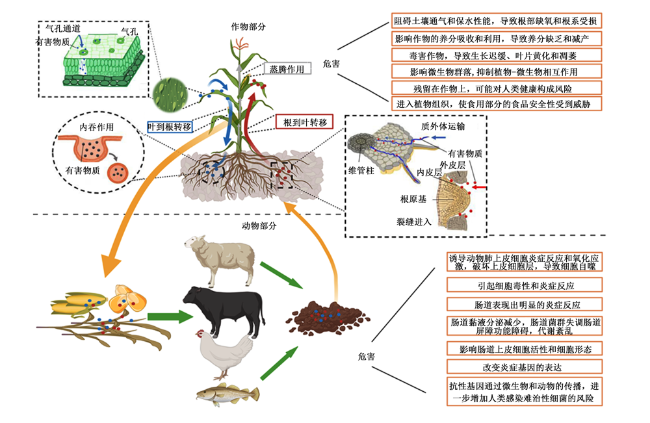
1 种养循环系统概述
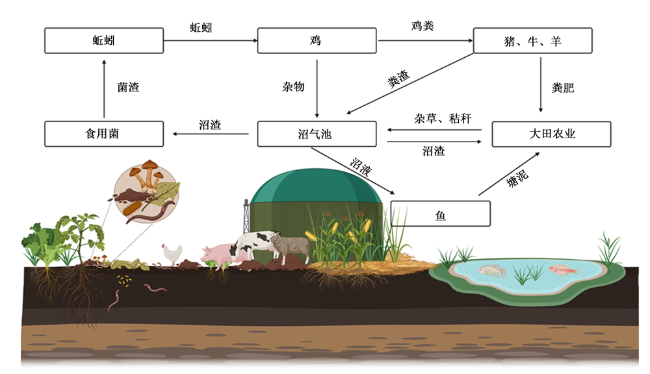
表1 国内常见的种养循环系统模式Table 1 Domestic common crop-livestock recycling system model |
| 模式 Models | 主要元素 Major element | 输入 Input | 输出 Output | 参考文献 References |
|---|---|---|---|---|
| 猪-沼/肥-种植系统 Pig-biogas/fertilizer-growing system | 猪、植物、食用菌 | 秸秆、稻草、 饲料、猪粪 | 粮食、蔬菜、茶叶、藻类、 草、水果、猪肉、沼气、有机肥 | [18⇓-20] |
| 牧草/秸秆-草食动物养殖-沼/ 肥-种植系统 Pasture/straw-herbivore farming- biogas/fertilizer-growing system | 牛、羊、植物 | 秸秆、牛粪、 羊粪、残余饲料 | 牛肉、羊肉、沼气、水稻、 玉米、蔬菜、有机肥 | [21-22] |
| 稻田种养结合生态循环农业 Rice-farming combined with ecological recycling agriculture | 水稻、鱼、虾、 蟹、鸭、鳖 | 稻田害虫、杂草、 浮游生物 | 稻米、鱼、鸭、 蟹、虾、鳖、有机肥 | [23⇓-25] |
2 种养循环系统中的典型有害物质对动物的危害
表2 种植和/或养殖系统中有害物质的危害Table 2 Hazards of harmful substances in planting and/or farming systems |
| 有害物质种类 Harmful substance types | 模式 Modes | 存留程度 Retention degrees | 危害 Hazards | 参考文献 References |
|---|---|---|---|---|
| 重金属 Heavy metals | 畜禽养殖场 | 铁(Fe):1.28×10⁶ μg/L; 锌(Zn):2.71×10⁴ μg/L | 猪粪便中重金属Fe和Zn 超过国家标准1 000 μg/L,严重 污染当地土壤和水资源 | [26] |
| 农药残留 Pesticide residues | 农场 | 检测出4~10种农药残留, 平均浓度为140 μg/kg土壤 | 农药残留改变了 土壤中真菌群落组成及丰富度 | [27] |
| 抗生素及抗性基因 Antibiotics and resistance genes | 畜禽养殖场 | 45株大肠杆菌共检出16种抗性 基因,如喹诺酮类药物的耐药 基因qnrS、四环素类的抗性基 因tetA、氨基糖苷类药物的 耐药基因aadA | 抗生素的使用增强了大肠杆菌 等细菌的抗药性,进一步 增加了公共传播的风险 | [26] |
| 微/纳米塑料 Micro/nano-plastics | 家庭牧场 | 每千克干土2×10³颗 | 绵羊通过采食作物摄入微/ 纳米塑料,造成肠梗阻、 消化不良等问题 | [28] |
| 微/纳米塑料 Micro/nano-plastics | 农场 | 每千克有机肥 8.88×10³颗 | 有机肥中存在高浓度微/纳米 塑料污染,长期施用会使土壤大 量积累微/纳米塑料 | [29] |
| 抗生素及抗性基因 Antibiotics and resistance genes | 农田养鸡场 | 每克鸡粪14.9个微/纳米塑料; 每克鸡粪6.24×10⁸条 抗性基因 | 养鸡场中的微/纳米塑料显著 提高了抗性基因的传递频率 | [30] |
| 微/纳米塑料 Micro/nano-plastics | 农场 | 1.33 g/cm3土壤 | 土壤微/纳米塑料污染导致农田 作物产量和品质降低 | [31] |
2.1 农药残留的来源及其对动物的危害
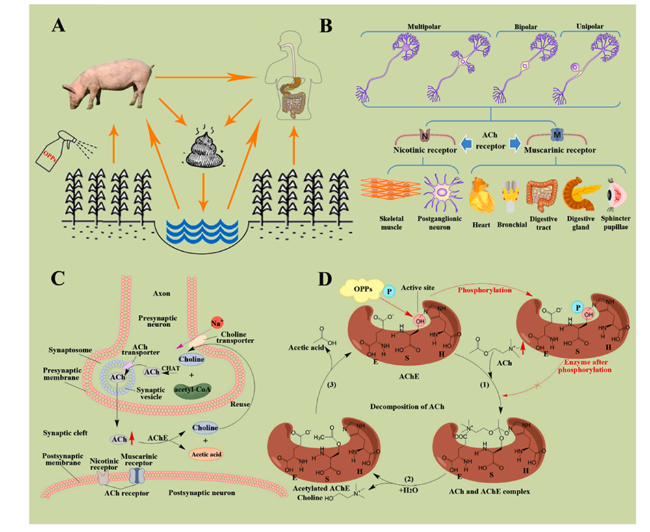


图3 OPPs在生态系统中的循环及其毒性机制示意图A:生态系统OPPs循环示意图 schematic diagram of OPPs cycling in the ecosystem;B:OPPs通过作用于相应的受体来改变靶器官活性 OPPs change target organ activity by acting on the corresponding receptor;C:胆碱能神经元传递信息的示意图 schematic diagram of cholinergic neurons transmitting information;D:OPPs抑制胆碱的三步循环 OPPs inhibit the three step cycle of choline[60]。 Fig.3 Schematic diagram of cycling of OPPs in ecosystem and their toxicity mechanisms[60] |