RESEARCH PAPER

Effects of Different Pepper Stalk Level Diets on Growth Performance, Nutrient Apparent Digestibility and Serum Indices of Dorper×Hu Hybrid Lambs

  • LI Jinlong , 1, 2, 3 ,
  • GUO Tongjun , 2, 3, * ,
  • ZANG Changjiang , 1, * ,
  • ZHANG Zhijun 2, 3 ,
  • GUZALNUR Amat 2, 3 ,
  • TUO Yong 1, 2, 3
Expand
  • 1 College of Animal Science, Xinjiang Agricultural University, Urumqi 830052, China
  • 2 Institute of Feed Research, Xinjiang Academy of Animal Science, Urumqi 830011, China
  • 3 Xinjiang Key Laboratory of Feed Biotechnology, Urumqi 830011, China
*GUO Tongjun, professor, E-mail: ;
ZANG Changjiang, professor, E-mail:

Received date: 2024-01-10

  Online published: 2024-07-09

Abstract

This experiment was conducted to investigate the effects of different pepper stalk level diets on growth performance, nutrient apparent digestibility and serum indices of Dorper×Hu hybrid lambs. Using a single-factor completely randomized design, fifty F1 male lambs of Duper×Hu sheep with body weight of (29.58±2.06) kg aged 3 to 4 months were randomly divided into 5 groups with 10 replicates per group and 1 sheep per replicate. The sheep in each group were fed total mixed iso-energetic iso-nitrogenic granule diets containing 0 (control group), 5%, 10%, 15% and 20% pepper stalk (dry matter basis), respectively. The pre-trial period lasted for 7 days and the experimental period lasted for 66 days. The results showed as follows: 1) compared with the control group, the body weight of Duper×Hu hybrid lambs in 20% pepper stalk group on day 57 was significantly decreased (P<0.05); during days 1 to 28, the dry matter intake (DMI) in 10% pepper stalk group was extremely significantly increased (P<0.01), DMI in 15% pepper stalk group and 20% pepper stalk group was significantly or extremely significantly decreased (P<0.05 or P<0.01); during days 29 to 56, DMI in 10% pepper stalk group was extremely significantly increased (P<0.01), and DMI in 20% pepper stalk group was extremely significantly decreased (P<0.01). 2) Compared with the control group, the apparent digestibilities of crude protein and gross energy in 10% pepper stalk group was significantly increased (P<0.05). 3) Compared with the control group, the serum glucose content in 15% pepper stalk group and 20% pepper stalk group was significantly decreased (P<0.05); the serum total protein content in 10% pepper stalk group and 20% pepper stalk group was significantly increased (P<0.05). 4) Compared with the control group, the serum glutathione peroxidase activity in 5% pepper stalk group and 10% pepper stalk group was significantly or extremely significantly increased (P<0.05 or P<0.01), and the serum malondialdehyde content in 15% pepper stalk group and 20% pepper stalk group was significantly increased (P<0.05). 5) Compared with the control group, the serum interferon-γ content in 10% pepper stalk group and 20% pepper stalk group was significantly increased (P<0.05). In conclusion, under the conditions of this experiment, feeding diets containing 5% to 15% pepper stalk can improve the growth performance, nutrient apparent digestibility and serum indices of Duper×Hu hybrid lambs, and the effect of 10% pepper stalk is better.

Cite this article

LI Jinlong , GUO Tongjun , ZANG Changjiang , ZHANG Zhijun , GUZALNUR Amat , TUO Yong . Effects of Different Pepper Stalk Level Diets on Growth Performance, Nutrient Apparent Digestibility and Serum Indices of Dorper×Hu Hybrid Lambs[J]. Chinese Journal of Animal Nutrition, 2024 , 36(7) : 4531 -4543 . DOI: 10.12418/CJAN2024.389

辣椒(Capsicum annuum L.)是一种1年或多年生草本植物,富含生物碱、黄酮类及多酚类生物活性物质,具有抗炎、抗氧化等生物学功能[1]。我国作为全球辣椒主产国之一,产区主要分布在贵州、云南、四川以及新疆等地,2021年年产量达395.44万t[2-3]。辣椒秸秆作为果实采摘后剩余的副产物,在我国2021年预估年产量为724.68万t,其中新疆年产量为142.36万t[4]。因此,辣椒秸秆的饲料化应用对畜牧业养殖具有重要的支撑意义。
有研究显示,全株辣椒秸秆的粗蛋白质(CP)、中性洗涤纤维(NDF)、酸性洗涤纤维(ADF)、可溶性碳水化合物(WSC)和粗脂肪(EE)含量分别为15.42%、35.72%、28.00%、9.56%和2.50%,要高于玉米秸秆和小麦秸秆,与成熟期苜蓿干草中的含量相似,具有潜在的饲用价值[5]。此外,辣椒秸秆中还含有辣椒碱、黄酮类以及多酚类化合物等多种生物活性物质,对提高动物生产性能和免疫力等具有积极影响[6-9]。陆相龙[5]在蛋鸡饲粮中添加3%或5%的辣椒秸秆,促进了蛋鸡对粗灰分(Ash)的消化率。赵三存[10]在仔猪饲粮中添加8%辣椒叶,提高了血清中超氧化物歧化酶(superoxide dismutase,SOD)和谷胱甘肽过氧化物酶(glutathione peroxidase,GSH-Px)活性及总抗氧化能力(total antioxidant capacity,T-AOC),降低了血清中丙二醛(malondialdehyde,MDA)含量。肉鸡饲粮中添加2%的辣椒秸秆,可以提高血清中SOD和GSH-Px活性,降低血清中MDA含量[11]
不过,目前辣椒秸秆在畜牧生产中的研究主要集中在单胃动物中,辣椒秸秆对绵羊生长性能、养分利用、抗氧化能力和免疫调节的研究较少,关于辣椒秸秆在绵羊饲粮中的适宜添加量需要进一步研究。因此,本试验旨在研究不同水平辣椒秸秆饲粮对杜湖杂交羔羊生长性能、养分表观消化率和血清生化指标的影响,以期为辣椒秸秆在绵羊生产中的应用提供理论参考。

1 材料与方法

1.1 试验材料

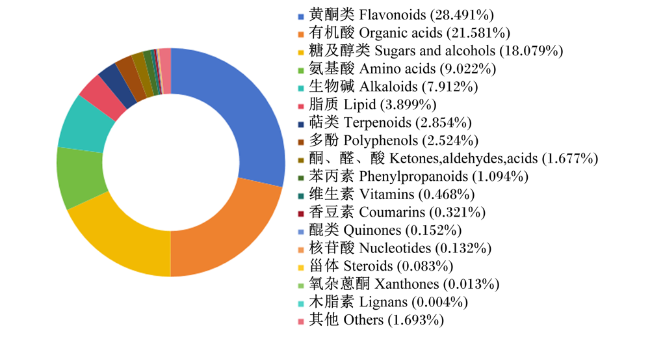
辣椒秸秆为天椒红冠品种辣椒[品种登记编号GPD辣椒(2017)650019]采摘果实后的剩余产物(风干的根茎叶),其营养成分见表1。辣椒秸秆样品送至北京百迈客生物科技有限公司,利用液相色谱-质谱联用(LC-MS)法进行植物代谢物检测。图1为辣椒秸秆活性物质分类图,共检测出1 189种生物活性物质,分为18个类型,其中黄酮类化合物占比最高(28.49%),其次为有机酸(21.58%)、糖及醇类(18.08%)、氨基酸(9.02%)和生物碱(7.91%)等。
表1 辣椒秸秆营养成分

Table 1 Nutrients of pepper stalk%

项目 Items 含量 Content
干物质 DM 92.02
粗蛋白质 CP 6.81
粗脂肪 EE 1.13
中性洗涤纤维 NDF 54.66
酸性洗涤纤维 ADF 38.17
粗灰分 Ash 7.16
钙 Ca 1.01
磷 P 0.12

除干物质外,其余营养成分含量均为干物质基础。

Except for dry matter, the contents of the other nutrients were based on dry matter.

图1 辣椒秸秆中活性物质分类

Fig.1 Classification of bioactive substances in pepper stalk

1.2 试验时间及地点

本试验于2023年3—5月在新疆喀什地区巴楚县新疆泰合农牧科技有限公司羊场进行。

1.3 试验设计和试验饲粮

试验采用单因素完全随机设计,选取3~4月龄、体重为(29.58±2.06) kg的杜泊羊×湖羊杂交F1代公羔50只,随机分为5组,每组10个重复,每个重复1只羊。各组分别饲喂含有0(对照组)、5%、10%、15%和20%辣椒秸秆(干物质基础)的等能等氮全混合颗粒饲粮。试验期73 d,其中预试期7 d(1周),正试期66 d,最后10 d为粪袋适应期及粪样采样期。
试验饲粮参照《肉羊营养需要量》(NY/T 816—2021),基于等能等氮原则,以育肥期绵羊30 kg、日增重300 g的营养需要进行配制。粗饲料使用粉碎机进行粉碎,过20 mm筛网后与其他饲料均匀混合,经颗粒饲料加工设备制成直径为10 mm的圆柱形颗粒饲料,试验饲粮组成及营养水平见表2
表2 试验饲粮组成及营养水平(干物质基础)

Table 2 Composition and nutrient levels of experimental diets (DM basis)%

项目
Items
对照组
Control
group
5%辣椒秸秆组
5% pepper
stalk group
10%辣椒秸秆组
10% pepper
stalk group
15%辣椒秸秆组
15% pepper
stalk group
20%辣椒秸秆组
20% pepper
stalk group
原料 Ingredients
苜蓿干草 Alfalfa hay 10.88 9.21 7.54 6.38 5.22
大豆秸秆 Soybean stalk 14.03 12.27 10.45 8.55 6.80
稻草 Straw 18.12 16.38 14.49 12.39 10.22
辣椒秸秆 Pepper stalk 5.01 10.00 15.00 20.00
玉米 Corn 31.04 30.76 30.75 30.69 30.48
麸皮 Wheat bran 7.89 7.89 7.74 7.60 7.67
棉籽粕 Cottonseed meal 8.88 9.73 10.29 10.71 11.35
向日葵粕 Sunflower meal 4.98 4.57 4.57 4.50 4.09
石粉 Limestone 0.12 0.13 0.12 0.13 0.11
氯化钠 NaCl 0.53 0.53 0.53 0.53 0.53
磷酸氢钙 CaHPO4 0.51 0.50 0.50 0.50 0.51
小苏打 NaHCO3 0.51 0.51 0.51 0.51 0.51
预混料 Premix1) 2.51 2.51 2.51 2.51 2.51
合计 Total 100.00 100.00 100.00 100.00 100.00
营养水平 Nutrient levels2)
总能 GE/(MJ/kg) 15.80 16.19 15.69 16.02 15.57
粗蛋白质 CP 13.11 13.63 13.46 13.74 13.86
可消化粗蛋白质 DCP 9.07 9.54 9.39 9.64 9.74
粗脂肪 EE 2.12 2.56 1.97 2.49 2.45
中性洗涤纤维 NDF 55.50 56.65 54.06 56.59 54.81
酸性洗涤纤维 ADF 25.15 25.37 24.56 26.78 28.52
钙 Ca 1.35 1.57 1.79 1.72 1.63
磷 P 0.47 0.42 0.31 0.48 0.42

1)每千克预混料中含有 One kilogram of premix contained the following:VA 150 000 IU,VD3 56 500 IU,VE 8 000 IU,Se (as sodium selenite) 14 mg,I (as potassium iodide) 58 mg,Cu (as copper sulfate) 290 mg,Mn (as manganese sulfate) 1 925 mg,Zn (as zinc oxide) 2 050 mg,Co (as cobalt sulfate) 24 mg。

2)营养水平中可消化粗蛋白质以《肉羊营养需要量》(NY/T 816—2021)中附表给出的可消化粗蛋白质公式进行计算,其余指标均为实测值。DCP in nutrient levels was calculated according to DCP formula given in attached table of Nutrient Requirements of Meat-Type Sheep and Goat (NY/T 816—2021), and the other indicators were measured values.

1.4 饲养管理

试验羊于同一圈舍内进行分组饲养,统一进行消毒、驱虫,每日于08:00和19:30进行饲喂,自由采食和饮水,每组保证10%剩料量,保持圈舍干燥通风。

1.5 样品采集和指标测定

1.5.1 生长性能

每日对饲喂量和剩料量进行称量并记录,于正试期第1、29、57天晨饲前对试验羊进行空腹称重,并计算平均日增重(average daily gain,ADG)、干物质采食量(dry matter intake,DMI)和料重比(feed to gain ratio,F/G)。计算公式如下:
ADG(g/d)=(每只羊终末体重-每只羊初始体重)/试验天数;
DMI(kg/d)=(每组每天饲喂干物质量-每组每天剩料中干物质量)/每组羊数;
F/G=DMI/ADG。

1.5.2 养分表观消化率

粪样采用全收粪法收集。正试期第57天每组随机选择5只羊穿戴收粪袋,适应7 d后,连续收集3 d粪样,于每日晨饲前收集粪样并称重,并记录数据,将粪样至于4 ℃保存;试验结束后将所收集粪样均匀混合后,采用四分法收集粪样10%,于-20 ℃保存待测。
于3 d粪样采集期内,每天采集每组饲粮样品,分别置于自封袋中常温保存,正试期结束后将各组采集饲粮样品分别均匀混合,采用四分法每组取200 g样品,置于自封袋内保存待测。
粪样和饲粮样品中的干物质、CP、EE、钙(Ca)和磷(P)含量分别参照GB/T 6435—2014、GB/T 6432—2018、GB/T 6433—2006、GB/T 6436—2018和GB/T 6437—2018进行测定,有机物(OM)含量参照《饲料分析及饲料质量检测技术》[12]方法进行测定,NDF和ADF含量参照Van Soest[13]的方法进行测定,总能(GE)采用氧弹测热法进行测定。养分表观消化率计算公式如下:
A=[(B-C)/B]×100。
式中:A为某养分表观消化率(%);B为饲粮中该养分含量(g);C为粪中该养分含量(g)。

1.5.3 血清生化指标

于正试期第57天晨饲前对每只羊进行血样的采集。使用普通采血管采集颈静脉血样10 mL,799×g离心15 min,将血清分装于1.5 mL的Eppendorf管中,-20 ℃冷冻保存。血清葡萄糖(GLU)、甘油三酯(TG)、总胆固醇(TC)、高密度脂蛋白胆固醇(HDL-C)、低密度脂蛋白胆固醇(LDL-C)、总蛋白(TP)、白蛋白(ALB)、球蛋白(GLB)、尿素氮(UN)含量及乳酸脱氢酶(LDH)、肌酸激酶(CK)、谷丙转氨酶(ALT)、谷草转氨酶(AST)活性采用比色法测定。

1.5.4 血清抗氧化指标

血清GSH-Px和SOD活性、MDA含量及T-AOC采用比色法测定。

1.5.5 血清免疫指标

血清白细胞介素-1β(IL-1β)、白细胞介素-2(IL-2)、白细胞介素-10(IL-10)、干扰素-γ(IFN-γ)和CD4+ T细胞ATP含量采用酶联免疫吸附试验(enzyme-linked immunosorbent assay,ELISA)测定。血清指标具体测定步骤均参考南京建成生物工程研究所试剂盒说明书进行。

1.6 数据统计与分析

采用Excel 2021对试验数据进行初步整理,然后采用SPSS 19.0统计软件中的one-way ANOVA程序进行单因素方差分析,并采用Duncan氏法进行组间多重比较,试验结果数据以“平均值±标准差(mean±SD)”形式表示,P<0.01为差异极显著,P<0.05为差异显著。

2 结果与分析

2.1 不同水平辣椒秸秆饲粮对杜湖杂交羔羊生长性能的影响

表3可知,随着饲粮中辣椒秸秆水平的升高,杜湖杂交羔羊体重、ADG和DMI均呈先升高后降低的变化趋势。其中,20%辣椒秸秆组第57天体重显著低于其余各组(P<0.05)。第1~28天,10%辣椒秸秆组ADG显著高于20%辣椒秸秆组(P<0.05);10%辣椒秸秆组DMI极显著高于其余各组(P<0.01),15%辣椒秸秆组DMI分别显著或极显著低于对照组和5%辣椒秸秆组(P<0.05或P<0.01),20%辣椒秸秆组DMI极显著低于对照组和5%辣椒秸秆组(P<0.01)。第29~56天,10%辣椒秸秆组DMI极显著高于其余各组(P<0.01),20%辣椒秸秆组DMI显著或极显著低于其余各组(P<0.05或P<0.01)。各组间其余指标差异均不显著(P>0.05)。
表3 不同水平辣椒秸秆饲粮对杜湖杂交羔羊生长性能的影响

Table 3 Effects of different pepper stalk level diets on growth performance of Dorper×Hu hybrid lambs (n=10)

项目
Items
时间
Time
对照组
Control group
5%辣椒秸秆组
5% pepper
stalk group
10%辣椒秸秆组
10% pepper
stalk group
15%辣椒秸秆组
15% pepper
stalk group
20%辣椒秸秆组
20% pepper
stalk group
P
P-value


体重 BW/kg
第1天 Day 1 29.93±1.42 30.27±2.24 29.43±2.26 29.64±2.44 29.23±2.57 0.87
第29天 Day 29 38.40±1.90 38.73±3.27 39.30±3.40 38.03±3.37 35.37±2.40 0.07
第57天 Day 57 44.52±2.36a 45.79±4.66a 46.23±4.19a 45.74±4.65a 40.60±2.93b 0.02


平均日增重 ADG/(g/d)
第1~28天 Days 1 to 28 302.38±76.20ab 302.38±60.50ab 352.38±121.34a 299.60±70.43ab 219.05±87.46b 0.04
第29~56天 Days 29 to 56 218.65±48.21 251.98±73.28 247.62±67.13 275.40±94.70 186.90±44.43 0.08


干物质采食量 DMI/(kg/d)
第1~28天 Days 1 to 28 1.74±0.10BCb 1.78±0.12Bb 1.90±0.20Aa 1.66±0.15CDc 1.62±0.13Dc <0.01
第29~56天 Days 29 to 56 2.04±0.08Bb 2.02±0.13BCb 2.28±0.05Aa 2.05±0.11Bb 1.96±0.09Cc <0.01

料重比 F/G
第1~28天 Days 1 to 28 6.16±1.76 6.13±1.43 6.38±3.32 5.87±1.72 8.52±3.45 0.19
第29~56天 Days 29 to 56 9.72±2.01 8.69±2.75 10.00±3.32 8.37±3.22 11.04±2.74 0.31

同行数据肩标无字母或相同小写字母表示差异不显著(P>0.05),不同小写字母表示差异显著(P<0.05),不同大写字母表示差异极显著(P<0.01)。下表同。

In the same row, values with no letter or the same small letter superscripts mean no significant difference (P>0.05), while with different small letter superscripts mean significant difference (P<0.05), and with different capital letter superscripts mean extremely significant difference (P<0.01). The same as below.

2.2 不同水平辣椒秸秆饲粮对杜湖杂交羔羊养分表观消化率的影响

表4可知,随着饲粮中辣椒秸秆水平的升高,各养分表观消化率呈先升高后降低的变化趋势。其中,5%辣椒秸秆组和10%辣椒秸秆组干物质表观消化率极显著高于20%辣椒秸秆组(P<0.01),15%辣椒秸秆组干物质表观消化率显著高于20%辣椒秸秆组(P<0.05);10%辣椒秸秆组OM表观消化率显著高于20%辣椒秸秆组(P<0.05);10%辣椒秸秆组CP和GE表观消化率均显著高于对照组和20%辣椒秸秆组(P<0.05),5%辣椒秸秆组GE表观消化率显著高于20%辣椒秸秆组(P<0.05)。各组间其余指标差异均不显著(P>0.05)。
表4 不同水平辣椒秸秆饲粮对杜湖杂交羔羊养分表观消化率的影响

Table 4 Effects of different pepper stalk level diets on nutrient apparent digestibility of Dorper×Hu hybrid lambs (n=5)%

项目
Items
对照组
Control group
5%辣椒秸秆组
5% pepper
stalk group
10%辣椒秸秆组
10% pepper
stalk group
15%辣椒秸秆组
15% pepper
stalk group
20%辣椒秸秆组
20% pepper
stalk group
P
P-value
干物质 DM 67.67±4.17ABab 72.15±6.92Aa 74.76±5.64Aa 69.04±6.55ABa 60.64±2.38Bb <0.01
有机物 OM 70.70±3.73ab 74.73±6.23ab 77.41±5.03a 72.15±5.91ab 67.93±2.28b 0.04
粗蛋白质 CP 70.03±3.06b 76.42±6.63ab 79.39±4.13a 76.40±5.16ab 71.46±2.61b 0.02
粗脂肪 EE 59.77±5.21 63.77±7.35 57.26±7.05 59.08±0.34 50.95±10.56 0.10
中性洗涤纤维 NDF 66.52±6.60 73.63±7.19 74.27±7.49 70.64±7.11 66.02±2.62 0.17
酸性洗涤纤维 ADF 51.27±11.31 60.73±15.28 60.72±12.16 59.50±8.31 54.94±4.97 0.58
总能 GE 67.40±4.26bc 74.17±6.11ab 75.83±5.52a 70.80±5.85abc 65.80±2.63c 0.02

2.3 不同水平辣椒秸秆饲粮对杜湖杂交羔羊血清生化指标的影响

表5可知,15%辣椒秸秆组和20%辣椒秸秆组杜湖杂交羔羊血清GLU含量显著低于对照组(P<0.05);10%辣椒秸秆组血清LDH活性显著高于15%辣椒秸秆组(P<0.05);10%辣椒秸秆组和20%辣椒秸秆组血清TP含量显著高于对照组(P<0.05)。各组间其余指标差异均不显著(P>0.05)。
表5 不同水平辣椒秸秆饲粮对杜湖杂交羔羊血清生化指标的影响

Table 5 Effects of different pepper stalk level diets on serum biochemical indices of Dorper×Hu hybrid lambs (n=10)

项目
Items
对照组
Control group
5%辣椒秸秆组
5% pepper
stalk group
10%辣椒秸秆组
10% pepper
stalk group
15%辣椒秸秆组
15% pepper
stalk group
20%辣椒秸秆组
20% pepper
stalk group
P
P-value
葡萄糖 GLU/(mmol/L) 5.35±0.54a 4.97±0.37ab 4.84±0.43ab 4.51±0.52b 4.71±0.44b 0.04
乳酸脱氢酶 LDH/(U/L) 5 290.57±822.61ab 5 487.94±905.03ab 5 904.61±764.90a 4 588.82±277.37b 5 504.39±683.28ab 0.04
肌酸激酶 CK/(U/L) 230.10±100.56 150.63±63.45 210.23±80.16 225.12±73.78 165.55±71.53 0.32
甘油三酯 TG/(mmol/L) 0.41±0.08 0.37±0.08 0.35±0.08 0.36±0.07 0.36±0.09 0.78
总胆固醇 TC/(mmol/L) 1.75±0.21 1.72±0.22 1.83±0.24 1.93±0.27 1.64±0.23 0.28
高密度脂蛋白胆固醇 HDL-C/(mmol/L) 0.80±0.07 0.77±0.09 0.80±0.09 0.81±0.05 0.76±0.08 0.74
低密度脂蛋白胆固醇 LDL-C/(mmol/L) 0.73±0.14 0.76±0.15 0.82±0.18 0.86±0.18 0.67±0.13 0.30
总蛋白 TP/(g/L) 74.00±5.31b 78.83±7.69ab 82.64±3.30a 77.99±4.12ab 84.42±4.25a 0.02
白蛋白 ALB/(g/L) 30.36±2.02 30.53±1.45 30.96±1.79 31.80±2.09 32.78±1.90 0.18
球蛋白 GLB/(g/L) 43.63±3.73 48.30±7.91 51.68±2.68 46.19±5.41 51.65±5.79 0.07
白球比 A/G 0.70±0.04 0.65±0.12 0.60±0.05 0.70±0.13 0.65±0.12 0.39
尿素氮 UN/(mmol/L) 9.83±1.18 10.04±1.19 10.29±1.63 9.36±0.98 9.11±1.56 0.54
谷丙转氨酶 ALT/(U/L) 5.70±1.62 7.17±2.65 7.29±2.06 6.09±1.68 8.02±2.29 0.33
谷草转氨酶 AST/(U/L) 20.46±4.75 21.18±5.76 21.75±5.35 17.49±0.83 25.03±3.40 0.09

2.4 不同水平辣椒秸秆饲粮对杜湖杂交羔羊血清抗氧化指标的影响

表6可知,5%组辣椒秸秆杜湖杂交羔羊血清GSH-Px活性显著高于对照组、15%辣椒秸秆组和20%辣椒秸秆组(P<0.05),10%辣椒秸秆组血清GSH-Px活性极显著高于对照组、15%辣椒秸秆组和20%辣椒秸秆组(P<0.01);15%辣椒秸秆组和20%辣椒秸秆组血清MDA含量显著高于对照组和10%辣椒秸秆组(P<0.05),极显著高于5%辣椒秸秆组(P<0.01)。各组间其余指标差异均不显著(P>0.05)。
表6 不同水平辣椒秸秆饲粮对杜湖杂交羔羊血清抗氧化指标的影响

Table 6 Effects of different pepper stalk level diets on serum antioxidant indices of Dorper×Hu hybrid lambs (n=10)

项目
Items
对照组
Control group
5%辣椒秸秆组
5% pepper
stalk group
10%辣椒秸秆组
10% pepper
stalk group
15%辣椒秸秆组
15% pepper
stalk group
20%辣椒秸秆组
20% pepper
stalk group
P
P-value
谷胱甘肽过氧化物酶 GSH-Px/(U/mL) 172.47±16.92Bb 201.30±10.68ABa 216.62±20.01Aa 174.29±29.20Bb 171.17±27.34Bb <0.01
超氧化物歧化酶 SOD/(U/mL) 130.23±11.46 141.41±11.98 126.54±13.85 137.27±16.86 145.21±17.53 0.18
丙二醛 MDA/(nmol/mL) 2.34±0.22ABb 2.22±0.25Bb 2.34±0.24ABb 2.66±0.30Aa 2.74±0.19Aa <0.01
总抗氧化能力 T-AOC/(mmol/L) 1.07±0.03 1.11±0.04 1.14±0.08 1.12±0.05 1.11±0.05 0.33

2.5 不同水平辣椒秸秆饲粮对杜湖杂交羔羊血清免疫指标的影响

表7可知,5%辣椒秸秆组杜湖杂交羔羊血清IL-1β含量显著低于10%辣椒秸秆组和20%辣椒秸秆组(P<0.05),15%辣椒秸秆组血清IL-1β含量显著低于20%辣椒秸秆组(P<0.05);10%辣椒秸秆组和20%辣椒秸秆组血清INF-γ含量显著高于对照组(P<0.05)。各组间其余指标差异均不显著(P>0.05)。
表7 不同水平辣椒秸秆饲粮对杜湖杂交羔羊血清免疫指标的影响

Table 7 Effects of different pepper stalk level diets on serum immune indicators of Dorper×Hu hybrid lambs (n=10)

项目
Items
对照组
Control group
5%辣椒
秸秆组
5% pepper
stalk group
10%辣椒
秸秆组
10% pepper
stalk group
15%辣椒
秸秆组
15% pepper
stalk group
20%辣椒
秸秆组
20% pepper
stalk group
P
P-value
白细胞介素-1β IL-1β/(ng/L) 21.55±2.67abc 19.31±2.19c 22.62±1.99ab 21.17±2.41bc 24.26±2.26a 0.02
干扰素-γ IFN-γ/(ng/L) 57.37±6.60b 66.63±11.15ab 75.28±10.23a 70.36±14.77ab 79.19±11.42a 0.03
白细胞介素-2 IL-2/(ng/L) 30.19±6.25 33.34±4.64 37.04±4.14 31.65±5.45 33.04±4.36 0.22
白细胞介素-10 IL-10/(ng/L) 104.46±21.79 117.94±29.22 125.80±26.13 100.87±21.23 100.13±16.19 0.25
CD4+ T细胞ATP
CD4+ T cell ATP/(ng/mL)
176.38±33.69 187.68±54.67 234.88±37.74 184.77±28.63 177.51±42.86 0.10

3 讨论

3.1 不同水平辣椒秸秆饲粮对杜湖杂交羔羊生长性能的影响

DMI、ADG和F/G是反映动物生长性能的重要指标。杨雄[14]在育肥猪饲粮中添加5%的发酵辣椒茎叶能提高其ADG。程菊芬等[15]在獭兔饲粮中添加10%的辣椒秸秆能够降低F/G,而添加30%的辣椒秸秆时獭兔ADG显著降低,F/G显著升高。肉羊饲粮中添加5%的辣椒秸秆可以提高肉羊的ADG及饲料利用率,显著降低F/G[16]。在本试验条件下,10%辣椒秸秆组DMI较对照组升高,说明饲粮中添加适量的辣椒秸秆具有一定诱饲作用,促进试验羊采食;而20%辣椒秸秆组DMI较对照组降低,这可能是由于过量的辣椒秸秆会使饲粮刺激性增加,影响试验羊的采食[17]。柏雪梅[18]研究表明,饲粮中添加低、中水平的辣椒碱能够降低绵羊F/G,添加高水平的辣椒碱会降低绵羊DMI,这与本研究结果基本一致。本研究中,20%辣椒秸秆组试验羊第57天体重均显著低于其他组,这与20%辣椒秸秆组DMI低于其他组一致。5%辣椒秸秆组、10%辣椒秸秆组和15%辣椒秸秆组试验羊ADG较对照组有上升趋势,且高于20%组,这说明饲粮中添加适量的辣椒秸秆能促进试验羊体重的增加,这除了与辣椒秸秆可以通过提高试验羊DMI而提高其生长性能相关外,可能还与本研究结果中饲粮中添加适量的辣椒秸秆能提高试验羊养分表观消化率和抗氧化能力相关。因此,辣椒秸秆作为一种非常规饲草应用在绵羊饲粮中时需要对添加量进行控制。

3.2 不同水平辣椒秸秆饲粮对杜湖杂交羔羊养分表观消化率的影响

养分的表观消化率能够最直观地反映出动物对于饲粮的消化和利用情况,与动物的生长性能密切相关。动物对饲粮中养分的消化利用主要受饲粮能量、CP、EE和纤维水平的影响。程菊芬等[15]在獭兔饲粮中添加10%~20%的辣椒秸秆,对养分表观消化率并无显著影响。程志泽等[19]使用风干辣椒秸秆等比例替代饲粮中的苜蓿干草,显著降低了绵羊对干物质、NDF、ADF和EE的表观消化率。本试验条件下,5%~15%辣椒秸秆组干物质、OM、CP和GE的表观消化率均有上升趋势,表明饲粮中添加适量的辣椒秸秆能够提高试验羊对养分的消化利用情况。这可能是由于辣椒秸秆中的多种活性物质能够通过调节肠道的免疫机能改善瘤胃发酵环境及肠道的黏膜功能,从而促进对饲粮中养分的利用[18,20-23]。而20%辣椒秸秆组干物质、OM、EE表观消化率较其他组均有下降的趋势,这可能是由于过高水平的辣椒碱会抑制瘤胃微生物对饲粮的消化能力,影响试验羊对饲粮中各养分的消化率[18]。本研究中,随着各组DMI的升高或降低,试验羊对干物质、OM、CP、NDF和GE的表观消化率也呈相同的变化趋势,这可能是在一定范围内,DMI的提高导致试验羊摄入的可消化粗蛋白质(digestible crude protein,DCP)和能量增多,进而影响了表观消化率[24-25]。由此可见,饲粮中辣椒秸秆的添加量不宜过高,添加适量辣椒秸秆有利于机体对于养分的消化利用。

3.3 不同水平辣椒秸秆饲粮对杜湖杂交羔羊血清生化指标的影响

血清生化指标能够反映动物机体当前健康状况以及营养代谢水平,与机体对于养分的吸收与代谢密切相关。血清中GLU含量能够反映动物机体对于能量的利用效率,反刍动物主要通过糖异生及小肠吸收2个途径获得[26-28];LDH能够反映肝脏功能及机体能量代谢[24-25]。朱靖[29]在奶牛饲粮中添加1.2 g/d(2.05 mg/kg BW)的辣椒碱,能够降低血清GLU含量。Takiya等[30]在肉牛饲粮中添加辣椒油树脂,血清GLU含量有降低趋势。依据周卫东等[31]研究结果中辣椒秸秆的辣椒素含量,可计算出本研究中各组试验羊每日对辣椒素的摄入量为0.62~4.44 mg/kg BW。本研究结果显示,随着饲粮中辣椒秸秆水平的升高,杜湖杂交羔羊血清GLU含量呈现降低趋势,且饲粮中辣椒秸秆水平为15%和20%时,血清GLU含量与对照组相比显著降低,这与上述研究结果一致,这可能是与辣椒秸秆中含有一定量的辣椒素有关,其能够刺激胰岛B细胞分泌胰岛素[32],促进机体对于饲粮中葡萄糖的摄取和利用;此外,机体对于蛋白质的消化吸收过程会产生能量的消耗,这与本试验结果中CP表观消化率的升高相对应。本研究中,10%辣椒秸秆组血清LDH活性较15%辣椒秸秆组显著提高,但与对照组相比,各试验组均无显著差异,说明饲粮中添加辣椒秸秆对育肥羔羊肝脏健康并无负面影响,10%辣椒秸秆组血清LDH活性高的原因可能是由于DMI和GE表观消化率的提高,使机体能量快速达到平衡状态;而15%辣椒秸秆组血清LDH活性低的原因可能是由于其DMI较低,可消化养分的摄入量较低,且饲粮中富含黄酮类化合物,能够提高肝脏的抗氧化性能。
TP、ALB和GLB能够反映动物机体对蛋白质的消化、吸收和代谢,也影响着动物机体蛋白质的沉积[33]。研究表明,在饲粮中添加180 mg/kg辣椒碱,提高了肉鸡血清TP含量[34]。本试验结果显示,饲粮中添加辣椒秸秆提高了试验羊血清TP和GLB含量,这与上述研究结果一致,说明辣椒秸秆能够提高机体对于蛋白质的合成代谢,这可能是由于CP表观消化率的升高,使进入血液中的蛋白质增多引起;也有可能是由于辣椒碱能够改善动物瘤胃内环境,提高饲粮中DCP的转化效率[35-36],具体机理有待进一步研究。

3.4 不同水平辣椒秸秆饲粮对杜湖杂交羔羊血清抗氧化和免疫指标的影响

机体在健康状态下,体内氧化应激与抗氧化状态处于稳定的动态平衡。当机体处于氧化应激状态时,会产生大量自由基,MDA是自由基攻击生物膜引起的脂质过氧化的最终产物,能够反映机体氧化应激程度;SOD和GSH-Px主要通过清除氧自由基和防止氧化应激,在维持动物健康方面发挥关键作用[37-39]。区秋儒等[40]在“麒麟”鸡饲粮中添加0.05%~0.30%的辣椒粉,能够降低血清MDA含量。杨恋等[11]在肉鸡饲粮中添加2%的辣椒秸秆,能够提高血清SOD和GSH-Px活性,降低血清MDA含量。本研究中,5%辣椒秸秆组和10%辣椒秸秆组羔羊血清GSH-Px活性显著或极显著高于其他组,说明饲粮中添加适量的辣椒秸秆能提高试验羊的抗氧化能力。黄酮类物质可以通过清除自由基和调节氧化酶等途径改善机体的抗氧化水平,减少氧化应激损伤[41-43]。本研究所采用的辣椒秸秆主要活性物质为黄酮类,占辣椒秸秆总活性物质的28.49%。因此,5%辣椒秸秆组和10%辣椒秸秆组羔羊血清GSH-Px活性升高的原因可能是辣椒秸秆中的黄酮类物质含量较高,改善了试验羊的抗氧化能力。而15%辣椒秸秆组和20%辣椒秸秆组试验羊血清MDA含量显著或极显著高于其他组,这可能是高水平的辣椒秸秆刺激性气味增加,适口性较差,从而限制了试验羊的采食,而在试验期间辣椒秸秆饲粮是试验羊唯一的营养物质来源,在以上因素影响下,试验羊可能会产生应激反应并减少饲粮的采食,这与本研究中DMI降低保持一致。
细胞炎症因子是反映动物机体健康状况的重要指标,能够调节机体炎症反应,其中白细胞介素能够在多种细胞免疫过程中发挥重要作用[44-45]。当机体发生炎症反应时,IL-1β、IFN-γ、IL-2水平会提高,从而放大炎症反应,激活免疫细胞的活化和趋势,以支持适应性免疫应答[46]。本研究中,10%辣椒秸秆组、15%辣椒秸秆组和20%辣椒秸秆组试验羊血清IFN-γ、IL-2含量较对照组而言,均有上升趋势,说明饲粮中添加较高水平的辣椒秸秆可能会导致机体产生炎症反应,但本研究中各组试验羊血清生化水平与张菊等[47]研究结果类似,无法判断炎症发生的组织或器官,因此饲粮中添加较高水平的辣椒秸秆对试验羊炎症表达的作用有待进一步研究。以上结果显示,辣椒秸秆在一定程度上对提高绵羊机体抗氧化能力具有积极作用,但过高水平的辣椒秸秆对机体免疫性能会产生一定负面影响。

4 结论

在本试验条件下,饲粮中添加5%~15%的辣椒秸秆能够提高杜湖杂交羔羊生长性能和饲粮中养分表观消化率,改善血清指标,其中以10%辣椒秸秆效果较优。
[1]
王晶晶. 剁辣椒自然发酵过程中细菌多样性及抗氧化活性成分变化规律研究[D]. 硕士学位论文. 长沙: 湖南农业大学, 2019.

WANG J J. Change of bacterial diversity and antioxidant active compounds during the traditional fermented of chopped pepper[D]. Master's Thesis. Changsha: Hunan Agricultural University, 2019. (in Chinese)

[2]
任丽, 张余, 邓姗, 等. 基于形态标记的新育成辣椒品种特性分析[J]. 植物遗传资源学报, 2023, 24(6):1676-1689.

REN L, ZHANG Y, DENG S, et al. Characterization of new capsicum spp.varieties based on morphological markers[J]. Journal of Plant Genetic Resources, 2023, 24(6):1676-1689. (in Chinese)

[3]
新疆维吾尔自治区统计局, 国家统计局新疆调查总队.新疆统计年鉴:2021[M]. 北京: 中国统计出版社, 2021:321-334.

Xinjiang Uygur Autonomous Region Bureau of Statistics, Xinjiang Survey Team of the National Bureau of Statistics.Xinjiang statistical yearbook:2021[M]. Beijing: China Statistical Publishing House, 2021:321-334. (in Chinese)

[4]
李进龙, 郭同军, 张志军, 等. 辣椒副产物在动物生产中应用的研究进展[J]. 动物营养学报, 2023, 35(5):2836-2846.

DOI

LI J L, GUO T J, ZHANG Z J, et al. Research progress of pepper by-products application in animal production[J]. Chinese Journal of Animal Nutrition, 2023, 35(5):2836-2846. (in Chinese)

DOI

[5]
陆相龙. 辣椒秸秆成分及其饲喂产蛋鸡效果研究[D]. 硕士学位论文. 南京: 南京农业大学, 2013.

LU X L. Ingredients analysis of pepper straw and feeding effect estimation in laying hens[D]. Master's Thesis. Nanjing: Nanjing Agricultural University, 2013. (in Chinese)

[6]
LU M W, CHEN C Y, LAN Y Q, et al. Capsaicin-the major bioactive ingredient of chili peppers: bio-efficacy and delivery systems[J]. Food & Function, 2020, 11(4):2848-2860.

[7]
袁杨斌, 刘强, 陈瑞, 等. 辣椒碱体外抑菌及抗氧化能力评价[J]. 饲料研究, 2021, 44(3):48-52.

YUAN Y B, LIU Q, CHEN R, et al. Evaluation of antibacterial and antioxidant activities of capsaicin in vitro[J]. Feed Research, 2021, 4s4(3):48-52. (in Chinese)

[8]
赵康博, 单舒萱, 李敬双, 等. 辣椒碱体外抗炎活性的研究[J]. 饲料研究, 2021, 44(12):71-75.

ZHAO K B, SHAN S X, LI J S, et al. Anti-inflammatory activity in vitro of capsaicin[J]. Feed Research, 2021, 44(12):71-75. (in Chinese)

[9]
陆相龙, 董青, 邵涛, 等. 辣椒秸秆辣椒素和营养成分含量测定[J]. 中国草食动物科学, 2012, 32(5):24-27.

LU X L, DONG Q, SHAO T, et al. Determination of capsaicin content and nutrients in pepper straw[J]. China Herbivore Science, 2012, 32(5):24-27. (in Chinese)

[10]
赵三存. 一种提高仔猪夏季机体抗氧化能力的饲喂方法:CN201710987661.1[P].2017-10-21.

ZHAO S C. A feeding method to improve the antioxidant capacity of piglets in summer:CN201710987661.1[P].2017-10-21. (in Chinese)

[11]
杨恋, 姚红艳, 欧德渊, 等. 一种含发酵辣椒秸秆的饲料:CN202110774938.9[P].2021-07-08.

YANG L, YAO H Y, OU D Y, et al. A feed containing fermented pepper straw:CN202110774938.9[P].2021-07-08. (in Chinese)

[12]
张丽英. 饲料分析及饲料质量检测技术[M]. 3版. 北京: 中国农业大学出版社, 2007.

ZHANG L Y. Feed analysis and feed quality testing technology[M]. 3rd ed. Beijing: China Agricultural University Press, 2007. (in Chinese)

[13]
VAN SOEST P J. Development of a comprehensive system of feed analyses and its application to forages[J]. Journal of Animal Science, 1967, 26(1):119-128.

[14]
杨雄. 一种利用辣椒茎叶制备饲料的方法:CN201510878953.2[P].2015-12-04.

YANG X. A method for preparing feed using stems and leaves of pepper:CN201510878953.2[P].2015-12-04. (in Chinese)

[15]
程菊芬, 谢传奇, 徐杏, 等. 辣椒秸秆粉对獭兔生长性能、养分消化率及皮张质量的影响[J]. 浙江农业科学, 2023, 64(10):2544-2548.

DOI

CHENG J F, XIE C Q, XU X, et al. The influence of pepper straw powder on the growth performance,nutrient digestibility and skin tension quality of Rex rabbit[J]. Journal of Zhejiang Agricultural Sciences, 2023, 64(10):2544-2548. (in Chinese)

[16]
张志和. 一种速成羊全日混合颗粒饲料及其制备方法:CN202210119298.2[P].2022-02-08.

ZHANG Z H. A whole-day mixed pellet feed for accelerated sheep and its preparation method:CN202210119298.2[P].2022-02-08. (in Chinese)

[17]
RICCI S, RIVERA-CHACON R, PETRI R M, et al. Supplementation with phytogenic compounds modulates salivation and salivary physico-chemical composition in cattle fed a high-concentrate diet[J]. Frontiers in Physiology, 2021, 12:645529.

[18]
柏雪梅. 辣椒碱对肉羊生长性能、瘤胃发酵、甲烷产量及微生物菌群的影响[D]. 硕士学位论文. 乌鲁木齐: 新疆农业大学, 2022.

BAI X M. Effects of capsaicin on growth performance,rumen fermentation,methane production and microbial flora of mutton sheep[D]. Master's Thesis. Urumqi: Xinjiang Agricultural University, 2022. (in Chinese)

[19]
程志泽, 艾比布拉·伊马木, 李凤鸣, 等. 辣椒秸秆及其不同处理的青贮对羔羊饲喂效果评价[J]. 动物营养学报, 2024, 36(1):387-396.

DOI

CHENG Z Z, AYIMAMU A, LI F M, et al. Evaluation of feeding effect of pepper straw and its silage with different treatments on lambs[J]. Chinese Journal of Animal Nutrition, 2024, 36(1):387-396. (in Chinese)

DOI

[20]
CARDOZO P W, CALSAMIGLIA S, FERRET A, et al. Screening for the effects of natural plant extracts at different pH on in vitro rumen microbial fermentation of a high-concentrate diet for beef cattle[J]. Journal of Animal Science, 2005, 83(11):2572-2579.

[21]
CARDOZO P W, CALSAMIGLIA S, FERRET A, et al. Effects of alfalfa extract,anise,capsicum,and a mixture of cinnamaldehyde and eugenol on ruminal fermentation and protein degradation in beef heifers fed a high-concentrate diet[J]. Journal of Animal Science, 2006, 84(10):2801-2808.

[22]
陈圣阳, 敖长金, 郑彦楷, 等. 沙葱黄酮对肉羊生产性能和肠道组织β-防御素基因表达的影响[J]. 动物营养学报, 2018, 30(3):1095-1102.

CHEN S Y, AO C J, ZHENG Y K, et al. Effects of Allium mongolicum regel flavonoids on performance and β-defensins gene expression in intestinal tissue of meat sheep[J]. Chinese Journal of Animal Nutrition, 2018, 30(3):1095-1102. (in Chinese)

[23]
邱爱东, 苟琳, 肖红梅, 等. 辣椒叶醇提物的体外抗氧化活性[J]. 食品研究与开发, 2013, 34(13):5-7.

QIU A D, GOU L, XIAO H M, et al. Antioxidant activities of ethanol extracts from chili pepper leaves (in vitro)[J]. Food Research and Development, 2013, 34(13):5-7. (in Chinese)

[24]
SULTAN J I, JAVAID A, ASLAM M. Nutrient digestibility and feedlot performance of lambs fed diets varying protein and energy contents[J]. Tropical Animal Health and Production, 2010, 42(5):941-946.

DOI PMID

[25]
李陇平, 李托, 朱海鲸, 等. 饲粮不同消化能水平对25-35 kg陕北白绒山羊公羔生长性能、营养物质表观消化率和血清生化指标的影响[J]. 动物营养学报, 2021, 33(11):6277-6289.

DOI

LI L P, LI T, ZHU H J, et al. Effects of dietary different digestive energy levels on growth performance, nutrient apparent digestibility and serum biochemical indices of 25 to 35 kg male Shaanbei white cashmere goats[J]. Chinese Journal of Animal Nutrition, 2021, 33(11):6277-6289. (in Chinese)

[26]
O'HARA E, NEVES A L A, SONG Y, et al. The role of the gut microbiome in cattle production and health:driver or passenger?[J]. Annual Review of Animal Biosciences, 2020, 8:199-220.

[27]
MERGENTHALER P, LINDAUER U, DIENEL G A, et al. Sugar for the brain:the role of glucose in physiological and pathological brain function[J]. Trends in Neurosciences, 2013, 36(10):587-597.

[28]
邹思湘. 动物生物化学[M]. 5版. 北京: 中国农业出版社, 2013.

ZOU S X. Animal biochemistry[M]. 5th ed. Beijing: China Agriculture Press, 2013. (in Chinese)

[29]
朱靖. 辣椒碱对泌乳奶牛产奶性能、血清生化、瘤胃微生物区系及代谢组学的影响[D]. 硕士学位论文. 南京: 南京农业大学, 2021.

ZHU J. Effects of capsaicin on performance,serum biochemistry,rumen microflora and metabonomics of lactating dairy cows[D]. Master's Thesis. Nanjing: Nanjing Agricultural University, 2021. (in Chinese)

[30]
TAKIYA C S, GRIGOLETTO N T S, CHESINI R G, et al. Feeding rumen-protected Capsicum oleoresin to dairy cows during the transition period and early lactation:effects on nutrient digestibility,blood metabolites,and performance[J]. Animal Feed Science and Technology, 2023, 305:115758.

[31]
周卫东, 陆相龙, 邵涛, 等. HPLC法测定辣椒秸秆中辣椒素和二氢辣椒素含量[J]. 药物分析杂志, 2012, 32(6):1017-1021.

ZHOU W D, LU X L, SHAO T, et al. HPLC determination of capsaicin and dihydrocapsaicin in pepper straw[J]. Chinese Journal of Pharmaceutical Analysis, 2012, 32(6):1017-1021. (in Chinese)

[32]
AKIBA Y, KATO S, KATSUBE K I, et al. Transient receptor potential vanilloid subfamily 1 expressed in pancreatic islet β cells modulates insulin secretion in rats[J]. Biochemical and Biophysical Research Communications, 2004, 321(1):219-225.

[33]
张生伟, 王小平, 张展海, 等. 青贮杂交构树对杜湖杂交肉羊生长性能、血清生化指标和肉品质的影响[J]. 草业学报, 2021, 30(3):89-99.

DOI

ZHANG S W, WANG X P, ZHANG Z H, et al. Effects of Broussonetia papyrifera silage on growth performance,serum biochemical indexes and meat quality of Dorper×Hu crossbred sheep[J]. Acta Prataculturae Sinica, 2021, 30(3):89-99. (in Chinese)

[34]
范秋丽, 谭淑君, 李辉, 等. 辣椒碱对818肉鸡生长性能、血浆生化指标以及肠道健康的影响[J]. 动物营养学报, 2023, 35(2):855-864.

DOI

FAN Q L, TAN S J, LI H, et al. Effects of capsaicin on growth performance,plasma biochemical indices and intestine health of 818 chickens[J]. Chinese Journal of Animal Nutrition, 2023, 35(2):855-864. (in Chinese)

[35]
LI Z H, ZHANG J Q, WANG T, et al. Effects of capsaicin on growth performance,meat quality,digestive enzyme activities,intestinal morphology,and organ indexes of broilers[J]. Frontiers in Veterinary Science, 2022, 9:841231.

[36]
LONG S F, LIU S J, WANG J, et al. Natural capsicum extract replacing chlortetracycline enhances performance via improving digestive enzyme activities,antioxidant capacity,anti-inflammatory function,and gut health in weaned pigs[J]. Animal Nutrition, 2021, 7(2):305-314.

[37]
刘银兰, 李国勤, 叶轩, 等. 红豆杉干粉对产蛋初期仙居鸡生产性能和生化指标的影响[J]. 中国畜牧杂志, 2019, 55(10):83-87.

LIU Y L, LI G Q, YE X, et al. Effect of yew leaf powder on production performance and biochemical index of Xianju chicken in early stage of laying[J]. Chinese Journal of Animal Science, 2019, 55(10):83-87. (in Chinese)

[38]
LIU S J, WANG J, HE T F, et al. Effects of natural capsicum extract on growth performance,nutrient utilization,antioxidant status,immune function,and meat quality in broilers[J]. Poultry Science, 2021, 100(9):101301.

[39]
HE L, HE T, FARRAR S, et al. Antioxidants maintain cellular redox homeostasis by elimination of reactive oxygen species[J]. Cellular Physiology and Biochemistry:International Journal of Experimental Cellular Physiology,Biochemistry,and Pharmacology, 2017, 44(2):532-553.

[40]
区秋儒, 李彩容, 王雪娇, 等. 辣椒粉对1-42日龄“麒麟”鸡生产性能及血清生化指标的影响[J]. 广东饲料, 2020(5):31-35.

OU Q R, LI C R, WANG X J, et al. Effects of cayenne pepper powder on performance and serum biochemical indices of “Qilin” chickens aged from 1 to 42 days[J]. Guangdong Feed, 2020(5):31-35. (in Chinese)

[41]
颜永刚, 王玉, 李博, 等. 太白洋参抗老年性痴呆有效部位药理筛选[C]// 第四届中国中药商品学术大会暨中药鉴定学科教学改革与教材建设研讨会论文集. 北京: 中国商品学会, 2015:121-124.

YAN Y G, WANG Y, LI B, et al. Pharmacological screening of effective sites of Taibai American ginseng against senile dementia[C]// Collection of the Fourth China Chinese Medicine Commodity Conference and Seminar on Teaching Reform and Teaching Material Construction of Chinese Medicine Appraisal. Beijing: China Society of Commodity Science, 2015:121-124. (in Chinese)

[42]
GALANO A, MARTÍNEZ A. Capsaicin,a tasty free radical scavenger:mechanism of action and kinetics[J]. The Journal of Physical Chemistry B, 2012, 116(3):1200-1208.

[43]
CHO S Y, KIM H W, LEE M K, et al. Antioxidant and anti-inflammatory activities in relation to the flavonoids composition of pepper (Capsicum annuum L.)[J]. Antioxidants, 2020, 9(10):986.

[44]
VAZIRINEJAD R, AHMADI Z, KAZEMI ARABABADI M, et al. The biological functions, structure and sources of CXCL10 and its outstanding part in the pathophysiology of multiple sclerosis[J]. Neuroimmunomodulation, 2014, 21(6):322-330.

DOI PMID

[45]
肖芳. 妊娠后期母羊饲粮添加丙酸铬对子代羔羊生长、抗氧化及免疫影响的研究[D]. 硕士毕业论文. 成都: 西南民族大学, 2018.

XIAO F. Effects of maternal chromium supplementation during late lactation on growth performance,oxidation resistance and immunity of offspring lambs[D]. Master's Thesis. Chengdu: Southwest Minzu University, 2018. (in Chinese)

[46]
李怡菲, 雷智琦, 郁筱玲, 等. 复合益生菌制剂对肠炎大鼠血清生化指标、粪便菌群、胃肠道消化酶活性及肠道形态的影响[J]. 中国畜牧杂志, 2024, 60(5):319-328.

LI Y F, LEI Z Q, YU X L, et al. Effects of compound probiotic preparation on serum biochemical indexes,fecal flora,gastrointestinal digestive enzyme activity and intestinal morphology in rats of enteritis[J]. Chinese Journal of Animal Science, 2024, 60(5):319-328.. (in Chinese)

[47]
张菊, 李春莉, 亓鹏, 等. 杜泊羊与湖羊级进杂交试验中繁殖性能、生产性能、免疫性能及肉品质的研究[J]. 黑龙江畜牧兽医, 2023(12):45-52.

ZHANG J, LI C L, QI P, et al. Study on reproductive performance,production performance,immune performance and meat quality of the lambs produced by grading crossing between Dorper sheep and Hu sheep[J]. Heilongjiang Animal Science and Veterinary Medicine, 2023(12):45-52. (in Chinese)

Outlines

/