REVIEW

Extraction Method, Biological Function, and Application in Animal Production of Astragalus polysaccharides

  • ZENG Zhi , 1 ,
  • LUO Yuxin 1 ,
  • DONG Ke 2 ,
  • SHEN Liuhong , 1, *
Expand
  • 1 College of Veterinary Medicine, Sichuan Agricultural University, Chengdu 611130, China
  • 2 Sichuan Yuqiang Herbal Biotechnology Co., Ltd., Chengdu 611130, China
*associate professor, E-mail:

Received date: 2024-02-04

  Online published: 2024-08-12

Abstract

Astragalus, a member of the legume family, belongs to the Astragalus genus, which is abundant in active components such as polysaccharides, saponins, flavonoids, and amino acids. As one of the primary bioactive components within Astragalus, Astragalus polysaccharides can assume various functions including immune regulation, anti-inflammation, and antioxidant activities by regulating the nuclear factor E2 related factor 2, nuclear transcription factor-κB and other signaling pathways. Astragalus polysaccharides has been extensively employed in the production of poultry, pigs, ruminants, and aquatic animals. This article reviews the extraction methods, biological functions, and applications of Astragalus polysaccharides in animal husbandry, aiming to furnish a reference for further research, development, and utilization of this compound.

Cite this article

ZENG Zhi , LUO Yuxin , DONG Ke , SHEN Liuhong . Extraction Method, Biological Function, and Application in Animal Production of Astragalus polysaccharides[J]. Chinese Journal of Animal Nutrition, 2024 , 36(8) : 4872 -4880 . DOI: 10.12418/CJAN2024.417

黄芪,又名绵芪、绵黄芪,多年生豆科黄芪属植物,主要分布于温带地区。富含多糖、皂甙、黄酮和氨基酸等多种活性成分[1],其中,黄芪多糖(Astragalus polysaccharides,APS)是黄芪的主要活性成分之一,具有免疫调节、抗炎、抗氧化和抗肿瘤等生物学功能。近年来,随着科技发展和植物有效成分提取工艺的优化,APS作为饲料添加剂、免疫增强剂和辅助精液保存剂等在动物养殖生产领域广泛应用。因此,本文综述了APS的提取方法、生物学功能及其在动物生产中的应用,旨在为其在畜禽养殖中的进一步开发利用提供科学依据和参考。

1 APS的结构及其提取方法

APS是黄芪的活性成分之一,其组成复杂,是由葡萄糖、阿拉伯糖、半乳糖、甘露糖、果糖、木糖、葡糖醛酸和半乳糖醛酸等糖类单体组成的混合物[2]。这些单体通过α-型糖苷键连接,分子单链高度为0.552 nm,长度为27 nm,平均粗糙度为0.200 nm,最大轮廓高度为0.227 nm,微粗糙度为0.833 nm[3]
目前,APS常见的提取方法有热水提取法[4]、冷水提取法[5]、酶辅助提取法[6]、超声辅助提取法[7]、均质辅助负压空化提取法[8]、微生物发酵提取法[9]等(表1)。其中,热水提取法作为传统提取方法,所需设备简单,操作方便且成本较低,但耗时长、提取率低[4]。与之相比,冷水提取法可更好地保存APS活性,但提取率更低[5]。而相较于传统的水提取法,使用纤维素酶、葡萄糖氧化酶等的酶辅助提取法提取率更高、省时、能耗低、成本低、可重复性强,但易受酶活性影响,工业生产中难以大规模使用,大多用于实验室提取[6]。超声辅助提取法通过超声波作用于细胞壁,加速APS溶出,常与其他提取方法配合使用,从而提高APS提取率[7]。但该方法物料吞吐量低,设备成本高,同样难以大规模应用。近年来,随着科学技术的发展,诞生了均质辅助负压空化提取方法(均质是一种机械预处理技术,可有效破坏植物组织,从而提取细胞内物质[10])和微生物发酵法等新型方法。前者提取率高、耗时少、设备费用低、处理量大[8]。后者是向黄芪中加入细菌或真菌等微生物和一定比例料液发酵得到发酵液,再提取APS[9],具有条件温和、成本低、提取率高、应用前景广泛等优点。综上所述,各种APS提取方法各有优势,可根据具体情况选择合适的提取方法。
表1 黄芪多糖的提取方法

Table 1 Extraction methods of Astragalus polysaccharides

提取方法
Extraction
methods
最佳工艺
Optimal process
提取率
Extraction
rate/%
参考文献
References
热水提取法
Hot water extraction method
料液比1∶25(g/mL),
时间61 min,温度75 ℃
10.97 [4]
冷水提取法
Cold water extraction method
料液比1∶30(g/mL),
时间180 min,温度4 ℃
5.15 [5]
酶辅助提取法
Enzyme-assisted extraction method
加酶量3%,处理时间3.44 h,
温度56.9 ℃、pH=7.8
29.96 [6]
超声辅助提取法
Ultrasonic-assisted extraction method
料液比1∶15(g/mL),
温度80 ℃,pH=9,超声时间20 min
9.08 [7]
负压均质空化辅助提取法
Homogenization-assisted negative pressure
cavitation extraction method
料液比1∶13.4(g/mL),均质时间70 s,
负压0.068 MPa,温度64.8 ℃,时间53 min
16.74 [8]
微生物发酵提取法
Microbial fermentation extraction method
料液比1∶10(g/mL),发酵时间120 h,
发酵温度34.5 ℃,接种量8%
22.16 [9]

2 APS的生物学功能

APS可通过调节动物机体核因子E2相关因子2(Nrf2)、核因子-κB(NF-κB)等信号通路,从而发挥免疫调节[11]、抗炎[12]、抗氧化[13]等作用,还能够控制肿瘤细胞的增殖、转移与凋亡,发挥抗肿瘤作用[14]

2.1 免疫调节作用

免疫是指机体免疫系统识别自身和异己物质,并通过免疫应答排除抗原性异物,以维持机体生理平衡功能。免疫系统由免疫分子、免疫细胞和免疫器官组成,免疫系统功能过弱或过强均会导致机体免疫失调,进而引发多种疾病。植物多糖可促进巨噬细胞、淋巴细胞、自然杀伤细胞和其他免疫细胞增殖,上调血清干扰素-γ(IFN-γ)和白细胞介素(IL)-2等免疫分子基因表达[15],刺激免疫系统,从而发挥免疫应答和免疫调节作用,有效增强免疫系统的功能。研究发现,APS能加强小鼠机体的免疫应答,其可改善巨噬细胞吞噬功能,促进DCs前体细胞增殖,增强T细胞增殖和提呈抗原的能力[16]。此外,APS还能促进小鼠脾淋巴细胞增殖,提高T细胞CD4/CD8比率[17]。同时,加强免疫分子特异性免疫球蛋白(Ig)G、IgG1和IgG2a抗体反应,促进血清干扰素-α(IFN-α)和IL-6分泌[18],且APS已被证实能提高机体巨噬细胞内一氧化氮(NO)水平及CD80、CD86数量[19]。综上所述,APS能够刺激免疫细胞和免疫分子来加强免疫系统功能,从而发挥免疫调节作用。进一步研究表明,APS通过激活Toll样受体4(TLR4)介导的髓样分化因子88(Myd88)依赖信号通路刺激机体免疫。APS先与TLR4结合后,将信号传导给Myd88与Toll样受体相关干扰素激活因子(TRIF),从而激活肿瘤坏死因子受体相关分子6(TRAF6),进一步激活kappa B抑制因子激酶(IKK)将核因子-κB抑制蛋白(IκB)磷酸化与NF-κB分离,最终加强肿瘤坏死因子-α(TNF-α)、IL-6、IL-8等细胞因子的分泌并激活巨噬细胞[20](图1)。APS不仅能够增强机体免疫,还能够抑制过强的免疫表达。另有研究报道,APS通过重塑黑色素瘤小鼠肠道菌群,调节假长双歧杆菌、约翰逊乳杆菌和乳酸杆菌等菌群丰度,减少精氨酸酶1(Arg1)、IL-10和转化生长因子-β(TGF-β)表达[21],以此抑制机体过强免疫应答。
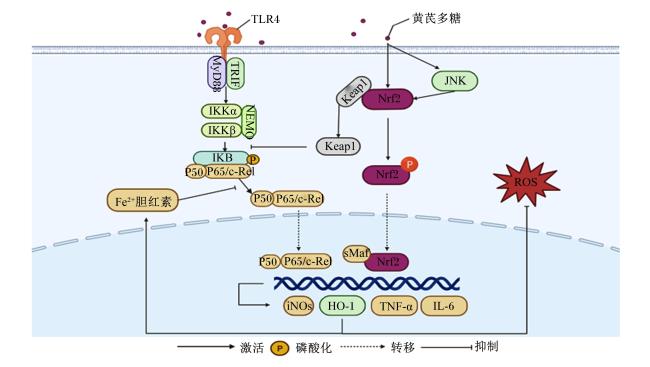
图1 黄芪多糖调节免疫、抗炎和抗氧化作用机制

TLR4:Toll样受体4 Toll-like receptor 4;TRIF:Toll样受体相关干扰素激活因子 TIR-domain-containing adaptor inducing interferon-β;Myd88:髓样分化因子88 myeloid differentiation primary response protein 88;IKK:kappa B抑制因子激酶 inhibitor of kappa B kinase;Keap1:Kelch样ECH相关蛋白1 recombinant Kelch like ECH associated protein 1;sMaf:small Maf转录因子 small Maf transcription factor;JNK:c-Jun氨基末端激酶 c-Jun N-terminal kinase;iNOs:诱导型一氧化氮合成酶 inducible nitric oxide synthase;HO-1:血红素加氧酶-1 heme oxygenase-1;TNF-α:肿瘤坏死因子-α tumor necrosis factor-α;IL-6:白细胞介素-6 interleukin-6;ROS:活性氧 reactive oxygen species。

Fig.1 Mechanism of Astragalus polysaccharides regulating immunity, anti-inflammation and anti-oxidation[20,28,35]

2.2 抗炎作用

炎症反应是动物机体在遭受外界刺激,细胞损伤、感染等因素影响下,为保护组织器官免受损伤并清除病原体而产生的一系列生理和生化反应。过强的炎症反应将严重影响动物生长性能和经济效益。APS具有抗炎活性,可减轻机体炎性损伤[12]。研究发现,APS可显著抑制IL-1βIL-6、TNF-αIFN-γ等炎症标志物和单核细胞趋化蛋白-1(MCP-1)表达,从而缓解小鼠心肌细胞炎性损伤[22]。APS通过阻断NF-κB p65的活化,抑制NF-κB信号通路,进而降低IL-8、细胞间黏附分子-1(ICAM-1)表达[23],直接抑制炎症。而氧化应激与炎症反应密切相关,APS还可消除氧自由基,进一步阻断NF-κB p65活化[24],间接抑制炎症。APS作为一种天然抗炎活性物质还在炎症性肠病中表现出良好的治疗结果[25],其作用机制是通过抑制NF-κB DNA磷酸化活性和过氧化物酶活性,下调TNF-αIL-1βIL-6和IL-17等炎性因子表达[26],发挥抗炎作用。由慢性非感染性炎症引起的血管内皮功能障碍(VED)是许多血管疾病关键启动因素[27],巨噬细胞的极化方向在VED中发挥重要作用,大量促炎M1极化巨噬细胞的积累会引发炎症并导致VED发生。APS可通过激活Nrf2/血红素加氧酶-1(HO-1)信号通路,上调IL-4、IL-10等抗炎细胞因子表达[28](图1),同时诱导M2巨噬细胞极化从而抑制炎症发生并降低VED发生率。短链脂肪酸是肠道微生物群的重要代谢物,已被证明具有抗炎作用[29]。APS可提高小鼠肠道厚壁菌门丰度,并降低拟杆菌门丰度,进而增加血清中短链脂肪酸浓度[30]。综上所述,APS可通过调节酶的活性,改善肠道菌群和介导NF-κB、Nrf2/HO-1等信号通路来发挥抗炎作用。

2.3 抗氧化作用

氧化损伤是指细胞氧化应激过程中自由基水平和细胞抗氧化能力间的氧化还原失衡,细胞抗氧化能力相对不足,部分强毒性活性氧(ROS)自由基增加,破坏生物大分子引起的细胞和组织损伤。研究发现,APS可用于改善紫外线引起的氧化应激、恢复细胞损伤[31],具有抗氧化活性。APS能够通过下调细胞内ROS水平,提高细胞抗氧化能力和一氧化氮(NO)生物利用度,改善过氧化氢(H2O2)诱导的人脐静脉内皮细胞损伤[32]。此外,APS能提高小鼠血清超氧化物歧化酶(SOD)、谷胱甘肽过氧化物酶(GSH-Px)、过氧化氢酶(CAT)活性,降低丙二醛(MDA)含量[33],从而发挥抗氧化作用。Nrf2是调控抗氧化酶转录的决定因子,可调控100多个相关基因表达[34]。APS能够激活Nrf2信号通路及其下游蛋白HO-1和谷氨酸半胱氨酸连接酶的表达(图1),最终减少ROS生成和Bax、半胱天冬酶(Caspase)-9、Caspase-3表达,抑制细胞凋亡,保护机体免受氧化损伤[35]。进一步研究表明,APS是通过抑制miR-128-3表达,从而影响Nrf2信号通路调节抗氧化物酶活性,发挥抗氧化作用[36]。此外,APS对超氧自由基、二苯代苦味酰基自由基(DPPH)、H2O2和超氧阴离子也具有较强的清除能力,对体外亚铁离子也有螯合作用,可有效下调氧化应激水平[37-38]

2.4 抗肿瘤作用

肿瘤细胞是一种可无限增殖的细胞,抑制其增殖对发挥抗肿瘤作用至关重要。APS可通过控制肿瘤细胞增殖转移、促进凋亡来发挥抗肿瘤作用[14]。APS在体外能通过刺激免疫反应来抑制乳腺癌细胞的增殖[39]。此外,还能抑制Wnt/β-连环蛋白(β-catenin)信号通路,从而调节上皮-间质转化来抑制乳腺癌细胞的增殖[40]。基因调控细胞凋亡的失常是肿瘤发生的核心因素,因此,促进肿瘤细胞凋亡是抗肿瘤重要措施。有研究报道,APS能激活巨噬细胞,通过线粒体凋亡途径促进4T1细胞凋亡[41],发挥抗肿瘤作用。此外,APS还可阻断MCF-7细胞G1期生长周期,上调其凋亡基因表达,促进细胞凋亡,从而发挥抗肿瘤作用[42]。辐射疗法也是治疗癌症的一种有效途径。APS联合X射线照射,可增加人鼻咽癌对X射线的敏感性,间接增加癌细胞的凋亡数量[43]

3 APS在动物生产中的应用

APS被用作饲料添加剂、免疫增强剂等提高畜禽生产效益,改善产品品质,还可添加到动物精液中辅助精液保存,已在禽类、水生动物、猪、反刍动物等的动物生产中广泛应用。

3.1 APS在禽类生产中的应用

目前,APS作为添加剂应用于禽类饲粮中,通过促进肠道健康和调节肠道微生物群来提高肉鸡平均日增重,并增加饲料转化率,促使淀粉酶、脂肪酶、蛋白酶活性提高以增强消化,从而显著提高生长性能[44]。研究发现,胚蛋注射APS能够提高雏鸡十二指肠、空肠和回肠绒毛高度、空肠隐窝深度与绒毛高度/隐窝深度,改善肠道形态,促进肠道结构发育[45]。饲粮中添加200 mg/kg的APS还能够降低海兰褐壳蛋鸡肠道大肠杆菌和沙门氏菌等有害菌相对丰度,提高乳酸杆菌和双歧杆菌等有益菌相对丰度,对肠道菌群有积极影响[46]。饲粮中添加200 mg/kg的APS可改善蛋鸡的蛋黄重、蛋黄颜色、蛋壳厚度、蛋壳红度和蛋壳黄度等,提高蛋品质与产蛋率[47],增加经济效益。此外,饲喂添加220 mg/kg APS的饲粮能使雏鸡免疫器官组织结构明显改善并提高相对重量,升高外周血中T淋巴细胞百分比,提高免疫功能[48]。APS也可用作免疫佐剂增强新城疫疫苗免疫效果。在首次接种ND疫苗的同时,雏鸡口服1 mL的APS(2 mg/mL),测得雏鸡淋巴细胞增殖、IL-2浓度和新城疫抗体滴度均显著提高[49]。综上所述,APS可显著提高禽类生长性能,降低饲料系数,提高蛋品质和产蛋率,改善肠道形态和肠道菌群,并且有助于免疫器官早期发育,增强机体免疫功能,还能够用作免疫佐剂加强疫苗免疫效果。

3.2 APS在水生动物生产中的应用

APS在水生动物养殖生产中主要用作饲料添加剂,其可提高饲料转化率和生长性能,增加经济效益,并改善鱼肉肌肉弹性、黏连性和咀嚼性,丰富鱼肉的口感[50-51]。此外,APS具有抗氧化功能[13],能显著提高鱼类总抗氧化能力(T-AOC)和GSH-Px活性,从而保护机体免受氧化应激损伤[52]。据报道,APS通过NF-κB信号通路影响日本海参的非特异性免疫反应和肠道菌群组成[53],有效提高肠道菌群中有益菌丰度。同时,APS已作为免疫增强剂广泛应用于水产养殖,能够增加大黄鱼血清总蛋白(TP)和白蛋白(ALB)含量并提高酸性磷酸酶(ACP)、碱性磷酸酶(AKP)和溶菌酶(LZM)等非特异性免疫酶活性,增强头肾巨噬细胞吞噬能力[54]。进一步研究发现,APS改善鱼类非特异性免疫作用与其抗菌活性有关[55]。除此之外,饲粮中添加0.68 g/kg APS能下调斑点鲈鱼肝脏中脂质合成相关基因脂肪酸合酶(ACC)1和ACC2表达,上调脂质分解相关基因过氧化物酶体增殖物激活受体-α(PPAR-α)、肉碱棕榈酰转移酶1(CPT1)、激素敏感性脂肪酶(HSL)、脂肪酸甘油三酯水解酶(ATGL)表达,从而改善脂质代谢紊乱[56]。综上所述,APS可提高水生动物生长性能,改善肉品质和肠道菌群并提高免疫与抗氧化能力,还具有调节水生动物的脂质代谢作用。

3.3 APS在猪生产中的应用

仔猪断奶期生长发育、营养物质消化率对后续生产十分重要。饲粮中添加0.1% APS能改善仔猪断奶相关消瘦综合征,提高氨基酸表观回肠消化率,提高血清大多数氨基酸浓度[57]。育肥猪饲粮中添加0.15% APS可显著提高平均日增重、平均日采食量等指标,改善其生长性能[58]。APS可通过提升IL-2生理活性来减少炎症细胞因子和皮质醇释放,加强断奶仔猪淋巴细胞增殖以调节免疫系统[59]。此外,APS还具有较强的抗氧化作用[13],在公猪精液体外低温保存方面具有很高的实用价值。其可通过环磷酸腺苷依赖蛋白激酶(cAMP-PKA)信号通路抑制ROS引起的蛋白质去磷酸化,从而保护猪精子免受氧化应激和能量缺乏的影响[60],有效地保持公猪精子质量,如精子活力、顶体完整性和线粒体膜电位等。经过APS处理的公猪精液体外受精指数和胚胎发育均得以改善[61],可有效提高猪的繁殖性能。据报道,饲粮中添加20 mg/kg APS能够显著提高口蹄疫病毒的特异性抗体滴度,上调IFN-γIL-6 mRNA表达,可用作免疫佐剂提高免疫效果[62]。综上所述,APS能够提高猪生长性能和氨基酸消化率,辅助保存猪精液并提高精液质量,还可用作免疫佐剂加强免疫应答。

3.4 APS在反刍动物养殖中的应用

饲粮中添加3.5%的APS能够有效提高藏羊肉的剪切力、红度和色彩饱和度,提高肉品质[63]。运输应激是牛在实际生产过程中的一大挑战。在运输过程中饲喂每只安格斯小母牛20 g/d的APS可有效调节生理应激反应,减轻长途运输造成的性能损失[64]。向山羊精液中添加0.2 g/L的APS,再进行冷冻保存,解冻精液的精子活力、运动性能、质膜完整性、顶体完整性和抗氧化性能均显著高于未添加APS的精液[65],提高羊的繁殖性能。除此之外,APS还具有抗炎功能[12],通过激活Wnt信号通路来保护牛乳腺上皮细胞,抑制IL-6、IL-8、TNF-α等炎症因子及MDA氧化因子表达,以缓解乳腺上皮细胞的炎症反应[66]。在精料中添加3%的APS,可提高羔羊生长性能、营养物质表观消化率,促进小肠各段发育并改善肠道菌群[67]。综上所述,APS可增强反刍动物生长性能与肉品质,改善其抗氧化和免疫功能,提高保存过程中的精子质量,并抑制牛乳腺上皮细胞的炎症反应。

4 小结与展望

综上所述,APS可通过调节NF-κB和Nrf2信号通路及其相关因子等途径发挥免疫调节、抗炎、抗氧化、抗肿瘤等生物学功能。且现已开发出热水提取法、冷水提取法、酶辅助提取法、超声辅助提取法、均质辅助负压空化提取法和微生物发酵提取法等多种提取方法。APS应用于畜禽养殖生产领域能够促进肠道发育、改善肠道功能,增加免疫器官指数,增强免疫、抗炎、抗氧化能力,从而提高生长性能、繁殖性能与产品品质。在全面禁抗的大背景下,APS作为一种天然提取物,有着绿色、无污染的优势,具有广阔的开发利用前景。目前,对其研究主要集中在生物学功能和作用机制上,对分离、纯化和构效关系,最适添加剂量统一标准,与其他动物饲料添加剂或防治药物的协同或拮抗作用有待进一步深入研究。因此,今后应开发更高效的APS提取方法,围绕其在禽类、反刍动物、水生动物和猪等动物的实际应用展开研究,提供更多的科学试验数据,助力我国畜牧业更稳定、健康、快速发展。
[1]
CHEN Z J, LIU L J, GAO C F, et al. Astragali radix (Huangqi):a promising edible immunomodulatory herbal medicine[J]. Journal of Ethnopharmacology, 2020,258:112895.

[2]
ZHANG C H, YANG X, WEI J R, et al., Ethnopharmacology,phytochemistry,pharmacology,toxicology and clinical applications of Radix Astragali[J]. Chinese Journal of Integrative Medicine, 2021, 27(3):229-240.

[3]
ZHU Z Y, LUO Y, DONG G L, et al. Effects of the ultra-high pressure on structure and α-glucosidase inhibition of polysaccharide from Astragalus[J]. International Journal of Biological Macromolecules, 2016,87:570-576.

[4]
SHANG H M, WANG M H, LI R, et al. Extraction condition optimization and effects of drying methods on physicochemical properties and antioxidant activities of polysaccharides from Astragalus cicer L.[J]. Scientific Reports, 2018, 8(1):3359.

[5]
LIU A J, YU J, JI H Y, et al. Extraction of a novel cold-water-soluble polysaccharide from Astragalus membranaceus and its antitumor and immunological activities[J]. Molecules, 2017, 23(1):62.

[6]
CHEN H G, ZHOU X, ZHANG J Z. Optimization of enzyme assisted extraction of polysaccharides from Astragalus membranaceus[J]. Carbohydrate Polymers, 2014,111:567-575.

[7]
丁建海, 马婧, 何小男, 等. 超声辅助提取黄芪多糖的工艺研究[J]. 应用化工, 2018, 47(8):1678-1679,1683.

DING J H, MA J, HE X N, et al. Study on ultrasonic-assisted extraction of polysaccharides from Astragalus[J]. Applied Chemical Industry, 2018, 47(8):1678-1679,1683. (in Chinese)

[8]
JIAO J, WEI F Y, GAI Q Y, et al. A pilot-scale homogenization-assisted negative pressure cavitation extraction of Astragalus polysaccharides[J]. International Journal of Biological Macromolecules, 2014,67:189-194.

[9]
周阳. 混菌固态发酵黄芪工艺条件的优化研究[J]. 食品工业, 2018, 39(4):23-27.

ZHOU Y. Research on the optimization of the technology of applying strains in solid-state fermentation of Astragalus membranaceus[J]. The Food Industry, 2018, 39(4):23-27. (in Chinese)

[10]
ROMANIK G, GILGENAST E, PRZYJAZNY A, et al. Techniques of preparing plant material for chromatographic separation and analysis[J]. Journal of Biochemical and Biophysical Methods, 2007, 70(2):253-261.

PMID

[11]
LI S S, SUN Y, HUANG J, et al. Anti-tumor effects and mechanisms of Astragalus membranaceus (AM) and its specific immunopotentiation:status and prospect[J]. Journal of Ethnopharmacology, 2020,258:112797.

[12]
AUYEUNG K K, HAN Q B, KO J K. Astragalus membranaceus:a review of its protection against inflammation and gastrointestinal cancers[J]. American Journal of Chinese Medicine, 2016, 44(1):1-22.

[13]
SHAHZAD M, SHABBIR A, WOJCIKOWSKI K, et al. The antioxidant effects of Radix Astragali (Astragalus membranaceus and related species) in protecting tissues from injury and disease[J]. Current Drug Targets, 2016, 17(12):1331-1340.

[14]
WANG D, CUI Q, YANG Y J, et al. Application of dendritic cells in tumor immunotherapy and progress in the mechanism of anti-tumor effect of Astragalus polysaccharide (APS) modulating dendritic cells: a review[J]. Biomedicine & Pharmacotherapy, 2022,155:113541.

[15]
QI Y, GAO F, HOU L F, et al. Anti-inflammatory and immunostimulatory activities of astragalosides[J]. American Journal of Chinese Medicine, 2017, 45(6):1157-1167.

[16]
ZHANG W M, MA W R, ZHANG J, et al. The immunoregulatory activities of Astragalus polysaccharide liposome on macrophages and dendritic cells[J]. International Journal of Biological Macromolecules, 2017, 105(Pt 1):852-861.

[17]
XU S W, WUSIMAN A, LIU Z G, et al. pH-responsive Astragalus polysaccharides-loaded poly (lactic-co-glycolic acid) nanoparticles and their in vitro immunogenicity[J]. International Journal of Biological Macromolecules, 2019,125:865-875.

[18]
FAN Y P, MA L, ZHANG W M, et al. Liposome can improve the adjuvanticity of Astragalus polysaccharide on the immune response against ovalbumin[J]. International Journal of Biological Macromolecules, 2013,60:206-212.

[19]
FAN W T, ZHANG S J, HAO P, et al. Structure characterization of three polysaccharides and a comparative study of their immunomodulatory activities on chicken macrophage[J]. Carbohydrate Polymers, 2016,153:631-640.

[20]
ZHOU L J, LIU Z J, WANG Z X, et al. Astragalus polysaccharides exerts immunomodulatory effects via TLR4-mediated MyD88-dependent signaling pathway in vitro and in vivo[J]. Scientific Reports, 2017,7:44822.

[21]
DING G Q, GONG Q Y, MA J Y, et al. Immunosuppressive activity is attenuated by Astragalus polysaccharides through remodeling the gut microenvironment in melanoma mice[J]. Cancer Science, 2021, 112(10):4050-4063.

[22]
LIU T L, ZHANG M J, NIU H Y, et al. Astragalus polysaccharide from Astragalus Melittin ameliorates inflammation via suppressing the activation of TLR-4/NF-κB p65 signal pathway and protects mice from CVB3-induced virus myocarditis[J]. International Journal of Biological Macromolecules, 2019,126:179-186.

[23]
YUAN L B, HUA C Y, GAO S, et al. Astragalus polysaccharides attenuate monocrotaline-induced pulmonary arterial hypertension in rats[J]. American Journal of Chinese Medicine, 2017, 45(4):773-789.

[24]
HUANG W M, LIANG Y Q, TANG L J, et al. Antioxidant and anti-inflammatory effects of Astragalus polysaccharide on EA.hy926 cells[J]. Experimental and Therapeutic Medicine, 2013, 6(1):199-203.

[25]
DUAN L S, CHENG S Y, LI L, et al. Natural anti-inflammatory compounds as drug candidates for inflammatory bowel disease[J]. Frontiers in Pharmacology, 2021,12:684486.

[26]
LV J, ZHANG Y H, TIAN Z Q, et al. Astragalus polysaccharides protect against dextran sulfate sodium-induced colitis by inhibiting NF-κВ activation[J]. International Journal of Biological Macromolecules, 2017,98:723-729.

[27]
KNAPP M, TU X, WU R X. Vascular endothelial dysfunction,a major mediator in diabetic cardiomyopathy[J]. Acta Pharmacologica Sinica, 2019, 40(1):1-8.

[28]
SHA W J, ZHAO B, WEI H Z, et al. Astragalus polysaccharide ameliorates vascular endothelial dysfunction by stimulating macrophage M2 polarization via potentiating Nrf2/HO-1 signaling pathway[J]. Phytomedicine, 2023,112:154667.

[29]
PAN X H, FANG X, WANG F, et al. Butyrate ameliorates caerulein-induced acute pancreatitis and associated intestinal injury by tissue-specific mechanisms[J]. British Journal of Pharmacology, 2019, 176(23):4446-4461.

DOI PMID

[30]
MING K, ZHUANG S, MA N, et al. Astragalus polysaccharides alleviates lipopolysaccharides-induced inflammatory lung injury by altering intestinal microbiota in mice[J]. Frontiers in Microbiology, 2022,13:1033875.

[31]
LI Q, WANG D P, BAI D H, et al. Photoprotective effect of Astragalus membranaceus polysaccharide on UVA-induced damage in HaCaT cells[J]. PLoS One, 2020, 15(7):e0235515.

[32]
HAN R, TANG F, LU M, et al. Astragalus polysaccharide ameliorates H2O2-induced human umbilical vein endothelial cell injury[J]. Molecular Medicine Reports, 2017, 15(6):4027-4034.

[33]
WEI X T, XIN J Y, CHEN W, et al. Astragalus polysaccharide ameliorated complex factor-induced chronic fatigue syndrome by modulating the gut microbiota and metabolites in mice[J]. Biomedicine & Pharmacotherapy, 2023,163:114862.

[34]
王甜甜, 陈淳媛, 杨雷, 等. Nrf2/HO-1信号轴在氧化应激性疾病中的机制[J]. 中南大学学报(医学版), 2019, 44(1):74-80.

WANG T, CHEN C, YANG L, et al. Role of Nrf2/HO-1 signal axis in the mechanisms for oxidative stress-relevant diseases[J]. Journal of Central South University(Medical Science), 2019, 44(1):74-80.

[35]
ZHANG Q, LIU J, DUAN H X U, et al. Activation of Nrf2/HO-1 signaling:an important molecular mechanism of herbal medicine in the treatment of atherosclerosis via the protection of vascular endothelial cells from oxidative stress[J]. Journal of Advanced Research, 2021,34:43-63.

[36]
袁前发, 唐思梦, 陈思羽, 等. 黄芪多糖对非酒精性脂肪肝病大鼠的治疗作用[J]. 第二军医大学学报, 2018, 39(5):573-578.

YUAN Q F, TANG S M, CHEN S Y, et al. Therapeutic effect of astragalus polysaccharides on nonalcoholic fatty liver disease in rats[J]. Academic Journal of Naval Medical University, 2018, 39(5):573-578. (in Chinese)

[37]
NIU Y G, WANG H Y, XIE Z H, et al. Structural analysis and bioactivity of a polysaccharide from the roots of Astragalus membranaceus (Fisch) Bge.var.mongolicus (Bge.) Hsiao[J]. Food Chemistry, 2011, 128(3):620-626.

[38]
LI R, CHEN W C, WANG W P, et al. Antioxidant activity of Astragalus polysaccharides and antitumour activity of the polysaccharides and siRNA[J]. Carbohydrate Polymers, 2010, 82(2):240-244.

[39]
LI W F, HU X Y, WANG S P, et al. Detection and evaluation of anti-cancer efficiency of Astragalus polysaccharide via a tissue engineered tumor model[J]. Macromolecular Bioscience, 2018, 18(11):e1800223.

[40]
YANG S, SUN S Q, XU W Q, et al. Astragalus polysaccharide inhibits breast cancer cell migration and invasion by regulating epithelial-mesenchymal transition via the Wnt/β-catenin signaling pathway[J]. Molecular Medicine Reports, 2020, 21(4):1819-1832.

[41]
LI W, HU X, WANG S, et al. Characterization and anti-tumor bioactivity of Astragalus polysaccharides by immunomodulation[J]. International Journal of Biological Macromolecules, 2020,145:985-997.

[42]
LI W F, SONG K D, WANG S P, et al. Anti-tumor potential of Astragalus polysaccharides on breast cancer cell line mediated by macrophage activation[J]. Materials Science & Engineering C Materials for Biological Applications, 2019,98:685-695.

[43]
张树聪, 蔡治祥, 王学涛, 等. 黄芪多糖对人鼻咽癌CNE-1细胞的放疗增敏及上皮间质转化的作用[J]. 中国实验方剂学杂志, 2020, 26(20):59-66.

ZHANG S C, CAI Z X, WANG X T, et al. Effect of Astragalus polysaccharide on radiosensitivity and epithelial-mesenchymal transition of human nasopharyngeal carcinoma CNE-1 cells[J]. Chinese Journal of Experimental Traditional Medical Formulae, 2020, 26(20):59-66. (in Chinese)

[44]
QIAO Y Y, LIU C Z, GUO Y P, et al. Polysaccharides derived from Astragalus membranaceus and Glycyrrhiza uralensis improve growth performance of broilers by enhancing intestinal health and modulating gut microbiota[J]. Poultry Science, 2022, 101(7):101905.

[45]
YANG S B, QIN Y J, MA X, et al. Effects of in ovo injection of Astragalus polysaccharide on the intestinal development and mucosal immunity in broiler chickens[J]. Frontiers in Veterinary Science, 2021,8:738816.

[46]
张尧, 张玲, 杨晓志, 等. 黄芪多糖对海兰褐壳蛋鸡生产性能、蛋品质和肠道菌群结构的影响[J]. 饲料研究, 2022, 45(23): 54-57.

ZHANG Y, ZHANG L, YANG X Z, et al. Effect of Astragalus polysaccharides on production performance,egg quality and intestinal microflora structure of Hyline brown laying hens[J]. Feed Research, 2019, 45(23):54-57. (in Chinese)

[47]
LV H W, TANG Y Q, ZHANG H H, et al. Astragalus polysaccharide supplementation improves production performance,egg quality,serum biochemical index and gut microbiota in Chongren hens[J]. Animal Science Journal, 2021, 92(1):e13550.

[48]
LI S P, ZHAO X J, WANG J Y. Synergy of Astragalus polysaccharides and probiotics (Lactobacillus and Bacillus cereus) on immunity and intestinal microbiota in chicks[J]. Poultry Science, 2009, 88(3):519-525.

[49]
CHEN Y K, WANG D Y, HU Y A, et al. Astragalus polysaccharide and oxymatrine can synergistically improve the immune efficacy of Newcastle disease vaccine in chicken[J]. International Journal of Biological Macromolecules, 2010, 46(4):425-428.

[50]
WU S J. Dietary Astragalus membranaceus polysaccharide ameliorates the growth performance and innate immunity of juvenile crucian carp (Carassius auratus)[J]. International Journal of Biological Macromolecules, 2020,149:877-881.

[51]
LI Y G, DONG X H, ZHANG Y L, et al. Astragalus polysaccharide improves the growth,meat quality,antioxidant capacity and bacterial resistance of Furong crucian carp (Furong carp♀×red crucian carp)[J]. International Journal of Biological Macromolecules, 2023,244:124999.

[52]
SUN Y K, WANG X, ZHOU H H, et al. Dietary Astragalus polysaccharides ameliorates the growth performance,antioxidant capacity and immune responses in turbot (Scophthalmus maximus L.)[J]. Fish & Shellfish Immunology, 2020,99:603-608.

[53]
SONG X J, FENG Z F, ZHANG Y P, et al. Regulation of dietary Astragalus polysaccharide (APS) supplementation on the non-specific immune response and intestinal microbiota of sea cucumber Apostichopus japonicus[J]. Fish & Shellfish Immunology, 2019,94:517-524.

[54]
ZHANG W N, ZHANG M X, CHENG A Y, et al. Immunomodulatory and antioxidant effects of Astragalus polysaccharide liposome in large yellow croaker (Larimichthys crocea)[J]. Fish & Shellfish Immunology, 2020,100:126-136.

[55]
TAN B K H, VANITHA J. Immunomodulatory and antimicrobial effects of some traditional Chinese medicinal herbs:a review[J]. Current Medicinal Chemistry, 2004, 11(11):1423-1430.

[56]
HUANG Z F, YE Y L, XU A L, et al. Effects of Astragalus membranaceus polysaccharides on growth performance,physiological and biochemical parameters,and expression of genes related to lipid metabolism of spotted sea bass,Lateolabrax maculatus[J]. Aquaculture Nutrition, 2023,2023:6191330.

[57]
张华, 王东, 刘帅帅, 等. 黄芪多糖对育肥猪生产性能、肉品质及血液生化指标的影响[J]. 中国饲料, 2023(3):50-55.

ZHANG H, WANG D, LIU S S, et al. Effects of Astragalus membranaceus polysaccharides on growth performance,physiological and biochemical parameters,and expression of genes related to lipid metabolism of spotted sea bass,Lateolabrax maculatus[J]. China Feed, 2023(3):50-55. (in Chinese)

[58]
YIN F G, LIU Y L, YIN Y L, et al. Dietary supplementation with Astragalus polysaccharide enhances ileal digestibilities and serum concentrations of amino acids in early weaned piglets[J]. Amino Acids, 2009, 37(2):263-270.

[59]
MAO X F, PIAO X S, LAI C H, et al. Effects of beta-glucan obtained from the Chinese herb Astragalus membranaceus and lipopolysaccharide challenge on performance,immunological,adrenal,and somatotropic responses of weanling pigs[J]. Journal of Animal Science, 2005, 83(12):2775-2782.

[60]
FU J L, YANG Q Z, LI Y H, et al. A mechanism by which Astragalus polysaccharide protects against ROS toxicity through inhibiting the protein dephosphorylation of boar sperm preserved at 4 ℃[J]. Journal of Cellular Physiology, 2018, 233(7):5267-5280.

[61]
WENG X G, CAI M M, ZHANG Y T, et al. Effect of Astragalus polysaccharide addition to thawed boar sperm on in vitro fertilization and embryo development[J]. Theriogenology, 2018,121:21-26.

[62]
LI J F, ZHONG Y G, LI H R, et al. Enhancement of Astragalus polysaccharide on the immune responses in pigs inoculated with foot-and-mouth disease virus vaccine[J]. International Journal of Biological Macromolecules, 2011, 49(3):362-368.

[63]
王宪举, 魏海燕, 闫琦, 等. 黄芪粉对藏羊生产性能和肉品质的影响[J]. 中国畜牧杂志, 2020, 56(9):139-143.

WANG X J, WEI H Y, YAN Q, et al. Effect of Astragalus membranaceus supplementation on growth performance and meat quality of tibetan sheep[J]. Chinese Journal of Animal Science, 2020, 56(9):139-143. (in Chinese)

[64]
WU X, CAO N, ZHOU Z M, et al. Effect of anti-inflammatory compounds or antibiotic administration on receiving performance and physiological responses of transported heifers[J]. Journal of Animal Science, 2020, 98(2):skaa036.

[65]
张星, 任发, 冯天雨, 等. 黄芪多糖对奶山羊精液冷冻保存效果的影响[J]. 家畜生态学报, 2023, 44(4):66-73.

ZHANG X, REN F, FENG T Y, et al. Effect of Astragalus polysaccharide on semen cryopreservation of dairy goat[J]. Acta Ecologae Animalis Domastici, 2023, 44(4):66-73. (in Chinese)

[66]
FAN J, JIA F, LIU Y, et al. Astragalus polysaccharides and astragaloside Ⅳ alleviate inflammation in bovine mammary epithelial cells by regulating Wnt/β-catenin signaling pathway[J]. PLoS One, 2022, 17(7):e271598.

[67]
冯士彬, 程连平, 舒迎霜, 等. 黄芪多糖对湖羊羔羊生长性能、血清指标、消化功能和直肠菌群的影响[J]. 江苏农业学报, 2019, 35(1):122-129.

FENG S B, CHENG L P, SHU Y S, et al. Effect of Astragalus polysaccharide on growth performance,serum indi-ces,digestive function and rectum flora of Hu lambs[J]. Jiangsu Journal of Agricultural Sciences, 2019, 35(1):122-129. (in Chinese)

Outlines

/