RESEARCH PAPER

Effects of High Sugar Diet and Condensed Tannin Supplementation on Growth Performance, Body Composition, Serum Metabolites,Intestinal Short-Chain Fatty Acid Contents and Hormone Gene Expression of Sea Bass (Lateolabrax maculatus)

  • SUN Wenhao , 1, 2 ,
  • QIU Jianqiang 2, 3 ,
  • TIAN Renhong 1, 2 ,
  • CHEN Bing 2 ,
  • ZHAO Hongxia 2 ,
  • HUANG Wen 2 ,
  • ZHU Xiaowen 1 ,
  • ZHU Xifeng 2, 4 ,
  • CAO Junming , 5, ** ,
  • PENG Kai , 2, **
Expand
  • 1 College of Fisheries, Guangdong Ocean University, Zhanjiang 524088, China
  • 2 Key Laboratory of Animal Nutrition and Feed Science in South China, Ministry of Agriculture and Rural Affairs, Guangdong Key Laboratory of Animal Breeding and Nutrition, Institute of Animal Science, Guangdong Academy of Agricultural Sciences, Guangzhou 510640, China
  • 3 College of Fisheries, Huazhong Agricultural University, Wuhan 430070, China
  • 4 Guangzhou Fishtech Biotechnology Co., Ltd., Guangzhou 510640, China
  • 5 Guangdong Academy of Agricultural Sciences, Guangzhou 510640, China
CAO Junming, professor, E-mail:
PENG Kai, professor, E-mail:
*Contributed equally

Received date: 2024-01-25

  Online published: 2024-08-12

Abstract

This study was conducted to investigate the effects of high sugar diet and condensed tannin (CT) supplementation on growth performance, body composition, serum metabolites, intestinal short-chain fatty acid contents and hormone gene expression of sea bass (Lateolabrax maculatus). A total of 480 healthy sea bass with an initial body weight of (10.85±0.02) g were randomly divided into 3 groups with 4 replicates per group and 40 fish per replicate. Sea bass in the three groups were fed conventional diet (containing 20.0% flour, G1 group), high sugar diet (containing 45.8% flour, G2 group) and high sugar diet supplemented with CT (containing 45.8% flour and 0.1% CT, G3 group), respectively. The experiment lasted for 56 days. The results showed as follows: 1) compared with G1 group, the final body weight, weight gain rate and specific growth rate of sea bass in G2 group were significantly decreased (P<0.05), and the feed coefficient, condition factor, hepatosomatic index and viscerosomatic index were significantly increased (P<0.05). Compared with G2 group, the final body weight, weight gain rate and specific growth rate in G3 group were significantly increased (P<0.05), and the feed coefficient was significantly decreased (P<0.05). 2) Compared with G1 group, the contents of moisture, crude protein and crude ash in the whole body of sea bass in G2 and G3 groups were significantly decreased (P<0.05). 3) At 1 h after feeding, the serum glucose content of sea bass in G2 group was significantly higher than that in G1 and G3 groups (P<0.05); at 3 and 6 h after feeding, there was no significant difference in serum glucose content among all groups (P>0.05). The serum glutamic oxaloacetic transaminase activity and high-density lipoprotein cholesterol content of sea bass in G2 group were significantly higher than those in G1 and G3 groups (P<0.05), but there were no significant differences in the above indices between G1 and G3 groups (P>0.05). 4) The contents of acetic acid, butyric acid and total short-chain fatty acid in intestine of sea bass in all groups were in the order of G1 group>G3 group>G2 group from high to low, and the differences among groups were all significant (P<0.05). 5) The mRNA relative expression levels of glucagon-like peptide-1 (GLP-1), glucagon-like peptide-2 (GLP-2), sodium-dependent glucose cotransporter 1 (SGLT1), sodium-dependent glucose cotransporter 2 (SGLT2) and glucose transporter 2 (GLUT2) in intestine of sea bass in G2 group were significantly lower than those in G1 and G1 groups (P<0.05), the YY peptide (PYY) mRNA relative expression level in intestine in G2 group was significantly higher than that in G1 and G3 groups (P<0.05), but there were no significant differences between G1 and G3 groups (P>0.05). In conclusion, the high sugar diet can increase the serum glucose content, induce the liver injury, reduce the intestinal short-chain fatty acid content and expression of glucagon-like peptide and glucose transporter genes, and inhibit the growth and nutrient deposition of sea bass. The supplementation of 0.1% CT in the high sugar diet can repair the liver injury, reduce the serum glucose content by regulating the gene expression of intestinal hormone, and improve the growth performance of sea bass.

Cite this article

SUN Wenhao , QIU Jianqiang , TIAN Renhong , CHEN Bing , ZHAO Hongxia , HUANG Wen , ZHU Xiaowen , ZHU Xifeng , CAO Junming , PENG Kai . Effects of High Sugar Diet and Condensed Tannin Supplementation on Growth Performance, Body Composition, Serum Metabolites,Intestinal Short-Chain Fatty Acid Contents and Hormone Gene Expression of Sea Bass (Lateolabrax maculatus)[J]. Chinese Journal of Animal Nutrition, 2024 , 36(8) : 5254 -5268 . DOI: 10.12418/CJAN2024.447

糖是水产动物饲料中最廉价的能量来源,在饲料中适当提高糖的含量可减少动物对蛋白质的消耗,不仅节约蛋白质资源,还能提高糖的利用效率。然而,大多数鱼类(尤其是肉食性鱼类)是“先天性糖尿病患者”,对糖的耐受力较低,导致其对糖的利用率较差。研究表明,饲喂高糖会导致花鲈出现餐后持续高血糖症,引发氧化应激反应,从而对鱼类的生长和代谢造成不利影响[1-2]。如何提高鱼类对糖的利用率而又不影响其生长和健康,是营养学领域热切关注的科学问题之一。据报道,提高膳食中糖利用率的方法仅限于补充几种化合物,如二甲双胍[3]、丙酸铬[4]和精氨酸[5]等。
缩合单宁(condensed tannin,CT)是广泛存在于植物界的一种天然多酚类化合物。研究表明,CT具有显著的降血糖效果,饲料中添加适量CT可提高鱼类对高糖饲料的耐受性[6-9]。CT提高动物糖耐受的作用机制主要归因于其抑制糖代谢酶活性、干预细菌对肠细胞的黏附、刺激胰岛素分泌以及抑制葡萄糖转运载体基因表达[7-8,10-12]。中国花鲈(Lateolabrax maculatus)是典型的肉食性鱼类,其营养价值高、口感好、生长迅速,具有较高的经济价值。本实验室前期研究发现,高碳水化合物饲料可抑制花鲈的生长性能,而添加CT有助于缓解高碳水化合物对花鲈的生长抑制和氧化应激,达到降低血糖的作用效果,但其作用机理尚不完全清楚。因此,本文通过研究高糖饲料及添加CT对花鲈生长性能、体成分、血清代谢物、肠道短链脂肪酸及肠道激素基因表达的影响,旨在为提高水产动物对糖的利用提供参考。

1 材料与方法

1.1 试验饲料

试验饲料以秘鲁鱼粉、酪蛋白、大豆浓缩蛋白为主要蛋白质源,以面粉为主要糖源,以鱼油、大豆油、大豆卵磷脂为主要脂肪源,配制3种等氮等脂饲料,分别为常规饲料(含20.0%面粉)、高糖饲料(含45.8%面粉)和添加CT的高糖饲料(含45.8%面粉和0.1%CT)。
本试验使用的CT来源于葡萄籽(纯度大于98%),完全溶于蒸馏水后添加到饲料中。所有饲料原料经粉碎后通过孔径为320 μm的饲料筛网,饲料微量组分采用逐级扩大法混合均匀,然后采用SLX-80型双螺杆挤压机(华南理工大学机械厂)制成直径为2 mm的颗粒饲料,经烘箱烘干(55 ℃,4 h),取出后冷却至室温,置于-20 ℃保存备用。试验饲料组成及营养水平见表1
表1 试验饲料组成及营养水平(干物质基础)

Table 1 Composition and nutrient levels of experimental diets (DM basis) %

项目
Items
组别Groups
G1 G2 G3
原料Ingredients
秘鲁鱼粉Peru fish meal 30.0 30.0 30.0
酪蛋白Casein 14.0 14.0 14.0
大豆浓缩蛋白Soy protein concentrate 7.0 0.4 0.4
面粉Wheat flour 20.0 45.8 45.8
磷酸二氢钙Ca(H2PO4)2 1.5 1.5 1.5
鱼油Fish oil 4.0 4.0 4.0
大豆油Soybean oil 2.0 1.0 1.0
大豆卵磷脂Soy lecithin 2.0 2.0 2.0
维生素预混料Vitamin premix1) 0.1 0.1 0.1
矿物质预混料Mineral premix2) 0.5 0.5 0.5
氯化胆碱Choline chloride 0.5 0.5 0.5
微晶纤维素粉Microcrystalline cellulose powder 18.4 0.2 0.1
缩合单宁Condensed tannin 0.1
合计Total 100.0 100.0 100.0
营养水平Nutrient levels3)
粗蛋白质Crude protein 40.87 41.83 40.59
粗脂肪Ether extract 9.81 10.09 10.15
粗灰分Ash 7.18 7.25 7.35
总能Gross energy/(MJ/kg) 18.20 20.67 20.39

1)维生素预混料为每千克饲料提供 The vitamin premix provided the following per kg of diets:VA 3 230 IU,VD3 1 600 IU,VE 160 mg,VK3 4 mg,VB1 4 mg,VB2 8 mg,VB6 4.8 mg,VB12 0.016 mg,烟酸 nicotinic acid 28 mg,泛酸钙 calcium pantothenate 16 mg,生物素 biotin 0.064 mg,叶酸 folic acid 1.285 mg,肌醇 inositol 40 mg。

2)矿物质预混料为每千克饲料提供 The mineral premix provided the following per kg of diets:Ca 1 150 mg,K 180 mg,Mg 45 mg,Fe 50 mg,Zn 40 mg,Mn 9.5 mg,Cu 7.5 mg,Co 1.25 mg,I 0.16 mg,Se 0.25 mg。

3)营养水平为实测值。Nutrient levels were measured values.

1.2 试验设计和饲养管理

养殖试验于广东省农业科学院水产研究所室内循环水养殖系统中进行。花鲈鱼苗购自福建某鱼苗孵化场,运回后暂养7 d,暂养期间投喂常规饲料。正式试验前,花鲈饥饿24 h,随后选取480尾鱼苗[初始体重为(10.85±0.02) g],随机分为3组,每组4个重复,每个重复40尾鱼(饲养与同一缸内)。3组分别饲喂常规饲料(G1组)、高糖饲料(G2组)和添加CT的高糖饲料(G3组)。试验期56 d。
采取饱食投喂方式,每日投喂2次(08:30和20:30各1次),每次投喂完毕后1 h用虹吸管将残留的饲料和排出的粪便吸出,残留的饲料单独收集后烘干、称重,用于计算实际采食量。每日观察鱼的死亡情况,并对死鱼进行称重、记录。试验期间,循环水经过砂滤系统过滤并连续曝气,水温为(27±1.5) ℃,pH为7.7±0.3,溶解氧浓度大于5.0 mg/L,氨氮和亚硝酸盐浓度均小于0.1 mg/L。养殖试验结束后进行采样。

1.3 样品采集及指标测定

1.3.1 饲料营养成分含量

试验饲料粗蛋白质含量采用凯氏定氮法(GB/T 6432—2018)测定,粗脂肪含量采用乙醚抽提法(GB/T 6433—2006)测定,粗灰分含量采用550 ℃灼烧法(GB/T 6438—2007)测定,水分含量采用105 ℃常压干燥法(GB/T 6435—2014)测定,总能采用C6000氧弹量热仪(德国IKA公司)测定。

1.3.2 生长性能

养殖试验结束后禁食24 h,统计每个缸中鱼的总数量和总重量,计算增重率(WG)、饲料系数(FC)和特定生长率(SGR)。每缸随机取5尾鱼测量体长,随后解剖取内脏团和肝脏并称重,计算肥满度(CF)、脏体比(VSI)和肝体比(HSI)。计算公式如下:
增重率(%)=100×[终末体重(g)-初始体重(g)]/初始体重(g);
饲料系数=采食饲料总重(g)/[终末体重(g)-初始体重(g)];
特定生长率(%/d)=100×[ln终末体重(g)-ln初始体重(g)]/养殖时间;
肥满度(g/cm3)=100×体重(g)/体长3(cm3);
肝体比(%)=100×肝脏重(g)/体重(g);
脏体比(%)=100×内脏重(g)/体重(g)。

1.3.3 全鱼体成分

每缸随机取3尾鱼,置于-20 ℃保存,用于全鱼体成分测定,测定方法同1.3.1。

1.3.4 血清代谢物

在养殖试验的第28和56天,分别于晨饲后的1、3和6 h采样,每缸随机取5尾鱼,于尾静脉处采血。血液样品于室温下静置1 h后离心(2 000×g,10 min),分离上层血清并置于-20 ℃保存,用于血清葡萄糖(GLU)含量的测定,测定仪器为日立7600型全自动生化分析仪。
养殖试验结束后,每缸随机取10尾鱼,于尾静脉处采血,样品经离心(2 000×g,10 min)后分离血清,于-20 ℃保存,用于血清球蛋白(GLB)、白蛋白(ALB)、甘油三酯(TG)、总胆固醇(TC)、高密度脂蛋白胆固醇(HDLC)、低密度脂蛋白胆固醇(LDLC)含量以及谷草转氨酶(AST)、谷丙转氨酶(ALT)活性等的测定,测定仪器为日立7600型全自动生化分析仪。

1.3.5 肠道短链脂肪酸含量和激素基因表达量

养殖试验结束后,每缸随机取3尾鱼,在无菌操作台中解剖,分离肠道组织,用于肠道短链脂肪酸含量和激素基因表达量的分析。肠道短链脂肪酸含量的测定参考Fan等[13]的方法,即将0.1 g冻干粉碎的肠道样品加入到1 mL 70%甲醇溶液中,4 ℃下浸提12 h,然后在3 000×g下离心5 min,取上清液,采用液相色谱-质谱联用(LC-MS/MS)方法分析样品中总短链脂肪酸(TSCFA)、乙酸(AA)、丙酸(PA)和丁酸(BA)含量。
肠道激素基因表达量的分析采用qPCR方法,样品总RNA依据动物组织总RNA快速抽提试剂盒[生工生物工程(上海)股份有限公司]步骤进行提取,肠道激素如胰高血糖素样肽-1(GLP-1)、胰高血糖素样肽-2(GLP-2)、YY肽(PYY)以及葡萄糖转运载体2(GLUT2)、葡萄糖转运载体4(GLUT4)、钠依赖性葡萄糖共转运载体1(SGLT1)和钠依赖性葡萄糖共转运载体2(SGLT2)的引物序列见表2。qPCR的循环条件为:95 ℃预变性30 s;95 ℃变性5 s,55 ℃复性30 s,72 ℃延伸40 s,35个循环;72 ℃维持10 min。目的基因mRNA相对表达量的计算方法参考2-ΔΔCt方法[14]
表2 引物序列

Table 2 Primers sequences

基因Genes 引物序列Primers sequences (5'—3')
胰高血糖素样肽-1 GLP-1 F:CCTCAGAACTACAGGAGGGAA
R:CATTCCCAGTGAGGAGCGAT
胰高血糖素样肽-2 GLP-2 F:TCCAAACCACCATAATGAGG
R:TCTGGGCTGTCTTAAACTTC
YY肽PYY F:AGTCTTGTTGAGGTGAGATG
R:CAAGGGAGATCAATGGTCAA
葡萄糖转运载体2 GLUT2 F:TCACAGAGCCCAGGTGTTATG
R:TTCAACTTCAGCTGCACCAATG
葡萄糖转运载体4 GLUT4 F:TTCTGACACACACTTCGCCG
R:GCATCTGAAGCTCGCTCGC
钠依赖性葡萄糖共转运载体1 SGLT1 F:TTGCCGGCAGGTTGTTTATG
R:GACTCGCTTGCAGAAAATAGCA
钠依赖性葡萄糖共转运载体2 SGLT2 F:ATCTCCATCGCCTTGTCTTT
R:TCTGCCACTTCCTCCTCTGT
β-肌动蛋白β-actin F:CACTGTGCCCATCTACGAG
R:CCATCTCCTGCTCGAAGTC

1.4 数据统计与分析

试验数据采用SPSS 23.0统计软件进行单因素方差分析(one-way ANOVA),若满足方差齐性,则采用Duncan氏法进行多重比较;若不满足方差齐性,则采用Dunnett-T3检验法进行分析。结果以“平均值±标准差(mean±SD)”形式表示,P<0.05表示差异显著。

2 结果

2.1 高糖饲料及添加CT对花鲈生长性能的影响

表3可知,G1组和G3组花鲈终末体重、增重率和特定生长率均显著高于G2组(P<0.05);G2组采食量、肥满度、肝体比和脏体比均显著高于G1组(P<0.05),但与G3组相比无显著差异(P>0.05);G2组饲料系数显著高于G1组和G3组(P<0.05)。
表3 高糖饲料及添加CT对花鲈生长性能的影响

Table 3 Effects of high sugar diet and CT supplementation on growth performance of sea bass (Lateolabrax maculatus)

项目
Items
组别Groups
G1 G2 G3
终末体重FBW/g 74.02±1.88a 63.33±1.72b 73.48±2.40a
增重率WG/% 581.24±17.02a 483.40±16.02b 576.90±22.28a
特定生长率SGR/(%/d) 3.43±0.04a 3.15±0.04b 3.41±0.06a
采食量FI/(g/尾) 83.16±7.52b 94.54±5.78a 85.88±2.14ab
饲料系数FC 1.32±0.10b 1.80±0.58a 1.37±0.32b
肥满度CF/(g/cm3) 1.72±0.04b 1.83±0.06a 1.77±0.04ab
肝体比HSI/% 1.04±0.08b 1.37±0.22a 1.34±0.08a
脏体比VSI/% 10.16±0.48b 11.10±0.90a 10.97±0.44ab

同行数据肩标不同小写字母表示差异显著(P<0.05)。下表同。

In the same row, values with different small letter superscripts mean significant different (P<0.05). The same as below.

2.2 高糖饲料及添加CT对花鲈全鱼体成分的影响

表4可知,G1组花鲈全鱼水分、粗蛋白质和粗灰分含量均显著高于G2组(P<0.05),但G2和G3组之间上述指标无显著差异(P>0.05)。各组之间全鱼粗脂肪含量无显著差异(P>0.05)。
表4 高糖饲料及添加CT对花鲈全鱼体成分的影响(鲜重基础)

Table 4 Effects of high sugar diet and CT supplementation on whole body compositions of sea bass (Lateolabrax maculatus) (fresh weight basis) %

项目
Items
组别Groups
G1 G2 G3
粗蛋白质Crude protein 16.20±0.28a 14.98±0.32b 14.77±0.54b
粗脂肪Ether extract 8.45±0.26 8.55±0.12 8.41±0.30
粗灰分Ash 4.23±0.32a 3.77±0.24b 3.71±0.30b
水分Moisture 68.45±0.32a 67.10±0.50b 66.45±0.94b

2.3 高糖饲料及添加CT对花鲈血清代谢物的影响

表5可知,试验第28天和第56天,在投喂后1 h,G2组花鲈血清葡萄糖含量显著高于G1组和G3组(P<0.05);而在投喂后3和6 h,各组之间血清葡萄糖含量无显著差异(P>0.05)。
表5 高糖饲料及添加CT对花鲈血清葡萄糖含量的影响

Table 5 Effects of high sugar diet and CT supplementation on serum glucose content of sea bass (Lateolabrax maculatus) mmol/L

项目
Items
时间
Time
组别Groups
G1 G2 G3


第28天Day 28
投喂后1 h 1 h after feeding 8.29±0.30b 13.26±2.78a 8.39±0.74b
投喂后3 h 3 h after feeding 6.97±0.86 7.64±1.08 7.14±0.34
投喂后6 h 6 h after feeding 6.91±0.60 7.46±0.52 7.25±0.70


第56天Day 56
投喂后1 h 1 h after feeding 6.92±0.18b 13.48±1.10a 7.83±0.84b
投喂后3 h 3 h after feeding 6.74±0.28 6.62±0.44 7.62±1.24
投喂后6 h 6 h after feeding 6.66±0.18 6.87±0.20 7.22±1.16
表6可知,G2组花鲈血清谷草转氨酶活性和高密度脂蛋白胆固醇含量显著高于G1组和G3组(P<0.05),G1组和G3组上述指标无显著差异(P>0.05)。各组之间血清白蛋白、球蛋白、甘油三酯、总胆固醇、低密度脂蛋白胆固醇含量以及谷丙转氨酶活性均无显著差异(P>0.05)。
表6 高糖饲料及添加CT对花鲈血清代谢物的影响

Table 6 Effects of high sugar diet and CT supplementation on serum metabolites of sea bass (Lateolabrax maculatus)

项目
Items
组别Groups
G1 G2 G3
白蛋白ALB/(g/L) 16.60±2.02 16.77±4.28 16.10±0.64
球蛋白GLB/(g/L) 31.00±2.36 30.23±6.78 30.85±3.30
谷草转氨酶AST/(U/L) 138.75±8.88b 159.33±10.34a 129.50±7.94b
谷丙转氨酶ALT/(U/L) 15.75±2.06 17.33±5.34 16.75±1.26
甘油三酯TG/(mmol/L) 6.60±0.56 6.40±1.90 6.48±0.72
总胆固醇TC/(mmol/L) 6.04±0.34 6.33±1.92 6.04±1.02
高密度脂蛋白胆固醇HDLC/(mmol/L) 1.05±0.04b 1.13±0.08a 1.00±0.06b
低密度脂蛋白胆固醇LDLC/(mmol/L) 0.42±0.02 0.50±0.24 0.41±0.14

2.4 高糖饲料及添加CT对花鲈肠道短链脂肪酸含量的影响

表7可知,各组花鲈肠道中乙酸、丁酸和总短链脂肪酸含量由高到低依次为G1组>G3组>G2组,且组间差异显著(P<0.05),G1组肠道中丙酸含量显著高于G2组和G3组(P<0.05)。
表7 高糖饲料及添加CT对花鲈肠道短链脂肪酸含量的影响

Table 7 Effects of high sugar diet and CT supplementation on intestinal short-chain fatty acid contents of sea bass (Lateolabrax maculatus) μg/mL

项目
Items
组别Groups
G1 G2 G3
乙酸AA 270.00±11.54a 186.67±13.34c 223.33±17.64b
丙酸PA 138.33±12.02a 105.00±5.78b 120.00±11.54b
丁酸BA 163.33±17.64a 100.00±11.54c 136.67±6.66b
总短链脂肪酸TSCFA 763.33±17.64a 483.33±17.64c 710.00±11.54b

2.5 高糖饲料及添加CT对花鲈肠道激素基因表达量的影响

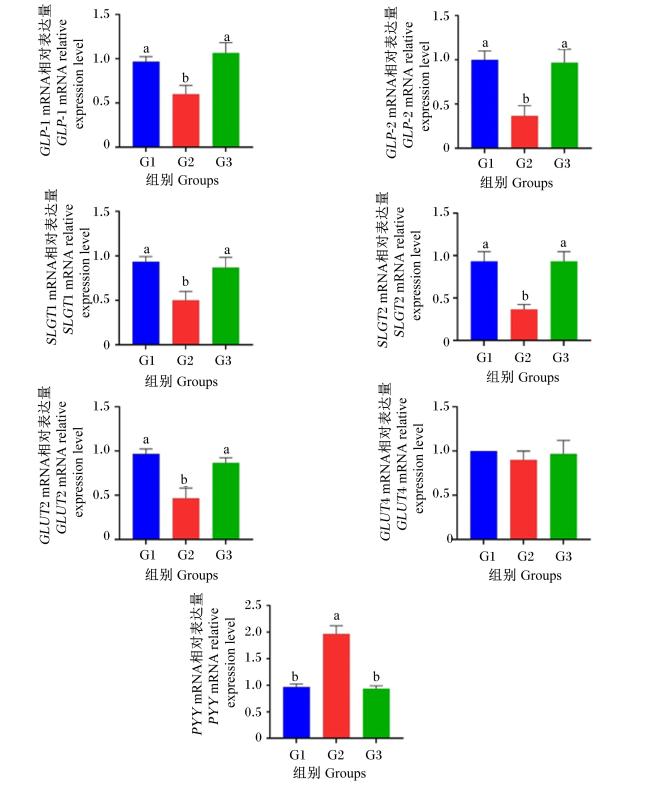
图1所示,G2组花鲈肠道中GLP-1和GLP-2以及SGLT1、SGLT2和GLUT2的mRNA相对表达量显著低于G1组和G3组(P<0.05),G2组肠道中PYY的mRNA相对表达量显著高于G1组和G3组(P<0.05),G1组和G3组之间上述指标均无显著差异(P>0.05)。各组之间肠道中GLUT4的mRNA相对表达量无显著差异(P>0.05)。
图1 高糖饲料及添加CT对花鲈肠道激素基因表达量的影响

数据柱形标注不同小写字母表示差异显著(P<0.05)。

Fig.1 Effects of high sugar diet and CT supplementation on gene expression levels of intestinal hormones of sea bass (Lateolabrax maculatus)

Value columns with different small letters mean significant difference (P<0.05).

3 讨论

3.1 高糖饲料及添加CT对花鲈生长性能的影响

本试验结果表明,与常规饲料相比,高糖饲料显著降低了花鲈的增重率和特定生长率,并显著提高了饲料系数,说明高糖饲料抑制了花鲈的生长,这与Zheng等[15]和Peng等[10]的研究结论一致。大多数肉食性鱼类是“先天性糖尿病患者”,其不能有效利用糖的原因主要包括与葡萄糖感知和摄食的神经元调控体系不完善、葡萄糖转运能力差、胰岛素受体数量和亲和力不足[16]。Peng等[10]报道,高糖饲料抑制花鲈生长的原因是因为高糖诱发了肝脏的糖代谢紊乱。另有研究报道,高糖饲料对大口黑鲈的肠绒毛结构和肠道黏膜功能造成不利影响,从而影响饲料营养素的摄入。李培佳等[17-18]研究表明,高糖饲料通过诱导氧化应激、炎症反应及肝脏损伤,降低杂交鳢的生长性能。在本试验中,高糖饲料显著提高了花鲈肝体比以及血清谷草转氨酶活性,说明高糖可能引发肝脏损伤,这可能是高糖饲料抑制花鲈生长的原因之一。本试验结果表明,高糖饲料显著提高了花鲈的采食量,这可能与高糖增加饲料的适口性有关,这与Lin等[19]报道一致,即随着大口黑鲈饲料中淀粉含量的增加,采食量显著提高。
虽然高糖诱发肉食性鱼类生长抑制和代谢紊乱的研究很多,但如何缓解高糖应激以及提高鱼类对糖利用的报道却较少。已有研究发现,二甲双胍[3]、丙酸铬[4]、精氨酸[5]、沙棘粉[20]、乳杆菌[21]、益生元[22]、CT[10]、苦瓜皂苷[23]、精氨酸[17]以及牛磺酸[18]等添加剂可缓解高糖饲料对水产动物的生长抑制作用。本试验结果表明,在高糖饲料中添加CT可提高花鲈的生长性能,缓解高糖对花鲈的生长抑制作用,这与Peng等[10]的研究结论一致。CT的促生长作用可能与其调节糖代谢和维持血糖平衡有关。据报道,CT具有显著的降血糖作用[24-26]。饲料中添加1 g/kg CT可通过刺激胰岛素分泌,抑制葡萄糖激酶活性,上调丙酮酸激酶基因表达量,从而维持机体血糖平衡,缓解高糖对花鲈的应激[10]

3.2 高糖饲料及添加CT对花鲈全鱼体成分的影响

全鱼体成分间接反映了营养物质的沉积量。本试验结果表明,饲喂高糖饲料的花鲈体成分如水分、粗蛋白质和粗灰分的含量显著降低,说明高糖饲料抑制了水分、粗蛋白质和粗灰分在花鲈体内的沉积,这可能与高糖饲料干扰机体对糖、蛋白质等营养物质的正常代谢有关[10,27]。Zhang等[1]报道,饲料中糖含量较高会损伤鲈鱼的肠道,阻碍营养物质的吸收,从而减少营养物质的沉积。Zhang等[28]研究表明,高糖会抑制糖酵解,阻碍鲈鱼对葡萄糖的利用,减少能量的供应。因为营养物质的吸收和沉积需要消耗能量,而能量不足可能是阻碍营养物质沉积的重要原因[29]
本试验结果表明,与高糖饲料相比,在高糖饲料中添加0.1% CT不影响花鲈的体成分,这与Peng等[10]在花鲈中的研究结论一致。相似地,彭凯等[16]和邱建强等[30]报道,饲料中添加0.1% CT不影响南美白对虾全虾的水分、粗蛋白质、粗脂肪和粗灰分含量。彭凯等[16]研究表明,饲料中添加0.1%和0.2% CT对花鲈的全鱼体成分也无显著影响。

3.3 高糖饲料及添加CT对花鲈血清代谢物的影响

本试验结果表明,高糖饲料显著提高花鲈餐后1 h血清葡萄糖含量,这与前人在金鲳鱼[31]、虹鳟[32]和鲫鱼[33]上的研究结果相似。胰岛素在维持血糖平衡中起重要作用,高糖饲料引起血糖升高的原因可能与胰岛素分泌不足有关。如Brauge等[32]和Peng等[10]研究发现,饲喂高糖饲料后鱼类出现高血糖症状,主要归因于胰岛素分泌不足。本试验中,在投喂后3和6 h,各组之间血清葡萄糖含量均无显著差异,这可能归因于花鲈的生理反馈调节,使血清葡萄糖含量降低。谷草转氨酶通常是反映肝脏损伤程度的指标[34-35]。Ma等[36]研究表明,高糖饲料会引发花鲈的肝细胞损伤。李培佳等[17-18]研究表明,高糖饲料可诱导杂交鳢的肝脏损伤。本试验中,高糖饲料使花鲈血清谷草转氨酶活性升高,说明高糖饲料可能诱发肝脏损伤,这与Zhang等[1]和Peng等[10]研究结论一致。许大帅[37]报道,高密度脂蛋白胆固醇不仅有调节脂代谢的作用,还能调节糖代谢,如高密度脂蛋白胆固醇与胰岛素分泌水平呈负相关。本试验结果表明,高糖饲料能引起花鲈血清高密度脂蛋白胆固醇含量升高,可能归因于高糖饲料引起的胰岛素分泌不足,但具体机理尚不完全清楚,有待进一步深入研究。
葡萄糖代谢与胰岛素信号通路有关[5,38],CT已被证明可以刺激胰岛β细胞分泌胰岛素[39-41]。CT能够促进骨骼肌细胞和脂肪细胞合成糖原[42-43],降低血糖水平。本试验结果表明,饲料中添加0.1% CT能够显著降低花鲈血清葡萄糖和高密度脂蛋白胆固醇含量,这可能与CT促进胰岛素分泌有关。如Peng等[7]报道,饲料中添加0.1% CT显著提高了高糖应激下花鲈血液中胰岛素的含量。Hagerman等[44]和Dutta等[45]研究表明,CT不仅具有抗氧化活性,还能抑制炎症反应。本试验中,饲料中添加0.1% CT使花鲈的血清谷草转氨酶活性显著价降低,这可能归因于CT对肝脏损伤的修复作用。如Peng等[46]报道,饲料中添加1 g/kg CT能够修复黄曲霉毒素B1引发的花鲈肝脏损伤。

3.4 高糖饲料及添加CT对花鲈肠道短链脂肪酸含量的影响

短链脂肪酸是由肠道内有益菌代谢膳食纤维等碳水化合物所产生的代谢产物[47-48]。乙酸能提高肠道酶活性,增强肠道中的屏障功能[49-50]。丙酸能改善肠道菌群和肠道形态,促进肠道健康[51]。丁酸被认为可以改善肠道绒毛组织形态,提高肠道消化酶活性,预防肠道疾病[52-53]。Zhou等[54]报道,高糖饲料易造成肠道损伤和肠道菌群失衡,使肠道益生菌的丰度下降,从而导致肠道中短链脂肪酸含量下降。Liu等[55]报道,肠道受损可能是高糖诱发草鱼肠道短链脂肪酸下降的主要原因,其肠道损伤主要表现为肠道紧密连接蛋白基因表达量下降。Huang等[56]报道,高糖饲料可降低鲈鱼肠道微生物的多样性和丰度,诱发肠道损伤。本试验结果表明,高糖饲料导致花鲈肠道中总短链脂肪酸、乙酸、丙酸和丁酸含量下降,可能归因于高糖饲料引起肠道损伤,导致肠道菌群失衡。
研究表明,在饮食中增补适量单宁可显著提高肠道中短链脂肪酸如乙酸、丙酸和丁酸含量[49]。肠道短链脂肪酸含量的提高可能与单宁促进肠道中乳杆菌属(Lactobacillus)、双歧杆菌属(Bifidobacterium)、梭状芽孢杆菌属(Clostridium)和阿克曼氏菌属(Akkermansia)等有益菌的增殖有关[50,57]。Molino等[58]报道,单宁提取物对人的肠道菌群有积极的调节作用。Lee等[59]和Louis等[60]报道,CT通过干预动物肠道菌群而提高肠道中丁酸含量。Peng等[57,61]报道,CT可修复花鲈肠绒毛和肠道紧密连接蛋白结构,减轻肠道损伤。本研究中,饲料中添加0.1% CT显著提高花鲈肠道中总短链脂肪酸、丁酸和丙酸含量,这可能归因于CT能够促进肠道有益菌的增殖以及对肠道损伤的修复作用。

3.5 高糖饲料及添加CT对花鲈肠道激素基因表达量的影响

胰高血糖素样肽在哺乳动物中有GLP-1和GLP-2这2种形式[62-63]。GLP-1主要控制食物摄入和调节血糖平衡,GLP-2则通过刺激营养物质的运输增强糖类等营养物质的吸收[64-65]。Polakof等[66]发现,GLP-1具有提高虹鳟血糖水平的作用。在鱼类中,GLP-1通过促进糖异生和肝糖原分解以提高血糖水平[67-68],发挥控制合成特异性的葡萄糖转运载体的作用[69]。GLP-2能从细胞内囊泡易位到质膜,通过促进扩散吸收葡萄糖[70-71]。GLUT2是位于肠道基底外侧膜的葡萄糖协同转运蛋白,能将葡萄糖从肠上皮细胞转运到静脉血管。Zhang等[1]认为,GLUT2表达量降低可诱发鲈鱼的血糖升高,这可能是葡萄糖不耐受的关键。本试验中,高糖饲料使得花鲈肠道中GLP-1、GLP-2和GLUP2的mRNA相对表达量下降,可能是高糖饲料引起花鲈血糖升高的重要原因。SGLT1是一种高亲和力、低容量的葡萄糖转运载体;而SGLT2是一种低亲和力、高容量的葡萄糖转运载体[72]。Harada等[73]、Moran-Ramos等[74]和Gorboulev等[75]报道,SGLT1与其他受体偶联存在于肠道内分泌细胞中,其在肠促胰岛素分泌中起着关键作用。Zhao等[76]报道,SGLT2的表达与胰岛素分泌呈正相关。PYY是一种胃肠道激素,对血糖平衡有调节作用[77]。Lafferty等[78]报道,PYY可诱导肠促胰岛素的分泌。本试验结果表明,高糖饲料下调了花鲈肠道中SGLT1和SGLT2的mRNA相对表达量,以及上调了肠道中PYY的mRNA相对表达量,这可能与高糖抑制肠促胰岛素的分泌有关。
本试验结果表明,饲料中添加0.1% CT显著上调了花鲈肠道中GLP-1、GLP-2、SGLT1、SGLT2和GLUP2的mRNA相对表达量,显著下调了肠道中PYY的mRNA相对表达量,这可能与CT调控血糖代谢以及胰岛素的分泌有关[39-41]。CT已被证明可以降低花鲈的血糖水平,提高血清中胰岛素的含量[7]。耿雪营等[79]报道,单宁降低血糖水平主要是通过提高葡萄糖转运载体的基因表达量,提高脂肪细胞的葡萄糖摄取量。

4 结论

本试验条件下,高糖饲料可提高花鲈血清葡萄糖含量,诱导肝脏损伤,降低肠道短链脂肪酸含量以及胰高血糖素样肽和葡萄糖转运载体基因的表达量,抑制花鲈的生长和营养物质沉积。高糖饲料中添加0.1% CT可修复花鲈肝脏损伤,通过调控肠道激素的基因表达,降低血清葡萄糖含量,提高花鲈生长性能。
[1]
ZHANG Y M, XIE S W, WEI H L, et al. High dietary starch impaired growth performance,liver histology and hepatic glucose metabolism of juvenile largemouth bass,Micropterus salmoides[J]. Aquaculture Nutrition, 2020, 26(4):1083-1095.

[2]
LIU Q Q, XIA R, DENG X, et al. Effects of dietary starch and metformin levels on the growth performance,body composition,hepatic glycolipid metabolism,and liver histology of juvenile largemouth bass Micropterus salmoides[J]. Aquaculture, 2023,573:739582.

[3]
POLAKOF S, MOON T W, AGUIRRE P, et al. Glucose homeostasis in rainbow trout fed a high-carbohydrate diet:metformin and insulin interact in a tissue-dependent manner[J]. American Journal of Physiology:Regulatory, Integrative and Comparative Physiology, 2011, 300(1):R166-R174.

[4]
SHI H J, XU C, LIU M Y, et al. Resveratrol improves the energy sensing and glycolipid metabolism of blunt snout bream Megalobrama amblycephala fed high-carbohydrate diets by activating the AMPK-SIRT1-PGC-1α network[J]. Frontiers in Physiology, 2018,9:1258.

[5]
LIANG H L, HABTE-TSION H M, GE X P, et al. Dietary arginine affects the insulin signaling pathway,glucose metabolism and lipogenesis in juvenile blunt snout bream Megalobrama amblycephala[J]. Scientific Reports, 2017, 7(1):7864.

[6]
NGUYEN V B, WANG S L, NGUYEN T H, et al. Novel potent hypoglycemic compounds from Euonymus laxiflorus champ.And their effect on reducing plasma glucose in an ICR mouse model[J]. Molecules, 2018, 23(8):1928.

[7]
PENG K, WANG G X, ZHAO H X, et al. Effect of high level of carbohydrate and supplementation of condensed tannins on growth performance,serum metabolites,antioxidant and immune response,and hepatic glycometabolism gene expression of Lateolabrax japonicus[J]. Aquaculture Reports, 2020,18:100515.

[8]
PENG K, CHEN B, ZHAO H X, et al. Condensed tannins improve glycolipid metabolism but induce liver injury of Chinese seabass (Lateolabrax maculatus)[J]. Frontiers in Marine Science, 2022,9:902633.

[9]
MATTIOLI L B, CORAZZA I, MICUCCI M, et al. Tannins-based extracts:effects on gut chicken spontaneous contractility[J]. Molecules, 2023, 28(1):395.

[10]
PENG K, WANG G X, WANG Y X, et al. Condensed tannins enhanced antioxidant capacity and hypoxic stress survivability but not growth performance and fatty acid profile of juvenile Japanese seabass (Lateolabrax japonicus)[J]. Animal Feed Science and Technology, 2020,269:114671.

[11]
PENG K, ZHOU Y H, WANG Y X, et al. Inclusion of condensed tannins in Lateolabrax japonicus diets:effects on growth,nutrient digestibility,antioxidant and immune capacity and copper sulphate stress resistance[J]. Aquaculture Reports, 2020,18:100525.

[12]
KENSLER T W, WAKABAYASHI N, BISWAL S. Cell survival responses to environmental stresses via the Keap1-Nrf2-ARE pathway[J]. Annual Review of Pharmacology and Toxicology, 2007,47:89-116.

[13]
FAN R Y, PENG C, ZHANG X X, et al. A comparative UPLC-Q-Orbitrap-MS untargeted metabolomics investigation of different parts of Clausena lansium (Lour.) Skeels[J]. Food Science and Nutrition, 2020, 8(11):5811-5822.

[14]
LIVAK K J, SCHMITTGEN T D. Analysis of relative gene expression data using real-time quantitative PCR and the 2-ΔΔCt method[J]. Methods, 2001, 25(4):402-408.

[15]
ZHENG L Z, WANG Z Z, ZHANG B, et al. Effects of high dietary carbohydrate levels on growth performance,enzyme activities,expression of genes related to liver glucose metabolism,and the intestinal microbiota of Lateolabrax maculatus juveniles[J]. Fishes, 2023, 8(9):431.

[16]
彭凯, 陈冰, 莫文艳, 等. 饲料中添加缩合单宁对凡纳滨对虾生长性能、体成分、血清生化及抗氧化指标的影响[J]. 动物营养学报, 2022, 34(2):1165-1174.

DOI

PENG K, CHEN B, MO W Y, et al. Effects of dietary condensed tannins on growth performance,body composition,serum biochemical and antioxidant indexes of Litopenaeus vannamei[J]. Chinese Journal of Animal Nutrition, 2022, 34(2):1165-1174. (in Chinese)

[17]
李培佳, 陈冰, 李敏, 等. 高碳水化合物饲料添加精氨酸对杂交鳢的生长性能、抗氧化酶活性、肝脏免疫反应及糖代谢相关基因的影响[J/OL]. 水产学报, 2023:1-13(2023-04-20)[2023-11-15]. http://kns.cnki.net/kcms/detail/31.1283.S.20230420.1335.002.html.

LI P J, CHEN B, LI M, et al. Effects of high carbohydrate diets supplemented with arginine on growth performance,antioxidant activity,immune response and genes related to glucose metabolism in hybrid snakehead [Channa maculata(♀)×C. argus(♂)][J/OL]. Chinese Journal of Fisheries, 2023:1-13(2023-04-20)[2023-11-15]. http://kns.cnki.net/kcms/detail/31.1283.S.20230420.1335.002.html. (in Chinese)

[18]
李培佳, 吕旦, 李敏, 等. 高碳水化合物饲料添加牛磺酸对杂交鳢生长性能、肝脏糖代谢相关基因表达、抗氧化活性及免疫应答的影响[J]. 动物营养学报, 2023, 35(11):7320-7334.

DOI

LI P J, LV D, LI M, et al. Effects of taurine supplementation in high carbohydrate diet on growth performance,gene expression related to liver glucose metabolism,and antioxidant activity and immune response of hybrid snakehead [Channa maculata(♀)×C.argus(♂)][J]. Chinese Journal of Animal Nutrition, 2023, 35(11):7320-7334. (in Chinese)

[19]
LIN S M, SHI C M, MU M M, et al. Effect of high dietary starch levels on growth,hepatic glucose metabolism,oxidative status and immune response of juvenile largemouth bass,Micropterus salmoides[J]. Fish & Shellfish Immunology, 2018,78:121-126.

[20]
张航, 闫潇, 杨丽萍, 等. 高糖饲料中添加沙棘粉对黄河鲤生长性能、抗氧化能力和非特异性免疫的影响[J]. 水产学报, 2023, 47(10):109610.

ZHANG H, YAN X, YANG L P, et al. Effects of high-carbohydrate diet supplemented with sea buckthorn powder on the growth, antioxidant ability and non-specific immunity of Yellow River carp (Cyprinus carpio haematopterus)[J]. Journal of Fisheries of China, 2023, 47(10):109610.

[21]
李晋南, 范泽, 吴迪, 等. 高糖饲料中添加益生菌对松浦镜鲤生长性能、肠道消化酶和抗氧化酶活性及免疫基因表达的影响[J]. 动物营养学报, 2023, 35(2):1123-1133.

DOI

LI J N, FAN Z, WU D, et al. Effects of adding probiotics in high carbohydrate diet on growth performance,intestinal digestive enzyme and antioxidant enzyme activities and immune-related gene expression of Songpu mirror carp (Cyprinus carpio L.)[J]. Chinese Journal of Animal Nutrition, 2023, 35(2):1123-1133. (in Chinese)

[22]
吴红霞. 益生元对高糖饲喂尼罗罗非鱼生长性能、脂代谢和肌肉品质的影响[D]. 硕士学位论文. 上海: 华东师范大学, 2022.

WU H X. Effects of prebiotics on the growth performance,lipid metabolism and flesh quality of Nile tilapia(oreochromis niloticus) fed with high-carbohydrate diet[D]. Master’s Thesis. Shanghai: East China Normal University, 2022. (in Chinese)

[23]
范泽, 吴迪, 李晨辉, 等. 苦瓜皂苷对饲喂高糖饲料松浦镜鲤幼鱼生长、消化及肝脏健康的影响[J]. 水产学杂志, 2023, 36(3):29-37.

FAN Z, WU D, LI C H, et al. Effects of bitter melon Momordica charantia saponins on growth,digestion and hepatopancreas health of juvenile Songpu mirror carp (Cyprinus carpio Songpu)fed high-carbohydrate diets[J]. Chinese Journal of Fisheries, 2023, 36(3):29-37. (in Chinese)

[24]
WANG Y, DOUGLAS G B, WAGHORN G C, et al. Effect of condensed tannins in lotus corniculatus upon lactation performance in ewes[J]. The Journal of Agricultural Science, 1996, 126(3):353-362.

[25]
王雪萍, 李医明, 王钊, 等. 原花青素类成分在防治2型糖尿病作用机制方面的研究进展[J]. 中国中药杂志, 2017, 42(20):3866-3872.

WANG X P, LI Y M, WANG Z, et al. Advances of mechanism research on procyanidin in prevention and treatment of type 2 diabetes mellitus[J]. China Journal of Chinese Materia Medica, 2017, 42(20):3866-3872. (in Chinese)

[26]
PENG K, SHIRLEY D C, XU Z J, et al. Effect of purple prairie clover(Dalea purpurea Vent.) hay and its condensed tannins on growth performance,wool growth,nutrient digestibility,blood metabolites and ruminal fermentation in lambs fed total mixed rations[J]. Animal Feed Science and Technology, 2016,222:100-110.

[27]
缪凌鸿. 高碳水化合物水平日粮对异育银鲫生产性能、免疫及应激蛋白HSP70的影响[D]. 硕士学位论文. 南京: 南京农业大学, 2009.

MIAO L H. Effect of high carbohydrate levels in the dietary on growth performance,immunity and hsp70of Carassius auratus gibelio[D]. Master’s Thesis. Nanjing: Nanjing Agricultural University, 2009. (in Chinese)

[28]
ZHANG Y M, XIE S W, GUO T Y, et al. High dietary starch inclusion impairs growth and antioxidant status,and alters liver organization and intestinal microbiota in largemouth bass Micropterus salmoides[J]. Aquaculture Nutrition, 2020, 26(5):1806-1821.

[29]
KAYASTHA T B, KNOWAR B K, DUTTA S. Effect of energy level of feeds on feed intake,nutrient utilization and growth performance of indigenous pullets of Assam[J]. Indian Journal of Animal Nutrition, 2013, 30(2):175-178.

[30]
邱建强, 黄文, 赵红霞, 等. 单宁对南美白对虾生长性能、体成分、消化酶活性及抗氧化性能的影响[J]. 中国畜牧兽医, 2023, 50(8):3073-3083.

DOI

QIU J Q, HUANG W, ZHAO H X, et al. Effects of hydrolysable and condensed tannins on growth performance,body composition,digestive enzyme activities and antioxidant indexes of Litopenaeus vannamei[J]. China Animal Husbandry & Veterinary Medicine, 2023, 50(8):3073-3083. (in Chinese)

[31]
ZHOU C P, GE X P, NIU J, et al. Effect of dietary carbohydrate levels on growth performance,body composition,intestinal and hepatic enzyme activities,and growth hormone gene expression of juvenile golden pompano,Trachinotus ovatus[J]. Aquaculture, 2015,437:390-397.

[32]
BRAUGE C, MEDALE F, CORRAZE G. Effect of dietary carbohydrate levels on growth,body composition and glycaemia in rainbow trout,Oncorhynchus mykiss,reared in seawater[J]. Aquaculture, 1994, 123(1/2):109-120.

[33]
TAN Q S, WANG F, XIE S Q, et al. Effect of high dietary starch levels on the growth performance,blood chemistry and body composition of gibel carp (Carassius auratus var.gibelio)[J]. Aquaculture Research, 2009, 40(9):1011-1018.

[34]
DU Y, SONG Y Q, ZHANG L M, et al. Combined treatment with low dose prednisone and escin improves the anti-arthritic effect in experimental arthritis[J]. International Immunopharmacology, 2016,31:257-265.

[35]
翟红月, 敬思群, 柴文杰, 等. 昆仑雪菊原花青素对四氯化碳致小鼠肝损伤的保护作用[J]. 现代食品科技, 2018, 34(10):22-28,48.

ZHAI H Y, JING S Q, CHAI W J, et al. Protection of liver injury induced by carbon tetrachloride of Kunlun chrysanthemun by proanthocyanidon[J]. Modern Food Science and Technology, 2018, 34(10):22-28,48. (in Chinese)

[36]
MA H J, MOU M M, PU D C, et al. Effect of dietary starch level on growth,metabolism enzyme and oxidative status of juvenile largemouth bass,Micropterus salmoides[J]. Aquaculture, 2019,498:482-487.

[37]
许大帅. 高密度脂蛋白胆固醇对糖调节受损人群胰岛素敏感性和胰岛β细胞功能的影响[D]. 硕士学位论文. 济南: 山东大学, 2013.

XU D S. Effect of High Density lipoprotein cholesterol on the sensitivity of insulin and panereatic β-cell function in people with impaired glucose regulation[D]. Master’s Thesis. Ji’nan: Shandong University, 2013. (in Chinese)

[38]
DENG K Y, PAN M Z, LIU J H, et al. Chronic stress of high dietary carbohydrate level causes inflammation and influences glucose transport through SOCS3 in Japanese flounder Paralichthys olivaceus[J]. Scientific Reports, 2018, 8(1):7415.

[39]
HUANG Q Q, JIN L, XU Z, et al. Effects of purple prairie clover(Dalea purpurea Vent.) on feed intake,nutrient digestibility and faecal shedding of Escherichia coli O157:H7 in lambs[J]. Animal Feed Science and Technology, 2015,207:51-61.

[40]
KHAN A, SAFDAR M, ALI KHAN M M, et al. Cinnamon improves glucose and lipids of people with type 2 diabetes[J]. Diabetes Care, 2003, 26(12):3215-3218.

DOI PMID

[41]
KAWANO A, NAKAMURA H, HATA S I, et al. Hypoglycemic effect of aspalathin,a rooibos tea component from Aspalathus linearis,in type 2 diabetic model db/db mice[J]. Phytomedicine, 2009, 16(5):437-443.

[42]
BOWSER S M, MOORE W T, MCMILLAN R P, et al. High-molecular-weight cocoa procyanidins possess enhanced insulin-enhancing and insulin mimetic activities in human primary skeletal muscle cells compared to smaller procyanidins[J]. The Journal of Nutritional Biochemistry, 2017,39:48-58.

[43]
PINENT M, BLADÉ M C, SALVADÓ M J, et al. Metabolic fate of glucose on 3T3-L1 adipocytes treated with grape seed-derived procyanidin extract (GSPE).Comparison with the effects of insulin[J]. Journal of Agricultural and Food Chemistry, 2005, 53(15):5932-5935.

[44]
HAGERMAN A E, RIEDL K M, RICE R E. Tannins as biological antioxidants[J]. Basic Life Sciences, 1999,66:495-505.

[45]
DUTTA N, DUBEY M, BANERJEE P S, et al. Effect of supplementing tanniferous tree leaves mixture on immune response and GI nematodes in kids[J]. Livestock Research for Rural Developmen, 2012, 24(2):35.

[46]
PENG K, CHEN B, ZHAO H X, et al. Condensed tannins alleviate aflatoxin B1-induced injury in Chinese sea bass (Lateolabrax maculatus)[J]. Aquaculture, 2022,552:738029.

[47]
BORPUZARI T, BORPUZARI R N, DEURI B. Probiotic characteristics of Lactobacillus acidophilus strains isolated from fermented milk[J]. Journal of Food Science and Technology, 2007, 44(2):158-160.

[48]
WONG J M W, DE SOUZA R, KENDALL C W C, et al. Colonic health:fermentation and short chain fatty acids[J]. Journal of Clinical Gastroenterology, 2006, 40(3):235-243.

[49]
CASTILLO S, ROSALES M, POHLENZ C, et al. Effects of organic acids on growth performance and digestive enzyme activities of juvenile red drum Sciaenops ocellatus[J]. Aquaculture, 2014,433:6-12.

[50]
李茜, 侯海锋, 刘彦慈, 等. 水解单宁酸对蛋鸡肠道健康的影响[J]. 饲料工业, 2016, 37(19):12-15.

LI Q, HOU H F, LIU Y C, et al. Effects of hydrolyzed tannin acid on intestinal health of layers[J]. Feed Industry, 2016, 37(19):12-15. (in Chinese)

[51]
WASSEF E A, SALEH N E, ABDEL-MEGUID N E, et al. Sodium propionate as a dietary acidifier for European seabass (Dicentrarchus labrax) fry:immune competence,gut microbiome,and intestinal histology benefits[J]. Aquaculture International, 2020, 28(1):95-111.

[52]
JIN Y A, WU Y, ZENG Z Y, et al. From the cover:exposure to oral antibiotics induces gut microbiota dysbiosis associated with lipid metabolism dysfunction and low-grade inflammation in mice[J]. Toxicological Sciences, 2016, 154(1):140-152.

[53]
ABDEL-LATIF H M R, ABDEL-TAWWAD M, DAWOOD M A O, et al. Benefits of dietary butyric acid,sodium butyrate,and their protected forms in aquafeeds:a review[J]. Reviews in Fisheries Science and Aquaculture, 2020, 28(4):421-448.

[54]
ZHOU Y L, HE G L, JIN T, et al. High dietary starch impairs intestinal health and microbiota of largemouth bass,Micropterus salmoides[J]. Aquaculture, 2021,534:736261.

[55]
LIU S, YU H B, LI P J, et al. Dietary nano-selenium alleviated intestinal damage of juvenile grass carp (Ctenopharyngodon idella) induced by high-fat diet:insight from intestinal morphology,tight junction,inflammation,anti-oxidization and intestinal microbiota[J]. Animal Nutrition, 2022,8:235-248.

[56]
HUANG X L, ZHONG L, KANG Q, et al. A high starch diet alters the composition of the intestinal microbiota of largemouth bass Micropterus salmoides,which may be associated with the development of enteritis[J]. Frontiers in Microbiology, 2021,12:696588.

[57]
PENG K, ZHAO H X, WANG G X, et al. Effect of condensed tannins on growth performance,intestinal immune capacity and bacterial microbiomes of Lateolabrax japonicus[J]. Aquaculture Research, 2021, 52(11):5321-5331.

[58]
MOLINO S, LERMA-AGUILERA A, JIMÉNEZ-HERNÁNDEZ N, et al. Enrichment of food with tannin extracts promotes healthy changes in the human gut microbiota[J]. Frontiers in Microbiology, 2021,12:625782.

[59]
LEE J H, VANGURU M, KANNAN G, et al. Influence of dietary condensed tannins from sericea lespedeza on bacterial loads in gastrointestinal tracts of meat goats[J]. Livestock Science, 2009, 126(1/2/3):314-317.

[60]
LOUIS P, SCOTT K P, DUNCAN S H, et al. Understanding the effects of diet on bacterial metabolism in the large intestine[J]. Journal of Applied Microbiology, 2007, 102(5):1197-1208.

DOI PMID

[61]
PENG K, LV X H, ZHAO H X, et al. Antioxidant and intestinal recovery function of condensed tannins in Lateolabrax maculatus responded to in vivo and in vitro oxidative stress[J]. Aquaculture, 2022,547:737399.

[62]
POLAKOF S, PANSERAT S, PLAGNES-JUAN E, et al. Altered dietary carbohydrates significantly affect gene expression of the major glucosensing components in Brockmann bodies and hypothalamus of rainbow trout[J]. American Journal of Physiology:Regulatory, Integrative and Comparative Physiology, 2008, 295(4):R1077-R1088.

[63]
WANG P Y T, CASPI L, LAM C K L, et al. Upper intestinal lipids trigger a gut-brain-liver axis to regulate glucose production[J]. Nature, 2008, 452(7190):1012-1016.

[64]
VAN DE POL I, FLIK G, GORISSEN M. Comparative physiology of energy metabolism:fishing for endocrine signals in the early vertebrate pool[J]. Frontiers in Endocrinology, 2017,8:36.

[65]
INABU Y, FISCHER A, SONG Y, et al. Short communication:the effect of delayed colostrum feeding on plasma concentrations of glucagon-like peptide 1 and 2 in newborn calves[J]. Journal of Dairy Science, 2018, 101(7):6627-6631.

[66]
POLAKOF S, ALVAREZ R, SOENGAS J L. Gut glucose metabolism in rainbow trout:implications in glucose homeostasis and glucosensing capacity[J]. American Journal of Physiology:Regulatory, Integrative and Comparative Physiology, 2010, 299(1):R19-R32.

[67]
MOJSOV S. Glucagon-like peptide-1 (GLP-1) and the control of glucose metabolism in mammals and teleost fish[J]. American Zoologist, 2000, 40(2):246-258.

[68]
MOMMSEN T P, ANDREWS P C, PLISETSKAYA E M. Glucagon-like peptides activate hepatic gluconeogenesis[J]. FEBS Letters, 1987, 219(1):227-232.

PMID

[69]
TEROVA G, RIMOLDI S, BRAMBILLA F, et al. In vivo regulation of GLUT2 mRNA in sea bass (Dicentrarchus labrax) in response to acute and chronic hypoxia[J]. Comparative Biochemistry and Physiology.Part B,Biochemistry & Molecular Biology, 2009, 152(4):306-316.

[70]
RÖDER P V, GEILLINGER K E, ZIETEK T S, et al. The role of SGLT1 and GLUT2 in intestinal glucose transport and sensing[J]. PLoS One, 2014, 9(2):e89977.

[71]
CHAUDHRY R M, SCOW J S, MADHAVAN S, et al. Acute enterocyte adaptation to luminal glucose:a posttranslational mechanism for rapid apical recruitment of the transporter GLUT2[J]. Journal of Gastrointestinal Surgery, 2012, 16(2):312-319.

[72]
KANWAL A, SINGH S P, GROVER P, et al. Development of a cell-based nonradioactive glucose uptake assay system for SGLT1 and SGLT2[J]. Analytical Biochemistry, 2012, 429(1):70-75.

DOI PMID

[73]
HARADA N, INAGAKI N. Role of sodium-glucose transporters in glucose uptake of the intestine and kidney[J]. Journal of Diabetes Investigation, 2012, 3(4):352-353.

DOI PMID

[74]
MORAN-RAMOS S, TOVAR A R, TORRES N. Diet:friend or foe of enteroendocrine cells-how it interacts with enteroendocrine cells[J]. Advances in Nutrition, 2012, 3(1):8-20.

[75]
GORBOULEV V, SCHURMANN A, VALLON V, et al. Na+-D-glucose cotransporter SGLT1 is pivotal for intestinal glucose absorption and glucose-dependent incretin secretion[J]. Diabetes, 2012, 61(1):187-196.

[76]
ZHAO W L, QIN C B, YANG G K, et al. Expression of glut2 in response to glucose load,insulin and glucagon in grass carp (Ctenophcuyngodon idellus)[J]. Comparative Biochemistry and Physiology.Part B:Biochemistry & Molecular Biology, 2020,239:110351.

[77]
靳海鸥, 丁一, 李石. 肽YY:一种新的胃肠道激素[J]. 国外医学(消化系疾病分册), 1987(1):1-3.

JIN H O, DING Y, LI S. Peptide YY:a new gastrointestinal hormone[J]. International Journal of Digestive Diseases (Digestive Diseases Section), 1987(1):1-3. (in Chinese)

[78]
LAFFERTY R A, TANDAY N, MCCLOSKEY A, et al. Peptide YY (1-36) peptides from phylogenetically ancient fish targeting mammalian neuropeptide Y1 receptors demonstrate potent effects on pancreatic β-cell function,growth and survival[J]. Diabetes,Obesity & Metabolism, 2020, 22(3):404-416.

[79]
耿雪营, 郭藏, 米生权, 等. 单宁的血糖调节活性功能研究进展[J]. 食品与发酵工业, 2021, 47(7):301-306.

DOI

GENG X Y, GUO C, MI S Q, et al. Plasma glucose regulating activity of tannin[J]. Food and Fermentation Industries, 2021, 47(7):301-306. (in Chinese)

DOI

Outlines

/