RESEARCH PAPER

Effects of Rumen-Protected Amylase on Performance, Rumen Fermentation Parameters and Flora Composition of Mid-Lactating Dairy Cows

  • ZHAO Yuping , 1, 2 ,
  • XU Hongjian 1, 2 ,
  • WANG Meimei 3 ,
  • LI Yan 2, 4 ,
  • CHEN Panliang 1, 2 ,
  • LIU Jie 1, 2 ,
  • LIANG Ziheng 1, 2 ,
  • WANG Meng 1, 2 ,
  • LI Jianguo 1, 2, 5, 6 ,
  • GAO Yanxia , 1, 2, 5, 6, * ,
  • SHEN Yizhao , 1, 2, 5, *
Expand
  • 1 College of Animal Science and Technology, Agricultural University of Hebei, Baoding 071001, China
  • 2 Key Laboratory of Healthy Dairy Breeding of Dairy Cattle of the Ministry of Agriculture and Rural Affairs (Jointly Established by the Ministry and Province), Baoding 071001, China
  • 3 College of Life Science, Cangzhou Normal University, Cangzhou 061001, China
  • 4 College of Veterinary Medicine, Agricultural University of Hebei, Baoding 071001, China
  • 5 Hebei Province Cattle and Sheep Embryo Technology Innovation Center, Baoding 071001, China
  • 6 Hebei Dairy Industry Technology Research Institute, Shijiazhuang 050000, China
*GAO Yanxia, professor, E-mail: ;
SHEN Yizhao, associate professor, E-mail:

Received date: 2024-04-02

  Online published: 2024-10-14

Abstract

The objectives of this study were to assess the effects of different levels of rumen-protected amylase on performance, rumen fermentation parameters and flora composition of mid-lactating dairy cows. Sixty Holstein cows with similar parity [(2.91±0.23) parity], milk yield [(41.10±1.63) kg/d], lactation days [(143.20±2.81) d] were randomly divided into 4 groups with 15 cows in each group. The control group was fed a basal diet, and the experimental group was supplemented with rumen-protected amylase on the basis of the basal diet, the additional amounts were 10, 20, and 30 g/d per cow, respectively. The experiment lasted for 9 weeks, including 1 week pre-test period and 8 weeks formal test period. The results showed as follows: 1) the dry matter intake, milk fat percentage, milk protein percentage, lactose percentage, milk urea nitrogen content, total solids content, and somatic cell count did not differ by rumen-protected amylase supplementation (P>0.05), but milk yield, 3.5% milk fat-corrected milk, energy-corrected milk, feed efficiency, milk fat yield, milk protein yield, and lactose yield showed a quadratic curve relationship with the addition of rumen-protected amylase (P<0.05). 2) There was no significant effect on the apparent digestibility of dry matter, crude protein and acid detergent fiber after addition of rumen-protected amylase (P>0.05), but there was a quadratic relationship between the apparent digestibility of organic matter, crude fat, neutral detergent fiber, non-fiber carbohydrate and starch after addition of rumen-protected amylase (P<0.05). 3) The contents of microbial protein, total volatile fatty acid, and ammoniacal nitrogen, the molar ratio of acetic acid, valeric acid, isobutyric acid, and isovaleric acid did not differ among treatments (P>0.05). Feeding rumen-protected amylase tended to linearly decrease the rumen pH (P=0.09) and acetic/propionic (P=0.07), the molar ratio of propionic acid tended to linearly increased by rumen-protected amylase supplementation (P=0.08). 4) The Observed _ species, Faith _ pd, Goods _ coverage, Pielou, Simpson and Shannon indexes did not differ by rumen-protected amylase supplementation (P>0.05), but with the increase of rumen-protected amylase supplemental level, Chao1 index had a linear trend of decrease (P=0.08). 5) At the phylum level, the relative abundance of Bacteroidetes tended to increase linearly by rumen-protected amylase supplementation (P=0.09), and the relative abundance of Proteobacteria decreased tended to linearly by rumen-protected amylase supplementation (P=0.07). At the genus level, the relative abundance of Prevotella (P=0.07) and Succiniclasticum (P=0.08) tended to increase linearly by rumen-protected amylase supplementation. In summary, the addition of rumen-protected amylase to the diet of mid-lactating dairy cows can improve the performance of dairy cows by increasing starch digestibility and improving rumen flora composition. In this experiment, the optimum addition amount of rumen-protected amylase is 20 g/d per cow.

Cite this article

ZHAO Yuping , XU Hongjian , WANG Meimei , LI Yan , CHEN Panliang , LIU Jie , LIANG Ziheng , WANG Meng , LI Jianguo , GAO Yanxia , SHEN Yizhao . Effects of Rumen-Protected Amylase on Performance, Rumen Fermentation Parameters and Flora Composition of Mid-Lactating Dairy Cows[J]. Chinese Journal of Animal Nutrition, 2024 , 36(10) : 6409 -6421 . DOI: 10.12418/CJAN2024.545

淀粉是泌乳奶牛重要能量来源。奶牛的口腔内含有少量淀粉酶,所以大部分淀粉进入瘤胃内被瘤胃微生物降解为麦芽糖和葡萄糖,并迅速继续降解为挥发性脂肪酸、甲烷和二氧化碳[1],未被瘤胃降解的淀粉进入小肠在淀粉酶的作用下分解为葡萄糖[2]。由于甲烷和二氧化碳的生成,淀粉在瘤胃内的能量利用率仅为小肠利用率的70%~75%,因此,淀粉消化从瘤胃转移到小肠可能会显著提高饲料转化效率[1-3]。然而,由于奶牛的小肠α-淀粉酶分泌能力有限,反刍动物的小肠淀粉消化率低于60%,且并不会因为进入肠道的淀粉增多而提高[4],因此,补充外源淀粉酶可能是提高淀粉小肠利用率的有效手段。大量前人的研究均发现,饲粮中添加淀粉酶可提高泌乳奶牛瘤胃淀粉消化率[5],也有研究发现,可以改善奶牛的产奶量[6-7]。但淀粉瘤胃消化率的提高不仅造成进入肠道的淀粉减少,降低淀粉的利用效率,还会造成奶牛酸中毒风险的增加[8],因此,添加过瘤胃淀粉酶可能是提高淀粉小肠消化率的有效手段。前人在肉牛上的研究发现,真胃灌注α-淀粉酶有提高小肠淀粉消化率的趋势[9],但是口腔饲喂过瘤胃淀粉酶的效果尚不明确。
虽然关于外源酶在反刍动物饲养中的使用和作用方式已有大量研究,但过瘤胃淀粉酶提高消化率的作用效果尚未完全探明。因此,本试验目的是研究饲粮中添加过瘤胃淀粉酶制剂对泌乳中期奶牛生产性能和瘤胃发酵以及瘤胃菌群组成的影响,确定过瘤胃淀粉酶的适宜添加水平。

1 材料与方法

1.1 试验材料

过瘤胃淀粉酶活性为2 000 U/g,过瘤胃率为68.1%,小肠释放率为85.0%。

1.2 试验设计

选取60头胎次[(2.91±0.23)胎]、产奶量[(41.10±1.63) kg/d]、泌乳天数[(143.20±2.81) d]相近的荷斯坦奶牛,随机分为4组,每组15头奶牛。对照组(CON组)奶牛饲喂基础饲粮,试验组在基础饲粮中分别添加10(RPA1组)、20(RPA2组)和30 g/(d·头)(RPA3组)以干物质(DM)为基础的过瘤胃淀粉酶。试验期9周,其中预试期1周,正试期8周。所有试验动物样品采集方案均经河北农业大学实验动物伦理委员会审核通过,编号YS2023012。所有动物的护理和处理都符合“实验动物护理原则(NIH第86-23号出版物,1985年修订)”。

1.3 饲养管理

饲养标准和饲养方法依据牧场管理标准,牛群自由采食、自由饮水。每日饲喂2次(08:00和16:00)、挤奶3次(06:00、13:00和19:00)。奶牛在干燥、通风、舒适的环境中饲养。基础饲粮组成及营养水平见表1
表1 基础饲粮组成及营养水平(干物质基础)

Table 1 Composition and nutrient levels of the basal diet (DM basis)%

项目 Items 含量 Content
原料 Ingredients
全株玉米青贮 Whole corn silage 34.30
苜蓿干草 Alfalfa hay 12.40
燕麦草 Oat hay 4.30
全棉籽 Whole cottonseed 6.25
蒸汽压片玉米 Steam flaked corn 17.20
豆粕 Soybean meal 10.60
菜籽粕 Rapeseed meal 1.15
甜菜颗粒 Dried beet pellet 7.59
小麦麸皮 Wheat bran 1.38
膨化大豆 Extruded soybean 1.74
脂肪粉 Fat powder 0.65
氧化镁 MgO 0.12
磷酸氢钙 CaHPO4 0.64
石粉 Limestone 0.34
小苏打 NaHCO3 0.43
食盐 NaCl 0.17
碳酸钾 K2CO3 0.07
过瘤胃蛋氨酸
Rumen-protected methionine
0.04
预混料 Premix1) 0.61
脱霉剂 Mold remover 0.02
合计 Total 100.00
营养水平 Nutrient levels2)
产奶净能 NEL/(MJ/kg) 7.28
粗蛋白质 CP 15.6
粗脂肪 EE 5.9
中性洗涤纤维 NDF 40.2
酸性洗涤纤维 ADF 22.5
钙 Ca 0.82
磷 P 0.46

1)每千克预混料含有 Per kg premix contented the following:VA 710 000 IU,VD3 280 000 IU,VE 10 000 mg,Cu 1 700 mg,Fe 1 860 mg,Zn 7 512 mg,Mn 4 030 mg,Co 62 mg,Se 50 mg,I 100 mg。

2)产奶净能为计算值[10],其他营养水平为测定值。NEL was a calculated value[10], while the other nutrient levels were measured values.

1.4 样品采集与处理

1.4.1 饲粮样品、粪样的采集

试验期第1、28和56天,采用四分法采集奶牛饲粮样品,在65 ℃的烘箱中烘48 h,直至达到恒重。为了分析全消化道消化率,在试验期的第1~3天、第28~30天、第56~58天,每组随机选择8头牛,连续3 d进行直肠采粪,将3 d内收集的粪样分为2份。一份按照每100 g鲜重粪样加入20 mL 10%的H2SO4的比例进行固氮,用于测定粪便中蛋白质含量;另一份装于自封袋内不做处理,用于测定粪便中其他营养物质含量。每份不低于300 g,并在-20 ℃冷冻直至分析。

1.4.2 牛奶样品的采集

试验期间每天记录每头牛的产奶量,以此来计算每组每天的平均产奶量。在试验期的第1、28、56天各采集1次牛奶样品,每天采集3次(06:00、13:00和19:00),按照试剂产奶量的比例混合后存储在含有重铬酸钾防腐剂的50 mL离心管中,于-20 ℃冻存待测,在河北省奶牛生产性能测定(DHI)中心测定乳成分。

1.4.3 瘤胃液样品的采集

试验的第1、28和56天,每组随机选择8头牛(同上),在晨饲前将瘤胃插管经口腔插入奶牛瘤胃中,采集瘤胃液,经4层纱布过滤后分装于离心管,用于测定pH、瘤胃发酵指标和瘤胃菌群多样性。

1.5 指标测定与方法

1.5.1 干物质采食量(DMI)的测定

在整个试验过程中,第1、4、8周以组为单位测定DMI,测定周收集饲粮鲜料和剩料,在烘箱中105 ℃干燥4 h,直至恒重,测量DM含量[11],计算每头牛以DM为基础的DMI。

1.5.2 饲粮营养物质表观消化率的测定

根据AOAC(2006)[12]的方法,测定饲粮与粪便样品中的营养物质含量,包括DM(方法930.15)、粗脂肪(EE;方法981.10)、粗灰分(Ash;方法942.05)、CP(方法990.03)、酸性洗涤纤维(ADF;方法973.18)、钙(Ca;方法985.35)和磷(P;方法986.24)。此外,参照Van Soest等[13]的方法测定中性洗涤纤维(NDF)的含量,淀粉含量测定方法参照GB/T 5009.9—2016。以酸不溶性灰分作为计算消化率的内标,酸不溶性灰分含量测定方法参照GB/T 23742—2009。
营养物质表观消化率计算公式如下:

营养物质表观消化率(%)=[(EA/RA-EB/RB)/(EA/RA)]×100。

式中:EA为饲粮中某营养物质含量(%);EB为粪中某营养物质含量(%);RA为饲粮中指示剂含量(%);RB为粪中指示剂含量(%)。

有机物(OM)=1-Ash;

非纤维碳水化合物(NFC)=OM-NDF-CP-EE。

1.5.3 乳成分的测定

奶样送至DHI中心(河北省石家庄市),测定其乳脂肪、乳蛋白、乳糖、总固形物、尿素氮(UN)、体细胞数(SCC)等指标。3.5%乳脂校正乳(3.5%FCM)和能量校正乳(ECM)计算公式如下:

3.5% FCM=[0.432 3×产奶量(kg/d)]+[16.216×乳脂产量(kg/d)];

ECM=[0.327×产奶量(kg/d)]+[12.95×

乳脂产量(kg/d)]+[7.20×乳蛋白产量(kg/d)]。

1.5.4 瘤胃发酵指标测定

瘤胃液pH使用美国Denver UB-7型酸度计测定[14]。采用比色法测定单个样品中的瘤胃液氨态氮(NH3-N)含量[15]。瘤胃液挥发性脂肪酸(VFA)含量使用气相色谱仪测定[16]。瘤胃液微生物蛋白(MCP)含量使用考马斯亮蓝试剂盒测定[17]

1.5.5 瘤胃菌群测定

将第56天采集的瘤胃的微生物样品运送至上海派森诺生物科技有限公司进行检测。利用Illumina平台,对群落DNA上的片段进行双端(paired-end)的测定。使用Vsearch方法和Vsearch (v2.13.4_linux_x86_64)分析软件进行去引物,拼接,质量过滤,去重,去除嵌合体,聚类等。在97%的相似水平进行了高质量序列聚类,并分别输出代表序列和操作分类单元(OTU)表。使用QIIME2软件对输出序列进行物种注释,并解析微生物多样性。

1.6 数据处理与统计分析

所有数据均采用SAS 9.4的PROC MIXED程序进行分析。数据采集周(DMI、产奶量)作为重复,采样日(饲粮指标、粪便指标、瘤胃发酵指标)作为重复,DMI、产奶量、饲粮指标、粪便指标、瘤胃发酵指标通过以下模型进行分析:

Yijk=μ+Ti+Dj(i)+Wk+(TW)ik+εijk

式中:Yijk为因变量;i代表处理;j代表奶牛;μ为总体平均值;Ti为第i次处理;Dj(i)为处理内第j头奶牛的随机效应;Wk为第k周(日);(TW)ik表示与第k周(日)的相互作用;εijk是分配给第i个处理的第j头奶牛的随机误差。该模型将处理、周(日)、处理与周(日)之间的相互作用作为固定效应,将处理内的奶牛作为随机效应,将周(日)作为重复。
瘤胃菌群采用以下模型进行分析:

Yijk=μ+Ti+Dj(i)+εijk

式中:Yijk为因变量;i代表治疗;j代表奶牛;μ为总体平均值;Ti为第i次处理;Dj(i)为处理内第j头奶牛的随机效应;εijk是分配给第i个处理的第j头奶牛的随机误差。该模型将处理作为固定效应,将奶牛作为随机效应。
采用SAS 9.4软件的PDIFF选项进行最小二乘均值的计算。采用contrast语句分析过瘤胃淀粉酶添加水平的线性和二次效应。当P≤0.05时,表示差异显著;0.05<P≤0.10时,表示差异有显著趋势。

2 结果与分析

2.1 饲粮中添加不同水平过瘤胃淀粉酶对泌乳中期奶牛生产性能的影响

表2所示,随着过瘤胃淀粉酶添加水平的增加,DMI差异不显著(P>0.05),但乳产量、3.5%FCM、ECM和饲料效率均与过瘤胃淀粉酶添加水平呈现二次曲线关系(P<0.05)。添加过瘤胃淀粉酶对乳脂率、乳蛋白率、乳糖率,乳尿素氮、总固形物含量及体细胞数均无显著影响(P>0.05),但乳脂、乳蛋白和乳糖产量与过瘤胃淀粉酶添加水平呈现二次曲线关系(P≤0.05)。
表2 饲粮中添加不同水平过瘤胃淀粉酶对奶牛泌乳性能和饲料效率的影响

Table 2 Effects of dietary levels of RPA on milk performance and feed efficiency of dairy cows

项目
Items
组别 Groups2) SEM PP-value3)
CON RPA1 RPA2 RPA3 Trt L Q Time Trt×time
干物质采食量 DMI/(kg/d)1) 27.6 27.5 27.5 27.7 0.10 0.52 0.58 0.24 0.17 0.45
乳产量 Milk yield/(kg/d)1) 39.6a 41.3bc 41.9c 40.5b 0.39 0.01 0.02 0.01 0.04 0.99
能量校正乳 ECM/(kg/d) 44.4a 46.6ab 48.1b 45.7a 0.93 0.03 0.17 0.01 0.04 0.94
3.5%乳脂校正乳
3.5%FCM/(kg/d)
44.7a 47.2b 48.4b 46.0ab 1.02 0.03 0.79 0.01 0.04 0.90
饲料效率 Feed efficiency
生鲜乳产量/干物质采食量
Milk yield/DMI
1.44a 1.52bc 1.55bc 1.47ab 0.02 0.01 0.12 0.01 0.04 0.75
3.5%乳脂校正乳/干物质采食量
3.5%FCM/DMI
1.62a 1.71bc 1.76ab 1.67ab 0.04 0.02 0.21 0.01 0.02 0.79
能量校正乳/干物质采食量
ECM/DMI
1.61a 1.69ab 1.75b 1.65a 0.03 0.02 0.19 0.01 0.02 0.83
乳脂率 Milk fat percentage/% 4.30 4.27 4.34 4.29 0.13 0.97 0.91 0.89 0.21 0.91
乳脂产量 Milk fat yield/(kg/d) 1.70 1.79 1.85 1.75 0.06 0.16 0.31 0.05 0.05 0.89
乳蛋白率 Milk protein percentage/% 3.32 3.21 3.32 3.29 0.05 0.18 0.89 0.30 0.55 0.94
乳蛋白产量
Milk protein yield/(kg/d)
1.32a 1.35ab 1.42b 1.34a 0.03 0.05 0.19 0.05 0.13 0.97
乳糖率
Lactose percentage/%
5.08 5.10 5.06 5.05 0.03 0.54 0.26 0.64 0.01 0.94
乳糖产量 Lactose yield/(kg/d) 2.01a 2.14bc 2.16c 2.06ab 0.03 0.01 0.21 0.01 0.53 0.88
乳尿素氮
Milk urea nitrogen/(mg/dL)
11.9 11.7 11.6 11.6 0.20 0.65 0.21 0.83 0.98 0.97
总固形物
Total solids/%
13.3 13.3 13.4 13.1 0.18 0.52 0.48 0.41 0.05 0.59
体细胞数 SCC/(×103个/mL) 27.1 25.6 25.6 25.3 1.35 0.76 0.35 0.67 0.76 0.98

1)DMI和乳产量为全期均值。DMI and milk yield were the mean of the whole period.

2)同行数据肩标不同小写字母表示差异显著(P<0.05),相同或无字母表示差异不显著(P>0.05)。下表同。In the same row, values with different small letter superscripts mean significant difference (P<0.05), while with the same or no letter superscripts mean no significant difference (P>0.05). The same as below.

3)Trt=处理效应,L=线性,Q=二次,time=时间效应,Trt×time=处理效应与时间效应的交互作用。下表同。Trt=treatment effect, L=linear, Q=quadratic, time= time effect, Trt×time=interaction of treatment×time. The same as below.

2.2 饲粮中添加不同水平瘤胃淀粉酶对泌乳中期奶牛营养物质表观消化率的影响

表3所示,添加瘤胃淀粉酶对DM、CP、ADF表观消化率无显著影响(P>0.05),OM、EE、NDF、NFC和淀粉表观消化率与过瘤胃淀粉酶添加水平呈现二次曲线关系(P<0.05)。
表3 饲粮中添加不同水平过瘤胃淀粉酶对奶牛营养物质表观消化率的影响

Table 3 Effects of dietary levels of RPA on nutrient apparent digestibility of dairy cows%

项目
Items
组别 Groups SEM PP-value
CON RPA1 RPA2 RPA3 Trt L Q Time Trt×time
干物质 DM 61.2 61.3 61.4 61.4 0.87 1.00 0.84 0.95 0.90 0.99
有机物 OM 68.3 70.1 71.1 69.9 0.73 0.06 0.07 0.04 0.97 0.97
粗蛋白质 CP 68.5 69.2 70.1 69.8 0.86 0.59 0.23 0.57 0.01 0.94
粗脂肪 EE 91.8a 93.0b 93.1b 92.7b 0.32 0.02 0.05 0.01 0.07 0.14
中性洗涤纤维 NDF 46.8a 48.5b 49.2b 48.5b 0.42 0.01 0.01 0.01 0.29 0.87
酸性洗涤纤维 ADF 42.3 43.9 45.2 44.2 1.21 0.60 0.32 0.41 0.11 0.88
非纤维碳水化合物 NFC 91.3a 94.1b 95.2b 94.2b 0.85 0.01 0.01 0.02 0.20 0.95
淀粉 Starch 90.0a 92.6b 93.5b 92.4b 0.64 0.01 0.01 0.01 0.92 0.91

2.3 饲粮中添加不同水平过瘤胃淀粉酶对泌乳中期奶牛瘤胃发酵参数的影响

表4所示,添加过瘤胃淀粉酶对瘤胃液中MCP、TVFA、NH3-N含量及乙酸、戊酸、丁酸、异丁酸和异戊酸摩尔比例无显著影响(P>0.05),瘤胃液pH(P=0.09)和乙酸/丙酸有线性降低趋势(P=0.07),丙酸摩尔比例有线性升高的趋势(P=0.08)。
表4 饲粮中添加不同水平过瘤胃淀粉酶对奶牛瘤胃发酵参数的影响

Table 4 Effects of dietary levels of RPA on rumen fermentation parameters of dairy cows

项目
Items
处理 Groups SEM PP-value
CON RPA1 RPA2 RPA3 Trt L Q Time Trt×time
pH 6.73 6.75 6.69 6.55 0.08 0.30 0.09 0.35 0.98 0.92
氨态氮 NH3-N/(mg/dL) 12.7 12.4 12.2 12.6 0.26 0.54 0.62 0.18 0.46 0.93
微生物蛋白 MCP/(μg/mL) 150.5 153.0 153.9 152.9 5.12 0.96 0.71 0.71 0.91 1.00
总挥发性脂肪酸 TVFA/(mmol/L) 101.0 102.3 102.9 104.0 1.45 0.48 0.12 0.95 0.83 1.00
乙酸 Acetic acid/% 62.2 61.7 61.6 61.2 0.43 0.45 0.12 0.88 0.36 1.00
丙酸 Propionic acid/% 22.1 22.4 22.5 22.9 0.29 0.34 0.08 0.86 0.16 1.00
丁酸 Butyric acid/% 11.7 11.9 11.9 12.0 0.20 0.78 0.33 0.81 0.78 0.95
戊酸 Valeric acid/% 1.57 1.54 1.57 1.56 0.04 0.94 0.86 0.84 0.68 0.92
异丁酸 Isobutyric acid/% 0.90 0.97 0.96 0.88 0.08 0.84 0.83 0.38 0.58 0.99
异戊酸 Isovaleric acid/% 1.44 1.45 1.43 1.42 0.04 0.97 0.72 0.77 0.59 0.89
乙酸/丙酸 Acetic/propionic 2.81 2.75 2.74 2.67 0.05 0.32 0.07 0.91 0.20 1.00

2.4 饲粮中添加不同水平过瘤胃淀粉酶对泌乳中期奶牛瘤胃菌群Alpha多样性的影响

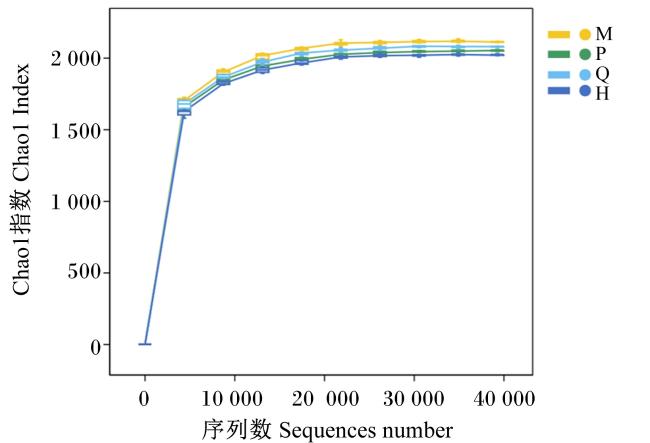
表5所示,不同处理对Observed_species、Faith_pd、Goods_coverage、Pielou、Simpson和Shannon指数均无显著影响(P>0.05),随着过瘤胃淀粉酶添加水平的增加,Chao1指数有线性降低的趋势(P=0.08)。如图1可知,随测序深度增加,瘤胃细菌稀疏曲线末端均趋向平稳,表明测序数量足够。
表5 饲粮中添加不同水平过瘤胃淀粉酶对奶牛瘤胃菌群多样性的影响

Table 5 Effects of dietary levels of RPA on rumen flora diversity of dairy cows%

项目
Items
组别 Groups SEM PP-value
CON RPA1 RPA2 RPA3 Trt L Q
Chao1指数 Chao1 index 2 162 2 080 2 053 2 024 54.70 0.33 0.08 0.63
Observed_species指数
Observed_species index
2 049 2 012 1 982 1 958 69.10 0.81 0.33 0.92
Faith_pd指数 Faith_pd index 109.7 107.9 106.5 104.2 3.29 0.69 0.24 0.94
Goods_coverage指数
Goods_coverage index
1.00 1.00 1.00 1.00 0.00 0.98 0.84 0.89
Pielou指数 Pielou index 0.89 0.88 0.88 0.88 0.00 0.57 0.73 0.18
Shannon指数 Shannon index 9.74 9.68 9.63 9.61 0.09 0.68 0.24 0.82
Simpson指数 Simpson index 1.00 1.00 1.00 1.00 0.00 0.55 0.33 0.33
图1 瘤胃菌群稀释曲线

M代表CON组样本,H代表RPA1组样本,Q代表RPA2组样本,P代表RPA3组样本。下图同。

Fig.1 Rarefaction curve of rumen flora

M represented the CON group sample, H represented the RPA1 group sample, Q represented the RPA2 group sample, and P represented the RPA3 group sample. The same as below.

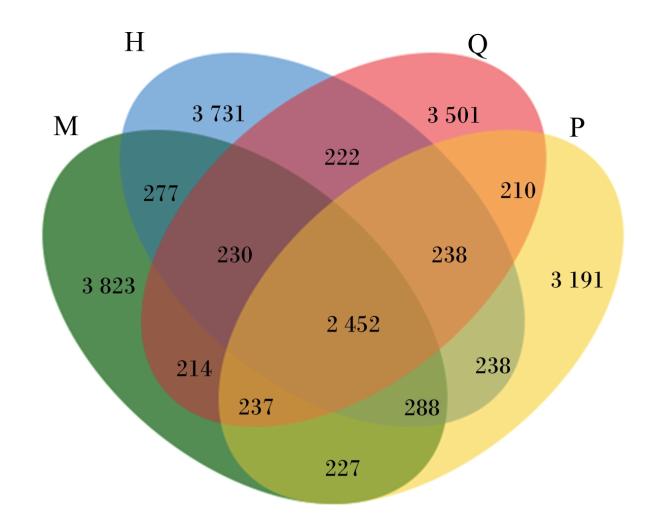
图2可知,CON、RPA1、RPA2和RPA3组OTU数目分别为7 748、7 676、7 304、7 081个,3个组共有的OTU数目为2 452个,CON、RPA1、RPA2和RPA3组各自独有的OTU数目分别为3 823、3 731、3 501、3 191个,分别占各自OTU数目的49.3%、48.6%、47.9%、45.1%,CON和RPA1、RPA2、RPA3组共有的OTU数目分别为3 247、3 133、3 204个,分别占各自OTU数目的42.3%、42.9%、45.2%。
图2 瘤胃菌群Venn图

Fig.2 Venn diagram of rumen flora

2.5 饲粮中添加不同水平过瘤胃淀粉酶对泌乳中期奶牛瘤胃菌群丰富度的影响

表6可知,本试验中拟杆菌门(Bacteroidetes)和厚壁菌门(Firmicutes)为优势菌门。随着过瘤胃淀粉酶添加水平的增加,拟杆菌门(Bacteroidetes)的相对丰度有线性增加的趋势(P=0.09),变形菌门的相对丰度有线性降低的趋势(P=0.07)。
表6 饲粮中添加不同水平过瘤胃淀粉酶对奶牛门水平瘤胃菌群组成的影响

Table 6 Effects of dietary levels of RPA on rumen flora composition at phylum level of dairy cows

项目
Items
组别 Groups SEM PP-value
CON RPA1 RPA2 RPA3 Trt L Q
拟杆菌门 Bacteroidetes/% 55.00 55.80 56.30 57.30 0.95 0.38 0.09 0.92
厚壁菌门 Firmicutes/% 30.30 30.60 30.80 30.90 0.82 0.94 0.56 0.90
变形菌门 Proteobacteria/% 11.60 11.10 10.50 9.22 0.91 0.31 0.07 0.67
螺旋菌门 Spirochaetes/% 0.67 0.68 0.67 0.67 0.06 1.00 0.99 0.91
放线菌门 Actinobacteria/% 0.53 0.57 0.56 0.58 0.06 0.94 0.61 0.88
疣微菌门 Verrucomicrobia/% 0.41 0.41 0.43 0.42 0.07 1.00 0.87 1.00
蓝藻门 Cyanobacteria/% 0.35 0.34 0.35 0.35 0.04 1.00 0.99 0.98
髌骨菌门 Patescibacteria/% 0.19 0.20 0.20 0.19 0.03 1.00 0.98 0.90
纤维杆菌门 Fibrobacterota/% 0.06 0.08 0.07 0.08 0.01 0.84 0.63 0.70
脱硫杆菌门 Desulfobacterota/% 0.03 0.02 0.03 0.03 0.00 0.73 0.75 0.35
厚壁菌门/拟杆菌门 F/B 0.55 0.55 0.55 0.54 0.01 0.95 0.62 0.83
表7可知,随着过瘤胃淀粉酶添加水平的增加,普雷沃氏菌属(Prevotella)的相对丰度有线性升高的趋势(P=0.07);解琥珀酸菌属的相对丰度有线性升高趋势(P=0.08)。
表7 饲粮中添加不同水平过瘤胃淀粉酶对奶牛属水平瘤胃菌群组成的影响

Table 7 Effects of dietary levels of RPA on rumen flora composition at genus level of dairy cows%

项目
Items
组别 Groups SEM PP-value
CON RPA1 RPA2 RPA3 Trt L Q
普雷沃氏菌属 Prevotella 35.80 36.70 37.00 37.60 0.70 0.33 0.07 0.86
解琥珀酸菌属 Succiniclasticum 7.69 8.32 8.51 9.28 0.62 0.35 0.08 0.90
Sodaliphilus 3.14 3.13 3.14 3.17 0.31 1.00 0.94 0.96
拟杆菌属 Cryptobacteroides 2.68 2.63 2.78 2.82 0.39 0.98 0.74 0.91
丁酸弧菌属 Butyrivibrio 1.48 1.63 1.67 1.67 0.19 0.88 0.47 0.73
瘤胃球菌属 Ruminococcus 2.58 2.61 2.48 2.63 0.33 0.98 0.99 0.83
副普雷沃氏菌属 Paraprevotella 1.16 1.13 1.16 1.23 0.15 0.91 0.62 0.60
月形单胞菌属 Selenomonas 1.28 1.12 1.12 1.30 0.24 0.91 0.95 0.48
产乙酸糖发酵 Saccharofermentans 0.82 0.83 0.88 0.94 0.09 0.75 0.30 0.75
粪球菌属 Coprococcus 0.81 0.82 0.92 0.95 0.09 0.62 0.22 0.89
密螺旋体属 Treponema 0.81 0.84 0.87 0.84 0.19 1.00 0.88 0.87
优杆菌属 Eubacterium 0.61 0.63 0.69 0.61 0.11 0.91 0.85 0.60
溶纤维丁酸弧菌 Butyrivibrio fibrisolven 0.54 0.58 0.62 0.64 0.06 0.68 0.23 0.94
夏普氏菌属 Sharpea 0.46 0.40 0.45 0.49 0.11 0.95 0.79 0.65
RF16 0.65 0.54 0.72 0.64 0.12 0.72 0.75 0.88

3 讨论

3.1 饲粮中添加不同水平过瘤胃淀粉酶对泌乳中期奶牛生产性能的影响

从本试验结果来看,饲粮中添加过瘤胃淀粉酶没有对DMI产生显著影响,但也有研究表明,在饲粮中添加外源淀粉酶可以降低DMI[18],这可能是因为本试验添加的是过瘤胃淀粉酶在瘤胃没有显著作用,主要在肠道发挥作用,而提高瘤胃淀粉消化率,会增加瘤胃丙酸产量和丙酸向肝脏的供应,刺激乙酰辅酶A的氧化,DMI会受到抑制[19],所以本试验采食量没有受到显著影响。
本试验中,添加过瘤胃淀粉酶在不影响采食量的情况下提高了产奶量、ECM和3.5%FCM,与Cueva等[20]使用含有α-淀粉酶的青贮作为奶牛青贮饲料,在不影响采食量的情况下提高了产奶量和ECM的试验结果一致。这可能是因为瘤胃丙酸摩尔比例有提高的趋势,丙酸是葡萄糖合成的前体物质,导致葡萄糖含量升高,而葡萄糖是合成乳糖的主要前体物质[21],进而提高了乳糖产量,在乳腺细胞合成乳糖的过程中,可能由于渗透压作用导致细胞外的水分进入细胞内,提高产奶量[22-23],也可能是因为过瘤胃淀粉酶提高了肠道淀粉消化率,淀粉在小肠可以通过α-淀粉酶分解为葡萄糖,通过提高乳糖产量提高了产奶量。本试验中淀粉和有机物表观消化率提高,提高了饲料的利用率,所以饲料效率提高。本试验中,添加过瘤胃淀粉酶对乳脂率没有显著影响,但提高了产奶量和饲料效率,所以乳脂产量有所提高。Piccioli-Cappelli等[24]研究发现,泌乳后期奶牛的乳蛋白产量随着饲粮淀粉含量的增加而增加,奶牛饲喂高淀粉饲粮时,乳蛋白产量也增加[25],本试验虽然没有显著提高淀粉含量,但提高了淀粉表观消化率,所以乳蛋白产量提高,这可能是由于增加了淀粉的摄入量或者消化率,葡萄糖产量升高,降低了体内葡萄糖的合成,减少了对体内生糖氨基酸的使用,提高了乳蛋白的合成[26]

3.2 饲粮中添加不同水平过瘤胃淀粉酶对泌乳中期奶牛营养物质表观消化率的影响

Gencoglu等[27]在低淀粉饲粮中添加淀粉酶,中性洗涤纤维总消化率的数值增加,原因可能是淀粉水解产物增加了瘤胃纤维分解菌和肠道纤维分解菌数量[28-29]。本试验中,中性洗涤纤维表观消化率增加,但瘤胃乙酸和丁酸摩尔比例没有发生显著变化,纤维分解菌也没有发生变化,所以可能并没有影响瘤胃的纤维降解,但奶牛除了瘤胃,后肠也是纤维分解的主要部位,在本试验中淀粉表观消化率提高,所以猜测中性洗涤纤维表观消化率有所提高可能是因为增加了瘤胃和小肠的淀粉消化,同时减少了淀粉从小肠流向后肠的流量,导致后肠pH提高,提高了后肠道纤维分解菌的相对丰度,中性洗涤纤维表观消化率提高,而且Chen等[30]和Ren等[3]研究中均发现,通过提高小肠淀粉消化率,减少了后肠淀粉的发酵,同时增加了粪便纤维降解菌的相对丰度,降低了淀粉分解菌的相对丰度,与本试验结果一致。有研究表明,在保育仔猪饲粮中添加淀粉酶可提高粗脂肪消化率[31]。Woyengo等[32]通过对肉鸡的研究认为,添加淀粉酶通过促进淀粉的消化,淀粉不再物理阻碍脂肪酶对其底物的可及性,脂肪酶活性就会提高。所以,粗脂肪表观消化率提高可能是因为添加淀粉酶可以通过消化淀粉来提高其他酶的功效,从而提高酶对底物的可利用性。添加淀粉酶对奶牛粗脂肪表观消化率影响的报道鲜见研究,但奶牛小肠对淀粉的消化吸收过程与单胃动物类似,所以本试验中粗脂肪表观消化率的提高可能是因为添加淀粉酶促进淀粉消化,提高了脂肪酶的活性。在猪和家禽饲粮中添加淀粉酶可以通过促进肠道内淀粉的降解,增加能量利用率,从而提高生长性能。在肉鸡饲粮中添加淀粉酶提高了生长性能和淀粉的消化率[33],在断奶仔猪饲粮中添加淀粉酶可提高小肠淀粉消化率,从而提高淀粉的利用效率[34]。Van Den Bossche等[35]在低粗蛋白质(15%)、高淀粉(22%)的饲粮中添加外源淀粉酶产品,有利于提高奶牛表观全消化道淀粉消化率。杨昕涧等[36]在泌乳奶牛饲粮中添加过瘤胃淀粉酶可显著提高淀粉消化率,与本试验结果一致,由于本试验没有发现过瘤胃淀粉酶对瘤胃内环境有显著影响,所以推测添加过瘤胃淀粉酶提高了小肠淀粉表观消化率。但在本试验中,过瘤胃淀粉酶添加水平为20 g/(d·头)时,淀粉表观消化率最高,这可能是因为高水平的α-淀粉酶会抑制胰腺α-淀粉酶的基因表达[37]

3.3 饲粮中添加不同水平过瘤胃淀粉酶对泌乳中期奶牛瘤胃发酵参数的影响

瘤胃内环境发酵指标包括pH及VFA、NH3-N含量。瘤胃液pH正常范围是6.0~7.2[38]。乙酸/丙酸可以表示瘤胃发酵类型,本试验中,乙酸/丙酸降低,丙酸摩尔比例增加,所以瘤胃趋向于丙酸型发酵,丙酸型发酵可以为奶牛提供更多的能量。Nozière等[5]的研究表明,在高淀粉饲粮中添加淀粉酶增加了TVFA含量和丙酸摩尔比,降低了乙酸摩尔比例,本试验中,添加过瘤胃淀粉酶不影响瘤胃VFA含量,这可能是因为本试验添加的是过瘤胃淀粉酶,虽然过瘤胃率为68.1%,但奶牛瘤胃体积为150~200 L,奶牛瘤胃淀粉酶活性为0.54 U/mL[39],本试验中,留在瘤胃内的淀粉酶活性最大为0.096 U/mL,可能在瘤胃有一定的作用,但对瘤胃发酵的影响不大。
瘤胃NH3-N是合成MCP的主要原料,两者结合可以反映瘤胃氮平衡[40]。研究发现,NH3-N的适宜含量为6.3~27.5 mg/dL[41]。本试验中,过瘤胃淀粉酶对瘤胃液NH3-N和MCP含量没有显著影响,可能是因为过瘤胃淀粉酶对瘤胃没有发生太大作用。

3.4 饲粮中添加不同水平过瘤胃淀粉酶对泌乳中期奶牛瘤胃菌群多样性的影响

反刍动物瘤胃内菌群组成复杂,在其消化过程中具有重要意义[41-42]。瘤胃菌群中Goods_coverage指数和瘤胃细菌稀疏曲线的平缓程度反映出群落中物种覆盖度和测序深度。该试验的每组Goods_coverage指数均大于0.99,说明样本的覆盖面为99%以上,表明本次检测结果可以表示奶牛瘤胃菌群丰富度和多样性。瘤胃菌群丰富度,一般会用Chao1和Observed_species指数来表示,该值越高,则说明菌群的丰富度越高;Shannon和Simpson指数可以表示瘤胃菌群多样性,数值越大菌群的多样性越高。本试验中,添加过瘤胃淀粉酶对各组的Shannon和Simpson指数没有显著影响,但Chao1指数有所降低,这说明饲粮中添加过瘤胃淀粉酶降低了菌群的丰富度,这一发现和张晓东[43]的研究结果相吻合。此外,也有研究表明,当奶牛产奶量或饲料效率较高时,其瘤胃菌群丰富度相对较低[44]

3.5 饲粮中添加不同水平过瘤胃淀粉酶对泌乳中期奶牛瘤胃菌群门水平丰富度的影响

一般认为,在反刍动物的瘤胃优势菌群为拟杆菌门和厚壁菌门[45-47],这与本试验研究结果相一致。拟杆菌门主要降解非纤维性碳水化合物,产生丙酸[48],而厚壁菌门主要降解纤维性碳水化合物,产生乙酸和丁酸[49]。本试验中,瘤胃内拟杆菌门相对丰度增加,与瘤胃丙酸摩尔比例增加结果一致。Tricarico等[28]认为,α-淀粉酶分解淀粉产生低聚糖。这些低聚糖可以被解淀粉菌和非解淀粉菌在交叉饲养机制中利用,从而改变瘤胃内的发酵产物,有利于拟杆菌门的生长繁殖,所以本试验中添加过瘤胃淀粉酶可能引起拟杆菌门相对丰度增加。

3.6 饲粮中添加不同水平过瘤胃淀粉酶对泌乳中期奶牛瘤胃菌群属水平丰富度的影响

在属水平上,普雷沃氏菌属是瘤胃菌群中的优势菌种,对淀粉、纤维素和蛋白质的降解有重要作用[50]。在本试验中,普雷沃氏菌属的相对丰度最高,符合先前的试验结果[51]。通过探究瘤胃菌群与瘤胃发酵指标之间的关系,发现普雷沃氏菌属相对丰度与丙酸摩尔比例呈极显著正相关。本试验结果表明,随着过瘤胃淀粉酶添加水平的升高,普雷沃氏菌属的相对丰度增加,这与瘤胃液中丙酸摩尔比例升高的结果相对应。解琥珀酸菌属最终产物也为丙酸[52]。在本试验中,瘤胃内解琥珀酸菌属的相对丰度有所增加,这导致了丙酸摩尔比例的增加。

4 结论

在本试验中,虽然添加过瘤胃淀粉酶对奶牛瘤胃菌群和瘤胃发酵特性影响不大,但能通过提高淀粉表观消化率提高奶牛的产奶量和饲料效率。此外,过瘤胃淀粉酶的添加可能提高了淀粉在瘤胃和小肠的消化率,降低进入后肠的淀粉含量,进而提高后肠pH,提高了后肠的纤维降解率。基于较高的产奶量、消化率和饲料效率,过瘤胃淀粉酶的最佳添加水平为20 g/(d·头)。
[1]
HARMON D L, MCLEOD K R. Glucose uptake and regulation by intestinal tissues:implications and whole-body energetics[J]. Journal of Animal Science, 2001, 79(Suppl.E):E59-E72.

[2]
HUNTINGTON G B. Starch utilization by ruminants:from basics to the bunk[J]. Journal of Animal Science, 1997, 75(3):852-867.

[3]
REN H, BAI H X, SU X D, et al. Decreased amylolytic microbes of the hindgut and increased blood glucose implied improved starch utilization in the small intestine by feeding rumen-protected leucine in dairy calves[J]. Journal of Dairy Science, 2020, 103(5):4218-4235.

DOI PMID

[4]
MOHARRERY A, LARSEN M, WEISBJERG M R. Starch digestion in the rumen,small intestine,and hind gut of dairy cows-a Meta-analysis[J]. Animal Feed Science and Technology, 2014,192:1-14.

[5]
NOZIÈRE P, STEINBERG W, SILBERBERG M, et al. Amylase addition increases starch ruminal digestion in first-lactation cows fed high and low starch diets[J]. Journal of Dairy Science, 2014, 97(4):2319-2328.

DOI PMID

[6]
PECH-CERVANTES A A, FERRARRETTO L F, OGUNADE I M. Meta-analysis of the effects of the dietary application of exogenous alpha-amylase preparations on performance,nutrient digestibility,and rumen fermentation of lactating dairy cows[J]. Journal of Animal Science, 2022, 100(8):skac189.

[7]
REBELO L, EASTRIDGE M, FIRKINS J, et al. Effects of corn silage and grain expressing α-amylase on ruminal nutrient digestibility,microbial protein synthesis,and enteric methane emissions in lactating cows[J]. Journal of Dairy Science, 2023, 106(6):3932-3946.

[8]
MONTEIRO H F, FACIOLA A P. Ruminal acidosis,bacterial changes,and lipopolysaccharides[J]. Journal of Animal Science, 2020, 98(8):skaa248.

[9]
WESTREICHER-KRISTEN E, ROBBERS K, BLANK R, et al. Postruminal digestion of starch infused into the abomasum of heifers with or without exogenous amylase administration[J]. Journal of Animal Science, 2018, 96(5):1939-1951.

[10]
冯仰廉, 陆治年. 奶牛营养需要和饲料成分[M]. 3版. 北京: 中国农业出版社, 2007.

FENG Y L, LU Z N. The nutritional needs and feed ingredients of dairy cows[M]. 3rd ed. Beijing: China Agriculture Press, 2007. (in Chinese)

[11]
WANG M M, YANG J Z, SHEN Y Z, et al. Effects of chromium propionate supplementation on lactation performance,nutrient digestibility,rumen fermentation patterns,and antioxidant status in Holstein cows under heat stress[J]. Animal Feed Science and Technology, 2023,305:115765.

[12]
AOAC. Official methods of analysis[M]. 18th ed.Gaithersburgs, MD: Association of Official Analytical Chemists, 2006.

[13]
VAN SOEST P J. ROBERTSON J B, LEWIS B A. Methods for dietary fiber,neutral detergent fiber,and nonstarch polysaccharides in relation to animal nutrition[J]. Journal of Dairy Science, 1991, 74(10):3583-3597.

[14]
户林其, 沈宜钊, 李妍, 等. 饲粮中棕榈酸与油酸的比例对泌乳早期奶牛瘤胃发酵参数与菌群组成的影响[J]. 动物营养学报, 2022, 34(8):5094-5106.

DOI

HU L Q, SHEN Y Z, LI Y, et al. Effects of dietary palmitic acid to oleic acid ratio on rumen fermentation parameters and bacterial community composition of early lactation dairy cows[J]. Chinese Journal of Animal Nutrition, 2022, 34(8):5094-5106. (in Chinese)

DOI

[15]
WEATHERBURN M W. Phenol-hypochlorite reaction for determination of ammonia[J]. Analytical Chemistry, 1967, 39(8):971-974.

[16]
ERWIN E S, MARCO G J, EMERY E M. Volatile fatty acid analyses of blood and rumen fluid by gas chromatography[J]. Journal of Dairy Science, 1961, 44(9):1768-1771.

[17]
MAKKAR H P, SHARMA O P, DAWRA R K, et al. Simple determination of microbial protein in rumen liquor[J]. Journal of Dairy Science, 1982, 65(11):2170-2173.

PMID

[18]
KLINGERMAN C M, HU W, MCDONELL E E, et al. An evaluation of exogenous enzymes with amylolytic activity for dairy cows[J]. Journal of Dairy Science, 2009, 92(3):1050-1059.

DOI PMID

[19]
ALBORNOZ R I, ALLEN M S. Highly fermentable starch at different diet starch concentrations decreased feed intake and milk yield of cows in the early postpartum period[J]. Journal of Dairy Science, 2018, 101(10):8902-8915.

DOI PMID

[20]
CUEVA S F, STEFENONI H, MELGAR A, et al. Lactational performance,rumen fermentation,and enteric methane emission of dairy cows fed an amylase-enabled corn silage[J]. Journal of Dairy Science, 2021, 104(9):9827-9841.

[21]
CANT J P, TROUT D R, QIAO F, et al. Milk synthetic response of the bovine mammary gland to an increase in the local concentration of arterial glucose[J]. Journal of Dairy Science, 2002, 85(3):494-503.

PMID

[22]
WICKRAMASINGHE S, RINCON G, ISLAS-TREJO A, et al. Transcriptional profiling of bovine milk using RNA sequencing[J]. BMC Genomics, 2012, 13(1):45.

[23]
VILOTTE J L. Lowering the milk lactose content in vivo:potential interests,strategies and physiological consequences[J]. Reproduction,Nutrition,Development, 2002, 42(2):127-132.

[24]
PICCIOLI-CAPPELLI F, LOOR J J, SEAL C J, et al. Effect of dietary starch level and high rumen-undegradable protein on endocrine-metabolic status,milk yield,and milk composition in dairy cows during early and late lactation[J]. Journal of Dairy Science, 2014, 97(12):7788-7803.

[25]
DIAS A L G, FREITAS J A, MICAI B, et al. Effects of supplementing yeast culture to diets differing in starch content on performance and feeding behavior of dairy cows[J]. Journal of Dairy Science, 2018, 101(1):186-200.

DOI PMID

[26]
母晓佳, 李大彪, 孙梅, 等. 葡萄糖和泌乳相关激素组合添加对奶牛乳腺上皮细胞酪蛋白合成的影响[J]. 动物营养学报, 2022, 34(9):6072-6087.

DOI

MU X J, LI D B, SUN M et al. Effects of combination of hlucose and lactation related hormones on casein synthesis in bovine mammary epithelial cells[J]. Chinese Journal of Animal Nutrition, 2022, 34(9):6072-6087. (in Chinese)

[27]
GENCOGLU H, SHAVER R D, STEINBERG W, et al. Effect of feeding a reduced-starch diet with or without amylase addition on lactation performance in dairy cows[J]. Journal of Dairy Science, 2010, 93(2):723-732.

DOI PMID

[28]
TRICARICO J M, JOHNSTON J D, DAWSON K A. Dietary supplementation of ruminant diets with an Aspergillus oryzae α-amylase[J]. Animal Feed Science and Technology, 2008, 145(1/2/3/4):136-150.

[29]
COTTA M A. Amylolytic activity of selected species of ruminal bacteria[J]. Applied and Environmental Microbiology, 1988, 54(3):772-776.

DOI PMID

[30]
CHEN J, LEI X J, WANG L, et al. Effects of rumen-protected leucine on production performance and starch digestion in the small intestine of lactating goats[J]. Animal Feed Science and Technology, 2022,287:115270.

[31]
DZIERVA L, CONCEIÇÃO DOS SANTOS M, DE ALMEIDA L M, et al. Feed particle size and amylase supplementation in diets for nursery piglets:digestibility and growth performance[J]. Livestock Science, 2023,271:105211.

[32]
WOYENGO T A, BOGOTA K J, NOLL S L, et al. Enhancing nutrient utilization of broiler chickens through supplemental enzymes[J]. Poultry Science, 2019, 98(3):1302-1309.

DOI PMID

[33]
ZHOU H, WU Y, SUN X, et al. Effects of exogenous α-(1,4)-amylase on the utilisation of corn starch and glucose metabolism in broiler chickens[J]. Animal:an International Journal of Animal Bioscience, 2021, 15(11):100396.

[34]
PARK S, LI W T, ST-PIERRE B, et al. Growth performance,nutrient digestibility,and fecal microbial composition of weaned pigs fed multi-enzyme supplemented diets[J]. Journal of Animal Science, 2020, 98(10):skaa306.

[35]
VAN DEN BOSSCHE T, GOOSSENS K, AMPE B, et al. Effect of supplementing an α-amylase enzyme or a blend of essential oil components on the performance,nutrient digestibility and nitrogen balance of dairy cows[J]. Journal of Dairy Science, 2024, 107(7):4509-4523.

[36]
杨昕涧, 于柳, 解祥学, 等. 日粮中添加过瘤胃淀粉酶对奶牛体外发酵、营养物质消失率及产奶性能的影响[J]. 中国奶牛, 2023(4):9-13.

YANG X J, YU L, XIE X X, et al. Effect of rumen-protected amylase preparation on in vitro rumen fermentation and milking performance of dairy cows[J]. China Dairy Cattle, 2023(4):9-13. (in Chinese)

[37]
JIANG Z Y, ZHOU Y M, LU F Z, et al. Effects of different levels of supplementary alpha-amylase on digestive enzyme activities and pancreatic amylase mRNA expression of young broilers[J]. Asian-Australasian Journal of Animal Sciences, 2008, 21(1):97-102.

[38]
WANAPAT M, VIENNASAY B, MATRA M, et al. Supplementation of fruit peel pellet containing phytonutrients to manipulate rumen pH,fermentation efficiency,nutrient digestibility and microbial protein synthesis[J]. Journal of the Science of Food and Agriculture, 2021, 101(11):4543-4550.

[39]
房峥, 王聪, 刘强. 混合益生菌对奶牛瘤胃发酵的影响[J]. 饲料工业, 2022, 43(17):54-59.

FANG Z, WANG C, LIU Q. Effects of mixed probiotics supplementation on rumen fermentation in dairy cows[J]. Feed Industry, 2022, 43(17):54-59. (in Chinese)

[40]
赵林波. 棉酚对多浪羊生产性能、棉酚代谢及瘤胃发酵和微生物区系的影响[D]. 硕士学位论文. 阿拉尔: 塔里木大学, 2023.

ZHAO L B. Effects of gossypol on production performance,gossypol metabolism,rumen fermentation and microflora of dolang sheep[D]. Master’s Thesis. Ala’er: Tarim University, 2023. (in Chinese)

[41]
MURPHY J J, KENNELLY J J. Effect of protein concentration and protein source on the degradability of dry matter and protein in situ[J]. Journal of Dairy Science, 1987, 70(9):1841-1849.

[42]
NEWBOLD C J, RAMOS-MORALES E. Review:ruminal microbiome and microbial metabolome:effects of diet and ruminant host[J]. Animal:an International Journal of Animal Bioscience, 2020, 14(Suppl.1):s78-s86.

[43]
张晓东. 日粮精粗比对内蒙古绒山羊生长性能、血液生化指标及瘤胃菌群的影响[D]. 硕士学位论文. 呼和浩特: 内蒙古农业大学, 2022.

ZHANG X D. Effects of dietary concentrate-to-coarse ratio on growth performance,blood biochemical indexes and rumen microflora of Inner Mongolia cashmere goats[D]. Master’s Thesis. Hohhot: Inner Mongolia Agricultural University, 2022. (in Chinese)

[44]
XUE M Y, SUN H Z, WU X H, et al. Assessment of rumen bacteria in dairy cows with varied milk protein yield[J]. Journal of Dairy Science, 2019, 102(6):5031-5041.

DOI PMID

[45]
XIN J W, CHAI Z X, ZHANG C F, et al. Comparing the microbial community in four stomach of dairy cattle,yellow cattle and three yak herds in Qinghai-Tibetan plateau[J]. Frontiers in Microbiology, 2019,10:1547.

[46]
XUE M Y, SUN H Z, WU X H, et al. Multi-omics reveals that the rumen microbiome and its metabolome together with the host metabolome contribute to individualized dairy cow performance[J]. Microbiome, 2020, 8(1):64.

[47]
WANG H B, HE Y, LI H, et al. Rumen fermentation,intramuscular fat fatty acid profiles and related rumen bacterial populations of Holstein bulls fed diets with different energy levels[J]. Applied Microbiology and Biotechnology, 2019, 103(12):4931-4942.

[48]
牛建康. 活性干酵母对泌乳牛生产性能、瘤胃发酵及甲烷排放的影响[D]. 硕士学位论文. 保定: 河北农业大学, 2019.

NIU J K. Effects of active dry yeasts on performance,rumen fermentation and methane production of lactating dairy cows[D]. Master’s Thesis. Baoding: Hebei Agricultural University, 2019. (in Chinese)

[49]
LA REAU A J, SUEN G. The Ruminococci:key symbionts of the gut ecosystem[J]. Journal of Microbiology (Seoul,Korea), 2018, 56(3):199-208.

[50]
张洁, 张力莉, 徐晓锋. 反刍动物瘤胃内普雷沃氏菌的研究进展[J]. 中国饲料, 2020(7):17-21.

ZHANG J, ZHANG L L, XU X F. Research progress of Prevotella in the rumen of ruminants[J]. China Feed, 2020(7):17-21. (in Chinese)

[51]
TETT A, PASOLLI E, MASETTI G, et al. Prevotella diversity,niches and interactions with the human host[J]. Nature Reviews.Microbiology, 2021, 19(9):585-599.

[52]
VAN GYLSWYK N O. Succiniclasticum ruminis gen. nov.,sp. nov.,a ruminal bacterium converting succinate to propionate as the sole energy-yielding mechanism[J]. International Journal of Systematic Bacteriology, 1995, 45(2):297-300.

Outlines

/