RESEARCH PAPER

Effects of Rosa roxburghii Tratt Residue on Growth Performance, Intestinal Microflora Structure and Disease Resistance of Common Carp (Cyprinus carpio)

  • FENG Yi , 1 ,
  • ZHANG Chenxu 1, 2 ,
  • YANG Yunyun 1 ,
  • LUO Yongrong 3 ,
  • WU Peng 1 ,
  • WANG Yan 1 ,
  • YANG Ying 1 ,
  • CHEN Jiangfeng 1 ,
  • JIANG Haibo 1 ,
  • WEN Ming , 1, 4, *
Expand
  • 1 College of Animal Science, Guizhou University, Guiyang 550025, China
  • 2 Department of Animal Husbandry and Aquaculture, Guizhou Agricultural Vocational College, Guiyang 551400, China
  • 3 Institute of Animal Husbandry, Aquaculture and Veterinary Medicine, Anshun Academy of Agricultural Sciences, Anshun 561000, China
  • 4 Guizhou Engineering and Technology Research Center of Animal Biological Products, Guiyang 550025, China
* professor, E-mail:

Received date: 2024-05-13

  Online published: 2024-11-09

Abstract

This experiment was conducted to study the effects of Rosa roxburghii Tratt residue on growth performance, intestinal microflora structure and disease resistance of common carp (Cyprinus carpio). A total of 180 healthy common carp with initial body weight of (25±1) g were randomly divided into 2 groups with 3 replicates per group and 30 fish per replicate. The control group was fed a basal diet, and the Rosa roxburghii Tratt residue group was fed the basal diet+0.4% Rosa roxburghii Tratt residue. The experimental period was 60 days. Additionally, sixty healthy common carp with initial body weight of (25±1) g were randomly divided into 2 groups with 10 fish per group. The control group injected with sterile phosphate buffered saline (PBS), and the experimental groups were injected with different concentrations (1×10⁶, 1×10⁷, 1×10⁸, 1×10⁹ and 1×10¹⁰ CFU/mL) Aeromonas hydrophila ATCC 7966, respectively, the injection volume was 0.2 mL per fish. The experimental period was 14 days. The results showed as follows: 1) compared with the control group, the final body weight, weight gain rate and specific growth rate of Rosa roxburghii Tratt residue group were significantly increased (P<0.05). 2) At the phylum level, the intestinal main dominant microflora of control group and Rosa roxburghii Tratt residue group were Firmicutes, Proteobacteria, Bacteroidota, Actinobacteriota and Acidobacteriota; compared with the control group, the Firmicutes relative abundance of Rosa roxburghii Tratt residue group was decreased, and the Proteobacteria relative abundance was increased. At the genus level, the intestinal main dominant microflora of control group and Rosa roxburghii Tratt residue group were Thauera, Faecalibacterium, Veillonellaceae, Blautia, Streptococcus and Streptococcus; compared with the control group, the dominant microflora relative abundances of Rosa roxburghii Tratt residue group were all decreased, but the Bradyrhizobium relative abundance was increased. 3) The lethal dose 50% (LD50) of Aeromonas hydrophila ATCC 7966 for common carp was 1.35×10⁸ CFU/mL. Compared with the control group, the average survival rate of Rosa roxburghii Tratt residue group was increased, indicated that dietary Rosa roxburghii Tratt residue could effectively enhance the resistance of common carp to Aeromonas hydrophila ATCC 7966. In conclusion, dietary Rosa roxburghii Tratt residue can increase the growth performance of common carp, improve the diversity and richness of intestinal microflora, promote the proliferation of beneficial bacteria, and possibly enhance the disease resistance by regulating the intestinal microflora structure of common carp.

Cite this article

FENG Yi , ZHANG Chenxu , YANG Yunyun , LUO Yongrong , WU Peng , WANG Yan , YANG Ying , CHEN Jiangfeng , JIANG Haibo , WEN Ming . Effects of Rosa roxburghii Tratt Residue on Growth Performance, Intestinal Microflora Structure and Disease Resistance of Common Carp (Cyprinus carpio)[J]. Chinese Journal of Animal Nutrition, 2024 , 36(11) : 7227 -7235 . DOI: 10.12418/CJAN2024.615

刺梨渣是刺梨(Rosa roxburghii Tratt)榨鲜果汁后的副产物,仍保留鲜果的部分养分,其含有丰富的总酚、维生素C、维生素E、磷、钙、铁、锌、膳食纤维、粗纤维和氨基酸,营养成分十分丰富,具有优良的保健效果[1]。同时,还是一种天然的、对畜禽无害的十分具有潜力的饲料添加剂,混合于饲料中可以起到明显的替抗作用[2]。目前,贵州省每年产刺梨渣达750×104 t,如果全部被利用,可加工成刺梨渣饲料30×104 t左右,参照汇源果汁万州公司生产的柑橘皮渣利润计算,仅刺梨渣饲料每年就可以创收2亿元左右[3]。但刺梨渣综合性产业化开发利用不足,导致大部分刺梨渣作为废物丢弃或者简单作为肥料返回土壤,没有充分发挥刺梨渣的丰富营养价值[4]。将刺梨渣开发成饲料资源,既能解决饲料资源短缺问题,又能缓解环境污染问题。因此,本试验以鲤鱼为研究对象,将刺梨渣添加至饲料中,通过对鲤鱼生长性能、肠道菌群及抗病力的影响分析,评估刺梨渣的饲用价值,以期为刺梨渣饲料的推广应用提供科学依据。

1 材料与方法

1.1 试验材料

刺梨渣由安顺市农业科学院畜牧水产兽医研究所赠予,其主要营养水平见表1
表1 刺梨渣主要营养水平

Table 1 Nutrient levels of Rosa roxburghii Tratt residue[1] %

项目Items 含量Content
粗蛋白质Crude protein 6.38±0.05
粗脂肪Ether extract 1.40±0.08
粗纤维Crude fiber 40.67±1.39
淀粉Starch 10.04±0.27
钙Calcium 0.87±0.03
可溶性总糖Total soluble sugar 11.43±0.15

1.2 试验饲料

基础饲料购自通威股份有限公司,其组成及营养水平见表2。试验饲料在基础饲料中添加0.4%的刺梨渣,将所有的基础饲料粉碎后过60目筛,然后加入0.4%刺梨渣搅拌混匀,使用饲料机制成直径 2.5 mm的硬颗粒饲料,风干后于-20 ℃保存备用。
表2 基础饲料组成及营养水平(风干基础)

Table 2 Composition and nutrient levels of the basal diet (air-dry basis) %

项目Items 含量Content
原料Ingredients
鱼粉Fish meal 25.00
小麦次粉Wheat flour 20.00
玉米Corn 15.00
菜籽粕Rapeseed meal 20.00
豆粕Soybean meal 13.50
豆油Soybean oil 2.00
鱼油Fish oil 2.00
磷酸二氢钙Ca(H2PO4)2 1.30
氯化胆碱Choline chloride (50%) 0.20
预混料Premix1) 1.00
合计Total 100.00
营养水平Nutrient levels2)
粗蛋白质Crude protein 28.00
粗纤维Crude fiber 12.00
粗脂肪Ether extract 5.00
粗灰分Crude ash 15.00
钙Calcium 1.50
总磷Total phosphorus 0.60
氯化钠NaCl 0.90
水分Moisture 8.50

1)每千克预混料含 One kilogram of premix contained the following:VB1 50 mg,VB6 50 mg,VB12 0.125 mg,VB2 50 mg,VD3 37 500 IU,VE 350 IU,VA 50 000 IU,VC 300 IU,VK 250 mg,生物素 biotin 5 mg,烟酸 niacin 500 mg,叶酸 folic acid 15 mg,泛酸 pantothenic acid 250 mg,赖氨酸 lysine 1 000 mg,肌醇 inositol 140 mg,Cu 625 mg,Fe 18 750 mg,Ca 27.5 mg,Zn 3 000 mg,Co 50 mg,Mn 3 750 mg,I 250 mg,Se 12.5 mg。

2)营养水平为实测值,其中粗蛋白质、粗纤维、粗脂肪、粗灰分、钙、总磷、氯化钠、水分分别参考GB/T 6432—2018、GB/T 6434—2022、GB/T 6433—2006、GB/T 6438—2007、GB/T 6436—2018、GB/T 6437—2018、GB/T 6439—2023、GB/T 6435—2014测定。Nutrient levels were measured values, in which crude protein, crude fiber, ether extract, crude ash, calcium, total phosphorus, NaCl and moisture were referred to GB/T 6432—2018, GB/T 6434—2022, GB/T 6433—2006, GB/T 6438—2007, GB/T 6436—2018, GB/T 6437—2018, GB/T 6439—2023 and GB/T 6435—2014 determination.

1.3 试验设计与养殖管理

选取240尾健康无病、初体重为(25±1) g的鲤鱼,其中180尾用于饲喂试验,60尾用于半数致死量(LD50)测定。饲喂试验中,180尾鲤鱼随机分为2组,每组3个重复,每个重复30尾。对照组饲喂基础饲料,刺梨渣组饲喂基础饲料+0.4%的刺梨渣。试验期60 d。LD50测定试验中,60尾鲤鱼随机分为6组,每组10尾。对照组注射无菌磷酸盐缓冲液(PBS),试验组分别注射不同浓度(1×10⁶、1×10⁷、1×10⁸、1×10⁹、1×10¹⁰ CFU/mL)的嗜水气单胞菌ATCC 7966,注射量为每尾0.2 mL。试验期14 d。
试验鱼由贵州省贵阳市李记鱼苗养殖场提供,所有试验程序均经贵州大学动物伦理委员会批准(批准号:EAE-GZU-2022-TO17)。每天投喂2次(08:00、16:00),投喂量为鲤鱼体质量的2%,试验期水温为20~30 ℃,pH为7.0~7.5,溶解氧含量大于5.0 mg/L,氨氮含量小于0.01 mg/L。

1.4 指标测定

1.4.1 生长性能

试验第1和60天时禁食24 h,称量鲤鱼的重量和测量鲤鱼体长。各指标计算公式如下:
存活率(%)=(Nt/N0)×100;
增重率(%)=[(Wt-W0)/W0]×100;
特定生长率(%/d)=[(lnWt-lnW0)/t]×100。
式中:Nt表示采样时存活鱼尾数;N0表示试验初始鱼尾数;Wt表示饲喂60 d时鱼体重(g);W0表示初始鱼体重(g);t表示饲喂周期,即60 d。

1.4.2 肠道菌群结构

从2个组中各随机取9尾鲤鱼,于超净工作台内解剖出肠道内容物,置于冻存管后快速放入液氮速冻2 h,然后取出置于-80 ℃冰箱保存。将鲤鱼的肠道样品送至上海中科新生命生物科技有限公司进行肠道基因组DNA的提取和测序。将质量合格的肠道基因组DNA进行PCR扩增,然后使用建库试剂盒(TruSeq® DNA PCR-Free Sample Preparation Kit)进行文库的构建,采用Illumina NovaSeq 6000进行测序。测序后使用FLASH软件进行双端序列拼接,同时对reads的质量和merge的效果进行质控,得到有效数据。

1.4.3 存活率

将嗜水气单胞菌ATCC 7966(购自宁波明舟生物科技有限公司)于营养肉汤培养基中28 ℃、3.28×g过夜培养,然后将菌液1 015.93×g离心10 min后取沉淀,再用无菌PBS清洗3次菌体后将细菌重悬,再将细菌浓度分别调至1×10⁶、1×10⁷、1×10⁸、1×10⁹、1×10¹⁰ CFU/mL。然后随机选取60尾鲤鱼分为6个组,每组10尾,对照组注射无菌PBS,试验组分别注射不同浓度的嗜水气单胞菌,注射量为每尾0.2 mL,注射后每天观察鱼体活动情况,并记录14 d的死亡情况,根据改良寇氏法,计算嗜水气单胞菌ATCC 7966的LD50。再随机选取每组剩余鲤鱼各15尾,设3个重复,每尾腹腔注射0.2 mL LD50浓度的水气单胞菌ATCC 7966,连续观察14 d,记录每天死亡情况,计算嗜水气单胞菌ATCC 7966感染鲤鱼的存活率。

1.5 数据统计

检测结果数据用SPSS 23.0软件进行独立样本t检验分析,所有数据均以“平均值±标准差”的方式表示,P<0.01表示差异极显著,P<0.05表示差异显著,P>0.05表示差异不显著。

2 结果与分析

2.1 刺梨渣对鲤鱼生长性能的影响

表3可知,与对照组相比,刺梨渣组鲤鱼的末体重、增重率和特定生长率显著提高(P<0.05)。
表3 刺梨渣对鲤鱼生长性能的影响

Table 3 Effects of Rosa roxburghii Tratt residue on growth performance of common carp

项目
Items
对照组
Control group
刺梨渣组
Rosa roxburghii Tratt residue group
初体重Initial body weight/g 25.10±0.44 25.41±0.45
末体重Final body weight/g 62.14±2.15 68.90±2.03*
存活率Survival rate/% 100.00±0.00 100.00±0.00
增重率Weight gain rate/% 147.54±8.38 171.24±11.01*
特定生长率Specific growth rate/(%/d) 1.51±0.05 1.66±0.07*

同行数据肩标**表示差异极显著(P<0.01),肩标*表示差异显著(P<0.05),无肩标表示差异不显著(P>0.05)。表4同。

In the same row, values with superscripts ** mean significant difference (P<0.01), with superscripts * mean significant difference (P<0.05), while with no superscripts mean no significant difference (P>0.05). The same as Table 4.

2.2 刺梨渣对鲤鱼肠道菌群结构的影响

2.2.1 样品测序结果

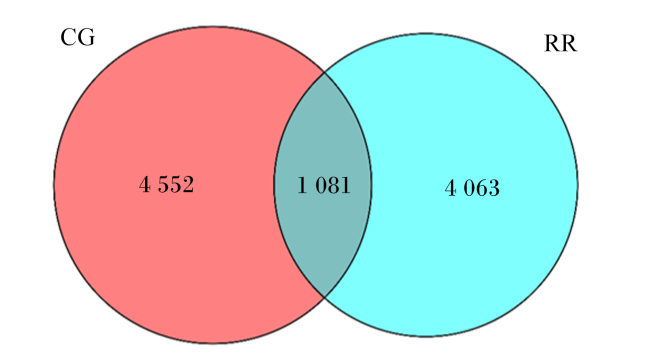
图1可知,对18个鲤鱼肠道内容物样本进行16S rRNA扩增子测序,获得87 411个原始序列,再通过质量控制和去除低质量序列,发现每个样本平均获得87 411条有效数据,质控有效率均高于89.70%。然后以97%的一致性下进行聚类分析,对照组和刺梨渣组中共有1 081个操作分类单元(OTUs),各自分别有4 552和4 063个OTUs。
图1 鲤鱼肠道菌群的Venn图

CG:对照组 control group;RR:刺梨渣组 Rosa roxburghii Tratt residue group。下图同 the same as below。

Fig.1 Venn diagram of intestinal flora of common carp

2.2.2 Alpha多样性分析结果

表4可知,与对照组相比,刺梨渣组的肠道菌群多样性的ACE、Chao、Shannon和Simpson指数均无显著差异(P>0.05)。
表4 鲤鱼肠道菌群的Alpha多样性分析

Table 4 Alpha diversity analysis of intestinal flora of common carp

项目
Items
对照组
Control group
刺梨渣组
Rosa roxburghii Tratt residue group
ACE指数ACE index 1 532.55±164.03 1 363.31±119.09
Chao指数Chao index 1 528.83±156.59 1 365.59±112.12
Shannon指数Shannon index 8.69±0.09 8.13±1.15
Simpson指数Simpson index 0.993 5±0.000 5 0.965 1±0.068 5
覆盖度Goods-coverage 0.991 8±0.002 4 0.993 2±0.002 1
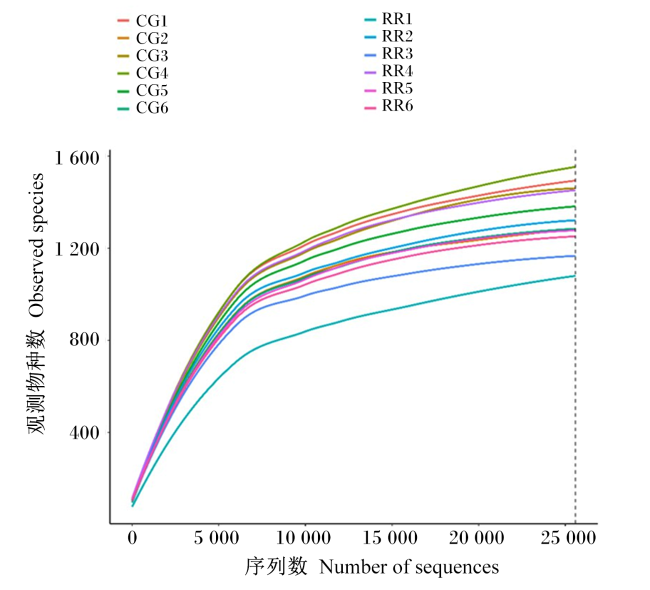
图2可知,在97%序列相似性条件下绘制的稀释曲线,发现随着测序量的不断增加,曲线越趋于平缓接近平台期,表明对照组和刺梨渣组的肠道菌群分布都十分均匀,且本次测序样本的数据具有较高的合理性。
图2 鲤鱼肠道菌群的样本稀释曲线

Fig.2 Sample dilution curves of intestinal flora of common carp

2.2.3 Beta多样性分析结果

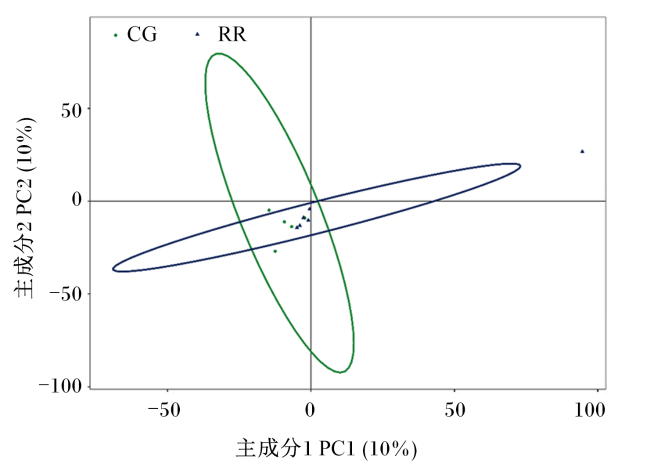
通过对鲤肠道样本的主成分分析(PCA),能够最大程度反映出鲤肠道菌群间差异变化,其中样品的群落组成越相似,则它们在PCA图中的距离越接近,样品的组成相差越大。由图3可知,对照组和刺梨渣组的组内差异均较小,样本相似度高,而与对照组相比,刺梨渣组的组间差异明显。这表明刺梨渣组与对照组的肠道菌群结构具有一定的差异性。
图3 鲤鱼肠道菌群的PCA

Fig.3 PCA of intestinal flora of common carp

2.2.4 刺梨渣对鲤鱼肠道菌群在门水平上的影响

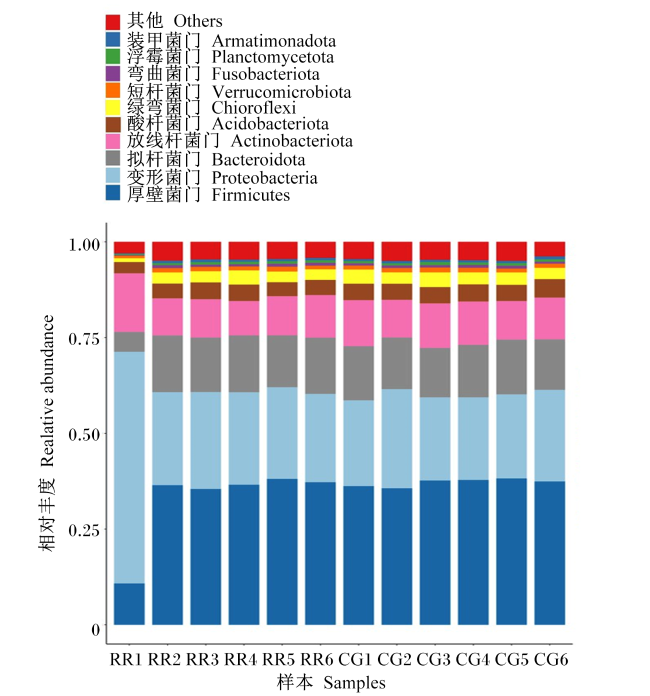
图4可知,在门水平上,对照组和刺梨渣组的肠道主要优势菌群为厚壁菌门(Firmicutes)、变形菌门(Proteobacteria)、拟杆菌门(Bacteroidota)、放线杆菌门(Actinobacteriota)和酸杆菌门(Acidobacteriota)。其中,对照组的优势菌群及比例为厚壁菌门(37.18%)、变形菌门(22.90%)、拟杆菌门(13.62%)、放线杆菌门(10.96%)和酸杆菌门(4.37%);刺梨渣组的优势菌群及比例为厚壁菌门(32.45%)、变形菌门(30.19%)、拟杆菌门(12.88%)、放线杆菌门(10.89%)和酸杆菌门(3.84%)。与对照组相比,刺梨渣组的厚壁菌门相对丰度明显降低,变形菌门相对丰度明显增加。
图4 鲤鱼肠道门水平物种柱状图

Fig.4 Histogram of intestinal species at phylum level of common carp

2.2.5 刺梨渣对鲤鱼肠道菌群在属水平上的影响

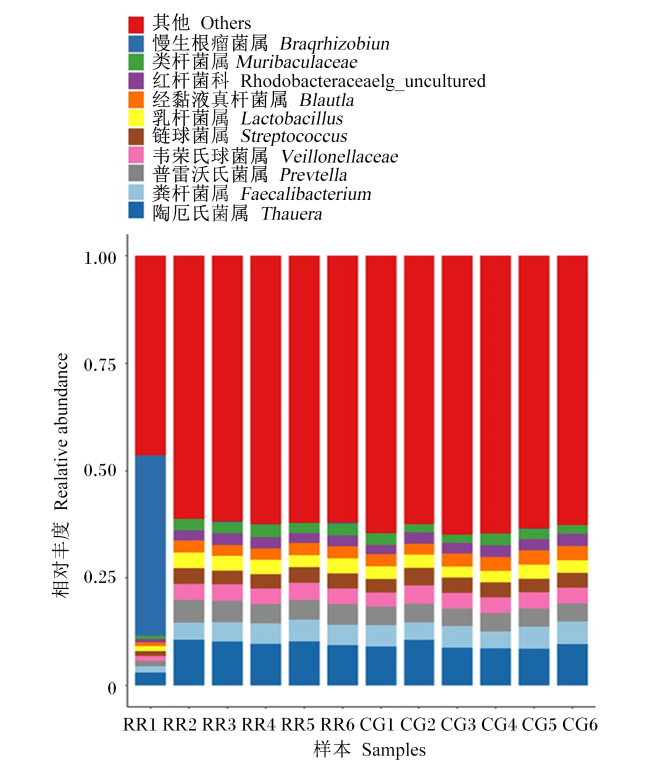
图5可知,在属水平上,对照组和刺梨渣组的肠道主要优势菌群为为陶厄氏菌属(Thauera)、粪杆菌属(Faecalibacterium)、韦荣氏球菌属(Veillonellaceae)、经黏液真杆菌属(Blautia)、链球菌(Streptococcus)。其中,对照组的优势菌群及比例为陶厄氏菌属(9.12%)、粪杆菌属(4.63%)、韦荣氏球菌属(3.42%)、经黏液真杆菌属(2.98%)、链球菌属(2.66%);刺梨渣组的优势菌群及比例为陶厄氏菌属(8.78%)、粪杆菌属(3.97%)、韦荣氏球菌属(3.13%)、经黏液真杆菌属(2.36%)、链球菌属(2.36%)。与对照组相比,刺梨渣组的优势菌群相对丰度都有一定的降低,但慢生根瘤菌属(Bradyrhizobium)相对丰度明显增加。
图5 鲤鱼肠道属水平物种柱状图

Fig.5 Histogram of intestinal species at genus level of common carp

2.3 刺梨渣对嗜水气单胞菌ATCC 7966感染鲤鱼存活率的影响

表5可知,当嗜水气单胞菌ATCC 7966浓度为1×10⁹ CFU/mL时,10尾鲤鱼全部死亡;当嗜水气单胞菌ATCC 7966浓度为1×10⁸ CFU/mL时,只有1尾鲤鱼出现死亡。通过计算发现,嗜水气单胞菌ATCC 7966对鲤鱼的LD50为1.35×10⁸ CFU/mL。同时试验过程中发现,鲤鱼出现明显的肠炎和体表充血现象,通过取肝脏于营养琼脂平板上划线分离培养,生长出的菌落经测序鉴定为嗜水气单胞菌。综上所述,嗜水气单胞菌ATCC 7966的LD50为1.35×10⁸ CFU/mL。
表5 嗜水气单胞菌ATCC 7966的LD50测定结果

Table 5 Results of LD50 determination of Aeromonas hydrophila ATCC 7966

项目
Items
试验数
Number of trials/尾
14 d累计死亡数
14 d cumulative number of deaths/尾
死亡率
Mortality/%
嗜水气单胞菌ATCC 7966浓度Aeromonas hydrophila concentration/(CFU/mL)
1×10¹⁰ 10 10 100
1×10⁹ 10 10 100
1×10⁸ 10 1 10
1×10⁷ 10 0 0
1×10⁶ 10 0 0
无菌PBS Sterile PBS 10 0 0
观察并记录腹腔注射嗜水气单胞菌ATCC 7966 1.35×10⁸ CFU/mL后14 d鲤鱼存活情况,由表6可知,对照组平均存活率为24.45%,刺梨渣组平均存活率为75.56%,说明饲料添加刺梨渣能有效增强鲤鱼对嗜水气单胞菌ATCC 7966的抵抗力。
表6 嗜水气单胞菌ATCC 7966感染鲤鱼存活率结果

Table 6 Results of survival rate of Aeromonas hydrophila ATCC 7966 infected common carp

项目
Items
试验数
Number of trials/尾
存活率
Survival rate/%
平均存活率
Average survival rate/%

对照组
Control group
15 26.67
24.45
15 20.00
15 26.67

刺梨渣组
Rosa roxburghii Tratt residue group
15 73.33
75.56
15 86.67
15 66.67

3 讨论

刺梨属蔷薇科植物果实,主要在我国西南部地区生长,具有抗菌、抗肿瘤和提高机体生长性能等作用[5]。刺梨渣作为刺梨工业产生的刺梨果渣副产品,还保留了大部分营养物质,饲喂刺梨渣能在一定程度上提高机体的生长性能,但关于刺梨渣对鲤鱼生长性能的研究较少,较为常见的主要是畜禽的养殖试验。在反刍动物生产应用上发现,饲粮中添加12%刺梨渣改善了山羊饲料利用率,但降低了山羊平均日采食量和平均日增重[6];而在杂交水牛育肥阶段添加发酵刺梨渣不仅可降低料重比,还可提高水牛眼肌面积,改善肉质,这与发酵刺梨渣改善了水牛消化吸收能力存在一定关系[7]。杨建平等[8]在肉仔鸡饲粮中添加刺梨粗提物后发现,添加100和150 mL/kg刺梨粗提物可显著提高1~21日龄肉仔鸡平均日增重和平均日采食量,100 mL/kg刺梨粗提物可显著提高22~49日龄肉仔鸡平均日采食量和平均日增重,但对料重比无显著影响。究其原因,可能是刺梨渣及相应提取物可促进消化液分泌,改善反刍动物消化吸收能力,提高家禽采食量,其果实中富含的维生素C和超氧化物歧化酶能清除体内的过量自由基,降低氧化应激,从而改善畜禽生长性能和肉品质。这与本试验研究结果一致,饲料中添加0.4%刺梨渣对提高鲤鱼的生长性能具有积极影响。
肠道微生物在宿主体内发挥着多种重要功能,包括物质代谢、生物屏障、免疫调控及宿主防御等[9]。其中,肠道菌群是维持肠道免疫稳态所必需的,稳定的微生物群落组成及其在肠道系统中的多样性与动物的健康直接相关。研究表明,大多数淡水鱼的肠道菌群以梭杆菌门(2.0%~81.4%)、变形菌门(7.1%~75.1%)、厚壁菌门(1.2%~69.8%)、蓝细菌门(0.03%~58.60%)和放线菌门(0.06%~6.20%)为主[10]。本试验中,通过饲喂鲤鱼0.4%刺梨渣能降低厚壁菌门相对丰度以及增加变形菌门相对丰度,从而调节鲤鱼肠道微生物。目前关于刺梨及其提取物对鱼类肠道菌群的研究较少,但对小鼠肠道的研究较多。刺梨提取物能有效调节小鼠肠道菌群微生物,导致厚壁菌门相对丰度显著降低,变形菌门相对丰度显著增加,从而缓解小鼠溃疡性结肠炎导致的炎症反应[11]。此外刺梨果醋也能调节小鼠肠道微生物菌群,改变肠道菌群结构,导致厚壁菌门相对丰度显著降低,变形菌门丰度显著增加,从而缓解小鼠的肥胖和高脂血症并发症[12],与本研究肠道菌群变化一致。刺梨多糖还可调节糖尿病db/db小鼠的结肠微生物群,通过降低厚壁菌门与拟杆菌门的比例,提高有益菌(包括拟杆菌科、拟杆菌科S24-7组和乳杆菌科)的相对丰度,逆转肠道菌群失调,是一种极具潜力预防和治疗2型糖尿病的功能补充剂[13]。刺梨中分离的粗多糖(RRP)和粗硒多糖(SeRRP)降低了厚壁菌门与拟杆菌门的比值,增加了有益菌(毛螺菌科、拟杆菌科和瘤胃球菌科等)的相对丰度,从而改善了小鼠镉诱导的急性肾损伤[14]。同时,类似果渣在改变肠道微生物丰富度,从而改善机体免疫力方面也表现出积极的影响。饲喂80%发酵罗汉果渣使黄羽肉鸡盲肠厚壁菌门相对丰度升高,可能是发酵后的罗汉果渣能够增强肉鸡糖代谢[15]。另有研究表明,蛋鸡饲粮中添加沙棘果渣能够增加双歧杆菌相对丰度,并降低大肠杆菌和沙门氏菌相对丰度[16]。本试验结果表明,刺梨渣可能通过降低厚壁菌门相对丰度和增加变形菌门相对丰度来调节鲤鱼肠道菌群结构,提高鲤鱼机体免疫力,进而提高鲤鱼的抗病力。
嗜水气单胞菌是全球水生环境中非常常见的细菌,具有广泛流行和高致死率的特点,是最常见的病原体之一,可引起包括鲤鱼在内的各种淡水鱼类的皮肤溃疡和出血性败血症,严重制约鲤鱼养殖业的发展[17-20]。目前,水产养殖业中嗜水气单胞菌的预防和治疗主要依靠化疗药物或抗生素,但滥用化疗药物和抗生素可能会导致药物残留、环境污染、耐药细菌的发展等问题[21],替抗资源的寻找迫在眉睫。本试验发现,刺梨渣能提高鲤鱼感染嗜水气单胞菌ATCC 7966的存活率,关于刺梨渣在水产养殖业中的应用研究较少,但也有研究表明刺梨能降低机体内有害菌的相对丰度,如通过乙醇法获得刺梨提取物,其主要成分有6-阿拉伯糖基葡萄糖、鞣花酸-O-鼠李糖苷、儿茶素、黑菊苷等,发现这些成分具有防治小鼠炎症功效,还能通过增加黏蛋白表达、减少促炎因子的表达与产生,从而抑制大肠杆菌-志贺氏菌来调节肠道菌群的组成,进而改善小鼠结肠组织中的炎症[22]。综上所述,刺梨渣虽然是刺梨加工后剩下的工业果渣副产品,但还保留了大量的活性成分,因此还具有一定的抑菌能力,能提高鲤鱼感染嗜水气单胞菌ATCC 7966的存活率。

4 结论

饲料中添加0.4%刺梨渣能提高鲤鱼的生长性能,并能通过降低厚壁菌门相对丰度以及增加变形菌门和慢生根瘤菌属相对丰度来调节肠道菌群结构,同时还能提高对嗜水气单胞菌ATCC 7966感染后的存活率。因此,饲料中添加刺梨渣可能通过改变鲤肠道优势菌群从而增强鲤鱼抗病力。
[1]
周禹佳, 樊卫国. 刺梨果渣的营养、保健成分及利用价值评价[J]. 食品与发酵工业, 2021, 47(7):217-224.

DOI

ZHOU Y J, FAN W G. Nutrition and health-care composition of Rosa roxburghii Tratt pomace and its utilization potential[J]. Food and Fermentation Industries, 2021, 47(7):217-224. (in Chinese)

[2]
杨胜红, 洪源, 兰方林, 等. 刺梨果渣天然替抗的制备及其在饲料添加剂中的应用[J]. 现代畜牧科技, 2023(12):69-72.

YANG S H, HONG Y, LAN F L, et al. Preparation of natural substitute of roxburgh rose fruit residue and its application in feed additives[J]. Modern Animal Husbandry Science & Technology, 2023(12):69-72. (in Chinese)

[3]
张银, 任廷远. 刺梨果渣生产功能性饲料的开发利用[J]. 农产品加工, 2019(19):53-54.

ZHANG Y, REN T Y. Development and utilization of Rosa roxburghii Tratt residue for the production of functional feeds[J]. Academic Periodical of Farm Products Processing, 2019(19):53-54. (in Chinese)

[4]
张瑜, 李小鑫, 罗昱, 等. 刺梨果渣发酵饲料蛋白的工艺研究[J]. 中国酿造, 2014(11):75-80.

DOI

ZHANG Y, LI X X, LUO Y, et al. Research on the process of fermenting feed protein from Rosa roxburghii Tratt residue[J]. China Brewing, 2014(11):75-80. (in Chinese)

DOI

[5]
贺琴, 尚含乐. 刺梨的营养价值、生物学功能及其在畜禽生产中的应用[J]. 动物营养学报, 2022, 34(8):4776-4784.

DOI

HE Q, SHANG H L. Nutritional value and biological function of Rosa roxburghii Tratt and its application in livestock and poultry production[J]. Chinese Journal of Animal Nutrition, 2022, 34(8):4776-4784. (in Chinese)

[6]
郭子義, 马政发, 杨艺, 等. 刺梨果渣对山羊生长性能和血浆脂代谢的影响研究[J]. 饲料工业, 2021, 42(15):53-56.

GUO Z Y, MA Z F, YANG Y, et al. Effects of Rosa roxburghii Tratt pomace residue on growth performance and plasma lipid metabolites of goat[J]. Feed Industry, 2021, 42(15):53-56. (in Chinese)

[7]
王文涛, 徐龙鑫, 张凯凯. 发酵刺梨渣对贵州水牛×摩拉水牛杂交育肥牛生产性能、肉品质、胃肠道及血液生化指标的影响[J]. 饲料研究, 2021, 44(2):18-22.

WANG W T, XU L X, ZHANG K K. Effect of fermented Rosa roxburghii Tratt residue on production performance,meat quality,gastrointestinal tract and blood biochemical indexes of Guizhou buffalo×Mora buffalo crossbred fattening buffalo[J]. Feed Research, 2021, 44(2):18-22. (in Chinese)

[8]
杨建平, 姬向波, 石志芳, 等. 刺梨粗提物对肉鸡生长性能、免疫器官指数和抗氧化能力的影响[J]. 家畜生态学报, 2016, 37(10):30-33,54.

YANG J P, JI X B, SHI Z F, et al. Effects of extract of Rose roxburgii tratt. on growth performance,immune organ index and antioxidation in broilers[J]. Acta Ecologae Animalis Domastici, 2016, 37(10):30-33,54. (in Chinese)

[9]
LIU C, ZHAO L P, SHEN Y Q. A systematic review of advances in intestinal microflora of fish[J]. Fish Physiology and Biochemistry, 2021, 47(6):2041-2053.

DOI PMID

[10]
YUAN L, WANG L, LI Z H, et al. Antibiotic resistance and microbiota in the gut of Chinese four major freshwater carp from retail markets[J]. Environmental Pollution, 2019, 255(Pt 2):113327.

[11]
LI X J, LING Y H, HUANG X Y, et al. Rosa roxburghii Tratt fruit extract prevents DSS-induced ulcerative colitis in mice by modulating the gut microbiota and the IL-17 signaling pathway[J]. Nutrients, 2023, 15(21):4560.

[12]
LI J, ZHANG J, ZHANG Y, et al. Effect and correlation of Rosa roxburghii Tratt fruit vinegar on obesity,dyslipidemia and intestinal microbiota disorder in high-fat diet mice[J]. Foods, 2022, 11(24):4108.

[13]
WANG L, LI C, HUANG Q, et al. Polysaccharide from Rosa roxburghii Tratt fruit attenuates hyperglycemia and hyperlipidemia and regulates colon microbiota in diabetic db/db mice[J]. Journal of Agricultural and Food Chemistry, 2020, 68(1):147-159.

[14]
LU X M, GUO C H, ZHU Y. Selenium-enriched crude polysaccharide from Rosa roxburghii Tratt ameliorates cadmium-induced acute kidney injury in mice by modulating intestinal microorganisms[J]. Heliyon, 2023, 9(9):e19678.

[15]
王天丽, 梁丽芬, 宾石玉, 等. 发酵罗汉果渣对黄羽肉鸡营养物质表观消化率、血清生化指标、肠道形态及盲肠微生物菌群的影响[J]. 动物营养学报, 2023, 35(10):6349-6360.

DOI

WANG T L, LIANG L F, BIN S Y, et al. Effects of fermented Siraitia grosvenorii residue on nutrient apparent digestibility,serum biochemical indices,intestinal morphology and cecal microflora of yellow-feathered broilers[J]. Chinese Journal of Animal Nutrition, 2023, 35(10):6349-6360. (in Chinese)

[16]
杜延萍, 吴华, 张辉, 等. 日粮中添加沙棘果渣对蛋鸡生产性能及肠道菌群的影响[J]. 中国饲料, 2014(15):35-36,40.

DU Y P, WU H, ZHANG H, et al. Effects of adding sea buckthorn fruit pomace to diets on the performance and intestinal flora of laying hens[J]. China Feed, 2014(15):35-36,40. (in Chinese)

[17]
JIA Y F, LI Z S, DU Q Y, et al. Transcriptome analysis of immune-related gene expression in yellow river carp (Cyprinus carpio var.) after challenge with flavobacterium columnare[J]. Microbial Pathogenesis, 2021,160:105148.

[18]
JANDA J M, ABBOTT S L. The genus aeromonas:taxonomy,pathogenicity,and infection[J]. Clinical Microbiology Reviews, 2010, 23(1):35-73.

[19]
SONG X H, ZHAO J, BO Y X, et al. Aeromonas hydrophila induces intestinal inflammation in grass carp (Ctenopharyngodon idella):an experimental model[J]. Aquaculture, 2014,434:171-178.

[20]
PODOK P, XU L J, XU D, et al. Different expression profiles of interleukin 11 (IL-11),intelectin (ITLN) and purine nucleoside phosphorylase 5a (PNP 5a) in crucian carp (Carassius auratus gibelio) in response to cyprinid herpesvirus 2 and Aeromonas hydrophila[J]. Fish & Shellfish Immunology, 2014, 38(1):65-73.

[21]
CABELLO F C. Heavy use of prophylactic antibiotics in aquaculture:a growing problem for human and animal health and for the environment[J]. Environmental Microbiology, 2006, 8(7):1137-1144.

[22]
LUAN L Q, PAN H B, CHEN Y H, et al. Role of extracted phytochemicals from Rosa sterilis S.D.Shi in DSS-induced colitis mice:potential amelioration of UC[J]. Food & Function, 2023, 14(18):8369-8382.

Outlines

/