REVIEW

Immunosuppression and Nutritional Regulation in Periparturient Dairy Cows

  • YANG Songhua ,
  • ZHANG Hangyu ,
  • LI Fei ,
  • GUO Long , *
Expand
  • College of Pastoral Agriculture Science and Technology, Lanzhou University, Lanzhou 730000, China
*associate professor, E-mail:

Received date: 2024-08-15

  Online published: 2025-03-13

Abstract

The periparturient period of dairy cows refers to the period from 3 weeks before calving to 3 weeks after calving. During this time, due to significant changes in physiology and metabolism,dairy cows are in a state of immunosuppression, and the incidence and severity of many diseases increase significantly, resulting in higher culling rates and lower production performance, which affects the development of dairy farming. A large number of studies have been conducted to address the characteristics and causes of immunosuppression in periparturient dairy cows. This paper reviewed the mechanisms of immunosuppression in periparturient dairy cows, and it introduced the application of nutritional modulation in improving the immune situation of periparturient dairy cows, aiming to provide a scientific basis and practical guidance for health management of dairy cows in periparturient period.

Cite this article

YANG Songhua , ZHANG Hangyu , LI Fei , GUO Long . Immunosuppression and Nutritional Regulation in Periparturient Dairy Cows[J]. Chinese Journal of Animal Nutrition, 2025 , 37(3) : 1436 -1447 . DOI: 10.12418/CJAN2025.123

奶牛围产期是指产犊前3周至产犊后3周,这段时间内奶牛面临着产前与产后的双重能量需求。围产前期,随着胎儿逐渐增大,扩张的子宫压迫胃肠道,导致胃容量减少,使其干物质采食量显著下降,导致能量供应不足,这一现象在初产奶牛中尤为明显[1]。分娩后,母牛的泌乳和自身机体恢复会消耗大量的能量,能量消耗和摄入之间不平衡时,奶牛会调动机体储备来满足能量需要,此时机体会发生剧烈的生理、代谢变化[2]。如果这些变化没有充分协调,奶牛就会经历代谢应激和免疫功能障碍。由于应激、激素波动、血钙降低及能量负平衡(nagetive energy balance,NEB)等因素,围产期奶牛的免疫细胞数量减少、功能受损,各种疾病的发病率和严重程度增加,即引起围产期奶牛的免疫抑制。免疫抑制状态下,代谢性疾病和传染性疾病发病率和严重程度显著增加,导致奶牛的泌乳能力降低、淘汰率升高,严重影响了奶牛分娩后的生产效率。
研究发现,通过改变饲料组分、添加饲料添加剂等营养管理措施,可以提高围产期奶牛的免疫力。但在生产实践中,引起奶牛免疫抑制的原因复杂,涉及多个生理系统。深入了解围产期奶牛的免疫抑制机理,寻找有效的营养调控策略,改善其免疫状态,保证奶牛平稳健康地度过围产期,对于降低奶牛淘汰率、提高产奶量有着重要意义。本文阐述了围产期导致奶牛免疫抑制的原因及动物表型特征,描述了免疫与营养代谢之间的互作关系,提供了改善围产期奶牛免疫功能的营养调控策略,以期为奶牛围产期健康管理提供理论依据和实践指导。

1 围产期奶牛免疫抑制的原因

导致奶牛围产期免疫抑制的因素包括分娩应激、白细胞受损、初乳形成和泌乳、低钙血症、能量负平衡、瘤胃代谢变化及氧化应激,如图1所示。这些因素共同作用,导致奶牛在围产期的免疫功能受到抑制,增加了疾病发生的风险。
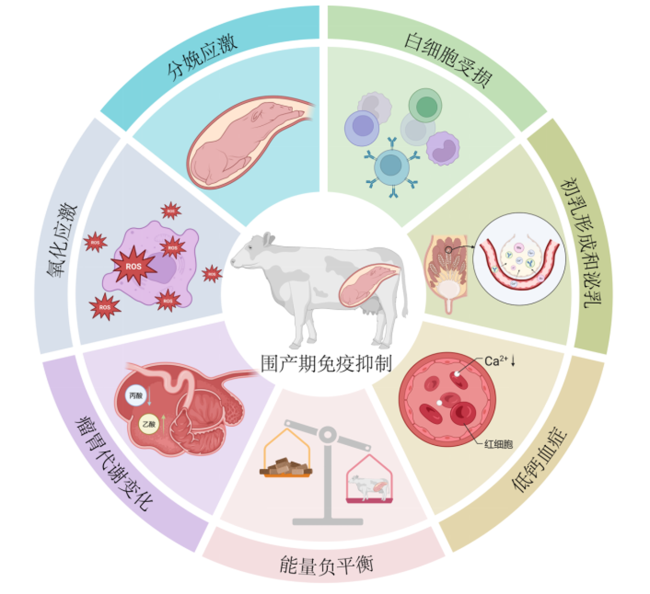
图1 围产期奶牛免疫抑制的原因

Fig.1 Causes of immunosuppression in periparturient dairy cows

1.1 分娩应激

目前被大多数学者认可的理论认为,分娩是一种生理性的应激源,诱导奶牛糖皮质激素分泌增加,刺激下丘脑-垂体-肾上腺(hypothalamic-pituitary-adrenal,HPA)轴,使奶牛处于应激状态[3]。皮质醇是动物体内的主要应激激素,可以抑制体内促炎因子的产生和分泌,起到抗炎作用,因此皮质醇也被称为免疫抑制激素[4]。围产期奶牛的皮质醇浓度会升高3~4倍,低钙血症奶牛的皮质醇浓度会升高5~7倍[5]。应激时奶牛的去甲肾上腺素、肾上腺素和糖皮质激素分泌增加。糖皮质激素通过与细胞质中的糖皮质激素受体(glucocorticoid receptor,GR)结合,形成受体-激素复合物,并与糖皮质激素反应元件(glucocorticoid-response elements,GREs)结合,抑制多种炎症介质(如细胞因子、趋化因子)的基因表达。GR可以抑制核转录因子-κB(nuclear transcription factor-κB,NF-κB)和激活蛋白-1(activator protein-1,AP-1)的转录活性,这是炎症反应基因的关键调节因子。糖皮质激素可促进转化生长因子-β(transforming growth factor-β,TGF-β)、白细胞介素-10(interleukin-10,IL-10)等抗炎细胞因子的产生,抑制γ-干扰素(γ-interferon,IFN-γ)、肿瘤坏死因子-α(tumor necrosis factor-α,TNF-α)和白细胞介素-12(interleukin-12,IL-12)等促炎因子的产生,选择性地抑制细胞免疫[6]。血液循环中的皮质醇可通过直接抑制T细胞的增殖、发育、影响补体作用和干扰免疫球蛋白的功能来抑制机体的免疫反应[7]。近年来有学者提出,围产期奶牛的免疫系统并非被抑制,而是处于动态变化状态,在分娩时奶牛处于应激状态,HPA轴和交感神经系统受到刺激,血清皮质醇浓度升高,这在一定程度上抑制了白细胞清除病原体的能力,但也减少了由白细胞介导的炎症反应引起的组织损伤[4]

1.2 白细胞受损

在分娩应激、能量负平衡、氧化应激等多种因素作用下,围产期奶牛白细胞数量减少,活性和功能受损。与产后相比,产前血液循环中的单核细胞与多种淋巴细胞亚群数量减少[8-9]。围产期奶牛中性粒细胞吞噬和清除细菌的能力、淋巴细胞对有丝分裂原的反应能力和产生抗体的能力下降,免疫球蛋白、抗体、补体和溶菌酶等血浆免疫成分减少,这种变化以产后初期最为明显[10]。从围产期奶牛血液中分离出的中性粒细胞趋化活性下降[11]。围产期奶牛中性粒细胞结构完整性和功能相关的基因表达发生变化。产犊时奶牛中性粒细胞的黏附分子L-选择素(L-selectin)表达量降低,L-选择素对白细胞迁移到炎症部位至关重要[12]。核苷酸结合寡聚化域蛋白1(nucleotide-binding oligomerization domain 1,NOD1)存在于中性粒细胞的细胞质中,可以识别病原体,介导中性粒细胞对病原体的反应。与泌乳中期奶牛相比,围产期奶牛中性粒细胞中NOD1的mRNA表达量和蛋白表达量显著降低,其吞噬能力和产生活性氧(reactive oxygen species,ROS)的能力也降低[13]。此外,妊娠母牛的Th1/Th2比例降低,Th2处于优势状态,从而使胎儿逃逸母体的免疫应答而维持妊娠[14]。在分娩时,Th1/Th2比例迅速增加,母体的免疫系统从为胎儿提供耐受性的条件(高Th2)转变为抗感染的条件(高Th1)[15]。围产期奶牛血清中免疫球蛋白的浓度也发生了改变。Herr等[16]观察到,奶牛围产期血清中免疫球蛋白M(immunoglobulin M,IgM)和免疫球蛋白G1(immunoglobulin G1,IgG1)的浓度降低。然而,Cortese等[17-19]的一系列研究显示,母牛产犊当天接种鼻内改良活病毒疫苗后,母牛鼻腔分泌物中的抗原特异性免疫球蛋白A(immunoglobulin A,IgA)、干扰素(interferon,IFN)和IFN-γ浓度较泌乳期母牛更高。这些研究提出,奶牛在分娩前后的黏膜免疫反应升高,在围产期奶牛的全身免疫被抑制时,可以利用黏膜免疫来改善围产期奶牛的健康。

1.3 初乳形成和泌乳

初乳形成是围产期奶牛的重要生理过程,此时大量IgG从母体循环转移到乳腺中,以确保新生犊牛在出生后获得被动免疫。这一过程导致母体免疫球蛋白浓度显著下降,使奶牛在围产期的免疫防御能力减弱,容易受到病原体的侵袭。奶牛初乳中免疫球蛋白的浓度为血清的5~10倍,占初乳中蛋白质的90%[20]。转入初乳中的免疫球蛋白主要是IgG1,在新生儿Fc受体(neonatal Fc receptor,FcRn)的介导下,IgG1从奶牛血液通过乳腺上皮细胞转移到初乳中[21]。母体免疫球蛋白转移的同时,乳铁蛋白、乳铁传递蛋白、β-乳球蛋白、鞘磷脂和乳低聚糖等免疫调节分子也转移到初乳中[22]。本课题组前期的试验发现,围产期奶牛血清中球蛋白含量显著低于新产期和泌乳高峰期,球蛋白具有抗体活性,可以参与体液免疫反应,在动物机体中起到重要的免疫调节功能,围产期奶牛的血清球蛋白含量下降也反映了其在围产期的免疫抑制状态[23]
围产期奶牛需要大量的能量和营养用于乳汁合成,在糖皮质激素、生长因子和胰岛素样生长因子-1(insulin-like growth factor-1,IGF-1)的促进作用下,各种营养物质和矿物质被动员到乳腺中[24]。有研究发现,泌乳早期奶牛免疫细胞中的葡萄糖转运蛋白的表达显著降低,表明此时免疫系统细胞对葡萄糖的竞争弱于泌乳所用细胞,影响其正常功能,这是围产期奶牛发生免疫抑制的原因之一[25]。在对围产期奶牛和围产期乳房切除奶牛的研究中,中性粒细胞的功能在完整奶牛和乳房切除奶牛中均受到损伤,但在乳房切除奶牛中,中性粒细胞功能迅速恢复,表明泌乳过程中的代谢变化会导致中性粒细胞功能的损伤,从而引起免疫抑制[26]

1.4 低钙血症

围产期胎儿体型迅速增大,此时母体需要提供大量的钙以供胎儿骨骼发育需要,同时乳汁合成的钙需要量增加,尤其是初乳的合成需要大量的钙,奶牛的钙稳态发生巨大变化,导致奶牛的血钙、血磷比例失调,即发生围产期低钙血症[27]。初乳中钙含量为2.0~3.0 g/L[28],至少在分娩前9 h开始,母牛血浆中的钙浓度显著降低[29]。低钙血症奶牛乳房炎、胎衣不下、子宫脱垂等疾病的发生率显著提高,还会因产奶量下降、配怀率下降、产后瘫痪等疾病被淘汰[30-31]。低钙血症奶牛的血浆皮质醇浓度升高,这会增加围产期奶牛由于分娩应激而引起免疫抑制的程度[5]。通过蛋白质组学和生物信息学对低钙血症奶牛血浆进行分析,发现低钙血症奶牛的差异表达蛋白主要与血钙浓度、凝血途径和补体途径有关,推测低钙血症可能会改变某些关键的免疫和代谢途径,导致生产性能下降和免疫抑制。
钙离子在免疫细胞的功能中扮演着重要角色,参与免疫细胞的信号传递、活化、增殖以及功能执行。例如,中性粒细胞的趋化性、吞噬作用和细菌杀伤能力都依赖于细胞内钙离子浓度的变化[32-34]。围产期奶牛血钙浓度降低会影响这些途径,导致免疫细胞功能紊乱和免疫反应的减弱。围产期奶牛由于血钙浓度下降,单核细胞内钙储存减少,从而影响单核细胞对免疫信号的响应[35]。低钙血症会导致乳头括约肌张力减弱,病原微生物容易从乳头管进入乳腺,导致乳腺炎和胎衣不下的发生率升高,这也体现了代谢性疾病与传染性疾病之间的关系。

1.5 能量负平衡

围产期奶牛由于干物质采食量不足,不能满足机体能量需要,常发生能量负平衡,这种情况在初产奶牛中更为突出[1]。为了满足围产期能量需要,与分娩和泌乳有关的激素会动员脂肪分解,作为外周组织的能量来源。同时,机体经历胰岛素抵抗,循环胰岛素含量减少,组织胰岛素敏感性降低,进一步促进脂肪分解,产生大量的非酯化脂肪酸(nonestesterified fatty acid,NEFA)和β-羟丁酸(β-hydroxybutyrate,BHBA)入血,继发酮病、脂肪肝、真胃变位等一系列围产期疾病[36]。大量的体内、体外试验证明,脂肪大量分解产生的NEFA和BHBA对各种免疫细胞可以产生直接影响[37-39]。围产期脂肪过度动员产生的甘油三酯(triglyceride,TG)会在肝脏中积累,增加肝脏代谢负担,严重时会导致脂肪肝[40]。脂肪肝还会抑制胶原凝集素在内的急性期蛋白等多种免疫相关蛋白的分泌,进一步影响免疫反应[41]。脂肪组织分泌的促炎细胞因子可引起局部或全身炎症反应[42]。对过度脂解的围产期奶牛进行转录组和代谢组分析发现,脂肪过度分解奶牛的初级胆汁酸合成减少,次级胆汁酸的生物合成被显著激活,且与胆汁酸合成相关的肠道微生物群发生了改变,抑制了外周血中单核细胞的功能[43]。此外,NEFA可以通过Toll样受体4(Toll-like receptor 4,TLR4)和NF-κB通路诱导炎症反应,其本身具有促炎和免疫抑制作用[44]。NEFA分解生成的过多乙酸在肝脏中聚集,在酶的作用下转化为乙酰乙酸、BHBA和酮体,导致奶牛酮病[45]。Zerbe等[46]研究了围产期奶牛肝脏TG浓度与中性粒细胞的关系,发现当肝脏TG浓度大于40 mg/g组织时可能与中性粒细胞功能损伤和外周循环单核细胞数量减少有关。针对血浆中NEFA、BHBA和肝脏中TG浓度高的“高风险”围产期奶牛进行循环中性粒细胞的转录组分析发现,高风险奶牛的中性粒细胞的粒细胞募集、IFN信号传导和凋亡相关的基因表达量下调,与细胞存活相关的基因表达量上调,表明过高的血浆NEFA、BHBA和肝脏TG浓度会对中性粒细胞产生负面影响[47]。GO分析显示,能量负平衡抑制了奶牛子宫、肝脏、血液中与体液免疫相关的生物过程,如细胞因子产生、免疫球蛋白产生和参与免疫反应的B细胞活化等,表明奶牛处于免疫抑制状态[48]
围产期能量负平衡还会导致瘦素浓度的下降。瘦素是由脂肪组织分泌的一种激素,具有调节食欲和能量平衡的作用,同时也在免疫调节中发挥重要作用[49]。围产期奶牛瘦素浓度下降削弱免疫细胞的功能,降低奶牛的免疫防御能力。
在本课题组的研究中,奶牛血清总胆汁酸(total bile acid,TBA)浓度按时间顺序从干奶-围产-新产阶段呈现逐渐升高的变化,且从围产期再到新产期这一相邻泌乳周期时间过程变化中有显著性差异,围产期血清TBA浓度显著低于新产期,这种趋势可能指向了围产期奶牛胆汁酸的分泌不足,同时围产期奶牛血清直接胆红素(direct bilirubin,DBIL)浓度显著高于泌乳高峰期,提示此时肝脏的代谢相对不活跃,使围产期奶牛肝脏更容易发生脂肪沉积,也可能反映了围产期能量负平衡对肝脏造成的代谢压力引起的胆源性问题[23]

1.6 瘤胃代谢变化

为了满足胎儿发育和母体泌乳的需要,围产期奶牛的饲粮精料比例增加,同时由于妊娠的作用,围产期奶牛干物质摄入量减少,因此会造成瘤胃功能及微生物群落的显著改变。干奶期奶牛饲粮的粗饲料比例较大,奶牛瘤胃内丙酸生成量较少,而丙酸是刺激瘤胃乳头发育的重要物质,丙酸生成量的减少使干奶期奶牛瘤胃乳头萎缩。围产后期奶牛精料采食量增加,丙酸生成增多,刺激瘤胃乳头快速发育,体积增加,瘤胃吸收面积增大。围产期奶牛在逐渐适应高精料饲粮的过程中,一些利用碳水化合物和乳酸的细菌丰度随着精料比例的增加而增加[50]。同时,瘤胃内用于消化淀粉的微生物增多,用于消化粗纤维的微生物减少[51],纤维降解率下降,易引起瘤胃pH降低而发生酸中毒。一些情况下,围产期奶牛瘤胃微生物的变化可能会产生不利影响,例如,在严重能量负平衡的情况下,瘤胃液中克里斯滕森菌科菌(Christensenellaceae)和牛链球菌(Streptococcus bovis)的相对丰度增加,而反刍月形单胞菌(Selenomonas ruminantium)的相对丰度减少[52]。克里斯滕森菌科菌与丙酸浓度呈负相关,而牛链球菌和反刍月形单胞菌分别负责乳酸的合成和分解,这些微生物的失衡可能会导致丙酸和乳酸的代谢平衡被破坏,进而导致能量负平衡恶化,增加围产期疾病的发生率。瘤胃内大量的乳酸和挥发性脂肪酸积累也会导致奶牛患中毒性败血症,从而影响动物的食欲,继发其他疾病。

1.7 氧化应激

大量研究证明,围产期奶牛的脂肪和蛋白质大量动员,代谢速率升高,细胞呼吸代谢产生大量的ROS,超过抗氧化系统的清除能力,即发生氧化应激[53]。此时,外周血中ROS积累过多,破坏奶牛的特异性抗氧化防御,细胞大分子(脂质、蛋白质和核酸)的结构和功能受损,从而增加奶牛对各种疾病的易感性[54]。ROS会对免疫细胞的信号传导、激活、增殖和生存能力产生负面影响,包括诱导中性粒细胞凋亡、抑制自然杀伤细胞的活性、影响抗原呈递细胞的作用等[55]。大量研究表明,补充抗氧化剂能降低围产期奶牛多种疾病的发病率,同时增强白细胞功能。例如,维生素E和硒联合使用可以增强围产期奶牛外周血和乳腺中性粒细胞的吞噬和杀伤能力,维生素E还能增加巨噬细胞分泌白细胞介素-1(interleukin-1,IL-1)和主要组织相容性复合物(major histocompatibility complex,MHC)Ⅱ类分子[56],减少乳腺炎的发生[57]。蛋白质组学分析表明,奶牛产后维生素E的缺乏会引起丝裂原活化蛋白激酶(mitogen activated protein kinase,MAPK)信号通路的相关蛋白含量发生改变,下调的差异蛋白主要参与泛酸和辅酶A生物合成、过氧化物酶体增殖物活化受体(peroxisome proliferator-activated receptor,PPAR)信号通路、糖磷脂酰肌醇(glycosylphosphatidylinositol,GPI)锚定蛋白生物合成,表明维生素E缺乏导致的氧化应激加重了围产期奶牛的肝脏代谢异常[58],但其分子机制有待进一步研究。

2 应对围产期奶牛免疫抑制的营养调控策略

针对围产期奶牛的免疫抑制问题,营养调控被认为是有效、安全的干预手段,合理的营养管理可以通过多种途径改善奶牛的免疫功能。因此,更好地了解围产期奶牛免疫和营养之间的多因素相互作用有利于更好地制定管理和饲养策略,改善围产期奶牛的健康状态。

2.1 矿物质

矿物质是维持机体正常生理功能的重要元素,是体内多种酶的活性中心或辅助因子,或参与酶的激活过程等。大量研究表明,补充微量矿物质可以改善围产期奶牛的免疫状态和抗氧化状态[59-61]。谷胱甘肽过氧化物酶(glutathione peroxidase,GSH-Px)是机体抗氧化系统中的重要酶类,可以催化过氧化氢和脂质过氧化物的还原,是一种以硒半胱氨酸为活性中心的抗氧化蛋白[62]。硒作为饲料添加剂的抗氧化和免疫调节作用已经被大量研究证明[59,63-64]。在每千克饲粮干物质中添加0.30 mg的纳米硒可以显著提高奶牛乳腺细胞中GSH-Px的活性。此外,纳米硒的添加还提高了GSH-Px等多种抗氧化酶的基因在乳腺中的表达[65]。硒还能够下调围产期奶牛αS1-酪蛋白(αS1-casein,CSN1S1)、载脂蛋白A1(apolipoprotein A1,APOA1)、载脂蛋白C2(apolipoprotein C2,APOC2)等脂质代谢相关蛋白的基因表达,从而控制脂肪的过度动员,减少酮病和脂肪肝的发生[66]。在免疫系统中,添加硒有助于T细胞、细胞毒性T细胞和自然杀伤细胞的形成和激活,增强多种体液和细胞免疫反应,提高奶牛免疫力[67-69]。铜是超氧化物歧化酶和氧化还原过程中集中关键酶的重要组成成分,通过将超氧化物的自由基转化为细胞质中的过氧化氢来保护细胞免受自由基的毒性作用[70]。NRC(2001)对围产期奶牛饲粮的铜建议添加量为11 mg/kg DM。与直接补充无机矿物质相比,有机矿物质螯合物的生物利用度和有效性更高[71]

2.2 维生素

多种维生素是机体抗氧化系统的重要组成部分,例如,α-生育酚(维生素E)提供氢离子参与清除脂质过氧化产生的自由基,转为生育酚自由基,之后再由抗坏血酸(维生素C)将生育酚自由基转化为还原形式[72]。围产期奶牛饲粮中补充包被叶酸(维生素B9)后,血清中免疫调节细胞因子白细胞介素-17(interleukin-17,IL-17)和IFN-γ表达上调,同时调节围产期奶牛免疫调节的相关基因,激活免疫系统相关通路,从而有利于围产期奶牛的免疫反应[73]。维生素E和硒的协同抗氧化作用己经被大量研究证实,维生素E可以催化氧化型谷胱甘肽的还原,同时可以减少机体过氧化物的产生,从而降低硒的消耗[59,63]。维生素E可以增强围产期奶牛中性粒细胞的吞噬能力[74],同时维生素E由于其抗氧化功能,能够减少中性粒细胞摄入病原体时受到的自由基的毒性作用[75]。硒与维生素E联合使用时,能够降低胎衣不下、乳房炎等围产期疾病的发病率[76]。烟酸(维生素B3)具有抗氧化和抗炎作用,可以作为细胞保护剂阻断炎症细胞的活化,起到免疫调节作用[77]。围产期奶牛饲粮中补充烟酸后,循环中性粒细胞数量增多,体外试验表明烟酸可以提高中性粒细胞的吞噬活性[78]。综上可知,奶牛饲粮中补充维生素不仅可以提高奶牛的生产效率,还可以减少氧化应激,优化免疫系统,维持奶牛的健康。

2.3 过瘤胃氨基酸

围产期奶牛遭受氧化应激时,机体内大量积累的ROS会消耗大量的谷胱甘肽等抗氧化剂,加重氧化应激带来的负面影响。蛋氨酸作为含硫氨基酸,代谢时产生的高半胱氨酸可作为谷胱甘肽合成的底物,降低氧化应激的发生率。白蛋白是奶牛炎症的生物标志物,通过与NEFA和胆红素结合,能够减轻炎症。白蛋白含量越高,表明奶牛健康状况越好[79]。围产期奶牛血清白蛋白含量下降,在饲粮中补充过瘤胃蛋氨酸后,血清白蛋白含量升高[80]。触珠蛋白是一种重要的急性期蛋白,围产期会由于炎症和肝脏脂肪浸润而增加。补充过瘤胃蛋氨酸能够显著降低围产期奶牛血清触珠蛋白的含量,这与蛋氨酸的抗炎和抗氧化作用有关[80]。在Hu等[81]的研究中,饲粮中补充蛋氨酸和精氨酸可以为乳蛋白合成提供底物,同时作为信号分子调控乳蛋白的合成,从而缓解围产期奶牛的炎症和氧化应激。饲粮中补充过瘤胃赖氨酸和蛋氨酸还能降低乳中体细胞数,提高奶牛的免疫力和健康状况,降低乳房炎的发生率[82]。胆碱和过瘤胃蛋氨酸联合使用,可以改善围产期奶牛血液中中性粒细胞的吞噬能力和免疫代谢状态,并提高奶牛的抗氧化能力[83]

2.4 益生菌添加剂

近年来,关于益生菌添加剂的研究越来越多,益生菌有助于维持胃肠道微生物种群和酶活性的平衡,还可作为抗生素的替代品来预防多种疾病。屎肠球菌、纳豆枯草芽孢杆菌等益生菌被证明可以降低奶牛血液中的NEFA和BHBA浓度,表明这些益生菌可以减少围产期奶牛的脂肪动员,提高奶牛的能量代谢效率,减少能量负平衡对围产期奶牛免疫能力的负面影响[84-86]。在围产期饲粮中添加枯草芽孢杆菌可显著降低奶牛血液中的皮质醇浓度,缓解脂质过氧化,同时还能降低粒细胞对亲环素A(cyclophilin A,CyPA)的反应性,以缓解慢性炎症的发生[87]。枯草芽孢杆菌可以通过改变瘤胃发酵模式,提高瘤胃内的丙酸浓度来提高饲料效率,从而适应围产期奶牛的营养供给需要[86]。给围产期奶牛饲喂由酿酒酵母、嗜酸乳杆菌、植物乳杆菌和棕榈红假单胞菌制成的益生菌产品,显著提高了奶牛的多项免疫指标,奶牛外周血中吞噬细胞的吞噬活性和细胞内杀伤能力均有所提高[88]。酿酒酵母发酵后的饲料因其独特的香气,可有效提升奶牛的采食量。在饲粮中添加酿酒酵母,不仅显著提高围产期奶牛的产奶量,还在激素调控方面表现出积极作用。研究表明,酿酒酵母能够增加泌乳早期奶牛血液中胰高血糖素和瘦素的浓度,降低胰岛素的浓度,并减少血液中的NEFA浓度,从而有效调节奶牛的糖与脂代谢平衡[89]。益生菌的使用对围产期奶牛健康和生产性能的全方位影响将成为研究重点,具有广阔的应用前景。

2.5 植物提取物

植物提取物是从植物的特定部分(如根、茎、叶、花、果实)中,通过物理、化学、生物方法提取出来的生物活性化合物。植物提取物可以通过调节瘤胃微生物区系、改变瘤胃发酵模式、提高氮利用率,改善动物机体健康状况并提高生产效率[90]。茶树精油由单萜烯、双单萜烯等生物活性成分组成,具有抗菌、消炎、抗氧化、抗病毒、增强免疫等作用。饲粮中添加茶树精油显著提高了血浆中球蛋白和IgG浓度,能够增强产后奶牛的免疫力,并且可以提高产后奶牛的血糖浓度,改善围产期奶牛的代谢状态[91]。金银花提取物中含有的绿原酸可以清除羟基自由基和超氧阴离子自由基,减少围产期奶牛的氧化应激[92]。甘草中含有的甘草酸单铵能够激活肝脏的抗氧化通路,提高细胞的抗氧化能力,减少围产期奶牛由于氧化应激和脂质积累引起的肝脏损伤[93]。围产期奶牛饲粮中添加200 mg/d的植物甾醇显著降低了奶牛血液中BHBA的浓度,并且使血浆中有利于改善能量代谢状态的多种游离脂肪酸浓度显著增多,血液代谢组学分析表明,植物甾醇增加了奶牛牛磺酸和次牛磺酸代谢途径,增强了瘤胃微生物的半胱氨酸和蛋氨酸代谢途径,促进微生物蛋白合成,缓解了围产期奶牛的能量负平衡[94]

2.6 脂肪粉

围产期奶牛常面临负能量平衡的风险,除了通过提高采食量来缓解外,增加饲粮的能量密度也是重要的策略。目前,提升饲粮能量密度的常用方法是增加精料的比例,但精料比例过高容易导致瘤胃酸中毒。相比之下,脂肪类饲料由于其高能量密度和低添加量的特点,被认为是提升饲粮能量密度的有效方案。研究表明,产后补充脂肪粉能够显著提高围产期奶牛的采食量和产奶量,减少脂肪动员,降低血浆中NEFA和BHBA的浓度,进而有效缓解围产期的负能量平衡[95]。此外,在饲粮中添加棕榈脂肪粉可以调控肝脏中的脂质代谢,尤其是下调固醇调节元件结合蛋白1c(SREBP1c)和乙酰辅酶A羧化酶(ACACA)的mRNA表达。ACACA是脂肪酸合成途径中的限速酶,催化乙酰辅酶A转化为丙二酰辅酶A,而SREBP1c则是ACACA的上游调控因子。通过抑制SREBP1cACACA的表达,脂肪粉能够减少肝脏脂肪酸的从头合成,降低脂质在肝脏中的积累[96]。未来的研究可以借助基因组学和代谢组学等前沿技术,进一步探讨脂肪粉在调控围产期奶牛脂质代谢中的具体分子机制,为优化围产期奶牛营养管理提供更为全面的理论依据。

3 小结与展望

围产期奶牛的免疫抑制问题是奶牛生产中一个关键的健康挑战,其成因复杂,涉及分娩应激、白细胞受损、能量负平衡、氧化应激和瘤胃代谢变化等多种因素。在奶牛的围产期阶段进行针对性的营养调控,如补充必要的维生素、矿物质、过瘤胃氨基酸、益生菌、植物提取物或脂肪粉等,能够一定程度上提高围产期奶牛的免疫状态,增强奶牛的抗病能力和整体健康。然而,围产期奶牛的免疫抑制是多个生理系统相互作用、彼此影响的结果,针对单一因素的营养补充效果有限,基于奶牛整体健康或多个系统协同调控的营养策略仍需进一步研究和探索,以期改善围产期奶牛的健康状况,实现更好的牧场收益。随着研究技术的进化,使用转录组、蛋白质及其修饰组学、代谢组学、宏基因组学等多组学联合分析,以阐明引起围产期奶牛免疫抑制的分子机制将会成为未来的研究热点。
[1]
NEAVE H W, LOMB J, VON KEYSERLINGK M A G, et al. Parity differences in the behavior of transition dairy cows[J]. Journal of Dairy Science, 2017, 100(1):548-561.

DOI PMID

[2]
INGVARTSEN K L, MOYES K M. Factors contributing to immunosuppression in the dairy cow during the periparturient period[J]. Japanese Journal of Veterinary Research, 2015, 63(Suppl.1):S15-S24.

[3]
GREWAL S, AGGARWAL A, ALHUSSIEN M N. Seasonal alterations in the expression of inflammatory cytokines and cortisol concentrations in periparturient Sahiwal cows[J]. Biological Rhythm Research, 2021, 52(8):1229-1239.

[4]
ARFUSO F, MINUTI A, LIOTTA L, et al. Stress and inflammatory response of cows and their calves during peripartum and early neonatal period[J]. Theriogenology, 2023, 196:157-166.

[5]
HORST R L, JORGENSEN N A. Elevated plasma cortisol during induced and spontaneous hypocalcemia in ruminants[J]. Journal of Dairy Science, 1982, 65(12):2332-2337.

PMID

[6]
SHIMBA A, IKUTA K. Control of immunity by glucocorticoids in health and disease[J]. Seminars in Immunopathology, 2020, 42(6):669-680.

DOI PMID

[7]
PATHAK R, PRASAD S, KUMARESAN A, et al. Alterations in cortisol concentrations and expression of certain genes associated with neutrophil functions in cows developing retention of fetal membranes[J]. Veterinary Immunology and Immunopathology, 2015, 168(3/4):164-168.

[8]
HARP J A, KEHRLI M E J, HURLEY D J, et al. Numbers and percent of T lymphocytes in bovine peripheral blood during the periparturient period[J]. Veterinary Immunology and Immunopathology, 1991, 28(1):29-35.

PMID

[9]
NAGAHATA H, OGAWA A, SANADA Y, et al. Peripartum changes in antibody producing capability of lymphocytes from dairy cows[J]. Veterinary Quarterly, 1992, 14(1):39-40.

PMID

[10]
TREVISI E, MINUTI A. Assessment of the innate immune response in the periparturient cow[J]. Research in Veterinary Science, 2018, 116:47-54.

DOI PMID

[11]
KIMURA K, GOFF J P,Jr, KEHRLI M E, et al. Decreased neutrophil function as a cause of retained placenta in dairy cattle[J]. Journal of Dairy Science, 2002, 85(3):544-550.

PMID

[12]
MEGLIA G E, JOHANNISSON A, PETERSSON L, et al. Changes in some blood micronutrients, leukocytes and neutrophil expression of adhesion molecules in periparturient dairy cows[J]. Acta Veterinaria Scandinavica, 2001, 42(1):139-150.

PMID

[13]
TAN X, LI W W, GUO J, et al. Down-regulation of NOD1 in neutrophils of periparturient dairy cows[J]. Veterinary Immunology and Immunopathology, 2012, 150(1/2):133-139.

[14]
RAGHUPATHY R, MAKHSEED M, AZIZIEH F, et al. Cytokine production by maternal lymphocytes during normal human pregnancy and in unexplained recurrent spontaneous abortion[J]. Human Reproduction, 2000, 15(3):713-718.

DOI PMID

[15]
KRUSE N, GREIF M, MORIABADI N F, et al. Variations in cytokine mRNA expression during normal human pregnancy[J]. Clinical and Experimental Immunology, 2000, 119(2):317-322.

PMID

[16]
HERR M, BOSTEDT H, FAILING K. IgG and IgM levels in dairy cows during the periparturient period[J]. Theriogenology, 2011, 75(2):377-385.

DOI PMID

[17]
CORTESE V S, WOOLUMS A, HURLEY D J, et al. Comparison of interferon and bovine herpesvirus-1-specific IgA levels in nasal secretions of dairy cattle administered an intranasal modified live viral vaccine prior to calving or on the day of calving[J]. Veterinary Immunology and Immunopathology, 2017, 187:35-41.

DOI PMID

[18]
CORTESE V S, WOOLUMS A, THORESEN M, et al. Mucosal immune responses in peri-parturient dairy cattle[J]. Veterinary Microbiology, 2024, 298:110201.

[19]
CORTESE V S, WOOLUMS A R, KARISCH B B, et al. Systemic and local immune responses of weaned beef calves vaccinated post-transportation and at the time of a mild respiratory tract infection[J]. The Bovine Practitioner, 2020, 54(1):58-65.

[20]
LARSON B L. Immunoglobulins of the mammary secretions[M]// Lactation: a comprehensive treatise.[S.l.]:[s.n.], 1992.

[21]
BAUMRUCKER C R, BRUCKMAIER R M. Colostrogenesis:IgG1 transcytosis mechanisms[J]. Journal of Mammary Gland Biology and Neoplasia, 2014, 19(1):103-117.

[22]
HURLEY W L, THEIL P K. Perspectives on immunoglobulins in colostrum and milk[J]. Nutrients, 2011, 3(4):442-474.

DOI PMID

[23]
张航宇. 日粮添加胆汁酸对围产期荷斯坦奶牛生产性能,血清参数及肠道微生物区系的影响[D].硕士学位论文. 兰州: 兰州大学, 2024.

ZHANG H Y. Effects of dietary bile acid supplementation on performance, serum parameters and gut microbiota of transitional holstein dairy cows[D].Master’s Thesis. Lanzhou: Lanzhou University, 2024. (in Chinese)

[24]
AKERS R M. Major advances associated with hormone and growth factor regulation of mammary growth and lactation in dairy cows[J]. Journal of Dairy Science, 2006, 89(4):1222-1234.

PMID

[25]
O’BOYLE N J, CONTRERAS G A, MATTMILLER S A, et al. Changes in glucose transporter expression in monocytes of periparturient dairy cows[J]. Journal of Dairy Science, 2012, 95(10):5709-5719.

DOI PMID

[26]
KIMURA K, GOFF J P, KEHRLI M E J. Effects of the presence of the mammary gland on expression of neutrophil adhesion molecules and myeloperoxidase activity in periparturient dairy cows[J]. Journal of Dairy Science, 1999, 82(11):2385-2392.

PMID

[27]
VIEIRA-NETO A, LIMA I R P, LOPES F J, et al. Use of calcitriol to maintain postpartum blood calcium and improve immune function in dairy cows[J]. Journal of Dairy Science, 2017, 100(7):5805-5823.

[28]
RODNEY R M, MARTINEZ N, BLOCK E, et al. Effects of prepartum dietary cation-anion difference and source of vitamin D in dairy cows:vitamin D,mineral,and bone metabolism[J]. Journal of Dairy Science, 2018, 101(3):2519-2543.

[29]
MEGAHED A A, HIEW M W H, EL BADAWY S A, et al. Plasma calcium concentrations are decreased at least 9 hours before parturition in multiparous Holstein-Friesian cattle in a herd fed an acidogenic diet during late gestation[J]. Journal of Dairy Science, 2018, 101(2):1365-1378.

DOI PMID

[30]
张子扬. 低血钙症对奶牛生产性能,饲料能源损耗,粪污排放影响的研究[D].硕士学位论文. 大庆: 黑龙江八一农垦大学, 2016.

ZHANG Z Y. Study on the effect of hypocalcemia on production performance,feed energy loss,and fecal emissions of dairy cows[D].Master’s Thesis. Daqing: Heilongjiang Bayi Agricultural University, 2016. (in Chinese)

[31]
高昕星. 围产期低钙血症奶牛血液指标比较分析与早期预警指标筛选[D].硕士学位论文. 长春: 吉林大学, 2022.

GAO X X. Comparative analysis of blood indicators and screening of early warning indicators for hypocalcemia dairy cows in perinatal period[D].Master’s Thesis. Changchun: Jilin University, 2022. (in Chinese)

[32]
HALLETT M B. Controlling the molecular motor of neutrophil chemotaxis[J]. BioEssays, 1997, 19(7):615-621.

PMID

[33]
MARTINEZ N, RISCO C A, LIMA F S, et al. Evaluation of peripartal calcium status,energetic profile,and neutrophil function in dairy cows at low or high risk of developing uterine disease[J]. Journal of Dairy Science, 2012, 95(12):7158-7172.

[34]
NUNES P, DEMAUREX N. The role of calcium signaling in phagocytosis[J]. Journal of Leukocyte Biology, 2010, 88(1):57-68.

DOI PMID

[35]
KIMURA K, REINHARDT T A, GOFF J P. Parturition and hypocalcemia blunts calcium signals in immune cells of dairy cattle[J]. Journal of Dairy Science, 2006, 89(7):2588-2595.

PMID

[36]
HORST E A, KVIDERA S K, BAUMGARD L H. Invited review:the influence of immune activation on transition cow health and performance—a critical evaluation of traditional dogmas[J]. Journal of Dairy Science, 2021, 104(8):8380-8410.

[37]
BERNABUCCI U, RONCHI B, LACETERA N, et al. Influence of body condition score on relationships between metabolic status and oxidative stress in periparturient dairy cows[J]. Journal of Dairy Science, 2005, 88(6):2017-2026.

DOI PMID

[38]
LACETERA N, SCALIA D, BERNABUCCI U, et al. Lymphocyte functions in overconditioned cows around parturition[J]. Journal of Dairy Science, 2005, 88(6):2010-2016.

PMID

[39]
SCALIA D, LACETERA N, BERNABUCCI U, et al. In vitro effects of nonesterified fatty acids on bovine neutrophils oxidative burst and viability[J]. Journal of Dairy Science, 2006, 89(1):147-154.

[40]
CONTRERAS G A, STRIEDER-BARBOZA C, DE KOSTER J. Symposium review:modulating adipose tissue lipolysis and remodeling to improve immune function during the transition period and early lactation of dairy cows[J]. Journal of Dairy Science, 2018, 101(3):2737-2752.

[41]
INGVARTSEN K L, DEWHURST R J, FRIGGENS N C. On the relationship between lactational performance and health:is it yield or metabolic imbalance that cause production diseases in dairy cattle?A position paper[J]. Livestock Production Science, 2003, 83(2/3):277-308.

[42]
HÄUSSLER S, SADRI H, GHAFFARI M H, et al. Symposium review:adipose tissue endocrinology in the periparturient period of dairy cows[J]. Journal of Dairy Science, 2022, 105(4):3648-3669.

[43]
GU F, ZHU S, TANG Y, et al. Gut microbiome is linked to functions of peripheral immune cells in transition cows during excessive lipolysis[J]. Microbiome, 2023, 11:40.

DOI PMID

[44]
CAINZOS J M, ANDREU-VAZQUEZ C, GUADAGNINI M, et al. A systematic review of the cost of ketosis in dairy cattle[J]. Journal of Dairy Science, 2022, 105(7):6175-6195.

DOI PMID

[45]
BLOCK S, BUTLER W, EHRHARDT R, et al. Decreased concentration of plasma leptin in periparturient dairy cows is caused by negative energy balance[J]. Journal of Endocrinology, 2001, 171(2):339-348.

PMID

[46]
ZERBE H, SCHNEIDER N, LEIBOLD W, et al. Altered functional and immunophenotypical properties of neutrophilic granulocytes in postpartum cows associated with fatty liver[J]. Theriogenology, 2000, 54(5):771-786.

PMID

[47]
CROOKENDEN M A, MOYES K M, KUHN-SHERLOCK B, et al. Transcriptomic analysis of circulating neutrophils in metabolically stressed peripartal grazing dairy cows[J]. Journal of Dairy Science, 2019, 102(8):7408-7420.

DOI PMID

[48]
DAI L L, LIU Z X, GUO L L, et al. Multi-tissue transcriptome study of innate immune gene expression profiling reveals negative energy balance altered the defense and promoted system inflammation of dairy Cows[J]. Veterinary Sciences, 2023, 10(2):107.

[49]
MUKHERJEE A, JOARDAR S N, ALAM S. Leptin:an immunomodulatory molecule of animals[J]. Journal of Dairy,Veterinary & Animal Research, 2023, 12(1):51-53.

[50]
ZHU Z G, NOEL S J, DIFFORD G F, et al. Community structure of the metabolically active rumen bacterial and archaeal communities of dairy cows over the transition period[J]. PLoS One, 2017, 12(11):e0187858.

[51]
BACH A, LÓPEZ-GARCÍA A, GONZÁLEZ-RECIO O, et al. Changes in the rumen and colon microbiota and effects of live yeast dietary supplementation during the transition from the dry period to lactation of dairy cows[J]. Journal of Dairy Science, 2019, 102(7):6180-6198.

DOI PMID

[52]
XIANG K, SHEN P, MU R, et al. Rumen microbiota alterations during subclinical ketosis is associated with the development of subclinical mastitis in dairy cows[EB/OL].(2022-05-10) [2024-08-01].https://doi.org/10.21203/rs.3.rs-1176761/v2.

[53]
ABUELO A, HERNÁNDEZ J, BENEDITO J L, et al. Redox biology in transition periods of dairy cattle:role in the health of periparturient and neonatal animals[J]. Antioxidants (Basel, Switzerland), 2019, 8(1):20.

[54]
CASTILLO C, HERNANDEZ J, BRAVO A, et al. Oxidative status during late pregnancy and early lactation in dairy cows[J]. Veterinary Journal, 2005, 169(2):286-292.

[55]
YANG Y H, BAZHIN A V, WERNER J, et al. Reactive oxygen species in the immune system[J]. International Reviews of Immunology, 2013, 32(3):249-270.

DOI PMID

[56]
GRASSO P J, SCHOLZ R W, ERSKINE R J, et al. Phagocytosis, bactericidal activity,and oxidative metabolism of milk neutrophils from dairy cows fed selenium-supplemented and selenium-deficient diets[J]. American Journal of Veterinary Research, 1990, 51(2):269-274.

[57]
SMITH K L, HARRISON J H, HANCOCK D D, et al. Effect of vitamin E and selenium supplementation on incidence of clinical mastitis and duration of clinical symptoms[J]. Journal of Dairy Science, 1984, 67(6):1293-1300.

PMID

[58]
QIAN W D, YU H Y, ZHANG C Y, et al. Plasma proteomics characteristics of subclinical vitamin E deficiency of dairy cows during early lactation[J]. Frontiers in Veterinary Science, 2021, 8:723898.

[59]
BORDIGNON R, VOLPATO A, GLOMBOWSKY P, et al. Nutraceutical effect of vitamins and minerals on performance and immune and antioxidant systems in dairy calves during the nutritional transition period in summer[J]. Journal of Thermal Biology, 2019, 84:451-459.

DOI PMID

[60]
CHEN Y H, CHEN Y M, TU P A, et al. Effect of supplementing vitamin E,selenium,copper,zinc,and manganese during the transition period on dairy cow reproductive performance and immune function[J]. Veterinary Sciences, 2023, 10(3):225.

[61]
KHATTI A, MEHROTRA S, PATEL P K, et al. Supplementation of vitamin E,selenium and increased energy allowance mitigates the transition stress and improves postpartum reproductive performance in the crossbred cow[J]. Theriogenology, 2017, 104:142-148.

[62]
OTTAVIANO F G, TANG S S, HANDY D E, et al. Regulation of the extracellular antioxidant selenoprotein plasma glutathione peroxidase (GPx-3) in mammalian cells[J]. Molecular and Cellular Biochemistry, 2009, 327(1/2):111-126.

[63]
KEGLEY E B, BALL J J, BECK P A. BILL E. Kunkle interdisciplinary beef symposium: impact of mineral and vitamin status on beef cattle immune function and health[J]. Journal of Animal Science, 2016, 94(12):5401-5413.

[64]
TEIXEIRA A G V, LIMA F S, BICALHO M L S, et al. Effect of an injectable trace mineral supplement containing selenium,copper,zinc,and manganese on immunity,health,and growth of dairy calves[J]. Journal of Dairy Science, 2014, 97(7):4216-4226.

[65]
HAN S J, LEE B C, YIM S H, et al. Characterization of mammalian selenoprotein O:a redox-active mitochondrial protein[J]. PLoS One, 2014, 9(4):e95518.

[66]
XIAO J X, KHAN M Z, MA Y L, et al. The antioxidant properties of selenium and vitamin E;their role in periparturient dairy cattle health regulation[J]. Antioxidants (Basel,Switzerland), 2021, 10(10):1555.

[67]
LATORRE A O, GREGHI G F, NETTO A S, et al. Selenium and vitamin E enriched diet increases NK cell cytotoxicity in cattle[J]. Pesquisa Veterinária Brasileira, 2014, 34(11): 1141-1145.

[68]
PETRIE H T, KLASSEN L W, KLASSEN P S, et al. Selenium and the immune response:2.Enhancement of murine cytotoxic T-lymphocyte and natural killer cell cytotoxicity in vivo[J]. Journal of Leukocyte Biology, 1989, 45(3):215-220.

[69]
SALMAN S, KHOL-PARISINI A, SCHAFFT H, et al. The role of dietary selenium in bovine mammary gland health and immune function[J]. Animal Health Research Reviews, 2009, 10(1):21-34.

DOI PMID

[70]
张菁怡, 阮记明, 殷超, 等. 硒、铁、锌和铜对动物健康的影响及其对表观遗传调控机制的研究进展[J]. 动物营养学报, 2024, 36(6):3563-3572.

DOI

ZHANG J Y, RUAN J M, YIN C, et al. Research progress on effects of selenium,iron,zinc and copper on animal health and their epigenetic regulatory mechanisms[J]. Chinese Journal of Animal Nutrition, 2024, 36(6):3563-3572. (in Chinese)

[71]
KESHRI A, BASHIR Z, KUMARI V, et al. Role of micronutrients during peri-parturient period of dairy animals—a review[J]. Biological Rhythm Research, 2021, 52(7):1018-1030.

[72]
SORDILLO L M, AITKEN S L. Impact of oxidative stress on the health and immune function of dairy cattle[J]. Veterinary Immunology and Immunopathology, 2009, 128(1/3):104-109.

[73]
KHAN M Z, ZHANG Z C, LIU L, et al. Folic acid supplementation regulates key immunity-associated genes and pathways during the periparturient period in dairy cows[J]. Asian-Australasian Journal of Animal Sciences, 2020, 33(9):1507-1519.

[74]
YAZLIK M O, ÇOLAKOĞLU H E, PEKCAN M, et al. Effects of injectable trace element and vitamin supplementation during the gestational,peri-parturient,or early lactational periods on neutrophil functions and pregnancy rate in dairy cows[J]. Animal Reproduction Science, 2021, 225:106686.

[75]
HOGAN J S, WEISS W P, SMITH K L. Role of vitamin E and selenium in host defense against mastitis[J]. Journal of Dairy Science, 1993, 76(9):2795-2803.

PMID

[76]
王传蓉. 维生素E和硒对荷斯坦母牛及新生犊牛的影响[D].硕士学位论文. 扬州: 扬州大学, 2008.

WANG C R. Effects of vitamin E and selenium on Holstein cows and neonatal calves[D].Master’s Thesis. Yangzhou: Yangzhou University, 2008. (in Chinese)

[77]
MAIESE K, CHONG Z Z, HOU J L, et al. The vitamin nicotinamide:translating nutrition into clinical care[J]. Molecules, 2009, 14(9):3446-3485.

[78]
BÜHLER S, FRAHM J, LIERMANN W, et al. Effects of energy supply and nicotinic acid supplementation on phagocytosis and ROS production of blood immune cells of periparturient primi- and pluriparous dairy cows[J]. Research in Veterinary Science, 2018, 116:62-71.

DOI PMID

[79]
VAN DER VUSSE G J. Albumin as fatty acid transporter[J]. Drug Metabolism and Pharmacokinetics, 2009, 24(4):300-307.

DOI PMID

[80]
ZHOU Z, BULGARI O, VAILATI-RIBONI M, et al. Rumen-protected methionine compared with rumen-protected choline improves immunometabolic status in dairy cows during the peripartal period[J]. Journal of Dairy Science, 2016, 99(11):8956-8969.

DOI PMID

[81]
HU L Y, CHEN Y F, CORTES I M, et al. Supply of methionine and arginine alters phosphorylation of mechanistic target of rapamycin (mTOR),circadian clock proteins, and α-s1-casein abundance in bovine mammary epithelial cells[J]. Food & Function, 2020, 11(1):883-894.

[82]
LEE C, LOBOS N E, WEISS W P. Effects of supplementing rumen-protected lysine and methionine during prepartum and postpartum periods on performance of dairy cows[J]. Journal of Dairy Science, 2019, 102(12):11026-11039.

DOI PMID

[83]
ZHOU Z, FERDOUS F, MONTAGNER P, et al. Methionine and choline supply during the peripartal period alter polymorphonuclear leukocyte immune response and immunometabolic gene expression in Holstein cows[J]. Journal of Dairy Science, 2018, 101(11):10374-10382.

DOI PMID

[84]
NOCEK J E, KAUTZ W P. Direct-fed microbial supplementation on ruminal digestion,health,and performance of pre- and postpartum dairy cattle[J]. Journal of Dairy Science, 2006, 89(1):260-266.

[85]
NOCEK J E, KAUTZ W P, LEEDLE J A Z, et al. Direct-fed microbial supplementation on the performance of dairy cattle during the transition period[J]. Journal of Dairy Science, 2003, 86(1):331-335.

PMID

[86]
PENG H, WANG J Q, KANG H Y, et al. Effect of feeding Bacillus subtilis natto fermentation product on milk production and composition, blood metabolites and rumen fermentation in early lactation dairy cows[J]. Journal of Animal Physiology and Animal Nutrition, 2012, 96(3):506-512.

[87]
URAKAWA M, ZHUANG T, SATO H, et al. Prevention of mastitis in multiparous dairy cows with a previous history of mastitis by oral feeding with probiotic Bacillus subtilis[J]. Animal Science Journal, 2022, 93(1):e13764.

[88]
BRODZKI P, GORZKOŚ H, MARCZUK J, et al. The influence of probiotic administration on the phagocytic and oxidative burst activity of neutrophils and monocytes in the peripheral blood of dairy cows during different lactation periods[J]. Journal of Veterinary Research, 2024, 68(3):401-408.

DOI PMID

[89]
LIN X, LI K, JU L, et al. Effects of supplementation with Saccharomyces cerevisiae and its fermentation products on production performance and its mechanism in perinatal dairy cows[J]. Advances in Bioscience and Biotechnology, 2021, 12(7):193-212.

[90]
郭晨阳, 刘嘉琳, 张腾龙, 等. 复合植物提取物对奶牛瘤胃细菌菌群的影响[J]. 畜牧与饲料科学, 2023, 44(1):44-53.

GUO C Y, LIU J L, ZHANG T L, et al. Effects of compound plant extracts on rumen bacterial flora in dairy cows[J]. Animal Husbandry and Feed Science, 2023, 44(1):44-53. (in Chinese)

[91]
YUAN C, MA X Y, JIANG M C, et al. Effects of tea tree oil on production performance,serum parameter indices,and immunity in postpartum dairy cows[J]. Animals:an Open Access Journal From MDPI, 2023, 13(4):682.

[92]
ZHAO Y G, TANG Z W, NAN X M, et al. Effects of Lonicera japonica extract on performance,blood biomarkers of inflammation and oxidative stress during perinatal period in dairy cows[J]. Asian-Australasian Journal of Animal Sciences, 2020, 33(7):1096-1102.

[93]
ZHANG C, LI C X, SHAO Q, et al. Antioxidant monoammonium glycyrrhizinate alleviates damage from oxidative stress in perinatal cows[J]. Journal of Animal Physiology and Animal Nutrition, 2023, 107(2):475-484.

[94]
GAO J, LV D, WU Z, et al. Dietary phytosterols improves the metabolic status of perinatal cows as evidenced by plasma metabolomics and faecal microbial metabolism[J]. Animal Bioscience, 2024, 37(10):1759-1769.

[95]
张海博, 郭刚, 申跃宇, 等. 饲粮中添加不同脂肪来源对围产后期奶牛生产性能和瘤胃发酵的影响[J]. 中国饲料, 2023(19):80-86.

ZHANG H B, GUO G, SHEN Y Y, et al. The effect of adding different fat products to the diet on the production performance and rumen fermentation of dairy cows in the late perinatal period[J]. China Feed, 2023(19):80-86. (in Chinese)

[96]
张臻. 叶酸和棕榈脂肪粉调控围产期奶牛肝脏脂质代谢的机制研究[D].博士学位论文. 晋中: 山西农业大学, 2021.

ZHANG Z. Mechanism research of folic acid and palm fat powder regulating hepatic lipid metabolism of transition dairy cows[D].Ph.D.Thesis. Jinzhong: Shanxi Agricultural University, 2021. (in Chinese)

Outlines

/