RESEARCH PAPER

Screening and Identification of Probiotic Lactic Acid Bacteria in Feces of Tibetan Fragrant Pigs

  • LU Boyu , 1, 2, 3 ,
  • WANG Yongben 1, 2, 3 ,
  • ZHANG Peng 1, 2, 3 ,
  • YAO Youli 1, 2, 3 ,
  • LI Yunjie 1, 2, 3 ,
  • JIA Kejiang 1, 2, 3 ,
  • WU Guofang 1, 3, 4 ,
  • WANG Lei , 1, 2, 3, * ,
  • Jaqucairang 5
Expand
  • 1 Academy of Animal Science and Veterinary, Qinghai University, Xining 810016, China
  • 2 Key Laboratory of Plateau Livestock Nutrition and Feed Science of Qinghai Province, Qinghai University, Xining 810016, China
  • 3 Plateau Livestock Genetic Resources Protection and Innovative Utilization Key Laboratory of Qinghai Province, Xining 810016, China
  • 4 Key Laboratory of Livestock and Poultry Genetics and Breeding on the Tibetan Plateau, Ministry of Agriculture and Rural Affairs, Xining 810016, China
  • 5 Forestry Station of Jainca County, Huangnan Tibetan Autonomous Prefecture 811200, China
* associate professor, E-mail:

Received date: 2024-12-02

  Online published: 2025-07-12

Abstract

The aim of this experiment was to obtain lactic acid bacteria with excellent probiotic characteristics from Tibetan fragrant pig feces, and to lay a preliminary foundation for the application of probiotics in fermented feed. The experiment used MRS-calcium carbonate (CaCO3) plate to isolate and screen the lactic acid bacteria from the feces of Tibetan fragrant pigs, carried out the identification of morphology and molecular biology, and then carried out the comprehensive evaluation of probiotic characteristics, safety and cellulase activity. The results showed as follows: 1) a total of 17 strains of lactic acid bacteria were isolated and screened, including 11 strains of Pediococcus acidilactici, 5 strains of Pediococcus pentosaceus, and 1 strain of Lactobacillus salivarius. 2) The 17 strains of lactic acid bacteria entered the logarithmic growth period after 4 h, and gradually stabilized from 12 to 48 h. Among them, the strain TB2.1 had strong growth and reproduction ability; all the strains showed rapid decrease of pH in the period of 4 to 16 h, and finally stabilized below 4.8, which had a strong acid production ability. 3) At pH 4.0, strain TB2.1 had the best growth condition, followed by strains TB6.1, TB6.2, TB6.3, TB7 and TB10.1; at 2 g/L bile salt, strain TB6.3 had the best growth condition, followed by 10 strains of lactic acid bacteria including strain TB6.2. The 17 strains of lactic acid bacteria had good hydrophobicity (surface hydrophobicity rates were all above 90%) and self-agglutination (self-agglutination rates were all above 50%), and showed strong inhibitory ability against Staphylococcus aureus, Escherichia coli and Salmonella. 4) The 17 strains of lactic acid bacteria were non-hemolytic, none of them had virulence factor genes, and they were moderately sensitive to penicillin and erythromycin; strains TB6.2, TB6.3, TB7, TB7.1 and TB15.1 were moderately sensitive to tetracycline. 5) Strain TB8 had the highest endo-glucanase activity of 2.59 U/mL, while strain TB2.1 had the highest exo-glucanase and β-glucosidase activities of 1.13 and 1.05 U/mL, respectively. In conclusion, strains TB2.1 (Lactobacillus salivarius) and TB8 (Pediococcus pentosaceus) have good probiotic properties and cellulase activity, and can be used as candidate strains for fermented feeds.

Cite this article

LU Boyu , WANG Yongben , ZHANG Peng , YAO Youli , LI Yunjie , JIA Kejiang , WU Guofang , WANG Lei , Jaqucairang . Screening and Identification of Probiotic Lactic Acid Bacteria in Feces of Tibetan Fragrant Pigs[J]. Chinese Journal of Animal Nutrition, 2025 , 37(7) : 4849 -4862 . DOI: 10.12418/CJAN2025.396

抗生素滥用会导致动物产生耐药性等问题,为保障公共卫生和动物食品安全,2020年7月,我国饲料端全面禁用抗生素,因此寻找能替代抗生素的绿色饲料添加剂已成为国内学者广泛研究的课题[1]。乳酸菌(lactic acid bacteria,LAB)因其自身具有改善胃肠道环境、提高动物生产性能[2]、调节肠道菌群平衡、增强机体免疫力[3]以及抑制病原菌的入侵与定植[4-5]等多种功能[6-8],在人和动物的健康中发挥着越来越重要的作用。同时,乳酸菌发酵饲料后,不仅可以降低饲料pH,改善饲料营养结构[9-10],降低霉菌毒素和抗营养因子含量[11];还可以有效降低饲料中纤维素的含量,从而提高非常规饲料的利用率,缓解我国饲料资源短缺的问题[12-13]。此外,由于不同动物之间的差异性,动物自身筛选出的乳酸菌相较于外源菌种可能更适应其自身的生理特性,更易在胃肠道定植、黏附并发挥作用[14]。基于此,本试验旨在从青海藏香猪粪便中分离筛选、鉴定出益生性优良的乳酸菌,以期为乳酸菌作为饲料添加剂的应用提供参考。

1 材料与方法

1.1 试验材料

本研究采集青海省海东市乐都区振旺养殖专业合作社藏香猪粪便,用于分离乳酸菌;所用病原指示菌由西北农林科技大学赵辛教授馈赠。
试验主要试剂:革兰氏染色试剂盒购自北京索莱宝科技有限公司,乳酸菌生化鉴定条购自青岛海博生物技术有限公司,细菌DNA提取试剂盒购自OMEGA公司,引物由生工生物工程(上海)股份有限公司合成,DNA 2000 Maker购自西安沃尔森生物技术有限公司。
试验所用培养基和试剂:MRS培养基以及产酶发酵培养基(MRS培养基加入1%的羧甲基纤维素钠代替50%的葡萄糖)。
MRS培养基组成:磷酸氢二钾2 g,硫酸镁0.58 g,硫酸锰0.25 g,无水乙酸钠5 g,柠檬酸二胺2 g,蛋白胨10 g,酵母抽提物5 g,牛肉膏10 g,葡萄糖20 g,吐温-80 1 mL,超纯水1 L。

1.2 试验方法

1.2.1 乳酸菌的分离筛选

分别选取5头健康成年藏香猪新鲜粪便各1 g,混匀后用无菌水梯度稀释,分别吸取100 μL稀释液于含有1%碳酸钙的MRS固体培养基表面均匀涂布,37 ℃培养24 h,挑取有明显溶钙圈的单菌落划线纯化3次后,接种至MRS肉汤培养基37 ℃培养24 h,等量的菌液加入30%甘油中于-80 ℃保藏备用。

1.2.2 乳酸菌的鉴定

1.2.2.1 形态学鉴定

将筛选后的菌株分别接种于MRS固体和液体培养基中,37 ℃培养24 h后观察单菌落尺寸、形状、表面特征、边缘形状、色泽及透明程度等。用接种环挑取单菌落,进行革兰氏染色并观察菌株的颜色和形态。

1.2.2.2 生理生化鉴定

用细菌生理生化鉴定试剂盒进行部分生理生化碳源利用分析,包括七叶苷、甘露醇、蔗糖、麦芽糖、纤维二糖、水杨苷、山梨醇和棉子糖,参考《食品安全国家标准 食品微生物学检验 乳酸菌检验》(GB 4789.35—2023)进行过氧化氢酶触试验、硫化氢穿刺试验、葡萄糖产酸产气试验、明胶液化试验以及吲哚试验对菌株进行初步鉴定。

1.2.2.3 分子生物学鉴定

在MRS培养基上活化乳酸菌,按照OMEGA细菌DNA提取试剂盒的说明书提取DNA。16S rDNA基因片段扩增引物由生工生物工程(上海)股份有限公司合成,扩增所用引物序列如下:F,5'-AGA GTT TGA TCC TGG CTC AG-3';R,5'-GGT TAC CTT GTT ACG ACT T-3'。将上述提取的基因组DNA为模板,进行PCR扩增,根据引物熔解温度(Tm)值和片段长度优化退火温度和延伸时间,循环参数如下:95 ℃预变性1 min,95 ℃变性30 s、55 ℃退火30 s、72 ℃延伸2 min、72 ℃末端延伸5 min,30个循环。采用1%琼脂糖凝胶进行电泳,对PCR扩增产物进行测序,将测序结果上传至数据库,通过BLAST进行序列比对,确定菌株的分类地位,并获取登录号。

1.2.3 乳酸菌益生特性的测定

1.2.3.1 生长性能和产酸性能测定

乳酸菌生长性能和产酸性能的测定参照崔棹茗等[15]的方法,将筛选出的乳酸菌经活化后按照1%接种量接种于5 mL的MRS液体培养基中,37 ℃恒温培养,分别于0、2、4、6、8、12、16、24、36和48 h测定600 nm波长下的吸光度(OD)值和pH;以菌液培养时间为横坐标,OD值和pH为纵坐标分别绘制生长曲线和产酸曲线。

1.2.3.2 耐酸性和耐胆盐性能测定

参照李利等[16]的方法,将MRS液体培养基pH分别调至2.5、3.0、4.0和6.0,胆盐添加浓度分别为0、1、2和3 g/L,待测乳酸菌按1%接种量接种到已调制好pH和胆盐的MRS液体培养基中,37 ℃厌氧培养24 h,测定各组菌液的OD600 nm值;以pH和胆盐浓度为横坐标,OD值为纵坐标分别绘制耐酸曲线和耐胆盐曲线。

1.2.3.3 表面疏水率和自凝集率测定

参照李龙[17]的方法对乳酸菌的自凝集率和表面疏水率进行测定,将活化24 h后的菌液离心(8 000×g)5 min,用无菌磷酸盐缓冲液(PBS)清洗2次,并用无菌PBS重悬到合适的OD600 nm值(A0);吸取3 mL菌悬液,加入1 mL二甲苯,室温培养10 min后,快速涡旋2 min,静置15 min分层,吸取下层水相,测定OD600 nm值(At);吸取4 mL菌悬液于37 ℃静置5 h后测定该菌悬液上清的OD600 nm值(At)。乳酸菌表面疏水率和自凝集率计算公式如下:
乳酸菌表面疏水率或自凝集率(%)=100×(A0-At)/A0

1.2.3.4 抑菌性能测定

参照崔素素[18]的方法,采用牛津杯法测定菌液对病原菌(大肠杆菌、沙门氏菌、金黄色葡萄球菌)的抑制效果。

1.2.4 乳酸菌安全性的测定

1.2.4.1 溶血试验

所有待测乳酸菌在哥伦比亚琼脂平板上划线,在厌氧条件下培养24 h。观察菌落周围是否存在溶血圈:α-溶血、β-溶血和γ-溶血[19],并记录。

1.2.4.2 抗生素敏感性测定

待测菌株均匀涂布于MRS固体培养基上,将青霉素、四环素、链霉素、氧氟沙星、多黏菌素B、红霉素、环丙沙星、妥布霉素8类抗菌药物药敏片均匀置于平板上,37 ℃培养24 h,观察并记录抑菌圈大小,根据抑菌圈大小判定药敏性,判定标准见表1[20]
表1 不同抗生素药敏性判定标准

Table 1 Drug susceptibility criteria of different antibiotics

抗菌药名称
Antibacterial drug names
含药量
Drug content/
(μg/片)
药敏性判定标准(抑菌圈直径)
Drug susceptibility criteria (inhibition circle diameter)/mm
R I S
四环素 Tetracycline 30 ≤14 15~18 ≥19
红霉素 Erythromycin 15 ≤13 14~22 ≥23
青霉素 Penicillin 10 ≤18 19~28 ≥29
氧氟沙星 Ofloxacin 5 ≤13 14~16 ≥17
环丙沙星 Ciprofloxacin 5 ≤15 16~19 ≥20
链霉素 Streptomycin 10 ≤11 12~14 ≥15
妥布霉素 Tobramycin 10 ≤12 13~14 ≥15
多黏菌素B Polymyxin B 300 ≤8 9~11 ≥12

R:不敏感;I:中度敏感;S:高度敏感。表6同。

R: insensitive; I: moderately sensitive; S: highly sensitive. The same as Table 6.

1.2.4.3 毒力因子基因检测

合成的3对毒力基因引物信息见表2[21],参照常规PCR反应条件,扩增产物在1%琼脂糖凝胶电泳30 min。
表2 毒力基因引物序列及产物长度

Table 2 Primer sequences and product length of virulence genes[21]

基因
Genes
引物序列
Primer sequences (5'—3')
产物长度
Product length/bp
cylA F:ACTCGGGGATTGATAGGC
R:GCTGCTAAAGCTGCGCTT
688
gelE F:TATGACAATGCTTTTTGGGAT
R:AGATGCACCCGAAATAATATA
213
ace F:AAAGTAGAATTAGATCCACAC
R:TCTATCACATTCGGTTGCG
320

1.2.5 乳酸菌纤维素酶活性的测定

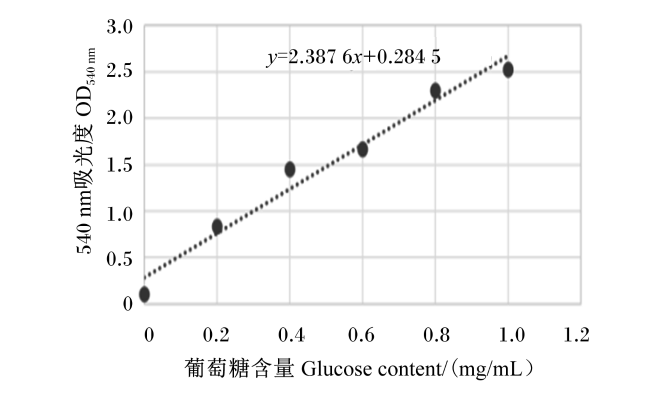
将乳酸菌在产酶发酵培养基培养72 h后,采用二硝基水杨酸(DNS)法测定内切葡聚糖酶、外切葡聚糖酶和β-葡萄糖苷酶活性,在540 nm波长下测定溶液的OD值,并根据葡萄糖标准曲线查询相应的葡萄糖含量(图1),并计算相应的酶活性。酶活性计算公式如下:
酶活性(U/mL)= W × N × 1000 T × V
式中:W为对照葡萄糖标准曲线得到的葡萄糖含量;N为反应体积(mL);T为反应时间(min);V为粗酶液体积(mL)。
图1 葡萄糖标准曲线

Fig.1 Glucose standard curve

1.3 数据统计分析

试验数据经Excel 2019整理后,采用SPSS 20.0软件中的ANOVA过程进行单因素方差分析(one-way ANOVA)和LSD法多重比较,采用GraphPad Prism 8进行绘图。

2 结果与分析

2.1 乳酸菌的鉴定

2.1.1 形态学鉴定

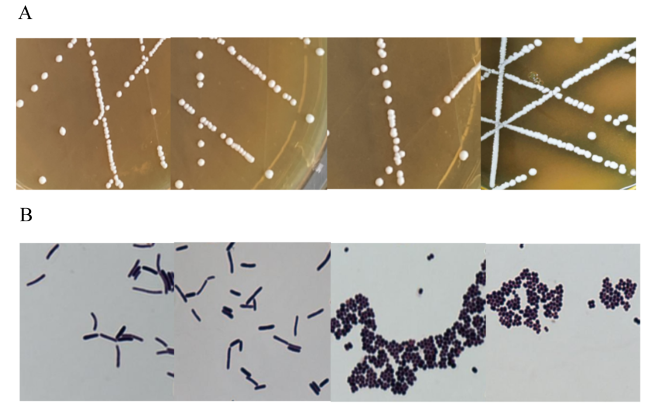
图2-A所示,从藏香猪粪便中分离筛选获得的17株乳酸菌,菌株颜色均为乳白色;除TB5和TB9为圆形液滴状外,其他菌株均为圆形微隆,该15株乳酸菌菌落表面光滑、湿润,边缘整齐,且均不透明。如图2-B所示,所获菌株经革兰氏染色呈紫色,确定为革兰氏阳性菌,菌株形状表现为球状或杆状。
图2 部分菌株菌落形态及革兰氏染色

A:部分菌株菌落形态;B:部分菌株革兰氏染色。

Fig.2 Colony morphology and Gram stain of some strains

A: colony morphology of some strains; B: Gram stain of some strains.

2.1.2 生理生化鉴定

表3可知,17株乳酸菌产酸、不产气,吲哚试验、过氧化氢酶触试验、硫化氢穿刺试验和明胶液化试验均呈阴性,所有菌株的纤维二糖和水杨苷呈阳性。
表3 乳酸菌生理生化特性

Table 3 Physiological and biochemical characteristics of LAB

菌株编号
Strain No.
过氧化氢
Hydrogen
peroxide
吲哚
Indole
硫化氢
Hydrogen
sulfide
明胶
Gelatin
产酸
Acid
production
产气
Gas
production
七叶苷
Aesculin
纤维二糖
Cellobiose
麦芽糖
Maltose
甘露醇
Mannitol
水杨苷
Salicin
山梨醇
Sorbitol
蔗糖
Sucrose
棉子糖
Raffinose
TB2.1 - - - - + - - + + + + + + +
TB5 - - - - + - - + - - + - - -
TB6 - - - - + - + + + - + - - -
TB6.1 - - - - + - - + - - + - - -
TB6.2 - - - - + - - + - - + - - -
TB6.3 - - - - + - - + - - + - - -
TB7 - - - - + - - + - - + - - -
TB7.1 - - - - + - - + - - + - - -
TB7.2 - - - - + - + + + - + - - -
TB8 - - - - + - + + + - + - + -
TB9 - - - - + - - + - - + - - -
TB9.1 - - - - + - + + + - + - + -
TB10 - - - - + - + + + - + - - -
TB10.1 - - - - + - - + - - + - - -
TB12 - - - - + - - + - - + - - -
TB15.1 - - - - + - - + - - + - - -
TB15.2 - - - - + - - + - - + - - -

“+”:阳性;“-”:阴性。“+”: positive; “-”: negative.

2.1.3 分子生物学鉴定

表4可知,测序结果经BLAST比对发现,17株乳酸菌中11株为乳酸片球菌(Pediococcus acidilactici),5株为戊糖片球菌(Pediococcus pentosaceus),1株为唾液乳杆菌(Lactobacillus salivarius)。
表4 17株乳酸菌序列同源性比对结果

Table 4 Results of sequence homology comparison of 17 strains of LAB

菌株编号
Strain No.
菌株中文名称
Chinese name of strains
菌株拉丁名称
Latin name of strains
同源性
Homology/%
登录号
Accession number
TB2.1 唾液乳杆菌 Lactobacillus salivarius 100.00 CP101685.1
TB5 乳酸片球菌 Pediococcus acidilactici 99.86 MT463569.1
TB6 戊糖片球菌 Pediococcus pentosaceus 100.00 MZ787642.1
TB6.1 乳酸片球菌 Pediococcus acidilactici 99.73 MT464372.1
TB6.2 乳酸片球菌 Pediococcus acidilactici 100.00 CP023654.1
TB6.3 乳酸片球菌 Pediococcus acidilactici 100.00 MT538961.1
TB7 乳酸片球菌 Pediococcus acidilactici 100.00 PP600295.1
TB7.1 乳酸片球菌 Pediococcus acidilactici 99.73 CP023654.1
TB7.2 戊糖片球菌 Pediococcus pentosaceus 100.00 MZ787642.1
TB8 戊糖片球菌 Pediococcus pentosaceus 99.73 OR084831.1
TB9 乳酸片球菌 Pediococcus acidilactici 100.00 MT538961.1
TB9.1 戊糖片球菌 Pediococcus pentosaceus 100.00 MZ787642.1
TB10 戊糖片球菌 Pediococcus pentosaceus 100.00 ON391081.1
TB10.1 乳酸片球菌 Pediococcus acidilactici 100.00 MT538961.1
TB12 乳酸片球菌 Pediococcus acidilactici 100.00 PP600295.1
TB15.1 乳酸片球菌 Pediococcus acidilactici 100.00 PP600295.1
TB15.2 乳酸片球菌 Pediococcus acidilactici 100.00 FJ844959.1

2.2 乳酸菌益生特性

2.2.1 生长性能和产酸性能

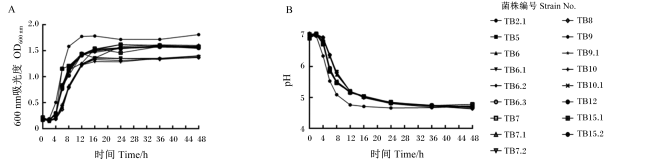
图3-A所示,菌株在接种4 h后进入对数生长期,其中,菌株TB2.1、TB5、TB6.1和TB10在12~48 h为稳定期,菌株TB7.1在24~48 h为稳定期,其余菌株在16~48 h为稳定期;各菌株在48 h时OD600 nm值均为1.3~1.8,其中菌株TB2.1的OD600 nm值最高,具有较强的生长繁殖能力。
图3 乳酸菌生长曲线和产酸曲线

A:生长曲线;B:产酸曲线。

Fig.3 Growth curve and acid production curve of LAB

A: growth curve; B: acid production curve.

图3-B所示,17株乳酸菌的pH先快速下降然后趋于稳定,其中,菌株TB2.1下降最快,在12 h时pH达到4.76;其次是菌株TB5、TB6.2、TB6.3、TB7、TB12、TB15.1和TB15.2,这7株乳酸菌在8 h时pH分别为5.46、5.46、5.49、5.47、5.49、5.48和5.48;17株乳酸菌在48 h时的pH均能达到4.80以下。

2.2.2 耐酸性和耐胆盐性能

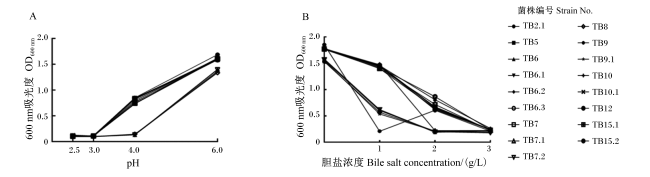
图4-A所示,在pH为2.5和3.0的酸性环境中,所有菌株基本停止生长,表明酸性环境对17株乳酸菌的生长均有抑制作用;在pH为4.0时,除菌株TB6、TB7.2、TB8、TB9.1和TB10的生长受到严重抑制外,其余12株乳酸菌生长较pH为6.0时的条件下减慢,但基本能正常生长,其中TB2.1长势最好,其次是菌株TB6.1、TB6.2、TB6.3、TB7和TB10.1。
图4 乳酸菌在不同pH及胆盐浓度条件下的生长情况

A:耐酸曲线;B:耐胆盐曲线。

Fig.4 Growth of LAB under different pH and bile salt concentration

A: acid resistance curve; B: bile salt resistance curve.

图4-B所示,在1 g/L胆盐条件下,11株乳酸菌能耐受此胆盐环境,其中菌株TB7.1长势最好,其次是菌株TB6.1、TB6.2、TB9和TB12;在2 g/L胆盐条件下,菌株TB6.3长势最好,其次是TB6.2和TB7等10株乳酸菌;在3 g/L胆盐条件下,所有菌株基本停滞生长,说明不能耐受此环境。

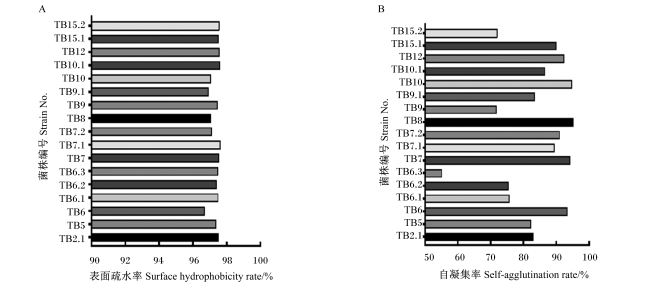
2.2.3 表面疏水率和自凝集率

图5-A所示,17株菌株的表面疏水率差异不大,表面疏水率最高的是菌株TB7.1(97.63%),最低的是菌株TB6(96.71%)。
图5 乳酸菌表面疏水率和自凝集率

A:表面疏水率;B:自凝集率。

Fig.5 Surface hydrophobic rate and self-agglutination rate of LAB

A: surface hydrophobicity rate; B: self-agglutination rate.

图5-B所示,不同菌株的自凝集率差异较大,其中菌株TB8的自凝集率最高,达到了95.20%;其次是菌株TB10(94.84%)和TB7(94.35%);自凝集率最低的是菌株TB6.3(55.20%)。

2.2.4 抑菌性能

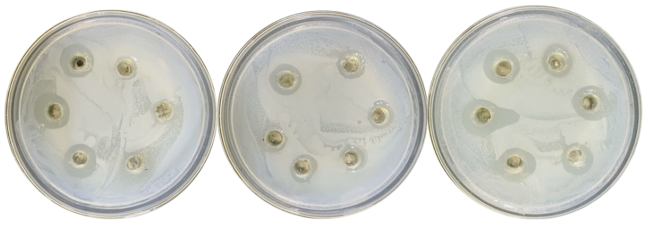
图6表5所示,17株乳酸菌对大肠杆菌、金黄色葡萄球菌和沙门氏菌均表现出不同程度的抑制作用。其中,菌株TB10、TB10.1、TB15.1、TB8、TB12、TB15.2均对金黄色葡萄球菌表现出强抑制性;除菌株TB2.1外,其余菌株均对大肠杆菌的抑菌能力均较强;菌株TB15.2对沙门氏菌的抑菌能力最强。
图6 部分乳酸菌的抑菌效果

Fig.6 Bacteriostatic effects of some LAB

表5 17株乳酸菌对大肠杆菌、沙门氏菌和金黄色葡萄球菌的抑菌能力

Table 5 Bacteriostatic capacity of 17 strains of LAB against Escherichia coli, Salmonella and Staphylococcus aureus

菌株编号
Strain No.
大肠杆菌
Escherichia coli (ATCC 30105)
金黄色葡萄球菌
Staphylococcus aureus (ATCC 29213)
沙门氏菌
Salmonella (ATCC 43971)
TB2.1 + + ++
TB5 ++ ++ ++
TB6 ++ + ++
TB6.1 ++ + ++
TB6.2 ++ + ++
TB6.3 ++ + ++
TB7 ++ ++ ++
TB7.1 ++ ++ ++
TB7.2 ++ + ++
TB8 ++ +++ ++
TB9 ++ + ++
TB9.1 ++ + ++
TB10 ++ ++++ ++
TB10.1 ++ ++++ ++
TB12 ++ +++ ++
TB15.1 ++ ++++ ++
TB15.2 ++ +++ +++

+:抑菌圈直径8~10 mm;++:抑菌圈直径11~13 mm;+++:抑菌圈直径14~16 mm;++++:抑菌圈直径17~20 mm。

+: inhibition circle diameter as 8 to 10 mm; ++: inhibition circle diameter as 11 to 13 mm; +++: inhibition circle diameter as 14 to 16 mm; ++++: inhibition circle diameter as 17 to 20 mm.

2.3 乳酸菌安全性

2.3.1 溶血试验

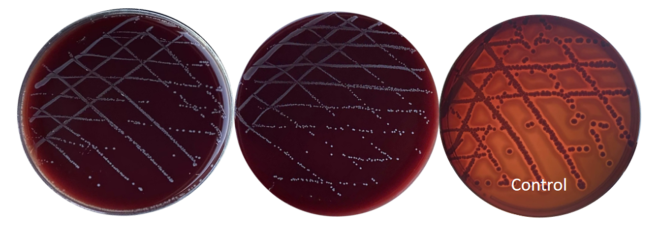
图7所示,17株乳酸菌在孵育48 h后均未出现溶血症状,对照为金黄色葡萄球菌。
图7 部分乳酸菌溶血情况

Control:对照。

Fig.7 Hemolysis of some LAB

2.3.2 抗生素敏感性

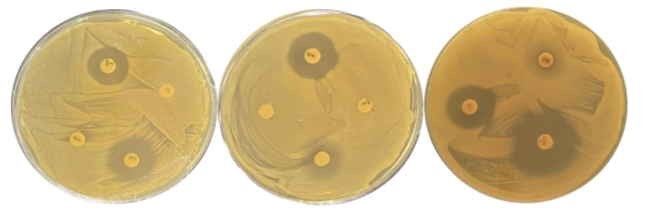
图8表6所示,菌株TB6.2、TB6.3、TB7、TB7.1和TB15.1对四环素中度敏感,其他菌株对四环素不敏感;17株乳酸菌均对青霉素和红霉素中度敏感,对环丙沙星、氧氟沙星、链霉素、妥布霉素和多黏菌素B均不敏感。
图8 部分乳酸菌耐抗生素情况

Fig.8 Antibiotic resistance of some LAB

表6 乳酸菌安全性测定结果

Table 6 Safety measurement results of LAB

菌株编号
Strain No.
溶血性
Hemolysis
抗生素敏感性 Antibiotic sensitivity
四环素
Tetracycline
红霉素
Erythromycin
青霉素
Penicillin
氧氟沙星
Ofloxacin
环丙沙星
Ciprofloxacin
链霉素
Streptomycin
妥布霉素
Tobramycin
多黏菌素B
Polymyxin
B
TB2.1 γ R I I R R R R R
TB5 γ R I I R R R R R
TB6 γ R I I R R R R R
TB6.1 γ R I I R R R R R
TB6.2 γ I I I R R R R R
TB6.3 γ I I I R R R R R
TB7 γ I I I R R R R R
TB7.1 γ I I I R R R R R
TB7.2 γ R I I R R R R R
TB8 γ R I I R R R R R
TB9 γ R I I R R R R R
TB9.1 γ R I I R R R R R
TB10 γ R I I R R R R R
TB10.1 γ R I I R R R R R
TB12 γ R I I R R R R R
TB15.1 γ I I I R R R R R
TB15.2 γ R I I R R R R R

2.3.3 毒力因子基因检测

对筛选到的17株乳酸菌的毒力因子进行基因检测,PCR扩增结果显示,17株乳酸菌均不存在毒力因子相关的cylAgelE以及ace基因。

2.4 乳酸菌纤维素酶活性

17株乳酸菌纤维素酶活性测定结果见表7,除菌株TB2.1、TB7.1和TB8外,其他菌株均未检测到纤维素酶活性。其中,菌株TB8的内切葡聚糖酶活性最高,为2.59 U/mL;菌株TB2.1外切葡聚糖酶和β-葡萄糖苷酶活性最高,分别为1.13和1.05 U/mL。
表7 17株乳酸菌纤维素酶活性测定结果

Table 7 Determination results of cellulase activity in 17 strains of LABU/mL

菌株编号
Strain No.
内切葡聚糖酶
Endo-glucanase
外切葡聚糖酶
Exo-glucanase
β-葡萄糖苷酶
β-glucosidase
TB2.1 0.77 1.13 1.05
TB5 - - -
TB6 - - -
TB6.1 - - -
TB6.2 - - -
TB6.3 - - -
TB7 - - -
TB7.1 0.05 0.09 0.02
TB7.2 - - -
TB8 2.59 0.31 0.02
TB9 - - -
TB9.1 - - -
TB10 - - -
TB10.1 - - -
TB12 - - -
TB15.1 - - -
TB15.2 - - -

数据为3次平行试验结果的平均值;“-”代表没有酶活性。

Values were average of the results of three parallel experiments; “-” mean no enzyme activity.

3 讨论

乳酸菌的生长性能和产酸性能是衡量乳酸菌能力的重要参数,乳酸菌在饲粮中快速生长后能降低饲粮pH,有利于创造厌氧环境,可以最大限度的降低病原微生物的活性,从而有效抑制病原微生物的生长和繁殖[22-23]。本研究中,17株乳酸菌均在4 h后进入对数生长期,16 h后逐渐趋于平缓,其中菌株TB2.1在48 h的OD600 nm值最高,具有较强的生长繁殖能力;所有菌株在4~16 h的pH快速下降,最终稳定在4.80以下,具有较强的产酸能力。魏明智等[24]在酸汤子中分离得到的乳酸菌同样在4 h后进入对数生长期,且随着菌株生长pH不断下降,这与本试验结果相符。
乳酸菌对于酸碱的耐受性,是其能否在动物胃肠道发挥作用的重要标准之一[25-26]。耐酸性试验结果表明,在pH为4.0时,12株乳酸菌基本能够正常生长,其中菌株TB2.1、TB10.1和TB6.3长势较好,表明其耐酸性较好。汤凯等[27]在伊犁地区奶疙瘩中筛选出的8株乳酸菌在0.3%及0.5%胆盐环境下仍保持一定的生长活性。本试验中,有11株乳酸菌在2 g/L胆盐条件下表现出了良好的耐受性,其中菌株TB6.3、TB6.2和TB7表现较好。
乳酸菌通过黏附作用定植于肠道中,发挥调节肠道菌群、增强免疫等功能,同时其黏附能力又与菌株的自凝集、疏水性间存在密切的联系[28-29],因此表面疏水率和自凝集率是进行菌种筛选和衡量益生菌品质的重要指标。本试验中,不同菌株的自凝集率差异较大,其中菌株TB8的自凝集率最高,达到了95.20%;自凝集率最低的是菌株TB6.3。杨振泉等[30]研究表明,人结肠癌细胞系Caco-2细胞黏附率与戊糖片球菌的表面疏水率呈显著正相关。本试验中,17株菌株的表面疏水率差异不大,均达到了96%以上。因此,17株乳酸菌均具有良好的疏水性(表面疏水率均在90%以上)和自凝集力(自凝集均在50%以上),具有潜在的益生特性。
乳酸菌生长代谢产生的有机酸或细菌素等产物,能显著降低胃肠道pH,从而有效抑制有害菌的生长繁殖[31-32],如弯曲杆菌、金黄色萄萄球菌和沙门氏菌[33]。本试验中,17株乳酸菌均对3种常见病原菌大肠杆菌、金黄色葡萄球菌和沙门氏菌有良好的抑制效果。同时,17株乳酸菌均不溶血,均不存在毒力因子相关的cylAgelE以及ace基因,所有菌株对红霉素和青霉素中度敏感,只有菌株TB6.2、TB6.3、TB7、TB7.1、TB15.1对四环素中度敏感,表现出较高的安全性。
本试验中,除菌株TB2.1、TB7.1和TB8外,其他菌株均未检测到纤维素酶活性,其中菌株TB8的内切葡聚糖酶活性最高,为2.59 U/mL;菌株TB2.1的外切葡聚糖酶和β-葡萄糖苷酶活性最高,分别为1.13和1.05 U/mL。付增宇等[34]筛选获得5株具有纤维素酶活性的芽孢杆菌,其中3株纤维素酶活性低于本试验菌株TB8。齐笑萱等[35]研究表明,耐低温纤维素降解真菌在16 ℃条件下内切葡聚糖酶活性最高,为128.34 U/mL;外切葡聚糖酶和β-葡萄糖苷酶活性较稳定,最高分别为2.31和2.43 U/mL。相较于真菌,细菌拥有种类繁多、生长快、适应性强,以及能产生特异性的多酶复合物等优点,但酶活性相对较低[36]

4 结论

本试验筛选到的乳酸菌TB2.1(唾液乳杆菌)和TB8(戊糖片球菌)具有良好的益生特性和纤维素酶活性,可作为发酵饲料的候选菌株。
[1]
吴晓婷, 王召路, 朱莉莉, 等. 猪源益生性乳酸菌的分离鉴定及生物学特性研究[J]. 动物营养学报, 2025, 37(4):2750-2762.

DOI

WU X T, WANG Z L, ZHU L L, et al. Isolation,identification and biological characteristics of probiotic lactic acid bacteria derived from porcine[J]. Chinese Journal of Animal Nutrition, 2025, 37(4):2750-2762.

[2]
邱月琴, 杨雪芬, 王丽, 等. 发酵饲料对猪生长性能、营养物质消化及肠道菌群影响的研究进展[J]. 饲料工业, 2022, 43(13):25-27.

QIU Y Q, YANG X F, WANG L, et al. Research progress on the effect of fermented feed on pig growth performance,nutrient digestibility and gut microbiota[J]. Feed Industry, 2022, 43(13):25-27. (in Chinese)

[3]
CRISTOFORI F, DARGENIO V N, DARGENIO C, et al. Anti-inflammatory and immunomodulatory effects of probiotics in gut inflammation:a door to the body[J]. Frontiers in Immunology, 2021, 12:578386.

[4]
DAHIYA D, NIGAM P S. The gut microbiota influenced by the intake of probiotics and functional foods with prebiotics can sustain wellness and alleviate certain ailments like gut-inflammation and colon-cancer[J]. Microorganisms, 2022, 10(3):665.

[5]
JAVANSHIR N, HOSSEINI G N G, SADEGHI M, et al. Evaluation of the function of probiotics,emphasizing the role of their binding to the intestinal epithelium in the stability and their effects on the immune system[J]. Biological Procedures Online, 2021, 23(1):23.

[6]
尹树磊, 杜香, 张小希, 等. 乳酸菌抗氧化机制研究进展及在食品领域的应用[J]. 食品科学, 2024, 45(13):345-355.

DOI

YIN S L, DU X, ZHANG X X, et al. Research progress in the antioxidant mechanism of lactic acid bacteria and its application in the food field[J]. Food Science, 2024, 45(13):345-355. (in Chinese)

DOI

[7]
叶朋飞, 刘静, 李秋达, 等. 德氏乳杆菌的益生功能及其在发酵食品中的应用[J]. 现代食品, 2023, 29(11):80-84.

YE P F, LIU J, LI Q D, et al. Probiotic function of Lactobacillus delbrueckii and its application in fermented foods[J]. Modern Food, 2023, 29(11):80-84. (in Chinese)

[8]
肖仔君, 钟瑞敏, 陆伟东, 等. 酵素源乳酸菌的益生功能及抑菌特性评价[J]. 现代食品科技, 2023, 39(8):62-68.

XIAO Z J, ZHONG R M, LU W D, et al. Evaluation of probiotic and antibacterial properties of lactic acid bacteria derived from fermented fruit broth[J]. Modern Food Science & Technology, 2023, 39(8):62-68. (in Chinese)

[9]
李燕中, 王玥, 张振奇, 等. 浅析微生物发酵饲料对猪肠道健康的影响[J]. 中国畜牧业, 2022(14):52-53.

LI Y Z, WANG Y, ZHANG Z Q, et al. Analyzing the effect of microbial fermentation feed on the intestinal health of pigs[J]. China Animal Industry, 2022(14):52-53. (in Chinese)

[10]
王赫, 朱风华, 陈甫, 等. 不同发酵时间对乳酸菌发酵饲料中主要营养物质、乳酸菌和乳酸含量的影响[J]. 中国家禽, 2017, 39(10):27-31.

WANG H, ZHU F H, CHEN F, et al. Effects of different fermentation times on the contents of major nutrients major nutrients,lactic acid bacteria and lactic acid in Lactobacillus fermented feeds[J]. China Poultry, 2017, 39(10):27-31. (in Chinese)

[11]
王世贵, 许生琪, 卢福山. 不同双低菜籽粕添加量对断奶仔猪血清蛋白质含量的影响[J]. 畜禽业, 2018, 29(9):19,21.

WANG S G, XU S Q, LU F S. Effects of different double-low rapeseed meal additions on serum protein content of weaned piglets[J]. Livestock and Poultry Industry, 2018, 29(9):19,21. (in Chinese)

[12]
田志梅, 马现永, 鲁慧杰, 等. 果渣营养价值及其发酵饲料在畜禽养殖中的应用[J]. 中国畜牧兽医, 2019, 46(10):2955-2963.

DOI

TIAN Z M, MA X Y, LU H J, et al. Nutrient value of fruit pomace and the application of its fermented feed in livestock breeding[J]. China Animal Husbandry & Veterinary Medicine, 2019, 46(10):2955-2963. (in Chinese)

[13]
康怀艳. 益生菌发酵饲料对奶山羊血清生化指标和产奶性能的影响[D].硕士学位论文. 杨凌: 西北农林科技大学, 2019.

KANG H Y. Effects of probiotic fermented feed on serum biochemical indexes and milk production performance of dairy goats[D].Master’s Thesis. Yangling: Northwest A&F University, 2019. (in Chinese)

[14]
程雨, 谢坤, 姜艳平, 等. 兔源罗伊乳杆菌的分离鉴定及益生效果评价[J]. 中国兽医学报, 2024, 44(10):2136-2144,2293.

CHENG Y, XIE K, JIANG Y P, et al. Isolation and identification of rabbit-derived Lactobacillus reuteri and evaluation of its probiotic function[J]. Chinese Journal of Veterinary Science, 2024, 44(10):2136-2144,2293. (in Chinese)

[15]
崔棹茗, 郭刚, 原现军, 等. 青稞秸秆青贮饲料中优良乳酸菌的筛选及鉴定[J]. 草地学报, 2015, 23(3):607-615.

DOI

CUI Z M, GUO G, YUAN X J, et al. Screening and identification of good lactic acid bacteria in barley straw silage[J]. Acta Agrestia Sinica, 2015, 23(3):607-615. (in Chinese)

[16]
李利, 孔丽, 张宁, 等. 耐酸耐胆盐乳酸菌的鉴定及筛选[J]. 食品科学, 2015, 36(21):123-128.

DOI

LI L, KONG L, ZHANG N, et al. Identification and selection of lactic acid bacteria resistant to acid and bile salt[J]. Food Science, 2015, 36(21):123-128. (in Chinese)

DOI

[17]
李龙. 藏鸡源乳酸菌和红景天对肉鸡生产性能,腹水敏感性和肠道功能的影响[D].博士学位论文. 杨凌: 西北农林科技大学, 2015.

LI L. Effects of tibetan chicken-derived lactic acid bacteria and rhodiola rosea on production performance,ascites sensitivity and intestinal function in broilers[D].Ph.D. Thesis. Yangling: Northwest A&F University, 2015. (in Chinese)

[18]
崔素素. 乳酸菌优良菌株的筛选及CRISPR多样性分析[D].硕士学位论文. 哈尔滨: 哈尔滨工业大学, 2019.

CUI S S. Screening and CRISPR diversity analysis of good strains of Lactobacillus casei[D].Master’s Thesis. Harbin: Harbin Institute of Technology, 2019. (in Chinese)

[19]
ARGYRI A A, ZOUMPOPOULOU G, KARATZAS K A G, et al. Selection of potential probiotic lactic acid bacteria from fermented olives by in vitro tests[J]. Food Microbiology, 2013, 33(2):282-291.

[20]
何江波. 羊瘤胃源乳酸菌的分离筛选及其菌剂制备方法研究[D].硕士学位论文. 杨凌: 西北农林科技大学, 2021.

HE J B. Isolation and screening of lactic acid bacteria from rumen and study on the preparation method of bacteria agent[D].Master’s Thesis. Yangling: Northwest A&F University, 2021. (in Chinese)

[21]
邓亚飞, 吴佳颖, 张留君, 等. 羊源粪肠球菌多位点序列分型及其耐药特性和毒力基因检测分析[J]. 微生物学通报, 2024, 51(8):3070-3084.

DENG Y F, WU J Y, ZHANG L J, et al. Multilocus sequence typing,antibiotic resistance,and virulence genes of Enterococcus faecalis from sheep[J]. Microbiology, 2024, 51(8):3070-3084. (in Chinese)

[22]
TAHIR M, LI J Y, XIN Y F, et al. Response of fermentation quality and microbial community of oat silage to homofermentative lactic acid bacteria inoculation[J]. Frontiers in Microbiology, 2022, 13:1091394.

[23]
NAZAR M, WANG S R, ZHAO J, et al. The feasibility and effects of exogenous epiphytic microbiota on the fermentation quality and microbial community dynamics of whole crop corn[J]. Bioresource Technology, 2020, 306:123106.

[24]
魏明智, 王维浩, 全志刚, 等. 酸汤子中乳酸菌和酵母菌益生特性[J]. 中国粮油学报, 2024, 39(9):27-36.

WEI M Z, WANG W H, QUAN Z G, et al. Probiotic characteristics of lactic acid bacteria and yeast in sour soup[J]. Journal of the Chinese Cereals and Oils Association, 2024, 39(9):27-36. (in Chinese)

[25]
ILHA E C, DA SILVA T, LORENZ J G, et al. Lactobacillus paracasei isolated from grape sourdough:acid,bile,salt,and heat tolerance after spray drying with skim milk and cheese whey[J]. European Food Research and Technology, 2015, 240(5):977-984.

[26]
XIAO Y, ZHAO J X, ZHANG H, et al. Mining Lactobacillus and Bifidobacterium for organisms with long-term gut colonization potential[J]. Clinical Nutrition, 2020, 39(5):1315-1323.

[27]
汤凯, 武运, 王雪, 等. 伊犁地区奶疙瘩中乳酸菌的筛选及其特性研究[J]. 食品工业科技, 2025, 46(3):188-195.

TANG K, WU Y, WANG X, et al. Screening and characterisation of lactic acid bacteria in milk lumps from Yili region[J]. Food Industry Science and Technology, 2025, 46(3):188-195. (in Chinese)

[28]
梅雪锋, 华德平, 田雨菁, 等. 唾液宿主关联乳杆菌ATCC 11741益生特性[J]. 微生物学报, 2024, 64(10):3901-3915.

MEI X F, HUA D P, TIAN Y J, et al. Probiotic characteristics of Ligilactobacillus salivarius ATCC 11741[J]. Acta Microbiologica Sinica, 2024, 64(10):3901-3915. (in Chinese)

[29]
秦文飞, 宋馨, 夏永军, 等. 乳酸菌在肠道定植的影响因素及研究方法[J]. 食品科学, 2021, 42(23):275-283.

QIN W F, SONG X, XIA Y J, et al. Influencing factors and research methods of lactic acid bacteria colonisation in the intestinal tract[J]. Food Science, 2021, 42(23):275-283. (in Chinese)

[30]
杨振泉, 靳彩娟, 张咪, 等. 高粘附性戊糖片球菌的筛选、标记及其表面疏水与自凝聚性特征[J]. 食品与生物技术学报, 2015, 34(9):926-934.

YANG Z Q, JIN C J, ZHANG M, et al. Screening and molecular marking of highly adhesive Pediococcus pentosaceus and the characteristics of their surface hydrophobicities and autoaggregation abilities[J]. Journal of Food Science and Biotechnology, 2015, 34(9):926-934. (in Chinese)

[31]
QUEIROZ L L, HOFFMANN C, LACORTE G A, et al. Genomic and functional characterization of bacteriocinogenic lactic acid bacteria isolated from Boza,a traditional cereal-based beverage[J]. Scientific Reports, 2022, 12(1):1460.

[32]
张宸瑞, 薛桥丽, 白彬阳, 等. 云南牟定酸浆水中优势产酸菌的分离鉴定及生长特性[J]. 食品科学, 2021, 42(20):75-82.

ZHANG C R, XUE Q L, BAI B Y, et al. Isolation,identification and growth characteristics of dominant acid-producing bacteria from fermented soy whey from sufu production in Mouding,Yunnan[J]. Food Science, 2021, 42(20):75-82. (in Chinese)

[33]
GIRAFFA G, DE VECCHI P, ROSSETTI L. Note:identification of Lactobacillus delbrueckii subspecies bulgaricus and subspecies lactis dairy isolates by amplified rDNA restriction analysis[J]. Journal of Applied Microbiology, 1998, 85(5):918-924.

[34]
付增宇, 郭玮, 李志超, 等. 低温地区纤维素降解菌的筛选鉴定与纤维素酶活力测定[J]. 贵州农业科学, 2024, 52(3):79-85.

FU Z Y, GUO W, LI Z C, et al. Screening and identification of cellulose degrading bacteria and determination of cellulase activity in low-temperature areas[J]. Guizhou Agricultural Sciences, 2024, 52(3):79-85. (in Chinese)

[35]
齐笑萱, 张阳, 赵爽, 等. 耐低温纤维素降解真菌的筛选、鉴定及酶活性研究[J]. 土壤通报, 2024, 55(2):460-470.

QI X X, ZHANG Y, ZHAO S, et al. Screening and identification of cold-adapted fungi with cellulose degradation and its enzymatic properties[J]. Chinese Journal of Soil Science, 2024, 55(2):460-470. (in Chinese)

[36]
刘瑞, 郭琪, 曹颖, 等. 一株竹木质素降解菌的筛选及降解效果[J]. 微生物学通报, 2024, 51(6):2170-2181.

LIU R, GUO Q, CAO Y, et al. A bamboo lignin-degrading strain:screening and degradation performance[J]. Microbiology, 2024, 51(6):2170-2181. (in Chinese)

Outlines

/