REVIEW

Research Progress on Biological Functions of Chlorogenic Acid and Its Application in Pigs and Chickens Production

  • LI Hongtao , 1, 2 ,
  • XING Falu 3 ,
  • YU Juan 2 ,
  • ZHAO Xu , 1, *
Expand
  • 1 College of Agriculture and Forestry Science, Linyi University, Linyi 276000, China
  • 2 Shandong Backbone Feed Group Co., Ltd., Linyi 276036, China
  • 3 Qingzhou Animal Husbandry Development Center, Qingzhou 262500, China
* associate professor, E-mail:

Received date: 2025-02-27

  Online published: 2025-09-12

Abstract

Modern pig and chicken breeds have the characteristics of fast growth rate and high feed utilization rate, but the body disease resistance is weak, easy to be attacked by pathogenic microorganisms such as bacteria and viruses. Chlorogenic acid is a kind of plant polyphenol, which is a phenolic acid composed of caffeic acid and quinic acid. Chlorogenic acid is also an effective component in Chinese traditional medicine honeysuckle and Eucommia. Chlorogenic acid has antibacterial, antiviral, anti-tumor, antioxidant and other biological effects, but also can reduce hypertension, hyperglycemia, hyperlipidemia and other chronic diseases. It has been widely used in the medical field. This paper summarized the basic properties and sources, metabolism and biosafety, biological functions of chlorogenic acid, and its application in pig and chicken production, in order to provide reference for the extensive application of chlorogenic acid in livestock and poultry production.

Cite this article

LI Hongtao , XING Falu , YU Juan , ZHAO Xu . Research Progress on Biological Functions of Chlorogenic Acid and Its Application in Pigs and Chickens Production[J]. Chinese Journal of Animal Nutrition, 2025 , 37(9) : 5704 -5715 . DOI: 10.12418/CJAN2025.463

现代品种的猪和鸡饲料转化率高,生长速度快[1-2],但是这些畜禽品种抗病力较弱,病原性微生物、热应激、高密度饲养等因素容易影响畜禽的健康水平,降低免疫功能,引起疾病甚至死亡。绿原酸属于植物多酚的一种,是多种清热解毒中药的主要活性成分,金银花、鱼腥草、黄花蒿等中药都含有绿原酸成分[3]。近年来的研究发现,绿原酸具有多种生物学功能,不仅具有直接[4]和间接[5]的抗氧化功能,还具有增强免疫功能[6]、抗菌[7]、抗病毒[8]、消炎[9]、抗肿瘤[10]、提高肠道屏障功能[11]和繁殖性能[12]等多种生物学作用,对血管[13]、神经[14]、肝脏[15]、肾脏[16]等都具有保护作用。本文综述了绿原酸的基本性质、来源,代谢和生物安全性,生物学作用,及其在猪和鸡生产上的应用,以期为绿原酸在畜禽生产上的广泛应用提供参考。

1 绿原酸的分子结构、基本性质和来源
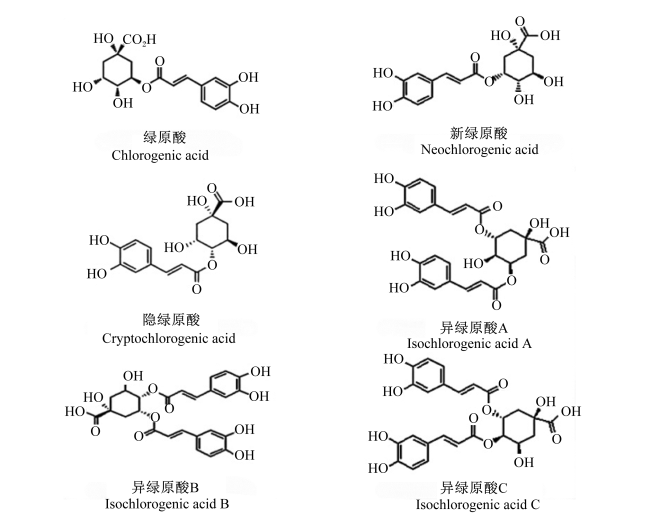
绿原酸分子式为C16H18O9,分子相对质量为354.31,是由咖啡酸(caffeic acid)与奎尼酸(quinic acid)组成的缩酚酸[17],其半水合物为白色针状结晶,味苦,易氧化。另外,根据咖啡酰在奎尼酸上的结合部位和数目不同,绿原酸还有6种异构体,其中新绿原酸、隐绿原酸、异绿原酸A、异绿原酸B、异绿原酸C是具有生理活性的绿原酸异构体[17]。绿原酸的分子结构和异构体见图1。生理pH为7.4时,绿原酸先解离质子形成酚氧阴离子(CGA-),再通过电子转移中和自由基(如HO·)[18],从而发挥高效的抗氧化作用。
图1 绿原酸的分子结构和异构体

Fig.1 Molecular structure and isomers of chlorogenic acid

目前,绿原酸产品主要是从传统中药——金银花[19]、杜仲[20]中提取纯化获得。根据提取溶剂的不同,绿原酸的提取方法主要分为水提法[21]、有机溶剂提取法[22]、水和有机溶剂混合提取法[23]三大类。为了提高提取效率,水提法中可以加入纤维素酶促进植物细胞壁的分解[21],有机溶剂提取法可以采取加压、超声辅助等措施[22,24]。金银花、杜仲叶、蒲公英叶、马铃薯叶中绿原酸含量分别为8.6~50.21 mg/g、8.5~19.7 mg/g、28.56 mg/g、3.18 mg/g[24-27]
由于从植物中提取绿原酸商业化生产成本较高,限制了绿原酸在畜牧生产中的广泛应用。利用合成生物学高效生产绿原酸是目前的研究热点,主要技术路线是通过基因工程,上调或下调莽草酸途径(shikimate pathway)相关酶的表达,提高烟酰胺腺嘌呤二核苷酸磷酸氢(nicotinamide adenine dinucleotide phosphate hydrogen,NADPH)等能量底物水平,高效合成绿原酸。用苯丙氨酸缺陷大肠杆菌菌株和酪氨酸缺陷大肠杆菌菌株共培养,能够有效避免咖啡酸和奎宁酸生物合成过程中代谢通量的竞争,绿原酸产量为131.31 mg/L[28]。利用模块化途径和辅因子工程在大肠杆菌中生产绿原酸,产量为2 789.2 mg/L[29]。通过顺式作用元件优化和NADPH再生工程在解脂耶氏酵母(Yarrowia lipolytica)中从头合成绿原酸,产量高达4 837.32 mg/L[30]

2 绿原酸的代谢和生物安全性

绿原酸在胃肠道上半部分以完整的形式吸收,在大鼠胃和小肠中发生少量水解(<1%),其中15%~32%的绿原酸在盲肠中水解成咖啡酸[31]。人结直肠腺癌细胞(Caco-2细胞)能够通过三磷酸腺苷结合盒转运体(ATP binding cassette-transporters),如活性P-糖蛋白(active P-glycoprotein,P-gp)等外排绿原酸和咖啡酸[32]。微透析探针绿原酸在大鼠体内的回收率为49%~65%[33]。大鼠口服绿原酸后,从尿液中排泄的绿原酸主要代谢物中发现咖啡酸和间香豆酸是主要的活性代谢物[34]。绿原酸在大鼠体内的代谢经历了水解、葡萄糖醛酸化、硫酸化、酰基迁移、氧化等过程[35]
绿原酸具有较好的生物安全性。绿原酸在高级别胶质瘤患者的疗效和安全性评价中,具有良好的安全性,最大耐受剂量为5.5 mg/kg BW[10]。10~100 μmol/L绿原酸能够维持牙齿的干细胞活力,并且对处理过的干细胞没有细胞毒性作用[36]

3 绿原酸的生物学作用

3.1 增强先天免疫反应

绿原酸通过增强免疫细胞功能、提高健康机体免疫相关细胞因子水平、激活线粒体反应、促进分泌型免疫球蛋白A(secretory immunoglobulin A,sIgA)分泌、增加肠道杯状细胞数量等,增强健康机体的先天免疫反应。绿原酸能够增强骨髓来源的单核巨噬细胞的抗原提呈功能和T细胞免疫活化相关基因的表达[37]。体外试验发现,绿原酸能够显著上调鸭胚成纤维细胞(duck embryo fibroblast cells,DEFs)中干扰素-β(interferon-β,IFN-β)和肿瘤坏死因子-α(tumor necrosis factor-α,TNF-α)基因表达水平,显著下调白细胞介素(interleukin,IL)-2和B细胞淋巴瘤-2(B-cell lymphoma 2,Bcl2)基因表达水平;体内试验发现,绿原酸显著提高1~18日龄绍兴鸭[1~3 d颈部皮下注射绿原酸(1 mg/mL)每天0.4 mL]血清IL-12p40、IL-1β、IFN-α和IFN-β含量,还能诱导鸭的模式识别受体和炎症因子基因表达,提高血清半胱天冬酶3(caspase 3)、诱导型一氧化氮合酶(inducible nitric oxide synthase,iNOS)、环氧合酶2(cyclooxygenase 2,COX2)活性,降低Bcl2水平[6]。绿原酸通过抑制铜绿假单胞菌(Pseudomonas aeruginosa)产生假单胞菌毒素pyocyanin,激活宿主线粒体未折叠蛋白反应(unfolded protein response,UPR),保护宿主免受病原体感染[38]。绿原酸能够提高断奶仔猪血清中IL-22、sIgA和空肠中sIgA含量[39]。绿原酸还能够增加鲫鱼肠道每单位长度的杯状细胞数量[40]

3.2 抗菌、抗病毒

绿原酸能够通过作用于细菌细胞膜、脂质代谢过程等多种方式抑制耐药性细菌、化脓性链球菌(streptococcus pyogenes)等生长,还能够增强强力霉素等的作用效果,减轻黄曲霉毒素B1(aflatoxin B1,AFB1)等真菌毒素的毒性。绿原酸通过直接破坏大肠杆菌的超级细菌细胞壁和细胞膜,抑制其生长[41];通过影响化脓性链球菌的脂质代谢和清除活性氧(ROS)发挥抗菌作用[7];对肠炎沙门氏菌(Salmonella enteritidis)和禽致病性大肠杆菌(avian pathogenic Escherichia coli)还有明显的抑制作用[42];通过抑制多重耐药铜绿假单胞菌(Pseudomonas aeruginosa)细胞膜形成和细菌迁移,减少绿脓菌素的产生,下调lasIlasR等群体感应(quorum sensing,QS)相关基因的表达[43];通过线粒体去极化和ROS产生的可能性增加等途径,使念珠菌发生细胞凋亡[44]。绿原酸能够抑制耐药基因tet(X)的表达,增强鸭疫里默氏杆菌(Riemerella anatipestifer)对四环素类抗生素多西霉素的敏感性[45]。此外,绿原酸通过维持线粒体膜电位、激活核因子E2相关因子2/血红素加氧酶1(nuclear factor-erythroid factor 2-related factor 2/heme oxygenase 1,Nrf2/HO1)、抑制非典型核因子-κB(nuclear factor-kappaB,NF-κB)信号通路,降低AFB1诱导的细胞毒性[46];还能够减轻呕吐毒素(deoxynivalenol,DON)引发的猪小肠上皮细胞IPEC-J2的细胞毒性、炎症和凋亡[47]
绿原酸能够抑制猪δ-冠状病毒(porcine deltacoronavirus,PDCoV)等多种病毒的增殖,诱导细胞免疫和体液免疫,减弱炎症因子的表达,缓解病理损伤。绿原酸在LLC猪肾细胞和猪睾丸细胞中均能显著抑制PDCoV的复制,降低PDCoV病毒RNA和蛋白质的合成,并以剂量依赖的方式降低病毒滴度,还通过抑制PDCoV感染引起的细胞凋亡,减缓病毒释放[8]。高浓度绿原酸可通过黑色素分化相关蛋白5(melanoma differentiation-associated protein 5,MDA5)、Toll样受体7(Toll-like receptor 7,TLR7)和NF-κB信号通路有效调节传染性支气管炎病毒(infectious bronchitis virus,IBV)攻毒鸡的先天免疫系统,具有诱导IBV感染鸡细胞免疫和体液免疫应答的潜力[48]。绿原酸能够抑制禽腺病毒4型(fowl adenovirus serotype 4,FAdV4)的增殖,且剂量依赖性地抑制炎症因子和信号分子的表达[49]。绿原酸能够抑制鸭肠炎病毒(duck enteritis virus,DEV)在鸭胚成纤维细胞(duck embryo fibroblast,DEFs)和鸭淋巴器官中的增殖,减轻病毒引起的病理损伤[50]。此外,绿原酸也是2019冠状病毒(COVID-19)的潜在抑制剂[51]

3.3 消炎

绿原酸通过减少巨噬细胞损伤和死亡、调节巨噬细胞极化、减少中性粒细胞等免疫细胞募集等方式,调控感染中免疫细胞的炎症反应;绿原酸能够减轻非酒精性脂肪性肝炎、AFB1中毒肝脏炎症,缓解肺部炎症、急性肺损伤,减轻肠道炎症和超敏反应。绿原酸能够降低IL-1β、TNF-α等促炎因子表达和半胱天冬酶3、核苷酸结合寡聚化结构域3(NOD-like receptor protein 3,NLRP3)等蛋白表达,减少ROS的产生,增加Nrf-2的表达,减轻头孢噻肟耐钠大肠杆菌(cefotaxime sodium-resistant Escherichia coli,CSR-EC)感染引起的巨噬细胞损伤和死亡[9];绿原酸水凝胶能够减少M1型巨噬细胞数量,增加M2型巨噬细胞数量,加速大鼠伤口愈合[52];富含绿原酸的苦丁茶提取物通过抑制局灶性黏附和癌症转移相关基因的激活,减少中性粒细胞的募集[53],绿原酸还能够降低炎症引起的免疫细胞浸润和促炎因子水平[54]。绿原酸通过直接结合髓样分化因子88(myeloid differentiation factor-88,MyD88)阻断脂多糖(lipopolysaccharide,LPS)/TLR4/MyD88信号通路,减轻非酒精性脂肪性肝炎的症状[55];通过降低AFB1攻毒雄性小鼠血清天冬氨酸转氨酶活性、肝脏丙二醛(malondialdehyde,MDA)和促炎因子含量,提高肝脏谷胱甘肽含量、过氧化氢酶(catalase,CAT)活性,上调IL-10 mRNA表达,缓解肝脏组织病理变化[56]。绿原酸能够上调miR-124-3p表达,灭活p38丝裂原活化蛋白激酶(p38 mitogen activated protein kinase,p38MAPK)通路,缓解肺炎克雷伯菌(Klebsiella pneumoniae)诱导的大鼠肺炎[57];通过下调炎症因子关键调控基因——乙酰转移酶2A(lysine acetyltransferase 2A,KAT2A)的表达,抑制LPS刺激小鼠炎症反应,显著改善急性肺损伤(acute lung injury,ALI)造成的小鼠呼吸功能下降[58]。绿原酸通过MAPK/细胞外信号调节激酶(extracellular signal-regulated kinase,ERK)/c-Jun氨基末端激酶(c-Jun N-terminal kinase,JNK)信号通路抑制右旋糖酐硫酸钠(dextran sodium sulfate,DSS)诱导的小鼠结肠炎症、氧化应激和细胞凋亡[59];显著增加大鼠粪便中酸化拟杆菌(Bacteroides acidificans)的丰度和甘氨酸含量,其中甘氨酸能够使醋酸杆菌(Bacillus acidifaciens)细胞外囊泡(extracellular vesicles,EVs)中的功能蛋白富集,减轻肠道脏器的炎症和超敏反应,缓解感染后肠易激综合征(post-infectious irritable bowel syndrome,PI-IBS)[60]

3.4 抗氧化

绿原酸通过直接清除自由基和提高机体抗氧化能力,发挥广泛的抗氧化性能。绿原酸能够直接清除羟基自由基(OH-)[61];还能通过与亚硝酸钠(NaNO2)的直接反应,降低NaNO2诱导的大鼠红细胞中高级氧化蛋白产物的水平[4]。绿原酸通过抑制ROS产生,提高热休克蛋白70(heat shock protein 70,HSP70)蛋白表达,改善热应激诱导的猪睾丸支持细胞(sertoli cells)氧化损伤和凋亡[62]。绿原酸通过提高百草枯(Paraquat,PQ)攻毒雄性大鼠肺部组织抗氧化酶活性,阻止炎症细胞浸润,提高肺脏组织抗氧化防御能力,阻止炎症扩散,缓解PQ诱导的纤维化损伤[63]。绿原酸能够上调糖尿病db/db小鼠体内SOD1、SOD2和谷胱甘肽过氧化物酶1(glutathion peroxidase 1,GPX1)基因表达[64]。绿原酸能够减少紫外线A(ultraviolet A,UVA)诱导的ROS积累,减轻DNA损伤,促进细胞修复[65]。绿原酸还通过调节LPS诱导RAW264.7巨噬细胞表面受体——CD36/腺苷酸激活蛋白激酶(AMP-activated protein kinase,AMPK)/过氧化物酶体增殖物激活受体γ辅激活因子-1α(PPAR-gamma coactivator-1alpha,PGC-1α)通路,减轻氧化应激[66]

3.5 提高肠道屏障功能

绿原酸通过调整肠道菌群、提高紧密连接蛋白表达、促进细胞再生等方式提高肠道屏障功能。绿原酸通过上调miRNA-129-1-3p和miRNA-666-5p基因表达,提高约氏乳杆菌(Lactobacillus johnsonii)的丰度,并通过db/db小鼠的miRNA-微生物轴改善肠道炎症[67];增加酒精性肝病模型小鼠粪便中有益菌Muribaculaceae等的丰度,降低条件致病菌Eubacterium_nodatum等的丰度,使粪便中正丁酸含量从0.62 nmol/L增加至1.78 nmol/L(约3倍)[68];增加高脂肪饮食诱导的4周龄雄性C57BL/6小鼠肠道短链脂肪酸(short chain fatty acid,SCFA)产生菌——Dubosiella等和阿克曼菌(Akkermansia)的丰度,保护肠道屏障,抑制LPS的产生[11]。绿原酸能够促进肠道紧密连接蛋白和黏蛋白2(mucin 2,Muc2)等的表达[69]。绿原酸能够激活小鼠肠道干细胞和上皮细胞的再生,促进小鼠肠道形态或类器官的生长[70];明显改善小隐孢子虫感染BALB/c小鼠的肠道绒毛结构[71]

3.6 提高繁殖性能

绿原酸能够增强睾丸和卵巢的功能,提升精子和卵子的性能。绿原酸通过减轻线粒体损伤、抑制环状鸟嘌呤腺嘌呤合成酶(cyclic GMP-AMP synthase,cGAS)/干扰素基因刺激因子(stimulator of interferon gene,STING)信号通路激活和NLRP3炎性小体的激活、改善睾丸炎症损伤等方式改善睾丸生精功能[12];通过抑制NF-κB信号通路,缓解衣霉素(tunicamycin,TM)刺激雄性小鼠睾丸内质网应激诱导的炎症和凋亡[72]。绿原酸通过减少促炎因子,增强卵巢的抗氧化状态来缓解顺铂(cisplatin)诱导的大鼠卵巢损伤[73];此外,绿原酸还能提高小鼠卵巢组织中卵泡的存活率、发育能力和功能[74]

3.7 抗癌

绿原酸通过多条信号通路、调整不同功能性T细胞比例,阻止癌细胞生长。绿原酸通过原癌基因(c-Myc)/转铁蛋白受体1(transferrin receptor protein 1,TFR1)信号通路,抑制胰腺导管腺癌(pancreatic ductal adenocarcinoma,PDAC)细胞的生长[75]。绿原酸能够抑制非典型NF-κB信号通路,同时通过上调Bcl-2结合组件3(BH3-only protein Bcl-2 binding component 3,BBC3),使肝细胞癌(hepatocellular carcinoma,HCC)线粒体凋亡[76]。绿原酸通过低密度脂蛋白受体相关蛋白6(lipoprotein receptor-related protein 6,LRP6)抑制上皮间质转化(epithelial-mesenchymal transition,EMT)和乳腺癌的侵袭[77]。绿原酸通过提高小鼠脾脏中CD4+和CD8+T细胞的比例来抑制乳腺癌细胞系4T1细胞的肺转移,提高抗肿瘤免疫能力[78]

3.8 保护神经组织

绿原酸通过菌群/肠/脑轴、维持线粒体稳态、小胶质细胞极化等途径,发挥对神经组织保护作用。绿原酸通过改善肠道屏障和调整肠道菌群,激活Nrf2/PPAR信号通路,保护海马组织[79]。绿原酸通过抑制谷氨酸增加,维持AMPK/去乙酰化酶1(sirtuin 1)/PGC-1α介导的线粒体生物发生和PTEN诱导假定激酶1(PTEN induced putative kinase 1,PINK1)/帕金森病相关基因——Parkin诱导的线粒体自噬状态,保持线粒体稳态和功能,发挥保护神经的潜力[80]。绿原酸通过调节TNF信号通路中的关键靶点,抑制小鼠脑中小胶质细胞向M1表型极化,改善神经炎症诱导的小鼠认知功能障碍[81]。绿原酸能够显著减少缺血性损伤后神经节细胞层(ganglion cell layer,GCL)、内核层(inner nuclear layer,INL)和外核层(outer nuclear layer,ONL)的神经细胞死亡,在视网膜中表现出神经保护活性[14]

3.9 其他

绿原酸能够促进血管生成,增进葡萄糖和脂肪代谢,改善肝脏、肾脏等多器官功能。绿原酸能够增加EA.hy926细胞闭锁小带蛋白-1(zonula occludens-1,ZO-1)表达,促进毛细血管样内皮管的形成和血管生成素-2的分泌,增强内皮紧密连接屏障功能和血管生成[13]。绿原酸能够促进胰岛素分泌和胰腺组织修复[82],抑制葡萄糖代谢酶(α-淀粉酶和α-葡萄糖苷酶)的活性[83],缓解糖尿病。绿原酸能够逆转非酒精性脂肪肝病中与Kruppel相关结构域锌指蛋白(Kruppel-associated box domain-zinc finger protein,KRAB-ZFP)家族成员ZFP30的过表达,促进脂肪酸氧化,减轻肝脏脂肪变性[15]。绿原酸通过抑制人跨膜受体蛋白——Notch1和信号转导与转录激活因子3(signal transducer and activator of transcription 3,STAT3)信号通路,改善糖尿病肾病(diabetic kidney disease,DKD)小鼠的肾纤维化和肾脂质沉积[16]

4 绿原酸在猪生产上的应用

绿原酸能够提高断奶仔猪的抗氧化和免疫功能,缓解肠道炎症,促进断奶仔猪的生长。王宇[84]研究发现,在初始平均体重(initial average body weight,IBM)9.45 kg杜×长×大断奶仔猪饲粮中添加1 000 mg/kg绿原酸(绿原酸含量99.5%),试验期14 d,结果发现,绿原酸能够显著降低料重比,显著提高十二指肠绒毛高度、绒毛高度/隐窝深度(V/C)值、空肠绒毛高度和绒毛宽度,显著提高十二指肠、空肠麦芽糖酶活性,显著上调空肠葡萄糖转运蛋白2(glucose transporters 2,GLUT2)基因、回肠钠依赖性葡萄糖转运体1(sodium-dependent glucose transporters 1,SGLT1)基因水平。Zhang等[39]研究发现,饲粮中添加200 mg/kg绿原酸(≥98%)通过抑制TLR4/NF-κB信号通路和激活Nrf2信号通路,缓解6.80 kg(21~42日龄)杜×长×大断奶仔猪(公母各占1/2)肠道炎症和氧化应激。Chen等[85]研究发现,饲粮中添加1 000 mg/kg绿原酸能够减轻7.47 kg (21~42日龄)杜×长×大断奶仔猪(35日龄敌草快攻毒)体重下降,显著上调肠黏膜闭锁蛋白(occludin)、封闭蛋白-1(claudin-1)、ZO-1以及HO-1等抗氧化基因的表达,显著提高肠黏膜绒毛高度,显著下调BAX、半胱天冬酶3、半胱天冬酶9基因表达。
绿原酸能够促进育肥猪的生长,加速肌肉生成,改善肌肉品质,调节肠道微生物,提高营养物质消化率。Li等[86]研究发现,在81.6 kg杜×长×大阉猪饲粮中添加杜仲叶绿原酸富集提取物(CGAE,绿原酸含量82.8%),采用2因素3水平(5%新鲜玉米油、5%氧化玉米油,0、500、1 000 mg/kg CGAE)试验设计,试验期42 d,结果发现,1 000 mg/kg CGAE能够显著提高阉猪平均日增重(ADG)和平均日采食量(ADFI),提高肉中24 h pH、总抗氧化能力(total antioxidant capacity,T-AOC),显著降低肉中滴水损失、蒸煮损失、MDA含量。吴青瑶等[87]研究发现,饲粮中添加500 mg/kg绿原酸能够显著提高115~140日龄杜×长×大育肥猪(公母各占1/2)屠宰率及胴体瘦肉率;0.25%亮氨酸+250 mg/kg绿原酸联合添加能够显著促进肌内脂肪沉积,降低背部脂肪沉积,提高GPX等抗氧化酶活性。Wang等[88]研究发现,饲粮中添加400 mg/kg绿原酸(>98%)能够促进71.89 kg大×白×长育肥猪背最长肌的肌肉生成,诱导其向氧化性肌纤维转化。Liu等[89]研究发现,在93 kg杜×长×大育肥猪饲粮中添加1 000 mg/kg金银花粗提物(4.96%),试验期50 d,结果发现,金银花粗提物能够显著改变育肥猪粪便微生物群,使粗蛋白质、总磷消化率分别提高1.67%、6.57%。
此外,Qu等[90]通过体外试验发现,绿原酸通过调节氧化应激和改善线粒体功能促进猪早期胚胎孤雌的激活。Nguyen等[91]研究发现,绿原酸能够显著降低越南本地猪(Ban)胚胎囊胚的凋亡指数。

5 绿原酸在鸡生产上的应用

绿原酸能够缓解坏死性肠炎(necrotic enteritis,NE)、大肠杆菌等多种应激对肉鸡的肠道损伤,降低死亡率,提高肉鸡生长性能和肌肉品质;与绿原酸相比,绿原酸与绿原酸异构体组成的复合物对肉鸡的抗氧化作用更强。Lv等[92]研究发现,饲粮中添加500 mg/kg绿原酸(98%)通过减少肉鸡坏死性肠炎胁迫下1~42日龄Cobb 500肉鸡线粒体DNA的泄漏和抑制cGAS-STING信号通路,缓解肠道炎症和损伤。Wei等[93]研究发现,饲粮中添加1 000 mg/kg(98.84%)绿原酸能够显著降低1~21日龄雄性AA+肉鸡(在14日龄进行禽致病性大肠杆菌攻毒)死亡率和盲肠大肠杆菌菌落数量,减轻肠道损伤。Liu等[94]研究发现,饲粮中添加1 500 mg/kg(98%)绿原酸能够提高高饲养密度(14 m2 vs. 22 m2)条件下7~42日龄AA肉鸡的抗氧化能力,增强肠道完整性,增加肠道有益菌群。Chen等[95]研究发现,1 000 mg/kg(98.65%)绿原酸能够缓解1~21日龄雄性AA+肉鸡(在15~21日龄进行DSS攻毒)造成的肠道通透性升高、氧化损伤和炎症反应。Liu等[96]研究发现,饲粮中添加500~750 mg/kg绿原酸(98%)通过抑制TLR4/NF-κB和内质网应激途径改善肠道形态和完整性,提高了LPS攻毒1~21日龄雄性Cobb肉鸡(在15、17、19、21日龄进行LPS攻毒)的生长性能。Zhang等[97]研究发现,500~750 mg/kg(98%)绿原酸能够改善1~42日龄Cobb雄性肉鸡(在36~41日龄进行LPS攻毒)肌纤维组成,提高胸肌肌肉抗氧化能力和肌肉品质(pH、滴水损失和蒸煮损失)。Song等[17]研究发现,与绿原酸处理相比,50 mg/kg LB复合物(绿原酸∶总异绿原酸=8∶2,异绿原酸A∶异绿原酸B∶异绿原酸C=2∶4∶2)通过调控Nrf2信号通路,显著提高1~42日龄AA肉仔鸡(在37日龄进行H2O2刺激)体内抗氧化酶的活性,减少氧化应激对肝脏和肠道形态的损伤,调节肠道菌群。
绿原酸能够缓解蛋鸡肝脏和肠道炎症,改善肠道菌群,增强肠道屏障,提高鸡蛋品质。Tian等[98]研究发现,在61周龄海兰褐蛋鸡饲粮中添加200 mg/kg绿原酸(>98%),试验期12周,结果发现,与空白对照组相比,绿原酸能够显著提高试验第1~6周蛋鸡的产蛋率和蛋重,减少试验结束时蛋鸡肝脏损伤和脂质积累。Chen等[99]研究发现,饲粮中添加300~600 mg/kg绿原酸(>98%)能够缓解100~114日龄海兰褐蛋鸡急性热应激引起的十二指肠T-AOC和T-SOD活性下降,降低IL-1β和TNF-α含量;其中,600 mg/kg绿原酸能够提高理研菌科RC9肠道菌群(Rikenellaceae RC9_gut_group)等有益菌的相对丰度,减少萨特氏菌属(Sutterella)等炎症相关菌属的相对丰度。Bi等[42]研究发现,饲粮中添加250 mg/kg绿原酸(绿原酸含量0.02%、碱性水含量99.8%)能够显著提高63~71周龄海兰褐蛋鸡的蛋壳厚度、蛋重、蛋黄颜色和哈夫单位,显著降低血清MDA含量,显著上调回肠HO-1、闭锁蛋白和MUC2 mRNA水平,下调回肠HSP mRNA水平。

6 小结

绿原酸具有增强先天免疫反应、抗菌、抗病毒、消炎、抗氧化、提高肠道屏障功能和繁殖性能、抗癌、保护神经组织等多种生物学作用。在猪和鸡饲粮中,添加绿原酸能够缓解应激和炎症、促进生长、提高畜禽产品品质等。将绿原酸作为饲料添加剂应用于猪和鸡饲粮中,其研究热点应该在:1)开发低成本、高效率生产绿原酸的方法,例如基因工程菌种发酵生产绿原酸等;2)绿原酸在健康和应激状态下对猪和鸡的作用机理,例如健康状态下,绿原酸改善生猪肌肉品质的作用机理等;3)深入研究开发具有高效抗氧化性能的饲料添加剂组合,例如绿原酸与其他种类饲料添加剂的合理组合提高应激肉鸡的抗氧化性能等。
[1]
LI D S, HUANG M, ZHUANG Z W, et al. Genomic analyses revealed the genetic difference and potential selection genes of growth traits in two Duroc lines[J]. Frontiers in Veterinary Science, 2021,8:725367.

[2]
ZHANG B, ZHANG X, SCHILLING M W, et al. Effects of broiler genetic strain and dietary amino acid reduction on (part Ⅰ) growth performance and internal organ development[J]. Poultry Science, 2020, 99(6):3266-3279.

[3]
JIAO H, ZHANG M J, XU W Q, et al. Chlorogenic acid alleviate kidney fibrosis through regulating TLR4/NF-κB mediated oxidative stress and inflammation[J]. Journal of Ethnopharmacology, 2024,335:118693.

[4]
CHENG D, WANG G L, WANG X R, et al. Chlorogenic acid improves lipid membrane peroxidation and morphological changes in nitrite-induced erythrocyte model of methemoglobinemia[J]. Journal of Food Biochemistry, 2020, 44(5):e13172.

[5]
DAI T, XIAO Y F, ZHANG H, et al. Chlorogenic acid alleviates high glucose-induced HK-2 cell oxidative damage through activation of Keap1/NRF2/ARE signaling pathway[J]. Discovery Medicine, 2024, 36(186):1378-1385.

DOI

[6]
GU T T, LI G Q, WU X S, et al. Effects of immunopotentiators on biochemical parameters,proinflammatory cytokine,and nonspecific immune responses in Shaoxing ducklings[J]. Poultry Science, 2020, 99(11):5461-5471.

[7]
LE Y J, HE L Y, LI S, et al. Chlorogenic acid exerts antibacterial effects by affecting lipid metabolism and scavenging ROS in Streptococcus pyogenes[J]. FEMS Microbiology Letters, 2022, 369(1):fnac061.

[8]
SHI C X, LIANG W W, GUO M, et al. Chlorogenic acid inhibits porcine deltacoronavirus release by targeting apoptosis[J]. International Immunopharmacology, 2024,127:111359.

[9]
LU C X, JIN L, ZHOU H F, et al. Chlorogenic acid inhibits macrophage PANoptosis induced by cefotaxime-resistant Escherichia coli[J]. Archives of Microbiology, 2024, 206(2):67.

[10]
KANG Z, LI S, KANG X, et al. Phase Ⅰ study of chlorogenic acid injection for recurrent high-grade glioma with long-term follow-up[J]. Cancer Biology & Medicine, 2023, 20(6):465-476.

[11]
YE X L, LIU Y, HU J J, et al. Chlorogenic acid-induced gut microbiota improves metabolic endotoxemia[J]. Frontiers in Endocrinology, 2021,12:762691.

[12]
JIA Z C, LIU S J, CHEN T F, et al. Chlorogenic acid can improve spermatogenic dysfunction in rats with varicocele by regulating mitochondrial homeostasis and inhibiting the activation of NLRP3 inflammasomes by oxidative mitochondrial DNA and cGAS/STING pathway[J]. Bioorganic Chemistry, 2024,150:107571.

[13]
WUTTIMONGKOLCHAI N, KANLAYA R, NANTHAWUTTIPHAN S, et al. Chlorogenic acid enhances endothelial barrier function and promotes endothelial tube formation:a proteomics approach and functional validation[J]. Biomedicine & Pharmacotherapy, 2022,153:113471.

[14]
LIBERATO J L, ROSA M N, MIRANDA M C R, et al. Neuroprotective properties of chlorogenic acid and 4,5-caffeoylquinic acid from Brazilian arnica (Lychnophora ericoides) after acute retinal ischemia[J]. Planta Medica, 2023, 89(2):183-193.

[15]
DING H, GE K Y, FAN C Y, et al. Chlorogenic acid attenuates hepatic steatosis by suppressing ZFP30[J]. Journal of Agricultural and Food Chemistry, 2024, 72(1):245-258.

DOI PMID

[16]
YANG X Y, JIANG D, WANG Y Z, et al. Chlorogenic acid alleviates renal fibrosis by reducing lipid accumulation in diabetic kidney disease through suppressing the Notch1 and Stat3 signaling pathway[J]. Renal Failure, 2024, 46(2):2371988.

[17]
SONG D P, ZHANG S, CHEN A, et al. Comparison of the effects of chlorogenic acid isomers and their compounds on alleviating oxidative stress injury in broilers[J]. Poultry Science, 2024, 103(6):103649.

[18]
TOŠOVIĆ J, MARKOVIĆ S, DIMITRIĆ MARKOVIĆ J M, et al. Antioxidative mechanisms in chlorogenic acid[J]. Food Chemistry, 2017,237:390-398.

[19]
YU H C, HUANG S M, LIN W M, et al. Comparison of artificial neural networks and response surface methodology towards an efficient ultrasound-assisted extraction of chlorogenic acid from Lonicera japonica[J]. Molecules, 2019, 24(12):2304.

[20]
朱志斌, 赵瑞, 任红艳, 等. 杜仲叶中绿原酸提取工艺优化及分离制备[J]. 中国野生植物资源, 2023, 42(8):36-43,80.

ZHU Z B, ZHAO R, REN H Y, et al. Optimization of extraction process and separation of chlorogenic acid from Eucommia ulmoides leaves[J]. Chinese Wild Plant Resources, 2023, 42(8):36-43,80. (in Chinese)

[21]
杨红文, 彭福润. 纤维素酶法提取金银花中绿原酸工艺优化及其抗氧化活性[J]. 食品研究与开发, 2022, 43(4):64-69.

YANG H W, PENG F R. Optimization of extraction process of chlorogenic acid from Lonicera japonica with cellulase and its antioxidative activity[J]. Food Research and Development, 2022, 43(4):64-69. (in Chinese)

[22]
李华生, 周振华, 龙鸣. 响应面法优化金银花中绿原酸与总黄酮加压提取工艺[J]. 食品科技, 2020, 45(5):215-220.

LI H S, ZHOU Z H, LONG M. Optimization of pressure extraction process of chlorogenic acid and total flavonoids from honeysuckle by response surface methodology[J]. Food Science and Technology, 2020, 45(5):215-220. (in Chinese)

[23]
JEON H J, LEE B S, PARK C. Extraction of chlorogenic acid using single and mixed solvents[J]. Molecules, 2025, 30(3):481.

[24]
尹佳乐, 陈越, 张海悦. 响应面法优化蒲公英叶中绿原酸的超声辅助提取工艺研究[J]. 食品科技, 2020, 45(4):193-199.

YIN J L, CHEN Y, ZHANG H Y. Study on ultrasonic assisted extraction of chlorogenic acid from dandelion leaves by response surface methodology[J]. Food Science and Technology, 2020, 45(4):193-199. (in Chinese)

[25]
王淑, 张翠翠, 郭凤丹, 等. 基于UPLC多指标含量测定和指纹图谱的不同种质金银花药材质量评价研究[J]. 中草药, 2024, 55(3):947-955.

WANG S, ZHANG C C, GUO F D, et al. Quality evaluation of Lonicerae japonicae Flos with different germplasm basedon UPLC content determination and fingerprint[J]. Chinese Traditional and Herbal Drugs, 2024, 55(3):947-955. (in Chinese)

[26]
黄琛斐, 张哲, 王茁, 等. 不同采收时间下杜仲叶绿原酸含量的差异及绿原酸提取工艺的优化研究[J]. 饲料研究, 2022, 45(15):84-87.

HUANG C F, ZHANG Z, WANG Z, et al. Study on difference of chlorogenic acid content in Eucommia ulmoides leaves under different harvesting time and optimization of chlorogenic acid extraction process[J]. Feed Research, 2022, 45(15):84-87. (in Chinese)

[27]
WANG X, GONG X Y, LIN B B. Optimization of ultrasonic pretreatment and analysis of chlorogenic acid in potato leaves[J]. Scientific Reports, 2024, 14(1):10613.

DOI PMID

[28]
WANG Y H, TAN H N, WANG Y L, et al. High-level biosynthesis of chlorogenic acid from mixed carbon sources of xylose and glucose through a rationally refactored pathway network[J]. Journal of Agricultural and Food Chemistry, 2024, 72(7):3633-3643.

DOI PMID

[29]
WANG L, WANG H J, CHEN J B, et al. Efficient production of chlorogenic acid in Escherichia coli via modular pathway and cofactor engineering[J]. Journal of Agricultural and Food Chemistry, 2023, 71(41):15204-15212.

[30]
HE W J, LIU M S, YUE M Y, et al. De novo biosynthesis of chlorogenic acid in Yarrowia lipolytica through cis-acting element optimization and NADPH regeneration engineering[J]. Journal of Agricultural and Food Chemistry, 2025, 73(10):6081-6091.

[31]
LAFAY S, GIL-IZQUIERDO A, MANACH C, et al. Chlorogenic acid is absorbed in its intact form in the stomach of rats[J]. The Journal of Nutrition, 2006, 136(5):1192-1197.

[32]
MORTELÉ O, JÖRISSEN J, SPACOVA I, et al. Demonstrating the involvement of an active efflux mechanism in the intestinal absorption of chlorogenic acid and quinic acid using a Caco-2 bidirectional permeability assay[J]. Food & Function, 2021, 12(1):417-425.

[33]
TSAI T H, CHEN Y F, SHUM A Y, et al. Determination of chlorogenic acid in rat blood by microdialysis coupled with microbore liquid chromatography and its application to pharmacokinetic studies[J]. Journal of Chromatography A, 2000, 870(1/2):443-448.

[34]
OHNISHI R, ITO H, IGUCHI A, et al. Effects of chlorogenic acid and its metabolites on spontaneous locomotor activity in mice[J]. Bioscience Biotechnology and Biochemistry, 2006, 70(10):2560-2563.

DOI PMID

[35]
LIU W J, LI W, ZHANG P J, et al. Quality structural annotation for the metabolites of chlorogenic acid in rat[J]. Food Chemistry, 2022,379:132134.

[36]
ANDRADE J M M, MAURMANN N, LOPES D V, et al. Rosmarinic and chlorogenic acid,isolated from ferns,suppress stem cell damage induced by hydrogen peroxide[J]. The Journal of Pharmacy and Pharmacology, 2022, 74(11):1609-1617.

[37]
WANG J C, LI S L, CHEN Y X, et al. ScRNA-seq unveils the functional characteristics of glioma-associated macrophages and the regulatory effects of chlorogenic acid on the immune microenvironment-a study based on mouse models and clinical practice[J]. Frontiers in Immunology, 2024,15:1494806.

[38]
XIAO Y, LI L L, HAN C, et al. Chlorogenic acid inhibits Pseudomonas toxin pyocyanin and activates mitochondrial UPR to protect host against pathogen infection[J]. Scientific Reports, 2025, 15(1):5508.

[39]
ZHANG B B, TIAN M, WU J, et al. Chlorogenic acid enhances the intestinal health of weaned piglets by inhibiting the TLR4/NF-κB pathway and activating the Nrf2 pathway[J]. International Journal of Molecular Sciences, 2024, 25(18):9954.

[40]
JIN X X, SU M Y, LIANG Y X, et al. Effects of chlorogenic acid on growth,metabolism,antioxidation,immunity,and intestinal flora of crucian carp (Carassius auratus)[J]. Frontiers in Microbiology, 2022,13:1084500.

[41]
FENG S Y, ZHANG Y H, FU S D, et al. Application of chlorogenic acid as a substitute for antibiotics in multidrug-resistant Escherichia coli-induced mastitis[J]. International Immunopharmacology, 2023,114:109536.

[42]
BI R C, YANG M X, LIU X Z, et al. Effects of chlorogenic acid on productive and reproductive performances,egg quality,antioxidant functions,and intestinal microenvironment in aged breeder laying hens[J]. Poultry Science, 2024, 103(9):104060.

[43]
XU W Y, ZHANG X C, WANG L B, et al. Effect of chlorogenic acid on the quorum-sensing system of clinically isolated multidrug-resistant Pseudomonas aeruginosa[J]. Journal of Applied Microbiology, 2022, 132(2):1008-1017.

[44]
ROCHA DA SILVA C, L G D A V, DOS SANTOS E V, et al. Evaluation of the antifungal effect of chlorogenic acid against strains of Candida spp. resistant to fluconazole:apoptosis induction and in silico analysis of the possible mechanisms of action[J]. Journal of Medical Microbiology, 2022, 71(5):001526.

[45]
HAN Y, LI M, SU D, et al. Chlorogenic acid attenuates tet (X)-mediated doxycycline resistance of Riemerella anatipestifer[J]. Frontiers in Veterinary Science, 2024,11:1368579.

[46]
WANG Q Q, LIU T X, KOCI M, et al. Chlorogenic acid alleviated AFB1-induced hepatotoxicity by regulating mitochondrial function, activating Nrf2/HO-1,and inhibiting noncanonical NF-κB signaling pathway[J]. Antioxidants, 2023, 12(12):2027.

[47]
XU A A, CHANG J, WANG P, et al. Effect of chlorogenic acid on alleviating inflammation and apoptosis of IPEC-J2 cells induced by deoxyniyalenol[J]. Ecotoxicology and Environmental Safety, 2020,205:111376.

[48]
ABAIDULLAH M, PENG S W, SONG X, et al. Chlorogenic acid is a positive regulator of MDA5, TLR7 and NF-κB signaling pathways mediated antiviral responses against gammacoronavirus infection[J]. International Immunopharmacology, 2021,96:107671.

[49]
崔淹鸽, 李京帅, 李银聚, 等. 绿原酸对FAdV-4的抑制作用及其对鸡胚肝脏炎性因子和信号分子表达的影响[J]. 中国畜牧兽医, 2021, 48(12):4718-4724.

DOI

CUI Y G, LI J S, LI Y J, et al. Inhibitory effect of chlorogenic acid on FAdV-4 and its effects on the expression of inflammatory factors and signal molecules in chicken embryo liver[J]. China Animal Husbandry & Veterinary Medicine, 2021, 48(12):4718-4724. (in Chinese)

[50]
YANG Y Y, ZHANG Q D, CAI H Q, et al. RNA-Seq analysis of chlorogenic acid intervention in duck embryo fibroblasts infected with duck plague virus[J]. Virology Journal, 2024, 21(1):60.

DOI PMID

[51]
WANG W X, ZHANG Y R, LUO S Y, et al. Chlorogenic acid, a natural product as potential inhibitor of COVID-19:virtual screening experiment based on network pharmacology and molecular docking[J]. Natural Product Research, 2022, 36(10):2580-2584.

[52]
HUANG H B, CHEN L H, HOU Y Y, et al. Self-assembly of chlorogenic acid into hydrogel for accelerating wound healing[J]. Colloids and Surfaces B:Biointerfaces, 2023,228:113440.

[53]
ZHANG W H, LIU X D, PIAO L H. Chlorogenic acid-enriched extract of Ilex kudingcha C.J. Tseng tea inhibits neutrophil recruitment in injured zebrafish by promoting reverse migration via the focal adhesion pathway[J]. Journal of Food Biochemistry, 2020, 44(8):e13279.

[54]
JAIN S, SAHA P, SYAMPRASAD N P, et al. Targeting TLR4/3 using chlorogenic acid ameliorates LPS+POLY Ⅰ:C-induced acute respiratory distress syndrome via alleviating oxidative stress-mediated NLRP3/NF-κB axis[J]. Clinical Science, 2023, 137(10):785-805.

[55]
GU X N, WEI M J, HU F F, et al. Chlorogenic acid ameliorated non-alcoholic steatohepatitis via alleviating hepatic inflammation initiated by LPS/TLR4/MYD88 signaling pathway[J]. Chemico-Biological Interactions, 2023,376:110461.

[56]
CHENG K, NIU J Y, ZHANG J Y, et al. Hepatoprotective effects of chlorogenic acid on mice exposed to aflatoxin B1:modulation of oxidative stress and inflammation[J]. Toxicon, 2023,231:107177.

[57]
ZHANG Y Z, ZHU C Y, ZHAO H J, et al. Anti-inflammatory effect of chlorogenic acid in Klebsiella pneumoniae-induced pneumonia by inactivating the p38MAPK pathway[J]. International Journal of Medical Microbiology, 2023, 313(2):151576.

[58]
LV B, GUO J H, DU Y D, et al. Chlorogenic acid reduces inflammation by inhibiting the elevated expression of KAT2A to ameliorate lipopolysaccharide-induced acute lung injury[J]. British Journal of Pharmacology, 2023, 180(16):2156-2171.

DOI PMID

[59]
GAO W Y, WANG C H, YU L, et al. Chlorogenic acid attenuates dextran sodium sulfate-induced ulcerative colitis in mice through MAPK/ERK/JNK pathway[J]. BioMed Research International, 2019,2019:6769789.

[60]
ZHENG C H, ZHONG Y C, ZHANG W M, et al. Chlorogenic acid ameliorates Post-Infectious irritable bowel syndrome by regulating extracellular vesicles of gut microbes[J]. Advanced Science, 2023, 10(28):2302798.

[61]
ZHANG L Y, COSMA G, GARDNER H, et al. Effect of chlorogenic acid on hydroxyl radical[J]. Molecular and Cellular Biochemistry, 2003, 247(1):205-210.

[62]
ZHANG S X, WANG D L, QI J J, et al. Chlorogenic acid ameliorates the heat stress-induced impairment of porcine Sertoli cells by suppressing oxidative stress and apoptosis[J]. Theriogenology, 2024,214:148-156.

[63]
LARKI-HARCHEGANI A, FAYAZBAKHSH F, NOURIAN A, et al. Chlorogenic acid protective effects on paraquat-induced pulmonary oxidative damage and fibrosis in rats[J]. Journal of Biochemical and Molecular Toxicology, 2023, 37(7):e23352.

[64]
YAN Y W, LI Q, SHEN L, et al. Chlorogenic acid improves glucose tolerance,lipid metabolism,inflammation and microbiota composition in diabetic db/db mice[J]. Frontiers in Endocrinology, 2022,13:1042044.

[65]
XUE N N, LIU Y, JIN J, et al. Chlorogenic acid prevents UVA-induced skin photoaging through regulating collagen metabolism and apoptosis in human dermal fibroblasts[J]. International Journal of Molecular Sciences, 2022, 23(13):6941.

[66]
GU T T, ZHANG Z G, LIU J Y, et al. Chlorogenic acid alleviates LPS-induced inflammation and oxidative stress by modulating CD36/AMPK/PGC-1α in RAW264.7 macrophages[J]. International Journal of Molecular Sciences, 2023, 24(17):13516.

[67]
YAN Y W, LI Q, YANG F L, et al. Chlorogenic acid ameliorates intestinal inflammation via miRNA-microbe axis in db/db mice[J]. FASEB Journal, 2024, 38(10):e23665.

[68]
ZHU H K, JIANG W H, LIU C, et al. Ameliorative effects of chlorogenic acid on alcoholic liver injury in mice via gut microbiota informatics[J]. European Journal of Pharmacology, 2022,928:175096.

[69]
SONG L Q, WU T, ZHANG L, et al. Chlorogenic acid improves the intestinal barrier by relieving endoplasmic reticulum stress and inhibiting ROCK/MLCK signaling pathways[J]. Food & Function, 2022, 13(8):4562-4575.

[70]
QIN Y M, WANG S Q, HUANG W W, et al. Chlorogenic acid improves intestinal morphology by enhancing intestinal stem-cell activity[J]. Journal of the Science of Food and Agriculture, 2023, 103(7):3287-3294.

[71]
HAMAD R S, EL SHERIF F, AL ABDULSALAM SN K, et al. Chlorogenic acid derived from Moringa oleifera leaf as a potential antiinflammatory agent against cryptosporidiosis in mice[J]. Tropical Biomedicine, 2023, 40(1):45-54.

[72]
KOMEILI-MOVAHHED T, HEIDARI F, MOSLEHI A. Chlorogenic acid alleviated testicular inflammation and apoptosis in tunicamycin induced endoplasmic reticulum stress[J]. Physiology International, 2023, 110(1):19-33.

[73]
AYAZOGLU DEMIR E, MENTESE A, LIVAOGLU A, et al. Chlorogenic acid attenuates cisplatin-induced ovarian injury in rats[J]. Drug and Chemical Toxicology, 2024, 47(2):213-217.

[74]
ABEDPOUR N, JAVANMARD M Z, KARIMIPOUR M, et al. Chlorogenic acid improves functional potential of follicles in mouse whole ovarian tissues in vitro[J]. Molecular Biology Reports, 2022, 49(11):10327-10338.

[75]
YANG H B, SAID A M, HUANG H M, et al. Chlorogenic acid depresses cellular bioenergetics to suppress pancreatic carcinoma through modulating c-Myc-TFR1 axis[J]. Phytotherapy Research, 2021, 35(4):2200-2210.

DOI PMID

[76]
JIANG Y F, NAN H, SHI N, et al. Chlorogenic acid inhibits proliferation in human hepatoma cells by suppressing noncanonical NF-κB signaling pathway and triggering mitochondrial apoptosis[J]. Molecular Biology Reports, 2021, 48(3):2351-2364.

DOI PMID

[77]
XUE W, HAO J, ZHANG Q P, et al. Chlorogenic acid inhibits epithelial-mesenchymal transition and invasion of breast cancer by down-regulating LRP6[J]. The Journal of Pharmacology and Experimental Therapeutics, 2023, 384(2):254-264.

[78]
ZENG A Q, LIANG X, ZHU S M, et al. Chlorogenic acid induces apoptosis,inhibits metastasis and improves antitumor immunity in breast cancer via the NF-κB signaling pathway[J]. Oncology Reports, 2021, 45(2):717-727.

[79]
ZHU H K, SHEN F L, WANG X C, et al. Chlorogenic acid improves the cognitive deficits of sleep-deprived mice via regulation of immunity function and intestinal flora[J]. Phytomedicine, 2024,123:155194.

[80]
PAI M S, WANG K C, YEH K C, et al. Stabilization of mitochondrial function by chlorogenic acid protects against kainic acid-induced seizures and neuronal cell death in rats[J]. European Journal of Pharmacology, 2023,961:176197.

[81]
XIONG S Y, SU X Y, KANG Y J, et al. Effect and mechanism of chlorogenic acid on cognitive dysfunction in mice by lipopolysaccharide-induced neuroinflammation[J]. Frontiers in Immunology, 2023,14:1178188.

[82]
HE H J, WEI Q, CHANG J, et al. Exploring the hypoglycemic mechanism of chlorogenic acids from Pyrrosia petiolosa (Christ) Ching on type 2 diabetes mellitus based on network pharmacology and transcriptomics strategy[J].Journal of Ethnopharmacology, 2024,322:117580.

[83]
SINGH A K, RANA H K, SINGH V, et al. Evaluation of antidiabetic activity of dietary phenolic compound chlorogenic acid in streptozotocin induced diabetic rats:molecular docking,molecular dynamics,in silico toxicity,in vitro and in vivo studies[J]. Computers in Biology and Medicine, 2021,134:104462.

[84]
王宇. 绿原酸对断奶仔猪生产性能、肠道健康及抗氧化能力的影响[D]. 硕士学位论文. 雅安: 四川农业大学, 2017.

WANG Y. Effects of chlorogenic acid on production performance, intestinal health and antioxidant capacity of weaned piglets[D]Master’s Thesis. Ya’an: Sichuan Agricultural University, 2017. (in Chinese)

[85]
CHEN J L, CHEN D W, YU B, et al. Chlorogenic acid attenuates oxidative stress-induced intestinal mucosa disruption in weaned pigs[J]. Frontiers in Veterinary Science, 2022,9:806253.

[86]
LI H G, ZHAO J S, DENG W, et al. Effects of chlorogenic acid-enriched extract from Eucommia ulmoides oliver leaf on growth performance and quality and oxidative status of meat in finishing pigs fed diets containing fresh or oxidized corn oil[J]. Journal of Animal Physiology and Animal Nutrition, 2020, 104(4):1116-1125.

[87]
吴青瑶, 殷运菊, 王敏, 等. 绿原酸与亮氨酸协同对育肥猪胴体性状、肉品质及血清生化指标的影响[J]. 中国畜牧兽医, 2024, 51(3):1060-1068.

DOI

WU Q Y, YIN Y J, WANG M, et al. Effects of chlorogenic acid and leucine on the carcass traits,meat quality and serum biochemical indexes of fattening pigs[J]. China Animal Husbandry & Veterinary Medicine, 2024, 51(3):1060-1068. (in Chinese)

[88]
WANG W L, LI F N, DUAN Y H, et al. Effects of dietary chlorogenic acid supplementation derived from lonicera macranthoides Hand-Mazz on growth performance,free amino acid profile,and muscle protein synthesis in a finishing pig model[J]. Oxidative Medicine and Cellular Longevity, 2022,2022:6316611.

[89]
LIU Z H, LI N, ZHENG Z, et al. Influence of Lonicera japonica and Radix Puerariae crude extracts on the fecal microbiome and nutrient apparent digestibility of finishing pigs[J]. Animals, 2022, 12(16):2109.

[90]
QU H X, WANG Y Q, DONG Y W, et al. Chlorogenic acid improves the development of porcine parthenogenetic embryos by regulating oxidative stress and ameliorating mitochondrial function[J]. Reproduction in Domestic Animals, 2024, 59(5):e14596.

[91]
NGUYEN T V, DO L T K, NGUYEN N A T, et al. The effects of an in vitro oocyte maturation system and chlorogenic acid supplementation during embryo culture on the development of porcine cloned embryos derived from native Vietnamese Ban pigs[J]. Veterinary Medicine International, 2023,2023:5702970.

[92]
LV H M, CHEN P, WANG Y, et al. Chlorogenic acid protects against intestinal inflammation and injury by inactivating the mtDNA-cGAS-STING signaling pathway in broilers under necrotic enteritis challenge[J]. Poultry Science, 2024, 103(2):103274.

[93]
WEI L Y, LIU X H, TAN Z C, et al. Chlorogenic acid mitigates avian pathogenic Escherichia coli-induced intestinal barrier damage in broiler chickens via anti-inflammatory and antioxidant effects[J]. Poultry Science, 2025, 104(5):105005.

[94]
LIU Y H, ZHANG Y, BAI D Y, et al. Dietary supplementation with chlorogenic acid enhances antioxidant capacity,which promotes growth,jejunum barrier function,and cecum microbiota in broilers under high stocking density stress[J]. Animals, 2023, 13(2):303.

[95]
CHEN Y P, ZHA P P, XU H R, et al. An evaluation of the protective effects of chlorogenic acid on broiler chickens in a dextran sodium sulfate model:a preliminary investigation[J]. Poultry Science, 2023, 102(1):102257.

[96]
LIU H W, MENG H L, DU M M, et al. Chlorogenic acid ameliorates intestinal inflammation by inhibiting NF-κB and endoplasmic reticulum stress in lipopolysaccharide-challenged broilers[J]. Poultry Science, 2024, 103(5):103586.

[97]
ZHANG K, MENG H L, DU M M, et al. Quantitative phosphoproteomics analysis reveals the protective mechanism of chlorogenic acid on immunologically stressed broiler meat quality[J]. Journal of Agricultural and Food Chemistry, 2024, 72(9):5062-5072.

[98]
TIAN W J, GONZALES G B, WANG H, et al. Caffeic acid and chlorogenic acid mediate the ADPN-AMPK-PPARα pathway to improve fatty liver and production performance in laying hens[J]. Journal of Animal Science and Biotechnology, 2025, 16(1):49.

[99]
CHEN F, ZHANG H, ZHAO N, et al. Effect of chlorogenic acid on intestinal inflammation,antioxidant status,and microbial community of young hens challenged with acute heat stress[J]. Animal Science Journal, 2021, 92(1):e13619.

Outlines

/