RESEARCH PAPER

Effects of Chitosan Oligosaccharides on Growth Performance, Intestinal Function and Intestinal Health of Broilers

  • HUANG Xiongxing ,
  • WU Fan ,
  • GAO Jinren ,
  • LAN Ruixia , **
Expand
  • College of Coastal Agriculture Sciences, Guangdong Ocean University, Zhanjiang 524088, China
**lecturer, E-mail:

*Contributed equally

Received date: 2025-03-27

  Online published: 2025-10-15

Abstract

The aim of this study was to explore the effects of chitosan oligosaccharides (COS) on the growth performance and intestinal morphology, digestion and absorption function, barrier function, microbiota composition and short chain fatty acids (SCFAs) contents of broilers. A total of 216 one-day old female Arbor Acres (AA) broilers with body weight of (40.49±0.29) g were randomly allocated into 3 groups with 6 replicates per group and 12 broilers per replicate. Broilers in the control group (CON group) were fed a basal diet, and others in experimental groups were fed basal diets supplemented with 400 (COS400 group) and 800 mg/kg (COS800 group) COS, respectively. The experimental period lasted for 35 days. The results showed as follows: 1) there were no significant differences in average daily gain, average daily feed intake, feed to gain ratio and mortality rate among all groups (P>0.05). Compared with the CON group, the thymus index of COS800 group was significantly increased (P<0.05). 2) Compared with the CON group, the duodenal, jejunal and ileal glutathione peroxidase (GSH-Px) and jejunal catalase (CAT) activities of COS400 and COS800 groups were significantly increased (P<0.05), the ileal CAT activity of COS400 group was significantly increased (P<0.05). 3) Compared with the CON group, the jejunal CAT mRNA relative expression level of COS400 and COS800 groups was significantly increased (P<0.05), the duodena glutathione peroxidase 1 (GPX1) and ileal GPX1, copper/zinc superoxide dismutase (Cu/Zn SOD), CAT mRNA relative expression levels of COS400 group were significantly increased (P<0.05), and the duodenal Cu/Zn SOD mRNA relative expression level of COS800 group was significantly increased (P<0.05). 4) Compared with the CON group, the duodenal villus height (VH) and villus height/crypt depth (VH/CD) of COS400 group were significantly increased (P<0.05), and the ileal VH and VH/CD of COS800 group were significantly increased (P<0.05). 5) Compared with the CON group, the duodenal, jejunal α-amylase (Amy) and jejunal maltase (Mal) activities of COS400 and COS800 groups were significantly increased (P<0.05), the jejunal sucrase (Suc) activity of COS400 group was significantly increased (P<0.05), and the ileal Mal and lipase (Lip) activities of COS800 group were significantly increased (P<0.05). 6) Compared with the CON group, the jejunal and ileal glucose transporter 1 (GLUT1) mRNA relative expression level of COS800 group was significantly increased (P<0.05), and the duodenal peptide transporter protein 1 (PepT1) mRNA relative expression level of COS400 group was significantly increased (P<0.05). 7) Compared with the CON group, the serum diamine oxidase (DAO) activity of COS400 and COS800 groups was significantly decreased (P<0.05), the ileal Occludin and Claudin-1 mRNA relative expression levels were significantly decreased (P<0.05), and the ileal zonula occluden-1 (ZO-1) mRNA relative expression level was significantly increased (P<0.05); the jejunal Claudin-1 mRNA relative expression level of COS800 group was significantly decreased (P<0.05), and the duodenal Occludin and ZO-1 mRNA relative expression levels were significantly increased (P<0.05). 8) Compared with the CON group, the cecal of Desulfobacterota, Patescibacteria and Campilobacterota relative abundances of COS400 and COS800 groups were significantly decreased (P<0.05). 9) Compared with the CON group, the cecal acetic acid, propionic acid and total SCFAs contents of COS400 and COS800 groups were significantly increased (P<0.05), the cecal isovaleric acid content of COS800 group was significantly increased (P<0.05), and the cecal valic acid and hexanoic acid contents of COS400 group were significantly decreased (P<0.05). In conclusion, the COS can enhance intestinal health level of broilers by improving intestinal morphology, digestive enzyme activity and nutrient transporter-related genes expression, antioxidant enzyme activity and related-genes expression, intestinal barrier function related-genes expression and microbiota structure and CFAs content.

Cite this article

HUANG Xiongxing , WU Fan , GAO Jinren , LAN Ruixia . Effects of Chitosan Oligosaccharides on Growth Performance, Intestinal Function and Intestinal Health of Broilers[J]. Chinese Journal of Animal Nutrition, 2025 , 37(10) : 6675 -6691 . DOI: 10.12418/CJAN2025.543

现代肉鸡的高密度和集约化饲养模式,使快速生长的肉鸡肠道健康问题频发,肠道健康是影响肉鸡养殖效益的关键共性问题[1-2]。肠道不仅是营养物质消化吸收的主要场所,也是机体抵御外来异物的关键屏障,在维持机体健康方面发挥着重要作用[3]。肠道健康异常可引起肠道消化吸收能力降低、屏障功能受损、通透性增加、氧化损伤及菌群紊乱,最终导致畜禽生长性能和养殖效益降低[4-6]。因此,保障肠道健康是畜禽高效生产的关键。营养调控是保障肠道健康的有效方法。壳寡糖(chitosan oligosaccharides,COS)是一种以甲壳素为原料制成的功能性寡糖,具有抗氧化、调节免疫、促进肠道发育、调节肠道消化吸收和屏障功能等多种生物学功能,是近年来备受关注的绿色饲料添加剂[7-10]。Li等[11]报道,COS可提高肉鸡回肠抗氧化能力,并促进回肠淋巴细胞的增殖。Tufan等[12]报道,COS改善了日本鹌鹑回肠形态,提高了小肠芽孢杆菌等有益菌的生长,并抑制大肠杆菌、梭菌属及葡萄球菌属等有害菌的生长。Miao等[7]报道,COS改善了豁眼鹅的小肠形态、消化酶活性,提高了生长性能。Zhao等[13]报道,COS改善了乳鸽回肠形态、免疫功能和菌群结构,提高了短链脂肪酸(short-chain fatty acids,SCFAs)含量。
肠道微生物构成了肠道微生物屏障,通过调控肠道微生态环境影响肠道功能和健康。SCFAs是肠道微生物的代谢产物,在促进肠道上皮细胞生长、营养物质吸收、抑制有害菌生长、缓解肠道炎症反应等方面具有积极作用。本课题组前期研究发现,COS在提高1~14日龄肉鸡小肠消化吸收功能和屏障功能方面具有积极作用[14]。但COS是否对肉鸡肠道菌群结构及SCFAs含量具有调控作用,是否通过调节肠道菌群结构和SCFAs含量改善肠道健康和肠道功能,还未见相关报道。因此,本试验旨在探究COS对肉鸡生长性能及肠道形态、消化吸收功能、屏障功能、菌群组成和SCFAs含量的影响,为COS作为功能性饲料添加剂改善肉鸡的肠道健康和肠道功能的应用提供科学依据。

1 材料与方法

1.1 试验设计和饲养管理

本试验方案经广东海洋大学滨海农业学院动物福利委员会批准(批准号:SYXK-2018-0147)。
选取1日龄、体重(40.49±0.29) g的雌性爱拔益加(AA)肉鸡216只,随机分为3组,每组6个重复,每个重复12只。对照组(CON组)饲喂基础饲粮,试验组分别在基础饲粮中添加400(COS400组)和800 mg/kg(COS800组)的COS(纯度>90%,平均分子质量1 768 u,脱乙酰度>90%)。基础饲粮参照《鸡饲养标准》(NY/T 33—2004)配制,其组成及营养水平见表1。试验期35 d。
表1 基础饲粮组成及营养水平(风干基础)

Table 1 Composition and nutrient levels of basal diets (air-dry basis) %

项目
Items
含量Content
1~21日龄
1 to 21
days of age
22~35日龄
22 to 35
days of age
原料Ingredients
玉米Corn 53.00 55.00
豆粕Soybean meal 33.00 34.82
麦麸Wheat bran 4.60 2.00
鱼粉Fish meal 2.00 0.00
大豆油Soybean oil 3.00 5.00
贝壳粉Shell powder 1.50 0.50
磷酸氢钙CaHPO4 1.60 1.60
L-赖氨酸L-Lys (98.5%) 0.10 0.10
DL-蛋氨酸DL-Met (99.0%) 0.20 0.18
食盐NaCl 0.30 0.30
氯化胆碱Choline chloride 0.30 0.10
维生素预混料Vitamin premix1) 0.20 0.20
矿物质预混料Mineral premix2) 0.20 0.20
合计Total 100.00 100.00
营养水平Nutrient levels3)
表观代谢能AME/(MJ/kg) 12.44 12.82
粗蛋白质CP 20.87 19.92
总磷TP 0.68 0.44
钙Ca 1.01 0.93
赖氨酸Lys 1.22 1.30
蛋氨酸Met 0.53 0.45

1)维生素预混料为每千克饲粮提供 The vitamin premix provided the following per kg of diets:VA 9 000 IU,VD3 3 240 IU,VE 6 IU,VK3 0.75 mg,VB1 1.5 mg,VB2 4.5 mg,VB6 1.5 mg,VB12 10 mg,生物素 biotin 0.2 mg,烟酰胺 nicotinamide 10.5 mg,叶酸 folic acid 0.45 mg,泛酸 pantothenic acid 9 mg。2)矿物质预混料为每千克饲粮提供 The mineral premix provided the following per kg of diets:Cu (as copper sulfate) 5~10 mg,Fe (as ferrous sulfate) 45~120 mg,Mn (as manganese sulfate) 45~85 mg,Zn (as zinc sulfate) 50~80 mg,Se (as sodium selenite) 0.2 mg,I (as potassium iodide) 0.15 mg。3)粗蛋白质、总磷和钙为实测值,表观代谢能、赖氨酸和蛋氨酸为计算值。CP, TP and Ca were measured values, while AME, Lys and Met were calculated values.

肉鸡采用3层重叠式笼养,单个鸡笼规格为长×宽×高=124 cm×64 cm×40 cm,试验期间自由采食和饮水。参照《商品肉鸡生产技术规程》(GB/T 19664—2005)调控鸡舍温度、相对湿度、光照时间和强度及通风等,按相应的免疫程序进行免疫接种。

1.2 样品采集

在试验结束当天(肉鸡35日龄时),肉鸡自由饮水且禁食12 h后,每个重复随机选取2只体重接近各重复平均体重的肉鸡。其中1只鸡称重后屠宰并分离免疫器官(胸腺、脾脏、肝脏、法氏囊)和消化器官(腺胃、肌胃、十二指肠、空肠和回肠,均不含内容物)称重,测量小肠(十二指肠、空肠、回肠)各肠段长度。另1只鸡翅下采血后分离血清,用于测定二胺氧化酶(DAO)活性;采血后屠宰取小肠各肠段中间1~2 cm,固定于4%多聚甲醛,用于肠道形态分析;剖开各肠段,载玻片分别刮取3份黏膜样本于冻存管中,液氮速冻后-80 ℃冷冻保存,用于测定消化酶活性、抗氧化酶活性及相关基因的表达;最后,取盲肠内容物于冻存管中,液氮速冻后-80 ℃冷冻保存,用于分析肠道菌群组成和SCFAs含量。

1.3 检测指标及方法

1.3.1 饲粮营养成分和生长性能

饲粮粗蛋白质、总磷和钙含量分别参照GB/T 6432—2018、GB/T 6437—2018和GB/T 6436—2018进行测定,赖氨酸、蛋氨酸含量和表观代谢能参照《中国饲料成分及营养价值表(2024年第35版)》进行计算。
试验期间,每天观察肉鸡健康状况并以重复为单位记录死淘鸡数和耗料量,试验第1、21和35天,以重复为单位进行空腹称重,并计算1~21日龄、22~35日龄和1~35日龄的平均日增重(ADG)、平均日采食量(ADFI)、料重比(F/G)及死淘率。

1.3.2 器官指数

免疫和消化器官指数及小肠相对长度的计算公式如下:

免疫和消化器官指数(g/kg)=器官重量(g)/体重(kg);

小肠相对长度(cm/kg)=肠道长度(cm)/体重(kg)。

1.3.3 肠道抗氧化酶、消化酶及血清DAO活性

参照Chen等[15]的方法,分别制备各肠段10%的黏膜样品匀浆液,按照试剂盒说明书分别测定过氧化氢酶(CAT)、总超氧化物歧化酶(T-SOD)、谷胱甘肽过氧化物酶(GSH-Px)、α-淀粉酶(Amy)、麦芽糖酶(Mal)、蔗糖酶(Suc)和脂肪酶(Lip)活性及丙二醛(MDA)含量,试剂盒均购于南京建成生物工程研究所。血清DAO活性测定采用酶联免疫吸附试验(ELISA),按照试剂盒说明书测定,试剂盒购自南京博研生物科技有限公司。

1.3.4 小肠形态

固定于4%多聚甲醛溶液的小肠样品经石蜡包埋、切片、苏木精-伊红(HE)染色和封片后,显微镜下观察组织形态,选择10个具有完整绒毛的视野拍照,并使用Image J 1.8.0软件测量绒毛高度(VH)和隐窝深度(CD),计算绒毛高度/隐窝深度(VH/CD)。

1.3.5 小肠抗氧化、营养物质转运载体和肠道屏障相关基因mRNA的表达

参照课题组之前的方法[16],分别提取样品总RNA,进行纯度与浓度测定,反转录为cDNA并进行荧光定量PCR检测,引物序列见表2,内参基因为β-肌动蛋白(β-actin),采用2-ΔΔCt[17]计算目的基因[葡萄糖转运蛋白1(GLUT1)、钠/葡萄糖共转运蛋白1(SGLT1)、小肽转运蛋白1(PepT1)、脂肪酸结合蛋白1(FABP1)、核因子E2相关因子2(Nrf2)、谷胱甘肽过氧化物酶1(GPX1)、铜/锌超氧化物歧化酶(Cu/Zn SOD)、CAT、闭合蛋白(Occludin)、闭锁蛋白-1(Claudin-1)、闭锁小带蛋白-1(ZO-1)]的mRNA相对表达量。
表2 引物序列

Table 2 Primer sequences

基因
Genes
引物序列
Primer sequences (5'—3')
登录号
Accession No.
β-肌动蛋白
β-actin
F:ATCCGGACCCTCCATTGTC
R:AGCCATGCCAATCTCGTCTT
NM_205518.1
葡萄糖转运蛋白1
GLUT1
F:GAGAGCGGCAGCAAGATGACAG
R:CAGCCAGGTGTGGTTGTAGAAGTC
NM_205209.2
钠/葡萄糖共转运蛋白1
SGLT1
F:GATGTGCGGATACCTGAAGC
R:AGGGATGCCAACATGACTGA
XM_046928028.1
小肽转运蛋白1
PepT1
F:GCATTGTTTCTAGCTTGCGGT
R:TCCTCCTGAGAACGGACTGT
XM_040701727.2
脂肪酸结合蛋白1
FABP1
F:GGGGAAGAGCGCGAGACGGA
R:CGTCATTGTATGGGTGATGG
NM_204192.4
核因子E2相关因子2
Nrf2
F:ATCACGAGCCCTGAAACCAA
R:GGCTGCAAAATGCTGGAAAA
NM_205117.1
谷胱甘肽过氧化物酶1
GPX1
F:GATGAGATCCTGAGAGTGGTGGAC
R:TCATCAGGTAAGGTGGGCACAA
NM_000581.4
铜/锌超氧化物歧化酶
Cu/Zn SOD
F:TTGTCTGATGGAGATCATGGCTTC
R:TGCTTGCCTTCAGGATTAAAGTGAG
NM_205064.1
过氧化氢酶
CAT
F:TACGGTTCTCCACTGTTGCTG
R:TGGATGAAGGATGGAAACAAC
NM_001031215.2
闭合蛋白
Occludin
F:GAGCCCAGACTACCAAAGCAA
R:GCTTGATGTGGAAGAGCTTGTTG
NM_205128.1
闭锁蛋白-1
Claudin-1
F:ACCCACAGCCTAAGTGCTTC
R:AGGTCTCATAAGGCCCCACT
NM_001013611.2
闭锁小带蛋白-1
ZO-1
F:CCGCAGTCGTTCACGATCT
R:GGAGAATGTCTGGAATGGTCTGA
XM_046925214.1

1.3.6 盲肠菌群

盲肠内容物微生物16S rDNA测序送至广州基迪奥生物科技有限公司进行检测。使用粪便DAN提取试剂盒提取盲肠内容物基因组DNA后并检测DNA纯度和浓度,用带有barcode的特异引物序列(上游引物341:5'-CCTACGGGNGGCWGCAG-3';下游引物806:5'-GGACTACHVGGGTATCTAAT-3')扩增16S rDNA的V3~V4区。随后将纯化后的扩增产物连接测序接头,构建测序文库,Illumina上机测序。结果基于基迪奥云平台进行分析。

1.3.7 盲肠SCFAs含量

盲肠SCFAs含量测定送至苏州帕诺米克生物医药科技有限公司进行检测。参照Hsu等[18]的方法,使用气相色谱仪(Trace 1300,美国Thermo公司)和质谱仪(ISQ 7000,美国Thermo公司)测定SCFAs(乙酸、丙酸、丁酸、异丁酸、戊酸、异戊酸和己酸,4-甲基戊酸为内标)含量。取适量样本于500 μL水中,匀浆1 min后,4 ℃、3 000×g离心10 min,取200 μL上清后,加入15%磷酸100 μL、375 μg/mL 4-甲基戊酸溶液20 μL和乙醚280 μL,再次匀浆1 min后,4 ℃、3 000×g离心10 min,取上清液进行测定。

1.4 数据统计分析

试验数据采用SAS 9.1.3统计软件进行单因素方差分析,组间差异采用Duncan氏法进行多重比较,结果用平均值±标准误表示,P<0.05为差异显著。

2 结果

2.1 COS对肉鸡生长性能的影响

表3所示,1~21日龄、22~35日龄和1~35日龄,各组之间ADG、ADFI、F/G、死淘率及1、21和35日龄体重均无显著差异(P>0.05)。
表3 COS对肉鸡生长性能的影响

Table 3 Effects of COS on growth performance of broilers

项目
Items
组别Groups P
P-value
CON COS400 COS800
1~21日龄1 to 21 days of age
1日龄体重BW at 1 day of age 40.56±0.38 40.47±0.24 40.44±0.28 0.812
21日龄体重BW at 21 days of age 805.97±39.93 775.09±20.15 766.02±7.76 0.059
平均日增重ADG/g 34.58±0.36 34.21±0.19 32.69±0.95 0.175
平均日采食量ADFI/g 50.55±0.42 51.64±0.43 47.58±1.15 0.090
料重比F/G 1.46±0.02 1.50±0.01 1.45±0.01 0.212
死淘率Mortality rate/% 1.39±0.03 1.39±0.03 2.78±0.07 0.848
22~35日龄22 to 35 days of age
35日龄体重BW at 35 days of age 1 926.52±41.51 1 922.79±91.42 1 889.94±94.14 0.299
平均日增重ADG/g 78.85±4.95 82.34±4.19 85.28±6.43 0.746
平均日采食量ADFI/g 120.75±5.88 126.05±5.62 134.73±22.95 0.090
料重比F/G 1.53±0.07 1.53±0.10 1.61±0.16 0.066
死淘率Mortality rate/% 1.39±0.03 1.39±0.03 1.39±0.03 1.000
1~35日龄1 to 35 days of age
平均日增重ADG/g 50.43±1.51 51.41±2.26 51.44±4.05 0.651
平均日采食量ADFI/g 76.20±2.49 78.86±2.29 80.79±8.91 0.631
料重比F/G 1.51±0.04 1.54±0.07 1.57±0.10 0.446
死淘率Mortality rate/% 2.78±0.04 4.17±0.05 4.17±0.07 0.860

同行数据肩标不同小写字母表示差异显著(P<0.05),相同或无字母表示差异不显著(P>0.05)。下表同。

In the same row, values with different small letter superscripts mean significant difference (P<0.05), while with the same or no letter superscripts mean no significant difference (P>0.05). The same as below.

2.2 COS对肉鸡器官指数的影响

表4所示,与CON组和COS400组相比,COS800组胸腺指数显著提高(P<0.05)。各组之间其他免疫器官(脾脏、肝脏、法氏囊)指数、消化器官(腺胃、肌胃、十二指肠、空肠、回肠)指数及肠道(十二指肠、空肠、回肠)相对长度均无显著差异(P>0.05)。
表4 COS对肉鸡器官指数的影响

Table 4 Effects of COS on organ indexes of broilers

项目
Items
组别Groups P
P-value
CON COS400 COS800
免疫器官指数Immune organ indexes/(g/kg)
胸腺Thymus 4.84±1.41b 4.40±1.01b 6.09±0.90a 0.046
脾脏Spleen 0.92±0.32 0.92±0.18 1.26±0.36 0.200
肝脏Liver 19.17±1.96 17.98±2.75 19.06±1.39 0.650
法氏囊Bursa of Fabricius 0.54±0.14 0.68±0.20 0.55±0.09 0.258
消化器官指数Digestive organ indexes/(g/kg)
腺胃Proventriculus 3.81±0.28 4.16±0.45 3.88±0.20 0.168
肌胃Gizzard 16.65±1.86 18.45±1.84 17.29±1.65 0.206
十二指肠Duodenum 5.98±0.68 5.99±0.74 6.08±0.72 0.970
空肠Jejunum 9.83±1.00 10.75±2.20 10.22±1.22 0.654
回肠Ileum 5.20±0.88 5.61±1.19 5.47±0.94 0.810
小肠相对长度Small intestinal relative length/(cm/kg)
十二指肠Duodenum 15.27±1.38 15.63±2.45 15.49±1.37 0.957
空肠Jejunum 32.20±5.99 37.40±4.61 35.98±3.03 0.203
回肠Ileum 24.45±3.52 25.19±3.65 25.28±2.77 0.890

2.3 COS对肉鸡小肠抗氧化指标的影响

表5所示,与CON组相比,COS400组和COS800组十二指肠、空肠、回肠GSH-Px活性及空肠CAT活性显著升高(P<0.05);与CON组和COS800组相比,COS400组回肠CAT活性显著升高(P<0.05)。各组之间十二指肠、空肠、回肠MDA含量和T-SOD活性及十二指肠CAT活性均无显著差异(P>0.05)。
表5 COS对肉鸡小肠抗氧化指标的影响

Table 5 Effects of COS on small intestinal antioxidant indexes of broilers

项目
Items
组别Groups P
P-value
CON COS400 COS800
十二指肠Duodenum
丙二醛MDA/(nmol/mg prot) 0.63±0.12 0.61±0.17 0.61±0.08 0.960
过氧化氢酶CAT/(U/mg prot) 7.71±1.00 8.32±1.59 8.49±1.15 0.645
总超氧化物歧化酶T-SOD/(U/mg prot) 13.43±1.26 16.02±2.49 15.50±1.71 0.106
谷胱甘肽过氧化物酶
GSH-Px/(U/mg prot)
8.77±1.81b 16.27±2.83a 18.99±2.58a <0.001
空肠Jejunum
丙二醛MDA/(nmol/mg prot) 1.29±0.36 0.95±0.42 1.16±0.27 0.418
过氧化氢酶CAT/(U/mg prot) 6.70±1.56b 9.53±0.86a 10.31±2.79a 0.029
总超氧化物歧化酶T-SOD/(U/mg prot) 25.17±4.84 25.52±2.72 26.20±3.85 0.905
谷胱甘肽过氧化物酶
GSH-Px/(U/mg prot)
75.11±10.50b 82.65±10.23a 106.96±15.41a 0.007
回肠Ileum
丙二醛MDA/(nmol/mg prot) 1.46±0.48 1.13±0.27 1.09±0.14 0.096
过氧化氢酶CAT/(U/mg prot) 11.26±0.96b 14.78±0.94a 11.93±1.81b 0.001
总超氧化物歧化酶T-SOD/(U/mg prot) 20.06±2.02 21.50±2.14 21.68±2.34 0.506
谷胱甘肽过氧化物酶
GSH-Px/(U/mg prot)
34.96±6.42b 49.03±4.44a 43.25±4.90a 0.004
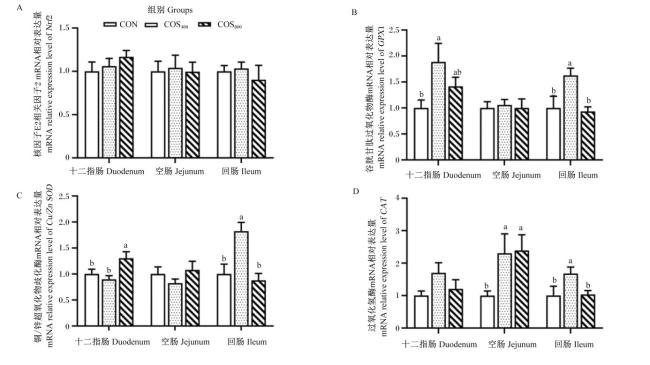
图1所示,与CON组相比,COS400组十二指肠GPX1 mRNA相对表达量显著提高(P<0.05),COS400组和COS800组空肠CAT mRNA相对表达量显著提高(P<0.05);与CON组和COS800组相比,COS400组回肠GPX1、Cu/Zn SODCAT mRNA相对表达量显著提高(P<0.05);与CON组和COS400组相比,COS800组十二指肠Cu/Zn SOD mRNA相对表达量显著提高(P<0.05)。各组之间十二指肠、空肠、回肠Nrf2,空肠GPX1、Cu/Zn SOD以及十二指肠CAT mRNA相对表达量均无显著差异(P>0.05)。
图1 COS对肉鸡小肠抗氧化相关基因mRNA表达的影响

数据柱标不同小写字母表示差异显著(P<0.05),相同或无字母表示差异不显著(P>0.05)。下图同。

Fig.1 Effects of COS on small intestinal antioxidant related-gene mRNA expression of broilers

Value columns with different small letters mean significant difference (P<0.05), while with the same or no letter mean no significant difference (P>0.05). The same as below.

2.4 COS对肉鸡小肠肠道形态的影响

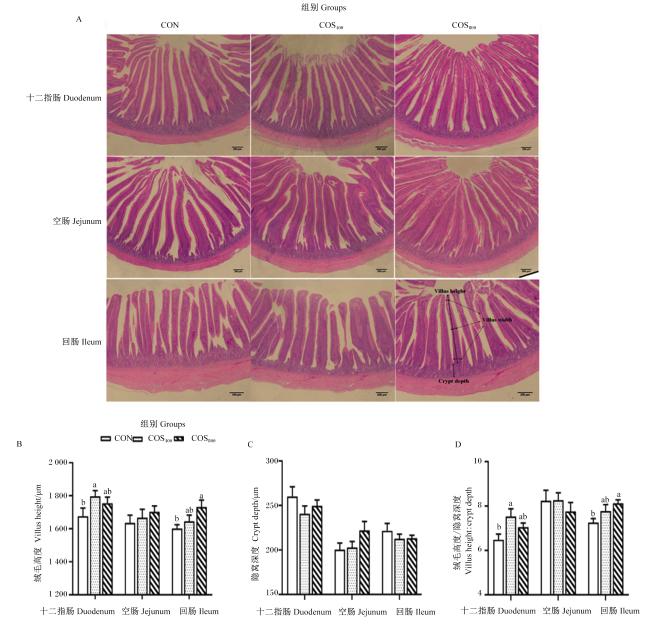
图2所示,与CON组相比,COS400组十二指肠VH和VH/CD显著提高(P<0.05),COS800组回肠VH和VH/CD显著提高(P<0.05)。各组之间空肠VH,十二指肠、空肠和回肠CD以及空肠VH/CD均无显著差异(P>0.05)。
图2 COS对AA肉鸡小肠形态的影响

Villus height:绒毛高度;Villus width:绒毛宽度;Crypt depth:隐窝深度。比例尺 scale:250 μm。

Fig.2 Effects of COS on small intestinal morphology of broilers

2.5 COS对肉鸡小肠消化吸收指标的影响

表6所示,与CON组相比,COS400组和COS800组十二指肠Amy和空肠Amy、Mal及回肠Suc活性显著提高(P<0.05);与CON组和COS800组相比,COS400组空肠Suc活性显著提高(P<0.05);与CON组和COS400组相比,COS800组回肠Mal和Lip活性显著提高(P<0.05)。各组之间十二指肠Mal、Suc、Lip和空肠Lip及回肠Amy活性均无显著差异(P>0.05)。
表6 COS对肉鸡小肠消化酶活性的影响

Table 6 Effects of COS on small intestinal digestive enzyme activities of broilers U/mg prot

项目
Items
组别Groups P
P-value
CON COS400 COS800
α-淀粉酶Amy
十二指肠Duodenum 0.06±0.01b 0.07±0.01a 0.08±0.01a 0.037
空肠Jejunum 0.14±0.03b 0.18±0.02a 0.18±0.03a 0.041
回肠Ileum 0.16±0.04 0.17±0.01 0.15±0.02 0.391
麦芽糖酶Mal
十二指肠Duodenum 53.52±6.15 66.06±15.95 49.38±11.14 0.113
空肠Jejunum 73.35±18.64b 131.77±24.01a 102.98±16.99a 0.002
回肠Ileum 62.13±6.86b 67.91±7.90b 73.17±4.89a 0.021
蔗糖酶Suc
十二指肠Duodenum 38.96±4.43 42.13±3.94 42.28±4.26 0.394
空肠Jejunum 12.58±4.08b 20.56±4.83a 14.47±1.55b 0.010
回肠Ileum 2.43±0.36b 5.72±0.84a 5.44±0.74a <0.001
脂肪酶Lip
十二指肠Duodenum 2.41±0.20 2.82±0.56 2.36±0.38 0.157
空肠Jejunum 11.01±2.81 11.11±1.66 11.32±2.89 0.982
回肠Ileum 3.25±0.50b 3.08±0.51b 4.51±0.50a 0.001
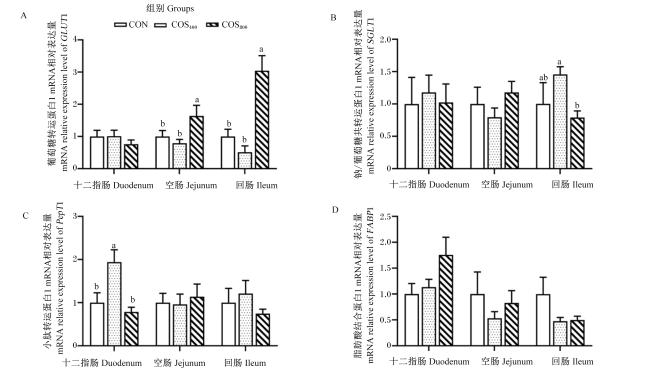
图3可知,与CON组和COS400组相比,COS800组空肠和回肠GLUT1 mRNA相对表达量显著提高(P<0.05);与COS400组相比,COS800组回肠SGLT1 mRNA相对表达量显著降低(P<0.05);与CON组和COS800组相比,COS400组十二指肠PepT1 mRNA相对表达量显著提高(P<0.05)。各组之间十二指肠GLUT1、SGLT1、FABP1,空肠SGLT1、PepT1、FABP1以及回肠PepT1、FABP1 mRNA相对表达量均无显著差异(P>0.05)。
图3 COS对肉鸡小肠营养物质转运载体相关基因mRNA表达的影响

Fig.3 Effects of COS on small intestinal nutrient transporters related-gene mRNA expression of broilers

2.6 COS对肉鸡小肠屏障相关基因mRNA表达的影响

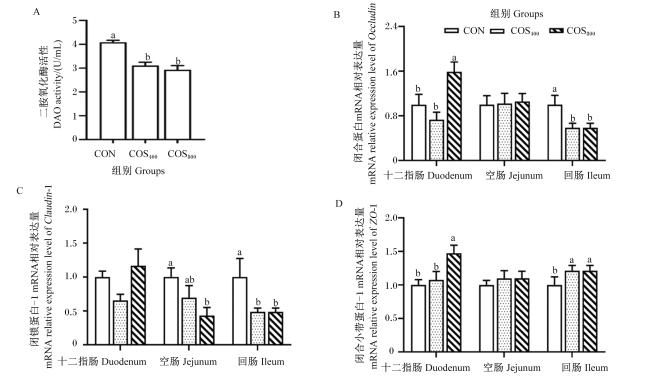
图4可知,与CON组相比,COS400组和COS800组血清DAO活性显著降低(P<0.05),回肠OccludinClaudin-1 mRNA相对表达量显著降低(P<0.05),回肠ZO-1 mRNA相对表达量显著提高(P<0.05);与CON组相比,COS800组空肠Claudin-1 mRNA相对表达量显著降低(P<0.05);与CON组和COS400组相比,COS800组十二指肠OccludinZO-1 mRNA相对表达量显著提高(P<0.05)。各组之间空肠OccludinZO-1以及十二指肠Claudin-1 mRNA相对表达量均无显著差异(P>0.05)。
图4 COS对AA肉鸡小肠屏障相关基因mRNA表达的影响

Fig.4 Effects of COS on small intestinal barrier related-gene mRNA expression of broilers

2.7 COS对肉鸡盲肠菌群结构的影响

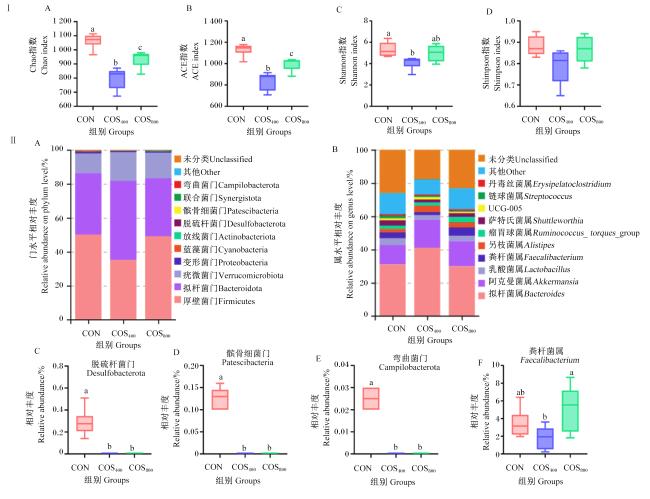
图5-Ⅰ可知,与CON组相比,COS400组和COS800组盲肠菌群Chao1指数、ACE指数显著降低(P<0.05),COS400组盲肠菌群Shannon指数显著降低(P<0.05)。各组之间盲肠菌群Simpson指数无显著差异(P>0.05)。
图5 COS对肉鸡盲肠菌群结构的影响

Fig.5 Effects of COS on cecal microbiota structure of broilers

图5-Ⅱ可知,在门水平上,各组盲肠菌群优势菌门分别为厚壁菌门(Firmicutes)、拟杆菌门(Bacteroidota)和疣微菌门(Verrucomicrobiota)。在属水平上,各组盲肠菌群优势菌属分别为拟杆菌属(Bacteroides)、阿克曼菌属(Akkermansia)、乳酸菌属(Lactobacillus)、粪杆菌属(Faecalibacterium)和另杆菌属(Alistipes)。与CON组相比,COS400组和COS800组盲肠脱硫杆菌门(Desulfobacterota)、髌骨细菌门(Patescibacteria)和弯曲菌门(Campilobacterota)相对丰度显著降低(P<0.05);与COS400组相比,COS800组盲肠粪杆菌属相对丰度显著升高(P<0.05)。

2.8 COS对肉鸡盲肠SCFAs含量的影响

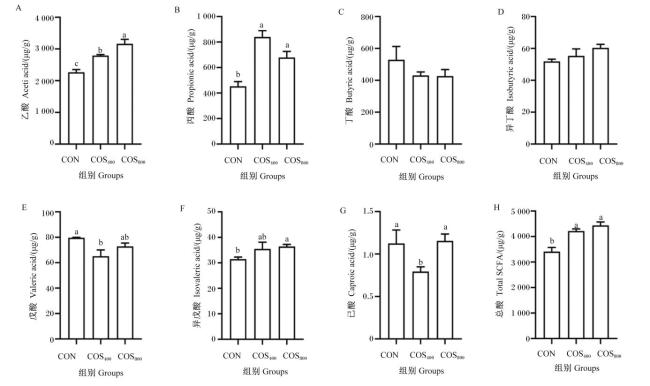
图6可知,与CON组相比,COS400组和COS800组盲肠乙酸、丙酸和总SCFAs含量显著提高(P<0.05),COS400组盲肠戊酸含量显著降低(P<0.05),COS800组盲肠异戊酸含量显著提高(P<0.05);与CON组和COS800组相比,COS400组盲肠己酸含量显著降低(P<0.05)。各组之间盲肠丁酸和异丁酸含量均无显著差异(P>0.05)。
图6 COS对肉鸡盲肠SCFAs含量的影响

Fig.6 Effects of COS on cecal SCFAs contents of broilers

3 讨论

3.1 COS对肉鸡生长性能的影响

肉鸡的生长性能与养殖效益密切相关。在后抗生素时代,COS作为一种功能性添加剂,具有促生长、抗应激、抗氧化、免疫调节、维持肠道健康及改善肉品质等作用[5,19-20]。有关COS对肉鸡生长性能的影响已做了大量研究,但研究结果并不一致。Li等[21]报道,COS显著提高了1~21日龄和1~42日龄肉鸡ADG和ADFI,并显著降低了F/G。Huang等[22]报道,COS显著提高了1~21日龄、22~42日龄和1~42日龄肉鸡ADG,并显著降低了F/G。Zhou等[23]报道,COS显著提高了1~21日龄、22~35日龄和1~35日龄肉鸡增重以及22~35日龄和1~35日龄肉鸡采食量。此外,Fathi等[24]和Chang等[25]分别报道,COS改善了冷、热应激肉鸡的生长性能,显著提高了ADG和ADFI,并降低了F/G。但Ayman等[26]报道,COS对1~35日龄肉鸡生长性能无显著影响。Li等[27]报道,COS对1~42日龄肉鸡ADG和ADFI无显著影响。Chang等[28]也报道,COS对1~28日龄、29~56日龄及1~56日龄黄羽肉鸡ADG、ADFI、F/G无显著影响。本试验结果同样表明,COS对1~21日龄、22~35日龄及1~35日龄肉鸡ADG、ADFI、F/G无显著影响。众多研究结果的不同,推测与试验鸡的日龄、品种、饲养管理水平以及COS的分子质量和使用剂量有关[8,29-30]

3.2 COS对肉鸡器官指数的影响

免疫器官指数在一定程度上分别反映肉鸡的免疫功能状态[31]。Chang等[25]报道,COS显著提高了热应激肉鸡胸腺、肝脏和法氏囊指数。Chi等[31]报道,COS显著提高了肉鸡胸腺、脾脏和法氏囊指数。Zhou等[23]报道,COS显著提高了肉鸡肝脏指数,但对脾脏和法氏囊指数无显著影响。本试验结果显示,饲粮中添加800 mg/kg COS显著提高了肉鸡胸腺指数,表明COS可以促进免疫器官发育,增强肉鸡免疫功能。
消化器官发育直接影响肉鸡对营养物质的消化吸收[32]。本研究发现,COS对消化器官指数和小肠相对长度无显著影响。这与Chang等[25]报道一致,即COS对热应激肉鸡腺胃和肌胃指数无显著影响。但Lan等[14]研究表明,COS显著提高了1~14日龄肉鸡十二指肠相对重量和长度以及回肠相对重量。研究结果的不一致可能与肉鸡日龄相关,肠道发育具有阶段性,肠道快速发育阶段在1~7日龄[33-34]

3.3 COS对肉鸡小肠形态结构和消化吸收能力的影响

营养物质消化吸收的主要位点在小肠,因此,小肠形态结构与营养物质消化吸收密切相关。小肠VH的升高表明更大的营养物质吸收表面积,VH/CD的升高表明肠道上皮细胞的更新处于健康状态[35]。本试验结果显示,COS提高了十二指肠和回肠的VH和VH/CD。这与Miao等[7]的研究结果一致,即COS显著提高了豁眼鹅小肠各肠段的VH和VH/CD。Li等[36]的研究结果同样表明COS显著提高了肉鸡十二指肠的VH和VH/CD。以上研究结果表明,COS促进了肉鸡小肠形态结构发育,增加了小肠绒毛吸收表面积和肠道上皮细胞的更新。
小肠形态结构还影响消化酶的活性[33-34]。Zhang[37]报道,COS显著提高了泥鳅肠道Amy、Lip和蛋白酶活性。Wan等[38]报道,COS显著提高了断奶仔猪十二指肠和回肠乳糖酶和Suc活性以及空肠乳糖酶和Mal活性。Miao等[7]报道,COS提高了豁眼鹅小肠各肠段的胰蛋白酶和Lip活性。本试验结果显示,COS显著提高了十二指肠Amy及空肠Amy、Mal活性,表明COS能通过提高小肠消化酶活性,促进营养物质消化。
为了进一步明确COS是否影响营养物质在小肠的吸收,本试验检测了营养物质转运载体相关基因mRNA的表达,结果显示饲粮中添加400 mg/kg COS显著提高了肉鸡十二指肠PepT1 mRNA相对表达量,饲粮中添加800 mg/kg COS显著提高了空肠GLUT1 mRNA相对表达量,表明COS具有提高小肠对葡萄糖和小肽的吸收能力[39]。Lan等[14]在1~14日龄肉鸡上的研究表明,COS对营养物质转运载体相关基因mRNA的表达具有肠段位置特异性,COS显著提高了十二指肠GLUT1和小肠各肠段PepT1 mRNA相对表达量,但显著降低了空肠和回肠GLUT1 mRNA相对表达量[14]。研究结果的不一致可能与肉鸡日龄相关,肠道发育的阶段性也可能会影响营养物质转运载体相关基因mRNA的表达。此外,营养物质在小肠各肠段的停留时间不同,也会影响COS发挥相关生物学功能,进而影响营养物质转运载体相关基因mRNA的表达。目前,有关COS对营养物质转运载体相关基因mRNA表达的研究较少,因此,COS对小肠消化吸收功能的影响还需进一步研究。

3.4 COS对肉鸡小肠抗氧化能力的影响

氧化应激导致肠道损伤,影响肠道营养物质消化吸收、肠道屏障功能和肠道健康[35,40]。COS结构中的氨基,C-2、C-3和C-6位的伯羟基和仲羟基以及还原端羟基能与自由基反应,使其具有抗氧化和自由基清除能力[41]。此外,COS还能通过激活Nrf2信号通路,促进下游抗氧化相关基因表达,提高抗氧化能力[41]。Li等[36]报道,COS显著降低了肉鸡空肠和回肠MDA含量,显著提高了十二指肠SOD活性。Li等[11]报道,COS显著降低了肉鸡回肠MDA含量,并显著提高了回肠GSH-Px和SOD活性及总抗氧化能力。Wang等[42]报道,COS显著提高了半乳糖腹腔注射大鼠肝脏Nrf2和CAT mRNA相对表达量。Lan等[43]报道,COS显著提高了胸肌Cu/Zn SODCATGPX1 mRNA相对表达量。本试验结果显示,COS显著提高了肉鸡十二指肠、空肠、回肠GSH-Px活性及空肠CAT活性,提高了十二指肠GPX1及空肠和回肠CAT mRNA相对表达量,表明COS提高了肉鸡小肠的抗氧化能力。

3.5 COS对肉鸡肠道屏障功能的影响

肠道形态结构的完整性和肠道的氧化稳定性会影响肠道的屏障功能。肠道通透性及肠道上皮细胞间的紧密连接是评估肠道屏障功能的重要指标[44]。DAO是肠道细菌的代谢产物,完整的肠道屏障能有效阻止DAO通过肠上皮细胞黏膜系统进入血液循环,因此,血清DAO含量反映肠道通透性变化及肠道屏障功能[45]。肠道机械屏障是肠道屏障的重要组成部分,由肠上皮细胞及上皮细胞间的紧密连接组成,紧密连接相关蛋白的表达变化常与肠道屏障功能相关[46]。Gu等[44]研究表明,COS显著降低了LPS刺激肉鸡血清DAO活性,并显著提高了空肠Occludin和回肠闭锁蛋白-2(Claudin-2)mRNA相对表达量。Osho等[47]报道,COS显著提高了地塞米松刺激肉鸡空肠OccludinClaudin-2 mRNA相对表达量。Li等[36]报道,COS显著降低了肉鸡血清DAO活性,并提高了回肠闭锁蛋白-3(Claudin-3)mRNA相对表达量。本试验结果表明,COS显著降低了肉鸡血清DAO活性,并提高了十二指肠和回肠ZO-1 mRNA相对表达量,表明COS提高了肠道的屏障功能。值得注意的是,在本研究中,COS显著降低了回肠OccludinClaudin-1 mRNA相对表达量,这表明OccludinClaudin-1 mRNA的表达具有不同肠段区域的特异性,可能与小肠各肠段长度不同,进而影响COS发挥相关生物学功能,影响紧密连接相关蛋白的表达。Lan等[14]在1~14日龄肉鸡的研究也有相似的结果,即COS显著提高了十二指肠OccludinZO-1及空肠Occludin mRNA相对表达量,但显著降低了十二指肠和空肠ZO-1 mRNA相对表达量。Chang等[28]的研究则发现,COS降低了28日龄黄羽肉鸡Claudin-1 mRNA相对表达量。COS对紧密连接蛋白的表达具有肠段区域的特异性的原因还不清楚,相关研究工作还需进一步进行,应进一步设计相关试验以探究其机制。

3.6 COS对肉鸡盲肠菌群结构和SCFAs含量的影响

肠道菌群稳态对维持肠道屏障、消化吸收功能及免疫功能有积极作用。COS作为一种功能性益生菌,具有选择性促进有益菌生长并抑制有害菌生长的作用[48]。Wan等[38]报道,COS显著提高了断奶仔猪回肠双歧杆菌的数量,并显著降低了盲肠和结肠总细菌及大肠杆菌的数量。Tufan等[12]报道,COS显著提高了日本鹌鹑小肠芽孢杆菌等有益菌的数量,并显著降低了大肠杆菌、梭菌属及葡萄球菌属等有害菌的数量。本试验结果表明,COS显著降低了盲肠菌群Chao1指数和ACE指数,表明肠道菌群α多样性降低,这可能与COS抑制有害菌的生长有关。与Chang等[28]的研究相似,本试验结果同样表明,在门水平上的优势菌门为厚壁菌门和拟杆菌门,在属水平上的优势菌属为拟杆菌属和阿克曼菌属。进一步研究发现,在门水平上,COS显著降低了脱硫杆菌门、髌骨细菌门和弯曲菌门的相对丰度。脱硫杆菌门能将肠道中的硫酸盐转化为不可吸收的硫化氢,降低相关含硫活性物质的活性和SCFAs的产生[49]。髌骨细菌门是一种机会性或腐生性定植菌,能够降低机体代谢能力[50]。弯曲菌门是引起肉鸡食源性疾病的主要病原体[51]。以上结果表明,COS能够调节肉鸡肠道菌群的组成,抑制有害菌的生长。
SCFAs是肠道菌群分解非淀粉多糖或膳食纤维的代谢产物,通过为肠上皮细胞提供能量、抑制肠道炎症和有害菌生长来改善肠道健康。本试验结果表明,COS提高了肉鸡盲肠乙酸、丙酸、异戊酸和总SCFAs的含量,并降低了戊酸和己酸含量。这与之前的研究结果不一致,Chang等[28]和Wen等[52]研究表明,COS对黄羽肉鸡盲肠和早期断奶鸽子回肠乙酸、丙酸、丁酸、异丁酸、戊酸及异戊酸含量无显著影响。Zhao等[13]研究表明,COS显著提高了14和21日龄鸽子回肠乙酸、丁酸、戊酸及己酸含量。这些不同的研究结果可能与动物的品种及日龄相关,也可能与COS的使用剂量、脱乙酰度及分子质量相关[8]。丁酸是肠道上皮细胞的重要能量物质[53],乙酸通过调节肠道pH进而维持肠道菌群结构,也是合成丁酸的前体物质[54]。本研究发现,乙酸在SCFAs中的相对含量最高,COS显著提高了盲肠乙酸含量,可能与更好的肠道形态、抗氧化能力、屏障功能及微生物菌群组成相关。

4 结论

COS通过改善肉鸡肠道形态结构,提高肠道消化酶活性和营养物质转运蛋白相关载体基因的表达,提高肠道抗氧化酶活性和相关基因的表达,提高肠道屏障功能相关基因的表达,并改善肠道菌群结构和SCFAs含量,最终提高肠道健康水平。
[1]
KRIDTAYOPAS C, RAKANGTONG C, BUNCHASAK C, et al. Effect of prebiotic and synbiotic supplementation in diet on growth performance,small intestinal morphology,stress,and bacterial population under high stocking density condition of broiler chickens[J]. Poultry Science, 2019, 98(10):4595-4605.

[2]
ZHU Q D, SUN P, ZHANG B K, et al. Progress on gut health maintenance and antibiotic alternatives in broiler chicken production[J]. Frontiers in Nutrition, 2021,8:692839.

[3]
KIKUSATO M. Phytobiotics to improve health and production of broiler chickens:functions beyond the antioxidant activity[J]. Animal Bioscience, 2021, 34(3):345-353.

[4]
ELNESR S S, ELWAN H A M, EL SABRY M I, et al. Impact of chitosan on productive and physiological performance and gut health of poultry[J]. World’s Poultry Science Journal, 2022, 78(2):483-498.

[5]
UYANGA V A, EJEROMEDOGHENE O, LAMBO M T, et al. Chitosan and chitosan based composites as beneficial compounds for animal health:impact on gastrointestinal functions and biocarrier application[J]. Journal of Functional Foods, 2023,104:105520.

[6]
LU X X, CHANG X Y, ZHANG H J, et al. Effects of dietary rare earth chitosan chelate on performance,egg quality,immune and antioxidant capacity,and intestinal digestive enzyme activity of laying hens[J]. Polymers, 2023, 15(7):1600.

[7]
MIAO Z, LIU Y, GUO L, et al. Effects of dietary chitosan on growth rate,small intestinal morphology,nutrients apparent utilization and digestive enzyme activities of growing Huoyan geese[J]. Animal, 2020, 14(12):2635-2641.

[8]
THONGSONG B, SUTHONGSA S, PICHYANGKURA R, et al. Effects of chito-oligosaccharide supplementation with low or medium molecular weight and high degree of deacetylation on growth performance,nutrient digestibility and small intestinal morphology in weaned pigs[J]. Livestock Science, 2018,209:60-66.

[9]
TUFAN T, ARSLAN C. Dietary supplementation with chitosan oligosaccharide affects serum lipids and nutrient digestibility in broilers[J]. South African Journal of Animal Science, 2020, 50(5):663-671.

[10]
MOHYUDDIN S G, QAMAR A, HU C Y, et al. Effect of chitosan on blood profile,inflammatory cytokines by activating TLR4/NF-κB signaling pathway in intestine of heat stressed mice[J]. Scientific Reports, 2021, 11(1):20608.

[11]
LI X C, DING X M, PENG X, et al. Effect of chitosan oligosaccharides on antioxidant function,lymphocyte cycle and apoptosis in ileum mucosa of broiler[J]. Kafkas Üniversitesi Veteriner Fakültesi Dergisi, 2017, 23(4):571-577.

[12]
TUFAN T, ARSLAN C, SARI M, et al. Effects of chitosan oligosaccharides addition to Japanese quail's diets on growth,carcass traits,liver and intestinal histology,and intestinal microflora[J]. Kafkas Universitesi Veteriner Fakultesi Dergisi, 2015, 21(5):665-671.

[13]
ZHAO W Y, JIA Y B, LI R, et al. Effects of dietary Chitosan oligosaccharides supplementation on Th17/Treg balance and gut microbiota of early weaned pigeon squabs[J]. Poultry Science, 2024, 103(10):104088.

[14]
LAN R X, WU F, WANG Y C, et al. Chitosan oligosaccharide improves intestinal function by promoting intestinal development,alleviating intestinal inflammatory response,and enhancing antioxidant capacity in broilers aged d 1 to 14[J]. Poultry Science, 2024, 103(2):103381.

[15]
CHEN J L, LI Y, YU B, et al. Dietary chlorogenic acid improves growth performance of weaned pigs through maintaining antioxidant capacity and intestinal digestion and absorption function[J]. Journal of Animal Science, 2018, 96(3):1108-1118.

DOI PMID

[16]
LAN R X, LIU F, HE Z B, et al. Immunolocalization of GnRHRI,gonadotropin receptors,PGR,and PGRMCI during follicular development in the rabbit ovary[J]. Theriogenology, 2014, 81(8):1139-1147.

[17]
LIVAK K J, SCHMITTGEN T D. Analysis of relative gene expression data using real-time quantitative PCR and the 2-ΔΔCT method[J]. Methods, 2001, 25(4):402-408.

[18]
HSU Y L, CHEN C C, LIN Y T, et al. Evaluation and optimization of sample handling methods for quantification of short-chain fatty acids in human fecal samples by GC-MS[J]. Journal of Proteome Research, 2019, 18(5):1948-1957.

[19]
LAN R X, WANG Y C, WANG H X, et al. Dietary chitosan oligosaccharide supplementation improves meat quality by improving antioxidant capacity and fiber characteristics in the thigh muscle of broilers[J]. Antioxidants, 2024, 13(3):366.

[20]
LAN R X, LI Y X, CHANG Q Q, et al. Dietary chitosan oligosaccharides alleviate heat stress-induced intestinal oxidative stress and inflammatory response in yellow-feather broilers[J]. Poultry Science, 2020, 99(12):6745-6752.

DOI PMID

[21]
LI X J, PIAO X S, KIM S W, et al. Effects of chito-oligosaccharide supplementation on performance,nutrient digestibility,and serum composition in broiler chickens[J]. Poultry Science, 2007, 86(6):1107-1114.

[22]
HUANG R L, YIN Y L, WU G Y, et al. Effect of dietary oligochitosan supplementation on ileal digestibility of nutrients and performance in broilers[J]. Poultry Science, 2005, 84(9):1383-1388.

DOI PMID

[23]
ZHOU T X, CHEN Y J, YOO J S, et al. Effects of chitooligosaccharide supplementation on performance,blood characteristics,relative organ weight,and meat quality in broiler chickens[J]. Poultry Science, 2009, 88(3):593-600.

[24]
FATHI M, SAEIDIAN S, BAGHAEIFAR Z, et al. Chitosan oligosaccharides in the diet of broiler chickens under cold stress had anti-oxidant and anti-inflammatory effects and improved hematological and biochemical indices,cardiac index,and growth performance[J]. Livestock Science, 2023,276:105338.

[25]
CHANG Q Q, LU Y Q, LAN R X. Chitosan oligosaccharide as an effective feed additive to maintain growth performance,meat quality,muscle glycolytic metabolism,and oxidative status in yellow-feather broilers under heat stress[J]. Poultry Science, 2020, 99(10):4824-4831.

[26]
AYMAN U, AKTER L, ISLAM R, et al. Dietary chitosan oligosaccharides improves health status in broilers for safe poultry meat production[J]. Annals of Agricultural Sciences, 2022, 67(1):90-98.

[27]
LI J, WANG S Q, CHEN Y P, et al. Dietary chitooligosaccharide supplementation improves mineral deposition,meat quality and intramuscular oxidant status in broilers[J]. Journal of the Science of Food and Agriculture, 2023, 103(2):764-769.

[28]
CHANG L, DING Y N, WANG Y S, et al. Effects of different oligosaccharides on growth performance and intestinal function in broilers[J]. Frontiers in Veterinary Science, 2022,9:852545.

[29]
WANG R L, CHEN J W, GOONERATNE R, et al. Effects of varied molecular weight of chitosan oligosaccharides on growth performance,carcass trait,meat quality,and fat metabolism in indigenous yellow-feathered chickens[J]. Journal of Applied Poultry Research, 2022, 31(1):100221.

[30]
CHEN Y J, XU C X, YANG Z F. Growth performance,carcass characteristics,serum biochemistry and digestive tract development in broiler chickens fed with chitosan oligosaccharide[J]. Animal Nutrition and Feed Technology, 2023, 23(2):291-302.

[31]
CHI X F, DING X M, PENG X, et al. Effects of chitosan oligosaccharides supplementation on the cell cycle of immune organs in broilers[J]. Kafkas Üniversitesi Veteriner Fakültesi Dergisi, 2017, 23(6):1003-1006.

[32]
ZHANG Q Y, ZHANG S, WU S, et al. Supplementing the early diet of broilers with soy protein concentrate can improve intestinal development and enhance short-chain fatty acid-producing microbes and short-chain fatty acids,especially butyric acid[J]. Journal of Animal Science and Biotechnology, 2022, 13(1):97.

[33]
IJI P A, SAKI A, TIVEY D R. Body and intestinal growth of broiler chicks on a commercial starter diet.1.Intestinal weight and mucosal development[J]. British Poultry Science, 2001, 42(4):505-513.

[34]
IJI P A, SAKI A, TIVEY D R. Body and intestinal growth of broiler chicks on a commercial starter diet.2.Development and characteristics of intestinal enzymes[J]. British Poultry Science, 2001, 42(4):514-522.

[35]
WU W, XIAO Z B, AN W Y, et al. Dietary sodium butyrate improves intestinal development and function by modulating the microbial community in broilers[J]. PLoS One, 2018, 13(5):e0197762.

[36]
LI J, CHENG Y F, CHEN Y P, et al. Dietary chitooligosaccharide inclusion as an alternative to antibiotics improves intestinal morphology,barrier function,antioxidant capacity,and immunity of broilers at early age[J]. Animals, 2019, 9(8):493.

[37]
ZHANG B Z. Dietary chitosan oligosaccharides modulate the growth, intestine digestive enzymes,body composition and nonspecific immunity of loach Paramisgurnus dabryanus[J]. Fish & Shellfish Immunology, 2019,88:359-363.

[38]
WAN J, JIANG F, XU Q S, et al. New insights into the role of chitosan oligosaccharide in enhancing growth performance,antioxidant capacity,immunity and intestinal development of weaned pigs[J]. RSC Advances, 2017, 7(16):9669-9679.

[39]
GILBERT E R, LI H, EMMERSON D A, et al. Developmental regulation of nutrient transporter and enzyme mRNA abundance in the small intestine of broilers[J]. Poultry Science, 2007, 86(8):1739-1753.

DOI PMID

[40]
HALL M E, BLOUNT J D, FORBES S, et al. Does oxidative stress mediate the trade-off between growth and self-maintenance in structured families?[J]. Functional Ecology, 2010, 24(2):365-373.

[41]
ZHOU J W, WEN B J, XIE H Y, et al. Advances in the preparation and assessment of the biological activities of chitosan oligosaccharides with different structural characteristics[J]. Food & Function, 2021, 12(3):926-951.

[42]
WANG Y M, XIONG Y L, ZHANG A P, et al. Oligosaccharide attenuates aging-related liver dysfunction by activating Nrf2 antioxidant signaling[J]. Food Science & Nutrition, 2020, 8(7):3872-3881.

[43]
LAN R X, CHEN X C, ZHANG Y H, et al. Effects of dietary chitosan oligosaccharides supplementation on meat quality,chemical composition and anti-oxidant capacity in frizzled chickens[J]. Italian Journal of Animal Science, 2023, 22(1):639-650.

[44]
GU Y F, CHEN Y P, JIN R, et al. Dietary chitooligosaccharide supplementation alleviates intestinal barrier damage,and oxidative and immunological stress in lipopolysaccharide-challenged laying hens[J]. Poultry Science, 2022, 101(4):101701.

[45]
CHEN J, LEI K W, LI S Y, et al. Dose effects of iron on growth, antioxidant potential,intestinal morphology,and intestinal barrier in yellow-feathered broilers[J]. Poultry Science, 2025, 104(3):104865.

[46]
AIJAZ S, BALDA M S, MATTER K. Tight junctions:molecular architecture and function[J]. International Review of Cytology, 2006,248:261-298.

[47]
OSHO S O, ADEOLA O. Chitosan oligosaccharide supplementation alleviates stress stimulated by in-feed dexamethasone in broiler chickens[J]. Poultry Science, 2020, 99(4):2061-2067.

DOI PMID

[48]
NAVEED M, PHIL L, SOHAIL M, et al. Chitosan oligosaccharide (COS):an overview[J]. International Journal of Biological Macromolecules, 2019,129:827-843.

[49]
LI Y, XU Q, HUANG Z, et al. Effect of Bacillus subtilis CGMCC 1.1086 on the growth performance and intestinal microbiota of broilers[J]. Journal of Applied Microbiology, 2016, 120(1):195-204.

[50]
GUAN Y, BAO L, ZHOU L, et al. Comparative analysis of the fecal microbiota of healthy and injured common kestrel (Falco tinnunculus) from the Beijing raptor rescue center[J]. PeerJ, 2023,11:e15789.

[51]
MUYYARIKKANDY M S, PARZYGNAT J, THAKUR S. Uncovering changes in microbiome profiles across commercial and backyard poultry farming systems[J]. Microbiology Spectrum, 2023, 11(5):e0168223.

[52]
WEN J S, ZHAO W Y, LI J K, et al. Dietary supplementation of chitosan oligosaccharide-Clostridium butyricum synbiotic relieved early-weaned stress by improving intestinal health on pigeon squabs (Columba livia)[J]. Frontiers in Immunology, 2022,13:926162.

[53]
JÓZEFIAK D, RUTKOWSKI A, MARTIN S A. Carbohydrate fermentation in the avian ceca:a review[J]. Animal Feed Science and Technology, 2004, 113(1/2/3/4):1-15.

[54]
LOUIS P, FLINT H J. Diversity,metabolism and microbial ecology of butyrate-producing bacteria from the human large intestine[J]. FEMS Microbiology Letters, 2009, 294(1):1-8.

Outlines

/