RESEARCH PAPER

Effects of Curcumin on Growth Performance, Antioxidant Capacity and Lipid Metabolism of Nibea albiflora Fed a High Soybean Meal Diet

  • FU Jiangwen , 1 ,
  • MA Shipeng 1 ,
  • ZHANG Hongliang 2 ,
  • XU Dongdong 2 ,
  • TAN Peng 2 ,
  • CHEN Ruiyi 2 ,
  • HU Weihua 2 ,
  • WANG Ligai , 2, *
Expand
  • 1 Fisheries College, Zhejiang Ocean University, Zhoushan 316022, China
  • 2 Integrated Scientific Observation and Research Station, Ministry of Agriculture and Rural Affairs, Key Laboratory of Mariculture and Enhancement, Zhejiang Marine Fisheries Research Institute, Zhoushan 316021, China
*senior engineer, E-mail:

Received date: 2025-09-23

  Online published: 2026-04-14

Abstract

This experiment was conducted to investigate the effects of curcumin on growth performance, antioxidant capacity and lipid metabolism of Nibea albiflora fed a high soybean meal diet. A total of 225 juvenile Nibea albiflora with an initial body weight of (4.93±0.06) g were randomly divided into three groups with three replicates per group and 25 fish per replicate. The fish were fed three isonitrogenous (crude protein content of 50.00%) and isolipidic (crude lipid content of 12.00%) experimental diets for a 56-day culture period, including a basal diet (FM group), a diet with 50% fish meal replaced by soybean meal (SBM group) and a diet supplemented with 0.02% curcumin based on the SBM group (SBMC group). The results showed as follows: 1) compared with the FM group, the weight gain rate (WGR) and specific growth rate (SGR) of the SBM group were significantly decreased (P<0.05), while the feed intake rate (FR) and feed conversion ratio (FCR) were significantly increased (P<0.05). Compared with the SBM group, the WGR and SGR of the SBMC group were significantly increased (P<0.05), while the FR and FCR were significantly decreased (P<0.05). 2) The ether extract content of whole fish in the SBMC group was significantly lower than that in the SBM group (P<0.05). 3) Severe lipid vacuolization was observed in liver cells of the SBM group, with nuclear aggregation deviating from the cell center and massive lipid droplet accumulation. The intestinal villus height and microvillus height in the SBM group were significantly lower than those in the FM group (P<0.05), and the gaps between intestinal epithelial cells were enlarged. Compared with the SBM group, the morphological structures of liver and intestine in the SBMC group were significantly improved. 4) Compared with the FM group, the catalase (CAT) activity in liver and intestine of the SBM group was significantly decreased (P<0.05), and the malondialdehyde (MDA) content was significantly increased (P<0.05). Compared with the SBM group, the liver CAT activity of the SBMC group was significantly increased (P<0.05), and the MDA content in liver and intestine was significantly decreased (P<0.05). 5) Compared with the FM group, the hepatic gene expressions of lipoprotein lipase (LPL), hormone-sensitive lipase (HSL), insulin-like growth factor-Ⅰ (IGF-Ⅰ), cholesterol 7α-hydroxylase (CYP7A1) and multidrug resistance-associated protein 4 (MRP4) in the SBM group were significantly down-regulated (P<0.05). Compared with the SBM group, the hepatic gene expressions of HSL, IGF-Ⅰ, CYP7A1 and MRP4 in the SBMC group were significantly up-regulated (P<0.05). 6) The GO functional enrichment analysis of differentially expressed genes (DEGs) between the SBM group and FM group, as well as between the SBMC group and SBM group, showed that DEGs were mainly enriched in the terms related to lipid metabolism, immune factor production and oxidative reaction regulation. The gene expression analysis of fatty acid synthase (FASN), LPL, HSL, CYP7A1 and MRP4, which are the key DEGs in bile secretion and glycerophospholipid metabolism pathways from the KEGG enrichment analysis, showed that compared with the SBM group, the intestinal gene expressions of FASN and HSL in the SBMC group were down-regulated, while those of LPL, CYP7A1 and MRP4 were up-regulated. In conclusion, curcumin has a significant improving effect on growth performance, antioxidant capacity and lipid metabolism of Nibea albiflora fed a high soybean meal diet, which may be related to the fact that curcumin can promote bile acid secretion to maintain the homeostasis of enterohepatic circulation of bile acid and regulate the expression of lipid metabolism-related genes to reduce lipid deposition in fish.

Cite this article

FU Jiangwen , MA Shipeng , ZHANG Hongliang , XU Dongdong , TAN Peng , CHEN Ruiyi , HU Weihua , WANG Ligai . Effects of Curcumin on Growth Performance, Antioxidant Capacity and Lipid Metabolism of Nibea albiflora Fed a High Soybean Meal Diet[J]. Chinese Journal of Animal Nutrition, 2026 , 38(4) : 2886 -2903 . DOI: 10.12418/CJAN2026.232

利用植物蛋白质源替代鱼粉以降低对其过度依赖,一直是水产饲料行业的研究热点[1]。豆粕是优质的植物蛋白质源,蛋白质含量较高,但口感较差,且含胰蛋白酶抑制剂、凝集素、皂苷等多种抗营养因子。水产饲料中添加过高比例的豆粕会破坏海水鱼类,尤其是肉食性鱼类的肠道黏膜完整性,并造成肝脏结构损伤及肝肠脂质蓄积,最终导致鱼类生长性能下降[2-4]。研究表明,通过改善饲料加工工艺[5-6]或外源添加丁酸钠[7]、黄连素[8]等功能性饲料添加剂,可显著改善高豆粕饲料造成的鱼类肠道或肝脏结构损伤,进而提高其生长性能。
姜黄素是从姜黄根茎中提取的中草药天然活性成分,以不饱和脂肪族和芳香族基团为主链,由2个相邻甲基化的酚以及1个β-二酮组成,含有多个双键、酚羟基和羰基等活性基团,在抑制氧化应激、调节脂肪代谢方面具有重要作用[9-10]。已有研究指出,过量的活性氧(ROS)会造成机体氧化应激,上调丝裂原活化蛋白激酶c-Jun氨基末端激酶2(Jnk2)转录水平,促进胰岛素受体底物-2(IRS-2)的丝氨酸磷酸化,从而导致胰岛素抵抗及肝细胞脂质沉积[11]。在抗氧化方面,姜黄素可显著上调肝脏超氧化物歧化酶(SOD)、过氧化氢酶(CAT)和谷胱甘肽过氧化物酶(GPX)基因表达及其酶活性,清除体内ROS,降低鱼体氧化应激[12-13];在脂肪代谢调控方面,姜黄素可显著抑制肝胰脏脂肪酸合成酶(FASN)基因表达,减少肝胰脏脂肪酸合成,降低肝细胞脂质沉积[14-15]。此外,研究还发现姜黄素可通过激活β3肾上腺素受体表达和促进脂肪氧化,提高机体基础代谢率,减少脂肪堆积[16]。尽管已有研究表明姜黄素具有明显的降脂作用,但其具体作用通路及机制仍有待深入解析,值得进一步研究。
黄姑鱼(Nibea albiflora)属鲈形目(Perciformes)石首鱼科(Sciaenidae)黄姑鱼属(Nibea),是我国重要的海水经济鱼类,主要分布于中国东海及日本南部海域,其生长速度快、抗病力强,且肉质鲜美、营养价值高[17]。本课题组前期研究已明确姜黄素可以有效改善高豆粕饲料对黄姑鱼肠道健康造成的不利影响,并确定其在黄姑鱼幼鱼饲料中的适宜添加量为0.02%[18]。因此,本研究拟在前期研究基础上,进一步探究0.02%姜黄素对摄食高豆粕饲料黄姑鱼生长性能、抗氧化性能及脂肪代谢的影响,并通过转录组学揭示其可能的作用机制,旨在为黄姑鱼高效健康养殖提供理论依据和科学支撑。

1 材料与方法

1.1 伦理声明

本试验经浙江省海洋水产研究所伦理审查委员会批准(批准编号:2025003),试验过程严格按照相关伦理规范执行。

1.2 试验饲料

以鱼粉、豆粕、大豆浓缩蛋白、鸡肉粉和谷朊粉为蛋白质源,鱼油和豆油为脂肪源,面粉为碳水化合物源,配制3种等氮(粗蛋白质含量为50.00%)等脂(粗脂肪含量为12.00%)试验饲料[19],分别为基础饲料(FM)、豆粕替代FM中50%鱼粉的饲料(SBM)以及在SBM中添加0.02%姜黄素的饲料(SBMC)。试验饲料组成及营养水平见表1
表1 试验饲料组成及营养水平(干物质基础)

Table 1 Composition and nutrient levels of experimental diets (DM basis) %

项目
Items
饲料Diets
FM SBM SBMC
原料Ingredients
鱼粉Fish meal 50.00 25.00 25.00
豆粕Soybean meal 36.06 36.06
大豆浓缩蛋白Soy protein concentrate 5.00 5.00 5.00
鸡肉粉Chicken meal 10.00 10.00 10.00
谷朊粉Wheat gluten 4.00 4.00 4.00
面粉Wheat flour 6.00 6.00 6.00
鱼油Fish oil 3.79 4.46 4.46
豆油Soybean oil 3.79 4.46 4.46
大豆卵磷脂Soybean lecithin 1.00 1.00 1.00
多维Multi-vitamins1) 0.30 0.30 0.30
多矿Multi-minerals2) 0.20 0.20 0.20
氯化胆碱Choline chloride 0.30 0.30 0.30
磷酸二氢钙Ca(H2PO4)2 0.50 0.50 0.50
姜黄素Curcumin 0.02
诱食剂Feeding attractant3) 0.50 0.50 0.50
防霉剂Mildew inhibitor4) 0.10 0.10 0.10
DL-蛋氨酸DL-Met 0.29 0.29
L-赖氨酸L-Lys 0.20 0.20
羧甲基纤维素钠Carboxymethyl cellulose sodium 1.00 1.00 1.00
纤维素Cellulose 13.52 0.63 0.61
合计Total 100.00 100.00 100.00
营养水平Nutrient levels5)
粗蛋白质CP 49.69 49.85 50.14
粗脂肪EE 12.67 12.90 12.83

1)多维为每千克饲料提供 The multi-vitamins provided the following per kg of diets:VA 333 000 IU,VD 200 000 IU,VK 6 mg,VE 380 mg,VC 200 mg,VB1 60 mg,VB2 190 mg,VB6 50 mg,VB12 0.1 mg,生物素 biotin 10 mg,肌醇 inositol 385 mg,烟酸 nicotinic acid 770 mg,泛酸 pantothenic acid 270 mg,叶酸 folic acid 10 mg。
2)多矿为每千克饲料提供 The multi-minerals provided the following per kg of diets:NaF 2 mg,KI 0.8 mg,CoCl2·6H2O 50 mg,CuSO4·5H2O 10 mg,FeSO4·H2O 80 mg,ZnSO4·H2O 50 mg,MnSO4·H2O 60 mg,MgSO4·7H2O 1 200 mg,Ca(H2PO4)2·H2O 300 mg,NaCl 100 mg。
3)诱食剂中甘氨酸与甜菜碱的比例为1∶3。The feeding attractant consisted of glycine and betaine at a ratio of 1:3.
4)防霉剂中富马酸与丙酸钙的比例为1∶1。The mildew inhibitor consisted of fumaric acid and calcium propionate at a ratio of 1:1.
5)营养水平为实测值。Nutrient levels were measured values.

所有饲料原料分别粉碎后过60目筛,再按照逐级扩大原则将干料混合并放入搅拌机,搅拌过程中,加入预先混合均匀的脂质原料(鱼油、豆油等),然后加入水搅拌,使其充分湿润,最后通过F-26型挤条机(广州华工光机电科技有限公司)挤压成形,制成2.5和4.0 mm 2种粒径的颗粒饲料。将颗粒饲料置于90 ℃烘箱中熟化30 min,然后置于阴凉处自然风干,直至水分含量低于10%,制作完成后于-20 ℃保存备用。

1.3 试验动物及饲养管理

试验鱼为浙江省海洋水产研究所西轩渔业科技岛人工培育的苗种。正式试验开始前,将黄姑鱼幼鱼置于流水养殖系统中投喂商业饲料暂养2周。暂养结束后,选取规格均一、健康活泼、初始体重为(4.93±0.06) g的黄姑鱼幼鱼225尾,随机分为3组(FM组、SBM组、SBMC组),每组3个重复,每个重复25尾,以重复为单位养殖于9个体积为400 L的钢化玻璃桶中,分别对3组试验鱼投喂对应的试验饲料。试验期56 d。每天饲喂2次(07:00和17:00),试验期间水温维持在26~29 ℃,盐度(28.0±1.0) g/L,溶解氧浓度>6.0 mg/L,总氨氮浓度<0.05 mg/L。每2周进行1次养殖桶清洁并对试验鱼进行称重,根据体重调整饲料投喂量。

1.4 样品采集

养殖试验结束后,禁食24 h,统计每桶活鱼尾数并进行称重,用于计算生长性能相关指标。随后用MS-222对鱼进行麻醉,从每桶选取4尾鱼,解剖后取适当长度的后肠组织,用磷酸盐缓冲液(PBS)清洁后横向切分为3段,分别置于装有4%多聚甲醛(PFA)溶液的冻存管和2.5%戊二醛溶液的冻存管(4 ℃冰箱保存)及RNA保护液的冻存管(液氮速冻后转移至-80 ℃冰箱),分别用于后续苏木精-伊红(HE)染色切片和电镜切片观察以及转录组测序和基因表达验证;剩余肠道组织单独分装于冻存管,经液氮速冻后转移至-80 ℃冰箱保存,用于后续抗氧化指标测定。剪取肝脏尖端组织分为3段,分别置于装有4% PFA溶液的冻存管(4 ℃冰箱保存)及RNA保护液的冻存管(液氮速冻后转移至-80 ℃冰箱),分别用于后续HE染色切片和油红O(ORO)染色切片观察以及基因表达检测;剩余肝脏组织单独分装于冻存管,经液氮速冻后转移至-80 ℃冰箱保存,用于后续抗氧化指标测定。最后每桶单独取2尾鱼用于全鱼体成分分析。

1.5 指标测定

1.5.1 常规营养成分测定

试验饲料和全鱼的常规营养成分采用AOAC(1995)的方法进行测定。其中,水分含量采用105 ℃烘干至恒重法测定;粗蛋白质含量使用凯氏定氮仪(KjeIFlex K-360,BUCHI,瑞士)测定;粗脂肪含量采用索氏抽提仪(Soxtec 2055,FOSS,丹麦)测定;粗灰分含量采用550 ℃马弗炉灼烧法测定。

1.5.2 生长性能

生长性能相关指标计算公式如下:
增重率(WGR,%)=100×(终末体重-初始体重)/初始体重;
特定生长率(SGR,%/d)=100×(ln终末体重-ln初始体重)/饲养天数;
摄食率(FR,%/d)=100×总摄食量/[饲养天数×(初始体重+终末体重)/2];
饲料系数(FCR)=摄食量/(终末体重-初始体重);
蛋白质效率(PER)=(终末体重-初始体重)/(摄食量×饲料粗蛋白质含量)。

1.5.3 组织学分析

取经4% PFA溶液固定的肝脏和后肠组织,经全自动脱水机脱水、石蜡包埋后,用石蜡切片机横向切制5 μm的组织切片,置于烘片机上37 ℃烘干,并依次完成脱蜡、HE染色、脱水、透明及封片操作。随后,使用250闪光数字病理系统(3DHISTECH,匈牙利)进行成像,并测量肠道绒毛高度(n=30)、绒毛宽度(n=25)和肌层厚度(n=30)。
取经4% PFA溶液固定的肝脏组织,依次置于15%、30%蔗糖溶液中,4 ℃梯度脱水后进行OCT包埋,采用冷冻切片机横向切制8 μm的组织切片,-20 ℃保存。后续完成固定、ORO染色、分化、细胞核复染及封片操作后,使用250闪光数字病理系统(3DHISTECH,匈牙利)进行成像。
取经2.5%戊二醛溶液固定的后肠组织,经2%醋酸铀初染、0.2%柠檬酸铅复染制作超薄切片后,在80 kV电压下采用JEM-1200型透射电子显微镜(TEM)(JEOL,日本)进行观察,并测量微绒毛高度(n=30)。

1.5.4 抗氧化指标测定

采用南京建成生物工程研究所生产的试剂盒测定肝脏和肠道中SOD、CAT活性及丙二醛(MDA)含量,操作步骤严格按照试剂盒说明书进行。

1.5.5 转录组测序与实时荧光定量PCR(RT-qPCR)

转录组测序:使用TRIzol(Invitrogen,美国)试剂法提取各组后肠组织的总RNA。采用NanoDrop 2000分光光度计(Thermo Fisher Scientific,美国)评估RNA浓度与纯度,并利用Agilent 2100 Bioanalyzer系统(Agilent,美国)检测RNA完整性。转录组文库构建、测序及分析均委托上海欧易生物医学科技有限公司完成,测序平台为Illumina NovaSeq 6000(Illumina,美国)。差异表达基因(DEGs)阈值为校正P值(P-adj)<0.05且每千碱基每百万片段读数(FPKM)倍数变化>2。
RT-qPCR:取50 mg左右肝脏或后肠组织,使用R1200总RNA提取试剂盒[生工生物工程(上海)股份有限公司]提取并纯化总RNA,具体步骤参照说明书。RNA浓度与纯度测定方法参照文献[8]。使用PrimeScript逆转录试剂盒配合gDNA Eraser试剂盒(TaKaRa,日本)获取cDNA,产物于-20 ℃保存备用。基于转录组测序结果,通过Primer Premier 6.0软件设计FASN、脂蛋白脂肪酶(LPL)、激素敏感性脂肪酶(HSL)、胰岛素样生长因子-Ⅰ(IGF-Ⅰ)、胆固醇7α-羟化酶(CYP7A1)和多药耐药相关蛋白4(MRP4)6个候选基因的特异性引物(引物序列见表2),其余目标基因引物序列见文献[18]。所有引物均由浙江尚亚生物技术有限公司合成,RT-qPCR反应采用TransStart Tip Green qPCR SuperMix(北京全式金生物技术股份有限公司),在StepOnePlus系统(Thermo Fisher Scientific,美国)上进行。以β-肌动蛋白(β-actin)为内参基因,采用2-△△Ct法计算各目标基因的相对表达量。
表2 引物序列

Table 2 Primer sequences

基因
Genes
上游引物序列
Forward primer sequences (5'—3')
下游引物序列
Reverse primer sequences (5'—3')
β-肌动蛋白β-actin CCAACTCATTGGCATGGCTT GATGCAACTGCAGAACCCTG
脂肪酸合成酶FASN CTCGCAGGCTCATTGTGGCATT AGGCTGGAGACTCTGTGTTGCT
脂蛋白脂肪酶LPL GCTCCTCACCTCGCTGTCCATA AGTGCCTGTCTGACGCCATGA
激素敏感性脂肪酶HSL CCTGCTAATGGCTACCGCTCAC GCTGGCTGCTACACCTATTCCT
胰岛素样生长因子-Ⅰ IGF-Ⅰ ACCTCTCCACCTCGGACACCTA GCACACGCAGCCGTTAGAGT
胆固醇7α-羟化酶CYP7A1 AAGAGCCACCAGCACCAGCA ATCGCCATAACGGAGCCTCAGG
多药耐药相关蛋白4 MRP4 TGACAGCCTCATCCAGCAGACT TGAGCCTGTGAGCGATGGTGA

1.6 数据统计分析

利用SPSS 23.0软件对生长性能、抗氧化指标和脂肪代谢相关基因表达数据进行单因素方差分析(one-way ANOVA),并采用Duncan氏法进行组间多重比较。利用GraphPad Prism 10.4.0和TBtools-Ⅱ软件作图。结果用平均值±标准误(mean±SE)表示,以P<0.05为差异显著。

2 结果与分析

2.1 姜黄素对摄食高豆粕饲料黄姑鱼生长性能的影响

表3可知,与FM组相比,SBM组WGR和SGR显著降低(P<0.05),FR和FCR显著提高(P<0.05);与SBM组相比,SBMC组WGR和SGR显著提高(P<0.05),FR和FCR显著降低(P<0.05)。
表3 姜黄素对摄食高豆粕饲料黄姑鱼生长性能的影响

Table 3 Effects of curcumin on growth performance of Nibea albiflora fed a high soybean meal diet

项目
Items
组别Groups
FM SBM SBMC
初始体重IBW/g 4.92±0.01 4.87±0.03 4.90±0.02
终末体重FBW/g 46.83±2.15 38.59±3.88 42.69±1.25
增重率WGR/% 728.44±63.20a 511.21±62.45b 712.46±14.91a
摄食率FR/(%/d) 2.27±0.10b 2.95±0.13a 2.37±0.03b
特定生长率SGR/(%/d) 3.60±0.15a 3.10±0.19b 3.61±0.03a
饲料系数FCR 0.79±0.01c 1.09±0.01a 0.85±0.02b
蛋白质效率PER 2.41±0.15 1.95±0.20 2.27±0.04

同行数据肩标无字母或相同小写字母表示差异不显著(P>0.05),不同小写字母表示差异显著(P<0.05)。下表同。

In the same row, values with no letter or the same small letter superscripts mean no significant difference (P>0.05), while with different small letter superscripts mean significant difference (P<0.05). The same as below.

2.2 姜黄素对摄食高豆粕饲料黄姑鱼全鱼营养成分的影响

表4可知,各组间全鱼粗蛋白质和粗灰分含量无显著差异(P>0.05);SBMC组全鱼粗脂肪含量显著低于SBM组(P<0.05)。
表4 姜黄素对摄食高豆粕饲料黄姑鱼全鱼营养成分的影响

Table 4 Effects of curcumin on whole fish nutritional composition of Nibea albiflora fed a high soybean meal diet %

项目
Items
组别Groups
FM SBM SBMC
水分Moisture 72.12±0.74ab 71.04±0.51b 73.58±0.94a
粗蛋白质CP 15.51±0.13 15.60±0.12 15.55±0.19
粗脂肪EE 7.00±0.85ab 8.24±0.57a 5.67±0.61b
粗灰分Ash 4.17±0.08 4.05±0.05 4.18±0.07

2.3 姜黄素对摄食高豆粕饲料黄姑鱼肝脏和肠道组织形态的影响

图1-A中肝脏组织的HE染色结果显示,FM组黄姑鱼肝脏细胞排列较为整齐,细胞核分布均匀,存在少量空泡化细胞;ORO染色结果显示其肝脏脂滴沉积较少,主要出现在肝细胞胞浆中,呈圆形或卵圆形,颜色较浅。而HE染色结果显示,SBM组黄姑鱼肝脏细胞表现为脂质空泡化加剧,细胞核聚集偏离中心,细胞呈不规则几何形状,并存在部分细胞破碎,细胞核丢失;ORO染色结果显示其脂滴大面积堆积,呈弥漫性分布,染色深红。与SBM组相比,SBMC组黄姑鱼肝脏组织形态有所改善,空泡化明显减少,大多数细胞核位于细胞中心且细胞结构完整,脂滴沉积变少,部分融合在一起,呈区域性分布。
图1 姜黄素对摄食高豆粕饲料黄姑鱼肝脏(A)和肠道(B)组织显微结构的影响

FM:FM组 FM group;SBM:SBM组 SBM group;SBMC:SBMC组 SBMC group。下图同 the same as below。

NC:细胞核 nucleus;VC:空泡 vacuolation;PV:门静脉 portal vein;LD:脂滴 lipid droplet;VH:绒毛高度 villus height;VW:绒毛宽度 villus width;MT:肌层厚度 muscle layer thickness;SM:黏膜下层 submucosa;GC:杯状细胞 goblet cell;MH:微绒毛高度 microvillus height;TJ:紧密连接 tight connection。

HE表示苏木精-伊红染色,ORO表示油红O染色,TEM表示透射电子显微镜观察。红圈指示正常肝细胞,绿圈指示细胞核偏离中心的肝细胞,蓝圈指示脂滴聚集。HE represented hematoxylin-eosin staining, ORO represented oil red O staining, and TEM represented transmission electron microscope observation. Red circle indicated normal hepatocytes, green circle indicated hepatocytes with eccentric nuclei, and blue circle indicated lipid droplet aggregation.

Fig.1 Effects of curcumin on microstructure of liver (A) and intestine tissue (B) of Nibea albiflora fed a high soybean meal diet

图1-B中后肠组织的HE染色结果显示,FM组黄姑鱼肠绒毛密集、正常伸展,TEM结果显示其肠上皮微绒毛排列整齐,紧密连接结构清晰。而HE染色结果显示,SBM组黄姑鱼表现出肠褶皱缩短、断裂及脱落,绒毛高度和绒毛宽度较FM组显著降低(P<0.05,表5),TEM结果显示微绒毛高度较FM组显著降低(P<0.05),肠上皮细胞连接缝隙扩大。与SBM组相比,SBMC组黄姑鱼肠道形态得到显著改善,肠上皮细胞连接结构更加清晰紧密。
表5 姜黄素对摄食高豆粕饲料黄姑鱼肠道组织形态的影响

Table 5 Effects of curcumin on intestinal morphology of Nibea albiflora fed a high soybean meal diet μm

项目
Items
组别Groups
FM SBM SBMC
绒毛高度VH 639.64±12.43a 442.04±13.50b 634.81±15.44a
绒毛宽度VW 87.55±2.52a 64.91±1.82b 81.92±2.44a
肌层厚度MT 95.31±1.84a 69.11±2.23b 93.89±2.41a
微绒毛高度MH 1.76±0.02a 1.48±0.03c 1.61±0.02b

2.4 姜黄素对摄食高豆粕饲料黄姑鱼肝脏和肠道抗氧化指标的影响

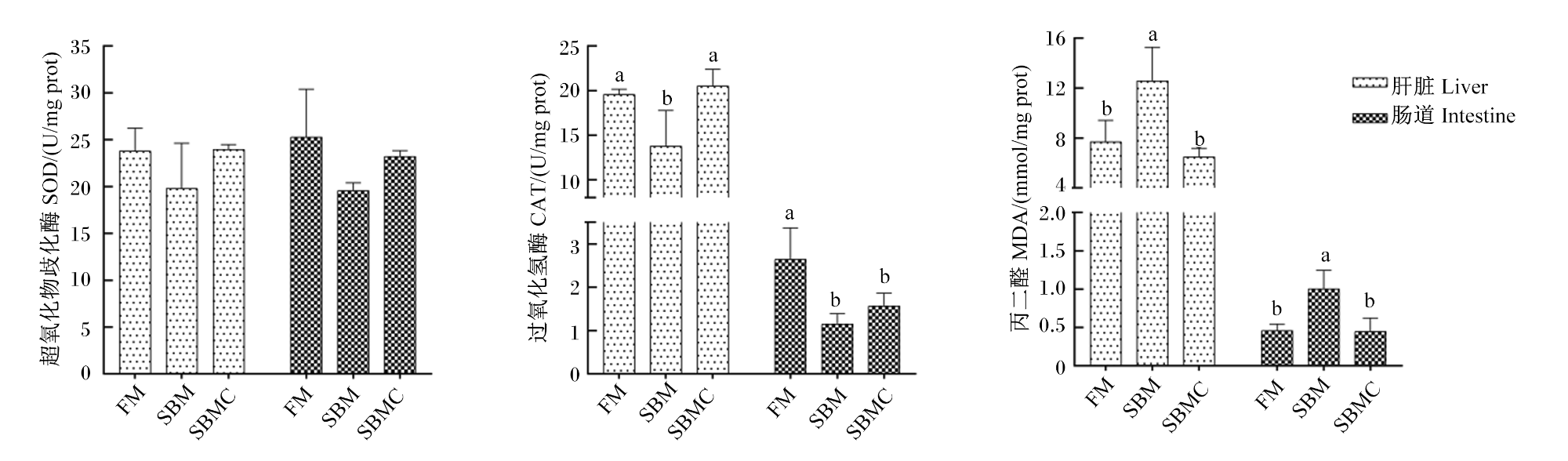
图2可知,与FM组相比,SBM组肝脏和肠道CAT活性均显著降低(P<0.05),MDA含量均显著提高(P<0.05);与SBM组相比,SBMC组肝脏CAT活性显著提高(P<0.05),肝脏和肠道MDA含量均显著降低(P<0.05)。
图2 姜黄素对摄食高豆粕饲料的黄姑鱼肝脏和肠道抗氧化指标的影响

数据柱形标注不同字母表示差异显著(P<0.05)。图3图6同。

Fig.2 Effects of curcumin on liver and intestinal antioxidant indexes of Nibea albiflora fed a high soybean meal diet

Value columns with different letters mean significant difference (P<0.05). The same as Fig.3 and Fig.6.

2.5 姜黄素对摄食高豆粕饲料黄姑鱼肝脏脂肪代谢相关基因表达的影响

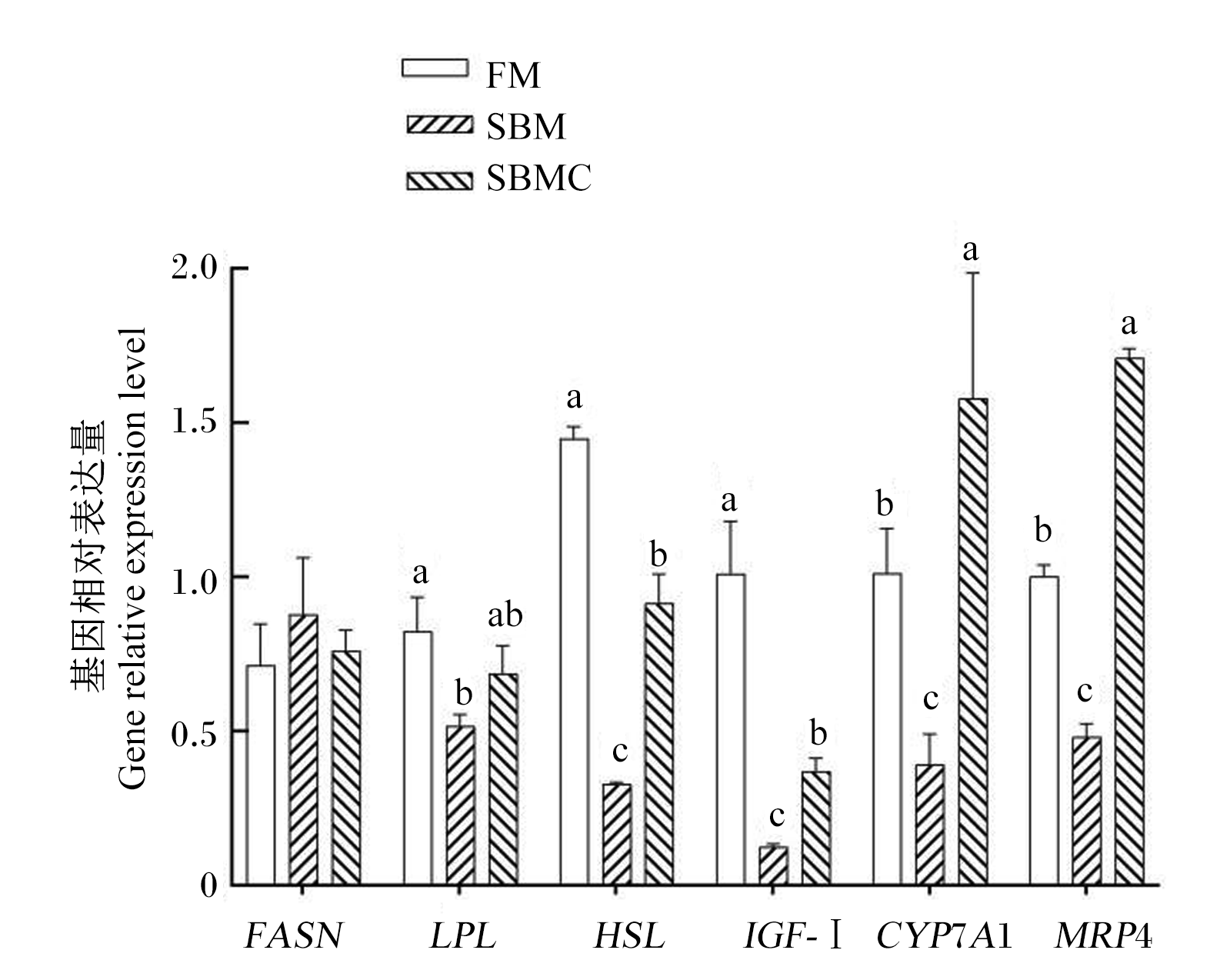
图3可知,与FM组相比,SBM组肝脏LPLHSLIGF-ⅠCYP7A1和MRP4基因相对表达量显著降低(P<0.05);与SBM组相比,SBMC组肝脏HSLIGF-ⅠCYP7A1和MRP4基因相对表达量显著提高(P<0.05)。
图3 姜黄素对摄食高豆粕饲料黄姑鱼肝脏脂肪代谢相关基因表达的影响

FASN:脂肪酸合成酶 fatty acid synthase;LPL:脂蛋白脂肪酶 lipoprotein lipase;HSL:激素敏感性脂肪酶 hormone-sensitive lipase;IGF-Ⅰ:胰岛素样生长因子-Ⅰ insulin-like growth factor-Ⅰ;CYP7A1:胆固醇7α-羟化酶 cholesterol 7α-hydroxylase;MRP4:多药耐药相关蛋白4 multidrug resistance-associated protein 4。图6图7同 the same as Fig.6 and Fig.7

Fig.3 Effects of curcumin on expression of lipid metabolism related genes in liver of Nibea albiflora fed a high soybean meal diet

2.6 摄食不同饲料黄姑鱼肠道RNA-Seq生物信息学分析

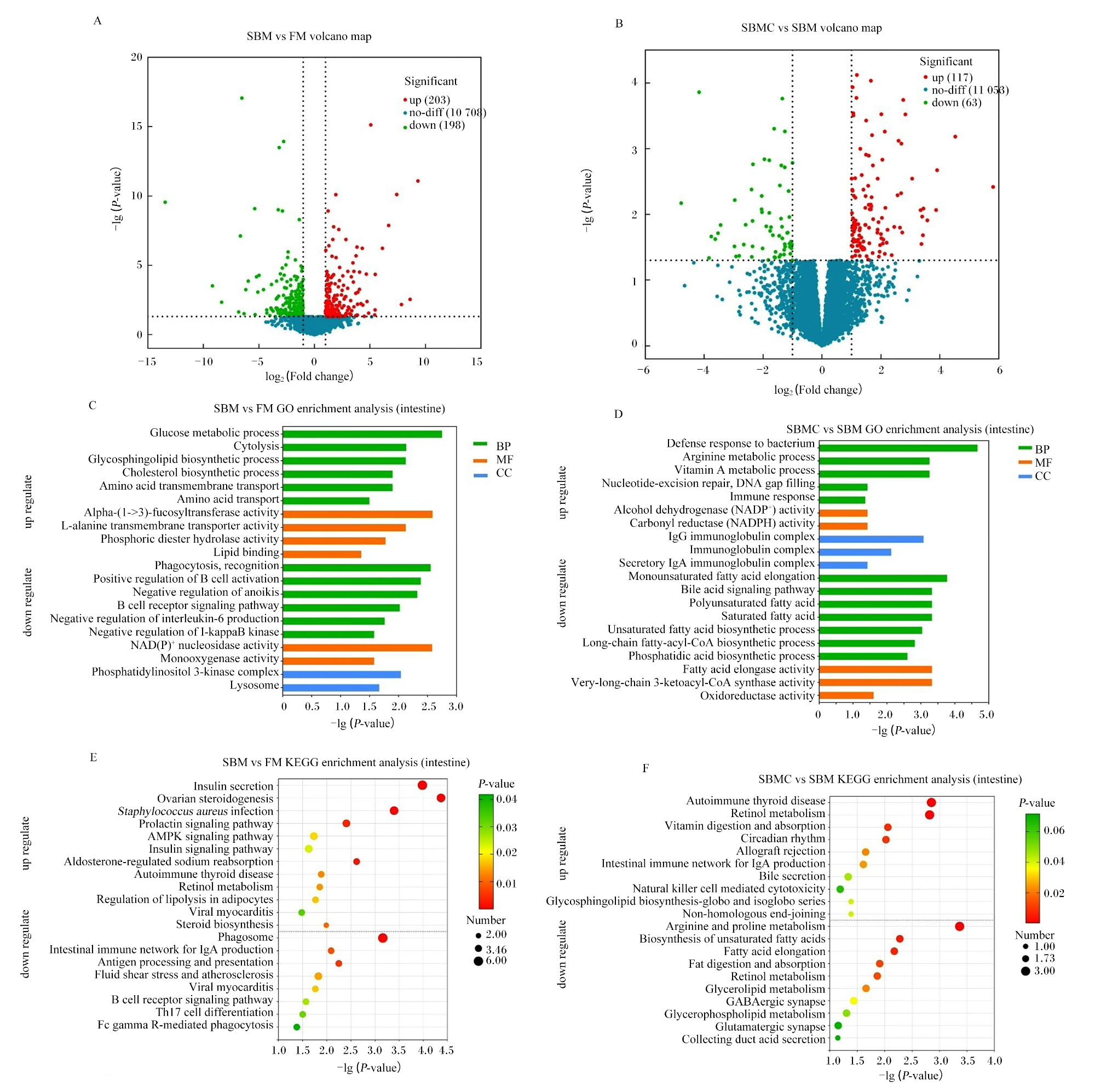
对SBM组与FM组肠道转录组进行比较分析,共鉴定得到11 868个基因,筛选出401个DEGs,包含203个上调DEGs及198个下调DEGs(图4-A)。GO功能富集分析结果表明,上调DEGs主要富集于氨基酸跨膜转运(amino acid transmembrane transport)、胆固醇生物合成(cholesterol biosynthetic process)、脂质结合(lipid binding)等功能条目;下调DEGs则主要富集于溶酶体(lysosome)、NAD(P)+核苷酶活性[NAD(P)+ nucleosidase activity]和吞噬、识别(phagocytosis,recognition)等功能条目(图4-C)。KEGG通路富集分析结果表明,上调DEGs主要富集于胰岛素分泌(insulin secretion)、胰岛素信号通路(insulin signaling pathway)、脂肪细胞中的脂肪分解调控(regulation of lipolysis in adipocytes)等代谢通路;下调DEGs主要富集于吞噬(phagocytosis)、B细胞受体信号通路(B cell receptor signaling pathway)、Th17细胞分化(Th17 cell differentiation)等代谢通路(图4-E)。
图4 SBM组vs FM组及SBMC组vs SBM组DEGs火山图(A、B)、GO富集条形图(C、D)和KEGG富集气泡图(E、F)

BP:生物过程 biological process;MF:分子功能 molecular function;CC:细胞组分 cellular component。volcano map:火山图;P-value:P值;Fold change:差异倍数;Significant:显著性;up:上调 up-regulated;down:下调 down-regulated;no-diff:不显著 no significant difference;GO enrichment analysis (intestine):GO富集分析(肠道);KEGG enrichment analysis (intestine):KEGG富集分析(肠道);up regulate:上调;down regulate:下调;Glucose metabolic process:葡萄糖代谢过程;Cytolysis:细胞溶解;Glycosphingolipid biosynthetic process:鞘糖脂生物合成过程;Cholesterol biosynthetic process:胆固醇生物合成过程;Amino acid transmembrane transport:氨基酸跨膜转运;Amino acid transport:氨基酸转运;Alpha-(1->3)-fucosyltransferase activity:α-(1->3)-岩藻糖基转移酶活性;L-alanine transmembrane transporter activity:L-丙氨酸跨膜转运蛋白活性;Phosphoric diester hydrolase activity:磷酸二酯水解酶活性;Lipid binding:脂质结合;NAD(P)+ nucleosidase activity:NAD(P)+核苷酶活性;Monooxygenase activity:单加氧酶活性;Phagocytosis, recognition:吞噬、识别;Positive regulation of B cell activation:B细胞激活的正调控;Negative regulation of anoikis:失巢凋亡的负调控;B cell receptor signaling pathway:B细胞受体信号通路;Negative regulation of interleukin-6 production:白细胞介素-6产生的负调控;Negative regulation of I-kappa B kinase:I-κB激酶信号的负调控;Phosphatidylinositol 3-kinase complex:磷脂酰肌醇3-激酶复合体;Lysosome:溶酶体;Defense response to bacterium:对细菌的防御反应;Arginine metabolic process:精氨酸代谢过程;Vitamin A metabolic process:维生素A代谢过程;Nucleotide-excision repair, DNA gap filling:核苷酸切除修复、DNA缺口填充;Immune response:免疫反应;Alcohol dehydrogenase (NADP+) activity:醇脱氢酶(NADP+)活性;Carbonyl reductase (NADPH) activity:羰基还原酶(NADPH)活性;IgG immunoglobulin complex:IgG免疫球蛋白复合物;Immunoglobulin complex:免疫球蛋白复合物;Secretory IgA immunoglobulin complex:分泌型IgA免疫球蛋白复合物;Monounsaturated fatty acid elongation:单不饱和脂肪酸延伸;Bile acid signaling pathway:胆汁酸信号通路;Polyunsaturated fatty acid:多不饱和脂肪酸;Saturated fatty acid:饱和脂肪酸;Unsaturated fatty acid biosynthetic process:不饱和脂肪酸生物合成过程;Long-chain fatty-acyl-CoA biosynthetic process:长链脂肪酰基辅酶A生物合成过程;Phosphatidic acid biosynthetic process:磷脂酸生物合成过程;Fatty acid elongase activity:脂肪酸延伸酶活性;Very-long-chain 3-ketoacyl-CoA synthase activity:超长链3-酮脂酰辅酶A合酶活性;Oxidoreductase activity:氧化还原酶活性;Insulin secretion:胰岛素分泌;Ovarian steroidogenesis:卵巢类固醇生成;Staphylococcus aureus infection:金黄色葡萄球菌感染;Prolactin signaling pathway:催乳素信号通路;AMPK signaling pathway:AMPK信号通路;Insulin signaling pathway:胰岛素信号通路;Aldosterone-regulated sodium reabsorption:醛固酮调节的钠重吸收;Autoimmune thyroid disease:自身免疫性甲状腺疾病;Retinol metabolism:视黄醇代谢;Regulation of lipolysis in adipocytes:脂肪细胞脂解调节;Viral myocarditis:病毒性心肌炎;Steroid biosynthesis:类固醇生物合成;Phagosome:吞噬体;Intestinal immune network for IgA production:肠道IgA免疫网络;Antigen processing and presentation:抗原加工与呈递;Fluid shear stress and atherosclerosis:流体剪切应力与动脉粥样硬化;Th17 cell differentiation:Th17细胞分化;Fc gamma R-mediated phagocytosis:FcγR介导的吞噬作用;Vitamin digestion and absorption:维生素消化与吸收;Circadian rhythm:昼夜节律;Allograft rejection:同种异体移植排斥;Bile secretion:胆汁分泌;Natural killer cell mediated cytotoxicity:自然杀伤细胞介导的细胞毒性;Glycosphingolipid biosynthesis-globo and isoglobo series:鞘糖脂生物合成-红细胞系列和异红细胞系列;Non-homologous end-joining:非同源末端连接;Arginine and proline metabolism:精氨酸和脯氨酸代谢;Biosynthesis of unsaturated fatty acids:不饱和脂肪酸生物合成;Fatty acid elongation:脂肪酸延伸;Fat digestion and absorption:脂肪消化与吸收;Glycerolipid metabolism:甘油脂代谢;GABAergic synapse:GABA能突触;Glycerophospholipid metabolism:甘油磷脂代谢;Glutamatergic synapse:谷氨酸能突触;Collecting duct acid secretion:集合管酸分泌。

Fig.4 SBM group vs FM group and SBMC group vs SBM group DEGs volcano map (A and B), GO enrichment bar chart (C and D) and KEGG enrichment bubble map (E and F)

对SBMC组与SBM组肠道转录组进行分析,共鉴定得到11 778个基因,筛选出180个DEGs,包含117个上调DEGs及63个下调DEGs(图4-B)。GO功能富集分析结果表明,上调DEGs主要富集于对细菌的防御反应(defense response to bacterium)、免疫应答(immune response)、精氨酸代谢过程(arginine metabolic process)等功能条目;下调DEGs主要富集于单不饱和脂肪酸延长(monounsaturated fatty acid elongation)、多不饱和脂肪酸延长(polyunsaturated fatty acid elongation)、脂肪酸延长酶活性(fatty acid elongase activity)等功能条目(图4-D)。KEGG通路富集分析结果表明,上调DEGs主要富集于胆汁分泌(bile secretion)、视黄醇代谢(retinol metabolism)、免疫球蛋白A参与的肠道免疫(intestinal immune network for IgA production)等代谢通路;下调DEGs主要富集于精氨酸和脯氨酸代谢(arginine and proline metabolism)、脂肪酸延长(fatty acid elongation)、甘油脂代谢(glycerolipid metabolism)、甘油磷脂代谢(glycerophospholipid metabolism)等代谢通路(图4-F)。
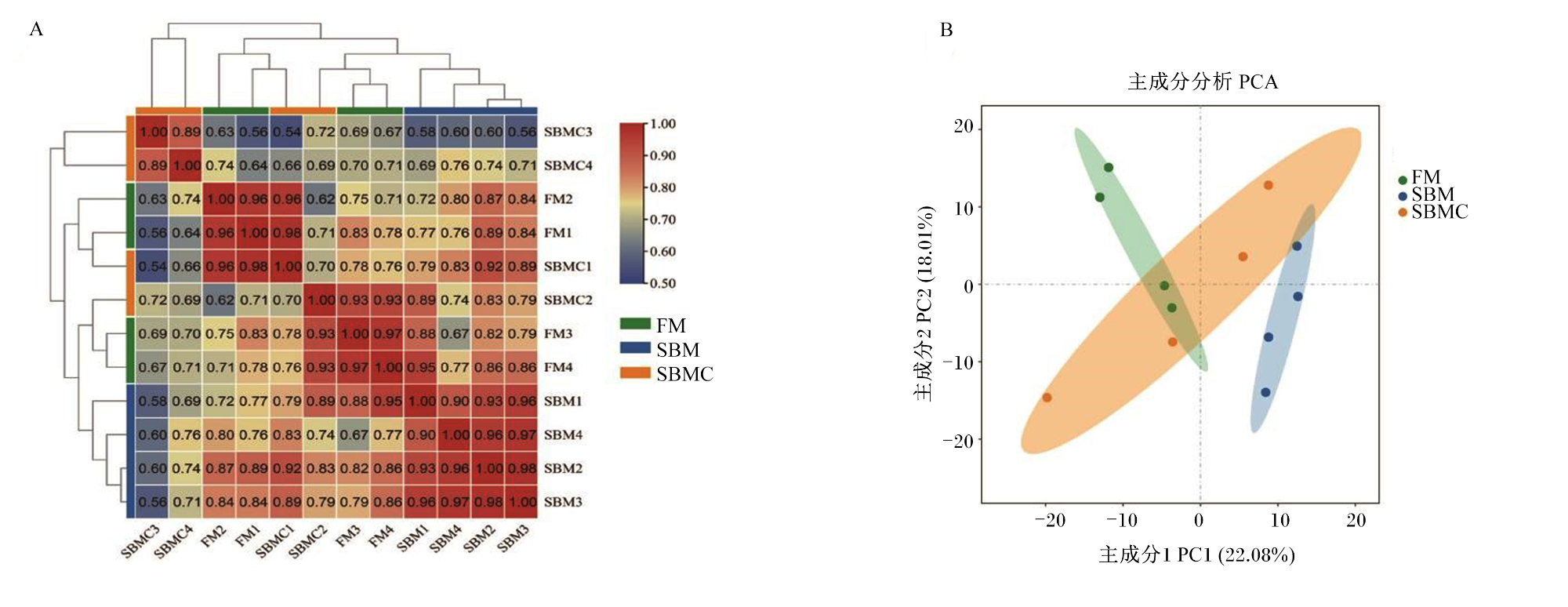
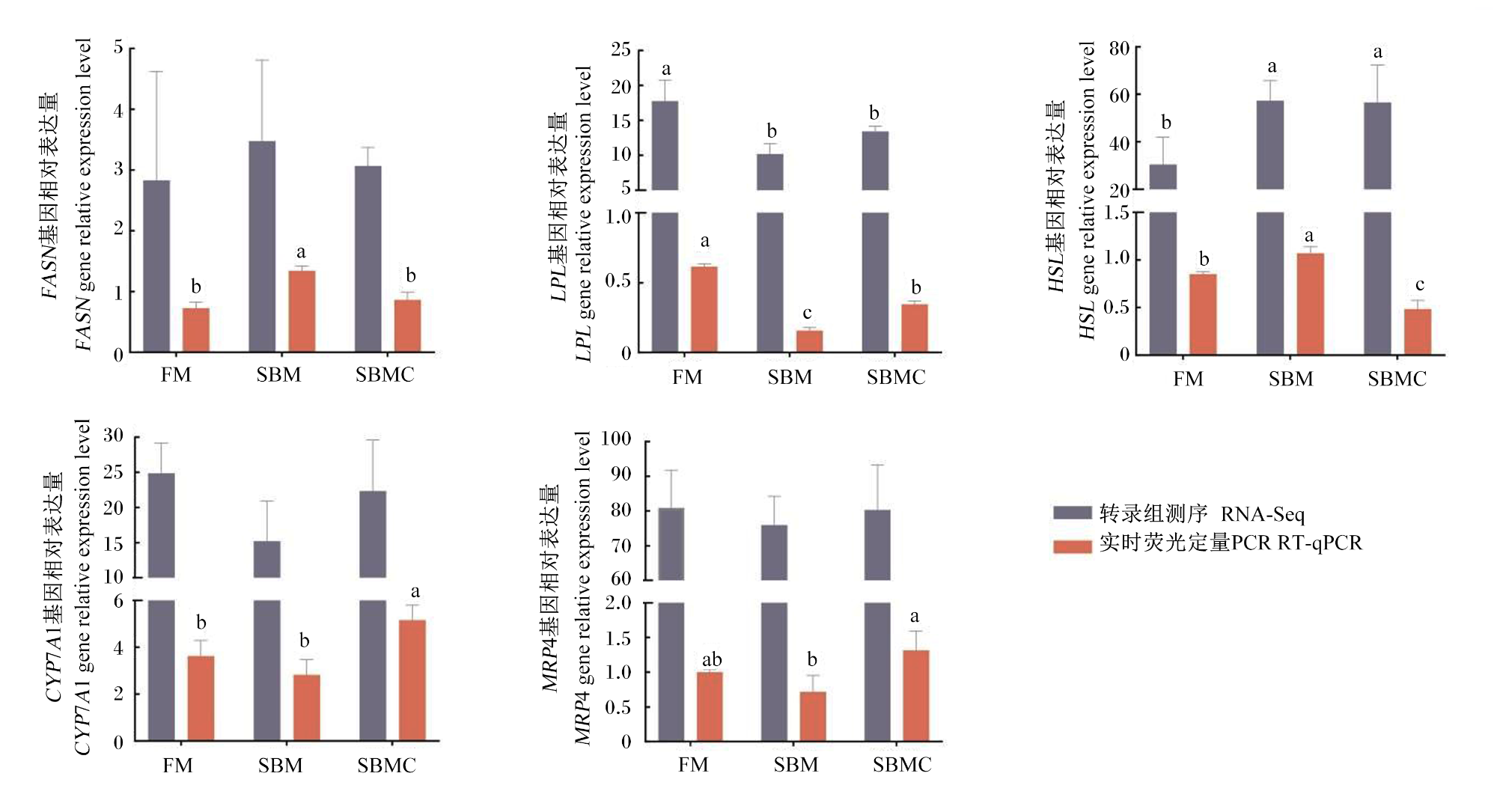
图5所示,FM组、SBM组与SBMC组肠道组织样本RNA-seq基因表达数据的相关性分析及主成分分析(PCA)结果表明组内样本重复性较好,组间存在明显差异。其中,SBM组与FM组以上调的胰岛素信号通路和下调的B细胞受体信号通路作为代表性信号通路进行分析,SBMC组与SBM组以上调的胆汁分泌信号通路和下调的甘油磷脂代谢通路作为代表性信号通路进行分析。进一步选取胆汁分泌及甘油磷脂代谢通路相关基因(FASNLPLHSLCYP7A1、MRP4)进行表达分析,并通过RT-qPCR验证其表达趋势。由图6可知,与FM组相比,SBM组肠道FASNHSL表达上调,LPLCYP7A1和MRP4表达下调;与SBM组相比,SBMC组肠道FASNHSL表达下调,LPLCYP7A1和MRP4表达上调。
图5 FM组、SBM组与SBMC组肠道组织样本RNA-seq基因表达数据的相关性分析(A)及主成分分析(B)

图A中不同颜色代表相关系数大小,其中红色表示高相关,黄色表示中等相关,蓝色表示低相关。

Fig.5 Correlation analysis (A) and PCA (B) of RNA-seq gene expression data in intestinal tissue samples from the FM group, SBM group and SBMC group

In figure A, different colors represented the magnitude of correlation coefficients, where red indicated high correlation, yellow indicated moderate correlation, and blue indicated low correlation.

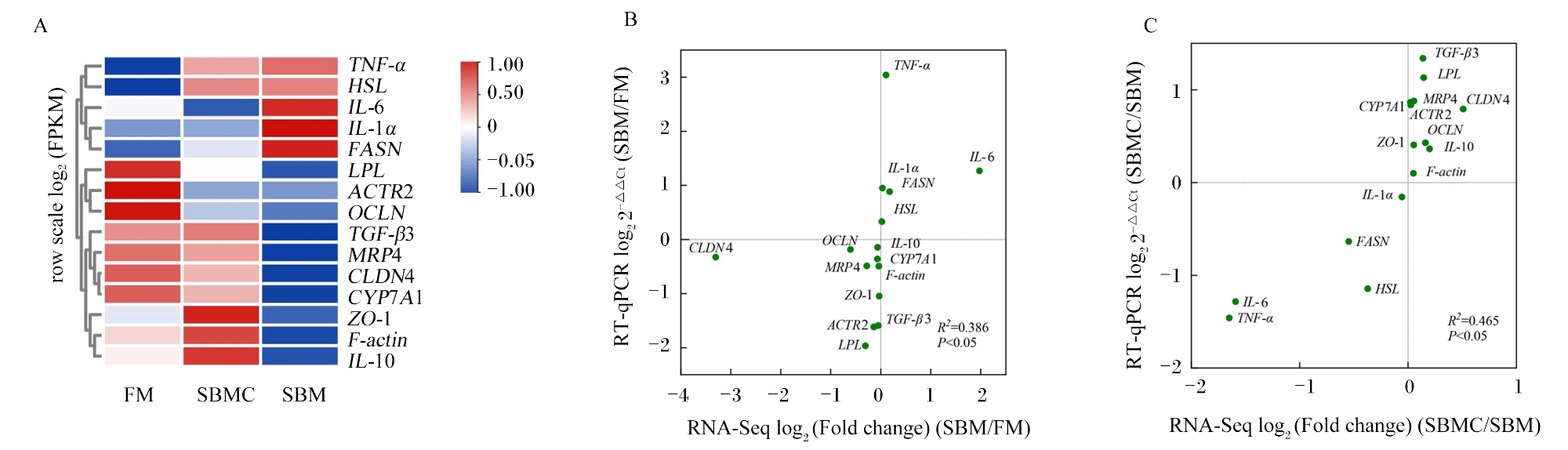
此外,还筛选出肠道细胞骨架[丝状肌动蛋白(F-actin)、肌动蛋白相关蛋白2(ACTR2)]、促炎因子[(白细胞介素-1α(IL-1α)、白细胞介素-6(IL-6)、肿瘤坏死因子-α(TNF-α)]、抑炎因子[(白细胞介素-10(IL-10)、转化生长因子-β3(TGF-β3)]、紧密连接[(闭合蛋白4(CLDN4)、封闭蛋白(OCLN)、闭锁小带蛋白-1(ZO-1)]基因进行了转录组数据分析和RT-qPCR验证(图7)。结果显示,RT-qPCR检测结果与肠道转录组数据表达趋势一致。与FM组相比,SBM组肠道细胞骨架(F-actinACTR2)、抑炎因子(IL-10、TGF-β3)、紧密连接(CLDN4、OCLNZO-1)基因总体表达下调,促炎因子(IL-1αIL-6、TNF-α)总体表达上调,Spearman相关性分析结果显示决定系数(R2)=0.386,P<0.05;与SBM组相比,SBMC组(F-actinACTR2)、抑炎因子(IL-10、TGF-β3)、紧密连接(CLDN4、OCLNZO-1)基因总体表达上调,促炎因子(IL-1αIL-6、TNF-α)总体表达下调,Spearman相关性分析结果显示R2=0.465,P<0.05。
图6 肠道脂肪代谢相关基因RNA-seq和RT-qPCR结果的比较分析

Fig.6 Comparative analysis of RNA-seq and RT-qPCR results for intestinal lipid metabolism-related genes

图7 选定DEGs的RNA-seq结果与RT-qPCR结果对比

A:选定DEGs表达热图;B:SBM组vs FM组RNA-seq结果与RT-qPCR结果对比散点图;C:SBMC组vs SBM组RNA-seq结果与RT-qPCR结果对比散点图。A: expression heatmap of selected DEGs; B: scatter plot of RNA-seq and RT-qPCR results comparison in SBM group vs FM group; C: scatter plot of RNA-seq and RT-qPCR results comparison in SBMC group vs SBM group.

FPKM:每千碱基每百万片段读数 fragments per kilobase of transcript per million mapped reads;row scale:行尺度化;Fold change:差异倍数;IL-1α:白细胞介素-1α interleukin-1α;IL-6:白细胞介素-6 interleukin-6;TNF-α:肿瘤坏死因子-α tumor necrosis factor-α;IL-10:白细胞介素-10 interleukin-10;TGF-β3:转化生长因子-β3 transforming growth factor-β3;F-actin:丝状肌动蛋白 filamentous actin;ACTR2:肌动蛋白相关蛋白2 actin-related protein 2;CLDN4:闭合蛋白4 claudin 4;OCLN:封闭蛋白 occludin;ZO-1:闭锁小带蛋白1 zonula occludens-1。

Fig.7 Comparison of RNA-seq and RT-qPCR results for selected DEGs

3 讨论

3.1 姜黄素对摄食高豆粕饲料黄姑鱼生长性能和体成分的影响

豆粕作为水产养殖中替代鱼粉的常用植物蛋白质源,其氨基酸比例相对均衡[20],但含有胰蛋白酶抑制剂[21]和β-甘氨酸[22]等抗营养因子。高比例添加豆粕会降低鱼类对肠道营养物质的消化吸收效率,而外源添加功能性饲料添加剂可有效改善这一问题[23-24]。本研究结果表明,与SBM组相比,饲料中添加姜黄素的SBMC组黄姑鱼WGR和SGR显著提高,FR显著降低。这可能与姜黄素的抗氧化、抗炎及免疫调节功能有关[25],能够缓解高豆粕饲料引起的肠道氧化应激,抑制有害微生物生长,进而提升肠道对营养物质的消化吸收效率[26]。FCR是衡量饲料转化率的直接指标。研究表明,当植物蛋白质替代鱼粉超过一定比例时,会降低鱼类对蛋白质的利用率,导致FCR显著升高[27]。本研究结果与上述研究相符,即与FM组相比,SBM组FCR显著提高;与SBM组相比,SBMC组FCR显著降低。这表明豆粕替代50%鱼粉降低了黄姑鱼对饲料的利用率,而姜黄素可能通过改善肠道组织形态,促进营养物质的消化吸收,从而提高了饲料利用率,该推论与本研究中的肠道组织形态结果相符。
饲料组成是影响鱼体体成分的主要因素。本研究中,SBMC组全鱼粗脂肪含量显著低于SBM组,与王雅慧等[28]的研究结果一致,饲料中添加姜黄素对鱼体脂肪含量的降低作用可能与姜黄素参与鱼体脂肪代谢有关。已有研究表明,姜黄素能抑制FASN基因表达,促进脂肪分解酶HSL基因表达,降低机体脂肪沉积[29-30]。本研究发现,SBMC组肝脏和肠道FASN基因的表达均低于SBM组,HSL基因的表达在肝脏中高于SBM组,在肠道中未表现出明显提高,且SBMC组肝脏和肠道LPL基因的表达高于SBM组,表明姜黄素发挥降脂作用可能主要通过调节FASNHSL基因表达来完成。

3.2 姜黄素对摄食高豆粕饲料黄姑鱼肝脏和肠道组织形态的影响

肝脏作为鱼类重要的代谢器官,与肠道协同参与机体氨基酸代谢、脂质合成及解毒排泄等生理过程[31-32]。研究表明,当饲料中豆粕含量超过44%时,会导致肝细胞核发生偏移,出现大量的脂质空泡[33];当发酵豆粕含量超过50%时,则会引发肝细胞核及细胞质明显萎缩,肝细胞排列混乱[34]。肠道是鱼类营养物质消化吸收的主要器官及免疫器官,通常以其形态结构变化评估肠道屏障功能[35]。研究表明,以豆粕替代60%鱼粉饲喂斜带石斑鱼56 d,会造成其后肠肠绒毛高度和肌层厚度显著降低,肠黏膜单层柱状上皮细胞的细胞核排列紊乱,肠道黏膜物理屏障受损[36]。本研究中,与FM组相比,SBM组(豆粕替代50%鱼粉)表现出肝细胞核偏离、脂质空泡化严重、脂滴大量沉积,以及肠绒毛明显缩短、排列稀疏等现象;而SBMC组肝脏与肠道结构均较SBM组有明显改善。该结果与Torrecillas等[37]和Duan等[38]的研究结果一致,表明外源添加功能性饲料添加剂可以缓解肝脏损伤,促进肠道修复,改善肠道黏膜物理屏障。

3.3 姜黄素对摄食高豆粕饲料黄姑鱼肝脏和肠道抗氧化性能的影响

维持机体的氧化还原平衡对鱼类健康至关重要。ROS作为机体主要的氧化还原信号分子,在受到外界环境刺激时会在体内蓄积,引起肝脏和肠道功能损伤,导致机体代谢紊乱[39-40]。MDA是细胞内多不饱和脂肪酸过氧化的最终产物,而SOD和CAT可通过清除体内自由基缓解氧化应激[41-42]。研究中常以MDA含量来评估机体氧化损伤程度,以SOD和CAT活性来评价机体抗氧化能力。研究表明,饲料中添加高比例豆粕会导致鱼类抗氧化能力受损,SOD和CAT活性降低,MDA含量升高[43],本研究结果与之相符。本研究发现,与SBM组相比,SBMC组肝脏和肠道SOD、CAT活性提高,MDA含量降低。由此表明,饲料中添加姜黄素可以提高黄姑鱼的抗氧化能力,缓解鱼体氧化应激,这与在虹鳟(Oncorhynchus mykiss)[44]和红罗非鱼(Oreochromis sp.)[12]中的研究结果一致。

3.4 姜黄素对摄食高豆粕饲料黄姑鱼肝脏和肠道改善作用的可能机制

为进一步探究姜黄素改善高比例豆粕对黄姑鱼肝脏和肠道负面影响的深层机制,本研究开展了肠道转录组分析。结果显示,SBM组与FM组、SBMC组与SBM组的DEGs在GO功能上主要富集在与脂代谢、免疫因子产生及氧化反应调控等相关的生物学过程。在KEGG通路富集结果中,SBM组与FM组间以胰岛素信号通路和B细胞受体信号通路作为代表性通路分析,表现为胰岛素信号通路上调,B细胞受体信号通路下调;SBMC组与SBM组间以胆汁分泌和甘油磷脂代谢为代表性通路分析,表现为胆汁分泌上调,甘油磷脂代谢下调。
胰岛素是一种肽类激素,是抑制脂肪细胞脂质分解的主要激素之一[45]。研究表明,高水平的胰岛素会上调FASN和葡萄糖-6-磷酸脱氢酶(G6PD)基因表达及其酶活性,强化脂质合成代谢,引发脂肪沉积[46]。成熟B细胞的抗原识别及B细胞受体介导的细胞信号转导在体液免疫应答调节中具有重要作用[47]。IGF-Ⅰ是一种与胰岛素结构相似的多功能多肽生长因子,其高水平表达不仅能够改善胰岛素抵抗,促进糖和脂代谢[48],还可促进早期B细胞的发育成熟[49]。本研究转录组结果显示,与FM组相比,SBM组胰岛素信号通路上调而B细胞受体信号通路下调,推测这可能与SBM组肝脏和肠道中IGF-Ⅰ的低表达有关。IGF-Ⅰ的低表达可能导致加剧胰岛素抵抗,促使胰岛素分泌增加,进而上调FASN基因表达,下调HSL基因表达,促进脂肪沉积;同时,IGF-Ⅰ表达下调也可能抑制B细胞的增殖、分化和成熟,降低B细胞受体的多样性及抗原识别特异性,从而减弱免疫应答。
胆汁酸作为胆汁的主要脂质成分,由胆固醇在肝脏中合成初级胆汁酸,随后进入肠道形成次级胆汁酸,参与调控机体脂质代谢[50]。研究发现,姜黄素可上调CYP7A1、胆固醇7β-羟化酶(CYP7B1)和胆固醇27α-羟化酶(CYP27A1)基因表达及其酶活性,促进胆汁酸的合成,同时抑制嗜酸性乳杆菌胆汁盐水解酶(BSH)的表达,减少胆汁酸的分解[51]。此外,姜黄素可在体内代谢为四氢姜黄素,上调胆汁酸分泌相关基因MRP4和胆盐输出泵(BSEP)转录水平,减少脂肪沉积[52-53]。甘油磷脂作为细胞膜的主要成分,包括磷脂和三酰基甘油[54]。研究表明,脂肪酰辅酶A与甘油-3-磷脂可在甘油-3-磷酸酰基转移酶催化下形成溶血磷脂酸,进一步在1-酰基甘油-3-磷酸酰基转移酶作用下酰化形成磷脂酸,而磷脂酸是合成二酰甘油(DG)的前体物质[55]。FASN可催化乙酰辅酶A和丙二酰辅酶A合成长链饱和脂肪酸,进一步与DG合成三酰基甘油[55-56]。本研究选择了胆汁分泌和甘油磷脂代谢通路相关基因FASNLPLHSLCYP7A1、MRP4进行了肝脏和肠道基因表达分析,结果表明,与SBM组相比,SBMC组肝脏和肠道CYP7A1、MRP4基因表达均显著上调,FASN基因表达下调。因此,推测姜黄素可能通过上调CYP7A1和MRP4基因表达和下调FASN基因表达进而调控胆汁酸代谢途径和甘油磷脂的合成途径,从而降低黄姑鱼体脂肪沉积,提高抗氧化酶活性,增强机体抗氧化性能,最终改善高豆粕饲料对黄姑鱼肝脏和肠道造成的负面影响。

4 结论

综上所述,姜黄素可有效改善高豆粕饲料造成的黄姑鱼肝脏和肠道组织损伤,并降低鱼体脂肪沉积,缓解机体氧化应激。肠道转录组分析结果表明,此效应可能与姜黄素可促进胆汁酸分泌来维持胆汁酸肠肝循环稳态,以及调控脂肪代谢相关基因表达降低鱼体脂肪沉积有关,最终改善了高比例豆粕造成的肝脏和肠道组织损伤,进而提升黄姑鱼的生长性能。
[1]
代伟伟, 麦康森, 徐玮, 等. 复合植物蛋白源替代鱼粉对半滑舌鳎生长、生理生化指标和肠组织结构的影响[J]. Journal of Fishery Sciences of China, 2016, 23(1):125-137.

DAI W W, MAI K S, XU W, et al. Effects of replacing fish meal with plant-based protein on growth,physiological and biological indices,and intestinal histology in tongue sole,Cynoglossus semilaevis Güntuer[J]. Journal of Fishery Sciences of China, 2016, 23(1):125-137. (in Chinese)

[2]
MA S F, WANG H, DOU Y L, et al. Anti-nutritional factors and protein dispersibility index as principal quality indicators for soybean meal in diet of Nile tilapia (Oreochromis niloticus GIFT),a Meta-analysis[J]. Animals, 2022, 12(14):1831.

DOI

[3]
BAKKE A M, CHIKWATI E M, VENOLD F F, et al. Bile enhances glucose uptake,reduces permeability,and modulates effects of lectins,trypsin inhibitors and saponins on intestinal tissue[J]. Comparative Biochemistry and Physiology Part A:Molecular & Integrative Physiology, 2014, 168:96-109.

[4]
谷珉. 影响海水鱼虾对植物蛋白利用的抗营养因子和蛋氨酸的研究[D]. 博士学位论文. 青岛: 中国海洋大学, 2013.

GU M. The research on the plant protein utilization by marine fish and shrimp-antinutritional factors and methionine[D]. Ph.D.Thesis. Qingdao: Ocean University of China, 2013. (in Chinese)

[5]
LI N Y, HE Z Y, WANG J X, et al. Intestinal flora and liver metabolism molecular mechanism on growth and health in Japanese eel black fry (Anguilla japonica) fed with fermented soybean meal replacing soybean meal and fish meal[J]. Aquaculture Reports, 2025, 43:102889.

DOI

[6]
MENG F X, LI B, XIE Y X, et al. Substituting fishmeal with extruded soybean meal in diets did not affect the growth performance,hepatic enzyme activities,but hypoxia tolerance of dolly varden (Salvelinus malma) juveniles[J]. Aquaculture Research, 2020, 51(1):379-388.

DOI

[7]
常阔. 高豆粕日粮中添加丁酸钠对大口黑鲈生长性能、肠炎和肠道微生物组成的影响[D]. 硕士学位论文. 洛阳: 河南科技大学, 2023.

CHANG K. Effects of sodium butyrate supplementation in high-soybean diets on growth performance,enteritis and intestinal microbial composition of largemouth bass (Micropterus salmoides)[D]. Master’s Thesis. Luoyang: Henan University of Science and Technology, 2023. (in Chinese)

[8]
MA S P, WANG L G, ZENG Y Q, et al. Reparative effect of different dietary additives on soybean meal-induced intestinal injury in yellow drum (Nibea albiflora)[J]. Frontiers in Immunology, 2023, 14:1296848.

DOI

[9]
HANAFY N A N. Optimally designed theranostic system based folic acids and chitosan as a promising mucoadhesive delivery system for encapsulating curcumin LbL nano-template against invasiveness of breast cancer[J]. International Journal of Biological Macromolecules, 2021, 182:1981-1993.

DOI

[10]
ABDELHAMID F M, MAHGOUB H A, ATEYA A I. Ameliorative effect of curcumin against lead acetate-induced hemato-biochemical alterations,hepatotoxicity,and testicular oxidative damage in rats[J]. Environmental Science and Pollution Research International, 2020, 27(10):10950-10965.

DOI

[11]
KODAMA Y, BRENNER D A. c-Jun N-terminal kinase signaling in the pathogenesis of nonalcoholic fatty liver disease:multiple roles in multiple steps[J]. Hepatology, 2009, 49(1):6-8.

DOI

[12]
EISSA E S H, AWLYA O F, ABUSUDAH W F, et al. Curcumin’s effects on growth indices,histological scores,blood metabolites,redox state,immunity,and antioxidant-related genes of red tilapia (Oreochromis sp.)[J]. Aquaculture International, 2024, 32(5):7031-7046.

DOI

[13]
ALHAWAS B, ABD EL-HAMID M I, HASSAN Z, et al. Curcumin loaded liposome formulation:enhanced efficacy on performance,flesh quality,immune response with defense against Streptococcus agalactiae in Nile tilapia (Orechromis niloticus)[J]. Fish & Shellfish Immunology, 2023, 138:108776.

[14]
许凡, 叶元土, 蔡春芳, 等. 注射硫代乙酰胺并饲喂酵母培养物、姜黄素和水飞蓟素对草鱼脂代谢相关基因表达丰度的影响[J]. 水产学报, 2012, 36(5):740-747.

XU F, YE Y T, CAI C F, et al. Effects of yeast culture,curcumin and silymarino on lipid metabolism related genes expression activity of liver injured by thioacetamide in grass carp[J]. Journal of Fisheries of China, 2012, 36(5):740-747. (in Chinese)

DOI

[15]
JI R L, XIANG X J, LI X S, et al. Effects of dietary curcumin on growth,antioxidant capacity,fatty acid composition and expression of lipid metabolism-related genes of large yellow croaker fed a high-fat diet[J]. British Journal of Nutrition, 2021, 126(3):345-354.

DOI

[16]
WANG S, WANG X C, YE Z C, et al. Curcumin promotes browning of white adipose tissue in a norepinephrine-dependent way[J]. Biochemical and Biophysical Research Communications, 2015, 466(2):247-253.

DOI PMID

[17]
XU D D, LOU B, SHI H L, et al. Genetic diversity and population structure of Nibea albiflora in the China Sea revealed by mitochondrial COI sequences[J]. Biochemical Systematics and Ecology, 2012, 45:158-165.

DOI

[18]
曾延清. 低鱼粉饲料中添加姜黄素对黄姑鱼生长性能、饲料利用及肠道健康的影响研究[D]. 硕士学位论文. 舟山: 浙江海洋大学, 2022.

ZENG Y Q. Effect of curcumin supplementation in low-fish meal diet on growth performance,feed utilization and intestinal health of yellow drum (Nibea albiflora)[D]. Master’s Thesis. Zhoushan: Zhejiang Ocean University, 2022. (in Chinese)

[19]
WANG L G, LU Q, LUO S Y, et al. Effect of dietary lipid on growth performance,body composition,plasma biochemical parameters and liver fatty acids content of juvenile yellow drum Nibea albiflora[J]. Aquaculture Reports, 2016, 4:10-16.

DOI

[20]
曹晓莉. 葵花粕替代豆粕对草鱼生长、肌肉品质及肠道健康的影响[D]. 硕士学位论文. 长沙: 湖南农业大学, 2021.

CAO X L. Effects of sunflower meal instead of soybean meal on the growth,muscle quality and intestinal health of grass carp (Ctenopharyngodon ldella)[D]. Master’s Thesis. Changsha: Hunan Agricultural University, 2021. (in Chinese)

[21]
吴如仁, 周林志, 赵霜霜, 等. 豆粕抗营养因子处理及其在动物生产上的应用[J]. 黑龙江畜牧兽医, 2015(10):150-152.

WU R R, ZHOU L Z, ZHAO S S, et al. Treatment of antinutritional factors in soybean meal and its application in animal production[J]. Heilongjiang Animal Science and Veterinary Medicine, 2015(10):150-152. (in Chinese)

[22]
ZHANG J X, GUO L Y, FENG L, et al. Soybean β-conglycinin induces inflammation and oxidation and causes dysfunction of intestinal digestion and absorption in fish[J]. PLoS One, 2013, 8(3):e58115.

DOI

[23]
CHENG Z Y, BUENTELLO A, GATLIN D M III. Effects of dietary arginine and glutamine on growth performance,immune responses and intestinal structure of red drum,Sciaenops ocellatus[J]. Aquaculture, 2011, 319(1/2):247-252.

DOI

[24]
SAHLMANN C, SUTHERLAND B J G, KORTNER T M, et al. Early response of gene expression in the distal intestine of Atlantic salmon (Salmo salar L.) during the development of soybean meal induced enteritis[J]. Fish & Shellfish Immunology, 2013, 34(2):599-609.

[25]
ABDEL-TAWWAB M, EISSA E S H, TAWFIK W A, et al. Dietary curcumin nanoparticles promoted the performance,antioxidant activity,and humoral immunity,and modulated the hepatic and intestinal histology of Nile tilapia fingerlings[J]. Fish Physiology and Biochemistry, 2022, 48(3):585-601.

DOI

[26]
LU X, TAN K, GONG Q F, et al. Positive effects of Lithospermum erythrorhizon extract added to high soybean meal diet on growth,intestinal antioxidant capacity,intestinal microbiota,and metabolism of pearl gentian grouper[J]. Aquaculture Reports, 2024, 39:102500.

DOI

[27]
张鑫, 韩蓓, 胡俊涛, 等. 豆粕替代鱼粉对乌鳢生长性能、蛋白质利用及肠道组织形态的影响[J]. 动物营养学报, 2020, 32(6):2799-2807.

DOI

ZHANG X, HAN B, HU J T, et al. Effects of replacement of fish meal by soybean meal on growth performance,protein utilization and intestinal tissue morphology of Channa argus[J]. Chinese Journal of Animal Nutrition, 2020, 32(6):2799-2807. (in Chinese)

[28]
王雅慧, 王裕玉, 麦康森, 等. 饲料中添加姜黄素对大菱鲆幼鱼生长、体组成及抗氧化酶活力的影响[J]. 水产学报, 2016, 40(9):1299-1308.

WANG Y H, WANG Y Y, MAI K S, et al. Effects of dietary curcumin on growth performance,body composition and serum antioxidant enzyme activity in juvenile turbot (Scophthalmus maximus)[J]. Journal of Fisheries of China, 2016, 40(9):1299-1308. (in Chinese)

[29]
胡忠泽, 王立克, 闻爱友. 姜黄素对皖江黄鸡脂肪代谢的影响[J]. 粮食与饲料工业, 2008(4):29-30,33.

HU Z Z, WANG L K, WEN A Y. Effect of curcumin on fat metabolism in Wanjiang yellow chickens[J]. Cereal & Feed Industry, 2008(4):29-30,33. (in Chinese)

[30]
潘士锋, 崔忆馨, 张杭, 等. 姜黄素对猪脂肪间充质干细胞脂肪合成和分解相关基因mRNA表达的影响[J]. 畜牧与兽医, 2017, 49(11):42-46.

PAN S F, CUI Y X, ZHANG H, et al. Effects of curcumin on expressions of lipid synthesis and lipolysis related genes in porcine adipose derived mesenchymal stem cells[J]. Animal Husbandry & Veterinary Medicine, 2017, 49(11):42-46. (in Chinese)

[31]
LU Y F, ZHANG Y, DENG Y F, et al. Uptake and accumulation of polystyrene microplastics in zebrafish (Danio rerio) and toxic effects in liver[J]. Environmental Science & Technology, 2016, 50(7):4054-4060.

DOI

[32]
SARASAMMA S, AUDIRA G, SIREGAR P, et al. Nanoplastics cause neurobehavioral impairments,reproductive and oxidative damages,and biomarker responses in zebrafish:throwing up alarms of wide spread health risk of exposure[J]. International Journal of Molecular Sciences, 2020, 21(4):1410.

DOI

[33]
FUENTES-QUESADA J P, VIANA M T, ROMBENSO A N, et al. Enteritis induction by soybean meal in Totoaba macdonaldi diets:effects on growth performance,digestive capacity,immune response and distal intestine integrity[J]. Aquaculture, 2018, 495:78-89.

DOI

[34]
ZAKARIA M K, KARI Z A, VAN DOAN H, et al. Fermented soybean meal (FSBM) in African catfish (Clarias gariepinus) diets:effects on growth performance,fish gut microbiota analysis,blood haematology,and liver morphology[J]. Life, 2022, 12(11):1851.

DOI

[35]
GUO M X, PENG R, JIN K, et al. Effects of Aeromonas infection on the immune system,physical barriers and microflora structure in the intestine of juvenile grass carp (Ctenopharyngodon idella)[J]. Fish & Shellfish Immunology, 2024, 153:109790.

[36]
王彦飞. 膨化和普通豆粕替代鱼粉对斜带石斑鱼生长性能和肠道屏障的影响[D]. 硕士学位论文. 厦门: 集美大学, 2019.

WANG Y F. Effects of fish meal replacement with extruded or common soybean meal on the growth performance and gut-barrier functions of grouper (Epinephelus coioides)[D]. Master’s Thesis. Xiamen: Jimei University, 2019. (in Chinese)

[37]
TORRECILLAS S, MONTERO D, CABALLERO M J, et al. Effects of dietary concentrated mannan oligosaccharides supplementation on growth,gut mucosal immune system and liver lipid metabolism of European sea bass (Dicentrarchus labrax) juveniles[J]. Fish & Shellfish Immunology, 2015, 42(2):508-516.

[38]
DUAN Y F, ZHANG Y, DONG H B, et al. Effect of dietary Clostridium butyricum on growth,intestine health status and resistance to ammonia stress in Pacific white shrimp Litopenaeus vannamei[J]. Fish & Shellfish Immunology, 2017, 65:25-33.

[39]
QIAO Y, SUN J, DING Y Y, et al. Alterations of the gut microbiota in high-fat diet mice is strongly linked to oxidative stress[J]. Applied Microbiology and Biotechnology, 2013, 97(4):1689-1697.

DOI PMID

[40]
KUHN P, KALARIYA H M, POULEV A, et al. Grape polyphenols reduce gut-localized reactive oxygen species associated with the development of metabolic syndrome in mice[J]. PLoS One, 2018, 13(10):e0198716.

DOI

[41]
ZHAO Y, WU X Y, XU S X, et al. Dietary tryptophan affects growth performance,digestive and absorptive enzyme activities,intestinal antioxidant capacity,and appetite and GH-IGF axis-related gene expression of hybrid catfish (Pelteobagrus vachelli♀×Leiocassis longirostris♂)[J]. Fish Physiology and Biochemistry, 2019, 45(5):1627-1647.

DOI

[42]
MEDINA-LUNA D, SANTAMARÍA-OLMEDO M G, ZAMUDIO-CUEVAS Y, et al. Hyperlipidemic microenvironment conditionates damage mechanisms in human chondrocytes by oxidative stress[J]. Lipids in Health and Disease, 2017, 16(1):114.

DOI

[43]
HUO C, XIAO R Y, WANG K, et al. Arginine intervention mitigates growth retardation and gut antioxidant stress in orange-spotted groupers (Epinephelus coioides) fed high soybean meal diets[J]. Aquaculture Reports, 2025, 43:102978.

DOI

[44]
BAKHTIARI A S, SAJJADI M M, FALAHATKAR B, et al. Effects of dietary ginger (Zingiber officinale) extract and curcumin on growth,hematology,immunity,and antioxidant status in rainbow trout (Oncorhynchus mykiss)[J]. Aquaculture Reports, 2023, 32:101714.

DOI

[45]
CAPEAU J. Insulin signaling:mechanisms altered in insulin resistance[J]. Medical Science, 2003, 19(8/9):834-839.

[46]
罗智, 卓梅琴. 鱼类胰岛素、胰岛素受体和胰岛素受体底物的生物学特性及其对营养物质代谢的调控[J]. 水产学报, 2018, 42(1):149-158.

LUO Z, ZHUO M Q. Biological characteristics of three key members of insulin signaling systems and their functions in regulation of nutrient metabolism in fish:a review[J]. Journal of Fisheries of China, 2018, 42(1):149-158. (in Chinese)

[47]
MAIER H, HAGMAN J. Roles of EBF and Pax-5 in B lineage commitment and development[J]. Seminars in Immunology, 2002, 14(6):415-422.

PMID

[48]
朱鹏. 胰岛素样生长因子1对脂肪干细胞功能命运的影响及调控机制[D]. 硕士学位论文. 桂林: 广西师范大学, 2024.

ZHU P. Effects of insulin-like growth factor 1 on immune regulation of adipose stem cells and its regulatory mechanism[D]. Master’s Thesis.Guilin: Guangxi Normal University, 2024. (in Chinese)

[49]
YAMADA H, IIJIMA K, TOMITA O, et al. Effects of insulin-like growth factor-1 on B-cell precursor acute lymphoblastic leukemia[J]. International Journal of Hematology, 2013, 97(1):73-82.

DOI PMID

[50]
XIE A J, MAI C T, ZHU Y Z, et al. Bile acids as regulatory molecules and potential targets in metabolic diseases[J]. Life Sciences, 2021, 287:120152.

DOI

[51]
TIAN F Y, CHEN T X, XU W D, et al. Curcumin compensates GLP-1 deficiency via the microbiota-bile acids axis and modulation in functional crosstalk between TGR5 and FXR in ob/ob mice[J]. Molecular Nutrition & Food Research, 2023, 67(22):2300195.

[52]
PENG S, MENG M, LUO P, et al. Tetrahydrocurcumin alleviates metabolic dysfunction-associated steatohepatitis in mice by regulating serum lipids,bile acids,and gut microbiota[J]. International Journal of Molecular Sciences, 2025, 26(3):895.

DOI

[53]
YANG F, TANG X W, DING L L, et al. Curcumin protects ANIT-induced cholestasis through signaling pathway of FXR-regulated bile acid and inflammation[J]. Scientific Reports, 2016, 6(1):33052.

DOI

[54]
CASARES D, ESCRIBÁ P V, ROSSELLÓ C A. Membrane lipid composition:effect on membrane and organelle structure,function and compartmentalization and therapeutic avenues[J]. International Journal of Molecular Sciences, 2019, 20(9):2167.

DOI

[55]
ALVES-BEZERRA M, COHEN D E. Triglyceride metabolism in the liver[J]. Comprehensive Physiology, 2017, 8(1):1-8.

DOI

[56]
YAQOOB P. Fatty acids as gatekeepers of immune cell regulation[J]. Trends in Immunology, 2003, 24(12):639-645.

PMID

Outlines

/