REVIEW

Research Progress on Intestinal Injury Mechanisms and Probiotic Intervention Strategies in Weaned Young Rabbits

  • ZHAO Mengdi , 1, 2 ,
  • LI Guangyu 2 ,
  • LI Fuchang , 1, *
Expand
  • 1 Shandong Provincial Key Laboratory of Animal Nutrition and Efficient Feeding, Key Laboratory of Efficient Utilization of Non-Grain Feed Resources (Co-Construction by Ministry and Province), Department of Animal Science, Shandong Agricultural University, Tai’an 271017, China
  • 2 College of Animal Science and Technology, Qingdao Agricultural University, Qingdao 266109, China
*professor, E-mail:

Received date: 2025-10-14

  Online published: 2026-05-14

Abstract

China is a major country in rabbit industry. Since the ban on antibiotics in feed, diarrhea in weaned young rabbits has become an increasingly prominent problem, which has become the main factor leading to young rabbit mortality and reduced production efficiency, and severely restricts the industrial development. Weaning stress induces a series of intestinal health crises in young rabbits by causing intestinal flora disorder, intestinal barrier dysfunction and inflammatory responses. This review systematically summarizes the research progress on intestinal injury mechanisms of weaned young rabbits in recent years, focuses on the role of probiotics as an intervention strategy in alleviating intestinal injury, and simultaneously evaluates its application prospects and challenges as a potential solution.

Cite this article

ZHAO Mengdi , LI Guangyu , LI Fuchang . Research Progress on Intestinal Injury Mechanisms and Probiotic Intervention Strategies in Weaned Young Rabbits[J]. Chinese Journal of Animal Nutrition, 2026 , 38(5) : 3187 -3197 . DOI: 10.12418/CJAN2026.255

中国是全球兔业大国,兔肉产量与出口量均居世界首位,其中出口量占全球总产量的27%[1]。2023年和2024年全国兔业总产值分别达341.23亿和338.38亿元[2]。自2020年7月1日起,农业农村部规定禁止饲料生产企业在饲料中添加含有促生长类药物饲料添加剂(中药类除外)。在这一背景下,断奶期幼兔腹泻问题日益突出,已成为制约我国养兔业发展的关键瓶颈,严重影响养殖效益[3-5]
断奶期是兔生长发育中最脆弱的阶段,此阶段幼兔消化系统发育不完善、免疫机能较弱,同时面临环境、营养和心理等多重应激压力[5-6]。断奶期幼兔的营养供给由母乳为主突然转变为完全采食饲粮,其胃肠消化吸收功能一时难以适应[7];同时,断奶后母源抗体供应中断,而幼兔自身免疫系统尚未成熟,形成“免疫空白期”,使其对致病菌的抵抗力显著下降,多重因素共同诱发断奶后幼兔的肠道健康危机[8-9]。其中,腹泻是断奶幼兔最常见且危害最严重的消化道疾病之一。据统计,在死亡率为24%的兔群中,因腹泻导致的死亡占比超70%,而肠道菌群紊乱是导致幼兔腹泻的主要原因[10]。在此背景下,益生菌作为一种能够调节肠道菌群稳态、改善宿主肠道健康的微生态制剂,展现出广阔的应用前景[11-12]。对于幼兔来说,断奶及断奶后期是建立消化系统功能和免疫应答能力的关键窗口期[13]。稳定的肠道菌群有助于维持肠道与免疫稳态,是保障幼兔整体肠道健康的关键[14]。因此,益生菌干预可作为抗生素的潜在替代策略,用于缓解断奶幼兔腹泻,促进其健康生长。本文旨在系统阐述断奶应激诱导幼兔肠道损伤的机制,并在此基础上重点聚焦益生菌的干预策略,分析其缓解损伤的作用机制与应用效果,以期为兔业无抗养殖技术方案的开发提供理论依据。

1 断奶引发幼兔肠道损伤的机制

1.1 幼兔肠道菌群组成

肠道菌群的建立与演替是兔早期发育的关键环节,其动态变化与宿主的营养消化、免疫功能及健康状态密切相关。在出生初期(1~2日龄),仔兔肠道菌群中变形菌门占据主导地位,该阶段菌群结构尚不稳定,丰富度与多样性均较低[15]。至10日龄,厚壁菌门逐渐取代变形菌门成为新的优势菌门。19日龄后,肠道菌群进入稳步发育阶段,其组成结构约在60日龄趋于成熟稳定[15-17]。这一发育轨迹表明,仔兔肠道菌群在出生后前2个月内已基本完成主体构建。值得注意的是,这一菌群演替过程(持续至约60日龄)与生产中断奶时间(28~35日龄)存在时间错位。断奶应激发生时,仔兔肠道菌群尚未发育至成熟稳定状态,机体对病原菌的抵抗力下降,疾病发生风险随之升高。60日龄后,兔肠道菌群逐步演替为以拟杆菌门和厚壁菌门为主的稳定结构,其丰富度与多样性也显著提高[17-18]。其中,拟杆菌门作为兔肠道中重要的共生菌门之一,在断奶期已具备一定丰度以适应混合喂养模式,其能够有效分解母乳及饲粮中的复杂多糖与蛋白质,产生短链脂肪酸等有益代谢物,为肠上皮细胞提供能量,直接参与调节肠道免疫系统的成熟过程[19]。因此,维持拟杆菌门在断奶期间的相对丰度与代谢活性,对于缓解仔兔营养应激、支持免疫系统平稳过渡至关重要[18]

1.2 断奶引发肠道屏障功能受损

肠道健康是保障幼龄动物正常生长发育的重要基础,其核心依赖于由物理、化学、免疫及生物屏障共同构成的完整肠道屏障系统[20]。物理屏障以肠上皮细胞及其之间的紧密连接为主体,可有效阻隔肠腔中有害物质和病原体进入血液循环[21]。该屏障的细胞组成除具吸收功能的肠上皮细胞外,还包括承担分泌功能的肠内分泌细胞、杯状细胞和潘氏细胞。此外,上皮细胞间的多种连接结构(如紧密连接、黏附连接等)也对维持肠上皮完整性具有关键作用[22]。化学屏障主要由黏液层、抗菌肽和免疫球蛋白等组成。覆盖于肠黏膜表面的黏液层可有效隔离致病菌,而抗菌肽(如防御素、溶菌酶等)则构成一道广谱抗菌的生化防线[23]。免疫屏障作为发育完善且结构复杂的局部免疫系统,主要包括免疫器官、免疫细胞(如上皮内淋巴细胞、固有层淋巴细胞等)及免疫分子(如抗菌肽、细胞因子等)[24-26]。该屏障在识别外源性抗原刺激中发挥关键作用,并能确保机体对无害抗原不产生过度免疫应答[27]。生物屏障依赖于宿主与共生微生物形成的稳态系统,这些微生物可竞争性抑制潜在致病菌的定植与增殖[28]。稳定的肠道菌群能分解膳食纤维等物质,生成短链脂肪酸等代谢产物,既可为肠上皮细胞提供能量,又可抑制致病菌生长[29]
兔肠道菌群约在60日龄发育至成熟水平。然而,现代养兔生产中通常在28~35日龄进行断奶,此时肠道屏障功能尚未发育成熟,导致疾病易感性显著增高。断奶应激会从多层面破坏幼龄动物的肠道屏障功能[30-31]。首先,断奶会引起T淋巴细胞等肠道免疫细胞功能异常及肠道肥大细胞功能障碍[5,32]。其次,断奶会激活肠道免疫系统,促使肿瘤坏死因子-α(tumor necrosis factor-α,TNF-α)、干扰素-γ、白细胞介素-1β(interleukin-1β,IL-1β)、白细胞介素-6(interleukin-6,IL-6)及白细胞介素-8(interleukin-8,IL-8)等大量促炎因子释放,而促炎因子的过度分泌会引发肠道组织损伤与功能紊乱[33-35]。此外,断奶应激还会破坏肠道结构完整性,导致小肠绒毛萎缩、绒毛高度降低、隐窝加深,造成肠道机械屏障受损,小肠吸收能力减弱,增加致病菌入侵的风险[33,36]

1.3 断奶引发肠道菌群紊乱

肠道菌群对哺乳动物的健康具有至关重要的作用,能够通过参与营养物质的消化、维持肠绒毛正常功能、调节机体免疫功能以及抵御病原菌侵袭等多种途径发挥关键生理功能[37-38]。就仔兔而言,其肠道菌群的定植始于出生阶段,并显著受母兔乳汁成分的影响。乳汁不仅为乳酸菌等有益微生物的生长提供了营养支持,也有助于形成以乳汁为核心特征的初始微生物群落[15]。研究表明,哺乳母体的乳汁成分与宿主遗传因素共同调控肠道菌群的发育路径,使哺乳期成为干预和优化肠道菌群结构的关键窗口期[39]
然而,在生产实践中,早期断奶的时间点往往与兔肠道菌群正常演替的关键阶段相重叠,进而引发肠道菌群失调,具体表现为菌群多样性显著降低与群落结构失衡[40]。这种生态失衡会进一步促进致病菌增殖及增加腹泻的发生风险[41]。在实际生产中,大肠杆菌和沙门氏菌是常见的条件致病菌,其中产肠毒素大肠杆菌更是引发断奶幼兔腹泻的主要致病菌之一[6,42]。尽管目前对幼兔菌群失调诱发胃肠道疾病的确切机制尚未完全阐明,但已有研究提出若干潜在通路。例如,断奶导致的菌群多样性丧失可能削弱肠道黏液层的保护功能,使其中的聚糖等组分更易被致病菌利用。此外,部分共生菌在降解黏液多糖过程中释放的岩藻糖、半乳糖等单糖,也可能被某些致病菌所利用,从而助长其在肠道内的定植与增殖,最终加剧肠道感染[43-44]

1.4 断奶引发免疫系统失衡

肠道被认为是机体最大的免疫器官,约70%的免疫细胞分布于肠道黏膜,与免疫器官及免疫活性分子共同构成肠道免疫屏障[45]。在正常生理状态下,肠道免疫系统通过分泌抗菌肽、干扰素、白细胞介素等效应分子,有效识别外源抗原,抑制异常免疫反应,维持肠上皮稳态[27]。当抗原突破肠上皮屏障进入固有层后,会被巨噬细胞、树突状细胞、T细胞及B细胞等专职免疫细胞识别与捕获[46]。这些细胞通过其表面表达的模式识别受体(如Toll样受体)识别病原体相关分子模式,进而激活核因子-κB(nuclear factor-kappa B,NF-κB)与丝裂原活化蛋白激酶(mitogen-activated protein kinases,MAPK)等关键信号通路,精确调控免疫应答及炎症进程[47]
仔兔断奶期,母源被动免疫终止与肠道屏障损伤的协同作用,会过度激活肠道免疫细胞(如巨噬细胞、树突状细胞)表面的模式识别受体[48]。该激活过程会触发下游的NF-κB和MAPK等关键信号通路,导致大量促炎因子(如TNF-α、IL-1β、IL-6)的转录和释放[33]。更为重要的是,这种炎症环境会改变肠道微环境的化学组成。例如,炎症反应产生的一氧化氮(NO)在肠腔中可被转化为硝酸盐,而某些致病性大肠杆菌恰好拥有高效的硝酸盐还原酶基因,这使得它们在富含硝酸盐的肠道中获得生长优势,进一步加剧菌群失调,形成“炎症-菌群紊乱-加重炎症”的恶性循环[49-50]

2 基于益生菌的营养干预策略

肠道稳态是指肠道菌群在稳定生态位中维持动态微生态平衡的状态[51-52]。益生菌凭借其独特的菌群调节功能,已成为一种备受关注的实用型生物疗法[53]。益生菌可能通过3种机制发挥作用:1)分泌抗菌物质抑制致病菌生长;2)调节肠道菌群稳态;3)刺激宿主免疫系统并增强肠道屏障功能[54](图1)。目前,针对兔的微生态制剂产品及相关研发相对较少。已有研究证实,益生菌可通过代谢产生抑菌活性物质、促进营养物质消化吸收、提高机体免疫机能及调节肠道菌群等途径发挥益生作用[55]。益生菌对肠道菌群的调节效果存在明显的菌株特异性[9,48,55-65],具体见表1。例如,兔源屎肠球菌EF9a显示出了良好的定植和抑菌能力[56]。而非兔源的复合益生菌则可能通过增加阿克曼氏菌属等有益菌的相对丰度来发挥作用[57]。值得注意的是,枯草芽孢杆菌在不同试验中对肠道菌群的调节效果[58-59,63,65]并不一致,这种差异可能与不同菌株在兔肠道内的定植能力、宿主适应性以及对肠道微环境的调控方式不同有关。
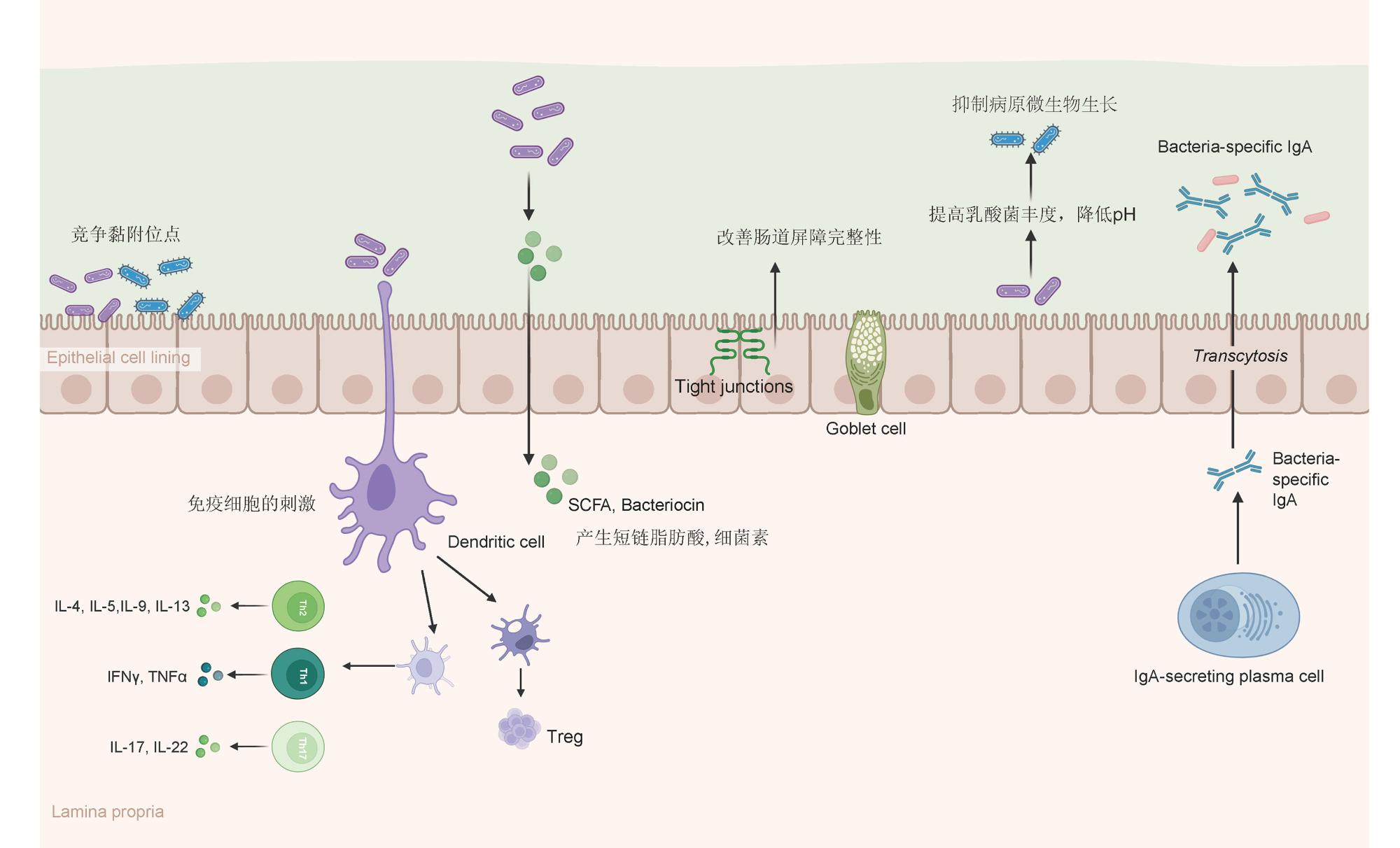
图1 益生菌缓解断奶幼兔腹泻的可能机制

Epithelial cell lining:上皮细胞层;Lamina propria:固有层;Dendritic cell:树突状细胞;IgA:免疫球蛋白A immunoglobulin A;IL-4:白细胞介素-4 interleukin-4;IL-5:白细胞介素-5 interleukin-5;IL-9:白细胞介素-9 interleukin-9;IL-13:白细胞介素-13 interleukin-13;IFNγ:干扰素-γ interferon-γ;TNFα:肿瘤坏死因子-α tumor necrosis factor-α;IL-17:白细胞介素-17 interleukin-17;IL-22:白细胞介素-22 interleukin-22;Treg:调节性T细胞 regulatory T cell;SCFA:短链脂肪酸 short-chain fatty acid;Bacteriocin:细菌素;Tight junctions:紧密连接;Goblet cell:杯状细胞;IgA-secreting plasma cell:分泌免疫球蛋白A的浆细胞;Transcytosis:转胞吞作用;Bacteria-specific IgA:细菌特异性免疫球蛋白 A。

Fig.1 Possible mechanisms of probiotics alleviating diarrhea in weaned young rabbits[8-9,15,54]

表1 益生菌对兔肠道健康的影响

Table 1 Effects of probiotics on intestinal health of rabbits

序号
No.
益生菌
Probiotics
动物
Animals
饲喂方式
Feeding methods
作用效果
Effects
参考文献
References
1 布氏乳杆菌(活菌数1.8×10⁹ CFU/mL) 獭兔(35日龄) 饲粮中添加104或105 CFU/g 提高平均日增重,降低腹泻发生率 [9]
2 干酪乳杆菌RABX1 新西兰白兔
(5日龄)
牛奶中添加5×10⁸~6×
108 CFU/mL
提高肠道乳酸杆菌相对丰度,降低
志贺氏菌相对丰度,促进阑尾蚯蚓状生长,
刺激潘氏细胞脱颗粒,诱导防御素-7
样肽和溶菌酶的表达
[48]
3 玉米乳杆菌LB1、干酪乳杆菌L3
(活菌数≥109 CFU/mL)
獭兔(30日龄) 饲粮中添加0.3%玉米乳杆菌LB1或
干酪乳杆菌L3
提高兔的生长性能,增强
免疫功能,调节肠道菌群
[55]
4 屎肠球菌EF9a(兔源) 伊普吕兔(35日龄) 通过饮水提供5×
108 CFU/(只·d)
显著提高了日增重,
且对肉品质无负面影响
[56]
5 乳酸乳球菌CICC6242、嗜酸乳杆菌CICC6075、
粪肠球菌CICC24203、植物乳杆菌CICC21790、
凝结芽孢杆菌CICC24625、丁酸梭菌CICC10390、
酿酒酵母CICC33298
新西兰白兔
(28日龄)
饮水中添加108 CFU/mL复合乳酸菌
(6242、6075、24203、21790菌株)或复合益生菌
(21790、24625、10390、33298菌株)
增加有益菌(阿克曼氏菌属)相对丰度,
并富集碳水化合物、氨基酸等
营养物质的代谢通路,提高生长
性能和机体抗氧化能力
[57]
6 枯草芽孢杆菌(活菌数
6.15×10⁸ CFU/g)
獭兔(35日龄) 饲粮中添加0.25%、
0.50%或0.75%
显著提高断奶獭兔的
生长性能和免疫力
[58]
7 枯草芽孢杆菌、嗜酸乳杆菌 新西兰白兔
(28日龄)
饲粮中添加1×10⁶ CFU/g枯草
芽孢杆菌、1×10⁷ CFU/g嗜酸
乳杆菌或5×10⁵ CFU/g枯草
芽孢杆菌+5×10⁶ CFU/g
嗜酸乳杆菌
增加肠道有益菌数量,改善盲肠发酵,
提高养分表观消化率、饲料利用率和
生长性能;但单独添加枯草芽孢杆菌的
试验兔各项指标与对照组无显著差异
[59]
8 屎肠球菌AL41 伊普吕兔(35日龄) 通过饮水提供5×
108 CFU/(只·d)
抑制腐败菌与潜在致病菌增殖 [60]
9 丁酸梭菌(活菌数2×10⁸ CFU/g) 伊拉兔(28日龄) 饲粮中添加200、400或
600 mg/kg
改变盲肠菌群结构,影响粪便中短链
脂肪酸的含量,且菌群相对丰度与短链
脂肪酸含量之间存在显著相关性
[61]
10 屎肠球菌ZJUIDS-R1、动物乳杆菌
ZJUIDS-R2(兔源)
新西兰白兔
(28日龄)
饲粮中添加108 CFU/(kg·d)屎肠球菌
ZJUIDS-R1、108 CFU/(kg·d)动物
乳杆菌ZJUIDS-R2或5×10⁷ CFU/(kg·d)
屎肠球菌ZJUIDS-R1+5×10⁷ CFU/(kg·d)
动物乳杆菌ZJUIDS-R2
提高肠道免疫力,产生有机酸并
调节肠道菌群平衡,从而增强抗病
能力并缓解腹泻
[62]
11 枯草芽孢杆菌
(活菌数4×10⁹ CFU/g)
贾巴里兔、西班牙兔
(56日龄)
饲粮中添加200或400 g/t 未显著改善生长性能,但显著降低
血清胆固醇含量,提高机体免疫力
[63]
12 丁酸梭菌CCTCC2017089 獭兔(35日龄) 饲粮中添加1.0×10³、1.0×
104或1.0×10⁵ CFU/g
显著提高平均日增重,提高机体
免疫力和肠道有益菌的相对丰度
[64]
13 枯草芽孢杆菌、
地衣芽孢杆菌
新西兰白兔(35日龄) 每升饮用水添加200 mg枯草
芽孢杆菌+地衣芽孢杆菌
提高平均日增重,
改善盲肠菌群结构
[65]

2.1 调节肠道菌群

益生菌能够通过自身生长或促进内源性有益菌群的增殖,增加肠道中有益细菌的数量,从而优化宿主肠道菌群的整体结构[51]。现有研究一致表明,添加益生菌可有效调节兔的肠道菌群。Cunha等[66]给新西兰白兔饲喂肠球菌后发现,该菌株能够通过短期定植并调节肠道菌群,达到与抗生素相似的促生长效果,同时可显著降低肠道中耐药菌的数量。然而,其定植能力的短暂性仍是未来研究中需要改进的问题。Shen等[48]报道,补充兔源干酪乳杆菌RABX1可提高新西兰白兔肠道中乳酸杆菌的相对丰度,降低志贺氏菌的相对丰度。Kimsé等[67]给断奶幼兔饲喂酿酒酵母,结果表明该酵母能够提高盲肠菌群多样性,并降低死亡率。Phuoc等[59]研究发现,单独或联合使用枯草芽孢杆菌与嗜酸乳杆菌,均可增加断奶幼兔肠道有益菌群的数量。此外,Pogány等[68]和Lauková等[60]探讨了产细菌素的屎肠球菌对兔的作用效果,结果表明,该菌能显著降低肠道中大肠菌群、葡萄球菌及假单胞菌等潜在致病菌的数量。其中,Lauková等[60]报道,屎肠球菌AL41菌株在停止饲喂3周后仍能在兔胃肠道中被检测到,表现出良好的定植能力。

2.2 增强肠道屏障功能

定植于肠道腔内的菌群及其代谢产物与肠道屏障之间存在多层面的相互作用,该机制对维持肠道稳态及机体代谢、免疫平衡至关重要[69]。益生菌可通过促进肠道机械、化学和免疫屏障更新增强肠黏膜完整性,从而减少炎症、肠渗漏和病原体移位[51]。多项研究证实,补充益生菌对兔肠道组织形态具有积极作用,具体表现为提高兔胃肠道绒毛高度、降低隐窝深度,以及提高绒毛高度与隐窝深度比值[64,70]。Liu等[64]研究表明,给断奶獭兔饲喂梭状芽孢杆菌可提高其十二指肠、空肠和回肠绒毛高度及绒毛高度与隐窝深度比值,降低隐窝深度。Nwachukwu等[71]在幼兔饲粮中添加Biovet®-YC益生菌和/或Biotronic®益生元后发现,二者联合添加可改善幼兔肠道形态,提高绒毛高度及绒毛高度与隐窝深度比值;但单独添加Biovet®-YC益生菌对幼兔生长性能及多数肠道指标均无显著影响。据报道,干酪乳杆菌RABX1不仅能提高幼兔肠道中有益菌的相对丰度,更能刺激潘氏细胞脱颗粒,诱导防御素-7样肽和溶菌酶的表达[48]。Pogány等[70]研究发现,通过饮水为断奶幼兔提供5×108 CFU/(只·d)兔源屎肠球菌CCM7420能提高其空肠绒毛表面积和绒毛高度与隐窝深度比值。值得注意的是,益生菌对屏障功能的增强作用与其菌株特性密切相关[72],这也再次强调,在益生菌的筛选与应用中,需充分考量其特定的功能属性。

2.3 调节免疫反应与抑制炎症

断奶应激引发的肠道免疫系统过度激活与失衡,是导致肠道屏障损伤和系统性炎症的关键环节。益生菌兼具免疫刺激与免疫调节活性,因此可广泛应用于多种疾病的防治[73]。已有研究证实,益生菌对机体炎症反应具有积极调控作用,这主要归因于其可诱导肠道相关淋巴组织分泌多种细胞因子,进而发挥免疫调节功能[74-75]。为断奶幼兔补充益生菌,不仅能提高其日增重、修复受损的肠道屏障,还可通过调节细胞因子表达、提升机体免疫力,增强幼兔对单核细胞增生李斯特菌感染的抵抗力[75]
Hou等[57]研究发现,饲喂复合乳酸菌可显著提高试验第5周兔的免疫器官指数;而饲喂复方益生菌可同时提高兔的免疫器官指数以及试验第5周和第7周的血清免疫球蛋白M(immunoglobulin M,IgM)和免疫球蛋白G(immunoglobulin G,IgG)含量,证实益生菌可有效增强兔的免疫抵抗力。Xia等[76]给断奶幼兔饲喂后生元(灭活的嗜酸乳杆菌)的研究表明,饲粮中添加600或800 mg/kg热灭活嗜酸乳杆菌可显著降低其料重比,同时提升养分消化率、增强机体抗氧化与免疫功能,并可有效调节肠道菌群结构。

2.4 从筛选到设计的下一代益生菌

未来益生菌产业竞争将不再局限于单一菌株的提供,而是转向开发针对性强、机制明确的高附加值产品。随着CRISPR/Cas等基因编辑技术的发展,益生菌研发已从传统“筛选”进入“设计”阶段。针对幼兔肠道特点,可通过对益生菌进行基因编辑实现功能优化,例如增强其肠道定植能力,提升短链脂肪酸、抗菌肽等有益代谢物的合成效率,或构建可感应并降解特定致病菌信号分子的工程菌,从而发展精准、高效的生物防控策略。

3 小结与展望

断奶是兔生产中的关键环节,常引发幼兔严重的肠道损伤及抗生素滥用问题,不仅造成显著经济损失,也带来了公共卫生安全风险。当前,针对兔断奶应激的干预策略虽多有研究,但仍存在以下问题:多数益生菌制剂作用机制模糊,缺乏针对兔特殊肠道环境的定植与代谢研究;解决方案同质化严重,未能从根本上扭转“重治疗、轻预防”的传统思路。针对上述问题,未来的研究应集中于2个方向:其一,利用体外模型与组学技术,深入解析优良益生菌株在断奶幼兔肠道中的作用机制,为产品开发提供理论依据;其二,通过基因编辑技术推动益生菌研发从“筛选”向“设计”范式转变。综上所述,将体外高通量筛选与基因编辑技术相结合,不仅能深化对断奶应激机制的理解,更有望开发出下一代高效微生态制剂,从而为我国兔养殖业的绿色转型与益生菌产业的升级提供关键技术支撑。
[1]
CULLERE M, DALLE ZOTTE A. Rabbit meat production and consumption:state of knowledge and future perspectives[J]. Meat Science, 2018, 143:137-146.

DOI

[2]
武拉平, 秦应和. 2024年中国兔产业发展情况和2025年发展展望[J]. 中国畜牧杂志, 2025, 61(3):409-413.

WU L P, QIN Y H. China’s rabbit industry in 2024:a review and prospects for 2025[J]. Chinese Journal of Animal Science, 2025, 61(3):409-413. (in Chinese)

[3]
CHAMORRO S, GÓMEZ-CONDE M S, PÉREZ DE ROZAS A M, et al. Effect on digestion and performance of dietary protein content and of increased substitution of lucerne hay with soya-bean protein concentrate in starter diets for young rabbits[J]. Animal, 2007, 1(5):651-659.

DOI PMID

[4]
GÓMEZ-CONDE M S, GARCÍA J, CHAMORRO S, et al. Neutral detergent-soluble fiber improves gut barrier function in twenty-five-day-old weaned rabbits[J]. Journal of Animal Science, 2007, 85(12):3313-3321.

DOI

[5]
刘月, 韩昱, 王鹏, 等. 断奶仔兔肠道屏障功能及其调控研究进展[J]. 中国养兔杂志, 2022(5):24-27.

LIU Y, HAN Y, WANG P, et al. Research progress on intestinal barrier function and its regulation in weaned rabbits[J]. Chinese Journal of Rabbit Farming, 2022(5):24-27. (in Chinese)

[6]
DE BLAS J C, CHAMORRO S, GARCÍA-ALONSO J, et al. Nutritional digestive disturbances in weaner rabbits[J]. Animal Feed Science and Technology, 2012, 173(1/2):102-110.

DOI

[7]
牛金玲, 刘永需, 李福昌, 等. 饲粮中联合添加牛至精油和抗菌肽对肉兔生长性能和肠道屏障的影响[J]. 动物营养学报, 2022, 34(1):555-562.

DOI

NIU J L, LIU Y X, LI F C, et al. Effects of combined dietary oregano essential oil and antimicrobial peptides on growth performance and intestinal barrier in meat rabbits[J]. Chinese Journal of Animal Nutrition, 2022, 34(1):555-562. (in Chinese)

[8]
WANG J, NI X Q, WEN B, et al. Bacillus strains improve growth performance via enhancing digestive function and anti-disease ability in young and weaning Rex rabbits[J]. Applied Microbiology and Biotechnology, 2020, 104(10):4493-4504.

DOI

[9]
ZHOU Y, NI X, WEN B, et al. Appropriate dose of Lactobacillus buchneri supplement improves intestinal microbiota and prevents diarrhoea in weaning Rex rabbits[J]. Beneficial Microbes, 2018, 9(3):401-416.

DOI

[10]
CHEN H J, YANG W Y, WANG C Y. The review on structure of intestinal flora at different growth stages of rabbits[C]// 2017 International Conference on Medicine Sciences and Bioengineering,Pennsylvani, USA: DEStech Publications, Inc., 2017:245-253.

[11]
GAO X X, ZHAO J X, ZHANG H, et al. Modulation of gut health using probiotics:the role of probiotic effector molecules[J]. Journal of Future Foods, 2022, 2(1):1-12.

DOI

[12]
SANDERS M E, MERENSTEIN D J, REID G, et al. Probiotics and prebiotics in intestinal health and disease:from biology to the clinic[J]. Nature Reviews Gastroenterology & Hepatology, 2019, 16(10):605-616.

[13]
FORTUN-LAMOTHE L, BOULLIER S. A review on the interactions between gut microflora and digestive mucosal immunity.Possible ways to improve the health of rabbits[J]. Livestock Science, 2007, 107(1):1-18.

DOI

[14]
ROUND J L, MAZMANIAN S K. The gut microbiota shapes intestinal immune responses during health and disease[J]. Nature Reviews Immunology, 2009, 9(8):313-323.

DOI

[15]
ZHAO M, LIU H L, LIU M Q, et al. Metagenomics and metabolomics reveal that gut microbiome adapts to the diet transition in Hyla rabbits[J]. Microbiological Research, 2024, 283:127705.

DOI

[16]
MONTEILS V, CAUQUIL L, COMBES S, et al. Potential core species and satellite species in the bacterial community within the rabbit caecum[J]. FEMS Microbiology Ecology, 2008, 66(3):620-629.

DOI PMID

[17]
FU C, MA Y, XIA S Q, et al. Study on changes in gut microbiota and microbiability in rabbits at different developmental stages[J]. Animals, 2024, 14(12):1741.

DOI

[18]
FANG S M, CHEN X, PAN J H, et al. Dynamic distribution of gut microbiota in meat rabbits at different growth stages and relationship with average daily gain (ADG)[J]. BMC Microbiology, 2020, 20(1):116.

DOI PMID

[19]
XIAO L W, WANG J F, ZHENG J Y, et al. Deterministic transition of enterotypes shapes the infant gut microbiome at an early age[J]. Genome Biology, 2021, 22(1):243.

DOI PMID

[20]
OHLAND C L, MACNAUGHTON W K. Probiotic bacteria and intestinal epithelial barrier function[J]. American Journal of Physiology:Gastrointestinal and Liver Physiology, 2010, 298(6):G807-G819.

[21]
GROSCHWITZ K R, HOGAN S P. Intestinal barrier function:molecular regulation and disease pathogenesis[J]. The Journal of Allergy and Clinical Immunology, 2009, 124(1):3-20.

DOI

[22]
陈佳力, 叶姝祺, 时文君, 等. 复合中草药制剂对肉兔生产性能和肠道屏障的影响[J]. 中国畜牧杂志, 2024, 60(9):311-315.

CHEN J L, YE S Q, SHI W J, et al. Effects of compound Chinese herbal medicine preparation on production performance and intestinal barrier of meat rabbits[J]. Chinese Journal of Animal Science, 2024, 60(9):311-315. (in Chinese)

[23]
VANCAMELBEKE M, VERMEIRE S. The intestinal barrier:a fundamental role in health and disease[J]. Expert Review of Gastroenterology & Hepatology, 2017, 11(9):821-834.

[24]
KOGUT M H. The effect of microbiome modulation on the intestinal health of poultry[J]. Animal Feed Science and Technology, 2019, 250:32-40.

DOI

[25]
WELLS J M, BRUMMER R J, DERRIEN M, et al. Homeostasis of the gut barrier and potential biomarkers[J]. American Journal of Physiology:Gastrointestinal and Liver Physiology, 2017, 312(3):G171-G193.

[26]
GOU H Z, ZHANG Y L, REN L F, et al. How do intestinal probiotics restore the intestinal barrier?[J]. Frontiers in Microbiology, 2022, 13:929346.

DOI

[27]
XIONG X, YANG H S, HU X H, et al. Differential proteome analysis along jejunal crypt-villus axis in piglets[J]. Frontiers in Bioscience, 2016, 21(2):343-363.

DOI

[28]
AZIZ Q, DORÉ J, EMMANUEL A, et al. Gut microbiota and gastrointestinal health:current concepts and future directions[J]. Neurogastroenterology and Motility, 2013, 25(1):4-15.

DOI

[29]
VAN ZYL W F, DEANE S M, DICKS L M T. Molecular insights into probiotic mechanisms of action employed against intestinal pathogenic bacteria[J]. Gut Microbes, 2020, 12(1):1831339.

DOI

[30]
BAILEY M, HAVERSON K, INMAN C, et al. The development of the mucosal immune system pre- and post-weaning:balancing regulatory and effector function[J]. The Proceedings of the Nutrition Society, 2005, 64(4):451-457.

DOI

[31]
GONG M H, LIU L, LI F C, et al. Grape seed proanthocyanidin extract improves growth performance and protects against hydrogen peroxide-induced oxidative stress to the liver and intestine in weaned Hyla rabbits[J]. Animals, 2025, 15(3):327.

DOI

[32]
SMITH F, CLARK J E, OVERMAN B L, et al. Early weaning stress impairs development of mucosal barrier function in the porcine intestine[J]. American Journal of Physiology:Gastrointestinal and Liver Physiology, 2010, 298(3):G352-G363.

[33]
GLASER R, KIECOLT-GLASER J K. Stress-induced immune dysfunction:implications for health[J]. Nature Reviews Immunology, 2005, 5(3):243-251.

DOI

[34]
AL-SADI R, BOIVIN M, MA T. Mechanism of cytokine modulation of epithelial tight junction barrier[J]. Frontiers in Bioscience, 2009, 14(7):2765-2778.

[35]
靳茹文, 王英杰, 蒋全兴, 等. 加味枳术散对断奶仔兔肠黏膜屏障和抗氧化能力的影响[J]. 畜牧兽医学报, 2024, 55(12):5825-5838.

DOI

JIN R W, WANG Y J, JIANG Q X, et al. Effects of modified Zhizhu powder on intestinal mucosal barrier and antioxidant capacity of weaned rabbits[J]. Acta Veterinaria et Zootechnica Sinica, 2024, 55(12):5825-5838. (in Chinese)

[36]
吕景智. 精氨酸和菊粉对肉兔肠道形态、盲肠菌群结构和生产性能的影响[D]. 博士学位论文. 重庆: 西南大学, 2017.

LV J Z. Effect of arginine and inulin on intestinal morphology,caecal microflora and growth performace of meat rabbits physiology[D]. Ph.D.Thesis. Chongqing: Southwest University, 2017. (in Chinese)

[37]
BUFFIE C G, PAMER E G. Microbiota-mediated colonization resistance against intestinal pathogens[J]. Nature Reviews Immunology, 2013, 13(11):790-801.

DOI PMID

[38]
KAMADA N, SEO S U, CHEN G Y, et al. Role of the gut microbiota in immunity and inflammatory disease[J]. Nature Reviews Immunology, 2013, 13(5):321-335.

DOI PMID

[39]
BIAN G R, MA S Q, ZHU Z G, et al. Age,introduction of solid feed and weaning are more important determinants of gut bacterial succession in piglets than breed and nursing mother as revealed by a reciprocal cross-fostering model[J]. Environmental Microbiology, 2016, 18(5):1566-1577.

DOI

[40]
黄雪如. 断奶仔兔腹泻的综合防治[J]. 中国养兔, 2020(6):41-43.

HUANG X R. Comprehensive prevention and treatment of diarrhea in weaned rabbits[J]. Chinese Journal of Rabbit Farming, 2020(6):41-43. (in Chinese)

[41]
ZHANG N B, LI X H, XU H J, et al. Dietary addition of tributyrin improved the production performance,antioxidant ability and intestinal health in weaned rabbits[J]. Animals, 2025, 15(13):1923.

DOI

[42]
潘海强. 浅谈断奶仔兔腹泻疾病综合防治措施[J]. 中国畜禽种业, 2018, 14(2):59-60.

PAN H Q. Discussion on comprehensive prevention and control measures for diarrhea disease in weaned rabbits[J]. The Chinese Livestock and Poultry Breeding, 2018, 14(2):59-60. (in Chinese)

[43]
BÄUMLER A J, SPERANDIO V. Interactions between the microbiota and pathogenic bacteria in the gut[J]. Nature, 2016, 535(7610):85-93.

DOI

[44]
WANG J, FAN H M, XIA S Q, et al. Microbiome,transcriptome,and metabolomic analyses revealed the mechanism of immune response to diarrhea in rabbits fed antibiotic-free diets[J]. Frontiers in Microbiology, 2022, 13:888984.

DOI

[45]
TAKIISHI T, FENERO C I M, CÂMARA N O S. Intestinal barrier and gut microbiota:shaping our immune responses throughout life[J]. Tissue Barriers, 2017, 5(4):e1373208.

DOI

[46]
ALLAIRE J M, CROWLEY S M, LAW H T, et al. The intestinal epithelium:central coordinator of mucosal immunity[J]. Trends in Immunology, 2018, 39(9):677-696.

DOI

[47]
O’FLAHERTY S, SAULNIER D M, POT B, et al. How can probiotics and prebiotics impact mucosal immunity?[J]. Gut Microbes, 2010, 1(5):293-300.

DOI PMID

[48]
SHEN X M, CUI H X, XU X R. Orally administered Lactobacillus casei exhibited several probiotic properties in artificially suckling rabbits[J]. Asian-Australasian Journal of Animal Sciences, 2020, 33(8):1352-1359.

DOI

[49]
ZENG M Y, INOHARA N, NUÑEZ G. Mechanisms of inflammation-driven bacterial dysbiosis in the gut[J]. Mucosal Immunology, 2017, 10(1):18-26.

DOI PMID

[50]
WINTER S E, WINTER M G, XAVIER M N, et al. Host-derived nitrate boosts growth of E.coli in the inflamed gut[J]. Science, 2013, 339(6120):708-711.

DOI

[51]
MA T, SHEN X, SHI X, et al. Targeting gut microbiota and metabolism as the major probiotic mechanism-an evidence-based review[J]. Trends in Food Science & Technology, 2023, 138:178-198.

[52]
FASSARELLA M, BLAAK E E, PENDERS J, et al. Gut microbiome stability and resilience:elucidating the response to perturbations in order to modulate gut health[J]. Gut, 2021, 70(3):595-605.

DOI

[53]
O’TOOLE P W, MARCHESI J R, HILL C. Next-generation probiotics:the spectrum from probiotics to live biotherapeutics[J]. Nature Microbiology, 2017, 2:17057.

DOI

[54]
EL GHANY K A, MALLASIY L O, HAREDY S A, et al. Lactobacillus-based probiotics restore gut microbial balance in weaned rabbits:insights into dietary modulation and molecular docking analysis[J]. Food Bioscience, 2025, 68:106466.

DOI

[55]
WANG C, ZHU Y, LI F, et al. The effect of Lactobacillus isolates on growth performance,immune response,intestinal bacterial community composition of growing Rex rabbits[J]. Journal of Animal Physiology and Animal Nutrition, 2017, 101(5):e1-e13.

[56]
POGÁNY SIMONOVÁ M, CHRASTINOVÁ L’, LAUKOVÁ A. Effect of beneficial strain Enterococcus faecium EF9a isolated from Pannon white rabbit on growth performance and meat quality of rabbits[J]. Italian Journal of Animal Science, 2020, 19(1):650-655.

DOI

[57]
HOU X H, DAI P Q, SONG X D, et al. Understanding the effect of compound probiotics on the health of rabbits and its mechanisms through metagenomics[J]. Probiotics and Antimicrobial Proteins, 2024, 16(3):815-828.

DOI

[58]
裴跃明, 王迎松, 王世磊, 等. 枯草芽孢杆菌制剂对断奶獭兔生长性能和免疫的影响[J]. 饲料研究, 2016(6):20-23,28.

PEI Y M, WANG Y S, WANG S L, et al. Effects of Bacillus subtilis preparation on growth performance and immunity of weaned Rex rabbits[J]. Feed Research, 2016(6):20-23,28. (in Chinese)

[59]
PHUOC T L, JAMIKORN U. Effects of probiotic supplement (Bacillus subtilis and Lactobacillus acidophilus) on feed efficiency,growth performance,and microbial population of weaning rabbits[J]. Asian-Australasian Journal of Animal Sciences, 2017, 30(2):198-205.

DOI

[60]
LAUKOVÁ A, SIMONOVÁ M P, CHRASTINOVÁ L’, et al. Benefits of combinative application of probiotic,enterocin M-producing strain Enterococcus faecium AL41 and Eleutherococcus senticosus in rabbits[J]. Folia Microbiologica, 2016, 61(2):169-177.

DOI

[61]
卢佳宁, 李可瑶, 周丽雯, 等. 饲粮中添加丁酸梭菌对伊拉兔盲肠菌群结构及粪便短链脂肪酸含量的影响[J]. 动物营养学报, 2023, 35(5):3249-3265.

DOI

LU J N, LI K Y, ZHOU L W, et al. Effects of dietary Clostridium butyricum on cecal flora structure and fecal short chain fatty acids contents of Ira rabbits[J]. Chinese Journal of Animal Nutrition, 2023, 35(5):3249-3265. (in Chinese)

[62]
LI H M, LENG C L, CHEN N, et al. Lactic acid bacteria reduce bacterial diarrhea in rabbits via enhancing immune function and restoring intestinal microbiota homeostasis[J]. BMC Veterinary Research, 2024, 20(1):151.

DOI PMID

[63]
FATHI M, ABDELSALAM M, AL-HOMIDAN I, et al. Effect of probiotic supplementation and genotype on growth performance,carcass traits,hematological parameters and immunity of growing rabbits under hot environmental conditions[J]. Animal Science Journal, 2017, 88(10):1644-1650.

DOI

[64]
LIU L, ZENG D, YANG M Y, et al. Probiotic Clostridium butyricum improves the growth performance,immune function,and gut microbiota of weaning Rex rabbits[J]. Probiotics and Antimicrobial Proteins, 2019, 11(4):1278-1292.

DOI

[65]
KHALIFA W H. ABO SEDERA S A, ABOU-HASHIM F. Reduction of postweaning stress by fasting regimen and probiotics supplementation and study its effects on cecal microbiota and physiological parameters of growing rabbits[J]. Journal of Animal Physiology and Animal Nutrition, 2024, 108(5):1588-1594.

DOI PMID

[66]
CUNHA S, MENDES Â, REGO D, et al. Effect of competitive exclusion in rabbits using an autochthonous probiotic[J]. World Rabbit Science, 2017, 25(2):123-134.

DOI

[67]
KIMSÉ M, BAYOURTHE C, MONTEILS V, et al. Live yeast stability in rabbit digestive tract:consequences on the caecal ecosystem,digestion,growth and digestive health[J]. Animal Feed Science and Technology, 2012, 173(3/4):235-243.

DOI

[68]
POGÁNY SIMONOVÁ M, LAUKOVÁ A, CHRASTINOVÁ L’, et al. Beneficial effects of Enterococcus faecium EF9a administration in rabbit diet[J]. World Rabbit Science, 2020, 28:169-179.

DOI

[69]
CHEN K Y, WANG H, YANG X F, et al. Targeting gut microbiota as a therapeutic target in T2DM:a review of multi-target interactions of probiotics,prebiotics,postbiotics,and synbiotics with the intestinal barrier[J]. Pharmacological Research, 2024, 210:107483.

DOI

[70]
POGÁNY SIMONOVÁ M, LAUKOVÁ A, ŽITÑAN R, et al. Effect of rabbit-origin enterocin-producing probiotic strain Enterococcus faecium CCM7420 application on growth performance and gut morphometry in rabbits[J]. Czech Journal of Animal Science, 2015, 60(11):509-512.

DOI

[71]
NWACHUKWU C U, ALIYU K I, EWUOLA E O. Growth indices,intestinal histomorphology,and blood profile of rabbits fed probiotics- and prebiotics-supplemented diets[J]. Translational Animal Science, 2021, 5(3):txab096.

[72]
MERCADO-MONROY J, FALFÁN-CORTÉS R N, MUÑÓZ-PÉREZ V M, et al. Probiotics as modulators of intestinal barrier integrity and immune homeostasis:a comprehensive review[J]. Journal of the Science of Food and Agriculture, 2026, 106(5):2578-2590.

DOI

[73]
SATO K, TAKAHASHI K, TOHNO M, et al. Immunomodulation in gut-associated lymphoid tissue of neonatal chicks by immunobiotic diets[J]. Poultry Science, 2009, 88(12):2532-2538.

DOI PMID

[74]
WANG J, ZENG Y X, WANG S X, et al. Swine-derived probiotic Lactobacillus plantarum inhibits growth and adhesion of enterotoxigenic Escherichia coli and mediates host defense[J]. Frontiers in Microbiology, 2018, 9:1364.

DOI

[75]
ABD EL-HAMID M I, IBRAHIM D, HAMED R I, et al. Modulatory impacts of multi-strain probiotics on rabbits’ growth,nutrient transporters,tight junctions and immune system to fight against Listeria monocytogenes infection[J]. Animals, 2022, 12(16):2082.

DOI

[76]
XIA M, LI C, WU D G, et al. Benefits of heat-killed Lactobacillus acidophilus on growth performance,nutrient digestibility,antioxidant status,immunity,and cecal microbiota of rabbits[J]. Frontiers in Veterinary Science, 2024, 11:1361908.

DOI

Outlines

/