REVIEW

Research Progress on Gut Microbiota-Mediated Tryptophan Metabolism and Its Applications in Livestock and Poultry Nutrition

  • GAO Kunyin , 1 ,
  • TIAN Daijun 2 ,
  • ZHANG Guijie 1 ,
  • CHEN Xiaodong , 1, *
Expand
  • 1 College of Animal Science and Technology, Ningxia University, Yinchuan 750021, China
  • 2 Ningxia Hui Autonomous Region Husbandry Workstation, Yinchuan 750002, China
*lecturer, E-mail:

Received date: 2025-09-29

  Online published: 2026-05-14

Abstract

Tryptophan (Trp) is one of the essential amino acids for livestock and poultry. It is mainly metabolized via the kynurenine, 5-hydroxytryptamine (5-HT) and indole pathways, and its metabolites play important roles in immune regulation, anti-oxidative stress and maintenance of intestinal barrier function. The gut microbiota not only directly mediate the metabolic transformation of Trp, but also alter its metabolic flux by regulating key enzyme activities and immune signaling pathways, thereby affecting host health. Based on the interactions among gut microbiota, Trp metabolism and the host, this review systematically summarizes the mechanisms by which Trp improves host health, such as activating the aryl hydrocarbon receptor signaling pathway and promoting 5-HT synthesis, and discusses its effects on the feed intake, growth and development, and product quality of livestock and poultry. On this basis, it is proposed that future research should focus on the precise supply strategies of Trp at different physiological stages, the functional verification of key metabolites, and the analysis of the molecular regulatory network of microbiota-Trp interaction, so as to optimize gut microbiome-based precision nutrition approaches of Trp in livestock and poultry production.

Cite this article

GAO Kunyin , TIAN Daijun , ZHANG Guijie , CHEN Xiaodong . Research Progress on Gut Microbiota-Mediated Tryptophan Metabolism and Its Applications in Livestock and Poultry Nutrition[J]. Chinese Journal of Animal Nutrition, 2026 , 38(5) : 3257 -3270 . DOI: 10.12418/CJAN2026.260

色氨酸(tryptophan,Trp)是一种必需氨基酸,畜禽自身无法合成,只能通过饲粮获取。Trp在畜禽生长发育及生理功能调控中具有重要作用,其不仅参与机体蛋白质的合成,还可以通过不同的代谢途径产生具有多种生物学功能的代谢物,进而参与多种生理代谢过程,如神经递质的合成、抗氧化应激和免疫功能调节等[1-2]。畜禽体内Trp含量主要取决于饲粮摄入量和Trp代谢途径的消耗活动。Trp在提高畜禽生产性能和提高经济效益方面具有重要意义。
在畜禽生产中,Trp代谢与肠道微生物的作用密切相关。肠道微生物能够通过直接代谢Trp或介导宿主免疫信号通路等多种机制调节Trp的代谢,进而影响宿主生理功能[3-4]。不同种类的微生物通过产生特定的酶促进或抑制Trp的代谢。例如,肠道内部分革兰氏阴性菌(如大肠杆菌、拟杆菌属)可通过色氨酸酶(tryptophanase,TnaA)催化的单一酶促过程将Trp水解为吲哚、丙酮酸和氨[5];乳酸杆菌属可通过芳香族氨基酸氨基转移酶(aromatic amino acid aminotransferase,ArAT)和吲哚乳酸脱氢酶(indolelactic acid dehydrogenase,ILDH)将Trp转化为吲哚-3-醛(indole-3-aldehyde,IAld)和吲哚-3-乳酸(indole-3-lactic acid,ILA),上述代谢产物可通过激活芳香烃受体(aryl hydrocarbon receptor,AhR)参与机体免疫调节[6-7]。研究表明,与定植特定共生微生物群的小鼠相比,无菌小鼠结肠和血液中的5-羟色胺(5-hydroxytryptamine,5-HT)水平显著降低[8],这一结果说明共生微生物群参与Trp代谢中肠道5-HT水平的调节。由此可见,肠道微生物产生的相关酶和代谢产物会影响并调节Trp代谢过程。本文通过综述肠道微生物介导的Trp代谢调控机制,阐述Trp代谢对畜禽宿主健康的影响,并总结Trp代谢在畜禽营养供给及产品质量调控中的相关研究,以期为优化畜禽健康与生产性能提供理论参考。

1 Trp代谢途径

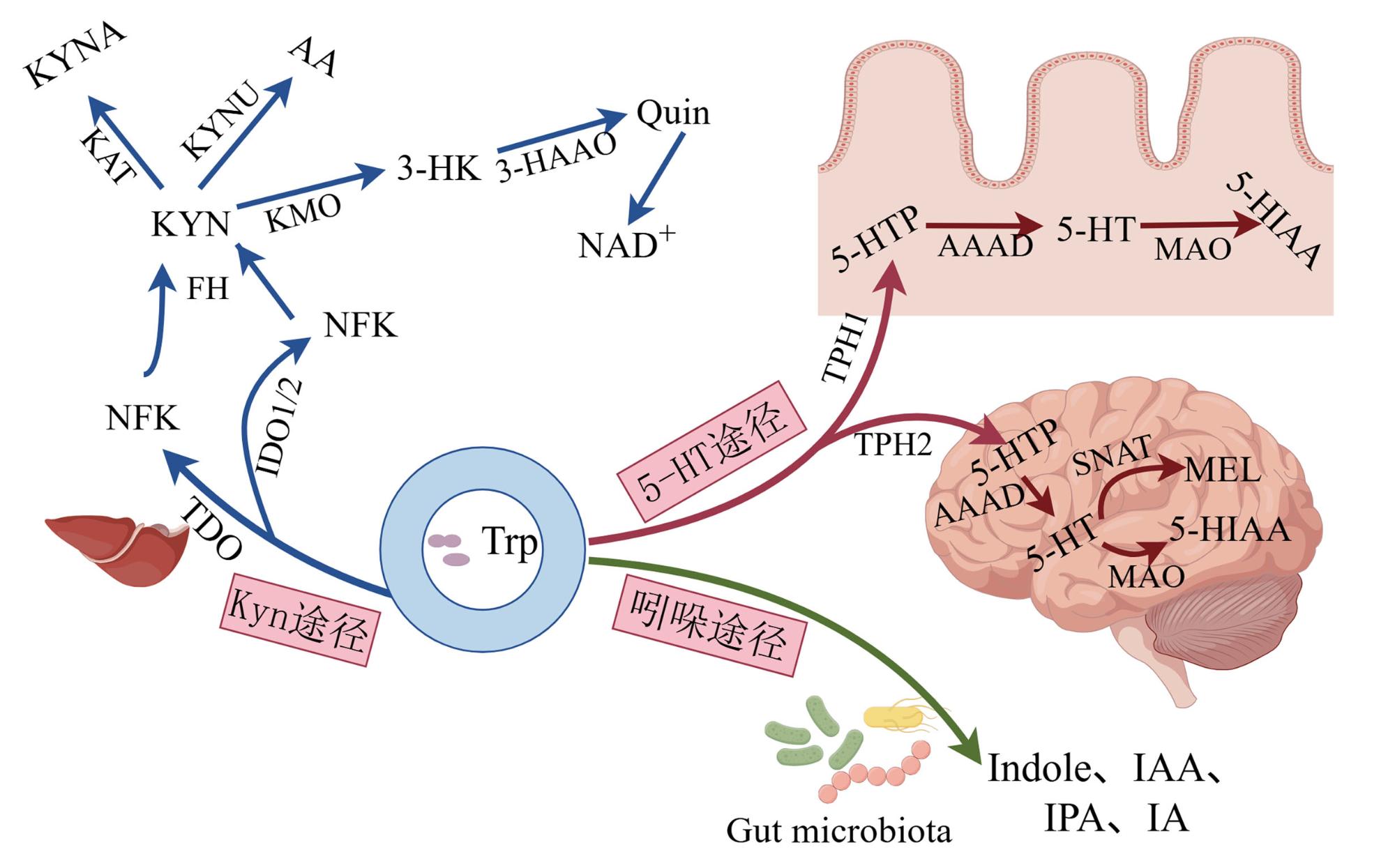
Trp被宿主摄入后,一部分经小肠上皮吸收后随血液进入肝脏及其他组织细胞,作为蛋白质合成的底物;另一部分则进入机体多种代谢途径,主要包括宿主Trp代谢和微生物Trp代谢,研究表明,这2种代谢途径均有微生物参与[8-9]。宿主Trp代谢主要涉及犬尿氨酸(kynurenine,KYN)和5-HT途径;微生物代谢是指未被吸收的Trp被胃肠道微生物代谢为吲哚及其衍生物的过程,即吲哚途径[10]。Trp的不同代谢途径如图1所示。
图1 Trp的不同代谢途径(由Figdraw绘制)

IDO1/2:吲哚胺-2,3-双加氧酶1/2 indoleamine-2,3-dioxygenase 1/2;TDO:色氨酸-2,3-双加氧酶 tryptophan-2,3-dioxygenase;NFK:N-甲酰基犬尿氨酸 N-formylkynurenine;FH:甲酰犬尿氨酸甲酰胺酶 formylkynurenine hydrolase;KYN:犬尿氨酸 kynurenine;KAT:犬尿氨酸氨基转移酶 kynurenine aminotransferase;KYNA:犬尿酸 kynurenic acid;KYNU:犬尿氨酸酶 kynureninase;AA:邻氨基苯甲酸 anthranilic acid;KMO:犬尿氨酸-3-单加氧酶 kynurenine 3-monooxygenase;3-HK:3-羟基犬尿氨酸 3-hydroxykynurenine;3-HAAO:3-羟基邻氨基苯甲酸3,4双加氧酶 3-hydroxyanthranilic acid 3,4-dioxygenase;NAD+:烟酰胺腺嘌呤二核苷酸 nicotinamide adenine dinucleotide;TPH1:色氨酸羟化酶1 tryptophan hydroxylase 1;TPH2:色氨酸羟化酶2 tryptophan hydroxylase 2;AAAD:芳香族氨基酸脱羧酶 aromatic amino acid decarboxylase;MAO:单胺氧化酶 monoamine oxidase;5-HIAA:5-羟基吲哚乙酸 5-hydroxyindoleacetic acid;SNAT:5-羟色胺N-乙酰转移酶 serotonin N-acetyltransferase;MEL:褪黑素 melatonin;Indole:吲哚;IAA:吲哚乙酸 indoleacetic acid;IPA:吲哚-3-丙酸 indole-3-propionic acid;IA:吲哚丙烯酸 indoleacrylic acid;Quin:喹啉酸 quinolinic acid;Trp:色氨酸 tryptophan;5-HTP:5-羟基色氨酸 5-hydroxytryptophan;5-HT:5-羟色胺 5-hydroxytryptamine;Gut microbiota:肠道微生物群。下图同 the same as below。

Fig.1 Different metabolic pathways of Trp (drawn by Figdraw)

1.1 KYN途径

KYN途径是Trp的主要代谢途径,95%以上的Trp通过该途径降解为多种代谢产物,如KYN、犬尿酸(kynurenic acid,KYNA)和邻氨基苯甲酸(anthranilic acid,AA)等[11]。在KYN途径中,Trp被代谢为KYN,这一过程涉及多种酶的催化,主要包括色氨酸-2,3-双加氧酶(tryptophan-2,3-dioxygenase,TDO)和吲哚胺-2,3-双加氧酶(indoleamine-2,3-dioxygenase,IDO)这2种限速酶[12]。KYN可在犬尿氨酸-3-单加氧酶(kynurenine 3-monooxygenase,KMO)的催化下生成3-羟基犬尿氨酸(3-hydroxykynurenine,3-HK),3-HK进一步被3-羟基邻氨基苯甲酸3,4-双加氧酶(3-hydroxyanthranilic acid 3,4-dioxygenase,3HAAO)转化为喹啉酸(quinolinic acid,Quin),最终降解为烟酰胺腺嘌呤二核苷酸(nicotinamide adenine dinucleotide,NAD+),NAD+是细胞能量代谢的重要辅酶因子。此外,KYN和3-HK也可经犬尿氨酸氨基转移酶(kynurenine aminotransferase,KAT)转氨生成黄嘌呤酸和KYNA[13]

1.2 5-HT途径

5-HT途径通常在肠道和中枢神经系统中表达。进入机体的部分Trp会被色氨酸羟化酶(tryptophan hydroxylase,TPH)羟基化,转化为5-羟基色氨酸(5-hydroxytryptophan,5-HTP),该过程涉及的TPH存在2种不同亚型,即在肠嗜铬细胞(enterochromaffin cells,ECC)中表达的TPH1和在中枢神经系统中表达的TPH2[14]。随后,5-HTP通过芳香族氨基酸脱羧酶(aromatic amino acid decarboxylase,AAAD)脱羧化反应生成5-HT。5-HT是一种单胺类神经递质,参与情绪调节与应激反应等多种生理过程,而Trp是合成5-HT的前体[15]。在肠道中合成的5-HT无法穿过血脑屏障参与调节中枢神经系统功能,但中枢神经系统合成的5-HT会在松果体中进一步转化为褪黑素(melatonin,MEL)或被单胺氧化酶(monoamine oxidase,MAO)降解为5-羟基吲哚乙酸(5-hydroxyindoleacetic acid,5-HIAA)[16]。MEL的合成过程为:5-HT在5-羟色胺乙酰转移酶(serotonin N-acetyltransferase,SNAT)催化下合成N-乙酰血清素,然后在羟基吲哚-O-甲基转移酶(hydroxyindole O-methyltransferase,HIOMT)的作用下最终生成MEL[17]

1.3 吲哚途径

吲哚途径主要是指在肠道微生物的作用下,Trp经色氨酸脱羧酶(tryptophan decarboxylase,TDC)催化产生吲哚,并进一步代谢为吲哚-3-丙酸(indole-3-propionic acid,IPA)等多种衍生物[18]。参与该过程的酶由不同的微生物产生,多种微生物通过协同作用将Trp转化为特定的吲哚衍生物。例如,梭菌和乳酸菌可将Trp转化为吲哚丙酮酸酯(indole pyruvate,IPYA)[19];少数微生物(如嗜线虫和保加利亚乳杆菌)可将Trp脱羧产生色胺[20-21]。色胺及其代谢物会激活宿主细胞受体,加快肠道转运效率,并且色胺是痕量胺相关受体和sigma-2受体的配体,能诱导ECC释放5-HT[20,22]。吲哚衍生物如5-HIAA、吲哚-3-羧醛和吲哚丙烯酸(indoleacrylic acid,IA)等是AhR的配体,AhR通过与相应吲哚衍生物结合而被激活,进而调节下游基因的转录。AhR在肠道与皮肤中表达水平较高,且已被证实可通过多种机制参与免疫调节[23-24]

2 肠道微生物对Trp代谢的调控

肠道微生物对Trp代谢具有重要的调节作用,其不仅是吲哚途径的直接执行者,也是宿主整体Trp代谢网络的调控靶点。Trp可被肠道微生物通过TDC和TnaA直接代谢为色胺和吲哚及其衍生物[25]。这一过程与宿主细胞对Trp的吸收和利用形成底物竞争,直接影响进入宿主KYN和5-HT途径的Trp通量。肠道微生物还可通过其代谢产物影响宿主Trp代谢关键酶的活性。如肠道微生物产生的丁酸盐可通过下调IDO的表达抑制KYN途径的Trp代谢,使Trp转向其他代谢途径[26]。此外,某些微生物的代谢产物还可以刺激TPH1的活性,间接影响5-HT和MEL生成[27-28]。Trp经吲哚途径产生的IPA可在活性氧(reactive oxygen species,ROS)的刺激下化学转化为KYNA[29]
肠道微生物还可通过免疫信号通路间接调控Trp代谢。微生物相关分子模式如脂多糖(lipopolysaccharide,LPS)和脂磷壁酸被宿主免疫细胞表面的Toll样受体(toll-like receptor,TLR)识别后,可激活下游核因子-κB(nuclear factor-κB,NF-κB)信号通路,驱动IDO转录与表达,从而启动并增强KYN途径的Trp代谢。研究发现,TLR2、TLR3和TLR4等受体的刺激可有效诱导IDO1表达,从而促进KYN的产生,在炎症状态下该调控效应尤为显著——持续存在的微生物刺激导致IDO1被高强度诱导并增强KYN途径代谢,造成局部Trp耗竭并产生诸多具有免疫调节功能的KYN代谢物[30-32]。除NF-κB信号通路外,AhR信号通路是肠道微生物通过免疫信号间接调控Trp代谢的另一核心枢纽。其关键机制在于,微生物将Trp转化为AhR的高亲和力配体,配体激活宿主AhR信号后,通过调控免疫细胞分化、细胞因子产生及肠上皮屏障功能,最终塑造有利于稳态维持的肠道微环境[33-34]。上述证据表明,微生物可通过调节宿主免疫状态,间接影响Trp的代谢方向。
此外,疾病状态下肠道微生物对Trp代谢的调控作用更为突出。在肠易激综合征(irritable bowel syndrome,IBS)发病机制的研究中发现,当中枢神经系统功能异常时,5-HT可能会受到肠道微生物群的调控,并参与IBS的病理过程[35]。动物试验也表明,微生物定植状态显著影响KYN通路的代谢水平:无微生物定植的小鼠在中枢神经系统中未检测到KYN途径代谢产物,而弓形虫感染小鼠脑组织中KYN、KYNA和3-HK的含量显著增加[36-37]。在小鼠炎症模型中,植物乳杆菌可通过5-羟色胺7受体(5-hydroxytryptamine receptor 7,5-HT7R)/NF-κB信号通路减轻炎症反应,并提高胃肠道中5-HT水平[38]。由此可见,在病理条件下肠道微生物可动态调控宿主的Trp代谢。
肠道微生物与Trp代谢之间存在密切而复杂的相互作用,微生物不仅能通过直接代谢影响Trp转化,还通过代谢产物调控宿主酶活性,以及经由免疫信号通路间接调节Trp代谢过程。深入理解肠道微生物群调控Trp代谢途径的机制,有助于进一步揭示肠道微生物在宿主Trp利用及整体健康中的潜在作用。

3 Trp代谢与机体健康

3.1 Trp代谢与机体免疫

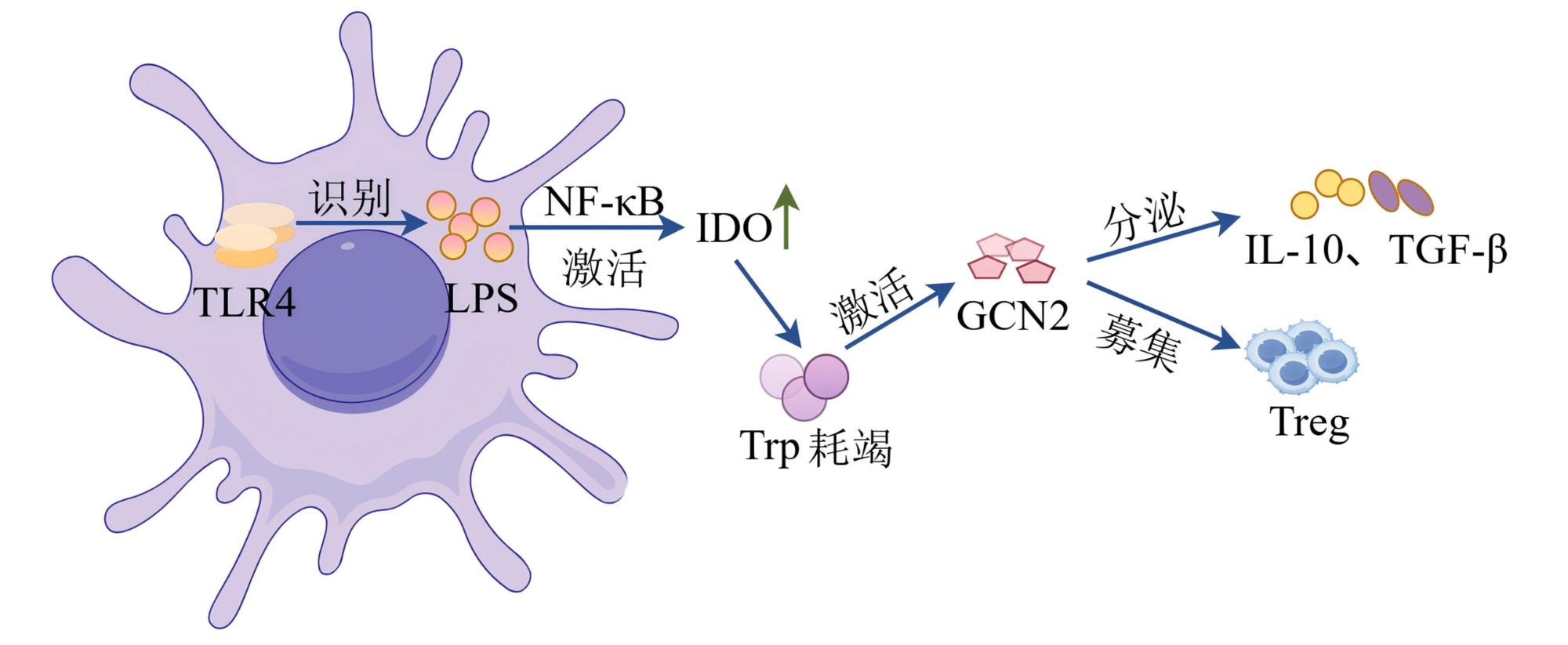
Trp作为必需氨基酸的独特之处在于,摄入的Trp大多通过代谢生成多种生物活性物质(如KYN、5-HT),进而通过调节免疫细胞功能与信号通路等方式,动态平衡机体的免疫应答与免疫耐受[39-40]。在仔猪饲粮中添加Trp可激活AhR信号通路,并下调肿瘤坏死因子-α(tumor necrosis factor-α,TNF-α)和白细胞介素(interleukin,IL)-8等促炎因子的表达,从而缓解肠道炎症和增强免疫[41]。Trp的3种代谢途径均参与机体免疫调控。其中,KYN途径可通过激活AhR发挥免疫调节作用。在炎症或感染状态下,Trp代谢生成KYN及其下游代谢物(如3-HK),有助于抑制过度炎症并建立免疫耐受[42]。IDO作为KYN途径的限速酶,在树突状细胞(dendritic cells,DCs)、巨噬细胞和肠上皮细胞中高度表达。当TLR4识别LPS等病原分子时,NF-κB信号通路被激活,从而诱导IDO转录上调,IDO进一步催化Trp转化为KYN,导致局部Trp耗竭[31,39];而Trp耗竭会激活表达IDO的DCs和巨噬细胞中的一般性调控阻遏蛋白2(general control nonderepressible 2,GCN2),进而促进IL-10、转化生长因子-β(transforming growth factor-β,TGF-β)等抗炎因子的分泌,并诱导调节性T细胞(regulatory T cell,Treg)募集,从而减轻炎症并增强免疫耐受[43-44]。Trp代谢过程中IDO的激活及其对免疫调节的影响如图2所示。
图2 Trp代谢过程中IDO的激活及其对免疫调节的影响(由Figdraw绘制)

TLR4:Toll 样受体 4 Toll-like receptor 4;LPS:脂多糖 lipopolysaccharide;NF-κB:核因子-κB nuclear factor-κB;IDO:吲哚胺2,3-双加氧酶 indoleamine 2,3-dioxygenase;GCN2:一般性调控阻遏蛋白2 general control nonderepressible 2;IL-10:白细胞介素-10 interleukin-10;TGF-β:转化生长因子-β transforming growth factor-β;Treg:调节性T细胞 regulatory T cell。

Fig.2 Activation of IDO in Trp metabolism and its effects on immune regulation (drawn by Figdraw)

5-HT作为神经递质和外周激素,已被证实可参与机体免疫调控。5-HT通过在各类免疫细胞与非免疫细胞上表达的5-羟色胺受体(5-hydroxytryptamine receptor,5-HTR)发挥免疫调节作用[45-46]。例如,5-HT可通过激活5-HT2A受体促进巨噬细胞活化,增加其分泌促炎因子的能力,加剧机体炎症反应;在炎症性肠病中,5-HT作用于肠道免疫细胞可加重肠道炎症[47-48]。而在某些条件下,5-HT可通过激活5-HT1A受体等抑制免疫细胞活性,减少炎症因子释放,从而发挥抗炎作用[49]。上述结果表明,5-HT在免疫反应中具有双重调控作用,具体效应取决于其所作用的受体类型及细胞微环境。
Trp代谢产生的吲哚及其衍生物主要通过激活AhR或孕烷X受体(pregnane X receptor,PXR)等调控机体免疫功能。例如,罗伊氏乳杆菌产生的ILA能够激活CD4+T细胞中的AhR,使CD4+T细胞分化成具有免疫调节功能的双阳性上皮内T淋巴细胞[16,50]。此外,吲哚及其衍生物能够调控Treg和辅助性T细胞17(Th17)的分化以维持机体免疫稳态[33]。由于Th17细胞的过度活化与炎症反应密切相关,吲哚及其衍生物的这一调节作用在炎症性肠病等免疫性疾病中尤为重要[51]

3.2 Trp代谢与肠道屏障

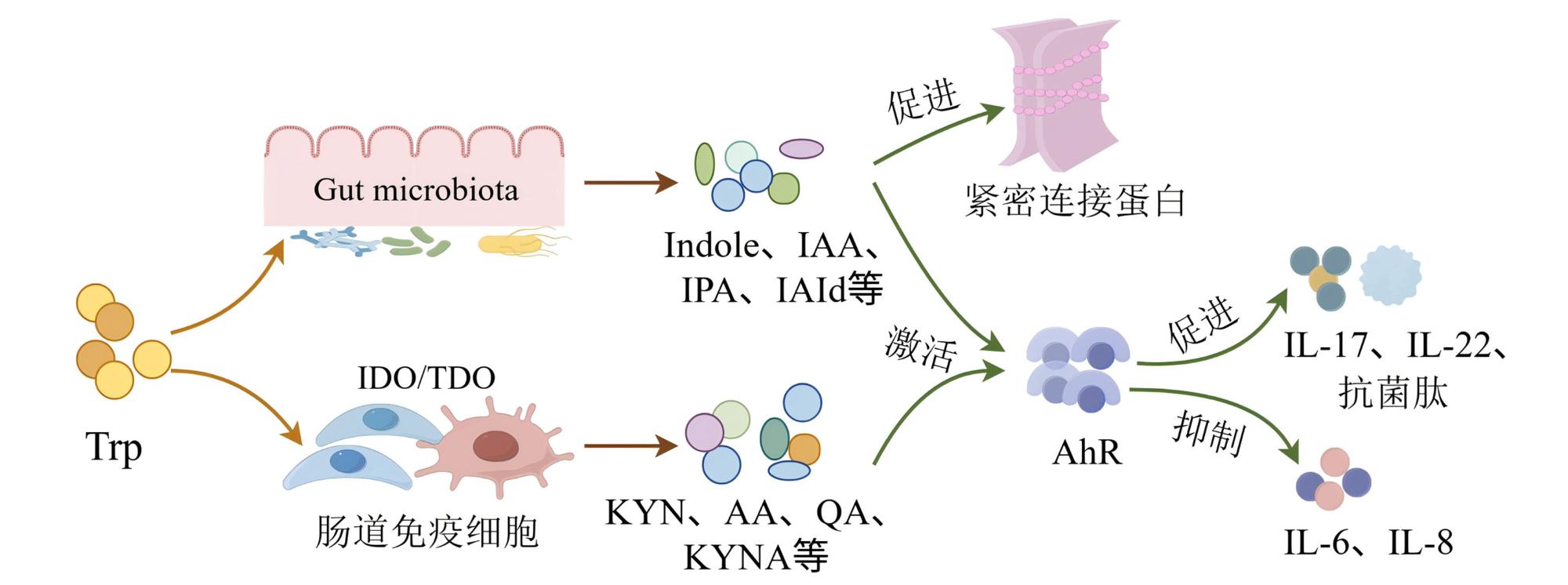
肠道屏障是动物消化系统维持健康和生理功能的重要结构,它能保护机体免受病原菌和其他有害物质的侵入[52]。紧密连接是肠道上皮细胞间的一种特殊结构,主要由闭合蛋白和连接蛋白等膜蛋白构成,这些蛋白通过相互作用维持肠道屏障的完整性和通透性[53]。Trp代谢对肠道屏障的调节作用如图3所示。当Trp被肠道微生物代谢为吲哚及其衍生物后,这些代谢物会调节肠道屏障的通透性,进而增强肠道免疫功能。例如,吲哚可通过增加紧密连接阻力和抑制炎症反应来增强肠道上皮细胞屏障功能[54-55]。在结肠炎小鼠模型中发现,补充Trp能够抑制肠道通透性的升高,若在此基础上添加抗生素减弱微生物群对Trp的代谢,则会消除Trp对结肠炎小鼠肠道的保护作用,这表明微生物介导的Trp代谢能够改善肠道屏障功能,有效缓解小鼠肠道炎症[56]。此外,部分Trp代谢物(如KYN、吲哚衍生物)能结合并激活AhR,该通路的激活可诱导IL-17、IL-22等下游炎症因子的表达,促进抗菌肽的产生,从而调节肠道稳态与屏障功能[7]。仔猪腹泻会触发肠道促炎因子(如IL-6、IL-8)的合成,这些细胞因子的过度分泌会诱发炎症并破坏肠道屏障完整性[57]。而给仔猪补充Trp可通过调节细胞内蛋白的更新和紧密连接蛋白的表达,有效减轻腹泻引起的肠道炎症[19]。值得注意的是,在断奶仔猪饲粮中添加吲哚-3-甲醛(indole-3-carbaldehyde,ICA)并未改变肠道形态,对肠上皮屏障功能无显著影响,但可促进肠上皮细胞发育,这与结肠炎小鼠模型的研究结果存在差异,小鼠试验中发现ICA可抑制肠道通透性的增加[58]。这种差异可能源于物种间AhR信号通路敏感性、肠道微生物组成或免疫背景的不同,在后续研究跨物种推论时需参考此类差异。此外,肠道屏障功能的改善可能通过减少氧化应激,间接提升机体健康水平。
图3 Trp代谢对肠道屏障的调节作用(由Figdraw绘制)

IAld:吲哚-3-醛 indole-3-aldehyde;IL-17:白细胞介素-17 interleukin-17;IL-22:白细胞介素-22 interleukin-22;IL-6:白细胞介素-6 interleukin-6;IL-8:白细胞介素-8 interleukin-8;QA:喹啉酸 quinolinic acid。

Fig.3 Regulatory role of Trp metabolism on intestinal barrier (drawn by Figdraw)

3.3 Trp代谢与氧化应激

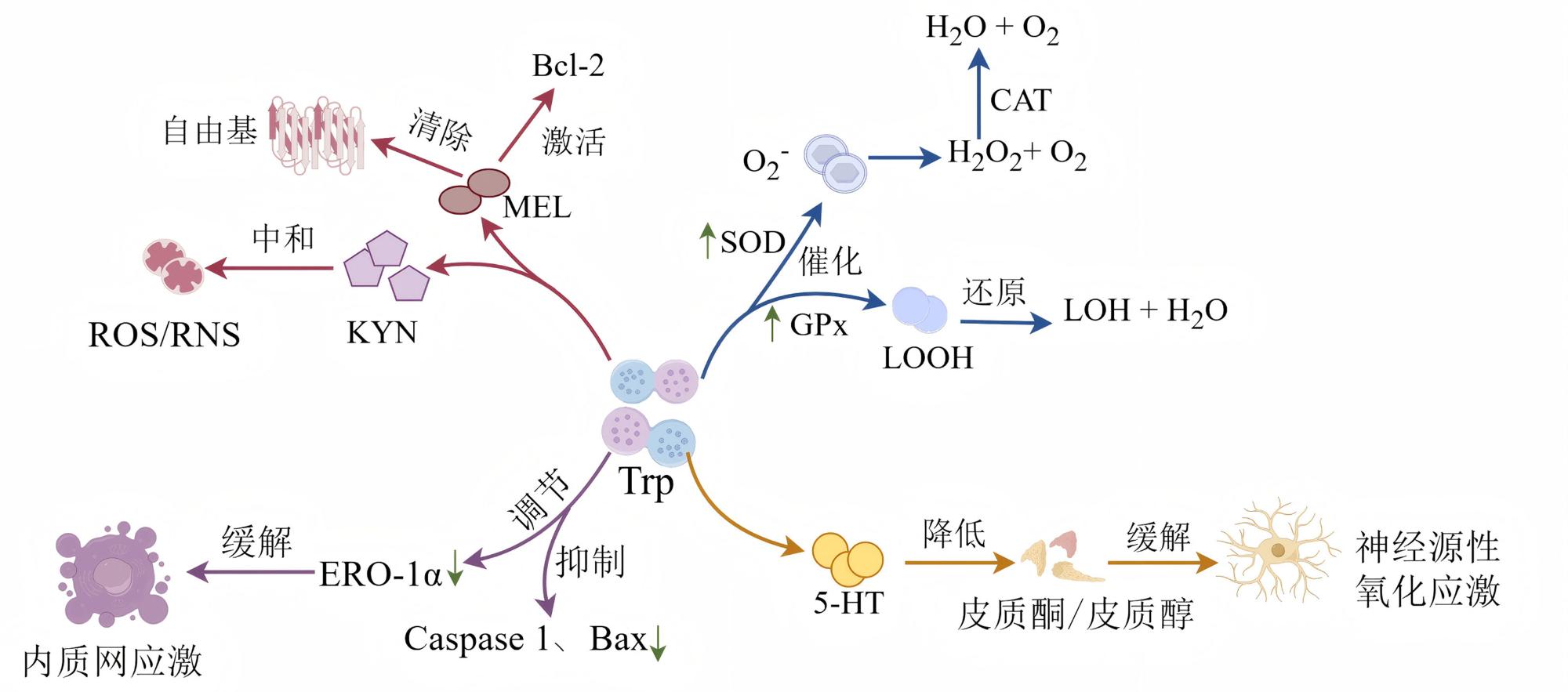
氧化应激是机体组织或细胞内自由基生成与内源性抗氧化防御系统失衡的一种状态,会导致蛋白质硝化、脂质过氧化和DNA损伤。胃肠道上皮细胞通过氧气代谢或肠道菌群产生的ROS和活性氮(reactive nitrogen species,RNS)是参与机体稳态调节的信号分子,能够调节肠道健康[59]。氧化应激会导致肠道黏膜组织损伤,破坏肠道屏障完整性,还会引发炎症反应,影响免疫系统功能,并提高机体对疾病的易感性[60-61]。大量研究表明,Trp代谢在调节机体抗氧化应激中具有重要作用。Trp能够调节睾酮、皮质醇等影响畜禽应激状态的激素的分泌及热休克蛋白的表达[62-63]。Trp代谢对机体氧化应激的调节作用如图4所示。
图4 Trp代谢对机体氧化应激的调节作用(由Figdraw绘制)

Bcl-2:B细胞淋巴瘤-2 B-cell lymphoma 2;ROS:活性氧 reactive oxygen species;RNS:活性氮 reactive nitrogen species;ERO-1α:内质网氧化还原酶-1α endoplasmic reticulum oxidoreductase-1α;Caspase 1:半胱氨酸蛋白酶-1;Bax:Bcl-2相关X蛋白 Bcl-2 associated X protein;SOD:超氧化物歧化酶 superoxide dismutase;CAT:过氧化氢酶 catalase;GPx:谷胱甘肽过氧化物酶 glutathione peroxidase;LOOH:脂质过氧化物 lipid hydroperoxide;LOH:脂质氧化物 lipid hydroxide; ${\mathrm{O}}_{2}^{-}$:超氧阴离子 superoxide anion;H2O2:过氧化氢 hydrogen peroxide;H2O:水 water;O2:氧气 oxygen。

Fig.4 Regulatory role of Trp metabolism on oxidative stress in the body (drawn by Figdraw)

在畜禽饲粮中添加Trp能够有效提高机体总抗氧化能力,并增强过氧化氢酶(catalase,CAT)、谷胱甘肽过氧化物酶(glutathione peroxidase,GPx)等抗氧化酶的活性。Trp的代谢产物MEL被证明能够直接参与清除自由基,具有抗氧化和抗凋亡特性,并能提高内源性抗氧化酶的活性,从而增强畜禽的抗氧化能力[64-65];另一代谢产物KYN同样在抗氧化应激中发挥重要作用,可中和自由基、减轻氧化应激对细胞的损伤[66]。补充Trp还能够降低内质网氧化还原酶-1α(endoplasmic reticulum oxidoreductase-1α,ERO-1α)、半胱氨酸蛋白酶-1(Caspase-1)等应激标志物的表达,并抑制凋亡相关蛋白的激活,进一步减轻氧化应激对细胞的损害[67]。Wang等[68]研究表明,为湖羊每日补饲90 mg/kg的Trp可有效减轻其氧化应激反应;同时,Trp可通过促进5-HT合成,缓解湖羊对陌生气味刺激产生的应激反应。值得注意的是,氧化应激往往伴随着炎症反应的发生和增强,这会进一步加剧细胞和组织的损伤,而Trp的代谢产物能够抑制TNF-α和IL-6等炎症因子的产生,从而降低炎症相关的氧化损伤[69]
Trp在抗氧化应激中的作用涉及多个生理过程,包括增强抗氧化酶的活性、清除自由基、抑制炎症反应和调节应激激素的分泌等,这些作用使其在减轻氧化应激和改善细胞健康方面具有重要潜力。目前,Trp在畜禽抗氧化应激方面的实际应用仍相对有限,最佳补充剂量尚难以确定,但Trp是未来畜禽饲料添加剂中用于缓解机体氧化应激的有效选择之一。

4 Trp代谢在畜禽营养中的应用

4.1 Trp代谢对畜禽生长发育的影响

Trp作为畜禽饲粮中的必需氨基酸之一,其代谢过程对畜禽生长发育具有重要作用。这不仅源于Trp本身作为蛋白质合成底物的功能,更与其多种活性代谢产物对生理过程的精准调控密切相关,其中对采食量的调控是核心环节之一。Trp主要通过5-HT途径调控采食行为,5-HT可作为平滑肌收缩剂参与调节胃肠道分泌和蠕动[70]。在中枢神经系统中,5-HT水平是调节食欲和采食量的关键信号。研究表明,与饲粮中缺乏Trp相比,补充Trp能够提高家禽采食量,进而提升生长效率[70]。在对仔猪的研究中发现,大脑中的5-HT通常被视为一种饱腹信号,过量摄入Trp会促使大脑中5-HT合成增加,抑制下丘脑采食中枢的活性,导致食欲下降[71-72]。此外,不同5-HT受体的表达可介导不同的生理效应:消化道中的5-HT与5-HT3受体结合后,可刺激迷走神经末梢,延缓胃排空并增强饱腹感,当5-HT3受体受到拮抗剂抑制后会促进机体摄入更多食物;而5-HT5R受体的表达则会减弱5-HT对采食量的调控作用[73-74]。应激通常会导致家禽采食量下降,而在肉鸡饲粮中添加Trp可缓解应激对采食行为的抑制。这可能源于Trp/5-HT系统对下丘脑-垂体-肾上腺这一应激轴的缓冲作用,以及Trp可通过改善肠道健康间接促进家禽食欲,从而使其恢复采食量[75]。由此可见,5-HT的作用机制较为复杂,其效应受受体亚型、动物种类等多种因素影响。此外,肠道微生物可通过产生短链脂肪酸、次级胆汁酸等代谢物,以及直接调节肠道5-HT的合成,影响迷走神经传入信号和激素(如胰高血糖素样肽-1)分泌,进而向大脑传递摄食信号;还可通过代谢Trp产生色胺加速肠道转运,间接影响饱腹感和采食量[76-77]
Trp是猪低蛋白质玉米-豆粕型饲粮中的第二限制性必需氨基酸,对其生长发育、新陈代谢起重要作用,且适量补充Trp后普遍观察到生长性能的改善。研究表明,给断奶仔猪饲喂含Trp的玉米-豆粕型饲粮,其日增重、饲料转化率(FCR)和背最长肌指数均呈剂量依赖性提升;且饲粮Trp含量为0.35%时对断奶仔猪生长性能和肠道微生物稳态的改善效果最佳[78]。IPA是Trp经肠道微生物代谢的主要产物之一。Ming等[79]研究发现,饲粮中添加IPA可提高仔猪的日增重,改善生长性能,并有效缓解仔猪腹泻。值得注意的是,Trp的代谢调控效应存在显著的物种与生理阶段差异。例如,Trp代谢产物5-HTP可有效提高绵羊的生长效率,在饲粮中添加8 mg/kg DM的5-HTP,可通过增强瘤胃功能、提高抗氧化能力及调节Trp代谢,有效改善绵羊的生长性能[80];但在新生犊牛的相关研究中发现,在其初乳中添加5-HTP后,犊牛日增重与对照组无显著差异,仅对机体免疫因子产生调控作用,未表现出明显的生长性能改善效应[81]。造成该差异的原因可能是新生犊牛瘤胃尚未发育健全,机体在不同生理阶段对Trp代谢利用度不同。这种差异性凸显了动物发育阶段及Trp代谢模式在实际应用中的重要性,因此畜禽饲粮中Trp的添加策略需结合动物的发育阶段及其胃肠道微生物群落特征进行精准设计。

4.2 Trp代谢对畜禽FCR的影响

Trp 对畜禽FCR的调控是一个复杂的生理过程,其效果并非简单的剂量依赖,而是受到物种、生理阶段及Trp代谢网络的多重影响,现有研究已明确其作用具有双向性与条件依赖性。在家禽生产中,Trp的添加策略需与动物生长阶段精准匹配。Xie等[82]研究发现,饲粮Trp含量可显著影响家禽的采食量与代谢,在标准饲粮中添加适量色氨酸可显著改善雄性肉鸡的FCR;Mund等[83]研究表明,饲粮中添加0.3%~0.5% Trp可提高肉鸡的FCR,且对胴体特性无显著影响,应激条件下在标准饲粮(含0.2% Trp)中添加1.5~2.5倍Trp补充剂,不仅能缓解肉鸡的氧化应激,还可显著提升其FCR。然而,Trp对FCR的改善作用存在明确的饲喂前提与适用条件。Goo等[84]研究发现,在肉鸡育肥期饲粮中添加0.16%或0.32% Trp并不能改善FCR;Emadi等[85]研究发现,在肉鸡标准饲粮中添加2.0倍Trp反而降低了FCR,但提高了其总抗氧化能力与免疫功能。以上结果表明,Trp对FCR的调控具有条件依赖性,其效果受生长阶段和饲粮组成等因素影响。在适宜条件下适量补充Trp可提升FCR并缓解应激,但不同研究中饲粮配方的差异可能导致Trp的生物利用度不同,进而造成动物生长表现不一致[86]
在单胃动物与反刍动物之间,Trp的调控机制呈现出更显著的物种差异性。对于猪,尤其是泌乳母猪,Trp的效益体现在一个完整的“母体-仔猪”调控轴上。Miao等[87]研究发现,在饲粮中添加0.12% Trp不仅能通过5-HT途径提高泌乳母猪的产奶量和乳品质,还能改善仔猪的采食量、肠道形态,并增加肠道中有益菌的相对丰度,从而间接提升泌乳母猪和仔猪的FCR,实现母子代生长性能的同步优化。相比之下,反刍动物的瘤胃代谢特性构成了Trp调控效应的关键限制因素。反刍动物中直接补充的Trp会在瘤胃中被大量降解,即便添加包被处理的过瘤胃色氨酸(rumen-protected tryptophan,RPT),也会在瘤胃中产生一定程度的损耗。这一特性也解释了为何添加RPT对奶牛采食量和产奶量等宏观生产指标往往无显著影响;然而,添加RPT可提高牛奶中酪蛋白的含量,提示在反刍动物中Trp对FCR或生产效能的调控可能并不表现为总量的提升,而是体现在终产品品质的优化上[88-89]。其潜在机制可能是,RPT经小肠吸收后,通过5-HT等途径调控了乳腺的营养成分分配与合成功能。综上所述,在生产实践中不能简单套用传统的“补充-响应”模式,而应结合畜禽的代谢特点与发育阶段进行精准营养设计。

4.3 Trp代谢提升畜禽产品质量的应用

Trp及其代谢产物通过直接与间接的生物学途径,显著影响畜产品品质。其作用不仅局限于作为蛋白质合成底物,更可通过Trp代谢网络调控整体的生理稳态,从而改善畜产品品质。在蛋鸡生产中,Trp对蛋品质的提升体现在蛋壳与蛋内组分两方面。在蛋鸡低蛋白质饲粮中添加0.18% Trp会提高其血液中的蛋白质和钙含量,提升鸡蛋中蛋白比例和蛋壳质量[90];饲粮中添加0.25%和1.00% Trp可提高蛋鸡日产蛋量和蛋壳质量,并通过降低血清皮质酮水平和提高血清5-HT水平,有效缓解应激[91]。除参与基础蛋白质合成外,Trp的代谢产物5-HT作为调节钙代谢的关键信号分子,通过调控甲状旁腺素和降钙素的分泌,动态调节血钙平衡,为蛋壳基质的钙化提供充足原料;同时,由Trp代谢合成的MEL被证实可直接上调输卵管子宫部中钙结合蛋白的表达,从而显著增强钙的转运与沉积效率,最终改善蛋壳的厚度与强度[91-92]
Trp及其代谢产物对肉品质的改善主要归因于其缓解应激和抗氧化特性。在湖羊饲粮中添加Trp能显著提高5-HT的生成,进而通过抑制下丘脑-垂体-肾上腺轴的过度激活,有效降低屠宰前的应激[68];另有研究发现,在猪饲粮中补充Trp可显著改善猪肉肉色和血浆中皮质醇的释放,并降低屠宰应激导致的苍白、柔软、渗出性(PSE)肉发生率,减少屠宰后肌肉的异常酸化[93]。这一机制有助于维持正常的肌肉pH,是改善肉色、降低滴水损失和提升肌肉嫩度的关键。此外,Trp代谢产生的MEL及其前体5-HT本身就是强大的内源性抗氧化剂。研究表明,在肉鸡饲粮中添加MEL可通过增强机体抗氧化能力,有效抑制肌肉中脂质和蛋白质的氧化,从而延长鸡肉的货架期并保持风味[94]
Trp及其代谢产物对乳品质的影响集中在乳蛋白合成方面。Kim等[95]报道,过瘤胃L-Trp能有效减轻夏季泌乳荷斯坦奶牛因热应激引起的采食量和产奶量下降,并且增加牛奶中的MEL水平。添加过瘤胃L-Trp会刺激奶牛乳腺上皮细胞中与蛋白质和能量代谢相关的基因和蛋白[如哺乳动物雷帕霉素靶蛋白(mammalian target of rapamycin,mTOR)信号通路关键因子]的表达,从而有效促进β-酪蛋白的合成[96]。饲粮中添加RPT能显著提高奶牛的泌乳性能。例如,在热应激条件下补充30 g/d RPT可提高奶牛的产奶量和乳糖含量;在正常状态下饲喂RPT可提高奶牛血清中MEL、催乳素和胰岛素生长因子的水平[88,97-98]。另有研究发现,5-HT对乳蛋白合成的作用呈现出双重性,既能抑制部分乳蛋白基因的表达,又能促进乳腺上皮细胞的增殖和分化,提升后续乳汁合成的生理潜力[99]。这揭示了Trp代谢的自我平衡机制——Trp通过mTOR等合成代谢通路促进蛋白质合成,而其衍生的5-HT可能作为一个反馈调节信号,防止蛋白质合成过度并引导乳腺组织进行结构性重塑,从而综合性地改善泌乳性能和乳成分。

5 小结与展望

Trp代谢通过多种途径产生的活性物质,既能参与宿主免疫调节和抗氧化应激,也可通过AhR信号通路等方式调控宿主肠道屏障功能与免疫稳态。在适宜的剂量范围内,补充Trp能够促进畜禽的生长发育和提高FCR,并有效缓解应激与炎症反应。肠道微生物通过酶活性调节、代谢产物生成及免疫信号传导,影响Trp的代谢流向与利用效率,从而形成肠道微生物、Trp代谢与宿主之间的复杂交互网络。未来研究应聚焦于这一交互网络,深入探究Trp及其代谢产物的作用机制,阐明关键代谢产物在不同生理条件下的剂量效应与作用阈值。在此基础上,通过开发靶向特定代谢通路的新型饲料添加剂,构建基于微生物组特征的Trp精准营养策略,从而从Trp代谢层面多维度优化畜禽健康与生产性能,为绿色养殖提供理论依据和技术支撑。
[1]
DAVIDSON M, RASHIDI N, NURGALI K, et al. The role of tryptophan metabolites in neuropsychiatric disorders[J]. International Journal of Molecular Sciences, 2022, 23(17):9968.

DOI

[2]
SU X M, GAO Y H, YANG R C. Gut microbiota-derived tryptophan metabolites maintain gut and systemic homeostasis[J]. Cells, 2022, 11(15):2296.

DOI

[3]
ZHENG Z P, WU L, HAN Y Q, et al. Gut microbiota-controlled tryptophan metabolism improves D-Gal/LPS-induced acute liver failure in C57BL/6 mice[J]. Engineering, 2022, 14:134-146.

DOI

[4]
ZHANG F L, TIAN J J, LI J T, et al. Akkermansia muciniphila alleviates metabolic disorders through gut microbiota-mediated tryptophan regulation[J]. AMB Express, 2025, 15(1):181.

DOI

[5]
SINHA A K, LAURSEN M F, BRINCK J E, et al. Dietary fibre directs microbial tryptophan metabolism via metabolic interactions in the gut microbiota[J]. Nature Microbiology, 2024, 9(8):1964-1978.

DOI

[6]
ROAGER H M, LICHT T R. Microbial tryptophan catabolites in health and disease[J]. Nature Communications, 2018, 9(1):3294.

DOI PMID

[7]
SUN M G, MA N, HE T, et al. Tryptophan (Trp) modulates gut homeostasis via aryl hydrocarbon receptor (AhR)[J]. Critical Reviews in Food Science and Nutrition, 2020, 60(10):1760-1768.

DOI PMID

[8]
LI S Y. Modulation of immunity by tryptophan microbial metabolites[J]. Frontiers in Nutrition, 2023, 10:1209613.

DOI

[9]
COMAI S, BERTAZZO A, BRUGHERA M, et al. Tryptophan in health and disease[J]. Advances in Clinical Chemistry, 2020, 95:165-218.

DOI PMID

[10]
MODOUX M, ROLHION N, MANI S, et al. Tryptophan metabolism as a pharmacological target[J]. Trends in Pharmacological Sciences, 2021, 42(1):60-73.

DOI PMID

[11]
STONE T W, CLANCHY F I L, HUANG Y S, et al. An integrated cytokine and kynurenine network as the basis of neuroimmune communication[J]. Frontiers in Neuroscience, 2022, 16:1002004.

DOI

[12]
HU Z G, FENG L Y, JIANG Q, et al. Intestinal tryptophan metabolism in disease prevention and swine production[J]. Animal Nutrition, 2023, 15:364-374.

DOI PMID

[13]
陆锦南. 肠道菌群-犬尿氨酸代谢途径在腹泻型肠易激综合征中的作用研究[D]. 硕士学位论文. 南京: 南京医科大学, 2023.

LU J N. Study on the role of intestinal flora-kynurenine metabolic pathway in irritable bowel syndrome with predominant diarrhea[D]. Master’s Thesis. Nanjing: Nanjing Medical University, 2023. (in Chinese)

[14]
HÖGLUND E, ØVERLI Ø, WINBERG S. Tryptophan metabolic pathways and brain serotonergic activity:a comparative review[J]. Frontiers in Endocrinology, 2019, 10:158.

DOI

[15]
ZHOU M F, FAN Y C, XU L T, et al. Microbiome and tryptophan metabolomics analysis in adolescent depression:roles of the gut microbiota in the regulation of tryptophan-derived neurotransmitters and behaviors in human and mice[J]. Microbiome, 2023, 11(1):145.

DOI

[16]
ROTH W, ZADEH K, VEKARIYA R, et al. Tryptophan metabolism and gut-brain homeostasis[J]. International Journal of Molecular Sciences, 2021, 22(6):2973.

DOI

[17]
MAJIDINIA M, REITER R J, SHAKOURI S K, et al. The multiple functions of melatonin in regenerative medicine[J]. Ageing Research Reviews, 2018, 45:33-52.

DOI

[18]
XUE C, LI G L, ZHENG Q X, et al. Tryptophan metabolism in health and disease[J]. Cell Metabolism, 2023, 35(8):1304-1326.

DOI

[19]
ZHAO X, PANG J M, ZHANG W H, et al. Tryptophan metabolism and piglet diarrhea:where we stand and the challenges ahead[J]. Animal Nutrition, 2024, 17:123-133.

DOI

[20]
LI D, YU S, LONG Y, et al. Tryptophan metabolism:mechanism-oriented therapy for neurological and psychiatric disorders[J]. Frontiers in Immunology, 2022, 13:985378.

DOI

[21]
SUN D M, BIAN G R, ZHANG K, et al. Early-life ruminal microbiome-derived indole-3-carboxaldehyde and prostaglandin D2 are effective promoters of rumen development[J]. Genome Biology, 2024, 25(1):64.

DOI PMID

[22]
NEGRI S, COMMISSO M, AVESANI L, et al. The case of tryptamine and serotonin in plants:a mysterious precursor for an illustrious metabolite[J]. Journal of Experimental Botany, 2021, 72(15):5336-5355.

DOI

[23]
TEUNIS C, NIEUWDORP M, HANSSEN N. Interactions between tryptophan metabolism,the gut microbiome and the immune system as potential drivers of non-alcoholic fatty liver disease (NAFLD) and metabolic diseases[J]. Metabolites, 2022, 12(6):514.

DOI

[24]
YU L, LU J, DU W B. Tryptophan metabolism in digestive system tumors:unraveling the pathways and implications[J]. Cell Communication and Signaling, 2024, 22(1):174.

DOI

[25]
LIU M Y, NIEUWDORP M, DE VOS W M, et al. Microbial tryptophan metabolism tunes host immunity,metabolism,and extraintestinal disorders[J]. Metabolites, 2022, 12(9):834.

DOI

[26]
MARTIN-GALLAUSIAUX C, LARRAUFIE P, JARRY A, et al. Butyrate produced by commensal bacteria down-regulates indolamine 2,3-dioxygenase 1 (IDO-1) expression via a dual mechanism in human intestinal epithelial cells[J]. Frontiers in Immunology, 2018, 9:2838.

DOI

[27]
KAUR H, BOSE C, MANDE S S. Tryptophan metabolism by gut microbiome and gut-brain-axis:an in silico analysis[J]. Frontiers in Neuroscience, 2019, 13:1365.

DOI

[28]
HOU Y J, LI J, YING S H. Tryptophan metabolism and gut microbiota:a novel regulatory axis integrating the microbiome,immunity,and cancer[J]. Metabolites, 2023, 13(11):1166.

DOI

[29]
RAMOS-CHÁVEZ L A, LUGO HUITRÓN R, GONZÁLEZ ESQUIVEL D, et al. Relevance of alternative routes of kynurenic acid production in the brain[J]. Oxidative Medicine and Cellular Longevity, 2018, 2018(1):5272741.

DOI

[30]
GAO K, MU C L, FARZI A, et al. Tryptophan metabolism:a link between the gut microbiota and brain[J]. Advances in Nutrition, 2020, 11(3):709-723.

DOI

[31]
HEMMATI S, SADEGHI M A, MOHAMMAD JAFARI R, et al. The antidepressant effects of GM-CSF are mediated by the reduction of TLR4/NF-κB-induced IDO expression[J]. Journal of Neuroinflammation, 2019, 16(1):117.

DOI

[32]
ZHAO P F, CHEN Y Q, ZHOU S Y, et al. Microbial modulation of tryptophan metabolism links gut microbiota to disease and its treatment[J]. Pharmacological Research, 2025, 219:107896.

DOI

[33]
SINGH N P, SINGH U P, ROUSE M, et al. Dietary indoles suppress delayed-type hypersensitivity by inducing a switch from proinflammatory Th17 cells to anti-inflammatory regulatory T cells through regulation of microRNA[J]. The Journal of Immunology, 2016, 196(3):1108-1122.

DOI

[34]
ZHANG X, GAN M, LI J Y, et al. Endogenous indole pyruvate pathway for tryptophan metabolism mediated by IL4I1[J]. Journal of Agricultural and Food Chemistry, 2020, 68(39):10678-10684.

DOI PMID

[35]
STASI C, BELLINI M, BASSOTTI G, et al. Serotonin receptors and their role in the pathophysiology and therapy of irritable bowel syndrome[J]. Techniques in Coloproctology, 2014, 18(7):613-621.

DOI PMID

[36]
GAO J, XU K, LIU H N, et al. Impact of the gut microbiota on intestinal immunity mediated by tryptophan metabolism[J]. Frontiers in Cellular and Infection Microbiology, 2018, 8:13.

DOI PMID

[37]
PAROLISI S, MONTANARI C, BORGHI E, et al. Possible role of tryptophan metabolism along the microbiota-gut-brain axis on cognitive & behavioral aspects in phenylketonuria[J]. Pharmacological Research, 2023, 197:106952.

DOI

[38]
WANG A R, LI P P, MA F L, et al. Mixed Lactiplantibacillus plantarum strains alleviated DSS-induced intestinal inflammation of Balb/c mice via the 5-HT/5-HT7R/NF-κB signaling pathway[J]. Journal of Functional Foods, 2023, 102:105435.

DOI

[39]
SORGDRAGER F J H, NAUDÉ P J W, KEMA I P, et al. Tryptophan metabolism in inflammaging:from biomarker to therapeutic target[J]. Frontiers in Immunology, 2019, 10:2565.

DOI

[40]
CERVENKA I, AGUDELO L Z, RUAS J L. Kynurenines:tryptophan’s metabolites in exercise,inflammation,and mental health[J]. Science, 2017, 357(6349):eaaf9794.

DOI

[41]
LIANG H W, DAI Z L, LIU N, et al. Dietary L-tryptophan modulates the structural and functional composition of the intestinal microbiome in weaned piglets[J]. Frontiers in Microbiology, 2018, 9:1736.

DOI PMID

[42]
KONDO T, OKADA Y, SHIZUYA S, et al. Neuroimmune modulation by tryptophan derivatives in neurological and inflammatory disorders[J]. European Journal of Cell Biology, 2024, 103(2):151418.

DOI

[43]
RAVISHANKAR B, LIU H, SHINDE R, et al. The amino acid sensor GCN2 inhibits inflammatory responses to apoptotic cells promoting tolerance and suppressing systemic autoimmunity[J]. Proceedings of the National Academy of Sciences, 2015, 112(34):10774-10779.

DOI

[44]
PROIETTI E, ROSSINI S, GROHMANN U, et al. Polyamines and kynurenines at the intersection of immune modulation[J]. Trends in Immunology, 2020, 41(11):1037-1050.

DOI PMID

[45]
SEO S K, KWON B. Immune regulation through tryptophan metabolism[J]. Experimental & Molecular Medicine, 2023, 55(7):1371-1379.

[46]
HAQ S, GRONDIN J A, KHAN W I. Tryptophan-derived serotonin-kynurenine balance in immune activation and intestinal inflammation[J]. The FASEB Journal, 2021, 35(10):e21888.

DOI

[47]
GRONDIN J A, KHAN W I. Emerging roles of gut serotonin in regulation of immune response,microbiota composition and intestinal inflammation[J]. Journal of the Canadian Association of Gastroenterology, 2023, 7(1):88-96.

[48]
NICHOLS C D, FOSTER T P. Chapter two-serotonin,immune function,and psychedelics as potent anti-inflammatories[M]// NUTTD J, THURGURH. Internationalreview of neurobiology. San Diego: Academic Press,2025:45-76.

[49]
WAN M J, DING L L, WANG D, et al. Serotonin:a potent immune cell modulator in autoimmune diseases[J]. Frontiers in Immunology, 2020, 11:186.

DOI

[50]
ESSER C, RANNUG A, STOCKINGER B. The aryl hydrocarbon receptor in immunity[J]. Trends in Immunology, 2009, 30(9):447-454.

DOI PMID

[51]
FU R, ZHANG P, ZHANG J W, et al. Intermittent fasting exacerbates colon inflammation by promoting Th17 cell differentiation through inhibition of gut microbiota-derived indoleacrylic acid[J]. World Journal of Gastroenterology, 2025, 31(22):108815.

[52]
DMYTRIV T R, STOREY K B, LUSHCHAK V I. Intestinal barrier permeability:the influence of gut microbiota,nutrition,and exercise[J]. Frontiers in Physiology, 2024, 15:1380713.

DOI

[53]
GOU H Z, ZHANG Y L, REN L F, et al. How do intestinal probiotics restore the intestinal barrier?[J]. Frontiers in Microbiology, 2022, 13:929346.

DOI

[54]
CHEN X, XU D, YU J, et al. Tryptophan metabolism disorder-triggered diseases,mechanisms,and therapeutic strategies:a scientometric review[J]. Nutrients, 2024, 16(19):3380.

DOI

[55]
TALEB S. Tryptophan dietary impacts gut barrier and metabolic diseases[J]. Frontiers in Immunology, 2019, 10:2113.

DOI PMID

[56]
SCOTT S A, FU J J, CHANG P V. Microbial tryptophan metabolites regulate gut barrier function via the aryl hydrocarbon receptor[J]. Proceedings of the National Academy of Sciences, 2020, 117(32):19376-19387.

DOI

[57]
ZHAO X, JIANG L, FANG X Y, et al. Host-microbiota interaction-mediated resistance to inflammatory bowel disease in pigs[J]. Microbiome, 2022, 10(1):115.

DOI PMID

[58]
ZHANG R F, HUANG G W, REN Y T, et al. Effects of dietary indole-3-carboxaldehyde supplementation on growth performance,intestinal epithelial function,and intestinal microbial composition in weaned piglets[J]. Frontiers in Nutrition, 2022, 9:896815.

DOI

[59]
MISHRA B, JHA R. Oxidative stress in the poultry gut:potential challenges and interventions[J]. Frontiers in Veterinary Science, 2019, 6:60.

DOI

[60]
LI Y, WANG K, LI C M. Oxidative stress in poultry and the therapeutic role of herbal medicine in intestinal health[J]. Antioxidants, 2024, 13(11):1375.

DOI

[61]
DAS S, MUKHERJEE U, BISWAS S, et al. Unravelling bisphenol A-induced hepatotoxicity:insights into oxidative stress,inflammation,and energy dysregulation[J]. Environmental Pollution, 2024, 362:124922.

DOI

[62]
WEN J, HELMBRECHT A, ELLIOT M A, et al. Evaluation of the tryptophan requirement of small-framed first cycle laying hens[J]. Poultry Science, 2019, 98(3):1263-1271.

DOI PMID

[63]
GHAZAGHI M, ASGHARI-MOGHADAM M, MEHRI M. Immunoregulatory and antioxidant properties of tryptophan in quail chick[J]. Heliyon, 2024, 10(8):e29115.

DOI

[64]
YANG L, CHENG J Y, XU D J, et al. Melatonin ameliorates diquat-induced testicular toxicity via reducing oxidative stress,inhibiting apoptosis,and maintaining the integrity of blood-testis barrier in mice[J]. Toxics, 2023, 11(2):160.

DOI

[65]
LINH N T, GUNTORO B, HOANG QUI N. Immunomodulatory,behavioral,and nutritional response of tryptophan application on poultry[J]. Veterinary World, 2021, 14(8):2244-2250.

[66]
XU K, LIU G, FU C X. The tryptophan pathway targeting antioxidant capacity in the placenta[J]. Oxidative Medicine and Cellular Longevity, 2018, 2018(1):1054797.

DOI

[67]
LIU G M, TAO J Y, LU J J, et al. Dietary tryptophan supplementation improves antioxidant status and alleviates inflammation,endoplasmic reticulum stress,apoptosis,and pyroptosis in the intestine of piglets after lipopolysaccharide challenge[J]. Antioxidants, 2022, 11(5):872.

DOI

[68]
WANG J S, DING L Y, YU X, et al. Tryptophan improves antioxidant capability and meat quality by reducing responses to stress in nervous Hu sheep[J]. Meat Science, 2023, 204:109267.

DOI

[69]
HAJSL M, HLAVACKOVA A, BROULIKOVA K, et al. Tryptophan metabolism,inflammation,and oxidative stress in patients with neurovascular disease[J]. Metabolites, 2020, 10(5):208.

DOI

[70]
闫丽红. 色氨酸在畜禽生产中的应用[J]. 饲料博览, 2016(11):15-18.

YAN L H. The application of tryptophan in livestock and poultry production[J]. Feed Review, 2016(11):15-18. (in Chinese)

[71]
GRIBBLE F M, WILLIAMS L, SIMPSON A K, et al. A novel glucose-sensing mechanism contributing to glucagon-like peptide-1 secretion from the GLUTag cell line[J]. Diabetes, 2003, 52(5):1147-1154.

PMID

[72]
张华伟, 尹靖东, 周玄. 限饲和自由采食条件下色氨酸对仔猪生长性能和血清尿素氮的影响[J]. 养猪, 2006(1):1-3.

ZHANG H W, YIN J D, ZHOU X. Effect of diet tryptophan level on growth performance and BUN in piglets[J]. Swine Production, 2006(1):1-3. (in Chinese)

[73]
HAMMER V A, GIETZEN D W, BEVERLY J L, et al. Serotonin3 receptor antagonists block anorectic responses to amino acid imbalance[J]. American Journal of Physiology, 1990, 259(3):627-636.

[74]
WARGENT E T, MARTIN-GRONERT M S, CRIPPS R L, et al. Developmental programming of appetite and growth in male rats increases hypothalamic serotonin (5-HT) 5A receptor expression and sensitivity[J]. International Journal of Obesity, 2020, 44(9):1946-1957.

DOI

[75]
KIM H W, KIM J H, HAN G P, et al. Increasing concentrations of dietary threonine,tryptophan,and glycine improve growth performance and intestinal health with decreasing stress responses in broiler chickens raised under multiple stress conditions[J]. Animal Nutrition, 2024, 18:145-153.

DOI

[76]
LI Q K, TAN D, XIONG S J, et al. Time-restricted feeding promotes glucagon-like peptide-1 secretion and regulates appetite via tryptophan metabolism of gut Lactobacillus in pigs[J]. Gut Microbes, 2025, 17(1):2467185.

DOI

[77]
CHIMEREL C, EMERY E, SUMMERS D K, et al. Bacterial metabolite indole modulates incretin secretion from intestinal enteroendocrine L cells[J]. Cell Reports, 2014, 9(4):1202-1208.

DOI PMID

[78]
RAO Z B, LI J L, SHI B S, et al. Dietary tryptophan levels impact growth performance and intestinal microbial ecology in weaned piglets via tryptophan metabolites and intestinal antimicrobial peptides[J]. Animals, 2021, 11(3):817.

DOI

[79]
MING D X, XU X C, JIANG X R, et al. Indole-3-propionic acid enhances growth performance and reduces diarrhea via modulating redox status and intestinal inflammation in weaned piglets[J]. Animal Nutrition, 2024, 19:240-247.

DOI PMID

[80]
SUN Z, ASCHALEW N D, CHENG L, et al. Dietary 5-hydroxytryptophan improves sheep growth performance by enhancing ruminal functions,antioxidant capacity,and tryptophan metabolism:in vitro and in vivo studies[J]. Frontiers in Immunology, 2024, 15:1398310.

DOI

[81]
HERNÁNDEZ-CASTELLANO L E, ÖZÇELIK R, HERNANDEZ L L, et al. Short communication:supplementation of colostrum and milk with 5-hydroxy-l-tryptophan affects immune factors but not growth performance in newborn calves[J]. Journal of Dairy Science, 2018, 101(1):794-800.

DOI

[82]
XIE K L, FENG X J, ZHU S Q, et al. Effects of tryptophan supplementation in diets with different protein levels on the production performance of broilers[J]. Animals, 2024, 14(13):1838.

DOI

[83]
MUND M D, RIAZ M, MIRZA M A, et al. Effect of dietary tryptophan supplementation on growth performance,immune response and anti-oxidant status of broiler chickens from 7 to 21 days[J]. Veterinary Medicine and Science, 2020, 6(1):48-53.

DOI

[84]
GOO D, KIM J H, PARK G H, et al. Effect of stocking density and dietary tryptophan on growth performance and intestinal barrier function in broiler chickens[J]. Poultry Science, 2019, 98(10):4504-4508.

DOI PMID

[85]
EMADI M, JAHANSHIRI F, KAVEH K, et al. Nutrition and immunity:the effects of the combination of arginine and tryptophan on growth performance,serum parameters and immune response in broiler chickens challenged with infectious bursal disease vaccine[J]. Avian Pathology, 2011, 40(1):63-72.

DOI

[86]
PARSONS C M. Unresolved issues for amino acid digestibility in poultry nutrition[J]. Journal of Applied Poultry Research, 2020, 29(1):1-10.

DOI

[87]
MIAO J F, ADEWOLE D, LIU S X, et al. Tryptophan supplementation increases reproduction performance,milk yield,and milk composition in lactating sows and growth performance of their piglets[J]. Journal of Agricultural and Food Chemistry, 2019, 67(18):5096-5104.

DOI

[88]
MA H, YAO S Y, BAI L B, et al. The effects of rumen-protected tryptophan (RPT) on production performance and relevant hormones of dairy cows[J]. PeerJ, 2022, 10:e13831.

DOI

[89]
陈俊宏. 添喂色氨酸、过瘤胃色氨酸对奶牛泌乳性能、血浆及乳中褪黑素含量的影响[D]. 硕士学位论文. 乌鲁木齐: 新疆农业大学, 2017.

CHEN J H. Effects of tryptophan and rumen-protected tryptophan supplementation on lactation performance,plasma and melatonin contents in milk of dairy cows[D]. Master’s Thesis. Urumqi: Xinjiang Agricultural University, 2017. (in Chinese)

[90]
FOUAD A M, EL-SENOUSEY H K, RUAN D, et al. Tryptophan in poultry nutrition:impacts and mechanisms of action[J]. Journal of Animal Physiology and Animal Nutrition, 2021, 105(6):1146-1153.

DOI

[91]
SON J, YUN Y S, KIM H S, et al. Effect of different levels of tryptophan on laying performance,egg quality,blood and tibia parameters,and feather damage of laying hens in barn system[J]. Journal of Applied Poultry Research, 2025, 34(2):100518.

DOI

[92]
INPANBUTR N, TAYLOR A N. Expression of calbindin-D28k in developing and growing ovaries of chicken embryos[J]. American Journal of Veterinary Research, 1993, 54(4):514-519.

PMID

[93]
GUZIK A C, MATTHEWS J O, KERR B J, et al. Dietary tryptophan effects on plasma and salivary cortisol and meat quality in pigs[J]. Journal of Animal Science, 2006, 84(8):2251-2259.

PMID

[94]
CHEN Y, PENG L L, HUANG Y, et al. Effect of dietary supplementation with melatonin on meat quality,fatty acid profiles and metabolome differences in broiler breast[J]. Journal of Food Composition and Analysis, 2023, 121:105410.

DOI

[95]
KIM Y L, LEE S H, SON G H, et al. Effect of rumen-protected L-tryptophan or L-ascorbic acid on plasma metabolites and milk production characteristics of lactating Holstein cows during summer conditions[J]. Animals, 2024, 14(12):1820.

DOI

[96]
CONEJOS J R V, GHASSEMI NEJAD J, KIM J E, et al. Supplementing with L-tryptophan increases medium protein and alters expression of genes and proteins involved in milk protein synthesis and energy metabolism in bovine mammary cells[J]. International Journal of Molecular Sciences, 2021, 22(5):2751.

DOI

[97]
JO J H, JALIL G N, KIM W S, et al. Effects of rumen-protected L-tryptophan supplementation on productivity,physiological indicators,blood profiles,and heat shock protein gene expression in lactating Holstein cows under heat stress conditions[J]. International Journal of Molecular Sciences, 2024, 25(2):1217.

DOI

[98]
CHOI W T, GHASSEMI NEJAD J, MOON J O, et al. Dietary supplementation of acetate-conjugated tryptophan alters feed intake,milk yield and composition,blood profile,physiological variables,and heat shock protein gene expression in heat-stressed dairy cows[J]. Journal of Thermal Biology, 2021, 98:102949.

DOI

[99]
FIELD S L, DAVIDSON B D, HOERL A F, et al. Amplifying local serotonin signaling prior to dry-off hastens mammary gland involution and redevelopment in dairy cows[J]. Journal of Dairy Science, 2023, 106(5):3719-3733.

DOI

Outlines

/