REVIEW

Protoberberine Alkaloids from Coptis chinensis Franch.: Biological Functions and Applications in Livestock and Poultry

  • MA Xiheng ,
  • LI Yuanxiao ,
  • DOU Xueru ,
  • ZHANG Xiaoyin , *
Expand
  • College of Animal Science and Technology, Henan University of Science and Technology, Luoyang 471023, China
*lecturer, E-mail:

Received date: 2025-09-25

  Online published: 2026-05-14

Abstract

Protoberberine alkaloids are the main active components responsible for the biological functions of Coptis chinensis Franch. This review summarizes the structural characteristics and intestinal metabolic pathways of protoberberine alkaloids from Coptis chinensis Franch., and systematically elucidates their biological functions such as antioxidant, antibacterial, and anti-inflammatory activities, as well as their roles in improving performance, regulating immune and inflammatory responses, and modulating gut microbiota in livestock and poultry. This review provides a theoretical reference for the application of Coptis chinensis Franch. extracts (particularly protoberberine alkaloids) in livestock and poultry production and for the development of novel functional feed additives, thereby contributing to the green and sustainable development of the animal husbandry industry.

Cite this article

MA Xiheng , LI Yuanxiao , DOU Xueru , ZHANG Xiaoyin . Protoberberine Alkaloids from Coptis chinensis Franch.: Biological Functions and Applications in Livestock and Poultry[J]. Chinese Journal of Animal Nutrition, 2026 , 38(5) : 3312 -3323 . DOI: 10.12418/CJAN2026.265

植物糖类、酚酸类、黄酮类、皂苷类和生物碱类等天然产物是中药资源中的关键生物活性成分,已广泛应用于国内外经济动物生产及相关领域,并形成了一系列高附加值的功能性饲料产品。这类产品因其天然来源、易于获取且不易引起抗药性等特点,已成为新型饲料添加剂研发的热点[1]。黄连(Coptis chinensis Franch.)是毛茛科植物,也是一种重要的传统中草药,主要分布于我国四川、贵州、湖南等地,具有清热燥湿、泻火解毒的功效。药理学研究表明,黄连提取物具有多种生物活性,包括神经保护、抗炎、抗氧化应激、抗肿瘤、预防动脉粥样硬化以及改善糖尿病症状等。这些药理作用主要归因于其所含的生物碱类成分。在畜禽养殖中,黄连生物碱被证实能够促进动物生长、改善肉品质、修复肠道结构、提高饲料利用率,并有助于减少温室气体排放[2-4]。黄连中所含的生物碱主要属于原小檗碱类,包括小檗碱、巴马汀、黄连碱等。本文综述了黄连原小檗碱类生物碱的结构特征、肠道代谢过程、生物学功能及其在畜禽生产中的应用现状,以期为开发新型饲料添加剂、推动养殖业可持续发展提供理论参考和思路。

1 黄连原小檗碱类生物碱的结构特性和安全性分析

1.1 黄连原小檗碱类生物碱的种类及化学结构
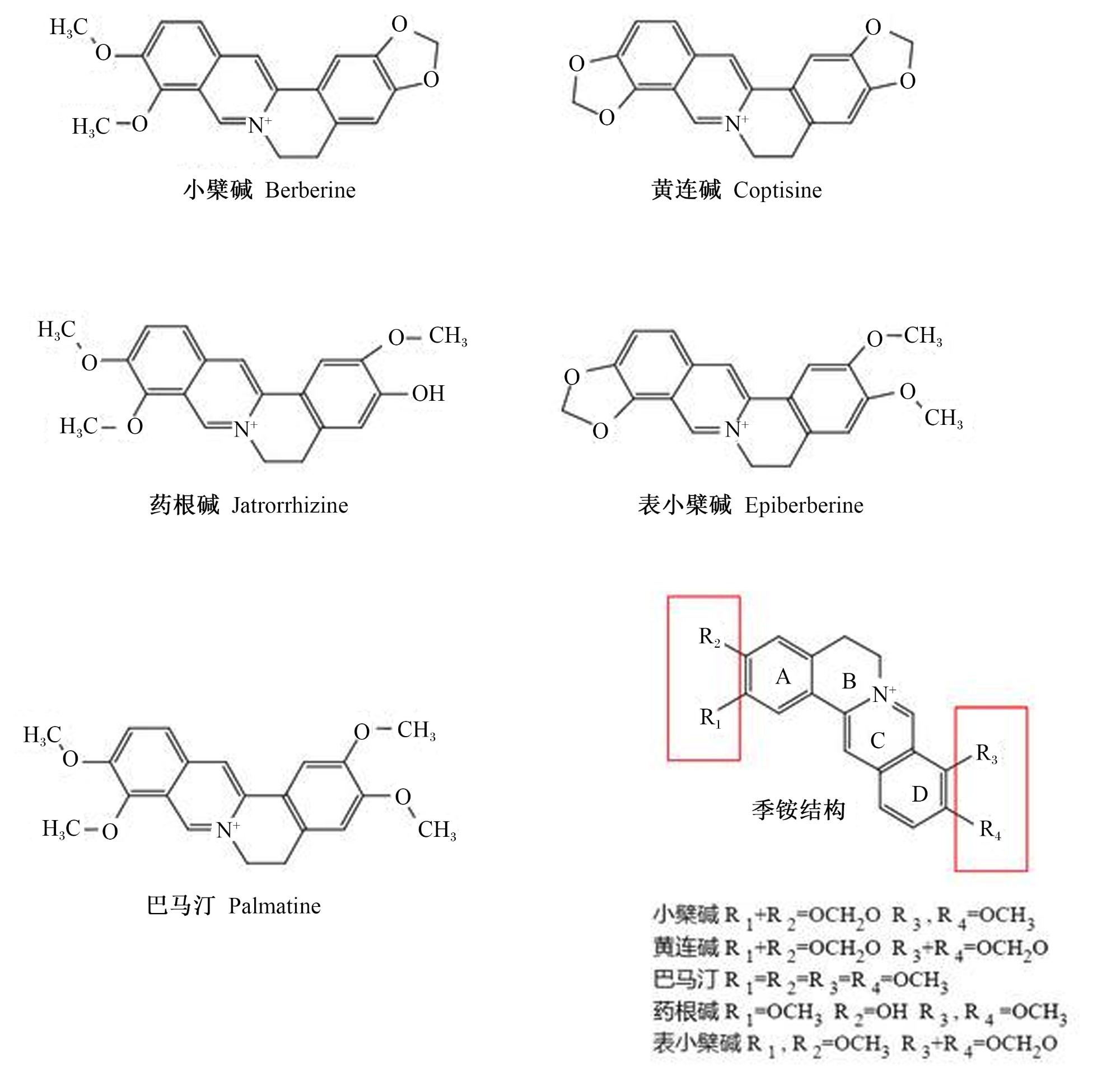
黄连作为传统药物,在食品和医药领域应用广泛。目前,从黄连中已成功分离出超过100种化学成分,主要包括生物碱类、木脂素类及黄酮类等[5]。其临床药用价值主要源于根部所含的生物碱类物质,常见的有小檗碱、黄连碱、巴马汀、药根碱、表小檗碱、甲基黄连碱、非洲防己碱和木兰花碱等。其中,小檗碱、黄连碱、巴马汀、药根碱和表小檗碱均属于原小檗碱类生物碱,被视为黄连发挥功能的主要活性成分,也是其指标性成分[6]
结构分析表明,原小檗碱类生物碱具有相似的化学结构,其共同特征在于一个核心的四环异喹啉季铵骨架(图1)[7-8]。该骨架由A、B、C、D 4个环构成,其中A环(苯环)和D环(苯环)通过B环和C环连接,形成刚性的平面结构,这一结构被认为是黄连发挥生物活性的关键基础[7]。进一步研究表明,结构差异直接影响其功能:小檗碱的亚甲二氧基结构有助于增强与靶点的结合,从而表现出较强的抗菌活性[9];而巴马汀由于高度甲基化,削弱了与靶点的结合能力[10-11],虽因其结构特性更易穿透细胞膜[12],但其单药抗菌活性相对有限[13]
图1 黄连原小檗碱类生物碱的主体结构

Fig.1 Parent structure of protoberberine alkaloids from Coptis chinensis Franch.[7-8]

1.2 原小檗碱类生物碱在肠道中的代谢

原小檗碱类生物碱在肠道内的代谢途径主要包括氧化反应、还原反应、水解反应和结合反应,以去甲基化、羟基化、硫酸化和葡萄糖醛酸化为主[8]。尽管具有相似的结构骨架,不同成分的具体代谢途径仍存在差异,具体分述如下。

1.2.1 小檗碱的肠道代谢
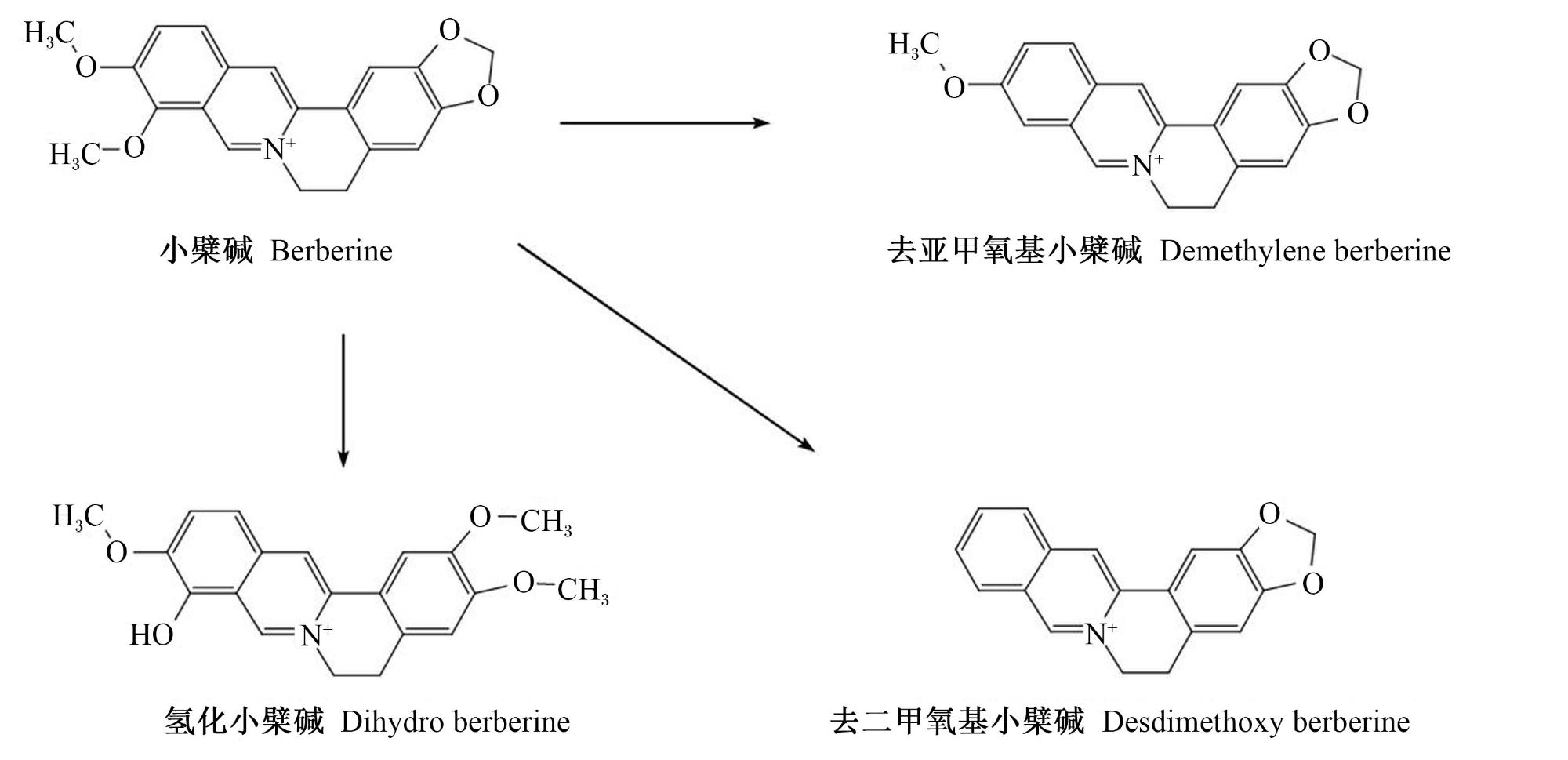
小檗碱口服后生物利用度较低,与肠道菌群的生物转化作用密切相关。如图2所示,肠道菌群可通过还原反应将小檗碱转化为氢化小檗碱等代谢产物[8,14],该过程能显著增强代谢产物的水溶性[15],使其更易透过肠道上皮屏障被吸收,进入体循环后又会重新氧化为原型小檗碱,最终通过“转化、吸收、复原型”的循环路径,显著地提升小檗碱的暴露量[16-17]。另外,代谢产物氢化小檗碱的极性较高,可以提高降血糖活性[7]。在高脂饮食诱导的肥胖小鼠模型中,去甲氧基小檗碱降低血清葡萄糖水平的效果优于小檗碱,此作用与其调节肝脏代谢基因表达和系统性胆汁酸水平相关[18]
图2 小檗碱的代谢产物

Fig.2 Metabolites of berberine[8,14]

1.2.2 黄连碱的肠道代谢

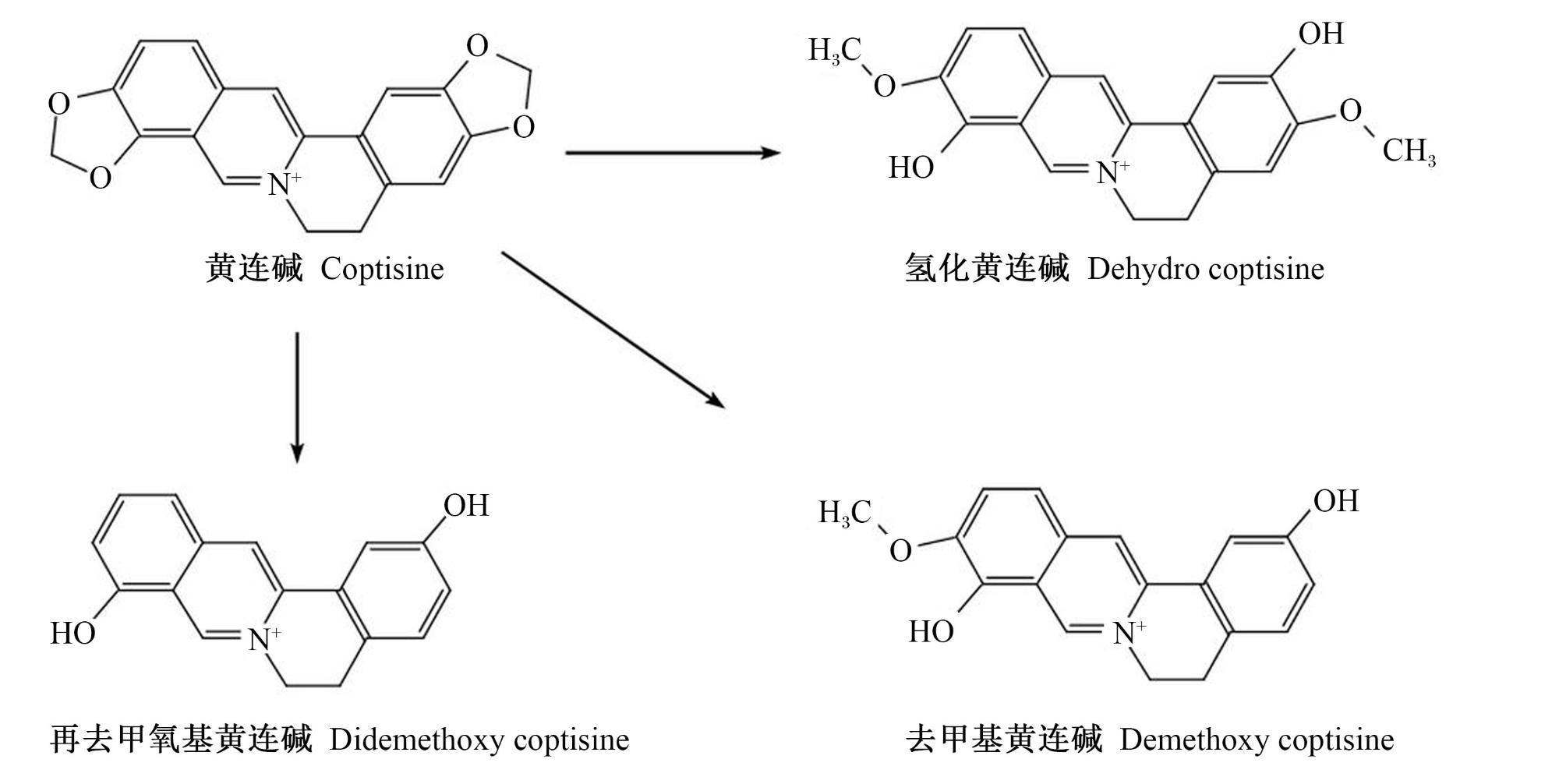
结合体外厌氧模拟系统,黄连碱的代谢途径如图3所示,黄连碱去氢还原生成氢化黄连碱、然后还原生成去甲氧基黄连碱、并进一步还原为再去甲氧基黄连碱[14]。黄连碱在口服吸收时生物利用度较低,但可通过肠道微生物代谢间接发挥作用[19]。黄连碱作为苦味受体的潜在激动剂,可能通过激活苦味受体来调节胃肠道平滑肌收缩,但在长期摄入时可能与消化功能障碍相关[20]
图3 黄连碱的代谢产物

Fig.3 Metabolites of coptisine[8,14]

1.2.3 巴马汀的肠道代谢

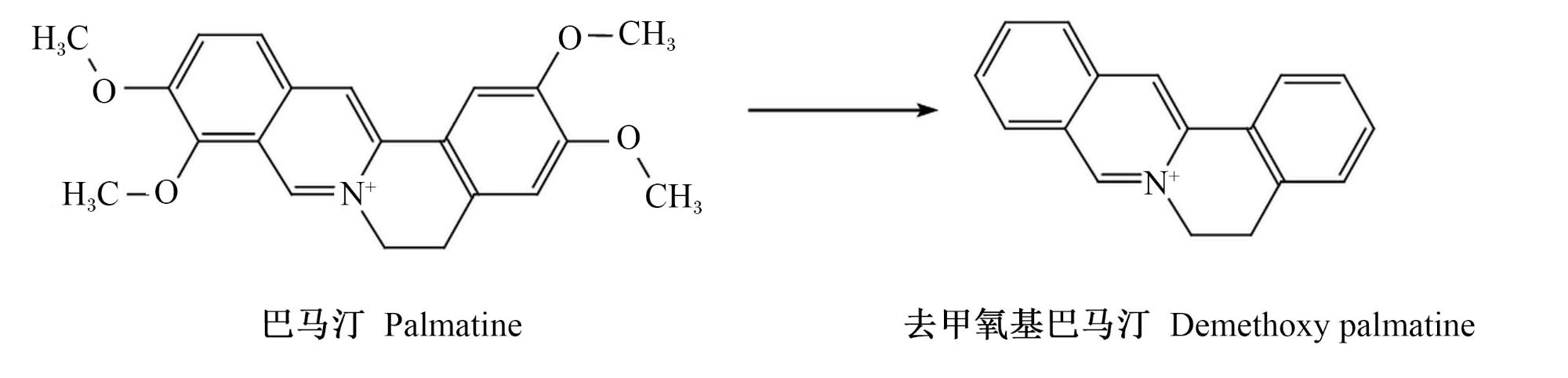
巴马汀的代谢如图4所示,在肠道中主要经历去甲基化,生成去甲氧基巴马汀等[8,14]。巴马汀通过调节磷脂酰肌醇3激酶(phosphatidylinositol-3-kinase,PI3K)/蛋白激酶B(protein kinase B, Akt)/哺乳动物雷帕霉素靶蛋白(mammalian target of rapamycin,mTOR)/缺氧诱导因子1通路来发挥神经保护作用,而这一过程中可能涉及代谢产物介导的微胶质细胞调控[21]
图4 巴马汀的代谢产物

Fig.4 Metabolites of palmatine[8]

1.2.4 药根碱的肠道代谢

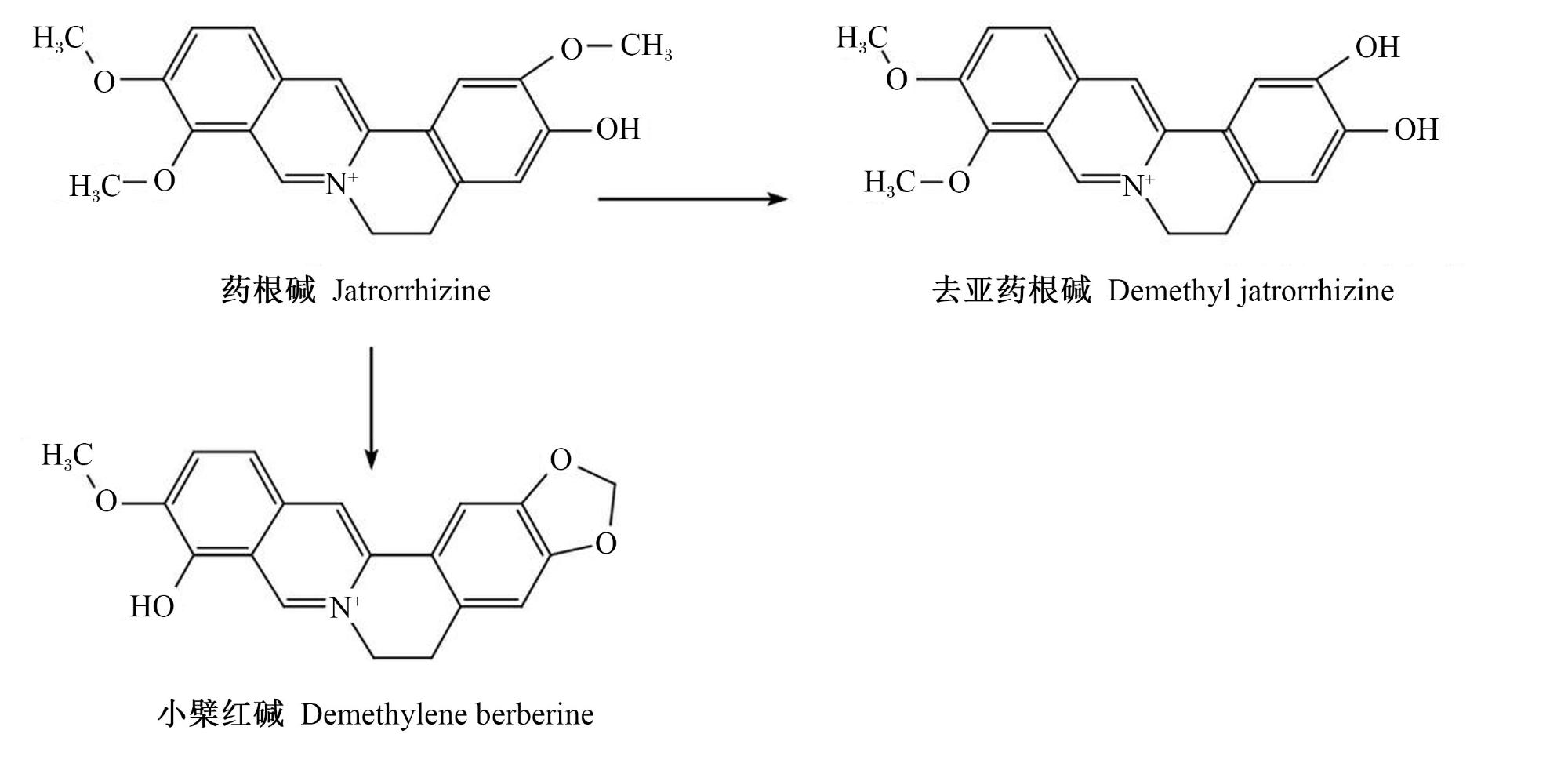
肠道菌群可能通过调控代谢酶如细胞色素P450(cytochrome P450,CYP450)和尿苷二磷酸葡萄糖醛酸转移酶的活性,影响药根碱的代谢;药根碱的代谢以去甲基化、氧化和还原反应为主,生成去亚药根碱、小檗红碱等代谢产物(图5)[8,22]。这些代谢产物具有抗氧化活性,可保护细胞免受氧化应激损伤,有助于缓解慢性炎症性疾病[23]
图5 药根碱的代谢产物

Fig.5 Metabolites of jatrorrhizine[8,22]

1.2.5 表小檗碱的肠道代谢

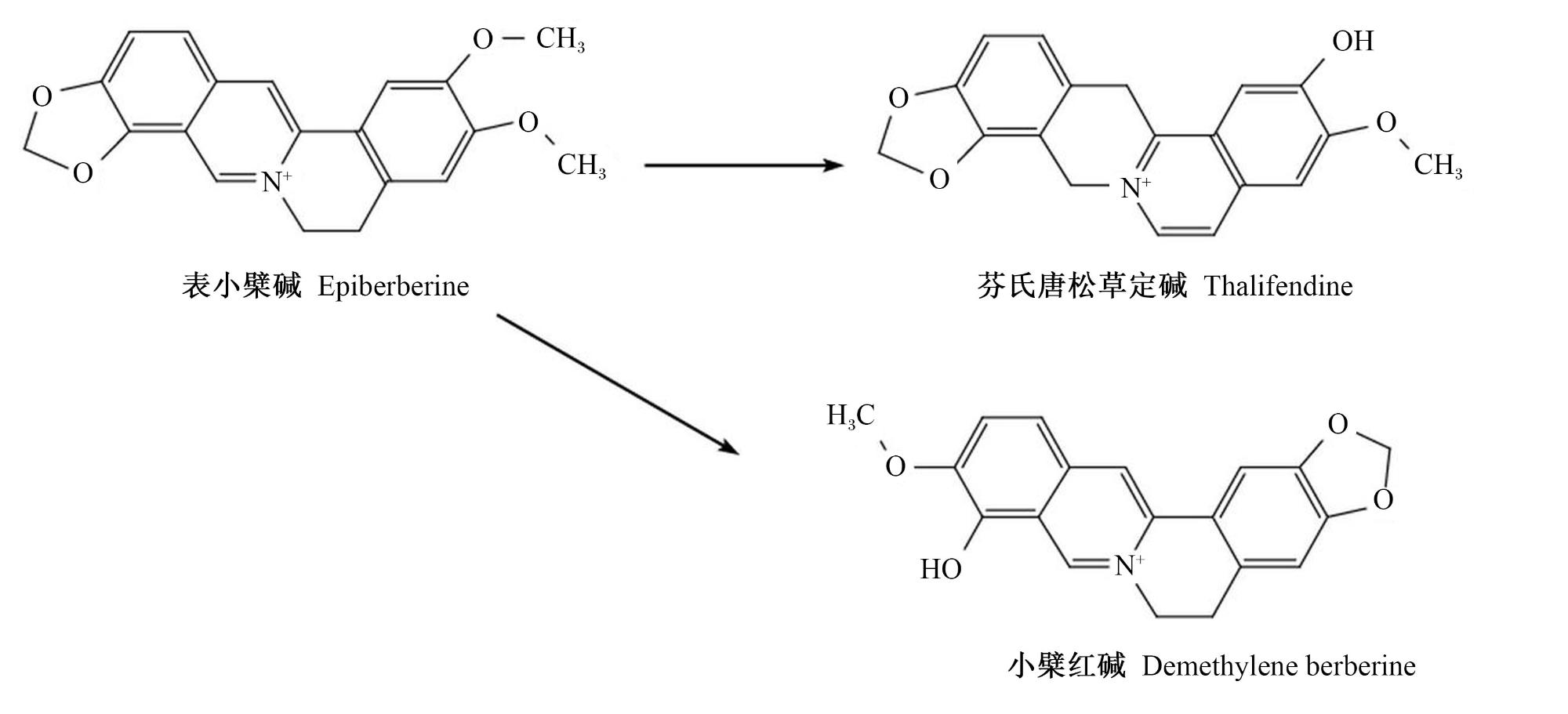
表小檗碱与小檗碱为同分异构体[24-25],在肠道菌群的作用下,表小檗碱通过去甲基化反应,生成类似小檗碱的代谢产物,以及芬氏唐松草定碱和小檗红碱等[26](图6)。表小檗碱的代谢产物与其母体化合物具有相似的药理活性,它们更易被肠道吸收,这可能与经结构修饰后其脂溶性增加有关[27-28]。现有研究表明,表小檗碱代谢产物的功能主要包括抗炎、抗肿瘤和代谢调控等,部分作用机制涉及对Akt、Fos、腺苷酸活化蛋白激酶(AMP-activated protein kinase,AMPK)等信号通路的调控[29-31]
图6 表小檗碱的代谢产物

Fig.6 Metabolites of epiberberine[8]

1.3 原小檗碱类生物碱的安全性分析

原小檗碱类生物碱在展现多种生物活性的同时,其安全性也受到广泛关注。为了进一步规范其在临床上的应用,Yi等[32]对小檗碱、黄连碱、巴马汀和表小檗碱开展了系统性的安全性评估试验,急性毒性试验结果表明,巴马汀的半致死量(1 533.68 mg/kg)最大,表小檗碱次之(1 360.00 mg/kg),小檗碱最小(737.57 mg/kg),说明小檗碱的毒性最强,小檗碱的半致死量(713.57 mg/kg)最小,巴马汀和表小檗碱的毒性较低;亚慢性毒性试验结果表明,对该类生物碱进行亚慢性饲喂处理后,大鼠的临床体征、体重变化、脏器重量、尿液检测结果、血液学数据,以及解剖观察和组织病理学检查结果均未观察到任何异常变化,初步证明了其在试验条件下的长期安全性。在生物利用度方面,不同成分差异显著,其中表小檗碱的表现尤为突出,其在大鼠上的口服绝对生物利用度可达到14.16%[27];与之形成鲜明对比的是,同为核心活性成分的小檗碱,其在大鼠上的口服绝对生物利用度尚不足1%(0.36%)[33]。为进一步探究表小檗碱在体内的代谢残留,研究人员开展了大鼠代谢动力学研究,结果显示,在采集的血液、粪便、尿液及胆汁等生物样本中,均未检测到表小檗碱的存在[34]。另一项研究认为,这一现象与其高生物利用度特性并不矛盾,可能源于表小檗碱在体内被快速吸收并迅速代谢转化,致使原型药物难以在生物样本中留存[35]。黄连在医学领域的应用实践,连同对原小檗碱类生物碱的系统性安全评估及生物利用度比较研究,共同为拓展该类成分的临床应用以及开发为饲料添加剂提供了坚实的科学依据。

2 黄连原小檗碱类生物碱的生物学功能

2.1 抗氧化

在正常生理状态下,动物机体维持着氧化与抗氧化反应的动态平衡。当受到辐射、饮食、压力等外界因素影响时,该平衡被打破,体内自由基过量积累,抗氧化防御系统相对不足,导致机体发生氧化应激反应,进而引起炎症、癌变等疾病的发生。小檗碱是黄连中含量最多且应用最广泛的生物碱,可直接中和活性氧(reactive oxygen species,ROS),减少脂质过氧化和DNA氧化损伤,并且还能通过上调超氧化物歧化酶、谷胱甘肽过氧化物酶和过氧化氢酶的活性,增强细胞对氧化应激的防御能力[36-37]。其抗氧化作用的机制与一些常见的信号通路有关,如AMPK和血红素氧合酶(heme oxygenase,HO-1)信号通路[38]。在秀丽隐杆线虫中的研究显示,低剂量的小檗碱可刺激ROS生成,触发p38丝裂原活化蛋白激酶(p38 mitogen-activated protein kinase,p38 MAPK)信号通路下游PMK-1(哺乳动物中对应p38 MAPK)和SKN-1转录因子[哺乳动物中对应核转录因子红系2相关因子2(nuclear factor-erythroid 2-related factor 2,Nrf2)]的激活,从而启动抗氧化基因表达[39]。此外,小檗碱还能有效缓解脂质积累造成的不良反应。研究表明,它可通过显著抑制过度凋亡与自噬,减轻氧化应激,从而预防高脂饮食诱导的斑马鱼肝脏损伤,其作用可能与精准调节细胞m6A RNA甲基化水平有关[40]。在肠道感染模型中,小檗碱通过激活p38 MAPK信号通路增强先天免疫应答,同时抑制炎症因子产生与氧化损伤[41-42]。其他黄连原小檗碱类生物碱也展现出积极的抗氧化作用。研究发现,黄连碱可通过调控PI3K/Akt信号通路,降低氧化应激并抑制线粒体途径的细胞凋亡[43];药根碱则能通过激活Nrf2及其下游HO-1通路,增强机体的抗氧化能力[44]。另有研究显示,巴马汀在小鼠模型中可通过抑制单胺氧化酶A活性,降低血浆亚硝酸盐水平,从而逆转氧化应激引起的血液生化指标异常,并发挥抗抑郁作用[45]

2.2 抗菌

在胃肠道疾病的治疗中,黄连的应用已有超过两千年的历史,其针对胃肠炎、胃溃疡等疾病的疗效在传统医学中早已得到广泛验证。现代医学研究进一步阐明,黄连可通过靶向抑制幽门螺杆菌脲酶活性,从源头上减轻该菌对胃肠黏膜的损伤[46-47]。小檗碱作为黄连的主要活性成分,具有广谱抗菌作用,对大肠杆菌、葡萄球菌、霍乱弧菌、志贺氏菌、沙门氏菌等多种常见病原微生物均表现出显著抑制效果[48]。虽然小檗碱的抗菌效力已得到确认,但其作用机制尚处于探索阶段,目前认为小檗碱可能通过干扰细菌细胞周期、影响核酸代谢、调节酶系统活性以及抑制细菌黏附等多种途径发挥抗菌作用[48]。对小檗碱精确作用靶点进行深入探究,将为系统阐释其抗菌机制提供关键依据。研究表明,黄连所含的不同生物碱对幽门螺杆菌的抑制活性与作用机制并非呈现统一的作用效果,而是存在明显差异。谈丽华[49]通过体外试验比较了黄连中5种主要原小檗碱类生物碱对幽门螺杆菌脲酶活性的抑制效果,其抑制强弱顺序为:表小檗碱>巴马汀>黄连碱>药根碱>小檗碱,其中表小檗碱是可逆的反竞争性脲酶抑制剂,主要作用于脲酶的巯基活性基团;而黄连碱为可逆的混合型脲酶抑制剂,同时作用于脲酶的镍离子(Ni2+)与巯基基团。体内外研究进一步研究揭示了这些生物碱的作用机制。Wu等[50]在小鼠体内试验中发现,表小檗碱可通过清除幽门螺杆菌减轻胃部炎症,其机制涉及抑制脲酶活性并下调尿素酶B亚基的表达。巴马汀则能在体内减轻幽门螺杆菌引起的胃黏膜组织损伤与上皮细胞形态改变,主要通过阻断重组蛋白酶活性域蛋白与表皮生长因子受体信号通路,从而抑制胃黏膜基质金属蛋白酶10依赖的炎症反应[51]。此外,巴马汀还可通过插入细菌DNA、抑制拓扑异构酶活性、干扰DNA与蛋白质合成、抑制细胞增殖、破坏线粒体结构与功能以及诱导细胞凋亡等多种途径发挥杀菌作用[52]

2.3 抗炎

氧化应激和炎症反应之间存在密切的关系。在氧化应激状态下,过量产生的ROS引起细胞损伤,增加细胞因子释放,从而激活更多炎性细胞,引发系统性炎症反应。而在炎症过程中,局部组织氧耗增加,进一步促使ROS在损伤部位积累,加剧组织损伤,最终推动慢性炎症的形成与发展。小檗碱可以降低小鼠海马区炎性因子白细胞介素-1β(interleukin-1β,IL-1β)、白细胞介素-6(interleukin-6,IL-6)和肿瘤坏死因子-α(tumor necrosis factor-α,TNF-α)的水平,抑制小胶质细胞活化,从而减轻小鼠慢性不可预知应激模型诱导的抑郁症状[47,53]。研究发现,黄连碱对炎症通路具有显著抑制作用,其主要通过阻断核因子-κB(nuclear factor-κB,NF-κB)、MAPK和PI3K/Akt信号通路,在细胞和动物层面发挥强效的抗炎作用[54]。其他黄连原小檗碱类生物碱也显示出明确的抗炎活性。罗煜等[55]研究发现,盐酸巴马汀通过抑制NF-κB/p38 MAPK信号通路关键蛋白的磷酸化,并调控NLRP3炎症小体活化,最终减少IL-1β和白细胞介素-18(interleukin-18,IL-18)等炎性因子的释放。Qiu等[56]则报道,盐酸药根碱在类风湿滑膜细胞中具有抗增殖与抗迁移作用。此外,药根碱能通过调节肠道屏障功能及相关代谢物的表达,有效缓解葡聚糖硫酸钠诱导的溃疡性结肠炎[57]

2.4 其他生物学功能

黄连原小檗碱类生物碱在代谢性疾病、免疫性疾病及肿瘤防治等领域均展现出多重有益效应。在改善机体代谢紊乱方面,小檗碱可通过缓解肝细胞内质网应激、调节肠道菌群等途径,改善由肝脏损伤引发的代谢异常。在脂质代谢调控中,黄连所含多种原小檗碱类生物碱(如小檗碱、表小檗碱等)能够抑制过氧化物酶体增殖物激活受体γ和CCAAT/增强子结合蛋白α基因的表达,从而阻断前脂肪细胞分化与脂质蓄积[58-59]。进一步研究发现,表小檗碱还可通过下调固醇调节元件结合转录因子1及其下游靶基因脂肪酸合成酶的表达,抑制Raf激酶、丝裂原活化蛋白激酶激酶、细胞外信号调节激酶、AMPKα和Akt信号通路的磷酸化,多途径协同抑制脂肪生成[31]。在免疫调节方面,黄连原小檗碱类生物碱通过抑制NF-κB[60]、Rho鸟苷三磷酸酶和Rho相关卷曲螺旋形成蛋白激酶信号通路[61],降低小鼠脏器损伤,改善其血管功能,同时表现出对系统性红斑狼疮的治疗潜力[59]。在抗癌与抗肿瘤方面,研究证实药根碱能够有效抑制大肠癌细胞的增殖与转移[62]。此外,表小檗碱可通过调控B细胞淋巴瘤/白血病-2(Bcl-2)、p53等基因的表达,并经由线粒体凋亡途径影响细胞色素C的释放及半胱氨酸-天冬氨酸蛋白酶的活化,从而诱导肿瘤细胞凋亡[35]

3 黄连原小檗碱类生物碱在畜禽生产中的应用

3.1 黄连原小檗碱类生物碱对畜禽生产性能的影响

在黄羽肉鸡养殖相关研究中,饲粮中添加小檗碱对肉鸡生长性能有显著的提升效果,具体表现为提高饲料转化效率、提高盲肠中有益细菌的丰度,并在增强肉鸡养殖经济效益方面具备实际应用价值[63]。另有研究证实,小檗碱作为饲料添加剂能够针对性地调节肉鸡胃肠道微生物群落结构,通过改善肠道健康间接提升家禽整体生产性能[3]。此外,在肉鸡球虫病防控试验中,小檗碱对多种艾美球虫感染均显示出良好的控制效果,可降低由病害导致的经济损失,为家禽健康养殖与生产性能提升开拓了新的路径[64-66]。小檗碱在多种畜禽养殖中展现出广泛的积极作用。对于断奶仔猪,小檗碱可提高日增重、降低腹泻率并增强肠道屏障功能,同时具有抗猪繁殖与呼吸综合征病毒的作用[67]。在肉兔中,它能够调节脂质代谢、改善内分泌及抗氧化功能,进而提升屠宰性能与肉品质[68]。在家禽方面,小檗碱可促进生长、增强抗氧化与抗炎能力,并参与脂肪代谢的调控[69-70]。在反刍动物研究中,黄连原小檗碱类生物碱也表现出重要功能。其中,表小檗碱对瘤胃微生物脲酶活性具有显著抑制作用,可作为高效脲酶抑制剂;进一步的机制研究表明,该类生物碱可通过靶向作用于脲酶辅助蛋白UreG的活性来抑制脲酶功能,从而优化瘤胃健康状态,提高反刍动物对尿素的利用效率[71]

3.2 黄连原小檗碱类生物碱对畜禽免疫性能和抗炎反应的影响

研究发现,小檗碱、黄连碱和巴马汀的作用并非完全一致,根据动物模型不同,其应用价值也有很大差异。对于猪的疾病防治,黄连原小檗碱类生物碱可显著抑制因猪传染性胃肠炎病毒感染引发的炎症反应,其主要通过降低猪睾丸细胞中TNF-αIL-1β等促炎因子的mRNA表达水平,从而减轻病毒对于细胞的损伤[72]。在反刍动物领域的研究进一步揭示了黄连原小檗碱类生物碱的多重作用。例如,黄连碱可改善萨能奶山羊围产期的代谢应激,表现为降低非酯化脂肪酸水平、增强抗氧化能力与免疫功能[73];巴马汀则能通过抑制含TIR结构域的衔接分子(TRIF)依赖的NF-κB信号通路,减轻脂多糖诱导的山羊子宫内膜炎症,促进子宫修复并提高繁殖性能[74]。此外,小檗碱在小鼠模型中被证实可逆转犊牛源大肠杆菌感染所引起的过度炎症反应[75]。这些研究凸显了黄连原小檗碱类生物碱在畜禽疾病防控、炎症调节及生产性能优化中的多靶点干预潜力。

3.3 黄连原小檗碱类生物碱对畜禽肠道微生物的影响

小檗碱及相关生物碱的作用机制在不同动物种类间存在显著差异。在家禽生产中,较高剂量的小檗碱虽对肉鸡生长与健康有多方面积极影响,但也可能因剂量过高而对肠道菌群产生非选择性抑制,干扰微生态平衡,具体表现为肠杆菌属数量增加[76],该结果与部分研究中观察到的肠道健康改善作用[2,77]存在一定矛盾。另有研究表明,小檗碱可通过调节Toll样受体4、髓样分化因子88、NF-κB和Nrf2等信号通路,促进有益菌、抑制有害菌增殖,从而优化菌群结构[78]。在反刍动物中,表小檗碱对瘤胃脲酶辅助蛋白UreG表现出显著的抑制作用,其机制涉及阻断镍离子结合与改变UreG的二级结构,从而有效抑制脲酶活性,降低瘤胃内氨释放和尿素降解速率[77]。这些发现为开发高效、安全的脲酶抑制剂提供了重要的理论依据。在其他动物模型中,小檗碱同样显示出多方面的积极作用。例如,在鱼类中,它能改善代谢与肠道健康,并有效缓解铜离子诱导的肠道氧化应激、炎症及微生物群落紊乱[79]。从现有研究来看,黄连原小檗碱类生物碱对畜禽肠道微生物的影响并非绝对有益或有害,其作用方向与程度显著依赖于生物碱种类、添加剂量以及动物种类。例如,表小檗碱有助于维持反刍动物瘤胃微生物稳态;适宜剂量的小檗碱、巴马汀对家禽肠道菌群平衡有积极调控作用,但是高剂量的小檗碱则可能对肉鸡肠道微生态造成影响。因此,在实际应用中必须结合养殖对象来精准地匹配生物碱种类与剂量,既充分发挥其对肠道微生物的优化作用,又规避可能的干扰风险。

4 小结与展望

本文综述了黄连原小檗碱类生物碱的结构特性、代谢途径及其在畜禽养殖中的多重生物学功能,阐明了该类成分在改善动物生产性能、调节肠道微生物、抑制瘤胃脲酶活性以及抗炎与抗氧化等方面的重要应用潜力。然而,其规模化应用仍受制于生物利用度低、多组分协同机制不清、长期安全性评价不足等关键瓶颈。未来研究需深入解析其多组学机制,开发高效递送系统,并建立系统化的安全性评价体系,以推动该类生物碱作为绿色饲料添加剂的科学应用与产业化进程。
[1]
李会伟, 郭盛, 王强雄, 等. 中药资源植物提取物饲料添加剂产业发展现状分析及其展望[J]. 中草药, 2023, 54(12):3745-3758.

LI H W, GUO S, WANG Q X, et al. Current situation analysis and prospect of feed additive industry with plant extract derived from traditional Chinese medicine[J]. Chinese Traditional and Herbal Drugs, 2023, 54(12):3745-3758. (in Chinese)

[2]
ZHU C, LE M F, HE Z T, et al. Dietary berberine supplementation improves growth performance and alleviates gut injury in weaned piglets by modulating ileal microbiota and metabolites[J]. Food & Function, 2023, 14(9):4143-4162.

[3]
DEHAU T, CHERLET M, CROUBELS S, et al. A high dose of dietary berberine improves gut wall morphology,despite an expansion of Enterobacteriaceae and a reduction in beneficial microbiota in broiler chickens[J]. mSystems, 2023, 8(1):e0123922.

DOI

[4]
GONG Y L, LU Q S, LIU Y L, et al. Dietary berberine alleviates high carbohydrate diet-induced intestinal damages and improves lipid metabolism in largemouth bass (Micropterus salmoides)[J]. Frontiers in Nutrition, 2022, 9:1010859.

DOI

[5]
YANG F Q, ZHANG T Y, ZHANG R, et al. Application of analytical and preparative high-speed counter-current chromatography for separation of alkaloids from Coptis chinensis Franch[J]. Journal of Chromatography A, 1998, 829(1/2):137-141.

DOI

[6]
付琳, 付强, 李冀, 等. 黄连化学成分及药理作用研究进展[J]. 中医药学报, 2021, 49(2):87-92.

FU L, FU Q, LI J, et al. Research progress on chemical components and pharmacological effects of Coptis chinensis Franch.[J]. Acta Chinese Medicine and Pharmacology, 2021, 49(2):87-92. (in Chinese)

[7]
曹阳, 刘雯清, 朴光春, 等. 原小檗碱类化合物的药理作用研究进展[J]. 现代药物与临床, 2013, 28(6):1012-1017.

CAO Y, LIU W Q, PU G C, et al. Advances in studies on pharmacological actions of proberberine[J]. Drugs & Clinic, 2013, 28(6):1012-1017. (in Chinese)

[8]
LI Y, WANG H J, SI N, et al. Metabolic profiling analysis of berberine,palmatine,jatrorrhizine,coptisine and epiberberine in zebrafish by ultra-high performance liquid chromatography coupled with LTQ orbitrap mass spectrometer[J]. Xenobiotica, 2015, 45(4):302-311.

DOI

[9]
FAN D L, XIAO X H, MA X J. Calorimetric study of the effect of protoberberine alkaloids in Coptis chinensis Franch on Staphylococcus aureus growth[J]. Thermochimica Acta, 2008, 480(1/2):49-52.

DOI

[10]
徐曦, 陈双扣, 王瑜, 等. 基于网络药理学、分子对接及分子动力学研究巴马汀抗菌作用机制[J]. 中国新药与临床杂志, 2024, 43(8):627-635.

XU X, CHEN S K, WANG Y, et al. Exploration of antibacterial mechanism of palmatine based on network pharmacology,molecular docking,and molecular dynamics[J]. Chinese Journal of New Drugs and Clinical Remedies, 2024, 43(8):627-635. (in Chinese)

[11]
HONORIO P, SAINIMNUAN S, HANNONGBUA S, et al. Binding interaction of protoberberine alkaloids against acetylcholinesterase (AChE) using molecular dynamics simulations and QM/MM calculations[J]. Chemico-Biological Interactions, 2021, 344:109523.

DOI

[12]
鄢丹, 肖小河, 金城, 等. 微量量热法研究黄连中小檗碱类生物碱对金黄色葡萄球菌生长代谢的影响[J]. 中国科学(B辑:化学), 2008, 38(6):487-491.

YAN D, XIAO X H, JIN C, et al. Study on the effects of berberine alkaloids from Coptis chinensis Franch. on the growth and metabolism of Staphylococcus aureus by microcalorimetry[J]. Science in China (Series B:Chemistry), 2008, 38(6):487-491. (in Chinese)

[13]
FENG X T, LI W J, WANG X L, et al. Effect of magnetization on antibacterial,lipid-lowering and antioxidant activities of isoquinoline alkaloids[J]. Scientific Reports, 2025, 15(1):3349.

DOI

[14]
徐君. 黄芩-黄连药对与肠道菌群的相互作用研究[D]. 硕士学位论文. 南京: 南京中医药大学, 2014.

XU J. Study on the interaction between seutellaria-coptis herb couple and intestinal bacteria[D]. Master’s Thesis. Nanjing: Nanjing University of Chinese Medicine, 2014. (in Chinese)

[15]
崔祥, 陶金华, 江曙, 等. 小檗碱与肠道菌群的相互作用研究[J]. 中国微生态学杂志, 2017, 29(12):1373-1377.

CUI X, TAO J H, JIANG S, et al. The interaction between berberine and human intestinal bacteria[J]. Chinese Journal of Microecology, 2017, 29(12):1373-1377. (in Chinese)

[16]
WANG Y, TONG Q, MA S R, et al. Oral berberine improves brain dopa/dopamine levels to ameliorate Parkinson’s disease by regulating gut microbiota[J]. Signal Transduction and Targeted Therapy, 2021, 6(1):77.

DOI

[17]
MA S R, TONG Q, LIN Y, et al. Berberine treats atherosclerosis via a vitamine-like effect down-regulating choline-TMA-TMAO production pathway in gut microbiota[J]. Signal Transduction and Targeted Therapy, 2022, 7(1):207.

DOI

[18]
SUN R B, KONG B, YANG N, et al. The hypoglycemic effect of berberine and berberrubine involves modulation of intestinal farnesoid X receptor signaling pathway and inhibition of hepatic gluconeogenesis[J]. Drug Metabolism and Disposition, 2021, 49(3):276-286.

DOI PMID

[19]
WU W B, SUN Y L, NIU S Q, et al. Integrated microbiome and metabolomic to explore the mechanism of coptisine in alleviating ulcerative colitis[J]. Phytotherapy Research, 2025, 39(2):676-697.

DOI PMID

[20]
WU Z Z B, YANG W, WU T Y, et al. Long term Coptidis rhizoma intake induce gastrointestinal emptying inhibition and colon barrier weaken via bitter taste receptors activation in mice[J]. Phytomedicine, 2025, 136:156292.

DOI

[21]
WANG N J, WEI X T, ZHOU P, et al. Palmatine mitigates ischemic brain injury by regulating microglial polarization and sphingolipid metabolism[J]. International Immunopharmacology, 2025, 165:115444.

DOI

[22]
ZHANG Y, WU W H, HAN F M, et al. LC/MS/MS for identification of in vivo and in vitro metabolites of jatrorrhizine[J]. Biomedical Chromatography, 2008, 22(12):1360-1367.

DOI

[23]
ZHAO Y X, LIU P, LUAN H F, et al. Demethyleneberberine alleviated the inflammatory response by targeting MD-2 to inhibit the TLR4 signaling[J]. Frontiers in Immunology, 2023, 14:1130404.

DOI

[24]
苗培培, 赵园园, 苗青, 等. 表小檗碱和小檗碱与牛血清白蛋白相互作用的比较分析[J]. 中国新药杂志, 2016, 25(6):705-711.

MIAO P P, ZHAO Y Y, MIAO Q, et al. Comparison of the interactions of epiberberine and berberine with bovine serum albumin[J]. Chinese Journal of New Drugs, 2016, 25(6):705-711. (in Chinese)

[25]
崔学军. 黄连及其有效成分的药理研究进展[J]. 中国药师, 2006, 9(5):469-470.

CUI X J. Research progress on pharmacology of Coptis chinensis and its active components[J]. China Pharmacist, 2006, 9(5):469-470. (in Chinese)

[26]
CHEN H X, HUANG J L, LI J, et al. Structural elucidation of in vivo and in vitro metabolites of epiberberine in rat and its liver and intestines by liquid chromatography-tandem mass spectrometry[J]. Analytical Letters, 2010, 43(16):2505-2517.

DOI

[27]
CHEN N, YANG X Y, GUO C E, et al. The oral bioavailability,excretion and cytochrome P450 inhibition properties of epiberberine:an in vivo and in vitro evaluation[J]. Drug Design,Development and Therapy, 2018, 12:57-65.

DOI

[28]
FENG R, SHOU J W, ZHAO Z X, et al. Transforming berberine into its intestine-absorbable form by the gut microbiota[J]. Scientific Reports, 2015, 5(1):12155.

DOI

[29]
YANG S, CAO S J, LI C Y, et al. Berberrubine,a main metabolite of berberine,alleviates non-alcoholic fatty liver disease via modulating glucose and lipid metabolism and restoring gut microbiota[J]. Frontiers in Pharmacology, 2022, 13:913378.

DOI

[30]
LI M M, YANG J Y, LI J, et al. Epiberberine induced p53/p21-dependent G2/M cell cycle arrest and cell apoptosis in gastric cancer cells by activating γ-aminobutyric acid receptor-β3[J]. Phytomedicine, 2024, 123:155198.

DOI

[31]
CHOI J S, KIM J H, ALI M Y, et al. Anti-adipogenic effect of epiberberine is mediated by regulation of the Raf/MEK1/2/ERK1/2 and AMPKα/Akt pathways[J]. Archives of Pharmacal Research, 2015, 38(12):2153-2162.

DOI PMID

[32]
YI J, YE X L, WANG D Z, et al. Safety evaluation of main alkaloids from Rhizoma coptidis[J]. Journal of Ethnopharmacology, 2013, 145(1):303-310.

DOI

[33]
LIU Y T, HAO H P, XIE H G, et al. Extensive intestinal first-pass elimination and predominant hepatic distribution of berberine explain its low plasma levels in rats[J]. Drug Metabolism and Disposition, 2010, 38(10):1779-1784.

DOI

[34]
FENG X C, WANG K, HU X T, et al. Systematic screening and characterization of absorbed constituents and in vivo metabolites in rats after oral administration of Rhizoma coptidis using UPLC-Q-TOF/MS[J]. Biomedical Chromatography, 2020, 34(10):e4919.

DOI

[35]
LIU L Q, LI J J, HE Y. Multifunctional epiberberine mediates multi-therapeutic effects[J]. Fitoterapia, 2020, 147:104771.

DOI

[36]
MIŁEK M, DŻUGAN M, PIEŃKOWSKA N, et al. Ornamental barberry twigs as an underexploited source of berberine-rich extracts-preliminary research[J]. Current Issues in Molecular Biology, 2024, 46(11):13193-13208.

DOI PMID

[37]
JIA R, HOU Y R, ZHANG L Q, et al. Effects of berberine on lipid metabolism,antioxidant status,and immune response in liver of tilapia (Oreochromis niloticus) under a high-fat diet feeding[J]. Antioxidants, 2024, 13(5):548.

DOI

[38]
LI Z, GENG Y N, JIANG J D, et al. Antioxidant and anti-inflammatory activities of berberine in the treatment of diabetes mellitus[J]. Evidence-Based Complementary and Alternative Medicine, 2014, 2014(1):289264.

DOI

[39]
XIAO Y, ZHANG L, ZHOU H L, et al. Berberine extends healthspan and delays neurodegenerative diseases in Caenorhabditis elegans through ROS-dependent PMK-1/SKN-1 activation[J]. Archives of Gerontology and Geriatrics, 2025, 128:105644.

DOI

[40]
ZHANG M J, LIU J, YU C B, et al. Berberine regulation of cellular oxidative stress,apoptosis and autophagy by modulation of m6A mRNA methylation through targeting the Camk1db/ERK pathway in zebrafish-hepatocytes[J]. Antioxidants, 2022, 11(12):2370.

DOI

[41]
TIAN E J, SHARMA G, DAI C S. Neuroprotective properties of berberine:molecular mechanisms and clinical implications[J]. Antioxidants, 2023, 12(10):1883.

DOI

[42]
XIAO Y, CUI Y W, ZHANG Y, et al. Berberine hydrochloride enhances innate immunity to protect against pathogen infection via p38 MAPK pathway[J]. Frontiers in Immunology, 2025, 16:1536143.

DOI

[43]
LIU Y L, GONG S T, LI K J, et al. Coptisine protects against hyperuricemic nephropathy through alleviating inflammation,oxidative stress and mitochondrial apoptosis via PI3K/Akt signaling pathway[J]. Biomedicine & Pharmacotherapy, 2022, 156:113941.

DOI

[44]
牛圣奇, 李星, 李浩田, 等. 药根碱通过调节细胞凋亡和激活Nrf2/HO-1信号通路减轻葡聚糖硫酸钠诱导的小鼠溃疡性结肠炎黏膜损伤[J]. 中草药, 2024, 55(19):6577-6587.

NIU S Q, LI X, LI H T, et al. Jatrorrhizine attenuate dextran sulfate sodium-induced mucosal damage in mice with ulcerative colitis by regulating apoptosis and activating Nrf2/HO-1 signaling pathway[J]. Chinese Traditional and Herbal Drugs, 2024, 55(19):6577-6587. (in Chinese)

[45]
DHINGRA D, BHANKHER A. Behavioral and biochemical evidences for antidepressant-like activity of palmatine in mice subjected to chronic unpredictable mild stress[J]. Pharmacological Reports, 2014, 66(1):1-9.

DOI PMID

[46]
LI C L, XIE J H, CHEN X Y, et al. Comparison of Helicobacter pylori urease inhibition by Rhizoma coptidis,cortex phellodendri and berberine:mechanisms of interaction with the sulfhydryl group[J]. Planta Medica, 2016, 82(4):305-311.

DOI

[47]
QIN Z S, SHI D D, LI W Q, et al. Berberine ameliorates depression-like behaviors in mice via inhibiting NLRP3 inflammasome-mediated neuroinflammation and preventing neuroplasticity disruption[J]. Journal of Neuroinflammation, 2023, 20(1):54.

DOI PMID

[48]
CUI Y L, ZHOU Q Y, JIN M, et al. Research progress on pharmacological effects and bioavailability of berberine[J]. Naunyn-Schmiedeberg’s Archives of Pharmacology, 2024, 397(11):8485-8514.

DOI

[49]
谈丽华. 黄连中黄连碱及表小檗碱抗幽门螺杆菌作用机制研究[D]. 硕士学位论文. 广州: 广州中医药大学, 2019.

TAN L H. Study on the mechanism of action of coptisine and epiberberine from Coptis chinensis Franch. against Helicobacter pylori[D]. Master’s Thesis. Guangzhou: Guangzhou University of Chinese Medicine, 2019. (in Chinese)

[50]
WU H M, XIE X R, TANG Q, et al. Epiberberine inhibits Helicobacter pylori and reduces host apoptosis and inflammatory damage by down-regulating urease expression[J]. Journal of Ethnopharmacology, 2024, 318(Pt B):117046.

[51]
CHEN X, WANG R L, BAO C M, et al. Palmatine ameliorates Helicobacter pylori-induced chronic atrophic gastritis by inhibiting MMP-10 through ADAM17/EGFR[J]. European Journal of Pharmacology, 2020, 882:173267.

DOI

[52]
THAKUR P, CHAWLA R, GOEL R, et al. Augmenting the potency of third-line antibiotics with Berberis aristata:in vitro synergistic activity against carbapenem-resistant Escherichia coli[J]. Journal of Global Antimicrobial Resistance, 2016, 6:10-16.

DOI

[53]
LIU Y M, NIU L, WANG L L, et al. Berberine attenuates depressive-like behaviors by suppressing neuro-inflammation in stressed mice[J]. Brain Research Bulletin, 2017, 134:220-227.

DOI

[54]
WU J S, ZHANG H, HU B Y, et al. Coptisine from Coptis chinensis inhibits production of inflammatory mediators in lipopolysaccharide-stimulated RAW 264.7 murine macrophage cells[J]. European Journal of Pharmacology, 2016, 780:106-114.

DOI

[55]
罗煜, 吴嘉思, 朱正文, 等. 盐酸巴马汀抑制NF-κB/p38 MAPK信号通路及NLRP3炎症小体抗炎机制研究[J]. 中药新药与临床药理, 2020, 31(7):762-768.

LUO Y, WU J S, ZHU Z W, et al. Anti-inflammatory effect of palmatine hydrochloride and its mechanism in regulation of NF-κB/p38 MAPK signaling pathway and NLRP3 inflammasome[J]. Traditional Chinese Drug Research & Clinical Pharmacology, 2020, 31(7):762-768. (in Chinese)

[56]
QIU H W, SUN S N, MA X M, et al. Jatrorrhizine hydrochloride suppresses proliferation,migration,and secretion of synoviocytes in vitro and ameliorates rat models of rheumatoid arthritis in vivo[J]. International Journal of Molecular Sciences, 2018, 19(5):1514.

DOI

[57]
NIU S Q, JING M Y, WEN J X, et al. Jatrorrhizine alleviates DSS-induced ulcerative colitis by regulating the intestinal barrier function and inhibiting TLR4/MYD88/NF-κB signaling pathway[J]. Evidence-Based Complementary and Alternative Medicine, 2022, 2022(1):3498310.

[58]
CHOI J S, KIM J H, ALI M Y, et al. Coptis chinensis alkaloids exert anti-adipogenic activity on 3T3-L1 adipocytes by downregulating C/EBP-α and PPAR-γ[J]. Fitoterapia, 2014, 98:199-208.

DOI

[59]
YAN Y, ZHANG Z H, CHEN Y C, et al. Coptisine alleviates pristane-induced lupus-like disease and associated kidney and cardiovascular complications in mice[J]. Frontiers in Pharmacology, 2020, 11:929.

DOI PMID

[60]
ZHANG S C, XU P Y, ZHU Z W, et al. Acetylation of p65Lys310 by p300 in macrophages mediates anti-inflammatory property of berberine[J]. Redox Biology, 2023, 62:102704.

DOI

[61]
LIU J M, XU H M, ZHANG L, et al. Chronoeffects of the herbal medicines Puerariae radix and Coptidis rhizoma in mice:a potential role of REV-ERBα[J]. Frontiers in Pharmacology, 2021, 12:707844.

DOI

[62]
WANG P, GAO X Y, YANG S Q, et al. Jatrorrhizine inhibits colorectal carcinoma proliferation and metastasis through Wnt/β-catenin signaling pathway and epithelial-mesenchymal transition[J]. Drug Design,Development and Therapy, 2019, 13:2235-2247.

DOI

[63]
ZHU C, HUANG K Y, BAI Y S, et al. Dietary supplementation with berberine improves growth performance and modulates the composition and function of cecal microbiota in yellow-feathered broilers[J]. Poultry Science, 2021, 100(2):1034-1048.

DOI PMID

[64]
NGUYEN B T, FLORES R A, CAMMAYO P L T, et al. Anticoccidial activity of berberine against Eimeria-infected chickens[J]. The Korean Journal of Parasitology, 2021, 59(4):403-408.

DOI

[65]
MALIK T A, KAMILI A N, CHISHTI M Z, et al. In vivo anticoccidial activity of berberine[18,5,6-dihydro-9,10-dimethoxybenzo(g)-1,3-benzodioxolo(5,6-a)quinolizinium]-an isoquinoline alkaloid present in the root bark of Berberis lycium[J]. Phytomedicine, 2014, 21(5):663-669.

DOI

[66]
ZHU Q, SUN J, PENG M, et al. Effect of berberine on oxidative stress caused by Eimeria tenella in chicken[J]. Indian Journal of Animal Health, 2019, 58(2):175-186.

DOI

[67]
袁书林, 刘明, 王岩, 等. 小檗碱对断奶仔猪生长性能、腹泻、抗氧化指标和肠道生态的影响[J]. 饲料研究, 2022, 45(23):32-36.

YUAN S L, LIU M, WANG Y, et al. Effect of berberine on growth performance,diarrhea,antioxidant index and intestinal microbiota of weaned piglets[J]. Feed Research, 2022, 45(23):32-36. (in Chinese)

[68]
汪水平, 王文娟, 彭希豪, 等. 盐酸小檗碱对肉兔脂质代谢、内分泌及抗氧化功能的影响[J]. 畜牧兽医学报, 2013, 44(5):745-753.

WANG S P, WANG W J, PENG X H, et al. Effect of berberine hydrochloride on lipid metabolism,endocrine and antioxidan function of meat rabbit[J]. Acta Veterinaria et Zootechnica Sinica, 2013, 44(5):745-753. (in Chinese)

[69]
MALEKINEZHAD P, ELLESTAD L E, AFZALI N, et al. Evaluation of berberine efficacy in reducing the effects of aflatoxin B1 and ochratoxin A added to male broiler rations[J]. Poultry Science, 2021, 100(2):797-809.

DOI

[70]
袁书林, 刘明, 谢周松, 等. 小檗碱在家禽上的研究进展[J]. 中国饲料, 2023(9):58-62.

YUAN S L, LIU M, XIE Z S, et al. Research advances of berberine in poultry[J]. China Feed, 2023(9):58-62. (in Chinese)

[71]
ZHANG X Y, XIONG Z B, HE Y, et al. Epiberberine:a potential rumen microbial urease inhibitor to reduce ammonia release screened by targeting UreG[J]. Applied Microbiology and Biotechnology, 2024, 108(1):289.

DOI

[72]
唐红梅, 朱买勋, 邓小龙, 等. 黄连生物碱对TGEV诱导的ST细胞炎症反应的调节作用[J]. 湖南农业大学学报(自然科学版), 2024, 50(1):58-62.

TANG H M, ZHU M X, DENG X L, et al. The inflammatory response regulating role of alkaloids of Coptis chinensis in swine testis cells induced by TGEV[J]. Journal of Hunan Agricultural University (Natural Sciences Edition), 2024, 50(1):58-62. (in Chinese)

[73]
GHAVIPANJE N, FATHI NASRI M H, FARHANGFAR S H, et al. Pre- and post-partum berberine supplementation in dairy goats as a novel strategy to mitigate oxidative stress and inflammation[J]. Frontiers in Veterinary Science, 2021, 8:743455.

DOI

[74]
YAN B Q, WANG D S, DONG S W, et al. Palmatine inhibits TRIF-dependent NF-κB pathway against inflammation induced by LPS in goat endometrial epithelial cells[J]. International Immunopharmacology, 2017, 45:194-200.

DOI PMID

[75]
宋晨, 周伟光, 郭文瑞, 等. 小檗碱对小鼠感染犊牛源生物被膜阳性、多重耐药大肠杆菌的体内抑菌作用[J]. 中国饲料, 2023(7):21-26.

SONG C, ZHOU W G, GUO W R, et al. Inhibitory effect of berberine on mouse infected calf derived biofilm positive and multi drug resistant Escherichia coli in vivo[J]. China Feed, 2023(7):21-26. (in Chinese)

[76]
XIONG H, MING J, LI Y, et al. Berberine regulates gut microbiota homeostasis in different animal models[J]. Food Science and Technology, 2020, 45(3):333-340.

[77]
FU Y S, WANG Y L, WANG X G, et al. Responses of human gut microbiota abundance and amino acid metabolism in vitro to berberine[J]. Food & Function, 2022, 13(11):6329-6337.

[78]
WANG Y, ZHANG Z T, DU M, et al. Berberine alleviates ETEC-induced intestinal inflammation and oxidative stress damage by optimizing intestinal microbial composition in a weaned piglet model[J]. Frontiers in Immunology, 2024, 15:1460127.

DOI

[79]
WANG L, WANG C Y, HUANG C C, et al. Dietary berberine against intestinal oxidative stress,inflammation response,and microbiota disturbance caused by chronic copper exposure in freshwater grouper (Acrossocheilus fasciatus)[J]. Fish & Shellfish Immunology, 2023, 139:108910.

Outlines

/