REVIEW

Research Progress on Resistin Regulating Animal Feeding and Energy Metabolism

  • TANG Ni , 1, 2 ,
  • LI Yingzi 2 ,
  • ZHOU Bo 1 ,
  • LI Zhiqiong , 2, *
Expand
  • 1 Fisheries Institute, Sichuan Academy of Agricultural Sciences (Sichuan Fisheries Research Institute), Chengdu 611700, China
  • 2 College of Animal Science and Technology, Sichuan Agricultural University, Chengdu 611130, China
* professor, E-mail:

Received date: 2025-11-03

  Online published: 2026-06-13

Abstract

Resistin (RETN), a cysteine-rich adipokine widely expressed in both central and peripheral tissues, serves as a key signaling molecule that links feeding regulation with energy homeostasis. It plays important biological functions in the regulation of feeding and energy balance. This article reviewed the discovery, molecular structure and tissue distribution of RETN, as well as its role and mechanisms in regulating feeding and metabolism. The purpose of this review was to provide a systematic reference for further understanding of the physiological functions of RETN, and to offer a theoretical basis for the regulation of animal feeding and growth performance through interventions targeting the RETN signaling pathway.

Cite this article

TANG Ni , LI Yingzi , ZHOU Bo , LI Zhiqiong . Research Progress on Resistin Regulating Animal Feeding and Energy Metabolism[J]. Chinese Journal of Animal Nutrition, 2026 , 38(6) : 3975 -3984 . DOI: 10.12418/CJAN2026.316

摄食对动物生长和生产至关重要,摄食量过低不能满足动物生长的需要而降低养殖效应,摄食量过高则可能使饲料转化效率降低而增加养殖成本。因此,在养殖过程中控制动物摄食十分重要。大量的研究显示,动物摄食行为受多种因素的影响,其中包括许多由中枢神经系统和外周组织分泌的激素和小肽,如神经肽Y(neuropeptide Y,NPY)[1]、阿黑皮素原(pro-opiomelanocortin,POMC)[2]、刺鼠相关蛋白(agouti-related protein,AgRP)[3]、可卡因安非他明调节转录因子(cocaine- and amphetamine-regulated transcript,CART)[4]、胃饥饿素(ghrelin)[5]、肽YY(peptide YY,PYY)[6]、胰高血糖素样肽-1(glucagon-like peptide-1,GLP-1)[7]和瘦素(leptin)[8]等。这些因子共同构成复杂的调控网络,维持机体的能量平衡。
抵抗素(resistin,RETN)是一种富含半胱氨酸的脂肪细胞因子,是摄食调控网络中的重要组成部分,具有调控动物摄食及代谢的重要作用。目前虽未发现RETN的特异性受体,但已证实RETN能与多种受体结合发挥作用,包括瘦素受体(leptin receptor,LepR)[9]、Toll样受体4(Toll-like receptor 4,TLR4)[10]、腺苷酸环化酶相关蛋白1(adenylyl cyclase-associated protein 1,CAP1)[11-12]、装饰蛋白异构体(isoform of decorin,ΔDCN)[13]和受体酪氨酸激酶样孤儿受体1(receptor tyrosine kinase-like orphan receptor 1,ROR1)[14]。RETN通过在不同组织和细胞中与这些受体结合,发挥多种生物学功能,如调节摄食[15]与糖、脂代谢[16],调控繁殖性能[17-18]和炎症反应[19-20],发挥抗菌作用[21]和抑制动脉粥样硬化[22]等。本文围绕RETN的发现历程、分子结构、组织分布特征及其在调节摄食与能量代谢中的作用与机制进行综述,旨在为探索动物摄食调控机能及人类代谢性疾病的防治研究提供理论参考。

1 RETN的发现与分子结构特征

RETN最初于2001年由Kim等[23]在小鼠脂肪组织中发现,作为一种新型分泌蛋白,因其与胰岛素抵抗密切相关而得名。RETN属于富含半胱氨酸的抵抗素样分子家族,亦被鉴定为炎症3区(found in inflammatory zone 3,FIZZ3)成员[24]。此后,相关研究陆续从人[25]、小鼠[26]、猪[27]、牦牛[28]、山羊[29]和绵羊[30]等多种哺乳动物中成功克隆了RETN基因。然而,目前关于非哺乳动物RETN基因的研究仍十分有限,鱼类上仅见于西伯利亚鲟[31],鸡基因组中未发现该基因[32],而两栖类和爬行类中亦未见相关报道。RETN基因在动物进化过程中是否存在物种特异性丢失或功能替代,以及其在低等脊椎动物中的生物学功能,仍有待通过比较基因组学与功能进化分析进一步揭示。
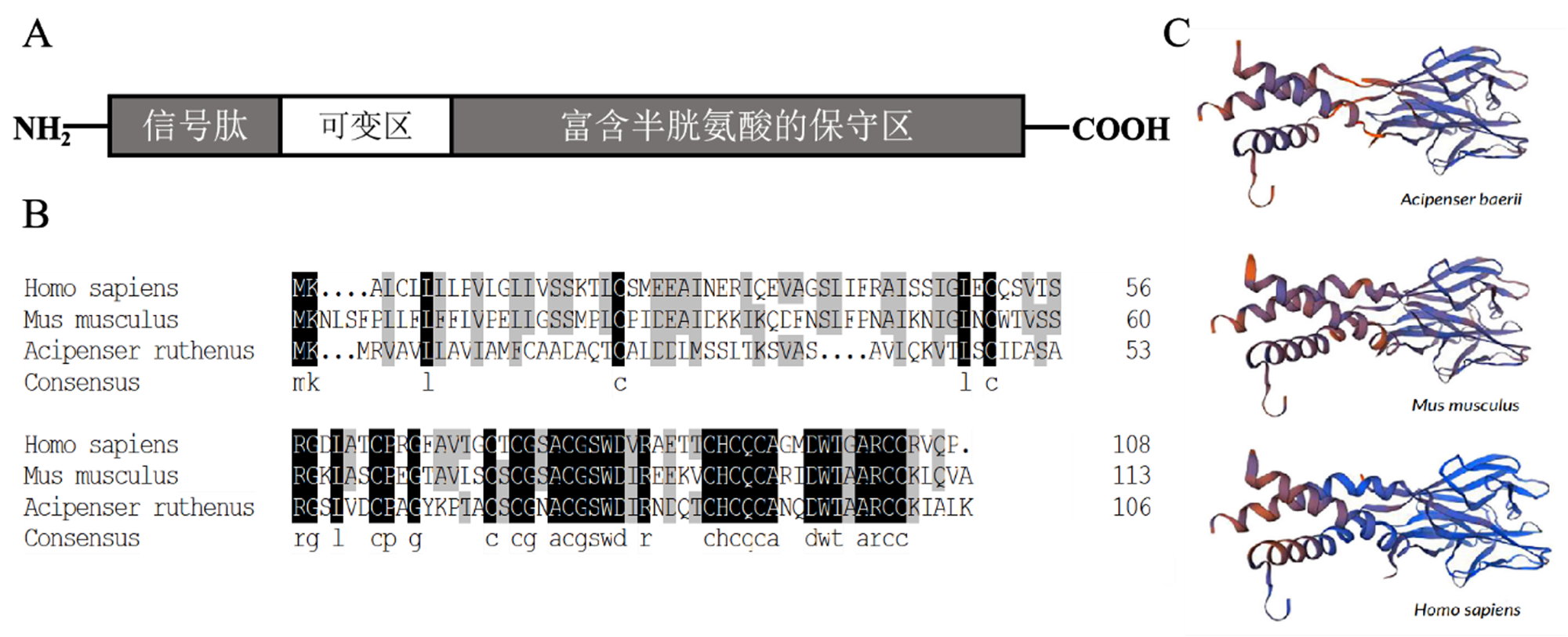
不同物种中RETN的基因结构及编码氨基酸长度存在一定差异。例如,人RETN基因定位于19号染色体,全长1 369 bp,包含4个外显子和3个内含子,编码108个氨基酸[33];小鼠RETN基因定位于8号染色体,全长约4 000 bp,由5个外显子和4个内含子组成,编码114个氨基酸[33];小体鲟RETN基因定位于34号染色体,全长约807 bp,由4个外显子和3个内含子组成,编码106个氨基酸。RETN蛋白的分子质量约为12 kDa,其结构包括N端信号肽、可变结构域以及C端富含半胱氨酸的保守结构域[34],其C端结构域在物种间高度保守,其典型序列模式为C-X11-C-X8-C-X-C-X3-C-X10-C-X-C-X-C-X9-CC-X3-6-END)[34-35]。RETN蛋白的三级结构在计划中较为保守,其空间构象的稳定依赖于分子内二硫键的形成[31](图1)。RETN在体内常以单体、二聚体或多聚体的形式存在,其中二聚体形式具有较强的生物学活性,其形成关键依赖于第26位的半胱氨酸(Cys-26)[23,36]。因此,当开展RETN功能学研究时,需谨慎选择其蛋白表达形式与结构状态,以确保试验结果的生理相关性。
图1 RETN的结构

A:RETN蛋白结构;B:不同物种RETN编码区氨基酸多重序列比对,其中黑色阴影表示氨基酸一致性为100%,灰色阴影表示氨基酸一致性≥75%;C:不同物种RETN蛋白3级结构(NCBI序列登录号:人,AAG59824.1;小鼠,AAG59823.1;小体鲟,MT010809)。

Fig.1 Structures of RETN[31]

A: structure of the RETN protein; B: multiple sequence alignment of RETN coding region amino acids across different species, where black shading indicates 100% amino acid identity, gray shading indicates ≥75% amino acid identity; C: tertiary structure of RETN protein in different species (NCBI sequence accession numbers: Homo sapiens, AAG59824.1; Mus musculus, AAG59823.1; Acipenser ruthenus, MT010809).

2 RETN组织分布的物种特异性

RETN在不同物种的组织分布具有显著差异。在人类中,RETN基因主要在骨髓、单核细胞及白细胞中表达[37]。在大鼠中,RETN基因则在白色脂肪组织特异性表达,而在脑、心脏、小肠、肾脏和肝脏等组织中未检测到其mRNA[23]。在家畜动物中,RETN基因的表达亦呈现多样性:在猪[27]、牦牛[28]和山羊[29]的肺脏中表达丰富,但在绵羊中则主要在肝脏高表达[30]。除上述主要表达组织外,RETN蛋白亦在多种哺乳动物其他组织中表达。例如,免疫组化结果显示,RETN蛋白在绵羊子宫和胰腺中均有表达[38]。此外,大鼠下丘脑中存在RETN亚型(s-RETN)的表达[39-40]。综上可知,RETN广泛分布于哺乳动物的中枢和外周组织中,但其表达模式具有明显的物种差异,提示RETN在不同物种中可能发挥不同的生物学功能。目前,关于鱼类RETN组织分布的研究较为匮乏。已有报道表明,RETN基因在西伯利亚鲟肝脏中丰富表达[31],而在其他鱼类中的组织分布特征尚不明确,有待进一步探究。

3 营养与健康状态对RETN表达的影响

在人类和啮齿动物中,血清和脂肪组织中RETN的表达量与机体健康状态密切相关。研究表明,相较于健康人类,肥胖患者血清及脂肪组织中RETN的表达量显著升高[24,41-42],且其表达量与体重指数和内脏脂肪含量呈正相关[43-44]。类似地,在高脂饮食诱导的肥胖小鼠模型中也观察到血清中RETN水平上升[26]。然而,部分研究得出不一致的结果,肥胖啮齿动物血清及脂肪组织中RETN基因和蛋白的表达量反而下降[45-46]。在瘦素缺陷型肥胖小鼠中,白色脂肪组织的RETN基因表达未见显著变化[47]。此外,果糖诱导的胰岛素抵抗大鼠脂肪组织中RETN基因的表达量降低[48],而酒精诱导的胰岛素抵抗大鼠脂肪组织中则出现RETN基因与蛋白表达量均上升的现象[49]。这些研究结果提示,RETN的表达水平可能作为肥胖等代谢异常状态的潜在标志物,但其变化趋势存在物种及模型间的差异。
进一步研究表明,RETN的表达受胰岛素、葡萄糖和高脂饮食等多种营养因素的调控,且响应方式较为复杂。胰岛素可促进白色脂肪组织中RETN的表达与分泌[23],但在3T3-L1脂肪细胞中却抑制RETN mRNA的表达[50]。高脂饮食能够抑制小鼠脂肪组织中RETN基因和蛋白的表达[51],而高糖则促进小鼠脂肪组织及3T3-L1脂肪细胞中RETN的表达[45,52]。Rajala等[53]发现,在肥胖小鼠中,循环RETN蛋白水平与胰岛素、葡萄糖和脂质指标呈正相关。综合来看,啮齿动物白色脂肪组织中RETN的表达对营养物质的响应表现出明显的异质性与复杂性,且与整体代谢状态密切相关,提示RETN可能在营养信号与代谢调控之间发挥桥梁作用,参与糖和脂代谢平衡的调节。
此外,摄食状态也显著影响RETN的表达。小鼠在空腹状态下,RETN mRNA及蛋白的表达量下降,而在夜间进食后血清中RETN水平升高[53]。禁食期间,小鼠脂肪组织中RETN mRNA表达量极低,恢复高碳水化合物饮食后其mRNA表达量可急剧上升25倍[23]。然而,在绵羊中则呈现相反趋势:禁食4周显著促进其臀部脂肪中RETN mRNA的表达[30]。这可能与绵羊以臀部脂肪为主要能量储备,在饥饿状态下脂肪动员增强,从而上调RETN的表达有关。在西伯利亚鲟幼鱼中,禁食10 d显著抑制肝脏中RETN mRNA的表达,恢复投喂后其表达则上升[31]。综上可知,在与能量储存密切相关的组织(如脂肪、肝脏)中,RETN基因的表达通常在禁食时下调、恢复摄食后上调,该变化模式与典型厌食欲因子的表达特征相符,提示RETN可能作为一种厌食欲因子参与集体能量稳态的调控。

4 RETN的中枢摄食调控作用及机制

目前,关于RETN调控摄食的研究主要集中于啮齿动物。多项研究显示,RETN中枢处理具有抑制摄食的效应。在饥饿12 h后恢复投喂的大鼠中,脑室注射RETN蛋白(10 μg/只)可显著降低1.5 h后的摄食量,但对3~12 h后摄食量无显著影响[54]。类似地,Vázquez等[55]研究发现,大鼠脑室注射RETN 1.5 h后摄食量显著降低。另有研究显示,急性脑室注射重组RETN蛋白(0.4 nmol/只)可显著降低大鼠注射1和2 h后的摄食量[15]。此外,持续7 d每日脑室注射RETN蛋白(10 μg/d)亦能有效抑制大鼠摄食[54]。以上结果提示,RETN抑制动物摄食的效应具有快速、短暂的特点。
下丘脑被认为是RETN调控摄食的关键脑区。侧脑室注射RETN蛋白可显著激活大鼠下丘脑多个核团(如弓状核、室旁核等)的神经元活性标志物c-Fos的表达,提示下丘脑是RETN作用的重要靶区[56]。研究表明,RETN可能通过调节下丘脑中关键食欲调节肽的表达影响摄食行为。NPY是经典的促食欲因子,其与AgRP神经元的激活共同促进摄食[57]。脑室注射RETN蛋白可显著抑制由NPY诱导的摄食效应,但不影响胰岛素对摄食的抑制作用[15]。在大鼠中,单次[55]或持续14 d[58]脑室注射RETN蛋白均能显著降低下丘脑NPY mRNA的表达量。AgRP作为一种强效且作用持久的促食欲肽,其基因表达量上调可显著增强摄食动机[59]。研究发现,脑室注射RETN蛋白能显著抑制大鼠下丘脑弓状核中AgRP基因的表达[55]。类似地,在N-1下丘脑神经细胞系中,过表达RETN显著抑制NPY表达,而干扰RETN基因能显著促进AgRP表达[60]。以上研究结果表明,中枢RETN可通过抑制下丘脑NPYAgRP表达,发挥其抑制摄食效应。
此外,RETN可能通过调节厌食性神经肽调控摄食。可卡因-安非他明调节肽(cocaine-and amphetamine-regulated transcript peptide,CART)作为一种重要的厌食性神经肽[57],其表达受RETN调控。大鼠脑室注射RETN蛋白后,下丘脑CART mRNA的表达量显著上升[55],提示CART可能介导RETN的部分厌食作用。此外,POMC神经元作为下丘脑中另一类关键厌食通路[61],也被认为可能参与RETN的中枢调控,但相关结果尚不一致。有研究表明,持续14 d脑室注射人源RETN蛋白(1.2 μg/d)可上调大鼠下丘脑POMC的表达,并伴随摄食量减少与体重下降[58]。然而,在小鼠模型中,中枢泵入RETN蛋白未显著影响POMC的表达[55,62],这种差异可能与动物种属、给药方式及剂量有关。免疫荧光双标结果显示,POMC神经元标志物α-黑色素细胞刺激素免疫反应性(α-melanocyte-stimulating hormone immunoreactivity,α-MSH-ir)与抵抗素免疫反应性(resistin immunoreactivity,RETN-ir)存在共定位现象[63]。α-黑色素细胞刺激素(α-melanocyte-stimulating hormone,α-MSH)作为POMC的裂解产物,可通过激活黑皮质素3/4受体抑制摄食并调节能量平衡[64]。据此推测,RETN可能通过刺激POMC神经元促进α-MSH释放,进而抑制食欲,但目前尚未有直接证据表明RETN对α-MSH表达的调控作用。综上可知,在啮齿动物中,中枢RETN可能通过调节下丘脑食欲调节肽系统,即抑制NPYAgRP表达,促进CART表达,并可能部分经由POMC神经元影响α-MSH释放,协同介导抑制摄食。
RETN的特异性受体尚未明确鉴定,现有研究提示,其可能通过下丘脑中丰富表达的多种受体间接调控摄食。LepR是介导瘦素厌食作用的关键受体,在下丘脑中丰富表达[9]。研究显示,静脉注射重组牛RETN蛋白可显著抑制绵羊下丘脑弓状核LepR的表达,并上调细胞因子信号抑制物3(suppressor of cytokine signaling 3,SOCS3)的表达[65],提示LepR可能是RETN调控摄食的潜在靶点。TLR4作为识别损伤和病原相关分子的模式识别受体,其激活可诱发炎症信号并抑制摄食[66]。大鼠脑室注射RETN蛋白(1.2 μg/d,14 d)能促进下丘脑TLR4及其衔接蛋白髓样分化因子88(myeloid differentiation factor 88,MyD88)和含TIR结构域的接头蛋白(TIR domain-containing adaptor protein,TIRAP)的表达[58]。最近研究发现,高脂饲粮可诱导小鼠下丘脑RETN表达上调,侧脑室注射RETN蛋白可通过TLR4依赖性方式上调miR-155-5p,进而引发下丘脑神经炎症与葡萄糖稳态紊乱[10],但该研究未探讨阻断TLR4是否影响RETN的厌食效应。越来越多的研究显示,炎症被认为会影响食欲的稳态和非稳态系统,TLR4激活可促进白细胞介素-1(interleukin-1,IL-1)、白细胞介素-6(interleukin-6,IL-6)和肿瘤坏死因子-α(tumor necrosis factor-α,TNF-α)等促炎因子释放,进而抑制NPYAgRP表达,促进POMC表达,最终抑制摄食[67]。据此推测,RETN可能通过激活下丘脑TLR4信号,诱导炎症因子释放,调节食欲相关神经肽,从而发挥厌食作用。除上述受体外,研究还发现RETN可与CAP1结合发挥促炎效应[12],亦可与ΔDCN[13]及ROR1[14]相互作用调节脂质代谢,但其是否存在直接调控摄食的特异性受体,其下游又涉及哪些信号机制,仍有待深入探究。
综上所述,目前关于RETN调控摄食的研究仍主要局限于啮齿类动物,其具体作用机制尚未完全阐明。现有证据表明,RETN可能主要通过TLR4等信号通路影响NPYPOMC等关键食欲因子的表达,从而发挥快速而短暂的厌食效应。在外周组织方面,相关研究较为有限,RETN是否通过胃肠道、肝脏等外周组织参与摄食调控尚不明确。然而,有研究发现RETN可上调小鼠胃底神经元型一氧化氮合酶(neuronal nitric oxide synthase,nNOS)的表达,并增加肌间神经丛中nNOS阳性神经元比例,提示nNOS可能介导了RETN对胃部机械反应的调节[68]。因此,未来研究需进一步揭示RETN在中枢及外周系统中的受体及其下游信号通路,以更全面阐释其在摄食调控网络中的生理功能与机制。

5 RETN的外周糖、脂代谢调控作用及机制

作为连接摄食调控与整体代谢稳态的关键脂肪细胞因子,RETN在糖、脂代谢调控中发挥重要作用,其功能呈现显著的物种特异性和组织选择性。作为双重枢纽,RETN不仅能接收中枢摄食指令来调节外周代谢,也能将外周代谢状态反馈至中枢。具体而言,RETN通过影响肝脏、脂肪组织及骨骼肌等外周器官的代谢功能,并与下丘脑等中枢区域的摄食调控网络协同互动,共同构成一个动态的能量稳态调节系统。
在啮齿类动物中,RETN对糖代谢的调控机制较为明确,其核心在于诱导胰岛素抵抗,从而干扰葡萄糖摄取、利用与内源性生成的平衡。研究表明,腹腔注射重组RETN蛋白可使C57Bl/6J小鼠血糖水平显著升高[26];静脉注射RETN则通过上调肝脏糖异生关键限速酶(葡萄糖-6-磷酸酶)的活性,促进肝脏中葡萄糖的生成[69]。胰腺作为胰岛素分泌的主要器官,也受RETN调控。使用40 ng/mL RETN处理小鼠胰腺β细胞系(βTC-6)23 h后,胰岛素受体的mRNA和蛋白表达量均显著下降[70]。此外,RETN还可通过上调βTC-6中的SOCS3表达并抑制蛋白激酶B(protein kinase B,PKB/AKT)的磷酸化,削弱葡萄糖刺激的胰岛素分泌,形成“分泌减少-信号受阻”的代谢恶性循环[71]。在长期效应方面,大鼠连续7 d静脉注射RETN可导致肌肉和脂肪组织中胰岛素受体底物1(insulin receptor substrate 1,IRS1)与胰岛素受体底物2(insulin receptor substrate 2,IRS2)的磷酸化水平降低,AKT激活受阻,同时骨骼肌、肝脏和脂肪组织中单磷酸腺苷活化的蛋白激酶(AMP-activated protein kinase, AMPK)的磷酸化水平普遍下降,提示系统性胰岛素敏感性及能量代谢调控紊乱[72]。然而,RETN在人类糖代谢中的作用尚存争议。临床观察显示,肥胖患者血清中RETN水平与稳态模型评估的胰岛素抵抗指数(homeostatic model assessment for insulin resistance,HOMA-IR)呈正相关[42],但在健康人群中未发现二者存在显著关联[73]。这种差异可能与人类RETN主要来源于单核细胞和巨噬细胞,并通过CAP1间接抑制脂肪细胞胰岛素受体底物(insulin receptor substrate,IRS)-AKT信号通路有关[11]
在脂代谢方面,RETN的调控作用表现出明显的物种差异与模型依赖性,其主要靶器官为脂肪组织与骨骼肌,分别参与调控脂质合成与分解、脂肪酸摄取与氧化等过程,且其效应具有细胞类型特异性。体外研究表明,使用50 nmol/L重组RETN蛋白处理大鼠骨骼肌细胞24 h,可下调脂肪酸转运关键蛋白CD36的表达,从而减少脂肪酸摄取;同时伴随AMPK及乙酰辅酶A羧化酶(acetyl-CoA carboxylase,ACC)磷酸化水平降低,脂肪酸氧化过程受阻,最终导致细胞内脂质蓄积[74]。然而,Ort等[75]的研究揭示了物种间的功能差异,即重组人RETN蛋白能激活脂肪细胞中激素敏感性脂肪酶(hormone sensitive lipase,HSL),促进甘油三酯分解;而小鼠来源的RETN对脂肪分解无显著影响,并在脂肪外植体中同步增强甘油三酯分解与脂肪酸再酯化过程。这种差异可能源于人RETN更强的炎症介导能力,而小鼠RETN则更偏向直接代谢调控。在体内层面,RETN的脂代谢调控作用还受摄食状态的调节:摄食状态下,大鼠侧脑室急性注射RETN可提高下丘脑AMPK与ACC磷酸化水平,并降低脂肪酸合成酶(fatty acid synthetase,FAS)表达,从而抑制下丘脑脂质合成;该效应在禁食状态下消失,提示其为机体避免能量过度蓄积的适应性调节机制[55]。以上研究结果表明,RETN的脂代谢调控作用具有状态依赖性,机体能量输入状态(摄食与否)是调节RETN功能的关键信号。
总之,RETN并非一个独立的摄食抑制基因或代谢调节因子,而是一个关键的能量稳态协调者。在啮齿类动物中,RETN通过中枢途径快速调节摄食,同时通过外周途径精细调控糖与脂代谢的利用与储存(图2)。RETN信号及其介导的反馈机制(如炎症信号、激素交互)紧密偶联,共同应对机体的能量需求与挑战。未来的研究重点,不仅在于阐明其在人类中的作用争议,更在于深入解析RETN信号网络如何同时、有序地调控摄食与代谢反应,从而在生理与病理状态下维持或重构能量平衡。
图2 RETN调控机体能量平衡的整合网络机制

Fasting:禁食;Feeding:摄食;Resistin:抵抗素;liver:肝脏;p-AMPK:磷酸化单磷酸腺苷活化的蛋白激酶 phosphorylated AMP-activated protein kinase;G6Pase:葡萄糖-6-磷酸酶 glucose-6-phosphatase;glucose:葡萄糖;Insulin:胰岛素;βTC-6 cell:βTC-6细胞;IR:胰岛素受体 insulin receptor;p-PKB/p-AKT:磷酸化蛋白激酶B phosphorylated protein kinase B;SOCS3:细胞因子信号抑制物3 suppressor of cytokine signaling 3;skeletal muscle & adipose tissue:骨骼肌和脂肪组织;AKT:蛋白激酶B protein kinase B;p-IRS1:磷酸化胰岛素受体底物1 phosphorylated insulin receptor substrate 1;p-IRS2:磷酸化胰岛素受体底物2 phosphorylated insulin receptor substrate 2;HSL:激素敏感性脂肪酶 hormone-sensitive lipase;Triglyceride decomposition:甘油三酯分解;fatty acid intake:脂肪酸摄入;p-ACC:磷酸化乙酰辅A羧化酶 phosphorylated acetyl-CoA carboxylase;fatty acid oxidation:脂肪酸氧化;lipid accumulation:脂质积累;hypothalamus:下丘脑;ARC:弓状核 arcuate nucleus;FAS:脂肪酸合酶 fatty acid synthase;lipid synthesis:脂质合成;TLR4:Toll样受体4 Toll-like receptor 4;inflammatory cytokines:炎性细胞因子;IL-1:白细胞介素-1 interleukin-1;IL-6:白细胞介素-6 interleukin-6;TNF-α:肿瘤坏死因子-α tumor necrosis factor-α;CART:可卡因-安非他明调节转录肽 cocaine- and amphetamine-regulated transcript;POMC:阿黑皮素原 proopiomelanocortin;AGRP:刺鼠相关蛋白 agouti-related protein;NPY:神经肽Y neuropeptide Y;α-MSH:α-黑色素细胞刺激素 α-melanocyte-stimulating hormone;Appetite:食欲。

Fig.2 Integrative network mechanisms of RETN in regulating systemic energy homeostasis

6 小结与展望

RETN作为连接营养感知与能量代谢稳态的关键信号分子,在动物摄食与能量平衡调控中发挥着重要而复杂的角色。本文系统总结了RETN的发现历史、分子特征及生理功能。值得注意的是,RETN蛋白结构在物种间并不保守,其组织表达分布存在显著差异,提示其生物学功能具有多样性。在病理状态下,RETN表达量的变化使其成为潜在的生物标志物。RETN的表达受机体营养与健康状态动态调控,其中枢摄食调控作用在啮齿动物中通过下丘脑食欲神经肽网络介导快速厌食效应;在外周则通过多器官参与糖与脂代谢的精细调控,表现出物种与组织特异性。
当前,研究仍面临重要挑战:RETN特异性受体尚未明确,限制了下游信号通路的解析;摄食调控研究模型单一,在人类及经济动物中的生理意义存在争议;RETN如何协调中枢与外周系统调控能量稳态仍不明确。未来研究应聚焦于利用前沿技术鉴定RETN特异性受体,系统解析其信号网络;加强跨物种比较研究,揭示功能多样性的分子基础;重点填补非啮齿类动物摄食调控机制空白。同时,应积极探索干预RETN功能的转化应用,如从天然产物中筛选活性抑制剂,为开发新型食欲调节剂、提高动物生长性能提供新途径。这些研究将深化能量稳态调控机制认知,为人类代谢疾病防治和养殖动物精准营养调控提供理论支撑。
[1]
MARCOS P, COVEÑAS R. Regulation of homeostasis by neuropeptide Y:involvement in food intake[J]. Current Medicinal Chemistry, 2022, 29(23):4026-4049.

DOI

[2]
COLL A P. Effects of pro-opiomelanocortin (POMC) on food intake and body weight:mechanisms and therapeutic potential?[J]. Clinical Science, 2007, 113(4):171-182.

DOI

[3]
HAN J, LIANG X F, GUO Y Z, et al. Agouti-related protein as the glucose signaling sensor in the central melanocortin circuits in regulating fish food intake[J]. Frontiers in Endocrinology, 2022, 13:1010472.

DOI

[4]
SMITH K L, GARDINER J V, WARD H L, et al. Overexpression of CART in the PVN increases food intake and weight gain in rats[J]. Obesity, 2008, 16(10):2239-2244.

DOI PMID

[5]
GIL-CAMPOS M, AGUILERA C M, CAÑETE R, et al. Ghrelin:a hormone regulating food intake and energy homeostasis[J]. British Journal of Nutrition, 2006, 96(2):201-226.

DOI

[6]
BATTERHAM R L, COWLEY M A, SMALL C J, et al. Gut hormone PYY3-36 physiologically inhibits food intake[J]. Nature, 2002, 418(6898):650-654.

DOI

[7]
KIM K S, PARK J S, HWANG E, et al. GLP-1 increases preingestive satiation via hypothalamic circuits in mice and humans[J]. Science, 2024, 385(6707):438-446.

DOI PMID

[8]
BASKIN D G, BLEVINS J E, SCHWARTZ M W. How the brain regulates food intake and body weight:the role of leptin[J]. Journal of Pediatric Endocrinology & Metabolism, 2001, 14(S6):1417-1429.

[9]
BOYLE C A, KOLA P K, ORAEGBUNA C S, et al. Leptin excites basolateral amygdala principal neurons and reduces food intake by LepRb-JAK2-PI3K-dependent depression of GIRK channels[J]. Journal of Cellular Physiology, 2024, 239(2):e31117.

DOI

[10]
PRÉVOST M, CRÉPIN D, RIFAI S A, et al. The resistin/TLR4/miR-155-5p axis:a novel signaling pathway in the onset of hypothalamic neuroinflammation[J]. Journal of Neuroinflammation, 2025, 22(1):198.

DOI

[11]
TURPIN T, THOUVENOT K, GONTHIER M P. Adipokines and bacterial metabolites:a pivotal molecular bridge linking obesity and gut microbiota dysbiosis to target[J]. Biomolecules, 2023, 13(12):1692.

DOI

[12]
ZHAO C W, SONG W X, LIU B, et al. Resistin induces chemokine and matrix metalloproteinase production via CAP1 receptor and activation of p38-MAPK and NF-κB signalling pathways in human chondrocytes[J]. Clinical and Experimental Rheumatology, 2022, 40(3):501-513.

DOI

[13]
DAQUINAG A C, ZHANG Y, AMAYA-MANZANARES F, et al. An isoform of decorin is a resistin receptor on the surface of adipose progenitor cells[J]. Cell Stem Cell, 2011, 9(1):74-86.

DOI PMID

[14]
SÁNCHEZ-SOLANA B, LABORDA J, BALADRÓN V. Mouse resistin modulates adipogenesis and glucose uptake in 3T3-L1 preadipocytes through the ROR1 receptor[J]. Molecular Endocrinology, 2012, 26(1):110-127.

DOI

[15]
CIFANI C, DUROCHER Y, PATHAK A, et al. Possible common central pathway for resistin and insulin in regulating food intake[J]. Acta Physiologica, 2009, 196(4):395-400.

DOI

[16]
CISTERNAS P, GHERARDELLI C, GUTIERREZ J, et al. Adiponectin and resistin modulate the progression of Alzheimer’s disease in a metabolic syndrome model[J]. Frontiers in Endocrinology, 2023, 14:1237796.

DOI

[17]
KUROWSKA P, GAZDZIK K, JASINSKA A, et al. Resistin as a new player in the regulation of porcine corpus luteum luteolysis:in vitro effect on proliferation/viability,apoptosis and autophagy[J]. Journal of Physiology and Pharmacology, 2023, 74(1):21-30.

[18]
GUDELSKA M, DOBRZYN K, KIEZUN M, et al. Role of resistin in the porcine uterus:effects on endometrial steroidogenesis[J]. Reproduction,Fertility,and Development, 2025, 37:RD24097.

DOI

[19]
MA X P, YANG A N, FAN X B, et al. Resistin alleviates lipopolysaccharide-induced inflammation in bovine alveolar macrophages by activating the AMPK/mTOR signaling pathway and autophagy[J]. Heliyon, 2024, 10(19):e38026.

DOI

[20]
YANG H M, KIM J, KIM B K, et al. Resistin regulates inflammation and insulin resistance in humans via the endocannabinoid system[J]. Research, 2024, 7:0326.

[21]
LI Y R, YANG Q Y, CAI D J, et al. Resistin,a novel host defense peptide of innate immunity[J]. Frontiers in Immunology, 2021, 12:699807.

DOI

[22]
ZHOU L, LI J Y, HE P P, et al. Resistin:potential biomarker and therapeutic target in atherosclerosis[J]. Clinica Chimica Acta, 2021, 512:84-91.

DOI

[23]
KIM K H, LEE K, MOON Y S, et al. A cysteine-rich adipose tissue-specific secretory factor inhibits adipocyte differentiation[J]. Journal of Biological Chemistry, 2001, 276(14):11252-11256.

DOI PMID

[24]
SAVAGE D B, SEWTER C P, KLENK E S, et al. Resistin/Fizz3 expression in relation to obesity and peroxisome proliferator-activated receptor-gamma action in humans[J]. Diabetes, 2001, 50(10):2199-2202.

DOI

[25]
PATEL L, BUCKELS A C, KINGHORN I J, et al. Resistin is expressed in human macrophages and directly regulated by PPAR gamma activators[J]. Biochemical and Biophysical Research Communications, 2003, 300(2):472-476.

DOI PMID

[26]
STEPPAN C M, BAILEY S T, BHAT S, et al. The hormone resistin links obesity to diabetes[J]. Nature, 2001, 409(6818):307-312.

DOI

[27]
DAI M H, XIA T, CHEN X D, et al. Cloning and characterization of porcine resistin gene[J]. Domestic Animal Endocrinology, 2006, 30(2):88-97.

PMID

[28]
侯孟典, 王会, 柴志欣, 等. 牦牛RETN基因克隆及组织表达分析[J]. 黑龙江畜牧兽医, 2019(7):123-128,171.

HOU M D, WANG H, CHAI Z X, et al. Cloning and tissue expression of yak RETN gene[J]. Heilongjiang Animal Science and Veterinary Medicine, 2019(7):123-128,171. (in Chinese)

[29]
ZHANG Y A, WANG Y, XU Q, et al. Molecular and expression characteristics of resistin (RETN) and its effects on the differentiation of intramuscular preadipocyte in goat[J]. Animal Biotechnology, 2021, 32(1):113-120.

DOI

[30]
赵伟利, 薛昌斌, 高磊, 等. 绵羊抵抗素基因(RETN)克隆、序列分析及其在饥饿模型中的表达变化规律[J]. 农业生物技术学报, 2015, 23(8):981-990.

ZHAO W L, XUE C B, GAO L, et al. Cloning and sequence analysis of sheep (Ovis aires) resistin gene (RETN) and its expression pattern in starving model[J]. Journal of Agricultural Biotechnology, 2015, 23(8):981-990. (in Chinese)

[31]
TANG N, LIU Y L, TIAN Z Z, et al. Characterization, tissue distribution of resistin gene and the effect of fasting and refeeding on resistin mRNA expression in Siberian sturgeon (Acipenser baerii)[J]. Journal of Fish Biology, 2020, 97(2):508-514.

DOI PMID

[32]
BERNARDI O, ESTIENNE A, REVERCHON M, et al. Adipokines in metabolic and reproductive functions in birds:an overview of current knowns and unknowns[J]. Molecular and Cellular Endocrinology, 2021, 534:111370.

DOI

[33]
GHOSH S, SINGH A K, ARUNA B, et al. The genomic organization of mouse resistin reveals major differences from the human resistin:functional implications[J]. Gene, 2003, 305(1):27-34.

DOI

[34]
BANERJEE R R, LAZAR M A. Resistin:molecular history and prognosis[J]. Journal of Molecular Medicine, 2003, 81(4):218-226.

DOI

[35]
HOLCOMB I N, KABAKOFF R C, CHAN B, et al. FIZZ1,a novel cysteine-rich secreted protein associated with pulmonary inflammation,defines a new gene family[J]. EMBO Journal, 2000, 19(15):4046-4055.

DOI

[36]
PATEL S D, RAJALA M W, ROSSETTI L, et al. Disulfide-dependent multimeric assembly of resistin family hormones[J]. Science, 2004, 304(5674):1154-1158.

DOI PMID

[37]
NOHIRA T, NAGAO K, KAMEYAMA K, et al. Identification of an alternative splicing transcript for the resistin gene and distribution of its mRNA in human tissue[J]. European Journal of Endocrinology, 2004, 151(1):151-154.

PMID

[38]
MARANESI M, PALMIOLI E, DALL’AGLIO C, et al. Resistin in endocrine pancreas of sheep:presence and expression related to different diets[J]. General and Comparative Endocrinology, 2024, 348:114452.

DOI

[39]
DEL ARCO A, PERALTA S, CARRASCOSA J M, et al. Alternative splicing generates a novel non-secretable resistin isoform in Wistar rats[J]. FEBS Letters, 2003, 555(2):243-249.

PMID

[40]
RODRÍGUEZ M, PINTADO C, MOLTÓ E, et al. Central s-resistin deficiency ameliorates hypothalamic inflammation and increases whole body insulin sensitivity[J]. Scientific Reports, 2018, 8(1):3921.

DOI PMID

[41]
MCTERNAN C L, MCTERNAN P G, HARTE A L, et al. Resistin,central obesity,and type 2 diabetes[J]. Lancet, 2002, 359(9300):46-47.

DOI

[42]
MCTERNAN P G, FISHER F M, VALSAMAKIS G, et al. Resistin and type 2 diabetes:regulation of resistin expression by insulin and rosiglitazone and the effects of recombinant resistin on lipid and glucose metabolism in human differentiated adipocytes[J]. Journal of Clinical Endocrinology & Metabolism, 2003, 88(12):6098-6106.

DOI

[43]
AZUMA K, KATSUKAWA F, OGUCHI S, et al. Correlation between serum resistin level and adiposity in obese individuals[J]. Obesity Research, 2003, 11(8):997-1001.

DOI PMID

[44]
SILHA J V, MURPHY L J. Serum resistin (FIZZ3) protein is increased in obese humans[J]. Journal of Clinical Endocrinology & Metabolism, 2004, 89(4):1977.

[45]
RAJALA M W, LIN Y, RANALLETTA M, et al. Cell type-specific expression and coregulation of murine resistin and resistin-like molecule-alpha in adipose tissue[J]. Molecular Endocrinology, 2002, 16(8):1920-1930.

PMID

[46]
WAY J M, GÖRGÜN C Z, TONG Q, et al. Adipose tissue resistin expression is severely suppressed in obesity and stimulated by peroxisome proliferator-activated receptor gamma agonists[J]. Journal of Biological Chemistry, 2001, 276(28):25651-25653.

DOI PMID

[47]
MAKIMURA H, MIZUNO T M, BERGEN H, et al. Adiponectin is stimulated by adrenalectomy in ob/ob mice and is highly correlated with resistin mRNA[J]. American Journal of Physiology:Endocrinology and Metabolism, 2002, 283(6):E1266-E1271.

DOI

[48]
JUAN C C, AU L C, FANG V S, et al. Suppressed gene expression of adipocyte resistin in an insulin-resistant rat model probably by elevated free fatty acids[J]. Biochemical and Biophysical Research Communications, 2001, 289(5):1328-1333.

PMID

[49]
CHEN L, NYOMBA B L G. Glucose intolerance and resistin expression in rat offspring exposed to ethanol in utero:modulation by postnatal high-fat diet[J]. Endocrinology, 2003, 144(2):500-508.

DOI

[50]
HAUGEN F, JØRGENSEN A, DREVON C A, et al. Inhibition by insulin of resistin gene expression in 3T3-L1 adipocytes[J]. FEBS Letters, 2001, 507(1):105-108.

PMID

[51]
LE LAY S, BOUCHER J, REY A, et al. Decreased resistin expression in mice with different sensitivities to a high-fat diet[J]. Biochemical and Biophysical Research Communications, 2001, 289(2):564-567.

PMID

[52]
SHOJIMA N, SAKODA H, OGIHARA T, et al. Humoral regulation of resistin expression in 3T3-L1 and mouse adipose cells[J]. Diabetes, 2002, 51(6):1737-1744.

DOI PMID

[53]
RAJALA M W, QI Y, PATEL H R, et al. Regulation of resistin expression and circulating levels in obesity,diabetes,and fasting[J]. Diabetes, 2004, 53(7):1671-1679.

DOI

[54]
TOVAR S, NOGUEIRAS R, TUNG L Y C, et al. Central administration of resistin promotes short-term satiety in rats[J]. European Journal of Endocrinology, 2005, 153(3):R1-R5.

DOI PMID

[55]
VÁZQUEZ M J, GONZÁLEZ C R, VARELA L, et al. Central resistin regulates hypothalamic and peripheral lipid metabolism in a nutritional-dependent fashion[J]. Endocrinology, 2008, 149(9):4534-4543.

DOI PMID

[56]
AKBARI A, JELODAR G, HOSSEINZADEH S. Injection of resistin into the paraventricular nucleus produces a cardiovascular response that may be mediated by glutamatergic transmission in the rostral ventrolateral medulla[J]. Iranian Journal of Basic Medical Sciences, 2024, 27(1):39-48.

DOI PMID

[57]
SOENGAS J L, COMESAÑA S, CONDE-SIEIRA M, et al. Hypothalamic integration of nutrient sensing in fish[J]. Journal of Experimental Biology, 2024, 227(15):jeb247410.

DOI

[58]
BENOMAR Y, GERTLER A, DE LACY P, et al. Central resistin overexposure induces insulin resistance through Toll-like receptor 4[J]. Diabetes, 2013, 62(1):102-114.

DOI PMID

[59]
DE SOLIS A J, DEL RÍO-MARTÍN A, RADERMACHER J, et al. Reciprocal activity of AgRP and POMC neurons governs coordinated control of feeding and metabolism[J]. Nature Metabolism, 2024, 6(3):473-493.

DOI PMID

[60]
BROWN R E, WILKINSON P M H, IMRAN S A, et al. Resistin differentially modulates neuropeptide gene expression and AMP-activated protein kinase activity in N-1 hypothalamic neurons[J]. Brain Research, 2009, 1294:52-60.

DOI PMID

[61]
ZHAN C. POMC neurons:feeding, energy metabolism,and beyond[J]. Advances in Experimental Medicine and Biology, 2018, 1090:17-29.

[62]
SINGHAL N S, LAZAR M A, AHIMA R S. Central resistin induces hepatic insulin resistance via neuropeptide Y[J]. Journal of Neuroscience, 2007, 27(47):12924-12932.

DOI PMID

[63]
WILKINSON M, WILKINSON D, WIESNER G, et al. Hypothalamic resistin immunoreactivity is reduced by obesity in the mouse:co-localization with alpha-melanostimulating hormone[J]. Neuroendocrinology, 2005, 81(1):19-30.

DOI

[64]
WU Q W, CHEN J M, HUA T Y, et al. Alpha-melanocyte-stimulating hormone-mediated appetite regulation in the central nervous system[J]. Neuroendocrinology, 2023, 113(9):885-904.

DOI PMID

[65]
ZIEBA D A, BIERNAT W, SZCZESNA M, et al. Hypothalamic-pituitary and adipose tissue responses to the effect of resistin in sheep:the integration of leptin and resistin signaling involving a suppressor of cytokine signaling 3 and the long form of the leptin receptor[J]. Nutrients, 2019, 11(9):2180.

DOI

[66]
BENOMAR Y, TAOUIS M. Molecular mechanisms underlying obesity-induced hypothalamic inflammation and insulin resistance:pivotal role of resistin/TLR4 pathways[J]. Frontiers in Endocrinology, 2019, 10:140.

DOI

[67]
LI Y X, JIANG Q Y, WANG L N. Appetite regulation of TLR4-induced inflammatory signaling[J]. Frontiers in Endocrinology, 2021, 12:777997.

DOI

[68]
IDRIZAJ E, NISTRI S, ZIZI V, et al. Neuronal nitric oxide synthase as a shared target for the effects of adiponectin and resistin on the mechanical responses of the mouse gastric fundus[J]. International Journal of Molecular Sciences, 2022, 23(24):16113.

DOI

[69]
RAJALA M W, OBICI S, SCHERER P E, et al. Adipose-derived resistin and gut-derived resistin-like molecule-beta selectively impair insulin action on glucose production[J]. Journal of Clinical Investigation, 2003, 111(2):225-230.

DOI PMID

[70]
BROWN J E P, ONYANGO D J, DUNMORE S J. Resistin down-regulates insulin receptor expression,and modulates cell viability in rodent pancreatic beta-cells[J]. FEBS Letters, 2007, 581(17):3273-3276.

DOI

[71]
NAKATA M, OKADA T, OZAWA K, et al. Resistin induces insulin resistance in pancreatic islets to impair glucose-induced insulin release[J]. Biochemical and Biophysical Research Communications, 2007, 353(4):1046-1051.

DOI PMID

[72]
SATOH H, NGUYEN M T A, MILES P D G, et al. Adenovirus-mediated chronic “hyper-resistinemia” leads to in vivo insulin resistance in normal rats[J]. Journal of Clinical Investigation, 2004, 114(2):224-231.

DOI

[73]
PASTUSIAK K, KREGIELSKA-NAROZNA M, BOGDANSKI P. Resistin is not a useful insulin resistance marker for non-obese patients[J]. Journal of Physiology and Pharmacology, 2020, 71(3):359-363.

[74]
PALANIVEL R, SWEENEY G. Regulation of fatty acid uptake and metabolism in L6 skeletal muscle cells by resistin[J]. FEBS Letters, 2005, 579(22):5049-5054.

DOI PMID

[75]
ORT T, ARJONA A A, MACDOUGALL J R, et al. Recombinant human FIZZ3/resistin stimulates lipolysis in cultured human adipocytes,mouse adipose explants,and normal mice[J]. Endocrinology, 2005, 146(5):2200-2209.

DOI

Outlines

/