REVIEW

Research Progress on Physiological Basis and Dietary Regulation of Equol Synthesis in Dairy Cows

  • ZENG Yue’e ,
  • ZHENG Nan ,
  • WANG Jiaqi ,
  • ZHAO Shengguo , *
Expand
  • State Key Laboratory of Animal Nutrition and Feeding, Institute of Animal Sciences, Chinese Academy of Agricultural Sciences, Beijing 100193, China
* professor, E-mail:

Received date: 2025-11-25

  Online published: 2026-06-13

Abstract

Equol is a non-steroidal estrogenic active compound produced via microbial metabolism of plant isoflavones, exhibiting pronounced significant antioxidant and anti-inflammatory activities as well as estrogen-like effects. Equol in bovine milk is mainly derived from isoflavones in diet of dairy cows. Dietary isoflavones are converted to equol in the rumen through microbial deglycosylation, demethylation and reduction reactions; equol is then transferred to the mammary gland via the blood circulation and secreted into milk. This review systematically summarized the bioactivities of equol, the origin, formation and transfer processes of equol in bovine milk, and dietary regulation strategies and their influencing factors. Particular emphasis was placed on the role of isoflavone-rich feed ingredients such as red clover in elevating milk equol contents, as well as differences in milk equol contents across countries, and feeding and management systems. In addition, feasible approaches for equol enrichment through dietary optimization were discussed, aiming to provide a theoretical basis and technical support for the development of functional dairy products.

Cite this article

ZENG Yue’e , ZHENG Nan , WANG Jiaqi , ZHAO Shengguo . Research Progress on Physiological Basis and Dietary Regulation of Equol Synthesis in Dairy Cows[J]. Chinese Journal of Animal Nutrition, 2026 , 38(6) : 4022 -4029 . DOI: 10.12418/CJAN2026.321

功能型乳制品作为连接乳业与大健康产业的重要载体,展现出巨大的发展潜力。雌马酚(equol)作为一种由异黄酮经肠道微生物代谢产生的植物雌激素,因较其前体物质展现出更强的生物学活性而备受关注[1-2]。研究发现,雌马酚具有抗氧化[3-4]、抗炎[5]和类雌激素生物学功能[6]等多种生理作用,对预防慢性疾病、改善人体健康具有潜在价值。但是仅有30%~50%的人群具有特定的肠道菌群结构,可以将饮食摄入的异黄酮转化为雌马酚,这类人群被称为“雌马酚生产者”[7-9]。已有大量研究发现通过调控奶牛饲粮中异黄酮含量,可以提高牛奶中雌马酚含量,从而为“非雌马酚生产者”群体提供稳定的雌马酚膳食来源[10-12]。因此,牛奶作为一种日常消费广泛且营养全面的食品载体,被赋予新的功能化开发潜力。本文综述了近年来奶牛合成雌马酚的生理基础与营养调控的研究进展,旨在为开发功能乳制品、激活健康消费提供科学依据。

1 雌马酚的生物学活性与健康功能
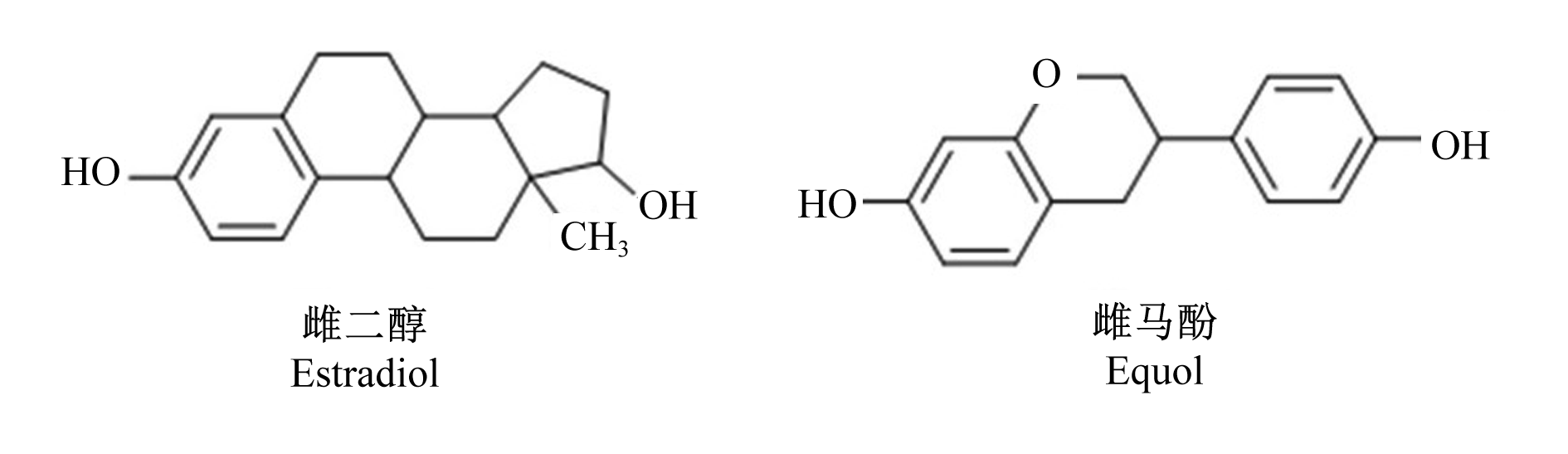
雌马酚是一种异黄酮类代谢产物,化学名为3-(4-羟基苯基)-7-色满醇,CAS登记号为94105-90-5,是异黄酮被微生物代谢转化而成的化合物。雌马酚具有类雌激素的生物学活性,其化学结构与17-β-雌二醇相似(图1),可以与雌激素受体相结合。研究表明,绝经后女性膳食补充雌马酚,可以有效缓解潮热、心理问题、肩颈肌肉僵硬等更年期症状[6,13]。此外,还能够显著降低更年期女性的骨折风险[14-15],降低男性前列腺癌发病风险[16]
图1 雌二醇与雌马酚的化学结构

Fig.1 Chemical structures of estradiol and equol

除类雌激素效应外,雌马酚的抗氧化功能也具有重要的研究应用价值。雌马酚的抗氧化机制主要表现在2个方面:清除自由基和增强抗氧化酶的活性[17-18]。基于抗氧化的生物学功能,有研究发现雌马酚可以缓解主动脉粥样硬化[19],通过抑制炎症和改善脂质代谢[20-21],有效降低了心血管疾病的发生风险[22-24]
研究表明,雌马酚具有防止无毛小鼠皮肤癌变的潜力[25],并且具有预防糖尿病的潜力[26]。雌马酚还在改善皮肤状态[27]、抗癌[28-30]、降低糖尿病肾病风险[31]、改善细胞肌管萎缩[32]、减缓神经退行性疾病[33]和认知衰退[2]等方面展现了生物学活性。

2 牛奶中雌马酚的来源、生成与转移

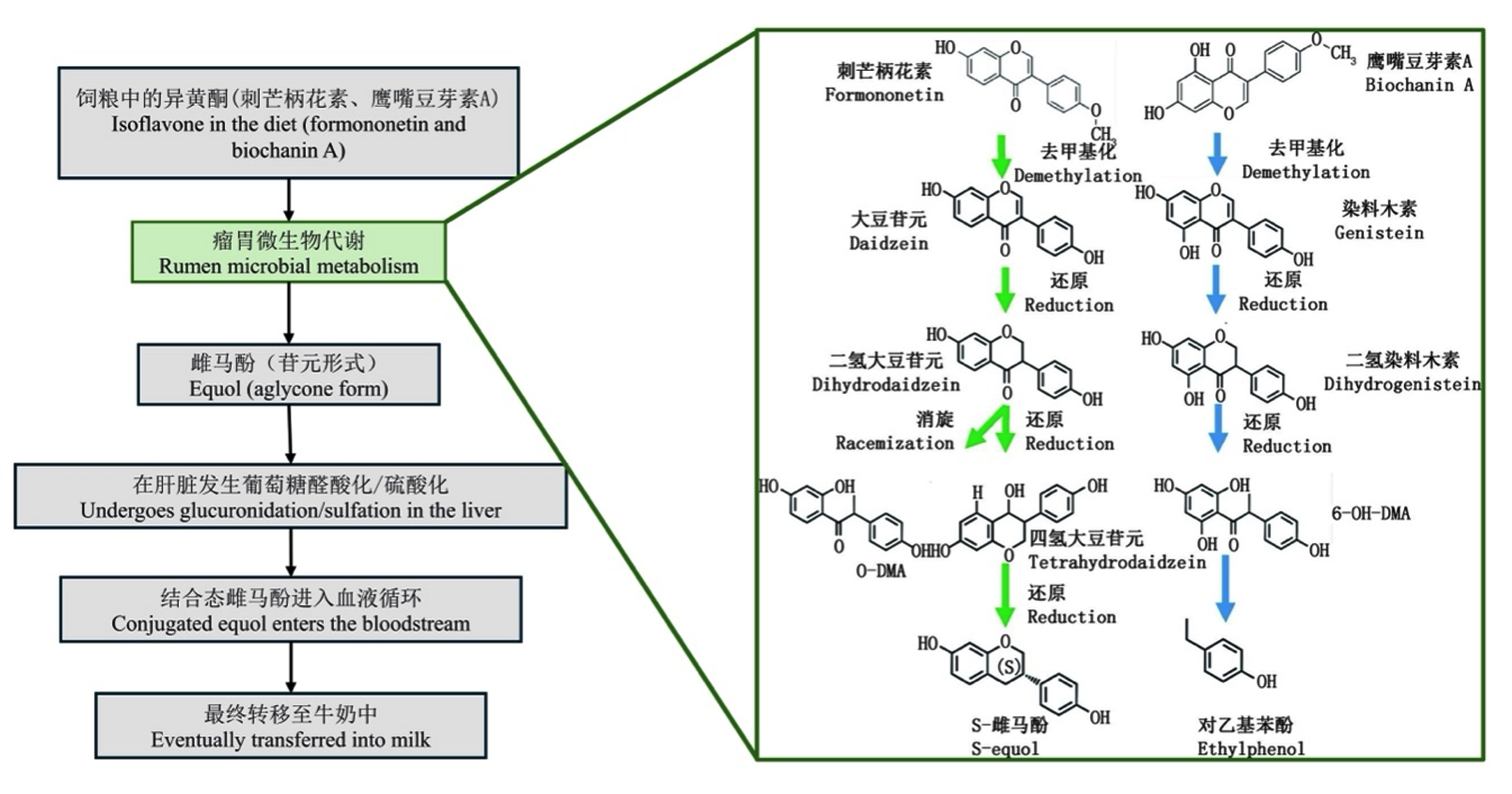
牛奶中雌马酚是奶牛通过瘤胃微生物转化饲粮中植物异黄酮所生成的非甾体类雌激素活性代谢物,其在牛奶中的含量主要取决于饲粮中异黄酮含量[34]、瘤胃微生物群组成[35-36]及宿主代谢转运能力[37]。总体而言,雌马酚的形成和转移经历了饲粮中异黄酮摄入→瘤胃微生物代谢→肠肝吸收转化→乳腺分泌等多阶段生物学过程(图2)[38]
图2 牛奶中雌马酚代谢转移途径

O-DMA:O-去甲基安哥拉紫檀素 O-desmethylangolensin;6-OH-DMA:6-羟基-去甲基安哥拉紫檀素 6-OH-desmethylangolensin。

Fig.2 Metabolic transfer pathways of equol in milk[38]

2.1 牛奶雌马酚的理化特性与分布

牛奶中雌马酚含量通常在10~1 500 ng/mL[10-12]。具有较强的热稳定性,65 ℃巴氏杀菌30 min、120 ℃灭菌20 min或140 ℃瞬时高温20 s热处理后牛奶中雌马酚含量几乎不变[39-40]。传统酸奶发酵过程中雌马酚含量保持稳定[39],但是在开菲尔(Kefir)发酵中下降超过50%[39]。雌马酚主要分布于乳脂中,脱脂会显著降低其含量[41]。这一分布特征表明雌马酚在乳制品中的保留率受加工工艺影响,尤其受乳脂保留情况影响。

2.2 瘤胃微生物对异黄酮的代谢转化

植物源异黄酮多以糖苷形式存在,需经水解为苷元后方能发挥生物学活性[42]。通过酶的催化或在酸性环境下,异黄酮糖苷可以水解为苷元,异黄酮苷元经去甲基化及还原反应最终转化为雌马酚[36]。不同于人类仅部分个体具备代谢异黄酮产生雌马酚的能力,反刍动物普遍具备该代谢能力,其核心机制在于瘤胃复杂的微生物群落结构。Wang等[35]从牛瘤胃内容物中分离出一种菌株编号为Niu-O16的棒状革兰氏阳性厌氧菌,发现其能够在厌氧环境下将异黄酮大豆苷元和染料木素分别转化为二氢大豆苷元(dihydrodaidzein,DHD)和二氢染料木素(dihydrogenistein,DHG)。卜莹等[38]进一步研究揭示了红三叶草异黄酮[主要为刺芒柄花素(formononetin)和鹰嘴豆芽素A(biochanin A)]的代谢通路:刺芒柄花素经去甲基化生成大豆苷元,随后依次转化为DHD和O-去甲基安哥拉紫檀素(O-desmethylangolensin,O-DMA),最终生成S-雌马酚;而鹰嘴豆芽素A则经去甲基化生成染料木素,最终生成对乙基苯酚(图2)。

2.3 雌马酚在奶牛体内的吸收、转运与结合态转化
瘤胃代谢生成的雌马酚主要以苷元形式被瘤胃上皮吸收,雌马酚也可在肠道中以糖苷形式被吸收[37,43]。雌马酚的代谢转移涉及葡萄糖醛酸化、硫酸化以及肠肝循环等过程[44]。结合态雌马酚经血液循环进入乳腺组织,最终通过乳腺分泌至牛奶中。
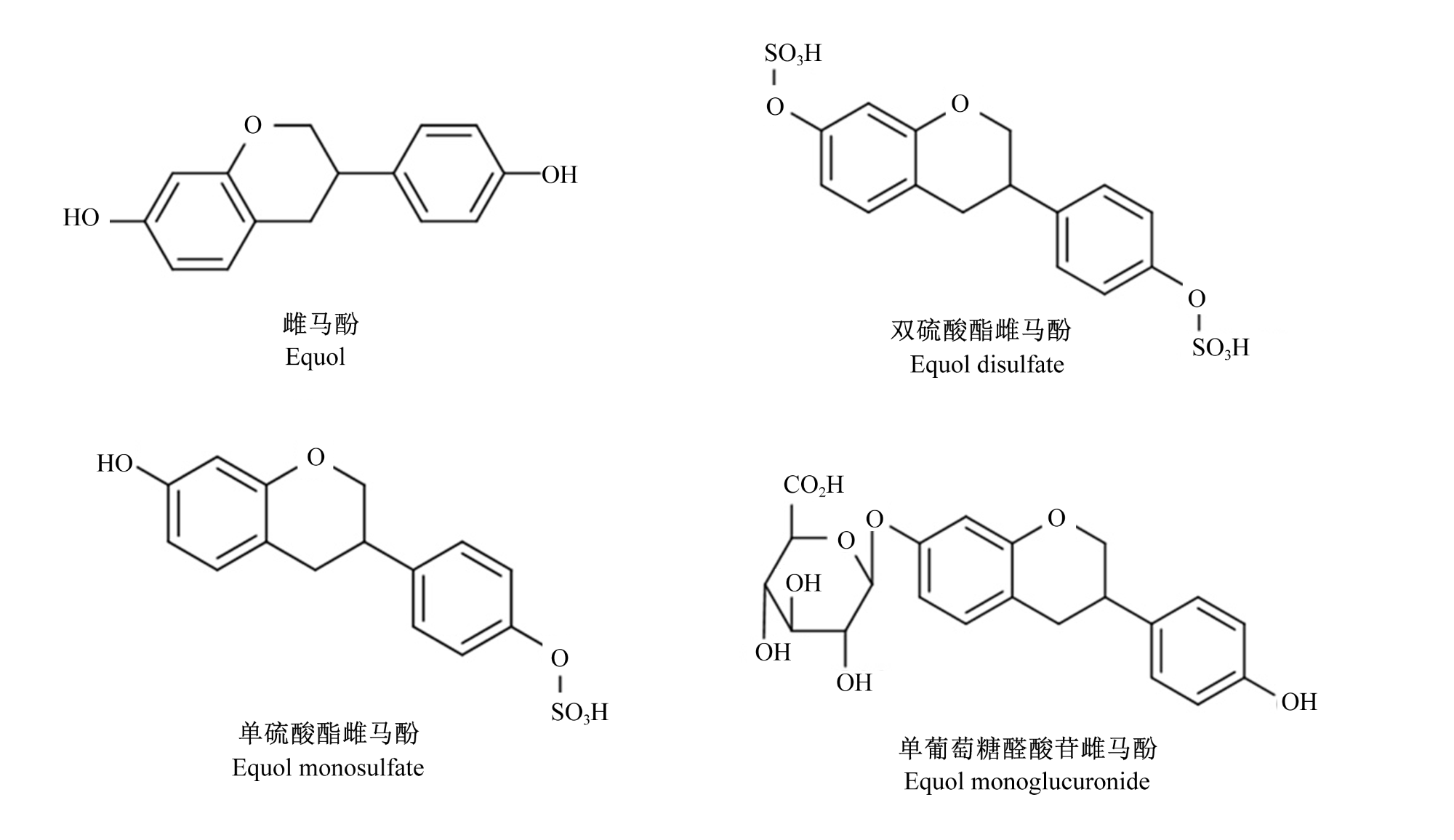
天然雌马酚及其主要结合态包括单硫酸酯雌马酚(equol monosulfate)、双硫酸酯雌马酚(equol disulfate)及单葡萄糖醛酸苷雌马酚(equol monoglucuronide)(图3)。有研究发现,在饲喂外消旋体雌马酚之后,血浆中大多数雌马酚的存在形式是葡萄糖醛酸苷雌马酚,而单硫酸酯雌马酚的含量则相对较低[45]。牛奶中的雌马酚由血浆中转运而来,所以牛奶中雌马酚主要以结合态形式存在[37],检测时需先经水解以释放游离雌马酚,从而获得总量的准确估算[40]
图3 雌马酚及其结合态的化学结构

Fig.3 Chemical structures of equol and its conjugates

综上所述,牛奶中雌马酚的生成与转移是一个涵盖饲粮、瘤胃微生物和宿主生理多环节协同作用的复杂生物过程。这些过程不仅决定了牛奶中雌马酚的含量与存在形态,也反映了反刍动物在异黄酮代谢方面的独特生理优势。未来研究应结合微生物组学、代谢组学及合成生物学技术,深入解析核心菌群及关键酶系的功能机制,探索通过饲粮调控或微生态干预实现雌马酚代谢的精准调控与高效转化,为开发具有特定生物学活性的功能型乳制品提供理论基础与技术支撑。

3 饲粮调控牛奶雌马酚研究进展

3.1 异黄酮主要饲料来源

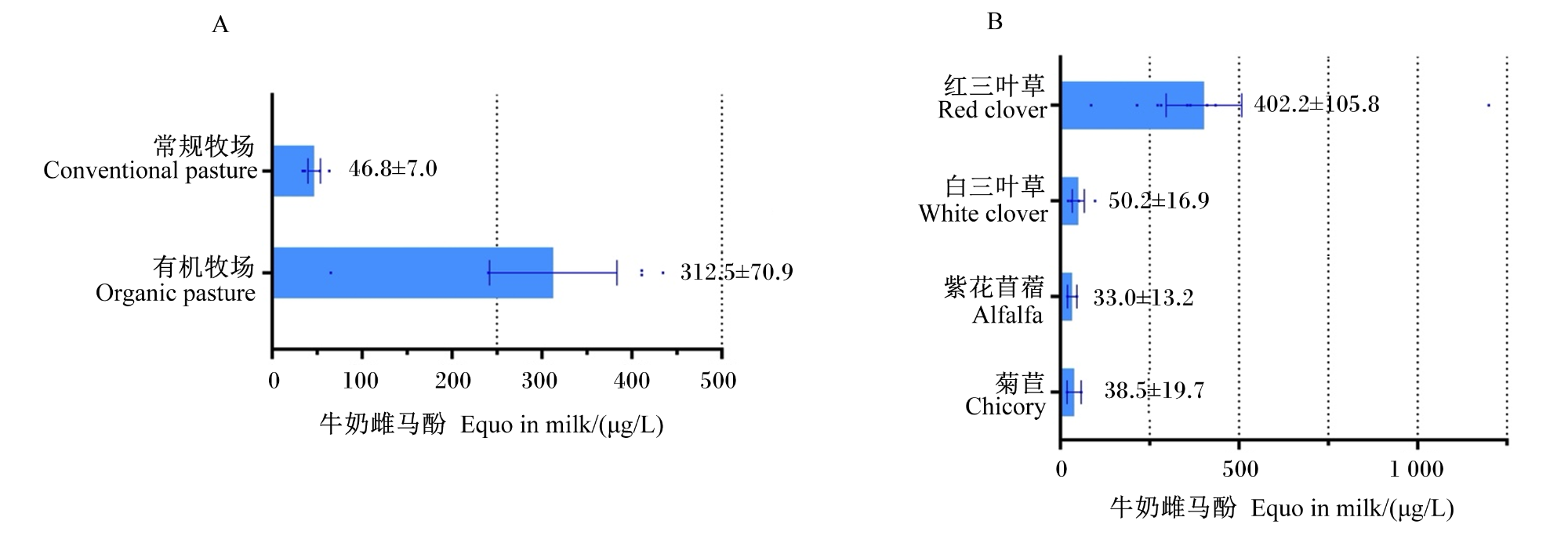
提高饲粮中异黄酮的含量有助于增加牛奶中雌马酚的含量[46]。研究发现,在奶牛饲粮中添加大豆异黄酮后,牛奶中的雌马酚含量从77.78 μg/L增加至186.30 μg/L[47]。在奶牛饲粮中补充新鲜或青贮红三叶草时,牛奶中的雌马酚含量会显著升高[48-50]。饲粮中的红三叶草与大豆是牛奶雌马酚的主要来源[34]。其中,红三叶草中异黄酮含量较高,为10~25 mg/g干物质(DM),主要成分为刺芒柄花素、染料木素、大豆苷元以及鹰嘴豆芽素A[35],其中刺芒柄花素的含量最高,达到0.8~11.0 mg/g DM[48]。大豆作为常见的饲料原料,其异黄酮含量显著低于红三叶草,约为红三叶草的1/10,为1.2~4.2 mg/g DM,主要成分为大豆苷元和染料木素[51]。紫花苜蓿及菊苣等饲草虽然含有一定量的植物雌激素,但饲喂后对牛奶中雌马酚含量的提升效果远低于红三叶草[52]。饲喂白三叶草的奶牛,其牛奶中雌马酚含量仅为饲喂红三叶草组的1/4[11]。此外,葛根、甘草等植物虽同样富含异黄酮,但此类植物对牛奶中雌马酚含量的影响并不显著[34,53]

3.2 饲料原料中异黄酮含量的影响因素

红三叶草中的异黄酮含量受品种、种植地点[54]、年份[55]及施肥等因素的显著影响。在红三叶草中,异黄酮的分布不均[55],叶中的含量最高,其次是茎、叶柄和花,且其含量还会随生长阶段和季节的不同而变化[11]。还有研究表明,饲草加工中的萎蔫程度对红三叶草异黄酮含量有显著影响,经过充分萎蔫失水处理的干草和青贮,在储存过程中能够显著减少异黄酮如刺芒柄花素和鹰嘴豆芽素A的含量[56]

3.3 饲养管理模式对牛奶中雌马酚含量的影响

有机牛奶中雌马酚含量通常高于传统牛奶[12,48,57],这可能是由于有机牧场具有丰富的红三叶草。研究表明,有机牛奶中雌马酚平均含量为411.1 μg/L,而常规牛奶仅为63.6 μg/L[10]。这种差异并非源于“有机”认证本身,而是因为有机牧场倾向于种植和利用富含红三叶草的混合牧草。总体而言,通过改变奶牛饲粮配方(如增加红三叶草比例)和采用有机放牧管理,可有效提高牛奶中雌马酚含量(图4),为其在功能性乳制品开发中的应用提供基础。
图4 饲养管理模式对牛奶中雌马酚含量的影响

Fig.4 Effects of feeding and management models on equol content in milk[10-11,37-39,55-60]

3.4 饲粮中异黄酮含量对转化效率的影响

异黄酮从饲粮到牛奶的转移过程存在效率限制,随着奶牛异黄酮摄入量的提高,牛奶中雌马酚的转移转化率可能会出现下降趋势(表1)[47,61]。这一现象可能与奶牛体内的代谢和调节过程相关,在达到一定阈值后,奶牛对异黄酮的吸收和转运能力可能受到限制[46-47]。所以奶牛异黄酮摄入量增加,并不意味着这些异黄酮能够按相同比例转移到牛奶中,这一发现对饲粮配方的设计具有重要意义。
表1 饲粮中异黄酮摄入量对转化效率的影响

Table 1 Effect of isoflavones intake in diet on conversion efficiency[61]

饲粮中异黄酮摄入量
Isoflavones intake in diet/(mg/d)
牛奶中雌马酚产量
Equol production in milk/(mg/d)
转化效率
Conversion efficiency/%
6 496.70 2.90 0.03~0.05
12 992.40 3.99 0.02~0.04
19 480.10 3.56 0.01~0.02

4 小结

牛奶中雌马酚的生成和调控是一个复杂的过程,受多种因素的影响。异黄酮作为牛奶中雌马酚的前体物质,其在奶牛体内的代谢转化主要依赖于瘤胃中的微生物群体。通过调控饲粮中的异黄酮含量,可以显著提高牛奶中雌马酚产量。但是异黄酮在从饲粮转移到牛奶的过程中存在速率限制,单纯提高饲粮中异黄酮含量并不能按比例增加牛奶中雌马酚含量。因此,未来的研究应聚焦于调控微生物群落、优化饲粮配方等方面,以提高牛奶中雌马酚产量。此外,加工过程对牛奶中雌马酚的稳定性也有显著影响。不同的加工方式,如热处理、发酵和脱脂等,可能导致雌马酚含量的变化,所以在乳制品加工过程中需要特别考虑如何保留雌马酚。这些研究不仅为牛奶中雌马酚的调控提供理论依据,也为开发富含雌马酚的功能性乳制品提供可行的策略。
[1]
BOSLAND M C, ENK E, SCHMOLL J, et al. Soy protein supplementation in men following radical prostatectomy:a 2-year randomized,placebo-controlled clinical trial[J]. The American Journal of Clinical Nutrition, 2021, 113(4):821-831.

DOI

[2]
SEKIKAWA A, WHARTON W, BUTTS B, et al. Potential protective mechanisms of S-equol,a metabolite of soy isoflavone by the gut microbiome,on cognitive decline and dementia[J]. International Journal of Molecular Sciences, 2022, 23(19):11921.

DOI

[3]
GOPAUL R, KNAGGS H E, LEPHART E D. Biochemical investigation and gene analysis of equol:a plant and soy-derived isoflavonoid with antiaging and antioxidant properties with potential human skin applications[J]. BioFactors, 2012, 38(1):44-52.

DOI

[4]
褚航宇, 迟晓星, 郭笑言, 等. 雌马酚对妊娠期糖尿病子鼠患代谢综合征易感性的调节作用[J]. 食品科学, 2025, 46(18):115-121.

CHU H Y, CHI X X, GUO X Y, et al. Regulatory effect of equol on the susceptibility to metabolic syndrome in offspring of rats with gestational diabetes mellitus[J]. Food Science, 2025, 46(18):115-121. (in Chinese)

[5]
于生财, 倪向敏, 张贵明, 等. 雌马酚干预对棕榈酸诱导L6细胞线粒体稳态紊乱的调节作用研究[J]. 营养学报, 2024, 46(2):163-170.

YU S C, NI X M, ZHANG G M, et al. Effects of equol on mitochondrial homeostasis disorder induced by palmtic acid in l6 cells[J]. Acta Nutrimenta Sinica, 2024, 46(2):163-170. (in Chinese)

[6]
ASO T, UCHIYAMA S, MATSUMURA Y, et al. A natural S-equol supplement alleviates hot flushes and other menopausal symptoms in equol nonproducing postmenopausal Japanese women[J]. Journal of Women’s Health, 2012, 21(1):92-100.

DOI

[7]
BOLCA S, POSSEMIERS S, HERREGAT A, et al. Microbial and dietary factors are associated with the equol producer phenotype in healthy postmenopausal women[J]. The Journal of Nutrition, 2007, 137(10):2242-2246.

DOI

[8]
HALL M C, O’BRIEN B, MCCORMACK T. Equol producer status,salivary estradiol profile and urinary excretion of isoflavones in Irish Caucasian women,following ingestion of soymilk[J]. Steroids, 2007, 72(1):64-70.

DOI

[9]
SETCHELL K D R, COLE S J. Method of defining equol-producer status and its frequency among vegetarians[J]. The Journal of Nutrition, 2006, 136(8):2188-2193.

DOI

[10]
NØRSKOV N P, GIVENS I, PURUP S, et al. Concentrations of phytoestrogens in conventional,organic and free-range retail milk in England[J]. Food Chemistry, 2019, 295:1-9.

DOI

[11]
ADLER S A, PURUP S, HANSEN-MØLLER J, et al. Phytoestrogens and their metabolites in bulk-tank milk:effects of farm management and season[J]. PLoS One, 2015, 10(5):e0127187.

DOI

[12]
DAEMS F, JASSELETTE C, ROMNEE J M, et al. Validating the use of an ultra-performance liquid chromatography with tandem mass spectrometry method to quantify equol in cow’s milk[J]. Dairy Science & Technology, 2015, 95(3):303-319.

[13]
YOSHIKATA R, MYINT K Z Y, OHTA H. Effects of equol supplement on bone and cardiovascular parameters in middle-aged Japanese women:a prospective observational study[J]. Journal of Alternative and Complementary Medicine, 2018, 24(7):701-708.

DOI

[14]
NI X M, WU B, LI S, et al. Equol exerts a protective effect on postmenopausal osteoporosis by upregulating OPG/RANKL pathway[J]. Phytomedicine, 2023, 108:154509.

DOI

[15]
CORBI G, NOBILE V, CONTI V, et al. Equol and resveratrol improve bone turnover biomarkers in postmenopausal women:a clinical trial[J]. International Journal of Molecular Sciences, 2023, 24(15):12063.

DOI

[16]
ITSUMI M, SHIOTA M, TAKEUCHI A, et al. Equol inhibits prostate cancer growth through degradation of androgen receptor by S-phase kinase-associated protein 2[J]. Cancer Science, 2016, 107(7):1022-1028.

DOI PMID

[17]
CHOI E J. Evaluation of equol function on anti- or prooxidant status in vivo[J]. Journal of Food Science, 2009, 74(2):H65-H71.

[18]
YANG Z P, ZHAO Y, YAO Y H, et al. Equol induces mitochondria-dependent apoptosis in human gastric cancer cells via the sustained activation of ERK1/2 pathway[J]. Molecules and Cells, 2016, 39(10):742-749.

PMID

[19]
ZHANG X, FUJIYOSHI A, AHUJA V, et al. Association of equol producing status with aortic calcification in middle-aged Japanese men:the ERA JUMP study[J]. International Journal of Cardiology, 2022, 352:158-164.

DOI

[20]
张贵明, 倪向敏, 崔涵强, 等. 雌马酚对肥胖模型大鼠脂代谢的影响[J]. 营养学报, 2023, 45(3):287-293.

ZHANG G M, NI X M, CUI H Q, et al. Effect of equol on lipid metabolism in obese rats[J]. Acta Nutrimenta Sinica, 2023, 45(3):287-293. (in Chinese)

[21]
张贵明, 倪向敏, 崔涵强, 等. S-雌马酚通过ERβ调控PI3K/AKT/NF-κB信号通路改善油酸钠诱导的BRL细胞脂肪变性[J]. 营养学报, 2024, 46(1):62-68.

ZHANG G M, NI X M, CUI H Q, et al. S-equol improves sodium oleate-induced steatosis by regulating PI3K/AKT/NF-κB signaling pathway through ERβ in BRL cells[J]. Acta Nutrimenta Sinica, 2024, 46(1):62-68. (in Chinese)

[22]
ACHARJEE S, ZHOU J R, ELAJAMI T K, et al. Effect of soy nuts and equol status on blood pressure,lipids and inflammation in postmenopausal women stratified by metabolic syndrome status[J]. Metabolism, 2015, 64(2):236-243.

DOI

[23]
JANNAH A R, EBNUDESITA F R, DIENANTA S B, et al. The potential of soy isoflavones (Glycine max) and magnetic hydroxyapatite nanoparticles as osteoporosis therapy for menopausal women[J]. Indonesian Andrology and Biomedical Journal, 2020, 1(1):27-35.

DOI

[24]
MATSUMOTO T, KOJIMA M, TAKAYANAGI K, et al. Role of S-equol,indoxyl sulfate,and trimethylamine N-oxide on vascular function[J]. American Journal of Hypertension, 2020, 33(9):793-803.

DOI

[25]
WIDYARINI S, HUSBAND A J, REEVE V E. Protective effect of the isoflavonoid equol against hairless mouse skin carcinogenesis induced by UV radiation alone or with a chemical cocarcinogen[J]. Photochemistry and Photobiology, 2005, 81(1):32-37.

PMID

[26]
CHEN K, LANG H D, WANG L, et al. S-equol ameliorates insulin secretion failure through chrebp/txnip signaling via modulating PKA/PP2A activities[J]. Nutrition & Metabolism, 2020, 17(1):7.

[27]
MAGNET U, URBANEK C, GAISBERGER D, et al. Topical equol preparation improves structural and molecular skin parameters[J]. International Journal of Cosmetic Science, 2017, 39(5):535-542.

DOI PMID

[28]
ZHANG J, REN L, YU M, et al. S-equol inhibits proliferation and promotes apoptosis of human breast cancer MCF-7 cells via regulating miR-10a-5p and PI3K/AKT pathway[J]. Archives of Biochemistry and Biophysics, 2019, 672:108064.

DOI

[29]
WADA K, TSUJI M, TAMURA T, et al. Soy isoflavone intake and bladder cancer risk in Japan:from the takayama study[J]. Cancer Epidemiology,Biomarkers & Prevention, 2018, 27(11):1371-1375.

[30]
刘宝花, 刘爱萍, 秦立强, 等. 北京地区成人雌马酚代谢表型与血清甲状腺激素关系研究[J]. 临床荟萃, 2011, 26(8):660-665.

LIU B H, LIU A P, QIN L Q, et al. Equol-producing phenotype and relation to serum thyroid hormones among healthy Chinese adults in Beijing[J]. Clinical Focus, 2011, 26(8):660-665. (in Chinese)

[31]
杜学识, 倪向敏, 梁馨予, 等. 雌马酚对DN的保护作用及潜在靶点[J]. 山东大学学报(医学版), 2024, 62(8):49-58.

DU X S, NI X M, LIANG X Y, et al. The protect effect of equol and its potential targets in the context of diabetic nephropathy[J]. Journal of Shandong University(Health Sciences), 2024, 62(8):49-58. (in Chinese)

[32]
于生财, 倪向敏, 卢亨, 等. 雌马酚通过调控自噬干预棕榈酸诱导的L6细胞肌管萎缩[J]. 陆军军医大学学报, 2023, 45(15):1604-1611.

YU S C, NI X M, LU H, et al. Equol interferes with palmitic acid-induced muscle tube atrophy in L6 cells by regulating autophagy[J]. Journal of Army Medical University, 2023, 45(15):1604-1611. (in Chinese)

[33]
LIU T H, TSAI T Y. Effects of equol on deoxycorticosterone acetate salt-induced hypertension and associated vascular dementia in rats[J]. Food & Function, 2016, 7(8):3444-3457.

[34]
KŘÍŽOVÁ L, DADÁKOVÁ K, KAŠPAROVSKÁ J, et al. Isoflavones[J]. Molecules, 2019, 24(6):1076.

DOI

[35]
WANG X L, SHIN K H, HUR H G, et al. Enhanced biosynthesis of dihydrodaidzein and dihydrogenistein by a newly isolated bovine rumen anaerobic bacterium[J]. Journal of Biotechnology, 2005, 115(3):261-269.

DOI

[36]
BARNES S. The biochemistry,chemistry and physiology of the isoflavones in soybeans and their food products[J]. Lymphatic Research and Biology, 2010, 8(1):89-98.

DOI

[37]
NJÅSTAD K M, ADLER S A, HANSEN-MØLLER J, et al. Gastrointestinal metabolism of phytoestrogens in lactating dairy cows fed silages with different botanical composition[J]. Journal of Dairy Science, 2014, 97(12):7735-7750.

DOI PMID

[38]
卜莹, 郑楠, 王典, 等. 红三叶草异黄酮在奶牛瘤胃中的代谢[J]. 中国畜牧兽医, 2024, 51(10):4292-4300.

DOI

BU Y, ZHENG N, WANG D, et al. The metabolism of red clover isoflavones in the rumen of dairy cows[J]. China Animal Husbandry & Veterinary Medicine, 2024, 51(10):4292-4300. (in Chinese)

[39]
LEFEVRE A, DAEMS F, FOCANT M, et al. The effect of commonly used dairy processing techniques and unit operations on the equol content of dairy products[J]. International Dairy Journal, 2019, 93:30-34.

DOI

[40]
KAŠPAROVSKÁ J, DADÁKOVÁ K, LOCHMAN J, et al. Changes in equol and major soybean isoflavone contents during processing and storage of yogurts made from control or isoflavone-enriched bovine milk determined using LC-MS (TOF) analysis[J]. Food Chemistry, 2017, 222:67-73.

DOI PMID

[41]
TSEN S Y, SIEW J, LAU E K L, et al. Cow’s milk as a dietary source of equol and phenolic antioxidants:differential distribution in the milk aqueous and lipid fractions[J]. Dairy Science & Technology, 2014, 94(6):625-632.

[42]
MIKSICEK R J. Estrogenic flavonoids:structural requirements for biological activity[J]. Proceedings of the Society for Experimental Biology and Medicine, 1995, 208(1):44-50.

[43]
LUNDH T J O. Conjugation of the plant estrogens formononetin and daidzein and their metabolite equol by gastrointestinal epithelium from cattle and sheep[J]. Journal of Agricultural and Food Chemistry, 1990, 38(4):1012-1016.

DOI

[44]
MAZERSKA Z, MRÓZ A, PAWŁOWSKA M, et al. The role of glucuronidation in drug resistance[J]. Pharmacology & Therapeutics, 2016, 159:35-55.

[45]
LEGETTE L L, PRASAIN J, KING J, et al. Pharmacokinetics of equol,a soy isoflavone metabolite,changes with the form of equol (dietary versus intestinal production) in ovariectomized rats[J]. Journal of Agricultural and Food Chemistry, 2014, 62(6):1294-1300.

DOI

[46]
TŘINÁCTÝ J, KŘÍŽOVÁ L, SCHULZOVÁ V, et al. The effect of feeding soybean-derived phytoestogens on their concentration in plasma and milk of lactating dairy cows[J]. Archives of Animal Nutrition, 2009, 63(3):219-229.

DOI

[47]
KASPAROVSKA J, PECINKOVA M, DADAKOVA K, et al. Effects of isoflavone-enriched feed on the rumen microbiota in dairy cows[J]. PLoS One, 2016, 11(4):e0154642.

DOI

[48]
STEINSHAMN H, PURUP S, THUEN E, et al. Effects of clover-grass silages and concentrate supplementation on the content of phytoestrogens in dairy cow milk[J]. Journal of Dairy Science, 2008, 91(7):2715-2725.

DOI PMID

[49]
MUSTONEN E A, TUORI M, SAASTAMOINEN I, et al. Equol in milk of dairy cows is derived from forage legumes such as red clover[J]. British Journal of Nutrition, 2009, 102(11):1552-1556.

DOI

[50]
HÖJER A, ADLER S, PURUP S, et al. Effects of feeding dairy cows different legume-grass silages on milk phytoestrogen concentration[J]. Journal of Dairy Science, 2012, 95(8):4526-4540.

DOI PMID

[51]
KURZER M S, XU X. Dietary phytoestrogens[J]. Annual Review of Nutrition, 1997, 17:353-381.

PMID

[52]
ANDERSEN C, NIELSEN T S, PURUP S, et al. Phyto-oestrogens in herbage and milk from cows grazing white clover,red clover,lucerne or chicory-rich pastures[J]. Animal, 2009, 3(8):1189-1195.

DOI

[53]
JUNGBAUER A, MEDJAKOVIC S. Phytoestrogens and the metabolic syndrome[J]. The Journal of Steroid Biochemistry and Molecular Biology, 2014, 139:277-289.

DOI

[54]
KRÓL-GRZYMAŁA A, AMAROWICZ R. Phenolic compounds of soybean seeds from two European countries and their antioxidant properties[J]. Molecules, 2020, 25(9):2075.

DOI

[55]
DU W H, YUE Y, TIAN X H. Variation of isoflavones production in red clover as related to environment,growth stage and year[J]. Acta Alimentaria, 2012, 41(2):211-220.

DOI

[56]
ZAMUDIO D, DE CASTRO R A, JIMENEZ-LAGOS A P, et al. Effects of wilting extent on the concentration of phytoestrogens,nutritional value,microbial populations,and in vitro ruminal methane emissions of red clover hay and silage across stages[J]. Journal of Dairy Science, 2025, 108(8):8391-8409.

DOI

[57]
ANTIGNAC J P, CARIOU R, LE BIZEC B, et al. New data regarding phytoestrogens content in bovine milk[J]. Food Chemistry, 2004, 87(2):275-281.

DOI

[58]
KING R A, MANO M M, HEAD R J. Assessment of isoflavonoid concentrations in Australian bovine milk samples[J]. Journal of Dairy Research, 1998, 65(3):479-489.

PMID

[59]
HOIKKALA A, MUSTONEN E, SAASTAMOINEN I, et al. High levels of equol in organic skimmed Finnish cow milk[J]. Molecular Nutrition & Food Research, 2007, 51(7):782-786.

[60]
ADLER S A, PURUP S, HANSEN-MØLLER J, et al. Phyto-oestrogens and their metabolites in milk produced on two pastures with different botanical compositions[J]. Livestock Science, 2014, 163:62-68.

DOI

[61]
FLACHOWSKY G, HÜNERBERG M, MEYER U, et al. Isoflavone concentration of soybean meal from various origins and transfer of isoflavones into milk of dairy cows[J]. Journal für Verbraucherschutz und Lebensmittelsicherheit, 2011, 6(4):449-456.

DOI

Outlines

/