

1 材料与方法
1.1 试验材料
1.1.1 主要试剂
1.1.2 仪器设备
1.1.3 样品来源
1.1.4 指示性菌株
1.2 试验方法
1.2.1 菌株分离
1.2.2 分子生物学鉴定
1.2.3 生理生化特征鉴定
1.2.4 生长曲线测定
1.2.5 产酸性能测定
1.2.6 不同温度下生长曲线测定
1.2.7 耐酸试验
1.2.8 对胆盐的耐受性测定
存活率(%)=100×At/A0。
1.2.9 对人工胃液和人工肠液的耐受性测定
存活率(%)=100×log10(人工胃液或人工肠液孵育后活菌数)/log10(人工胃液或人工肠液孵育前活菌数)。
1.2.10 表面疏水性测定
表面疏水率(%)=100×(A初始-A孵育后)/A初始。
1.2.11 自凝聚能力测定
自凝聚率(%)=100×(A初始-A孵育后)/A初始。
1.2.12 体外抑菌能力测定
1.2.13 发酵液排酸后抑菌能力测定
1.2.14 对常见抗生素的敏感性测定
1.2.15 非靶向代谢组学分析
1.3 数据统计分析
2 结果与分析
2.1 乳酸乳球菌的分离与鉴定
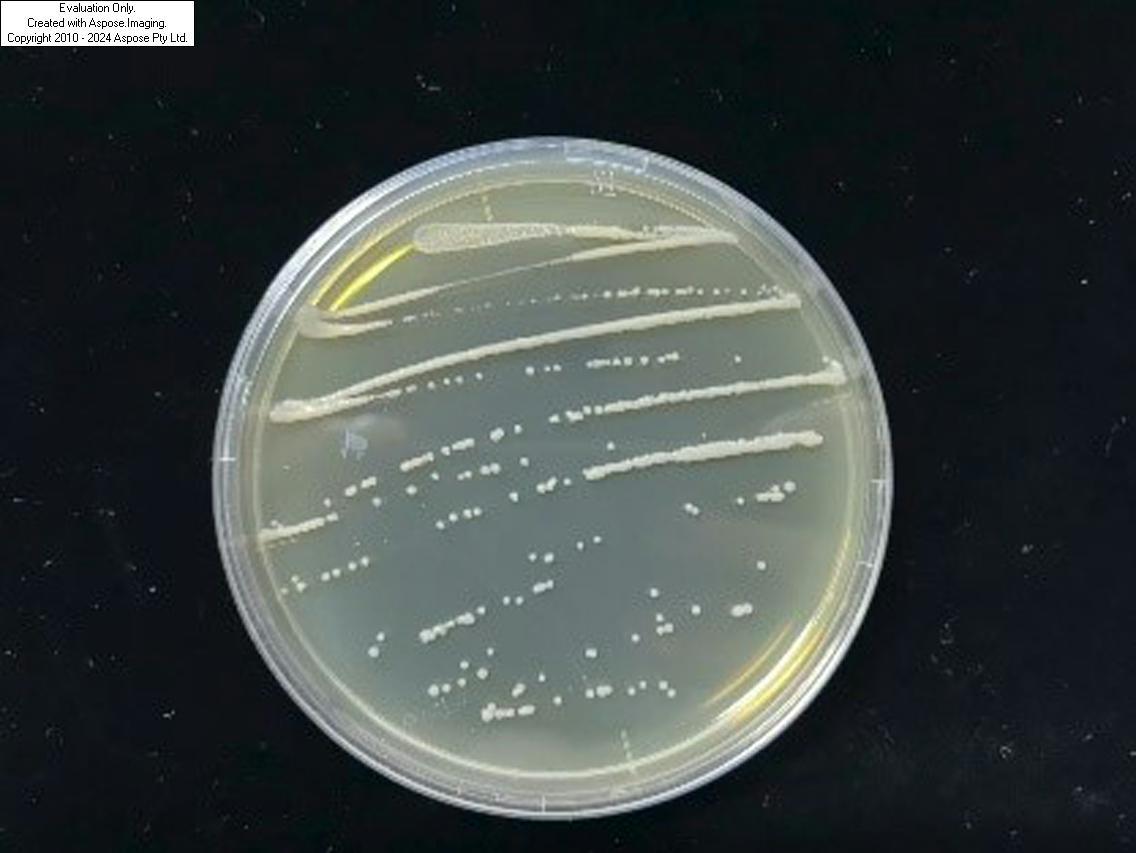
2.2 菌株GRJD005的生理生化特征
表1 菌株GRJD005的生理生化特征Table 1 Physiological and biochemical characteristics of strain GRJD005 |
| 项目 Items | 结果Results | 项目Items | 结果Results | |
|---|---|---|---|---|
| 七叶苷 Aesculin | + | 鼠李糖 Rhamnose | - | |
| 纤维二糖 Cellobiose | + | 葡萄糖 Glucose | + | |
| 麦芽糖 Maltose | + | 葡萄糖产气试验 glucose gas production test | - | |
| 甘露糖 Mannose | + | 甘露醇 Mannitol | + | |
| 山梨糖 Sorbose | - | 山梨醇 Sorbitol | - | |
| 蔗糖 Sucrose | + | 过氧化氢试验 Hydrogen peroxide test | - | |
| 棉子糖 Raffinose | - | 硫化氢 Hydrogen sulfide | - | |
| 半乳糖Galactose | + | 硝酸盐产气试验Nitrate gas production test | - | |
| 乳糖 Lactose | + | 吲哚试验 Indole test | - | |
| 木糖 Xylose | + | V-P试验 V-P test | - | |
| 果糖 Fructose | + | 明胶液化试验 Gelatin liquefaction test | - | |
| 阿拉伯糖 Pectinose | + | 吲哚乙酸酯水解试验 Indole-3-acetate hydrolysis test | - |
+:阳性 positive;-:阴性 negative。 |
2.3 菌株GRJD005的生长曲线和产酸曲线
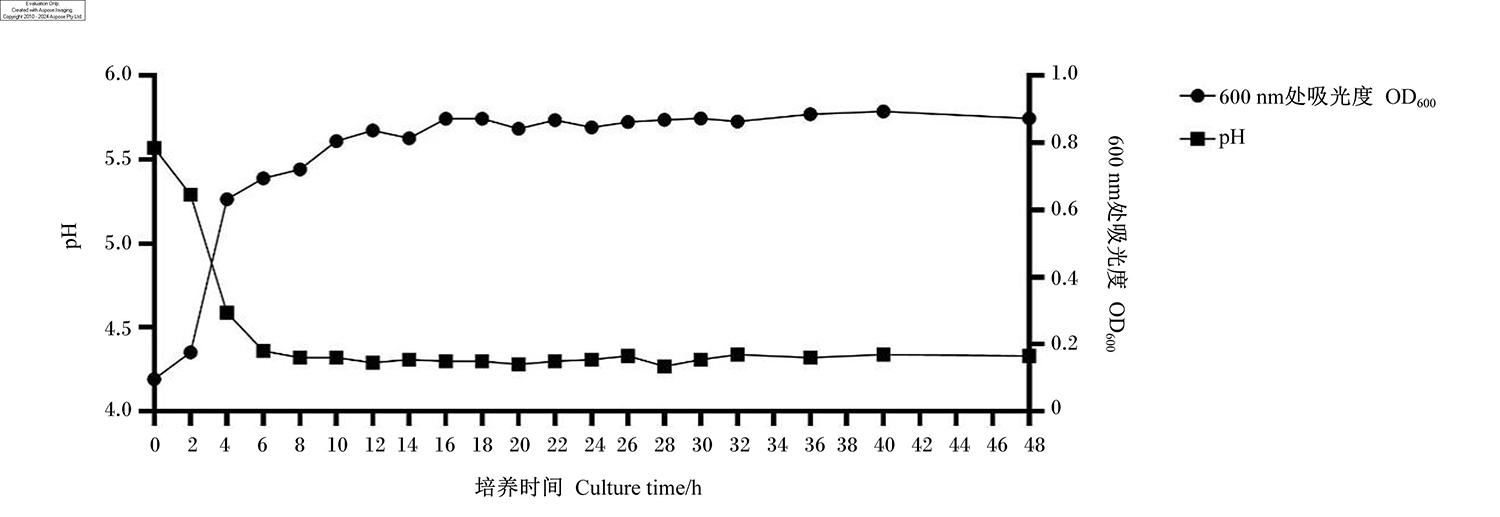
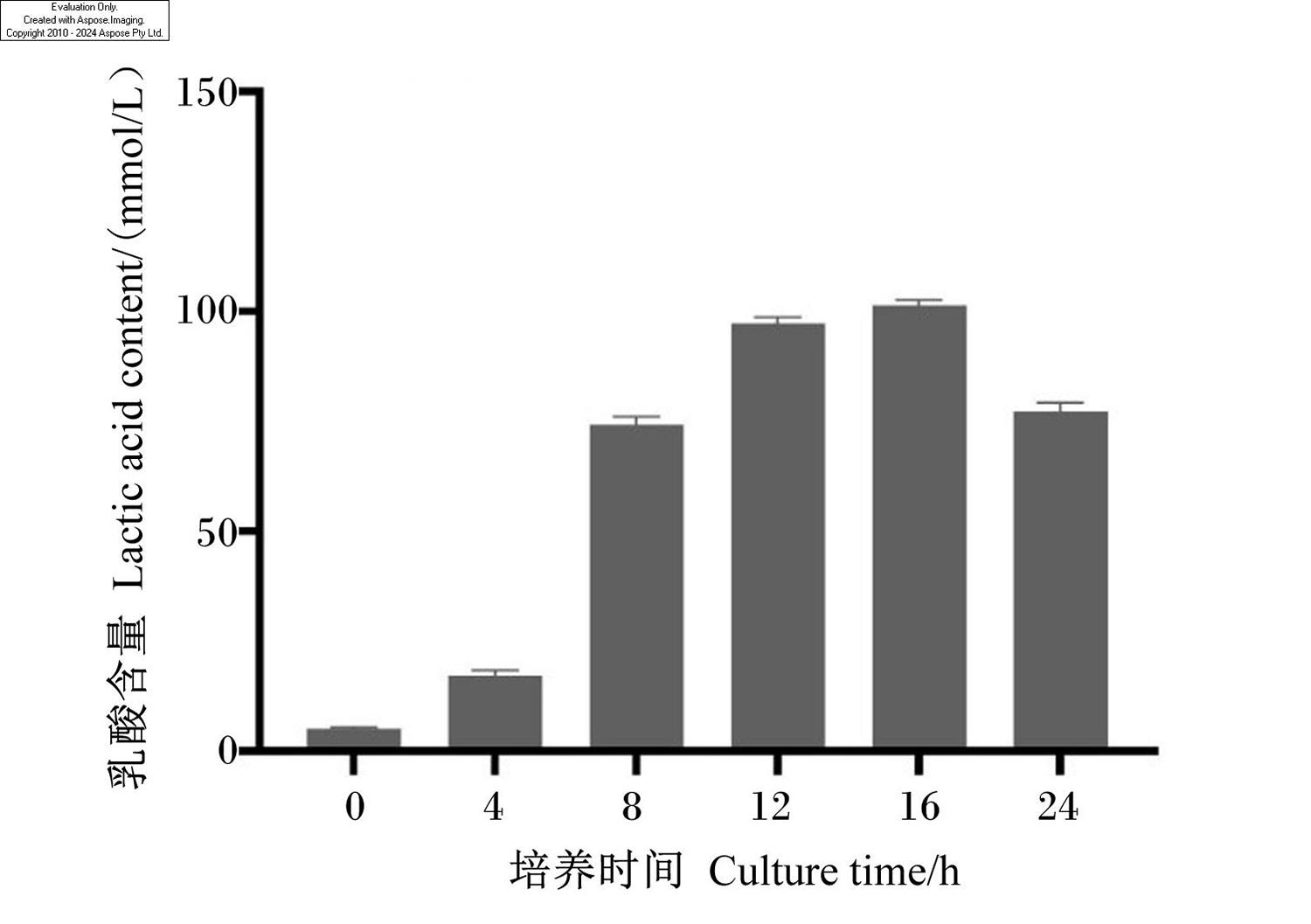
2.4 菌株GRJD005的体外益生特性
2.4.1 菌株GRJD005不同温度下的生长曲线
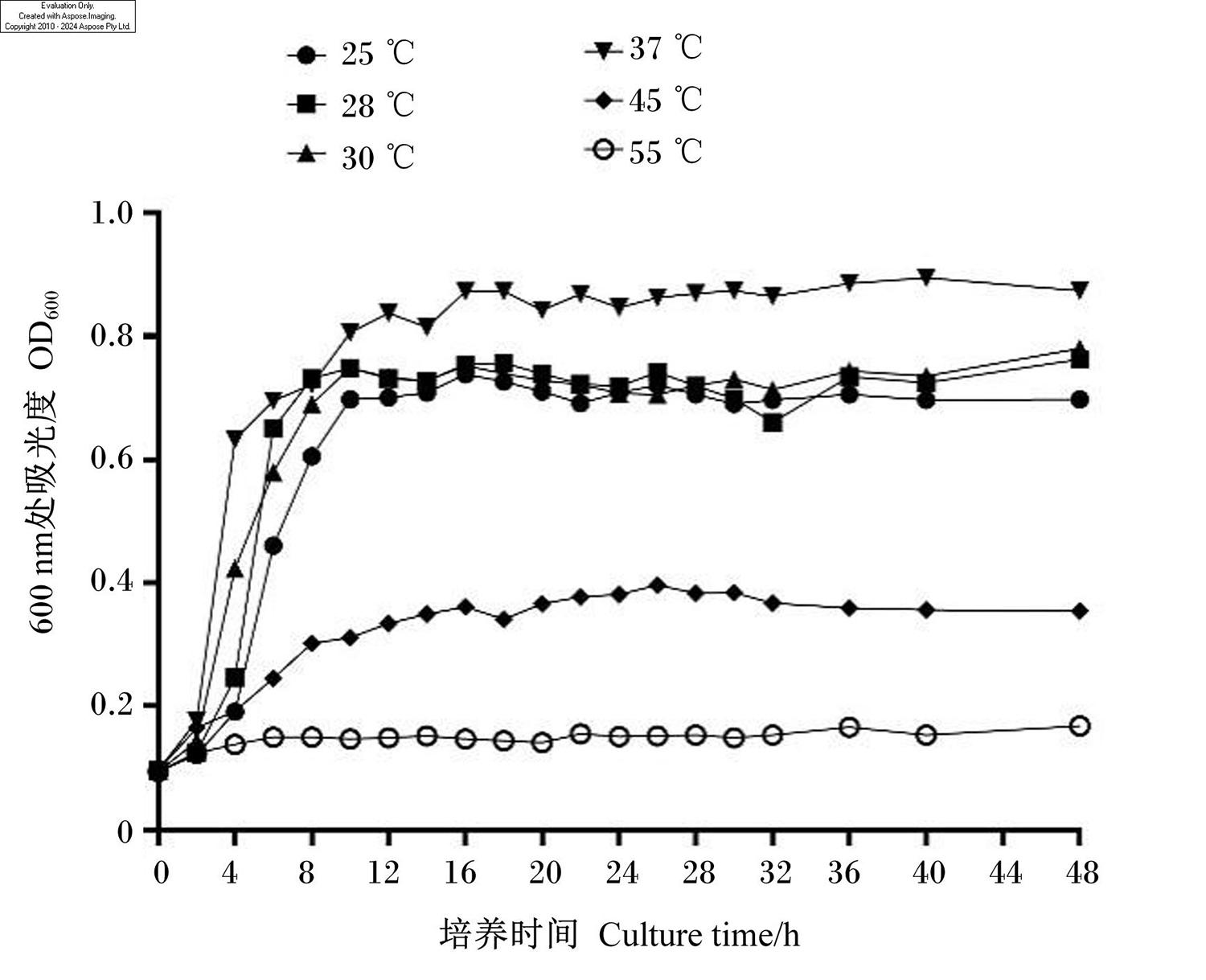
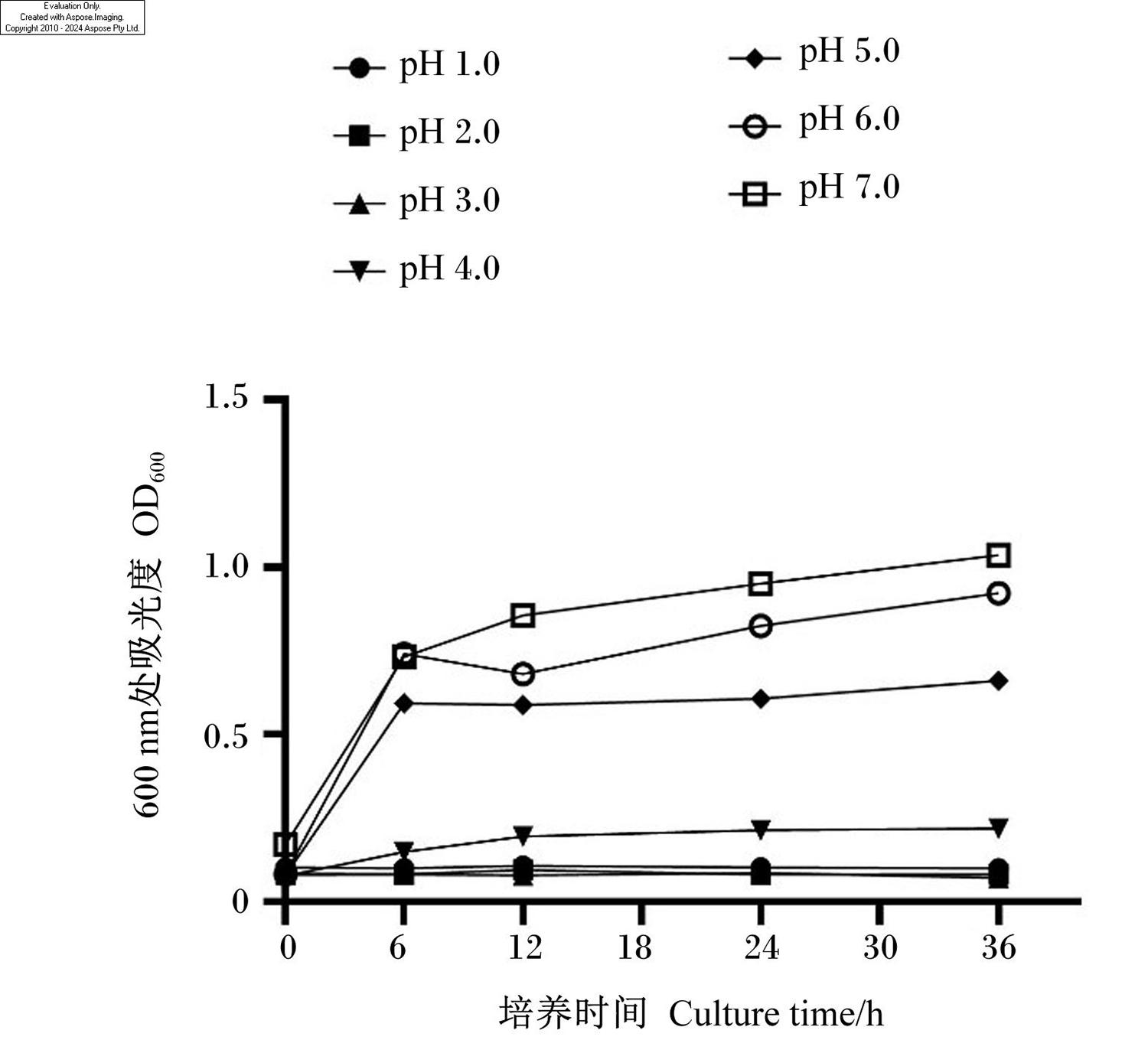
2.4.2 菌株GRJD005对酸的耐受性
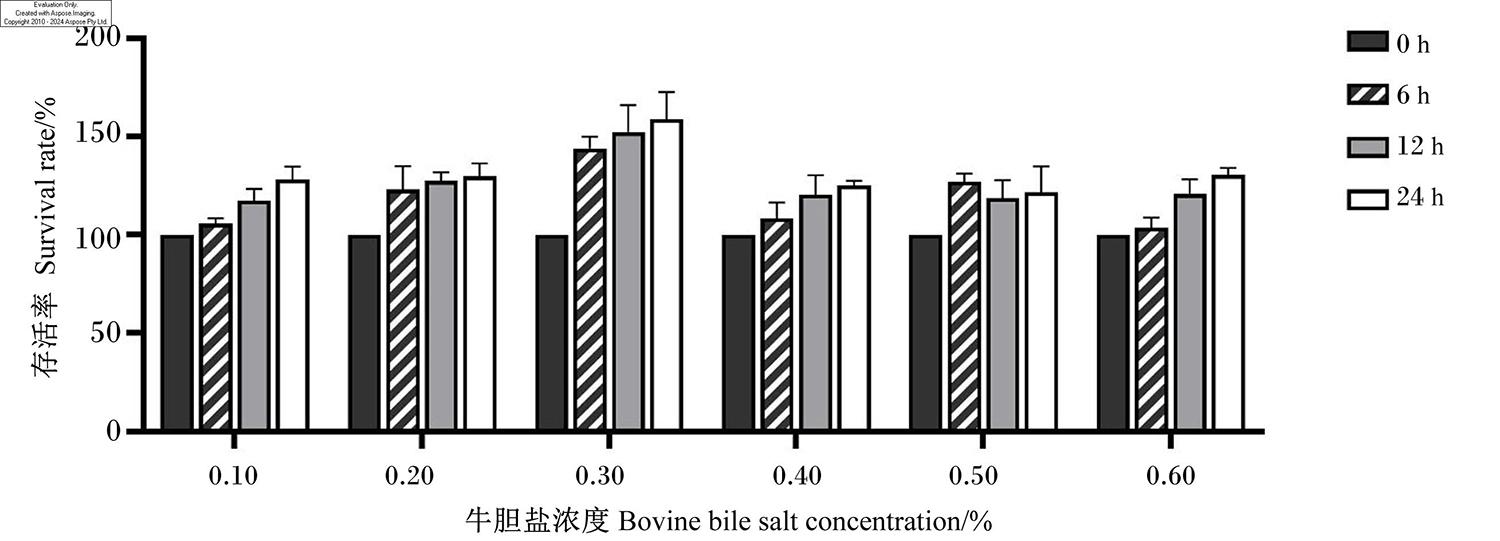
2.4.3 菌株GRJD005对胆盐的耐受性
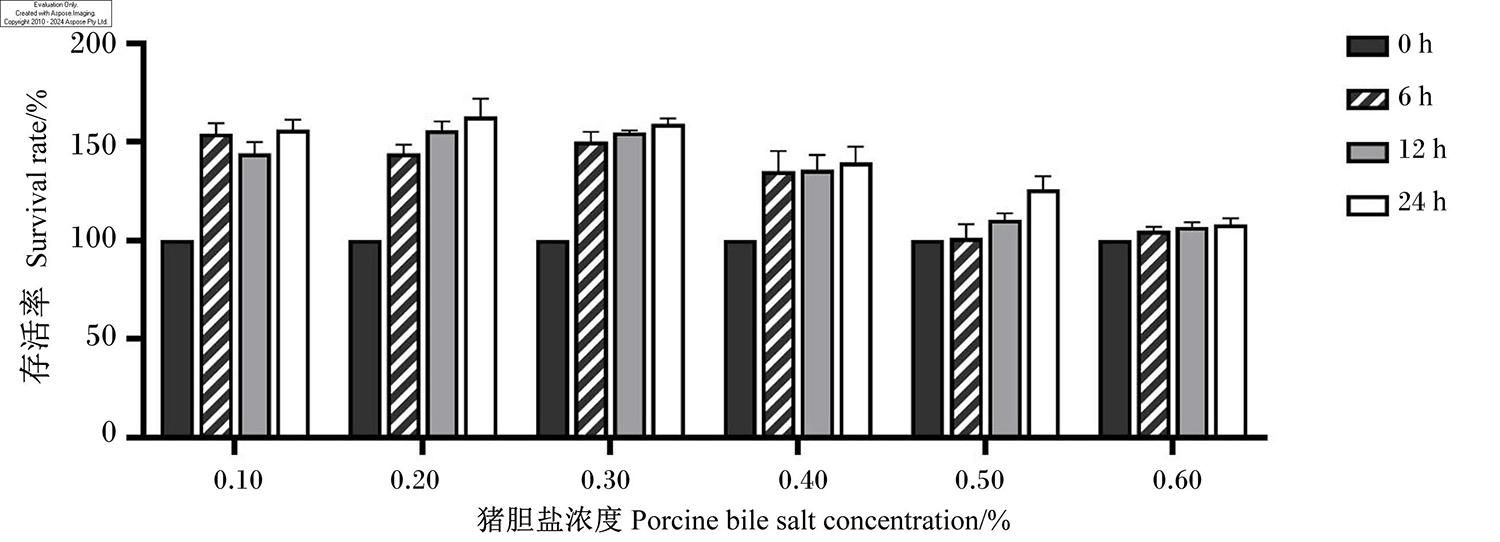
2.4.4 菌株GRJD005对人工胃肠液的耐受性
表2 菌株GRJD005在人工胃液、人工肠液和人工胃肠液中的耐受性Table 2 Tolerance of strain GRJD005 to artificial gastric fluid, artificial intestinal fluid and artificial gastric and intestinal fluid |
| 项目 Items | 耐受时间 Tolerance time/h | 活菌数对数值 Logarithm of viable cell count | 存活率 Survival rate/% |
|---|---|---|---|
人工胃液 Artificial gastric fluid | 0 | 7.44±0.06 | 80.91±0.01 |
| 3 | 6.02±0.02 | ||
人工肠液 Artificial intestinal fluid | 0 | 6.50±0.12 | 96.00±0.02 |
| 3 | 6.24±0.10 | ||
人工胃肠液 Artificial gastric and intestinal fluid | 0 | 5.02±0.18 | 94.62±0.10 |
| 3 | 4.75±0.45 |
2.4.5 菌株GRJD005的表面疏水性及自凝聚能力
表3 菌株GRJD005的表面疏水率及自凝聚率Table 3 Surface hydrophobicity and self-coagulation rate of strain GRJD005% |
| 菌株 Strain | 表面疏水率 Surface hydrophobicity | 自凝聚率 Self-coagulation rate |
|---|---|---|
| GRJD005 | 86.61±0.01 | 91.51±0.01 |
表面疏水性判定标准如下:表面疏水率高于50%的菌株为高度疏水,在20%~50%时为中度疏水,低于20%则为非疏水。自凝聚能力判定标准如下:自凝聚率为16%~35%、>35%~50%及50%以上时,分别判定为低、中、高自凝聚能力。 | |
The standards for surface hydrophobicity were as follows: strains with a surface hydrophobicity rate above 50% were classified as highly hydrophobic, those between 20% and 50% as moderately hydrophobic, and those below 20% as non hydrophobic. The standards for auto aggregation ability were as follows: auto aggregation rates of 16% to 35%, >35% to 50% and above 50% were classified as low, moderate and high auto aggregation ability, respectively. |
2.4.6 菌株GRJD005的抑菌活性
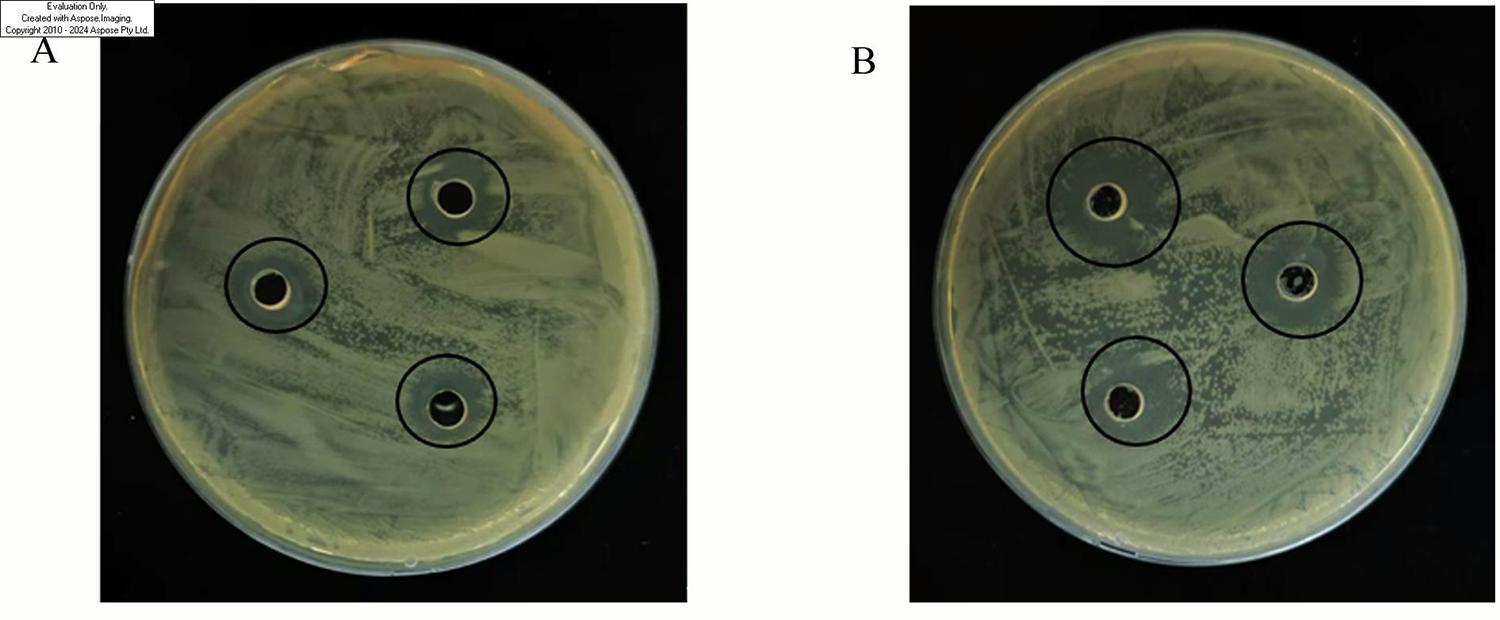
图8 菌株GRJD005对肠道沙门氏菌(A)、金黄色葡萄球菌(B)的抑菌活性Fig.8 Antibacterial activity of strain GRJD005 against Salmonella enterica (A) and Staphylococcus aureus (B) |
表4 菌株GRJD005对肠道沙门氏菌、金黄色葡萄球菌的抑菌圈直径Table 4 Inhibition zone diameters of strain GRJD005 against Salmonella enterica and Staphylococcus aureusmm |
| 病原指示菌 Indicator pathogenic bacteria | 抑菌圈直径 Inhibition zone diameter |
|---|---|
| 肠道沙门氏菌 Salmonella enterica | 14.07±1.16 |
| 金黄色葡萄球菌 Staphylococcus aureus | 14.68±1.18 |
抑菌圈直径(D)判定标准为:D≥20 mm,为极敏;15 mm≤D<20 mm,为高敏;10 mm≤D<15 mm,为中敏;0 mm<D<10 mm,为低敏;D=0 mm,为无抑菌效果。The criteria for determining the diameter of the inhibition zone (D) are as follows: D≥20 mm, extremely sensitive; 15 mm≤D<20 mm, highly sensitive; 10 mm≤D<15 mm, moderately sensitive; 0 mm<D<10 mm, slightly sensitive; D=0 mm, no inhibitory effect. |
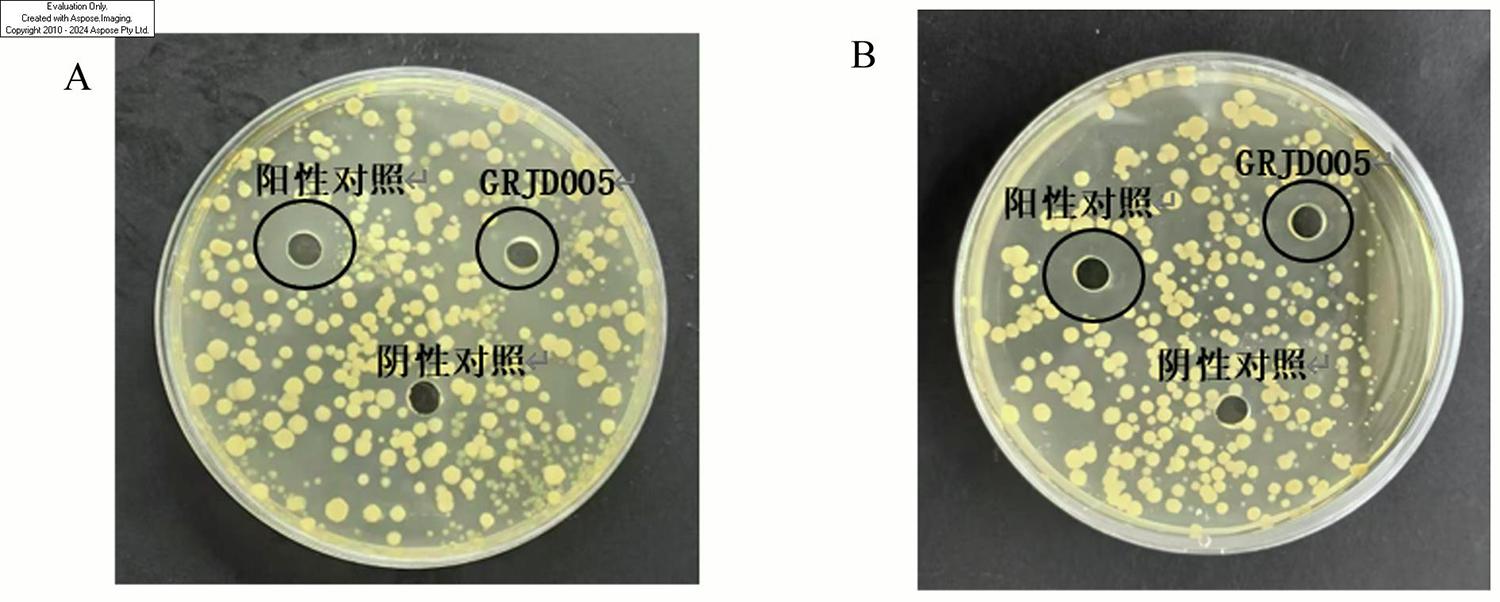
图9 排酸后菌株GRJD005对肠道沙门氏菌(A)、金黄色葡萄球菌(B)的抑菌活性Fig.9 Antibacterial activity of strain GRJD005 after acid removal against Salmonella enterica (A) and Staphylococcus aureus (B) |
表5 排酸后菌株GRJD005对肠道沙门氏菌、金黄色葡萄球菌的抑菌圈直径Table 5 Inhibition zone diameters of strain GRJD005 after acid removal against Salmonella enterica and Staphylococcus aureusmm |
| 病原指示菌 Indicator pathogenic bacteria | 抑菌圈直径 Diameter of inhibition zone | ||
|---|---|---|---|
| 菌株GRJD005排酸后 GRJD005 after acid removal | 阴性对照 Negative control | 阳性对照 Positive control | |
| 肠道沙门氏菌 Salmonella enterica | 16.59±0.45 | 0 | 20.77±0.40 |
| 金黄色葡萄球菌 Staphylococcus aureus | 16.05±0.20 | 0 | 17.27±0.42 |
2.4.7 菌株GRJD005的抗生素敏感性
表6 菌株GRJD005对常见抗生素的敏感性Table 6 Sensitivity of strain GRJD005 to common antibiotics |
| 抗生素名称 Antibiotics names | 抑菌圈直径 Inhibition zone diameter/mm | 敏感性 Susceptibility |
|---|---|---|
| 氯霉素 Chloramphenicol | 28.91±2.02 | S |
| 红霉素 Erythromycin | - | R |
| 万古霉素 Vancomycin | 22.58±1.20 | S |
| 四环素 Tetracycline | 34.49±1.53 | S |
| 克林霉素 Clindamycin | 26.66±1.22 | S |
| 庆大霉素 Gentamycin | - | R |
| 头孢拉定 Cefradine | 29.65±1.43 | S |
| 阿奇霉素 Azithromycin | 18.06±0.89 | S |
| 环丙沙星 Ciprofloxacin | - | R |
| 青霉素 Penicillin | 34.14±2.60 | S |
| 氨苄西林 Ampicillin | 32.31±0.80 | S |
| 头孢哌酮 Cefoperazone | 28.38±1.49 | S |
-:无抑菌圈 no inhibition zone;S:敏感 susceptible;I:中介 intermediate;R:耐药 resistant。 |
2.4.8 菌株GRJD005的代谢特征
2.4.8.1 菌株GRJD005的非靶向代谢组学质控评价
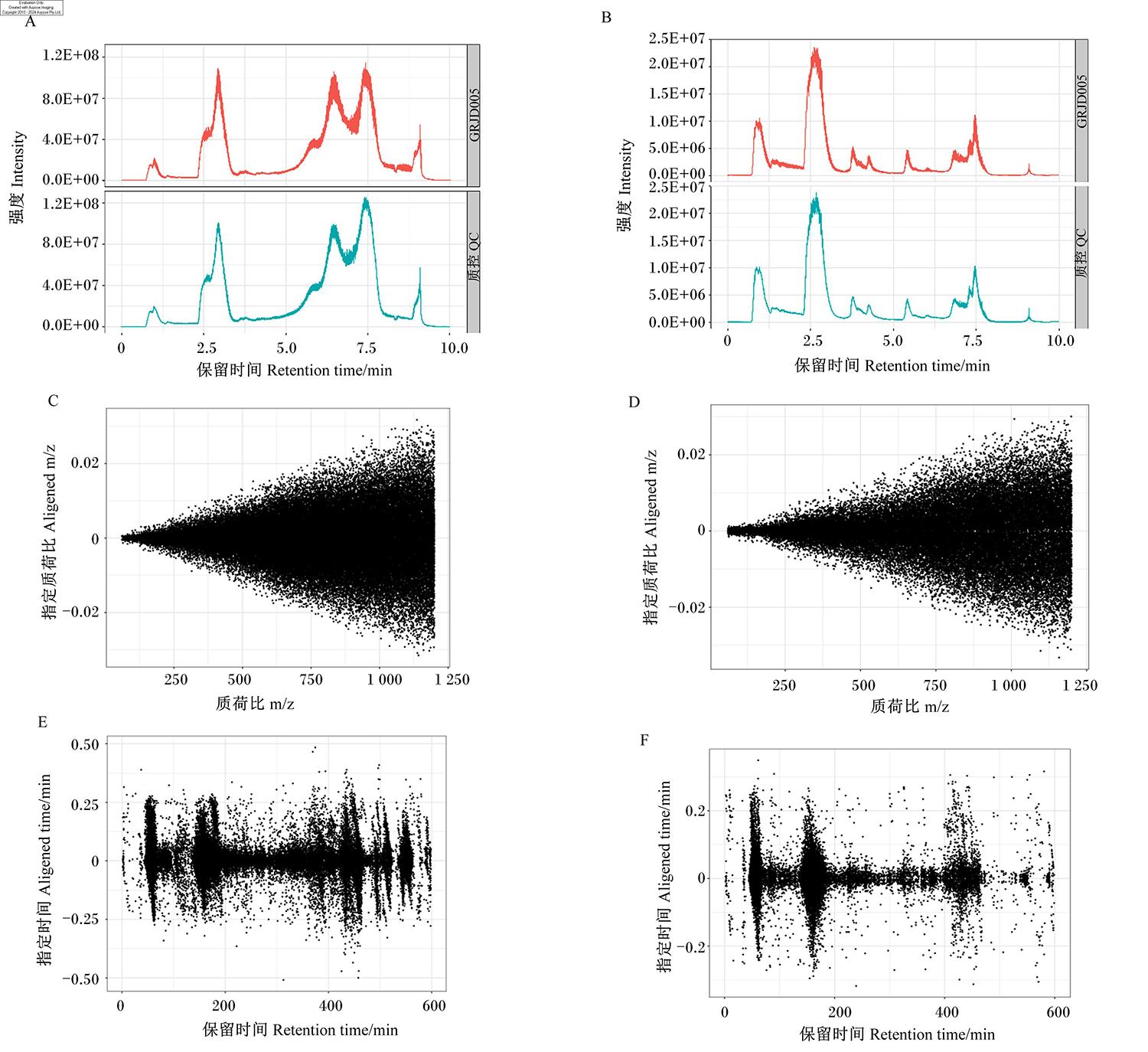
图10 非靶向代谢组学数据质量评价A:正离子模式下的总离子流图 total ion chromatogram in positive ion mode;B:负离子模式下的总离子流图 total ion chromatogram in negative ion mode;C:正离子模式下的质荷比分布图 m/z distribution in positive ion mode;D:负离子模式下的质荷比分布图 m/z distribution in negative ion mode;E:正离子模式下的保留时间分布图 retention time distribution in positive ion mode;F:负离子模式下的保留时间分布图 retention time distribution in negative ion mode。 Fig.10 Quality evaluation of non-targeted metabolomics data |
2.4.8.2 菌株GRJD005的代谢物鉴定
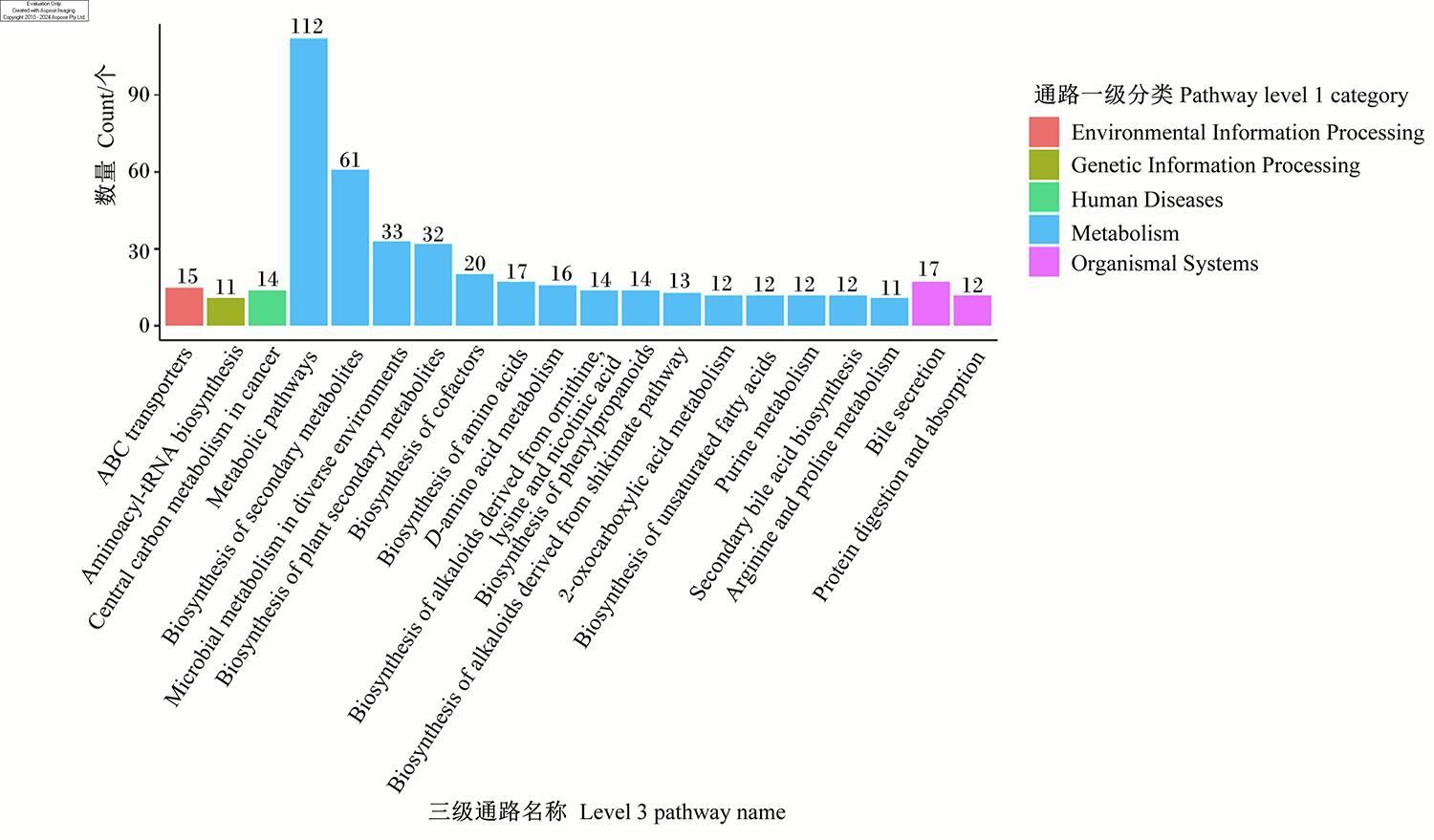


图11 代谢物数目排名前20的通路Environmental Information Processing:环境信息处理;Genetic Information Processing:遗传信息处理;Human Diseases:人类疾病;Metabolism:新陈代谢;Organismal Systems:生物体系统;ABC transporters:ABC转运蛋白;Aminoacyl-tRNA biosynthesis:氨酰-tRNA生物合成;Central carbon metabolism in cancer:癌症中的中心碳代谢;Metabolic pathways:代谢通路;Biosynthesis of secondary metabolites:次生代谢物生物合成;Microbial metabolism in diverse environments:不同环境中的微生物代谢;Biosynthesis of plant secondary metabolites:植物次生代谢物生物合成;Biosynthesis of cofactors:辅因子生物合成;Biosynthesis of amino acids:氨基酸生物合成;D-amino acid metabolism:D-氨基酸代谢;Biosynthesis of alkaloids derived from ornithine, lysine and nicotinic acid:源自鸟氨酸、赖氨酸和烟酸的生物碱生物合成;Biosynthesis of phenylpropanoids:苯丙烷类生物合成;Biosynthesis of alkaloids derived from shikimate pathway:源自莽草酸途径的生物碱生物合成;2-oxocarboxylic acid metabolism:2-氧羧酸代谢;Biosynthesis of unsaturated fatty acids:不饱和脂肪酸的生物合成;Purine metabolism:嘌呤代谢;Secondary bile acid biosynthesis:次生胆汁酸生物合成;Arginine and proline metabolism:精氨酸和脯氨酸代谢;Bile secretion:胆汁分泌;Protein digestion and absorption:蛋白质消化与吸收。 Fig.11 Top 20 pathways based on number of metabolites |
2.4.8.3 关联益生特性的代谢通路富集特征
表7 基于代谢组学的GRJD005菌株关键益生通路分析Table 7 Analysis of key probiotic pathways in strain GRJD005 based on metabolomics |
| 通路编号 Pathway ID | 通路名称(三级) Pathway name (level 3) | 代谢物数目 Number of metabolites | 代表性代谢物 Representative metabolites |
|---|---|---|---|
| 2010 | ABC转运蛋白 ABC transporters | 15 | 磷酸盐、谷氨酸、赖氨酸、L-天冬氨酸、胆碱 |
| 1210 | 2-氧羧酸代谢 2-oxocarboxylic acid metabolism | 12 | 丙酮酸、谷氨酸、赖氨酸、L-天冬氨酸、柠檬酸 |
| 330 | 精氨酸和脯氨酸代谢 Arginine and proline metabolism | 11 | 丙酮酸、谷氨酸、L-精氨酸、鸟氨酸、亚精胺 |
| 470 | D-氨基酸代谢 D-amino acid metabolism | 16 | 丙酮酸、谷氨酸、赖氨酸、L-天冬氨酸、D-丙氨酸 |
| 1230 | 氨基酸生物合成 Biosynthesis of amino acids | 17 | 丙酮酸、谷氨酸、赖氨酸、L-天冬氨酸、 L-精氨酸、丝氨酸 |
| 4976 | 胆汁分泌 Bile secretion | 17 | 胆碱、亚精胺、L-肉碱、胆汁酸、甘胆酸 |
| 121 | 次级胆汁酸生物合成 Secondary bile acid biosynthesis | 12 | 胆汁酸、甘胆酸、鹅胆酸、石胆酸、去氧胆酸 |
| 1110 | 次生代谢物的生物合成 Biosynthesis of secondary metabolites | 61 | 丙酮酸、谷氨酸、乳酸、二羟基苯丙氨酸、 黄嘌呤、芹黄素 |
| 4974 | 蛋白质消化与吸收 Protein digestion and absorption | 12 | 谷氨酸、赖氨酸、L-天冬氨酸、 L-精氨酸、丝氨酸、组氨酸 |