RESEARCH PAPER

Effects of Dietary Corn Starch Supplemental Levels on Growth Performance, Serum Biochemical Indices, Glucose Metabolism, Lipid Metabolism, and Hepatic Transcriptome of Hybrid Grouper (Epinephelus fuscoguttatus ♀×Epinephelus lanceolatus ♂)

  • LI Yuan , 1, 2 ,
  • WANG Kun 1, 2 ,
  • CHEN Mengyao 1, 2 ,
  • WANG Chong 1, 2 ,
  • LI Songhang 1, 2 ,
  • SONG Kai 1, 2 ,
  • XU Yichuang 1, 2 ,
  • YE Jidan , 1, 2, *
Expand
  • 1 Fisheries College, Jimei University, Xiamen 361021, China
  • 2 Xiamen Key Laboratory for Feed Quality Testing and Safety Evaluation, Xiamen 361021, China
* professor, E-mail:

Received date: 2026-02-09

  Online published: 2026-09-12

Abstract

This experiment aimed to investigate the effects of different dietary corn starch supplemental levels on growth performance, serum biochemical indices, glucose metabolism, lipid metabolism and hepatic gene expression in hybrid grouper (Epinephelus fuscoguttatus ♀×Epinephelus lanceolatus ♂). Hybrid groupers with an initial body weight of (18.97±0.04) g were randomly divided into 5 groups with 3 replicates per group and 25 fish per replicate. Fish in each group were fed isonitrogenous (crude protein content 46.00%) and isolipidic (crude lipid content 12.00%) experimental diets with corn starch supplemental levels of 0 (D1 group), 7% (D2 group), 14% (D3 group), 21% (D4 group) and 28% (D5 group), respectively. The experimental period was 56 d. The results showed as follows: 1) dietary corn starch supplemental level significantly affected weight gain rate (WGR), specific growth rate (SGR) and feed efficiency (FE) of groupers (P<0.05). All the above indices showed a quadratic curve change with the increase of corn starch level (P<0.05), and reached the peak in the D3 group. The optimal corn starch supplemental level fitted with SGR as the evaluation index was 12.5%; the hepatosomatic index (HSI) of the D5 group was significantly higher than that of the other groups (P<0.05). 2) Compared with the D1 group, the contents of hepatic crude lipid, serum glucose (GLU), total cholesterol (TC) and triglyceride (TG), as well as the activities of alanine aminotransferase (ALT) and aspartate aminotransferase (AST) in the D5 group were significantly increased (P<0.05). 3) With increasing dietary corn starch supplemental levels, hepatic glycogen content exhibited linear and quadratic responses (P<0.05), peaking in group D4; muscle glycogen content showed linear and quadratic responses (P<0.05). Among the key enzymes of hepatic glycolysis, the activity of hexokinase (HK) displayed linear and quadratic responses, while the activities of pyruvate kinase (PK) and phosphofructokinase (PFK) exhibited only quadratic responses (P<0.05). For key gluconeogenic enzymes, the activity of phosphoenolpyruvate carboxykinase (PEPCK) and protein content of fructose-1,6-bisphosphatase (FBP) presented linear and quadratic responses (P<0.05). The protein contents of fatty acid oxidation-related key enzymes carnitine palmitoyltransferase-Ⅰ (CPT-Ⅰ), lipoprotein lipase (LPL) and fatty acid synthase (FAS) showed linear and quadratic responses (P<0.05), whereas the protein content of hormone-sensitive lipase (HSL) exhibited only a linear response (P<0.05). 4) The results of KEGG pathway enrichment analysis showed that differentially expressed genes (DEGs) between the D1 and D3 groups were mainly enriched in the forkhead box O (FoxO) signaling pathway and mitogen-activated protein kinase (MAPK) signaling pathway; DEGs between the D3 and D5 groups were mainly enriched in the peroxisome proliferator-activated receptor (PPAR) signaling pathway and Toll-like receptor (TLR) signaling pathway. The screening results of key differentially expressed genes in pathways showed that compared with the D1 group, the expression levels of hepatic 25-hydroxyvitamin D3 1α-hydroxylase (cyp27b1) and insulin-like growth factor 2b (igf2b) in the D3 group were significantly up-regulated (P<0.05); compared with the D3 group, the expression level of hepatic lipoprotein lipase (lpl) gene in the D5 group was significantly up-regulated (P<0.05), while the expression levels of NF-κB inhibitor alpha a (nfkbiaa) and NF-κB inhibitor alpha b (nfkbiab) genes were significantly down-regulated (P<0.05). In conclusion, appropriate level of corn starch can significantly improve the growth performance and feed utilization efficiency of hybrid grouper, while excessive starch level will disrupt the homeostasis of glucose and lipid metabolism in fish, and induce hepatic lipid deposition and injury. This may be related to that high starch load activates the PPAR signaling pathway to promote lipid deposition, and down-regulates nuclear factor-κB (NF-κB) inhibitors to induce inflammatory response.

Cite this article

LI Yuan , WANG Kun , CHEN Mengyao , WANG Chong , LI Songhang , SONG Kai , XU Yichuang , YE Jidan . Effects of Dietary Corn Starch Supplemental Levels on Growth Performance, Serum Biochemical Indices, Glucose Metabolism, Lipid Metabolism, and Hepatic Transcriptome of Hybrid Grouper (Epinephelus fuscoguttatus ♀×Epinephelus lanceolatus ♂)[J]. Chinese Journal of Animal Nutrition, 2026 , 38(9) : 6882 -6897 . DOI: 10.12418/CJAN2026.550

谷物淀粉是畜禽的重要能量来源,其中玉米淀粉因其产量高、价格低廉成为畜禽饲料最主要的淀粉来源[1]。和畜禽相比,鱼类对谷物淀粉的供能依赖程度更低,但依旧能利用淀粉供给生长所需部分能量[2]。研究表明,饲料中添加适宜水平的淀粉可提高饲料利用率,节约饲料成本[3],但添加过量淀粉会抑制鱼类生长,降低饲料利用率,并伴随肝脏脂肪沉积增加等现象发生[4-5]。鱼类食性、种类、生存水温以及淀粉的物理化学特性如生熟度、来源等因素均可影响鱼类对淀粉的利用程度[6-7]。因此,充分研究鱼类对谷物淀粉的利用机制,是科学合理配制渔用饲料的前提。
珍珠龙胆石斑鱼(Epinephelus fuscoguttatus♀×Epinephelus lanceolatus ♂)是典型的肉食性海水鱼类,凭借生长速度快、抗病能力强等优势,成为我国重要的海水养殖品种。《2024中国渔业统计年鉴》资料显示,2023年石斑鱼的养殖产量达到24.15万t,已成为我国主要海水养殖鱼类之一。近十余年来,石斑鱼营养与饲料方面的研究已有大量报道,虽已有少量文献探究石斑鱼对淀粉的利用特性,但现有研究仅局限于常规生理生化指标分析[8],而基于组学层面探索淀粉利用机制仍缺乏。鉴于此,本试验以玉米淀粉为淀粉源,配制等氮等脂、淀粉梯度分别为0、7%、14%、21%和28%的配合饲料开展饲养试验,系统测定饲料中不同玉米淀粉添加水平对珍珠龙胆石斑鱼生长、饲料利用及糖、脂代谢指标的影响,并通过转录组学技术进一步阐明玉米淀粉影响珍珠龙胆石斑鱼糖、脂代谢的相关机制,为合理配制石斑鱼配合饲料提供数据支撑与理论参考。

1 材料与方法

1.1 试验饲料

本试验配制5种等氮(粗蛋白质含量46.00%)、等脂(粗脂肪含量12.00%)的试验饲料,玉米淀粉添加水平分别为0(D1组)、7%(D2组)、14%(D3组)、21%(D4组)和28%(D5组)。饲料组成及营养水平见表1。按照配方比例称取各类原料并混合均匀,添加占饲料总重约45%的水进行揉搓,达到“手握成团,按之即散”的状态。采用双螺杆挤条机(F-76,广州华工光机电科技有限公司)将粉料制粒,每组饲料分别加工为2.50、4.00 mm 2种粒径颗粒。湿颗粒平铺摊放于托盘,65 ℃烘箱中干燥24 h,取出冷却至室温后密封分装,置于阴凉通风处保存待用。
表1 试验饲料组成及营养水平(风干基础)

Table 1 Composition and nutrient levels of experimental diets (air-dry basis)

项目
Items
组别Groups
D1 D2 D3 D4 D5
原料Ingredients
鱼粉Fish meal 30.00 30.00 30.00 30.00 30.00
大豆分离蛋白Soybean isolated protein 16.00 16.00 16.00 16.00 16.00
谷朊粉Wheat gluten 10.00 10.00 10.00 10.00 10.00
明胶Gelatin 1.00 1.00 1.00 1.00 1.00
酪蛋白Casein 4.00 4.00 4.00 4.00 4.00
鱼油+大豆油Fish oil+soybean oil (1∶1) 6.10 6.10 6.10 6.10 6.10
大豆卵磷脂Soybean lecithin 2.00 2.00 2.00 2.00 2.00
玉米淀粉Corn starch 7.00 14.00 21.00 28.00
维生素预混料Vitamin premix1) 0.30 0.30 0.30 0.30 0.30
矿物质预混料Mineral premix2) 0.20 0.20 0.20 0.20 0.20
氯化胆碱Choline chloride 0.10 0.10 0.10 0.10 0.10
磷酸二氢钙Ca(H2PO4)2 1.50 1.50 1.50 1.50 1.50
稳定型维生素C Thermostable vitamin C 0.03 0.03 0.03 0.03 0.03
沸石粉Zeolite powder 14.36 10.86 7.36 3.86 0.36
微晶纤维素Microcrystalline cellulose 14.36 10.86 7.36 3.86 0.36
防霉剂Mildew inhibitor 0.05 0.05 0.05 0.05 0.05
合计Total 100.00 100.00 100.00 100.00 100.00
营养水平Nutrient levels3)
干物质Dry matter 96.06 95.86 95.89 94.93 94.98
粗蛋白质Crude protein 46.15 47.63 46.88 46.47 47.98
粗脂肪Crude lipid 12.27 12.09 12.02 11.95 12.16
粗纤维Crude fiber 12.03 8.90 5.21 2.03 0.46
粗灰分Crude ash 20.99 16.07 13.11 9.22 5.48
无氮浸出物Nitrogen-free extract 4.62 11.17 18.67 25.26 28.90
总能Gross energy/(MJ/kg) 16.16 17.03 17.96 18.87 19.72
蛋能比Protein to energy ratio/(g/MJ) 28.56 27.97 26.10 24.63 24.33

1)维生素预混料为每千克饲料提供 Vitamin premix provided the following per kg of diets:VA 10 mg,VD 10 mg,VE 100 mg,VB1 10 mg,VB2 20 mg,VB6 20 mg,VB12 0.05 mg,烟酸nicotinic acid 50 mg,D-泛酸钙 D-calcium pantothenate 100 mg,D-生物素 D-biotin 1 mg,肌醇 inositol 500 mg,叶酸 folic acid 4 mg。

3)无氮浸出物和蛋能比为计算值,其余为实测值。Nitrogen-free extract and protein to energy ratio were calculated values, while the others were measured values.

2)矿物质预混料为每千克饲料提供 Mineral premix provided the following per kg of diets:柠檬酸铁 ferric citrate 497 mg,CuSO4·5H2O 24 mg,ZnSO4·7H2O 176 mg,MnSO4·4H2O 122 mg,CoCl2·6H2O 0.18 mg,KIO3 0.51 mg,Na2SeO3 0.33 mg。

1.2 试验动物及饲养管理

本研究涉及的试验动物处理按照集美大学试验动物伦理委员会的规定进行(批准编号:2011-58)。试验所用珍珠龙胆石斑鱼为同一批孵化的鱼苗,先置于30 m2水泥池暂养。暂养2周后,鱼苗禁食24 h,挑选体重[(18.97±0.04) g]均匀的个体随机分配到15个养殖网箱(长100 cm×宽60 cm×高50 cm)中,每箱放鱼25尾,并进行称重,加盖网罩,共设置5个梯度玉米淀粉添加水平,各水平下设3个平行网箱。将网箱统一放置于80 m2的水泥池(池水深度1.8 m)中,沿池均匀排布,用四角绳索固定。试验期为56 d。饲养期间,各组每日于06:00和17:00定时投喂对应试验饲料;试验前期统一投喂粒径2.50 mm颗粒饲料,自试验第20天起更换为4.00 mm颗粒饲料直至试验结束。每次投喂至鱼表观饱食,即鱼群无上浮摄食行为时停止投料,记录各组投喂量;每日换水1次,换水量约为养殖水体的3/5,每周清洁1次水池;试验采用自然光照,水温维持28~30 ℃,水体持续充氧气,池水氨氮含量小于0.2 mg/L,水溶氧含量大于6 mg/L。

1.3 样品采集

饲养试验结束后,试验鱼禁食24 h,称取每箱鱼的总重并记录鱼数。从每箱中随机捞取11尾鱼,用丁香酚(100 μL/L)麻醉,逐尾测量体长;随后对每尾鱼进行尾静脉采血,将血液样品转移至离心管中,4 ℃下静置12 h,随后在4 ℃、1 027×g条件下离心10 min,收集血清,分装后于-80 ℃冰箱中保存,用于测定生化指标;采血完成后解剖试验鱼,分离肝脏并称重,用于计算肝体比。去除鱼体表皮后剥离背部肌肉,将肝脏与背部肌肉分别装入冻存管,于-20 ℃冰箱保存,用于测定肝脏和肌肉成分。另从每个网箱中选取6尾鱼,分离肝脏组织并经液氮速冻,置于-80 ℃冰箱中保存,用于糖、脂代谢相关指标测定和转录组学分析。

1.4 指标测定

1.4.1 常规营养成分测定

饲料、肝脏和肌肉成分均采用国家标准测定,即水分、粗蛋白质、粗脂肪、粗纤维、粗灰分含量分别采用GB/T 6435—2014、GB/T 24318—2009、GB/T 6433—2025、GB/T 6434—2022、GB/T 6438—2007中的方法测定。总能参照 GB/T 45104—2024进行测定。无氮浸出物和蛋能比计算公式如下:
无氮浸出物含量(%)=100-水分含量-粗蛋白质含量-粗脂肪含量-粗灰分含量-粗纤维含量;
蛋能比(g/MJ)=(粗蛋白质含量×10)/总能。
式中:各营养成分含量单位为%。

1.4.2 生长性能计算

生长性能相关指标计算公式如下:
增重率(WGR,%)=100×(终末体重-初始体重)/初始体重;
特定生长率(SGR,%/d)=100×(ln终末体重-ln初始体重)/饲养天数;
蛋白质效率(PER)=(终末体重-初始体重)/(摄食饲料总量×粗蛋白质含量);
饲料效率(FE)=(终末体重-初始体重)/总摄食量;
肝体比(HSI,%)=100×肝脏重/单尾鱼重;
肥满度(CF,g/cm3)=100×单尾鱼重/鱼体长3;
摄食率(FR,%/d)=100×总摄食量/[饲养天数×(初始体重+终末体重)/2];
存活率(SR,%)=100×终末尾数/初始尾数。
式中:重量单位为g;时间单位为d;长度单位为cm。

1.4.3 血清生化指标测定

总蛋白(TP)、葡萄糖(GLU)、总胆固醇(TC)、高密度脂蛋白胆固醇(HDL-C)、低密度脂蛋白胆固醇(LDL-C)、甘油三酯(TG)含量及谷丙转氨酶(ALT)和谷草转氨酶(AST)活性使用南京建成生物工程研究所生产的试剂盒测定。胰岛素(INS)、胰高血糖素(GLC)和胰岛素样生长因子-Ⅰ(IGF-Ⅰ)含量使用江苏酶免实业有限公司生产的酶联免疫吸附试验(ELISA)试剂盒检测。

1.4.4 肝脏糖、脂代谢相关指标测定

糖原含量以及丙酮酸激酶(PK)、己糖激酶(HK)、磷酸果糖激酶(PFK)、磷酸烯醇式丙酮酸羧激酶(PEPCK)活性使用南京建成生物工程研究所生产的试剂盒测定;果糖-1,6-二磷酸酶(FBP)、肉碱脂酰转移酶-Ⅰ(CPT-Ⅰ)、脂肪酸合成酶(FAS)、激素敏感脂肪酶(HSL)和脂蛋白脂肪酶(LPL)含量使用江苏酶免实业有限公司生产的ELISA试剂盒检测。

1.4.5 肝脏转录组学文库构建及测序

选取D1、D3和D5组肝脏样本,送至武汉迈维代谢生物科技股份有限公司进行测定。提取样本总RNA并进行质量检测,质检合格后富集mRNA并将其片段化为短序列,经反转录合成双链cDNA。cDNA经纯化、末端修复、加A尾并连接测序接头后,筛选目标长度片段进行PCR扩增,构建cDNA测序文库。文库质检合格后,采用Illumina测序平台测序,并对数据进行严格的筛选过滤。使用HISAT2软件将质控后的clean reads与参考基因组比对,通过featureCounts工具计算基因表达量FPKM值,基于DESeq2法开展组间转录组差异表达分析,筛选得到差异表达基因(DEGs)。DEGs筛选阈值设置为|log2(差异倍数)|≥1且P<0.05。对筛选得到的DEGs进行GO功能富集分析与功能分类注释,并进行KEGG通路富集分析。

1.5 数据统计分析

采用SPSS 29.0软件进行试验数据的统计分析。所有数据先进行正态分布检验与方差齐性检验,满足条件后采用单因素方差分析(one-way ANOVA),组间差异显著时采用Duncan氏法进行多重比较。试验结果均以“平均值±标准误”表示,P<0.05表示差异具有统计学意义。采用线性与非线性回归模型,分析饲料中玉米淀粉添加水平与各指标间的剂量-效应关系。使用GraphPad Prism 10.1.2软件作图。

2 结果与分析

2.1 饲料中玉米淀粉添加水平对珍珠龙胆石斑鱼生长性能的影响

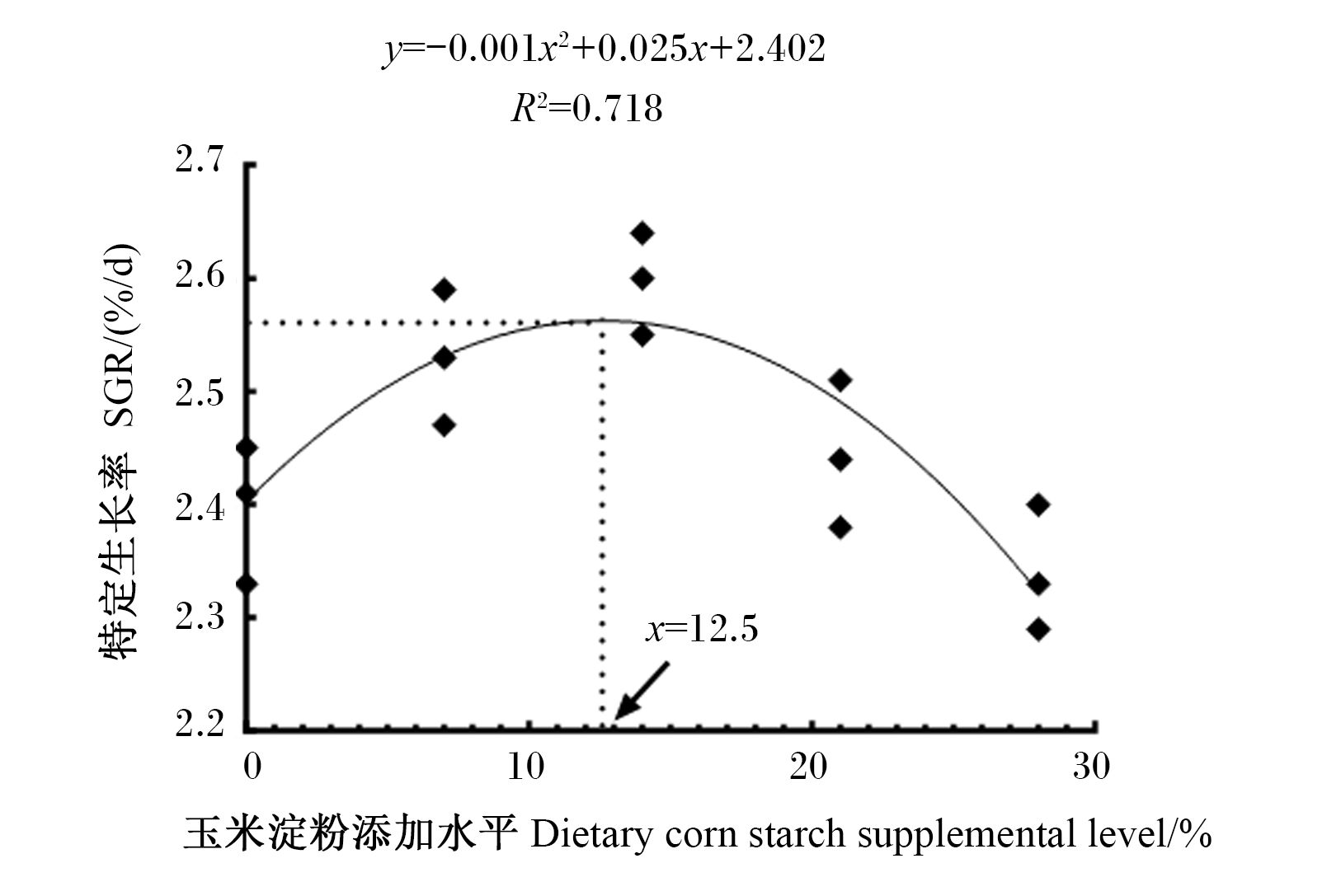
表2可知,饲料中玉米淀粉添加水平显著影响珍珠龙胆石斑鱼WGR、SGR、FE及HSI(P<0.05),WGR、SGR和FE随饲料玉米淀粉添加水平升高呈二次曲线变化(P<0.05)。3项指标均在D3组达到峰值,且显著高于D1、D4、D5组(P<0.05);此外,当饲料玉米淀粉水平由14%增加至28%时,珍珠龙胆石斑鱼SGR和FE显著下降(P<0.05),且上述指标低于D1组。HSI随饲料玉米淀粉添加水平升高呈线性和二次曲线变化(P<0.05),D5组HSI显著高于其余各组(P<0.05)。CF与SR在各组间无显著差异(P>0.05),不受饲料玉米淀粉添加水平的影响。将SGR与饲料玉米淀粉添加水平进行拟合,得出珍珠龙胆石斑鱼适宜饲料玉米淀粉添加水平为12.5%(图1)。
表2 饲料中玉米淀粉添加水平对珍珠龙胆石斑鱼生长性能的影响

Table 2 Effects of dietary corn starch supplemental levels on growth performance of hybrid grouper

项目
Items
组别Groups PP-value
D1 D2 D3 D4 D5 方差分析
ANOVA
线性
Linear
二次
Quadratic
初始体重
IBW/g
18.99
±0.17
19.03
±0.21
19.01
±0.17
18.91
±0.29
18.92
±0.07
0.910 0.437 0.696
终末体重
FBW/g
72.62
±1.30a
78.50
±1.89bc
81.47
±1.55c
74.27
±1.66ab
70.29
±1.43a
0.003 0.326 0.001
增重率
WGR/%
282.49
±7.44a
312.50
±8.11bc
328.45
±6.51c
292.82
±8.25ab
271.47
±6.91a
0.002 0.358 <0.001
特定生长率
SGR/(%/d)
2.40
±0.04a
2.53
±0.03bc
2.60
±0.03c
2.44
±0.04ab
2.34
±0.03a
0.002 0.324 <0.001
蛋白质效率
PER
1.82
±0.03
1.99
±0.14
2.09
±0.06
1.81
±0.04
1.77
±0.05
0.050 0.372 0.040
饲料效率
FE
0.84
±0.01a
0.92
±0.06ab
0.96
±0.03b
0.83
±0.02a
0.81
±0.02a
0.048 0.351 0.038
肝体比
HSI/%
2.06
±0.04a
2.20
±0.11a
2.10
±0.09a
2.31
±0.03a
2.68
±0.17b
0.011 0.003 0.002
肥满度
CF/(g/cm3)
2.03
±0.14
2.25
±0.03
2.28
±0.02
2.01
±0.07
2.23
±0.31
0.618 0.771 0.852
摄食率
FR/(%/d)
2.41
±0.02
2.31
±0.02
2.34
±0.03
2.30
±0.04
2.40
±0.02
0.056 0.824 0.035
存活率
SR/%
100.00
±0.00
97.33
±4.62
100.00
±0.00
100.00
±0.00
100.00
±0.00
0.452 0.500 0.684

同行数据肩标无字母或相同字母表示差异不显著(P>0.05),不同小写字母表示差异显著(P<0.05)。下表同。

In the same row, values with no letter or the same letter superscripts mean no significant difference(P>0.05), while with different small letter superscripts mean significant difference (P<0.05). The same as below.

图1 珍珠龙胆石斑鱼的特定生长率与玉米淀粉添加水平的关系

Fig.1 Relationship between dietary corn starch supplemental level and specific growth rate of hybrid grouper

2.2 饲料中玉米淀粉添加水平对珍珠龙胆石斑鱼肝脏和肌肉成分的影响

表3可知,饲料中玉米淀粉添加水平显著影响珍珠龙胆石斑鱼肝脏粗蛋白质、粗脂肪含量(P<0.05),二者随饲料玉米淀粉添加水平升高呈线性及二次曲线变化(P<0.05)。D4组肝脏粗蛋白质含量显著低于D1、D2组(P<0.05);D5组肝脏粗脂肪含量显著高于D1、D2组(P<0.05)。各组间肝脏水分及肌肉水分、粗蛋白质含量无显著差异(P>0.05),不受饲料玉米淀粉添加水平影响;肌肉粗脂肪含量整体组间差异不显著(P>0.05),但随玉米淀粉添加水平升高呈线性下降(P<0.05)。
表3 饲料中玉米淀粉添加水平对珍珠龙胆石斑鱼肝脏和肌肉成分的影响

Table 3 Effects of dietary corn starch supplemental levels on hepatic and muscle composition of hybrid grouper

项目
Items
组别Groups PP-value
D1 D2 D3 D4 D5 方差分析
ANOVA
线性
Linear
二次
Quadratic
肝脏Hepatic
水分
Moisture
68.23
±0.27
68.65
±2.43
66.89
±0.65
66.62
±0.71
68.19
±0.85
0.716 0.583 0.608
粗蛋白质
Crude protein
10.25
±0.50b
10.34
±0.68b
9.01
±0.14ab
8.42
±0.33a
8.90
±0.42ab
0.045 0.008 0.025
粗脂肪
Crude lipid
8.25
±0.15ab
7.98
±0.18a
8.66
±0.15abc
9.31
±0.51bc
9.79
±0.57c
0.030 0.002 0.005
肌肉Muscle
水分
Moisture
73.90
±1.78
74.23
±0.70
75.48
±0.26
75.73
±0.64
75.93
±0.44
0.457 0.054 0.157
粗蛋白质
Crude protein
21.93
±1.04
22.07
±1.09
22.27
±1.06
20.92
±1.83
21.90
±1.31
0.953 0.751 0.952
粗脂肪
Crude lipid
3.35
±0.16
3.34
±0.14
2.99
±0.22
2.81
±0.21
2.92
±0.25
0.254 0.034 0.098

2.3 饲料中玉米淀粉添加水平对珍珠龙胆石斑鱼血清生化指标的影响

表4可知,饲料中玉米淀粉添加水平显著影响珍珠龙胆石斑鱼血清GLU、INS、GLC、TC、TG和IGF-Ⅰ含量及ALT、AST活性(P<0.05)。血清GLU、INS、GLC含量及ALT、AST活性随饲料玉米淀粉添加水平升高呈二次曲线变化(P<0.05);其中D3组GLU含量显著高于D1、D2组(P<0.05),D2组INS含量显著高于D1、D5组(P<0.05),D3组GLC含量显著低于D1组(P<0.05),D5组ALT活性显著高于D1、D2、D3组(P<0.05),D5组AST活性显著高于D1、D3组(P<0.05)。血清TC、TG含量随玉米淀粉添加水平升高呈线性和二次曲线变化(P<0.05),D5组上述指标显著高于D1、D2、D3组(P<0.05)。D3组IGF-Ⅰ含量显著高于其余各组(P<0.05)。血清TP、HDL-C及LDL-C含量在各组间无显著差异(P>0.05),不受饲料玉米淀粉添加水平影响。
表4 饲料中玉米淀粉添加水平对珍珠龙胆石斑鱼血清生化指标的影响

Table 4 Effects of dietary corn starch supplemental levels on serum biochemical indices of hybrid grouper

项目
Items
组别Groups PP-value
D1 D2 D3 D4 D5 方差分析
ANOVA
线性
Linear
二次
Quadratic
总蛋白
TP/(mg/mL)
61.56
±6.41
64.15
±5.17
63.30
±4.99
61.38
±6.78
63.15
±5.35
0.996 0.981 0.991
葡萄糖
GLU/(mmol/L)
5.82
±0.24a
5.30
±0.36a
7.74
±0.22b
7.01
±0.26b
6.94
±0.19b
<0.001 0.059 0.004
总胆固醇
TC/(mmol/L)
1.13
±0.05a
1.07
±0.09a
1.16
±0.07a
1.26
±0.04ab
1.37
±0.03b
0.034 0.003 0.004
高密度脂
蛋白胆固醇
HDL-C/
(mmol/L)
1.20
±0.09
1.24
±0.09
1.25
±0.07
1.12
±0.07
1.10
±0.12
0.678 0.245 0.377
低密度脂
蛋白胆固醇
LDL-C/
(mmol/L)
0.48
±0.05
0.45
±0.04
0.43
±0.02
0.47
±0.03
0.54
±0.02
0.348 0.318 0.093
甘油三酯
TG/(mmol/L)
1.15
±0.06a
1.26
±0.05a
1.23
±0.05a
1.26
±0.03a
1.44
±0.05b
0.024 0.004 0.013
谷丙转氨酶
ALT/(U/L)
69.31
±6.48a
67.11
±4.56a
70.60
±6.27a
84.89
±5.28ab
89.39
±3.60b
0.046 0.004 0.009
谷草转氨酶
AST/(U/L)
39.40
±5.34a
42.31
±2.52ab
36.87
±2.48a
50.36
±1.29b
52.16
±3.27b
0.029 0.013 0.025
胰岛素
INS/(mU/L)
58.63
±0.88a
63.77
±1.07c
62.08
±0.92bc
60.88
±0.84abc
60.12
±1.08ab
0.011 0.981 0.026
胰岛素样
生长因子-Ⅰ
IGF-Ⅰ/(ng/mL)
269.48
±9.97a
273.19
±11.91a
328.55
±11.25b
275.92
±12.42a
269.82
±11.98a
0.020 0.951 0.120
胰高血糖素
GLC/(ng/mL)
166.97
±2.32b
159.49
±5.31ab
143.99
±3.94a
148.02
±5.41a
155.28
±6.37ab
0.049 0.084 0.013

2.4 饲料中玉米淀粉添加水平对珍珠龙胆石斑鱼肝脏糖、脂代谢相关指标的影响

表5可知,饲料中玉米淀粉添加水平显著影响珍珠龙胆石斑鱼肝糖原、肌糖原含量,以及肝脏HK、PK、PFK、PEPCK活性和FAS、LPL、FBP、CPT-Ⅰ、HSL蛋白含量(P<0.05)。肌糖原、肝糖原含量及肝脏HK、PEPCK活性和FAS、LPL、FBP和CPT-Ⅰ蛋白含量随饲料玉米淀粉添加水平升高呈线性和二次曲线变化(P<0.05)。其中D1组肌糖原含量显著高于其余各组(P<0.05),D4组肝糖原含量显著高于D1、D2和D3组(P<0.05);D5组HK活性和FAS、LPL蛋白含量显著高于D1、D3组(P<0.05);D1组PEPCK活性和CPT-Ⅰ蛋白含量显著高于D3、D4、D5组(P<0.05);D2组FBP蛋白含量显著高于D3、D4、D5组(P<0.05)。PK和PFK活性随饲料玉米淀粉添加水平升高仅呈现二次曲线变化(P<0.05);PK活性在D4组达到峰值,显著高于D1、D2、D5组(P<0.05);D3组PFK活性显著高于其他各组(P<0.05)。HSL蛋白含量随饲料玉米淀粉添加水平升高仅呈线性变化(P<0.05),以D2组最高,显著高于D3、D4、D5组(P<0.05)。
表5 饲料中玉米淀粉添加水平对珍珠龙胆石斑鱼肝脏糖、脂代谢相关指标的影响

Table 5 Effects of dietary corn starch supplemental levels on hepatic glucose and lipid metabolism-related indices of hybrid grouper

项目
Items
组别Groups PP-value
D1 D2 D3 D4 D5 方差分析
ANOVA
线性
Linear
二次
Quadratic
糖原含量Glycogen contents/(mg/g)
肝糖原
Hepatic glycogen
79.39
±3.74ab
78.68
±2.34a
79.41
±1.76ab
96.51
±3.83c
93.94
±7.82bc
0.021 0.004 0.014
肌糖原
Muscle glycogen
1.37
±0.10b
0.89
±0.03a
1.06
±0.09a
0.99
±0.04a
0.87
±0.02a
<0.001 <0.001 <0.001
肝脏糖、脂代谢关键酶活性及蛋白含量
Activities and protein contents of key enzymes for hepatic glucose and lipid metabolism
己糖激酶
HK/(U/g prot)
5.28
±0.30a
7.43
±0.29bc
6.63
±0.27ab
6.66
±0.74ab
8.54
±0.57c
0.004 0.006 0.027
丙酮酸激酶
PK/(U/g prot)
8.09
±0.82a
8.62
±0.97ab
11.49
±0.92bc
12.31
±1.09c
8.64
±0.69ab
0.018 0.276 0.023
磷酸果糖激酶
PFK/(U/g prot)
13.00
±1.26a
20.03
±1.73b
25.12
±2.40c
12.67
±1.25a
9.85
±0.82a
<0.001 0.246 0.002
磷酸烯醇式丙
酮酸羧激酶
PEPCK/
(U/g prot)
314.17
±7.99b
267.37
±3.83ab
253.78
±11.14a
257.41
±23.84a
219.79
±20.37a
0.019 0.001 0.006
果糖-1,6-
二磷酸酶
FBP/(ng/g)
2.02
±0.04bc
2.06
±0.04c
1.90
±0.06ab
1.81
±0.07a
1.79
±0.05a
0.003 <0.001 <0.001
激素敏感脂肪酶
HSL/(nmol/g)
108.62
±2.60ab
113.74
±2.07b
102.70
±0.89a
102.73
±3.87a
101.98
±5.38a
0.031 0.021 0.071
肉碱脂酰转移酶-Ⅰ
CPT-Ⅰ/(ng/g)
1.74
±0.03b
1.62
±0.01ab
1.50
±0.05a
1.57
±0.02a
1.55
±0.05a
0.021 0.043 0.008
脂肪酸合成酶
FAS/(pmol/g)
61.38
±0.74ab
61.24
±2.66ab
58.58
±1.68a
67.17
±1.76bc
70.55
±1.79c
0.005 0.006 0.002
脂蛋白脂肪酶
LPL/(ng/g)
10.68
±0.71a
11.46
±0.83ab
9.95
±0.76a
12.10
±0.80ab
13.62
±0.59b
0.046 0.029 0.026

2.5 肝脏样本转录组学分析

2.5.1 肝脏样本转录组数据的质控

根据珍珠龙胆石斑鱼生长性能及玉米淀粉设计梯度,对D1、D3和D5组9个肝脏样本进行转录组文库构建,共获得78.23 Gb clean data,测序错误率均低于0.01%,Q20碱基百分比在99.22%以上,Q30碱基百分比在96.37%以上,GC值在48.09%~51.13%。将质控得到的clean reads与参考基因组进行比对,基因组比对率在83.40%~85.94%,这表明测序原始数据质量极高,结果可靠。

2.5.2 肝脏DEGs及其KEGG通路富集分析

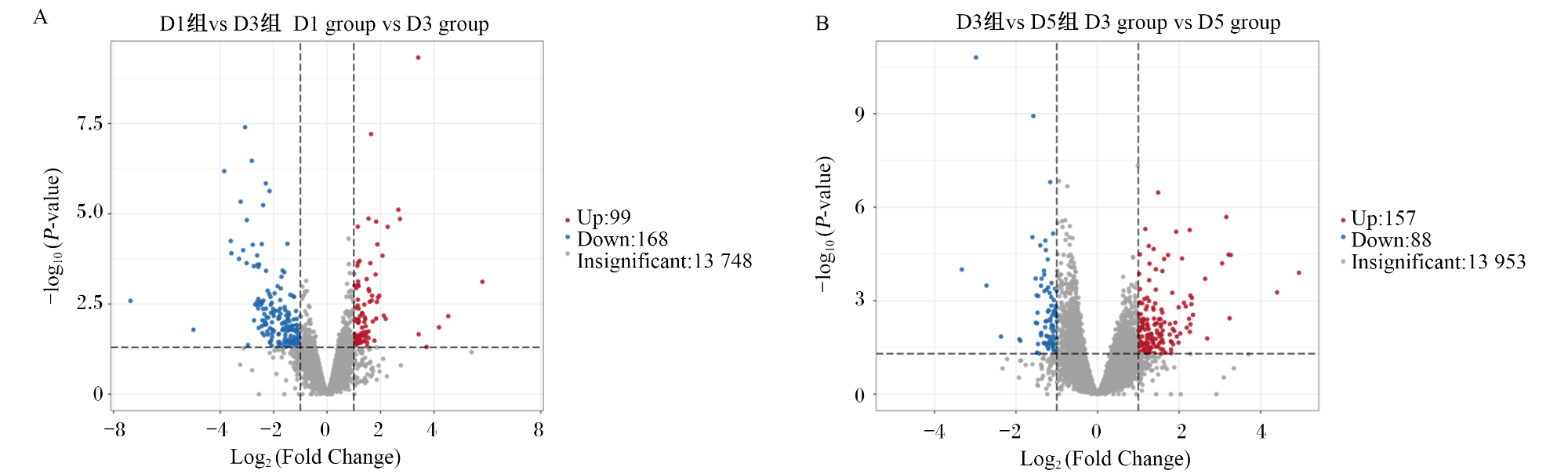
图2所示,D1组vs D3组共检出267个DEGs,其中上调基因99个、下调基因168个;D3组vs D5组共检出245个DEGs,包含上调基因157个、下调基因88个。
图2 DEGs火山图

Up:上调;Down:下调;Insignificant:不显著;-log10(P-value):-log10(P值);Log2(Fold Change):log2(差异倍数)。

Fig.2 Volcano plot of DEGs

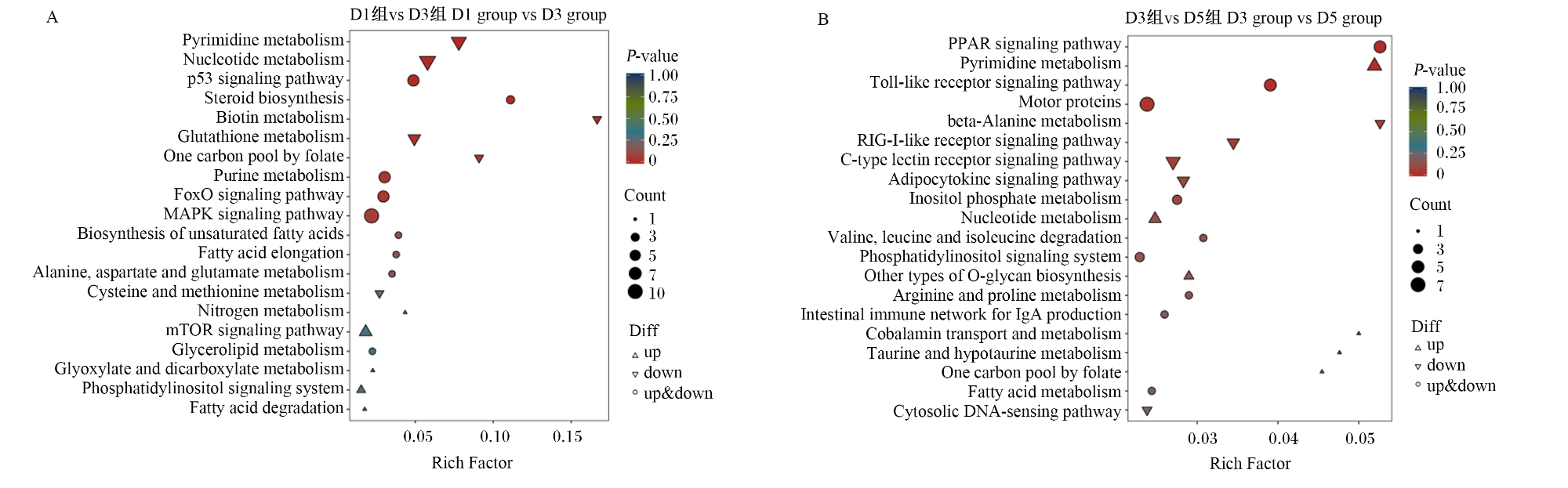
对D1组vs D3组及D3组vs D5组的DEGs分别进行KEGG通路富集分析,并绘制前20条显著富集的代谢通路气泡图。D1组vs D3组DEGs显著富集于p53信号通路、类固醇生物合成、叶酸介导的一碳代谢、嘌呤代谢、叉头框蛋白O(FoxO)信号通路和丝裂原活化蛋白激酶(MAPK)信号通路(图3-A),其中类固醇生物合成、FoxO信号通路和MAPK信号通路为肝脏代谢相关通路,通路内关键DEGs信息见表6
图3 2个比对组肝脏样本DEGs富集通路气泡图(前20)

P-value:P值;Count:差异基因数量;Diff:差异趋势;up:上调;down:下调;up&down:通路内同时上调和下调的差异基因;Rich Factor:富集因子;Pyrimidine metabolism:嘧啶代谢;Nucleotide metabolism:核苷酸代谢;p53 signaling pathway:p53信号通路;Steroid biosynthesis:类固醇生物合成;Biotin metabolism:生物素代谢;Glutathione metabolism:谷胱甘肽代谢;One carbon pool by folate:叶酸介导的一碳代谢;Purine metabolism:嘌呤代谢;FoxO signaling pathway:FoxO信号通路;MAPK signaling pathway:MAPK信号通路;Biosynthesis of unsaturated fatty acids:不饱和脂肪酸生物合成;Fatty acid elongation:脂肪酸延伸;Alanine, aspartate and glutamate metabolism:丙氨酸、天冬氨酸和谷氨酸代谢;Cysteine and methionine metabolism:半胱氨酸与甲硫氨酸代谢;Nitrogen metabolism:氮代谢;mTOR signaling pathway:mTOR信号通路;Glycerolipid metabolism:甘油脂代谢;Glyoxylate and dicarboxylate metabolism:乙醛酸和二羧酸代谢;Phosphatidylinositol signaling system:磷脂酰肌醇信号系统;Fatty acid degradation:脂肪酸降解;PPAR signaling pathway:PPAR信号通路;Pyrimidine metabolism:嘧啶代谢;Toll-like receptor signaling pathway:Toll样受体信号通路;Motor proteins:马达蛋白;beta-Alanine metabolism:β-丙氨酸代谢;RIG-Ⅰ-like receptor signaling pathway:RIG-Ⅰ样受体信号通路;C-type lectin receptor signaling pathway:C型凝集素受体信号通路;Adipocytokine signaling pathway:脂肪细胞因子信号通路;Inositol phosphate metabolism:磷酸肌醇代谢;Nucleotide metabolism:核苷酸代谢;Valine, leucine and isoleucine degradation:缬氨酸、亮氨酸和异亮氨酸降解;Phosphatidylinositol signaling system:磷脂酰肌醇信号系统;Other types of O-glycan biosynthesis:其他类型的O-聚糖生物合成;Arginine and proline metabolism:精氨酸和脯氨酸代谢;Intestinal immune network for IgA production:产生IgA的肠道免疫网络;Cobalamin transport and metabolism:钴胺素转运与代谢;Taurine and hypotaurine metabolism:牛磺酸和亚牛磺酸代谢;One carbon pool by folate:叶酸介导的一碳代谢;Fatty acid metabolism:脂肪酸代谢;Cytosolic DNA-sensing pathway:胞质DNA识别通路。

Fig.3 Bubble plot of enriched pathways of DEGs in hepatic samples from the two comparison groups (top 20)

表6 2个比对组肝脏DEGs

Table 6 DEGs of two comparison groups

比对组
Comparison
group
基因符号
Gene symbol
基因名称
Gene name
通路名称
KEGG pathways
log2(差异倍数)
log2(FC)
P
P-value
表达模式
Expression
pattern
D1组vs D3组
D1 group vs
D3 group
cyp27b1 25-羟基维生素
D3-1α-羟化酶
类固醇生物合成 4.19 0.014 上调
gadd45g 生长阻滞与DNA
损伤可诱导蛋白
叉头框蛋白O
信号通路
1.09 0.030 上调
plk1 Polo样激酶1 叉头框蛋白O
信号通路
-2.39 0.004 下调
cdk2 细胞周期蛋白
依赖性激酶2
叉头框蛋白O
信号通路
-1.57 0.005 下调
ccnb1 G2/有丝分裂特异
性周期蛋白B1
叉头框蛋白O
信号通路
-2.32 0.010 下调
igf2b 胰岛素样生
长因子2b
丝裂原活化蛋白激酶
信号通路信号通路
2.27 <0.001 上调
D3组vs D5组
D3 group vs
D5 group
lpl 脂蛋白脂肪酶 过氧化物酶体增殖物
激活受体信号通路
1.07 0.028 上调
angptl4 血管生成素
样蛋白4
过氧化物酶体增殖物
激活受体信号通路
-1.09 0.007 下调
plin2 脂滴包被蛋白2 过氧化物酶体增殖物
激活受体信号通路
-1.16 0.004 下调
fads2 酰基辅酶A
6-去饱和酶
过氧化物酶体增殖物
激活受体信号通路
1.40 0.048 上调
lbp 脂多糖结合蛋白 Toll样受体信号通路 1.26 0.008 上调
nfkbiaa 核因子-κB
抑制因子αa
Toll样受体信号通路 -1.08 0.024 下调
nfkbiab 核因子-κB
抑制因子αb
Toll样受体信号通路 -1.20 0.002 下调
D3组vs D5组DEGs显著富集于过氧化物酶体增殖物激活受体(PPAR)信号通路、嘧啶代谢和Toll样受体(TLR)信号通路(图3-B),其中PPAR信号通路为脂代谢相关的核心典型通路,通路内关键DEGs信息见表6

3 讨论

3.1 饲料中玉米淀粉添加水平对珍珠龙胆石斑鱼生长性能的影响

本试验结果表明,珍珠龙胆石斑鱼幼鱼的SGR和FE随饲料玉米淀粉添加水平升高呈先升后降的剂量效应关系,上述指标均在玉米淀粉添加水平14%时达到峰值;以SGR为评价指标拟合得出,该鱼饲料适宜玉米淀粉添加水平为12.5%。翘嘴鳜(Siniperca chuatsi)、虹鳟(Oncorhynchus mykiss)的饲料适宜淀粉添加水平分别为13.03%[9]和12.62%[10],与本试验所得适宜玉米淀粉添加水平相近。当饲料玉米淀粉水平由14%增加至28%时,珍珠龙胆石斑鱼的SGR和FE反而降至D1组水平,说明过量淀粉无法持续发挥促生长作用,多余淀粉所含能量难以被鱼体充分利用。已有研究证实,高淀粉饲料会对肉食性鱼类产生多重不利影响:大口黑鲈饲料中添加12%淀粉会抑制其生长性能[11];乌鳢摄食高淀粉饲料后,促炎因子表达上调[12];饲料淀粉水平高于15%时,杂交鳢(Channa maculata♀×Channa argus ♂)的PER出现下降[13]。上述结果提示,肉食性鱼类对碳水化合物的利用能力较低,过多的碳水化合物摄入易导致机体代谢负荷,从而降低蛋白质利用。
HSI是反映鱼体营养状态的重要指标,营养缺乏或过量均会对该指标产生影响[14]。本试验中,D5组HSI显著高于其余各组,这表明高淀粉条件下,未被机体有效利用的淀粉能量在肝脏蓄积,进而诱导肝脏代谢异常。该现象与高淀粉负荷引起大口黑鲈[15]、卵形鲳鲹[16]出现肝脏代谢异常的研究结论一致。此外,珍珠龙胆石斑鱼肝脏粗蛋白质含量随玉米淀粉添加水平升高呈逐渐下降趋势,表明高淀粉摄入会显著干扰鱼类蛋白质正常沉积与代谢过程。过量淀粉作为非适宜能量来源,会替代蛋白质供能,降低机体蛋白质利用率,造成肝脏蛋白质积累减少,进而导致全鱼蛋白质沉积比例下降。该结果与乌鳢幼鱼随饲料淀粉水平升高,肝脏粗蛋白质含量显著降低的结论[12]一致。

3.2 饲料中玉米淀粉添加水平对珍珠龙胆石斑鱼血清生化指标及糖、脂代谢的影响

INS的作用是降血糖,若高血糖状态下血清INS含量同步升高,则代表机体出现胰岛素抵抗[17]。GLC具有升血糖作用,与INS通过拮抗方式来调节血糖稳定[18]。本试验表明,随着饲料玉米淀粉添加水平升高,血清INS含量于D2组达到峰值,血清GLC含量在D3组降至谷值;D4、D5组2种激素含量均与D1组无显著差异。上述结果说明,较低淀粉负荷下INS与GLC可通过拮抗作用参与糖代谢调控;当淀粉负荷进一步升高时,血清INS与GLC不再发生明显响应,鱼类依靠INS、GLC调控糖代谢的调节能力减弱。这表明高淀粉负荷下INS与GLC的拮抗调节机制失效,该规律与虹鳟[6]相关研究所得结论一致。类似地,大口黑鲈摄食高淀粉饲料后,高血糖症状与血清INS含量不同步,反映出INS分泌相对不足[19]。IGF-Ⅰ可诱导细胞增殖与分化[20],但本试验中D3组血清IGF-Ⅰ含量显著高于其他各组,提示添加适宜水平的淀粉可通过提高IGF-Ⅰ含量促进机体蛋白质合成,淀粉添加水平过高反而降低血清IGF-Ⅰ含量[21]。据此推测,高淀粉负荷会引发高血糖应激,鱼类代谢优先应对血糖异常,蛋白质合成过程则被弱化。
HSL可水解TG并释放脂肪酸[22];CPT-Ⅰ则是促进脂肪酸向线粒体转运。细胞能量充足时其活性受抑,可阻断脂肪酸氧化通路,使代谢流转向脂肪酸合成[23]。FAS负责长链脂肪酸的从头合成[24],LPL负责水解极低密度脂蛋白和乳糜微粒中的TG[25]。在本试验中,饲料添加适宜水平的玉米淀粉(D3组)可使鱼体优先利用葡萄糖供能,脂肪酸氧化供能需求降低,肝脏HSL与CPT-Ⅰ蛋白含量相应处于较低水平。当鱼体处于高淀粉负荷(D5组)时,CPT-Ⅰ蛋白含量降低,游离脂肪酸通过抑制HSL的磷酸化,负向抑制脂肪分解。与此同时,高淀粉负荷使FAS和LPL蛋白含量上升,促进脂肪酸合成。这种“脂肪酸分解受抑”与“脂肪酸合成增强”的共同作用,导致血清TC、TG含量上升,进而促进肝脏脂质沉积。类似的结果在大口黑鲈[26]和尼罗罗非鱼[27]上均观察到。本试验中,血清HDL-C和LDL-C含量未受饲料玉米淀粉水平的显著影响,与部分研究结果[28-29]存在差异。推测与肝脏脂肪酸合成、外周脂类转运的动态平衡有关,原因可能有2方面:一是高淀粉负荷通过上调肝脏FAS蛋白含量促进脂肪酸合成与输出,使血清TC、TG含量升高,并在肝脏中堆积;二是高淀粉负荷通过上调肝脏LPL蛋白含量来加强外周脂肪酸和胆固醇向肝脏中输送,从而维持了HDL-C和LDL-C的表观稳态。此外,D5组血清ALT和AST活性显著升高,提示出现肝细胞损伤[30];结合肝糖原过度沉积、肝体比偏高的结果,该生理特征与代谢性脂肪肝的病理特征相符[31],在大口黑鲈[32]和大西洋鲑[33]中也有类似报道。

3.3 饲料中玉米淀粉添加水平对珍珠龙胆石斑鱼肝脏代谢影响的转录组分析

在D1组vs D3组的肝脏DEGs中,上调基因包括25-羟基维生素D3-1α-羟化酶(cyp27b1)、生长阻滞与DNA损伤可诱导蛋白(gadd45g)和胰岛素样生长因子2b(igf2b),下调基因包括Polo样激酶1(plk1)、细胞周期蛋白依赖性激酶2(cdk2)和G2/有丝分裂特异性周期蛋白B1(ccnb1),DEGs显著富集于类固醇生物合成通路与FoxO信号通路。cyp27b1编码的1α-羟化酶是维生素D合成的关键限速酶[34];维生素D可抑制前体脂肪细胞分化,其缺乏易引发机体脂质沉积[35]。本试验中,D3组肝脏cyp27b1基因表达较D1组显著上调,推测cyp27b1上调可促进维生素D合成,可能是机体缓解脂质沉积的保护性调节机制。已有研究证实,INS等生长因子可通过磷脂酰肌醇3-激酶/蛋白激酶B(PI3K/AKT)通路促进叉头框蛋白O1(FoxO1)磷酸化,抑制其转录活性[36];而氧化应激产生的活性氧(ROS)可通过激活c-Jun氨基末端激酶(JNK)、p38丝裂原活化蛋白激酶(p38 MAPK)通路增强FoxO1转录活性,进而调控靶基因参与细胞周期阻滞、细胞凋亡及DNA修复等过程[37-38]。本试验D3组gadd45g表达较D1组上调,结合FoxO信号通路显著富集的结果,提示该组FoxO转录活性可能增强;活化的FoxO一方面诱导gadd45g表达,另一方面参与抑制细胞周期关键基因plk1、cdk2和ccnb1,进而阻滞细胞周期进程,缓解氧化应激诱发的细胞异常增殖[39]。此外,D3组肝脏igf2b基因表达较D1组显著上调。IGF2b可结合并激活IGF-Ⅰ受体,启动下游丝裂原活化蛋白激酶/细胞外调节蛋白激酶(MAPK/ERK)信号级联反应,促进细胞增殖与生长[40],提示该基因上调是D3组生长性能提升的重要分子基础。值得注意的是,IGF-Ⅰ受体激活的PI3K/AKT信号分支是调控细胞能量代谢的核心枢纽[41],体现了适宜淀粉水平下葡萄糖优先用于生长供能的能量代谢特征。
D3组vs D5组的肝脏DEGs中,上调基因包括lpl、酰基辅酶A 6-去饱和酶2(fads2)和脂多糖结合蛋白(lbp),下调基因包括血管生成素样蛋白4(angptl4)、脂滴包被蛋白2(plin2)、核因子-κB抑制因子αa(nfkbiaa)和核因子-κB抑制因子αb(nfkbiab),且DEGs显著富集于PPAR信号通路。fads2属于脂肪酸去饱和酶,可催化必需脂肪酸合成长链多不饱和脂肪酸[42];D5组肝脏fads2表达较D3组上调,提示在脂质合成活跃的状态下,细胞需合成更多不饱和脂肪酸以满足代谢需求。plin2为脂滴包被蛋白,参与维持脂滴结构稳态[43];plin2下调理论上可降低脂滴稳定性、促进脂肪动员与周转,但脂肪酸β-氧化能力未能同步增强(CPT-Ⅰ下调),大量游离脂肪酸无法被及时氧化分解,脂质过度动员诱发脂毒性,并进一步启动肝脏炎症反应,转录组结果从分子层面验证了这一推论。
鱼类通过胞内受体感知病原体的脂多糖(LPS)[44-45],进一步通过信号转导级联激活核因子-κB(NF-κB)。活化的NF-κB能够促进lbp表达上调。本研究中,相较于D3组,D5组上调了肝脏lbp炎症基因表达,NF-κB抑制因子基因nfkbiaanfkbiab表达下调,同时DEGs富集到Toll样受体信号通路。正常情况下,NF-κB激活会立即诱导nfkbia表达形成负反馈,限制炎症持续激活;该家族基因下调表明NF-κB信号通路负反馈机制发生障碍,使NF-κB信号持续活化,机体呈现持续炎症状态,这与本试验及以往研究观测到的生长不良、肝损伤结果[46]一致。

4 结论

饲料中添加适宜玉米淀粉(14%)可显著提升珍珠龙胆石斑鱼生长性能、FE,其效应与血清IGF-Ⅰ含量升高、肝脏糖酵解酶活性增强及脂肪合成受抑制有关。高负荷淀粉(28%)会扰乱鱼体糖、脂代谢稳态,维持高血糖状态并伴随糖代谢调节能力失效。转录组学分析进一步揭示,高淀粉负荷可激活肝脏PPAR信号通路,上调lpl基因的表达,加剧脂质合成与沉积,并通过下调nfkbiaanfkbiab激活炎症通路,共同介导肝脏代谢损伤。
[1]
ZURAK D, VLAJSOVIC D, DUVNJAK M, et al. Factors affecting starch digestibility rate of maize grain in poultry[J]. World’s Poultry Science Journal, 2023, 79(1):43-68.

DOI

[2]
ZHANG X R, ZHANG Y, CHEN P, et al. Spotted seabass,Lateolabrax maculatus can utilize the high-starch diet by effectively regulating the energy metabolism[J]. Aquaculture, 2021, 543:736948.

DOI

[3]
YANG Y S, LIU T, ZHANG J K, et al. Effects of digestible carbohydrate levels on growth performance,feed utilization,body composition,and biochemical indices of juvenile spotted knifejaw,Oplegnathus punctatus[J]. Aquaculture Reports, 2023, 31:101653.

DOI

[4]
ZHAO L L, LIAO L, TANG X H, et al. High-carbohydrate diet altered conversion of metabolites,and deteriorated health in juvenile largemouth bass[J]. Aquaculture, 2022, 549:737816.

DOI

[5]
ZHENG L Z, WANG Z Z, ZHANG B, et al. Effects of high dietary carbohydrate levels on growth performance,enzyme activities,expression of genes related to liver glucose metabolism,and the intestinal microbiota of Lateolabrax maculatus juveniles[J]. Fishes, 2023, 8(9):431.

DOI

[6]
KAMALAM B S, MEDALE F, PANSERAT S. Utilisation of dietary carbohydrates in farmed fishes:new insights on influencing factors,biological limitations and future strategies[J]. Aquaculture, 2017, 467:3-27.

DOI

[7]
陈伟亮, 张丽, 张玲, 等. 不同淀粉来源及其糊化程度对团头鲂生长性能、养分消化率和糖脂代谢的影响[J]. 南京农业大学学报, 2023, 46(6):1169-1178.

CHEN W L, ZHANG L, ZHANG L, et al. Effects of different starch sources and gelatinization degrees on the growth performance,nutrients digestibility and glycolipid metabolism of blunt snout bream (Megalobrama amblycephala)[J]. Journal of Nanjing Agricultural University, 2023, 46(6):1169-1178. (in Chinese)

[8]
ISMAIL R, YONG A S K, LIM L S, et al. Protein sparing using sago starch on the performance of tiger grouper, Epinephelus fuscoguttatus ♀×giant grouper, E. lanceolatus ♂hybrid[J]. Journal of Sustainability Science and Management, 2023, 18(5):1-15.

[9]
HAN Z H, CHEN S W, GONG Y, et al. Dietary starch levels modulate growth performance,glucose utilization,and lipogenesis in mandarin fish (Siniperca chuatsi)[J]. Fish Physiology and Biochemistry, 2025, 51(6):184.

DOI

[10]
ZHAO W, WEI H L, WANG Z Q, et al. Effects of dietary carbohydrate levels on growth performance,body composition,antioxidant capacity,immunity,and liver morphology in Oncorhynchus mykiss under cage culture with flowing freshwater[J]. Aquaculture Nutrition, 2022, 2022(1):7820017.

[11]
SUN L H, GUO J L, LI Q, et al. Effects of high dietary starch levels on the growth performance,liver function,and metabolome of largemouth bass (Micropterus salmoides)[J]. Fishes, 2024, 9(7):256.

DOI

[12]
张玉. 乌鳢幼鱼对饲料淀粉水平和磷脂水平的营养生理响应[D]. 硕士学位论文. 上海: 上海海洋大学, 2023.

ZHANG Y. The physiological response of snakehead (Channa argus) to dietary starch levels and phospholipid levels[D]. Master’s Thesis. Shanghai: Shanghai Ocean University, 2023. (in Chinese)

[13]
XU T T, LIU X W, HUANG W Q, et al. Effects of dietary carbohydrate levels on growth,metabolic enzyme activities and oxidative status of hybrid snakehead (Channa maculata♀×Channa argus ♂)[J]. Aquaculture, 2023, 563(Pt 2):738960.

DOI

[14]
刘思雨. 鱼类肝脏组织形态的影响因素探讨[J]. 南方农业, 2022, 16(14):175-177.

LIU S Y. Study on the influencing factors of liver morphology in fish[J]. South China Agriculture, 2022, 16(14):175-177. (in Chinese)

[15]
XUE M Y, YAO T, XUE M, et al. Mechanism analysis of metabolic fatty liver on largemouth bass (Micropterus salmoides) based on integrated lipidomics and proteomics[J]. Metabolites, 2022, 12(8):759.

DOI

[16]
HUANG Z, ZHOU C P, LIN H Z, et al. Effect of dietary carbohydrate on glycometabolism of juvenile golden pompano (Trachinotus ovatus) related to growth performance,hepatic histopathology,transcriptome profiles and identification of differentially expressed genes[J]. Aquaculture Reports, 2022, 27:101362.

DOI

[17]
PENG K, WANG G X, ZHAO H X, et al. Effect of high level of carbohydrate and supplementation of condensed tannins on growth performance,serum metabolites,antioxidant and immune response,and hepatic glycometabolism gene expression of Lateolabrax japonicus[J]. Aquaculture Reports, 2020, 18:100515.

DOI

[18]
ZHANG J D, ZHENG Y, MARTENS L, et al. The regulation and secretion of glucagon in response to nutrient composition:unraveling their intricate mechanisms[J]. Nutrients, 2023, 15(18):3913.

DOI

[19]
陈沛. FoxO1在大口黑鲈糖脂代谢中的机制研究[D]. 博士学位论文. 北京: 中国农业科学院, 2021.

CHEN P. Mechanism of FoxO1 on glucose and lipid metabolism in Micropterus salmoides[D]. Ph.D.Thesis. Beijing: Chinese Academy of Agricultural Sciences, 2021. (in Chinese)

[20]
TRIANTAPHYLLOPOULOS K A, CARTAS D, MILIOU H. Factors influencing GH and IGF-Ⅰ gene expression on growth in teleost fish:how can aquaculture industry benefit?[J]. Review in Aquaculture, 2020, 12(3):1637-1662.

DOI

[21]
李建. 饲料中不同蛋白质和淀粉水平对斜带石斑鱼生长和生理的影响[D]. 硕士学位论文. 厦门: 集美大学, 2014.

LI J. Effect of different dietary protein and starch levels on the growth and physiology of grouper,Epinephelus coioides[D]. Master’s Thesis. Xiamen: Jimei University, 2014. (in Chinese)

[22]
RECAZENS E, MOUISEL E, LANGIN D. Hormone-sensitive lipase:sixty years later[J]. Progress in Lipid Research, 2021, 82:101084.

DOI

[23]
SCHLAEPFER I R, JOSHI M. CPT1A-mediated fat oxidation,mechanisms,and therapeutic potential[J]. Endocrinology, 2020, 161(2):bqz046.

[24]
SCHROEDER B, VANDER STEEN T, ESPINOZA I, et al. Fatty acid synthase (FASN) regulates the mitochondrial priming of cancer cells[J]. Cell Death & Disease, 2021, 12(11):977.

[25]
BASU D, GOLDBERG I J. Regulation of lipoprotein lipase-mediated lipolysis of triglycerides[J]. Current Opinion in Lipidology, 2020, 31(3):154-160.

DOI PMID

[26]
LI X Y, ZHENG S X, MA X K, et al. Effects of dietary starch and lipid levels on the protein retention and growth of largemouth bass (Micropterus salmoides)[J]. Amino Acids, 2020, 52(6/7):999-1016.

DOI

[27]
ZHU J H, PAN J Y, WANG X D, et al. Alleviation of the adverse effect of dietary carbohydrate by supplementation of myo-inositol to the diet of Nile tilapia (Oreochromis niloticus)[J]. Animals, 2020, 10(11):2190.

DOI

[28]
GUO W, FU L L, WU Y Y, et al. Effects of dietary starch levels on growth,feed utilization,glucose and lipid metabolism in non-transgenic and transgenic juvenile common carp (Cyprinus carpio L.)[J]. Israeli Journal of Aquaculture-Bamidgeh, 2021, 73:1401945.

[29]
张志新, 廖愚, 王培培, 等. 不同淀粉和纤维素比饲粮对鲤生长及生理生化指标的影响[J]. 广东农业科学, 2025, 52(7):93-103.

ZHANG Z X, LIAO Y, WANG P P, et al. Effects of different levels of starch and cellulose diets on the growth and physiological and biochemical indicators of Cyprinus carpio[J]. Guangdong Agricultural Sciences, 2025, 52(7):93-103. (in Chinese)

[30]
ZHONG L, LIU H L, ZHANG H Q, et al. High starch in diet leads to disruption of hepatic glycogen metabolism and liver fibrosis in largemouth bass (Micropterus salmoides),which is mediated by the PI3K/Akt signaling pathway[J]. Frontiers in Physiology, 2022, 13:880513.

DOI

[31]
门自起, 程长远, 陈宏安, 等. 脂肪肝与血脂、血糖、谷丙转氨酶升高的相关性分析[J]. 中国疗养医学, 2010, 19(10):937-938.

MEN Z Q, CHENG C Y, CHEN H A, et al. Correlation analysis between fatty liver and increased blood lipid, blood glucose and glutamate pyruvate transaminase[J]. Chinese Journal of Convalescent Medicine, 2010, 19(10):937-938. (in Chinese)

[32]
DENG Y Y, ZHANG W Q, YANG Z X, et al. Dietary Lactobacillus plantarum can alleviate high starch diet-induced liver lipid deposition,tissue damage and oxidative stress in largemouth bass (Micropterus salmoides)[J]. Aquaculture Reports, 2024, 35:101955.

DOI

[33]
VILLASANTE A, RAMÍREZ C, RODRÍGUEZ H, et al. Dietary carbohydrate-to-protein ratio influences growth performance,hepatic health and dynamic of gut microbiota in Atlantic salmon (Salmo salar)[J]. Animal Nutrition, 2022, 10:261-279.

DOI

[34]
柳声赞, 罗智. 水产动物维生素D3需求、吸收和转运及其与糖脂代谢的关系[J]. 水产学报, 2024, 48(2):029602.

LIU S Z, LUO Z. Vitamin D3 requirement,absorption,transport and its relationship with carbohydrate and lipid metabolism in aquatic animals[J]. Journal of Fisheries of China, 2024, 48(2):029602. (in Chinese)

[35]
REN J J, LI Z H, ZHONG W F, et al. Serum 25-hydroxyvitamin D concentrations and colorectal cancer incidence in adults with type 2 diabetes[J]. British Journal of Cancer, 2023, 129(3):486-491.

DOI

[36]
YANG W B, GUO J, SONG J X, et al. Studies of foxo1 over the past 25 years:mechanisms of insulin resistance and glucose dysregulation[J]. Cells, 2026, 15(2):109.

DOI

[37]
FARHAN M, SILVA M, XINGAN X, et al. Role of FOXO transcription factors in cancer metabolism and angiogenesis[J]. Cells, 2020, 9(7):1586.

DOI

[38]
NAATZ A, BOHL K S, JONES LIPINSKI R A, et al. Role of SIRT3 in the regulation of Gadd45α expression and DNA repair in β-cells[J]. Journal of Biological Chemistry, 2025, 301(5):108451.

DOI

[39]
MOORE X T R, GHEGHIANI L, FU Z. The role of polo-like kinase 1 in regulating the forkhead box family transcription factors[J]. Cells, 2023, 12(9):1344.

DOI

[40]
OKORO O E, CAMERA E, FLORI E, et al. Insulin and the sebaceous gland function[J]. Frontiers in Physiology, 2023, 14:1252972.

DOI

[41]
DUAN B H, WANG Y J, LIAO J W, et al. Downregulation of miR-34a represses insulin resistance and mediates glucose metabolism by upregulating IGF2 to activate PI3K/AKT signaling pathway[J]. Tropical Journal of Pharmaceutical Research, 2021, 20(12):2481-2487.

[42]
王国杰, 田烨, 张慧英. 脂肪酸去饱和酶2基因在糖脂代谢中的研究进展[J]. 中国医学科学院学报, 2022, 44(1):158-163.

DOI

WANG G J, TIAN Y, ZHANG H Y. Research progress of fatty acid desaturase 2 gene in glycolipid metabolism[J]. Acta Academiae Medicinae Sinicae, 2022, 44(1):158-163. (in Chinese)

DOI

[43]
WANG Y, ZHOU J X, YANG Q, et al. Therapeutic siRNA targeting PLIN2 ameliorates steatosis,inflammation,and fibrosis in steatotic liver disease models[J]. Journal of Lipid Research, 2024, 65(10):100635.

DOI

[44]
LI S, GUO Q, LI S T, et al. Glutamine protects against LPS-induced inflammation via adjusted NODs signaling and enhanced immunoglobulins secretion in rainbow trout leukocytes[J]. Developmental and Comparative Immunology, 2019, 98:148-156.

DOI PMID

[45]
MARTÍNEZ-LÓPEZ A, TYRKALSKA S D, ALCARAZ-PÉREZ F, et al. Evolution of LPS recognition and signaling:the bony fish perspective[J]. Developmental and Comparative Immunology, 2023, 145:104710.

DOI

[46]
LIU X F, LIU H K, WANG K W, et al. Transcriptome profiling unveils the mechanisms of inflammation,apoptosis,and fibrosis in the liver of juvenile largemouth bass Micropterus salmoides fed high-starch diets[J]. Animals, 2024, 14(23):3394.

DOI

Outlines

/